NDERITU MARY WAMBUI
E83/CTY/24791/2011
A THESIS SUBMITTED IN PARTIAL FULFILLMENT OF
THE REQUIREMENTS FOR THE AWARD OF THE DEGREE
OF DOCTOR OF PHILOSOPHY IN CURRICULUM STUDIES
IN THE SCHOOL OF EDUCATION, KENYATTA
UNIVERSITY
DECLARATION
I declare that this thesis is my original work and has not been presented in any other university/institution for consideration. The thesis has been complemented by referenced sources duly acknowledged. Where text data (including spoken words), graphics, pictures or tables have been borrowed from other sources, including the internet, these are specifically accredited and references cited in line with anti-plagiarism regulations.
Signature……….Date……….. Nderitu Mary Wambui E83/CTY/24791/2011
Department of Educational Management, Policy and Curriculum Studies
SUPERVISORS
We confirm that the work reported in this thesis was carried out by the candidate under our supervision as University supervisors,
Signature………..Date……….. Prof. Grace Bunyi
Department of Educational Management, Policy and Curriculum Studies Kenyatta University
Signature………Date……….. Dr. Charity Limboro
DEDICATION
This thesis is first and foremost dedicated to the Creator, the Almighty God who
gave me the physical and mental strength to undertake and complete it
successfully.
Secondly, the work is dedicated with total respect and appreciation to my loving
parents: Francis Nderitu and LydiahWanjiru who nurtured and educated me. They
gave me moral support through prayers during the highly challenging moments
ACKNOWLEDGEMENT
I wish to acknowledge with sincere appreciation the assistance and
encouragement received in the course of carrying out this research.
First and foremost, my gratitude goes to my supervisors, namely: Prof. Grace
Bunyi and Dr. Charity Limboro who supervised this work with tremendous sense
of duty. To them I am heavily indebted for their extraordinary advice, guidance
and concern.
Much appreciation is extended to a large number of persons who provided me
with information and material assistance. They include, among others: Mr.
Stephen Mbugua, an education officer in the Ministry of Education headquarters
who was charged with the responsibility of the implementation of the multimedia
computer laboratory project, and officials at Kenya Institute of Curriculum
Development who assisted me with written materials and verbal information.
Special thanks go to my family, my husband Mwangi, and children: Sabina,
Waituru, Nderitu and Bob for their forbearance, understanding and
encouragement as I undertook the study. I wish to specially thank my son Nderitu
Mwangi for his excellent job in formatting the work.
I wish to absolve any person wrongly mentioned in this acknowledgement. For
ABBREVIATIONS AND ACRONYMS
BECTA British Educational Communications and Technology Agency CEMASTEA Center for Mathematics, Science and Technology in Africa
CT Computer Technology
DLP Digital Learning Program GDD Global Digital Divide
ICT Information and communication technology KICD Kenya Institute of Curriculum Development KIE Kenya Institute of Education
LCD Liquid Crystal Display
MCL Multimedia Computer Laboratory
MoEST Ministry of Education, Science and Technology
NACOSTI National Commission for Science, Technology and Innovation NICTP the National Information and Communication Technology Policy NISET National ICT Strategy for Education and Training
PTE Primary Teacher Education
PTTCs Primary Teacher Training Colleges PPTTCs Public Primary Teacher Training Colleges
SITE Society for Information Technology and Teacher Education SPSS Statistical Package for Social Sciences
TABLE OF CONTENTS
DECLARATION ... ii
DEDICATION ... iii
ACKNOWLEDGEMENT ... iv
ABBREVIATIONS AND ACRONYMS ... v
TABLE OF CONTENTS ... vi
LIST OF TABLES ... ix
LIST OF FIGURES ... x
ABSTRACT... xi
CHAPTER ONE ...1
INTRODUCTION AND BACKGROUND OF THE STUDY ...1
1.1 Introduction ... 1
1.2 Background to the study ... 1
1.3 Statement of the problem ... 9
1.3.1 Purpose of the study ... 10
1.3.2 Objectives of the study ... 10
1.3.3 Research questions ... 11
1.4 Significance of the study ... 11
1.5 Limitations and Delimitations of the Study ... 13
1.5.1 Limitations ... 13
1.5.2 Delimitations ... 14
1.6 Assumptions ... 14
1.7 Theoretical and conceptual frameworks of the study ... 16
1.7.1 Theoretical framework of the study ... 16
1.7.2 The Conceptual Framework ... 20
1.8 Operational Definition of Key Terms ... 22
CHAPTER TWO ... 23
REVIEW OF RELATED LITERATURE ... 23
2.1 Introduction ... 23
2.3 Perceptions towards CT in teaching and learning. ... 26
2.4 Use of CT in teaching and learning. ... 31
2.5 Factors related to perceptions and use of computer technology in education. ... 37
2.5.1 Tutor characteristics ... 38
2.5.2 Access to computers ... 41
2.5.3 Training in the use of CT ... 44
2.5.4 Support of tutors in computer use ... 49
2.5.5 Benefits of using CT in teaching and learning ... 56
2.6 Barriers of integration of CT in teaching and learning ... 59
2.7 Chapter summary ... 64
CHAPTER THREE ... 67
RESEARCH DESIGN AND METHODOLOGY ... 67
3.1 Introduction ... 67
3.2 Study design ... 67
3.2.1 Variables ... 68
3.3 Location of study ... 69
3.4 Target population ... 69
3.5 Sample and sampling procedures ... 70
3.6 Research instruments ... 72
3.6.1 Tutors‟ questionnaire ... 73
3.6.2 Interview schedule ... 74
3.7 Piloting of instruments ... 75
3.7.1 Validity of the research instruments ... 76
3.7.2 Reliability of the research instruments ... 77
3.8 Data collection ... 78
3.9 Data analysis ... 80
3.10 Logistical and ethical considerations ... 82
3.1.1 Logistical considerations ... 82
3.1.2 Ethical considerations ... 82
FINDINGS, INTERPRETATION AND DISCUSSION ... 84
4.1 Introduction ... 84
4.2 Demographic information of the respondents ... 85
4.3 Tutors‟ perceptions of MCLs. ... 89
4.4 Tutors‟ use of MCLs ... 99
4.5 Factors related to tutors‟ perceptions and use of MCLs ... 109
4.5.1 Training in the use of the MCLs ... 109
4.5.2 Access to the MCLs ... 114
4.5.3 Support in the use of MCLs` ... 117
4.6 Benefits of using MCLs. ... 124
4.7 Challenges in the use of the MCLs ... 131
CHAPTER FIVE ... 141
SUMMARY, CONCLUSIONS AND RECOMMENDATIONS ... 141
5.1 Introduction ... 141
5.2 Summary ... 142
5.2.1 Tutors‟ perceptions of MCLs ... 142
5.2.2Tutors‟ use of MCLs ... 143
5.2.3 Factors related to tutors‟ perceptions and use of MCLs. ... 144
5.2.4 Benefits of using the MCLs. ... 148
5.2.5 Challenges in the use of the MCLs ... 149
5.3 Conclusions ... 151
5.4.1 Policy Recommendations ... 152
5.4.2 Recommendations for further research ... 154
REFERENCES ... 156
APPENDIX 1: TUTORS‟ QUESTIONNAIRE ON THEIR PERCEPTIONS AND USE OF MULTIMEDIA COMPUTER LABORATORIES... 172
APPENDIX 2: INTERVIEW SCHEDULE FOR DEANS OF CURRICULUM ... 178
APPENDIX 3: SAMPLE OF A SCIENCE LESSON PLAN USING THE MULTIMEDIA COMPUTER LABORATORIES ... 181
LIST OF TABLES
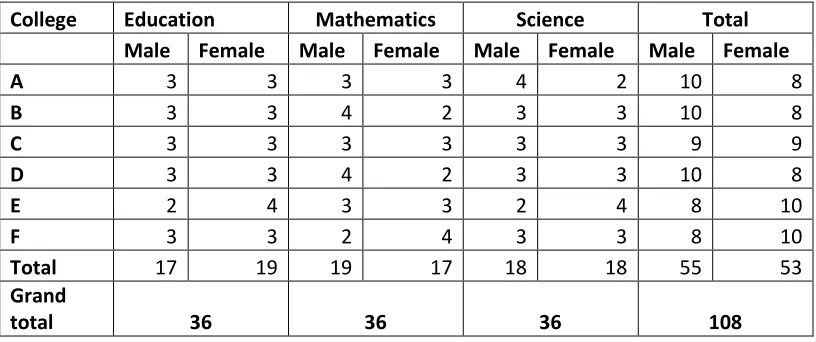
Table 3.1 Distribution of selected tutors by subjects and gender……….72
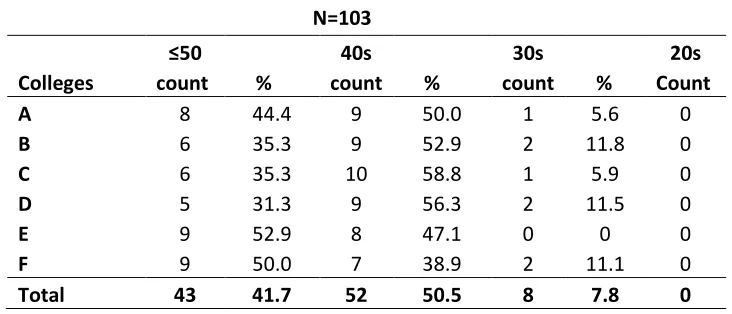
Table 4. 1 Tutors‟ age bracket………..86
Table 4. 2 Tutors‟ years of experience ... 87
Table 4.3 Tutors‟ rating of MCLs as useful instructional resources in PTTCs .... 91
Table 4.4 Tutors‟ perceptions of the MCLs by gender ... 94
Table 4.5 Tutors‟ perceptions of MCLs by age bracket ... 95
Table 4.6 Tutors‟ perceptions of MCLs by years of experience ... 97
Table 4.7 Tutors‟ perceptions of MCLs by their professional qualifications ... 98
Table 4. 8 Tutors‟ response on whether they conducted lessons in the MCLs ... 99
Table 4.9 Duration of computer training courses on use of MCLs ... 111
Table 4.10 Rating helpfulness of the training acquired in teaching ... 112
Table 4.11 Tutors‟ access to the MCLs ... 115
Table 4.12 Tutors‟ response on PTE Syllabus as a guides in use of MCL ... 122
LIST OF FIGURES
Figure 1. 1 Conceptual Framework of tutors‟ perceptions and use of MCLs…….20
Figure 3. 2 Reliability calculation using Spearman Rank Order Formula……….78
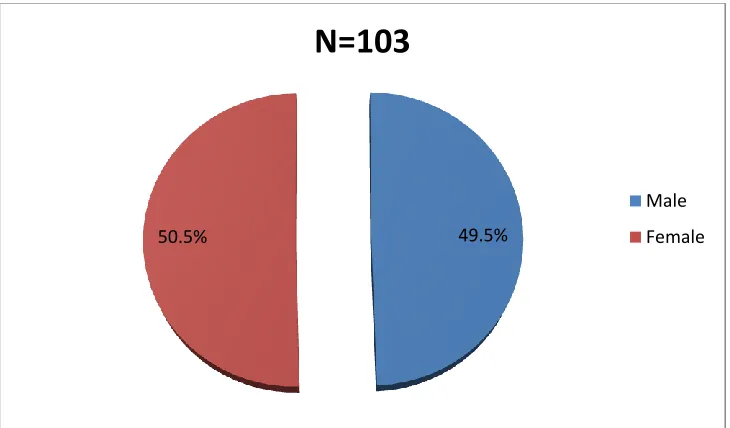
Figure 4. 1 Distribution of tutors by gender………85
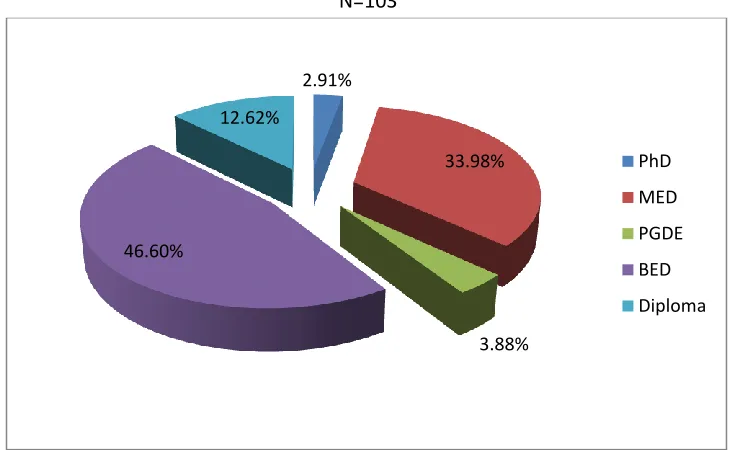
Figure 4. 2 Tutors' professional qualifications ... 88
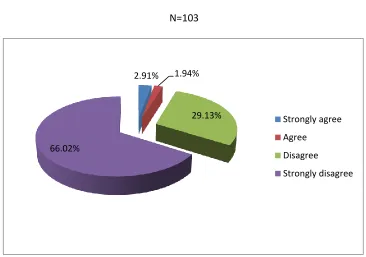
Figure 4. 3 Tutors‟ rating on MCLs being used only for Computer Studies ... 92
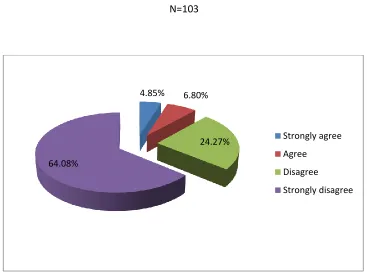
Figure 4. 4 Tutors‟ rating on using MCLs being a waste time ... 93
Figure 4. 5 Tutors‟ rating of using MCLs for internet search ... 101
Figure 4. 6 Tutors‟ frequency of using MCLs for lesson preparation ... 103
Figure 4. 7 Tutors‟ rating of using Avidanet Software in the MCLs ... 104
Figure 4. 8 Tutors‟ rating of use of digital content ... 106
Figure 4. 9Tutors‟ rating of using Edumatic exercises ... 108
Figure 4.10 In-service training on use of Multimedia Computer Laboratories .. 110
Figure 4. 11 Responses on availability of a colleague with expertise ... 118
Figure 4.12 College Principals‟ support for CT integration ... 120
Figure 4.13 Tutors‟ responses on MCLs enabling access to online tools ... 125
Figure 4.14 MCLs increasing student motivation and interest ... 126
Figure 4.15 Tutors‟ responses on the MCLs making work easier ... 128
Figure 4.16 Tutors' responses on how use of MCLs‟ enhances learning ... 129
ABSTRACT
CHAPTER ONE
INTRODUCTION AND BACKGROUND OF THE STUDY
1.1 Introduction
This chapter presents the background to the use of Computer Technology (CT) in
public primary teacher training colleges, detailing why and how it has been
adopted for pedagogical purposes at global and national levels. It puts into
perspective educators‟ perceptions and use of CT in learning institutions. It is
from this background that the problem has been defined, research objectives,
questions and hypotheses formulated. The chapter also presents the significance,
limitations and de limitations, assumptions, theoretical and conceptual
frameworks, and operational definition of key terms in the study.
1.2 Background to the study
A multimedia computer laboratory is a curriculum delivery room comprising of
computers and computer accessories including „Avidanet‟ software which enable
multimedia instruction. Mayer (2005) defines multimedia instruction as use of
two or more senses to stimulate learning. The importance of multimedia learning
is underpinned on the principle advanced by Mayer (2005) in his cognitive theory
graphics, animations and videos which according to UNESCO (2013) promotes
attentiveness, participation, understanding and retention among learners.
Research indicates that although current teaching practice welcomes technology into the curriculum, teachers‟ perceptions about it play an important role in its
adoption (ChanLin, 2005). Steketee (2005) points out that the potential for CT to
enhance teaching and learning cannot be realized unless teachers think
analytically about their teaching. Opati (2013) studied use of CT by lecturers in
teaching and learning at Makerere University and reported lecturers‟ perceptions
as a key factor influencing use of CT. Gulbahar (2007), in a study on technology
planning in Turkey, reported that although heavy educational investments had
been made, there was hardly any proof of CT adoption which he attributed mainly
to negative perception by teachers. In connection to those findings, this study
sought to investigate how tutors in PTTCs in Kenya perceived and used the
MCLs.
Having recognized the need for students to be skillful, creative and confident in
the use of Computer Technology (CT), education stakeholders have employed
various approaches to integrate it in teaching and learning. Jung (2005) in a
worldwide survey of CT integration in teacher training identified four main
of CT in the classroom as a pedagogical tool in specific subject areas. This
approach is also highlighted by Steketee (2005) in a literature review on
integration of CT in pre-service teacher training, as an essential component of any
teacher education program. Similarly, Jung (2005) cites Singapore‟s only teacher
training institute, the National Institute of Education that developed a curriculum
to promote CT use in every curricular subject. Other training approaches that
literature review reveals include; using CT to facilitate only some aspects of
teacher training and using it as the core method of teacher training (Jung, 2005).
The approach of using CT as a pedagogical tool for all subject areas is one of the
objectives of introduction of the MCLs. For effective use, tutors were trained on
how to use the MCLs to carry out curriculum implementation activities such as;
internet search for subject matter, drawing schemes of work and lesson plans,
presenting lessons using Avidanet software, teaching using digital content and
assessment using edumatic exercises (Republic of Kenya, 2010). The current
study investigated how tutors utilized the MCL user guidelines for lesson
preparation, presentation and evaluation.
correlate with application in real classroom situations. Simonson found that teachers who perceived CT as a useful pedagogical tool used it in teaching while those that perceived negatively barely used. Similarly, Drent and Meelissen (2008) studied factors influencing the innovativeness of CT application among 210 teachers in Holland and found that the tutors‟ perceptions directly and positively influenced the innovative use of CT.
The linkage between teacher‟s perceptions and actual computer use is reported by
other research studies (Enos, 2013; Buabeng, 2012; Jones, 2012; Mwalongo,
2011; Delfino et al, 2007; Dexter & Anderson, 2006, Jung 2005; & Drenoyianni
& Selwood 1998). However, these reports differ from reports by Korte et al
(2007) who in their survey of 27 European countries found low adoption of CT
among teachers despite the excitement of its introduction in teaching and learning.
Similarly, Buabeng (2012) in a survey of Ghanaian second cycle schools found
teachers‟ perceptions with regard to use of CT in learning as positive but adoption
was low. The contrasting views imply that there are underlying factors inhibiting
pedagogical use of the computers in spite of the positive perception by teachers
and trainers. Past studies reveal possible factors to be; personal characteristics,
training on CT use, access to CT and support on CT use (Isleem, 2003 & Less,
interventions. In connection to this, African countries just as the rest of the world
are paying attention to professional development of teachers to facilitate effective
application of CT in lesson preparation, presentation and evaluation (Hennessey,
Harrison & Wamakote, 2010). Steketee (2005), in a literature review of
integrating CT in pre-service teacher education programs advises on careful
scrutiny of the training courses that teacher trainees undergo during pre-service.
In concurrence, Jung (2005) concludes that a carefully designed teacher training program is key to successful application of CT by today‟s teachers. On that base,
the current study sought to find out tutors‟ views about the usefulness of MCLs as
instructional resources.
Reviewed studies show that some teachers who would be willing to integrate CT are discouraged by lack of commitment from the administration, inadequate access to CT and inadequate technical support. Ang‟ondi (2013) in a survey of ICT champions in a school in Poland reported how school administration would frustrate the teachers by keeping the computer room under lock and key and sometimes even accuse teachers of vandalism. Tella et al (2007), point at lack of technical support in the schools as one of the prominent factors hindering
readiness and confidence in using CT among Nigerian secondary school teachers.
numerous benefits arising from such integration. A survey of teachers‟ use of
computers in six European countries, showed that a large number of participants
was of the opinion that the use of computers and especially laptops was
significant as it impacted positively on learning by promoting individual learning
and enabling students to study after the timetabled hours (EU School net, 2010).
Positive impact of CT integration has been reported in developing countries as
well. Buabeng (2012) did a survey of teachers‟ competences and attitudes in use
of CT in Ghana and reported that CT improved learning by promoting
learner-oriented instruction, critical and creative thinking. Similarly, findings of a study
on classroom practices about use of CT in pre service teacher colleges in six
Asian countries (Singapore, China, Korea, Thailand, Vietnam and Philippines)
revealed that, the students benefited from diverse sources of subject matter and
not just textbooks. The case studies found that CT had special effects that
appealed to the senses of sight and hearing which in turn improved learning
(UNESCO, 2013). Literature reveals advantages of using graphic presentations
over the traditional methods that deal with real life situations. Van Joolingen and
DeJong, (2008) in a literature review highlighted practical reasons to use graphic
presentations: safety cost and time. Other researchers have found that computers
are a tool that makes work easier for the teacher (Hennessy et al 2010, Tella et al
teaching and learning in PTTCs in Kenya. Further, having been trained using CT it is expected that the graduating student teachers would use it in their own classes. This could assist the current Jubilee Government that is implementing Digital Learning Program (DLP) in primary schools across the country. During the 5th international conference on TVET at the Rift Valley Technical Training Institute, the then Cabinet Secretary, Dr. Fred Matiang‟i said,
The rolling out of DLP will bring about a change from the traditional classroom chalk and talk approaches to the state of the art Smart classroom. (Kaluoch, May 2016).
Research indicates that despite the enthusiasm about CT integration in teaching and learning among policy makers, low adoption by the implementers is a major concern. Ertmer, (2005) observes that in spite of apparent success in CT application in teaching as seen in the availability of computers, acquisition of
computer skills as well as encouraging policies, the rate of adoption is still low.
Literature review shows that across Africa and most developing countries,
inadequate facilities are a challenge in the use of CT in the education process. A
synthesis of literature review of factors influencing classroom use of CT in
Sub-Saharan Africa identified limited technology infrastructure as a leading cause
(Hennessy et al, 2010). Research studies agree that lack of adequate time hinders
effective implementation of CT. Kozma, et al, and (2004) point out that too often
the curriculum in developing countries is rigid and overloaded, leaving little time
various parts of the world (Bingimlas 2009, Maruti 2010, Khan, 2012 & Mwaniki
2013).
Introduction of MCLs in PTTCs was an effort by the Kenya Government towards
application of CT in classroom instruction. The impetus was provided by the
realization of the important place of CT in the modern society that saw the
government put in place a policy framework to guide implementation of CT in
education (Republic of Kenya, 2005).Consequently, the National ICT Strategy for
Education and Training (NISET) was developed to guide implementation of ICT
interventions.As a result, Televic NV, a Belgian company equipped PTTCs along
with some secondary schools with multimedia computer laboratories. It was a
pilot project that would be extended to other learning institutions. The aim was
that all target learning institutions would integrate CT in their delivery so as to
enhance access to learning opportunities and improvement of the quality of
curriculum instruction (Republic of Kenya, 2006). According to a report by the
Ministry of Education, all the equipment for the laboratories of the then 18 public
primary teacher training colleges targeted were received by the Ministry as
planned and installation of the equipment followed successfully (Republic of
Kenya, 2011).
The intent by the Government of Kenya to fast track application of CT in
Coalition Manifesto and the National Education Sector Support Program
(NESSP) 2013-2018.). Monitoring and evaluation of interventions such as CT
application in education is essential in providing information to stakeholders with
the aim of improving implementation of such interventions (World Bank, 2007).
Since MCL project was among the first projects of its kind in the education
sector, there was need to investigate how it was being perceived and
implemented.
1.3 Statement of the problem
The National Information and Communication Technology Policy (NICTP)
highlights investment in computer laboratory equipment as a fundamental element
for instruction in the 21st century (Republic of Kenya, 2006). It is against this
background that the Ministry of Education in collaboration with the Government
of Belgium in the year 2010 equipped all the 18 public primary teacher training
colleges in Kenya with multimedia computer laboratories to facilitate integration
of CT in training of pre service teachers (Republic of Kenya, 2011). Research has
shown that availability of CT infrastructure is not an end in itself as the
perceptions and capacity of the tutor to use it play a critical role (Erickson, 2005).
Monitoring and evaluation of interventions such as CT application in instruction
is essential in providing information to stakeholders with the aim of improving
training but has pointed at inadequate assessment of educators‟ perceptions and
utilization of ICT in learning institutions as a challenge (Republic of Kenya,
2012). It is in this context that this study was done in a bid to find out how tutors
perceived and used the MCLs.
1.3.1 Purpose of the study
The purpose of the study was to investigate tutors‟ perceptions and use of MCLs
in public primary teacher training colleges in Kenya. Findings would guide
stakeholders towards effective use of the MCLs in teacher training.
1.3.2 Objectives of the study
The study was guided by the following objectives:
1. To examine tutors‟ perceptions of Multimedia Computer Laboratories in
public primary teacher training colleges;
2. To Investigate tutors‟ use of the Multimedia Computer Laboratories in training
of primary school teachers;
3. To assess factors related to tutors‟ perceptions and use of the Multimedia
Computer Laboratories in training of primary school teachers;
4. To examine tutors‟ views about benefits about use of the Multimedia
Computer Laboratories in primary teacher training; and
5. To identify challenges tutors encounter when using the Multimedia Computer
Arising from the above stated objectives, the study sought to answer the following
questions;
1. What are tutors‟ perceptions about the use of Multimedia Computer
Laboratories as an instructional resource in PTTCs?
2. How do tutors use the Multimedia Computer Laboratories to train primary
school teachers?
3. In what ways do tutors use the Multimedia Computer Laboratories in
training of primary school teachers?
4. What are the factors related to tutors‟ perceptions and use of the
Multimedia Computer Laboratories as an instructional resource in the
training process?
5. What are the tutors‟ views about the benefits of using Multimedia
Computer Laboratories as an instructional resource?
6. What challenges do tutors encounter when using the Multimedia
Computer Laboratories in PTTCs?
1.4 Significance of the study
The findings of this study may be useful to curriculum developers at the Kenya
Institute for Curriculum Development (KICD) who are able get up to date
effective in the use of the MCLs.
Quality Assurance and Standard Officers, and even the researcher herself as a
curriculum specialist are expected to benefit from the findings of this study.
Problems cited and recommendations made could help them to come up with
different solutions that might help improve the perceptions and use of the MCLs.
Findings may be useful to the ruling Jubilee Government of Kenya which has one
of its flagships being provision of laptops for learning to all Standard One pupils
in public primary schools to facilitate Digital Learning Program (DLP);
…Improve the quality of teaching and learning by working with international partners to provide solar powered lap-top computers equipped with relevant content for every school age child in Kenya. (Jubilee Manifesto, 2013: 26).
This study has given insight on the level of computer use preparedness of the
primary school teachers. The study has shown gaps in the utilization of CT in
PTTCs and suggested ways of addressing them. Issues and lessons raised in this
study could be used by stakeholders to utilize CT in such a way that pre service
teachers are able to emulate and use in their own classes in the primary schools as
they implement DLP.
The research provided an opportunity to the tutors to express their views
examine their approaches and attitudes towards the MCLs.
The study raises issues and challenges on CT use in PTTCs which might be a base
for further research by other students and scholars interested in CT integration in
education. The underlying factors hindering effective utilization of CT in PTTCs
could be studied in more depth.
The published findings may also be of value to organizations such as the Televic
NV of Belgium whose agenda is to assist developing countries by supplying and
installing MCLs to facilitate application of CT in classroom instruction. The
organizations are able to gauge the usefulness of their effort.
1.5 Limitations and Delimitations of the Study
This section presents the limitations and delimitations of the Study:
1.5.1 Limitations
The following were the limitations of the study;
Tutors‟ opinions and perceptions of the MCLS were assessed through self
reported assessment. That was a limitation because people have a tendency to be
more sensitive when disclosing what they feel than what they know. A study of
perceptions such as the current one is likely to encounter responses that may not
in both Kenya and Africa in general, hence the researcher found it necessary to
review much literature from sources outside Africa.
The opinions of student teachers and the teachers who have graduated would have
enriched the study but it was not possible to cover them. Including them would
have required considerable finances, time and other logistical resources which
were beyond the reach of the researcher.
1.5.2 Delimitations
Integration of CT in teaching and learning in PTTCs is a wide subject. This study was limited to the investigation of tutors‟ perceptions and use of multimedia
computer laboratories in six of the eighteen PTTCs in Kenya.
The study confined itself to tutors in public teacher training colleges which were
the beneficiaries of the multimedia laboratories. Private teacher training colleges
were excluded since they were not part of the MCLs project.
1.6 Assumptions
The study was conducted under the following assumptions:
All PTTCs were provided with MCLs for the purpose of integrating CT in teacher
training. It was therefore assumed that CT was being applied in the learning
that they would improve training of teachers. It was assumed that application of
CT in teacher training would continue to be important in primary teacher
education curriculum.
Innovations diffuse through a process whereby some teachers adopt and others
fail to adopt the innovations. It was assumed that some tutors failed to adopt CT
because they encountered challenges while applying CT in training of primary
school teachers.
Multimedia Computer laboratories had a significant pedagogical role to play in
education and that using the laboratories could and would result in better
educational outcomes.
Some respondents might not respond truthfully for fear of being seen as
unprofessional or weak based on their demography or being negative to MCLs
and not using them while some might not answer at all. The researcher however
assured them of confidentiality and anonymity and that the data collected would
only be used for the purposes of research.
Appropriate interventions could change tutors‟ perceptions and use of the MCLs
study was based.
1.7 Theoretical and conceptual frameworks of the study
The following section presents theoretical and conceptual frameworks upon
which the study is based.
1.7.1 Theoretical framework of the study
The study was guided by Rogers‟ (2003) “Diffusion of Innovations Theory”
which explains how innovations diffuse among people. The theory explains why
some people adopt an innovation while others do not. To adopt an innovation is to
decide to make “full use of an innovation as the best course of action available”
and to reject is a decision “not to adopt an innovation” (2003:176). The following
are five steps that Rogers outlines with regard to diffusion of an innovation.
Rogers (2003) calls the first stage knowledge stage. This is the stage where the
individual gets to know the presence of an innovation and tries to find out more
about it. The next step, persuasion step, occurs when the individual has a negative
or positive attitude toward the innovation, but “the formation of a favourable or
unfavourable attitude toward an innovation does not always lead directly or
indirectly to an adoption or rejection” (Rogers, 2003: 177). This is the stage
where this study, as regards to the use of MCLs in PTTCs, found most tutors to
be. Evidently they had positive perceptions, yet they did not utilize the available
individual chooses to adopt or reject the innovation. The decision stage is then
followed by the implementation stage where an innovation is put into practice.
Rogers indicates that the implementer may need technical assistance from change
agents. He also says that reinvention may happen at the implementation stage
where an innovation is changed or modified by a user. Rogers states that the more
reinvention takes place, the more rapidly an innovation is adopted and becomes
institutionalized. According to him, as innovations, computers are the tools that
consist of many possible opportunities and applications, so computer technologies
are more open to reinvention (Rogers, 2003). In this connection, the current study
recommends decentralization of the computers and their accessories from the
MCLs to the classrooms in order to increase access by specific subject tutors.
The final stage according to Rogers (2003) is the confirmation stage. This is the
stage where the individual looks for support for his or her decision. This decision
can be reversed if the individual is exposed to conflicting messages about the
innovation. Depending on the support for adoption of the innovation and the
attitude of the individual, later adoption or discontinuance happens during this
stage. Discontinuance may occur if the individual rejects the innovation to adopt a
better innovation to replace it or the individual rejects the innovation because he
or she is not satisfied with its performance (Rogers, 2003). The current study has
wanting hence hindering adoption of the innovation.
Rogers (2003), describes the course by which innovations diffuse as a means of
reducing uncertainty. He says that there are certain elements of an innovation that
increase adoption of an innovation: relative advantage, compatibility, complexity,
trialability, and observability. He further states that an individual‟s perceptions of
these attributes predict the rate of adoption of innovations. He cautions that a new
idea does not get accepted easily despite having recognizable benefits, so the
usefulness of those elements of an innovation is catalysts of the course by which
innovations diffuse.
Introduction of the multimedia computer laboratories in PTTCs is an innovation
geared towards improving teaching and learning. However, individual tutors can
either accept it or reject. Rogers‟ (2003) theory explains that accepting and
adopting an innovation is a process characterized by various intervening
variables. This study, therefore, found it crucial to examine factors that are related
to perceptions and adoption or failure to adopt multimedia laboratory technology.
A review of research studies indicates that physical factors including education
policy, availability of computers, training of tutors in CT and support of tutors on
computer use are critical factors in adoption of CT in training of teachers
(Drenoyianni, 1998; Steketee, 2005; ChanLin, 2005; Hollow, 2009; Hennessey et
characteristics of the tutor: gender, age, and years of experience and professional
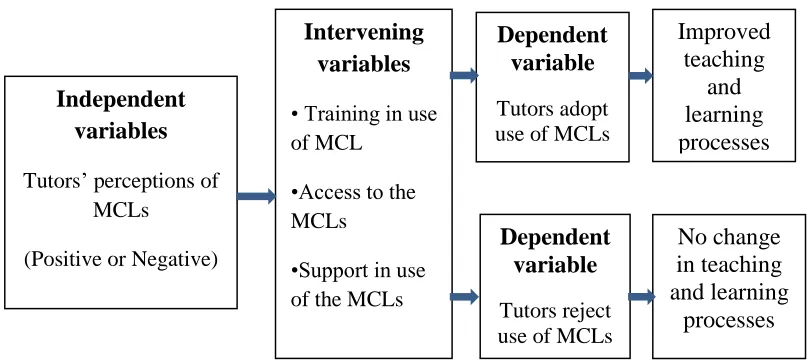
Figure 1.1 Own conceptualized relationship between tutors’ perceptions, use of MCLs and intervening variables
The conceptual framework illustrates the relationship of the research variables which are: the independent variable (tutors‟ perceptions of MCLs), the dependent
variables (adopting or rejecting use of MCLs) and intervening variables (factors
related to tutors‟ perceptions and use of the MCLs). Research has demonstrated
that educational innovations are realized in the teachers‟ way of thinking before
they become practice (Drenoyianni, 1998). Yet, that way of thinking is influenced
by external factors, referred to as intervening variables in the above conceptual
framework. An individual tutor, who has a positive perception of the MCLs, will
most likely adopt the use of the MCLs while the one whose perception is negative will reject. This argument is advanced by Rogers (2003) in his theory „Diffusion
of innovations‟ which states that a person who perceives an innovation positively Independent
variables Tutors‟ perceptions of
MCLs
(Positive or Negative)
Intervening variables • Training in use of MCL
•Access to the MCLs
•Support in use of the MCLs
Dependent variable Tutors adopt use of MCLs
Dependent variable Tutors reject use of MCLs
21
will adopt it while the one who perceives negatively will reject. Literature review
confirms the linkage between an individual‟s perceptions of CT and use. For
example, Drent and Meelesen (2007) in Netherlands found that teacher educators
who perceived CT positively used it for instruction while those who perceived it
negatively did not use. Opati (2013) reported a similar linkage in study among
teacher educators in Makerere University, Uganda.
The framework also shows that tutors‟ perceptions of MCLs are related to factors
such as: training in CT, access to MCLs, and support in use of MCLs. When those
factors are in place, adoption of the innovation will be realized but if they are
lacking rejection is likely to occur. The implication, which is confirmed by this
study, is that an individual tutor could have a positive perception of MCLs yet
reject use due to the intervening variables.
Finally, the conceptual framework illustrates that when the MCLs have been
adopted for instruction, the teaching and learning processes are improved. On the
other hand, if the MCLs are rejected the teaching and learning processes remain
22 1.8 Operational Definition of Key Terms
Avidanet: Refers to presentation software that facilitates use of multimedia
instruction in the MCLs.
Digital content: Refers to any information that is published or distributed in
electronic form including text, sound recordings, photographs and animations.
Edumatic: Refers to an authoring computer tool for developing exercises and
tests that cater for different levels of the cognitive domain.
Computer Technology: Refers to the use of the computers and computer
accessories for instruction in primary teacher training colleges.
Multimedia Computer Laboratory: Refers to a curriculum delivery room
equipped with computers and computer accessories such as video projector,
Video Cassette Recorder (VCR) for recording audio visual sounds.
Perceptions: Refers to the individual tutor‟s attitudes and beliefs about the
multimedia computer laboratories in PTTCs as a tool of improving training of
teachers.
Pre service teacher education: Refers to the training of primary school teachers
before they are accepted as professionals in education.
Use: Refers to conducting lessons in the MCLs and the various ways tutors use
23
CHAPTER TWO
REVIEW OF RELATED LITERATURE 2.1 Introduction
The study was set to investigate tutors‟ perceptions and use of multimedia
computer laboratories (MCLs) in primary teacher training colleges (PTTCs) in
Kenya. This chapter presents general literature review of integration of CT in
learning institutions under the following major headings in line with the
objectives of the study:
1. Brief background of pedagogical use of CT in PTTCs
2. Educators‟ perceptions about use of CT in teaching and learning;
3. Uses of CT in teaching and learning;
4. Factors related to perceptions and use of CT: characteristics of the teacher,
training in CT, access to CT, support in use of CT and benefits of using CT in
teaching and learning;
5. Benefits of use of CT into teaching and learning; and
6. Challenges in use of CT in teaching and learning.
2.2 Brief background of use of CT in PTTCs
Farrant (1993) in his book, ‟Principles and practice of education‟ observes that
teacher colleges have not been renowned for innovation. He notes that in the past,
24
education and sufficient practical training to enable them to teach competently the
syllabuses used in the schools. As a result;
…..many teachers in primary schools taught their children just what they learned in college. They dictated the notes they were given (Farrant 1993: 5)
Farrant (1993) says that the manner of teacher training is changing in response to
the new roles that teachers have to play in the face of socio-economic, political
and technological developments. Indeed, changes in teacher education have been
necessitated by the dynamic and transitional nature of society-education must
meet the growing demands of the society (Thungu, Wandera, Gachie &
Alumande 2008).
Sessional Paper No. 1 of 2005 (Republic of Kenya, 2005) and later sessional
Paper no, 14 of 2012 (Republic of Kenya, 2012), provided a structure guiding the
use of technology in education in Kenya. Effort was made towards equipping
PTTCs with the necessary infrastructure and human resource to facilitate teaching
ICT as a subject following its inclusion in the Primary Teacher Education PTE
syllabus in 2005(Kenya Institute of Education, 2004). One such effort is the
establishment of Centre for Mathematics, Science and Technology Education in
Africa (CEMASTEA) with the aim of providing in-service education and training
for Mathematics and Science teachers. CEMASTEA pedagogical model is student
centred teaching and learning and it is the foundation of CT-integrated lesson
25
In the year 2006, the Government through the sector of education established the
National ICT Strategy for Education and Training in order to guide
operationalization of ICT interventions. Indeed, in consistence, the Ministry of
Education launched the ICT Policy for Education and Training in August, 2006. It
went on to collaborate with Televic NV, a Belgian company, in equipping
primary teacher training colleges with multimedia computer laboratories (MCLs).
According to a report by the Ministry of Education, all the equipment for the
laboratories of the 18 public primary teacher training colleges targeted were
received by the Ministry as planned and installation of equipment followed
successfully (Republic of Kenya, 2011).
The Kenya National ICT Policy noted that the application of ICT within the
classrooms in Kenya was still in its infancy (Republic of Kenya 2006). New
initiatives were dominated by technical hitches. This study investigated
challenges tutors experienced while using the MCLs to integrate CT in teacher
training.
The PTE syllabus does not make provision for mainstreaming CT in all subjects
on claims that doing so would not adequately prepare the trainee teachers (Kenya
Institute of Education, 2004).The syllabus recommends that ICT department in
PTTCs should function as both a teaching department and also as a service
department for other departments in the college. It further advises the tutors on
26
effectively use the new tools in their own classes. This study investigated how
tutors of Education, Mathematics and Science subjects perceived and used the
MCLs as well as factors that influence perceptions and use.
2.3 Perceptions towards CT in teaching and learning.
Overall, reviewed studies reveal that a teacher‟s own beliefs towards
methodological inventions are key determinants to use of CT in their classes.
Pedagogical innovations are primary facilitators to teacher use of technology in
the classroom (Hennessy, et al, 2010). Mumtaz (2000), in an earlier study, claimed that a teacher‟s attitude toward using computers to teach is an integral
part of technological application. Similarly, Dexter, et al (2006) point out that the
way the teacher thinks is key in determining his or her instructional style. In the
interviews of the said study, the teachers made it clear that a transformation in
teaching approaches resulted from careful reasoning about what works and what doesn‟t work in the classroom. In their conclusion, Dexter et al (2006) report that
the teachers studied saw themselves as having made decisions about how best to
teach.
27
and Onchwari, 2008). This notion is in agreement with Rogers‟, (2003) observation that if the teacher perceives positively the use of CT, then adoption and integration into the teaching and learning processes becomes easy.
Using a quantitative approach (Simonson, 2004) explored attitudes of primary school teachers on using CT for instruction. The study was a correlation between how the teacher perceived and used CT in the lessons. Similarly, Drent, et al (2008) studied factors that influenced the inventive application of CT by 210 tutors in Holland and found a positive correlation between how the tutors perceived and use CT.
Similarly, in a case study of teachers‟ perceptions of CT implementation in a
primary school in Hongkong Ngan Ling Ma (2001) found that the four
participating interviewees in the school understood that CT would play an
increasingly important role in human learning. The four were willing to learn
computer skills and try to integrate them into classroom teaching.
A survey of factors affecting classroom use of computers by teachers in Sub-Saharan Africa reports that “teachers who perceive the use of CT as enhancing
recall of previous learning, providing new stimuli, activating the learner‟s response, and providing systematic and steady feedback will utilize it.” (Hennessy
et al, 2010:.43). Tella, Toyobo, Adika, and Adeyinka (2007) agree with this
28
study that teachers who use computers are prompted by the recognition of the
benefits arising from CT application and that perceived usefulness was also
strongly linked to those intentions.
The linkage between perceived benefits of computer use in the classroom and
actual use was also reported by Yuen and Ma (2003). They stated that computers
were valuable as long as the setting was appropriate and as long as the teacher
was conversant with computer pedagogical approaches. Similarly, Ang‟ondi
(2013) in a literature review revealed that although the majority of teachers
perceive CT as having the capability to advance classroom teaching, a large
number of teachers still did not recognize the value added by computers or the
best way to use them in order to get the desired results.
Indifference towards computer use was also reported by Buabeng (2012) who
studied Ghanaian second cycle schools. Ironically, teachers in the study regarded
computer use in teaching as beneficial but did not use it. Studies by Korte and
Husing (2007) and Korte and Oldfield (2010) also found a conflict between
teachers‟ attitudes and use of computers. They reported that despite the
enthusiasm among teachers upon receiving computers in the school, there was no
evidence of use probably because they did not see the value. The revelation of
positive perception not leading to use contrasted with studies that reported
existence of a relationship between teachers‟ perceptions and use of CT (Opati,
29
From a different perspective, Mulwa & Kyalo (2013) found negative attitude
towards integration of CT in conducting lessons as the main hindrance to the
effectiveness of an e- learning project in the New Partnership for Development
(NEPAD) in secondary schools in Kitui County in Kenya. A similar observation
is by Ang‟ondi (2013) in a survey of “Teachers Attitudes and Perceptions on the
use of ICT in teaching and learning as observed by ICT champions in Poland”. In
his report, ICT champions observed that many teachers felt that use of CT was an
unnecessary addition because they already felt overburdened. They claimed that “these teachers would make technical appearances during the training sessions,
come late for the training and sometimes even fail to show up completely for
training. After the training ended, these teachers would be seen in the computer
room but only reading the local daily on the internet or playing games on the
machines.” (Ang‟ondi, 2013: 40). The conduct of those teachers was an indication
of negative perceptions of CT among teachers who did not want to be bothered by
teaching differently. In line with those observations, this study surveyed the case of Education, Mathematics and Science tutors‟ perceptions towards MCLs in
PTTCs.
Thomas, Tyrrell and Bullock (1996), from their case study on use of ICT in
Mathematics suggest that the teachers' transition to a positive view of computer
use needs to develop from their experiences and this requires time. Five years
30
study of the tutors‟ perceptions about them and also their use had not been
investigated. This study used a survey to find out how tutors perceived and used
the MCLs as a means of integrating CT in Primary teacher education curriculum.
Research studies have demonstrated that a teacher‟s perceptions of CT are
fundamental in effecting change in classroom practice. A survey done among teachers in the UK shows that “change will not occur by simply adding a course
or recruiting a new faculty member who understands technology but rather what
is required is a transformation of the teacher‟s perceptions” (Drenoyianni, 1998:
88). This view is supported in a case study of two classrooms in an elementary
school in New Zealand (Ryba and Brown 2000). The researchers reported that teachers‟ personal philosophies about teaching and education generally determine
the place of computers in their classroom practices, concluding that a teacher who
believed in student cantered teaching approaches used computers in the
instruction process.
Review of literature indicates that tutors‟ beliefs about the benefits of integration
of CT can influence how they perceive and use it. Grossman (2008), reports that
many teachers are unsure of the benefits of using computers in class. He suggests
that in such cases, it might be better to avoid the use of CT because teachers who
feel forced will not deliver better lessons because they might use it for comical
31
Some teachers believe that CT is not as effective as the traditional „chalk and talk‟
on the basis of time spent. Grossman (2008) reports that some teachers feel that
undertaking a task by writing down as the lesson goes on is an effective time
saving approach considering the time spent moving to and from the computer
laboratory.
Ertmer (2005) is of the opinion that a scientific examination of beliefs is crucial as
they are not more readily observed. This study investigated what beliefs tutors
had towards the multimedia computer laboratories and how those beliefs
influenced their use of the laboratories.
2.4 Use of CT in teaching and learning.
This section presents a review of literature on use of CT in teaching and learning.
Many studies show a variety of education delivery possibilities using CT. An
example is the Society for Information Technology and Teacher Education (SITE)
which names three fundamental principles for effective CT use in teacher training
(Carstens and Pelgrum 2006). The first principle advanced by SITE is that
technology should be infused into the entire teacher education program. The
second principle is that CT applications should not be taught as separate topics
but rather should be used where applicable across all courses of the teacher
education program. The third of the key principles is that students should
32
teacher education program. This last principle requires that students should see
their lecturers engaging in technology to present their subjects, for example,
utilizing PowerPoint or simulations in lectures and demonstrations (Carstens and
Pelgrum 2006).
A review of research studies shows that these principles have been used to impart
knowledge and skills in different ways including basic computer operations and
higher level mathematical operations within the existing subjects or new subjects
(Tanui, Kiboss, Walaba and Nassiuma, 2008).The main objective of the
installation of the MCLs in PPTTCs was to use CT across all subject areas as
proposed by Tanui et al (2005).
Some studies reveal that institutions have come up with their own computer based
training resources. Jung (2005), for example, studied cases of CT application in
teacher training and gives examples of training resources found to be effective for
training pre-service teachers. One of them is „Captured Wisdom‟ (2005) which is a resource for training teachers in United States of America (USA). In the said
resource, the Compact discs of read- only- memory (CD-ROMs) contain video
descriptions and demonstrations of how technology is used in classrooms with
examples of real educators and learners using successful practices of technology
33
Jung (2005) further gives a detailed description of a course designed for
Singapore‟s only pre-service teacher training institute. He explains that there are
three kinds of computer courses for student teachers: basic ICT- skill (word
processing. power point, internet literacy and other technical skills), a 30-hour
ICT foundation course (effective use of instructional technologies in the
classroom) and a 26- hour elective course (design and production of computer
based instruction). Besides this, the student teachers are also expected to
undertake a five week practicum. In addition, there was 6-12 hours of ICT
integration into each curricular subject.
UNICEF has developed a course called „Teachers Talking About Learning‟ that is
intended for worldwide partnership among teachers in Third World countries by
use of the internet and television (Meyer and Rodriguez, 1999). It offers access to
teacher training resources and useful links and supports conversations among
teachers.
In the developed countries like USA and Canada there are well designed courses
both for virtual training as well as teacher training institutes (Jung, 2005).The idea
of specially designed courses for teacher training is gradually penetrating the
developing countries. However, in a case study by Wabuyele (2003), results
indicated that computer use in learning institutions in Kenya was then still in its
34
to 41% CT use by teachers in the classrooms but the percentage remained
considerably low in African countries such as Kenya.
In addition, the Kenya National ICT Strategic Policy (Republic of Kenya, 2006)
recognizes that in spite of the existence of many innovative interventions in CT
with regard to supporting sound and efficient provision of the curriculum in
learning institutions. However, the policy points out a substantial technology gap
in the use because most institutions still use archaic systems that are incapable of
exploiting the educational possibilities of the upcoming technologies.
The Kenya Vision 2030 concurs as it points a challenge in teacher training
colleges being the need to modernize it to reflect changing technologies and
delivery methods (Republic of Kenya, 2008). Similarly, the National ICT Strategy
for Education and Training aims at aiding procedures in learning establishments
to keep up-to-date technologies to improve instruction, and acquisition in line
with the demands of the present era (Republic of Kenya,2006).
The desire to embrace modern technology in education in Kenya is evident. Odera
(2011) in a study on computer utilization in Nyanza Province schools reports that
Kenya being a growing country has a fast growing number of learners that
demands an enhanced approach to teaching and learning. It would therefore be
35
the Kenyan community if the Ministry of Education (MOE) is to actualize
implementation of CT in learning (Republic of Kenya, 2006).
Customization of use of CT has been done elsewhere for example, Guatemala
where the Learn Link project has customised CT by developing socially suitable
digital resources to train teachers in the local Mayan language (Meyer and
Rodriguez, 1999). In Kenya, the „Intel Corporation Teach program‟ is presently
assisting teachers to incorporate CT in the existing teaching approaches at various
levels of learning aiming at aligning them to global trends (Karsenti, 2009). A „train the trainer‟ tool is given to selected participants from teacher training
colleges, Centre for Mathematics, Science and Technology Education in Africa
(CEMASTEA), Kenya Institute of Curriculum Development (KICD) and Kenya
Education Management Institute (KEMI), to work on the production of digital
materials (Republic of Kenya,2011). While the main content of ICT as a subject
in PTTCs is computer literacy, tutors are advised to be exemplary in the use of CT
in their own classes. (Kenya Institute of Education, 2008).
Research indicates that a lot of emphasis is still on CT literacy rather than pedagogical use. Padraig and Lawler (2007) in their study of „investing CT in
educational institutions in developing countries; an evaluation of their impact in
Kenya‟, found that computer laboratories were dedicated more to Computer
36
that acquisition of basic computer skills was given more attention than skills on
integration of the technology into teaching and learning. They reported that
90-94% of the students found computer lessons more interesting than other subjects.
This implies that if that interest was tapped by integrating CT in other subjects as
a pedagogical tool most probably better educational performance would be
realized.
Nevertheless, research studies indicate that as a pedagogical tool, the computer
should not substitute the teacher or the natural environment. Grossman (2008) in his study, „Supplementing textbooks with computer based resources in primary
classrooms‟, points out that the computer should never be used as substitution for
real life interaction with the environment, “children should paint with real paint,
dance real dances and collect real flowers rather than just doing these things on a
computer screen!” (Grossman, 2008 pg. 32)
In PTTCs in Kenya, digitized curriculum content is developed by Kenya Institute
of Curriculum Development (KICD) which has so far developed a curriculum for
Mathematics and Science subjects (Republic of Kenya, 2011). The Avidanet
software available in the multimedia computer laboratories also enables tutors to
develop their own digitized materials as well as customize online teaching
materials (Republic of Kenya, 2010). The PTE Syllabus Guide states that tutors
37
Education, 2008). It is upon the tutor to design how to apply CT appropriately and
this study sought to find out how it was done.
2.5 Factors related to perceptions and use of computer technology in education.
A review of literature shows some common factors influencing perceptions and use of CT in education that have been studied by various researchers. Isleem (2003) studied how much computers were used for instruction by teachers in
public schools in Ohio. The factors that Isleem selected for the study included “expertise, access, attitude, support, and teacher characteristics” which the study
found to significantly influence how much teachers used the CT.
Less (2003), in a quantitative research investigated how the faculty adoption of
CT for instruction in the North Carolina Community College applied CT based on
their individual characteristics (age, gender, race/ethnicity, teaching experience,
and highest degree attained). The study found the selected characteristics to
significantly influence the use of CT. Less found no significant difference existing
between users and non-users in demographic characteristics of age, gender,
race/ethnicity, teaching experience and highest degree attained.
Guided by past studies, the current study investigated demographics of tutors as well as physical characteristics of the PTTCs to determine tutors‟ perceptions and
38
computers, training in CT, support of tutors in computer use and benefits of CT
integration in teaching and learning.
This study reviewed research mainly done in educational institutions in the
western world where CT integration has been in existence much longer than
Kenya (Hennessy et al, 2010). The factors are analyzed here below.
2.5.1 Tutor characteristics
Tutors and teachers are encouraged to take up and use CT in their lessons but the
overall characteristic of the tutor or teacher is the greatest determinant to effective
use and not the sheer existence of computer equipment in the classroom (Jones,
2010). Schiller (2003) reported a significant relationship between educators‟
demographic characteristics and use of CT. Among the demographic
characteristics that literature review has exposed are gender, age bracket, teaching
experience and professional qualifications. Following is a discussion of those
characteristics:
There is some evidence pointing to the existence of correlation between gender of
a teacher and the usage CT: A survey of European schools (European
Commission, 2003), noted that gender was a factor which determined how
teachers used CT. The survey indicated that while 77% of male respondents used
39
gap in the use of the internet where male teachers who used were 56% compared
with female teachers at 38%.
Similarly, Markauskaite (2006) investigated gender differences in the use of CT
among first year pre service teachers and revealed significantly higher scores
among males than females in technical CT capabilities. In the same light low
levels of computer use among female teachers was attributed to factors such as
limited access to CT, inadequate skill, and lack of interest by Kay, (2006) in a
literature review.
Gender position against CT use as reported in Mid-Western US basic schools by
Breisser (2006) indicated improved technological skills among female teachers
compared to the male teachers. Yukselturk and Bulut (2009) reported that the gap
in the use of computer technologies between males and females had reduced over
the past years.
In contrast, other studies have reported that gender factor is not a clear predictor
of usage of CT in teaching (Norris, Sullivan, Poirot and Soloway, 2003). In
agreement with that view is a study done by Kay (2006) who reported that there
was no difference in computer attitude and ability between males and females
with regard to use of CT in classroom practice.
Genc, Sahin and Kahveci (2011) in a survey of demographics in relation to
40
characteristic. Apparently, most of the studies on the relationship between gender
and CT competences have been conducted in the developed countries. Therefore,
in the interest of finding out how gender influences perceptions and use of MCLs,
this study looked at the distribution of male and female participants.
A review of some past studies shows lack of correlation between teaching
experience and the use of CT technology in teaching. Granger, Morbey,
Lotherington, Owston and Wideman (2002) in a qualitative survey of factors
backing effective application of CT in Canadian schools did not find any
significant association between teaching knowhow and capabilities in using CT.,
Jong and Kim, (2008) reported lack of readiness among long serving Korean
teachers to use CT in their lessons. On a similar note, U.S National Centre for
Education Statistics, (2000) found less experienced teachers having a higher
tendency of using computers in the teaching process compared to the more
experienced ones. The said report indicated that as years of teaching experience
went up, time spent by the teachers in using CT went down. The explanation for
the negative correlation could be that new teachers had, during pre-service been
exposed to CT as one of the units in their course unlike the older ones.
In contrast though, some other studies show that teaching experience determines
effective use of CT in teaching and learning. For example, Wong & Li, (2008),
Giordano (2007) & Gorder (2008) reported that teacher experience is significantly