University of South Carolina
Scholar Commons
Theses and Dissertations
2018
Assessing the Strengths and Difficulties of Typically
Developing Siblings of Persons Born with Lifelong
Disabilities
Joseph Joseph Wofford University of South Carolina
Follow this and additional works at:https://scholarcommons.sc.edu/etd Part of theCounselor Education Commons
This Open Access Dissertation is brought to you by Scholar Commons. It has been accepted for inclusion in Theses and Dissertations by an authorized administrator of Scholar Commons. For more information, please [email protected].
Recommended Citation
Assessing the Strengths and Difficulties of Typically Developing Siblings of
Persons Born with Lifelong Disabilities
by
Joseph Rufus Wofford
Bachelor of Science
Columbia International University, 2004
Master of Arts
Columbia International University, 2010
________________________________________________
Submitted in Partial Fulfillment of the Requirements
For the Degree of Doctor of Philosophy in
Counselor Education
College of Education
University of South Carolina
2018
Accepted by:
Joshua M. Gold, Major Professor
Ryan G. Carlson, Committee Member
Jonathan H. Ohrt, Committee Member
Xiaofeng S. Liu, Committee Member
ii
iii DEDICATION
iv
ACKNOWLEDGEMENTS
Dr. Gold, thank you for the many early morning meetings, advice on navigating
the academic landscape, and for the many ways you helped with putting words to ideas.
Dr. Carlson, thank you for training me in how to conduct research and for the way
you modeled how to deal with shortcomings as well as success.
Dr. Ohrt, thank you for taking the time to write with me and for modeling a
decisive yet relaxed approach to training counselors.
Dr. Liu, thank you for your consistent encouragement to work things out on my
own and for answering my many questions when I was at my wit’s end.
I am grateful for the help of all the faculty in the Counselor Education program.
Colleagues and superiors past and present at Eau Claire Cooperative Health
Center, thank you for your support and flexibility as I pursued my education.
Glenda Nanna and Lyssa Harvey, thank you for your commitment to clients, to
the craft of counseling, to the art of supervision, and to me.
Mom and Dad, thank you for the strength you have manifested in the midst of
life’s difficulties. Your marriage stands as an Ebenezer.
My older brother Matt, thank you for living up to the title in every sense. Thank
you for your help with my grammar and wording toward the end of this project.
My children, thank you for playing with me (best therapy in town).
My wife Melissa, thank you for being an embodiment of Love in the sweetness
v ABSTRACT
In this study, strengths and difficulties of siblings of persons born with disabilities were
quantitatively assessed, based on parental perception, in comparison to national norms.
Answers of 148 parents to the Strengths and Difficulties Questionnaire (SDQ; Goodman,
1997; Youthinmind, n.d.a.) for children four to seven years old who are siblings of
persons born with lifelong disabilities (SPBDs) were gathered and analyzed. The
causal-comparative design compared each subscale of the SDQ for SBPDs against their
respective norms in the USA for females or males. SPBDs were found to have no
statistically significant difference from the norm group on emotional problems, and
neither male nor female SPBDs were found to have a statistically significant difference
from their norm counterparts in hyperactivity. The male SPBDs were found to have
greater reported conduct problems and peer problems than the norm group. The male
SPBDs were also found to have lower reported prosocial functioning than the norm
group. The female SPBDs were found to have greater reported conduct problems and
peer problems than the norm group. The female SPBDs were also found to have lower
reported prosocial functioning than the norm group. The final chapter includes an
vi
TABLE OF CONTENTS
DEDICATION ... iii
ACKNOWLEDGEMENTS ... iv
ABSTRACT ...v
LIST OF TABLES ... ix
LIST OF FIGURES ... xi
LIST OF ABBREVIATIONS ... xii
CHAPTER 1 INTRODUCTION ...1
PROBLEM STATEMENT ...5
NATURE OF THE STUDY ...6
PURPOSE OF THE STUDY ...9
OPERATIONAL DEFINITIONS ...9
ASPECTS OF THE RESEARCH PARADIGM AND SPECIFIC DESIGN. ...11
SIGNIFICANCE OF THE STUDY...13
TRANSITION STATEMENT ...16
CHAPTER 2 LITERATURE REVIEW ...17
PHILOSOPHY ...17
THEORIES ...18
PREVIOUS STUDIES...22
TRANSITION STATEMENT ...36
vii
RESEARCH DESIGN AND APPROACH ...39
SETTING AND SAMPLE ...46
INSTRUMENTATION AND MATERIALS ...49
DEFINITIONS OF CONSTRUCTS BASED ON SDQ CRITERIA ...51
DATA ANALYSIS ...52
MEASURES TO PROTECT PARTICIPANTS’ RIGHTS ...54
SUMMARY AND TRANSITION STATEMENT ...54
CHAPTER 4 RESULTS ...56
REVISED RESEARCH QUESTIONS AND HYPOTHESES ...57
RESEARCH TOOLS ...58
DESCRIPTIVE DATA RESULTS...60
INSTRUMENTATION FOR STUDY VARIABLES ...69
DATA ANALYSES...73
SUMMARY AND TRANSITION STATEMENT ...88
CHAPTER 5 DISCUSSION ...90
OVERVIEW ...90
INTERPRETATION OF FINDINGS ...102
SOCIAL CHANGE IMPLICATIONS AND RECOMMENDATIONS FOR ACTION ...108
LIMITATIONS ...115
RECOMMENDATIONS FOR FURTHER STUDY...115
CONCLUSION ...116
REFERENCES ...117
viii
APPENDIX B: APPROVAL FROM YOUTHINMIND TO USE SURVEY
VERSION OF SDQ ...130
APPENDIX C: FIRST AND SECOND WAVE SURVEYS ...132
APPENDIX D: LIST OF LOCATIONS AND RECRUITERS FOR THE
SURVEY...139
APPENDIX E: SIGN WITH QUICK RESPONSE (QR) CODE AND DIRECT
LINK ...140
APPENDIX F: RECORD OF CORRESPONDENCE WITH CDC AND
ix
LIST OF TABLES
Table 4.1 Exclusionary Variables for NHIS 2016 Norm Group ...61
Table 4.2 Survey Demographic Variables ...63
Table 4.3 NHIS 2016 Demographic Variables ...67
Table 4.4 Box’s Test of Equality of Covariance Matrices for Hypothesis Two...77
Table 4.5 Levene’s Test of Equality of Variances for Hypothesis Two ...77
Table 4.6 Box’s Test of Equality of Covariance Matrices for Hypothesis Three...81
Table 4.7 Levene’s Test of Equality of Variances for Hypothesis Three ...81
Table 4.8 Group Statistics for Hypothesis One ...82
Table 4.9 Independent Samples Test for Hypothesis One ...83
Table 4.10 Between-Subjects Factors for Hypothesis Two ...83
Table 4.11 Means and Standard Deviations for Hypothesis Two ...84
Table 4.12 Multivariate Tests for Hypothesis Two ...84
Table 4.13 Tests of Between-Subjects Effects for Hypothesis Two ...84
Table 4.14 Between-Subjects Factors for Hypothesis Three ...85
Table 4.15 Descriptive Statistics for Hypothesis Three ...86
Table 4.16 Multivariate Tests for Hypothesis Three ...86
Table 4.17 Tests of Between-Subjects Effects for Hypothesis Three ...86
Table 4.18 Group Statistics for Hypothesis Four...87
Table 4.19 Independent Samples Test for Hypothesis Four ...87
x
xi
LIST OF FIGURES
Figure 4.1 Linearity Check for Hypothesis Two ...75
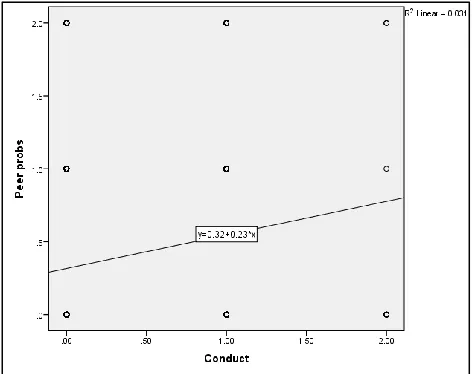
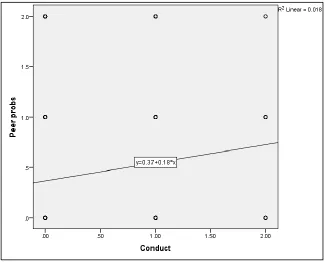
Figure 4.2 Conduct and Peer Problems Linear Relationship for Hypothesis Two ...75
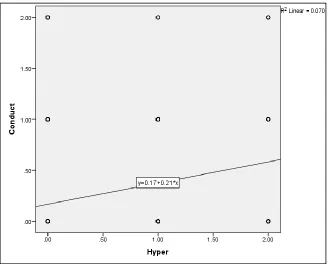
Figure 4.3 Hyperactivity and Conduct Linear Relationship for Hypothesis Two ...76
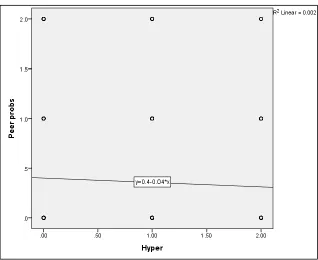
Figure 4.4 Hyperactivity and Peer Problems Linear Relationship Hypothesis Two ...76
Figure 4.5 Linearity Check for Hypothesis Three ...79
Figure 4.6 Conduct and Peer Problems Linear Relationship for Hypothesis Three ...79
Figure 4.7 Hyperactivity and Conduct Linear Relationship for Hypothesis Three ...80
Figure 4.8 Hyperactivity and Peer Problems Linear Relationship Hypothesis Three ...80
Figure 5.1 Sigmoid Curve (adapted from Handy, 1994) ...106
Figure 5.2 Overlapping Sigmoid Curves (adapted from Handy, 1994) ...107
xii
LIST OF ABBREVIATIONS
CDC ... Centers for Diseases Control
NHIS ... National Health Interview Survey
SD ... Sibling with a Disability
SDQ... Strengths and Difficulties Questionnaire
SPD ... Sibling of a Person with a Disability
1 CHAPTER 1
INTRODUCTION
Children aged 4-7 who are typically developing, yet who have a biological sibling
with a diagnosable lifelong disability from the time of birth represent a unique
population. Over time, treatment has moved from the limits of an individual focus to
more of a family focus, and the research documented in this dissertation reflects that
change in focus. For the purpose of this study, typically developing siblings of persons
with disabilities in general are referred to as siblings of persons with disabilities (SPDs)
and typically developing siblings of persons born with lifelong disabilities are referred to
as SPBDs. Where they are blended, they are referred to as SPDs. The siblings with actual
disabilities are referred to as SDs. To clarify, this study excludes siblings of persons with
abnormalities resulting from maternal alcohol or drug use when such a cause is specified.
The reason for this is that so much of sibling functioning is contingent upon systemic
factors of the family (Minuchin & Fishman, 1981; Mandleco, Olsen, Dyches, & Marshall
2003; Whitaker & Bumberry, 2004).
As indicated by Seligman and Darling (2007/2014), social progress has been
slower than clinical success when it comes to addressing the massive increase of persons
living with disabilities. Seligman and Darling go on to contrast a medical model with a
social model. Consider that a medical model may lead to a more individual focus, i.e.,
helping the SD to live as close to a typical life as possible through the use of
2
and perhaps a multitude of other professionals. Such an approach can lead to a neglect of
the family system in which the SD resides. If tunnel vision ensues, such an isolated
approach can cut short even the medically termed goals for the child. A social model
considers context and accommodations for the person with a disability. A systemic
approach carries a different potential for providing help to an SD. Minuchin (1974/2003),
referring to Gasset's 1961 text, Meditations on Quixote, typified the problem of a
professional helper ignoring context as comparable to an arctic explorer attempting to
head northward while traveling upon a faster southerly flowing iceberg.
When considering families of persons born with lifelong disabilities, it is possible
that support can be provided so that SPBDs do not become “invisible children” (Naylor
& Prescott, 2004, p. 199). Even when it comes to focusing on the SD, parents taking the
time to clarify an understanding of the disability with SPDs can help diminish grudges
that they may be harboring toward the SD (Seligman & Darling, 2007/2014). Therefore,
when considering the families of persons born with lifelong disabilities, aspects of the
typically developing siblings warrant some consideration.
Firstly, SPBDs have at least one sibling with a disability from the moment they
meet him/her. Secondly, SPBDs (and all family members for that matter) may not be
aware of the disability right away. While such naiveté can be difficult given the shock
that may arrive with a diagnosis, it can also serve as a buffer against that shock in the
early moments or days of getting to know the SD. Nonetheless, when a diagnosis does
arrive, the diagnosis itself can be a relief because at least the presenting problem (i.e.,
What is going on with my brother or sister?) has a name, and classification helps with
3
on and what might happen later can vary far outside the realm of reality, such as thinking
the disability is contagious (Siegel & Silverstein, 1994). Siegel and Silverstein also
highlighted that children aged 5-11 believe in fairy tales, and SPDs engage in imagining
their SD will one day no longer have the disability. McHugh (2003) indicated that SPDs
desire specific answers relevant to their age level, thus supporting the notion SPDs fare
better when informed than they do remaining naïve long-term. While that much is
known, little is known about the strengths and difficulties of SPBDs aged 4-7 years in the
USA, as measured by a valid and reliable instrument.
Concern about persons with disabilities and courtesy stigma for family members
has been a longstanding issue (Ali, Hassiotis, Strydom, & King, 2012; see also Gospel of
John 9:1-2). The USA formerly had a policy of institutionalization of persons with certain
developmental disabilities which lasted until JFK’s administration intervened to move the
nation toward more community-based care (Kennedy, 1963). The intervention helped
pave the way for in-home care for persons with disabilities and necessarily involved their
family members. The Tax Equity and Fiscal Responsibility Act of 1982 (TEFRA, Pub. L.
97-248), was passed under the Reagan administration and resulted in providing for the
healthcare costs of children with severe disabilities in the community rather than through
institutionalization, regardless of family income (Catalyst Center, 2012).
Moreover, families of persons with disabilities on the whole are more likely to
contend with a low socioeconomic status (Newacheck & Halfon, 1998; Parish, Rose,
Grinstein-Weiss, Richman, & Andrews, 2008). Secondly, SPDs may struggle with
internalizing unspoken jealousy or resentment over their SD, as author Kate Strohm
4
who has Special Needs (2005). At the same time, SPDs may be developing deep levels of
empathy and sensitivity to the needs of others (Mulroy, Robertson, Aiberti, Leonard, &
Bower, 2007), likely due to the many opportunities afforded them to practice such
strengths. Thus, they may have deep strengths formed collaboratively with deep
struggles. Conceptualizing this from a family systems perspective, it is worth noting that
“resilience is forged through adversity, not despite it” (Goldenberg, Stanton, &
Goldenberg, 2017, p.27).
The potential for a bimodal distribution of strengths and difficulties of SPBDs
also warrants consideration. For some SPBDs, their struggles may overshadow their
strengths. Indeed, Williams (1997) found through review of the literature for siblings of
children with long-lasting health problems that 60% of publications showed heightened
potential for problems, 30% did not identify potential for problems, and 10% found a
mixture of both beneficial and problematic outcomes.
When under stress, families tend to gravitate toward known modes of functioning
(Minuchin & Fishman, 1981). For families dealing with a chronic stressor, without
intervention it is conceivable that over time these modes of functioning will not only be
practiced regularly but also solidified. For example, if an SPBD takes on an early form of
the placater role (Satir, 1972), it may be that the chronic stress in the family serves to
support the roles of all family members and thus serves to reinforce the patterns the
placater practices so that it becomes a lifelong role for the SPD.
5
Problem Statement
While many studies have been conducted on siblings of persons with disabilities
as a whole outside of the counseling field, e.g., journals on intellectual disability
(Cunningham, Glenn, & Fitzpatrick, 2000), journals on pediatric psychology (Lobato &
Kao, 2005), journals on developmental disabilities (Meadan, Stoner, & Angell, 2010),
and journals on nursing (O'Brien, Duffy, & Nicholl, 2009), few have been done within
the field of counseling. As noted by Wofford and Carlson (2017) the counseling literature
over the past 20 years published eight articles which spoke, at times indirectly, to
interventions, activities, or referrals for siblings. Only Bodenhorn and Lawson (2003),
and Layne (2007), dealt with interventions specifically related to siblings. Additionally,
Lock, Hendricks, Bradley, and Layton (2010) provided information on a supportive
activity for a gathering of families of persons with disabilities. Considering that
approximately three percent of babies born in the USA each year have a disability
(Centers for Disease Control and Prevention; CDC, 2016), greater attention to the needs
of their families, including typically developing siblings, may improve service delivery
from counselors and open avenues of research for preventive initiatives as well.
Furthermore, while some studies on SPDs have been conducted in locations
outside of the USA, such as the UK (e.g., Cunningham, 1996) and Australia (Giallo,
Roberts, Emerson, Wood, & Gavidia-Payne, 2014), it remains to be seen whether
findings from such studies would hold true in the USA with its varied demographics and
multifaceted healthcare system which differs not only by socioeconomic status but also
state by state. A major question is how SPBDs fare in terms of strengths and struggles
6
accompany unique difficulties, as measured by a valid and reliable instrument normed for
children in the USA? At the time of the study, there was no literature that answered this
question specific to SPBDs through the use of an instrument such as the Strengths and
Difficulties Questionnaire (SDQ; Goodman, 1997; Youthinmind, n.d.a.). Such was the
aim of this study.
Nature of the Study
This study employed a quantitative, causal-comparative research design using the
Strengths and Difficulties Questionnaire (SDQ; Goodman, 1997; Youthinmind, n.d.a.)
with SPBDs aged 4-7 years. Due to the differing norms in the USA, the siblings are
divided into males and females except for emotional symptoms (in which they remain
combined due to lack of significant difference in the norms). The questionnaire about
children 4-7 years old was answered by parents. The original research questions and
hypotheses for the study are stated below, followed by the revised research questions and
hypotheses, due to the nature of the data that could be accessed at the time of the study.
Please see chapter three for a more detailed discussion on the nature of the study.
Original Research Questions:
1. Is there a difference between parental perceptions of SPBDs 4-7 years of age and the
norms for children of the same age-range in the USA when they are compared on
emotional problems, as measured by the SDQ?
2. Is there a difference between parental perceptions of male SPBDs 4-7 years of age and
the norms for male children of the same age-range in the USA when they are compared
simultaneously on conduct problems, hyperactivity, peer problems, and prosocial
7
3. Is there a difference between parental perceptions of female SPBDs 4-7 years of age
and the norms for female children of the same age-range in the USA when they are
compared simultaneously on conduct problems, hyperactivity, peer problems, and
prosocial behavior, as measured by the SDQ?
Original Alternative Hypotheses:
1. There is a significant difference between parental perceptions of SPBDs 4-7 years of
age and the norms for children of the same age-range in the USA when they are
compared on emotional problems, as measured by the SDQ.
2. There is a significant difference between parental perceptions of male SPBDs 4-7 years
of age and the norms for children of the same age-range in the USA when they are
compared simultaneously on conduct problems, hyperactivity, peer problems, and
prosocial behavior, as measured by the SDQ.
3. There is a significant difference between parental perceptions of female SPBDs 4-7
years of age and the norms for female children of the same age-range in the USA when
they are compared simultaneously on conduct problems, hyperactivity, peer problems,
and prosocial behavior, as measured by the SDQ.
Revised Research Questions:
1. Is there a difference between parental perceptions of SPBDs 4-7 years of age and the
norms for children of the same age-range in the USA when they are compared on
emotional problems, as measured by the SDQ?
2. Is there a difference between parental perceptions of male SPBDs 4-7 years of age and
8
simultaneously on conduct problems, hyperactivity, and peer problems, as measured by
the SDQ?
3. Is there a difference between parental perceptions of female SPBDs 4-7 years of age
and the norms for female children of the same age-range in the USA when they are
compared simultaneously on conduct problems, hyperactivity, and peer problems, as
measured by the SDQ?
4. Is there a difference between parental perceptions of male SPBDs 4-7 years of age and
the norms for male children of the same age-range in the USA when they are compared
on prosocial behavior, as measured by the SDQ?
5. Is there a difference between parental perceptions of female SPBDs 4-7 years of age
and the norms for female children of the same age-range in the USA when they are
compared on prosocial behavior, as measured by the SDQ?
Revised Alternative Hypotheses:
1. There is a significant difference between parental perceptions of SPBDs 4-7 years of
age and the norms for children of the same age-range in the USA when they are
compared on emotional problems, as measured by the SDQ.
2. There is a significant difference between parental perceptions of male SPBDs 4-7 years
of age and the norms for male children of the same age-range in the USA when they are
compared simultaneously on conduct problems, hyperactivity, and peer problems, as
measured by the SDQ.
3. There is a significant difference between parental perceptions of female SPBDs 4-7
9
they are compared simultaneously on conduct problems, hyperactivity, and peer
problems, as measured by the SDQ.
4. There is a significant difference between parental perceptions of male SPBDs 4-7 years
of age and the norms for children of the same age-range in the USA when they are
compared on prosocial behavior, as measured by the SDQ.
5. There is a significant difference between parental perceptions of female SPBDs 4-7
years of age and the norms for female children of the same age-range in the USA when
they are compared on prosocial behavior, as measured by the SDQ.
Purpose of the Study
The purpose of the proposed study was to identify strengths and difficulties of
persons 4-7 years of age who are siblings of persons born with lifelong disabilities
(SPBDs) that are diagnosable from or prior to birth who are residing in the USA. This
exploration was conducted through the administration of a survey containing the Strength
and Difficulties Questionnaire (SDQ; Goodman, 1997; Youthinmind, n.d.a.) to parents
who provided their perspective on their children who are SPBDs, and comparing those
answers to results from the National Health Interview Survey for 2016 (CDC, 2017) and,
due to the NHIS no longer inquiring about prosocial behavior, the summary data drawn
from an earlier NHIS for SDQ norming (Youthinmind, n.d.b.). This study exists to shed
light for counselors of this population so as to aid in the search for strengths at intake as
well as potential areas for growth.
Operational Definitions
10
Conduct problems – For the purpose of this study, the meaning is limited to the definition
provided by the author of the SDQ subscale for conduct problems, which is described in
chapter three.
Born with – Occurring by the time of birth.
Disability – A medically diagnosable disorder that limits a person from achieving a
standard level of functioning. For the purpose of this study, the phrase “born with” often
appears with the term “disability” to signify the distinction that if a person is born with a
disability, it is diagnosable and said to have occurred by the time of birth, even if
symptoms did not manifest immediately after delivery or the diagnosis came later (e.g.,
with a sensory disability such congenital blindness or deafness). Where there is current
uncertainty about the epidemiology of a disorder, it is not included in the category of
“born with a disability” (e.g., autism spectrum disorder is not in the “born with” category
at this time). Due to the confounding factor of maternal substance use on child
functioning, disorders known to be caused by maternal alcohol or drug use (such as Fetal
Alcohol Syndrome) are excluded from consideration in this study even though the child
is indeed born with the disability. The reason for this is that so much of sibling
functioning is contingent upon systemic factors of the family (Minuchin & Fishman,
1981; Mandleco, Olsen, Dyches, & Marshall 2003; Whitaker & Bumberry, 2004).
Emotional problems – For the purpose of this study, the meaning is limited to the
definition provided by the author of the SDQ subscale for emotional problems, which is
11
Hyperactivity – For the purpose of this study, the meaning is limited to the definition
provided by the author of the SDQ subscale for hyperactivity, which is described in
chapter three.
Parent – Biological or step father or mother of children who either has primary custody or
resides in the home with the children, or both.
Peer problems – For the purpose of this study, the meaning is limited to the definition
provided by the author of the SDQ subscale for peer problems, which is described in
chapter three.
Prosocial behavior – For the purpose of this study, the meaning is limited to the definition
provided by the author of the SDQ subscale for prosocial behavior, which is described in
chapter three.
Sibling – Biological full or half brother or sister to another person.
Aspects of the Research Paradigm and Specific Design
Assumptions
The assumptions of quantitative inquiry apply to this study. These assumptions
include the epistemological notion that truth exists and though it may not be directly
accessible, what is not true can nearly be accessible to within a certain percentage of
predictability (i.e., the alpha level is the predicted level at which one can reject the null
hypothesis). An additional assumption is that the constructs are normally distributed
among the population, thus with a representative sample a reasonable level of objectivity
and generalizability is attainable.
The proposed study is causal-comparative. This method of inquiry serves as a
12
participants who possess a specific variable and comparing them to the norm (Borg,
1963). In that sense, a causal-comparative study purports to explain what is known and
how to progress without being able to fully explain the past, because some outside factor
could be influencing the factors under consideration (Huck, 2009), and any significant
finding cannot officially be declared without replication. In keeping with the variable
descriptors recommended for non-experimental counseling research (Heppner, Wampold,
Kivlighan, 2008) the presence of a sibling born with a lifelong disability is considered a
predictor variable, and each subscale score is considered a criterion variable. Covariates
would also have been used if assumptions were met for the independent variable not
influencing the covariate variable, equal regression slopes, and linearity (Huck, 2009).
However, covariates were not used in this study for reasons explained later in this text.
The reason for using causal-comparative research in this instance is that the predictor
variable is already present and it would be unethical to create it for the sake of research
(Lodico, Spaulding, & Voegtle, 2006). Lastly, findings from this study only apply to
SPBDs aged 4-7 years, living in the USA, and may not generalize to SPDs of a similar
age range even in the USA.
Limitations
Threats to validity for this study include a lack of randomization (because the
study was non-experimental), subject selection (it is possible that some participants in
South Carolina may be known by the author), other-report (parent report about the child),
and participant bias in answering the SDQ. As there is no manipulation of variables
13
evidence of particular findings, yet this would only point to a potential cause, not clear
proof (Lodico, Spaulding, & Voegtle 2006).
Scope
This study involved use of SDQ subscale scores for parent perspectives of SBPDs
4-7 years of age who are residing in the USA, in comparison national norms on those
subscales.
Delimitations
The researcher chose to recruit participants heavily within South Carolina as this
is the state in which the researcher has a network of individuals and organizations that
could be called upon to participate or recruit participants. The researcher sought to recruit
participants through word of mouth and through organizations which serve families of
persons born with disabilities such as a family networking organization.
The SDQ was selected over other measures because it has been normed for the
USA (Bourdon, Goodman, Rae, Simpson, & Koretz, 2005) and it has sufficient breadth
and depth which should aid in the response rate. Furthermore, one study found that
mothers of low-risk children preferred the SDQ over the Child Behavior Checklist
(CBCL; Achenbach, 1991), the SDQ was better than the CBCL at identifying
hyperactivity and inattentiveness, and it has a similar capacity to identify problems of
both externalizing and internalizing (Goodman & Scott, 1999).
Significance of the Study
Knowledge Generation
This study served to generate heretofore veiled knowledge in the area of strengths
14
clients who resemble the sample, and researchers can look to this study as a model for
future studies. Furthermore, a view to strengths can lead to social change in that
potentially deficit-laden perspectives of SPBDs can be replaced with a view that includes
their strengths as co-existing with any difficulties revealed. Moreover, if this study is
replicated then a counselor may be able to hypothesize the presence of certain
manifestations of strength and difficulty for clients who are SBPDs, as well as use this
model for future research.
Professional Application
Decades ago, it was known that SPDs may be more likely to present for
counseling than the child with a disability (Poznanski, 1969). The reason it is important
to search for strengths at an intake is because it is from strengths that clients grow (Ivey
& Ivey, 2007), and often from growth that presenting problems are overcome or at least
become manageable. Therefore, if counselors explore clients’ strengths at intake, this
tactic exhibits a focus on growth rather than mere symptom reduction, aids in the
building of the therapeutic alliance, and provides a springboard for delving further into
idiomatic strengths of the client/family (Duncan, 2014).
As the therapeutic alliance is said to have a greater effect on outcomes than
theoretical approach (Duncan, 2014), an emphasis on building up the alliance should fit
with a number of therapeutic models and thus serve to inform the field of counseling at
large. As Duncan points out, counselors skilled at building the therapeutic alliance focus
on it right from the start.
While child therapists may nod to the finding that behavioral therapy for children
15
acknowledge this finding is based on statistical significance, not clinical significance.
Family systems approaches have also been shown to be efficacious in families dealing
with a variety of presenting problems (e.g., see Goldenberg, Stanton, and Goldenberg,
2017, ch. 16). Play therapists come to that modality from a variety of backgrounds and
yet are for the most part agreed on helping children through means of play, toys, art, and
metaphors. So, regardless of the theoretical approach, the counselor during the intake
with a child SPBD might manifest a bit of an “Aha” realization in counseling when
lighting upon the discovery the client/identified patient is an SPBD and say something
like, “Well I’m willing to bet that you have some real strong parts of you and that you
have a certain way of seeing others and the world that could help us work together for
you to overcome [insert presenting problem]. I’m also willing to bet that the same things
that help make you strong also led to some struggles you may or may not think about
much, and we can look at those too. Either way, you and your family can help me know
what your world is like, and what their world is like, and we can go from there.”
Counselors equipped with the knowledge gleaned from this study can also have
some ready-made points to discuss with families of SPBDs in order to normalize some of
their struggles and promote their strengths.
Social Change
As this research is promoted through presentation and publication, the wider
world will be made aware of not only the difficulties faced by SPBDs, but also some of
their strengths. Thus, parents may find the results useful in considering whether or not to
have another child if they already have a child born with a disability. Teachers may find
16
Furthermore, policymakers, charity organizations, and non-profits may be better
equipped to render funding decisions about support programs such as Sibshops (Meyer,
Vadasy, & Fewell, 1985; Sibling Support Project, 2015), workshops designed to facilitate
connection and support for siblings of persons with disabilities.
Transition Statement
This chapter describes the content of the proposal which was approved and
carried out to research parental perceptions of siblings of persons born with disabilities
(SPBDs) aged 4-7 years in the USA, in the areas of emotional problems, conduct
problems, hyperactivity, peer problems, and prosocial behavior, as measured by the
Strengths and Difficulties Questionnaire (SDQ), compared to norms of parental
perceptions for males and females of the same age in the USA. It was hypothesized that
differences would be found based on group membership. Given the findings discussed in
later chapters, counselors can be informed about these areas for SPBDs from the outset,
should they or their families present for counseling.
The chapters that follow serve to provide greater details on the study and the
results. Chapter two provides a review of related research on siblings of persons with
disabilities. Chapter three provides details about the study design. Chapter four provides
details about the data analysis. In closing, chapter five provides an interpretation of the
findings, implications for social change, as well as recommendations for further action
17 CHAPTER 2
LITERATURE REVIEW
This review of the literature provides an explanation of the philosophy behind
quantitative research as well as an overview of a systemic perspective on people in
context. Afterward, theory specific to causal-comparative research is explored. This is
followed by a review of previous studies regarding siblings of persons born with
disabilities (SPBDs) as well as siblings of persons with disabilities (SPDs). Literature on
SPDs is included due to the dearth of literature specific to SPBDs. Searching concurrent
with the writing of this dissertation used PsycARTICLES, Psychology and Behavioral
Sciences Collection, PsycINFO, and Social Sciences Full Text (H.W. Wilson) using
scholarly (peer reviewed) specifier, subject terms “sibling”, “disability”, and “child”.
Note that as of March 13th, 2017, no results were found for 2017. In order to replicate this
search, the years of publication must be limited from 2012-2017.The previous studies are
divided into sections based on conceptual articles/literature reviews, qualitative studies,
and quantitative studies. Lastly, a synopsis of key points for the study is provided along
with an overview of the content of remaining chapters.
Philosophy
According to Lodico, Spaulding, & Voegtle (2006), quantitative inquiry is based
upon scientific realism which is founded upon positivist thinking. They point out that
positivist thinking is often used in physical sciences in the area of measurement (e.g.,
18
psychological reality, and the composite parts of that reality can be individually and
collectively researched so as to understand how they relate to one another. Lodico et al.
highlighted an important caveat to be aware of in terms of recognizing the possibility of
human error though, so reported results are given in terms of probability. Phillips and
Burbules (2000), writing from a postpositivist perspective, criticized a purely positivist
approach in their assertion that knowledge is “conjectural” (p. 29) and thus “always
subject to reconsideration” (p. 30).
Lodico et al. (2006) further noted that quantitative researchers seek a certain level
of confidence in what they find, and they seek to remain detached from participants in
attempt to remain objective and free of values and biases which could otherwise
influence the study. Lodico et al. further noted that “different persons have different
perceptions of reality; however, they [scientific realists] assume that experiences overlap
to a large degree and that a good researcher can take these different perceptions into
account in providing the best possible explanation of reality” (p. 7).
Central aspects of quantitative inquiry on the topic of strengths and difficulties of
children are as follows. Every child exhibits strengths and difficulties. Furthermore, these
strengths and difficulties can be defined and measured. For children 4-7 years of age,
parents are typically able to report on them via answers to a valid and reliable instrument
which operationally defines those constructs.
Theories
Family Systems
From a systemic perspective, strengths exist alongside difficulties and as a duality
19
micro-level, yet they respond to their environments as well as influence them, and
systems influence individuals in manifold ways, especially family systems. These ideas
are drawn from Minuchin and Fishman (1981) who applied Arthur Koestler’s term
“holon” (p. 13) to any person in a family, indicating that the individual cannot be
conceptualized apart from the whole. Minuchin and Fishman conceded that it is difficult
for persons brought up in Western culture to think in such terms, yet presented a cogent
argument as to precisely why this frame of mind is helpful when considering families.
Whitaker’s conceptualization of persons went still further in that he mused that
there is no individual, rather what we call individuals are actually just "fragments of
families" (Whitaker & Bumberry, 2004, p.19). To risk a metaphor, consider that one
cannot conceptualize an opposable thumb apart from the hand to which it is attached.
Additionally, consider viewing Knoff's (1986/2003) graphical depiction of the ecological
approach to conceptualizing persons, which involves multiple overlapping systems
beyond just the person and family. Bronfenbrenner's (1994) outline of the ecological
approach is a tool which captures the importance of context in understanding human
functioning embedded in multiple layers of environment. Bronfenbrenner indicates a
variety of systems which affect a person: microsystems (exchanges in which the
individual is directly involved, such as family), mesosytems (exchanges which involve
part of the microsystem and part of another system which affects the individual, such as
family and school), exosystems (e.g., contexts which are outside of direct contact with
the individual yet still have an impact, such as parental workplace) macrosystems
20
impact, such as cultural influences), and chronosystem (e.g., time, historic/hemispheric/
global events).
The views described above can be applied to SPBDs. They can be studied on an
individual level when bearing in mind the contexts which they occupy will vary, as will
the contexts which occupy them (i.e., the ways their contexts may be framed in their
minds). Again borrowing from a systemic perspective, the statement that “resilience is
forged through adversity, not despite it” (Goldenberg, Stanton, & Goldenberg, 2017,
p.27), sums up one way that strengths and difficulties may contribute to the development
of SPBDs.
Furthermore, children born with disabilities in the USA are no longer regularly
institutionalized. Rather, they stay with their family, which means that the care and
raising of these children becomes a family concern. Thus, that concern likely has an
effect on the growth of SPBDs. This effect may lead to mixed outcomes for SPBDs, with
a sort of bifurcated trajectory leading to unique difficulties as well as unique strengths.
An answer to whether or not this is so for SPBDs 4-7 years of age in the USA old had not
been quantitatively measured using the Strengths and Difficulties Questionnaire (SDQ;
Goodman, 1997; Youthinmind, n.d.a.) prior to the current study, which is precisely why
it was the focus of the current study. Lastly, this theoretical foundation led to the
consideration of parental relationship status as a potential covariate in the analyses, as
that is a major part of the family structure in which the children are raised. In terms of the
independent variable not influencing the covariate, the data is mixed on this point.
Consider that having a very low birthweight infant is associated with a 90% chance of
21
marriage within two years when the child does not have a very low birthweight
(Swaminathan, Alexander, and Boulet, 2006). However, number of children did not
magnify chances of divorce for parents of a child with developmental disability
(Namkung, Song, Greenberg, Mailick, & Floyd, 2015). As indicated by Seligman and
Darling (2007/2014) regarding their review of the literature in this area, more research
needs to be conducted relative to marriages in families of children with disabilities
compared to families of children without disabilities.
Quantitative Inquiry
Theories of quantitative studies hold to the concept of scientific realism (Lodico
et al, 2006). Lodico et al. further specify that quantitative inquiry uses numbers to
illustrate constructs, labeled as variables in research, which are considered real and can
be measured though they cannot be seen (e.g., educational attainment). This is all done in
an attempt to sort through the causes and effects of various areas of interest. Researchers
use instruments which can be summed up numerically, such as questionnaires.
Causal-comparative research is subsumed within a quantitative approach. This
method of inquiry serves as a connection between descriptive and experimental research,
basically examining participants who possess a specific variable and comparing them to
the norm (Borg, 1963). In that sense, a causal-comparative study purports to explain what
is known and how to progress without being able to fully explain the past, because some
outside factor could be influencing the factors under consideration (Huck, 2009), and any
significant finding cannot officially be declared without replication. In keeping with the
variable descriptors recommended for non-experimental counseling research (Heppner,
22
a predictor variable, and each subscale score is considered a criterion variable. The
reason for using causal-comparative research in this instance is that the predictor variable
is already present and it would be unethical to create it for the sake of research (Lodico et
al., 2006).
Previous Studies
Previous studies on the topic of siblings of persons with disabilities (SPDs) and
siblings of persons born with disabilities (SPBDs) are reported in order of the nature of
the study (conceptual articles / literature reviews, qualitative, and quantitative) and then
chronological order. Searching concurrent with the writing of this dissertation used
PsycARTICLES, Psychology and Behavioral Sciences Collection, PsycINFO, and Social
Sciences Full Text (H.W. Wilson) using scholarly (peer reviewed) specifier, subject
terms “sibling”, “disability”, and “child”. Note that as of March 13th
, 2017, no results
were found for 2017. In order to replicate this search, the years of publication must be
limited from 2012-2017.
Conceptual Articles / Literature Reviews
Hewitt, Agosta, Heller, Williams, and Reinke (2013) researched information
regarding families of persons with developmental disabilities and intellectual disabilities.
They recognized the likelihood of SPDs being the eventual caregivers of their SDs. They
stated as follows regarding supports for families: (a) family involvement in
decision-making comes with an opportunity cost when it may be possible for the SD to
self-advocate; (b) no universal definition for family support as it varies depending on the
state, and support of the SD is construed by some to be family support; (c) no national
23
decisions; (d) expanding call for support for persons with disabilities living at home with
their families, partially due to increased life-expectancy, and state caps on spending shed
light on the view that in-home services may be less expensive than services outside of the
home; (e) relying too much on federal Medicaid dollars, with state officials seeking to get
resources to people needing in-home support through waivers, with caps on the
allocations, and Medicaid is not designed to benefit families but rather the individuals
with disabilities; (f) no focus on adult SPDs, some of whom may be primary caregivers to
their SDs. Hewitt et al. shed light on the overall state of affairs for families of persons
with disabilities, yet they did not utilize a survey and their article focused mostly on adult
siblings when writing about SPDs. However, the current study utilized a survey and
focused on parent perspectives of SPBDs 4-7 years of age.
Riley and Rubarth (2015) described how a multifaceted approach from healthcare
professionals is needed to help the family. The researchers highlighted how babies born
with low-birth-weight and severe problems have experienced heightened survival rates
due to current medical practices. They also described the effect of having a child with a
disability and supports for families of such children. Riley and Rubarth’s review of the
literature revealed mixed results rather than a monolithic finding regarding families’
reactions to having a child with a disability. They mentioned that supporting the parents,
emotionally, resulted in better family functioning. However, when it comes to peer
support groups for SPDs, they reported the literature shows mixed results. The
researchers indicated the following resources as helpful: a medical home, early childhood
intervention and involvement in an early head start program for the child with the
24
emphasizing how nurses can help parents through reframing and a search for the upside
to having a child with a disability. While Riley and Rubarth’s study contributes the
literature on SPDs, it is a conceptual article for informing practitioners, whereas the
current study was causal-comparative with an eye toward generating heretofore veiled
information.
Mandleco and Webb (2015) conducted a literature review on perceptions of
siblings of persons with Down syndrome or autism. Of 277 articles and two manuscripts,
they included 26 articles and the two manuscripts. They included qualitative, quantitative,
and mixed-methods articles in their review. They reported emergent themes regarding
SPD knowledge about the disability, experiences interacting with others, perception of
the disability, affective reactions to the experience, and outcomes regarding behavior
and/or personality. They concluded that educating siblings about the disability is a must,
siblings of persons with autism had more difficulty interacting with the SD than siblings
of persons with Down syndrome, and the former also indicated more peer difficulties as a
result of having an SD. SPDs from both groups reported affective reactions on the
negative side, such as anger or sadness, and positive affective reactions, such as empathy.
Compared to siblings of typically developing children, SPDs from both groups were said
to have “better self-concepts” (p. 151), exhibited more caring, kindness, and helpfulness,
and took on increased responsibilities in the home. However, they noted that some
siblings of persons with autism looked upon the increased responsibility in a negative
light. Mandleco and Webb’s study is limited in a compounding manner based on the
limitations of each article in their literature review. Furthermore, their study involved
25 Qualitative Studies
In England, Welch et al. (2012) researched if respite service with SDs had any
effect on SPDs. Their participants included 239 parents/caregivers (such as step parents,
adoptive/foster parents, or grandparents) and 84 SPDs from 3-19 years of age, who
provided answers to open-ended questions about using respite services and the ensuing
effects. Their findings revealed that SPDs mostly indicated that respite services were
helpful in two ways, i.e., in that respite services provided a cushion of time away from
some of the difficult sides of being an SPD while those services simultaneously provided
space for reflection on the enjoyable sides of being an SPD. Some SPDs did note
difficulty with temporary reprieves though, e.g. having a sense of guilt, or a sense anxiety
for their SD being cared for elsewhere. Though Welch et al. studied SPDs from both
parent and SPD perspectives, the study was qualitative and it was conducted in England.
Thus the current study differs in that it was quantitative, used parent perspectives on
SPBDs 4-7 years of age, and the sample was drawn from the USA.
Moyson and Roeyers (2012) examined the quality of life of SPDs in Belgium
through the lens of being a sibling of a person with an intellectual disability. Their
participants were 50 SPDs from 6-14 years of age from 37 middle-to-high income
families of children with profound intellectual disability or intellectual disability and
multiple disabilities. They conducted three interviews with participants, focused at first
on broad self-report, then concentrated on SPD quality of life, and lastly focused on the
meaning of being an SPD. They also used focus groups and member checking interviews,
and facilitated the SPDs’ exploration regarding quality of life through first describing the
26
The SPDs were also asked to think of other domains for quality of life. Their list
ultimately came down to nine items predominantly relative to their interaction with their
SDs:
1. Joint activities
2. Mutual understanding
3. Private time
4. Acceptance
5. Forbearance
6. Trust in well-being
7. Exchanging experiences among SPDs
8. Social support
9. Dealing with the outside world (p. 93)
Moyson and Roeyers’ study was qualitative, conducted on SPDs 6-14 years of age, and
took place in Belgium. However, the current study was quantitative and limited to parent
perceptions of SPBDs 4-7 years of age in the USA.
Kao, Romero-Bosch, Plante, and Lobato (2012) conducted a study on the
perspectives of Latino SPDs and their parents regarding the SPDs’ experiences as
siblings of persons with developmental disabilities. The participants consisted of 15
family units, with 17 SPDs, 15 mothers, and one father. The SPDs were 8-14 years of
age. The researchers found the typical SPD domains involved communication and desired
information regarding the disability, positive and negative aspects in the SPD-SD
relationship, limitations on SPD social life, and positive aspects of helping care for the
27
disability to the SPD, positive and negative aspects of SPD-SD interaction, SPD
recognition about being treated differently than the SD, and negative emotions regarding
the SD. Though Kao et al. studied SPDs and included parent perspectives, the study was
qualitative in nature, limited to Latino siblings, and it was conducted with SPDs 8-14
years of age. However, the current study used a quantitative approach to assessing the
responses of parents regarding SPBDs 4-7 years of age in the USA and was not intended
to be limited to a particular race or ethnicity.
Graff et al. (2012) researched the views of 23 adolescent SPBDs of persons with
Down syndrome and a variety of other health problems. The researchers found that many
of the participants stated they would not alter their experience in any way. While they did
acknowledge difficult aspects of being an SPBD, they tended to underscore the beneficial
aspects of their experience. Their focus was more on the SD’s primary diagnosis rather
than other health concerns, and they did acknowledge their families were impacted by the
needs of their SDs. Furthermore, most acknowledged a belief that their SDs would need
to live with a caregiver in perpetuity. Though Graff et al. studied SPBDs, the study was
qualitative, conducted on adolescents, and limited to SDs with a target disability and
multiple health problems. However, the current study was quantitative, sought the
parental perspective on children 4-7 years of age, and was intended to examine a broader
range of SPBDs (i.e., the SDs had differing primary diagnoses).
Quantitative Studies
In the context of a Bedouin Arab community in Israel, Manor-Binyamini and
Abu-Ajaj (2012) examined the coping of 100 SPDs of persons with developmental
28
the participants was 18-27 years of age, yet the researchers refer to them as adolescents.
The researchers compared the responses of the two groups in the areas of self-esteem,
stress-perception, and growth related to stress. No significant demographic differences
were found between the two groups, and an analysis revealed no significant differences
between the groups on a measure of self-esteem. An analysis on a measure of
stress-perception revealed that SPDs had higher levels of perceived stress. Furthermore,
analyses on a measure for personal growth revealed between groups differences in the
following areas: personal (SPDs scored lower), social (SPDs scored higher),
religious/faith (SPDs scored higher). Also, for SPDs an analysis revealed negative
correlations between stress-perception and perceived social growth, and stress-perception
and perceived religious/faith growth. Though Manor-Binyamini and Abu-Ajaj studied
SPDs, they studied persons 18-27 years of age and the study was conducted in a Bedouin
community in Israel, so it is uncertain at this time whether their findings would
generalize to a population in the USA. Furthermore, the current study was conducted on
parent perceptions of SPBDs 4-7 years of age and consisted of a sample drawn from the
USA.
Senner and Fish (2012) compared children’s perspectives with those of parents on
the Sibling Need and Involvement Profile (SNIP; Fish et al., as cited in Senner & Fish,
2012). The instrument considers measures in five areas for SPDs: (a) awareness of the
SDs’ disability, (b) feelings about having an SD, (c) having fun, (d) helping at home and
the ensuing burden of doing so, and (e) advocacy for the SD. Using three experiments,
they sought to determine how the self-report version compared to the original one which
29
version, and compared the perceptions of the children with those of their parents. They
correlated scores of 88 parents for the self-report and original version and found that the
self-report version was consistent with the intended purpose of the original version. They
examined the self-report of six children 8-11 years of age and reported good internal
consistency on all scales except helping, and that the scales had increased reliability for
older children. Last, they compared the scores of 18 children 11-14 years of age to their
parents, consisting of 16 mothers and two fathers, and failed to find a significant
correlation on the total scores as well as all subscales except for the Feelings section.
When they compared parent and child total profiles, they found no significant difference,
so they examined the raw score differences and found that parent and child dyads differed
with a top range of 30 points. Thus, they concluded that some parents reported less
unease on behalf the SPDs than the SPDs’ self-reports revealed, whereas other parents
reported greater unease on behalf the SPDs than the SPDs’ self-reports revealed. Senner
and Fish concluded that more research is needed to compare the two versions, but also
that even with the constraints it can be helpful for use by practitioners to use both of them
with families. Though Senner and Fish studied SPDs, their instrument had more to do
with the dynamics surrounding the relationship with the family and the SD, rather than
strengths and difficulties of SPBDs that can be compared with normative data, as was the
intent of the current study through use of the SDQ (Goodman, 1997; Youthinmind,
n.d.a.).
Giallo, Gavidia-Payne, Minett, and Kapoor (2012) examined the perspectives of
52 Australian SPDs regarding their mental health through use of the SDQ (Goodman,
30
studied were 10-18 years of age. They found that SPD gender was related to prosocial
behavior and used it as a covariate in their analyses, and found through single-factor
between-subjects multivariate analysis that there were overall multivariate effects on all
the subscales, with exception to the total difficulties subscale. Females scored higher than
males on prosocial behavior. The researchers ran one-sample t-tests to compare means on
each subscale of the SDQ. They found that most SPDs reported mental health within the
normal range on all the subscales of the SDQ, though SPDs did report greater emotional
problems and behavioral problems than a norm sample. About 20-30% of the SPDs had
results revealing an at-risk or clinical range score for overall difficulties,
hyperactivity-inattention problems, conduct problems, and peer problems. Additionally, 15% of SPDs
were found to be in the at-risk or clinical range for scores on emotional problems and
prosocial behavior. When Giallo et al. ran analyses for demographic and disability items
potentially related to SPDs’ reported mental health problems, they did not find any
significant predictors of at-risk or clinical range scores. Though Giallo et al. conducted a
study using the SDQ with SPDs, it was conducted using Australian youth, and thus it is
not yet known whether the findings would generalize to a population in the USA.
Furthermore, they studied persons 10-18 years of age and their study was not limited to
SPBDs. However, the current study examined parent perspectives of SPBDs 4-7 years of
age in the USA.
Long et al. (2013) examined expression of emotions and emotion communication
between siblings and parents of children with intellectual disabilities, comparing a Latino
sample with a non-Latino white sample. They highlighted the lack of focus on the
31
oversight, including that what may be considered helpful by one group could be deemed
maladaptive by another group. Long et al. recruited 50 Latino SPDs, the same number of
non-Latino white SPDs, and the same number from each culture for matched
comparisons. They excluded SPDs who themselves had an intellectual disability or
serious medical condition, and criteria for exclusion from the comparison groups
included the presence of an intellectual disability or a serious medical illness in any child.
The age range for children in the study was 8-15 years of age for target children and their
matches, and then each SD or match was 3-18 years of age. After running analyses, they
found that SPDs reported somewhat greater difficulty with emotion expression than their
matched counterparts. They also found that, no matter the sibling status (SPD or not),
difficulty with emotion expression and lower measures of sibling-parent communication
were predictive of great internalizing and greater somatic symptoms as well as poor
adjustment personally. Last, they indicated that, when it comes to cultural differences in
emotion expression and communication, those differences can lead to a heightened
potential for problems with emotional adjustment among SPDs who are Latino. The Long
et al. study examined communication and expression for children 8-15 years of age,
which is older than the target group for the current study (4-7 years of age), and the
current study was limited to parent reports about SPBDs.
Goudie, Havercamp, Jamieson, and Sahr (2013) tested parental perception of
behavioral and emotional problems for SPDs. Using data from the Medical Expenditure
Panel Survey, the researchers limited their study to households with at least two children.
They formed a group of 245 typically developing SPDs 5-17 years of age, and 6,654
32
children. When compared with typically developing siblings, they found that SPDs were
reported to have more problematic relationships, more problematic psychological, school,
and leisure functioning. At the second period of measurement for the study, they found
that for SPDs considered significantly impaired when it comes to functioning the
percentage had increased from 16.0% to 24.2%. Goudie et al. concluded that the focus in
healthcare is often on the SD, yet they called upon professionals to think about
approaches that take into account all members of the family. The study involved SPDs
rather than being limited to SPBDs. Also, this study appears to have searched for
difficulties but not strengths, whereas the current study searched for both.
In Italy, Cuzzocrea, Larcan, Costa, and Gazzano (2014) researched siblings of
persons with low intellectual ability versus typically developing children. They examined
32 families who had two children between 8 and 10 years of age. Of those families, half
had a child with low intellectual functioning and half had children without a disability.
Compared to siblings of persons without disabilities, their findings included that SPDs
had greater difficulties in social skills, except for no difference in aggressive behavior,
increased likelihood of avoiding peer communication, greater dysfunctional behavior,
and greater likelihood of a depressive reaction to situational difficulty, along with
physical dysfunction and the appearance of being more fearful. The tendency to have a
depressive reaction was related to difficulty in relating to mothers, whereas avoidance of
peers appeared associated with difficulty in relation to their fathers. The latter finding
stands in contrast to siblings of persons without disabilities, who had an increased
likelihood of aggressive reactions in school if they had difficulty interacting with their
33
variables and the study took place in Italy. It is yet to be seen whether any such findings
would generalize to a population in the USA, and whether or not the findings would
apply to SPBDs, as a number of factors after birth may lead to low intellectual
functioning for an SD, all of which was taken into account for the current study.
Among Australian children, Emerson and Giallo (2014) used the SDQ in their
investigation of the welfare of SPDs and siblings of persons with longstanding health
problems versus siblings of typically developing persons. They also examined if any
between-groups welfare differences could be explained by socioeconomic differences.
They found that the target group siblings had lower measures for conduct difficulties,
emotional difficulties, hyperactivity, and prosocial behavior, but that effect sizes were
minor, and they also did not find any decompensation among the target group of siblings
over a period from four to five years of age and six to seven years of age. Theirs was a
population-based study including 1,232 children in the target group; however they noted
that they did not exclude target siblings who had a disability or longstanding health
problem (e.g., an SPD who also has his or her own disability). They used regression
analyses. In addition to using the SDQ, Emerson and Giallo examined socioeconomic
status, financial difficulty, maternal education, neighborhood disadvantage, life
experiences, maternal mental health, maternal health, and parenting behaviors. While
their study is a large study which includes the SDQ for SPDs and relies on parent
perception, it took place in Australia. Thus, it remains to be seen whether such findings
would generalize to the USA, which is the setting for the proposed study. Moreover, they
34
SPDs. In the case of the current study, typically developing SPBDs were the target
children.
Roper, Allred, Mandleco, Freeborn, and Dyches (2014) examined the association
between disability type, difficulty of caring for children, and relationships of siblings.
They researched 172 families raising typically developing children or an SPD and SD.
They found that mothers of children with autism reported greater childrearing difficulty.
Furthermore, compared to mothers of typically developing siblings, mothers of children
with Down syndrome and parents of children with numerous disabilities indicated greater
positivity in relationships between siblings. Roper et al. concluded that difficulty with
childrearing acted as a mediator regarding the association between having a child with
autism and positivity between the siblings. Their study examined sibling relationships
and related that to a measure about parenting, but it was not exclusive to SPBDs and did
not compare the measures against a national norm. However, the current study examined
parent reports about SPBDs through use of the SDQ (Goodman, 1997; Youthinmind,
n.d.a) and compared the sample with national norms for children in the USA.
Platt, Roper, Mandleco, and Freeborn (2014) addressed the issue of SPD
cooperative and externalizing behavior through examining 189 families raising an SD
and SPD. Their concern was with the difficulty in raising the SD, parenting style, and
relationships of SPDs and SDs. They gathered parent reports for multiple questionnaires,
using the SPD closest in age to the SD for the sibling under review. The disabilities for
SDs in the study included autism, Down syndrome, physical disabilities, intellectual
disabilities, emotional or physical disabilities, health impairment, and orthopedic