The Language Application Grid
Nancy Ide
∗, James Pustejovsky
†
, Christopher Cieri
‡
, Eric Nyberg
∗∗, Denise DiPersio
‡
, Chunqi Shi
†
,
Keith Suderman
∗, Marc Verhagen
†
, Di Wang
∗∗, Jonathan Wright
‡
∗Vassar College, Poughkeepsie, New York USA,{ide,suderman}@cs.vassar.edu
†Brandeis University, Waltham, Massachusetts USA,{jamesp,shicq, marc}@cs.brandeis.edu ‡Linguistic Data Consortium, Philadelphia, Pennsylvania USA,{ccieri, dipersio, jdwright}@ldc.upenn.edu
∗∗Carnegie-Mellon University, Pittsburgh, Pennsylvania USA,{ehn, diwang}@cs.cmu.edu
Abstract
The Language Application (LAPPS) Grid project is establishing a framework that enables language service discovery, composition, and reuse and promotes sustainability, manageability, usability, and interoperability of natural language Processing (NLP) components. It is based on theservice-oriented architecture(SOA), a more recent, web-oriented version of the “pipeline” architecture that has long been used in NLP for sequencing loosely-coupled linguistic analyses. The LAPPS Grid provides access to basic NLP processing tools and resources and enables pipelining such tools to create custom NLP applications, as well as composite services such as question answering and machine translation together with language resources such as mono- and multi-lingual corpora and lexicons that support NLP. The transformative aspect of the LAPPS Grid is that it orchestrates access to and deployment of language resources and processing functions available from servers around the globe and enables users to add their own language resources, services, and even service grids to satisfy their particular needs.
Keywords:NLP frameworks, web services, service grids, open advancement, resource licensing
1.
Introduction
The Language Application (LAPPS) Grid project is estab-lishing a framework that enables language service discov-ery, composition, and reuse and promotes sustainability, manageability, usability, and interoperability of natural lan-guage Processing (NLP) components. It is based on the
service-oriented architecture (SOA), a more recent, web-oriented version of the “pipeline” architecture that has long been used in NLP for sequencing loosely-coupled linguis-tic analyses. The LAPPS Grid provides a crilinguis-tical missing layer of functionality for NLP: although existing frame-works such as UIMA and GATE provide the capability to wrap, integrate, and deploy language services, they do not provide general support for service discovery, composition, and reuse.
The LAPPS Grid is a collaborative effort among US part-ners Brandeis University, Vassar College, Carnegie-Mellon University, and the Linguistic Data Consortium at the Uni-versity of Pennsylvania, and is funded by the US National Science Foundation. The project builds on the founda-tion laid in projects such as SILT (Ide et al., 2009), The Language Grid1, PANACEA2, LinguaGrid3and CLARIN4,
as well as the momentum toward a comprehensive net-work of web services and resources within the NLP com-munity. The goals of the project are to: (1) design, de-velop, and promote aLanguage Application Grid(LAPPS Grid) based on Service Grid Software5 to support the de-velopment and deployment of integrated natural language applications and enable federation of grids and services
1
http://langrid.nict.go.jp.
2http://panacea-lr.eu/. 3
http://www.linguagrid.org/.
4
http://www.clarin.eu/.
5
http://servicegrid.net.
throughout the world; (2) provide an open advancement (OA) framework (Ferrucci et al., 2009a) for component-and application-based evaluation; (3) provide access to lan-guage resources for members of the NLP community as well as researchers in a wide range of social science and humanities disciplines, (4) enable easy navigation through licensing issues; and (5) actively promote adoption, use, and community involvement with the LAPPS Grid.
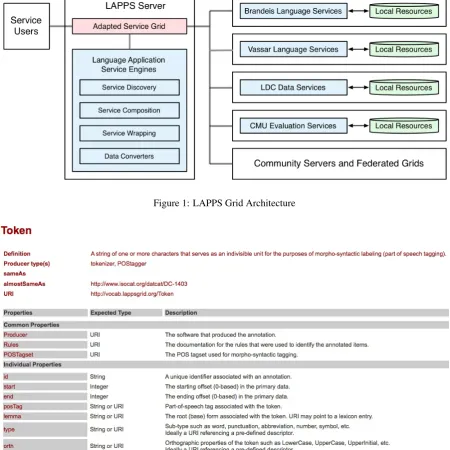
The LAPPS Grid provides access to basic NLP process-ing tools and resources and enables pipelinprocess-ing these tools to create custom NLP applications and composite services such as question answering and machine translation, as well as access to language resources such as mono- and multi-lingual corpora and lexicons that support NLP. How-ever, the transformative aspect of the LAPPS Grid is not the provision of a suite of web services, but rather that it orchestrates access to and deployment of language re-sources and processing functions available from servers around the globe and enables users to add their own lan-guage resources, services, and even service grids to satisfy their particular needs. As such, the LAPPS Grid is ulti-mately a community-based project, to which services will be contributed by members of the community and existing service repositories and grids can be federated to enable universal access.
Figure 1: LAPPS Grid Architecture
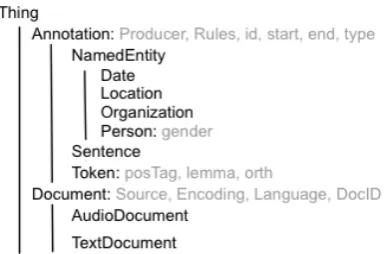
Figure 2: Token definition in the LAPPS WS-EVR
ing self-contained (non-service) frameworks such as GATE and UIMA, no accepted standard for module description or input/output interchange to support service discovery, composition, and reuse in the language application domain exists. To address this, we have defined a Web Service Exchange Vocabulary (WS-EV) that specifies a terminol-ogy for a core of linguistic objects and features exchanged among NLP tools that consume and produce linguistically annotated data. As such, it addresses a need within the com-munity to not only identify a standard terminology, but also indicate the relations among them.
Because of the well known difficulties of devising such standards, our approach is “bottom-up”, avoidinga priori
development of a comprehensive standard linguistic type system. To that end, we have adopted a “minimalist” strat-egy of providing a simple core set of objects and features.
Where possible, the core is drawn from existing reposi-tories such as ISOCat; however, because many categories and objects relevant for web service exchange are not in-cluded in such repositories, we have attempted to identify a set of (more or less) “universal” concepts by surveying existing type systems and schemas–for example, the Julie Lab and DARPA GALE UIMA type systems and the GATE schemas for linguistic phenomena–together with the I/O requirements of commonly used NLP software (e.g., the Stanford NLP tools, OpenNLP, etc.).12
We have established a Web Service Exchange
Vocabu-12
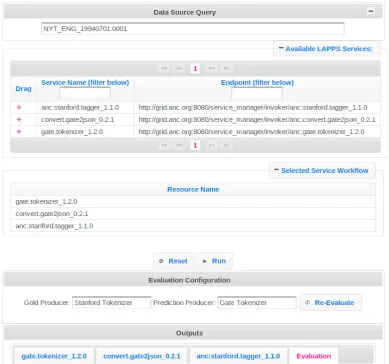
Figure 4: A Screenshot of the LAPPS Composer Interface
approach for component- and application-based evaluation has been successful in enabling rapid identification of fre-quent error categories within modules and documents, to-gether with an indication of which module(s) and error type(s) have the greatest impact on overall performance, thus contributing to more effective investment of resources in both research and application assembly (Ferrucci et al., 2009b; Yang et al., 2013). The OA approach was used in the development of IBM’s Watson to achieve steady per-formance gains over the four years of its development (Fer-rucci et al., 2010). More recently, the open-source OAQA project has released software frameworks which provide general support for open advancement of information sys-tems (Garduno et al., 2013; Yang et al., 2013); the OAQA software has been used to rapidly develop information re-trieval and question answering systems for bioinformatics (Yang et al., 2013; Patel et al., 2013).
A fundamental element of open advancement involves eval-uating multiple possible solutions to a given problem, to find the optimal solution available using given components, resources and evaluation data. The output of the optimal solution is then subjected to error analysis, to identify the most frequent errors with the highest impact on system out-put quality. Possible enhancements to the system are then considered, with an eye toward achieving the largest possi-ble reduction in error rate by addressing the most frequent
error types. The performance of each new configuration is evaluated to determine whether a significant improvement has been achieved in comparison with prior baselines or best known configurations. When multiple teams collab-orate to implement this process across several sites, types of components, etc. it is possible to make rapid progress in improving solution quality, as measured by the chosen metrics and evaluation dataset (?; Ferrucci et al., 2009b). To support rapid, open advancement, it should be possible for a developer to add new components to the system and test them in the context of existing pipelines by “plugging them in” to existing solutions.
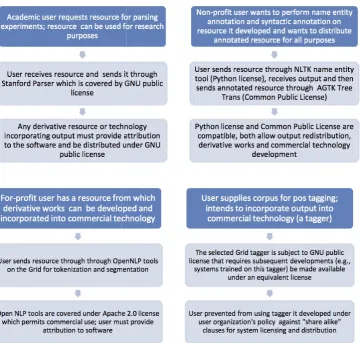
Figure 5: Four licensing pipeline scenarios
and effort required to determine the optimal configuration of existing components for a given problem and use these measures to improve the system’s design.
To support community use, we regularly offer tutorials and training workshops on LAPPS Grid use at major confer-ences in the field15, including venues associated with other disciplines, with the goal of introducing scientists and en-gineers from diverse disciplines to a broad-based and inte-grated set of NLP services that has the potential to impact their research and development needs. We envision that re-search from sociology, psychology, economics, education, linguistics, digital media, as well as engineering, can be im-pacted by the ability to manipulate and process diverse data sources in multiple languages.
8.
Relation to other projects
The LAPPS Grid effort builds on the foundation laid in several recent U.S., European, and Asian projects, includ-ing the NSF-funded Sustainable Interoperability for Lan-guage Technology (SILT) project (Ide et al., 2009) and the EU-funded Fostering Language Resources Network (FLaReNet) project (Calzolari et al., 2009). At the same
15
E.g., Web Services for Effective NLP Application Develop-ment and Evaluation: Using and Contributing to the Language Application (LAPPS) Grid, offered at LREC 2014.
time, the International Standards Organization (ISO) com-mittee for Language Resource Management (ISO TC37 SC4)16 has addressed the need for standards for linguis-tic data. Through these and other projects and parallel efforts in Asia and Australia, substantial groundwork—in terms of standards development, raising community aware-ness and buy-in, and proof-of-concept implementation— has been laid to turn existing, fragmented NLP technolo-gies and data into web-accessible, stable, and interoperable resources that can be readily reused across several fields. As a result, existing and potential projects across the globe are beginning to converge on common data models, best practices, and standards, and the vision of a comprehen-sive infrastructure supporting discovery and deployment of web services that deliver language resources and process-ing components is an increasprocess-ingly achievable goal. Our vision is therefore not for a monolithic grid, but rather a heterogeneous configuration of federated grids that im-plement a set of best practices for managing and inter-changing linguistic information, so that services on all of these grids are mutually accessible. To that end, the LAPPS Grid project has established a multi-way interna-tional collaboration among the US partners and
institu-16ISO/TC 37/SC4, Language Resources Management,
bul, Turkey. European Language Resources Association (ELRA).
W3C OWL Working Group. (2012). OWL 2 Web Ontol-ogy Language: Document Overview. W3C Recommen-dation.
W3C SKOS Working Group. (2009). SKOS Simple Knowl-edge Organization System Reference. W3C Recommen-dation.
Windhouwer, M. (2012). RELcat: a Relation Registry for ISOcat data categories. In Calzolari, N., Choukri, K., Declerck, T., Dogan, M. U., Maegaard, B., Mari-ani, J., Odijk, J., and Piperidis, S., editors,LREC, pages 3661–3664. European Language Resources Association (ELRA).