Factors influencing active tuberculosis
case- finding policy development and
implementation: a scoping review
Olivia Biermann ,1 Knut Lönnroth,1 Maxine Caws,2,3 Kerri Viney1,4
To cite: Biermann O, Lönnroth K, Caws M, et al. Factors influencing active tuberculosis case- finding policy development and implementation: a scoping review. BMJ Open 2019;9:e031284. doi:10.1136/ bmjopen-2019-031284
►Prepublication history and additional material for this paper are available online. To view these files, please visit the journal online (http:// dx. doi. org/ 10. 1136/ bmjopen- 2019- 031284).
Received 26 April 2019 Revised 04 November 2019 Accepted 20 November 2019
1Department of Global Public
Health, Karolinska Institutet, Stockholm, Sweden 2Department of Clinical
Sciences, Liverpool School of Tropical Medicine, Liverpool, UK 3Birat Nepal Medical Trust,
Kathmandu, Lazimpat, Nepal 4Research School of Population
Health, College of Health and Medicine, Australian National University, Canberra, Australian Capital Territory, Australia
Correspondence to Olivia Biermann; olivia. biermann@ ki. se © Author(s) (or their employer(s)) 2019. Re- use permitted under CC BY. Published by BMJ.
Strengths and limitations of this study
► The scoping review design was able to provide collated and comprehensive insights into the peer- reviewed scientific literature on the topic, and included a wide scope of factors influencing active case- finding (ACF) policy development and implementation.
► The review may have provided a more in- depth insight into the topic by including additional data-bases, searching grey literature and references of included studies, and contacting authors for more information.
► We did not do a critical appraisal of the individual sources of evidence or within sources of evidence, nor did we describe sources of funding for the in-cluded articles.
► We limited the inclusion to studies written in English. ► Reporting of ACF policy development and implemen-tation varied in completeness across the included articles, and as such, our data are limited by the details described in the literature.
AbStrACt
Objective To explore antecedents, components and influencing factors on active case- finding (ACF) policy development and implementation.
Design Scoping review, searching MEDLINE, Web of Science, the Cochrane Database of Systematic Reviews and the World Health Organization (WHO) Library from January 1968 to January 2018. We excluded studies focusing on latent tuberculosis (TB) infection, passive case- finding, childhood TB and studies about effectiveness, yield, accuracy and impact without descriptions of how this evidence has/could influence ACF policy or implementation. We included any type of study written in English, and conducted frequency and thematic analyses.
results Seventy- three articles fulfilled our eligibility criteria. Most (67%) were published after 2010. The studies were conducted in all WHO regions, but primarily in Africa (22%), Europe (23%) and the Western- Pacific region (12%). Forty- one percent of the studies were classified as quantitative, followed by reviews (22%) and qualitative studies (12%). Most articles focused on ACF for tuberculosis contacts (25%) or migrants (32%). Fourteen percent of the articles described community- based screening of high- risk populations. Fifty- nine percent of studies reported influencing factors for ACF implementation; mostly linked to the health system (eg, resources) and the community/individual (eg, social determinants of health). Only two articles highlighted factors influencing ACF policy development (eg, politics). Six articles described WHO’s ACF- related recommendations as important antecedent for ACF. Key components of successful ACF implementation include health system capacity, mechanisms for integration, education and collaboration for ACF.
Conclusion We identified some main themes regarding the antecedents, components and influencing factors for ACF policy development and implementation. While we know much about facilitators and barriers for ACF policy implementation, we know less about how to strengthen those facilitators and how to overcome those barriers. A major knowledge gap remains when it comes to understanding which contextual factors influence ACF policy development. Research is required to understand, inform and improve ACF policy development and implementation.
bACkgrOunD
Systematic screening for tuberculosis (TB) is defined by the World Health Organization
(WHO) as the ‘systematic identification of people with suspected active TB, in a prede-termined target group, using tests, exam-inations or other procedures that can be applied rapidly’.1 Active case- finding (ACF)
is synonymous with systematic screening for active TB, although it usually implies screening outside of health facilities. TB is a major global health challenge, partic-ularly in low- income and middle- income countries. The WHO End TB Strategy and the Sustainable Development Goals aim at finding the ‘missing cases’ and ending the global TB epidemic by 2030. This will require intensified activity to increase TB case detection, specifically in ‘hard- to- reach’ groups.2 In 2019, there was a 3 million gap
between estimated incident and notified TB cases globally, reflecting a combination of an underdiagnosis of cases and underre-porting of cases who have been detected.3 Many people with TB are diagnosed only
Protected by copyright.
on December 12, 2019 at Nepal:BMJ-PG Sponsored.
after long delays,4 causing suffering and economic
hard-ship for TB patients and TB- affected households, and sustained transmission.1
ACF is mostly provider- initiated. It targets people in high- risk groups who may not seek healthcare actively.1
Potential benefits for patients include reduced morbidity, mortality and economic consequences due to earlier diagnosis, while society can benefit from reduced trans-mission and a reduced burden of TB, which often affects the most economically productive members of a society. TB screening in high- risk groups has been implemented in many settings within the TB programme or in the context of research and can significantly improve TB case notification.5–7
However, if not well targeted and implemented, ACF can be costly leading to diversion and waste of scarce resources, potentially compromising passive case- finding infrastructure and weakening health systems. It can also cause harm to individuals, for example, by increasing the risk of a false positive diagnosis and providing TB treatment to individuals without TB, or increased stigma and discrimination arising from uncov-ering TB, which need to be weighed against the benefit of identifying cases in the community that would other-wise go untreated.1 2
Questions remain about both if ACF in general is worth-while, and how to best plan and implement outreach screening through ACF in a given context as a synergistic way, that is, integrated into the healthcare system, and not delivered separately in a parallel system. The evidence base is weak concerning the benefits and cost- effectiveness of ACF and how it varies between risk groups.8 The strength
of evidence to support alternative ACF approaches is low, with few head- to- head trial results being available to inform policy and practice. Many differences exist in stakeholders' values and preferences concerning the rationale, outcomes and possible secondary effects of ACF. Despite the relatively weak evidence, WHO has a guideline on systematic TB screening and the Global Fund9 and TB REACH10 provide increasing funding for ACF, while a growing number of countries are increasing investment in and have national policies for ACF. For example, Vietnam’s National Strategic Plan 2015–2020 includes ACF in remote and congregate settings, and in high- risk groups including contacts, prisoners, miners, the elderly, homeless people, young adults, migrants, factory workers, communities, people living with HIV, multidrug- resistant patients, young males, smokers and intravenous drug users.11
The aim of this study was to explore antecedents, components and influencing factors for ACF policy devel-opment and implementation, to inform and improve future ACF policy processes. We did not aim to review the evidence on ACF per se; therefore, we explore yield, accu-racy and impact only in the context of how they influence ACF policy development or implementation.
MethODS
We conducted a scoping review, using an a- priori protocol based on the following research question: Which are the antecedents, components and influencing factors (barriers and facilitators) in developing and implementing ACF policies?
The scoping review methodology was deemed appro-priate given the breadth of the question. The protocol was based on guidance from the Joanna Briggs Methods Manual for Scoping Reviews.12 The inclusion criteria,
the screening manual and the data- charting table were developed by one author (OB), reviewed by two authors (KV and KL) to ensure face validity, and pilot- tested. All team members were consulted at various stages of the scoping review to provide input on the search, data extraction and charting, and the interpretation of the results. The charted data were summarised in tables, and then condensed resulting in tables 1 and 2. The Preferred Reporting Items for Systematic reviews and Meta- Analyses Extension for Scoping Reviews (PRISMA- ScR) was used to guide reporting.13 The completed checklist is available in
online additional file 1. The protocol is available from the corresponding author on request.
Data sources and search
We searched MEDLINE, Web of Science, The Cochrane Database of Systematic Reviews and the WHO Library from January 1968 (year of the first publication on ACF in MEDLINE) until January 2018. The search strategy was developed in collaboration with a medical librarian from Karolinska Institutet (Carl Gornitzki), and further refined through team discussion. The search strategy for MEDLINE is available in online additional file 2. The latter was standardised but adapted to fit the other database searches. The respective search strategies are available from the corresponding author on request. The results of the literature search were imported into Rayyan.
Inclusion criteria
Eligible studies focused on the detection of active TB disease. The review included studies describing or analysing ACF policy development and implementation. Facilitators and barriers linked to access or treatment were included, if there was a clear link to ACF. Furthermore, the review included studies analysing the use of evidence in ACF policy development and implementation. Studies of any design, conducted in any setting or country and those published in the English language were eligible for inclusion. We excluded studies focusing only on latent TB infection, passive case- finding and childhood TB, and studies about effectiveness, yield, accuracy and impact without descriptions of how this evidence has/could influence ACF policy. The inclusion of different ACF approaches implies that while many lessons can be learnt across different settings, some might not be generalisable.
Screening, data abstraction and charting
One reviewer (OB) initially reviewed titles to remove duplicates, and those studies not focusing on TB. Two
Protected by copyright.
on December 12, 2019 at Nepal:BMJ-PG Sponsored.
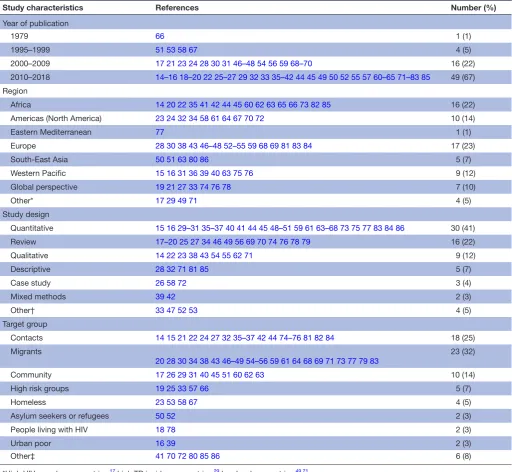
Table 1 Characteristics of the articles included in the scoping review (n=73)
Study characteristics References Number (%)
Year of publication
1979 66 1 (1)
1995–1999 51 53 58 67 4 (5)
2000–2009 17 21 23 24 28 30 31 46–48 54 56 59 68–70 16 (22)
2010–2018 14–16 18–20 22 25–27 29 32 33 35–42 44 45 49 50 52 55 57 60–65 71–83 85 49 (67) Region
Africa 14 20 22 35 41 42 44 45 60 62 63 65 66 73 82 85 16 (22)
Americas (North America) 23 24 32 34 58 61 64 67 70 72 10 (14)
Eastern Mediterranean 77 1 (1)
Europe 28 30 38 43 46–48 52–55 59 68 69 81 83 84 17 (23)
South- East Asia 50 51 63 80 86 5 (7)
Western Pacific 15 16 31 36 39 40 63 75 76 9 (12)
Global perspective 19 21 27 33 74 76 78 7 (10)
Other* 17 29 49 71 4 (5)
Study design
Quantitative 15 16 29–31 35–37 40 41 44 45 48–51 59 61 63–68 73 75 77 83 84 86 30 (41)
Review 17–20 25 27 34 46 49 56 69 70 74 76 78 79 16 (22)
Qualitative 14 22 23 38 43 54 55 62 71 9 (12)
Descriptive 28 32 71 81 85 5 (7)
Case study 26 58 72 3 (4)
Mixed methods 39 42 2 (3)
Other† 33 47 52 53 4 (5)
Target group
Contacts 14 15 21 22 24 27 32 35–37 42 44 74–76 81 82 84 18 (25)
Migrants
20 28 30 34 38 43 46–49 54–56 59 61 64 68 69 71 73 77 79 83 23 (32)
Community 17 26 29 31 40 45 51 60 62 63 10 (14)
High risk groups 19 25 33 57 66 5 (7)
Homeless 23 53 58 67 4 (5)
Asylum seekers or refugees 50 52 2 (3)
People living with HIV 18 78 2 (3)
Urban poor 16 39 2 (3)
Other‡ 41 70 72 80 85 86 6 (8)
*High HIV prevalence countries,17 high TB incidence countries,29 low- burden countries.49 71
†Letter to editor,52 observational study,53 perspective33 and editorial.47
‡Population affected by TB outbreak,72 pastoralists,41 healthcare workers,65 prisoners,80 people living in slums,86 street connected youth and young
adults85 and non- immigrant visitors.70
reviewers (OB and KV) independently reviewed titles and abstracts, and then full- text articles for inclusion. Conflicts were resolved through discussion based on the inclusion/exclusion criteria.
The data- charting table was developed in Microsoft Excel. An abridged version of the table is available in online additional file 3. Data were extracted on study design, country, target population for ACF, benefits of ACF, risks of ACF, ACF antecedents, ACF policy develop-ment and impledevelop-mentation (use of evidence, country- level to individual- level facilitators and barriers, stakeholders involved), lessons learnt, future perspectives and future
research. Relevant data were charted by one author (OB), while a second author (KV) verified this step by charting data from a random sample of studies for comparison. Differences in data- charting were resolved by discussion.
Patient and public involvement
This study is related to a qualitative study of experts and a survey of National TB Programme managers combined with a policy document review on the topic of ACF policy development and implementation which are currently under way to harness tacit knowledge on the topic. The research questions and variables for these studies were
Protected by copyright.
on December 12, 2019 at Nepal:BMJ-PG Sponsored.
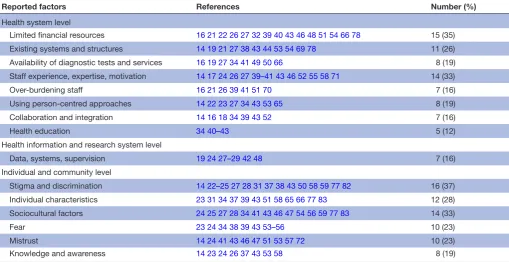
Table 2 Barriers and facilitators for active case- finding policy implementation (n=43)
Reported factors References Number (%)
Health system level
Limited financial resources 16 21 22 26 27 32 39 40 43 46 48 51 54 66 78 15 (35)
Existing systems and structures 14 19 21 27 38 43 44 53 54 69 78 11 (26)
Availability of diagnostic tests and services 16 19 27 34 41 49 50 66 8 (19)
Staff experience, expertise, motivation 14 17 24 26 27 39–41 43 46 52 55 58 71 14 (33)
Over- burdening staff 16 21 26 39 41 51 70 7 (16)
Using person- centred approaches 14 22 23 27 34 43 53 65 8 (19)
Collaboration and integration 14 16 18 34 39 43 52 7 (16)
Health education 34 40–43 5 (12)
Health information and research system level
Data, systems, supervision 19 24 27–29 42 48 7 (16)
Individual and community level
Stigma and discrimination 14 22–25 27 28 31 37 38 43 50 58 59 77 82 16 (37)
Individual characteristics 23 31 34 37 39 43 51 58 65 66 77 83 12 (28)
Sociocultural factors 24 25 27 28 34 41 43 46 47 54 56 59 77 83 14 (33)
Fear 23 24 34 38 39 43 53–56 10 (23)
Mistrust 14 24 41 43 46 47 51 53 57 72 10 (23)
Knowledge and awareness 14 23 24 26 37 43 53 58 8 (19)
informed by the results of this scoping review. The results of this study will be presented to researchers and policy- makers in the field via targeted issue briefs. We will also share the results with the public via a video and short messages on social media.
reSultS literature search
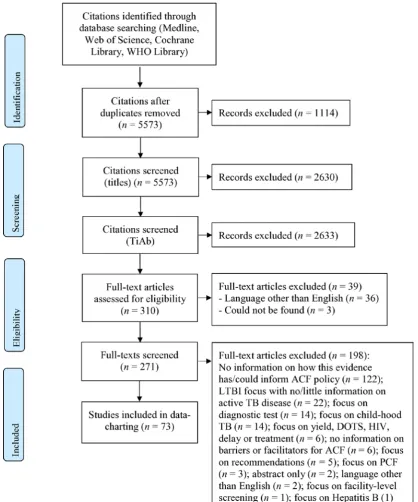
After screening 2943 titles and abstracts and 271 full- text articles, 73 unique articles fulfilled our eligibility criteria (figure 1).14–86 The reasons for excluding full-
text articles are provided in figure 1. What all included studies have in common is the goal of finding ‘missing’ TB cases through ACF, while the approaches vary greatly; from contact investigation to screening people in home-less shelters (table 1). An example of a study included in this review is a qualitative study by Ayakaka et al, which explored influencing factors for TB contact investigation in Kampala, Uganda.14 The stakeholders who were
inter-viewed described key barriers for ACF as being limited knowledge about TB among contacts, stigma, mistrust of health centre staff among index patients and contacts, and high travel costs for lay health workers and contacts. At the same time, key facilitators for ACF comprised personalised and enabling services provided by lay health workers. To overcome barriers and strengthen facilita-tors, the researchers identified education, incentivisation and restructuring of the service environment as relevant interventions.14
Characteristics of the included articles (n=73)
The breadth of studies identified reflect the complexity and diversity of ACF policies and their characteristics. There has been a gradual increase in the number of arti-cles on ACF since the first identified (eg, from 1979), and 67% (n=49/73) were published in the period 2010– 2018 (table 1). The studies were conducted in all WHO regions, that is, the African region (22%, n=16/73), the Americas (North America) (14%, n=10/73), the Eastern Mediterranean region (1%, n=1/73), the European region (23%, n=17/73), South- East Asia (7%, n=5/73) and the Western Pacific region (12%, n=9/73). The most common types of articles were classified as quantitative papers (41%, n=30/73), reviews (22%, n=16/73) and qualitative studies (12%, n=9/73). The most frequent ACF target groups were contacts (25%, n=18/73) and migrants from high- incidence countries (32%, n=23/73), while 14% percent (n=10/73) of the articles focused on screening of defined communities. The remaining studies focused on different target groups which are specified in table 1.
Antecedents
ACF has been implemented for many decades primarily in high- income countries, starting with mass screening campaigns in the general population in the 1950s and 1960s, then moving towards specific risk populations in recent decades, such as migrants from high- incidence countries and prison populations.15 In low- income
and middle- income countries, the interest in ACF has increased in recent years, mainly as a response to a sustained case detection gap documented in annual
Protected by copyright.
on December 12, 2019 at Nepal:BMJ-PG Sponsored.
Figure 1 PRISMA flow diagram. ACF, active case- finding; PRISMA, Preferred Reporting Items for Systematic Reviews and Meta- Analyses; TB, tuberculosis.
Global TB Reports produced by WHO3 and the
emer-gence of new WHO guidelines.16
Generally, TB programmes have moved from tradition-ally vertical approaches and exclusively facility- based case- finding among people seeking care with TB symptoms (so called ‘passive case- finding’) towards being closer to the client through decentralised, community- based solu-tions and outreach activities, including ACF—similar to community- based testing services that have increased access to HIV testing and care.17 18
In 1976, the WHO Expert Committee on TB recom-mended that countries abandon indiscriminate mobile
mass radiography, as evidence showed the inefficiency of population- wide screening in settings that had seen TB rates drop dramatically since the World War II.19 It should
be noted that the Expert Committee emphasised that TB screening should still be done in selected risk groups.19 20
The current WHO guidelines on systematic screening for active TB were released in 2013.1 These guidelines
still discourage indiscriminate mass screening and strongly recommend ACF only in selected high- risk groups, while conditionally recommending screening in other high- risk groups. Conditional recommendations are those for which the benefits are expected to outweigh the risks,
Protected by copyright.
on December 12, 2019 at Nepal:BMJ-PG Sponsored.
while the trade- offs, such as cost- effectiveness, feasibility or affordability may be uncertain. For example, WHO has made a conditional recommendation (very low- quality evidence) for screening certain clinical risk groups in settings where the TB prevalence is over 100 per 100 000 population (while not recommending such screening in countries with a prevalence of less than 100 per 100 000 population).1 The 2013 WHO guidelines—reflected
in the latest 2015 WHO’s End TB Strategy2 and aligned
with the Sustainable Development Goals—put ACF back on the agenda. The guidelines provide principles for how to test and expand an approach that had been largely missing in previous global TB strategies, including the Directly Observed Treatment, Short Course Strategy from 199487 and the Stop TB Strategy 2006–2015 (although
contact investigation and screening people living with HIV was included in the latter).88 Moreover, the
guide-lines emphasise the importance of basing ACF policy on local epidemiology and to perform careful evaluations of ACF implementation, yield and impact to improve the ACF evidence base.20 Today, ACF is considered a global
health priority.21 22
Components
According to WHO,1 the main components of ACF
include (1) having high- quality TB diagnosis, treatment, care, management and support for patients, as well as the capacity to scale these up (if needed), before screening is initiated; (2) prioritising risk groups; (3) choosing a suitable screening algorithm; (4) following established ethical principles; (5) optimising synergies with the delivery of other health and social services and (6) moni-toring and reassessing ACF approaches.
The components of ACF, as well as those of the wider health system that ACF depends on, are well described in the literature. It is important for high- quality diag-nosis, treatment, care, management, patient support and capacity for scale- up to be available.19 Risk groups must
be prioritised based on assessments of benefits and risks, feasibility, acceptability, the number needed to screen to detect a case of TB and the cost- effectiveness of ACF,19
while also considering the heterogeneity of the risk group.23
The overall ACF approach must be flexible, patient- centred15 24 and culturally sensitive.25 In resource poor
settings, ACF is often backed by multichannel financing mechanisms, including from international donors.26
Record- keeping, monitoring and evaluation are described as being essential.27 28 Incentives are sometimes deemed
necessary, for example, for health workers,5 29
labora-tory technicians,30 screening participants11 31–35 and TB
patients.29 35 36 The articles also emphasised ACF- specific
health education as paramount—for patients,31 37–39 their
families,40 providers24 and community health workers
(CHW).36 37 The training of CHWs should be followed
by supervision.41 42 In addition, community
involve-ment32 39 42 43 and social mobilisation29 are major parts
of ACF. One study described how the involvement of
community leaders was a key component to improve trust among patients and contacts.31
Finally, the studies underlined how vital it is to collab-orate with other disease programmes,33 34 43 agencies
and sectors26 27 and to integrate ACF within existing
systems.18 44 The latter includes collaboration between
providers and community- based organisations,43 and
between HIV and TB services.45
Influencing factors
In the following section, we summarise influencing factors for ACF policy development and implementation. We chose to speak of ‘influencing factors’ rather than facilitators and barriers, as one and the same factor might be a facilitator in one context and a barrier in another, for example, health workers’ satisfaction might be a powerful facilitator for ACF,42 while the lack thereof could be a
strong barrier as well.46
Influencing factors for ACF policy development
ACF policy development processes were not well described in the literature. Policy development comprises the investment of governments and donors in ACF. Only two articles reported facilitators and/or barriers for ACF policy development: politics46 47 and laws.47 Welshman46
describes how, in the mid- 1950s, the Ministry of Health in the United Kingdom subverted pressure from stake-holders who were in favour of compulsory ACF at ports of entry—the Ministry ‘argued that the problem (of TB in migrants) was a minor one’ so a policy was not developed. On the other hand, laws such as the 1958 Commonwealth Migration Act were described, which made screening compulsory, and thus influenced ACF policy develop-ment in the UK.47
Influencing factors for ACF policy implementation
Policy implementation processes in the area of ACF are widely researched. In total, 43 articles reported barriers and/or facilitators for ACF implementation (table 2). Most articles mentioned factors at the level of the health system, as well as the individual and community level.
health system level
It is fundamental to consider health system factors when putting ACF policy into practice and identifying which factors influence ACF policy implementation the most. We derived six major themes from the articles: (1) avail-ability of financial resources, (2) existing systems and structures, (3) availability of diagnostic tests, (4) staff experience and motivation, (5) collaboration between different actors and (6) implementation of a person- centred approach.
Availability of financial resources
Many articles (35%, n=15/43) mentioned financial resources as an influencing factor for ACF policy imple-mentation. Finances were described as being scarce at different levels of the health system,40 for the provision of
staff,39 42 drugs and equipment.48
Protected by copyright.
on December 12, 2019 at Nepal:BMJ-PG Sponsored.
Existing systems and structures
Existing systems and structures were reported as influ-encing factors for ACF policy implementation by 26% (n=11/43) of the articles. Studies elaborated on the avail-ability of health and social services14 19 and laboratory
networks21 that could be used for ACF implementation.
Availability of diagnostic tests of sufficient sensitivity and specificity
Nineteen percent (n=8/43) of the articles elaborated on the availability of diagnostic tests and services as key influencing factor for ACF policy implementation—with many articles referring to the availability of molecular diagnostic tests such as Xpert MTB/RIF.27 36 49 50
Decen-tralisation of healthcare services, national coverage of diagnostics and task sharing were perceived as facilitators of ACF policy implementation, but unavailable in many settings.33
Staff experience and motivation
Thirty- three percent (n=14/43) of the studies described staff experience and motivation as influencing factors for ACF policy implementation. One study elaborated on how, on the one hand, staff members would feel moti-vated by increased case detection and awareness- raising through ACF. On the other hand, they would be frus-trated when being ‘shouted at, ignored, (and) harassed’ by target communities, in this case people living in poor urban settlements.39 The over- burdening of staff
was highlighted by 16% (n=7/43) of the articles, for example, leading to absenteeism,51 and thus inhibiting ACF implementation.
Collaboration between different actors
A variety of studies (16%, n=7/43) described collabora-tion as an important influencing factor for ACF policy implementation. One example is the collaboration between community workers, health centre staff and labo-ratory technicians in delivering diagnostic services as part of ACF.16 Moreover, Akkerman et al described the posi-tive impact on diagnostic accuracy and the proportion of follow- up medical interventions when there is close collaboration with a limited number of experienced, high- volume chest radiograph readers when screening asylum seekers and other high- risk groups.52
Implementation of a person-centred approach
The need for a person- centred approach to ACF policy implementation was referred to by 19% (n=8/43) of the articles, for example, adopting approaches including healthcare providers being non- judgemental and supportive of patients and their families during diagnosis and follow- up,53 and assuring
confidenti-ality.22 52 Another 12% (n=5/43) of the articles
empha-sised health education for the general public, screening participants, as well as TB patients and their families as a necessity.
Individual and community
ACF policies should be for individuals and communi-ties and their influence on successful implementation is elaborately described in the literature. Three overar-ching themes emerged from the studies: (1) stigma and discrimination, (2) individual characteristics and socio-cultural factors and (3) knowledge and awareness.
Stigma and discrimination
Many studies (37%, n=16/43) reported stigma and discrimination linked to TB as influencing factors for ACF policy implementation. The consequences could be the avoidant behaviour of a contact of an index TB case, such as providing incorrect phone numbers and/ or wrong directions to their homes,14 or misconceptions
about TB.24 43 Issues of fear, either of TB disease,23 39 53 the
process of ACF,54 or the wider implications of being
identi-fied as a TB case, for example, through migrant screening programmes, where being diagnosed with TB case has in some instances resulted in deportation.34 38 55 56 Studies
also reported the lack of trust of patients and their fami-lies as key barrier for ACF policy implementation41 51—not
only for early diagnosis, but for the sustained commit-ment to addressing social determinants of TB.57
Individual characteristics and sociocultural factors
Twenty- eight percent (n=12/43) of the articles mentioned the social characteristics of the persons screened as key influencing factors for ACF policy implementation, for example, for ensuring equitable access to care21 39 58 and
promoting conducive health- seeking behaviour.23 41 43
Moreover, the articles frequently reported sociocultural factors and language (33%, n=14/43) as influencing factors for ACF policy implementation. Culture was commonly described as a barrier to ACF policy implemen-tation,34 41 59 for example, if cultural beliefs would
nega-tively influence the receptiveness to community health workers’ advice. Only one study mentioned culture as a facilitator for putting ACF into practice, for example, if culture meant respect towards professional authority.59
Knowledge and awareness
Finally, 19% (n=8/43) of the articles reported factors related to knowledge and awareness as influencing factors for ACF policy implementation. One such factor could be the understanding of the purpose of ACF.24 Also,
knowl-edge and awareness are closely linked to persisting stigma and discrimination, for example, Ayakaka et al14 describe
how health workers attributed TB- associated stigma to a lack of general knowledge in the community about TB.
DISCuSSIOn
Characteristics of the included articles
We identified 73 articles addressing antecedents, compo-nents and/or influencing factors for ACF policy devel-opment and implementation. The included studies originated from all WHO regions. Africa and Asia are
Protected by copyright.
on December 12, 2019 at Nepal:BMJ-PG Sponsored.
home to 90% of the 30 high TB burden countries (53% and 37%, respectively),89 which may explain why studies
were more frequently conducted in these continents: 22% of the studies were conducted in Africa, 12% in the Western- Pacific region and 7% in South- East Asia. Studies conducted in the European region (23%) were predomi-nantly about different forms of migrant screening. There was no study from Latin America among the 73 included articles, and there were no articles in the Spanish language among those excluded.
Most studies were published after 2010, which may be a result of programmes implementing WHO guidelines on systematic screening1 as well as the growing number
of prevalence surveys in different settings.39 We
classi-fied 41% of the articles as quantitative, for example, cross- sectional and cohort studies, effectiveness and cost- effectiveness studies, randomised controlled trials and programme evaluations. The next most common study types were reviews (22%) and qualitative studies (12%). The first qualitative studies on our topic were published in 2003.24 54 We only identified two mixed- methods studies,
one published in 201342 and one in 2015.39 The mixed-
methods design combined with quantitative ACF evalua-tion might become more commonly used to explore the complexity of ACF policy development and implementa-tion in the future, as it has the potential to both increase contextual understanding and reduce biases.
Among the broad range of possible target groups for ACF, most of the articles focused either on TB contacts or migrants. The focus on the latter was mainly in low- incidence countries and may be a result of long- standing national health and migration policies supporting these types of screening. Yet, other studies covered vulnerable groups, such as homeless people, people living with HIV or people living in congregate settings, as well as the urban poor. Some articles included analysis of more than one high- risk group. There were no studies on indis-criminate mass screening. However, there were studies targeting broad communities, for example, communities with high HIV prevalence.
Antecedents
Despite the growing number of studies (eg, operational studies), there is still a relative lack of evidence about the health benefits for individuals, the epidemiological impact and cost- effectiveness of different ACF approaches. Nonetheless, the interest in ACF has clearly increased in recent years. The persistent case detection gap, the 2013 WHO guidelines on systematic screening1 and ACF being
mentioned as a core component of the End TB Strategy2
seem to have motivated countries to include ACF in national TB strategies. Universal Health Coverage and the Sustainable Development Goals have only margin-ally been mentioned as important for stepping up the TB response.33 However, the Sustainable Development
Goals—which aim to ‘leave no one behind’—might have contributed to a greater interest in ACF to leave no undi-agnosed TB patients behind.
Not having enough evidence to drive ACF policy devel-opment and implementation means that decisions to embark on ACF rely largely on stakeholders’ tacit knowl-edge, experience, values and preferences. Demonstrated screening yield in the same or other settings could also motivate further ACF implementation, although the number of cases detected may not be a relevant public health impact measure in itself. The above- mentioned WHO guidelines use the term ‘indirect evidence’.1
Strong ‘direct evidence’ exists that early diagnosis and correct TB treatment reduce morbidity, mortality and transmission. This can constitute, for example, ‘indirect evidence’ for ACF, based on the logic that if ACF leads to early detection and treatment, then it should also lead to better health outcomes and less transmission, despite the lack of trial data demonstrating a direct health impact of ACF. Similar reasoning can be used to describe potential harms associated with ACF, for example, based on model-ling of the risk of false positive TB diagnoses in different epidemiological contexts. ‘Indirect evidence’, tacit knowl-edge, experience, values and preferences are likely to be important antecedents for national policy.
Components
The components of ACF policy, and of the system which ACF is part of, are complex. The articles reported on the prerequisites of the given system, its resources,46
capacity30 42 and tools.90 However, they also elaborated on
the need for integrating ACF into health systems,41 60 as
well as educating and engaging healthcare providers,5 21
communities,12 29 39 44 screening participants35 and TB
patients and their families25 34 35 for ACF
implementa-tion to succeed. All components seem indispensable for successful ACF policy development and implementation. Yet, in real- life settings, rarely all components are in place.
Which ACF components are essential and which are non- essential? The 2013 WHO guidelines on systematic screening list six key principles for screening for active TB, the first principle being: ‘Before screening is initiated, high- quality TB diagnosis, treatment, care, management and support for patients should be in place, and there should be the capacity to scale these up further to match the anticipated rise in case detection that may occur as a result of screening’.1 Yet, countries might not even
completely adhere to this very first principle, for example, due to a lack of resources, before a country embarks on ACF policy development and implementation.
Influencing factors
Scarce research on ACF policy development
Our findings indicate a paucity of research focusing specifically on ACF policy development. The only two factors described— politics and laws—were mentioned by the same author in two different articles and concerned migrant TB screening in a low- incidence country.46 47
Even though not documented as such in the litera-ture, data on the epidemiological situation of a country and local evidence regarding impact are assumed to be
Protected by copyright.
on December 12, 2019 at Nepal:BMJ-PG Sponsored.
key factors influencing ACF policy development.1 These
types of data and evidence are needed to identify high- risk groups90 and devise appropriate screening
algo-rithms. An assessment of the epidemiological situation might be based on data from regularly collected data sets or prevalence surveys, and WHO has developed a tool to help countries estimate screening yield and costs based on such data to identify appropriate risk groups and approaches.91
Interestingly, the evolution of the funding landscape for ACF, for example, through TB REACH, has not been explicitly mentioned as an influencing factor for ACF policy development or implementation, though it has been a likely game- changer. TB REACH is a case- finding initiative funded largely by Global Affairs Canada and coordinated by the Stop TB Partnership.92 The
initia-tive has both funded ACF activities and raised awareness about the importance of ACF. It has contributed to the local evidence base, while the uptake of the evidence generated by TB REACH may be considered but not mentioned in the studies included in this review. Four arti-cles mentioned TB REACH as funder of their research, with the disclaimer that the initiative had no role in study design, data collection and analysis.16 42 60 61 Other
publications acknowledged its role in implementing ACF when describing the study methods, for example, that TB REACH funded door- to- door screening39 or the
imple-mentation of different ACF models62 and that the initiative
upgraded an ACF strategy by introducing new diagnostics which still have limited availability in many settings (eg, Xpert MTB/RIF).36 It is important to reflect on and
docu-ment the influence that TB REACH, other international funding mechanisms and technical agencies have on ACF policy development and implementation.
ACF policy and social determinants of health
Many barriers and facilitators for implementing ACF policies lie at the level of communities and individuals. These factors include social determinants such as the educational level,14 35 employment status27 63 and access to
care64 of the target population. These factors can limit an
individual’s or a community’s participation in ACF. ACF policies cannot be put in practice successfully if imple-mentation barriers prevail. However, rather than talking about ‘missing cases’ and communities that are ‘hard to reach’, it may be useful to consider if health services are missing or hard to reach instead.
Individuals or communities may be ACF target groups precisely because health services are missing or hard to reach. As such, ACF could be a way to by- pass access barriers, for example, by using mobile units. Yet, even when designing services to be more accessible, target populations may still not come forward, take the next step of referral to complete the diagnostic pathway or adhere to treatment due to socioeconomic barriers.
We argue that ACF polices thus must be designed and implemented with careful consideration of social determinants in a given context to avoid possible harm.
Whitehead and Dahlgren93 described how interventions
designed to help vulnerable populations may be ‘imple-mented in such a way as to stigmatize the very people the programme was designed to help and, in so doing, push them to avoid the help on offer.’
A comprehensive view on ACF policies
A comprehensive approach in developing and imple-menting ACF policies is required that includes health education as an important component to ACF policies, and that ensures collaboration between key stakeholders, both between patients and providers, and between providers and local health authorities, between agencies, and across sectors and disease programmes.
Although this review focused on the factors that influ-ence ACF policy and implementation, it is important to also reflect on how ACF policy influences its context in return, for example, not only factors at the level of the community and the individual, but at the level of the health system and beyond; How may the ACF policy increase or decrease stigma in a community? How may ACF policy influence the human and financial resources available in a health system? Only then may we see the real impact of ACF and be able to make equitable decisions in policy development and implementation processes.
Future research
This scoping review demonstrated that while we know much about facilitators and barriers for ACF policy implementation, we know less about how to strengthen those facilitators and how to overcome those barriers. A major knowledge gap remains when it comes to under-standing which contextual factors influence ACF policy development.
limitations
Our scoping review has some limitations. To increase the feasibility, we limited the search to MEDLINE, Web of Science, The Cochrane Database of Systematic Reviews and the WHO Library. We did not do a critical appraisal of the individual sources of evidence or within sources of evidence, nor did we describe sources of funding for the included sources of evidence. Such appraisals and descriptions would have allowed us to discover the scar-city of research and to characterise the quality of and gaps in the evidence base and enable the development of robust recommendations. We leave these questions for future systematic reviews to address.
We acknowledge that we may have been able to provide a more in- depth overview of antecedents, components and influencing factors for ACF policy development and implementation by including additional databases, searching grey literature and references of included studies, and contacting authors for more information, which could be included in a future systematic review. However, we believe that our review still adds value to the current body of knowledge on ACF, by providing collated and comprehensive insights into the peer- reviewed
Protected by copyright.
on December 12, 2019 at Nepal:BMJ-PG Sponsored.
scientific literature. We also limited the inclusion to studies written in English, which may have resulted in the exclusion of eligible studies in other languages, for example, Spanish. Furthermore, the results from this scoping review are only up to date as of 31 January 2018. The data were extracted by one reviewer only. However, the data are likely valid, as a pilot- test was conducted prior to embarking on data extraction with members of the study team. A second reviewer verified a random selec-tion of the data.
Another limitation was that the included articles often did not distinguish between the implementation of an ACF policy versus the implementation of an ACF programme or intervention. This is likely due to inconsis-tent use of the terms in the literature. As such, our results are likely applicable to both. Furthermore, the reporting of ACF policy development and implementation varied in their completeness across the included articles, and as such, our data are limited by the details described in the literature, for example, most papers described steps to implementation, but did not provide details on non- response or unsuccessful practices. There is a risk of publication bias.
COnCluSIOnS
We identified some main themes regarding the anteced-ents, components and influencing factors for ACF policy development and implementation. However, evidence remains scarce especially concerning policy development. Research on ACF is required to understand, inform and improve policy development and implementation.
twitter Olivia Biermann @olibiermann
Acknowledgements OB is funded by the EU- Horizon 2020- funded IMPACT- TB project (grant 733174). The authors thank Carl Gornitzki, medical librarian at Karolinska Institutet, for supporting the development of the search strategy, and Gabriella Ekman, writing instructor at Karolinska Institutet’s University Library for her valuable feedback in writing this manuscript.
Contributors OB, KL, MC and KV conceived the study. OB developed the search strategy together with a medical librarian from Karolinska Institutet. OB and KV screened titles and abstracts, and then full- text articles. OB extracted, charted, analysed and interpreted the data. KV verified the data extraction by charting data from a random sample of studies for comparison. OB wrote the first draft of the manuscript. KL, MC and KV were consulted at various stages of the scoping review to provide input on the search strategy, data extraction, charting, analysis and the interpretation of the results, and provided comments on the manuscript. All authors read and approved the final manuscript.
Funding This work was supported by the EU- Horizon 2020- funded IMPACT- TB project (grant 733174).
Competing interests None declared. Patient consent for publication Not required.
Provenance and peer review Not commissioned; externally peer reviewed. Data availability statement All data relevant to the study are included in the article or uploaded as supplementary information.
Open access This is an open access article distributed in accordance with the Creative Commons Attribution 4.0 Unported (CC BY 4.0) license, which permits others to copy, redistribute, remix, transform and build upon this work for any purpose, provided the original work is properly cited, a link to the licence is given, and indication of whether changes were made. See: https:// creativecommons. org/ licenses/ by/ 4. 0/.
OrCID iD
Olivia Biermann http:// orcid. org/ 0000- 0002- 5978- 0211
reFerenCeS
1 World Health Organization. Systematic screening for active TB:
principles and recommendations. Switzerland, Geneva: World Health Organization, 2013.
2 World Health Organization. Implementing the end TB strategy: the
essentials. Switzerland, Geneva: World Health Organization, 2015.
3 World Health Organization. Global TB report 2019. Switzerland,
Geneva: World Health Organization, 2019.
4 Storla DG, Yimer S, Bjune GA. A systematic review of delay in
the diagnosis and treatment of tuberculosis. BMC Public Health
2008;8:15.
5 Blok L, Sahu S, Creswell J, et al. Comparative meta- analysis of
tuberculosis contact investigation interventions in eleven high burden
countries. PLoS One 2015;10:e0119822.
6 Creswell J, Codlin AJ, Andre E, et al. Results from early
programmatic implementation of Xpert MTB/RIF testing in nine
countries. BMC Infect Dis 2014;14:2.
7 Creswell J, Sahu S, Blok L, et al. A multi- site evaluation of innovative approaches to increase tuberculosis case notification: summary
results. PLoS One 2014;9:e94465.
8 Kranzer K, Afnan- Holmes H, Tomlin K, et al. The benefits to
communities and individuals of screening for active TB disease: a
systematic review. Int J Tuberc Lung Dis 2013;17:432–46.
9 Global Fund. World Health organization and stop TB partnership strategic initiative, 2019. Available: https://www. who. int/ tb/ joint- initiative/ en/ [Accessed 8 Apr 2019].
10 Stop TB Partnership. TB REACH, 2019. Available: http://www. stoptb. org/ global/ awards/ tbreach/ [Accessed 8 Apr 2019].
11 National TB Control Program. National strategic plan for TB control
for the period 2015-2020. Vietnam, Hanoi: Ministry of Health, 2014.
12 Joanna Briggs Institute. Methodology for JBI scoping reviews.
Adelaide: Joanna Briggs Institute, 2015.
13 Tricco AC, Lillie E, Zarin W, et al. PRISMA extension for scoping
reviews (PRISMA- ScR): checklist and explanation. Ann Intern Med
2018;169:467–73.
14 Ayakaka I, Ackerman S, Ggita JM, et al. Identifying barriers to and
facilitators of tuberculosis contact investigation in Kampala, Uganda:
a behavioral approach. Implement Sci 2017;12:33.
15 Eang MT, Satha P, Yadav RP, et al. Early detection of tuberculosis
through community- based active case finding in Cambodia. BMC
Public Health 2012;12:469.
16 Lorent N, Choun K, Thai S, et al. Community- Based active
tuberculosis case finding in poor urban settlements of Phnom
Penh, Cambodia: a feasible and effective strategy. PLoS One
2014;9:e92754.
17 Godfrey- Faussett P, Ayles H. Can we control tuberculosis in high HIV
prevalence settings? Tuberculosis 2003;83:68–76.
18 Corbett EL, MacPherson P. Tuberculosis screening in high human immunodeficiency virus prevalence settings: turning promise into
reality. Int J Tuberc Lung Dis 2013;17:1125–38.
19 Lönnroth K, Corbett E, Golub J, et al. Systematic screening for active
tuberculosis: rationale, definitions and key considerations. Int J
Tuberc Lung Dis 2013;17:289–98.
20 Zenner D, Hafezi H, Potter J, et al. Effectiveness and cost-
effectiveness of screening migrants for active tuberculosis and latent
tuberculous infection. Int J Tuberc Lung Dis 2017;21:965–76.
21 Golub JE, Mohan CI, Comstock GW, et al. Active case finding of
tuberculosis: historical perspective and future prospects. Int J Tuberc
Lung Dis 2005;9:1183–203.
22 Kerrigan D, West N, Tudor C, et al. Improving active case finding for
tuberculosis in South Africa: informing innovative implementation approaches in the context of the Kharitode trial through formative
research. Health Res Policy Syst 2017;15:42.
23 Swigart V, Kolb R. Homeless persons' decisions to accept or
reject public health disease- detection services. Public Health Nurs
2004;21:2:162–70.
24 Shrestha- Kuwahara R, Wilce M, DeLuca N, et al. Factors associated
with identifying tuberculosis contacts. Int J Tuberc Lung Dis
2003;7:S510–6.
25 de Vries SG, Cremers AL, Heuvelings CC, et al. Barriers and
facilitators to the uptake of tuberculosis diagnostic and treatment services by hard- to- reach populations in countries of low and medium tuberculosis incidence: a systematic review of qualitative
literature. Lancet Infect Dis 2017;17:e128–43.
26 Li J, Liu X- Q, Jiang S- W, et al. Improving tuberculosis case detection
in underdeveloped multi- ethnic regions with high disease burden: a
Protected by copyright.
on December 12, 2019 at Nepal:BMJ-PG Sponsored.
case study of integrated control program in China. Infect Dis Poverty
2017;6:151.
27 Baxter S, Goyder E, Chambers D, et al. Interventions to improve
contact tracing for tuberculosis in specific groups and in wider
populations: an evidence synthesis. Health Serv Deliv Res
2017;5:1–102.
28 Van den Bosch CA, Roberts JA. Tuberculosis screening of new
entrants; how can it be made more effective? J Public Health Med
2000;22:220–3.
29 Hinderaker SG, Rusen ID, Chiang C- Y, et al. The fidelis initiative:
innovative strategies for increased case finding. Int J Tuberc Lung
Dis 2011;15:1:71–6.
30 Erkens C, Slump E, Kamphorst M, et al. Coverage and yield of entry
and follow- up screening for tuberculosis among new immigrants. Eur
Respir J 2008;32:153–61.
31 Tupasi TE, Radhakrishna S, Co VM, et al. Bacillary disease
and health seeking behavior among Filipinos with symptoms
of tuberculosis: implications for control. Int J Tuberc Lung Dis
2000;4:1126–32.
32 Cook VJ, Shah L, Gardy J. Modern contact investigation methods
for enhancing tuberculosis control in Aboriginal communities. Int J
Circumpolar Health 2012;71:18643.
33 Suthar AB, Zachariah R, Harries AD. Ending tuberculosis by 2030:
can we do it? Int J Tuberc Lung Dis 2016;20:1148–54.
34 Tankimovich M. Barriers to and interventions for improved tuberculosis detection and treatment among homeless and
immigrant populations: a literature review. J Community Health Nurs
2013;30:83–95.
35 Ayles H, Muyoyeta M, Du Toit E, et al. Effect of household and
community interventions on the burden of tuberculosis in southern
Africa: the ZAMSTAR community- randomised trial. Lancet
2013;382:1183–94.
36 Morishita F, Yadav R- P, Eang MT, et al. Mitigating financial burden of tuberculosis through active case finding targeting
household and neighbourhood contacts in Cambodia. PLoS One
2016;11:e0162796.
37 Fox GJ, Loan LP, Nhung NV, et al. Barriers to adherence with
tuberculosis contact investigation in six provinces of Vietnam: a
nested case- control study. BMC Infect Dis 2015;15:103.
38 Kulane A, Ahlberg BM, Berggren I. ‘It is more than the issue of taking tablets’: the interplay between migration policies and TB control in
Sweden. Health Policy 2010;97:26–31.
39 Lorent N, Choun K, Malhotra S, et al. Challenges from tuberculosis
diagnosis to care in community- based active case finding among
the urban poor in Cambodia: a mixed- methods study. PLoS One
2015;10:e0130179.
40 Karki B, Kittel G, Bolokon I, et al. Active community- based case
finding for tuberculosis with limited resources: estimating prevalence
in a remote area of Papua New Guinea. Asia Pac J Public Health
2017;29:17–27.
41 Getnet F, Hashi A, Mohamud S, et al. Low contribution of health
extension workers in identification of persons with presumptive
pulmonary tuberculosis in Ethiopian Somali region pastoralists. BMC
Health Serv Res 2017;17:193.
42 Yassin MA, Datiko DG, Tulloch O, et al. Innovative community- based
approaches doubled tuberculosis case notification and improve
treatment outcome in southern Ethiopia. PLoS One 2013;8:e63174.
43 Seedat F, Hargreaves S, Friedland JS. Engaging new migrants in infectious disease screening: a qualitative semi- structured interview
study of UK migrant community health- care leads. PLoS One
2014;9:e108261.
44 Sekandi JN, Dobbin K, Oloya J, et al. Cost- effectiveness analysis of
community active case finding and household contact investigation
for tuberculosis case detection in urban Africa. PLoS One
2015;10:e0117009.
45 Kranzer K, Lawn SD, Meyer- Rath G, et al. Feasibility, yield, and cost
of active tuberculosis case finding linked to a mobile HIV service
in Cape town, South Africa: a cross- sectional study. PLoS Med
2012;9:e1001281.
46 Welshman J. Compulsion, localism, and pragmatism: the Micro- Politics of tuberculosis screening in the United Kingdom, 1950–1965.
Soc Hist Med 2006;19:295–312.
47 Welshman J, Bashford A. Tuberculosis, migration, and medical
examination: lessons from history. J Epidemiol Community Health
2006;60:282–4.
48 Mor Z, Lerman Y, Leventhal A. Pre- immigration screening process
and pulmonary tuberculosis among Ethiopian migrants in Israel. Eur
Respir J 2008;32:413–8.
49 Abubakar I, Stagg HR, Cohen T, et al. Controversies and unresolved
issues in tuberculosis prevention and control: a low- burden- country
perspective. J Infect Dis 2012;205(Suppl 2):S293–300.
50 Dierberg KL, Dorjee K, Salvo F, et al. Improved detection of
tuberculosis and multidrug- resistant tuberculosis among Tibetan
refugees, India. Emerg Infect Dis 2016;22:463–8.
51 Harper I, Fryatt R, White A. Tuberculosis case finding in remote mountainous areas--are microscopy camps of any value? Experience
from Nepal. Tuber Lung Dis 1996;77:384–8.
52 Akkerman OW, de Lange WCM, Schölvinck EH, et al. Implementing
tuberculosis entry screening for asylum seekers: the Groningen
experience. Eur Respir J 2016;48:261–4.
53 Southern A, Premaratne N, English M, et al. Tuberculosis among
homeless people in London: an effective model of screening and
treatment. Int J Tuberc Lung Dis 1999;3:1001–8.
54 Chemtob D, Leventhal A, Weiler- Ravell D. Screening and management of tuberculosis in immigrants: the challenge beyond
professional competence. Int J Tuberc Lung Dis 2003;7:959–66.
55 Brewin P, Jones A, Kelly M, et al. Is screening for tuberculosis
acceptable to immigrants? A qualitative study. J Public Health
2006;28:253–60.
56 MacPherson DW, Gushulak BD. Balancing prevention and screening among international migrants with tuberculosis: population mobility as the major epidemiological influence in low- incidence nations.
Public Health 2006;120:712–23.
57 Lönnroth K, Migliori GB, Abubakar I, et al. Towards tuberculosis
elimination: an action framework for low- incidence countries. Eur
Respir J 2015;45:928–52.
58 Mayo K, White S, Oates SK, et al. Community collaboration:
prevention and control of tuberculosis in a homeless shelter. Public
Health Nurs 1996;13:2:120–7.
59 Tardin A, Dominicé Dao M, Ninet B, et al. Tuberculosis cluster in an
immigrant community: case identification issues and a transcultural
perspective. Trop Med Int Health 2009;14:9:995–1002.
60 Datiko DG, Yassin MA, Theobald SJ, et al. Health extension
workers improve tuberculosis case finding and treatment outcome
in Ethiopia: a large- scale implementation study. BMJ Glob Health
2017;2:e000390.
61 Khan K, Hirji MM, Miniota J, et al. Domestic impact of tuberculosis
screening among new immigrants to Ontario, Canada. Can Med
Assoc J 2015;187:E473–81.
62 Adejumo AO, Azuogu B, Okorie O, et al. Community referral for
presumptive TB in Nigeria: a comparison of four models of active
case finding. BMC Public Health 2016;16:177.
63 Azman AS, Golub JE, Dowdy DW. How much is tuberculosis screening worth? estimating the value of active case finding
for tuberculosis in South Africa, China, and India. BMC Med
2014;12:216.
64 Bell TR, Molinari NM, Blumensaadt S, et al. Impact of port of
entry referrals on initiation of follow- up evaluations for immigrants
with suspected tuberculosis: Illinois. J Immigr Minor Health
2013;15:673–9.
65 O'Hara NN, Roy L, O'Hara LM, et al. Healthcare worker preferences
for active tuberculosis case finding programs in South Africa: a Best-
Worst scaling choice experiment. PLoS One 2015;10:e0133304.
66 Wright CW. An opinion survey of tuberculosis case- finding
procedures. S Afr Med J 1979;56:6:224–8.
67 Layton MC, Cantwell MF, Dorsinville GJ, et al. Tuberculosis screening
among homeless persons with AIDS living in single- room- occupancy
hotels. Am J Public Health 1995;85:11:1555–9.
68 Hogan H, Coker R, Gordon A, et al. Screening of new entrants
for tuberculosis: responses to Port notifications. J Public Health
2005;27:192–5.
69 Klinkenberg E, Manissero D, Semenza JC, et al. Migrant tuberculosis
screening in the EU/EEA: yield, coverage and limitations. Eur Respir
J 2009;34:1180–9.
70 Tan L, Altman RD, Nielsen NH, et al. Screening nonimmigrant visitors
to the United States for tuberculosis: report of the Council on
scientific Affairs. Arch Intern Med 2001;161:334–40.
71 Alvarez GG, Gushulak B, Abu Rumman K, et al. A comparative
examination of tuberculosis immigration medical screening programs from selected countries with high immigration and low tuberculosis
incidence rates. BMC Infect Dis 2011;11:3.
72 Bloss E, Newbill K, Peto H, et al. Challenges and opportunities in a
tuberculosis outbreak investigation in southern Mississippi,
2005-2007. South Med J 2011;104:731–5.
73 Corbett EL, Bandason T, Duong T, et al. Comparison of two
active case- finding strategies for community- based diagnosis of symptomatic smear- positive tuberculosis and control of infectious tuberculosis in Harare, Zimbabwe (DETECTB): a cluster- randomised
trial. Lancet 2010;376:1244–53.
74 Mhimbira FA, Cuevas LE, Dacombe R, et al. Interventions to increase
tuberculosis case detection at primary healthcare or community- level
services. Cochrane Database Syst Rev 2017;11:CD011432.
Protected by copyright.
on December 12, 2019 at Nepal:BMJ-PG Sponsored.
75 Fox GJ, Nhung NV, Sy DN, et al. Household- contact investigation for
detection of tuberculosis in Vietnam. N Engl J Med 2018;378:221–9.
76 Fox GJ, Barry SE, Britton WJ, et al. Contact investigation for
tuberculosis: a systematic review and meta- analysis. Eur Respir J
2013;41:140–56.
77 Honarvar B, Odoomi N, Rezaei A, et al. Pulmonary tuberculosis in
migratory nomadic populations: the missing link in Iran's national
tuberculosis programme. Int J Tuberc Lung Dis 2014;18:272–6.
78 Kranzer K, Houben RM, Glynn JR, et al. Yield of HIV- associated
tuberculosis during intensified case finding in resource- limited
settings: a systematic review and meta- analysis. Lancet Infect Dis
2010;10:93–102.
79 Lönnroth K, Mor Z, Erkens C, et al. Tuberculosis in migrants in low-
incidence countries: epidemiology and intervention entry points. Int J
Tuberc Lung Dis 2017;21:624–36.
80 Mallick G, Shewade HD, Agrawal TK, et al. Enhanced tuberculosis
case finding through advocacy and sensitisation meetings in prisons
of central India. Public Health Action 2017;7:67–70.
81 Mulder C, Erkens CGM, Kouw PM, et al. Missed opportunities in
tuberculosis control in the Netherlands due to prioritization of contact
investigations. Eur J Public Health 2012;22:177–82.
82 Mwansa- Kambafwile J, McCarthy K, Gharbaharan V, et al.
Tuberculosis case finding: evaluation of a paper slip method to trace
contacts. PLoS One 2013;8:e75757.
83 Ospina JE, Orcau A, Millet J- P, et al. Community health workers
improve contact tracing among immigrants with tuberculosis in
Barcelona. BMC Public Health 2012;12:158.
84 Smit GSA, Apers L, Arrazola de Onate W, et al. Cost- effectiveness of
screening for active cases of tuberculosis in Flanders, Belgium. Bull
World Health Organ 2017;95:1:27–35.
85 Szkwarko D, Mercer T, Kimani S, et al. Implementing intensified
tuberculosis case- finding among street- connected youth and young
adults in Kenya. Public Health Action 2016;6:142–6.
86 Shrivastava SR, Shrivastava PS. Tuberculosis: active case
finding survey in an urban area of India, in 2012. J Res Health Sci
2013;13:1:19–23.
87 World Health Organization. What is dots? A guide to understanding
the WHO- recommended TB control strategy known as dots. Switzerland, Geneva: World Health Organization, 1999.
88 World Health Organization. Building on and enhancing dots to meet
the TB- related millennium development goals. Switzerland, Geneva: World Health Organization, 2006.
89 World Health Organization. Use of high burden country Lists for TB
by who in the post-2015 era. Switzerland, Geneva: World Health Organization, 2015.
90 World Health Organization. Towards TB elimination: an action
framework for low- incidence countries. WHO/ HTM/TB/2014.13. Switzerland, Geneva: World Health Organization, 2014.
91 Miller CR, Mitchell EMH, Nishikiori N, et al. A web- based tool for
prioritizing risk groups and selecting algorithms for screening for active tuberculosis. Submitted.
92 Stop TB Partnership, 2019. Available: http://www. stoptb. org/ [Accessed 25 Mar 2019].
93 Whitehead M, Dahlgren G. Concepts and principles for tackling social
inequities in health: levelling up Part 1. World Health organization collaborating centre for policy research on social determinants of health, University of Liverpool. Copenhagen: World Health Organization Regional Office for Europe, 2006.
Protected by copyright.
on December 12, 2019 at Nepal:BMJ-PG Sponsored.