Randomized Clinical Trial Is Biased and Invalid In
Studying Chronic Diseases, Compared with Multiple
Factors Optimization Trial
Jianqing Wu1, Ph.D. J.D. and Ping Zha2, M.D. (Chi. Med.) Correspondence: [email protected]
1. End the Incurable Era (Independent researcher for cause), P.O. Box 689, Beltsville, MD 20704. www.igoosa.com.
2. Independent Researcher (Not affiliated with any entity), can be reached by the above address.
Keyword: clinical trial, statistical analysis, experimental error, chronic diseases, health optimization, hypothesis test, variance analysis, covariance, stratification, randomization
ABSTRACT
Chronic diseases are still known as incurable diseases, and we suspect that the medical research model is unfit for characterizing chronic diseases. In this study, we examined accuracy and reliability required for characterizing chronic diseases, reviewed implied presumptions in clinical trials and assumptions used in statistical analysis, examined sources of variances normally encountered in clinical trials, and conducted numeric simulations by using hypothetical data for several theoretical and hypothetical models. We found that the sources of variances attributable to personal differences in clinical trials can distort hypothesis test outcomes, that clinical trials introduce too many errors and too much inaccuracies that tend to hide weak and slow effects of treatments, and that the means of treatments used in statistical analysis have little or no relevance to specific patients. We further found that a large number of uncontrolled co-causal or interfering factors normally seen in human subjects can greatly enlarge the means and the variances of the experimental errors, and the use of high rejection criteria (e.g., low p values) further raises the chances of failing to find treatment effects. As a whole, we concluded that the research model using clinical trials is wrong on multiple grounds, under any of our realistic theoretical and hypothetical models, and that misuse of statistical analysis is most probably responsible for failure to identify treatment effects for chronic diseases and to detect harmful effects of toxic substances in the environment. We proposed alternative experimental models involving the use of single-person or mini optimization trials for studying low-risk weak treatments.
Clinical Trial Flaws, JW-v1.05 1 5
10
INTRODUCTION
Medicine started emerging after the Industrial Revolution in the 18th century. Over the last 150 years, the field of medicine has accomplished some astonishing achievements. Most of them are for treating acute diseases such as bodily injures, infections, poisoning, pains, and trauma, etc. In each of those cases, drugs are not used to restore impaired or lost balance in the body. Despite the success in treating acute diseases, medicine has failed to find cures for chronic diseases. Main evidence for its failure includes:
(1) Nearly half of all adult Americans suffer from at least one chronic disease. This is equivalent to approximately 45% or 133 million of the population; (2) nearly all chronic diseases are officially listed as incurable diseases in medical references. A long list of chronic diseases is still without cure. In addition, many types of cancer are considered as incurable and terminal; (3) in 2009, 7 out of 10 deaths in the U.S. are attributed to chronic diseases. Heart disease, cancer and stroke account for more than half of all deaths each year. We estimated that the total number of premature annual deaths attributed to chronic diseases is about 30 million in the world based on total death data [Tinker, 2014; Fried, 2017; Raghupathi and Raghupathi, 2018].
The failure of finding cures is best reflected in cancer. A systematic review concluded the complete response of rates of chemotherapy for later stage of cancer have remained static and locked at about 7.4% [Ashdown et al. 2015]. The response rate of thyroid cancer treatment was 22.1%-27.1%, with complete response rates being 2.5%-2.8% [Albero et al. 2016]. A recent study examined the most promising cancer treatment methods, and concluded: “The claimed ‘targeted’ therapies that may or may not extend remission of cancer for a few months should not be accepted any longer as ‘cure’ by oncologists, scientist or patients….” [Maeda and Khatami, 2018]. The prevalence of chronic diseases in the U.S. has become a huge burden on the U.S. In a study done by the Milken Institute, the annual economic impact on the U.S. economy of the most common chronic diseases is calculated to be more than $1 trillion, which could balloon to $5.7 trillion by 2050 [Milken Institute].
We see that medicine advances on two distinctive tracks. It is capable of achieving astonishing achievements in the treatment of acute diseases. However, it fails to find cures for chronic diseases. The clear separate line between the two kinds of diseases seems to indicate that the performance difference is related to the medical research and practicing models. In this article, we explore if the population-based clinical trial has some inherent
20
25
30
35
40
45
50
limitations that prevent medical researchers from finding cures.
METHODS
Our purpose is to examine the performance of clinical trials and statistical methods in the context of characterizing chronic diseases.
A. Basic Model Assumptions
We suspect that human individuals introduce very large variances to any measured health properties so that clinical trials are unfit for studying chronic diseases. To prove it, we will use following model assumptions:
Treatment: s1~N(μ1, σ12) that affects a trial outcome
True error: ε~N(0, σE2)
Other causal or interfering factors: s2, s3,…, sk.
s2~N(μ1, σ22)
s3~N(μ2, σ32)
….
sk~N(μk, σk2)
s2, s3,…, sk include anything that could influence measured health
properties relative to trial outcome. They may be substantial cause factors, independent causal factors, indirect causal factors, covariates (independent factors or confounding factors), etc. The only criteria is that their effects are sufficiently close to the intended treatment so that they must be considered in practice.
In a clinical trial, treatment s1 must be much larger than the total
combined effects of ε and all s2, s3,…, sk so that s2, s3,…, sk can be ignored or
treated as part of the error ε.
The model assumption in our study is that s1 is close to ε and also close
to one or all of s2, s3,…, sk. For example, in a trial to study a caner treatment,
a trial outcome may be judged by observing patients’ average survival times. A large number of factors shown in Table 3 are known to affect patients' survival times. Those factors may be traced to genotypes, lifestyle, diets, physical activities and exercise, toxic compound levels in the body, virus infections, gut microbiota, other health problems, etc. It is further assumed that they affect patients' survival times randomly. Each of such factors may
60
65
70
75
80
85
appear in some patients but not in other patients.
Our question is whether a randomized controlled trial can accurately detect the effects of s1 and what could be done to increase the chance of
actually detecting the treatment effect which is similar to or weaker than other causal and interference factors. To answer this question, we used a randomized controlled trial model and a mini optimization trial model to evaluate their respective performance. The basic design of the two types of trials are shown in following Table 1 and Table 2.
B. Two Hypothetical Experimental Models
Model A. Randomized Controlled Trial is shown in the below table.
Table 1. Randomized Controlled Clinical Trial With 3 Randomized Interfering Factors
Treatment Arm (TX: s1)
P1 P2 P3 P4 P5 P6 P7 P8 P9 P10 P11
Other Int. Factors s2 s3 s4 s2 s3 s2
Control Arm (CA) C1 C2 C3 C4 C5 C6 C7 C8 C9 C10
Other Int. Factors s3 s2 s4 s3 s2 s2
The human subjects are allocated to the two arms randomly. The table shows only one potential way of allocation for illustration purpose. The effects of s1 on health properties is closer or even smaller than any of those
interfering factors s2, s3, s4. For example, s2 may be exercise, s3 is dietary
adjustment, s4 is stress management, etc. They affect patients survival times
like chemotherapy or other treatment (s1).
Model B. An Optimization Trial is used where all s1, s2, s3, s4 causal
factors and interfering factors are used as one single treatment package for the purpose of raising total treatment effects.
Table 2. Optimization Trial Design With All Four Factors Used As A Treatment (No Randomization)
Treatment Arm (TX: s1, s2, s3, s4)
P1 P2 P3 P4 P5 P6 P7 P8 P9 P10
Control Arm (CA) C1 C2 C3 C4 C5 C6 C7 C8 C9 C10
In this design, all non-treatment causal and interfering factors (s5, s6, …. sk) must be sufficiently small and thus can bundled into the error term. We 95
100
105
110
call this design as an optimization trial because as many important factors are used as the treatment to deliver maximum treatment effects. Here, all important causal factors and interfering factors (s1, s2, s3, s4) that would be
identified and used are bundled as one treatment package.
We then evaluate how the optimization trial increases the chance to determine true effects of the treatment package and how to increase the chance of finding cures for chronic diseases.
C. Our Analysis
Our focus is on how to resolve true treatment effect when it is influenced by one or more interfering factors. Our initial focus is the accuracy and reliability required to detect the true effect of the treatment.
1. We examined the machine-repairing model to understand why a population-based method similar to clinical trials cannot be used in diagnosing and repairing machines. Attention is directed to accuracy requirement for repairing complex machines and restoring structural and functional balances in machines. We found that an implied requirement for conducting a population-based trial is that all trial subjects must be “nearly identical units.”
2. We explored accuracy and reliability required to accurately characterize chronic diseases. One key fact considered is that chronic diseases development speeds. Slow disease development speeds imply small changes in biochemical processes and organ structure in given times. The slow changing rates and small structural changes further imply that a high accuracy and reliability are required to accurately characterize chronic diseases, as compared those for studying acute diseases.
3. We examined personal differences in light of genotypes, phenotypes, and emotional states, or treatment-relevant factors such as race, personal genotype, age, sex, diet, lifestyle, medication use condition, etc. In addition, we further examined massive differences in health properties found in reference ranges of laboratory tests for human beings to determine whether humans can be treated as “nearly identical units”. This determination was made in light of high accuracy and reliability required for accurately characterizing chronic diseases. Many aspects of the massive personal differences work like causal and interfering factors on disease outcomes.
4. We determined whether variances in measured health properties attributed to personal differences are too high to satisfy the requirement of “nearly identical units.”
5. We collected a number of exemplar causal and interfering factors from medical literature to show how they raise the variances of measured
120
125
130
135
140
145
150
health properties. We paid attention to variances that arise from race, personal genotype, age, sex, diet, lifestyle, physical activity, exercise, medication history, etc because they have been found to be causal factors, risk factors, or associated factors of chronic diseases including cancer.
6. We examined the logic used in statistical analysis methods such as t-test, z-test f-t-test, Chi t-test, frequency t-test, etc. to determine whether they could remedy the flaw that clinical trials are unable to offer minimum accuracy and reliability that are required to accurately characterize chronic diseases. Assumptions used in statistical analysis were examined in light of our model data.
7. We determined that if the sources of variances from other causal and interfering factors are merged into the experimental error term as an apparent error as in case in Table 1, how the raised variances affect hypothesis test outcomes, results in biased results by failing to detect treatment effects on chronic diseases. We then showed a pattern of bias by conducting hypothetical tests using hypothetical data for our model data comprising a weak treatment and at least one interfering factor with similar effects on the measured health properties.
8. We examined whether health properties from different patients can be added up and averaged as in statistical analysis by using a multiple causes and treatments model.
9. We finally made comparative analysis for two models: a randomized controlled trial and an optimization trial. We showed why randomized control trial is invalid for studying chronic diseases, and showed that optimization trials could offer far better chances for finding treatment effects for chronic diseases.
RESULTS
The clinical trial evolving history reveals that most of early clinical trials were used to investigate malnutrition, infections, and wounds (except rheumatism). No effort has been made to understand inherent limitations of clinical trials in the history. We also note that the functional approach used in machine is inherently incompatible with the population approach (C, Sup.). The population approach cannot be used in diagnosing and repairing machines made of different blueprints. A population approach may be used to study properties of only “nearly identical units.” Differences, if any, must not cause any functional imbalance, structural misfits, fuel imbalance, flow imbalance, heat imbalance, etc. The population approach has not been used
160
165
170
175
180
185
to address mechanical problems.
Whether a health problem can be studied by clinic trials depends on the purpose of the study. A threshold requirement is that the effect of treatment’s on health property is sufficiently larger than the experimental error. This requirement can be satisfied in cases studying strong treatment effects such as pain-killers, surgery, antibiotic drugs, sedative drugs, etc. In those cases, differences among persons will not significantly alter results.
A. High Accuracy and Reliability Required for Studying Chronic Diseases
“Chronic diseases are defined broadly as conditions that last 1 year or more and require ongoing medical attention or limit activities of daily living or both.” [Raghupathi and Raghupathi, 2018]. We show the level of balance required in a human body is much higher than the degree of matches between parts in a machine. Health problems can arise from small
biochemical imbalances, which result in small changes in structure, shape, and capacity of body components (A, Sup.). As shown in those examples, the deviations in biochemical and cellular processes for causing chronic diseases are “infinitesimally small.” Net departures from ideal numbers are often in a tenth percent to a few percent of the ideal personal number. Most net
conversion rates must be of right values, and small departures from ideal numbers in either way can be the cause of chronic diseases.
B. Clinical Trials Do Not Support Accurate Evaluation of Health
Properties for Chronic Diseases Due to Massive Personal Differences
The population approach is extended to all areas of medicine, but one
problem that has never been studied is personal variations. Two big sources are different genotypes and phenotypes [Ogino et al. 2012; Ogino et al. 2013]. The chance of match between two unrelated persons is like that of a DNA match (1 in 113 billion based on 9 loci; 1 in 400 trillion in 13 loci). In addition, personal differences further arise from different emotional states. The personal differences that are important to health may be expressed, in the alternative, as diet, lifestyle, emotional state, culture, environment, sex, medication history, etc.
Personal differences are reflected in reference ranges of laboratory tests for human beings, which are established by empirical methods. The
195
200
205
210
215
220
225
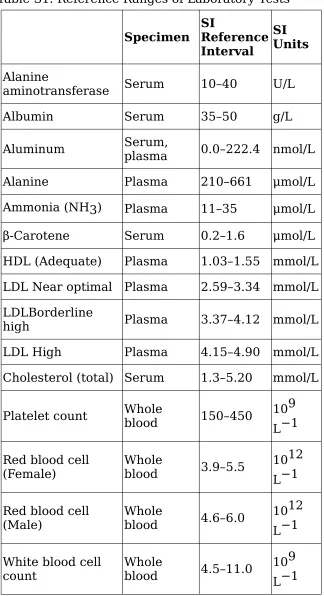
reference ranges, which reflect measured variances in any health properties in a population, depend on personal differences in genotypes, phenotypes, daily fluctuations, and measurement error. Reference ranges of more than five hundred health properties are published [AccessMedicine]. The
measured value of each health property for any person will fall a distinctive point of the range shown in Table S1 (D, Sup.). If each reference range is divided into N levels which could be resolved by detection resolution, the total number of variants of all health ranges would be the product of all possible numbers of all reference ranges. It could be infinitely large. Each of the health properties of a person may fall a distinctive position of the corres pondent population’s refernce range. No person would have all of his health properties match the population's means.
All departures of a person’s measurements of health properties from the population's means are necessary to correct genetic weakness or to maintain the phenotype, and thus are presumed to be important in maintaining health and prevention of diseases. Differences between two indi vidual persons can be inferred from differences in body size/shape, organ siz e/shape, structural strengths, skin colors, physical capacities, emotional con ditions, etc. Differences are also reflected in diagnostic data, image data, he alth conditions, disease histories, etc.
Personal differences must be considered in treating chronic diseases. F irst, when persons are sufficiently different, they cannnot be treated as same or similar units in a clinical trial because their differences can interfere with the measured health properies in the trial. Second, the values of health properties cannot be used as parameters for predicting chronic diseases. Such health properties cannot be correlated to conversion rates of metabolites and net size on tissue structures. Health properties may fluctuate in daily, weakly, monthly or yearly basis within the lowest and highest ranges. Chronic diseases may arise when health properties in a person depart from optimal values for sufficient duration. Cures to such diseases would require correcting such small departures. Finally, personal differences, which is reflected in health properties shown in Table S1, affect both disease process and healing process. Personal numbers such as vitamins levels, heavy metals, HDL, LDL, cholesterol, platelet count, red blood cell, white blood cell count, fatty acids, glucose levels, triglycerides, etc. can be altered by changing a large number of lifestyle factors.
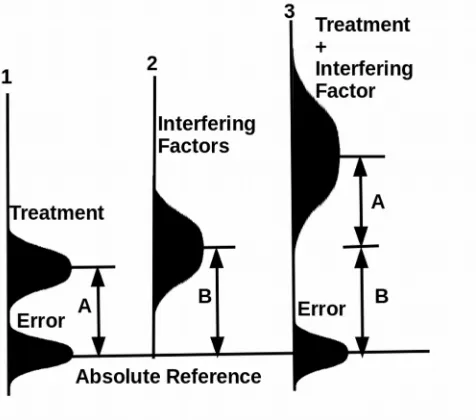
A review of the history of clinical trial development history, we show that none of old studies we could find discussed personal differences, interfering factors, and their effects on a weak treatment effect (B, Sup.). In a traditional clinical trial, the treatment effect is much stronger than the experimental error so that interfering factors will not alter trial outcome (Figure 1). Absolute reference in our figures is an imagined health property
235
240
245
250
255
260
265
that could be measured when the treatment is not applied. Since a chronic disease is caused by changed balances, the absolute reference is the disease state when those deviated balances such as excessive omega 6/3 fatty acid ratio, excessive heavy metal levels, physical inactivity, abnormal gut microbiata, lack of dietary fibers, abnormal emotional state, etc. are not corrected. An absolute reference exists in a patient, but could not be applied to a population. It may be used to a small number of “sufficiently similar patients” only if research focus is limited to a small number of interfering factors.
In studying a strong treatment effect (Figure 1), an assumption can be made that all persons can be treated as identical units because the strong treatment effect cannot be distorted by interfering effects in meaningful amounts. Any differences caused by personal differences are so small that they can be properly neglected. In this situation, randomization is sufficiently good. The justification of use of clinical trials is good approximation. After the error and interfering factors are summed up, resulting in a new distribution under the line 3 (E, Sup.), the treatment effect is still much stronger than combined effects of the error and the interfering factor. Even if many interfering factors exist, their effects could still be neglected.
In studying a chronic disease (Figure 2), the treatment effect is weak relative to two interfering factors shown under the line 2. When the two interfering factors and the error are summed up, they generate an apparent error distribution under the line 3. The mean of this apparent error are the sums of the means of the error and means of the two interfering factors. Without considering the interfering factors, the trial is to find the differences between the treatment and the error under line 1. If the interfering factors
275
280
285
290
295
300
305
are considered, the trial actually determines the treatment effect under the line 4 relative to the apparent error under line 3. The trial may be unable to find the treatment effect if the data comes out with the treatment’s effect at a lower tail region and the error at the upper rail region.
In a worst situation (Figure 3), the effect of one or more interfering factors is larger than the effect of a treatment. In this case, the error under the line 1 and the interfering factor under the line 2 merges to become a large apparent error with large variances under line 3. The treatment and the apparent error have a large overlap region (if the profile under 3 is moved onto line 4 horizontally). A trial may come out with the treatment effect falling at the lower tail region while the apparent error at the upper tail region, resulting in a finding that treatment is negative relative to the control. This result is clearly against the model assumption that the treatment has a weak effect indicated by letter A.
315
320
325
330
When the weak
treatment overlaps the apparent experimental error as shown in Figures 2, and 3, the trial is meaningless. Nothing can correct this problem that arises from breaching the basic presumption that the treatment effect must be much larger than the experimental error.
Figure 4 shows how an optimization trial by including the interfering factor (which appears in Figure 3) as part of the treatment will dramatically improve the chance to determine the treatment effect. Optimization with both the original treatment and the interfering factor will reduce the variances of the apparent error and increase the difference (designated by A+B) between the mean of the whole treatment package and the control.
340
345
350
355
360
365
In studying a chronic disease, all persons must be regarded as different. Cancer provides best example in this regard. Each tumor is unique due to the genetic and epigenetic basis and exogenous exposures such as dietary and lifestyle factors [Ogino et al. 2013]. If a treatment protocol developed from the population data can be used to cure the disease of a particular person, one would have to wrongly argue that the health properties of the person are unimportant to diseases, and phenotypes can be freely changed. Health properties are not quantities that can be summed up and averaged, and a treatment protocol based on population data cannot be applied to any specific person as cures for chronic diseases. This might be the reason why medicine could not find cures by using clinical trials.
If a statistical analysis of clinical trial data yield a “significant difference” over a large number of interfering factors, such a treatment must be very strong. It could be unlikely for such a strong treatment to correct weak causal causes for chronic diseases. This might be a reason that treatment protocols from clinical trials are able to control symptoms quickly, but are unable to restore sophisticated balances in human bodies.
C. Multiple Co-Casual and Interfering Factors Are Prevalent in Human Beings, But Often Could Not Be Controlled in Clinical Trials
Massive differences among individual persons are anticipated to affect the accuracy and reliability required for studying and characterizing chronic diseases. In a large clinical trial, a measured health property such as survival time or hazard ratio depends on disease progression, the effect of the treatment, all uncontrolled interfering factors, and their interactions. Naturally, all those factors are added into the error term. The final conclusion of the trial depends on the treatment effect relative to the bloated error term. If many factors are not controlled, the presumption that the treatment effect is much larger than the experimental error fails and result is incorrect. We will show a list of uncontrolled factors that can be seen in clinical trials.
Table 3. Factors That Are Known to Influence Chronic Diseases; Most of
375
380
385
390
395
400
Them Normally Are Not Controlled in Clinical Trials Case
No. Classes Impacts and Mechanisms Implied Effects and Significant Degrees
References
A1 Genetic
(mutations). Cancer initiation, development and metastasis.
As well accepted somatic evolution theory.
[Nowell, 1976; Lo eb, 1991] A2 Genetic (agiogenesis ) 19 Endogenous angiogenic polypeptides (VEGF, APN, etc.).
Tumor mass is limited to 1–2 mm without
neovascularizatio n.
[Sagar et al.
2006]
A3 Genetic
(apoptosis) Inflammation, apoptosis and autophagy.
54 genes related to those
properties in breast cancer.
[Schuetz et al.
2019]
A4 Genetic
(race). Among Asian people: Stroke is more prominent than CHD.
Different
characteristics. [Ueshima 2008] et al.
B1 Age and
aging on cancer incidence.
Cancer incidence rate is related to sixth power of age.
Huge impacts on prevalence and cancer death rates.
[Armitage & Doll, 1954]
B2 Age on
inflammatio n..
Aging and hormonal changes.
Age has great impacts on inflammation.
[Prasad et al. 2012]
C Sex. Males had higher
age-adjusted death rates for 12 of the top 15 causes of death.
Sex’s effects depend on diseases.
[Kalben et al. 2000]
D1 Chronic
stress. Cancer initialization, growth and metastasis. Affect immunity; neuroendocrine/β-adrenergic signaling. [Segerstrom and Miller, 2004; Sloan et al. 2010]
D2 Chronic
stress. Increased levels of platelet– leukocyte
[Brydon et al.
2006; Sundquist
aggregates. Nemeroff et al. 1998] E1 Diet (vitamins, fibers, minerals, etc.). Nutrition affects tissue ecosystem and cancer proliferation.
A massive number of studies show diet’s impacts on various aspects of health and cancer.
[Ogino et al. 2012, 2013] (too many to include).
E2 Diet (natural compounds) . Targeting apoptosis pathways in cancer.
A massive number of natural
compounds.
[Millimouno et al.
2014]
E3 Diet and gut
microbiota An impaired microbiota dysbiosis linked with cancer. Probiotics, potential corrective diet, Fecal Microbiota Transplantation
[Vivarelli et al. 2019]
F1 Systemic
inflammatio n
Affect the tissue ecosystem and inflammation.
Through age, body mass index, dietary saturated fat, and EPA and DHA omega-3 fatty.
[Navarro et al.
2016]
F2 Diabetes
and Cancer. Potential diabetesand cancer association.
[Giovannucci et al. 2010]
F3 Viruses DNA viruses and
RNA viruses Cause of about 15% of all cancers in the world.
[Liao 2006]
G Prior
chemo. Cancer repopulation. Mechanism is unknown. [Salani 2011] et al.
H Surgery. Cancer
repopulation. Systemic inflammation; promote M2 Tumor Associated Macrophages.
[Krall et al. 2018; Colleoni et al.
2016; Cheng et al. 2012;
Demicheli et al.
2007]
I Radiotherap
y. Tumor cells repopulation. Mechanism is unknown. [Salani 2011] et al.
J1 Exercises. Cancer initiation,
metastasis. cancer-specific mortality.
J2 Exercises. Affect 35 Chronic
diseases. Good rehabitativetherapy. [Booth 2012] et al.
K Temperatur
e, vibration, etc.
Enzyme activity; cell division apparatus.
(Influence cancer by time-averaged effects.)
[Levine & Robins, 1970]
[Yeung et al. 200 3]
L Lifestyles Association of risk
factors to myocardial infarction.
Changing lifestyle could prevent at least 90% of myocardial infarction.
[Yusuf et al. 2004]
The above table shows only a few exemplar factors that normally influence chronic diseases including cancer. The exact working mechanisms are unimportant to our analysis. Those factors affect a treatment result for a chronic disease if the treatment is evaluated by measuring a health property such as survival time, hazard ratio, chemical analysis data, structure’s size, biochemical process speeds, etc. They affect measured health properties by causal effects or by influencing one or more causal factors. Some factors may work like confounding factors.
Variances of each factor arise from an error in measuring the factor and the mechanisms at which the factor affects the measured health property. For example, it is impossible to accurately measure intensity, amount, and duration of exercise. Even if exercise were used in a precise accuracy, actually delivered effects on the health property would depend on personal conditions.
Surgery is considered as a factor of influencing cancer cell re-population by different mechanisms. Exercise is found to be an important adjunct therapy in the management of cancer based on a large number of studies (Cormie et al, 2017). Physical inactivity is one important cause of most of 35 chronic diseases [Booth et al. 2012]. Chronic stress can dramatically speed up cancer metastasis [Segerstrom and Miller, 2004; Sloan et al. 2010]. A prior surgery can dramatically alter the body’s ability to resist cancer return growth speed [Krall et al. 2018; Colleoni et al. 2016; Cheng et al. 2012; Demicheli et al. 2007]. Age affects cancer incidence rate by a sixth power [Armitage & Doll, 1954]. Age, body mass index, dietary saturated fat, and EPA and DHA omega-3 fatty can affect the body’s inflammation potential [Navarro et al. 2016]. Many uncontrolled factors may be magnitudes stronger than treatment’s effects when their effects are
410
415
420
425
430
looked in long terms.
In clinical trials, most of those factors are not controlled or cannot be accurately controlled. For example, surgery cannot be well controlled. If patients in a typical trial have been operated previously, the amount of tissue loss and surgical locations are dictated by medical needs. Ages may be classified by age groups but their effects cannot be well controlled due to personal differences. Most lifestyle factors cannot be measured accurately and thus are anticipated to have different effects. Since people have different lifestyles, their prior lifestyles may have residual effects on health properties after their lifestyles are changed per required treatment.
If a clinical trial is designed to study a weak factor, tens to hundreds of other uncontrolled factors with similar levels of effects are “bundled” into the error term. All of those factors affect human subjects in both the treatment and the control; and due to randomization, they do not cause meaningful difference between the treatment’s mean and the control’s mean. Each interfering factor raises both the mean and variances of the apparent experimental error term (See Figures 2, and 3). We will show that statistical analysis not only fails to correct such a problem, but makes the problem worse by failing to recognize weak treatment effects.
D. Randomization and Statistical Analysis Cannot Correct Bias Caused By Personal Differences, but Increases the Chances of Accepting Null Hypothesis
Randomized control trial does not automatically deliver a precise estimate of the average treatment effect, and it yields an unbiased estimate, that applies only to the sample selected for the trial [Deaton and Cartwright, 2018]. They discussed many problems, but did not discuss the inherent bias when a treatment effect is weak while multiple interfering factors exist. Accordingly, no attempt has been made to understand the merit of using multiple factors optimization method.
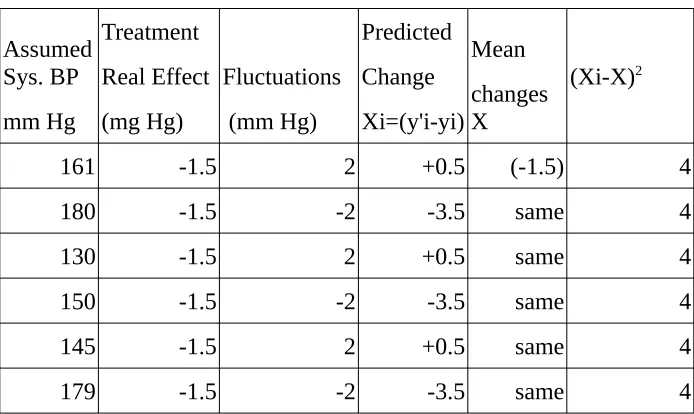
One common type of statistical analysis is to compare the mean of a treatment with a control by conducting a hypothesis test. Our simulation shows that the statistical outcome depends on data dispersion. In cancer cases, if the survival times become more widely dispersed, the point for rejecting the null hypothesis will shift toward to a high value. This means that a weak treatment effect will be rejected as random errors at high chances (see all examples in F-I, Sup.). This can be seen from Figures 2,3 as well.
440
445
450
455
460
465
470
In conducting a hypothesis test by using t distribution, a health property is observed before a treatment and after a treatment. The paired difference is used in conducting a hypothesis test. The rejection point depends on how patients respond to the treatment similarly. If they respond to the treatment in the exactly same way, even a small treatment’s effect can be recognized. However, large differences in patients’ responses will cause the rejection point to move toward to a large value for the same p value, and thus fails to recognize the effect of the treatment (F, Sup.). In conducting two populations’ mean test, large differences within each treatment group will cause the rejection point to shift toward to a large value (G, Sup.).
In conducting a variance analysis, uncontrolled interfering factors affect the health property to be measured. The test outcome depends on ratio of the variances of the treatment to the variances of the random error. If interfering factors are not controlled, they will go into the error term and thus reduce the ratio of treatment variances to error variances. The uncontrolled factors cause F statistic to shift to lower value so that the F test will be more likely to accept the null hypothesis (H, Sup.).
Interfering effects of uncontrolled factors cannot be corrected by any other statistical analysis method including χ2 goodness-of-fit test, common frequency fest (J-K, Sup.). Some statistical methods take into account only sampling drawing error, and others may address specific problems, but none have the power to correct this fundamental flaw that must be addressed by raising measurement accuracy. The problem cannot be cured by any
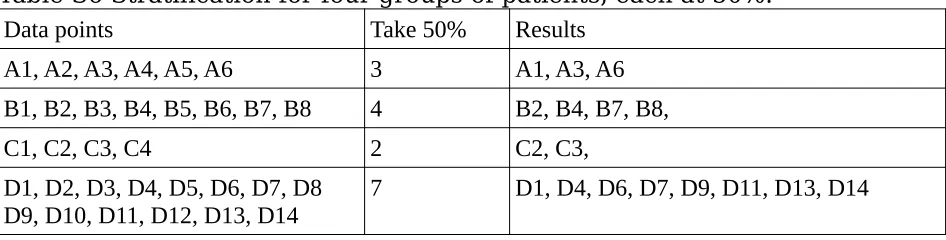
methods such as randomization and stratification (L-M, Sup.). Simpson's Paradox is also powerful proof that different persons cannot be treated as same in a clinical trial (N, Sup.).
Prior studies on the benefits of randomization in clinical trials are focused on how randomization reduces systematic bias [Kalish and Begg, 1985; Fleiss et al, 2003] and prevents selection bias [Schul and Grimes, 2002]. When human subjects are randomized, all [interfering] factors that affect experimental outcomes can be similarly allocated to the treatment group and the control group. This similarity allows for statistical inferences on the treatment effects [Altman, 1991]. While those points are correct in the context of studying a strong treatment as shown in Figure 1, they did not consider the effects of uncontrolled interfering factors when their effects similar to the treatment’s effect. They did not consider how combining
multiple factors as a single treatment can dramatically raise the capability to detect treatment effects.
The root cause of Simpson's Paradox is large variances at personal levels. In characterizing a chronic disease, each person must be treated as a unique system. A distinctive regression curve is presumed to exist for each person. When data from different people are pooled in conducting a
480
485
490
495
500
505
510
regression analysis, it is an attempt to find a regression curve among different systems. Such a regression curve cannot be right except by
accident. It may be applicable to a population, but the population does not have diseases. Thus, any treatment developed using population data cannot cure diseases for any specific person. The pattern of Simpson's Paradox implies that such a regression data is improperly combined.
The problem discussed is rooted in the fact that massive personal differences in clinical trials affect a measured health property. No statistical analysis, and nor any other methods under the Sun can correct this problem, which is like a bad laboratory report which is based on data generated by using an erratic household scale. The causal and interfering factors include health factors that patients can correct and factors that patients cannot change. Some of interfering factors are called as covariates; and some examples include sex, age, trial site, disease characteristics, disease
prognosis, etc. [CHMP, 2015]. A presumed fix is to achieve balance among treatment and control arms with hope that the conclusions of a clinical study are not sensitive to covariates. However, none of the proposed methods in the Guideline can actually correct the bias of clinical trials because those measures cannot reduce the variances of the error term. In another study, attempts have been made to evaluate different methods for correcting
baseline imbalances [Egbewale et al, 2014]. They focused only pre- and post-treatment scores and how different analytical methods affect bias, but did not address the problem of weak effects. The problem cannot be addressed by co-variance analysis.
We also show that health properties are not the types of things that can be summed up and averaged (O, Sup.). Good personal health is
maintained by maintaining sophisticated balances. Beneficial effects and adverse or negating effects happen in different patients, and they cannot be averaged in reality. This unique problem arises in the context of
characterizing chronic diseases. It is safely assumed that chronic diseases are caused by imbalances, which can be caused by disturbance in two opposite directions. Each biochemical pathway must be maintained at a proper speed, and changing the pathway’s speed in either way can disturb this balance. A same amount of qualitative change from a right pathway speed in one person cannot be used to compensate for the same amount of change in an opposite way in another person. However, statistical analysis is based on an assumption that health properties is fungible and thus can be summed up and averaged. This assumption cannot hold in reality. An identical amount of departure from the population’s mean has different impacts on different patients. The same amount change may cure, hurt or kill a patient, depending on the specific conditions of the person.
Statistical analysis is based on an oversimplified and unrealistic
520
525
530
535
540
545
550
555
assumption that health properties can be treated as a fungible property. Statistical analysis adds negating effects to the sum of the treatment and thus lowers the treatment’s mean. This results in wrong result like that a 20% beneficial response rate and 15% negating response rate gives 5% net beneficial response rate, or that the sum of 20% positive effects and 20% negative effects is equal to no effect. In reality, one can avoid negating effects by avoiding applying the treatment to mismatched patients and can actually deliver 20% positive effects. For those obvious reasons, a treatment protocol developed from a clinic trial predictably fails to work on real human beings. Optimization focusing on a single patient is the only way to avoid this fundamental flaw. This problem is less critical when health properties among “sufficiently similar subjects” are summed up or averaged to get rid of
fluctuations caused by uncontrollable errors.
Based on a hypothetical model study, where each of k factors can influence the health property by a same amount, using k factors as a
treatment is superior to the treatment using a single factor (P, Sup.). If each of the k factors has a same treatment effect and same variances in the health property and is similar to the experimental error, using an optimization trial to optimize the heath property by using k factors will raise treatment effect by k times, and raises the T statistic, Z statistic and F statistic by about k*√k. The sensitivity and ability of a hypothesis test to detect true treatment effect increases with the number of interfering factors. When the total
number of factors is increased from 1 to 2, 5, 10, and 100, all statistics will increase by 2.8, 11.2, 32, and 1000 times.
DISCUSSION
A. Multiple Sources of Big Errors in Clinical Trials
In conducting a valid experiment, one fundamental presumption is that accuracy and reliability of detection technologies for detecting a treatment’s effect must be sufficiently higher than those for detecting the experimental error. This presumption can hold only in studying strong treatments that can stand out over the apparent experimental error. In medical research, this presumption becomes that detectable treatment’s effect must be much larger than the apparent experimental error. In a clinical trial, the failure of this presumption can be rephrased as one that the alternative hypothesis (the effect attributed to a treatment) is too close to the apparent
experimental error so that data set tends to come out with its statistic falling within an acceptance region. This results in an outcome of failing to
recognize weak treatment effect.
565
570
575
580
585
590
595
All statistical analysis methods are premised on the model assumptions, and every model assumption including the test hypothesis must be correct [Greenland et al. 2016]. The fluctuations caused by beneficial and adverse/negating effects among different patients are not same as drawing error or true random errors in typical statistical models. The effects of uncontrolled factors may be merged into the experimental error only if the total experimental error is still sufficiently smaller than the treatment’s effect. Big data dispersion in statistical analysis may not be ignored [Campbell, 1974]. When the experimental error in a clinical trial is close to the treatment’s effect, such a trial will generate meaningless results.
Lack of required accuracy and reliability is inherent in clinical trials used to characterize chronic diseases. Chronic diseases, by definition, progress slowly. This means that changes in any measured health property such as hazard ratio, organ function, survival time or other measured chemical data in any given time interval is infinitesimally small. Thus, the accuracy and reliability required to accurately characterize chronic diseases is much higher than those for studying acute diseases.
Compared with mechanical systems such cars, planes, etc, human beings are the most unfit subjects for clinical trials because of a massive number of genetic differences and phenotypes [Ogino et al. 2012; Ogino et al. 2013]. In addition, the personal differences are further increased by different emotional states of human beings. Since the massive personal differences in clinical trials interfere with accurate assessment of any health properties, it is impossible to detect weak and slow treatment effects. By using clinical trials, medical researchers cannot accurately determine what can cure chronic diseases and what harm personal health on long terms.
Statistical analysis has been widely abused in a long history [Campbell, 1974]. Misuse of statistical analysis in medical research is a well known problem which has been discussed in a large number of studies [e.g., Strasak et al, 2007; Gore et al, 1977; Kim et al, 2011; White, 1979; Hall et al. 1982]. Problems discussed in those references are in addition of the model flaws we have found above.
B. One-Way Biased Conclusions of Clinical Trials and Their Severe Adverse Impacts On the Global Health Landscape
Our simulation results from all different models consistently show that the effects of clinical trials are one-way biased when the trial is used to evaluate a weak treatment. The averaging operation tends to reduce the treatment mean and this effect is not reflected in any assumption in basic statistical models. Statistical mean, µs, must be smaller or much smaller than µb the
actual beneficial mean when the treatment is used only to cause-matched patients. This effect is described by a degrading factor g=µs/µb which is 605
610
615
620
625
630
635
attributed to “indiscriminate application” of the treatment. This value is in the range of 0 to 1. Statistical analysis is unfit for studying chronic diseases. If a measured health property is influenced by multiple interfering factors, a study focusing on a single treatment with other factors randomized will increase the chance to reject the treatment as having no effects on the
health property. Hundreds trials, with each focusing on one single factor, will result in failure to find any of the factors.
Clinical trials distort hypothesis tests by enlarging the error term and statistical analysis reduces the treatment’s effects by averaging effect. They both work in the direction of rejecting the treatment. If a clinical trial results in rejection of the null hypothesis, the finding will likely stand except that the true treatment effects may be actually larger than determined values. However, if a hypothesis test outcome is acceptance of the null hypothesis, it may be wrong due to the negating effects and interfering effects. Therefore, conclusions in a good number of published studies should be interpreted differently. This one-way bias can be traced to the irreconcilable conflicts among massive personal differences, required high measurement accuracy and reliability, weak and slow effects of treatments for chronic diseases, and the unique roles of imbalances in chronic diseases.
Personal health is influenced by diets, nutrition, exercises, mind
regulation, chronic stress, fears, etc. Many of those factors work like double-edged swords: they can benefit some patients, but hurt others if they are misused to destroy some established balances. The effects of nutrition and diets are expected to be highly random and unpredictable due to different personal lifestyles. In such a trial, the apparent error is inflated by
uncontrolled interfering factors. Findings from a clinical trial represent only an abstract population, and are inapplicable to real patients as far chronic diseases are concerned. A large number of factors in diet, lifestyles, exercise and emotional states, etc. can affect cancer outcomes, and thus, each study focusing on one single or a few factors will result in rejecting each factor as a potential treatment.
By creating false acceptances, misused statistical analysis keeps rejecting weak and slow treatment effects. This explains why a clinical trial could not positively affirm single lifestyle factor’s curative benefits even though it is found to be a significant risk factor of the disease in other types of long-term studies. Clinical trials are primarily responsible for promoting mainly surgery, synthetic drugs, radiation as “scientifically valid” treatments and rejecting potentially tens of thousands of non-medical weak and slow treatments, which would be one to two orders magnitude more powerful if they are used collectively in optimization trials. Clinical trials are most probably the main culprits that preclude the mankind from finding for cures for chronic diseases. It is reasonable to infer that clinical trials are in part
645
650
655
660
665
670
675
responsible for creating current national health epidemics in the U.S., China and many other nations in the world.
A serious problem is the cumulative toxic effects of environmental pollutants, contaminants, food additives, pesticide residues, herbicides, industrial chemicals, etc. By focusing on a single toxic agent in each trial, each such study cannot catch a weak and slow toxic agent. However, multiple toxic agents always work together in human bodies. A negative finding could be “caused” by interference of other similar or stronger toxic agents and similar or stronger interfering effects. Most known toxic
substances co-exist in human bodies. If a hundred similar factors are studied at the same time, Z statistic, T statistic and F statistic could be 1000 times more than counterpart in the clinical trail focusing on a single factor. When a large number of similarly harmful factors attack the human in the control, each of toxic agents is naturally hidden as “the experimental error.”
However, several, tens, or even hundreds of toxic agents can slowly damage human bodies. This single toxic agent can be identified only if all those toxic substances are not present in trial subjects. Findings from studying one or few toxic agents a time do not reflect the real damages of multiple toxic agents to the human body.
C. Replacing Clinical Trials by Optimization Trials
To find cure for a chronic disease, a required capability is determining which factors can speed up the disease’s progression and which can slow down or reverse its progression. Considering massive differences among human subjects and a large number of interfering factors, clinical trials are unfit for establishing treatment protocols. Optimization trials using multiple factors as a treatment provides much better chances for finding cures for chronic diseases. We will show three huge gains below.
First. the biggest gain from using an optimization trial is to avoid
negating effects caused by indiscriminate application of the treatment. For a single factor treatment, an optimization trial can raise beneficial effects by (1/g), where g=µs/µb. It can be 1 to any reasonable number (See treatments C
to G in Table 7S, Sup.). In clinical trials, the same treatment is
indiscriminately used on all patients in the treatment group, many lifestyle factors can disturb various balances in two opposite directions. If those factors are randomly used against all patients in the treatment group or subgroup, their true beneficial effects on some patients can be “nullified” by their negating effects on other patients (per the analysis for the model in Table S7). In an optimization trial, controllable factors are used as part of treatment and are used on only the patients who need them. Sufficiently similar patients are selected in such a trial.
Second, we have shown that a large number of interfering factors
685
690
695
700
705
710
715
directly interfere with clinical trials. They have different levels of effects and different variances. They can be used as part of treatment package for
chronic diseases. Thus, a wise strategy is including multiple factors that would affect disease outcomes as a treatment package. The apparent error distribution in a patient can be estimated by the mean, μt=μ1+μ2+….,+μk,
and variances, σt2=σE2+σ12+σ22+,….,σk2 if all interfering factors are not used
as part of the treatment. An improvement can be achieved by using the Model B. By bundling all controllable co-causal and interfering factors as a treatment package, the total treatment’s effect is raised by k times while the error variances are reduced by about √k according to Medal B analysis.
The total gain in treatment effects existing in an optimization trial over a clinical trial is (1/g)*k while the all test statistic such as T statistic, Z
statistic, and F statistic used in hypothesis tests are increased by (1/g)*k*√k, where 1/g is attributed to avoiding negating effects, k is attributed to the additive effect of multiple treatment factors, and √k is attributed to
reduction in the error variances. Their collective impacts could be huge. This conclusively shows why medicine could not find “scientific evidence” for any treatment based on a single lifestyle factor.
This conclusion is backed up surprisingly by all of simulation results for three hypothesis tests in every model we used in Supplement. Thus, we assume the gain is an inherent estimate (but not a precise number due to complexity of the human body). Moreover, the actual gain is predicted to be more than (1/g)*k or (1/g)*k*√k. If interfering factors are matched to
patients, true gain in the treatment effect is more than k times. We assume that some adverse effects which cannot be directly measured are not
reflected in the negating effects and thus could not get into the g value. The true treatment effects could be further raised by avoiding adverse side effects. In contrast, optimization trials are good for using lifestyle factors, natural remedies, and mild or safe environmental factors, they do not
implicate serious side effects. Even though the variances of the treatment’s mean X could approach zero, the √k term most probably cannot be ignored by approximation in studying chronic diseases.
The inevitable conclusion of clinical trial’s invalidity is strongly resonant with ancient medical practices such as herbal formulations and practices under the ancient holistic model. This ancient holistic model stresses the need to work on the whole body by using a large number of natural compounds or multiple treatment methods.
Based on the strength of our evidence as a whole, we reject clinical trails as a misused used wrong experimental method for studying weak and slow health properties and propose optimization trials as replacement. Optimization trial is suitable for studying weak, slow and natural remedies, but may not be used to study the side effects of synthetic drugs.
725
730
735
740
745
750
755
760
One solution is using a single human subject in a clinical trial. In this case, a control cannot be found because no two persons are similar in the world. Thus, the person’s condition before the treatment is used as a control. This is essentially what was once used in ancient medical systems. The treatment effect is assessed by comparing the health properties before the treatment and after the treatment. One problem is that if the treatment lasts a long time, aging process can interfere with trial results and other previously used treatments may influence the current treatment. Some practical adjustments must be made. Trustworthiness of findings should be established by replicating the same trial for several times. Acceptance of this approach would require examining the rationale of using clinical trials. The notion that a treatment is good for all people in the population is clearly incorrect as far as chronic diseases are concerned.
An alternative solution is controlling all influencing factors in a mini trial so that the variances from interfering factors are minimized. It is difficult to get rid of the massive personal differences which are presumed to interfere with trial outcomes. What could be achieved in practice is using “sufficiently similar subjects” in the mini trial. To investigate a treatment in a trial, all significant co-causal and interfering factors including those listed in Table 3 and other known factors should be controlled. For example, relevant genetics, diet, exercises, toxic agent levels, medication use history, sex, age, race, emotional states, etc. are controlled. When the variances from those factors are controlled, the trial’s sensitivity will be dramatically increased. By using sufficiently similar subjects, weak, slow and natural treatment effects can be detected with increased sensitivity. To see whether the treatment works on patients with similar important health properties, a second or third mini trial is conducted. After a series of mini trials have been done, a researcher can see when the treatment works and under what conditions the treatment works.
Personal genetics and emotional states are difficult to control. Personal genetics can be controlled by selecting human subjects. To control those factors, one should focus on their nexuses to measured health properties. If a treatment works on a particular biochemical process, subjects with known genes that control the process should be selected or voided, but other genes with little effects may be neglected. Emotional states should be stressed if they are predicted to play significant roles in influencing measured health properties. When human subjects are nearly identical, variances attributable to personal differences will be dramatically reduced. In personalized
medicine, randomization, subject selection bias, statistical analysis has limited utility and should not control experimental designs.
When clinical trials involve a small number of sufficiently similar patients, statistical analysis should not be concerned. When all significant
770
775
780
785
790
795
800
factors are controlled, measured health properties may be treated as
ordinary variables and thus statistical analysis can be avoided or used as a mere causal checks. P-values 0.5±0.15 (or any other suitable numbers) may be used because trustworthiness of trial findings are established by
replicating mini trials. For a single person trial, statistical analysis cannot be used in most situations unless study purpose is examining things caused by instruments or sampling technologies, and trustworthiness of findings should be established by repeating the same or similar trial. All details on controlled factors should be documented for replicating the trial.
The single-person or mini optimization trial can be used to study combination of factors. Cancer is clearly responsive to lifestyle changes involving a large number of factors. When tens to hundreds factors are controlled, their combination effects are added up in some ways while causal and interfering factors are dropped out from the error term. All co-causal and interfering factors are used to promote healing in the treatment arm. Such an experimental design will dramatically increase the detection sensitivity of the trial and raise the treatment’s effect.
When the medical model is flawed, the problems cannot corrected by doing more studies under the same model and its validity cannot be decided by examining studies from the model. Our challenges cannot be evaluated by the same standards under the current standard. To correct such foundation error, one must examine presumptions, medical model development history, past facts that supported the use of the medical model, and newly discovered facts that show flaws of the medical model. The widespread misuse of
clinical trials has been driven by the incentive for avoiding selection bias. This incentive is overly stressed in medical literature. This incentive has driven medical research into a wrong track for more than one century, and resulted in a research model barring the use of emotional component as part of cure.
As a result of influences of clinical trials, a notion that diseases are cured by indiscriminate exposure to approved treatments becomes dominate in medicine. The notion is strange. Even though completely response rates of chemotherapy are 7.4% for cancer and virtually no cures are found for most chronic diseases, medicine is still unable to examine its foundation. Despite frequent criticisms by non-medical professionals, medicine is unable or unwilling to examine this flawed research model, and continues using the peer review system to maintain the flawed standard and suppress
discoveries that would lead to reformation of the flawed medical foundation. When this fatal flaw is not corrected, medicine continues producing greatly biased, incorrect, or irrelevant research findings. Even after more than a century of failure to find cures and that U.S. medicare is predictably facing bankruptcy, the idea of avoiding selection bias still control research
810
815
820
825
830
835
840
845
practices. If an investigator wants to inject bias, nothing can stop him from altering data at trial levels. Besides, a better approach to preventing
research fraud and bias is repeating the same trial by one or more times. Other problems such as non-standard definitions, definitions changing in time, inaccurate specification of groups, lack of data, etc. are not fatal and can be addressed over time.
Optimization trials are superior to clinical trials for studying weak effects. By recognizing the validity of single-person trials and mini
optimization trials, personal medical miracles can be conveniently studied. Research focus is not about experimental designs, evidence quality,
statistical analysis, selection bias, rejection criteria, etc, but delivery of predictable cures which can be tailored to all specific patients including “minority patients.” This mission cannot be accomplished by indiscriminate application of treatments in clinical trials.
D. Limitations of This Study
Our findings are not applicable to clinical trials, the findings of which are not used as the basis for treating diseases. If the purposes of research are to explore costs and resource allocations, their validity are not subject to the same analysis. Also, if clinical trials are used to study disease
mechanisms as a way to control health costs, they still provide useful information for policy makers.
It has routinely assumed that measured health property in a trial is mainly attributed to a treatment. However, this presumption is always
breached in studying chronic diseases. When a weak treatment plus at least one interfering factor affect the measured health property, the validity of trial outcomes depends on the relative size of the treatment to those of the interfering factor. Moreover, concerning chronic diseases, health properties are different from person to person. This implies that true cure must be formulated for each specific patient, and treatment established by
population trials cannot restore balance for specific patients except by accident.
We note that the effects of interfering factors are not linearly additive, their effects may vary in degrees, their variances are not similar, their
distributions may be not normal, and many factors may interact with each other in complex ways. However, they affect the mean and variances of the experimental error in certain ways. The effects from all interfering factors are added up linearly or non-linearly. When the causal and interfering factors are bundled into the error term, they ruin the trial. If they are
bundled into a treatment, test statistics increase as a result of addition of all co-causal and interfering factors, and are further enlarged by an empirical multiplying factor that is attributed to the reduced variances of the apparent
855
860
865
870
875
880
885
experimental error.
If a clinical trial’s design breaches any core assumption, its findings are incorrect for that reason. If the breach is sufficient to change trial outcomes, the trial is invalid without regarding the validity of our findings. Thus, whether or not those assumptions used in our models hold will not affect our conclusions. Our findings underscore the importance of adhering to model presumptions in designing clinical trials and conducting statistical analysis.
CONCLUSIONS
By examining machine repairing model and accuracy and reliability requirements for studying chronic diseases, we found that the one-treatment-for-a-population approach is flawed as far as it is used in studying chronic diseases. Clinical trials are good only if the treatments under study are sufficiently strong or when all human subjects can be treated as “nearly identical units” as in classical probability trials or classical clinical trials. None of the two conditions are met when clinical trials are used to characterize chronic diseases. Randomized clinical trails are unable to deliver required accuracy and reliability due to the massive personal differences attributable to genotypes, phenotypes and emotional states of individual persons.
We further found that clinical trials and statistical analysis are fundamentally flawed on multiple grounds as revealed in numerous hypothetical models such as a multiple causes/treatments model, and multiple interfering factor model, two population means hypothesis test, paired data hypothesis test, F-test in variance analysis, etc. We found that health properties are not the types of fungible things that can be summed up and averaged because all human beings must be treated as different things. Beneficial effects and adverse effects happen in different persons with different meanings, and cannot be averaged in reality. Statistical analysis degrades performance of the treatment by averaging beneficial and negating effects within each treatment or subgroup. This averaging operation dramatically degrades the treatment effects. In conducting statistical analysis, the poor accuracy problem becomes one that the total experimental error is closer or even larger than the treatment’s effects under the alternative hypothesis. Both the means and the variances of randomized and uncontrolled co-causal and interfering factors are added to those of the error term as an apparent error. When the apparent “error” is far too large relative to the effects of the treatment, data set tends to come out with test
895
900
905
910
915
920
925
statistics falling on the region of acceptance of the null hypothesis, thus resulting in false acceptance of the null hypothesis or false rejection of true treatment effects. Those fatal flaws are expected to be present under most circumstances. No statistical method, no any other methods under the Sun, can ever correct this great bias that arises from breaching the core presumption used in the statistical model. Thus, clinical trials are invalid and have been misused in studying chronic diseases.
Our model analysis shows that optimization trials can dramatically increase chances to determine treatment effects than randomized clinical trials. Based on a multiple interfering factor model, where k co-causal or interfering factors can influence a measured health property by a same degree, a treatment package using all k factors is much better than using a single treatment. If each of the k factors has a same treatment effect and same variances, an optimization trial to evaluate the heath property by using all k factors will raise the total treatment effect by (1/g)*k times than a randomized trial (where g is a degrading factor caused by misapplication of a treatment to patients, with its value from 0 to 1), and raises T statistic, Z statistic or F statistic by about (1/g)*k*√k. Assuming that a treatment has no negating effects, when the total number of the factors is increased from 1 (without any interfering factor) to 2, 5, 10, and 100, T statistic, Z statistic and F statistic will increase by approximately 2.8, 11.2, 32, and 1000 times. Moreover, by avoiding negating effects, an optimization trial using k factors as a treatment package can raise treatment effect potentially by one to several orders of magnitude relative to randomized clinical trials. The gain cannot be eliminated by increasing the patient number in the trial. The findings show why studies using clinical trials cannot produce “scientific valid” evidence in support of using single lifestyle factor as cure for a chronic disease.
Clinical trials have be correctly used for centuries but widely misused in studying chronic diseases in the last century. No prior study has paid attention to serious conflict between the massive inaccuracies caused by personal differences and the required high accuracy and reliability for characterizing chronic diseases. The misuse of randomized clinical trials was mainly driven by a misplaced incentive to avoid so-called selection bias and quality of evidence. The breached core presumption (or lack of accuracy and reliability), plus improper averaging of positive-and-negative treatment’s effects, plus interference of multiple interfering factors, plus the stringent rejection criteria or low p values inevitably resulted in biased or wrong conclusions in past medical studies. The research model is unable to determine the benefits of any weak and slow treatment which could be vitally important for correcting subtle imbalances in the human body. The misuse of clinical trials are predictably responsible for the failure to find treatment effects for chronic diseases and failure to identify harmful effects
935
940
945
950
955
960
965