Dr. M. Kathiravan*, Dr. Saikumar V, Ms. V.Sunitha
Department of Management Studies, Easwari Engineering College, Chennai, India
*Corresponding author’s E-mail:[email protected]
Received: 17-06-2017; Revised: 09-09-2017; Accepted: 22-09-2017.
ABSTRACT
In this study an explored the implementation of talent management process at pharmaceutical SMEs India through an empirical perspective. The talent management is a set of combined workforce process designed to fascinate, stimulate and retain engaged employees. It is to create a high-performances and sustainable environment in the competitive business scenario, which meets its goals and objectives. Hence this research was conducted with intention to examine the talent management practices and its impact on business performance. Primary data were collected in human resources, line personnel, operations, maintenance, sales and marketing, reservations, staff personnel and subcontractors’ employees through 45 semi-structured questionnaires and its validated using from literature reviews for checking the trustworthiness. For the analyses’ various dimension used included talent management practices, talent management mechanisms, talent pooled strategy, and business strategy, organizational performance and competitive advantage. The research work is an effort to discover the impact of effective talent management process provided satisfaction, motivation, retaining and developing talent in engaged employees further study found the organization culture, career management, and reward system, working environment and business strategies have strong relationship among the talent management process.
Keywords:Organization culture, Career management, Reward system, working environment, Talent management.
INTRODUCTION
he chapter is structured in to the concept of talent management, theoretical framework for talent management, strategic talent management system and talent management and organizational performance. A review of the talent management literature reveals a degree of debate as to the conceptual boundaries of the topic. Indeed noted that there is not a single consistent or concise definition of talent management 4, 20. The research stimulated a social learning process that combined knowledge from local stakeholders (both pastoralists and extension workers) with the scientific knowledge of researchers to provide a range of management options that could help land managers reduce or adapt to land degradation 20 Notwithstanding this criticism 13 identified three key streams of thought around the concept of talent management. First, those who merely substitute the label talent management for human resource management. Studies in this tradition often limit their focus to particular HR practices such as recruitment, leadership development, succession planning and the like. The contribution of this literature is relatively limited beyond the strategic HR literature, as it largely amounts to a rebranding of HRM. A second strand of literature emphasizes the development of talent pools focusing on projecting employees/staffing needs and managing the progression of employees through positions 13, 17 Studies in this tradition typically build on earlier research in the manpower planning or succession planning literatures. While adopting a relatively narrow focus, studies in this tradition at least provide a degree of
differentiation as to what talent management is vis - à- vis HRM. The third stream focuses on the management of talented people. This literature argues that all roles within the organization should be filled with “A performers”, referred to as “top grading” 10 and emphasizes the management of “C players”, or consistently poor performers, out of the organization 16. While the third approach is highly influential 9 argue it is neither desirable nor appropriate to fill all positions within the organization with top performers. Equally, if the talent management system is applied to all of an organization’s employees (i.e. including poor performers as well as top performing employees), it is difficult to differentiate talent management from conventional human resource management 9 In addition to the above three streams of thought about talent management, the study recognize and add an emerging fourth stream which emphasizes the identification of key positions which have the potential to differentially impact the competitive advantage of the firm 6. The starting point here is identification of key positions rather than talented individuals. 6 An organizational talent management strategy as activities and processes that involve the systematic identification of key positions which differentially contribute to the organization’s sustainable competitive advantage, the development of a talent pool of high potential and high performing incumbents to fill these roles, ands the development of a differentiated human resource architecture to facilitate filling these positions with competent incumbents and to ensure their continued commitment to the organization. The starting point for
Optimization Talent Management Process Analytics on Pharmaceutical SMEs Employees:
Empirical Perspective
T
any talent management system should be the systematic identification of the key positions which differentially contribute to an organization’s sustainable competitive advantage 9 this is consistent with an increasing recognition that there should be a greater degree of differentiation of roles within organizations, with a greater focus on strategic over non -strategic jobs 5 or between those organizational roles which promise only marginal impact vis-à-vis those which can provide above - average impact 6 this is in contrast to the extant situation in many organizations where overinvestment in non -strategic roles is common 5 The development of a 9 talent pool of high potential and high performing incumbents fills the roles that differentially contribute to an organization’s sustainable competitive advantage. Organizations should differentiate between employees who are strategic performers and those who are not. In order for strategic or pivotal jobs to have a differential impact on organizational performance, it is important that such jobs are filled with high performing or high potential employees. This view stands in contrast to some of the earlier contributions which argued that all roles within the organization should be filled with “A performers”, referred to as “top grading” 5It also differs with the approach advocated by the McKinsey consultants behind the war for talent approach who advocate managing “C players”, or consistently poor performers, out of the organization 11. The study posit that the focus of talent management systems should be on high -potential and high-performing employees operating in key roles and not all employees in the organization. Such an approach will facilitate a more deliberate utilization of organization resources. The final element of talent management recognizes the importance of differentiated human resource architecture to facilitate the filling of key positions within the organization with competent incumbents and ensuring their continued commitment to the organization. The study draws insights from the strategic human resources literature in this regard 5, 22. This element facilitates the identification of high potential and high performing employees, and the helping in the development of the organization’s talent pool 22. Once identified, the challenge for the organization is to deploy appropriate human resource policies to ensure these individuals are strategically deployed and supported with appropriate HR policies. Clarifying the conceptual boundaries of talent management represents an important task in the development of the topic. It provides a frame of reference for academics and practitioners in developing research in the field. It is also important in helping to differentiate strategic talent management from strategic human resource management. In this regard the argue that in contrast to strategic human resource management, which while recently recognizing the differing contribution of different groups of employees within the firm, generally focuses on all employees within an organization; talent management focuses on those incumbents who are included in the
organization’s pivotal talent pool and who occupy, or are being developed to occupy, pivotal talent positions.
Theoretical Framework for Talent Management
Taylor studied management subject as a scientific research in what is described in literature as the Theory of Scientific Management 25, 27 in his studies, found out that enterprisers cannot satisfactorily benefit from workers and believed that forming and programming of doing works should be re-regulated by a scientific analysis and more output would be gained if they were standardized. According to Taylor‟s Scientific Management Approach the following human factor characterize workers: workers are lazy and have an inclination of less work, they are unproductive, workers do not struggle for the progression of enterprise, workers are demotivated, and they do not have a defined mission and vision. 27 observed that work order and environment existing in enterprises may give big damages at a degree that can reach to losses at an extent effecting national economy. He has also observed that some radical decisions must be taken in order to turn these factors causing inefficiency and effecting production negatively into neutral or to minimize them and he formed The Principles of Scientific Management accordingly. 17 The principles of scientific management as follow: (i) Workers and managers must work according to scientific principles rather than working haphazardly when carrying out organizational activities; (ii) Organizational activities must be performed in a coordinated and consistent way, not in an inconsistent and incoherent way; (iii) Organizations and their methods, rather than submitting low unproductiveness, must reject this and must try to provide the highest productivity; (iv) Each labor must be parted to sub-factors forming it. When defining activities which workers must carry out, not only intuition and experience, but also scientific methods must be used as well; (v) People whose mental and physical skills are sufficient for works being standardized must be chosen, that is to say, the most suitable staff member must be chosen; (vi) Specialization in every part of a defined labour must be provided. The study builds the proposition by 26that people whose mental and physical skills are sufficient for works being standardized must be chosen, that is to say, the most suitable staff member must be chosen. Similarly, 11 12 talent management in an organization ensures that talents are developed and the most skilled employees are retained in the organization. 26 further argue that organizations and their methods, rather than submitting low unproductiveness, must reject this and must try to provide the highest productivity. Talent management provides an avenue through which highest productivity can be achieved by ensuring that an organization develops and retains skilled human capital
Background of the study
management and quality of service and innovation in the provision of services, there is a significant relationship and The necessary measures in order to retain talent in the organization has the most impact on the quality of services and Attracting top talent to the most impact on organizational innovation is increasing.24 In a study named” Examine the relationship between talent management and performance of faculty members of Isfahan University” concluded that Talent management strategy, a significantly positive effect on the performance of faculty members of the University and Promote talent management strategy will improve the performance of employees. 12Has studied the Effect of implementation of talent management on organizational performance (studied in Gilan PMO) and showed Management of talent - talent, retention of management, career development, retention and performance of financial and non-financial organizations, there is a significant positive correlation. 20, 21 have studied “Relationship between talent management and performance of nursing staff in Karaj”. Between employee performance and talent management in government hospitals, there is a significant relationship. With the joint efforts of managers and nursing staff and giving more responsibility to the Department of Human Resources, will be the most positive consequences of the behavior and performance of employees created. 21in his doctoral dissertation, with mixed methods research in the service of a company in the United States, to evaluate talent management systems and to make the commitment of staff. Results of semi-structured interviews showed how the human resource management and organizational development can protect and enhance their talent management system. Ayd Muelhi has studied "The effects of the adoption of ICT on the performance of companies in the manufacturing sector in Tunisia» and concluded Strong positive relationship between the uses of ICT is efficiency. The results showed that the combination of ICT and human capital increases the efficiency of enterprises.
Statement of the problem
Talent management processes change over time in response to the impact of both internal and external factors on the workplace 19.1 To filling the knowledge gap by offering a research agenda at multiple levels and in multiple contexts. We also discuss methodological issues in the study of TM, and conclude by identifying several key trends that are now, and will continue to influence the practice. Talent management and expatriation are two significantly overlapping but separate areas of research and that bringing the two together has significant and useful implications for both research and practice. We offer indications of how this bringing together might work, in particular developing the different results that will come from narrower and broader concepts of talent management. Our framework defines global talent management as a combination of high-potential development and global careers
development 8. The growth potential of organizations worldwide depends on the ability of companies to have the right people, in the right place at the right time. Employers are forced to compete to attract and retain an increasing pool of talented individuals in order to achieve their objectives .Companies with effective talent management practices deliver better results for shareholders. 9 The future researches in the area of talent management through (1) helping researchers to clarify the conceptual boundaries of talent management and (2) providing a theoretical framework that could help researchers in framing their research efforts in the area. Additionally, it aids managers in engaging with some of the issues they face with regard to talent management. Themes in contemporary talent management focus on (a) the challenge of open labor markets, including issues of retention as well as the general challenge of managing uncertainty, (b) new models for moving employees across jobs within the same organization, and (c) strategic jobs for which investments in talent likely show the greatest return 7. It is necessary for an organization to evaluate the effectiveness of talent management in ensuring that organizations such as Comply industries achieve their objectives and improve performance. However, no previous studies have been carried out in pharmaceutical SMEs to determine the correlation between talent management and organizational performance. Therefore, this study sought to bridge the knowledge gap by investigating the effect of talent management on organizations performance at pharmaceutical SMEs in India.
Research Gaps
Study3 indicates that money in itself may have no intrinsic meaning this acquires important motivating power because it comes to symbolize so many intangible goals. A research carried out 2,8 to diagnose the status of the talent management practice in Polish companies, received replies from 36 companies, indicated that, In over 50% of the companies diagnosed, problems of talent and talent management are included in the company’s strategy. More than 25% of respondents pointed out that the issue of talent is addressed and resolved on ad-hoc basis. In 15% investigated organizations-no talent action was taken. In few companies a perception of only some elements of talent management as components of the company’s strategy can be observed; others were subject to ad-hoc action. About 25% companies are in the process of developing talent management strategy 0% investigated companies were planning to develop mentioned strategy in the near future and 22% of the company’s participating in the study were not planning to develop talent management strategy. This study does not indicate the challenges hindering the implementation of talent management in the organizations.
Objectives of the study
1. To examine the impact of organization culture, career management, reward system, working environment on talent management.
2. To identify the effects of talent management on job satisfaction, motivation, retaining and developing talent.
3. To understand the impact of talent management on organizations performance.
4. To assess the link between talent management practices and its impact on business goals.
METHODS
The study is descriptive in nature and its attempt to describe the talent management practices and its impact on business performance in Indian pharmaceutical industry (SMEs). . The primary data was collected using a
self prepared 5-point like rt scale questionnaire and it was pre-tested by distributing hundred numbers of questionnaires to the pilot group. A random sampling technique has been used to select the sample of 1040 respondents from Indian pharmaceutical industry. Structural equation modelling and analysis of movement structure to assess the construct validity and reliability for all measures data addressed in this study. The model describes the causal relationship among talent management practices and its impact on business performance further talent management mechanisms, talent pooled strategy, business strategy, organizational performance and competitive advantage. These paths are related to causal processes. The data analyses were carried out by means of statistical package for the social science, analysis of movement structure and software packages for windows.
Research Model
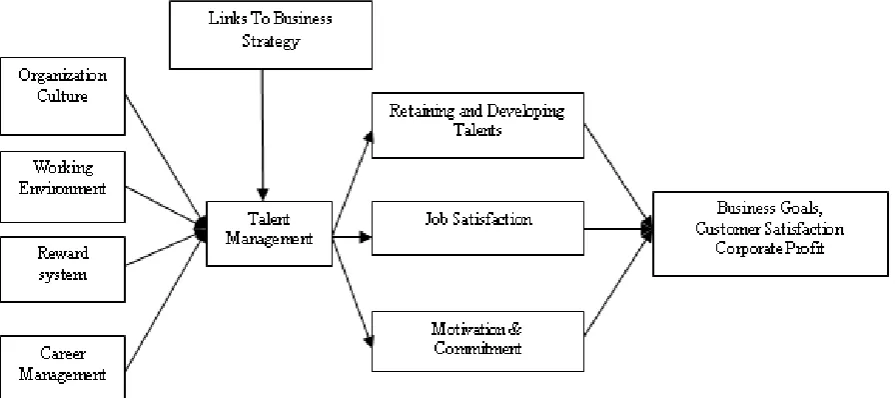
Figure 1: Talent Acquisition Analytics on Indian pharmaceutical Industry Employees
Path analysis
Path analysis was employed to test the hypothesized proposed model. The assessment of the complete proposed model represented in the Figure 1 was performed. Amos 20.0 was used to assess the multiple indices of overall model fit and path coefficients estimates of the theoretical model. To complete the Figure 1, although the x2 statistics was significant (x2 =8.98, df=2, p <.05, CMIN(x2/d.f) =3.99), this statistics is sensitive to sample size and model complexity. The fit indices were quite good (CFI=.986, NFI=.962, TLI=.968, RMSEA=.065, SRMR=.029) and indicated an acceptable fitting model. All the path estimates were significant and went in expected direction. Therefore the research model was considered structurally fit by the conventional criteria for acceptable model fitness. The various goodness of Fit Index is summarized in the table and demonstrates that the good overall fit of the measurement model to the data.
RESULT AND DISCUSSION
Table 1: Descriptive Statistics, and Correlations,
Mean Std
.
D
e
viati
on Correlations
1 2 3 4 5 6 7 8 9 10
Organization
culture 1 3.33 1.174 1 Career
Management 2 3.20 1.087 .460
** 1
Reward system 3 2.83 1.105 .512** .509** 1
Working
environment 4 2.92 1.214 .342
**
.318** .435** 1
Talent
management 5 3.16 1.429 .162 .245
*
.201* .390** 1
Retaining and Developing
Talents
6 3.40 1.034 .238* .484** .364** .254** .001 1
Job Satisfaction 7 3.16 .932 .293** .357** .504** .147 -.114 .541** 1
Motivation and
commitment 8 3.04 .876 .090 .204
*
.225* .355** -.020 .40…8** .416** 1
Business Goals, Customer satisfaction, Corporate Profit
9 3.02 .888 .123 .245* .209* .349** .020 .379** .392** .963** 1
Business
Strategy 10 3.52 .931 .085 .200
*
.116 .163 -.281** .290** .356** .164 .127 1
**. Correlation is significant at the 0.01 level (2-tailed).
*. Correlation is significant at the 0.05 level (2-tailed).
The above table presents the descriptive statistics such as means, standard deviations, and correlation among the variables considered for the study. Career Management and reward system are significantly related to talent Management with .05 level of significance. Working environment is significantly related to talent management with .01 level of significance, whereas organization
culture has no significance with talent management. It reveals that Talent Management has a significant positive association career management, reward system with r=.245, r=.201 and p<.05 respectively, and working environment with r=.390 and p<.0.1 the study variables were significant and related to talent management.
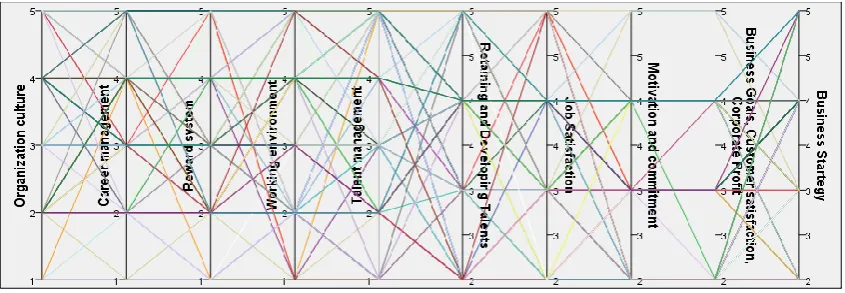
Figure 2: Forecasting of Talent Acquisition Analytics on Indian pharmaceutical Industry Employees
The multiple regression results are shown in the table and it was found that the value of the R - Square is 0.513, which intends that 51.3 percent of the variation in overall Effective Talent Acquisition (dependent variable) can be
Motivation and commitment, Business Goals, Customer satisfaction, Corporate Profit and Business Strategy. If another independent variable is added to the multiple regression models, the R-square value will increase
slightly and it will result in complexity to determine a model, which can explain the variation with the same set of dependent variables.
Table 2: Multiple Regression Model Summary
R R
Square
Adjusted R Square
Std. Error of the Estimate
Change Statistics
R Square
Change F Change df1 df2
Sig. F Change
.583a .340 .278 1.214 .340 5.442 9 95 .000
a. Predictors: (Constant), Business Strategy , Organization culture, Business Goals, Customer satisfaction, Corporate Profit, Working environment , Retaining and Developing Talents, Career management , Job Satisfaction , Reward system , Motivation and commitment
b. Dependent Variable: Talent management
The results of the analysis explain that the correlation coefficient (R) value is 0.583, which shows a good amount of correlation between the independent variables and the dependant variable turnover intention, with F-ratio and it is associated with the level of significance being small (P<0.01). Adjusted R square value alters the R square by the number of predictor variables in the model. This
adjustment allows easier comparison of the explanatory power of models with different numbers of predictor variables. It also helps us to decide how many variables to include in our regression model. The adjusted R-square value for the model was found to be 0.278 which was less than the R square (0.340) value which confirms that the inclusion of another independent variable may result in the complexity to prove the research model. The coefficient of determination (R²) explains the amount of variability explained by the entire selected predictor variables. The result shows that the independent variables are predicting .34 percent of the variance in the employees’ talent management.
Table 3: ANOVA
a. Dependent Variable: Talent management
b. Predictors: (Constant), Business Strategy , Organization culture, Business Goals, Customer satisfaction, Corporate Profit, Working environment , Retaining and Developing Talents, Career management , Job Satisfaction , Reward system, Motivation and commitment. The estimated F ratio for the regression model that specifies the statistical significance of the overall regression model, the variance of independent variable that is associated with the dependent variable (Effective Talent management Process) is referred to as explained variance. The remainder of the total variance in independent variable that is not associated with dependent variable is referred as unexplained variance. From the table, it was inferred that the F ratio was 17.435. Since the statistical significance is 0.000, the null hypothesis was rejected and there is a significant relationship existing between independent and dependent variables. Dependent Variable: Effective Talent management process
The information was examined in order to find out one or more independent variables that are the major predictors
of Optimization talent management process . Out of nine independent statements, five are statistically significant.
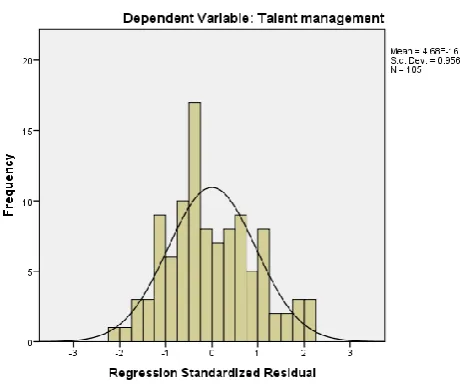
Figure 3: Histogram
Model Sum of Squares Df Mean Square F Sig.
Regression 72.202 9 8.022
5.442 .000b
Residual 140.045 95 1.474
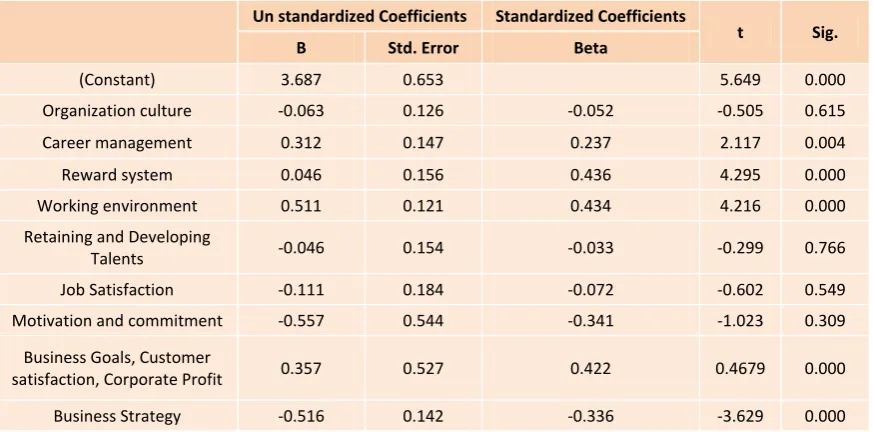
Table 4: Coefficients
Un standardized Coefficients Standardized Coefficients
t Sig.
B Std. Error Beta
(Constant) 3.687 0.653 5.649 0.000
Organization culture -0.063 0.126 -0.052 -0.505 0.615
Career management 0.312 0.147 0.237 2.117 0.004
Reward system 0.046 0.156 0.436 4.295 0.000
Working environment 0.511 0.121 0.434 4.216 0.000
Retaining and Developing
Talents -0.046 0.154 -0.033 -0.299 0.766
Job Satisfaction -0.111 0.184 -0.072 -0.602 0.549
Motivation and commitment -0.557 0.544 -0.341 -1.023 0.309
Business Goals, Customer
satisfaction, Corporate Profit 0.357 0.527 0.422 0.4679 0.000
Business Strategy -0.516 0.142 -0.336 -3.629 0.000
The standardized coefficient beta column reveals that Go Career management has a beta coefficient 0.2376, which is significant (0.004). The Organization culture has a beta coefficient -0.237, which is not significant (0. .615). Reward system has a beta coefficient 0.436, which is significant (0.000). Retaining and Developing Talents has a beta coefficient --.033, which is not significant (0.766). Working environment has a beta coefficient- 0.434, which is significant (0.000). Business Strategy has a beta coefficient -0.336, which is significant (0.000). Job Satisfaction has a beta coefficient -0.072, which is not significant (0. 549). Motivation and commitment has a beta coefficient -0.341, which is not significant (0. 309). Business Goals, Customer satisfaction, Corporate Profit has a beta coefficient -0.4221, which is significant (0. 000). The result indicates that these independent variables do have a significant impact on determining the Optimization talent management process.
Figure 4: Normal P–Plot of Regression Standardized Residual
This clearly indicates that employees expect Business Strategy, Organization culture, Business Goals, Customer satisfaction, Corporate Profit, Working environment, Retaining and Developing Talents, Career management, Job Satisfaction, Reward system, Motivation and commitment. So, it is clear that Optimization talent management process enhances employee’s performance and in turn, it leads to job satisfaction of the employee’s further increasing motivation and commitment in pharmaceutical SMEs.
CONCLUSION
In this study concludes that any form of business organization talent management is very essential. Because retaining talent workforce is the key tool for achieving the organizational goals. 18 Organizations are obliged to build the traditions and programs that will best engage and motivate talent in organization. The researcher has found out the factors such as organization culture, career management, reward system, working environment and Business Strategy are vital for designing an effective talent management process. This has evidently proved with the help of confirmatory factor analysis. The result has proved that the talent management process strongly influence the job satisfaction, developing talent workforce, employee motivation and their commitment towards the corporate profit and customer satisfaction , which in turn will result in achieving the business goal using the PLS model fitting.
Limitation of the Study
more focus should be put on the companies’ domains of activity, i.e. the compared companies should have the same type of activities. This can be done with the purpose of having more relevant results. Thirdly, as talent management gained such an attention from scholars as well as practitioners latest, it will be interesting that studies on international leadership and talent management mindset can be approached and developed in the future research.
REFERENCES
1. Al Ariss, Akram, Wayne F. Cascio, and Jaap Paauwe. "Talent management: Current theories and future research directions." Journal of World Business 49(2), 2014, 173-179. 2. Alicja, M. "Theory and practice of talent management in an
organization." Cracow: University of Economics, 2007. 3. Armstrong, Michael. Armstrong's handbook of performance
management: an evidence-based guide to delivering high performance. Kogan Page Publishers, 2009.
4. Aston, Louise. "Helping workers help themselves." Occupational Health & Wellbeing 62(11), 2010, 29.
5. Becker, Brian E., and Mark A. Huselid. "Strategic human resources management: where do we go from here?." Journal of management 32(6), 2006, 898-925.
6. Boudreau, John W., and Peter M. Ramstad. "Talentship and the new paradigm for human resource management: From professional practices to strategic talent decision science." People and Strategy 28(2), 2005, 17.
7. Cappelli, Peter, and J. R. Keller. "Talent management: Conceptual approaches and practical challenges." Annu. Rev. Organ. Psychol. Organ. Behav. 1(1), 2014, 305-331. 8. Cerdin, Jean-Luc, and Chris Brewster. "Talent management
and expatriation: Bridging two streams of research and practice." Journal of World Business 49(2), 2014, 245-252. 9. Collings, D. G., & Mellahi, K. Strategic talent management: A
review and research agenda. Human resource management review, 19(4), (2009), 304-313.
10.Collings, D. G., Scullion, H., & Vaiman, V.. Talent management: Progress and prospects. (2015).
11.Farndale, E., Scullion, H., & Sparrow, P. The role of the corporate HR function in global talent management. Journal of World Business, 45(2), 2010, 161-168.
12.Koltapeh, M. P., Forotageh, E. A., Afruz, D., & Hossein, M. Surveying the relationship between talent management and organizational health of employees of General Directorate of Youth and Sports of Ardabil Province. Research Journal of Sport Sciences, 3(3), 2015, 59-65.
13.Lewis, R. E., & Heckman, R. J. Talent management: A critical review. Human resource management review, 16(2), 2006, 139-154.
14.Lewis, R. E., & Heckman, R. J. Talent management: A critical review. Human resource management review, 16(2), 2006, 139-154.
15.Michaels, E., Hand field-Jones, H., & Axelrod, B. The war for talent. Harvard Business Press, 2001.
16.Morris, S., Snell, S., & Björkman, I. An architectural framework for global talent management. Journal of International Business Studies, 47(6), 2016, 723-747. 17.Myung, J., Loeb, S., & Horng, E. Tapping the principal
pipeline: Identifying talent for future school leadership in the absence of formal succession management programs. Educational Administration Quarterly, 47(5), 2011, 695-727.
18.Noe, R. A., Hollenbeck, J. R., Gerhart, B., & Wright, P. M. Human resource management: Gaining a competitive advantage, 2006.
19.Oladapo, V. The impact of talent management on retention. Journal of business studies quarterly, 5(3), 2014, 19.
20.Reed, M. S., Dougill, A. J., & Taylor, M. J. Integrating local and scientific knowledge for adaptation to land degradation: Kalahari rangeland management options. Land Degradation & Development, 18(3), 2007, 249-268.
21.Salehi, H., Feizi, M., & Alipour, H. Surveying the Relationship Between Social Capital and Talent Management System in Drilling Iranian National Company\ Nigerian Chapter of Arabian Journal of Business and Management Review.-, Vol. 1, No. 11, 2013, Babcock University.
22.Snell, S. A., Stueber, D., & Lepak, D. P. Virtual HR departments. Human resource management in virtual organizations, 81, 2002.
23.Stahl, G. K., Bjorkman, I., Farndale, E., Morris, S. S., Paawe, J., Stiles, P., & Wright, P. Six principles of effectice global talent management. IEEE Engineering Management Review, 44(Third Quarter), 2016, 112-119.
24.Taleghani, G. R., Amini, S., Ghafary, A., & Adousi, H. An Investigation of the Relationship between Talent Management and The Performance Of Faculty Members In Esfehan University, (2013).
25.Taylor, F. W. The principles of scientific management. Harper, 1914.
26.Taylor, F. W. Scientific management. Routledge, 2004. 27.Taylor, J. K., & Stanley, T. W. (1985). Introduction. In Quality
Assurance for Environmental Measurements. ASTM International.
28.Vaiman, V., Haslberger, A., & Vance, C. M. (2015). Recognizing the important role of self-initiated expatriates in effective global talent management. Human Resource Management Review, 25(3), 280-286.