1
Is a meal without wine good for the health?
Jean-Pierre Rifler
Emergency physician, Nutritionist, Oenologist technician, Emergency department 21400 Châtillon-sur-Seine, France
Abstract:
Hippocrate, the father of medicine, already said:"Wine is a thing wonderfully appropriate to man if, in health as in disease, it is administered with appropriate and just measure according to the individual constitution." wine has always accompanied humanity, for religion or for health. Christians and Jews need wine for the liturgy.
For Platon the wine was an indispensable element in society and took all its importance in the symposium. In this second part of the banquet, mixed with water, the wine gave the word. If the french paradox made a lot of ink flow; it was the wine that was originally responsible for it. Many researchers have tried to share the alcohol and polyphenols in order to solve the mystery. Beyond its cardiovascular effects, there are also effects on longevity, metabolism, cancer prevention and neuroprotection, and the list goes on.
The purpose of this work is to make an analysis of current knowledge on the subject.
Indeed, if the paradigm of the antioxidants is seductive, it is perhaps by their prooxidant effect that the polyphenols could act, by an epigenetic process mediated by nrf2.
Wine is a preserve of antioxidants for the winter and it is by this property that the wine acts, in alcoholic solution. A wine without alcohol is pure heresy. By the way, we were not talking about elixir to design all this millennial pharmacopee that made the man was able to heal and prosper on the planet.
From Alvise Cornaro to Serge Renaud, nutrition was the key to health and longevity, whether Cretan or Okinawa diet, it is the small dose of alcohol (wine or sake) that allows the bioavailability of polyphenols.
Moderate drinking give a protection for diseases and a longevity potential. In conclusion, let’s drink fewer, but drink better to live older.
Key words:
wine, mediterranean diet, okinawa diet, health, nrf2, alcohol, polyphenols, hormesis, cardiovascular protection, cancer, Alzheimer, metabolic disease
2
1 Introduction: The French paradox, a concept described by Serge Renaud, consists in the
fact that in France, despite a high consumption of saturated fats, a low cardiovascular
mortality rate is described, compared to "industrialized" countries having the same type of
food. .
The explanation of this French paradox consists in a moderate consumption of wine during
meals. There is also a north-south gradient with an even lower cardiovascular mortality rate in
Toulouse (consumption of red wine, olive oil and duck fat) compared to Lille, where meals
are more based on saturated fats and where the favorite drink is beer.
Although the consumption of red wine is decreasing, the eating habits of adults are changing
towards Mediterranean-style meals and wine remains a social link. The risk to consider wine
as other spirits, is that our young people do not seek anymore the pleasure of a conversation
around a good meal and a good bottle, but look for an immediate euphoric effect such as
binge drinking or holiday heart syndrome. It would be necessary to follow a policy of
educating young people so that they turn to wine rather than a premix or other strong alcohol.
To rediscover the pleasure of a reasonable consumption of wine which not promotes
addiction.
We know the protective power of regular and moderate consumption of red wine, in terms of
primary and secondary prevention, and prevention of cancer (particularly studied for
resveratrol). We are now interested in its effects on aging and in particular its protective role
on the occurrence of dementia.
The ideal dose seems to be 2 to 3 standard drinks a day. This is already what St. Benedict
recommended for his monks in his rule number 40 (1). The proposed amount was one hemin a
day, which corresponds to three glasses a day. On the other hand, this did not oblige the
monks to abstain, but specified that the fat monks could take a little more ... The red wine was
then the only source of antioxidants for the winter, the canning and freezing did not exist. It is
well established that alcohol in a glass of wine improves the bioavailability of polyphenols in
the food bolus. This is the principle of the Cretan diet. It is also one of the factors that make
the Japanese diet beneficial, in addition to its richness in omega 3 polyphenols and
antioxidants (tea catechins, ginger, wasabi ...). History has shown that our civilization has
always been closely linked to wine. The vinification allows the extraction and the
3
absorb the antioxidant polyphenols beneficial to our health (2). Why demonize this product,
which has long been one of the only effective products of our former pharmacopoeia?
2 Free radicals and antioxidant defense
Reactive Oxygen Species (ROS) can be exogenous and endogenous. Exposure to pollution,
prolonged sunlight, absorption of drugs, alcohol and smoking causes ROS production that can
outperform Antioxidant defenses Endogenous. Unfortunately, there is not enough fruit and
vegetables in food (polyphenols, vitamin C, vitamin E and carotenoids) to boost the
endogenous antioxidant defenses.
All cells by their metabolism produce small amounts of derivatives oxygen reagents.
Indeed 1 to 2% of the oxygen present is diverted to form free radicals.
ROS are mainly produced at the mitochondrial level during process of conversion of oxygen
into water, producing superoxide radical (O2-). This superoxide radical can also be produced
at the microsomial and plasma levels by NADPH oxidases. The superoxide radical is
converted into hydrogen peroxide (H2O2) (more stable) by SuperOxide Dismutase (SOD) and
then into water, either by catalase (CAT) or glutathione peroxidase (GPx) (3). ROS can react
with different biological substrates such as lipids, proteins and DNA. Oxidative stress is the
balance imbalance of pro-oxidant and antioxidant compounds. ROS are involved in the
expression and regulation of the functions of proliferation and cell death. The study of various
pathologies such as neurodegenerative diseases, atherosclerosis and cancer, has shown that
ROS also act as inflammatory mediators. ROS are very unstable and their life is very short
(10-4 seconds). Their reactivity lies in their search for an electron in order to match their
single electron. O2 • - and hydrogen peroxide H2O2 are not very active. O2 • - can capture H
+ to give HO2 • which would be the reactive form of O2 • - capable of initiating lipid
peroxidation. O2 • - can also be dismuted to H2O2 and O2 (spontaneous reaction or catalyzed
by superoxide dismutase), react with NO • to form the peroxynitrite anion ONOO-, a
powerful oxidant, or reduce the transition metal ions. O2 • - is produced in particular by
reduction of molecular oxygen in mitochondria by NADPH oxidase or by xanthine oxidase,
an enzyme of purine metabolism. The hydroxyl radical HO • is one of the most oxidizing
4
by reduction of H2O2 by low valence metal ions such as Fe2 + or Cu +, free or complexed
(heme) (Fenton reaction).
(Figure 1)
Mitochondria are the essential organite responsible for the production of energy, in the form
of ATP, necessary for cell function. The respiratory chain is a permanent source of ROS.
Complexes I and III are preferred sites for the ROS production (4,5,6).
Expression of nuclear genes encoding mitochondrial proteins as well as mtDNA replication
and transcription mechanisms are regulated primarily by transcription factors and
transcriptional coactivators.
2 1 Transcriptional factors Nrf2 (Nuclear respiratory factor 2)
Nrf2 is an important transcription factor that protects mitochondria from stress oxidant by
inducing anti-oxidant and detoxification genes by its binding to the Antioxidant Response
(ARE). However, it would have a facilitating role on the formation of atheroma. The Keap1
protein binds to the Nrf2 protein to inhibit it. In the quiescent state, Nrf2 is anchored in the
cytoplasm by binding to Kelp1 protein (Kelch-like ECH-associated protein 1), which
facilitates the ubiquitination and proteolysis of Nrf2. This mechanism contributes to the
repressor effect of Keap1 on Nrf2. Activation of Nrf2 leads to a coordinated antioxidant and
anti-inflammatory response (7,8,9,10,11,12).
2 2 Antioxidant defenses
2 2 1 Enzymatic defenses systems
Enzymatic systems are the most important cellular defense systems to control oxidative
attacks. They protect or detoxify the body against ROS.
Superoxide dismutases (SOD) and catalase (CAT) play a protective role while glutathione
peroxidases (GPx) play a role in detoxifying ROS . There are three SODs: that located in the
cytoplasm involves copper and zinc as co-factor, named Cu2 + / Zn2 + -SOD (SOD-1), that
5
secreted extracellular Cu2 + / Zn2 + - SOD (SOD-3). SODs are metalloenzymes that catalyze
the disproportionation of superoxide anions into hydrogen peroxide and oxygen 10,000 times
faster than spontaneous disproportionation of the superoxide anion. The reduction of H2O2 in
the cytosol will depend on Cu2 + / Zn2 + - SOD and glutathione peroxidase (GPx) . Catalase
is localized in the mitochondria and peroxisomes, it can also reduce H2O2 but due to its low
affinity for this radical, GPx is more efficient (23). On the other hand, an excess of H2O2 and
/ or the presence of transition metals, Fe2 + and Cu2 +, can lead to the formation of the
hydroxyl radical (OH.) and the nitro reactive metabolites. GPx detoxify hydrogen peroxide
and lipid peroxides by coupling their reduction to oxidation of a reducing substrate,
glutathione (25). GPx are seleno-dependent enzymes that contain 4 selenium atoms in the
active center of the enzyme. Thus, a selenium deficiency causes a decrease in GPx activity
while an abundance restores it. Two forms of GPx differ from each other in structure and
activity (13,14).
2 2 2 Non-enzymatic antioxidant systems
Non-enzymatic antioxidants may be endogenous water-soluble agents (glutathione, uric acid,
bilirubin and ubiquinol (coenzyme Q10)) or be provided by the diet (vitamin C and E,
carotenoids, polyphenols) (15,16,17). Glutathione is an endogenous water-soluble agent that
has important antioxidant properties. Glutathione prevents the oxidation of thiol groups
thanks to its reducing power. The regeneration of the GSH thiol function from oxidized form
is done through the activity of glutathione reductase (GR). It can chelate the cuprous ions and
thus limit their participation in the Fenton reaction. In addition, it is directly involved in the
repair of oxidative damage to DNA. Vitamin C, water soluble, can behave as an antioxidant
or prooxidant depending on the dose used. Too much dose of ascorbic acid becomes toxic to
the body. Ascorbic acid can take a reduced or oxidized form depending on the pH of the
medium in which it is and the presence of transition metals. The passage from one form to
another is effected by glutathione / glutathione reductase and generates an ascorbyl radical.
Thus, it is considered as a redox couple with an ascorbyl radical capable of capturing ROS
and singlet oxygen. Vitamin E exist in eight natural forms, four tocopherols and four
tocotrienols. Tocopherol is liposoluble and has the capacity to capture and stabilize the single
6
tocopherol-OH + LOO • − ˃ tocopherol-O • + LOOH (LOO •: free radical lipid)
The radical-bearing tocopherol may react with a new free radical to form a neutral species, or
be regenerated by vitamin C, glutathione or coenzyme Q10. Vitamin E mainly plays its role as
an antioxidant in biological membranes. Mitochondria, which generate free radicals, contain
high levels of vitamin E in their lipid membrane, consisting of polyunsaturated fatty acids and
subjected to oxidative stress.
Natural polyphenols include a broad set of chemical substances comprising at least one
aromatic nucleus, bearing one or more hydroxyl groups, in addition to other components.
They can range from simple molecules, such as phenolic acids (gallic acid), to highly
polymerized compounds of more than thirty thousand daltons, such as tannins (tannic acid).
Polyphenols are commonly subdivided into simple phenols, phenolic acids (derived from
benzoic or cinnamic acid), stilbenoids (two C6 rings linked by two carbon atoms), flavonoids,
isoflavonoids and anthocyanins, and polymerized forms: lignans, lignins, condensed tannins.
(Figure 2)
The fruits and vegetables consumed provide more than 8000 polyphenols. Flavonoids are the
most abundant polyphenols in our diet and over 4000 have been identified (18). Flavonoids
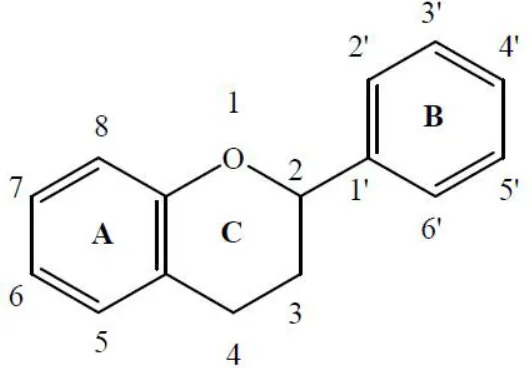
have a common C6-C3-C6 structure. Two aromatic rings (A and B) are linked by a chain of 3
carbons forming an oxygenated heterocycle (C) (19,20).
(Figure 3)
Among the flavonoids, flavanones are responsible for the bitterness of grapefruit. The tannins
are responsible for the astringency of various fruits (skin and grape seeds) and anthocyanins,
the color of red fruits. Polyphenols are present in various natural substances: in the form of
anthocyanin in red berries, red wine, in the form of proanthocyanidines in chocolate and wine,
coffee-quinoline and feruloylquinic acids in coffee, flavonoids in citrus fruit, and in the form
of catechins such as epigallocatechin gallate in green tea, quercetin in apples, onions, red wine
... These basic carbon skeletons are derived from the secondary metabolism of plants,
developed by the shikimate pathway (21). Shikimic acid is an important biochemical
intermediate in plants and microorganisms. It is isolated for the first time in 1885 by the
Dutchman Johann Frederik Eijkmann from the flower of shikimi (illicium anisatum or
7
amino acids; indole, indole derivatives and tryptophan; many alkaloids and other aromatic
metabolites such as resveratrol; tannins; lignin; salicylic acid.
Polyphenols in wine are present in the film and seed. In the roundup, tannins are often
undesirable from a taste point of view and maceration is most often performed on grapes
broken up. The solubilization of these polyphenols takes place during the alcoholic
fermentation, it increases with the alcoholic degree of the grape must. Maceration is the stage
of winemaking that will extract the phenolic compounds. The condensed tannins are
oligomers or polymers of flavanols. They consist of flavan-3-ols units linked together by
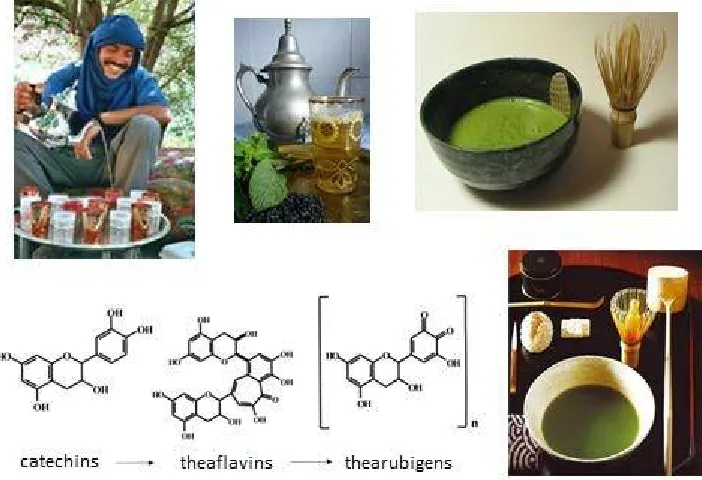
carbon-carbon bonds. The conformations are helicoidal. The passage in barrels (breeding)
allows a micro oxygenation of the wine through the pores of the wood and the polymerization
of the tannins. The barrel provides little or no wood polyphenols. It is this polymerization of
tannins by microoxidation which confers on them their anti-oxidant properties. This is the
same phenomenon used for tea. Micro oxidation by successive passages of the teapot in the
glass in the Arabs or micro oxidation with the tea whip macha (chasen) among the Japanese.
(Figure 4)
3 Wine and cardiovascular protection: the French Paradox
Many studies have tried to unravel the "French Paradox", a term used by Serge Renaud in
1991 on CBS, this French paradox consisting of a low mortality of cardiovascular origin
despite a high consumption of saturated fats (22, 23). The epidemiological studies of Saint
Leger (24) and Keys (25) (13000 subjects followed for 20 years, beginning of the study in
1952) showed that the Mediterranean basin, and more particularly Crete, was protected,
probably because of a specific diet. The MONICA project (26) confirmed the particular
position of France, and showed a south-north mortality gradient confirming this probable
origin of the diet very different between Toulouse and Lille. The intake of mono and
polyunsaturated fats, garlic, duck fat, low-meet diet, high intake of fruits and vegetables, have
been advanced to identify the Mediterranean diet, the Cretan diet is characterized by his
frugality. All these Mediterranean civilizations are also wine civilizations and some wanted to
see an important or even essential element of this protective diet against cardiovascular
diseases. The antioxidant effect of red wine flavonoids appears to be one of the mechanisms
of vascular protection provided by the Mediterranean diet. The term "French paradox"
8
southern one, dies less of cardiovascular pathology than northern Europeans and Americans,
despite high and comparable risk factors (smoking, rich diet saturated fat, sedentary lifestyle).
Given the lack of a fundamental difference in the diets of the different populations studied,
Serge Renaud spoke of the role of red wine consumption, because the French consume 89
liters of red wine a year against 7.7 for the British (27). The French paradox was then
attributed to the consumption of wine because the French are the largest consumers of wine in
the world (after the Luxembourgers) (28). French gastronomy is reputed to be rich in lipids,
especially in saturated fatty acids with more than 400 cheeses, charcuterie, mayonnaise,
butter, foie gras ... in which it does not differ much from American or British food. The
Mediterranean-type diet only concerns the South of our territory, that is to say 20% of the
French (29). The French, compared to other Western countries, rarely eat alone and prefer
conviviality (work colleagues, family, friends, neighbours).
If, as in all developed countries, the French mostly frequent supermarkets, they do not neglect
the small shops (bakeries, fishmongers, butchers, grocers, markets) thus favoring quality over
quantity in contrast to English people who are more likely to buy at one time in the same
supermarket ... which already suggests more energy spent on supplies (30). The French take
more time to cook their dishes. They take more time to eat without consuming more. A
discussion usually animates the meal. The gourmand / gourmet distinction is not so clear
among Anglo-Saxons. "Being gourmet" is more valued socially in France than elsewhere.
According to the American Time Use Survey (ATUS) (31), the average length of a meal in
France is 15 minutes at breakfast, 38 minutes at noon and 40 minutes at night, for a total of 93
minutes per day at the table, which is 30 minutes longer than the time spent by the Americans.
The prolonged average duration of meals has a beneficial effect on the absorption and
metabolism of fats, as well as on the peak level of insulin secretion. The French eat less
between meals to better appreciate the quality of their cooking (7.5% of our daily calories
against 21% for Americans). Contemporary reality shows such as "top chef" or "almost
perfect dinner" add value to our national culinary expertise on a daily basis. Two thirds of
French people eat at home at noon (32) and do not frequent snacks: only 6% go more than
once a week to fast food (33). We eat less red meat, more cheese and yogurt than whole milk.
The Southern French consume more olive oil while those in the North prefer butter. Only
10.2% of French people consume the 5 fruits and vegetables recommended by WHO. 30% of
9
are rather consumed fresh, not packaged industrially, often raw. French is known as a great
eater of garlic and snails. 70% of French people consume coffee every day. Ruidavets shows
in 2004 that wine consumption in France has a positive impact on the quality of diet
compared to that of abstainers (34).
Generally, the midday meals are varied with successively an entry, a main meal, a cheese then
a dessert. The French eat smaller shares than Americans (35), which may already partly
explain the French paradox. Montaigne was already talking about French alcohol
consumption (36): it is daily, moderate and during meals, conviviality is the most important. It
differs from that of other Western countries. In France, drunkenness is a consequence, rarely a
goal (except for alcoholics) it is the spreading of a pleasure and not the necessary cause of an
intention of overflow. This mode of consumption is beneficial in many ways. Wine is also
associated with relaxation, with the pleasure of conviviality. We know from Yusuf's
meta-analysis (37) that moderate alcohol consumption (two drinks a day) is a cardiovascular
protective factor in the same way as the decrease in LDL, cessation of smoking, fruits and
vegetables and physical activity. Atheroma plaque in the coronary arteries is responsible for
myocardial infarction and carotid artery causes ischemic stroke. The mechanism of plaque
formation is complex and multifactorial, but begins with an accumulation of oxidized LDL in
the intima of the artery. The effect of red wine on the oxidation of LDL could be the key to
the French Paradox. Indeed, the decrease of LDL (bad cholesterol) and the increase of the
antioxidant power of the serum are two major protective factors. If there is less LDL and they
are less oxidized, they will deposit less in the arteries, so the formation of atheroma plaque
will be delayed. The InterStroke study (38) confirms this data for stroke at doses of one drink
per day. Some will make the short cut by saying that a glass for the brain and two for the heart
that makes the three glasses allowed per day since Saint Benedict. But before recommending
red wine as a beneficial dietary adjunct, it should be noted that the dose of alcohol must
remain minimal so as not to cause the known deleterious effects of ethanol. On the other
hand, it is certain that, whatever the red wine, it is a soup of antioxidants that can be preserved
for a very long time when vinification is carried out in a traditional way (control of
temperatures, long maceration, aging in barrels new), which is easily assimilated by the body
because of alcohol (39). Alcohol provides superior bioavailability. It is not by chance that
10
conserve antioxidants (plants) for the winter. At a time of globalization, canning and freezing,
we still have the fact that a glass of red wine brings much more antioxidants easily assimilated
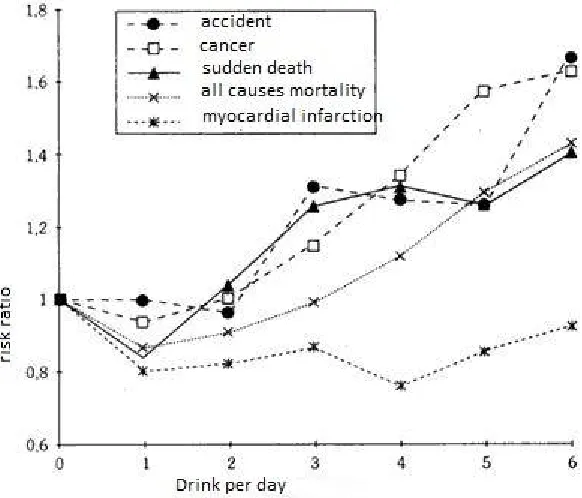
than large quantities of fruits and vegetables. The J curve represents the total mortality related
to the number of glasses of wine drunk per day. In Ellison's version (40), ischemic heart
disease is isolated from other causes of mortality, if we notice an increase in deaths from
accidents, cancers or sudden death for a daily consumption of more than 3 glasses, we notice
a cardiovascular protection activity beyond these doses.
(Figure 5)
A study published in 1997, showed that regular consumption of moderate doses of wine
(200ml) allows antioxidant protection. All subjects were in good health (7 men and 3
women). The result was not significantly effective for all the wines. Only one wine had a
speed effect on redox blood status (red 2). But we can see that the antioxidant status is higher
after the last wine. So we can suspect that the regularity of the ingestion is the secret for an
healthy consumption (41). For information all the tested wines were great wines of bordeaux
and burgundy (red 2 was a bottle of Echezeaux of Domaine de la Romanee conti).
(Figure 6)
In another 2006 study, a supplement of 200 ml of red wine, during the lunch, of healthy
volunteers, showed a decrease in Total cholesterol and LDL cholesterol in just one week (41).
This regular and moderate consumption of red wine makes it possible to counteract the
initiating factors of the atheromatous plaque, and have a cardiac protective effect in primary
prevention.
(Figure 7)
In secondary prevention, we demonstrated in 2012 (42, 43), the same phenomenon on patients
with myocardial infarction, 3 days after the acute accident, a healthy diet was set up, with a
drinking group of water, and the others drinking red wine (2 glasses a day). The wine group
has demonstrated the same benefits as primary prevention. The aim of this study was to study
the effect of moderate and regular wine consumption on relevant biological parameters (lipid
balance, measurement of serum total antiradical resistance, level of fluidity of the red blood
cell membrane) in patients in a situation of secondary prevention of a cardiovascular event,
11
distinguished only by the consumption of wine. Thus, wine was the only hygieno-dietary
parameter differentiating the two groups. The dietary diet chosen "Western prudent”, was
based on the dietary principles of the Lyon study, which is the reference in terms of
cardiovascular protection, because of its resemblance to the Mediterranean diet. It consisted
of a limited intake of saturated fats (animal fats, oils), a daily intake of fruits and vegetables,
butter is replaced by olive oil and rapeseed, and limitation of cheese intake (2-3 times a
week). The wine was made from the Pinot Noir grape variety, Villars Fontaine Haute Côte de
Nuit, vintage 1999, with a high content of phenolic compounds (around 4000 mg / L of gallic
acid equivalent). The wine was served without a label and without other indications. The
consumption of wine was done exclusively during meals (1 glass at lunch, 1 glass at dinner).
The anti-radical defense system is so complex that no specific test can provide an overall
assessment of an individual's resistance to the attack of free radicals. The KRL test we used,
was initially developed by the Spiral / Kirial International laboratory, at the request of NASA
in 1987 (44), this is a global measure of the antiradical defense potential. The KRL test makes
it possible to evaluate the overall resistance against the aggression of free radicals. Thus, it is
hoped that the higher the level of KRL, the less the individual will subject his arteries to the
process of atherogenesis.
(Figure 8)
The blood sample is subjected to a standardized and reproducible aggression induced by a
generator of free radicals. The enzymatic and chemical defense systems allowing the integrity
of the red blood cells are tested until cell lysis is obtained. The time after which 50% of the
blood cells are lysed (half-hemolysis time, t1/2 in minutes) thus reflects the overall
antioxidant potential KRL
The results between group of drinking subjects versus group of abstinent subjects show an
increase in the HDL level, a decrease in the LDL level, an increase in the antioxidant
potential, an increase in the fluidity of the erythrocyte membrane. The results in the group of
drinking subjects between D0 and D14 show a decrease in cholesterol and LDL , an increase
in the antioxidant potential of the serum, an increase in the fluidity of the erythrocyte
membrane, an increase in VO2 max (maximum oxygen consumption) of 26%. The decrease
of LDL and the increase of antioxidant serum are two protective factors. If there is less LDL
12
plaque will be delayed. It is possible to hope that the significant antioxidant effect obtained as
early as D15, as well as the decrease in LDL levels, will have a retarding effect on the
progression of the atheroma plaque. Similarly, the increase in membrane fluidity allows red
blood cells to circulate better through an atheromatous artery.
3 1 Own action of ethanol:
-High Density Lipoprotein rate increase: The oldest known mechanism is the increase
in high density lipoprotein (HDL) levels (45,46,47) including the HDL2 and HDL3 fractions
as well as the protein constituents of HDL, Apo A1 and Apo A2 (48). A decrease in the
activity of the cholesterol transfer protein esterified, CETP (49) could be the origin of the rise
of HDL. Prospective studies have found an inverse correlation between HDL levels or its
fractions and the risk of ischemic heart disease (50). Indeed, HDL is a protective factor
against the formation of atheroma due to a transport of cholesterol from the vascular walls
into the liver with biliary elimination. An increase in the HDL-linked enzyme paraoxonase
protects against LDL oxidation (51) without this increase depending on the type of alcoholic
beverage. On the other hand, at high doses, ethanol increases the triglyceride level and
remains neutral on the LDL level.
-A decrease in platelet aggregation: Platelet aggregation is decreased by low or
moderate doses of alcohol (52,53). However, after heavy ingestion of alcohol, a rebound
effect on the platelet response can be observed (54) causing sudden death.
-A decrease in fibrinogen: An increase in blood fibrinogen is considered a risk factor for
ischemic cardiovascular disease. According to Ridker’s study (55), the concentration of
fibrinogen correlates positively with alcohol consumption, with a U-shaped curve (higher
concentrations for non-drinkers and those who drink more than 60 g / day alcohol). This
association was valid for wine and spirits, but not for beer and cider. A low level of fibrinogen
in moderate drinkers may explain the reduction of ischemic heart disease in the latter.
-Thrombolysis: Stimulation of plasminogen activator has been observed (56).
- Tissue factor: A reduction of this protein, which probably plays an important role in
atherogenesis, has been reported after in regular drinkers (57).
-Homocysteinemia: Plasma elevation of this amino acid is considered a risk factor for
cardiovascular disease. Some studies have shown a decrease in plasma levels of homocysteine
13
plasma homocysteine occurring during the consumption of alcoholic beverages regardless of
the amount of alcohol consumed (59), which goes against the previous results.
-Effects on blood pressure Substantial alcohol consumption is accompanied by a rise
in blood pressure (60) but for the doses we are interested in here, the effect is rather opposite,
through arterial vasodilatation.
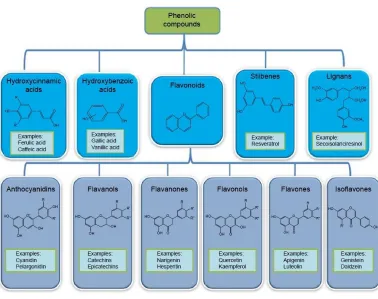
3 2 Own action of polyphenols:
Phenolic compounds are classified into cinnamic acids, benzoic acids, stilbenes,
lignans and flavonoids (themselves classified as anthocyanidins, flavanols, flavones, flavonols
and isoflavones) (61). Epidemiological studies have correlated the consumption of plant
polyphenols with a low incidence of coronary heart disease. The polyphenols in red wine have
anti-oxidant and free radical scavenging properties. They protect LDL against oxidation.
These polyphenols decrease platelet aggregation and inhibit the proliferation of vascular
smooth muscle cells. Polyphenols stimulate the production of relaxing factors of vascular
endothelium such as nitric oxide. Finally, they contribute to preserving the integrity of the
vascular endothelium by acting on both proliferation, migration and apoptosis of endothelial
cells. All these properties confer on the polyphenols the possibility of interfering with the
atherogenic process and / or the thrombotic phenomena associated with atherosclerosis and
could explain the vasculo- and cardio-protective effects of these compounds (62) Since
wine-induced cardiovascular protection appeared to be superior to that of other alcoholic beverages,
many authors have sought to demonstrate that this was a consequence of the wine's high
antioxidant content (63,64,65). Indeed, the red wine contains 7 to 10 times more tannins than
the white wine, and according to the grape varieties there are different levels of polyphenols.
Resveratrol and flavonoids are the 2 most studied molecules today.
-Reduction of LDL oxidation: In vitro, the fact that antioxidants (vitamin E,
carotenoids, polyphenols, vitamin C, etc.) slow the oxidation of LDL induced by Cu2 + when
they have been absorbed at high doses by humans has been demonstrated many times (66,67).
Fuhrman (68) showed that subjects consuming red wine had LDL that was more resistant to
oxidation. Kanner's team (69) shows that during a high-fat meal (red meat and fries), the
absorption rate of malondialdehyde, an oxidative substance produced during triglyceride
14
is consumption of red wine (or green tea) during the meal! This rate goes to 0% absorption if
the meat has marinated in the wine before cooking. We have here an attractive explanation of
the french paradox. These researchers describe the stomach as a bio-reactor in which the wine
prevents the oxidation of fats. This study confirms the recommendation of drinking during
meals. Blache, shows that oxidized HDL lose much of their property in removing cellular
cholesterol (70). He concludes that HDL, like LDL, are sensitive to oxidation and that
antioxidants can provide protection by preserving their functional abilities. Resveratrol
lowers triglyceride levels (71).
- Action on platelet aggregation: This was Renaud's initial hypothesis (72) to explain
the French paradox. Resveratrol is also capable of inhibiting platelet aggregation (73) by
inhibiting the production of cyclooxygenase resulting in decreased thromboxane formation
(74,75). The effects are close to those obtained with aspirin. In a study conducted at the
University of Burgundy, it was shown that a wine rich in resveratrol was more effective on
the parameters of atherothrombogenesis than a wine poor in resveratrol in volunteers who
ingested 3 glasses per day during two weeks. Similar results are demonstrated in vitro with
flavonoids such as quercetin (76).
- Atherogenesis The antioxidant action of polyphenols appears to be targeted on LDL,
as recalled by the classically accepted physiopathology of atheromatous plaque. If
paradoxically, the oxygen we breathe has a vital role for our survival, its oxygenated
derivatives, free radicals, are the cause of the multiple phenomena that underlie cellular aging
in general, pathologies and atherogenesis in particular. Many factors and cells intervene in
this mechanism, not all of them are clear. The vasodilator effect of NO, whose secretion is
mediated by polyphenols via NO-syntase is one of them. (76). New data on the mode of
action of polyphenols is challenging the paradigm of antioxidant flavonoids and vasodilator
alcohol. Indeed, the bioavailability of these molecules is so low that their mode of action as
direct antioxidant scavenger is unlikely in the blood (42).
4 Polyphenols and cancer
Polyphenols intervene partly by action on the estrogen receptors. For example tea polyphenols
have actions on the different stages of cancer development by blocking initiation, promotion
15
mechanisms of apoptosis (78). Chalopin in 2010 discovers that polyphenols could act via
oestogen receptors (79,80). This explains the relative protection of women during periods of
genital activity. If the process by which the isoflavones of foods interact with breast cancer
cells is unclear, the research points to antioxidant, anti-inflammatory, anti-angiogenic effects
that therefore influence the survival and growth of the tumor. It is a demonstration of the
influence of certain lifestyle factors, including nutrition, on cancer survival after diagnosis.
Survival is better in patients who consume more natural dietary isoflavones (and not
isoflavone supplements) (81). Flavonoids also exert an anti-aromatase action and may reduce
the proliferative effect of estrogens in this way in the case of hormone-dependent cancers
(82). While the protective effect is fully demonstrated for Asian populations consuming soy
isoflavones since childhood, the effect on European populations has not been demonstrated,
but there is a possible evidence to support efficency. In fact, moderate consumption of wine
seems to be beneficial for both men and women. One of action seems to be via estrogen
receptors, which could explain the positive effect outside of hormone-dependent breast cancer
(83). A particular point on resveratrol, this stilbene, which has been the most studied. Its
anti-cancer effect in vitro has been studied by many teams, with a protective action in the three
stages of carcinogenesis: initiation, promotion and progression (84). Resveratrol has a
multi-organ action, it acts on inflammation, free radicals, it is immunosuppressive, antitumoral, its
actions go through signaling pathways, estrogen receptors, sirtuins (85).
5 Polyphenols and metabolism
Foxo1 is a transcription factor of the Forkhead box family (FOXO) that regulates various
signaling pathways, including oxidative stress, programmed cell death, catabolism, and
insulin sensitivity (86). The transcription factor Foxo1 is a key player in insulin
transcriptional responses and plays a central role in metabolic adaptation during fasting. The
major role of Foxo1 and its counterparts is protection against oxidative stress and DNA
damage, and thus in determining longevity. The binding of insulin to its receptor triggers a
series of phosphorylation: in the order IRS, PI3K, Akt and Foxo1. Phosphorylated Foxo1 can
no longer migrate to the nucleus to induce transcriptional activation. The Sir2 (silencing
information regulator) gene is capable of increasing the number of divisions of the same cell
by approximately 30%. Mammals have 7 Sir2 homologs called sirtuins (SIRT1-7), and it is
16
regulator 1", is a NAD-dependent deacetylase, whose activity therefore directly depends on
the nutritional state since it varies the NAD / NADH ratio. The longevity caused by caloric
restriction, a condition that increases the NAD / NADH ratio, would at least partly pass
through Sir2 / SIRT1. It is involved in various processes (87,88): inflammation, energy
restriction, mitochondria biogenesis, stress resistance, cellular senescence, endothelial
function, apoptosis and circadian rhythm. It decreases transcription of the P53 protein, which
decreases apoptosis (89). The E2F1 protein stimulates the expression of sirtuin 1, which in
turn inhibits the activity of the first and its apoptotic activity. It is also, by this means,
protective against DNA damage (90). By combining with a FOXO protein, it protects the cell
against oxidative stress (91). In mice with a mutation in the SIRT1 gene resulting in the
production of a non-functional protein, lethality is important in utero, with surviving
individuals the appearance of multiple tumors, probably secondary to an inability to repair
DNA. (92). SIRT1 can therefore be considered a tumor suppressor gene.
The effect of resveratrol on sirtuins would produce an effect mimicking caloric restriction and
increasing longevity, a beneficial effect on type 2 diabetes also seems possible by increasing
insulin sensitivity and lowering blood glucose (93,94). Low wine consumption would increase
life expectancy by 5 years (95). It has long been shown that caloric restriction is in itself one
of the criteria for extending life expectancy universally (96,97). The principle of caloric
restriction is to leave the table without having access to the sensation of satiety or by
accessing it by a high consumption of foods with low caloric index.
The Cretan diet is the combination of a frugal diet, low caloric (caloric restriction) and
Mediterranean diet type. Explaining the excellent life expectancy of the Cretans.
15% of the world's super-centenarians (over 107 years old) live on the island of Okinawa. The
Okinawa diet is the application, with a Japanese diet, of an organized calorie restriction:
- Stop eating before being completely satiated (Hara Hachi Bu).
- Eat only small portions (kuten gwa).
- Eat thinking that food has healing powers (nuchi gusui).
- Promote a variety of foods.
- Eat fresh foods.
- Combine raw and cooked foods.
- Cook little food over low heat.
17
- Give preference to colors on the plate.
This action of polyphenols on sirtuins is the key to protecting against diabetes and increasing
the longevity of moderate wine drinkers.
6 Polyphenols and Alzheimer
Alzheimer's disease is an incurable neurodegenerative disease of brain tissue that results in
the progressive and irreversible loss of mental functions, including memory. It is the most
common cause of dementia in humans. It was initially described by the German doctor Alois
Alzheimer in 1906. Two types of nerve tissue damage characterize Alzheimer's disease: senile
plaques (or amyloid deposits) and neurofibrillary degeneration. The constituents of these
lesions are, respectively, the amyloid peptide (or Aβ) and the Tau protein. The positive effect
of wine on neurodegeneration has been confirmed by numerous studies, confirming that
alcohol has a more general vascular action. The PAQUID study (98,99) identified the main
neuroprotective factors of which wine is a part. Here again, we fear an association bias
between wine consumption and a socio-economic level with favorable dietary rules. Over
thirteen years of study, in patients aged over 65 years in the Gironde and Dordogne classified
as non-drinkers, light drinkers, moderate drinkers and heavy drinkers, it appears that there is
no difference between non drinkers and light drinkers for Alzheimer's disease. It is from three
or four glasses a day that the benefit appears and increases with time. This study showed a
lower decline in cognitive function in subjects drinking moderately while it was generally
agreed that even at very low doses, alcohol consumption could induce cognitive impairment.
A study conducted in Rotterdam (100), on 5,400 subjects over 55 years: vascular dementia is
also less common among drinkers whether beer or wine. A study also confirms this in women
(101,102).
Moderate alcohol consumption improves the mood and quality of life of older men and
women (103) by promoting better sociability. It also helps stimulate appetite. Resveratrol
decreases the secretion of beta amyloid protein in rats (104). The Bordeaux study of
Orgogozo and Dartigues (99) showed a significant decrease in dementia and Alzheimer's
disease for consumption of 4 to 5 glasses of red wine per day.
18
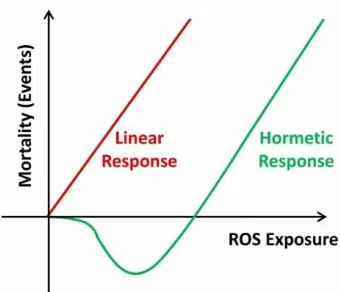
hormesis designates a response of stimulation of the biological defenses, generally favorable,
with exposures of low doses of toxins or other agents or phenomena stress generators.
Because of this mechanism, some natural toxins or pollutants may have the opposite effect
depending on whether the dose received is low or high. These agents are said to be hormetic.
In toxicology, the phenomenon of hormesis is characterized by a characteristic form of the
dose / effect relationship curve, which changes sign for low doses, giving it a "U" or "J"
shape.
(Figure 9)
It is usually accepted a dose-dependent response to a stimulus. The current hypothesis is
rather a response to a prooxidant background mediated by nrf2 (nuclear respiratory factor 2)
(105). Normally, moderate oxidative stress will favor the nrf2 pathway responsible for the
endogenous synthesis of anti-oxidant enzymes. In case of overflow, it is the inflammatory
NFkb pathway that will be triggered with passage to apoptosis (106).
It is interesting to note that the famous curve in U (or in J) corresponds to a hormetic profile.
It is therefore in small doses that alcohol and wine must be consumed in order to have a
beneficial effect on health. (107,108)
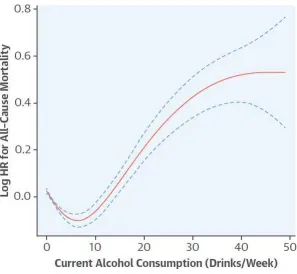
Bo show in 2017 that the association between alcohol consumption and mortality risk in U.S.
adults, follow a J-shaped curve. Compared with abstainers, the all-risk mortality of moderate
consumers were reduced. For heavy alcohol consumption risk increased significantly (109).
(Figure 10)
So there are good ways to hope to understand the action of wine polyphenols on human
health. First, a direct antioxidant effect (scavenger) wine is absorbed during the meal, but
especially a prooxidant impregnation mechanism involving the epigenetic expression of
endogenous antioxidant enzymes.
8 Conclusion
Wine has always been part of the culture of human being, from the east where it was born, to
19
footsteps, we can measure his place both in the sharing between men and in the benevolent
health that fall in the scriptures. Today all the scientific studies demonstrate the undeniable
part of the quality of the nutrition in human health. Wine is unquestionably a health food at
the condition to consume it or rather to savor it in moderation and a point of conviviality.
Current data makes it an antioxidant, a repairer of cell damage, a cardiovascular protector, a
metabolic and neurological protector (110,111). And especially the wine, moderate dose,
brings the pleasure, pleasure of an exchange between guests around a good meal. It is no
coincidence that the gastronomic meal of the French was included in UNESCO's universal
heritage in 2010.
After the study published in the Lancet (112), all alcoholists shout victory. We are told that
wine is an alcohol like the others, and especially that we will die from the first glass of
alcohol.
This reminds us of this leaflet from the INCA (french national institute of cancer) in 2009,
which already promised us cancer from the first glass of wine. However, at the same time,
Lanzmann-Petithory said “Men who consume mostly wine have a risk of premature mortality
from all causes decreased by 25%”.(113)
Fortunately, other researchers, but those we talk a little less we prove other truths. The 90+
study conducted since 1981 by Dr. Claudia Kawas, 14,000 Californian retirees were followed,
the results as early as 2007 show that men and women who drink alcohol have a lower risk of
mortality than abstainers (those who drank one or two glasses a day saw their mortality
reduced by 15%). The study continues and in February 2018, at the American Association for
the Advancement of Science conference in Austin, Texas, the results are confirmed: the
consumption of two glasses of alcohol per day is associated with a reduction of 18 % of the
risk of death compared to abstainers (114). The study also confirms that regular exercise,
social activities, the regular practice of a hobbie and coffee consumption also increase the life
span.
As already mentioned by Alvise Cornaro, this Venetian people, who after having abused the
pleasures of the flesh until 40 years, given dying, could live until 103 years after a questioning
of his food (frugality and a little bit of wine).
20
Wine is the best of anxiolytics. Allowing citizens to relax with a glass of wine, rather than
making them feel guilty, could reduce prescriptions for benzodiazepines and antidepressants;
while eliminating the side effects of these dangerous drugs.
Wine is our panacea. Only misuse or abuse, is dangerous.
21
References
(1) La règle de saint Benoit, Tomes I et II, introd., trad. et notes par Adalbert de Vogüé, texte établi et présenté par Jean Neufville, collection Sources chrétiennes, 181 et 182, Éd. du Cerf, 1972.
(2) Ganesan K, Xu B. A Critical Review on Polyphenols and Health Benefits of Black Soybeans. Nutrients. 2017 May 4;9(5).
(3) Halliwell B. Free radicals and antioxidants: a personal view. Nutr Rev 1994;52:253-65.
(4) Cadenas E, Boveris A, Ragan CI, Stoppani AO. Production of superoxide radicals and hydrogen peroxide by NADH-ubiquinone reductase and ubiquinol-cytochrome c reductase from beef-heart mitochondria. Arch Biochem Biophys 1977;180:248-57. (5) Turrens JF, Boveris A. Generation of superoxide anion by the NADH dehydrogenase
of bovine heart mitochondria. Biochem J 1980;191:421-7.
(6) Turrens JF, Alexandre A, Lehninger AL. Ubisemiquinone is the electron donor for superoxide formation by complex III of heart mitochondria. Arch Biochem Biophys 1985;237:408-14.
(7) Voet, D. and Voet, J. G. Biochimie. 2e. 1998. Ref Type: Edited Book
(8) Lee JM, Calkins MJ, Chan K, Kan YW , Johnson JA, Identification of the NF-E2-r elated factor -2-dependent genes conferring protection against oxidative stress in primary cortical astrocytes using oligonucleotide micr oarray analysis, J Biol Chem, 2003;278:12029–12038
(9) Howden R, Nrf2 and car diovascular defense, Oxid Med Cell Longev , 2013;2013:104308
(10) Itoh K, Wakabayashi N, Katoh Y et al. Keap1 represses nuclear activation of antioxidant responsive elements by Nrf2 throughbinding to the amino-terminal Neh2 domain, Genes Dev, 1999;13:76–86
(11) Xiao-Jun Wang, Zheng Sun, W eimin Chen, Yanjie Li, Nicole F. Villeneuve et Donna D. Zhang , « Activation of Nrf2 by arsenite and monomethylarsonous acid is independent of Keap1- C151: enhanced Keap1–Cul3 interaction », Toxicology and Applied Pharmacology , vol. 230, n 3, août 2008 , p. 383-389
(12) Tatsuhiro Shibata, T sutomu Ohta, Kit I. T ong, Akiko Kokubu, Reiko Odogawa, Koji T suta, Hisao Asamura, Masayuki Yamamoto et Setsuo Hirohashi , « Cancer related mutations in NRF2 impair its recognition by Keap1-Cul3 E3 ligase and promote malignancy », Proceedings of the National Academy of Sciences of the United States of America , vol. 105, n 36, 9 septembre 2008 , p. 13568-13573
(13) Haleng J, Pincemail J, Defraigne JO, Charlier C, Chapelle JP. [Oxidative stress]. Rev Med Liege 2007;62:628-38.
22
(15) Brigelius-Flohe R, Traber MG. Vitamin E: function and metabolism. FASEB J.1999;13:1145-55.
(16) Liebler DC, Kling DS, Reed DJ. Antioxidant protection of phospholipid bilayers by alpha-tocopherol. Control of alpha-tocopherol status and lipid peroxidation by ascorbic acid and glutathione. J Biol Chem 1986;261:12114-9.
(17) Burton GW, Ingold KU. beta-Carotene: an unusual type of lipid antioxidant. Science 1984;224:569-73.
(18) D'Archivio M, Filesi C, Di BR, Gargiulo R, Giovannini C, Masella R. Polyphenols, dietary sources and bioavailability. Ann Ist Super Sanita 2007;43:348-61.
(19) Macheix JJ, Sapis JC, Fleuriet A. Phenolic compounds and polyphenoloxidase in relation to browning in grapes and wines. Crit Rev Food Sci Nutr 1991;30:441-86. (20) Crozier A, Jaganath IB, Clifford MN. Dietary phenolics: chemistry, bioavailability and
effects on health. Nat Prod Rep 2009;26:1001-43.
(21) P. M. Dewick, « The Biosynthesis of Shikimate Metabolites », Natural Product Reports, vol. 12, 1995, p. 579-607
(22) Renaud S., de Lorgeril M. « Wine, alcohol, platelets, and the French paradox for coronary heart disease », Lancet, vol. 339, 1992, p. 1523-1526.
(23) Artaud-Wild SM, Connor SL, Sexton G, Connor WE. Differences in coronary mortality can be explained by differences in cholesterol and saturated fat intakes in 40 countries but not in France and Finland. A paradox. Circulation. 1993 Dec;88(6):2771-9.
(24) St Leger A. S., Cochrane A. L., Moore F. « Factors associated with cardiac mortality in developed countries with particular reference to the consumption of wine », Lancet, vol. 1, 1979, p. 1017-1020.
(25) Keys A (Ed). « Coronary heart disease in seven countries ». Circulation 1970;41(Suppl.1):211 pp.
(26) Tunstall-Pedoe H., Kuulasmaa K., Amouyel P., Arveiler D., Rajakangas A. M., Pajak A. «Myocardial infarction and coronary deaths in the World Health Organization MONICA Project. Registration procedures, event rates, and case-fatality rates in 38 populations from 21 countries in four continents ». Circulation, vol. 90, 1994, p. 583– 612
(27) World Advertising Research Center. World Drink Trend 2005. Oxfordshire: WARC, 2005:184.
(28) Top20 countries with highest beverage spécific adult per capita consumption.WHO Global Status Report on Alcohol. 2004
(29) Mediterranean diet and the French paradox: two distinct biogeographic concepts for one consolidated scientific theory on the role of nutrition in coronary heart disease. de Lorgeril M, Salen P, Paillard F, Laporte F, Boucher F, de Leiris J. Cardiovasc Res. 2002 Jun;54(3):503-15.
(30) Pettinger C., Holdsworth M., Gerber M. All under one roof? differences in food availability and shopping patterns in Southern France and Central England.Eur J Public Health. 2008;18:109-114.
23
(32) Guilbert P., Perrin-Escalon H. Baromètre Santé Nutrition 2002.INES; 2004.
(33) Pettinger C., Holdsworth M.,Gerber M. Meal patterns and cooking practices in Southern France and Central England. Public Health Nutr. 2006; 9:1020-1026.
(34) Ruidavets JB., Bataille V.,Dallongeville J., et al. Alcohol intake and diet in France, the prominent role of lifestyle.Eur Heart J. 2004;25:1153-1162.
(35) Rozin P., Kabnick K., Pete E., Fischler C., Shields C.The ecology of eating: smaller portion sizes in France than in the United States helps explain the french paradox.Psychol Sci. 2003;14:450-454
(36) Montaigne. Les Essais Livre II. chapitre 2.
(37) Yusuf S., Hawken S., Ounpuu S., Dans T., Avezum A., Lanas F., McQueen M., Budaj A., Pais P., Varigos J., Lisheng L. « Effect of potentially modifiable risk factors associated with myocardial infarction in 52 countries (the INTERHEART study): case-control study », Lancet, vol. 364, 2004, p. 937-952.
(38) O'Donnell M. J., Xavier D., Liu L., Zhang H., Chin S. L., Rao-Melacini P., Rangarajan S., Islam S., Pais P., McQueen M. J., Mondo C., Damasceno A., Lopez-Jaramillo P., Hankey G. J., Dans A. L., Yusoff K., Trueisen T., Diener H.-C. « Risk factors for ischemic and intracerebral haemorrhagic stroke in 22 countries (the INTERSTROKE study): A case-control study », The Lancet, vol. 376, 2010, p. 112-123.
(39) Miyagi Y., Miwa K. Inoue H. « Inhibition of human low-density lipoprotein oxidation by flavonoids in red wine and grape juice », American Journal of Cardiology, vol. 80, 1997, p. 1627–1631.
(40) R. Curtis Ellison. « Cheers ! » Epidemiology .Vol. 1, No. 5 (September 1990), pp. 337-339
(41) Colloque Vin et Nutrition. Orateurs: B. Hudelot, Y. Cottin, D. Blache, JP. Rifler, R. Corder, MC. Tarby . Congrès Vitagora. Dijon. 23-25 avril 2008.
(42) Rifler J.-P., Lorcerie F., Durand P., Delmas D., Ragot K., Limagne E., Mazué F., Riedinger J.-M., d’Athis P., Hudelot B., Prost M., Lizard G., Latruffe N. « A moderate red wine intake improves blood lipid parameters and erythrocytes membrane fluidity in post myocardial infarct patients », Molecular Nutrition & Food Research, vol. 56, 2012, p. 345-351.
(43) Rifler J.-P., Latruffe N. « Moderate Red Wine intake in Secondary Prevention for patients with cardiovascular disease », Congrès Vitagora, 20-21 mars 2013, Dijon, France.
(44) Prost M. Utilisation de générateurs de radicaux libres dans le domaine des dosages biologiques. FR Patent2 1989 ; 642-526.
(45) Gaziano J., Buring J., Breslow J et al. Moderate alcohol intake, increased levels of high density lipoproteinsand its subfractions and decreased risk of myocardial infarction. N Engl J Med 1993 ;329 :1829-34.
(46) Scherr P., Lacroix A., Wallace R et al. Light to moderate alcohol consumption and mortality in the elderly. Amer J Geriatr .1992 ;40 :651-7.
24
(48) Camargo C., Williams P., Vranizan K et al. The effect of moderate alcohol intake on serum apolipoprotein A-I and A-II : a controlled study. JAMA 1985 ;253 :2854-7.
(49) Catapano A. Alcohol and atherosclerosis. Multiple risk factors in cardiovascular disease. Kluwer Academic Publishers 1995 : p427-36.
(50) Rimm E., Williams P., Fosher K et al. Moderate alcohol intake and lower risk of coronary heart disease: meta- analysis of effects on lipids and haemostatic factors. BMJ. 1999;319:1523-8.
(51) Kromhout D. On the waves of the Seven Countries Study. A public health perspective on cholesterol. Eur Heart J 1999;20:796–802.
(52) Renaud S., Guegen R., Siest G., Salamon R. Wine, beer, and mortality in middle-aged men from Eastern France. Epidemiology 1998 ; 9 : 184-8.
(53) Renaud S., Ruf J.C. Effects of alcohol on platelet functions .Clin. Chim. Acta 1996, 246 :77-89.
(54) Mennen L., Balkau B., Vol S., et al. Fibrinogen. A possible link between alcohol consumption and cardiovascular disease ? Arterioscl Thromb Vasc Biol 1999 ;19 :887-92.
(55) Ridker P., Vaugham D., Stamper M., et al. Association of moderate alcohol consumption and plasma concentration of endogenous tissue-type plasminogen activator. JAMA 1994 ;272 :929-33.
(56) Rimm E., Ellison R. Alcohol in the Mediterranean diet. Am J Clin Nutr 1995 ;61 (suppl) :1378S-82S.
(57) Van Der Gaag M., Ubbink J., Sillanaukee P et al. Effect of consumption of red wine, spirits and beer on serum homocysteine. Lancet 2000 ;355 :1522.
(58) Bleich S., Bleich K., Kropp S et al. Moderate alcohol consumption in social drinkers raises plasma homocysteine levels: a contradiction to the "french paradox"? Alcohol Alcohol.2001 ; 36 : 189-92.
(59) Fried P., Moore R.,Pearson T.Long term effects of cigarette smoking and moderate alcohol consumption on coronary artery diameter. Am.J.Med.,1986;80:27-44.
(60) Muntwyler J., Hennekens CH., Burings JE., Gaziano J. Mortality and light to moderate alcohol consumption after myocardial infarction. Lancet 1998 ; 352 : 1882-5
(61) Moosavi F, Hosseini R, Saso L, Firuzi O. Modulation of neurotrophic signaling pathways by polyphenols. Drug Des Devel Ther. 2015 Dec 21;10:23-42.
25
(63) Martin..R Andriantsitohaina, Mécanismes de la protection cardiaque et vasculaire des polyphénols au niveau de l’endothélium, Annales de Cardiologie et d'Angéiologie, Volume 51, Issue 6, December 2002, Pages 304-315
(64) M. Grønbaek, A. Deis, T. I. Sørensen, U. Becker, P. Schnohr, G. Jensen. Mortality associated with moderate intakes of wine, beer, or spirits. BMJ. 1995 May 6; 310(6988): 1165–1169.
(65) Rifler JP. Les polyphénols du vin rouge. Concours Médical 1995 ;117 :3571-6.
(66) Demrow H., Slane P., Folts J. Administration of wine and grape juice inhibits in vivo platelet activity and thrombosis in stenosed canine coronary arterie. Circulation 1995 ; 9 : 1182-8.
(67) Frankel E., Kanner J., German J., Parks E. et al.. Inhibition of oxidation of human low-density lipoprotein by phenolic substances in red wine. Lancet 1993, 341(8843): 454– 457.
(68) Fuhrman B., Lavy A., Aviram M. Consumption of red wine with meals reduces the susceptibility of human plasma and low-density lipoprotein to lipid peroxidation. Amer J Clin Nutr 1995 ;61 :549-54.
(69) Kanner J., Gorelik S., Ligumsky M., Kohen R. The Stomach as a “Bioreactor”: When Red Meat Meets Red Wine J. Agric. Food Chem., 2008, 56 (13), pp 5002–5007
(70) Gesquière L., Loreau N., Blache D. Impaired cellular cholesterol efflux by oxysterol-enriched high density lipoproteins .Free Radic Biol Med 1997 ;23 :541-547.
(71) Arichi H., Kimura Y.,Okuda H., Kozawa A. , Arichi S. Effects of stilbenes components of the roots of polygonum cuspidatum on lipid metabolism. Chem. Pharm. Bull. 1982 ; 30 : 1766-1770.
(72) Ruf J., Berger J., Renaud S. Arterioscler Thromb Vasc Biol 1995 ; 1 : 140-144.
(73) Pace-Asciak C., Hahn S, Diamandis E et al. The red wine phenolics trans-resveratrol and quercetin block human platelet aggregation and eicosanoid synthesis: Implications for protection against coronary heart disease. Clin Chim Acta 1995;235:207-219.
(74) Blache D., Gesquière L., Loreau et al. Oxidant stress: the role of nutrients in cell-lipoprotein interactions. Proc Nutr Soc 1999;58:559-563.
(75) Grønbaek M., Becker U., Johansen D. et al. Type of alcohol consumed and mortality from all causes, coronary heart disease, and cancer. Ann Intern Med. 2000;133:411-9.
(76) Wang D, Wang Z, Zhang L, Wang Y. Roles of Cells from the Arterial Vessel Wall in Atherosclerosis. Mediators Inflamm. 2017;2017
26
(78) Khan F, Niaz K, Maqbool F, Ismail Hassan F, Abdollahi M, Nagulapalli Venkata KC, Nabavi SM, Bishayee A. Molecular Targets Underlying the Anticancer Effects of Quercetin: An Update. Nutrients. 2016 Aug 29;8(9).
(79) Chalopin M, Tesse A, Martínez MC, Rognan D, Arnal JF, Andriantsitohaina R. Estrogen receptor alpha as a key target of red wine polyphenols action on the endothelium. PLoS One. 2010 Jan 1;5(1)
(80) Chalopin M, Soleti R, Benameur T, Tesse A, Faure S, Martínez MC, Andriantsitohaina R. Red wine polyphenol compounds favor neovascularisation through estrogen receptor α-independent mechanism in mice. PLoS One. 2014 Oct 9;9(10)
(81) Zhang FF, Haslam DE, Terry MB, Knight JA, Andrulis IL, Daly MB, Buys SS, John EM. Dietary isoflavone intake and all-cause mortality in breast cancer survivors: The Breast Cancer Family Registry. Cancer. 2017 Jun 1;123(11):2070-2079.
(82) Mocanu MM, Nagy P, Szöllősi J. Chemoprevention of Breast Cancer by Dietary Polyphenols. Molecules. 2015 Dec 17;20(12):22578-620.
(83) Samavat H, Kurzer MS. Estrogen metabolism and breast cancer. Cancer Lett. 2015 Jan 28;356(2 Pt A):231-43.
(84) Chiva-Blanch G, Arranz S, Lamuela-Raventos RM, Estruch R. Effects of wine, alcohol and polyphenols on cardiovascular disease risk factors: evidences from human studies. Alcohol Alcohol. 2013 May-Jun;48(3):270-7.
(85) Jang M., Cai L., Udeani et al.Cancer chemoprotective activity of resveratrol, a natural product derived from grapes. Science 1997 ;275 : 218-220.
(86) Nguyen C, Savouret JF, Widerak M, Corvol MT, Rannou F. Resveratrol, Potential Therapeutic Interest in Joint Disorders: A Critical Narrative Review. Nutrients. 2017 Jan 6;9(1).
(87) Sin TK, Yung BY, Siu PM. Modulation of SIRT1-Foxo1 signaling axis by resveratrol: implications in skeletal muscle aging and insulin resistance. Cell Physiol Biochem. 2015;35(2):541-52.
(88) Maiese K, Chong ZZ, Shang YC, Wang S, Translating cell survival and cell longevity into treatment strategies with SIRT1, Rom J Morphol Embryol, 2011;52:1173–1185 (89) Hwang JW, Yao H, Caito S, Sundar IK, Rahman I, Redox regulation of SIRT1 in
inflammation and cellular senescence, Free Radic Biol Med, 2013;61C:95–110 (90) Vaziri H, Dessain SK, Ng Eaton E et al. hSIR2(SIRT1) functions as an
NAD-dependent p53 deacetylase , Cell, 2001;107:149–159
(91) Wang C, Chen L, Hou X et al. Interactions between E2F1 and SirT1 regulate apoptotic response to DNA damage, Nat Cell Biol, 2006;8:1025–1031
(92) Brunet A, Sweeney LB, Sturgill JF et al. Stress-dependent regulation of FOXO transcription factors by the SIRT1 deacetylase, Science, 2004;303:2011–2015
(93) Wang RH, Sengupta K, Li C et al. Impaired DNA damage response, genome instability, and tumorigenesis in SIRT1 mutant mice, Cancer Cell, 2008;14:312–323 (94) Sakamoto K. Silencing metabolic disorders by novel SIRT1 activators. Cell Metab.
27
(95) Streppel M et al. Long term wine consumption is related to cardiovascular mortality and life expectancy independently of moderate alcohol intake : the Zutphen study. J Epidemiol Community Health. 2009.
(96) Moskovitz J., Bar-Noy S., Williams W et al. Methionine sulfoxide reductase (MsrA) is a regulator of antioxidant defense and lifespan in mammals. Proc Natl Acad Sci USA. 2001; 98(23):12920–12925.
(97) Baur, J.Resveratrol, sirtuins, and the promise of a DR mimetic. Mech. Ageing Dev. 2010.
(98) Letenneur L.Risk of Dementia and Alcohol and Wine Consumption: a Review of Recent Results. Biol Res 2004; 37: 189-193.
(99) Orgogozo J.,Dartigues J., Lafont S., Letenneur et al.Wine consumption and dementia in the elderly : a prospective community study in the Bordeaux area. Rev neurol 1997 . 153 (3):185-192.
(100) Ruitenberg A., Van Swieten JC, et al. Alcohol consumption and risk of dementia: the Rotterdam Study. Lancet 2002 ; 359 : 281-6.
(101) Kromhout D. On the waves of the Seven Countries Study. A public health perspective on cholesterol. Eur Heart J 1999;20:796–802.
(102) Stampfer M.,Kang J.,Chen J et al. Effects of moderate alcohol consumption on cognitive function in women. N Engl J Med 2005 ; 352:245-53.
(103) Ma T, Tan MS, Yu JT, Tan L. Resveratrol as a therapeutic agent for Alzheimer's disease. Biomed Res Int. 2014;2014:350516.
(104) Sin TK, Yung BY, Siu PM. Modulation of SIRT1-Foxo1 signaling axis by resveratrol: implications in skeletal muscle aging and insulin resistance. Cell Physiol Biochem. 2015;35(2):541-52.
(105) Plauth A, Geikowski A, Cichon S, Wowro SJ, Liedgens L, Rousseau M, Weidner C, Fuhr L, Kliem M, Jenkins G, Lotito S, Wainwright LJ, Sauer S. Hormetic shifting of redox environment by pro-oxidative resveratrol protects cells against stress. Free Radic Biol Med. 2016 Oct;99:608-622.
(106) Stefanson AL, Bakovic M. Dietary regulation of Keap1/Nrf2/ARE pathway: focus on plant-derived compounds and trace minerals. Nutrients. 2014 Sep 19;6(9):3777-801. (107) Juhasz B, Mukherjee S, Das DK. Hormetic response of resveratrol against
cardioprotection. Exp Clin Cardiol. 2010 Winter;15(4):e134-8.
(108) Li Y, Pan A, Wang DD, Liu X, Dhana K, Franco OH, Kaptoge S, Di Angelantonio E, Stampfer M, Willett WC, Hu FB. Impact of Healthy Lifestyle Factors on Life Expectancies in the US Population. Circulation. 2018 Apr 30. pii: CIRCULATIONAHA.117.032047.
(109) Xi B, Veeranki SP, Zhao M, Ma C, Yan Y, Mi J. Relationship of Alcohol Consumption to All-Cause, Cardiovascular, and Cancer-Related Mortality in U.S. Adults. J Am Coll Cardiol. 2017 Aug 22;70(8):913-922.
(110) Rasines-Perea Z, Teissedre PL. Grape Polyphenols' Effects in Human Cardiovascular Diseases and Diabetes. Molecules. 2017 Jan 1;22(1)
28
(112) GBD 2016 Healthcare Access and Quality Collaborators. Measuring performance on the Healthcare Access and Quality Index for 195 countries and territories and selected subnational locations: a systematic analysis from the Global Burden of Disease Study 2016. Lancet. 2018 Jun 2;391(10136):2236-2271.
(113) Lanzmann-Petithory D. Colloque de cloture du PNRA (programme national de recherche en alimentation et nutrition humaine) 2005. 10-12 mars 2009. Espace Reuilly -Mairie de Paris- 21 rue Hénard 75012 Paris
(114) http://www.mind.uci.edu/research-studies/90plus-study/
29
30
31
32
33
34
35
Figure 7 :
Figure 7 : Lipid profile after 200 ml red wine ingestion at lunch. CT: total cholesterol. LDL:
36
37
38