Embedding Open-domain Common-sense Knowledge from Text
Travis Goodwin and Sanda Harabagiu
Human Language Technology Research InstituteUniversity of Texas at Dallas Richardson, TX 75083-0688, USA
{travis,sanda}@hlt.utdallas.edu
Abstract
Our ability to understand language often relies on common-sense knowledge – background information the speaker can assume is known by the reader. Similarly, our comprehension of the language used in complex domains relies on access to domain-specific knowledge. Capturing common-sense and domain-specific knowledge can be achieved by taking advantage of recent advances in open information extraction (IE) techniques and, more importantly, of knowledge embeddings, which are multi-dimensional representations of concepts and relations. Building a knowledge graph for representing common-sense knowledge in which concepts discerned from noun phrases are cast as vertices and lexicalized relations are cast as edges leads to learning the embeddings of common-sense knowledge accounting for semantic compositionality as well as implied knowledge. Common-sense knowledge is acquired from a vast collection of blogs and books as well as from WordNet. Similarly, medical knowledge is learned from two large sets of electronic health records. The evaluation results of these two forms of knowledge are promising: the same knowledge acquisition methodology based on learning knowledge embeddings works well both for common-sense knowledge and for medical knowledge Interestingly, the common-sense knowledge that we have acquired was evaluated as being less neutral than than the medical knowledge, as it often reflected the opinion of the knowledge utterer. In addition, the acquired medical knowledge was evaluated as more plausible than the common-sense knowledge, reflecting the complexity of acquiring common-sense knowledge due to the pragmatics and economicity of language.
Keywords:Common-sense knowledge, medical domain knowledge, knowledge embedding
1.
Introduction
Our ability to understand language often relies on common-sense knowledge – background information the speaker can assume is known by the reader. When language is used to communicate, common-sense knowledge is not articulated in most of the cases. Hence, the availability of resources capturing or approximating common-sense knowledge is crucial. Multiple attempts have been made to capture gen-eral common-sense knowledge, such as the CYC project (Lenat and Guha, 1989) and ConceptNet (Speer and Havasi, 2013). Moreover, WordNet (Miller, 1995) captures lexico-semantic knowledge in English, while DBPedia (Auer et al., 2007) provides knowledge that was used for common-sense reasoning. These resources encode a large number of
conceptswithout representing all their possible attributes. Moreover, another important limitation of these existing resources for common-sense knowledge stems from the lim-ited number of relation types spanning concepts. Some of the existing relations are taxonomic, e.g. IS-A,PART-OF, while others capture causality, e.g. ENABLE, CAUSE-OF, but they hardly represent all relation types we use when accessing common-sense knowledge. To address these two limitations, we took advantage of recent advances in open information extraction (IE) techniques and, more impor-tantly, of the advent ofknowledge embeddings, which are multi-dimensional representations of concepts and relations.
The use of knowledge embedding enabled us to consider
lexicalized relationsbetween concepts, allowing relational similarity to be easily identified, even if not grouped in the same type of relations. Although this is an approximation of the relation types available from existing common-sense knowledge resources, it captures a much larger set of pos-sible relations spanning concepts. Because concepts are
largely expressed as noun phrases, in our formulation based on knowledge embeddings, we make use of semantic compo-sitionality to represent complex concepts that comprise their attributes and their nominal interpretation (e.g. “plantain slices” are interpreted as slices of plantain, while “plan-tain dish” can be interpreted as a dish made with plan“plan-tains). When capturing common-sense knowledge from a variety of sources, including books and weblogs, we rely on open-domain information extraction (IE) to identify concepts as noun phrases and the lexicalized relations they share. For example, consider the following sentence obtained from a personal weblog post:
c1
z }| {
plantain slices are cooked in
| {z }
r
c2
z }| {
hot oil
This sentence encodes the lexical relationr=are cooked in, indicating the relationship between two concepts c1 =
using the same knowledge acquisition methodology for cap-turing domain-specific knowledge that is not current avail-able despite domain-specific texts being abundant. For this purpose, we considered the domain of medicine.
In the medical domain, multiple efforts have been made to capture knowledge, including the Unified Medical Lan-guage System (UMLS) (Bodenreider, 2004) and the System-ized Nomenclature for MEdicine (SNOMED) (Stearns et al., 2001). These medical knowledge resources have simi-lar limitations as the common-sense knowledge resources, namely (1) too few types of relations between concepts and (2) description of concepts without capturing their semantic concepts. However, when processing medical language, a large variety of relations need to be considered. For example, given a sentence stating:
c1
z }| {
abnormal EEG due to
| {z } r
c2
z }| {
rhythmic background slowing
the causality between the “abnormal” attribute of the elec-troencephalogram (EEG) and the rhythmic slowing of the background signal needs to be recognized. Using knowledge embeddings to encode medical knowledge provides access to medical information not available in current ontologies but expressed in medical texts.
An important aspect of the common-sense and domain-specific knowledge acquisition framework described in this paper is provided by our probabilistic treatment of relations between concepts. By encoding theplausibility
of a lexicalized relation between a pair of concepts, e.g.
P(q) =hc1, r, c2i, the knowledge encoding framework that we describe is able to capture salient information as knowl-edge embeddings without discarding the long-tail aspects of this knowledge. Moreover these knowledge embeddings are able to generalize the knowledge discerned from indi-vidual sentences by incorporating two notions of semantic smoothness: (1)functional similarity(Turney, 2012), the idea that two phrases are similar if they engage in similar lexical relations, and (2)behavioral similarity(Nakov and Hearst, 2008), the idea that two lexical relationships are similar if they operate on similar concepts.
In this paper, we present a novel knowledge embed-ding framework that generates promising results both on common-sense knowledge and domain-specific knowledge by learning an optimal embedding for each concept and lexical relation according to (1) the functional similarity between pairs of concepts, (2) the behavioral similarity between pairs of lexical relations, and (3) the role of the semantic composition for each word occurring in each con-cept and lexical relation. The remainder of this paper is organized as follows. Section 2 reviews related work and Section 3 describes the datasets we considered as well as the natural language processing techniques performed on these datasets. Section 4 details our knowledge embedding framework, while Section 5 discusses our experiments, and Section 6 summarizes the conclusions.
2.
Related Work
One of the most popular sources of lexico-semantic knowl-edge and an approximation of common-sense knowlknowl-edge is
WordNet (Miller, 1995) which encodes 117,000 concepts or-ganized as synonym sets orsynsetsspanned by a small num-ber of relation types. The relations between concepts capture hypernymy, meronymy (for nouns), entailment, causality (between verbs), as well as antonomy. In addition, each WordNet concept is associated with agloss defining the concept.
While the WordNet semantic graph was carefully generated by expert lexicographers, the JeuxDeMots project (Lafour-cade, 2007) provides a crowd-sourced lexico-semantic graph which captures some of the relation types encoded in Word-Net (e.g. synonym, antonymy) for French. These relations were populated by allowing people to play word association games.
ConceptNet (Speer and Havasi, 2013) was also obtained through crowd-sourcing. It encodes 21 relation types which attempt to capture common-sense knowledge. How-ever, these relations are sometimes under-specified, e.g. for the CAPABLE-OF relation, the sentence provided by ConceptNet, ”Mary broke a vase” was encoded as hMary,CAPABLEOF,vasei. When interpreting this relation, what does it mean to becapable ofa “vase”? Can Mary eat a vase? Can she buy a vase? Can she cook a vase? What if we consider, instead, the relationhMary,CAPABLEOF,breaki. Although perhaps closer to the original semantics of the sentence, it is still too general: What is Mary capable of breaking? Can she break a brick wall? Can she break a table? It would be preferable to encode only the fact that Mary broke avase. However, because the relationCAPABLE
-OFcannot account for the semantics of the verb “break”, it generates an underspecified relation between Mary and the vase.
DBPedia (Auer et al., 2007) curates a variety of knowledge mined from Wikipedia. It considers article titles as concepts and relies on the relations between them discerned from meta-data in Wikipedia. However, the number of concepts and relation types is limited and dependent on the availability of metadata.
Medical knowledge acquisition was targeted in multiple projects. Perhaps the most popular of them is the Unified Medical Language System (UMLS) (Bodenreider, 2004) which designed by the National Library of Medicine in order to provide a standard set of concepts allowing for commonalities amongst various medical terminologies to be interlinked, for example, by mapping ICD-9 diagnostic codes (Cimino et al., 1993) to Medical Subject Headings (MeSH) (Lowe and Barnett, 1994).
A component of UMLS, the Systemized NOmenclature of MEDicine (SNOMED) (Stearns et al., 2001) provides a small number of relationship types between a subset of UMLS concepts, such as hypernymy, synonym as well as medical relations (e.g. treatment targets disease).
2013) where a qualified medical knowledge graph (QMKG) was presented. However, the QMKG does not capture com-positional semantics of medical concepts, nor the lexical relations between them. Both of these aspects are accounted for in the knowledge framework presented in this paper.
3.
The Textual Data
To acquire common-sense knowledge as well as medical knowledge, we have relied on several sources of textual data.
3.1.
Textual Data expressing Common-sense
Knowledge
We considered two collections of narrative texts which we believed would be useful for common-sense reasoning: (1) narrative personal stories from weblog articles, and (2) Google’s syntactic n-gram dataset obtained from stories sourced from Google Books. Narratives of personal stories have held interest within the artificial intelligence commu-nity for decades due to the rich semantic information they contain. For example, as conjectured by Schank in (Schank, 1983), personal stories can be used to pin-point gaps in a knowledge base. Moreover, as argued in (Schank and Abelson, 1995), the most common source of common-sense knowledge for humans is that of narrative communication, or stories. To provide additional common-sense knowledge, we also considered WordNet glosses.
3.1.1. Narrative Blog Posts
We used the data provided for the 2009 International Con-ference on Weblogs and Social Media (ICWSM), sponsored by the Association for the Advancement of Artificial Intelli-gence (AAAI) (Burton et al., 2009), by Spinn3r, Inc, which consists of 44 million blog posts authored between August 1st and October 1st in 2008. The dataset covers many major news events, such as the 2008 Olympics, both United States presidential nominating conventions, the United States finan-cial crisis, etc. Gordon and Swanson identified nearly one million English-language narrative blog posts discussing personal stories from this dataset, using a supervised neural network based on lexical features (Gordon and Swanson, 2009). A total of 937,994 blog posts were classified as containing narrative stories.
3.1.2. Google Books
Inspired by (Akbik and Michael, 2014), we considered a secondary source of narrative information: the Syntactic N-Grams dataset (Goldberg and Orwant, 2013) which was extracted from 3.5 million digitized English Books available through Google Books (Michel et al., 2011). The dataset contains over 10 billionsyntactic n-grams, which are rooted syntactic dependency tree fragments (noun phrases and verb phrases) and is the largest publicly available corpus of its kind. Each tree fragment is annotated with the dependency information, its head word, and the frequency with which it occurred. An example tree fragment is (n0) “when/WRB the/DT small/JJ boy/NN ate/VBD cookies/NN”. We con-verted each tree fragment in this dataset into a sentence by removing the leading relative pronouns, conjunctives, and prepositions. In this way, for the tree fragmentn0we obtain the sentences0, “the small boy ate cookies.”
ECG 209,051
Radiology 870,504
Discharge summary
55,177 Rehab
services 5,431
Other 822,497 Nutrition
9,418 Pharmacy
103 Social Work
2,670ManagementCase 967 Physician
141,624 General 8,301 223,556Nursing
Echo 45,794
Consult 98
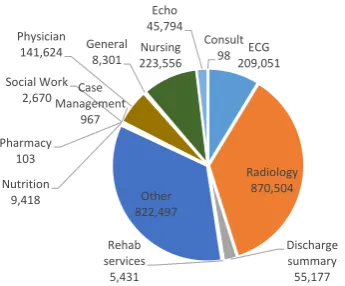
Figure 1: The distribution of electronic health record (EHR) types in the MIMIC-III clinical database.
3.1.3. WordNet Glosses
Because each concept in WordNet is (a) represented by a synset and (b) defined by a gloss, we generate a set of sentences expressing these definitions. For example, the synsety1={“male child”, “boy”}is defined as “a youthful male person.” In addition, the glosses also provide sentence examples of the concepts represented by the synset. For example,y1is exemplified by (s1) “he baby was a boy,” (s2) “she made the boy brush his teeth every night”, and (s3) “most soldiers are only boys in uniform.” We also created sentences based on the glosses by using each member of the synset as a genus and the gloss as the differentia. In this way, we obtain from the gloss ofy1the sentences (s4) “a male child is a youthful male person”, and (s5) “a boy is a youthful male person.”
3.2.
Medical Textual Data
With the advent of electronic health records (EHRs), a grow-ing set of medical narratives are becomgrow-ing available. These narratives reflect domain-specific medical knowledge com-municated by physicians for the interpretation of other medi-cal professionals. Thus, they reflect highly-specialized med-ical knowledge, both in explicit and implicit ways. We were interested to acquire medical knowledge from type of textual data: (1) medical narratives from a variety of medical record types as well as (2) EHRs which belong to a single record type. Both types of textual data needed to be available from massive medical archives.
3.2.1. MIMIC-3 Clinical Database
MIMIC-III (Medical Information Mart for Intensive Care III) is a large, freely-available database comprising de-identified clinical data for over 40,000 patients who stayed in critical care units of the Beth Israel Deaconess Medi-cal Center between 2001 and 2012 (Saeed et al., 2011). The database includes narratives of a variety of EHR types such as discharge summaries, nursing notes, and radiology reports. In this work, we considered all EHRs types, encom-passing 2,426,930 medical records. The distribution of EHR types in this dataset is shown in Figure 1
3.2.2. EEG Reports
2014). Generated by the The Neural Engineering Data Con-sortium (NEDC) at Temple University, the corpus contains nearly 20,000 EEG reports conducted from 2002 to 2013. The reports include the patient’s clinical history and medi-cations, a description of the EEG setting and configuration, as well as the physician’simpressionsandclinical findings. The descriptions document any notable epileptic activity observed by the physician when interpreting the EEG signal data, such as:
The EEG is diffusely slow but the patient transitions in and out of a drowsy state with varying amounts of beta. There is small, shifting asymmetries noted. Stimulation of the patient produces eye opening.
The neurologist also records her impressions of the pre-viously described observations and epileptiform activities, e.g.:
Abnormal EEG due to:
Generalized background slowing. Shifting slowing.
Shifting beta asymmetries.
The EEG impression is further analyzed for possibleclinical correlations or clinical findings, in which the physician interprets the findings and describes a diagnosis or general conclusion, e.g.:
No epileptiform features were observed.
This EEG is more supportive of a bihemispheric pro-cess.
4.
Knowledge Acquisition Framework
To generate knowledge embeddings as representations of (1) common-sense knowledge as well as (2) medical domain knowledge, we used the following steps:
STEP 1:Extractconcepts and the lexicalized relations be-tween them from texts;
STEP 2:Generatea knowledge graph representing the con-cepts as vertices and the lexicalized relations as edges be-tween them; and
STEP 3:Learnan optimal, semantically-smooth embed-ding of this knowledge graph. This knowledge acquisition framework has the advantage of capturing all the lexicalized relations in which a concept is involved. In addition, it learns representations which involve compositional semantics both at concept and relation levels. This representation is further enhanced through smoothing which resolves the data spar-sity problem. Finally, the knowledge embedding which is learned informs the plausibility estimation of both existing and new relations between concepts.
4.1.
Information Extraction of Concepts and
Relations
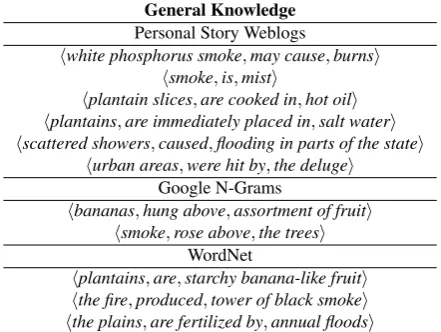
Stanford’s automatic open-domain information extraction system (Angeli et al., 2015) enabled us to discover struc-tured relation triples (SRTs) from natural language sen-tences. SRTs were discovered without relying on a prede-fined set of concepts, set of relation types, or vocabulary. Figure 2 illustrates examples of SRTs discovered from per-sonal webplogs, Google Books, as well as WordNet glosses. Figure 3 illustrates examples of SRTs extracted from the MIMIC-III database as well as the TUH EEG corpus.
General Knowledge
Personal Story Weblogs
hwhite phosphorus smoke,may cause,burnsi hsmoke,is,misti
hplantain slices,are cooked in,hot oili hplantains,are immediately placed in,salt wateri hscattered showers,caused,flooding in parts of the statei
hurban areas,were hit by,the delugei Google N-Grams
hbananas,hung above,assortment of fruiti hsmoke,rose above,the treesi
WordNet
hplantains,are,starchy banana-like fruiti hthe fire,produced,tower of black smokei hthe plains,are fertilized by,annual floodsi
Figure 2: Examples of structured relation triples expressing common-sense knowledge.
Medical Knowledge
MIMIC III Notes
hlarge hematoma,caused,outlet obstructioni haneurysm,was coiled with,4-mm 360 coilsi haneurysm,obliterated by,successive GDC coilsi
EEG Reports
hdrowsiness,is characterized by,increase in background betai habnormal EEG,due to,left anterior temporal sharp wavei
hexcess theta,may be due to,PRES syndromei
hgeneralized spike & wave,consistent with,generalized epilepsyi hmildly abnormal EEG,due to,mild background slowingi
habnormal EEG,due to,rhythmic background slowingi
Figure 3: Examples of structured relation triples expressing medical domain knowledge.
4.2.
Generating the Knowledge Graph
it is difficult to recognize that the concepthot oil,cooking oil, andolive oilmay be similar despite each corresponding to separate nodes. Likewise, each lexical relation is repre-sented as a separate edge, such that it is difficult to identify similar lexical relations, e.g. are cooked in, are cooked with, orwere cooked ineach constitute different edges in the knowledge graph. In order to address these problems, we learned an optimalembeddingof our knowledge graph into a semantically-smooth continuous vector space. Moreover, this embedding allowed us to infer non-explicit relational knowledge.
4.3.
Learning the Knowledge Embedding
Recently, new methods for knowledge graph completion have produced a promising paradigm for embedding which is able to infer new knowledge from a knowledge graph (Bordes et al., 2013). In this paradigm, each concept is represented as aN-dimensional vector and each relation is represented by an operation in theRN space such that new
knowledge can be asserted by simple vector operations. The embeddings are learned by minimizing a global loss function over all the concepts and their relations in the knowledge graph. However, new knowledge often contains concepts which are not present in the knowledge graph, a problem which we address through the semantic compositionality of concept and relation embeddings. Moreover, smoothing these enhanced embeddings produces additional new knowl-edge. Given these observations, learning the knowledge embedding is performed in five steps:
LEARNINGSTEP1: Multi-dimensional representation of concepts and relations;
LEARNINGSTEP2: Accounting for semantic composition; LEARNINGSTEP3: Evaluating the plausibility of knowledge; LEARNINGSTEP4: Optimizing knowledge plausibility; and LEARNINGSTEP5: Smoothing the knowledge embeddings.
4.3.1. Multi-dimensional Representation of Concepts and Relations
As in TransE (Bordes et al., 2013), each vertex representing a concept in the knowledge graph was cast as a point in the continuous space ofRN, whereNis a parameter indicating
the cardinality of our vector representation (in our case,N = 200). Likewise, each edge representing a lexical relation is interpreted as thetranslation vectorwhich connects the points representing its arguments. Unlike TransE, however, we also learned a vector for each word used to express every concept as well as each word used to express the lexical relation. This allowed our embedding space to account for the role of semantic composition on (1) the types of lexical relations shared by concepts, and (2) the types of concepts spanned by each lexical relation.
Because concepts and relations are often expressed by more than one word, the embedding needs to represent the se-mantics of the entire expression. Single words are cast as points inRN. It happens that noun phrases (which account
for concepts) and verb phrases (which account for relations) havbe a syntactic head which corresponds to a single word. Thus, the entire concept or lexical relation is viewed as a modification of the head words provided by the role of the modifiers in the noun phrase or verb phrase, respectively.
plantains hot oil
are cooked in
abnormal EEG
mildly abnormal
EEG
background slowing
mild background
slowing
due to
due to
plantains food
hot oil
oil
hot
EEG abnormal
EEG mildly abnormal EEG
background slowing
background mild background slowing
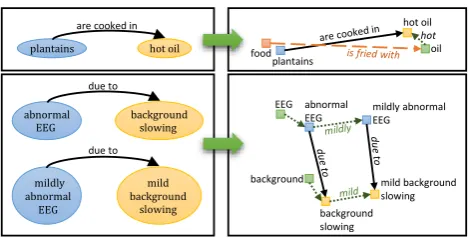
Figure 4: Examples of lexical relations encoded in the knowledge graphs and their representations in the embed-ding space for common-sense knowledge (top) and medical domain knowledge (bottom).
Figure 4 illustrates an example of common-sense knowl-edge and an example of medical domain knowlknowl-edge in the knowledge graph (on the left) as well as in the embedded space (on the right). Each word is represented as a point in the embedded space, shown as a square. We capture the role of semantic composition and lexical relations as linear transformations in the embedded space, which are repre-sented as arrows showing the point obtained after applying the transformation. For example, the top of Figure 4, shows how the relationhplantains,are cooked in,hot oiliis repre-sented in the embedding space: a blue square for the word “plantains”, a green square for the word “oil”, and a yellow square for the phrase “hot oil”. Figure 4 shows that applying the lexical relation “are cooked in” to the point “plantains” produces the same point as the phrase “hot oil.” Likewise, it shows that the point for the phrase ”hot oil” is obtained by applying the ”hot” semantic composition vector to the word ”oil”. This example highlights the ability of the knowledge embeddings to infer new generalized relationships because the vector generated for the word “oil” in the phrase ”hot oil” is generated such that it can be obtained by applying the ”are cooked in” relationship to the word ”plantains”.
Fig-ure 4 also illustrates semantic composition for the domain of medicine: applying the transformation associated with the word “mild” (or “mildly”) adjusts the “due to” relationship from “abnormal EEG” to “background slowing” such that when “due to” is applied to ”mild background slowing”, the phrase “mildly abnormal EEG” is produced instead of the more general concept “abnormal EEG”. This demonstrates that the embedding procedure is able to account for the af-fects of individual words on the semantics of the discovered lexical relationships.
4.3.2. Accounting for Semantic Composition
3/17/2016 Preview
plantain
w1
slices
w2
are
w3
cooked
w4
in
w5
hot w6
oil
w7
c1 := w1TG + b
g + c1
r = w4TH + bh
r := w5TH + b
h + r
c2 = w7TG + bg
c2 := w6TG + b
g + c2
c2 := w5TG + bg + c2
c1 = w2TG + bg
g(●) g(●)
h(●)
h(●) g(●)
g(●) f(●)
∥ + r − ∥c1 c2 ℓ 2
g(●)
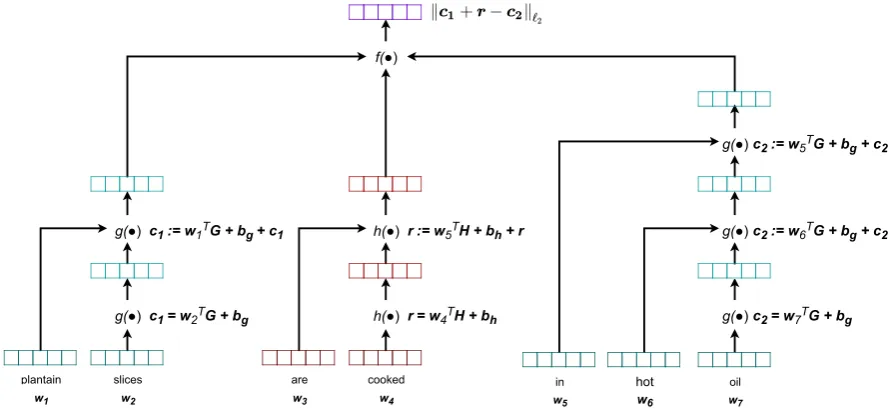
Figure 5: Neural architecture for computing the plausibility of a lexical reltion.
h(•), uses the bag-of-words vector representations express-ing the lexicalized relation to generate a vector representa-tion of the relarepresenta-tion. Each of these composirepresenta-tion funcrepresenta-tions was defined as a linear recurrence relation, which first maps the head word to a vector, and then recursively modifies that vector for each remaining word in the sequence. Formally, for each composition function we learned a composition ma-trix (GorH) and a bias vector (bgorbh) which captures
the effect of each additional word on the vector for the word sequence. Formally, we define two semantic composition functions:
g(w1. . . wL) =
(
wLTG+bg, ifL= 1
wLTG+bg+g(w1. . . wL−1), otherwise. (1)
and
h(w1. . . wL) =
(
wLTH+bh, ifL= 1
wLTH+bh+h(w1. . . wL−1), otherwise. (2)
whereg(•)recursively learns a vector for the each concept by repeated applying a linear transformation for each word in the concept using the learned semantic composition ma-trixG, and the concept bias vectorbg; andh(•)recursively
learns a vector for each open-domain relation by repeatedly applying a linear transformation for each word in the rela-tion using the learned semantic relarela-tion composirela-tion matrix
H, and the relation bias vectorbh.
4.3.3. Evaluating the Plausibility of Knowledge By representing the concepts and a lexical relations as vec-tors, we can measure theplausibilityof any arbitrary lexical relationrbetween any possible pair of concepts,c1andc2. Recall that we have represented each lexical relation as a ge-ometric translation vector. This means, that for each concept
c1, the most likely concept to be related to it by lexical rela-tionrshould be embedded at the pointc1+r. This allows us to measure the plausibility of any triplehc1, r, c2itriple as the distance between the point in the embedded space most likely to be related toc1byrand the point corresponding
byc2, defined by:
f(hs1, r, s2i) =kg(s1) +h(r)−g(s2)k`2 (3)
Thus, equation 3 ensures the geometric property that the point associated with conceptc2is obtained by applying the translation vector associated withrto the point for concept
c1, i.e., g(c2) ≈ g(c1) +h(r). Figure 5 illustrates the relationship between Equations 1, 2, and 3: the plausibility of a lexical relation depends on the semantic composition of each concept as well as the lexical relation.
4.3.4. Optimizing Knowledge Plausibility
By defining the plausibility of any structured relation triple hc1, r, c2i, we can learn the optimal values of the latent composition matricesGandH, as well as the latent bias vectorsbg, andbh. To do this, we try to find the values
of these latent variables which maximize the plausibility of allpositiveedges in the knowledge graph and minimize the plausibility ofnegativeedges which are not consistent with the knowledge graph. We construct so-called negative edges by randomly sampling edges from the knowledge graph and replacing the lexical relation with another, random lexical relation such that the new edge is not in the network. This allows optimal latent variables to be learned by comparing themargin(gap) in the geometric space between edges in the knowledge graph, and the negative edges which do not occur in the knowledge graph. Formally, we define the margin loss (Guo et al., 2015):
L= X
t+∈SN
X
t−∈SN−
max(0, γ+f(t+)−f(t−)) (4)
wheret+ = |s
1, r, s2| ∈ SN refers to each triple in the knowledge graph,t− ∈SN−refers to artificially created
negative triples, and γ, which indicates how much of a margin (or distance) should exist between positive triples encoded in the knowledge graph and the negative triples we randomly generated. As described in (Bordes et al., 2013;?), we applied stochastic gradient descent to solve this minimization problem.
4.3.5. Smoothing the Knowledge Embeddings
The embedded knowledge graph obtained by Equation 3 relies on distributional information in order to create an op-timal embedding for each concept and each lexical relation the data. In order to ensure that the embeddings learned for the knowledge graphs are able to account for lexical varia-tion, we introduce two regularization terms based on notions of lexical semantics. These terms are based on two assump-tions: (1) vertices in the knowledge graph which have a highfunctional similarity(Turney, 2012) – that is, concepts which participate in many of the same relationships – should be located close to each other in the embedded space; and (2) edges in the knowledge graph which have a highrelational similarity(Nakov and Hearst, 2008) – that is, lexical rela-tions which often describe the same participants – should also be located close to each other in the embedded space. These assumptions allow the plausibility computed from our embedding space to account for lexical variation in concepts as well as lexical relations by ensuring that semantically similar concepts occupy geometrically close points (Guo et al., 2015). To do this, we define the following functional similarity matrix, SF(i, j)which returns the sum of the number of lexical relations in which both conceptsiandj
were participants. This allows us to measure the smoothness of similar vertices in the embedding space:
R1= 1 2
V
X
i=1
V
X
j=1
k~vi−~vjk2`2SF(i, j) (5)
whereV is the number of vertices in the knowledge graph. Equation 5 ensures that the distance between two concepts which participate in similar relations is small.
In order to ensure that lexical relations with high relational similarity have similar translation matrices, we construct a relational similarity matrixSR(i, j)which returns the total number of concepts for which lexical relationsiandjare both edges in the knowledge graph. This allows us to ac-count for the smoothness of similar edges in the embedding space:
R2= 1 2
E
X
i=1
E
X
j=1
k~ei−~ejk2`
2SR(i, j) (6)
whereEis the number of edges in the knowledge graph. Equation 6 ensures that similar relations are embedded as similar transformations in the embedded space.
5.
Experimental Results
Evaluating the quality of any common-sense knowledge base is known to be difficult (Singh et al., 2002). Conse-quently, we measured two aspects of our knowledge em-bedding: (1) the quality of the relations in the knowledge graph, and (2) the quality of any new inferred relations in the embedded space. When evaluating the quality of common-sense knowledge, we were inspired by previous efforts made to evaluate the OpenMind common-sense acquisition dataset (Singh et al., 2002). For each knowledge graph, we sam-pled 200 relations, and 200inferredrelations, obtained by sampling random verticesvand relationsrand finding the vertices closest to the point obtained byv +r. Each of these common-sense relations were evaluated on a shifted 5 point Likert scale for the following desirable properties:
(1) generality (such that -2 indicates a specific fact and +2 indicates a general statement about the world), (2) plausi-bility (such that -2 indicates a relationship which does not make sense in the world, and +2 indicates a relationship which makes complete sense), and (3) neutrality (such that -2 indicates highly-biased opinions and +2 indicates neu-tral sentiment). A total of three annotators were used, and obtained an inter-annotator agree of84.3%(according to Cohen’s kappa co-efficient). We evaluated both domains of common-sense knowledge: (1) general world knowledge and (2) medical knowledge. The average for generality was 0.8, and 1.2, indicating that while the knowledge from both sources was general, the medical knowledge was more-so. Likewise, the average rating for plausibility was 0.42 and 1.02, reflecting the fact that most medical relations stood alone as plausible facts while common-sense facts often rely on more context. This suggests that future work could benefit by incorporating coreference resolution. Finally, the average rating for neutrality was 0.05 and 1.85, suggesting that many of the relations encoded in the general dataset were biased by the opinions of the author, but that medical relationships were highly neutral.
6.
Conclusions
In this paper, a framework for learning knowledge embed-dings as representations of commonsense knowledge and domain-specific knowledge for medicine is presented. The novelty of the knowledge embeddings stems from the in-corporation of semantic compositionality and of two reg-ularization factors that accomplish the smoothing of the acquired knowledge - representing the new, un-articulated information discerned from vast text collections. To learn commonsense knowledge embeddings we have relied on a large set of blogs and books as well as the defining glosses from WordNet. To learn the knowledge embeddings for medicine, we have relied on two large set of electronic health records. We evaluated the quality of the common-sense knowledge obtained by the framework presented in this pa-per through manual review of randomly sampled relations encoded in the knowledge graph, as well as implicit rela-tions inferred in the embedding space. The evaluation results for the two forms of knowledge that we have acquired are promising: the same knowledge acquisition methodology based on learning knowledge embeddings works well both for commonsense knowledge and for medical knowledge. Interestingly, the commonsense knowledge that we have acquired was evaluated as being less neutral than than the medical knowledge, because it often reflected the opinion of the knowledge writer. In addition, the medical knowledge that was acquired was evaluated as more plausible that the commonsense knowledge.
7.
Acknowledgements
8.
Bibliographical References
Akbik, A. and Michael, T. (2014). The weltmodell: A data-driven commonsense knowledge base. InLREC, pages 3272–3276.
Angeli, G., Premkumar, M. J., and Manning, C. D. (2015). Leveraging linguistic structure for open domain infor-mation extraction. InProceedings of the 53rd Annual Meeting of the Association for Computational Linguistics and the 7th International Joint Conference on Natural Language Processing of the Asian Federation of Natural Language Processing, ACL, pages 26–31.
Auer, S., Bizer, C., Kobilarov, G., Lehmann, J., Cyganiak, R., and Ives, Z. (2007).Dbpedia: A nucleus for a web of open data. Springer.
Bodenreider, O. (2004). The unified medical language sys-tem (umls): integrating biomedical terminology.Nucleic acids research, 32(suppl 1):D267.
Bordes, A., Usunier, N., Garcia-Duran, A., Weston, J., and Yakhnenko, O. (2013). Translating embeddings for mod-eling multi-relational data. InAdvances in Neural Infor-mation Processing Systems, pages 2787–2795.
Burton, K., Java, A., and Soboroff, I. (2009). The icwsm 2009 spinn3r dataset. InProceedings of the Third Annual Conference on Weblogs and Social Media (ICWSM 2009), San Jose, CA.
Cimino, J. J., Johnson, S. B., Peng, P., and Aguirre, A. (1993). From icd9-cm to mesh using the umls: a how-to guide. InProceedings of the annual symposium on com-puter application in medical care, page 730. American Medical Informatics Association.
Goldberg, Y. and Orwant, J. (2013). A dataset of syntactic-ngrams over time from a very large corpus of english books. InSecond Joint Conference on Lexical and Com-putational Semantics (* SEM), volume 1, pages 241–247. Goodwin, T. and Harabagiu, S. M. (2013). Automatic gen-eration of a qualified medical knowledge graph and its us-age for retrieving patient cohorts from electronic medical records. InSemantic Computing (ICSC), 2013 IEEE Sev-enth International Conference on, pages 363–370. IEEE. Gordon, A. and Swanson, R. (2009). Identifying personal
stories in millions of weblog entries. InThird Interna-tional Conference on Weblogs and Social Media, Data Challenge Workshop, San Jose, CA.
Guo, S., Wang, Q., Wang, B., Wang, L., and Guo, L. (2015). Semantically smooth knowledge graph embedding. In
Proceedings of the 53rd Annual Meeting of the Associa-tion for ComputaAssocia-tional Linguistics and the 7th Interna-tional Joint Conference on Natural Language Processing, pages 84–94.
Harati, A., Lopez, S., Obeid, I., Picone, J., Jacobson, M., and Tobochnik, S. (2014). The tuh eeg corpus: A big data resource for automated eeg interpretation. InSignal Processing in Medicine and Biology Symposium (SPMB), 2014 IEEE, pages 1–5. IEEE.
Lafourcade, M. (2007). Making people play for lexical ac-quisition with the jeuxdemots prototype. InSNLP’07: 7th international symposium on natural language processing, page 7.
Lenat, D. B. and Guha, R. V. (1989). Building large
knowledge-based systems; representation and inference in the Cyc project. Addison-Wesley Longman Publishing Co., Inc.
Lowe, H. J. and Barnett, G. O. (1994). Understanding and using the medical subject headings (mesh) vocabulary to perform literature searches.Jama, 271(14):1103–1108. Michel, J.-B., Shen, Y. K., Aiden, A. P., Veres, A., Gray,
M. K., Pickett, J. P., Hoiberg, D., Clancy, D., Norvig, P., Orwant, J., et al. (2011). Quantitative analysis of culture using millions of digitized books. science, 331(6014):176–182.
Miller, G. A. (1995). Wordnet: a lexical database for en-glish.Communications of the ACM, 38(11):39–41. Nakov, P. and Hearst, M. A. (2008). Solving relational
similarity problems using the web as a corpus. InACL, pages 452–460.
Saeed, M., Villarroel, M., Reisner, A. T., Clifford, G., Lehman, L.-W., Moody, G., Heldt, T., Kyaw, T. H., Moody, B., and Mark, R. G. (2011). Multiparameter intelligent monitoring in intensive care ii (mimic-ii): a public-access intensive care unit database.Critical care medicine, 39(5):952.
Schank, R. C. and Abelson, R. P. (1995). Knowledge and memory: The real story. Knowledge and memory: The real story. Advances in social cognition, 8:1–85.
Schank, R. C. (1983). Dynamic memory: A theory of re-minding and learning in computers and people. Cam-bridge University Press.
Singh, P., Lin, T., Mueller, E. T., Lim, G., Perkins, T., and Zhu, W. L. (2002). Open mind common sense: Knowl-edge acquisition from the general public. InOn the move to meaningful internet systems 2002: Coopis, doa, and odbase, pages 1223–1237. Springer.
Smith, B., Ashburner, M., Rosse, C., Bard, J., Bug, W., Ceusters, W., Goldberg, L. J., Eilbeck, K., Ireland, A., Mungall, C. J., et al. (2007). The obo foundry: coordi-nated evolution of ontologies to support biomedical data integration. Nature biotechnology, 25(11):1251–1255. Speer, R. and Havasi, C. (2013). Conceptnet 5: A large
se-mantic network for relational knowledge. InThe People’s Web Meets NLP, pages 161–176. Springer.
Stearns, M., Price, C., Spackman, K., and Wang, A. (2001). Snomed clinical terms: overview of the development pro-cess and project status. InProceedings of the AMIA Sym-posium, page 662. American Medical Informatics Associ-ation.
Turney, P. D. (2012). Domain and function: A dual-space model of semantic relations and compositions. Journal of Artificial Intelligence Research, pages 533–585. Xin, R. S., Gonzalez, J. E., Franklin, M. J., and Stoica, I.
(2013). Graphx: A resilient distributed graph system on spark. InFirst International Workshop on Graph Data Management Experiences and Systems, page 2. ACM. Zaharia, M., Chowdhury, M., Franklin, M. J., Shenker, S.,