ABSTRACT
VELEZ, ANNE-LISE KNOX. Understanding the Structuring of an Institutional Field: Examining the Intersection of Emergency Management and Historic Preservation in the U.S. (Under the direction of Dr. Branda L. Nowell).
There are frameworks available to explain adoption and implementation of public
policy at the national level. However, much less is known about how these processes work at
the local level. There is also limited knowledge regarding structuring of nonprofit subsectors,
and how factions in those subsectors may participate in or influence local-level policy
processes. An institutionalist approach undergirded by a wealth of literature in social science
dictates that these elements and levels of influence and actors comprise an interrelated
system and must be examined together in context if they are to be understood.
Because of increasing concerns over the frequency and severity of natural disasters
and cultural resource loss, the intersection of emergency management and historic
preservation is an interesting context to ask questions salient to public administration
regarding structuring of subsectors and local policy processes. Hazard mitigation planning is
mandated for some federal grant eligibility, and numerous institutions and regulations in the
United States support cultural resource preservation. Despite this, little is understood about
pressures shaping decision making in this area. This three-paper dissertation seeks to address
these gaps by examining nested national and regional forces shaping organizational structure
and capacity in nonprofit historic preservation; determine the relative contributions of policy
processes and economics to local-level disaster planning decisions, and better understand
constrainers and drivers of local-level post-disaster policy change.
the nonprofit subfield of historic preservation to understand the structuring of organizations
and of the field. Data comprise telephone interviews with leaders at 96 National Trust for
Historic Preservation Partner organizations in six regions used to develop frameworks for
explaining organizational scope and capacity. Regional comparisons show that both
institutional and regional pressures shape the field, and underscore the need to study
nonprofit organizations within nested institutional and cultural contexts.
The second study, What are the relative contributions of policy process factors versus economics to local-level disaster planning for cultural resources?, explores factors related to cultural resource specification in local disaster policy. It uses survey data from 96 county
managers and interviews with 3 historic preservationists in the Pacific Northwest to explain
inclusion of and emphasis on cultural resources in local disaster planning. Findings show
neither policy process nor economic factors are related to inclusion of cultural resources in
disaster plans, but that economic importance of historic resources is significant in predicting
the amount of emphasis on cultural resources in planning.
The third study, From agenda setting to policy change after Hurricane Sandy: constrainers and drivers of local-level change,uses a grounded theory approach to examine local-level policy processes and develop explanatory propositions for future research.
Propositions suggest similarities between extant policy process frameworks and local-level
post-disaster policy regarding previous history of adjustment, coalition formation, and degree
and type of damage, but importantly suggest that pressures asserted by state and federal level
policies that interact with localized capacity shape local policy and cause variation in policy
Overall, findings indicate field-level values in this nonprofit sector and in disaster
planning often overlap but, in large part because of economic and funding factors, interaction
and shared decision-making are rare. This has important implications for public managers,
legislators, and others involved in decision-making or policy implementation. They must
recognize variation in opinion and behavior even among seemingly narrow subsectors, as
well as factors that constrain or drive public input into the public policy process, and should
support adequate funding to help ensure relevant stakeholders’ policy input and compliance
© Copyright 2016 by Anne-Lise Knox Velez
Understanding the Structuring of an Institutional Field: Examining the Intersection of Emergency Management and Historic Preservation in the U.S.
by
Anne-Lise Knox Velez
A dissertation submitted to the Graduate Faculty of North Carolina State University
in partial fulfillment of the requirements for the degree of
Doctor of Philosophy
Public Administration
Raleigh, North Carolina
2016
APPROVED BY:
_______________________________ ______________________________
Branda L. Nowell Thomas A. Birkland
Committee Chair
________________________________ ________________________________
BIOGRAPHY
Anne-Lise Knox Velez was born in Scotland and moved to Virginia in time to start her
public school career. After attending Blacksburg public schools she went to Virginia Tech
where she earned a Bachelor’s of Architecture. She has a Master’s in Public Administration
ACKNOWLEDGMENTS
I would first like to acknowledge and thank all of the nonprofit leaders, emergency
managers, elected officials, and members of the public who participated in this study. I am
thankful for the support and advice of my committee members and faculty advisors,
especially of my committee chair Branda L. Nowell for introducing me to disaster policy
studies for her tireless efforts in helping me shape this work and for always expecting me to
work harder and discover more. Thanks to Tom Birkland for introducing me to studies of the
policy process and focusing events and expecting me to have a critical eye when editing, and
to Richard Clerkin for introducing me to nonprofit studies and always being straightforward
and supportive. Thanks to Perver Baran for helping me bridge the gap between design and
research, and for continued support. Thanks to Jerrell Coggburn, David Garson, and other
members of the PA faculty from whom I have sought advice. I would also particularly like to
thank Toddi Steelman for her continued guidance in fostering my development as a scholar,
and in supporting data collection as part of the Fire Chasers Project.
I am also particularly grateful for current and past members of the NCSU Fire
Chasers team—including Mary Clare Hano, Zheng Yang, Candice Bodkin, Casey Fleming,
Emily McCartha, John Diaz, Jason Briefel, AJ Faas, Sarah McCaffrey, and others. I would
also like to thank other students and members of my cohort with whom I have written,
attended conferences, and grown. Finally, I would like to thank my family, especially my
parents, Lynne and Paul Knox, and my husband Lee for believing in me when I questioned
myself. Thanks to all my friends and my friends outside academia and at other institutions for
TABLE OF CONTENTS
Contents
LIST OF TABLES ... viii
LIST OF FIGURES ... viiii
INTRODUCTION: WHY STUDY HISTORIC PRESERVATION IN THE CONTEXT OF DISASTERS? ... 1
References ... 12
EXAMINING PRESSURES IN A NONPROFIT SUBSECTOR: TO WHAT EXTENT IS REGIONALISM VERSUS INSTITUTIONALISM SHAPING THE FIELD OF U.S. HISTORIC PRESERVATION? ... 15
Abstract ... 15
Introduction ... 15
Background ... 18
Historic Preservation in the United States ... 18
Nested pressures... 19
Institutional theory: national pressures lead to national patterns ... 21
Regionalism: differing regional climates lead to regional variation ... 22
Methodology ... 26
Comparative mixed methods design ... 26
Sample... 28
Data collection ... 28
Analysis Stage 1: Operationalizing qualitative frameworks of typologies for understanding scope and capacity ... 30
Analysis Stage 2: Operationalization of quantitative data, procedures for quantifying qualitative data, procedures for quantitative comparisons ... 35
Findings... 39
National Patterns ... 40
Regional patterns ... 43
Discussion ... 52
WHAT ARE THE RELATIVE CONTRIBUTIONS OF POLICY PROCESS FACTORS VERSUS ECONOMICS TO LOCAL-LEVEL DISASTER PLANNING FOR CULTURAL
RESOURCES? ... 61
Abstract ... 61
Background ... 61
What does historic preservation have to do with disaster planning? ... 64
Select U.S. legislation and institutions related to historic resources ... 69
Policy process factors ... 71
Economics and resource availability ... 76
Methods... 79
Definitions and operationalization ... 80
Quantitative Analysis ... 85
Findings... 86
Phase I: Quantitative findings ... 86
Phase II: Descriptive comparison with qualitative data ... 91
Discussion ... 93
References ... 96
FROM AGENDA SETTING TO POLICY CHANGE AFTER HURRICANE SANDY: CONSTRAINERS AND DRIVERS OF LOCAL-LEVEL CHANGE ... 101
Abstract ... 101
Introduction ... 101
Background ... 102
Policy Process and Policy Making ... 103
Investigating Hurricane Sandy through the lens of policy theory ... 106
Grounded theory ... 107
Methods... 110
Identifying the area of interest ... 112
Data Collection ... 113
Analysis... 120
Findings... 121
Discussion ... 141
References ... 149
LIST OF TABLES
Table 1.1. Combination of mission intent in mission statements ... 32
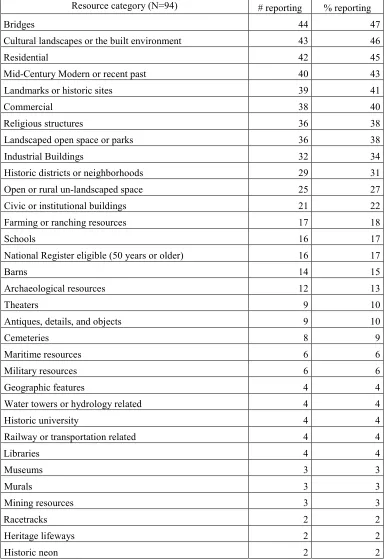
Table 1.2. Targets of preservation at two or more organizations. ... 33
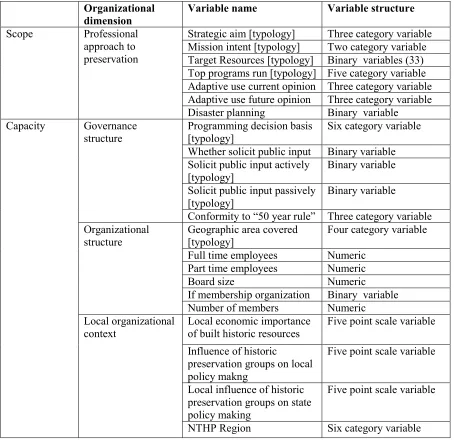
Table 1.3. Categorical variables related to scope and capacity. ... 38
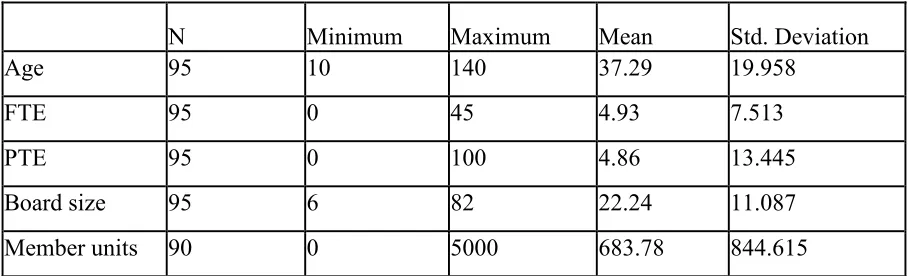
Table 1.4. Descriptive statistics of organizational characteristics ... 39
Table 1.5. Targets of preservation: regional and a national snapshot of resources most commonly preserved. ... 45
Table 1.6. Regional snapshots of U.S. nonprofit historic preservation organizations. ... 49
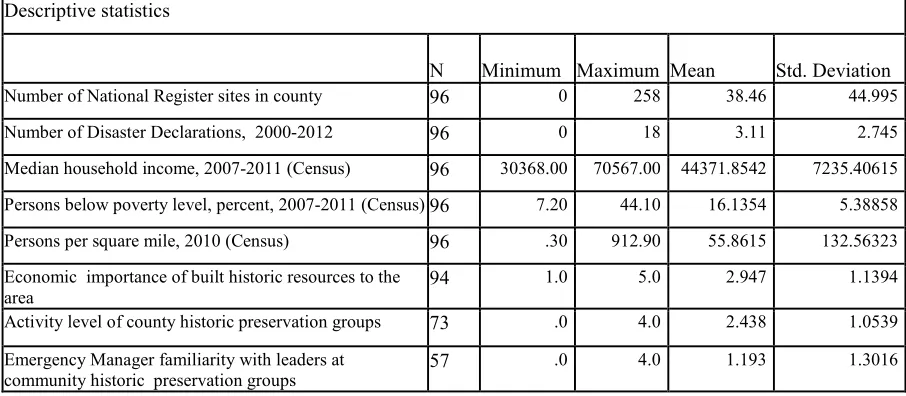
Table 2.1. Descriptive Statistics ... 85
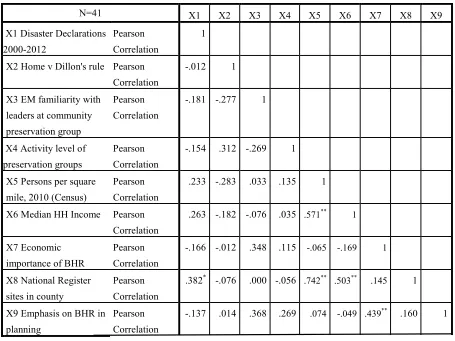
Table 2.2. Correlation table for empahsis on built historic resources in pre-disaster planning efforts ... 89
Table 2.3. Correlation table for empahsis on built historic resources in post-disaster recovery and clean-up planning. ... 90
Table 3.1. Summary of informants and data by phase and group ... 114
Table 3.2. Constrainers and drivers of local policy change post-Sandy. ... 122
LIST OF FIGURES
Figure 1.1. Nested levels of influence on U.S. N.P. historic preservation organizations… .. 20
CHAPTER 1
INTRODUCTION: WHY STUDY HISTORIC PRESERVATION IN THE CONTEXT OF DISASTERS?
While the intersection of historic preservation and disaster management may at first seem like a narrow window through which to view problems of public administration and policy, the nexus of the two fields in fact provides a rich context to examine a number of questions salient to both public administration. Benson and Klein (2008) point out that as a profession, “historic preservation is… relatively new and has no official curriculum,
certifying body, qualifying examination, or entrance fee” (p. 4), creating an ideal context for understanding the development of an institutional field. Much of our culture, history, and sense of community and place are embodied in the built environment (Kaufman, 2009; Wells, 2010). There is a history of valuing cultural resources in the United States, and a record of federal legislation both encouraging and mandating cultural resource preservation (Benson & Klein, 2008) as well as mandating preservation concerns in hazard planning.
Existing public policy frameworks address adoption and implementation of national-level public policy, and Birkland (1997; 2006) posits that natural disasters can act as
potential focusing catalyzing changes in agenda setting and public policy; but little is known about how these processes work at the local level (Benton, 2005) especially regarding disaster planning (Scavo, Kearney & Kilroy, 2007). Relatedly, knowledge regarding how nonprofit subsectors are shaped and how organizations or groups of organizations in those subsectors may participate in or influence local-level policy processes is limited. From a social constructionist viewpoint it is necessary to examine the levels of actors and influence comprising this interrelated system and process in context if the structuring of this
Increasing concerns over the frequency and severity of natural disasters and resulting destruction of cultural resources makes understanding the intersection of emergency
management and historic preservation of particular importance. In the United States the preservation of historic structures has been a part of national culture since the nation’s founding, with government funding of landmark preservation beginning in 1791 with the maintenance of Revolutionary War monuments (Benson & Klein, 2008). In the 19th century this was followed by a series of grassroots movements related to saving individual buildings like Independence Hall in Philadelphia and structures of importance in Massachusetts, New Jersey, New York, Tennessee, and Virginia. Most of these early efforts were led by wealthy women, and most “received some kind of public assistance” (ibid. p13).
The spirit of preservation changed somewhat with the formation of the Society for the Preservation of New England Antiquities (now known as Historic New England), founded in 1910 to operate house museums and provide preservation education to historic property owning members (Society for the Preservation of New England Antiquities, 1952). This organization took a more businesslike approach to preservation involving identifying and buying endangered buildings then mortgaging them to others to restore so that the revenue could be invested in other endangered structures (Benson & Klein, 2008). According to its website, Historic New England is the largest regional preservation organization in the U.S. and is still supported by its membership. The group has been criticized for preserving only certain pieces of history—indeed “elitist leaders dominated the preservation field into the 1920s” and not focusing on accuracy or structural integrity, but is important to the
development of the field of historic preservation in the U.S. as the general model is one that is still in place in a number of preservation organizations today (Benson & Klein, 2008, p. 15).
The adoption of the Antiquities Act of 1906 was the first time preservation
part of development considerations. Preservationists felt that patriotism could be promoted by educating the public about history through “ingenuity” in re-use, but as “planners…were [mostly] college-educated men [and] opposition [was] made up mostly of well-meaning women [who] posed no direct threat…their arguments fell on deaf ears” (Benson & Klein, 2008, p. 19). The preservation “movement managed to survive and grow” during the
Depression following well-known 1931 creation of the Charleston Historic District in South Carolina, and the 1933 creation of the Historic American Building Survey (HABS), which provided work for architects, draftsmen, and photographers and was originally part of the Civil Works Administration. A national policy for the preservation of historic places, whether on public or private property, was adopted with the Historic Sites Act of 1935 (Carlson, 1980).
The 1966 National Historic Preservation Act (NHPA- Public Law 89-665) asserted that the preservation of historic resources is vital to “give a sense of orientation to the American people” and the 1969 National Environmental Policy Act (NEPA- Public Law 91-190) reinforces this in specifying that potential negative impacts to cultural resources (which include built historic and archaeological resources) should be considered and minimized in federally-funded projects. A number of historic preservation tax credits and presidential executive orders since then show continuing commitment to preservation in the United States. While there has been continued legislative support for historic preservation, increases in the severity of damage caused by natural disasters in recent decades mean that historic preservationists and government officials are facing an increasingly difficult problem.
possibility of greater potential future harms” and become known to the public and policy-makers at the same time (p.22). Natural disasters provide one important source for potential focusing events, but little is known about factors that change an event from a potential to a realized focusing event, and how this may contribute to agenda setting and policy change, especially at the local level. Kingdon’s Streams model (1984; 2011) attributes policy change to opportune windows that occur when independent streams (policy, problem and politics) combine and allow policy entrepreneurs to change public perceptions or problem definition in a way that then allows the entrepreneurs to push for policy change. Baumgartner and Jones’ Punctuated Equilibrium Model (1993; 2009) considers system-level decision making over of time based on agenda setting from multiple venues and collective action from entrepreneurs based on positive feedback loops. PET explains lack of change as a result of policy stasis, incremental changes over time, and characteristics of punctuations. Sabatier and Jenkins-Smith’s Advocacy Coalition Framework (1998; Jenkins-Smith et al., 2014) also considers incremental policy change over time but is a causal theory focusing primarily on agenda setting and policy processes evaluation, but may also focus on how coalitions
influence policy change by negotiation. However, these frameworks do little to address local agenda setting and policy processes, nor do they account for contextual factors that may cause variation in processes or outcomes.
Exploring the intersection of institutional and policy theory
There is a history in the field of public management and policy studies seeking to understand both micro and macro forces that shape institutional fields. However, rarely are these micro and macro perspectives brought together. Historic preservation represents an understudied domain for this program of inquiry. Disasters represent a significant threat and subsequent force of change for the field— so studying the two together provides an
information rich context for understanding how macro level policy and micro level
management and policy process interact. The rationale for seeking an understanding of the interactions among fields and levels of influence lies in part in The Constitution of Society
approach to understanding the creation and reproduction of social systems by seeking an understanding of both structures and agents (individual actors) across space and time. Giddens contrasts structuration theory to other social theory by noting that others have conceived of structural properties as constraining actions, whereas in structuration theory structures “is always both enabling and constraining” (p. 169). Structuration theory comprises three core concepts: (social) structure, system, and the duality of structure. He explains:
The basic domain of study of the social sciences, according to the theory of structuration, is neither the experience of the individual actor, nor the existence of any form of societal totality, but social practices ordered across space and time. Human social activities, like some self-reproducing items in nature, are recursive. That is to say, they are not brought into being by social actors but continually recreated by them via the very means whereby they express themselves as actors. In and through their activities agents reproduce the conditions that make these activities possible…. It is the specifically reflexive form of the knowledgeability of human agents that is most deeply involved in the recursive ordering of social practices… possible only because of the continuity of practices that make them distinctively ‘the same’ across space and time. (p. 2-3)
action in a feedback fashion” in a way that grounds as well as shapes the repetition of the action across time and space (p. 27).
In other words, Giddens conceives of structure as both shaping and shaped by the reproduction of social practices by these individual actors, and as influenced by regionalized context. Patterns of social relations change according to temporal and geographic proximity, with changing interactions changing the frames created by collective social practices that help individuals make sense of patterns of interaction. The routinization of these
relationships and interactions become institutionalized over time, thereby ensuring subsequent interactions will likely conform to the patterns set by earlier interactions and creating a structure of rules and resources that help dictate individual actors’ future actions. Giddens notes that “context… connects the most intimate and detailed components of interaction to much broader properties of the institutionalization of social life” (p. 119). He notes the need to consider “regionalization… not merely as location in space but as zoning of time-space in relation to routinized social practices” meaning that there is the need to
consider not only geographic differences in structures and systems, but elements of structure and systems that are tied to conditions that are only present at certain points in time (p. 119).
In The Politics of Climate Change (2009) Giddens notes that “planning was in vogue” after WWII but fell out of fashion because it was seen as authoritarian and oppressive in some contexts, and at best as attending to heavy-handed, faceless bureaucrats who intervened in local communities without considering local concerns. Because of the threats associated with climate change, he calls greater intervention from the state as a reaction to failure in de-regulation in the economy, in industrial policy, and in infrastructure planning and in “trying to alter public attitudes towards risk [as] a key part of planning policy” (p. 100). Climate change policy must be developed including diverse stakeholders like nonprofit
organizations, businesses, and the public and recognize local initiatives, combining
governance at the national, regional, local, and city government levels to address the wicked problems associated with climate change.
structure, and context. In The Constitution of Society (1984) he noted that from historians, the field of sociology could learn to incorporate considerations of “the contingent and the short-term with institutions that endure over long periods of time” but “anchored in the events of daily life” and the “continual interplay of agency and structure” (p. 362). From human geographers, sociologists could learn about the importance of regionalization at micro and macro levels, and the importance “of place in the reproduction of social practices” (p. 367). This points to the importance of studies seeking to explain how patterns in behavior come about, how they are reproduced, and how they vary by location, both in terms of sub-sector location and geographic proximity.
Structuration theory provides a lens for understanding how institutional fields are shaped. While public administration and management recognize key sub-sectors in the public sphere as nested within and shaped by institutional fields, we know little about the forces that influence their development at different levels. It is also unclear how patterns in institutional fields, in the forces shaping these fields, and in related policy areas vary by level and by location.
As described above, despite legislation supporting the preservation of built historic resources and a wealth of historic preservation case studies it is unclear to what degree this legislation, combined with regional and local culture, is creating uniformity in expectations of what should be preserved and how preservation should be approached. NEPA is
relatedly, 3) What are the forces that constrain or drive local-level post-disaster changes in agenda setting and policy?
The three studies are designed to stand alone, but build on each other as a clear body of research as parts of this dissertation. The focus of each study is summarized briefly below, and each appears as an individual dissertation chapter in ensuing pages. In the first study, To what extent is regionalism versus institutionalism shaping the field of U.S. nonprofit historic preservation?, I examine patterns in the structure and capacity of the nonprofit subfield of historic preservation to understand the structuring of organizations and of the field. This study focuses on nested ecological levels of influence (national and regional) shaping a population of organizations as recommended by Hannan and Freeman (1977). Institutional theory suggests national-level isomorphic pressures will cause nonprofit historic
organizations to behave very similarly to one another to retain legitimacy and access to funding (DiMaggio & Powell, 1983; Selznick, 1996). However critical regionalism and literature on cultural regions suggests organizations will vary based on varying regional culture and politics (Elazar, 1984; Powell, 2007; Quirke, 2013). Specifically, I ask: 1) What is the scope and capacity of U.S. nonprofit historic preservation?, and 2) What elements of scope and capacity in U.S. historic preservation nonprofits display national patterns, and which show regional patterns?
are applicable to public and environmental resource management as public managers are in part responsible for ensuring preservation of cultural and historical legacies (Lewis, 2006). They also contribute to historic preservation literature by providing a national overview of the work done by these organizations in the U.S., providing a baseline for future research. In addition, this study establishes the scope and definition of built historic resources used in the second study.
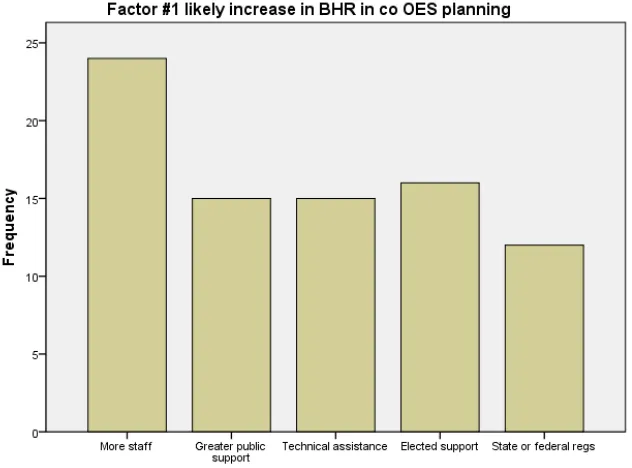
The second study, What are the relative contributions of policy process factors versus economics to local-level disaster planning for cultural resources?, explores factors related to local disaster policy adoption that considers historic preservation concerns. This paper focuses on county level disaster planning efforts. To better understand the focus of local disaster plans and emergency managers I ask: Are county managers including built historic resources in disaster planning and recovery efforts? For jurisdictions that do include such resources in their disaster plans I ask: How much emphasis are emergency managers putting on the inclusion of built historic resources in disaster planning and recovery efforts? To address these questions, I use survey data from 96 county emergency managers in four states in the Pacific Northwest. Those data are combined with interview data from leaders at three nonprofit historic preservation organizations in WA and ID to address: What are the relative contributions of policy process and economic factors in local-level disaster planning for cultural resources? I also report factors that local emergency managers and preservationists say would increase the likelihood of disaster planning around built historic resources.
historic preservation advocacy group in the county, will increase the likelihood of disaster planning in that area, including planning relevant to historic resources. Findings by Laurie (2008), Çela et al. (2009), and Rypkema et al. (2011) suggest importance of built historic resources to local economies will lead to increased attempts to protect these resources. I used crosstabulations, correlations, descriptive statistics, and qualitative content analysis to test the hypotheses. Findings show inclusion of historic resources in disaster planning at the local level is not upon policy process factors, as might be expected based on national institutional pressures to include historic resources in disaster planning, nor are economic factors of significant importance. Through further analysis, I show that when historic resources are included in local disaster plans, the degree of emphasis put on such planning is related to economic importance of the resources, but not to expected policy process factors. These findings underscore the importance of economic incentives over larger institutional pressures to adopt and implement certain policies at the local level. They also mean that critical
resources protected by legislation reflecting important cultural values are still at risk in ways that many may assume extant legislation has mitigated.
The third paper and final paper, From agenda setting to policy change after Hurricane Sandy: constrainers and drivers of local-level change, examines local post-disaster changes in community conversations as well as policies and procedures. I ask: What are the forces that constrain or drive local post-disaster changes in public conversation, procedures, or policy? Because little is known about local level policy processes and factors that turn disasters from potential focusing events (Birkland, 1997; 2006) to catalysts of change at the local level, a grounded theory approach free from a priori expectations was most appropriate in approaching this question.
areas where the national and local-level policy processes are similar. Similarities between extant policy process frameworks and local-level post-disaster policy were found regarding previous history of adjustment, coalition formation, and degree and type of damage. Additional pressures asserted by state and federal level policies that interact with localized capacity (including financial capacity) to shape local policy and cause variation in policy adoption and implementation.
References
Anderson, T. L., & Hill, P. J. (1975). The evolution of property rights: a study of the American West. Journal of Law and Economics, 163-179.
Baumgartner, F.R. and Jones, B.D. (1993). Agendas and instabilities in American politics. Chicago, IL: University of Chicago Press.
Baumgartner, F. R., & Jones, B.D.(2009). Agendas and Instability in American Politics. 2nd ed. Chicago Studies in American Politics. Chicago: The University of Chicago Press.
Benson, V. O. & Klein, R. (2008). Historic preservation for professionals. The Kent State University Press.
Benton, J. E. (2005). An assessment of research on American counties. Public Administration Review, 462-474.
Birkland ,T. A. (1997). After Disaster: Agenda Setting, Public Policy, and Focusing Events. Georgetown University Press.
Birkland, T. A. (2006). Lessons of Disaster: Policy Change after Catastrophic Events. Georgetown University Press.
Bodin, Ö., & Crona, B. I. (2009). The role of social networks in natural resource governance: What relational patterns make a difference?. Global environmental change, 19(3), 366-374.
Carlson, A. W. (1980). An analysis of Historic Preservation in the United States as
Reflected by the National Register of Historical Places. Journal of American Culture, 3:2, 245-267.
Çela, A., Lankford, S., & Knowles-Lankford, J. (2009). Visitor spending and economic impacts of heritage tourism: a case study of the Silos and Smokestacks National Heritage Area, Journal of Heritage Tourism, 4:3, 245-256.
DiMaggio, P. & Powell, W. (1983). The iron cage revisited: institutional isomorphism and collective rationality in organizational fields. American Sociological Review, 48(2) 147-160.
Elazar, D. (1984). The American mosaic: the impact of space, time, and culture on American politics. Boulder: Westview Press.
Giddens, A. (1984). The constitution of society: Outline of the theory of structuration. Univ of California Press.
Giddens, A. (2009). The politics of climate change. Cambridge, UK.
Hannan, M. T. & Freeman, J. (1977). The population ecology of organizations. American Journal of Sociology, 82 (5), 929-964.
Jenkins-Smith, H. C., Nohrstedt, D., Weible, C. M., & Sabatier, P. A. (2014). The advocacy coalition framework: foundations, evolution, and ongoing research. Theories of the policy process, 3.
Kaufman, Ned. (2009). Place, race and story: essays on the past and future of historic preservation. New York: Routledge.
Kingdon, J. W. (1984). Agendas, Alternatives and Public Policies. Longman Publishing. Laurie, J. (2008). Historic preservation and cluster based economic development. Economic
Development Journal, 7(1), 38.
Lewis, C. W. (2006). In pursuit of the public interest. Public Administration Review, 66(5), 694-701.
Nowell, B., & Steelman, T. (2014). Communication under fire: the role of embeddedness in the emergence and efficacy of disaster response communication networks. Journal of Public Administration Research and Theory.
Onwuegbuzie, A. J., & Teddlie, C. (2003). A framework for analyzing data in mixed methods research. Handbook of mixed methods in social and behavioral research, 351-383.
Powell, D. (2007). Critical regionalism: connecting politics and culture in the American landscape. Chapel Hill: University of North Carolina Press.
Rypkema, D., Cheong, C., & Mason, R. (2011). Measuring economic impacts of historic preservation. A report to the Advisory Council on Historic Preservation. Sabatier, P., & Jenkins-Smith, H. eds. (1988). Special Issue: Policy Change and
Policy-Oriented Learning: Exploring an Advocacy Coalition Framework. Policy Sciences,
21, 123-278.
Scavo, C., Kearney, R. C., & Kilroy, R. J. (2008). Challenges to federalism: Homeland security and disaster response. Publius: The Journal of Federalism, 38(1), 81-110. Schlager, E. (2007). A comparison of frameworks, theories, and models of policy processes.
In: Sabatier, PA, editor. Theories of the policy process. Boulder, CO: Westview Press. Selznick, P. (1996). Institutionalism “Old” and “New”. Administrative science quarterly,
270-277.
Society for the Preservation of New England Antiquities. (1952). Historic Houses: A Visitor’s Guide.
Steelman, T. A., McCaffrey, S. M., Velez, A. L. K., & Briefel, J. A. (2015). What
information do people use, trust, and find useful during a disaster? Evidence from five large wildfires. Natural Hazards, 76(1), 615-634.
Wells, J. (2010). Our History is Not False: Perspectives from the Revitalisation Culture.
CHAPTER 2
EXAMINING PRESSURES IN A NONPROFIT SUBSECTOR: TO WHAT EXTENT IS REGIONALISM VERSUS INSTITUTIONALISM SHAPING THE FIELD OF U.S.
HISTORIC PRESERVATION? Abstract
This mixed method study examines nested pressures shaping a subsector of the U.S. nonprofit field. In doing so, it provides a national overview of the scope of work of U.S. historic preservation nonprofits and the capacity of these organizations. Despite the importance of historic preservation to cultural identity and economic development, it is unclear what forces are shaping the activities of nonprofits in this field. This study looks at two ecological levels of influence on these organizations. Institutional theory and isomorphic pressures suggest that these organizations may be shaped by national pressures as they shape their practices to retain legitimacy and secure opportunities for the organization, making them behave very similarly. However, concepts from the literature on critical regionalism and cultural regions indicate that the degree to which organizations conform will vary according to cultural and political climates in the region in which each is located. Data are from interviews with 96 National Trust Partner organizations in 44 states. Typologies for examining professional approach to preservation and capacity were developed from
qualitative interview data. Findings indicate elements of scope and capacity in U.S. historic preservation nonprofits are shaped by both national and regional pressures. Findings
regarding regional variation in this subsector of nonprofits contribute to nonprofit studies by underscoring the importance of institutional contexts in shaping organizational behavior rather than assuming sector-wide patterns and behaviors. This study also provides a baseline for future research about the changing scope and focus of the field of U.S. historic
preservation.
Keywords: historic preservation, historic resources, regionalism, institutional theory, isomorphism, nonprofit organizations
Introduction
We know that organizations develop within institutional fields, and that these fields shape how they behave. However, we rarely look at how these fields evolve and are
organizations. Despite the sociocultural (ex. Wood, Ewalt & Baker, 2013; Maloutas, 2012; Wells, 2010) and economic importance of cultural and historic preservation (Wojno, 1991), little is known about the patterns in this field, and whether nonprofit organizations doing this work are shaped by national-level institutional pressures or regional pressures. To address this gap, I ask: 1) What is the scope and capacity of U.S. nonprofit historic preservation?, and 2) What elements of scope and capacity in U.S. historic preservation nonprofits display national patterns, and which show regional patterns?. This study aims to 1) provide the first known national study of the work and structure of historic preservation nonprofits in the United States, and 2) leverage these findings to investigate how the institutional field is shaping nonprofit structure and strategy at national and regional levels.
The majority of academic literature on historic preservation focuses on case studies and materials preservation. While these areas are important, a current overview of the scope of preservation understood by and capacity present in this field of organizations is missing. This is particularly salient as defunding local government preservation positions historic preservation increasingly makes preservation a responsibility of nonprofits. The work performed by these organizations is important to the American cultural history of valuing historic preservation. This cultural value is demonstrated in activities like historic
government investment in maintaining Revolutionary War monuments and private investment in individual historic sites (Benson & Klein, 2008). It is also demonstrated
the types of resources that will likely be saved in a given area and those that may need extra attention or advocacy efforts focused on them.
This study contributes to the body of research on nonprofit organizations by examining the nested forces shaping, and variation present in, a particular subsector. The population of historic preservation nonprofit Partner organizations affiliated with the National Trust for Historic Preservation (NTHP) is substantially responsible for nonprofit historic preservation activities undertaken in the U.S. and there are clear nested layers of influence present in the field. Because of these nested influences, there are therefore strong theoretical reasons to think isomorphic pressures from the national preservation community and decisions made by the NTHP will likely lead to national conformity in the scope of preservation and in organizational capacity (ex. DiMaggio & Powell, 1983). But, there are equally strong reasons to suspect the scope and capacity of this field of nonprofit
organizations is shaped by regional conditions and pressures (ex. Tzonis & Lefaivre, 1981; Powell, 2007). This institutional field is therefore a rich research context for a case
examining how this nonprofit subsector is shaped by nested levels of influence. It provides a unique and important contribution to nonprofit management and administration literature. This is both because historic preservation is largely unexplored in public administration despite its importance as an element of public management and sustainability concerns, and because the chance to study a population of nonprofit organizations within the context of their subsector allows for a rare opportunity to examine forces that shape the subsector, rather than assuming homogenous behavior across the larger sector.
possible. As such, public managers can benefit from this study in understanding how this population of preservation organizations understands the scope of their responsibility as a field, how they make decisions, and what types of resources they focus on preserving.
Background
Historic Preservation in the United States
A brief review of the relationship between nonprofits and the built environment provides a basis for understanding the physical and social context in which preservation nonprofits are operating and have operated historically in the United States (Palen & Bruce, 1984; Boyer, 1994; Stubbs 2009). Because of tensions related to patterns of urban social change spurred by gentrification in the mid-late 20th century, the American public developed an increasingly negative perception of the goals and work that preservation nonprofits and government departments providing preservation services had pursued in the past (Filion, 1991; Hackworth & Smith, 2001; Saito, 2009; Maloutas, 2012). Just as the National Historic Preservation Act (NHPA) was passed in 1966, the civil rights movement was expanding the number of Americans whose stories were considered worth telling and hearing. As a result the scope of built resources traditionally of concern to historic preservationists (usually monuments and landmarks associated with White culture) and the actions being taken to preserve them (often turning them into museums) came into question.
The NTHP was created in 1949 and funded by the federal government as part of the NHPA. According to the NTHP website, the Trust became privately funded after 30 years through “mutual agreement” (https://savingplaces.org). Around the same time, the
worth preserving, and to the symbolic and semiotic meanings of the places being preserved (Matero, 2003; Worthing & Bond, 2008; Wells, 2010).
A number of changes in recent decades have led to historic preservation being seen as increasingly important. This is partly because historic buildings have become a widely acknowledged aspect of material culture. Sax (1982) described the “transformation in the context of property rights” related to historic preservation laws occurring in the early 1980s as a possible result of “social coherence demand[ing] evidence and symbols of common purpose” causing Americans to “turn… to symbols of stability, of links with our past. History is an obvious outlet for such values…as growth and development seem to become less
valuable guides for future well-being” (p. 490). The urgency of preserving historic places and buildings as important elements of material culture and place identity has increased as the number of natural disasters and related threats to historic resources has increased (Morgan, Morgan & Barrett, 2006; Verderber, 2009) and as the economic importance of cultural elements has become clear (Wojno, 1991; Rypkema, Cheong & Mason, 2011). Meanwhile, government funding for historic preservation has been declining at the state and local level, and the recent economic downturn has meant that many municipalities that traditionally funded an historic preservation staff person no longer provide such services. Historic preservation in the United States has therefore increasingly become a concern of the nonprofit sector.
Nested pressures
organizations will be selected to survive in a certain environment. Because NTHP Partner organizations perform the same function (historic preservation) in the same sector
(nonprofits) and all have an affiliation to a larger organization grounded in legislation that formed them (NTHP, formed out of the National Historic Preservation Act, or NHPA), this study considers NTHP Partners a comparable field of organizations.
Figure 1.1. Nested levels of influence on U.S. nonprofit historic preservation organizations.
organizations’ mission alignment with NTHP. Regional variation can be expected to show in resources preservation. Each of these levels will be discussed in more detail below.
Institutional theory: national pressures lead to national patterns
Institutional theory addresses the evolution and spread of institutions like rules, norms, cultures, and symbols as well as formal political institutions that affect both
individual and collective behavior and decision-making. The focus of neo-institutionalism is not upon the individual organization but upon a category or network of organizations—hence it is an appropriate theory to examine the national network of NTHP Partners.
Neo-institutional theorists treat organizations as a population within an organizational field. These theorists stress that the institutional context is made up of vertically and horizontally
interlocking organizations and that the pressures and prescriptions within these contexts apply to all relevant classes of organizations (Greenwood & Hinings, 1996).
A major approach to new institutionalism is the normative approach advocated by March and Olsen in the 1970s. March and Olsen argue that the best way to understand political behavior (and therefore policy-making) is through a “logic of appropriateness” that individuals acquire through membership in institutions. They contrast this normative logic with the “logic of consequentiality” that is central to rational choice theories. That is, March and Olsen argue that people functioning within institutions behave as they do because of normative standards rather than because of their desire to maximize individual utilities. Further, these standards of behavior are acquired through involvement with one or more institutions and the institutions are the major social repositories of values.
This perspective on institutions has been adopted widely in public policy studies in the form of the concept of isomorphic pressures delineated in DiMaggio and Powell’s The Iron Cage Revisited (1983), in which the authors explain the influence of coercive, normative and mimetic isomorphic pressures. Isomorphic pressures, such as perceived need to conform to peer practices or professional standards, cause similarities in structure and related behavior among organizations that organizations face once they become part of a network of
this context, these professional standards are communicated largely through the NTHP’s mission. Institutional theory is used to explain the “emergence of distinctive forms, processes, strategies, outlooks, and competences” that come about “from patterns of
organizational interaction and adaption (Selznick, 1996, p. 271).” Selznick asserts that these patterns and responses should be understood as responses to internal and external stimuli.
Regionalism: differing regional climates lead to regional variation
While most institutional theorists focus on institutional pressures that are nested at the national level, a competing body of literature would argue that institutional pressures may operate at multiple levels. Recent research by Quirke (2013) on 60 “rogue” private schools in Toronto, Canada, suggests that in organizational fields that are “patchy and uneven,” more marginal organizations can avoid pressures for conformity from the larger field, but that homogenous patches can be found even within seemingly heterogeneous fields. Quirke defines an organizational field as “organizations [that] face the same regulations and
environmental conditions” (p. 1676) and notes work by others including Lune and Martinez (1999) demonstrating that organizational fields segment to preserve identities within larger institutional environments and that this may occur as fields mature (Schneiberg & Clemens, 2002; Wooten & Hoffman, 2008 in Quirke, 2013). Patchy organizational fields are
The degree of patchiness in the field of historic preservation nonprofit organizations is arguable. While there are potentially multiple logics in American preservation and there are some very clear regulations such as requirements for National Register status and tax exemptions at the federal and state levels, there is both variability and changeability in regulations at the local level, and there is little government-related infrastructure dedicated to preservation at any level. There are seldom substantial shifts in technology concerning materials preservation, but there are relatively rapid shifts in technology regarding public information and outreach, in which these organizations must excel to succeed. This uneven patchiness presumably means this population of organizations may be expected to conform to isomorphic pressures along some dimensions but not others. Because the NTHP is a national-level organization with resources and recommendations to which all NTHP partners have access, national pressures presumably lead to similarities in most indicators of governance structure, and to professional approaches to preservation. However, because the
environmental conditions affecting this organizational field vary relative to infrastructure and regulation as well as regional histories and cultures of support for preservation, this may mean some dimensions scope and capacity vary by region, especially if indicators of local organizational context vary regionally.
The preceding section makes the argument that regional variation may result from patchiness within the field. Other arguments for regional variation in historic preservation nonprofit organizations can be found in ideas borrowed from cultural regions (Elazar, 1984) and critical regionalism (Tzonis & Lefaivre, 1981; Powell, 2007). These literatures suggest at least some characteristics of these organizations may vary according to the cultural and political climate of the region in which the organization is located. According to Elazar (1984), American regional subcultures affect political behavior, political processes,
and the population of the U.S. has certainly changed composition in some regions since he wrote of the centralized control of the Midwest and traditionalist culture of the South, his ideas still hold. There are unarguably still distinct regional differences in culture, and therefore in policies and policy adoption still exist (Lall & Yilmaz, 2001; Barnett & Coble, 2011; Thorlton, McElmurry, Park & Hughes, 2012), and can therefore be expected to
influence the activities of historic preservationists as well. Elazar’s theory has been applied to explaining regional philanthropy in the U.S. as well (Schneider, 1996), and other scholars have found differences in corporate disaster philanthropy between global regions (Muller & Whiteman, 2009).
Elazar describes states in the South and Midwest as tending toward central control. For example, Southern states have a tradition of historic preservation and a resource base traditionally willing to support preservation. This suggests Southern organizations may be more likely to make programming decisions based on tradition than those in other regions and may be less likely to exhibit conformity to overarching national trends in historic
preservation than states in other regions because they are not compelled to align themselves with NTHP to secure grants in ways that other organizations may be. The Midwest has a greater percentage of states with historic preservation tax credits in place than other regions, suggesting the Midwest may show a greater advocacy or education programming focus than other regions. Because the Western region has more pre-European history but was urbanized much more recently than other regions, Western historic preservation nonprofits may exhibit different characteristics than other regions. Likewise, the earlier industrialization and
urbanization of the Northeast region may mean the organizations in that region have different preservation scopes and resource foci than other regions.
universal civilization and autochthonous [essentially place-based] culture can have strong political connotation” (Frampton, 1983, p.161). The idea transferred from design to include cultural and political studies, where regions are conceived not as places with stable
boundaries and autonomy, separated from other regions and “not so much as places
themselves but ways of describing relationships between places” (Powell, 2007, p. 10). This conception of regions as relationships rather than separations reinforces the need to
understand both national and regional patterns in preservation practices. However, Powell makes an important point that “often when a region is evoked, described, or defined, it is for some specific purpose: to achieve certain changes in the physical or cultural landscape, often changing one by changing the other” (p. 5).
Wood et al. (2013) use critical regionalism as a lens for understanding displays on Willa Cather and Brandon Teena in the Nebraska state history museum and questioning the heteronormative viewpoint that in their view “disciplines the memory of queer figures” using rhetoric that “maintains rather than disrupts” memories of regional identity (p. 358). This reflects Powell’s assertion that dominant narratives and identifiers of region are often re-affirmed when regional lines are drawn, purposefully created demarcation on a map, often “unreflectively, reaffirming conventional wisdom about the place” (Powell, 2007, p5). All this suggests regional variation be examined as part of this study to address one of the central questions of critical regionalism: “What do people actually do in region?” (Rice, 2012). The answer to this particular question in relation to historic preservation activities is missing from the current literature on the field. In part, this study aims to address this gap.
A regional lens is appropriate for examining this group of nonprofit organizations; in the United States regional designations are often used in order to better understand
reason to expect regional differences in preservation organizations in America. Borden, Schmidtlein, Emrich, Peigorsch and Cutter (2007) examine variations in vulnerability to environmental hazards (natural disasters) against available federal funding using social, built environment, and hazard impact vulnerability indices and find vulnerability to be manifested as a “place-based regional phenomenon.” Further, NTHP Partners within the same region have more opportunity to interact with one another than with organizations outside their region because of geographic proximity and the likelihood of attending more locally-based conferences.
The NTHP has designated to six regions for their Partner organizations, providing technical assistance and leadership to each region through a regional field office. Using Powell’s (2007) reasoning that the lines drawn around regions may work to reinforce or change physical or cultural landscapes, this suggests that the values promoted and services provided within a region may be different than other regions, and will likely cause
organizations within a NTHP region to be more similar to one another and less like those in other regions. These conditions suggest organizations will differ by region in relation to both scope, as indicated by professional approach to preservation, and in capacity, as shown in governance structure and organizational structure.
Methodology
Comparative mixed methods design
This research uses a mixed methods design (ex. Driscoll, Appiah-Yeboah, Salib, & Rupert, 2007). In this study contextual factors are believed to vary regionally and are
examined in terms of regional patterns. Mixed methods research “should… use a method and philosophy that attempt to fit together the insights provided by qualitative and quantitative research into a workable solution” (Johnson & Onwuegbuzie, 2004, p. 16). Johnson,
knowledge (theory and practice) that attempts to consider multiple viewpoints, perspectives, positions, and standpoints (always including the standpoints of qualitative and quantitative research)” (p. 113). These authors note that “the dividing lines [between methods] are much
fuzzier than typically suggested and antagonism between the paradigms is unproductive” and that while it is still worthwhile defining mixed methods research as a third research paradigm that developed as a in as a synthesis of qualitative and quantitative methods in reaction to divisions between approaches (p. 117). They also note that leading mixed methods
researchers have varied opinions on “where or when in the design mixing” takes place, with some reporting it must take place during data collection, some during data collection and analysis, and most that it “can occur at all stages of research” (p. 122). In this study, the research questions require both qualitative and quantitative components to address, data that is representative of the population is used, data collected included both qualitative and quantitative components, and data analysis relies on both qualitative and quantitative phases to answer the research questions.
Data collection used a concurrent mixed method strategy, following expectations that “the same individuals provide both qualitative and quantitative data so the data can be more easily compared” (Driscoll, et al. 2007, p. 20). Analysis also used the mixed methods approach of “quantitizing” qualitative codes to “create a single comprehensive data set” so that “the quantitized data can be statistically compared to the quantitative data” (p. 22). Data are from 168 semi-structured telephone interviews with representatives from 96 historic preservation nonprofit organizations in 44 states in the in 6 regions defined by NTHP. Data collection took place in two phases, followed by two phases of analysis. The first phase of analysis involved qualitative coding of the scope and governance structure of these
Sample
This study uses NTHP’s 2010 list of state and local Partner organizations as largely representative of the breath of nonprofit historic preservation organizations, and, since the recent recession, as a population of organizations largely responsible for doing the work of preservation in the U.S. The list provides a basis for comparison of similar organizations as well as ensuring a reasonable sample of organizations from across the United States. Data in this study capture organizations ranging from the oldest preservation organizations in the nation to some of the newest organizations. Geographic focus areas for these organizations range from the city to the state level.
A list of potential key informants was identified by reviewing the NTHP Partners list that was current and available as of autumn 2010; the goal was to get population level data on the organizations identified via this list. Because the data are near population level, descriptive analyses are believed to be representative of the population. The National Trust defines six regions; these regions are used as the basis for regional comparisons in this study. The Southern region consists of the largest number of states: Alabama, Florida, Georgia, Kentucky, Louisiana, Maryland, Mississippi, North Carolina, South Carolina, Tennessee, Virginia, and West Virginia. The Midwest includes Illinois, Indiana, Iowa, Michigan, Minnesota, Missouri, Ohio, and Wisconsin. The Southwest has the fewest states: Arkansas, New Mexico, Oklahoma, and Texas. The Mountain-Plains region is made up of Colorado, Kansas, Montana, Nebraska, North Dakota, South Dakota, Utah and Wyoming. The Western region includes Arizona, California, Idaho, Nevada, Oregon, and Washington. The Northeast is geographically smallest, being composed of Connecticut, Delaware, Maine, Massachusetts, New Hampshire, New Jersey, New York, Pennsylvania, Rhode Island, and Vermont.
Data collection
Telephone interviews were chosen as the most effective method of gathering data because they allow collection of a broader range of information about the current
study focuses on these types of organizations because they are often the primary geographic representative in their area and therefore presumably have the largest impact on the area’s approach to historic preservation. Executive directors were chosen as representatives of the organizations because they were likely to know the most about the mission alignment and organizational structure. In two cases the organization had a vacancy in the executive director position and a Board member was used as an informant instead.
I conducted the interviews in two: between October 2010 and October 2011, and between June 2014 and March 2015. In all, 77% of the organizations on the 2010 Partners list participated in the first phase of data collection1. In the first phase of data collection, conducted between 2010 and 2011, interviews were conducted with leaders at 95 historic preservation nonprofit organizations in 43 of the 48 states with active NTHP Partners nonprofit organizations. Delaware, Montana, Nebraska, New Hampshire and North Dakota were not represented in these phases of study because organizational representatives did not respond to my requests for interviews, and Alaska and Wyoming did not have an active NTHP Partner nonprofit organization at the time the initial two phases of interviews were conducted. The second phase of semi-structured interviews took place with the same
organizations between June 2014 and March 2015, and was part of a larger study focused on organizational activities around disaster planning, still aimed at understanding the scope and capacity of historic preservation nonprofits in the U.S. An organization in Wyoming2 was included in the second phase of the study, bringing the total number of preservation organizations represented to 96 organizations in 44 states.
Organizational representatives were asked open-ended questions about the scope of the field in relation to professional approaches to preservation, including organizational mission, targets of preservation, and programming priorities. They were asked for categorical responses about leader opinions on the importance of adaptive use and disaster planning
1
This does not take into account those organizations from which I got no response after several attempts at contact. Taking non-response into account, 91% of organizations were included in the first phase of data collection, and 75% of those organizations took place in the second phase as well
2
activities. Respondents were also asked open-ended questions pertaining to indicators of capacity around governance structure in relation to organizational bases for programming decisions. Categorical responses were solicited to indicate conformity to the Department of the Interior’s “50 year rule” and solicitation of public input. The “50 year rule” refers to National Park Service Criteria for National Register Evaluation, which state that, with some specific exceptions, sites that have “achieved significance within the past 50 years shall not be considered eligible” (Andrus, 2002). Organizational representatives were asked additional questions indicative of organizational capacity around organizational structure, including organizational age, numbers of employees, membership status, number of members, and Board size.
Analysis Stage 1: Operationalizing qualitative frameworks of typologies for understanding scope and capacity
Because there is no known previous study documenting the activities of U.S. historic preservation nonprofits, there was no existing framework for assessing the scope and
capacity of these organizations. It was therefore necessary to develop typologies for understanding the scope of activities undertaken by this field of organizations and organizational capacities. Four typologies were developed related to scope, representing facets of professional approaches to preservation. Typologies around professional approach to preservation describe: 1) strategic aim, 2) mission intent, 3) targets of preservation
(resources being preserved), and 4) programming priorities. Strategic aim and mission intent are based on organizational mission statements. Two additional facets of scope derived from quantitative data are nonprofit leader opinions on importance of adaptive use and disaster planning activities, described in quantitative operationalization.
Three additional typologies were developed for assessing capacity of these
decision-making bases related to adherence to the Department of the Interior’s “50 year rule” and additional elements of organizational structure.
Procedures for qualitative analysis
The four typologies related to scope and two typologies related to capacity described below were developed from qualitative inductive coding of semi-structured interview data. Survey data were analyzed for codes or themes using Excel spreadsheets to group similar responses together. Columns were then added with qualitative response category labels. In a subsequent stage similar categories were then grouped together. A peer reviewed the
categorized raw data at both stages in order to assure reliability, which was over 95%.
Scope
Organizational scope describes professional approaches to preservation displayed by these organizations. This includes strategic aim and mission intent of these organizations as indicated by wording of mission statements. Targets of preservation and programming priorities are also included.
Professional approach to preservation: Strategic aim
Based on inductive coding analysis, three distinct categories of strategic aim were identified: 1) preservation of place; 2) preservation of culture, and 3) promotion of economic growth. Preservation of place comprises historic places and resources, architecture and built heritage, landscapes and environmental heritage, neighborhoods, districts, and getting historic designation. Preservation of culture includes cultural heritage and resources, encouraging improved quality of life and sense of community, unspecified heritage, object and artifacts, archaeological and prehistoric resources, and maritime heritage. Promotion of economic growth comprises encouraging economic growth and vitality and re-use or
continued use of structures. These categories are not mutually exclusive; missions reflect one or more of these aims. Interestingly, mission statements and the scope of work described by the NTHP respondents demonstrated significant variation across the country.
Professional approach to preservation: Mission intent
statements was assessed, and a parallel structure revealed, with missions specifying a certain intent involving intended action toward a certain scope of resources through particular types of outreach. Some elements of mission intent overlap, but two distinct categories emerged. Some organizations’ missions aim only to protect, preserve, or promote awareness of resources; others sought to enhance the state of the resources as well as protecting, preserving, or promoting awareness (see Table 1.1).
Mission intent Number of missions
containing this intent
% of organizations with this mission intent Protect,
preserve, promote
Preserve or protect only
52 54
Preserve & promote or
Preserve & protect or Promote & protect
20 21
Preserve, promote & protect
8 8
Protect or preserve AND enhance
Preserve or protect & enhance
9 9
Preserve, protect & enhance
8 8
Total 97 100
Table 1.1. Mission intent in mission statements. This table shows the combination of intents contained in historic preservation nonprofit mission statements.
Professional approach to preservation: Targets of preservation
Each organizational representative was asked the types of resources that their
organization was targeting for preservation at the time of the interviews. They were not asked to name a certain number of resources, nor were they prompted to respond to resource
Resource category (N=94) # reporting % reporting
Bridges 44 47
Cultural landscapes or the built environment 43 46
Residential 42 45
Mid-Century Modern or recent past 40 43
Landmarks or historic sites 39 41
Commercial 38 40
Religious structures 36 38
Landscaped open space or parks 36 38
Industrial Buildings 32 34
Historic districts or neighborhoods 29 31
Open or rural un-landscaped space 25 27
Civic or institutional buildings 21 22
Farming or ranching resources 17 18
Schools 16 17
National Register eligible (50 years or older) 16 17
Barns 14 15
Archaeological resources 12 13
Theaters 9 10
Antiques, details, and objects 9 10
Cemeteries 8 9
Maritime resources 6 6
Military resources 6 6
Geographic features 4 4
Water towers or hydrology related 4 4
Historic university 4 4
Railway or transportation related 4 4
Libraries 4 4
Museums 3 3
Murals 3 3
Mining resources 3 3
Racetracks 2 2
Heritage lifeways 2 2
Historic neon 2 2