WILLIAMS, TESHANEE TAMARA. Narrative Policy Framework: Examining Policy
Narratives as Tools of Influence in the Regulatory Review Process of Bioengineered Salmon in the United States and Canada. (Under the direction of Dr. Jennifer Kuzma and Dr. RaJade Berry-James).
This dissertation illustrates how policy narratives might function to influence risk governance decisions for foods that are derived from bioengineered (BE) animals. It also explores how these narratives relate to different policy actors, cultural worldviews, and anti-versus pro-BE positions. Many scholars have appealed for more meaningful democratization that is inclusive of multiple viewpoints beyond those associated with the elitist, reductionist approach to risk assessment. Regulatory agencies contend that risk assessments for emerging food
biotechnology should be based on “sound science”; a phrase which is cited in guiding policy and regulatory documents and signals pure objectivity about a limited set of harms. Opposition to this “science-based” approach has been dismissively described as emotion and dogma that fails to adhere to scientific facts.
Salmon (AAS), a BE salmon variety that was recently approved for human consumption and commercial sale in Canada and the United States (US). This case study presents an opportunity to explore points of public participation in the policy processes for decision making about BE salmon across two different countries, Canada and the US. Specifically, this research evaluates the diversity of policy narratives that are comprised of different cultural worldviews and narrative strategies involved in the decision-making process. I explore how these policy
narratives correlate with different policy actors based on anti- versus pro- policy positions about BE salmon and assess what narratives are incorporated into the final policy.
To this end, this study uses the Narrative Policy Framework (NPF) and cultural cognition theory to address the following questions: what narratives are being used to influence decisions and policy uptake, which cultural world views seek to broaden the scope of risk (i.e. “science-plus” vs. “science-only”), what arguments are used to support or reject the approval of GE animals (Chapter 2); to what extent do public comments contain policy narratives, what narrative strategies are associated with pro- and anti-BE policy narratives, and what cultural worldviews are associated with pro- and anti-BE policy narratives (Chapter 3); and what narrative strategy appeals and cultural world views are reflected in response documents to indicate influence
decision-making process that takes cognitive bias into consideration.
the United States and Canada
by
Teshanee Tamara Williams
A dissertation submitted to the Graduate Faculty of North Carolina State University
in partial fulfillment of the requirements for the degree of
Doctor of Philosophy
Public Administration
Raleigh, North Carolina 2019
APPROVED BY:
_______________________________ _______________________________ Dr. Jennifer Kuzma Dr. RaJade Berry-James
Committee Co-Chair Committee Co-Chair
DEDICATION
I dedicate this dissertation to my family. To my loving husband and kids,
Cranos Williams, Ethan Williams, Zerée Williams, my mother,
Cecelia England my siblings,
Geraldine Vaval, Geo-Ann Strann, Barbara Strann, Natasha Leonard, Emris Rogers, and my “sister friends”.
BIOGRAPHY
Teshanee Tamara Williams was born and raised on St. Thomas, US Virgin Islands. Growing up she attended Bethel Baptist Church elementary school, Jane E. Tuitt elementary school, Wesleyan Academy Middle School, and Charlotte Amalie High School. After graduating high school, she traveled to Raleigh, North Carolina to pursue higher education opportunities. She completed her bachelor’s degree in Business Administration in 2009 at Strayer University and entered the workforce before taking some time off to focus on her family. Intending to change career paths, she pursued a bachelor's degree in Psychology while engaging in multiple research projects. After earning her Bachelor's in 2014, she decided to pursue a career focused on policy implementation research. She earned her Masters in Public Administration in 2016 and continued to the doctoral program to further pursue the goal of a research career in the Fall of 2016. Her research interests include understanding the influence of public participation on the federal policy process and the role that social context plays in the strategic management of public and nonprofit organizations.
While at NC State, she received several awards and research funding opportunities, to include: American Society for Public Administration (ASPA) Founders Fellow (2017); Funding scholarship award to attend ICPSR Summer Program in Quantitative Methods of Social
Research (2017); American Society for Public Administration (ASPA) Annual International Young Scholars Fellowship Award in Public Policy and Administration Research (2018).
She also participated in several internships and research projects. Past internships include a role as a research analyst for the North Carolina State Auditor's Office and the Office of
ACKNOWLEDGMENTS
I would first like to thank God for the continuous blessings and the strength to endure this process. I am grateful and appreciative of my co-chairs Dr. Jennifer Kuzma and Dr. RaJade Berry-James for your dedicated advice, guidance, and support. Special thanks to Dr. Jason Coupet for functioning as an additional advisor and mentor. I would also like to thank Dr. Thomas Birkland, Dr. Elan Hope, Dr. David Garson, Dr. Jeffrey Diebold, and Dr. Jerrell
Coggburn for their advice and encouragement. To all of you, your guidance, wisdom, and advice were instrumental in helping me to grow professionally and personally.
I have been incredibly blessed with a network of people that have supported me and encouraged me throughout this process: my cohort members Krystal Chojnacki, Sapna Varkey, and Kate Albrecht; my writing group and close friends Lesley-Ann Noel, Jesseca Taylor, Sheron King, and Wizaso Munthali; my sister-friends Chassity Bynum, Ebony Mahoney, Bababi “Aya” Ofunniyin, Rasha Muhammed, Genevieve Garland, and too many more to mention, I love you all for the support and friendship that helped to keep me sane during this process.
I would also like to acknowledge the programs that helped to fund my graduate research. I express sincere gratitude to Dr. Jennifer Kuzma and the Genetic Engineering Society.
TABLE OF CONTENTS
LIST OF TABLES ... vii
LIST OF FIGURES ... viii
Chapter 1: Introduction to the Tools of Influence of the Regulatory Review Process for Bioengineered Foods: Case study of Bioengineered Salmon Approval ... 1
Examining the tools of influence: Cultural Theory of Risk, Cultural Cognition and Narrative Policy Framework ... 3
Cultural Theory of Risk ... 4
Cultural Cognition Theory ... 5
Why Narrative Policy Framework? ... 7
NPF Assumptions ... 8
Policy Narrative Components ... 10
Narrative Strategies: Manipulating the scope of conflict ... 13
Case Study ... 15
Comparison of regulatory governance in the US and Canada ... 22
Dissertation Approach ... 24
Abstract for Article 1: Using Narrative Story Structures and Scope to Examine the Tools of Influence Used in the Regulatory Review Process for Bioengineered Salmon approval in Canada ... 29
Abstract for Article 2: Examining Narrativity and Influence in Public Comments in the Rulemaking process for Genetically Engineered Salmon approval in the United States ... 30
Abstract for Article 3: Examining Uptake: A Deeper Look into the Policy Making Black Box ... 31
References ... 33
Chapter 2: Using Narrative Story Structures and Scope to Examine the Tools of Influence Used in the Regulatory Review Process for Bioengineered Salmon approval in Canada ... ... 42
Why is this important ... 44
Background: What is AquAdvantage Salmon? ... 47
Regulating Risk ... 49
“Science Only” ... 50
“Science Plus” ... 52
Research Questions ... 54
Narrative Policy Framework: Narrative Strategies ... 56
The Structure of a Narrative ... 58
Cultural Cognition Theory ... 59
Hypotheses ... 61
Methodology ... 64
Results ... 70
Discussion ... 74
References ... 80
Chapter 3: Examining Narrativity and Influence in Public Comments in the Rulemaking process for Genetically Engineered Salmon approval in the United States ... 96
Theoretical Framework ... 99
Narrative components: form and content ... 100
Research Questions ... 101
Case Study ... 107
Methodology ... 109
Results ... 114
Discussion ... 118
References ... 122
Chapter 4: Examining Uptake: A Deeper Look into the Policy Making Black Box ... 138
Cultural Cognition Theory ... 139
Narrative Cognition and Narrative Policy Framework ... 140
Politics and Stages of Rule Making: Canada vs. United States ... 142
Politics of the Process ... 144
Frames ... 145
Cultural cognitive story appeals and Narrative strategy appeals ... 147
Methodology ... 148
Results ... 152
Discussion ... 157
References ... 164
Chapter 5: Conclusions to Address Influence in the Regulatory Review Process ... 171
Article 1 – Key Findings ... 171
Article 2 – Key Findings ... 172
Article 3 – Key Findings ... 174
Discussion ... 176
LIST OF TABLES
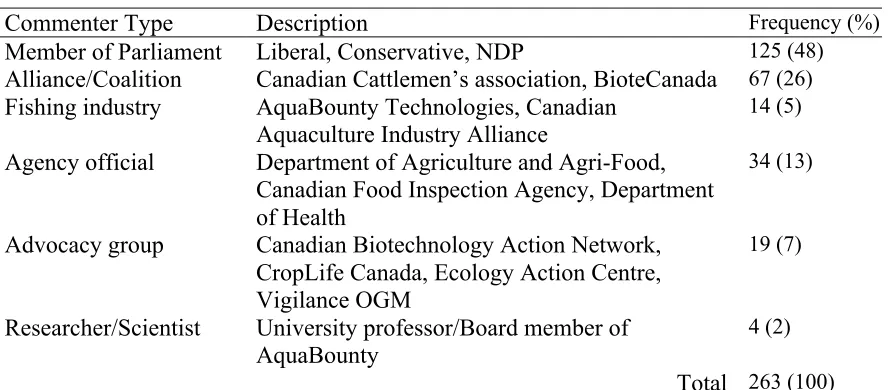
Table 2.1 Description of Parliamentary Hearing Attendees and comment frequencies ... 65
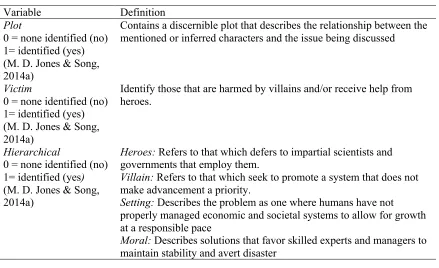
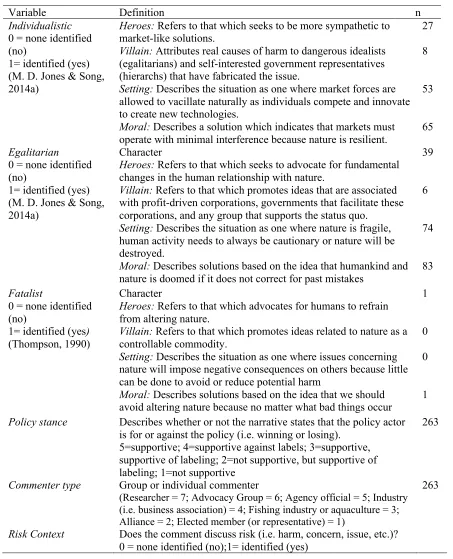
Table 2.2 Operationalization of Independent Variables ... 67
Table 2.3 Operationalization of Dependent Variables. ... 69
Table 2.4 Binomial Logistic Regression of Construction of Risk (i.e. Narrative Strategy) ... 71
Table 2.5 Binomial logistic regression of Construction of Risk (i.e. Narrative Strategy) with interaction between Hierarchical and Individualistic ... 72
Table 2.6 Chi Square results for cultural cognitive stories by policy stance ... 72
Table 2.7 Argument for the definition of risk by Cultural Cognitive Stories ... 73
Table 2.8 Descriptive statistics for commenter type by cultural cognitive story types ... 74
Table 3.1 Operationalization of Dependent Variables ... 111
Table 3.2 Operationalization of Independent Variables ... 113
Table 3.3 Narrativity Index ... 115
Table 3.4 Chi-Square results for Narrative Strategies by narrative construction (i.e. winning or losing) ... 117
Table 3.5 Cultural stories by winning and losing narratives ... 118
Table 4.1 Indicative characteristics of cultural cognitive story appeals. ... 151
Table 4.2 Indicative characteristics of narrative strategy appeals ... 152
Table 4.3 Cultural cognitive story appeals appearing in the sub-committee report ... 153
Table 4.4 Narrative strategy appeals appearing in the sub-committee report ... 155
Table 4.5 Cultural cognitive story appeals appearing in the FDA response to public Comments ... 156
LIST OF FIGURES
Figure 1.1 Adapted model of the Simultaneous Interaction of Policy Actors from
McBeth, Mark, Michael D Jones, and Elizabeth A Shanahan. “The Narrative Policy Framework.” In Theories of the Policy Process, Third edition.
Boulder, CO: Westview Press, 2014. ... 10 Figure 1.2 Adapted model of Narrative Policy Framework from Shanahan, Elizabeth A.,
Michael D. Jones, and Mark K. McBeth. “Policy Narratives and Policy Processes.” Policy Studies Journal; Washington 39, no. 3 (August 2011):
535–61... 13 Figure 1.3 Cursory timeline of BE Salmon approval and windows of opportunity for
public participation ... 22 Figure 2.1 Timeline of AquAdvantage Salmon Approval in Canada ... 48 Figure 2.2 Indirect risks (i.e. “Science PLUS”) versus Direct Risks (i.e. “Science Only”) ... 50 Figure 2.3 Adapted model of Narrative Policy Framework from Shanahan, Elizabeth A.,
Michael D. Jones, and Mark K. McBeth. “Policy Narratives and Policy Processes.” Policy Studies Journal; Washington 39, no. 3 (August 2011):
535–61... 55 Figure 2.4 Adapted model of Narrative Policy Framework from Shanahan, Elizabeth A.,
Michael D. Jones, and Mark K. McBeth. “Policy Narratives and Policy Processes.” Policy Studies Journal; Washington 39, no. 3 (August 2011):
535–61... 64 Figure 3.1 Adapted model of Narrative Policy Framework from Shanahan, Elizabeth A.,
Michael D. Jones, and Mark K. McBeth. “Policy Narratives and Policy Processes.” Policy Studies Journal; Washington 39, no. 3 (August 2011):
535–61... 106 Figure 4.1 Comparison of cultural cognitive story appeals appearing in the FDA
response to public comments vs. the House of Commons sub-committee
report ... 161 Figure 4.2 Comparison of cultural cognitive story appeals appearing in the FDA
Chapter 1: Introduction to the Tools of Influence of the Regulatory Review Process for Bioengineered Foods: Case study of Bioengineered Salmon Approval
The tools of influence in the regulatory review process is a phenomenon that many scholars have sought to understand. Much of the literature has focused on which groups exert influence during the regulatory review process (Kerwin 1994; Furlong 1997; Golden 1998; West 2005; McKay 2006; Yackee and McKay 2007). Still, there is a limited focus on what
mechanisms function to have an effect on decision making (Emery and Emery 2005). While
there is no doubt that these studies have helped to explain the influential factors involved in the rule making process, some scholars have questioned the causal path between influence and policy outcomes because it is difficult to measure and outcomes are attributed to unmeasured circumstances (Golden, 1998; Webb Yackee, 2019). The Narrative Policy Framework offers systematic approaches for examining tools of influence used by policy actors.
process as it relates to bioengineered (BE) foods in two industrialized countries: Canada and the United States (US).
Industrialized countries have different rulemaking approaches for regulating BE foods. This dissertation uses the approval of AquAdvantage salmon (AAS) as a case study to examine the limited points where the public can have a voice in the rulemaking process in Canada and the US, and to examine the diversity of policy narratives that convey opinions based on the policy preference, cultural worldviews, and narrative strategies. It also looks at the uptake of these policy narratives in the policy response documents related to the participatory processes and compares the US and Canadian policy context. The case of AAS is significant because this is the first time that a BE food has been approved for human consumption and it will likely influence the way that other emerging food technologies will be defined and regulated.
The US Food and Drug Administration (FDA) and Health Canada (HC), which has authorized BE animals and BE foods, contend that risk assessments for emerging food
biotechnology should be based on objective, value-neutral science, also cited as “sound science” or “science based” (Health Canada, 2008; US FDA, 2015). Some scholars have emphasized the need for regulatory assessment to be inclusive of narratives beyond that of an elitist risk
limits the conversation on risk such that only certain narratives are reflected in uptake (Panisset et al., 2012)1.
Given the important role of values in personal attitudes towards BE animals, the purpose of this dissertation is to explore policy narratives that are constructed by different policy actors and to assess whether or not influence is leveraged. This is evidenced by incorporation of socially constructed narratives into policy response documents. This case study serves as a current example for governance of BE food animals and is an instructive case shaping how policy makers consider different policy perspectives for future governance of bioengineered animals and their food.
Examining the tools of influence: Cultural Theory of Risk, Cultural Cognition and Narrative Policy Framework
Differences in perceptions inform how risks are assessed (Kahan, Braman, Monahan, Callahan, & Peters, 2010). Previous studies suggest that citizens and scientist alike perceive risk using the same cultural cognitive lenses that may allow for cognitive bias (Andreas et al, 2010; Lorente & Alonso, 2014). Consequently, it is not just the public that is capable of exhibiting biased thinking or heuristics that are dependent on world views and availability of information. For example, Beaudrie et al. (2014) found that in the case of nanotechnology, experts on the product development side typically exhibited “optimism bias” toward lower risk and product approval (Beaudrie, Satterfield, Kandlikar, & Harthorn, 2014). Meghani & Kuzma (2017) recently found similar evidence for GE animals and FDA assessments.
Although, there is a vast body of literature that provides criteria for evaluating the regulatory review process (Brant et al., 2017; Jennifer Kuzma et al., 2008; Neshkova & Guo,
2012), there is limited empirical research that examines the mechanisms that function to affect outcomes (Emery and Emery 2005). Furthermore, the examples that do exist in the literature for BE foods and other emerging technologies in the U.S. are limited and are not based on policy formulation but instead on the operation of oversight systems once they are formulated (Kuzma et al. 2008; Kuzma et al. 2009a; Paradise et al. 2009; Kuzma et al. 2009b). Many of the studies that exist are guided by the literature on public participation, perceptions of risk, and developing oversight systems (Eckerd, 2014; Jennifer Kuzma et al., 2008; J. W. Yackee & Yackee, 2006; S. W. Yackee, 2015). While these studies contribute to our understanding of influence, they do not incorporate concepts from the theories of cognition which helps to explain how and why some groups use certain policy narratives to try to influence decisions. Therefore, to examine the policy narratives that arise when different versions of the public try to leverage influence on the regulatory review process, this dissertation integrates concepts from cultural theory of risk (Douglas, 1982), cultural cognition (Kahan et al., 2010), and Narrative Policy Framework (NPF) (Jones & McBeth, 2010). The following section provides an overview of the theories that will be used throughout this dissertation.
Cultural Theory of Risk
Cultural theory of risk helps to explain why the perception of risk becomes politicized and polarized such that decisions concerning risk become entangled in the allocation of blame and the distribution of power associated with cultural world views that are generally not malleable (Douglas, 1997).
Douglas (1982) put forth a typology to explain different perceptions of nature as a collective representation of risk. This typology was later expanded by Thompson (1990) to describe belief systems based on a group’s preferred level of interaction and the degree to which these groups constrain beliefs and behavior. The typology includes four cultural types that
discuss how certain groups perceive and frame issues concerning risk. They include: egalitarians, hierarchs, individualist, and fatalists. Egalitarians exhibit strong beliefs about equality and thus perceive that human decisions concerning nature should be based on caution to avoid negative consequences (Thompson, 1990). Hierarchs revere the knowledge of higher authority and perceive that decisions concerning nature should only be based on the perspectives of skilled experts and managers (Thompson, 1990). Individualist perceive government intervention as an intrusion, and they believe that progress is the most important byproduct of nature (Thompson, 1990). Fatalists consider negative consequences as inevitable and thus they believe that decisions concerning nature will impose negative consequences on others because little can be done to avoid or reduce potential harm (Thompson, 1990). This research operationalizes the four typologies to illustrate cultural cognition, which refers to the tendency of individuals to form perceptions based on personal worldviews.
Cultural Cognition Theory
individuals that perceive ideas as trustworthy will consider them to be socially acceptable, while individuals that perceive ideas as deceptive will consider them to be a social detriment (Kahan et al., 2010). Cultural cognition builds on the basis of cultural cognition theory of risk and provides a more comprehensive framework of the social and psychological mechanisms that explain how cultural world views shape attitudes and beliefs (Kahan et al, 2010). These soci al and
psychological processes interact with cultural worldviews to create differences in risk perceptions among competing worldviews.
According to Kahan (2012) these processes include: identity protective cognition (individuals are likely to fit their views to those of others whom they share a group
membership—often typed as hierarchical, egalitarian, fatalistic, and individualistic); culturally biased assimilation (individuals are unconsciously motivated to dismiss evidence as not being credible if it counters the dominant view held within their group); cultural availability
(individuals are likely to notice, assign significance, and remember information that is salient within a group); cultural credibility heuristic (individuals will assign the qualities that make an expert credible with those whom they perceive as sharing their values) and cultural identity affirmation (individuals will likely react dismissively with information that is not in agreement with the values dominant within their group).
research uses these four cultural types to examine the ways that issues concerning the risk of BE foods are framed as policy narratives based on cultural world views. In fact, previous research has used these four cultural types to examine the way that issues concerning risk are framed as narratives (i.e. stories) depending on the cultural worldview (Jones, 2014). This brings the discussion to the role of the narrative.
Why Narrative Policy Framework?
The narrative policy framework (NPF) was developed to empirically test the presence and influence of different policy narratives on the policy process (M. McBeth, Jones, &
Policy narratives are described as having three structural components that allow them to be systematically analyzed: narrative elements, narrative strategies, and beliefs. Systematic analysis is possible, because the structure of the framework can be applied to multiple narratives and findings can therefore be generalized across different policy contexts (i.e. across different applications of emerging technologies) (M. McBeth et al., 2014b). This systematic-structuralist approach makes the NPF unique because it takes insight from critical policy analysis and combines it with traditional social science techniques to measure socially constructed realities (M. McBeth, Jones, and Shanahan 2014a).
NPF Assumptions
NPF has five explicit assumptions that reinforce its use as a tool for examining the influence of the regulatory review process. The five core assumptions include: the homo narrans model of the individual, social construction, bounded relativity, generalizable structural
elements, and simultaneous operation at three levels. The first assumption is based on what NPF scholars have described as the homo narrans model of the individual. This assumption states that narratives play a central role in how individuals process information, communicate, and reason (E. Shanahan et al., 2017). Social construction refers to the subjective meaning assigned to different objects, persons, or processes linked to public policy (E. Shanahan et al., 2017). Bounded relativity explains how social constructions adapt to generate different policy realities (E. Shanahan et al., 2017). This assumption counters the structuralist argument of variation by assuming that variation is bounded because of specific narrative elements that lead to
the variables that are examined within studies that employ this framework: narrative elements, narrative strategies, and policy beliefs. Simultaneous operation occurs through simultaneous interaction of policy actors involved in the policy process.
NPF assumes that narratives play an important role in public policy outcomes, processes, and designs through the phenomena referred to as simultaneous interaction (M. McBeth, Jones, & Shanahan, 2014a). An adapted version of the model of the simultaneous interactions can be seen in Figure 1.1. This is the assumption that policy outcomes are influenced through
simultaneous interaction of three different categories of policy actors: the individual, group and coalitional level, and institutional level (M. McBeth, Jones, and Shanahan 2014a). The micro-level focuses on how individuals both form and are informed by policy narratives (E. A.
Given that previous studies have concluded that only technological elites have voice in BE food policy debates and formulation and demand the use of “science only” arguments (e.g. Meghani & Kuzma 2011; Meghani & Kuzma 2017), this study tests hypotheses related to these using NPF and cultural cognition theory (Chapter 2 and 3) and thus also contributes to the Science and Technology Studies (STS), S&T Policy literatures, and public participation in S&T literatures. This work also develops exploratory hypotheses to examine how and when different cultural cognitive and narrative story appeals resonate with decision makers and whether or not there is evidence of influence in policy response documents (Chapter 4).
Figure 1.1: Adapted model of the Simultaneous Interaction of Policy Actors from McBeth, Mark, Michael D Jones, and Elizabeth A Shanahan. “The Narrative Policy Framework.” In Theories of the Policy Process, Third edition. Boulder, CO: Westview Press, 2014.
Policy Narrative Components
approach makes the NPF unique because it takes insight from critical policy analysis and combines it with traditional social science techniques to measure socially constructed realities (M. McBeth, Jones, and Shanahan 2014a).
Analogous to the structural elements of a story, narrative elements are composed of a setting, characters, plot, and a moral (Jones & McBeth, 2010). The setting describes the context of the policy situation, which may include factors relating to the legal and constitutional
parameters, demographics, geography, and scientific evidence such as rules and guidelines established by agencies for definitions of risks. Characters are policy actors (i.e. individuals or groups) seeking to influence policy outcomes. NPF studies typically describe characters as heroes (protagonist or saviors), villains (antagonist or harmers), and victims (those that are harmed by villains and receive help from heroes) (M. McBeth et al., 2014b). The plot functions to situate the different components within the context of the story by establishing relationships between characters (i.e. policy actors). Lastly, the moral refers to the policy solution that is being promoted.
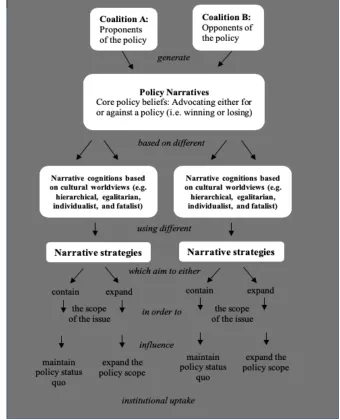
The second component of a policy narrative, the narrative strategy, refers to a specific method of persuasion used by policy actors to influence decision-makers or the public. Though there are many types of narrative strategies, McBeth, Shanahan, Arnell, & Hathaway (2007) have operationalized three types that fit with the structural elements of a narrative: (1)
extent are certain narratives associated with different policy actors, cultural worldviews, and narrative strategies, and (2) to explore what narratives become embedded within institutions and are taken up into policy documents.
Figure 1.2: Adapted model of Narrative Policy Framework from Shanahan, Elizabeth A., Michael D. Jones, and Mark K. McBeth. “Policy Narratives and Policy Processes.” Policy Studies Journal; Washington 39, no. 3 (August 2011): 535–61.
Narrative Strategies: Manipulating the scope of conflict
that expand or maintain the scope of conflict. McBeth et al. (2007) found evidence of five issue scoping strategies that have been utilized by groups: winners and losers, scientific certainty and disagreement, construction of benefits and costs, the use of condensation symbols, and policy surrogate. These narrative strategies will be examined in chapters 2 and 3.
Winners or losers. Policy narratives typically identify characters as winners or losers. The winner or loser in a situation can be identified in this case based on the policy outcome. Policy actors seek to manipulate narratives based on whether they perceive themselves as winning or losing (Baumgartner & Jones, 2010).
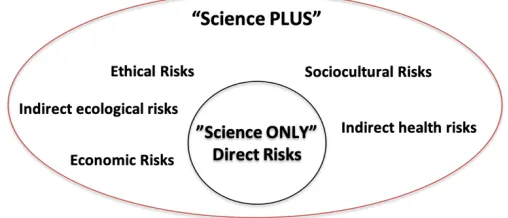
Construction of risk (“science only” vs. “science plus”). Policy outcomes concerned with science are often contentious, especially those concerning emerging technologies. McBeth et al. (2007) examined the issue of scientific certainty and disagreement and found no difference in the use of science within winning or losing policy narratives. This lack of difference was attributed to core policy beliefs. However, Nie (2003) found that certain groups used science to promote the issue based on their preferred policy outcome. As a unique approach, this
dissertation examines the way that risk is constructed by different groups as a narrative strategy. The literature that explores the definition of risk in relation to GE foods typically discuss risks as “issues”, “concerns”, or “harms” (Finucane & Satterfield, 2005; Frewer et al., 2013) in reference to both direct and indirect risks. “Science only” concerns deal mainly with direct effects that are easy to measure or mimic in laboratory or small field trials and “science plus” refers to concerns that are outside of the scope of the assessment, which include both direct and indirect risks that cannot be addressed using a science-based approach.
or in ways that it can create diffuse costs (Baumgartner & Jones, 2010; M. McBeth et al., 2007). We suspect that policy actors will construct narratives based on whether they are for or against the policy. In other words, those against the policy will construct narratives to illustrate negative costs (i.e. financial or economic burdens) and concentrated benefits (few groups benefits). Contrarily, those in support of the policy will construct narratives that show diffuse benefits (many groups benefit) and concentrated costs (economic benefits or financial gains).
Condensation symbols. Symbols or images are inserted within narratives to emphasize or to simplify a policy issue (Baumgartner & Jones, 2010; M. McBeth et al., 2007; Stone, 2012). These studies have shown that losing groups typically seek to bring attention to an issue by using condensation symbols. In contrast, winning groups will use images that maintain the status quo. We suspect that policy actors will seek to use condensation symbols based on whether or not they perceive themselves as insiders or outsiders. We also suspect that narratives utilizing condensation symbols will present narratives that are biased towards different cognitive frames
Policy Surrogate. Policy actors will also seek to bring attention to an issue by referencing a larger policy issue. Often times actors will utilize a less controversial policy issue as a surrogate for one that may be more complex and controversial (M. McBeth et al., 2007; Nie, 2003). We address this by looking at whether larger issues surrounding AAS are evoked in the narratives. For example, certain narratives may describe risks as larger policy issues such as ownership of seeds and intellectual property to shift the focus to disdain for corporate farms. We suspect that policy actors will utilize policy surrogates based on whether they are for or against the policy.
Case Study
marketplace. Some scholars believe that the conditions of the approval are narrowly defined with a limited scope that bestows significant leverage to AquaBounty Technologies (ABT), the
company that develops AAS (Meghani, 2014).
During the approval process for AAS, the formal regulations were mainly focused on environmental concerns and they disallowed the production or growth of AAS in ocean net pens or in the United States (Center for Veterinary Medicine, 2015). The initial application stated that AAS eggs would be fertilized at a facility on Prince Edward Island, shipped to a land-based facility in Panama for growth, and then transferred to packaging facilities. The potential for environmental impact would have been confined to sovereign countries other than the US and Canada. Since the initial approval, ABT has received approval for multiple grow out cites in the US and Canada.
The FDA regulates the BE salmon, and other BE animals, under the New Animal Drugs Act (see Meghani, 2014; Meghani & Kuzma, 2018). This is because the DNA introduced is considered a drug and primary safety concerns are to the fish under a narrow interpretation of the act. However, the FDA also voluntarily reviews food from BE animals under its policy on bioengineered foods (US FDA, 2015). Here they consider substantial equivalence of the BE salmon to wild or non-BE farmed salmon according to nutritional composition, toxicity assessment, and allergenicity (US FDA, 2015). But this process is voluntary for the industry producers to comply with. The National Environmental Policy Act of 1970 (NEPA) provides the framework for the environmental assessment of BE salmon (US EPA, 1970). However, NEPA does not necessitate an environmental impact assessment in foreign sovereign countries
regarding social, economic, and/or cultural effects. In the US, an evaluation of the social,
regulatory authority for the FDA to mitigate such concerns if the environmental assessment concludes that the proposed technology will not have an impact on the physical environment (US EPA, 1970) . In practice, concerns pertaining to broader ecosystem harm, indirect health risks, and ethical concerns are paid little attention and the FDA does not have authority to act on such concerns under the New Animal Drug Act (given limited scope) or NEPA (given that it is a procedural statute only).
The road to approving BE salmon in the U.S. was a long one. Extending almost two decades from 2000 to 2019. In 2002, a report by the National Academy of Science (NAS) raised concerns regarding the high levels of uncertainty associated with BE animal development and the FDA’s expert capacity for decision making (National Research Council, 2002). Guidance policies were developed to evoke The Federal Food, Drug, and Cosmetic act to exert its authority to regulate BE animals in 2009, by classifying the gene put into the animal as a “drug” and the BE animal as a new animal drug (21 CFR 10.115). Given these provisions, the definitions for safety were mainly focused on the health of the animal that is treated with a drug and the efficacy of the drug (which would be related to its intended function like faster growth in the AAS
salmon), but these provisions did not transfer well in the context of BE animals where safety concerns surpass the health of the animal (National Research Council, 2002). The FDA’s Center for Veterinary Medicine was required to confer with an advisory board on veterinary medicine that functions to provide additional expertise for concerns regarding environmental and indirect health risks (National Research Council, 2002).
adequate sample size used to assess human health risks and to further investigate the effect of AAS on the ecosystem as it relates to predation or spread (Senior, 2010). The VMAC concluded that there should be additional sensitivity studies to assess potential allergens (Senior, 2010). Ultimately, the decision was made by FDA-CVM to approve AAS despite the VMAC’s concerns. In response, a group of US senators that were prompted by their constituents, introduced a bill to block the approval of AAS without a full Environmental Impact Statement (EIS) (H.R. 2112, 2011).
The FDA released the draft Environmental Assessment along with the Finding of No Significant Impact (FONSI) (US FDA, 2012). The public was invited to submit public comments on the FONSI. to review the proposed conditions for approval. The comment period remained open from December 26, 2012 through April 26, 2013. A total of 1,217 comments were received with 15,914 write-in campaigns. This public comment period was utilized as the data point for this dissertation. Public comments on the draft EA and FONSI were assessed to explore the narratives of different stakeholder groups coming from pro- vs. anti-BE positions. The Federal Notice of Public Comment in Rulemaking is the one place in the U.S. biotechnology regulatory system for which the public has an opportunity to participation with a voice. Although many studies have criticized that it is not a rigorous form of public engagement, it is a window into the views and narratives of the wider public.
Canada. The motivation to include Canada is driven by the significant distinction between the way that Canadian decision makers create and implement policies. There are
initiated by Environment Canada (EC) and Health Canada (HC). AAS underwent multiple assessments by different agencies.
The Canadian Environmental Protection Act, 1999 (CEPA 1999), administered by Environment Canada (EC) and Health Canada (HC), is the key authority for novel organisms like the AAS. The Government of Canada ensures that all new substances, including organisms, are assessed for their potential harm to the environment and human health. Under CEPA 1999, the New Substances Notification Regulations [NSNR (Organisms)] prescribe the information that must be provided to EC prior to the import or manufacture of new organisms that are living products of biotechnology, including fish like AAS.
Fisheries and Oceans Canada (DFO), EC and HC signed a memorandum of
understanding to implement the NSNR (Organisms) for fish. DFO assisted by conducting an environmental and indirect human health risk assessment for GE fish like AAS and
recommended assessments to manage risks. The risk assessments evaluate whether the notified fish product of biotechnology is “CEPA toxic”. A substance is toxic if it may enter the
environment and a) have or may have an immediate or long-term harmful effect on the environment or its biological diversity; b) constitute or may constitute a danger to the environment on which life depends; or c) constitute or may constitute a danger in Canada to human life or health.
this peer review was to discuss the conclusions presented in DFO’s preliminary comprehensive Environmental and Indirect Human Health Risk Assessment AAS. However, the process did not involve an external advisory process, as only 3 of 23 participants were from outside of
government sector (1 consultant, 1 academic, and 1 from Atlantic Salmon Foundation). Of the remaining participants, 16 were from DFO itself, 3 from other federal govt agencies (HC and EC), and 1 from PEI Province. The public was not directly solicited for input on the decision-making process for the approval of AAS production under the NSNR (NSO) process.
In response to the approval of AAS production, two environmental groups, Ecology Action Centre (EAC) and Living Oceans (LOS), took the Federal government to court for the approval of AAS (Wristen, 2014). Opposition to AAS approval was primarily rooted in the fact that the review did not include an assessment of “whether the genetically engineered salmon could become invasive, potentially putting ecosystems and species such as wild salmon at risk” (Wristen, 2014). AquaBounty (the company that produces AAS) had also been given permission to develop and grow-out the AAS at other locations in the country that had not yet been assessed (Wristen, 2014) by EC and DFO under CEPA. In addition, the process for approval lacked transparency and did not involve public consultation (J. Kuzma & Williams, 2018). In fact, public notices were only generated to inform the public after these NGO groups took the Federal government to court. In the end, the court ruled in the favor of the Federal government in
upholding the original approval, but the court ruled to restrict AquaBounty egg production to a single facility on Prince Edward Island and did not grant permission to grow out at other
Soon thereafter, in May of 2016, AAS received approval for consumption and sale. At this point, Parliament’s House of Commons Committee on Agriculture and Agri-food was asked by the Minister of Agriculture and Agri-Food to examine the legal and regulatory framework around BE animals and their increasing availability for human consumption. On 1 June 2016, the Committee agreed to “study genetically modified animals for human consumption, including any changes which may be needed to adequately address the full range of potential issues around the approval of products involving genetically modified animals beyond health and safety, the challenges and opportunities this presents to Canada, and what steps should be taken to best inform the public about new products planned for introduction to the market; and that the Committee report its findings to the House no later than Thursday, December 8, 2016” (Finnigan, 2016, p. 1).
The Committee held four public hearings in September and October 2016, hearing from representatives of the agriculture and agri-food sector, regulatory authorities and advocacy groups about the issues raised by the arrival of BE (or Genetically modified) animals for human consumption. In October 2016, stakeholders were invited to present their viewpoints at a committee hearing. In Dec 2016, the summary report was released, which is available online along with full transcripts of the meetings (House of Commons 2016). In April 2017,
narrative cognition being used. These results were used to assess what narrative positions are taken up in the final policy documents from the Parliament sub-committee.
Figure 1.3: Cursory timeline of BE Salmon approval and windows of opportunity for public participation.
Comparison of regulatory governance in the US and Canada
review and scrutiny is harmful to the scientific enterprise. Note, however, that DFO did have peer review committee on its own assessment (see description of committee mentioned above) but we argue that an agency should not peer-review its own assessment. This does not meet scientific standards, and likely presents issues of conflict, bias, and agency political pressures.
In the U.S. there are sometimes external advisory committees to review biotech product decisions (e.g. at FDA and EPA, not as much at USDA). These committees operate under federal laws, which require the reporting of conflicts of interest and dictate that meetings must be open to the public and notifications of them published in advance (Federal Advisory Committee Act). There are also laws that require government agencies to provide regulatory documents and correspondence to the public who request them (Freedom of Information Act), although often confidential business information can be claimed by the company, blacked out and removed. There are also procedures to mandate public comments in rule making (Administrative Procedures Act 1946). In Canada for the AAS federal governance system, these processes seem absent. Without external eyes and drawing upon a wide expertise of various publics and stakeholders, scholars have argued that the analyses will suffer from a deficit of important standpoints (Meghani & Kuzma 2014)—quality may suffer and public legitimacy of decisions may decrease. The only window the public had was the Parliamentary hearings on GE animals, which took place after the BE Salmon decision was made.
currently struggling with broader, recent Canadian efforts to engage the public in decision making and increase transparency.
Dissertation Approach
A need exists to understand the opportunities for actors to influence policy outcomes and to understand how narratives affect the regulatory review process to ensure that certain world views are not privileged. To this end, this study has four goals: (1) to explore the ways that certain policy narratives (winning pro-BE vs. losing anti-BE) are associated with cultural world views and narrative strategies in the Canadian BE food policy system (Chapter 2); (2) to examine how public comments contain winning or losing policy narratives that are associated with certain cultural world views and narrative strategies in the US context (chapter 3); finally (3) to
examine what cultural world views and narrative strategy appeals are most dominant in policy response documents used to inform the final decision in both countries (Chapter 4). To
accomplish this goal, this study employs content analysis guided by Narrative Policy Framework and cultural cognition theory of risk. This research contributes to the narrative policy framework literature by examining the role of meso level policy narratives that function to influence macro policy narratives. It is also one of the first studies to type stories by cultural worldviews to examine narrative strategies and anti- versus pro- policy attitudes. In addition to building upon theory, this research also offers insight for regulatory agencies and policy makers to help them acknowledge cognitive bias as a part of the regulatory review process. Future regulatory review processes for emerging technologies should actively seek to incorporate broader perspectives and generate a deliberative decision-making process that takes cognitive bias into consideration.
Framework (NPF) and cultural theory of risk will be used to examine the points in the regulatory review processes that invite participation from the public or stakeholder groups (e.g. public comments and public hearings) and the outcomes produced (e.g. policy response documents).
Here, the focus is to examine narrative structure and narrative strategies (this will be explained in greater detail later) to provide a greater understanding of how policy actors try to influence the regulatory review process. Policy narratives (i.e. stories) are used by policy actors to articulate and promote a specific understanding of an issue, while also excluding alternatives (Jones & McBeth, 2010). Public comments typically incorporate narratives as a means of conveying information through the informal rule making process (C. Farina, Epstein, Heidt, & Newhart, 2012). These policy actors socially construct narratives to communicate information about policy problems with a goal of influencing potential solutions (Pierce, Smith-Walter, and Peterson 2014).
This research explores the relationship between cultural cognition theory of risk,
structural elements, and narrative strategies. The interaction between these relationships help to explain the mechanistic functions of influence at the core of narrative strategies (Raile et al., 2018). This approach is unique because while previous narrative risk-based studies show that narratives influence risk perceptions and decision making (de Wit, Das, & Vet, 2008; Janssen, Osch, de Vries, & Lechner, 2013), the mechanistic functions involved in narrative persuasion are not clearly understood (Raile et al., 2018).
Furthermore, many scholars believe that democratic values such as meaningful
participation should be integral to any legitimate regulatory process (deLeon & deLeon, 2002; Jennifer Kuzma & Besley, 2008a; Meghani, 2014) . This research investigates how the
not certain worldviews are being privileged (i.e. incorporated into decision documents) over others. Thus, it also contributes to the literature on how to design effective public engagement as a tool for decision making in the regulatory review process (Kahan et al., 2011). It also offers practical guidance for public communication by examining narratives that have greater or less influence on institutional uptake and policy change. These findings, also, contribute to our understanding of how groups can be more effective at influencing policy outcomes.
This research will be one of very few studies to use NPF to examine public comments in regulatory rule-making. Farina et al. 2012 found that narratives are used in public comments in order to articulate and promote a specific understanding of an issue, whether or not a commenter exhibited the ability to provide sophisticated and detailed commentary (Farina et al. 2012). Prior studies also show that actors socially construct narratives to communicate information about policy problems with a goal of influencing the potential solutions (Pierce, Smith-Walter, & Peterson, 2014).From these studies, an appropriate role is suggested for use of the narrative policy framework (NPF) to systematically examine public comments during the regulatory review process.
This research focuses on how policy narratives embedded in cultures and institutions shape public policy. Macro-level narratives will be examined through cross country comparison of agency official responses in public hearings and congressional hearings. Specifically, this research helps to explain how policy narratives develop among policy actors at the meso-level but then go on to influence narratives that become embedded within agencies and therefore continually shape public policy outcomes (macro-level). Therefore, an important theoretical goal of this study is to identify meso-level narratives that come to shape macro-level politics, that in turn, create macro-level policy climates within regulatory agencies. By identifying the
connections between narratives within the different levels of the NPF, this study will make an important contribution to understanding the dynamics of narratives in the policy process (M. McBeth et al., 2014a). The following section provides an overview of the organization of this dissertation.
In the first article (chapter 2), insight from the Narrative policy framework (NPF) and cultural cognition theory is used to analyze parliamentary hearings in Canada. It is
acknowledged that public data are sparse in the public domain, as there are few “windows” to participate in the Canadian risk governance system for GE animal foods. This makes it difficult to determine how different groups and their motivations affect decision making. The research examines public hearings focused on the regulation of GE animals as an opportunity to
understand narrative use within the AAS risk governance system in Canada to influence uptake2.
Since previous research has yet to identify the relationship between cultural cognition and narrative strategies, this research asks the following questions: How does cultural story type
influence the construction of risk? How does cultural story type relate to whether “science plus” or “science only” arguments are made (issue expansion and contraction as a narrative strategy)? How does cultural story type relate to the narrative strategy being used? What associations exist between cultural story type and policy stance (i.e. winners and losers)?
In the second article (chapter 3), an approach that integrates concepts from Narrative Policy Framework (NPF) (Jones & McBeth, 2010) and insight from the cultural theory (Douglas, 1982; Thompson, 1990) is utilized again, but this time in the U.S. context. First the article addresses the issues of narrativity because it is a contentious issue in the literature (Crow & Berggren, 2014; M. K. McBeth, Shanahan, Arrandale Anderson, & Rose, 2012). To address this issue, this research examines the extent to which policy components are used in public comments by establishing an index of narrativity (as seen in (Crow & Berggren, 2014; M. K. McBeth et al., 2012). We expect to find a strong index of narrativity among the majority of the public comments, to show that narratives can be identified in public comments. In addition, as a unique approach, this dissertation examines the way that risk is constructed by different groups as a narrative strategy. Given this need to examine influence in the regulatory review process, this study has three primary goals: (1) to examine the narrative structure of public comments, (2) to understand what narrative strategies are being used in public comments to influence institutional uptake and those that are not, and (3) to understand what types of cultural narratives are associated with certain narrative strategies being used by winners or losers. The regulatory approval process of BE salmon in the United States is used as a case study.
uptake which informs the final rule. Given that policy response documents may reflect privilege given to certain appeals, examining these documents for dominant cultural cognitive story appeals and narrative strategy appeals will provide insight into understanding to what extent and in what way these appeals manifest in uptake based on the final rule. It is expected that hierarchical cultural cognitive appeals and “science only” narrative strategy appeals will be more dominant than others. The following research questions are examined: What cultural cognitive story appeals appear more prominently in policy response documents? What narrative strategy appeals appear more prominently in policy response documents? For these questions, both the Canadian and the U.S. case of BE salmon are used and compared.
Abstract for Article 1: Using Narrative Story Structures and Scope to Examine the Tools of Influence Used in the Regulatory Review Process for Bioengineered Salmon approval in
Canada
approach exhibit biased thinking by using heuristics that are largely dependent on world views and ways of interpreting information. The differing responses of the Canadian government and the US government provides us with the opportunity to explore narratives that are being used to influence decision making in risk management and those that are not. With this in mind, we use the public hearings focused on the regulation of GE animals as an opportunity to examine, how and what, narratives are being used within the AAS risk governance system in Canada to influence policy uptake and those that are not. To accomplish this goal, the research employs content analysis informed by the Narrative Policy Framework and Cultural Cognition theory. Findings suggest that winning policy that are composed as hierarchical and individualist stories are likely to expand the scope of the issue “science-plus”, only when it promotes their pro-BE policy stance.
Abstract for Article 2: Examining Narrativity and Influence in Public Comments in the Rulemaking process for Genetically Engineered Salmon approval in the United States
which aligns with their worldviews. To better understand how policy actors, try to influence policy uptake in the regulatory review process in the US for BE foods, the research utilizes the four typologies associated with cultural cognition theory in combination with the narrative elements of a story. This approach is taken to explore the extent to which public comments contain policy narratives, the narrative strategies associated with winning (pro-BE) and losing (anti-BE) policy narratives, and to understand what cultural cognitive stories are associated with winning and losing policy narratives. Findings indicate that public comments exhibit a high level of narrativity despite being brief. This suggests that future research should contribute to
informing the quality of the participatory process. Additional findings suggest that there was a significant association between hierarchical cultural stories and winning narratives. There was also a significant association between science only and winning narratives.
Abstract for Article 3: Examining Uptake: A Deeper Look into the Policy Making Black Box
Different factors function to influence policy uptake3 of ideas and viewpoints. Still, much of
the rulemaking literature has focused primarily on the inputs of the decision-making process.
These studies have helped to explain the influential factors involved in the rule making process but the causal path between narrative influences and policy outcomes have been challenged and are difficult to measure because of unseen influences in the rule-making process. Therefore, this research uses insight from cultural cognition theory and narrative policy framework in a
comparative context to examine the narratives and policy stances embedded within them that are being “taken up” in the rulemaking process to understand whether certain ways of thinking become embedded within institutional documents, and thus institutions. Findings illustrate a
REFERENCES
Baumgartner, F. R., & Jones, B. D. (2010). Agendas and instability in American politics. University of Chicago Press.
Berry-James, R. (2014). Cultural Attitudes toward Genetically Modified (GM) Foods [Center Resident Fellow Summary Report]. North Carolina State University.
Bevan, S., & Rasmussen, A. (2017). When Does Government Listen to the Public? Voluntary Associations and Dynamic Agenda Representation in the United States. Policy Studies Journal. https://doi.org/10.1111/psj.12231
Brant, H. K., Myers, N., Runge, K. L., Harvey, O., David, C.-P., & Delshad, A. B. (2017). Promotion, Protection, and Entrepreneurship: Stakeholder Participation and Policy Change in the 21st Century Cures Initiative. Politics & Policy, 45(3), 372–404. https://doi.org/10.1111/polp.12201
Canadian Science Advisory Secretariat. (2017). Proceedings of the National Science Response Process for the Environmental and Indirect Human Health Risk Assessment of the AquAdvantage® Salmon (p. 30).
Canadian Science Advisory Secritariat. (2017). Proceedings of the National Science Response Process for the Environmental and Indirect Human Health Risk Assessment of the AquAdvantage Salmon. Retrieved from
http://publications.gc.ca/collections/collection_2017/mpo-dfo/Fs70-4-2017-007-eng.pdf Center for Veterinary Medicine. (2015). Genetically Engineered Animals - AquAdvantage
Salmon Approval Letter and Appendix [WebContent]. Retrieved from
Christiansen, A., Jonch-Clausen, K., & Kappel, K. (2017). Does Controversial Science Call For Public Participation? The Case Of Gmo Skepticism. Les Ateliers de l’éthique / The Ethics Forum, 12(1), 26–50. https://doi.org/10.7202/1042277ar
Cobb, M. D., & Macoubrie, J. (2004). Public perceptions about nanotechnology: Risks, benefits and trust. Journal of Nanoparticle Research, 6(4), 395–405.
https://doi.org/10.1007/s11051-004-3394-4
Cropper, M. L., Evans, W. N., Berardi, S. J., Ducla-Soares, M. M., & Portney, P. R. (1992). The Determinants of Pesticide Regulation: A Statistical Analysis of EPA Decision Making. Journal of Political Economy, 100(1), 175–197. https://doi.org/10.1086/261812
Crow, D. A., & Berggren, J. (2014). Using the narrative policy framework to understand stakeholder strategy and effectiveness: A multi-case analysis. In The Science of Stories (pp. 131–156). Springer.
Dale, P. J., Clarke, B., & Fontes, E. M. G. (2002). Potential for the environmental impact of transgenic crops. Nature Biotechnology; New York, 20(6), 567–574.
http://dx.doi.org.prox.lib.ncsu.edu/10.1038/nbt0602-567
deLeon, P., & deLeon, L. (2002). What Ever Happened to Policy Implementation? An Alternative Approach. Journal of Public Administration Research and Theory, 12(4), 467–492. https://doi.org/10.1093/oxfordjournals.jpart.a003544
Department of Fisheries and Oceans Canada. (2013). Summary of the Environmental and Indirect Human Health Risk Assessment of Aquadvantage Salmon. Retrieved from Canadian Science Advisory Secretariat Science Response website: http://waves-vagues.dfo-mpo.gc.ca/Library/361091.pdf
Douglas, M. (1997). The depoliticization of risk. In R. (Richard J. ) Ellis & M. Thompson (Eds.), Culture matters (pp. 121–132). Routledge.
Eckerd, A. (2014). Risk Management and Risk Avoidance in Agency Decision Making. Public Administration Review, 74(5), 616–629. https://doi.org/10.1111/puar.12240
Finnigan, P. Genetically modified animals for human consumption. , § The Standing Committee on Agriculture and Agri-Food (2016).
Finucane, M. L., & Satterfield, T. A. (2005). Risk as narrative value: A theoretical framework for facilitating the biotechnology debate. International Journal of Biotechnology, 7(1/2/3), 128. https://doi.org/10.1504/IJBT.2005.006450
Frewer, L. J., Kleter, G. A., Brennan, M., Coles, D., Fischer, A. R. H., Houdebine, L. M., … Salter, B. (2013). Genetically modified animals from life-science, socio-economic and ethical perspectives: Examining issues in an EU policy context. New Biotechnology, 30(5), 447–460. https://doi.org/10.1016/j.nbt.2013.03.010
Golden, M. M. (1998). Interest Groups in the Rule-Making Process: Who Participates? Whose Voices Get Heard? Journal of Public Administration Research and Theory, 8(2), 245– 270. https://doi.org/10.1093/oxfordjournals.jpart.a024380
Health Canada. (2008). Guideline for the Conduct of Food Safety Assessment of Foods Derived from Recombinant-DNA Animals (No. CAC/GL 68-2008). Retrieved from
Health Canada. (2016). Consumer Views of Genetically Modified Foods (No. POR-042-15). Retrieved from
http://epe.lac-bac.gc.ca/100/200/301/pwgsc-tpsgc/por-ef/health/2016/042-15-e/report.pdf
H.R. 2112. H.R.2112 - 112th Congress (2011-2012): Consolidated and Further Continuing Appropriations Act, 2012. , (2011).
Jasanoff, S. (1987). EPA’s Regulation of Daminozide: Unscrambling the Messages of Risk. Science, Technology, & Human Values, 12(3/4), 116–124. Retrieved from JSTOR. Jones, M. D. (2014). Cultural Characters and Climate Change: How Heroes Shape Our
Perception of Climate Science. Social Science Quarterly, 95(1), 1–39. https://doi.org/10.1111/ssqu.12043
Jones, M. D., & McBeth, M. K. (2010). A Narrative Policy Framework: Clear Enough to Be Wrong? Policy Studies Journal; Washington, 38(2), 329–353.
Kahan, D. M. (2012). Cultural Cognition as a Conception of the Cultural Theory of Risk. In S. Roeser, R. Hillerbrand, P. Sandin, & M. Peterson (Eds.), Handbook of Risk Theory: Epistemology, Decision Theory, Ethics, and Social Implications of Risk (pp. 725–759). https://doi.org/10.1007/978-94-007-1433-5_28
Kahan, D. M., Braman, D., Monahan, J., Callahan, L., & Peters, E. (2010). Cultural cognition and public policy: The case of outpatient commitment laws. Law and Human Behavior, 34(2), 118–140.
Kahan, D. M., Jenkins-Smith, H., & Braman, D. (2011). Cultural cognition of scientific consensus. Journal of Risk Research, 14(2), 147–174.
Kuzma, J., & Williams, T. (2018, December). Risk Perception and the Interpretation of
Uncertainty in Regulatory Assessments for Genetically Engineered Animals. Presented at the Society for Risk Analysis Annual Meeting, New Orleans,LA.
Kuzma, Jennifer, & Besley, J. C. (2008a). Ethics of Risk Analysis and Regulatory Review: From Bio- to Nanotechnology. NanoEthics, 2(2), 149–162. https://doi.org/10.1007/s11569-008-0035-x
Kuzma, Jennifer, & Besley, J. C. (2008b). Ethics of Risk Analysis and Regulatory Review: From Bio- to Nanotechnology. NanoEthics, 2(2), 149–162. https://doi.org/10.1007/s11569-008-0035-x
Kuzma, Jennifer, Paradise, J., Ramachandran, G., Kim, J.-A., Kokotovich, A., & Wolf, S. M. (2008). An Integrated Approach to Oversight Assessment for Emerging Technologies. Risk Analysis, 28(5), 1197–1220. https://doi.org/10.1111/j.1539-6924.2008.01086.x Kuzma, Jennifer, & Priest, S. (2010). Nanotechnology, Risk, and Oversight: Learning Lessons
from Related Emerging Technologies. Risk Analysis, 30(11), 1688–1698. https://doi.org/10.1111/j.1539-6924.2010.01471.x
Ledford, H. (2015). Salmon approval heralds rethink of transgenic animals. Nature News, 527(7579), 417. https://doi.org/10.1038/527417a
Lee, A., & Cloutier de Repentigny, P. (2018). Farming the Sea, a False Solution to a Real Problem: Critical Reflections on Canada’s Aquaculture Regulations (SSRN Scholarly Paper No. ID 3240681). Retrieved from Social Science Research Network website: https://papers.ssrn.com/abstract=3240681
McBeth, M., Jones, M., & Shanahan, E. (2014b). The Narrative Policy Framework. In P. Sabatier & C. M. Weible (Eds.), Theories of the Policy Process (Third). Boulder, CO: Westview Press.
McBeth, M. K., Shanahan, E. A., Arrandale Anderson, M. C., & Rose, B. (2012). Policy Story or Gory Story? Narrative Policy Framework Analysis of Buffalo Field Campaign’s
YouTube Videos. Policy & Internet, 4(3–4), 159–183. https://doi.org/10.1002/poi3.15 McBeth, M., Shanahan, E., Arnell, R., & Hathaway, P. (2007). The Intersection of Narrative
Policy Analysis and Policy Change Theory. Policy Studies Journal, 35(1), 87–108. https://doi.org/10.1111/j.1541-0072.2007.00208.x
Meghani, Z. (2014). Risk Assessment of Genetically Modified Food and Neoliberalism: An Argument for Democratizing the Regulatory Review Protocol of the Food and Drug Administration. Journal of Agricultural and Environmental Ethics, 27(6), 967–989. https://doi.org/10.1007/s10806-014-9511-1
Meghani, Z., & Kuzma, J. (2018). Regulating animals with gene drive systems: Lessons from the regulatory assessment of a genetically engineered mosquito. Journal of Responsible Innovation, 5(sup1), S203–S222. https://doi.org/10.1080/23299460.2017.1407912 National Research Council. (2002). Animal Biotechnology: Science Based Concerns.
https://doi.org/10.17226/10418
National Research Council. (2008). Public participation in environmental assessment and decision making. National Academies Press.
Nelson, D., & Yackee, S. W. (2012). Lobbying Coalitions and Government Policy Change: An Analysis of Federal Agency Rulemaking. The Journal of Politics, 74(2), 339–353. https://doi.org/10.1017/s0022381611001599
Neshkova, M. I., & Guo, H. (David). (2012). Public Participation and Organizational
Performance: Evidence from State Agencies. Journal of Public Administration Research and Theory, 22(2), 267–288. https://doi.org/10.1093/jopart/mur038
Panisset, U., Koehlmoos, T. P., Alkhatib, A. H., Pantoja, T., Singh, P., Kengey-Kayondo, J., … Miguel, G. B. Á. (2012). Implementation research evidence uptake and use for policy-making. Health Research Policy and Systems, 10(1), 20. https://doi.org/10.1186/1478-4505-10-20
Pierce, J., Smith-Walter, A., & Peterson, H. (2014). Research Design and the Narrative Policy Framework. In The science of stories: applications of the narrative policy framework in public policy analysis. Retrieved from https://catalog.lib.ncsu.edu/record/NCSU3469146 Raile, E., King, H., Shannahan, E., McEvoy, J., Izurieta, C., Bergmann, N., … Poole, G. (2018).
Narrative-based Risk Communication: A Lingua Franca for Natural Hazard Messages? 76th Annual Midwest Political Science Association, Chicago IL.
Rowe, G., & Frewer, L. J. (2000). Public Participation Methods: A Framework for Evaluation. Science, Technology, & Human Values, 25(1), 3–29.
https://doi.org/10.1177/016224390002500101
Senior, D. (2010). Chairman’s report: Veterinary Medicine Advisory Committee. US Food and Drug Administration.
Shanahan, E. A., Jones, M. D., & McBeth, M. K. (2018). How to conduct a Narrative Policy Framework study. The Social Science Journal.
Shanahan, E., Jones, M., McBeth, M., & Radaelli, C. M. (2017). The Narrative Policy Framework. In C. M. Weible & P. Sabatier (Eds.), Theories of the Policy Process. Westview Press.
Smith, K. B., & Larimer, C. W. (2016). The Public Policy Theory Primer. Avalon Publishing. Steel, D. (2004). Social Mechanisms and Causal Inference. Philosophy of the Social Sciences,
34(1), 55–78. https://doi.org/10.1177/0048393103260775
Stephens, J. B., & Berner, M. (2011). Learning from Your Neighbor: The Value of Public Participation Evaluation For Public Policy Dispute Resolution. Journal of Public Deliberation, 7(1), 24.
Stone, D. (2012). Policy paradox: The Art of Political Decision Making (3rd ed. (revised)). New York: W.W. Norton & Co.,.
Thompson, P. (1990). Organizational Culture. Journal of Management Studies, 23(3), 287–97. US EPA, O. (1970). National Environmental Policy Act [Overviews and Factsheets]. Retrieved
from US EPA website: https://www.epa.gov/nepa
US FDA. (2012). Draft Environmental Assessment and Preliminary Finding of No Significant Impact Concerning a Genetically Engineered Atlantic Salmon. Retrieved from
https://www.regulations.gov/document?D=FDA-2011-N-0899-0685
US FDA. (2015, June 5). Risk & Safety Assessment - Risk Analysis at FDA: Food Safety [WebContent]. Retrieved from
Webb Yackee, S. (2019). The Politics of Rulemaking in the United States. Annual Review of Political Science, 22(1), null. https://doi.org/10.1146/annurev-polisci-050817-092302 Weible, C. M., Sabatier, P. A., & McQueen, K. (2009). Themes and Variations: Taking Stock of
the Advocacy Coalition Framework. Policy Studies Journal, 37(1), 121–140. https://doi.org/10.1111/j.1541-0072.2008.00299.x
Wristen, K. (2014, January 20). Environmental groups take federal government to court for permitting manufacture of genetically modified salmon in Canada. Retrieved from http://www.livingoceans.org/media/releases/environmental-groups-take-federal-government-court-permitting-manufacture-genetically
Yackee, J. W., & Yackee, S. W. (2006). A Bias Towards Business? Assessing Interest Group Influence on the U.S. Bureaucracy. The Journal of Politics, 68(1), 128–139.
https://doi.org/10.1111/j.1468-2508.2006.00375.x