DUARTE, FERNANDA DA COSTA PORTUGAL. openAnalogInput(): Hybrid spaces, Self-making and Power in the Internet of Things. (Under the direction of Dr. Adriana de Souza e Silva.)
This dissertation investigates how the emergence of the Internet of Things and the
embeddedness of sensors and networked connectivity onto things, physical spaces and biological bodies rearticulates embodied spaces, devises practices of self-making and forms of power in the governance of the self and society. In the Internet of Things, the development
of pervasive computing applications has enabled computing capacities to be discretely
distributed across environments and bodies. Personal data collection and big data mining
traverse all dimensions of life and create forms of knowledge that integrate data
embodiments of multiple scales. Personal data from an individual creates a data double of her physiology; data lakes of traffic patterns, consumer habits, are correlated to create
demographics predictions. The consequence of this seamless geared informational design is twofold. While networked data processing becomes more efficient and manageable, it also
becomes more complex and more subtle. Simultaneously, as pervasive computing capacities
allow networked technologies to be available on the go and activated by individual subjects,
these same individual subjects also act as bodies that are integrated into the networked
environment and subjected to its asymmetrical power dynamics. This study investigates: (1)
openAnalogInput(): Hybrid spaces, Self-making and Power in the Internet of Things
by
Fernanda da Costa Portugal Duarte
A dissertation submitted to the Graduate Faculty of North Carolina State University
in partial fulfillment of the requirements for the degree of
Doctor of Philosophy
Communication, Rhetoric, and Digital Media
Raleigh, North Carolina 2015
APPROVED BY
________________________________ ________________________________ Dr. Adriana de Souza e Silva, Dr. Stephen B. Wiley
Committee Chair
________________________________ ______________________________
BIOGRAPHY
Fernanda Duarte was born in Belo Horizonte, Minas Gerais, Brazil in 1982. She graduated with a Bachelor of Arts in Communication/Advertising in 2003 at the Pontifical Catholic University of Minas Gerais (PUC Minas). After a few years working with online education at PUC Minas, she received a Master of Philosophy in Communication from the Federal
University of Minas Gerais. Fernanda worked for five years at the State Government of Minas Gerais as a Director of Public Policy for Higher Education at the State Secretariat of Science and Technology before moving to North Carolina, U.S., to pursue a PhD in
Communication, Rhetoric and Digital Media. Her research interests revolve around issues of digital media, specifically subversive appropriations of technologies by media artists and activists. From her undergraduate experimentations with net art, her thesis research on interface design and software art and now her doctorate experiments with physical
ACKNOWLEDGEMENTS
Five years ago, I moved from Brazil to North Carolina, where I had never set foot before. In my time here I met wonderful people who accompanied me in my research, who shared with me life-changing experiences and who I will forever hold on my heart.
First, I want to express my gratitude to my professors at NC State and to my
dissertation committee for all of their support and contributions during my time in the CRDM program. I thank Adriana for her generous input, patience and attentive feedback during the process of writing this dissertation. I will always appreciate her dedication to my mentorship. Adriana’s capacity to accomplish things is an inspiration that will always drive me towards my goals. I also thank Steve’s support and push to experiment with methodologies. I am deeply appreciative of Steve’s and Myriam’s friendship, and for how they made me feel at home since day one. The seminars I took with Jeremy were essential to the outcome of this dissertation. To Jeremy I offer my gratitude for exposing me to a wide variety of Foucauldian scholarship and for widening my approach to mobilities studies. David Rieder’s class in Physical Computing played an important role in the choice of critical making methods for this dissertation. David’s willingness to help and collaborate in other projects furthered my learning of digital media and I am very thankful for these opportunities.
Kevin Brock and Jen Ware were helpful mentors that helped me answer important questions about navigating the CRDM program. I am very thankful to Jamie Hogan, Samara Mouvery, Brent Simoneaux and Chris Kampe and our collaborations in code writing and dining. To Larissa Carneiro, Chelsea Hampton, Elizabeth Pitts, Hector Rendon, Daniel Synk, Alex Monea Eli Typhina and Elizabeth Johnson-Young, I am happy I got to enjoy your cohorts as an expansion of my own.
During the critical making of the installation for this dissertation, I counted on the help of my friend Leonel Galán, who walked me through how to write an app for android. Thank you, Leo, for the coaching and the interest in my research.
In these five years, I serviced in the office of two student associations on campus, the Latin American Student Association, the Fulbright Student Association, and with the Office of International Services, in welcoming incoming international students and educating about Brazilian culture. These opportunities introduced me to a wide range of cultures and amazing individuals. I appreciate the friendship of all LASA members and Fulbrighters I had the chance to meet. I am eternally grateful to the Office of International Services for the support as a student as their Communications Intern. I want to thank Lauren, Thomas, Beth, Kelia, Stacy, Carl, Alex, Mollie, Anna Grace, Hillary, Alexis, Dina, Rebecca and Tim for their friendship, for the donuts and for the nurturing work environment.
family and friends have always been cheering for me. I express here my love for them and my gratitude for their unconditional love and support.
In my time here, my understanding of family was extended to include new sisters and brothers, SantaMaria, Simone, Miguel, Leonel, Behzad, Majo, Annekathrine, Franziska, Courtney, Heather, Peter and Kathleen. The Damascenos, Fernando, Evelin, Cris, Susane, Tiago and Dri, also expanded their family to include me. Thank you so much, my friends.
To my partner, Rachel, I thank for the love and companionship. Thank you for teaching me so much about myself, for all the care and the support in this journey. I am looking forward to our next journey together. I am thankful for Max and Pashmak and how they comforted me with warm snuggles and sweet meows.
TABLE OF CONTENTS
LIST OF TABLES ...9
LIST OF FIGURES ...10
LIST OF ABBREVIATIONS ...12
INTRODUCTION ...1
Theoretical framework ... 12
Methodological approach ... 18
Emerging categories and research questions ... 21
Structure of dissertation ... 24
Contributions of this study ... 27
CHAPTER ONE Internet of Things: building a landscape of technological folds ...31
The role of social imaginaries and infrastructures ... 34
The heritage of ubicomp research ... 37
The maker movement and critical making ... 58
CHAPTER TWO “Truth or Dare”: A critical making experiment ...67
Building Truth or Dare ... 70
Installation setup and exhibits ... 83
Data mining and hybrid spaces ...99
The logics of big data ...105
Topologies of hybrid spaces ...114
Topology 1: Hybrid spaces as data annotation ... 120
Topology 2: Hybrid spaces as data doubles ... 123
Topology 3: Hybrid spaces as predictive data models ... 129
Conclusion ... 137
CHAPTER FOUR Self-making ...139
Quantification: the wider context ...145
Self-tracking as self-making ...160
Games of truth and self-making ...171
Conclusion ...179
CHAPTER FIVE Power...182
A surveillant assemblage ...187
Negotiating privacy: Data ownership/access/sharing ...200
Empowerment through raw data, critical making and amateur science ...210
Conclusion ...220
CONCLUSION ...222
Limitations of the study ...242
Future studies ...245
LIST OF TABLES
LIST OF FIGURES
Figure 1: Early ubicomp hardwares developed at the Xerox PARC Laboratory. ...54
Figure 2: Conceptual and social imaginary of the Internet of Things...65
Figure 3: The first version of ToD followed the Truth meter hardware design……...……83
Figure 4: The setup of the Sentient Room... ...89
Figure 5: The IOIO board was mounted on a metal thin to enclose the battery and the Bluetooth dongle. ...91
Figure 6: Truth or Dare app interface...93
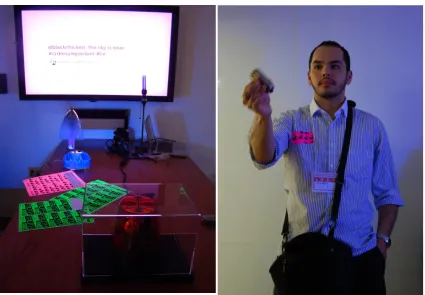
Figure 7: On the left, the setup of the Truth or Dare installation at the 2013 4th CRDM Symposium. ...95
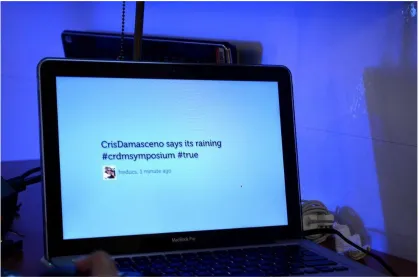
Figure 8: Tweet visualization using the Visible Tweets online tool...97
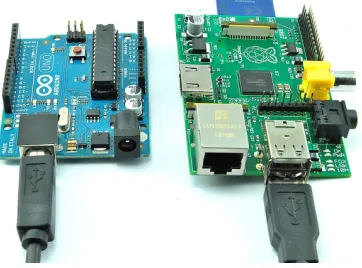
Figure 9: On the left, the Arduino UNO. On the right, the Raspberry Pi...98
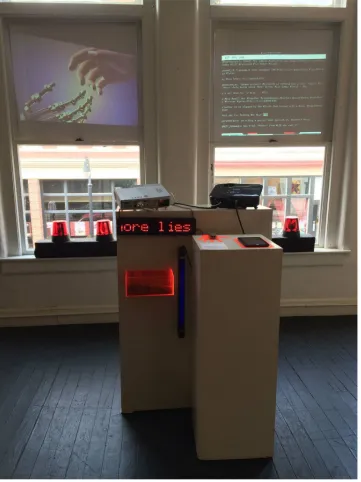
Figure 10: Setup of the Truth or Dare installation at the Interface Interference Smartphone Art Show at the Carrack Modern Art, Durham, North Carolina, in April and May 2014...99
Figure 11: On the left the user holds the tin can, which contains the galvanic skin sensors (made out of wire and coins) and the ioio board. On the right, part of the display of ToD at the “Interface Interference Smartphone art show” in April, 2014, in Durham, North Carolina...100
Figure 13: Data gathering process, from tracking to analysis/visualization phases designed by Frederic, a user of the Quantified Self forum, to describe his sleep tracking methods... 112
Figure 14: Possible data correlations for the variables monitored by Frederic to assess his sleep...129
Figure 15: Part of the favela map produced collectively by residents of the favela Pavão-Pavãozinho... ...133
Figure 16: One of the data visualizations created by the LIVE Singapore! project...141
Figure 17: Clear silk film embedded with six silicon transistors as it is implanted in a
laboratory mouse. ...146
Figure 18: The Misfit Shine is available for sale at a starting price of $55...153
Figure 19: Print screens of the Misfit Shine app showing graphs of physical activity and sleep...154
Figure 20: #true statement tweeted through the Truth or Dare app. ...187
Figure 21: A participant puts a relationship to test using the ToD app. ...189
Figure 22: Example of tweets that engage is reflexivity regarding knowledge of self and of others. ...191
LIST OF ABBREVIATIONS
IoT = Internet of Things
ToD = Truth or Dare installation GSR = Galvanic skin sensor GPS = Global Positioning System GIS = Geographic Information Systems
Xerox PARC = Xerox Palo Alto Research Center
TCP/IP = Transmission Control Protocol/Internet Protocol VR = Virtual Reality
INTRODUCTION
With both hands over my stomach, I breathe in and feel the air take over the full capacity of my lungs. I count a few seconds and exhale letting out heavy air. I breath in and visualize the air entering my body through my feet and slowly taking over the entire internal space of my body. I count a few seconds and I breath out and notice the
amplified space the air left behind. I breath in and I wonder if I am keeping the correct count, other people in the room seem to exhale before I do. I decide to breath out and wish the sensor I am wearing could vibrate to assist me with the breathing count.
Thirty minutes of daily meditation for eight weeks and constant use of a wearable self-tracking device. The practice of self-awareness, yoga, loving kindness, walking meditation and mindfulness are part of a research study I participated in the Fall of 2012 at Duke University that investigated the effects of meditation and increase of self
was faced with an eight-week worth of organized memory of how I felt and how my body performed and was affected by the changes in my routine. As I left Duke hospital with a detailed report filled with numbers and graphs of my accumulated data I could not help but feel empowered and filled with a sense of self awareness. I can always count on my subjective perception of my body and the memory of my feelings but as they faint or get confused, I can rely on the numbers and the logs to more accurately recall the events of a day.
Around the same time, I experimented with collecting personal data—through wearable sensors—and logging my life, other tracking devices were made available on the market. In April, 2013 Google made the first version of Google Glass available to early adopters and Samsung, Motorola, and Sony Ericsson released smart watches that were powered with biosensors and also synced with smartphones. Groups of users and makers of self tracking tools, such as the Quantified Self,1 organized online communities with forums, depositories of videos, reference guides, and gadget reviews to share
knowledge and best practices of collecting and analysis of personal data. Open source, DIY small sized physical computing kits and biofeedback sensors, such as arduino and raspberry pi, became more widely available and fostered increased experimentation with making wearable technologies.
While the concept of self-tracking itself is not new—it can be argued that journaling and confession are strategies to monitor oneself—the use of pervasive
computing technologies to keep record of activities and manage life itself is quite recent. In 2012, Gary Wolf and Kevin Kelly, both editors of Wired Magazine, started a website2
1 http://quantifiedself.com/
to gather the growing community of self-trackers and to provide available resources on self-tracking tools, recommend literature, promote local meet up events across the U.S. and show and tell conferences. Earlier in 2010, Gary Wolf had published an article3 in the New York Times Magazine entitled The Data Driven Life. In this article he provided a compendium of personal stories about tracking physiological data and logging daily activities such as sleep, diet, mood and location using wearable computing, biometric sensors, logs, and any tools capable of producing quantifiable data about a body’s performance. The Quantified Self platform is today a major resource for users interested in technological tools that provide monitoring capacities and centralized agency over the performance of the biological body. It is defined as:
a movement to incorporate technology into data acquisition on aspects of a person’s daily life in terms of inputs (e.g., food consumed, quality of surrounding air), states (e.g., mood, arousal, blood oxygen levels), and performance (mental and physical) (...) In short, quantified self is self-knowledge through self-tracking with technology. Quantified self-advancement has allowed individuals to quantify biometrics that they never knew existed, as well as make data collection cheaper and more convenient.4
The Quantified Self movement is a community of users that makes use of self tracking tools to gain in-depth perspective of their physiology as well as to monitor other aspects of their routine such as mood, tasks, and activities. The difference between these contemporary self-tracking strategies and prior modes of self-accountability is that they
3 Retrieved from http://www.nytimes.com/2010/05/02/magazine/02self-measurement-t.html?pagewanted=all&_r=0
are sustained by a digital way of knowing and constructing reality that is sustained by quantification as a field of scientificity (Foucault, 1972). Scientificity is defined by Michel Foucault as the conditions that create the possibilities of what may be characterized as scientific discourse (similarly to Kuhn’s notion of paradigm). As I observed how the use of these pervasive wearable technologies allowed the monitoring, record and data sharing of how bodies perform (for example, during fitness activities or illness) I became intrigued about the emergence of a data driven life through the adoption and appropriation of these technologies. Such data driven life is referred here in the scope of the Internet of Things, IoT (Ashton, 2009) and is characterized by the embeddedness of heterogeneous computer networks in architectural/physical spaces, and bodies of living and non-living things. Such data driven life is sustained by the underlying logics of big-data mining, marked by automated collection of large and complex sets of data, processed through automated data analytics for data correlation and pattern recognition (Andrejevic, 2013, 2014; Mayer-Schonberger & Cukier, 2013).
Pervasive computing, the Internet of Things, and data mining are emerging fields with growing research interest. Self-tracking through pervasive technologies has been only widely adopted in the last five years and the wearable computing market shows an estimated growth of 35% per year for the next five years.5 Previous self-tracking
practices, although existent, were confined to academic research and prototyping, such as Steve Mann’s project of the WearCam (Mann, 1997) or in medical research for mobile diagnosis or care (Crawford, Lingel, & Karpi, 2015). The adoption of these technologies
and the increasing availability of new devices on the market are an indication that self-tracking practices are a relevant object of study that must be investigated.
The majority of studies regarding pervasive computing and the Internet of Things can be found in the disciplines of Computer Science and Interface Design (Weiser, 1991; Weiser & Brown 1995, 1999; Greenfield, 2006), and they often focus on further technical developments of the technology and privilege questions of functional use. This
scholarship provides evidence of a shifting paradigm in personal computing that geared towards individual mobile devices of continuously decreasing size and increasing data processing capacity. These studies are guided towards utilitarian approaches for the development of efficient systems. Ultimately, the research goal is also oriented towards the development of effective seamlessness between the computing interface and the user.
The pervasiveness of digital data and data mining processes has invaded all dimensions of life and created forms of knowledge beyond GIS/GPS. In the past two years, a small (but growing) number of master and doctorate studies in Humanities and Social Sciences have focused on self-tracking practices, and specifically, on the
Quantified Self movement. In my literature review, I encountered two ethnographic theses (Butterfield, 2012; Watson, 2013) that approach self-tracking from an
Anthropological perspective. The practices observed by these ethnographies focus mostly on life-logging activities, such as journaling, activity management and fitness tracking. I also encountered one book edited in Switzerland that comprises articles about self-tracking and health management (Lupton, 2015), and a few published articles that articulate self-tracking to gamification (Whitson, 2013), and as a form of surveillance (van Djick, 2014, Klauser & Albrechtslund, 2014). A publication in the field of Medical Sciences by Richard Macmanus came out this last August, “Health-Trackers, how technology is helping us monitor and improve our health.” This publication presents a history of consumer devices for healthcare and speculates about how pervasive
At the same time that this study complements previous research, it also diverges from the previously applied frameworks. This dissertation addresses a gap in research in the Humanities and Social Sciences to further develop approaches to the Internet of Things that considers the epistemic actions of digital data mining (Packer, 2013) in the construction of knowledge about ourselves and our social reality. This study applies the framework of a digital episteme, defined by Kate Maddalena (2014) as
a particular media apparatus that constitutes a distinctive way of knowing (…) in the rise of discontinuous, non-semantic, and modular media for the sake of constituting large amounts of information and for taking apart and remaking that information to interpret it (to make new knowledge) and to deploy it (to make new objects). These commitments and their concurrent media practices also function as ways of being, making, and knowing. (p.35)
This dissertation applies Maddalena’s framework of a digital episteme to approach data mining and self-tracking practices in the Internet of Things. Simultaneously, this research implements critical making method to explore the potentials and limits of the digital episteme framework.
This study acknowledges that the pervasiveness of digital media across all dimensions of life has shaped processes of knowledge-making accordingly to the epistemic actions of digital data. As overlapping topologies, data mining renders multi-scalar hybrid spaces (de Souza e Silva, 2006) and enacts an algorithmic form of
knowledge of our biologies through data correlation. The transcoding of the analog world into binary information creates non-semantic metadata which levels the play field
As subjects construct new objects of knowledge based on new strategies to generate, aggregate, and analyze data, this new knowable reality also speaks about the subjects that are immersed in it. Therefore, I approach self-tracking as more than a data-gathering practice but also as a strategy of subjectification.
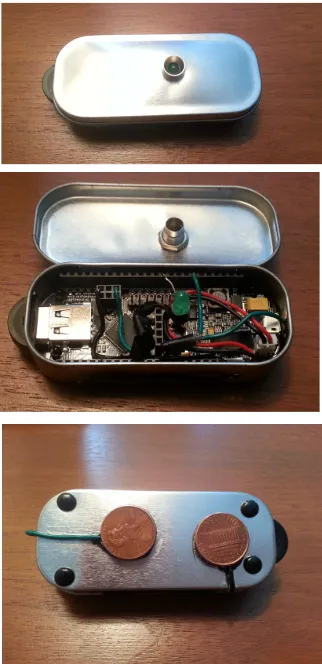
The construction of knowledge through digital data is also articulated through the critical making installation “Truth or Dare: a moral mobile compass for ethical living” (ToD).6 Following researchers of critical making methods (Hertz, 2012, Ratto, 2011, Ratto and Boler, 2014), ToD was built not to operate as a functional mobile app, but instead as an ironic, critical tool to engage, provoke users, and stimulate critical reflection about common sense use of biofeedback wearable technologies. The premise of ToD is that it mimics the function of a lie detector and, as a typical lie detector, is capable of distinguishing between true or false statements based on the user’s biofeedback readings. The statements in this case are text-based tweets, and the biofeedback information is the measure of electric conductivity on the user’s fingertips. ToD is composed by a mobile app installed in an Android smartphone and a biometric sensor that must be held by the user as she interacts with the app. The functioning of a biofeedback-based lie detector is grounded on the basis that electric conductivity of a biological body varies accordingly to emotional states. In situations of stress the nervous system activates the sweat glands and the humidity of sweat on the surface of our skin lowers the skin’s resistance to electric current. In consequence, the amount of electric current allowed through the body goes up. The sensors located on the surface of the skin pick up on the spike of the value and this
variation is interpreted as emotional distress. In the case of ToD, the variation of values was arbitrarily defined as correspondent to emotional distress, and likely, as a lie.
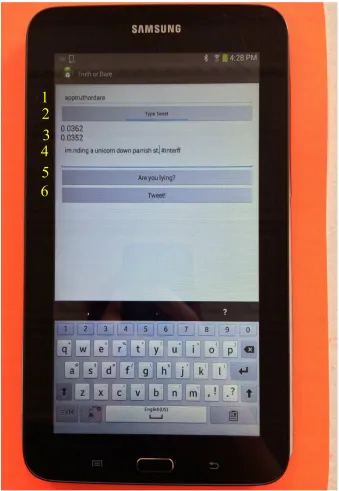
To interact with ToD, the user opens the app on her smartphone, allows for her Twitter account information to be synced, holds the sensor in her hand and starts typing a
tweet. From the moment she opens the app, the sensors are recording the values of
electric conductivity as “normal” and defining the average value as a baseline for “neutral emotion.” When the user finishes typing and hits “send,” the app collects a new value from the sensors and compares with the baseline value. If the new value is higher, the app automatically adds the hashtag #lie to the tweet. If the new value is equal or lower, the hashtag added is #true. In chapter two, I provide a more detailed account of the process of prototyping, the conceptualization that inspired it, and the rationale that guided the
execution of the interactive installation. I also expand on the description of the actual device, the setup of the exhibits and the interactions with participants.
This dissertation joins previous conversations in technology studies that discuss the interrelationships between the biological and the computational (Manning, 2009; Thacker, 2004) and extends these discussions to include self-tracking practices, the implications of personal data collection and big data mining to subjectification. I join more recently interdisciplinary approaches to pervasive computing, the Internet of Things and big data mining that have investigated issues of big data divide (Andrejevic, 2014), surveillance (Andrejevic & Gates, 2014; boyd, 2012; Haggerty & Ericson, 2000; Riley, 2014) and data epistemology (Gitelman, 2013; Van Djick, 2014).
This dissertation also answers to Rob Kitchin’s (2014) call for research
approaches to data mining practices that goes beyond the identification of data patterns and correlation in social networks, and instead discuss the processes of formation and reproduction of these patterns, their social and political consequences. Secondarily, this dissertation also fills in a gap in pervasive computing research to encompass a
multidisciplinary approach that does not only focus on the functionality of computing applications but also on the material affordances and the power forces of the practices they render.
correlation for predictive models that are later translated into norms and regulations and in evaluation of risk. In this latter example, correlated data will define the target values that define the numeric parameters of a healthy body, and possibly have an effect on health policy regulation and on health insurance coverage. Moreover, big data mining is comprehensive and might include sets other than physiological data, such as purchase history, credit score, background check…obtained through specific agencies that collect this data (i.e. banks), through disclosure on social media, and parsed out through specific algorithms. One danger of data correlation lies in the potential of its application for discriminatory practices (when social profiling based on correlated data is conflated with the truth). This might happen, for example, when data analytics is taken as the sole variable to define a profile of potential terrorist activity that produces a risk profile that is defined within specific ethnicities, thus expanding the assessed risk to an entire
population. It can also be present in consumer profiling in what is recently being called “digital redlining.” The term is an algorithmic actualization of the term “redlining” that was coined in the 1960’s by John McKnight (Sagawa & Segal, 1999) to describe the practice of marking areas on a map where banks should not authorize loans. The issue was that the redlined neighborhoods were typically populated by racial minorities, and the bank policies further worsen their economic situation. Similarly, as the redlining of neighborhoods served to mark the undesirable consumers, algorithmic redlining through automated data correlation can serve as a proxy to reproduce ongoing biases and
reinforce asymmetric purchase power and access to services. Data analytics might
understanding of data analytics as performative and embedded in a rhetorical materiality of modular numeric discretion.
This dissertation investigates how the use of pervasive computing technologies devises practices of self-making through the appropriation of sensors and data mining strategies. It also investigates how self-tracking practices turns the biological body into a site of physiological data as well as a territory built upon data correlation. And finally, I investigate how the use of pervasive technologies and big-data mining strategies produce networks of power by producing forms of knowledge through quantified data and
negotiating data ownership, privacy and parameters to assess risk. I examine these
questions by engaging with self-tracking and by observing the followers of the Quantified Self movement. I also examine these questions as a critical maker in the construction of an interactive installation that rearticulates the premise of objectivity assigned to digital data as a parameter for knowledge construction.
In the following section, I articulate the theoretical framework in which I approach the Internet of Things, the methodological approach and I provide a guide for the structure of this dissertation.
Theoretical framework
contingently related practices, representations, experiences and affects" (Slack & Wise, 2005, p.128).
Deleuze and Guattari’s image of the rhizome described in A Thousand Plateaus
(1987) is a useful approach to the architecture of the Internet of Things. The figure of the rhizome synthesizes a post-Structuralist image of thought that has been often applied by digital media researchers to characterize open-ended and non-hierarchical networks. A rhizome replaces an arborescent structure, which is vertical, linear and hierarchical. A rhizome is horizontal and it extends itself horizontally, with no rigid structure or center. It grows from multiple connections it establishes of its formation that are only productive in relation to each other. A rhizome is composed by the connections among disparate
and rearrange. Thus, the multiplicity and the connectivity that prevails in the theoretical arguments of A Thousand Plateaus fits the heterogeneity, associative and innovative aspects of digital media applications.
Although the rhizome and the topological figure of the plateaus are useful to explain the co-constitutive dynamics between spatial, technological and human dimensions of the Internet of Things, they are not sufficient to describe the power dynamics at play. We must acknowledge that the dynamism of the rhizome is bound to the material affordances of technology (computing networks are bound to structured protocols in order to function) and to the power forces that shape the social use of technology (availability of infrastructure, policies of access, types of applications, etc.). As a theoretical model of network, the Internet of Things approximates of a rhizomatic structure. But as an actual technological network, it is forged in ways that privilege some connections over others, because the material and economic resources for the
implementation of the required infrastructure are asymmetrical.7
Therefore, I produce a genealogical account (Foucault, 1985) of the Internet of Things that acknowledges the material and historical formation of the technologies, subjects and the social and political power that shape the IoT. Within the scope of new-materialist tradition to Philosophy, Humanities and Social Sciences, Michel Foucault’s genealogy is a method that uncovers the relationships between power, knowledge and subjectification within historical periods. A genealogical analysis examines the
conditions for the emergence of certain systems of beliefs, the parameters for truth and rationality, and how a society in a given historical time considers some things knowledge.
In Discipline and Punish (1978), for example, Foucault looks at the organization of the penal institution to describe how actions of punishment have been transformed into mechanisms of disciplinary surveillance and control over the individual body. The
relation of discipline as a technique of power is intimately related to the moment in which the exercise of sovereign power weakens due to the questioning of its legitimacy—related to the crisis of feudalism and the rise of a productive economical subject (burgeoisie). Unlike the monarchical state which would justify its exercise of power through
transcendental laws of divination to command over the population, the democratic state requires internalized mechanisms of surveillance and control to exercise its command, now justified also as a mechanism to provide the security of the population. This
mechanics is materialized in the panoptic architecture of prisons which allows guards to observe the behavior of prisoners but doesn’t reciprocate the privilege of visibility to the latter. Because prisoners cannot tell whether they are under surveillance or not, they are coerced to obey the rules faced with the possibility of punishment if caught in
undisciplined behavior. The panoptic gaze over the incarcerated population, but that cannot be looked into the eye, is the materialization of the apparatus of disciplinarization and is present in other forms of technologies of power such as the church and the schools. Following this model, Foucault (1980) produced analysis of how power/knowledge dynamics produce complex power relations between institutional practices, bodies and systems of thought:
Power is employed and exercised through a net-like organization. And not only do individuals circulate between its threads; they are always in the position of simultaneously undergoing and exercising this power. In other words, individuals are the vehicles of power, not its points of application (p. 98).
A traditional concept of power describes it as owned and exercised by an agent. In this framework, power is relational and productive (Foucault, 1985), and agency is
spaces and forms of knowledge are states of becoming, and are defined through their capacities for affecting or being affected, while they render the motions that animate their own becoming:
In the first place, a body, however small it may be, is composed of an infinite number of particles; it is the relations of motion and rest, of speeds and slowness between particles, that define a body, the individuality of a body. Secondly, a body affects other bodies, or is affected by other bodies; it is this capacity for affecting and being affected that also defines a body in its individuality. (Deleuze, 1991, p. 123)
The power forces are multiple and work in and through space, social groups, different levels of data access and algorithmic intelligence, simultaneously producing forms of knowledge and shaping subjects of knowledge. In the next chapter I articulate how the infrastructure of access is critical to the understanding of the social uses of networked technologies, and identify the institutional agents in the industry, in the academia and in grassroots movements that shape the IoT.
In summary, I produce an analysis of the IoT as a material articulation of techno-social practices that transcode the analog physical world to digital data, thus
Methodological approach
My approach to these questions draws from the new materialist tradition to Media and Cultural Studies which stresses the co-constitutive relationship between embodied individuals, culture, and the physical world around them. This tradition is articulated here through dialogues I established with authors who recover the dependency between
embodiment and subjectivity (Farman, 2012; Haraway, 1991; Manning, 2006, 2009; Munster, 2006), the understanding of technologies as social artifacts and as material articulations of forms of knowledge (Fuller, 2005; Galloway, 2004; Galloway & Thacker, 2007; Rose, 2006), and reposition the subject as a process in becoming immersed in arrangements of power (Deleuze & Guattari,1987; Deleuze, 1991; Foucault, 1980; Latour 2002). Even though the term Internet of Things is often appropriated by the technology industry to brand research and development initiatives that deal with “smart” objects,8 in this dissertation, I approach the technological infrastructure of the IoT beyond its devices. I present the Internet of Things through the material development of technologies, but I also acknowledge how it follows the social imaginary of ubiquitous computing, and how the participation of researchers, institutions and grassroots movements reshapes and actualizes the IoT in the actual technological landscape.
To approach the research issues mentioned previously I used mixed methods based on premises of Grounded Theory (Charmaz, 2006). Grounded Theory methods rely on empirical data constructed by observations, materials, events and experiences to develop theoretical analysis. My data consists of auto ethnographies of personal use of
8 See the R&D initiatives by Cisco at http://www.cisco.com/web/solutions/trends/iot/overview.html; by IBM at http://www.ibm.com/analytics/us/en/internet-of-things/, and by Microsoft at
self tracking technologies conducted during the entire research process, an observation of the Quantified Self online discussion forum between July and December of 2013, and a physical computing installation9 entitled “Truth or Dare” (ToD) that was showcased in two art exhibits in 2013 and 2014.
In different periods of the investigation I conducted auto ethnographies and kept notes and memos of my personal experience with wearable technologies. The anecdote in this introductory chapter describes one situation of my experience at the clinical trial, which monitored my sleep quality through a wrist biofeedback sensor. I conducted another auto ethnography using the Misfit Shine, a fitness tracking wearable device (described in chapter 4). These ethnographies were conducted in different times of the research process—the clinical trial at Duke happened in the initial stage of the research in the Fall of 2012, and the use of the Misfit Shine fitness tracking happened in Fall of 2013— because as I progressed with the data gathering I recognized the need to complement the data set with primary accounts of use of the technologies. The
conduction of the auto ethnographies in different stages allowed me to compare memos and notes from each ethnography with each other and concurrently with the other data sets I gathered in my observations of the Quantified Self forum and the “Truth or Dare” installation. This setup corroborated one of the key methodological guidelines of Grounded Theory, which is the constant comparison between data sets during all stages of analysis.
The main reason I opted for ethnography as a component of my research methods is the prerogative to delve into the situational use of the technologies. This allowed me to gather rich data that provided me with multiple dimensions of the use of these
technologies. By using the aforementioned devices, I became more aware of how my biological body interacts with and negotiates different levels of intimacy with technology, and how technology creates new knowledge of my personal biology, and consequently of my self. The choice of auto ethnographies for this study allowed me immerse and gain an insider’s perspective of the reality at study while actively reflecting upon the events. From the data gathered during the ethnographies I was able to articulate my research questions and create interpretative renderings of the data set.
Based on the initial observations produced by the ethnographies, I developed the concept for the “Truth or Dare” installation, described earlier in this introduction. The construction of “ToD” allowed me to develop critical knowledge about wearable
technologies while engaging with material production. According to Ratto (2012), critical making as a method bridges two modes of engagement that are frequently depicted as divorced. Critical thinking, often taken as a mental and intellectual process, and physical making, often described as goal oriented work, can be combined and generate innovative, critical hands-on experimentation with concepts and materials. The construction of the prototype and the assembling of the installation was a long process of non-linear progress. My technical skill set often fell behind my Social Science scholarly expertise. Even though the many trial and errors with the installation setup was a logistics
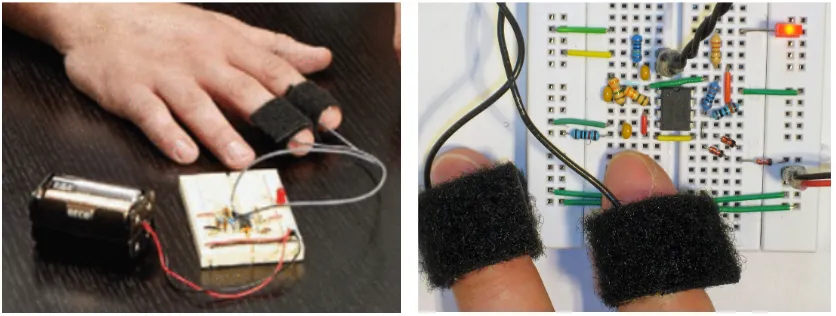
affordances of materials. The initial attempts to build the galvanic skin sensors—that collect the values of electric conductivity on the surface of the skin—exposed the challenge of interfacing organic and non-organic materials and translating physiological performance into electric response and digital values. The first readings were scattered and randomic and triggered a reflection about the material constitution of the flesh, the normalization of physiological performance translated into numeric ranges of health standards.
In addition to the installation, I observed the interactions that occurred in the Quantified Self website’s forum between July and December of 2013. I kept records of all the interactions and based on Grounded Theory guidelines for textual analysis, and I examined the data to identify emerging categories.
Emerging categories and research questions
During my investigation, I wrote memos, collected images, recorded videos and kept field notes as referenced data of my experience using wearable technologies (the biofeedback sensor for the Duke hospital clinical trial and Misfit Shine, a wearable fitness tracking device), constructing the “Truth or Dare” experiment and observing the online discussions on the Quantified Self forum. The initial phase of my analysis
comprehended selecting the most significant situations in the aforementioned experiences and describing what is happening in each situation. I assigned code-names that
the biological body?” and my research interests guided me to look at changes in human subjectivity, in spatial practices and forms of power. The cross-comparison and grouping of the coded data brought forth the following emerging categories of analysis:
1. Self-making through pervasive computing technologies: The first category comprehends data segments that touch on the relationship between individuals and their biological bodies forged by data collected through self tracking devices. The data
gathered demonstrates how the access to physiological performance’s digital data renders a data double of the self. The physiological data awareness reinvents how the user
comprehends and interacts with her own body and prompts new practices of self-making. This category accrues evidence of shifts in the construction of human subjectivity when interfaced with pervasive self-tracking technologies.
2. Space-making and pervasive computing technologies: The second category comprehends data segments that touch on the interconnectedness of digital and biological bodies as networked social spaces. The extension of computing into bodies of living and non-living things and physical spaces create the possibility of mapping the internal space of the body as we map physical geographical spaces. This category concentrates on observations that refer to the body as a space to be mapped and connected to other already mapped spaces.
3. Pervasive computing technologies and power: The third category comprehends data segments that touch on how pervasive computing technologies
manifested that the access to their physiological data creates a sense of empowerment over their lives and at the same time that it brings awareness about data breaches and invasion of privacy and intimacy. The sense of empowerment is also shared by makers who, given the access to open hardware and software, come up with new strategies to develop devices. Some makers and adopters of pervasive computing technologies accredit the DIY maker movement as the exploit to shift the power dynamics and handle control from large technology corporations and over to the user. Simultaneously, other data segments show evidence of critique to the open source sandbox model of
technological development and frame it as an alternative business model that maintains similar power dynamics as the mainstream large corporation business model.
These are the emerging categories that demonstrated greater saturation in the data gathered and that more significantly related to the initial research questions. Other
categories emerged in the initial analysis, however they did not relate to the research questions or did not represent sufficient saturation to justify their relevance. In the Quantified Self forum, for example, I noticed a large quantity of posts with requests to participate in surveys for independent, private, and academic research. This category, while possibly relevant to Rhetoric of Science for example, was not included in this study as it did not relate to the issues of interest to this study. In this perspective, the
In Grounded Theory (Charmaz, 2006), the data set guides the researcher through the definition of the methodology as well as the theoretical framework. My personal research interests and scholarly background led me to a tentative research question that pointed to the relationships between the use of pervasive computing technologies and human subjectivity, spatial practices, and power. After the initial analysis of the data set, the research questions and the theoretical frameworks were refined. Similarly, as the emerging categories are interrelated and traverse one another, the research questions are also founded upon these logics of articulation. This dissertation addresses the following research questions:
Research Question 1 (Pervasive Computing and Space): How are embodied spaces produced through the appropriation of pervasive computing technologies?
Research Question 2 (Pervasive Computing and Self): How does the use of Pervasive Computing technologies devise practices of self-making?
Research Question 3 (Pervasive Computing and Power): How does the use of Pervasive Computing technologies produce networks of power?
Structure of dissertation
agenda in building the Internet of Things. I also discuss how the availability of open source micro-controllers and microprocessors and the emergence of the maker movement are important components to the advance of research regarding technology appropriation. I explain how Critical Making is structured as a research method for interdisciplinary research and specifically, in this dissertation, how I have taken this approach in the conduction of a critical making experiment.
Chapter two presents the narrative for conceptualization and the making process of “Truth or Dare.” I describe the steps of the construction phase, the challenges I
encountered and the setup for the exhibits the installation took part of. I also introduce the critical reflections that were triggered during the making process.
Each one of the following chapters addresses one of the research questions mentioned in the previous section. In chapter three I address the first research question (How are embodied spaces produced through the appropriation of pervasive computing technologies?). I explain how digital data and the dynamics of data mining produce multi-scalar spatial dimensions in the Internet of Things. I demonstrate how the materiality of digital data and practices of data mining produce forms of knowledge in scalable dimensions: from the micro dimension of the self to the macro dimension of smart cities and social politics.
In chapter four, I reiterate the pervasiveness of a digital episteme (Maddalena, 2014) to address the second of my three research questions: how does the use of
the ToD installation, in which participants constructed their identities as truth tellers or liars. I discuss these practices of self-making as a form of self governance (Foucault, 1997, 2003) enacted through the material organization of digital technologies. I position this discussion in the wider context in which digital data and demonstrate how the making of the self is grounded on the digital episteme (Maddalena, 2014). I approach digital metering from a socio-historical perspective to reinforce the relational dynamics in which the self is simultaneously a product and the producer of the assemblage she is part of.
In chapter five, I address the last of my research questions: how does the use of Pervasive Computing technologies produce networks of power? I discuss implications of the previously discussed self-making practices and spatial practices as forms of power. I argue that the self-tracking, as a tool for self governance—in ways to care for the self— and potentially to care for populations (Foucault, 1997, 2003)—can also produce
practices of surveillance. I describe the Internet of Things as a sociotechnical assemblage that operates under the aegis of control (Deleuze, 1997), as a surveillant assemblage that demands the negotiation of new boundaries for privacy and intimacy. Self-trackers state that the access to their physiological data creates a sense of empowerment over their lives and at the same time it brings awareness about risk of data breaches and invasion of privacy. The sense of empowerment is also shared by makers who given the access to open hardware and software come up with new strategies to develop devices.
Simultaneously, the open source sandbox model of technological development of
as the mainstream large corporation business model. I also present other emerging forms of power through discourses in critical appropriation of technology, often present among makers and sometimes among users of the Quantified Self forum.
I conclude the dissertation by presenting a reflection on my findings and indicating the main areas of contribution to the fields this study proposed to relate to. I also point the limitations of the study and indicate potential unfoldings for future research.
Contributions of this study
This dissertation contributes to scholarship in the field of Digital Media, and Cultural Studies in three main aspects.
As I argued in the beginning of this introduction, there is a growing interest in pervasive computing technologies and self-tracking practices. Even though the number of publications is still limited, the growth of the market of wearable devices and the number of research projects in development demonstrates the relevance of the topic. The first contribution of this dissertation is a gesture towards the expansion of studies regarding self-tracking practices, which, due to their novelty, are still under researched. Because the appropriation of wearables and sensors is fairly recent, and the Internet of Things is in ongoing implementation, studies about the sociotechnical implications of these
technologies have only recently started to emerge.
tool for health-management (Lupton, 2015). My approach to this study reconciles a genealogical survey of the Internet of Things (narrated in the next chapter), while attentive to the material arrangement of data and its epistemic action. The approach I develop acknowledges self-tracking practices as part of a sociotechnical arrangement and characterizes the dynamics between the analog/physical and digital/numeric worlds as a creative and co-constitutive weaving. Self-tracking is discussed in this dissertation as an action-to-knowledge about the self created through numeric, discrete and modular data units. Through this perspective, the role of the digital interface is described as a complex and modular embodiment within physical realities, differently from a functional approach to technologies that approach interfaces as a binary filter of the “natural” world (Howard, 2011). Through this framework I discuss technology appropriation as a procedural material articulation of discourses, social practices, and actions. I perceive subjects, technologies and spaces as an assemblage of dynamic productive forces that brings to light how power relations are exercised, for example, through forms of data access, digital divide, governance of individual’s and populations’ physiologies.
dimensions for scientific inquiry. As Katherine Hayles (2012) reminds us practice-based research is relatively new to the Humanities:
The work of making—producing something that requires long hours, intense thought, and considerable technical skill—has significant implications that go beyond the crafting of words. Involved are embodied interactions with digital technologies, frequent testing of code and other functionalities that results in reworking and correcting, and dynamic, ongoing discussions with collaborators to get it right (p.19).
Critical making comprehends the overall process of material engagement with technologies, that is reflexive and informative about how the world is while at the same it deconstructs and opens up new articulations for how we relate to technology and society. The purpose of the “Truth or Dare” installation was also to explore the possibilities of experimentation beyond the modern episteme of the scientific method, in which the experiment serves as an instrument of data collection to extract evidence from the observed reality to either support or deny a hypothesis. With ToD, I appropriated of digital technologies and utilized algorithmic analysis as a creative method to explore the epistemological underpinnings that produce algorithmic knowledge.
media technology. I explore the rhetorical agency I have on the means of symbolic and material production of a technology, and develop a critical perspective over the
relationships between technology development and appropriation.
ToD is motivated by a genealogical research of self-tracking technologies and for that, takes into consideration how the biological body is inscribed in a power-knowledge dynamics of digital self-tracking organized as a biopolitical practice of self-governance (Foucault, 1997, 2003).
CHAPTER ONE
Internet of Things: building a landscape of technological folds
If you are ever invited to go to Bill Gates’ house,10
you will have to go through
doors operated by biometric locks and you will be given a microchip pin to wear. This
pin will pinpoint your exact location in the house and relate information to sensors
embedded in to the architecture of the house to adjust the temperature of the room
according to your preferences, to turn lights and devices on and off as you move across
the house. If you are a particular fan of a painting, the image will follow you around the
house being cast on the in-numerous screens installed on the house. When Bill Gates
finished the construction of his smart home in the mid-nineties, the novelty of home
automation through lasers, networked sensors and voice activation materialized the
wizardry of the near future portrayed by movies such as Back to the Future (1989) and
the TV seriesStar Trek (1966-1969). Twenty or so years after, the automation of the domestic space is increasingly familiar, as trivial objects and even our own bodies are
interweaved with networked digital infrastructure. Off-the shelf home automation
systems controlled remotely through smartphones, wearable health tracking devices and
DIY kits that allow you to customize sensors and responses to particular needs are
available on the market at a more accessible price point that Bill Gates was billed for in
the 1990s. The contemporary technological landscape composed by networked sensors
and embedded devices in physical spaces and bodies is defined as the Internet of Things.
It is established through heterogeneous networks that include the internet but is not limited to it. It is composed by the interaction between users and machines, and machines
and machines, and includes multiple digital devices and diverse digital infrastructures, such as mobile media, wearable sensors, location-aware technologies, geomapping systems, and RFID tags. The IoT is a mark of pervasive and ubiquitous computing, as it moves towards an (but never quite there) immediate ubiquity of computing devices and digital networks.
The term Internet of Things was coined by Kevin Ashton (1999) in a lecture given at Procter&Gamble about uses of RFID (Radio Frequency Identification) as an efficient cost-effective system for the identification of goods in the company’s supply chain. More than identifying goods (as a regular bar code would), the use of sensors that read the RFID tags allowed for real-time monitoring of the physical state of the goods and location. These interactions between sensors and tags provided the network with
information that further enhanced the supply chain efficiency, as it feeds back integrated information processing. Since 1999, RFID technology has been implemented in various applications such as logistics and transportation (supply chains, traffic control and electronic toll collection); fields of research (environmental sciences, to track species migration patterns and population sizes); marketing (interactive and personal
empowered with connectivity capacities), and evolves with the development of more seamless hardware, such as wearable computing devices—i.e., Steve Mann’s WearCam and Google Glass—and nanotechnologies—e.g, silk silicon embeddable electronics and biofeedback sensors.
In this chapter I provide a historical perspective and a conceptual survey of the
contemporary technological landscape of the Internet of Things. I present apossible
historical account11
of the Internet of Things as emerging from three overlapping
initiatives: the research and development initiatives in ubicomp and pervasive computing
at companies such as Xerox and IBM, the research agenda at academic institutions such
as MIT group Bits and Atoms, and grassroots tinkering movements with physical
computing prototyping in hacklabs, hacker and makerspaces. I begin from the historical
context in which ubiquitous computing (ubicomp) research started at the Xerox PARC
Laboratory in the 1980s. I argue that the concept of the Internet of Things derives from
an ubiquitous computing imaginary deeply rooted in Mark Weiser’s vision of the
computer of the 21st century (Weiser, 1991). At the same time, it diverts from it, as the
Internet of Things takes shape in a technological scenario where the material affordances
of the infrastructure often prevails over a design of calm computing (Weiser & Brown,
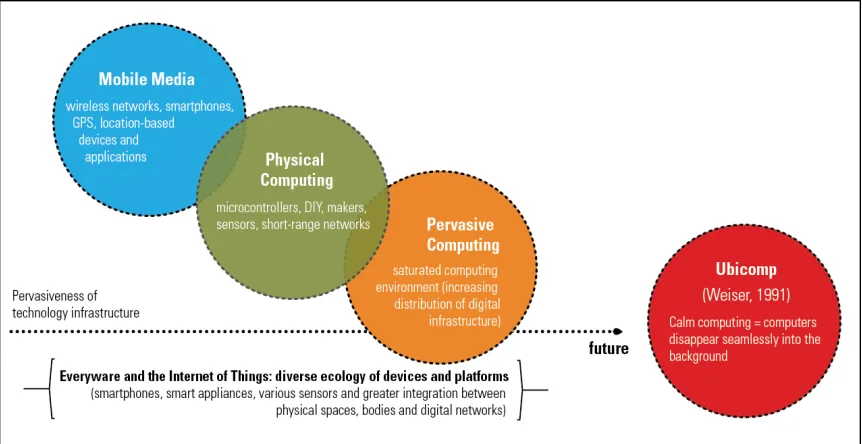
1995). From there, I trace a conceptual map of terms that emerged from ubicomp, such as pervasive computing, physical computing, tangible media, and everyware, and their
attempts to elucidate the social and technological transformations at work. Then I present
the rise of the maker movement, hacker, and makerspaces as events that produce the
11 This account is limited to what pertains the participation of the actors cited and does not imply to be a
Internet of Things as also emerging from technological development and appropriation in
self-organizing communities and through individual entrepreneurship. The current
applications of the Internet of Things are marked by a heterogeneity of platforms and
competing protocols—produced by established tech companies and emerging independent makers—and the enhancement of location-aware technologies and physiology mapping as directives for the modeling of complex intelligent systems. I
argue that the transition between an initial and a later stage of the Internet of Things is
prompted by a set of three main shifts. First, a material shift in size, as the miniaturization
of computing technologies reaches micro and nano levels which allows computing
technologies to be embedded into physical spaces, bodies, and things. Second, a shift in
accessibility, with greater affordability of digital hardware and expansion of internet
infrastructure. And lastly, a shift in distribution, as open access microprocessors,
micro-controllers and sensors are popularized, and DIY strategies take shape in movements
such as communities of makers and hackerspaces. In this chapter I also demonstrate how
the rise of the maker movement contributes to the establishment of innovative forms of
technology appropriation and therefore stimulates experimentation. I conclude this
chapter by addressing critical making as an emblematic research method for social
studies of technology.
The role of social imaginaries and infrastructures
of computer automation, connectivity, sensor technologies and nanotechnologies populated the cultural imaginary. Some examples in literature and cinema are the smart household where the McFly family lives in the Back to the Future (1989) franchise which includes smart glasses and smart fridges; the variety of handheld devices in the Star Trek
(1966-1969) series that allow for sensing, scanning and processing data; voice activated artificial intelligence such as the character HAL 9000 from 2001: A Space Odyssey
(1968); the tele-screens that allow for ubiquitous communication and surveillance in George Orwell’s novel 1984 (1949); cyber warfare as described in WarGames (1983); and the ubiquitous network of sensors that characterize the urban landscape in Minority Report (2002).
The construction of social imaginaries around the Internet of Things (and the desire for ubiquitous communication) is important because the development of new infrastructures of information is deeply entrenched into fictional fabrications of social imaginaries. Imaginary and technological infrastructures feed into each other acting on a desire to relate to a technological scenario and eventually disrupt into the emergence of new technologies.12 Hence, looking at changes in the infrastructure of access is critical to the understanding of the social uses of networked technologies, especially when the changes include expanding the network reach to embed its capacities in infrastructure that would not traditionally be informationalized. It is important to think of infrastructure in terms of material and discursive aspects as they are built to fit predesigned functions as much as their use is shaped around their material affordances.
Susan Leigh Star (1999), in her seminal work on ethnography of infrastructure, calls for an ecological approach to infrastructure in ways that take the relational aspect between infrastructure and human actions into consideration. Underneath singular—and potentially boring—aspects of infrastructure, lie narratives that are established within the groups that shape and make use of the infrastructure. In other words, there is a sense of embodiment of identity that is built in interaction with the infrastructure. For example, for an architect, a set of stairs is a component of a structure design and engineering
project, while for person in a wheelchair, a set of stairs is an obstacle. Infrastructure is not a thing bare of meaning, nor a void stable artifact; it is in fact fundamentally relational as it becomes infrastructure in relation to specific practices of use.
Infrastructures change in time and human action and human identity shifts in interaction with infrastructures of technologies.13 Harold Innis’ (1951/2008) study of time-biased and space-biased media in relationship to their materiality show evidence of how the rise and fall of empires are related to their infrastructure of communication. Time-biased communication includes clay, parchment, and stone. They are typical of tribal and oral societies, they are more stable and reinforce local values of community and tradition. Space-based communication is notorious for more ephemeral materials such as print, radio and television. It privileges a more rational and non-personal way of thinking (not necessarily tied to tradition) that favors extending control over geographic space. Innis’ analysis of the fur trade in Canada demonstrates the contrasts between a space-biased civilization (Europeans) and a time-based society (Native Indigenous). According to Innis, media (as infrastructure of communication) is biased towards forms
of social organization, identity and exercise of power. It is thus essential to the understanding to the formation of societies.
More recently, Manuel Castells (2010), in The Rise ofNetwork Society, indicates how networked infrastructures reshape economic, political, cultural and social
relationships. The rise of information networks has impacted the perception of space (as simultaneous communication does not require physical proximity) and time (immediate communication disrupts chronological time and brings a sense of a continuous present). Both Innis and Castells provide evidence of Star’s argument that infrastructures are not innocuous elements in the construction of social arrangements. They are, in fact, components of a larger social ecology that is constantly redefined while appropriating current and inventing new uses of infrastructure.
Hereof, I trace the concept of Internet of Things based on an understanding of infrastructures as an active actor in the forms of technological appropriation. The narrative I present is based on historical and anecdotal evidence and an analysis of the social and technological imaginaries it emerges from.
The heritage of ubicomp research
According to Weiser (1991), the history of computing is divided in three paradigms exclusively defined by the computing hardware at use. The first paradigm is marked by mainframes, followed by personal computing and lastly by ubiquitous
The initial setup of the internet, as ARPANET, consisted of an experimental military network accessed from twelve fixed sites. It dates back to the late 1960s, early 1970s and goes until 1990 when the ARPANET was shut down. In 1987 the ARPANET went through a transition as a strictly military to a civil network and was named NSFNET (National Science Foundation Network) where universities and researchers were the majority of users (Abbate, 2000). The infrastructures of access were mainframes and desktops computers located in the universities and government buildings. Research and governmental institutions controlled the flows of information within the internet. For that reason, the use of the internet is also tethered to institutional purposes, such as research collaborations and governmental administrative processing. The rigidity of use and the restrictive points of access to the internet (bound to institutional fixed sites) is
conceptually distant to the technological imaginary that nurtured the concept of ubiquitous computing and the Internet of Things.
The first discussions about the feasibility of a technological landscape remotely similar to the Internet of Things date back to the late 1980s when the first web page went online.14 As the civil adoption of the internet expanded, Mark Weiser (1991) predicted possible uses of the internet and other computer networks beyond institutional uses. He also predicted forms of user access to the internet beyond tethered desktop computers and machine-to-machine communication protocols for automated data processing, regardless of user input.
His vision of the “Computer of the 21st century” (Weiser, 1991) described a network architecture accessed from multiple panels of various sizes and capacities
occupying heterogeneous networks with distributed connectivity. Weiser’s vision resulted from the applied research developed at the Xerox Palo Alto Research Center (Xerox PARC) which team had (un)intentionally started a beta generation of smart objects.15 Between 1985 and 1990, a group of researchers at that office developed an interface to the office’s Coke vending machine to solve what they called the “warm coke” problem. In both cases, a hardware interface was instrumented with a terminal room that put the machine online and allowed people to handle status requests from their desktop computers and consult whether the machine was full, and if the drinks were warm or cold. Running the program online saved time going to the vending machine when the inventory was zeroed or when available drinks were at a non-desired temperature. Similar initiatives also happened outside of Xerox PARC. In 1989, John Romkey and Simon Hackett presented the “Internet Toaster,” the first electrical object to be controlled via TCP/IP at the 1989 Interop Conference, an annual trade fair for information technology.16 But it was Weiser’s team effort of developing hardware and documenting progress
reports that set a foundational stone to the becoming of ubiquitous computing (ubicomp). Weiser’s team (Weiser, Gold & Brown, 1999) proposed human-computer
interfaces (HCI) that are more focused on the “human reality” side of the process, in which the computing capacities adapt to the situational uses of the technology. The focus of the Computer Science Laboratory at Xerox PARC turns to the development of
ubiquitous computing hardware where the twenty first century personal computer was envisioned very differently from the then current individual use, complex operation,
15 The email thread that recounts the trajectory of the smart coke machine is available at http://goo.gl/MYUgLb.
black box, desktop tethered machine. Their approach was more focused on building computing environments where the computing processing and connectivity was shared among the devices, rather than on the development of one super desktop machine with outstanding hardware capacities. Weiser’s conjecture described a multiplicity of devices embedded into the physical environment that did not require extensive technology literacy to operate. These devices would act as access panels to a shared network, and while networked computing is inherently everywhere, human-computer interaction would become natural and seamless to the point of vanishing into the background. For a
computing environment to be truly ubiquitous, Weiser argued that the following criteria had to be met: (1) computing processing capacities must be embedded into ordinary physical objects, not only on desktop screen based machines. The computing hardware must be of minimal size and unnoticeable to the user. (2) These physical objects have their ordinary uses augmented with computing services, they have easy to operate interfaces that are seamless to the user. (3) The ubiquity of computing services relies in the shared connectivity between devices, applications and users and is not centered in one device. The omnipresent availability of interconnected computing processing is what characterizes ubicomp. To summarize, his vision of ubiquitous computing environments would be realized through a multiplicity of terminals in different sizes and capacities, such as tabs, pads and scrapbooks. They would be embedded and networked in ordinary objects, so the sensation of transparency would become within the social practices and use of the technology.