Challenges in practical computation of global sensitivities
with application to a baroreceptor reflex model
Christian Haargaard Olsen
∗1,2, Hien Tran
3, Johnny T. Ottesen
4, Jesper Mehlsen
2and Mette S.
Olufsen
∗51
Biomathematics Graduate Program, North Carolina State University,Raleigh, North Carolina, US
2
Coordinating Research Center, Frederiksberg Hospital, University of Copenhagen, Denmark
3
Department of Mathematics, North Carolina State University, Raleigh, North Carolina, US
4Department of Science, Systems and Model, Roskilde University, Roskilde, Denmark
5Center for Research in Scientific Computation, North Carolina State University, Raleigh, North Carolina, US
Email: Christian Haargaard Olsen∗- [email protected]; Hien Tran - [email protected]; Johnny T. Ottesen - [email protected]; Jesper Mehlsen - [email protected]; Mette S. Olufsen∗- [email protected];
∗Corresponding author
Abstract
Background: Sensitivity analysis is the assessment of the effect on a model output from changing model
parameters. Quantitatively, local sensitivity analysis can be performed by computing the derivative of the model
output with respect to the model parameters. Measures obtained are called local sensitivities as the derivatives
are evaluated at some nominal parameter values. Hence, if the uncertainty in the parameter values is high or the
model is highly nonlinear, local sensitivity analysis may be inadequate.
Results: This study shows how global sensitivities can be computed using simple integration of local sensitivities
over the allowed parameter space utilizing quasi-Monte Carlo integration with low-discrepancy sequences. In
addition we show that analysis of parameter sets displaying specific behaviors can lead to a better understanding
of the role of certain parameters and be used to set bounds for the parameter space. We illustrate the approach
for global sensitivity computation using a baroreceptor reflex model, which describes heart rate regulation during
head-up tilt.
Conclusions: Global sensitivities were calculated for an improved baroreceptor reflex model, by averaging local
sensitivities. Parameter sets causing rapid fluctuations in local sensitivities, as well as parameter sets causing
parameter relationships and helped limiting the parameter space.
Keywords: Sensitivity analysis, Global analysis, Modeling, Heart rate dynamics
Background
The baroreceptor reflex system is the main system responsible for maintaining homeostatic blood pressure.
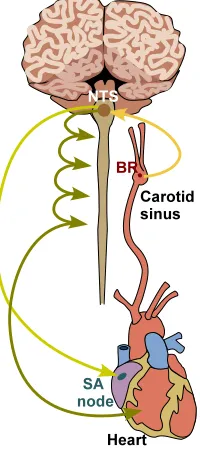
As shown in Figure 1, a change in upper body blood pressure imposed by postural change such as head-up
tilt (HUT) stimulates firing of afferent stretch sensitive baroreceptor neurons terminating in the aortic arch
and carotid sinuses. The signals generated by the afferent neurons are integrated in the Nucleus of the
Solitary Tract (NTS) from which it is transmitted within the brain stem to the sympathetic and
parasympathetic systems modulating the concentration of neurotransmitters acetylcholine and
noradrenaline at the end organs. Acetylcholine, associated with parasympathetic signaling, has an
immediate effect on heart rate and cardiac contractility, whereas noradrenaline, associated with the
sympathetic system has a delayed (5-7 seconds from the blood pressure stimulation) effect regulating heart
rate, cardiac contractility, and vascular tone [1, 2].
Heart rate regulation and many other biological phenomena, can be modeled mathematically using a
system of coupled nonlinear differential equations with states representing dependent biological variables
and an associated set of parameters representing constant quantities. Typically, parameters representing
physiological quantities, sometimes referred to as biomarkers, can be used to examine differences among
study cohorts. For example, parameters representing timescales or the magnitude of a given response may
be modulated by disease, and can thus serve as biomarkers that can be compared within and between
groups of subjects.
Physiological models are often derived from a mixture of first principles and empirical knowledge. Some
parameters may be measurable, but many may be assigned based on average behavior, in vitro
experiments, literature estimates, or may not be known at all. As a result, models may predict accurate
behavior for an average healthy subject, while it may be difficult to theoretically determine parameters
limited quantities can be measured for practical or ethical reasons and where biological systems can never
be fully isolated. One way to estimate patient specific parameters is via the solution to the associated
inverse problem, which given the system of equations and associated experimental observations provide
estimates of model parameters and initial conditions by minimizing the least squares error between the
model output and observed experimental data.
Typically, inverse problems do not have a unique solution, in particular since data may only be available
for one or a few of the model states, even for problems where the structure allows for identification of
parameters [3–6]. However, it may be possible to uniquely estimate a subset of model parameters by fixing
insensitive and correlated parameters at their nominal parameter values. Parameters are denoted
insensitive if the change in the model output is insensitive to changes in parameters and correlated if two
or more parameters change the model output in the same or complementary manner [4, 7]. Neither
insensitive nor correlated parameters are practically identifiable [3–5, 7]. Many methods for subset
selection [4, 7] are based on sensitivity analysis, which can be either local [8] or global [9]. Local sensitivity
analysis predicts how the model output is changed for given parameter values, while global sensitivity
analysis predicts how the model output is changed as parameters changes within the parameter space
defined by the problem formulation. Local sensitivity analysis is commonly used on steady-state and
time-dependent models and can only account for small variations from the nominal parameter values. On
the other hand, since global sensitivity methods examine effects on the whole parameter space, they are
more applicable for highly nonlinear problems.
One common method for predicting global sensitivities is based on global sensitivity indices (often referred
to as Sobol indices) [10, 11], which predict and decompose the model output variance and attributes this
variance to the parameters and their interactions. The advantage of this and other variance based methods
is that they allow exploration of input space, identifies interactions between input variables and are not
limited to linear responses. The disadvantage is the large computational cost. Other global methods are
the Derivative based Global Sensitivity Measures (DGSM) [8, 12] and Morris Method [13], both
computationally more efficient than Sobol Indices. DGSM is obtained by averaging local sensitivities
predicted for representative parameter sets within the parameter space, while Morris Method is a
one-at-time (OAT) method, that systematically varies parameters one at the time to obtain a measure of
capture effects of input variable interactions [8, 12, 13].
Early uses of sensitivity analysis includes economical and chemical reaction models, but more recently
sensitivity analysis has been applied to biological models. One of the challenges within biological studies is
that observed quantities often are limited compared to the number of model states. While most studies use
local sensitivity methods, some have explored both local and global methods. Examples include studies by
Tur´anyi [14] et al., who analyzed a wide range of chemical reactions associated with pyrolysis, combustions
and stratospheric compounds, and Hamby [15] who provides a short review of local and global sensitivity
analysis methods often used for model design, experiment planning and effects of varying model parameters
in environmental studies. In this study we show that ideas from DGSM method proposed by Kucherenko
et al. [12] can be used to obtain a measure of global sensitivities for the heart rate dynamics model.
The manuscript is organized as follows. First we present a physiological description of the baroreceptor
reflex system and the experimental data used for model validation. Next, the mathematical model is
presented, followed by a derivation of local and global sensitivities. Moreover, we present results of the
sensitivity analysis, ranking model parameters from the most to the least sensitive, and finally, we
demonstrate that sensitivities can be used to estimate bounds for model parameters. In the discussion, we
outline what insights sensitivities have provided that can be used in future studies addressing questions of
parameter identifiability.
Methods
The Baroreceptor feedback control and experimental data
The baroreceptor reflex operates via negative feedback control regulating heart rate, cardiac contractility,
and vascular tone in response to changes in blood pressure [2] (see Figure 1). This control system is often
studied using orthostatic stress tests, where the subject is exposed to procedures involving head-up tilt,
active standing, and lower-body negative pressure. For all tests, the applied task leads to gravitational
pooling of approximately 500 ml blood in the legs, reducing cardiac filling and thus blood pressure, which
in turn stimulates heart rate, cardiac contractility, and vascular tone.
Baroreceptors are stretch sensitive nerve fibers located at the carotid sinus and the aortic arch that senses
changes in arterial blood pressure [2]. A drop in blood pressure leads to a decrease in the firing rate of the
pathways are activated via the autonomic nervous system: The sympathetic and the parasympathetic
systems. Upon HUT, blood pressure in the upper body drops inhibiting firing of the baroreceptor nerves.
In turn, the parasympathetic system is inhibited, while the sympathetic system is stimulated.
Parasympathetic outflow is mediated by the vagus nerve, which mainly consists of large myelinated nerve
fibers with fast conduction and operates via modulation of the neurotransmitter acetylcholine.
Sympathetic activation is mediated through small unmyelinated nerve fibers with slow conduction and
triggers the release of noradrenaline via a network of slow conducting neurons. Due to slow conduction the
modulation of heart rate by the sympathetic system occurs with a delay of about 5-7 seconds whereas the
modulation caused by the fast conducting parasympathetic system occurs within a second.
In the heart, pacemaker cells initiate the electrical impulses causing contraction. Acetylcholine and
noradrenaline affects the rate of transportation of ions through the cell membrane and the level of
electrical potential required for contraction [2]. During head-up tilt the concentration of acetylcholine
decreases, inhibiting the damping of heart rate, whereas an increase in noradrenaline stimulates heart rate.
The baroreceptor reflex is often compromised in patients suffering from orthostatic intolerance [16, 17].
This syndrome is typically diagnosed using tilt-table tests monitoring changes in blood pressure and heart
rate, the only signals that can easily be measured noninvasively in the clinic. These data represent input
and output within a complex chain.
During the test, the subject is initially resting in supine position, until steady levels for blood pressure and
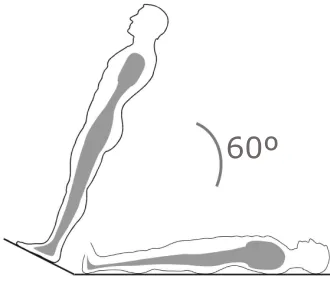
heart rate have been recorded. At this stage the table is tilted to 60◦
which triggers the baroreceptor
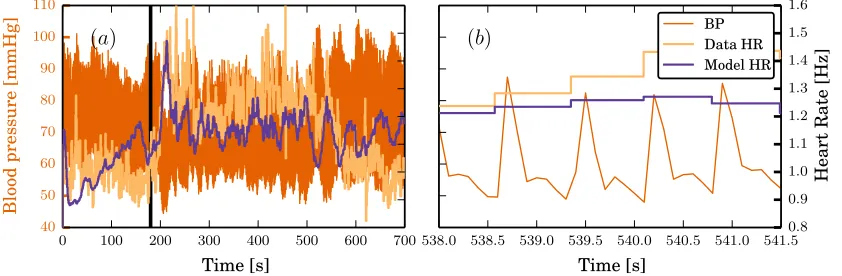
reflex. Figure 2 illustrates the experimental setup and Figure 3 shows a set of measured data. During the
experiment, heart rate is measured using a standard 3-lead ECG (FE135 Dual Bio Amp, AD Instruments
Inc, Colorado Springs, CO, USA), while blood pressure is measured using finger photoplethysmography
(Finometer, Finapres Medical Systems B.V., The Netherlands). For the data analysis presented in this
paper we extracted data from a 10 minute interval around the tilt. Data were sampled at 1 kHz, but
subsampled to 50 Hz for computational analysis. The experimental setup was approved by the internal
review board at Frederiksberg Hospital, Denmark and the subjects included in the study provided written
Baroreflex modeling
Numerous modeling studies have addressed baroreflex regulation (e.g. [18–20]), however, most of these only
analyzed some aspects of the system, and most were validated against literature and animal data. To our
knowledge, only a few models have described the complete system from blood pressure to heart rate
regulation [21, 22]. One of the obstacles in designing patient specific models is that human data are only
available at the ends of the chain: blood pressure, which serves as an input to the system and heart rate,
the model output.
The mathematical model investigated in this study incorporates the parts of the negative baroreflex
feedback system that modulate heart rate. It is described by coupled differential equations predicting
blood pressure changes, afferent baroreceptor firing rate, sympathetic and parasympathetic outflow,
concentrations of the neurotransmitters acetylcholine and noradrenaline, and the change in electrical
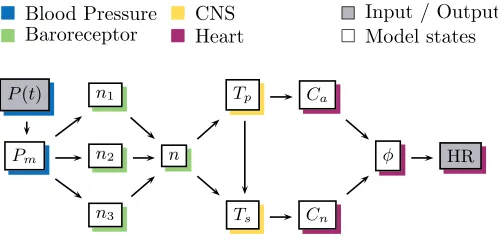
potential of the pacemaker cells, from which heart rate is predicted (see Figure 4). The model is motivated
by previous studies [7, 21–24], but is modified in a number of ways: First, equations describing afferent
firing are nondimensionalized eliminating a parameter from the system, a distributed delay is incorporated
instead of a fixed delay, and heart rate potential is modeled accounting for electrical stimulation of the
pacemaker cells. In the following, each component of the model is outlined.
Baroreceptor firing
The activity of the afferent baroreceptor neurons of typei(ni) are modulated in response to changes in
blood pressure. It is known that several neuron types exist, and that they can be separated according to
their ability to conduct the signal. Similar to previous studies [21, 23] we assumed, that three neuron types
can be differentiated, and that the activity of each neuron can be predicted by
dni
dt =ki
dpm(t)
dt
n(M−n) (M/2)2 −
ni−Ni
τi
, n=Xni, N =
X
Ni, (1)
whereNi is the threshold firing rate for each neuron type, N is the total firing rate threshold,nis the
current total firing rate,M is the maximum firing rate,ki is a constant determining how sensitive the
receptor is to changes in blood pressure,τi is a time constant that determines the rate at which the firing
rate decays to the threshold value, and dpm/dtis the rate of change of the mean blood pressure given by
dpm
wherep(t) is a linear interpolation of the experimental pressure data. The solution to (2) smooths the input pressure, providing a weighted average given by
pm(t) =
Z t
−∞
e−a(t−s)p(s) ds, (3)
wherea= 1.5 is a parameter that describes the shape of the profile used for the weighted average.
The parasympathetic outflowTp and the parasympathetic thresholdTp0 are defined as
Tp=
n
M, Tp0= N
M. (4)
Introducing the nondimensionalized quantitiesνi= (ni−Ni)/M with derivatives, the two equations above
can be rewritten as
dνi
dt =κi
dps
dt Tp(1−Tp)− νi
τi
, κi=
4kipmax
M , Tp= X
i
νi+Tp0, (5)
where the pressurepsis obtained by scaling the input pressurep(t) bypmax= 200 mmHg, i.e.
dps
dt =a p(t)
pmax −
ps
. (6)
In the above equations, the firing rate must be positive and smaller than the maximum firing rate, i.e.
0< N≤M, consequently, 0< Tp0≤1.
As described earlier the sympathetic signal is mediated to the heart via a complex network of neurons,
which in previous studies [21, 22] were accounted for by introducing a fixed time delay. However, delay
equations are difficult to solve numerically [25], which make sensitivity analysis nontrivial [26] and in
addition discrete/sharp time delays hardly appears in biological neuronal networks. To avoid the added
complexity, we follow ideas from [27, 28] for implementing distributed delays by defining the delayed
parasympathetic outflow as
Tp,d=
Z t
−∞
Tp(η)gρα(t−η) dη, gαρ(u) =
αρuρ−1e−αu
(ρ−1)! , (7)
whereαandρare integers that determines the shape of the gamma distribution used as weight for the signal. Weighting functions with a mean delaytd =ρ/α= 6 for different values ofρare shown in Figure 5.
It is worth noting that the limiting case whereρ→ ∞results in the Dirac delta function [28]. Expanding and rewriting (7) yields
Tp,d=kTdρ, k=
αρ
(ρ−1)!, T
ρ d =
Z t
−∞
Differentiation for eachρgives a simple system of differential equations of the form
dTdρ
dt = (ρ−1)T
ρ−1
d −αT ρ d,
.. .
dT1
d
dt =Tp(t)−αT
1
d.
(9)
For this studyρ= 5 representing a trade-off between a narrow distribution and fewer differential equations. A physical interpretation of these equations would be that the delay is generated as the signal is passed
through a series of compartments.
Using the distributed delay, the sympathetic outflow is predicted as
Ts=
1−Tp,d
1 +βTp
, (10)
whereβ is a constant controlling the damping of the sympathetic Tsoutflow by parasympatheticTp.
The normalized concentration of the neurotransmitters acetylcholineCa and noradrenalineCn are
predicted from first order kinetics
dCa
dt =
Tp−Ca
τa
, dCn
dt =
Ts−Cn
τn
, (11)
whereτa andτn are time constants.
Finally, the build-up of electrical potentialφin the pacemaker cells is determined by
dφ
dt =H0−MaCa+MnCn, (12)
whereH0denotes the default depolarization rate when no neurotransmitters impact the system, and
Ma, Mn denote the sensitivity to the normalized neurotransmitter concentrations. This model reflects only
the pre-potential of the pacemaker action potential, and ignores effects on Ca++, Na+ and K+ gates in the
remaining period of the cycle.
In earlier studies of this model [7, 22] an increase in electrical potential of 1 would determine the time
between the most recent contraction atta and the next attb,
1 =
Z tb
ta
φ(t) dt. (13)
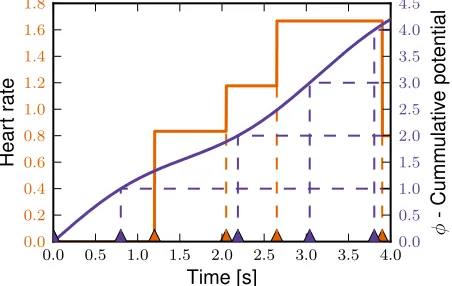
Between these time points the heart rate is the inverse of the difference of the times, 1/(tb−ta). However,
when comparing the model output to experimentally measured values due to the discrete nature of these
data. Notice that the time points for model and experimental data do not coincide. While interpolation
between contractions for model output is a way of handling this discrepancy, we propose another approach.
The discrete format of the heart rate data means that we can only infer information on the average
behavior of the electrical potential between contractions. Hence, we will calculate the heart rate between
two time pointsta andtb as the average increase in the potential over this period,
H(tb) =
φ(tb)−φ(ta)
tb−ta
, (14)
where an increase in electrical potential of one corresponds to a contraction. For the model to behave as
intended all parameters values must be greater than 0 and the parameter 0≤Tp0≤1.
Model summary The mathematical model described above can be summarized as follows
dx
dt =f(x, p(t), t;θ), x(0) =x0, θ=
H0, Mn, Ma, τa, τn, β, κ1, κ2, κ3, τ1, τ2, τ3, td, Tp0 , (15)
x=
φ, Ca, Cn, ν1, ν2, ν3,p, T¯ d5, Td4, Td3, Td2, Td1 ,
wherexdenotes the 12-dimensional state variable,p(t) the input function,t the independent variable, and
θthe 14-dimensional parameter vector. In this study, we have adopted values from [22] whenever possible, see Table 2.
The model output, heart rate is a function of the state variables and time,
H(tn) =g(tn, tn−1, x(tn), x(tn−1)). (16)
wheretn denotes then’th point in time where output is sampled. Note that for our specificH the
dependence on the state variable is only onφ(t).
Sensitivity analysis
Sensitivity analysis investigates the influence that changes in parameter values have on the model output.
For studies where data are available, sensitivities are evaluated at time-points where data are recorded.
Classically [29, 30], sensitivities are local, i.e. they are evaluated at given parameter values. However, for
models for which the output is nonlinear in the parameters, local sensitivities do not accurately predict the
sensitivities should be computed. In this study, we predict both local and global sensitivities and discuss
their impact on heart rate.
Local sensitivities
The local sensitivity matrix for model outputsy to the parametersθ is defined as the derivative
S=∂y/∂θ. For the studies presented here we assume that the model outputy=g(x, t;θ) is a function of the model states, time and parameters, i.e.
S= ∂ y
∂θ = ∂ g ∂x
∂ x ∂θ +
∂ g ∂θ
depend on the local sensitivities for each of the statesSx=∂x/∂θ. Denoting the number of model states
Nxand the number of parametersNθ, we obtainNx×Nθ differential equations, whose solution contain the
local sensitivities for each state. For a model described by (15) sensitivities can be computed as solutions to
d dt
∂x ∂θ
= ∂f(t, x, θ)
∂θ +
∂f(t, x, θ)
∂x ∂x ∂θ
d
dt (Sx) = Jθ+JxSx, (17)
whereJθ=∂f(t, x, θ)/∂θ andJx=∂f(t, x, θ)/∂xare the parameter and model Jacobian.
Sensitivities can be predicted by deriving all sensitivity equations explicitly [31], however, for large systems
with many parameters this approach is not feasible. Alternatively, one can use automatic differentiation,
which uses semi-analytical methods for the calculations of the model and parameter Jacobian [32]. In
Matlab, these methods are difficult since they typically rely on parameter overloading [33]. Finally, one
could use some version of finite differences directly predicting sensitivities [34]. For this study, we predicted
sensitivities using finite differences, but took advantage of the numerical solver CVODES [35] to solve (17).
The equations associated with prediction of heart rate dynamics are fairly stiff, consequently they were
solved using BDF and Newtons method. An advantage of Newtons method is that it involves calculation of
the model Jacobian, therefore the additional expense involved with predicting sensitivities is negligible.
The only additional cost is due to calculating the parameter Jacobian which is approximated by finite
differences by CVODES.
The model output, heart rate, is a discrete quantity and as such prediction of sensitivities of model output
function of the statesx, as described by (16)
syj(tn) =
∂y(tn)
∂θj
= ∂g(tntn−1, x(tn), x(tn−1))
∂θj
= ∂g(tn, tn−1, x(tn), x(tn−1))
∂x(tn)
∂x(tn)
∂θj
+∂g(tn, tn−1, x(tn), x(tn−1))
∂x(tn−1)
∂x(tn−1)
∂θj
.
For the model introduced, equation (14) takes on the role of the functiongand only involves one state. So for our model,
y(tn) =g(tn, tn−1, x(tn), x(tn−1)) =
x(tn)−x(tn−1)
tn−tn−1
. (18)
Hence, the sensitivities can be found as
syj(tn) =
∂y(tn)
∂θj
= ∂g(tntn−1, x(tn), x(tn−1))
∂θj
=
∂x(tn)
∂θj −
∂x(tn−1)
∂θj
tn−tn−1
= sj(tn)−sj(tn−1)
tn−tn−1
, (19)
wheresj is the sensitivity of the state variable thatg depends on to thej’th parameter.
For many models, including the one analyzed here, model parameters vary by several orders of magnitude.
For example, as noted in Table 1, parameters associated with the baroreflex model vary four orders of
magnitude. To ensure prediction of relative sensitivities, the parameters and model output are scaled
logarithmically. Thus, we define ˆθ= ln(θ) and ˆy= ln(y) and predict sensitivities ass=∂y/∂ˆ θˆ, giving
Sj(tn) =
∂logy(tn)
∂logθj
= ∂y(tn)
∂θj
θj
y(tn)
=syj(tn)
θj
y(tn)
, y(tn)6= 0. (20)
To calculate the local relative sensitivities for the model, (18), (19) and (20) are combined to form the
expression
Sj(tn) =
sj(tn)−sj(tn−1)
x(tn)−x(tn−1)
θj. (21)
Global sensitivities
The model studied here is nonlinear both in the states and in the parameters. This is important as the
model sensitivities are functions of model parameters and therefore change nonlinearly for different
parameter values [4, 8]. Thus, local sensitivities predicted from nominal parameter values do not accurately
reflect parameter sensitivities over the full parameter space. To assess the reliability of local sensitivities
for the baroreceptor reflex model, this study compares local and global sensitivities.
To limit computational overhead, we use an approach inspired by Kucherenko et al. [12] and Kiparisides et
sensitivities over the relevant parameter intervals, and by combining it with a measure of the variance in
the sensitivities creates an overall ranking of the parameters.
Global sensitivitiesSglobal are approximated as the average of local sensitivitiesS over the parameter space
defined byP. More specifically, global sensitivities are obtained by integrating the local sensitivities and
dividing by the volume covered, i.e.
Sglobal = R
PS(t, θ) dθ
R
Pdθ
, (22)
whereθ denotes the parameter vector. It should be noted that if sensitivities to a given parameter changes from positive to negative the global sensitivities of this parameter may be underestimated.
The integral is approximated by a sum of sensitivities overN points in the parameter space
ˆ
Sglobal = 1 N
N
X
i=1
S(t, θi), (23)
whereθi∈ P, i= 1, . . . , N.
Different methods exist for choosing the points in the parameter spaceθi. The simplest approach uses
Monte Carlo integration, which picks theN points randomly [36]. The disadvantage of this method is the high number of evaluations required to get a good approximation of the integral. Another possibility is
calculating the global sensitivities using sparse grid integration [37–39], which generalizes Gaussian
quadrature rules to higher dimensions, though this method is significantly more complex to implement. A
popular method balancing computational cost and feasibility utilizes Sobol sequences [40, 41] for selection
of evaluation points. As the nameSobol sequences might cause a wrong associations to Sobol Indices, in
the remainder of this study these will be denotedlow-discrepancy sequences. This method is often referred
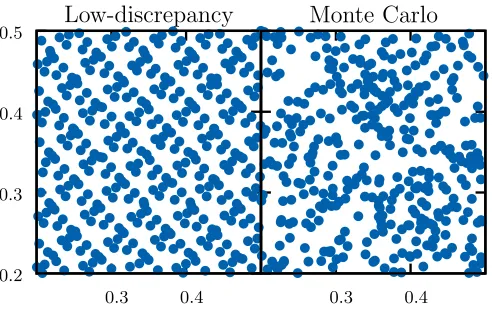
to as quasi-random Monte Carlo integration and has the advantage, that the distribution of points in the
space is more uniform. This is illustrated in Figure 7, where the points selected for a two dimensional
space is shown, for a quasi-random sequence and for random numbers generated by regular Monte Carlo
integration. The more uniform distribution results in faster convergence, with the error being proportional
to ln(N)/N for quasi-random integration compared to 1/√N for regular Monte Carlo integration [36]. For this study, we used the quasi-random (Sobol) sequence implementation available within the GSL
libraries [42].
In summary, to obtain the global sensitivitiesN parameter sets are selected using sequences,
Results
We have calculated local and global sensitivities for the nonlinear heart rate model. Sensitivities were
compared over the parameter space given in Table 1. Below we first show examples of local and global
sensitivities for representative parameter values. These results were analyzed further and used for
bounding the parameter space. Finally, we ranked local and global sensitivities and discuss the impact on
heart rate dynamics. The latter will be done both from mathematical and physiological principles.
Local sensitivities
Local sensitivities depend on the parameter values for which they were computed. For models where
nominal parameters can be predicted, and where nonlinearities have a minor effect, results from local
analysis may be adequate for analyzing the model behavior. However, for models where limited
information is available for estimation of nominal parameters or where the model is known to be very
nonlinear, local sensitivities can be misleading.
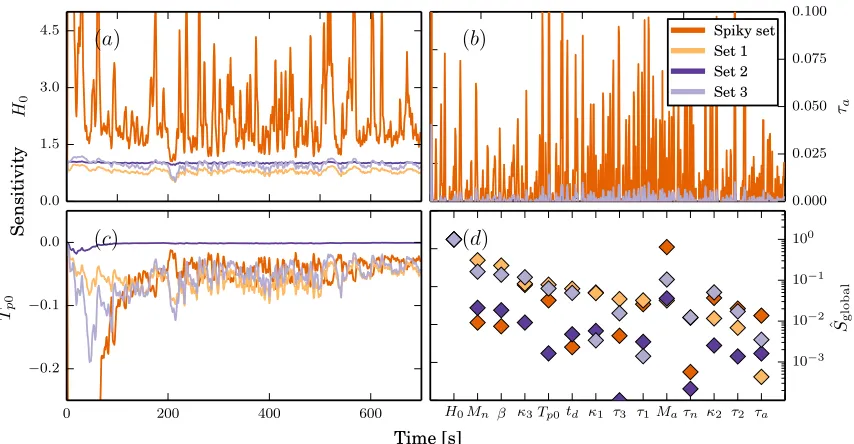
Figure 8 shows local sensitivities for a parameter set causing spiky behavior as well as for three additional
parameter sets. One parameter set represent the nominal parameter values, and two sets were selected at
random from the parameter space listed in Table 1. Graphs include representative time-traces for
parametersθ={H0, τa, Tp0}. The three panels were chosen to show behavior for parameters within the
allowed parameter space. Recall, that all parameters are assumed positive.
Finally, the panel in the bottom right corner shows the two norms for each parameter set,
||Sˆ||2=
M
X
i=0
S(ti, θ)2
!
1 2
.
Both time-varying sensitivities and relative ranking depend on the sampling values, and, for some
parameter sets, on sensitivity spikes. The maximum values for the spiky sensitivities is significantly larger
than depicted in Figure 8, but the y-axis was cropped to show all traces. Note that,
1. The sensitivities forH0is very similar in magnitude for most parameter sets.
2. One parameter sets give rise to very large and rapid fluctuations in the sensitivities. For the
3. Ranking of the most sensitive parameters remain the same for all parameter sets, while the ranking
of the less sensitive parameters vary among the four sets.
From these observations it is clear that the effect may differ for different parameters and for different
points in the parameter space. This imply that the relationship between parameters change depending on
the parameter values. Finally, we noted thatspiky sensitivities may contribute excessively when calculating
global sensitivities.
Spiky sensitivities
Figure 8 shows that there exist parameter sets for which the time-varying sensitivities spike at certain
values in time. First, recall that sensitivities are relative, i.e. for a given value in time the sensitivitySi(tj)
can be large or approach infinity if the absolute sensitivitysi(tj) is large, if the parameterθi→ ∞, or if
the model output (heart rate)y(tj)→0. Since all parameters are bounded, a spike can only appear if the
absolute sensitivitysi(tj)→ ∞or if the model outputy(tj)→0.
To better understand what combinations of parameters that gave rise to spiky sensitivities, we saved all
parameter sets resulting in relative sensitivities larger than 5. Local sensitivities were predicted at 50,000
points sampled by low-discrepancy sequences and of these 446 were marked as spiky. Figure 11 shows
histograms for the 446 spiky parameter sets. For each panel thex-axis give the parameter bounds. First note that parametersH0, Tp0, Ma, andMs do not follow the uniform distribution expected for
low-discrepancy sequences. In particular, it should be noted that small values ofH0 andTp0→1 gives rise
to spiky sensitivities.
To investigate the relation betweenH0 andTp0further, Figure 12 shows a two-dimensional histogram of
the pair-wise distribution (similar graphs could be generated for all parameters with a nonuniform
distribution). The scale goes from no occurrences of the parameter combination, represented by the blue
color, to many combinations represented by red. This figure shows thatTp0→1 gives rise to a spiky
sensitivity independent of the value ofH0. Moreover, it shows that spiky behavior can be generated for
other values ofTp0 ifH0 is sufficiently small. On a molecular level parasympathetic stimulation, as caused
by large baroreceptor firing, closes the f-channels available for ion current through the membrane of the
pacemaker cells, inhibiting potential build-up and decreasing heart rate. Since sympathetic stimulation of
stimulation will be inhibited at increased parasympathetic activity.
This relation betweenH0 andTp0 is not immediately obvious from the model equations. H0determines the
baseline heart rate with no nervous system stimulation andTp0 determines the baseline firing rate of the
baroreceptors as shown in (5) and (12). Earlier we noted the possibility of large values in relative
sensitivity to be caused by low values of heart rate. It is clear that small values ofH0 would lead to a low
heart rate. On the other hand, Figure 12 suggests thatTp0→1 plays an even larger role in causing spiky
behavior. Looking back at (5) and following the effects through the model, we see that a large value ofTp0
leads to large stimulation from the baroreceptors, which means that the sympathetic activity (10) is
lowered significantly while the parasympathetic activity (5) is increased. This cause an increased
acetylcholine concentration and a decreased noradrenaline concentration (11), which in turn causes a very
low, or even negative, change in electrical potential (12). A very low increase in potential (12) will result in
low values of heart rate, which cause spiky behavior. This corresponds to the physiological effect where
strong parasympathetic stimulation of the pacemaker cell affects acetylcholine dependent potassium
channels, decrease the resting potential of the cell and cause zero heart rate. However, negative values of
the potential (12) corresponds to the pacemaker losing potential, which could be interpreted as negative
heart rate.
Faulty parameter sets
In addition to recording the spiky parameter sets, we recorded parameter sets that resulted in a negative
heart rate or made the ODE solver fail. Of 50,000 samples, this behavior was noted 8,256 times.
Histograms showing the distribution of parameter values for these parameter sets are shown in Figure 11.
We denote an error associated with prediction of negative heart rates amodel error, while an error
associated with a parameter set causing the ODE solver to fail is denoted asolver error. The histograms in
Figure 11 reveal that parametersH0 andTp0 also cause model or solver errors. This is likely due to the
prediction of very small or negative values of heart rate.
Other situations in which parameters give rise to nonuniform distributions are when time constants
τa, τ1, τn, andτd reach their lower bound. The parameterτa was bounded by 0 and appears in equation
(11) predicting acetylcholine concentration. Whenτa→0, the value of ddCta → ∞, which cause fast
fluctuations in acetylcholine concentration and in turn make the ODE too stiff for the ODE solver.
larger, and near-zero values are less frequent. The parametertd is used to describe the distributed delay
through the equationα=ρ/tdand plays a role similar to the other time constants. In summary, low values
for time constants give rise to a rapidly changing system, leading to ODEs that become increasingly stiffer,
eventually causing the numerical ODE solver to break. To remedy this problem, the lower bound for these
small time-scales should be set significantly above zero. New bounds are suggested in Table 1. However,
finding an exact lower bound based on biological considerations may be difficult, thus one can anticipate
some parameter sets giving rise to solver errors.
Global sensitivities
Global sensitivities were computed with revised parameter bounds. To obtain accurate predictions local
sensitivities showing spiky behavior or giving rise to either a model or solver error was not included. In
comparison with original bounds, where 8,256 out of 50,000 sets failed, with the revised parameter bounds
only 3,792 out of 50,000 failed, a significant improvement. Figure 11 shows that distributions of parameters
for revised bounds are nearly flat for all parameters.
Even when using low-discrepancy sequences for integration, prediction of global sensitivities is
computationally intensive. Thus, an important question is how many sample values are needed for accurate
prediction. The number depends on the degree of nonlinearity of the model with respect to the parameters,
the number of parameters, and the bounds. To facilitate a discussion on the required number of points
Figure 13 shows global sensitivities calculated using 100, 250, 500, 1,000, 25,000, 50,000 and 150,000
sampling points.
Results show little variation among the most sensitive parameters, while some mid-range and insensitive
parameters varies. Special attention should be given to having enough sampling points to ensure
convergence for the mid-range sensitive parameters, since these may either be included or excluded in
further model analysis.
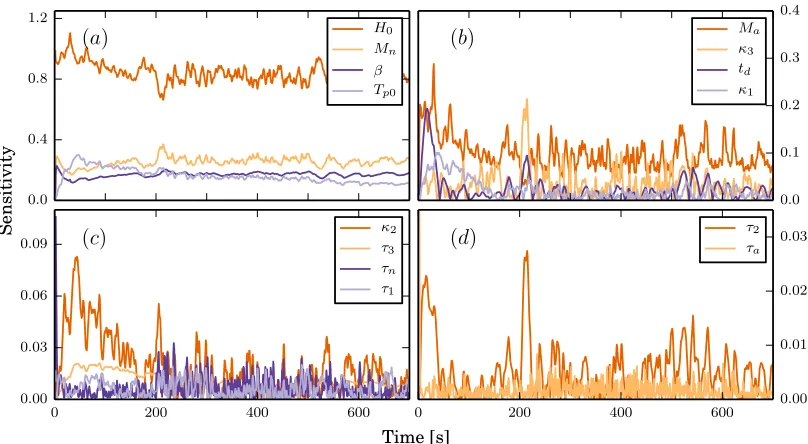
Results showed that the most sensitive parameters for prediction of heart rate were
Discussion
This study showed that global sensitivity analysis improved prediction of sensitivities for the heart rate
model analyzed in this study. This model is nonlinear, therefore results from local sensitivities are limited
to a small region around nominal parameter values. We showed that the global analysis could be used to
restrict the parameter bounds further beyond values immediately suggested by the biological analysis. We
showed how the discrete time delay used in previous studies [21] can be replaced by a distributed delay
using the linear chain trick and introducing a handful new model compartments. Moreover, this study
included an improved sub-model for prediction of heart rate, obtained by implementing a method for
calculating the average heart rate between two time points.
Necessity of global estimates of sensitivities
To investigate the necessity of global sensitivity estimates we calculated relative sensitivities for the
baroreceptor model. We did this for four different parameter sets (values of parameters are given in Table
2). Figure 8 panel D shows the two-norm of these sensitivities for the different configurations. The
parameters are ordered from the most to the least sensitive based on the sensitivities calculated for the
nominal parameter values, and all are relative to the highest two-norm measured for this configuration. All
of the configurations have a similar sensitivity to the default heart rateH0, while sensitivities to other
parameters vary prominently. These results indicate that it is relevant to seek a global estimate of
sensitivities.
When predicting global sensitivities we found that some parameter sets induced spiky behavior (very large
spikes in the relative local sensitivities) or caused model errors (negative heart rate) or solver errors (solver
failing to converge). These sets were recorded and analyzed further.
Spiky behavior, model and solver errors
We found that the characteristics of parameter sets causing spiky behavior could also be recognized in the
parameter sets that caused model or solver errors. Specifically, we found that certain values of the
pacemaker cell threshold depolarization rate,H0, the pacemaker cell sensitivity to acetylcholine,Ma, and
the baroreceptor threshold firing rate,Tp0all have higher frequency of spiky behavior and model errors.
This behavior was hinted by the nonuniform distributions for these parameters in Figure 11, and
behavior is caused by near zero model output heart rate due to computation of relative sensitivities
whereas negative heart rate will cause model errors. We consider spiky behavior to be the limiting
behavior observed before parameters reach values where they cause model errors.
In addition to revealing the roles of these parameters, Figure 11 panel (b) also showed nonuniform
distributions for most time-scale parameters. Our analysis showed that the values overrepresented in the
histogram for these parameters are the values causing rapid fluctuations, and thus leading to stiff behavior
in the model. Differential equations showing this behavior is referred to as being stiff, which means that
the numerical solver is not able to integrate the equations using step sizes possible with the computer.
Based on these findings we adjusted the intervals for the integration for the timescale parameters causing
stiff behavior and solver errors. The unadjusted and adjusted parameter intervals are listed in Table 1.
Figure 11 shows that after this adjustment the primary contributor to errors is combinations of large
values ofTp0 and small values ofH0. In addition the number of parameter sets leading to errors is reduced
from 8,256 down to 3,516.
Converge to global estimates
To determine how many points are required in the calculation of global sensitivities we calculated global
sensitivities using nominal parameter values and 100, 250, 500, 1,000, 5,000, 10,000, 25,000, 50,000 and
150,000 different points in the parameter space. Figure 13 shows the results obtained both when including
and excluding spiky sensitivities. We see that the sensitivities calculated using nominal parameter values
do not correspond to the global estimates. The sensitivities to each parameter is different and so is the
order. We also see that for the global estimates there is very little difference between using 100 points and
150,000 points. Looking at the baroreceptor time constantτ3 we see that we can distinguish the result
obtained using 100 points and the nominal parameter set from the rest. This deviation seems to be the
same whether spiky sensitivities are included or not. We see that sensitivities converge as the number of
points is increased. In addition it should be noted that the sensitivities obtained using nominal parameter
values and those obtained by integration show very similar qualitative behavior.
Looking at Figure 13 again we focus on the parameter describing the baroreceptor firing rate thresholdTp0.
There is a notable difference between the graphs produced when including and excluding spiky sensitivities.
time varying sensitivity toTp0shows very similar qualitative behavior for the different time series, and it
appears that increasing the number points in the integration leads to the integral converging to some time
series. However, forTp0 we see a very clear difference in the global estimates obtained when using 1,000
points between the two graphs. When including spiky behavior sensitivities we obtain a very large increase
in the (absolute) sensitivity. This is caused by one of the points included in the low-discrepancy sequence
when going from 500 to 1,000 points. Also note that this only happens forTp0and not for τ3. This would
indicate that either the spiky behavior in this particular case is not due to low model output heart rate as
expected, or that the sensitivity toτ3for this particular configuration is extraordinarily low.
From the investigation of the convergence of the integral for global sensitivities we learn that, the
sensitivity estimate convergence if more points are included, that some parameter sensitivities will be
distorted when including spiky sensitivities and some will not. In conclusion it is important to select good
parameter intervals to avoid spiky sensitivities, as this might greatly reduce the computational effort
required to estimate global sensitivities.
Conclusions
We implemented a heart rate predicting baroreceptor reflex model. We scaled the baroreceptor model
reducing the number of parameters, implemented the sympathetic outflow delay as a distributed delay and
calculated heart rate in a manner that allows for easy comparison to data.
We calculated global sensitivities by averaging local sensitivities based on partial derivatives, giving a
computational advantage when compared to Sobol indices [11] and adding more information than local
sensitivities. The integration used in the averaging was done using a quasi-Monte Carlo method using
low-discrepancy (Sobol) sequences [40].
In addition to calculating global sensitivities we analyzed parameter sets causing negative heart rates,
ODE solver failure or unwanted rapid fluctuations in sensitivities. We call this fluctuating behaviorspiky
behavior and it is caused by low model output. Our analysis gives insight into model dynamics,
relationship between parameters and permit better choice of parameter intervals for integration.
Competing interests
Authors contributions
All authors contributed to preparation of the manuscript, Olsen carried out all computations and analysis,
Tran and Olufsen contributed to formulation of methodologies used for local and global sensitivity analysis,
and Ottesen and Olufsen participated in model formulation and to analysis of sensitivity results on the
heart rate model. Mehlsen was responsible for the integrity of description of pathways associated with
baroreflex regulation and he contributed to the analysis of model results. All authors contributed to
writing the manuscript.
Acknowledgements
Olufsen, Tran, Olsen, and Ottesen were supported in part by National Science foundation under award
NSF/DMS1022688, Olsen was supported by Carl and Katy Kajsings foundation, Olsen and Olufsen
additionally supported by the VPR project under NIH-NIGMS award #1P50GM09450301A0 sub-award to
NCSU. Tran was additionally supported by NIAID 9R01AI071915, Ottesen was supported by carpenter
Sophus Jacobsen and wife Astrid Jacobsen foundation.
References
1. Ottesen JT:Modelling of the baroreflex-feedback mechanism with time-delay.J Math Biol 1997, 36:41–63.
2. Hall JE:Guyton and Hall textbook of medical physiology. Philadelphia, PA: Saunders/Elsevier 2011.
3. Hengl S, Kreutz C, Timmer J, Maiwald T:Data-based identifiability analysis of non-linear dynamical models.Bioinformatics 2007,23:2612–2618.
4. Miao H, Xia X, Perelson AS, Wu H:On identifiability of nonlinear ode models and applications in viral dynamics.SIAM Rev.2011,53:3–39.
5. Raue A, Kreutz C, Maiwald T, Bachmann J, Schilling M, Klingm¨uller U, Timmer J:Structural and practical identifiability analysis of partially observed dynamical models by exploiting the profile likelihood.Bioinformatics 2009,25:1923–1929.
6. Xia X, Moog C:Identifiability of nonlinear systems with application to HIV/AIDS models.IEEE Trans Autom Control 2003,48:330–336.
7. Olufsen MS, Ottesen JT:A practical approach to parameter estimation applied to model predicting heart rate regulation.J Math Biol 2013,67:39–68.
8. Kiparissides A, Kucherenko S, Matalaris A, Pistikopolous E:Global sensitivity analysis challenges in biological systems modeling.Ind Eng Chem Res 2009,48:7168–7180.
9. Saltelli A, Ratto M, Andres T, Campolongo F, Cariboni J, Gatelli D, Saisana M, Tarantola S:Global sensitivity analysis: the primer. Chichester, England: John Wiley 2008.
10. Sobol IM:Sensitivity estimates for nonlinear mathematical models.Math Modeling Comput Experiment 1993, 1(4):407–414.
11. Sobol I:Global sensitivity indices for nonlinear mathematical models and their Monte Carlo estimates.Math Comput Simulation2001,55:271–280.
13. Morris MD:factorial Sampling Plans for Preliminary Computational Experiments1991,33:161–174.
14. Tur´anyi T:Sensitivity analysis of complex kinetic systems. Tools and applications.J Math Chem 1990,5:203–248.
15. Hamby D:A review of techniques for parameter sensitivity analysis of environmental models. Environ Monit Assess 1994,32:135–154.
16. Goldstein DS, Sewell L, Holmes C, Pechnik S, Diedrich A, Robertson D:Temporary elimination of orthostatic hypotension by norepinephrine infusion.Clin Auton Res 2012,22:303–306.
17. Shibao C, Okamoto L, Biaggioni I:Pharmacotherapy of autonomic failure.Pharmacol Ther 2012, 134:279–286.
18. Bannister R:Multiple system atrophy and pure autonomic failure. InClinical autonomic disorders: evaluation and management. Edited by PA L, Boston: Little, Brown 1993:517–525.
19. Mosqueda-Garcia R, Furlan R, Tank J, Fernandez-Violante R:The elusive pathophysiology of neurally mediated syncope.Circulation 2000,102:2898–2906.
20. van Heusden K, Gisolf J, Stok WJ, Dijkstra S, Karemaker JM:Mathematical modeling of gravitational effects on the circulation: importance of the time course of venous pooling and blood volume changes in the lungs.Am J Physiol 2006,291:H2152–H2165.
21. Olufsen MS, Tran HT, Ottesen JT, Lipsitz L, Novak V:Modeling baroreflex regulation of heart rate during orthostatic stress.Am J Physiol 2006,291:R1355–R1368.
22. Ottesen J, Olufsen MS:Functionality of the baroreceptor nerves in heart rate regulation.Comp Math Prog Biomed 2011,101:208–219.
23. Ottesen JT:Non-linearity of baroreceptor nerves.Surv Math Ind Springer-Verlag 1997,7:187–201.
24. Olufsen M, Tran H, Ottesen JT:Modeling cerebral blood flow control during posture change from sitting to standing.Cardiovasc Eng 2004,4:47–58.
25. Bellen A, Zennaro M:Numerical methods for delay differential equations. Oxford: Oxford University Press 2013.
26. Banks H, Robbins D, Sutton KL:Generalized sensitivity analysis for delay differential equations. In Control and Optimization with PDE Constraints, Basel, CH: Springer 2013:19–44.
27. MacDonald N:Time lags in biological models. Berlin: Springer-Verlag Heidelberg 1978.
28. Smith H:Distributed Delay Equations and the Linear Chain Trick. InAn Introduction to Delay Differential Equations with Applications to the Life Sciences,Volume 57 of Texts in Applied Mathematics, New York: Springer 2011:119–130.
29. Frank PM:Introduction to system sensitivity theory. New York: Academic Press 1978.
30. Eslami M:Theory of sensitivity in dynamic systems: An introduction. Springer-Verlag 1994.
31. Ellwein LM, Tran HT, Zapata C, Novak V, Olufsen MS:Sensitivity analysis and model assessment: Mathematical models for arterial blood flow and blood pressure.Cardiovasc Eng 2008,8:94–108.
32. Griewank A, Walther A:Evaluating derivatives: principles and techniques of algorithmic differentiation. Philahelphia, PA: Siam 2008.
33. Bischof C, Lang B, Vehreschild A:Automatic differentiation for matlab programs.Proc Appl Math Mech 2003,2:50–53.
34. Pope SR:Parameter identification in lumped compartment cardiorespiratory models. ProQuest 2009.
35. Serban R, Hindmarsh A:CVODES, the sensitivity-enabled ODE solver in SUNDIALS.Proc ASME Int Design Eng Techl Conf 2005.
36. Press WH, Teukolsky SA, Vetterling WT, Flannery BP:Numerical recipes in C: The art of scientific computing. New York 1997.
37. Novak E, Ritter K, Schmitt R, Steinbauer A:On an interpolatory method for high dimensional integration.J Comput Appl Math 1999,112:215–228.
39. Bungartz HJ, Griebel M:Sparse grids.Acta numerica 2004,13:147–269.
40. Sobol I:On the distribution of points in a cube and the approximate evaluation of integrals.USSR Comput Math Phys 1967,7:784–802.
41. Joe S, Kuo F:Remark on algortihm 659: Implementing Sobol’s quasirandom sequence generator. ACM Trans Math Software 2003,29:49–54.
Figures
Figure 1
Baroreceptors in the carotid sinus and the aortic arch generates nerve impulses in response to changes in
pressure. The signals are integrated in the NTS and the sympathetic and parasympathetic outflows are
generated. The sympathetic outflow is mediated down the ganglia, an interconnected network of neurons
located in the spine, while the parasympathetic signal is mediated by the vagus nerve. At the heart level
Figure 2
When the subject is tilted from supine position to an angle of 60◦ blood is pooled in the lower extremities
causing increased blood pressure and volume in the lower body, while decreasing the blood volume and
pressure in the upper body. Pressure changes at the carotid sinus will stimulate baroreceptors, thereby
Figure 3
(a) shows experimentally measured blood pressure (BP) and heart rate (Data HR) as well as the heart rate
generated by the model (Model HR) using nominal parameter values. The subject starts the experiment
horizontally and undergoes a HUT to 60◦ at t= 180 seconds as indicated by the black vertical line. Note
the dramatic drop in blood pressure and increase in heart rate immediately following the tilt. (b): Zoom
fort= 300 to 303.5 seconds reveal the short term fluctuations of the blood pressure as well as the discrete nature of the heart rate.
0 100 200 300 400 500 600 700
Time [s] 40 50 60 70 80 90 100 110 B lo o d p re ss u re [m m H g ]
538.0 538.5 539.0 539.5 540.0 540.5 541.0 541.5
Time [s]
0.8 0.9 1.0 1.1 1.2 1.3 1.4 1.5 1.6
H e a rt R a te [H z ] BP Data HR Model HR
Figure 4
A schematic view of the model components included to predict baroreflex regulation of heart rate during
HUT.P(t) is the blood pressure model input,Pm(t) smoothed relative blood pressure,n1, n2, n3the tone
from baroreceptors with three different inherent timescales,nthe total firing rate of baroreceptors,Tp, Ts
the parasympathetic and sympathetic outflow,Ca, Cn the concentration of acetylcholine and noradrenaline,
φthe cumulative pacemaker potential buildup and HR the model output: heart rate.
rs Blood Pressure
rs Baroreceptor
rs CNS rs Heart
r
s Input / Output rs Model states
P(t) n1 Tp Ca
Pm n2 n φ HR
Figure 5
Shape of the weighting functiongρ
α(u) for different values ofρ, all with same mean delaytd=ρ/α= 5 and
α= 1. The weighting function withρ= 5 is used for the delay of the sympathetic pathway, whileρ= 1 (andα= 1.5) is the one used to smooth the input pressure data in (2) and (3).
u
g
ρ a(
u
)
ρ= 1
ρ= 3
ρ= 5
ρ= 10
ρ= 20
0 0
2 4 6 8 10 12 14
Figure 6
Experimental heart rate (orange) is the inverse of time between the last two heart contractions, 1/(tb−ta).
Time points for contraction in data is illustrated by orange triangles on the time axis. Determining time
between contractions for the model as the time required for potential to increase by one,Rtb
taφ(t) dt= 1, would lead to contractions as illustrated by the purple triangles. Note that data and model times do not
coincide. Instead model heart rate is the average increase inφ(purple) over the same period,
(φ(tb)−φ(ta))/(tb−ta). This ensures that data and model output is available for the same points in time.
0.0 0.5 1.0 1.5 2.0 2.5 3.0 3.5 4.0
Time [s]
0.0 0.2 0.4 0.6 0.8 1.0 1.2 1.4 1.6 1.8
H
e
a
rt
ra
te
0.0
0.5
1.0
1.5
2.0
2.5
3.0
3.5
4.0
4.5
φ
-C
u
m
m
u
la
ti
v
e
p
o
te
n
ti
a
Figure 7
Demonstration of the distribution of points used for numerical integration over a 2-dimensional space using
the quasi-Monte Carlo method with low-discrepancy sequence and using regular Monte Carlo method. The
points generated by the low-discrepancy sequences are more uniformly distributed resulting in faster
convergence for integration.
Low-discrepancy
Monte Carlo
0.3 0.3
0.3
0.4 0.4
0.4
Figure 8
(a-c): Time trace of model sensitivities for parameters{H0, τa, Tp0} for four parameter configurations one
of which causesspiky sensitivities. (d) shows the two-norm with respect to time of sensitivities for all four
parameter sets plotted in the order from most to least sensitive sorted after set 1 (nominal parameter
values).
0.0 0.2 0.4 0.6 0.8 1.0
Time [s] 0.0
0.2 0.4 0.6 0.8 1.0
S
e
n
si
ti
v
it
y
0.0 1.5 3.0 4.5
H0
0.000 0.025 0.050 0.075 0.100
τa
Spiky set Set 1 Set 2 Set 3
0 200 400 600
−0.2 −0.1 0.0
Tp0
H0Mn β κ3Tp0td κ1 τ3 τ1Maτn κ2 τ2 τa
10−3
10−2
10−1
100
ˆSglo
b
a
l
(
a
)
(
b
)
Figure 9
Global sensitivities calculated using 50,000 points in parameter space. The parameters are ordered by their
two-norm from highest in panel (a) to lowest in (d) and the value plotted is the absolute value of the global
sensitivities. Note that the scaling is different in all four sub figures.
0.0 0.2 0.4 0.6 0.8 1.0
Time [s] 0.0
0.2 0.4 0.6 0.8 1.0
S
e
n
si
ti
v
it
y
0.0 0.4 0.8 1.2
H0 Mn β Tp0
0.0 0.1 0.2 0.3 0.4
Ma κ3 td κ1
0 200 400 600
0.00 0.03 0.06 0.09
κ2 τ3 τn τ1
0 200 400 600 0.00
0.01 0.02 0.03
τ2 τa
(
a
)
(
b
)
Figure 10
Sensitivities for a normal and a spiky parameter set. The top row shows the sensitivity to parameterH0,
bottom row the sensitivity to parameterτ1, and middle row shows heart rate for the corresponding model
solution. Left column shows a normal parameter set, middle column a spiky parameter set, and the right
column shows a zoom of the spiky parameter set. Note that the scale on the y-axis is different for the
normal and spiky parameter set, that the heart rate for the spiky solution is near zero and that the right
column shows that spikes in sensitivity coincides with decreases in heart rate.
0.0 0.2 0.4 0.6 0.8 1.0
Time [s] 0.0 0.2 0.4 0.6 0.8 1.0
0.0 0.8 1.6 2.4
S e n si ti v it y -H0 Normal 0 1 2 H R
0 200 400 600
0.00 0.05 0.10 0.15
S e n si ti v it y -τ1 0 4 8 12 Spiky 0 1 2
0 200 400 600 0.0
0.2 0.4
Spiky
Figure 11
(a) Histogram of parameter values that caused local relative sensitivities to exceed five. The figure suggests
that spiky behavior is linked to low values ofH0and large values of Tp0. (b) Histogram of parameter
values that caused the ODE solver to fail. The histograms suggests that low values ofH0 and large values
ofTp0 cause the solver to fail. Likely through the appearance of negative value for ˙φ. In addition time
constants near 0 are over represented. A likely explanation is that small values will cause large and quick
fluctuations, making the equations very stiff. 8,256 parameter sets was found to causes errors.(c) Results when calculating global sensitivities with modified parameter intervals. 3,516 points in parameter space
was found to break the solver - less than half of the number before altering the intervals.
1 2
H0
2 5
Mn
0.1 0.3
Ma
0.2 0.4
τa
0.5 1.0
τn 5 15 β 10 20 κ1 5 15 κ2 15 35 κ3
0.5 1.0
τ1 5 10 τ2 500 1000 τ3 5 15 td
0.3 0.7
Tp0
(a)
1 2
H0
2 5
Mn
0.1 0.3
Ma
0.2 0.4
τa
0.5 1.0
τn 5 15 β 10 20 κ1 5 15 κ2 15 35 κ3
0.5 1.0
τ1 5 10 τ2 500 1000 τ3 5 15 td
0.3 0.7
Tp0
Figure 12
Scatter plot ofH0andTp0 for spiky parameter sets. Values ofTp0near one will induce spiky behavior no
matter the value ofH0. On the other hand ifH0 is largeTp0will also need to be large to induce spiky
behavior, but spiky behavior can also be induced by smaller values ofTp0 ifH0is near zero.
0.00 0.25 0.50 0.75 1.00
H0
0.00
0.25
0.50
0.75
1.00
Tp
0
0 6 12
Figure 13
Top row: Two-norm of global relative sensitivities excluding and including spiky parameters. Middle and
bottom row: Sensitivities to parametersTp0andτ3, excluding (left) and including (right) spiky
parameters. Note the that there is almost no visible difference between the ordering obtained for different
number of points, except for the integration done using 1,000 points. Furthermore the graphs forTp0 and
τ3illustrates that spiky sensitivities might affect the overall output for some parameters. The time series
forTp0also illustrates that spiky parameter that affect the calculated sensitivities.
H0Mn β Tp0Maκ3 κ1 td κ2 τ1 τ3 τ2 τn τa
10−3
10−2
10−1
100
k
ˆSk
2
Excl. spiky par. sets
0 150 300 450 600
−0.4 −0.3
−0.2 −0.1 0.0
ˆS
0 150 300 450 600
−0.02 −0.01
0.00 0.01 0.02
ˆS
H0Mn β Tp0Maκ3 κ1 td κ2 τ1 τ3 τ2 τn τa
10−3
10−2
10−1
100
Incl. spiky par. sets
0 150 300 450 600
−0.4 −0.3
−0.2 −0.1 0.0 Nominal 100 250 500 1,000 5,000 10,000 25,000 50,000 150,000
0 150 300 450 600
−0.02 −0.01
0.00 0.01 0.02
τ
3τ
3Figure 14
Global sensitivities calculated using new parameter intervals. They do not appear to be different from the
initial calculated global sensitivities (Figure 9) even though many more points in parameter space was
successfully included in the integration.
0.0 0.2 0.4 0.6 0.8 1.0
Time [s] 0.0
0.2 0.4 0.6 0.8 1.0
S
e
n
si
ti
v
it
y
0.0 0.4 0.8 1.2
H0 Mn β Tp0
0.0 0.1 0.2 0.3 0.4
Ma α κ3 td
0 200 400 600
0.00 0.03 0.06 0.09
κ1 κ2 τ3 τn
0 200 400 600 0.00
0.01 0.02 0.03
τ1 τ2
(
a
)
(
b
)
Tables
Table 1 - Parameter Intervals
Bounds for parameter values used for calculating global sensitivities.
Pre analysis Post analysis
Parameter Minimum Maximum Minimum Maximum
H0 0.00 3.00 0 3.00
Ma 0.00 7.00 0 7.00
Ms 0.00 0.40 0 0.40
τa 0.00 0.60 5×10⁻² 0.60
τn 0.00 1.50 3×10⁻² 1.50
β 0.00 20.0 0 20.0
κ1 0.00 30.0 0 30.0.0
κ2 0.00 20.0 0 20.0
κ3 0.00 50.0 0 50.0
τ1 0.00 1.50 7×10⁻² 1.50
τ2 0.00 15.0 3×10⁻² 15.0
τ3 0.00 1500 0 1500
td 0.00 20.0 0.3 20.0
Tp0 0.00 1.00 0 1.00
Table 2 - Nominal parameter values
Nominal parameter values used for comparison of local sensitivities for different parameter sets.
Parameter Nominal Set 1 Set 2 Set 3 Set 4 Spiky set
H0 0.94 2.72 1.52 1.47 2.16 0.07
Ma 2.35 6.86 0.60 4.37 0.74 2.80
Ms 0.13 0.18 0.10 0.27 0.26 0.18
τa 0.20 0.11 0.49 0.27 0.32 0.48
τn 0.50 0.41 0.07 0.57 1.18 0.32
β 6.00 8.17 18.6 19.8 14.3 15.6
κ1 10.0 17.9 21.9 1.13 27.1 12.0
κ2 6.67 5.24 9.77 17.7 17.8 13.9
κ3 15.6 30.1 28.9 45.7 16.7 11.3
τ1 0.50 1.09 0.41 1.21 1.07 0.55
τ2 5.00 3.35 6.90 1.51 2.99 10.2
τ3 500 176 1444 393 46.8 855
td 6.00 6.14 11.1 6.91 15.0 10.8