Using NSOPF 2004 Data. (Under the direction of Dr. James Bartlett, II.)
Academic leaders of community colleges need to better understand the factors that can lead to job satisfaction or dissatisfaction among foreign-born faculty members. The purpose of the study is to examine foreign-born faculty at community colleges in the United States in relation to intrinsic, extrinsic, demographic, and institutional typology factors affecting job satisfaction. The research methodology will include data from the NSOPF 2004, utilizing the framework of Hagedorn (2000). The sample will be drawn from foreign-born faculty employed at community colleges within the United States, and the results will be analyzed using multiple regression and descriptive statistics.
by Lisa C. Markus
A dissertation submitted to the Graduate Faculty of North Carolina State University
in partial fulfillment of the requirements for the Degree of
Doctor of Education
Leadership, Policy Analysis, and Adult and Higher Education
Raleigh, North Carolina 2011
APPROVED BY:
________________________________ ______________________________ Pooneh Lari, Member Bradley Mehlenbacher, Member
DEDICATION
This dissertation is dedicated to my family who supported and encouraged me to complete my doctorate. I would especially like to dedicate this dissertation to my mother, who instilled the value of an education in me at an early age and shaped me into the person I am today. She truly has helped make this dream a reality. I also dedicate this to my husband, who continues to support and motivate me to achieve all of my goals.
ACKNOWLEDGMENTS
I would like to thank my dissertation chair, Dr. James Bartlett, for the time and support he provided to help me complete this dissertation. I would also like to thank the other members of my committee: Dr. Brad Mehlenbacher, Dr. Matthew Militello, and Dr. Pooneh Lari. Without their help none of this would have been possible.
Thanks to Kim Duckett for her help with library searches, as well as to Ann Rothe, who helped get the needed research articles for my literature.
I would like to thank all of my friends for their encouragement and support while I worked through the dissertation process. Thanks to Sharon and Patrice for enduring the journey with me: I am grateful for always having you to lean on, no matter what. Thanks to Marcia for her support and guidance along the way.
Thanks to the YMCA for providing childcare for my son while I wrote this dissertation in the lobby and even, sometimes, in the chapel.
Thanks to my mentor, Dr. Warren DiBiase, who saw in me something that was hard to see myself. His confidence and support helped to jumpstart this dream. He had faith in me when others doubted. I can never say thanks enough for his assurance and loyalty and will always remember him for it.
who believed in and supported me, in everything from financial needs to babysitting. My sister-in-law, for her support through spoiling my son on days when I had to attend class.
I would like to thank my husband, for his patience and support through the good and bad times as well as for his constant motivation and encouragement. I will always remember his encouraging words about how proud he is of me. I know it is not easy being married to a doctoral candidate, but he seemed always to take it in stride. I appreciate him always being willing to watch our son when I had to hide somewhere to work.
Thanks to my beautiful son, for being patient and watching his videos on the
computer split screen while I wrote on the other side. I hope your sacrifice was not too great. Through this difficult time, I have modeled to you the idea that the sky is the limit for your dreams and anything can be accomplished through hard work. I am proud of you, and I love you. Your smile always motivated me to work more and harder. Thank you.
TABLE OF CONTENTS
LIST OF TABLES...ix
LIST OF FIGURES...xi
CHAPTER ONE: INTRODUCTION...1
Introduction...1
Statement of the Problem...4
Statement of Purpose...5
Research Objectives...7
Significance of the Study...11
Definition of Terms...13
Theoretical Framework for the Study...16
Conceptual Framework for the Study...18
Limitations and Delimitations...21
CHAPTER TWO: LITERATURE REVIEW...23
Job Satisfaction...23
Defining Job Satisfaction...25
Faculty Job Satisfaction...26
Job Satisfaction in the Community College...26
Theoretical Frameworks...28
Herzberg’s Two-Factor Theory...29
Motivators and Hygienes...30
Achievement...31
Recognition...32
Work Itself...32
Advancement...34
Responsibility and Authority...35
Salary...36
Individual Characteristics...37
Institutional Typological Factors...38
Summary...39
CHAPTER THREE: METHODOLOGY...40
Introduction...40
Research Design...41
Research Objectives ...42
Conceptual Framework...43
Variables Used in the Study...44
Population...47
Sample...47
Instrumentation...49
Reliability and Validity...49
NSOPF Data Collection...50
Faculty...52
Data Collection...51
Data Analysis...57
Summary of Data Analysis Procedures...57
Summary of Research Design and Methodology...61
CHAPTER FOUR: RESULTS...63
Data Collection...64
Institutional Data Collection...65
Faculty Data Collection...65
Sociodemographic Characteristics of Foreign-Born Community College Faculty Members...66
Employment Characteristics...69
Job Satisfaction...72
Factor Analysis of Job Satisfaction Variables...77
Reliability Analysis...79
Exploring Demographic Variables and Trigger Characteristics...81
Summary...87
CHAPTER FIVE: SUMMARY, CONCLUSIONS, AND RECOMMENDATIONS...89
Chapter One...90
Chapter Two...91
Chapter Three...91
Chapter Four...92
Chapter Five...92
Discussion of Findings and Conclusions...93
Research Objective One...93
Research Objective Two...96
Research Objective Three...97
General Recommendations For Policy...103
Recommendations for Future Research...106
Limitations...109
Conclusions...110
REFERENCES...111
APPENDIX ...126
Appendix A: Budget to Complete the Study...127
Appendix B: IRB Approval...128
Appendix C: Independent Variables...129
Appendix D: NSOPF: 04 Faculty Instrument Full-Scale Study Facsimile...130
LIST OF TABLES
Table 1.1 Faculty and Student Demographic Profiles...12
Table 1.2 Motivator and Hygiene Variables for the Study...20
Table 1.3 Sociodemographic Variables for the Study...20
Table 1.4 Trigger Variables for the Study...21
Table 3.1 Variables Used to Describe Sociodemographic Characteristics...44
Table 3.2 Variables Used to Describe Participants’ Perceptions of their Job Satisfaction...45
Table 3.3 Variables Used to Determine if Sociodemographic and Employment Variables Explain Job Satisfaction...46
Table 3.4 Summary of Data Analysis Procedure...58
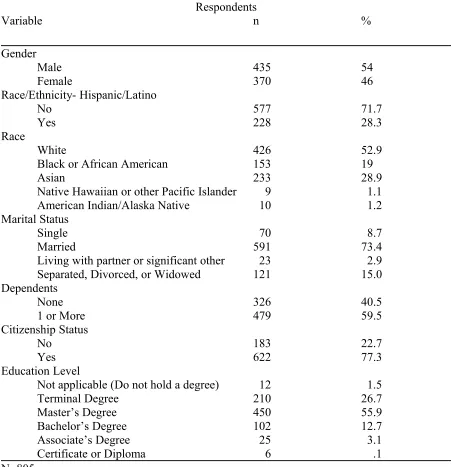
Table 4.1 Frequencies and Percentages: Sociodemographic Variables...68
Table 4.2 Minimum, Maximum, Mean, and Standard Deviation of Respondents’ Years in Current Job, Time in Academic Rank, and Time in Tenure Status...70
Table 4.3 Frequencies and Percentages of Respondents’ Academic Rank, Tenure Status, and Academic Discipline of Current Foreign-born Faculty at Community Colleges...71
Table 4.4 Minimum, Maximum, Mean, and Standard Deviation of Full-time Respondents’ Motivators and Hygienes...73
Table 4.5 Minimum, Maximum, Mean, and Standard Deviation of Part-time Respondents’ Motivators and Hygienes...74
Table 4.6 Estimates of Descriptive Statistics for Job Satisfaction Variables Pertaining to Full-Time Community College Faculty Members...76
Table 4.7 Estimates of Descriptive Statistics for Job Satisfaction Variables Pertaining to Part-Time Community College Faculty Members...77
Table 4.9 Reliability, Cronbach’s Alpha, of Variables for Opinion and Satisfaction Scales...81 Table 4.10 Stepwise Multiple Regression Analysis to Explore if Foreign-born
Community College Faculty Typological Characteristics and Demographics (work-related and opinions) Explain a Significant Amount of Variance in Perceived Job Satisfaction...83 Table 4.11 Summary of Regression Analysis for Variables Predicting Overall Job
Satisfaction...86 Table 4.12 Summary of Regression Analysis for Variables Not Significant in
LIST OF FIGURES
Introduction
Community colleges in North Carolina and throughout the United States provide an assortment of services to local communities, services that include offering associates degrees in the arts and sciences as well as certificate programs, transfer programs, and continuing education. As Dougherty and Townsend (2006) stated, “The community college is not a static institution” (p. 8). In the 1960s, the mission of community colleges was to serve multiple needs, from vocational and technical education, to adult basic education, to
continuing education in the arts and humanities. Today, however, community colleges have revised their mission statements to include not onlythe above needs but also the goal of “enabling a diverse population of students…by enhancing the education, cultural, and economic development of the service area” (Levin, 2002, p.5).Community college leaders are required to change with time (Grubb & Lazerson, 2005), and faculty members within the community college are often the first to incorporate the changes (Bruns & Bruns, 2007). As McBride, Munday, and Tunnell (1992) pointed out, “People of an organization are perhaps its most important resource. For a college this goes a step further, for the faculty are the college” (p. 158). Watba and Farmer (2006) conducted a study identifying issues
There are 988 public two-year colleges that educate around 44% of the college students in the nation (American Association of Community Colleges [AACC], 2005). There are many reasons why more and more students have turned to community colleges for their postsecondary needs. In their book The American Community College (2008), Cohen and Brawer attributed the increase in the number of students attending community college “to several conditions in addition to general population expansion: older students’ participation; financial aid; part-time attendance; the reclassification of institutions; the redefinition of students and courses; and high attendance by women, low-ability, and minority students (p.44). Students also seek services from community colleges because of the rising tuition costs at nearby universities. For example, the average annual tuition and fees for public community colleges is $2,402, compared to $6,585 for public four-year colleges (AACC, 2005). Therefore, student enrollment trends among community colleges continue to rise, creating challenges for leaders who need to hire faculty while budgets continue to be cut each academic year.
Community colleges attract diverse students from an array of backgrounds (Phillippe & Patton, 2000). For example, minority students constitute 30% of community college enrollments nationally, with Latino students representing the fastest-growing racial/ethnic population. In some urban community colleges the number of minorities is higher,
Clearly, the importance of foreign-born faculty and staff to the upcoming viability of pubic two-year colleges is vital. Such importance of “global economic competition and political events are increasing the need for an international component in the education of all community college students” (Vaughan, 2000, p. 35). Yet the fact remains that the “majority of community colleges have not made a stated commitment to internationalization” (Siaya & Hayward, 2003, p. 31). Some community colleges attempt to internationalize through study abroad programs and international festivals; however, institutions have largely overlooked the possibilities inherent in recruiting and retaining foreign-born faculty (Wells, 2007). Compared to native-born faculty members, foreign-born faculty are likely to bring a range of diverse, international perspectives to the campuses where they work (Wells, 2007).
Recruitment and retention of foreign-born faculty and staff will continue to be essential to the faculty profile of public two-year community colleges in higher education. For the purposes of this paper, foreign-born faculty refers to all faculty members other than American-born.
proportion that rose to 15% during the 1990s, and nearly 20% by 2003 (Cohen & Brewer, 2007, p. 85). Even though community colleges are more successful at recruiting faculty of color, sustaining diversity continues to be a challenge. Recently, there has emerged more literature than before addressing issues affecting community colleges. Nevertheless, research on job satisfaction among community college faculty is limited. According to Corbin (2001), a review of the literature about various community college topics reveals more about students than faculty. For this reason, exploring factors surrounding foreign-born faculty members’ job satisfaction and beliefs about their work life will expand our knowledge of faculty issues.
Statement of the Problem
Recent trends and developments in universities and community colleges throughout the United States have demonstrated a need to increase diversity among faculty in terms of gender, race, ethnicity, and national origin. Over the past decades, institutions of higher education have increased their dependence on foreign-born faculty members as one way to increase diversity (Marvasti, 2005). During the 2007–2008 academic year, fully 106,123 foreign-born scholars with non-immigrant visa status were teaching or conducting research on U.S. campuses, an increase of almost 8,000 new faculty members from the previous academic year (Open Doors, 2009).
106,123 in 2006 (Schuster & Finkelstein, 2006). Data from the National Study of
Postsecondary Faculty (NSOPF) of 2004 indicated an increase. This trend in hiring foreign-born faculty members is likely to persist because it serves several goals held in common by current community college leaders: (a) to fill vacant positions, particularly in the areas of math, science, and technology; (b) to bring international expertise to the college; (c) to enhance scientific innovation; (d) to represent society’s new ethnic distribution; (e) to prepare American students to compete in the global workforce; and (f) to raise student awareness of the international perspective (Aguirre, 2000; Altbach, 2005, 2006; De Wit, 2002; NAFSA, 2006; Stromquist, 2007). Higher education administrators must increase the level of job satisfaction among their faculty and staff in order to decrease turnover and increase morale (Isaac & Boyer, 2007). Also, a number of studies within business education (Al-Enezi, 2007; Attar & Sweiss, 2010; Decker et al., 2009) have indicated that many companies have examined the relationships among employee satisfaction, productivity, and financial performance. The literature states that satisfied employees are more productive, innovative, and loyal, and they also have lower absentee rates. Furthermore, increased job satisfaction leads to increases in employee morale (Graham, 1996).
Statement of Purpose
Study of Postsecondary Faculty [NSOPF]). This study seeks to modify Linda Hagedorn’s (2000) conceptual framework of college and university faculty job satisfaction to further investigate the population of foreign-born community college faculty. Hagedorn defines many of the factors included in Herzberg’s (1966) two-factor theory, which is structured by the framework of intrinsic variables (motivators) likely to effect job satisfaction and the extrinsic variables (hygienes) likely to effect job dissatisfaction. She modified and broadened the two-factor theory to account for additional factors (such as demographics, environments, and life-changing events) by applying the 1993 National Survey of Postsecondary Faculty (NSOPF: 93) administered during the 1992-93 academic year (NCES, 1993).
Hagedorn (2000) created a conceptual model for the study of community college faculty job satisfaction, and her model is the basis for this study. Hagedorn’s model utilized NSOPF: 93 data to adapt Herzberg’s two-factor theory for the specific task of examining university faculty. The NSOPF data is an enormous data source used to examine
postsecondary issues (Hahs-Vaughn, 2007). The model was verified to be significant. Hagedorn’s conceptual framework was built upon “mediators” and “triggers,” the NSOPF: 93 factors selected by Hagedorn to predict overall faculty job satisfaction. Mediator and trigger factors affect work life and are listed under descriptive variables further in this chapter.
the job satisfaction of foreign-born community college faculty members; Hagedorn’s research offers as a practical framework to apply to a community college study.
In particular, the researcher drew upon the NSOPF: 04 data, which was utilized during the 2003-04 academic year, to modify Hagedorn’s (2000) conceptual framework of faculty job satisfaction so that it can be applied to foreign-born faculty working at
community colleges in the United States. Hagedorn’s conceptual framework helps predict the relationships among motivators, hygienes, demographic variables, employment, and opinion variables related to faculty job satisfaction. Additionally, the researcher sought to describe the characteristics of faculty members’ job satisfaction. The NSOPF data (2004-2005) was used to measure job satisfaction of foreign-born faculty members. Lastly, the researcher explored whether or not the selected variables of employment, sociodemographic, and opinion factors explain a significant proportion of the variance in job satisfaction found among foreign-born community college faculty members.
Research Objectives
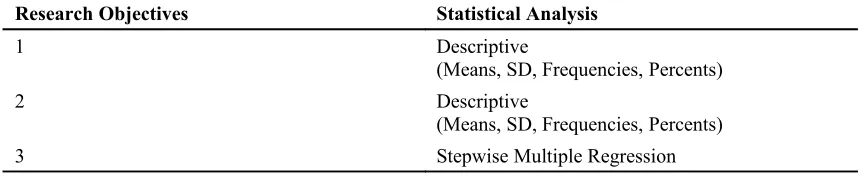
Research Objective 1: Describe the foreign-born faculty member at U.S. community colleges, as measured by employment, sociodemographic, and opinion characteristics using the NSOPF 2004.
Section A: Employment characteristics
i. Transfer to a new institution (Q9): the length of time a faculty member has held current job
iii. Time in academic rank (Q11): the length of time a faculty member has held current academic rank
iv. Tenure status (Q12): a faculty member’s tenure status (tenured, on tenure track but not tenured, not on tenure track although institution has a tenure system, no tenure system at this institution)
v. Time in tenure (Q13): the length of time a faculty member has held current tenure
vi. Academic discipline (Q16): a faculty member’s principal field of teaching
Section B: Sociodemographic characteristics
i. Age (Q72)
ii. Gender (Q71)
iii. Race/Ethnicity (Q73): a faculty member’s race/ethnicity identified as Hispanic or Latino
iv. Race (Q74): a faculty member’s race identified as American Indian or Alaska Native, Asian, Black or African American, Native Hawaiian or other Pacific Islander, and White
v. Marital Status (Q77): as of fall of 2003, faculty member’s marital status as single and never married; married; living with partner or significant other; or separated, divorced, or widowed
vii. Place of Birth (Q80): whether the faculty member’s place of birth was in the U.S.
viii. Citizenship (Q81): citizenship status of faculty member
Section C: Opinions
i. Opinion: Teaching is rewarded (Q82a): faculty members were asked on a Likert scale to give their opinions about “good teaching is rewarded”
ii. Opinion: female faculty treated fairly (Q82c): faculty members were asked on a Likert scale to give their opinions about “female faculty members are treated fairly”
iii. Opinion: racial faculty treated fairly (Q82d): faculty members were asked on a Likert scale to give their opinions about “faculty who are members of racial or ethnic minorities are treated fairly”
Descriptive statistics: Descriptive statistics will be used to summarize the employment, sociodemographic, and opinion variables of the participants.
Descriptive variables: Employment characteristics include transfer to a new institution, time in academic rank, tenure status, time in tenure position, and academic discipline (nominal data). Time reported for variables will be split; for example, the variable “transfer to a new institution” will be split into four years or less in one category and for 10 years or longer in another category. Sociodemographic characteristics are age, and
citizenship (nominal data). Opinion variables included will be “teaching is rewarded,” “female faculty treated fairly,” and “minority faculty treated fairly” (interval data).
Research Objective 2: Describe the foreign-born community college faculty members’ satisfaction by using motivators (increase satisfaction) and hygienes (decrease dissatisfaction), as measured through the NSOPF 2004.
Descriptive variables: Motivators and hygienes (interval data), including achievement (Q82a teaching rewarded); recognition (Q82d minorities treated fairly); work itself (Q62a satisfaction with workload); responsibility (Q61a satisfaction with authority to make decisions); advancement (Q10 rank and Q12 tenure status); and rewards (Q62b satisfaction with salary and Q62c satisfaction with benefits).
Research Objective 3: Determine if selected variables of the mediators and triggers explain a significant proportion of the variance in job satisfaction of foreign-born faculty members at U.S. community colleges. Specifically, this study seeks:
3a. to determine motivators and hygiene factors (achievement, recognition, work itself, responsibility, advancement, and reward) and sociodemographics (gender, ethnicity, place of birth, institutional type, income, and academic discipline) that explain a significant proportion of the variance in job satisfaction for foreign-born faculty members at U.S. community colleges
Dependent Variables: Job Satisfaction is examined as the satisfaction index (sum) of employment items (X01Q62).
Independent Variables: Mediators and triggers including age and dependents (interval data); gender, race/ethnicity, marital status, place of birth, income, and citizenship (nominal data); achievement, recognition, work itself, responsibility, advancement, and reward
(interval data); and changes of life stage (interval data) (Q72, age), family-related or personal circumstances (Q77, martial status); rank/tenure (Q11, time in rank and Q13, time in tenure), institution (Q9, time in job), and perceived justice (Q82c, female treated fairly); (Q82b part-time faculty treated fairly); and (Q83 choosing an academic career again).
Significance of the Study
The presence of foreign-born faculty members at community colleges is integral to the institutions’ missions and values. It is vital for administration in community colleges to better understand the institutional impact of this growing trend in diversity among faculty members. Because the relationship between job satisfaction and performance is significant (Judge, Thoreson, Bono, & Patton, 2001), it is extremely important for management within community colleges to understand the wide range of elements that affect job satisfaction (Judge, Bono, Thoresen, & Patton, 2001; Brayfield & Crockett, 1955; Herzberg et al., 1957). Academic leaders can use such insights to make better decisions relating to foreign-born faculty.
Community colleges have made it more of a priority lately to broaden the
faculty employment has increased along with the number of students enrolling in community colleges (Phillippe & Sullivan, 2005). The increased number of students creates the need for additional faculty members, and administrators who do the hiring consider the diversity needs of the college in addition to other needs.
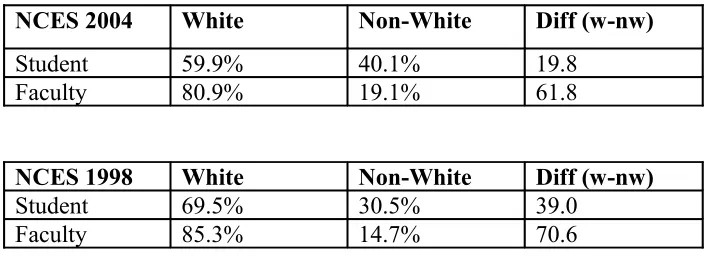
Table 1.1
Faculty and Student Demographic Profiles
NCES 2004 White Non-White Diff (w-nw)
Student 59.9% 40.1% 19.8
Faculty 80.9% 19.1% 61.8
NCES 1998 White Non-White Diff (w-nw)
Student 69.5% 30.5% 39.0
Faculty 85.3% 14.7% 70.6
Definitions of Terms
The definitions that follow are of terms that were used throughout the study and were major contributors to the framework of the study.
Academic fields were academic disciplines assigned according NSOPF 2004.
Amount of total individual income was estimated for the 2003 calendar year of gross compensation before taxes.
Career stages were defined as early career stage (35 years of age or younger), mid-career stage (over 35 years of age to 54 years of age), or late career stage (55 years of age and older). These age ranges were the same as those used by Hagedorn (2000).
Community colleges were those public, controlled, associate’s-degree granting institutions as reported to IPEDS according to the 2000 Carnegie classifications. These institutions included comprehensive community colleges, technical/vocational colleges, and university branch campuses that report separately to IPEDS from their main institution.
Degree of urbanization was derived from IPEDS by NSOPF: 04 using the U.S. Census Bureau’s initial locale codes comprising seven institutionally reported locales of rural, small, and large towns; mid-size city; urban fringe of mid-size city; large city; and urban fringe of large city. The NSOPF: 04 labels have been aggregated into the four categories of rural, town, mid-size city, and large city for this study (Carnegie Foundation for Advancement of Teaching, 2007).
Full-time faculty were those individuals who were classified as full-time faculty by their institutions and who taught at least one credit course during the fall 2003 term when the NSOPF: 04 survey was conducted.
Faculty rank was the status of faculty in tenure-eligible positions, as defined by the NSOPF: 04 survey.
Institution was defined by NCES studies as the traditional sector of postsecondary education with accreditation at the college level recognized by the United States Department of Education.
Institutional size employed the NSOPF: 04 variable of full-time equivalent (FTE) undergraduate enrollment (X13Q0), which was derived from IPEDS data for fall 2003 FTE undergraduate enrollments. The five NSOPF: 04 enrollment ranges were aggregated into the following three ranges:
1. Small community colleges reported Fall 2003 enrollment (FTE) of less than 2,000. (This variable range was derived from NSOPF: 04 by aggregating the
continuous variable of undergraduate enrollment in the ranges of 1-1,999.) 2. Medium community colleges reported Fall 2003 FTE enrollment in the range of
2,000 to 4,999. (This variable range was derived from NSOPF: 04 by
aggregating the continuous variable of undergraduate enrollment in the ranges of 2,000-4,999.)
continuous variable of undergraduate enrollment in the ranges of 5,000 to 9,999 and at least 10,000 FTE.)
Job Satisfaction, consistent with the previous literature, was "simply how people feel about their jobs and different aspects of their jobs. It is the extent to which people like, [satisfaction] or dislike [dissatisfaction] their jobs” (Spector, 1997, p.2).
Overall job satisfaction was a global perspective of a faculty member regarding his or her relative contentment with the satisfaction index (sum) of employment items (X01Q62).
Place of birth: a dichotomous variable defined as “yes” (born outside the United States) or “no” (born in the United States) as on the NSOPF: 04 survey.
Race/ethnicity: a dichotomous variable defined as majority (White, non-Hispanic, and Asian/Pacific Islander) and under-represented minority (Black, Hispanic, and American Indian/Alaskan Native) as defined by the NSOPF: 04 survey.
Satisfaction with employment index comprised the sum of NSOPF: 04 satisfaction cores for workload (Q62A), salary (Q62B), benefits (Q62C), and overall satisfaction (Q62D).
Satisfaction with instruction index comprised the sum of NSOPF: 04 satisfaction scores for authority to make (academic) decisions (Q61A), instructional technology (Q61B),
equipment/facilities (Q61C), and support for teaching improvement (Q61D).
Sex: a dichotomous variable defined as male or female as in the NSOPF: 04 survey.
Teaching field was derived by applying the principal field of teaching and general area codes employed in the NSOPF: 04 faculty study into the two teaching field categories of (1) liberal arts leading to associate of arts or sciences degrees or (2) career programs leading to associate of applied business or science degrees.
Tenure status: a dichotomous variable identified as tenured or non-tenured/tenure track.
Work: any combination of teaching, research, and service that meets institution standards or tenure.
Theoretical Framework for the Study
Herzberg’s Two-Factor Theory of Motivator–Hygiene
In the late 1950s, Frederick Herzberg and his colleagues developed an influential theory of job satisfaction based on the characteristics of motivators and hygienes (Herzberg et al., 1959). Even though studies of job satisfaction make use of many different theories and explanations, the literature frequently references the work of Frederick Herzberg (1966), the creator of the two-factor theory, also known as the Motivatior-Hygiene Theory. Herzberg’s two-factor theory maintains that certain factors can be characterized as either motivators or hygienes. The theory states that motivators can help increase satisfaction while other
characteristics, labeled hygienes, decrease satisfaction or result in demotivation. Herzberg’s research (1959) identified 14 first-level job factors relating to job satisfaction and
advancement, possibility of growth, salary status, the quality of interpersonal relations with superiors, the quality of interpersonal relations with peers, technical supervision, agreement with company policies and administration, pleasant working conditions, external factors from personal life, and job security. However, Herzberg ultimately found only five of these factors to be influential in affecting job satisfaction and dissatisfaction: achievement, recognition, the work itself, responsibility, advancement, and (to a lesser degree) salary.
Frederick Herzberg (1959) separated the motivational elements of work into two categories: those serving people's animal needs (hygiene factors) and those meeting
exclusively human needs (motivation factors). Intrinsic factors (achievement, recognition, the work itself, responsibility, and advancement) are related to the execution of a job with the possibility of achieving professional growth. These indicate success in performance and thus are named “motivators” and identified as job “satisfiers.”
Extrinsic factors, which are associated with the conditions that surround the job, are named “hygiene” factors and are job “dissatisfiers.” Extrinsic factors include administration, fringe benefits, working hours, conditions, and salary. Furthermore, Herzberg determined that external environmental factors, such as company policy, administration styles, supervision, salary, working conditions, and interpersonal relations, were dissatisfiers; if these factors were present, individuals would be satisfied, but not motivated (Herzberg et al., 1959).
1976; Gawel, 1997; Knight & Westbrook, 2004). Although Herzberg’s theories were developed about forty years ago, his work continues to be recognized and his contribution praised (Wren & Greenwood, 1998). Herzberg’s motivation-hygiene theory has dominated the study of job satisfaction and has formed the basis for the development of job satisfaction assessments.
Conceptual Framework for the Study
Figure 1.1
Hagedorn Conceptual Framework of Faculty Job Satisfaction (Hagedorn , 2000, p. 7).
Table 1.2
Motivator and Hygiene Variables for the Study
Hagedorn
NSOPF:04
Question Number Present Study
Achievement 82a Teaching rewarded
Recognition 82d Minorities treated fairly
Work itself 62a Satisfaction with workload
Responsibility 61a Satisfaction with authority to make decisions
Advancement 1012 RankTenure Status
Salary 62b62c Satisfaction with salarySatisfaction with benefits
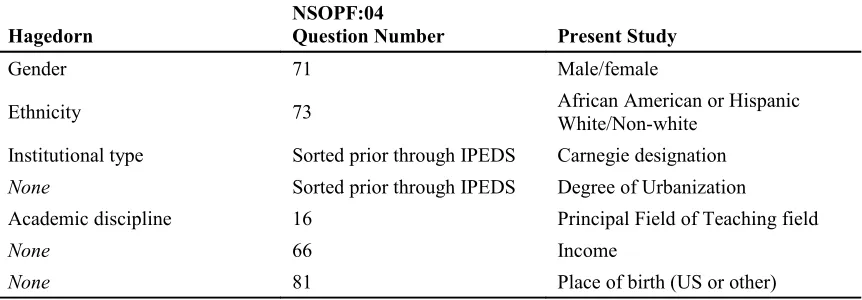
Table 1.3
Sociodemographic Variables for the Study
Hagedorn NSOPF:04 Question Number Present Study
Gender 71 Male/female
Ethnicity 73 African American or Hispanic White/Non-white
Institutional type Sorted prior through IPEDS Carnegie designation
None Sorted prior through IPEDS Degree of Urbanization
Academic discipline 16 Principal Field of Teaching field
None 66 Income
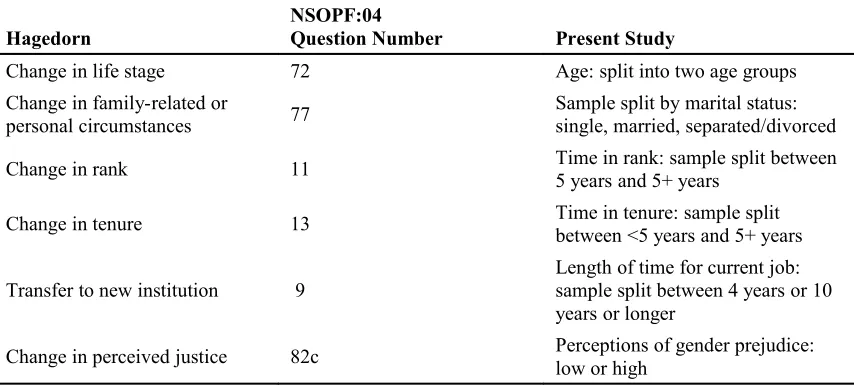
Table 1.4
Trigger Variables for the Study
Hagedorn
NSOPF:04
Question Number Present Study
Change in life stage 72 Age: split into two age groups
Change in family-related or
personal circumstances 77 Sample split by marital status: single, married, separated/divorced
Change in rank 11 Time in rank: sample split between 5 years and 5+ years
Change in tenure 13 Time in tenure: sample split between <5 years and 5+ years
Transfer to new institution 9
Length of time for current job: sample split between 4 years or 10 years or longer
Change in perceived justice 82c Perceptions of gender prejudice: low or high
Limitations and Delimitations Limitations
The study was limited by the sample of community college foreign-born faculty. It was also limited by the self-reported perceptions and responses from the community college foreign-born faculty.
Another limitation to the study was that it was an ex-post-facto study that employed the existing NSOPF: 04 survey results obtained before the research objectives for the present study were developed. Accordingly, this analysis did not allow for the survey questions to be specifically crafted to the research objectives.
Delimitations
CHAPTER TWO LITERATURE REVIEW
The review of literature for the study focused on job satisfaction of foreign-born faculty at community colleges. There are many studies that examine job satisfaction in education settings. This literature review covered foreign-born faculty in higher education in general, and not specific to community colleges, because of the lack of literature. To support this claim, Appendix E documents search terms related to job satisfaction articles from the past 10 years. The line of research focusing on foreign-born faculty was also limited; therefore, studies focusing on minorities and faculty members of color were used. The majority of studies in this area concluded that job satisfaction was a key element in faculty members’ “intent to leave” and controls other factors such as performance and turnover.
Job Satisfaction
Job satisfaction is a significant topic that has been researched by many scholars in many fields, from education (Aguirre, 2000), to health (Al-Enezi, 2009), to business (Attar & Sweiss, 2010). The effects of job satisfaction on worker productivity in all types of
Frederick Taylor was one of the first theorists to help define organizational efficiency in terms of a scientific approach to the management of organizations, and he is known as the father of scientific management. Taylor (1947) created systems founded on scientific
principles relating to standardization and efficiency: Standardized management methods and improved working conditions would yield the most efficient work.
Researchers soon observed, however, that too much standardization left employees feeling alienated from their jobs. Between 1924 and 1933, studies were conducted at the Western Electric Company’s Hawthorne Plant in Chicago. These tests, called the Hawthorne Illumination Tests, divided employees into two groups, where one “test” group was subjected to calculated changes in lighting and another “control” group worked under constant lighting conditions throughout the experiment. The findings demonstrated that productivity increased even though the test group had their lighting decreased to near twilight. The control group’s productivity had not changed (Cook, 1962; Roethlisberger & Dickson, 1939). In the early 1930s, additional experiments—called the “Hawthorne Effect” studies—were conducted and performed by Elton Mayo, Fritz Roethlisberger, and William Dickson. The Hawthorne Effect studies demonstrated that, when employees were given special attention, productivity was likely to change, regardless of whether working conditions had changed. This finding later drove studies on employees’ feelings and attitudes about their work lives (Roethlisberger & Dickson, 1939).
1967; Lawler & Suttle, 1973; Vroom, 1964, Kalleberg, 1977). Still, the dominant theoretical framework used throughout the literature continued to be Herzberg’s study on job attitudes and productivity (Herzberg et al., 1959). This study classified work attitudes into two categories: motivators and hygiene factors. Herzberg's two-factor theory categorized job factors into two groups: intrinsic and extrinsic. Intrinsic job factors included feelings of accomplishment, recognition, and autonomy. Extrinsic job factors, or motivators within the environment, included salary, job security, and physical working conditions; these were named hygiene factors. This theory suggests that job satisfaction and dissatisfaction are caused by two separate sets of independent characteristics. According to Herzberg et al. (1959), motivators can cause job satisfaction. Likewise, hygiene factors can create job dissatisfaction, but their absence does not induce satisfaction. Herzberg's work has been implemented by other scholars who have pointed out that job satisfaction is determined by the extent to which the job itself fulfills an individual's physical and psychological needs (Morse & Weiss, 1955; Oldham & Hackman, 1981; Porter & Lawler, 1965; Wolf, 1970).
Defining Job Satisfaction
As early as 1969, Locke defined job satisfaction as the "pleasurable emotional state resulting from the appraisal of one's job as achieving or facilitating the achievement of one's job values" (p. 316). According to Locke, feelings of satisfaction and dissatisfaction
(dissatisfaction) their jobs” (p.2). Common to many of these definitions is the notion that job satisfaction is an attitudinal variable that impacts an individual’s internal state of well-being at work. The feelings of satisfaction and dissatisfaction follow from whether an individual assesses the job and certain job-related practices with approval or disapproval (Locke, 1976).
Faculty Job Satisfaction
Concerns about job satisfaction will increasingly occupy many higher-education policy makers and administrators, given the growing necessity for diverse faculty members within institutions. Although a vast amount of literature exists on the subject of job
satisfaction, there is still a shortage of research pertaining to foreign-born academic faculty members who support and maintain diversity within community colleges. Today, more than ever, foreign-born faculty are a vital part of community colleges. This study explored several aspects of the job satisfaction of foreign-born faculty at community colleges in the United States.
Job Satisfaction in the Community College
As of January 2009, there were more than 11 million students attending over 1,177 community colleges, both private and public, throughout the United States (AACC, 2009). Of that number, 988 public community colleges offered an array of opportunities for students to build upon their professional experiences through transferability of credit courses to four-year universities, vocational training, and professional development options. Community college mission statements often are based on the concepts of open access and equity for all. Community colleges work to create diverse student populations as well as diverse faculty and staff populations, in the hope of connecting everyone to more diverse populations of age, experience, and ethnicity. During the 1999-2000 academic year, the greatest proportional increase in degrees awarded went to Hispanics, with a 130% increase to 37,548. During the same academic period, degrees presented to Asian and Pacific Islanders increased 104% to 21,413, and those presented to African Americans grew 73% to 39,872.
faculty are likely to face similar challenges that minority groups face, because of their citizenship status, cultural differences, and the stereotypes they encounter.
Theoretical Frameworks
Job satisfaction is a commonly studied variable within business and educational settings. It has been described, simply, as how people feel about their jobs and different aspects of their jobs (Cranny et al, 1992). It is the extent to which people like or dislike their jobs. Job satisfaction is generally assessed as an attitudinal variable (Spector, 1997, p. 2). Job satisfaction is a multifaceted blend of experiences with many contributing factors (Spector, 1997).
Two main categories of theories have emerged from job satisfaction research: “content” theories and “process” theories (Landy, 1978). Process theories of job satisfaction attempt to explain how satisfaction increases or decreases given specific types of variables such as experiences, needs, and values. Content theories, on the other hand, attempt to identify the specific needs or values most conducive to job satisfaction and to explain why those factors have the effects that they have (Maslow, 1943; Herzberg, 1966). Herzberg’s (1959) two-factor theory of motivator-hygiene and Maslow’s (1970) hierarchy of needs are the two content theories discussed in this literature review. These are content theories because they attempt to identify the needs and values that must be realized in order for an individual to feel satisfied at work.
the lowest unfinished need in the hierarchy. If a need that has formerly been met becomes vulnerable, the individual proceeds to that level before endeavoring to achieve the final goal of self-actualization. As a result, the most fulfilling work life would be one that best matches the individual’s current level within the hierarchy of need. Using Maslow’s theory, some scholars have explored job satisfaction from the viewpoint of need achievement. However, this approach has become less accepted because it emphasizes fundamental needs rather than cognitive processes. Instead, the attitudinal point of view has gained focus in research on job satisfaction (Spector, 1997). Still, Maslow’s hierarchy of needs theory is supported by Herzberg’s two-factor theory of motivator-hygiene.
For the most part, past and current literature uses the theoretical framework
underlying Herzberg's two-factor theory, which focuses on 14 different intrinsic and extrinsic factors affecting job satisfaction and motivation ( Hagedorn, 2000; Kalleberg, 1977; Olsen, 1993; Zhou & Volkwein, 2004). The following section will provide a detailed description of studies that have examined intrinsic and extrinsic factors influencing faculty members’ job satisfaction. In addition, studies that explore these factors for foreign-born faculty will also be discussed.
Herzberg’s Two-Factor Theory
these factors does not necessarily mean that dissatisfaction will occur (Herzberg et al., 1959). Similarly, hygiene factors have the potential to cause dissatisfaction, but their absence does not produce a high level of satisfaction. Thus, job satisfaction and dissatisfaction act
independently of one another. According to Herzberg (1968), the opposite of job satisfaction is not dissatisfaction; it is a relative lack of satisfaction. In the same way, the opposite of job dissatisfaction is not satisfaction, but rather the lack of dissatisfaction. For example, consider the hygiene factor of working conditions for faculty members at a community college. If the lack of office space in community colleges requires some faculty to double up on office space, faculty will be greatly dissatisfied. However, if the office space is adequate for the faculty as expected, the faculty will not be particularly satisfied by taking notice and being grateful (Gui et al., 2009).
Motivators and Hygiene
Motivators and hygiene factors are derived from Herzberg's two-factor theory for job satisfaction, which was developed in the late 1950s. The theory initially recognized 14 job-related factors job-related to demonstrating satisfaction and dissatisfaction with work (Herzberg et al., 1957; Herzberg et al., 1959). In the end, the study found that only five to six factors significantly impacted job satisfaction: achievements, recognition, work itself, advancement, responsibility, and (to some extent) salary. This study expanded on these five factors, also known as intrinsic and extrinsic factors, and further applied them to the study of foreign-born faculty members. Intrinsic and extrinsic factors have significant effects on overall job
Achievement
Herzberg described the first factor, achievement, as the opposite of failure and the absence of achievement (1959, p. 45). Researchers can identify job achievement through factors such as the successful completion of a task, finding solutions to problems, showing work evidence, and seeing the results of one’s work (Herzberg, 1959). Herzberg identified achievement in 41% of the workers who were observed as having high levels of job satisfaction. However, the relationship between scholarly achievement and job satisfaction has not been clearly defined in academe. For instance, it is hard to show if one predicts the other (Lin, Pearce, & Lang, 2009).
Some studies have measured job achievement in academe in terms of the number of peer-reviewed journal articles published, book publications, and presentations (August & Waltman, 2004; Hagedorn, 2000; Herzberg et al., 1959; Lahey & Vihtelic, 2000). The August and Waltman study measured achievement by examining professional productivity (publications and presentations) for female faculty (2004). The findings indicated that the number of publications and presentations did not have a significant impact on job
satisfaction. However, Lahey and Vihtelic (2000) looked even more closely at the
Just as gender differences can influence job satisfaction levels, ethnicity can create differences as well. Even though foreign-born faculty demonstrate high levels of scholarly productivity compared to their native U.S.-born peers, their average compensation and levels of job satisfaction are lower (Corley & Sabharwal, 2007; Lee, 2002).
Recognition
According to Herzberg, et al. (1959), recognition at work is an intrinsic factor that positively impacts job satisfaction. The source of the recognition can be almost anyone from the supervisor to the general public, and the act can involve any type of notice: Praise and blame can both be categorized as recognition. Types of recognition seen within academe include tenure, salary, and support for research, teaching, and service (August & Waltman, 2004; Hagedorn, 1996, 2000; Olsen, 1993; Rosser, 2004, 2005). Olsen, Maple, and Stage (1995) found that, among women and minority faculty members, perceived recognition and institutional support positively impacted overall job satisfaction.
Work Itself
viewed institutionally as being more valuable than teaching or service within a faculty member’s job life (Bok, 1986).
Research has shown that low-ranking faculty and minority faculty spend more time on service projects and teaching than on research. Some studies have suggested that this difference has increased the overall dissatisfaction of foreign-born faculty (Turner & Myers, 1999). A study conducted by Olsen and colleagues (1995) identified that overall job
satisfaction with teaching negatively affected the amount of support and recognition faculty members received from their academic departments. Faculty members who were more satisfied with their research were more likely to receive tenure during their career.
It is difficult to generalize about faculty job satisfaction given only the factors of time spent teaching, researching, and completing service projects, since multiple and varying influences such as type of institution, gender, age, minority or ethnicity, academic rank, country of origin, and citizenship status also impact satisfaction. For example, minorities, in particular, have shown significant differences in the amount of time spent on service projects compared to their white male counterparts (Antonio, Astin, & Cress, 2000).
of time spent on academic activities such as teaching, advising, and committee work had a negative effect on job satisfaction.
Advancement
Herzberg defines the advancement factor as an actual change in the status or position of a faculty member. The category of advancement within academia comprises a promotion of rank or the accomplishment of tenure (Hagedorn, 2000). It is important to note that if an individual transferred from one part of the institution to another without any change in rank, but is given increased opportunities for responsibility, the change is considered to be an increase in responsibility, which is another category, not advancement. Faculty members perceive the obtainment of tenure as a reward, and they consider it to be a critical measure of their achievement in academia. Rank and tenure are determined to be powerful, explanatory variables in measuring faculty job satisfaction (Tack & Patitu, 1992).
Past research has demonstrated that faculty members who are of color, female, and foreign-born have struggled and labored to move forward within the ranks of academia (Antonio, Astin, & Cress, 2000; Corley & Sabharwal, 2007; Hagedorn, 1996; Laden & Hagedorn, 2000; Perna, 2001; Tack & Patitu, 1992; Bellas & Toutkoushian, 1999; Toutkoushian, 1999; Turner & Myers, 2000).
Some studies have shown that faculty members of color are more involved in teaching and service activities than research, resulting in lower productivity (fewer publications) and fewer opportunities to obtain tenure (Konrad & Pfeffer, 1991;
less likely than Whites and Hispanics to hold the rank of full professor, and that African Americans and Hispanics were less likely than Whites to hold tenured positions. These findings surfaced after controlling for experience, career publications, Carnegie class, and academic field. Perna’s (2001) study also agreed with these findings and suggested that the lower representation of minorities among tenured faculty was related to differences in human capital, structural characteristics, and research productivity.
Responsibility and Authority
As noted above, a faculty member who transfers from one part of an institution to another without any change in rank but with increased opportunities for responsibility has achieved an increase in responsibility, not an advancement. This category can also include a loss of job satisfaction resulting from a lack or diminution of responsibility. Deci (1999) and his colleagues found that the “most important issue, within the supervisory context, is the extent to which faculty members felt in control, in other words, the extent to which people within the context felt pressured to think, feel, or behave in particular way [by] for example, the chair of the department ” (p. 629).
Self-managed teams take on most of the responsibility and authority traditionally entrusted to first-line supervisors. Self-defining teams represent an intense form of
Salary
According to Herzberg (1966), this category includes all sequences of events in which compensation plays a role (p. 46). Herzberg gives examples involving wage or salary increases or unfulfilled expectations of salary increases. Salary has also been used as a gauge to measure position and fairness as factors affecting job satisfaction (Bender & Heywood, 2006; Hagedorn, 1996, 2000). Yet a study by Bender and Heywood (2006) found this to be less important for female faculty members than for male faculty members.
Studies have shown salary to be a cause of both job satisfaction and job
dissatisfaction among faculty (Morse & Weiss, 1955; Moses, 1986; Winkler, 1982). On the other hand, Hagedorn (2000) discovered that job satisfaction levels of employees were significantly affected by the factor of compensation. Salary was one of the most significant factors in Hagedorn's study of faculty job satisfaction. How salary affects the attitudes of foreign-born immigrants is currently being investigated by several scholars (Corley & Sabharwal, 2007; Monks, 2007). A recent study by Corley and Sabharwal (2007) found that foreign-born faculty employed in universities made lower salaries overall compared to U.S.-born faculty members. Foreign-U.S.-born faculty earned over $1,000 per year less than native- born faculty. This study did not measure the direct impact of salary on job satisfaction, but it did find that foreign-born faculty members were unlikely to communicate overall job
factors. This research demonstrated that foreign-born faculty members are encountering a salary gap that can not be explained by any other social or institutional factors.
Individual Characteristics
Demographics crucially shape a person’s life and experiences. A number of
demographic variables influence faculty members’ overall job satisfaction. Studies suggest a link between overall job satisfaction and demographic factors such as gender and academic discipline. Gender has been heavily researched, and it is the most researched variable in the studies of faculty satisfaction; however, no common conclusion on the relationship between gender and job satisfaction has been made (August & Waltman, 2004; Bilimoria et al, 2006; Callister, 2006; Hagedorn, 2000; Hult, Callister, & Sullivan, 2005; Okpara, Squillace, & Erondu, 2005; Olsen, Maple, & Stage, 1995; Oshagbemi, 1997; Ropers-Huilman, 2000; Sax, Hagedorn, Arredondo, & Dicrisi, 2002; Settles, Cortina, Malley, & Stewart, 2006; Tack & Patitu, 1992).
2005; Olsen et al., 1995; Peterson, Friedman, Ash, Franco, & Carr, 2004; Tack & Patitu, 1992).
There has been limited literature written on how academic discipline affects faculty job satisfaction. For instance, Olsen and his colleagues found differences among minorities and female faculty members relating to the time spent involved with research and teaching, but academic discipline was not found to have significant impact on job satisfaction (Olsen et. al, 1995).
Yet differences among academic disciplines can indirectly affect job satisfaction. Some studies that investigated the relationship between academic disciplines and faculty turnover revealed that faculty of different disciplines are motivated by diverse factors (Xu, 2008). Xu (2008) found that faculty in “pure” sciences such as agriculture, animal and plant science, medicine, and public health are more likely to be influenced by salary, opportunities for advancement, job autonomy, and external funding. Faculty belonging to the “applied” sciences such as psychology, anthropology, political science, and sociology are more likely to be impacted by the factors of job security and advancement opportunities. Because most foreign-born faculty are employed in applied programs such as engineering and computer sciences, the findings from the above studies are vital to understanding job satisfaction of foreign-born faculty (Corley & Sabharwal, 2007; Varma et.al., 2006).
Institutional Typological Factors
over time, the basic classification of two-year colleges had remained the same (Hardy & Katsinas, 2007). However, in 2005, modifications to the classification system were announced (CFAT, 2007). The Carnegie Foundation for the Advancement of Teaching (2007) revealed an expanded classification system that would reclassify two-year institutions based on institutional control, degree of urbanization, and size. The statistics to validate this classification system are accessible from the Integrated Postsecondary Education Data System (IPEDS), NCES, and the U. S. Census Bureau (Hardy & Katsinas, 2007).
Summary
Herzberg’s job satisfaction theoretical model was used to define extrinsic and
intrinsic factors. Also, examples were given of prior literature that used the same factors. As a final point, the Herzberg job satisfaction model was applied to additional job satisfaction situations within prior literature to demonstrate relationships to the situations of foreign-born faculty. This chapter notes that the subject of job satisfaction related to foreign-born faculty has not been extensively studied. With the current trend of foreign-born faculty obtaining more positions each year within institutions of higher education, the need for adequate and effective research is becoming even more imperative for scholars and education leaders alike. Higher education administrators at community colleges throughout the United States
CHAPTER III METHODOLOGY
The purpose of the chapter is to present the research design and methods used for the study. The chapter begins with a discussion of the explanatory, non-experimental,
quantitative survey research design and the three guiding research objectives used in the study. Next, the chapter includes a presentation of the variables used in the study and the organization of the variables for each of the research objectives. The chapter continues with a discussion of the population and sample of community college foreign-born faculty selected. Other sections of the chapter include instrumentation, data collection, participant response rates, data analysis procedures, and preliminary data analysis. The preliminary data analysis section covers assumptions, handling of non-response bias, and exploratory factor analysis. Reliability of the instruments used in the study are reported using Cronbach’s alpha. The chapter concludes with an overall summary of the research design and methodology.
Introduction
This chapter provides an overview of the design and methodologies that were applied in this research study to determine the relationships among sociodemographic and
about foreign-born faculty and instructional staff was stratified from institutions across all Carnegie classifications (U.S. Department of Education, National Center for Education Statistics, 2004) and applied as the data source.
The National Center for Education Statistics (NCES) conducted the fourth National Study of Postsecondary Faculty (NSOPF) in 2004. The NSOPF had been carried out previously in 1988, 1993, and 1999. These surveys collected and composed data regarding faculty at postsecondary institutions throughout the United States and are cited often in the existing research. NSOPF data have been utilized to inform policy and practice by
researchers, policymakers, administrators, and practitioners.
Research Design
The research design was created to better understand the factors that were examined and the procedures that were used (Sproull, 1995). The study was created to explore and measure the level of job satisfaction among foreign-born community college faculty through a quantitative, non-experimental, explanatory research design.
major characteristics of the population (O’Rourke, Hatcher, & Stepanski, 2005). Correlational data help clarify connections and relationships but not causation
(O’Rourke, Hatcher, & Stepanski, 2005). The researcher chose to follow a quantitative design given an interest in measuring data from a higher number of participants than could be summarized through a qualitative research design. Furthermore, the research objectives being measured were best suited for a quantitative design. The advantages of nonexperimental designs are that they can be carried out in natural settings and do not require experimentation. The disadvantages are that results lead to conclusions only about associations and do not shed light on cause and effect (Sproull, 2002). The study reports descriptive and correlational findings. Descriptive data are utilized for
summarizing large amounts of data and identifying major characteristics of the population (O’Rourke, Hatcher, & Stepanski, 2005). Correlational data help clarify connections and relationships but not causation (O’Rourke, Hatcher, & Stepanski, 2005).
Research Objectives
The study utilized a quantitative research survey design to examine job satisfaction as perceived by community college foreign-born faculty. The following research objectives helped guide the study:
Research Objective 2 – Describe the foreign-born community college members’ job satisfaction by using motivators (increase satisfaction) and hygienes (decrease
dissatisfaction), as measured through the NSOPF 2004.
Research Objective 3 – Determine whether selected demographic variables explain a significant proportion of the variance in job satisfaction of foreign-born faculty members at U.S. community colleges.
o Describe the demographic characteristics (gender, ethnicity, and academic discipline) that explain a significant proportion of the variance in job satisfaction for foreign-born faculty members at U.S. community colleges. o Describe the trigger characteristics, measured in changes of life stage and job,
that explain a significant proportion of the variance in job satisfaction for foreign-born faculty members at U.S. community colleges.
Conceptual Framework
The conceptual framework provides an explanation of the variables and their
proposed relationships to one another. The study sought to add to the research regarding job satisfaction and foreign-born community college faculty in the United States.
Sociodemographic characteristics have been shown to influence job satisfaction. The conceptual framework acknowledges this finding so as to further explore how
job satisfaction among foreign-born faculty. Each variable is more fully described below in terms of how it relates and contributes to this study.
Variables Used in the Study
The research variables for the study were classified as dependent or independent for each of the three research objectives. The conceptual framework for the study illustrated in Chapter One provided a visual display of the variables used in the study. The first research objective sought to describe the job satisfaction of foreign-born faculty at community colleges in the United States. Table 3.1 provides a list of the subscales used to describe the sociodemographic characteristics addressed in the first research objective.
Table 3.1
Variables Used to Describe Sociodemographic Characteristics
Variables
Sociodemographic Characteristics Age
Gender
Race/Ethnicity Education level Marital status
Number of dependent children Citizenship
The first research objective was a descriptive question used to examine
The second research objective was a descriptive question used to describe levels of job satisfaction as perceived by the foreign-born community college faculty in the United States using motivators that increase satisfaction (achievements, recognition, work itself, responsibility, and advancement) as well as hygienes that decrease dissatisfaction (such as rewards). Frequencies, means, percentages, and standard deviations were computed for the data analysis. Table 3.2 provides a list of the dependent variables for the second research objective.
Table 3.2
Variables Used to Describe Participants’ Perceptions of their Job Satisfaction
Variables
Motivators and Hygiene Achievement
Recognition Work itself Responsibility Advancement Reward
The third research objective sought to examine whether personal and professional
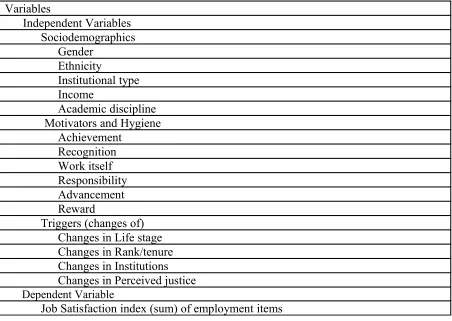
Table 3.3
Variables Used to Determine if Sociodemographic and Employment Variables Explain Job Satisfaction
Variables
Independent Variables Sociodemographics
Gender Ethnicity
Institutional type Income
Academic discipline Motivators and Hygiene
Achievement Recognition Work itself Responsibility Advancement Reward
Triggers (changes of) Changes in Life stage Changes in Rank/tenure Changes in Institutions Changes in Perceived justice Dependent Variable
Job Satisfaction index (sum) of employment items
Population
The population for this study was foreign-born faculty at community colleges in the United States. This included faculty and instructional staff from two-year institutions defined by Carnegie classifications (U.S. Department of Education, National Center for Education Statistics, 2004). The researcher selected faculty members who met the following criteria: (1) confirmed study eligibility as working at a community college, (2) were employed full- or part-time at an institution, and (3) answered “no” to question 80 and thus not were born in the United States. Of surveyed participants, 805 were foreign-born professors serving in
community colleges where student populations are the most diverse among institutions of higher education.
Sample
The data represents a national sample of all full-time and part-time faculty and instructional staff at public and private two-year and four-year institutions in the United States (National Center for Education Statistics, 2006). NSOPF: 04 consisted of a sample of 35,630 faculty and instructional staff across 1,080 institutions. The data was collected using a web-based questionnaire that was either self-administered or conducted by telephone with a trained interviewer (NCES, 2006). Completed surveys were obtained from about 26,110 faculty members and instructional staff, for a weighted response rate of 76%.
characteristics of the institutions where respondents work, including faculty composition (the percentage of faculty members who are part-time), student composition (the percentage of students who are minorities), faculty-to-student ratios, and institutional policies.
Institution Sample
The institution file contained questionnaire data from 920 institutions. NCES selected 1,080 institutions of which 1,070 were eligible to participate in NSOPF: 04. Of eligible institutions, 91% provided a faculty list and 86% completed the institution questionnaire. The primary interest of this study was to examine faculty at community colleges. Of the 920 institutions in the sample, 232 community colleges participated.
Faculty Sample
Instrumentation
The instrument for NSOPF: 04 was adapted from the 1999 (NSOPF: 99) survey (U.S. Department of Education, National Center for Education Statistics, 1999) in a number of ways, including shortening the instrument and employing a web-based instrument with telephonic interviews to follow-up with non-respondents. It was also updated with a focus on developing trends while maintaining comparability with previous NSOPF studies (Heuer et al., 2005). The NSOPF: 04 sampling protocols included weighting of under-represented racial or ethnic faculty to ensure valid representation of these groups in the survey. In
addition, an extensive field-test involving the sampling of faculty from 150 institutions (77% response rate) was conducted to validate the instrument and procedures (Heuer et al., 2005).
Reliability and Validity
were conducted, the researcher made a final decision regarding which scales to retain for analysis.
NSOPF Data Collection
The NCES coordinators at each chosen institution were used to facilitate the
Institutional Review Board’s (IRB) procedures and to complete institutional questionnaires. They also offered electronic lists of all faculty and instructional staff who qualified for the study. Sample participants were officially asked to complete the survey. The NSOPF: 04 data collection procedure did not provide optional paper-and-pencil surveys. Both questionnaires were web-based and self-administered. In addition, Computer Assisted Telephone Interviews (CATI) were employed to follow up non-response data of the faculty instrument.
Various efforts were made to collect institutional and individual faculty data,
including the use of a web-based, self-administered questionnaire and telephone interviews. Both institutions and faculty members were provided incentives to participate. Monetary reimbursement was offered to institutions that indicated difficulty in complying, and early completers of the faculty survey and selected sample members were offered an unknown incentive to participate.
Institutional Data Collection
Institutional data were collected during the period of 29 September 2003 to 22
October 2004. Each institution was asked to appoint an institution coordinator (IC) to provide a list of faculty members including name, various individual demographics (e.g., sex,
complete institution data via a web-based survey. Trained telephone interviewers contacted institutions to complete missing questionnaires. Of participating institutions, 81% completed the institution questionnaire using the web, while the remaining 19% completed it with the assistance of an interviewer. The average time to complete the survey was 35 minutes (NCES, 2006).
Faculty Data Collection
Faculty data was collected in the 9-month period from 15 January to 6 October 2004. Individual faculty members were instructed to complete a web-based survey or to call a toll-free telephone number. After four weeks, trained telephone interviewers began to call non-responders. Of participating faculty members, 76% completed the faculty questionnaire using the web, while the remaining 24% completed it with the assistance of an interviewer. Nearly 60% of faculty completed the survey during the early phase and did not require follow-up. The average time to complete the survey was 30 minutes (NCES, 2006).
Data Collection