University of East London Institutional Repository: http://roar.uel.ac.uk
This paper is made available online in accordance with publisher policies. Please scroll down to view the document itself. Please refer to the repository record for this item and our policy information available from the repository home page for further information.
To see the final version of this paper please visit the publisher’s website. Access to the published version may require a subscription.
Author(s):Sneddon, Raymonde.
Book Chapter Title: Learning in Three Languages in Home and Community Year of publication:2007
Citation:Sneddon, R. (2007) 'Learning in Three Languages in Home and Community' Published in Conteh,J., Martin,P. and Robertson, L.H. (eds) (2007) Multilingual Learning Stories in Schools and Communities in Britain. Stoke-on-Trent: Trentham Books. pp 32-55
Link to publisher website:
http://trentham-books.co.uk ISBN:9781858563985
Publisher statement:
Chapter Two
Learning in Three Languages in Home and Community
Raymonde Sneddon
Introducing Rehana
‘Well, it depends, sometimes I say hathi and sometimes I say elephant, because it
came first into my head’.
Rehana is retelling the story of the Raja’s Big Ears (Desai, 1989) in Gujerati. She is
just a little nervous of the tape-recorder at first and mutters a couple of times
under her breath ‘how do you say…?’ Then she gets in to the flow: the story
takes off, the dialogue is lively and the chants come in both English and Gujerati:
The raja’s got big ears!
The raja’s got big ears!
Who told you?
Who told you?
In the same way as story tellers of that age drive their stories along in English
with and then, and then, Rehana links her narrative with pachi, pachi. A number of
English words come into her story, as they came first into her head: musical
instruments, party, table, tambourine, secret.
Rehana is eleven and was born in London. Her Gujerati has features of the Surti
dialect that her family speak. She makes some mistakes: gender is a minefield for
bilingual children who have become dominant in English, and Gujerati has three.
In the language of the story there are some words that are unfamiliar in both her
it’s a story word; but I don’t use it in English much either, I say hair cutter or
hairdresser’.
‘My Dad doesn’t like us to speak English at home. He tells us off’. Both Rehana’s
parents were born and educated to secondary school level in India in Gujerati,
Urdu, Hindi and English and they have literacy skills, in varying degrees, in all
these languages. They are keen to pass on Gujerati, the main language of the
family. Rehana learned English when she went to nursery. As well as hearing her
read in English every day when she was younger, as the school recommended,
Rehana’s mother told her stories in Gujerati. Her father is heavily involved in the
running of a centre that caters for the needs of the Gujerati and Urdu speaking
community, so there are lots of documents in Gujerati and Urdu around the
house and both languages are used regularly for reading and writing.
As a Muslim, Rehana goes to school very near home and attends the Madressa
(religious classes attached to the mosque) in a large converted Victorian house in
the same street. There are many opportunities for her to use Gujerati as well as
English in most areas of her life: there are Gujerati children in her class at school,
she attends a playcentre where all children are Gujerati/English bilinguals, she
goes swimming regularly with her friends, many of whom are also Gujerati
speakers. She uses all these opportunities, though how much Gujerati she speaks
depends on the context. At school and at the swimming pool she speaks a little
Gujerati with her friends. At playcentre, she switches from Gujerati to English
depending on what she is doing and who is she is with, but the balance there is
more towards English. However, playing with friends at home she speaks
Gujerati more than half the time and switches back and forward from one
language to the other. At the Madressa she speaks mostly Gujerati to her friends
and to her teacher, who is more confident in Gujerati than English, although this
is mixed with words and phrases in English. She is learning Urdu at Madressa
and speaks it a little at home. Her mother helps her every day with reading her
Although her parents resolutely speak to her in Gujerati, like many bilingual
children, she answers half of the time in English, in spite of Dad’s telling off. She
is a very fluent speaker of English, in which she can tell a wonderfully expressive
version of the Raja’s big ears, and she has achieved Level four in English (the
level expected of monolingual English speaking children) and Level five (a
higher than expected level) in maths in her Key Stage Two SATs, the tests for
children in England at the end of primary school.
Introduction and context
Rehana’s story is one of 36 that I explored as part of a study of children who live
their daily lives in three languages in a Gujerati Muslim community in north east
London. The children were aged three and a half to eleven. Through interviews,
observations, recordings and questionnaires, their experiences of learning
literacy in Gujerati, Urdu and English were explored in school, in the home and
in community classes. The children’s use of their three languages was tracked
through the three generations of their families and in many different areas of
their daily lives in the community.
I originally encountered the community through my work as a teacher in a
multilingual primary school in which they formed the largest language group.
As a new teacher in the late 1970s with a background in linguistics, I became
very interested in the many languages spoken at home by the children in my
school. While the main focus of my work was to teach English as an additional
language, my own experiences as a bilingual led me to build the use of children’s
home languages into the everyday life of the school. I was greatly supported and
encouraged in this by the staff at the Inner London Education Authority’s (ILEA)
Multicultural Primary Classroom Project based at the Institute of Education in
London.
Over the next few years, parents and older siblings had a major linguistic input
into the school. Initially they came in to the classroom to look at their own
children’s work, to write captions for photos, and text in the family language for
a child’s book. Some came to tell stories in home languages, initially to groups,
then to the whole class; they made story tapes and story posters, they made
bilingual books with their own children about personal experiences, and made
games that encouraged children to share their languages with each other. Parents
and children helped us pilot multiscript word processing software that was
being developed specifically for use by pupils and teachers in London schools
(Sneddon, 1998). A group of mothers went together to a multilingual bookshop
to choose books for the school library.
Children told me about the community classes that they attended and I was
invited to visit Saturday schools in which they learned Punjabi, Turkish and
Bengali. The ILEA Mother Tongue teaching service were persuaded to provide a
part time teacher of Gujerati, the language with the largest number of speakers in
the school, to teach all children who wished to attend, in school time. We set up a
Saturday Bengali school on school premises, managed by the parents, who had
requested it for their children.
As a teacher at a time when primary French was still being taught and
knowledge of European languages was valued, I was aware of the very different
status accorded to the bilingualism of the children I taught. While some of my
colleagues were positive about encouraging children to use their first languages
and impressed with their knowledge and skills, others worried that maintaining
these languages would confuse children like Rehana and damage their
educational opportunities. When I started investigating research on bilingualism,
Hamers and Blanc (1989) and Baker (2001). The theoretical model developed by
Cummins (1984) addressed these issues and offered explanations for apparently
contradictory research results. The Common Underlying Proficiency (Cummins,
1984) suggests that concepts and skills developed in one language transfer
readily to another. The circumstances in which children learn two or more
languages can significantly affect whether or not they develop as additive
bilinguals: adding a second language to their first and becoming confident users
of two languages in a wide range of situations, or as subtractive bilinguals: losing
the use of their first language as they acquire their second.
According to the model, which type of bilingual the children become depends on
whether they have acquired a strong level of concept development and
proficiency in their first language when they encounter their second. Children
who have access to education in their first language acquire their second
language with greater ease and proficiency. Studies with balanced bilinguals
(Peal and Lambert, 1962) and evaluations of bilingual education programmes
have shown the intellectual benefits derived from additive bilingualism (Thomas
and Collier, 1997; Cummins, 1996).
Bilingual education is not on offer in the mainstream system for speakers of
community languages in England and the little value put on skills in these
languages suggested that the children in my school were likely to become
subtractive bilinguals. Cummins’ empowerment model (2001) provided the
rationale for valuing community languages within the school, encouraging
attendance at mother tongue schools (as we called them then), and providing
first language teaching on the premises whenever possible.
Common patterns of European bilingualism (such as my own, in French and
English) fit in very nicely with the Cummins model: if children speak two
standard European languages and have opportunities for education in the
social dialects); they are very likely to become additive bilinguals speaking
languages that have high status in the wider community. By contrast, in
multilingual countries the world over, many people speak languages that are not
written or not available in education. Different languages are generally used for
different purposes and it is a common experience for children to be educated in a
language or language variety that is very different from the one that is spoken in
their home.
When I set out to study language use and literacy practices in the Gujerati
community, the Cummins’ model was at the heart of my hypotheses. I was
looking for evidence of what impact support in the language and literacy of the
home might have on children’s lives and, eventually, on their achievement in
school.
The reality of what I found proved to be far more complex than I had
anticipated, as the following will demonstrate.
Language and Literacy in Multilingual Families
The study described here focused on a three generation community of Gujerati
speaking Indian Muslims who started settling in north east London in the late
1960s. They came from the district of Surat in Gujerat, many of them from the
same village, Bardoli. Ties of kinship and friendship are strong and the
community have remained close. They come from primarily rural backgrounds
and have a lower socio-economic profile than Gujerati communities in the west
of London (Linguistic Minorities Project, 1985; Dave, 1991), who are primarily
Hindus with professional backgrounds, many of whom came to London via
Kenya. Elders of the community described the economic and social challenges
which they experienced on arrival. In the face of racism and discrimination, the
occupying three large adjacent houses are witness to the community’s concern to
provide facilities for their members. As practising Muslims, the families wanted
their children to attend daily religious instruction after school in the Madressa
which is part of the mosque. Many live within walking distance of the mosque.
The community centre, founded in 1980, famously provides cradle-to-grave
services for the whole community including classes, youth and sports activities
and a crèche. Local knowledge suggested to me that this community centre
played an important part in children’s lives.
The community which I studied speak a dialect of Gujerati. Those who have been
educated in India, like Rehana’s parents, were educated in the standard variety
and were also literate in Urdu and other languages such as Hindi or Arabic.
Urdu is the more prestigious language used by Muslims in India: it is the
language of power, of literature and of the quality press. It has much greater
status than the regional language of Gujerati. Crucially it is the language of
religious instruction, through which the Qur’an is interpreted. While Gujerati
has great affective value in relation to personal identity, the use of Urdu is
culturally very important to the community although it is little used as a regular
means of communication within the family. In all families studied varying
proportions of Gujerati and of English were used.
Learning to be literate in home and community
Lengthy interviews with parents and children, informal discussions and
observations, visits to homes and schools helped to build up a picture of the
experiences of literacy that children had in their everyday environment. Of the 36
children involved in the study, twelve were aged three and a half and just
starting at nursery, twelve were aged seven and twelve aged eleven, with equal
half of the children belonging to families who made use of a community centre
and half who did not.
At the time of the research (which started in 1996), there were few opportunities
for children to use their first language in mainstream school. The Gujerati classes,
which had run in two of the seven primary schools involved in the research, had
long ceased. When the ILEA was abolished in 1990 and individual London
boroughs took over responsibility for education, most of the teachers in the
Mother Tongue team were redeployed as teachers of English as an additional
language and many of their community language classes closed. A similar fate
befell regular storytelling in these languages. The eurocentric and overloaded
National Curriculum of 1988 made no mention of community languages and
most teachers felt there was no time in the school day to move beyond its very
prescriptive programme.
Of the 36 children in the study, only one had the opportunity to speak in Gujerati
to an adult in school, and that was because her auntie was a dinner lady. Most of
the schools had a small collection of books in community languages, mainly
dual-language story books and some of these were sent home for parents to read
with their children.
Children’s literacy experiences in the home
The extent of multiliteracy and the resources encountered by children in the
home varied from family to family. The literacy background of parents, the
different ways in which the languages of the community were used and the
availability of literacy resources, all of these had an influence on the children’s
About half the parents in the study, like Rehana’s, had been educated in India in
three languages or more and took multiliteracy completely for granted. This was
reflected in the literacy materials in the home, which were primarily in four
languages: English, Urdu, Gujerati and Arabic. All families had copies of the
Qur’an and some had other religious texts in Arabic. Most families had religious
books in Urdu for adults and all had religious books for children in that
language, most of which were obtained through the local Madressa. A majority
of families had books for adults and some for children in Gujerati. Many had
magazines and newspapers in Gujerati and some in Urdu. All children would
have been familiar with the different scripts used for Arabic and Urdu (written
from right to left and very similar) Gujerati and English (both left to right).
While common religious books could be obtained from the Madressa, a problem
for many families was the difficulty of obtaining reading material, especially for
children. Friends and relatives travelling to Gujerat were often asked to bring
back books. A couple of families bought books in Gujerati by mail order from a
company in Leicester, a city in central England with the largest Gujerati speaking
population in the country. The literacy materials in these multilingual homes
were similar in many respects to those described in studies by Saxena (1994) in a
multingual community in Southall, by Bhatt (1994) in Leicester, Gregory et al
(1993) in Tower Hamlets and Kenner (2000b) in London: resources in different
languages were used in different areas of children’s lives.
Gujerati was the main language used for story telling, which was a common
experience for children, especially the younger ones, in most homes: stories were
traditional ones, but a lot of story telling was spontaneous and related to life in
Gujerat, family ‘back home’, what happened during the day and significant
family events. The shortage of children’s books in Gujerati meant that reading to
children in that language was a lot less common. Several parents indicated that
While some parents reported story telling in Urdu, that language was primarily
used for reading and discussing stories related to the children’s religious and
moral education, from books obtained from the Madressa. When children were
old enough to attend religious instructions, at around ages six or seven, this
practice became a priority and, in some families like Rehana’s, a daily event.
While mothers played the lead rôle in story telling and reading, in most families,
as Gregory found (1998), fathers, grandparents and siblings were also involved.
The extent to which different family members were involved in different
activities reflected their literacy expertise and family priorities for the children’s
language development.
Letter writing to relatives in Gujerat was a common activity in many families,
children had homework from school in English and from the Madressa in Urdu.
Children participated in these activities and there were a number of examples of
eleven year old children helping their parents with business correspondence in
English. Other examples included a family who taught their children maths in
Gujerati and another whose close relative was an Urdu poet.
The research project showed most families supporting their children to develop
literacy in English in the manner recommended by the school. The parents of
younger children read story books to them, especially the ones sent home from
school. The parents of children aged seven also provided a great deal of support
in both hearing children read regularly and reading to them. There was a
tendency for parents to focus these activities on the children who were
performing less well in school; good readers aged seven were encouraged to read
by themselves. Children aged eleven at the time of the research project reported
reading with their parents regularly when they were younger.
The literacy experiences of children in their families showed three languages
being used in different ways in children’s every day lives. Gujerati was the most
influential language when the children were very young and Urdu became more
significant in their lives as religious education became more important. English
literacy was encouraged and supported in most families from nursery through to
age eleven.
The Cummins model of bilingual development suggests that becoming literate in
Gujerati, the first language of the children and the one most used, alongside
English, in their homes, would enable children to derive the intellectual benefits
of additive bilingualism and perform at a higher level than monolinguals in
English. When embarking on this research project, I had wondered whether, in
the absence of any form of bilingual education in school, parental and
community support for the language of the home would be sufficient to have
some impact on children’s academic achievement in English. The model did not
fit and the reality proved to be much more complex.
There were no Gujerati classes for the children to go to in the neighbourhood
since the classes in the mainstream schools, mentioned above, had ceased. While
there were a few classes for adults, the community prioritised the learning of
Urdu for the children’s religious education. Two children were taught to read
and write Gujerati at home by their parents, and were the only ones who could
properly do so. Some others were taught a little basic literacy at home from
primers imported from India. It was very clear from statements made about the
affective value of the language, that families wanted their children to learn it and
be literate in it, however they were also realistic about the burden of study on
their children. Two families in the study mentioned the classes that had once
taken place in the mainstream school and several indicated that they would have
All the children in the sample aged seven and eleven attended Madressa on five
nights a week for their religious education which took place through the medium
of Urdu. The following quotation, from a text used at the Madressa, spells out
the essential religious knowledge and understanding expected of Muslims.
Muslims must recite the Qur’an in Arabic and learn its meaning in
their own language (Basic Principles of Islam: 15).
From a religious point of view it would be perfectly acceptable for the children to
be instructed through the medium of Gujerati or English, but the status of Urdu
and traditions in the community ensured that learning Urdu alongside learning
to recite the Qur’an in Arabic remained a priority.
The following is an example of a text used to support children’s study of the
Qur’an. The lines of text in the larger print are written in Arabic. The Urdu
translation in smaller print is followed by the English version. Pupils learn the
Figure One: Page from a text in Arabic, Urdu and English
(Basic Essentials for Muslims)
For the children who featured in this study, understanding text was a complex
negotiated affair. All the children spoke English, all spoke Gujerati in family and
community with varying levels of fluency, all could recite sections of the Qur’an,
in Arabic, by heart. The texts that support religious and moral education are
written in Urdu. Books used are graded for difficulty and one of the first tasks of
the children is to learn to read in Urdu from primers.
In the Urdu classes which I was invited to observe, most of the seven year olds in
my study were learning to decode basic Urdu texts: sound-to-symbol
correspondence is more regular in Urdu than in English and children were
learning sounds, ‘words that begin with …’, assembling words, decoding, filling
carefully graded and illustrations were only used in the earliest books. The
language of instruction depended very much on the preferred language of the
teacher, but was also influenced by the language with which the children were
most familiar. Explanations were in Urdu, in Gujerati or in English and the
children’s responses were also in all of these languages, although not necessarily
in a reciprocal manner. In a group of younger children observed, the teacher was
a newcomer from Gujerat and the children were using a lot of Gujerati, not only
to the teacher, but among themselves, like Rehana reported doing. A group of
older children, working with a young, British born and educated and fully
multilingual teacher, were inclined to use much more English. In conversations
with the teacher and, to a much greater extent among themselves, the children
were codeswitching.
The ultimate aim was for the children to read the religious texts with
understanding and this was achieved through a complex negotiation of three
languages. At ages seven, eight and nine, children were introduced to new Urdu
vocabulary through learning words in the context of phrases and sentences and
looking them up in dictionaries. Teachers, within the limits of their own linguistic
skills, would translate and explain in Gujerati or English. Some children pencilled
in notes in English in the margins of their text books.
The older children, aged eleven and above were expected to learn to read the Urdu
texts with understanding. Children observed read in a round and were questioned
about the meaning of the text in Urdu. Responses were expected in Urdu,
although they were also offered in Gujerati or English. As with many traditional
school comprehension exercises, it would have been possible to answer some of
the questions by repeating a sentence from the text: a correct answer would not
necessarily have indicated understanding. A young teacher, London born and
trained in an Islamic boarding school in Bradford, whom I observed teaching a
group of the older girls, explained that, when this occurred, she would accept an
was not good enough to discuss the text in any depth and that she could best
ensure understanding by asking for paraphrases, explanations or discussion of
aspects of character and motivation from the text in English. She would also
sometimes ask a very general and open ended question in English which required,
to answer it, a thorough understanding of an entire section of the Urdu text.
Observation of children at age seven revealed a very wide spread of skills. Some
children had learned to decode Urdu text fairly rapidly and one girl was observed
translating a simple text confidently from Urdu to English. Others were struggling
with the phonics and the simple process of decoding the print. Yet others were
decoding fluently but frequently stopping to ask for the meaning of words. In
many cases the answer was offered in English, or in Gujerati.
By age eleven the children were generally reading for meaning and able to engage
in the text level work described above. At all these stages the children were
negotiating meaning in at least two languages at any given time. An able student
at the end of the course of study could read basic Urdu with understanding, but
few acquired writing composition skills as this was not part of the syllabus taught.
For most of the children, Urdu was a language reserved for religious and literary
domains. The older children reported to me that, although they may be able to
read Urdu with understanding in the context of religious instruction, the
vocabulary and style of writing learned tended to restrict their knowledge to that
domain. Only those children who regularly used the language for communication
in the home had access to a wider repertoire in Urdu literacy. It is generally from
this latter group that pupils proceed to study Urdu at GCSE and A level (General
Certificate of Secondary Education subject specific exams generally taken in the
fifth and seventh year of secondary school study) where this is on offer in their
secondary school.
The most interesting part of the investigation for me was working with the
children aged seven and eleven to find out what language they used to whom,
where and when. I asked many questions: about parents, grandparents, siblings,
extended family, friends in different locations, in school, community class,
playcentres etc. as well as choice of language in a range of media and for different
topics of conversation. Like most bi- and multilinguals, the children used their
languages very naturally in different contexts, without generally being aware of
what they spoke when or whether or not they were mixing and switching.
The language survey required participants, both adults and children, to make a
percentage estimate of how much of each language they would use in
conversation to a particular individual or in a specific situation. The questions
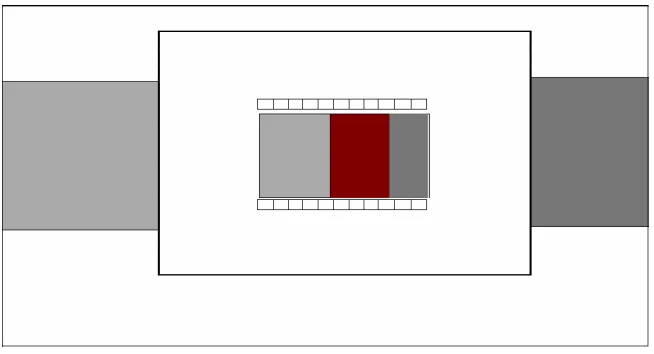
provoked a tremendous amount of excited debate among the children. A little box
with movable cardboard slides in different colours was designed to help the
children estimate how much of each of their three languages they spoke in any
given situation. There were three colours on the box: the base of the box and the
two slides that could be pushed in through the frame from either side. The
children could choose which coloured slide to use for which language and move
the slides across to estimate how much of each language they used. The
researcher then noted a figure by using the (unnumbered) scale at the side. For
example, a child might record that she spoke 70% Gujerati, 25% English and 5%
Urdu to her father. As the children manipulated the slides, they thought deeply
about their answers and some spontaneously started using percentages. ‘I speak
about half and half English and Gujerati to my Mum’, reported seven year old
Nasima, using the box, ‘so that’s 50% each. But I talk mostly Gujerati and some
Urdu with my Nan, that’s about 10% Urdu and 10% English and the rest is
Gujerati.’ So pleased were some of the eleven year olds with this investigation that
they asked to borrow the slide box to carry out their own language use study with
Figure Two: The three language box (developed by P. Sneddon for this project,
1995)
All the children in the sample were functionally bilingual. When talking in school,
in certain community situations and to adults within the family they generally had
to respect appropriate norms of language choice: ‘it is more polite to speak in
Gujerati to grandparents’, ‘Dad will be cross if I speak in English’, ‘Mum speaks
more in English’, etc. It was considered that it was in communication with siblings
with a similar range that the children had the greatest freedom of language choice.
Therefore language choice with their siblings was used as a measure of the
linguistic vitality of Gujerati in the children’s language use (Giles, et al 1977).
While there is huge individual variation in children’s language use, a broad
pattern emerged which confirmed the three-generation model of language shift
described by Fishman (1989). Gujerati, English and some Urdu were used in the
home. All children reported using mainly Gujerati to their grandparents and they
spoke more Gujerati than English to their parents. While they spoke more English
than Gujerati to their siblings, they still spoke a very substantial amount of
Gujerati in the home environment. The older the children, the more English they
The most significant finding of the whole study related to the impact that
opportunities to mix socially with other Gujerati speaking children had on the
vitality of the language. An investigation of the children’s social networks revealed
that those who used the community centre and, in particular, the playcentres it
organised in school holidays run by Gujerati speaking staff, were far more likely to
maintain the use of the language. At age seven, those who used the community
centre spoke twice as much Gujerati to their siblings as those who did not. By the
age of eleven, centre users spoke Gujerati over a third of the time among
themselves, whereas non-users of the centre hardly spoke it at all (Sneddon,
2000b).
Observations at the playcentre showed children switching languages according
to context as well as tactically: the girls in the ‘beauty parlour’ putting cucumber
slices and tea-bags on their faces spoke to each other in English; when they
moved to the corner where they painted Mehendi patterns with henna on their
hands, they spoke Gujerati; the boys at cricket practice were shouting to each
other in English, but when they played against an English team, they switched to
Gujerati.
Language skills and story telling
Children’s oral skills in both English and Gujerati were evaluated in the project
through asking them to retell stories. These had been given to them to read with
their parents in the home when Sakina Hafesji, a Gujerati speaking research
assistant, and I visited. The stories used were The Very Hungry Caterpillar (Carle,
1992) with the youngest children, The Naughty Mouse (Stone and Desai, 1989) for
the children aged 7 and The Raja’s Big Ears (Desai, 1989) for the older children, all
The children varied greatly in their responses to the task, though all but one very
shy three and a half year old enjoyed the opportunity to record their stories. In a
nursery class, Amina was shy with me, but told the story to Sakina in Gujerati.
Another nursery teacher had warned me that Omar had not yet spoken in any
language in class. However he had met me in his home, he loved the book I had
given him and it was from him that Sakina and I got the most wonderfully
expressive retelling of The Hungry Caterpillar story in both languages.
It was apparent from their recorded narratives that, at age seven, the children’s
English language skills were still developing. A few children had difficulties
with vocabulary that appeared to be unfamiliar in English. In one less fluent
speaker’s story ‘soldiers’ became ‘toldiers’ and ‘shoulers’ and ‘palace’ became
‘place’. The recounts varied from a simple action based narrative focused around
illustrations in the book to a lively retelling with whole passages of expressive
and dramatic dialogue. In some instances, where the dialogue revealed
developing English skills, the meaning could be slightly unclear ‘but he be angry
and he was angry still to make me a cap’ but in most cases it did not interfere with
pace or meaning: ‘I don’t sell for the mice, I don’t make for mice cloth!’. Interestingly,
the best story tellers who were most at home with the academic ‘book language’
of the stories were also the ones who included the colloquial Cockney influenced
east London English of schoolchildren (he done it quick, but he never) in their tales.
Some dramatic narratives were also told in Gujerati, with children
code-switching at times into English as they struggled with some of the more literary
phrases in standard Gujerati which were unfamiliar to them as dialect speakers.
This was particularly noticeable with the repetitive chants in the story which
some children found easier to recall closely in English:
I’ll come in the night with my soldiers as well,
The children by age eleven had achieved good levels of competence in both
languages with some distinctive features. Retellings included non-standard
colloquial English (he wouldn’t tell no one) and some features associated with
speakers of English as an additional language (he was burst to tell); in Gujerati, the
children made the story very much their own, the most lively and creative story
tellers being most likely to use dialect and reinterpret the formal language in
their own way, making some grammatical errors in the process. As well as
codeswitching into English, they sometimes used the same word in both
languages, like Rehana did, or created a word such as baal kapnawalo (literally
haircutter)in place of the unfamiliar word for barber, hajam (Sneddon and Patel,
2003).
The children’s experience of listening to stories told and read and discussed at
school, at home and in the Urdu class, was very apparent in the way that many
of them structured their tales. Of particular significance was the relationship
between the length, structure and depth of stories in both languages: good story
tellers in English were also good story tellers in Gujerati. This suggests a transfer
of skills operating through the rich and complex pattern of experience of oral and
written story in the children’s lives.
Discussion
As a teacher exploring the experiences of children in their homes and
communities, I learned a very great deal about the complex negotiations of
language that went on in children’s homes, in the wider community and in
school.
In line with Cummins’ concept of the Common Underlying Proficiency, and
research findings on the benefits of bilingual education, I was looking for
community for Gujerati would have a positive effect on their achievement in
English. I did not find this. There was no statistically significant relationship
between support for Gujerati and achievement in English. There were no Gujerati
classes and the support children received from their families remained primarily
oral and, while quite substantial in some cases, was still considerably less than the
support given for literacy in English. Urdu, although not regularly used for
communication in the home, was the language which all children learned to read
as soon as they attended Madressa. However no measures of Urdu achievement
were available to me to relate to achievement in English. As mentioned in the
introduction, the reality of children’s experience was complex. Findings from
bilingual programmes in which children became literate in the language of the
home did not really apply here.
What I did find, however, in relation to achievement in English was even more
complex, and interesting. At age three and a half there was no clear overall
relationship between support for literacy in the home and scores on a Knowledge
About Print test. At age seven, gender effects were strong: the evidence of the
story recordings showed that the children were generally competent in
communicative English, but were still developing as learners of ‘book English’
(Cummins, 1984). In spite of this, five out of the six girls achieved at the expected
Level two for reading on the Key Stage One tests (the expected level for
monolingual English pupils in a test taken at age seven).
By age eleven, the evidence of the recordings showed children comfortable with
the academic language of books and performing on the London Reading Test, a
test of reading comprehension (The London Reading Test, 1992) at a level higher
than monolingual pupils of similar social backgrounds. Where the mean for
monolingual children in the borough at the time was 100.3, the Gujerati boys
scored 106 and the girls 104.5. While this finding does not reach statistical
significance, it still demonstrates that the children’s considerable achievements in
their achievement in English at the point where they left primary school. Of
particular interest is the very unusual finding that the boys’ achievement in
reading comprehension is ahead of the girls’. As almost all children in the
community attend the classes, this may reflect the particularly high status placed
in their community on religious knowledge for boys acquired through a close
study of texts and complex negotiations of meaning.
Discussions with parents and exploration of the literacy experiences of the home
revealed families who had generally good relations with their children’s school.
A number reported attending literacy evenings and being given advice on how
to support their children at home. They read books sent home from school to the
younger children and heard the older children read. Parents tended to focus their
energies on children who fell behind with reading. There was a statistically
significant relationship in my data between support with reading at home in
English and achievement in reading comprehension at age eleven (Sneddon,
2000b). Literacy practices recommended by the school were increasingly
penetrating homes in the area. Teachers in the schools that the children attended
were generally positive about the children’s bilingualism, however, as Gregory
and Williams (2000) and Bourne (2001) have pointed out, there is often little
knowledge in school about the language learning and literacy practices of the
home, or of what children learn in community classes. The good relations
between school and families operated very much in one direction.
Conclusion
The settings in which children learn outside vary greatly from community to
community and are hard to categorise. Neither ‘supplementary school’, nor
‘complementary school’, nor ‘mother tongue’ nor ‘religious school’ quite fit the
community setting in which the Gujerati Muslim children are learning. While the
classes a strong linguistic dimension. The learning at these classes is a great
source of pride for the children and their skills form an important part of their
personal identities. The pedagogy makes full use of the children’s varied
linguistic repertoires and operates very differently from the pedagogy of
mainstream school. It is not the purpose of these daily classes to support the
learning that happens in mainstream school, as is the case in many other forms of
complementary education, and the children perceive them as quite separate.
These two areas of learning and the different pedagogies that children
experienced every day were very separate in their lives. While most schools are
now aware of the languages that children speak there is still little use made of
their linguistic and literacy knowledge and the complex metalinguistic skills they
have learned through exploring meaning through a range of languages in
community settings. The parents of the children were not generally highly
educated, but, taking their grandparents and siblings into account, each family
had someone who could read with the children in English and help a little with
homework in English, someone who told stories in Gujerati, someone who
helped them to learn the Qur’an and read and talked to them about the Urdu
texts they brought home from Madressa. It is the children’s homes that provide a
synthesis: it is there that parents, keen for their children to be successful in
school, anxious that they should not lose the ability to speak to their
grandparents and wishing them to grow up as good Muslims in the Gujerati
tradition, bring the learning together according to family priorities and in
whatever language they are most comfortable with for the task in hand. Rehana’s
parents provided a good example of a family successfully providing support for
their daughter in ways that mattered for her future as a British Gujerati Muslim.
In the course of the research project my discussions with children revealed the
considerable interest they had in talking about their language and literacy
experiences. A closer collaboration between mainstream schools, complementary
skills, their metalinguistic knowledge, their ability to respond to different
learning situations and styles and encourage their development as additive