An Action Research Project to Explore and Develop Family
Therapists’ Experiences of Using Systemic Art and Music
Techniques in a CAMHS Setting
HILARY PALMER
ii ABSTRACT
This study explores family therapists’ experiences of using systemic art and music techniques in a CAMHS setting and charts how these techniques were developed through an action research process. As a music therapist and family and systemic psychotherapist, I have used techniques in my practice that combine ideas from the Arts therapies with systemic therapy. This study was born from my curiosity to explore if these ideas and techniques could be expanded into the field of family therapy as a useful adjunct to our work with words.
The study involved recruiting participants from three NHS family therapy teams, with each team becoming a participant set. Through an action learning process, in which each set was convened consecutively, given opportunities to learn music and art techniques, try them out in their practice and report back via focus groups and consultation, feedback was gained which influenced the input for the next set. Through this process techniques were explored in depth, ideas were developed and new insights gained which not only highlighted the difference music and art can bring, but also bought attention to family therapy creativity and identity, and how change is realised and embedded within teams.
iii
TABLE OF CONTENTS
Introduction 1
A different voice:
The use of Music in Family Therapy
5
The case of Alice 5
My theoretical position 12
Literature review 15
Art and music in cultural contexts 15
Creativity 19
What are art and music therapy? 23
Music therapy and families 23
Family therapy and music 26
Art therapy and families 27
Family therapy and art 30
Art, music and the brain 33
Systemic theories of change 38
Words, words, words 40
Summary 41
Methodology 45
Epistemological stance 45
Action research 45
Focus groups 48
Setting and sample 52
Design 53
Role of moderator and reflexivity 56
Data collection 60
Validity, reliability and trustworthiness 60
Analysis 62
iv
Analysis 72
Introduction to analysis 72
A portrait of Ella Fitzgerald 73
First movement: Royal Ancestry 74
Second movement: All Heart 99
The workshop, the techniques and the participants’ handbook
99
The action learning process and the development of the techniques
108
Third movement: (Not) Beyond Category 130 Section I Process and the development of thinking 130
Section II Identity 146
Section III Constraining factors for change 157 Section IV Change and embedding Ideas 162
Fourth Movement: Total Jazz 170
Bibliography 177
Appendices 195
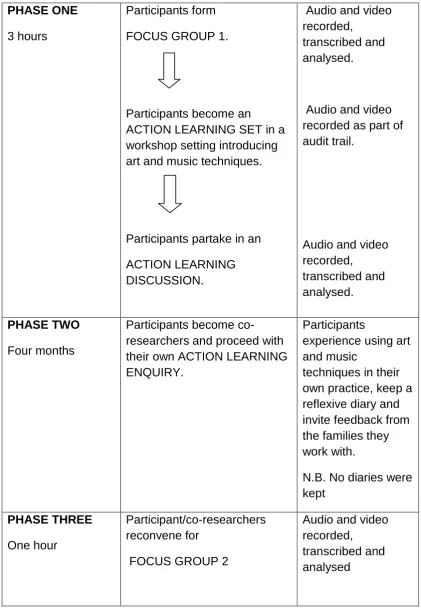
Figure 2: Phases of involvement for set A 196
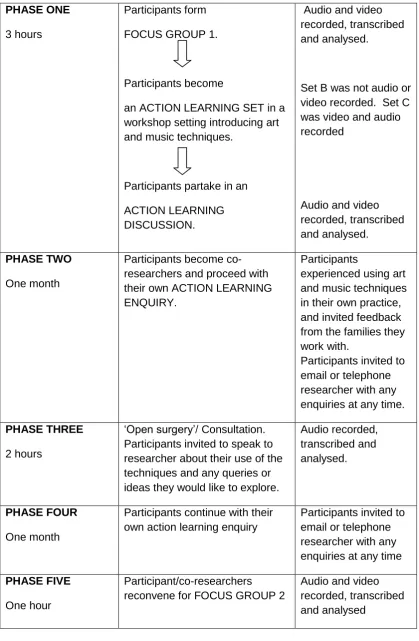
Figure 3: Phases of involvement for set B and C 197
Figure 4:Reflexivity/analysis timeline 198
Consent form 199
Participant information sheet 200
Interview schedule 203
Analysis example 206
Participants’ handbook Set A 209
v
LIST OF FIGURES
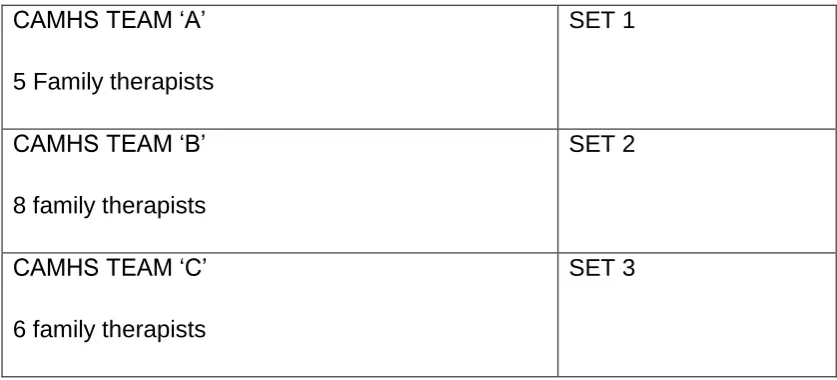
Figure 1 Description of each participant set 53
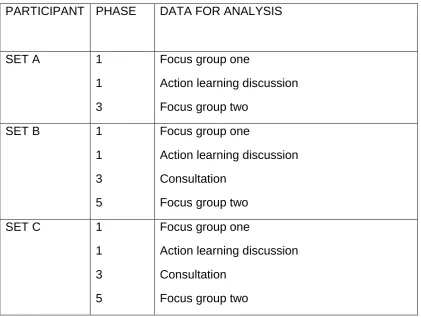
Figure 2 Phases of involvement for set A 196
Figure 3 Phases of involvement for set B and C 197
Figure 4 Reflexivity/analysis timeline 198
Figure 5 Data for analysis 63
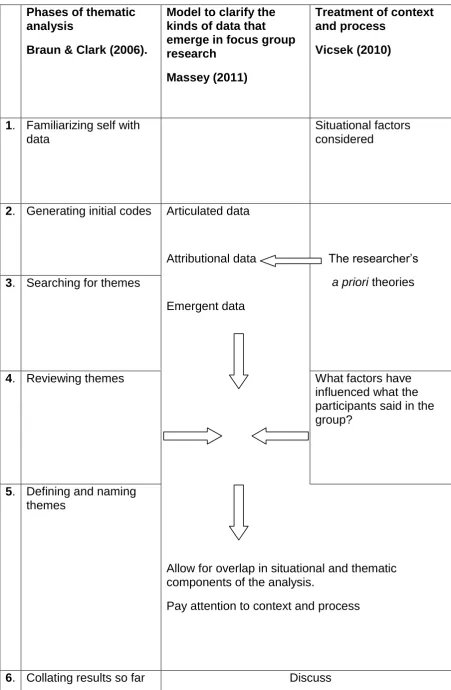
Figure 6 Structure of analysis 67
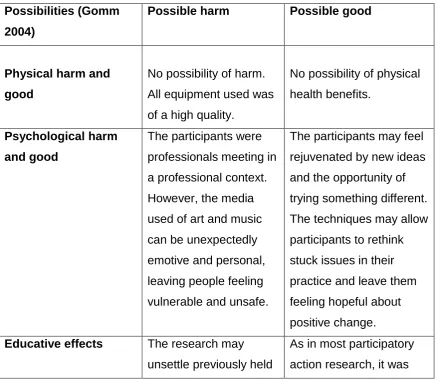
Figure 7 Ethical considerations 68
LIST OF ACCOMPANYING MATERIAL Compact
Disc
vi
ACKNOWLEDGEMENTS
Firstly I want to thank the families from CAMHS who have opened their hearts to working in creative ways using music and art. It is through their experiences that this study felt important to do. I want to thank the participants who made this study possible, for their time, their commitment and their openness to new ideas. It was great fun working with them all as co-researchers and I have learnt so much from their reflections and ideas as the study has progressed.
I would like to thank Jeremy Woodcock and Mark Rivett, my tutors at the University of Bristol, where I completed my family therapy training in 2003. Mark and Jeremy’s enthusiasm for my music therapy background and their excitement at the difference music could bring to family therapy, encouraged me to explore and develop these ideas throughout my career, culminating in this study. Jeremy helped me believe that to be truly systemic is to allow space for the conscious and unconscious, what can be said and what cannot be said, and highlighted how music could make a difference in providing an alternative means of interaction, expression and communication. Many thanks also go to both Hilary Wainer and Lesley Hanney for consulting with me on this project and giving so generously of their time.
My doctorate colleagues Shadi Shahnavaz and Galit Haviv-Thomas have helped to make the journey of doing a doctorate study such fun with their wonderful humour, great support and dear friendship. It has been a joy to study with them and I am very grateful for all their insightful reflections that have helped formulate my ideas, along with their great enthusiasm.
It was wonderful to work closely with Bernadette Wren in the first year of the doctorate programme and her support created a fantastic launch into this study that helped me keep an inquisitive mind, be playful with ideas but remain focused and reflective. I am greatly appreciative of Bernadette’s warmth and wisdom.
vii
Suggestions for further reading have helped greatly, as too were suggestions on how to communicate the essence of the study.
I am indebted to Charlotte Burck as my supervisor. Charlotte has remained enthusiastic from the start to the finish and her great wisdom and gentle steering have allowed this project to develop and reflect me as a practitioner; I have learnt so much under her guidance. Charlotte’s ‘rigour and imagination’ have been invaluable and her warmth, humour and support will always be remembered. A huge thank you!
I want to thank Tim for all his encouragement over the years, for being such a good friend, offering fantastic IT support and always believing in me. For my two beautiful girls Hattie and Floss, I want to scoop you up and dance around the room shouting a huge thank you to you for your fun and funniness, your great patience and understanding, and for being proud of mummy. I want to thank you for playing music in the garden while I worked and for being guinea pigs to my ideas with such curiosity and willingness. You have filled the house full of singing, made great suggestions, and have always kept me on my creative toes.
1
INTRODUCTION.
An Action Research Project to Explore and Develop Family Therapists’ Experiences of Using Systemic Art and Music Techniques in a CAMHS Setting.
" ...he paints his pictures in sounds; he makes the very silences speak; he expresses his ideas as feelings and his feelings as accents and the passions that he voices move us to the very depths of our hearts."
Jean Jacque Rousseau.
At the 2013 Association of Family Therapy conference Peter Fraenkel said that “the key to successful therapy is that it captures the imagination of our clients”, and that “there is much outside our practice we need to access...to formulate our interventions.” This project is about capturing the imagination of our clients through igniting the creativity of the therapist to use art and music in their work. The project explores how systemic art and music ideas may contribute to positive change for the families we work with, as an adjunct to our work through words.
2
This project is led by a love of music, the witnessing of how useful music can be in facilitating positive change for families and a curiosity about whether music is being used by other family therapists in the field. If so how are they using music, and if not, what might be preventing therapists from using music in their practice? I am very aware of my ease in using music, given my background as a musician and music therapist, and keen to think with my colleagues about whether there are simple transferable skills that can be taught and might be useful for family therapists of all backgrounds to use in their work–both those who describe themselves as musical, as well as those who view themselves as non-musical.
For this project, it was important to also include art for a number of reasons. I wanted to include a creative media that I use but have no expertise in, both to expand my learning but also to put myself in a different researcher position to that of my musical self in facilitating this research. I have worked with art therapy colleagues, have experienced art therapy myself from the client position, and have a personal understanding that art offers a unique way of expressing ideas, thoughts and emotions that can lead to gaining insight. I have as yet to walk into a family therapy room where there has not been pens and paper at the disposal of therapist and client alike. And yet, although all of this equipment is an acknowledgement that, at the very least, many children like to draw, the family therapy profession’s use of art media has never been fully explored. Family therapists readily use genograms, and may encourage children to draw a picture of their family or feelings, perhaps in an effort to externalise a problem, but our scope in terms of using this readily accessible non-verbal media appears limited. I once heard that the family therapist’s ‘art’ was the art of asking questions. I am curious to ask whether, if we reflect on what we do, art itself may be able to play a useful role too.
3
In the art therapy and music therapy professions, the main focus is on individual and group work that is rooted in psychodynamic theory. However, systemic ideas have a long history of being considered in the art therapy profession (Kwiatkowska, 1978; Riley, 2000; Shafer, 2008) and are receiving growing attention in music therapy (Hibben, 1992; Oldfield, 2006; MacIntyre, 2009). This greater interest in family work is also reflected in the family systems focus of the 2011 National Music Therapy Conference in Australia.
In this research, I am asking family therapists to consider the use of art and music in their practice. This is in order to explore whether using creative non-verbal media can enhance the interactive space among family members and create positive change in a family’s understanding of, and communication with, each other. To support these ideas a literature review will explore the cultural significance of art and music, and what it means to be creative. This will be followed by considering family work in the art and music therapy professions, before looking at what art and music has been used in family therapy. To understand what it means to work non-verbally there needs to be an understanding of how the brain works in terms of emotionally responding to verbal and non-verbal data; therefore, the review will conclude with exploring the link between words, creativity, emotion and brain function. The literature review concludes by summarising how all the above concepts form the backbone of, and momentum for, this research project.
4
As an aid to teaching the art and music techniques and as a resource for each participant to keep, I devised a participant’s handbook outlining each technique with a rationale for use and examples. As each participant set was convened and participants described their experiences of using the art and music techniques in their work, the handbook was developed to reflect these new ideas and thinking.
5
A DIFFERENT VOICE
THE USE OF MUSIC IN FAMILY THERAPY
In the following chapter I will present an unpublished paper that was written following my first experience of using music in a family therapy setting. It describes the use of music in family therapy sessions with Alice and her family. It is where the beginning of this doctorate study started in thinking about transferable skills and ideas between the Arts therapy professions and systemic practice. The chapter concludes with exploring how being dual trained has affected my position and identity as a therapist.
The case of Alice
I had worked at the adolescent inpatient unit before, as a music therapist, mainly doing group work. When this work ceased after two years, I had already begun my family therapy training and requested to remain on the unit in an honorary capacity, as part of their family therapy team. It was in this role that I met Alice again. Alice was fifteen years old and from a white middle class background. She had experienced several inpatient admissions over a three year period due to deliberate self harm and depression. Alice had received individual psychology and art therapy in the past, the latter she had particularly enjoyed and found useful.
Alice had attended my music therapy group over a three term period a year previously; she was pleased to see me and bemoaned the fact that I had stopped working as a music therapist on the unit. The family had been working in family therapy for some time and throughout this period had requested for Alice to meet with each parent separately, rather than as a whole family group, as they felt this would be too overwhelming for all concerned. Mr B. felt that Alice had exhausted talking about things and so the family were offered the opportunity for me to join the two therapists working directly with the family in the room, in order to offer some music into the sessions. Alice was excited about this prospect and felt she might be able to work with both her mother and father together if music was used.
6
team consisted of two family therapists, two specialist registrar doctors who were on rotation, and who acted as a reflecting team, and me. Below is a brief description of the content of each session, followed by reflections from the team about the work. These were gathered from retrospective interviews held three months after the last session.
Session one
The family were asked to choose instruments for each other which represented each of them. Mr B was given the ocean drum as he was constantly on the move and liked things to be harmonious. Alice also felt he should have the cymbal because sometimes he would flare up in anger. Alice was given the djembe drum by her mother because Alice had quickly stated that it was her favourite. Her mother explained that it looked like it had great scope to make a variety of sounds, and had a depth and darkness. Alice responded that it was good because you could "communicate whatever the feeling". Mrs B was given the xylophone to symbolise someone quiet but complex. Alice then chose instruments for the two therapists and me.
With the instruments chosen I introduced the idea of improvisation. After a period of silence Alice began to play her drum, it was tentative to begin with but careful and steady. Gradually family members and the team joined in. At the end of the music Alice asked why I hadn't played the hand bell which was beside me and had instead played a small drum only. I explained that I was concerned about making too much impact and the music being all about me. Mrs B shared this view and said she wanted to play the high notes on her xylophone but was worried about speaking out and being 'out of sync', Alice responded to her mother, saying that she should have played what she felt because Alice would have made it 'in sync'. It was noted that Mr B had not used the cymbal - he had not become angry.
7
music at every session, but her parents thought it might work best to have music available on alternate sessions. After some discussion Alice accepted this compromise. Mr B felt the session had helped to represent things that were hard to put into words and at the end of the session he spoke of feeling that they were nearly at the crux of the matter when it was time to stop.
Session two
On arrival at the unit I realised that I had forgotten to bring my instruments. I felt quite silly and suggested the session be a talking one instead. However, the two therapists were keen not to disappoint the family and for it to be a music session. We scavenged around the unit for instruments and came up with a motley collection of half broken, homemade and toy instruments. I felt rather foolish and disappointed with myself. I also felt quite vulnerable without the beautiful professional percussion instruments I usually had with me. However, I was encouraged by the two other therapist's enthusiasm and resourcefulness.
Alice arrived to the session with her father only and, although somewhat disappointed, she also appeared amused that I had forgotten my instruments and laughed at the strange collection we had pooled together. We tried to improvise but we all felt rather held back by the limited tonal quality of the instruments. However, Alice was keen to keep trying. Mr B spoke about how it was typical for Alice to make positive things happen from nothing; he felt Alice to be both a 'go getter' but also cut off and thought the music sessions revealed this. In return Alice expressed that the music revealed this because the music sessions were more helpful than the talking ones.
8 Session three
The family came to the session in good spirits. "Things" had been going well since we last met. Continuing the theme of the last session Alice suggested that she would like everyone to improvise about each member of the family while the person chosen sat and listened. This took up the whole session and resulted in intermittent and avid discussions around issues of trying and not getting it quite right, levels of understanding and knowing and not knowing each other.
Session four
Alice had mixed feelings about attending this last session, she had a headache and her mum and her had just had a "blow out". Alice explained that she felt frustrated when she could not make people understand and went from being angry to being scared. I asked Alice if we could help her put some of these feelings into music to help us understand better, and if she could choose us instruments and lead an improvisation about being scared. Before we commenced we set out some clear boundaries for the music to keep it safe, these included a clear decision that the music would rise up and then die away slowly.
9 Responses from the team and wider setting
For the purpose of this paper, the two family therapists working with the family were interviewed separately, three months after the last session. Unfortunately the two doctors who acted as a reflecting team had left the unit and were therefore unavailable to be interviewed.
The team's hopes and expectations of the work were that family B would find a way to express different emotions, and that the music might help them find the words they needed to express these emotions verbally. They felt that the family had struggled in family therapy but that the talking had become easier since the music sessions commenced. Both therapists had talked about the work with colleagues on the unit. These conversations were mainly to nursing staff and other therapists who felt that the use of music may help the family think in a more abstract way. Nursing colleagues were interested and thought the approach to be new and unusual. The manager/clinical nurse specialist also supported the work. It is interesting that one of the therapists specifically avoided conversing with the Consultant Psychiatrist about the work as he felt that the psychiatrist may not understand what the team were trying to achieve. The therapist was concerned that the approach may not be valued and not taken seriously. The work was also mentioned in a positive way to the community team in the locality that Alice was being discharged to.
The team felt that the music became a metaphor in their work with Alice and bought out the emotional styles of family members. In this way they felt the family discovered a different way to be together and a non-threatening space to think about feelings. One therapist said he experienced honesty in the work and felt it was very empowering for Alice, especially as she had experienced music therapy before and was able to bring her knowledge and experiences into the work with her parents. The therapists commented that they witnessed the family "free up". In previous talking only sessions Alice and her mother had worried that anything they said might exacerbate their problems, where as the team perceived that music allowed them to relax and communicate in a non-threatening way.
10
less annoyed and challenging to the family and instead adopted a more narrative approach. He felt the music sessions had helped Alice co-construct a new image for herself from the one usually seen by Alice's parents. The female therapist spoke of overcoming a boundary because "somehow we had all been through the experience (of playing music) together" and that in this way it helped engagement.
It was felt that the use of music had created a space for doing something differently and for the team it had felt liberating, although one of the therapists expressed that she had worried that the music element might constrain her from doing her best because she was not musical. Whilst welcoming the 'opening up of boundaries', there was also some concern that because the music did not fit in with the traditional view of family therapy, there was a danger that it would not be taken seriously.
The therapists felt that the work had reinforced the idea for them that action ways of working can be good to use, especially with young people. It was felt that music could be particularly beneficial to those who found it hard to engage in talking therapies. Neither therapist felt confident to use the methods of working I had engaged the family in on their own, but felt that the work had generally impacted on how they engage with families and gain trust.
The team's lasting impressions of the work were that it made tense and uncomfortable work more bearable. It was felt that Mrs B had been at her most committed in the music sessions and able/willing to change her position and construct new meanings. The therapists felt the work had challenged the whole team and heightened the idea of multiple perspectives. It was suggested that just as Anderson and Goolishan (1988) stress the importance of meaning through words, meaning could also be created and expressed through music, and that it was a different, but equally important way, for voices to be heard.
Reflections and conclusion
11
element of moral support and mutual discovery. Through looking at strengths within musical interactions and exploring differences, new discourses arose for the team, as well as for the family, which allowed a move away from the dominant discourse of fragility and 'stuckness' which surrounded the work. Within the improvised music, musical conversations developed that allowed the family and team to interact in a fun and non-confrontational way. This helped to explore how the beliefs, actions and feelings of the family were interconnected and meanings created.
In keeping with the view that a different way of seeing things is essential for change, I was conscious that the experiences gained through the music process helped family B to begin to reframe themselves and interrupt the problem saturated cycle. Choosing instruments for each other allowed for insight into individual lenses and an exploration of the families perception of each other. This technique also explored how we want to be seen and how we think we are being seen by others. The improvisations themselves took on a narrative flavour and each musical improvisation could be described as a “mutually validating conversation” (Dallos & Draper, 2000). In many ways the sculpt did not differ from any other sculpt in a family therapy setting, it just used musical instruments instead of people or objects. However, there was always the opportunity available that when the instruments were in place each person could be given a voice by the playing of various instruments in various combinations, allowing for themes to be explored further and absent family members to be actively included.
12 My theoretical position
The above paper was written during the second year of my four year family therapy training. As I progressed through my training and into the role of family therapist my professional identity and working practice developed through a coming together of different theoretical stances. As a result I have a theoretical identity that is systemic but inclusive of psychodynamic theory, and it is in this context that I practice.
In systemic terms, the individual is seen in the context of the intimate connections of which she or he is currently a part (Gorrell Barnes, 1998), the social constructions, and dominant and subjugated narratives within that person’s family and culture. I believe that there is “continual change through exchange” (Hoffman, 1995) and that some of these realities are discovered through social discourse (Real, 1990). However, in the context of this study I am also interested to discover through what other ‘exchanges’ involving art and music, new realities can emerge.
My theory of change is influenced by psychodynamic thinking, in which resistance to change can be seen as the product of unresolved conflict on an individual’s developmental pathway. However, as a relationally thinking family therapist, I have married this with Daniel Stern’s (1985) concept of ‘self’ in which the development of self and relationships are two sides of the same issue, with a belief that development is a process in which self and relationships are co-dependent. In this way, I am also influenced by attachment theory in thinking about the connections between past and present relational experiences, and how this influences both the ability to change and what that change will look like.
13
In thinking about Bateson’s statement that: “too much consciousness may make impossible some desired sequence of events”, Hoffman (1995 p.44) believes that it is the therapist who should be restrained from change. Hoffman wishes to minimise the consciousness of therapist in pushing for, or strategizing for change, and believes that change is facilitated in the creation of space where it can evolve unawares. Papp (1985), on the other hand, brings our attention to the rich complexities involved in changing a system in the hope of more consciously utilising those complexities in the service of producing change. I believe both positions are valuable. In Music therapy change often occurs unawares as a client may gain insight into their feelings without conscious effort to, or change the way they relate to others, whilst unconscious of the process. Often a musical exchange can be left in the music and not verbalised. However, there is also a music therapy stance in which music is very much used as a means to an end, in which desired change is named and is consciously worked towards. I believe in the case of family B above, the team and I experienced change on both these levels.
Change forces us into a different place, and with each change comes a grappling with ourselves over a new identity which is influenced by cultural narrative, social and family networks, and our own intrapsychic make-up and development. I believe change occurs in the intersubjective space in which people are linked through language and social actions (Hoffman, 1995), which in turn may trigger internal or intrapsychic changes. Carnevale (1999) uses the term ‘remaking’ when describing the caring and comforting process of a family towards a severely ill child. I believe the term ‘remaking’ is more systemic than the word ‘change’. To re-make is to use familiar concepts, ideas and experiences to create something different, but not detached from ones previous knowledge of the world. In this way the past and its role in creating the future is acknowledged in a similar way to Byng Hall’s (2003) concept of ‘re-scripting’ family experiences in which action and beliefs are connected in recursive loops.
14
through a re-authoring of personal narratives. I believe music and art allow for the parts of our stories that are beyond words to find expression and be witnessed. David Pocock said to me when I was a trainee that no individual or family will change until they feel truly heard and validated. This has remained with me as an important lesson; however, how can a child feel truly heard if they do not have the words to describe their experience?
As a music therapist I believe that re-authoring does not necessarily need to focus on words for the creation of alternative ways of seeing the world or understanding experience, but can be explored through non-verbal means. Bateson (1972) called for therapists to engage both ‘rigour’ and ‘imagination’ in their work, believing that the artist or poet’s vision of reality was as profound as the scientists, even though the chain of logic may not be as clear to demonstrate, or the process as wholly conscious as scientific enquiry. Bateson’s views on the arts in therapy and the role of intuition were positive. Third order cybernetics embraces this creativity allowing for a sense of play, emotionality and imagination. It is my belief that using music and art can “enhance the families effective freedom to change” (Tomm, 1984), to be ‘re-made’ and to ‘re-author’, in a child friendly context that invites playfulness and imagination. This belief is fuelled by my own experiences transferring my knowledge from the music therapy profession into being a family therapist. The process of integrating music and art into my work has resulted in me witnessing opportunities for difference and change in the way families communicate, interact and gain insight through non-verbal means.
15
LITERATURE REVIEW
The following literature review aims to support this study through considering art and music in cultural contexts and exploring the concept of creativity. In order to understand where the topic of this study fits within the field of family therapy, and how the fields of family therapy and those of music and art are connected, it was necessary to review the family systems literature on how music and art has been used in family therapy, as well as the history within the music and art professions of work with families. Pertinent to this study is also a comparison of what it means to work with words and what it means to work non-verbally. In order to highlight this I have included literature on the neuroscience behind how we experience verbal and non- verbal phenomena and how words shape our experience.
Art & Music in Cultural contexts
16
when this was funded with a £292 million programme to create change, the change has struggled to be realised.
We inhabit a culture reliant on the visual and the verbal, with the visual more times than not being linked to words, stereotyped imagery and consumerism. McGilchrist (2009) argues that in the West we have lost the central position of music in society as part of communal life, unlike most other parts of the world: “relegating music to the side lines of life...competition and specialisation have made music something compartmentalised, somewhere from life’s core” (P.104). In the history of the world, music is not an individualistic or solitary experience. In non-western cultures music plays an integral part in celebration, healing, religious festivals, working life and recreation, primarily through shared performance and not just the passive activity of listening. An example of this is the Bolivian Andes. Here music is associated with agricultural production and each instrument and dance has a seasonal significance. Appropriate music played in the correct context brings good fortune and maintains bodily health. Illness therefore, is linked to inappropriate contact with musical beings which can cause ill health, madness or death. Sirinus (sirens) is the magical sprit that all new musical creations are attributed to. Healing therefore is conducted through playing music as a consolation, to appease the forces that oversee fortune in the community. In Bolivian culture music is related to animu (energy) which is attributed to all living things and as animu is connected to sound, movement, light, and scent, sound is equivalent to life, and it’s shaping in music maybe seen as the shaping of life (Hobart, 2000).
Music is also central in African culture. Ngoma (translated as ‘drum’) is an
ancient, African ritual and therapeutic process in which music is central. Ngoma is about song, dance and catharsis and involves discerning spirits within the music to induce healing. Although music in Western society is not cast as specifically healing, people are drawn to it for that purpose and musical events can generate a sense of connection and shared participation, that go beyond the construction of music as players before an audience, to a similar experience as those in Africa where rhythm, bodily movement, sound and words are a conversation that grows in intensity and fullness (Janzen, 2000).
17
often the pangs and fits of unrequited love” (Austern, 2000 p.113) and especially for cases of ‘melancholy’.
The history of the discussion of melancholy which can be charted from Aristotle to twentieth century psychiatrists such as Freud, is commonly linked throughout history with a definition focused on sorrow and depression. Melancholy is also associated with an equally strong theme of love, both the desire for spiritual union with a divine being and for the emotional and physical hunger for sexual satisfaction, often described as a “great despairing cry for love” (Austern, 2000).
In 1632 Burton wrote:
“Many men are made melancholy by hearing music but it is a pleasing melancholy that it causeth, and therefore to such as our discontent...it expels cares…and easeth in an instant” (p.297).
18 (AboriginalArt.co.au 2012).
Similarly to Aboriginal culture, aesthetic ideas and practices in Asia combine mind, body and spirit with the material world, and are highly valued as a way to express ideas that cannot be grasped in language alone. The Japanese Buddhist priest Kukai (774-835) summed up the teachings of his Chinese master Huigo in the following words:
‘The abbot informed me that the esoteric scriptures are so abstruse that their meaning cannot be conveyed except through art. For this reason he ordered the court artist Li Chen and about a dozen other painters to execute ten scrolls of the womb and Diamond mandalas.’ (Akutagawa, 1973)
19
and producing works of art is seen as something predominantly for the trained and talented, and is not part of the essence of day to day life. There are many overlaps in the use of both art and music cross culturally, the difference being that the importance of art and music in each culture and the value attributed to it varies remarkably.
Creativity
So what is creativity? There have been many serious efforts, often wrought with tensions and difficulties, to define creativity. Creativity researchers have struggled as creativity itself is not a concrete or immediately identifiable phenomenon (Mumford & Gustafson, 1988). The concept of creativity differs among peoples, societies and cultures, and yet the only definition offered to date is Western and predominantly Anglo-Saxon (Klausen, 2010). The received definition states creativity is: “the production of ideas which are both novel and useful” (Sternberg & Lubart, 1999 p.3). Klausen (2010) argues against this definition and its rigidity, stating that it should be possible to engage in a creative process for the experience of the process itself, without the need for a tenable, novel or useful results.
Winnicott (1971) was the first psychoanalyst to explicitly distinguish the role of creativity in the production of art work from the art work itself. Winnicott stipulates that the creative impulse is a thing in itself, involved in everyday creative living as much as in the production of art works themselves (Glover, 2009). Therefore there is no distinction in his mind between baking a cake, humming a tune or composing a symphony. Nor for that matter any distinction between a work of art and an ordinary object.
20
views on creativity, and in understanding what creativity means to people within a given community (Rudowicz, 2003).
Studies of culture specific conceptions of creativity indicate overlaps and differences in different cultural traditions, as well as differences in the value given to creative ventures and creativity. Csikszentmihalyi (1988) proposed adopting a systems perspective on creativity, stating that to fully understand a person’s behaviour the person needed to be viewed as part of a system of mutual influence and information. Within this it was acknowledged that the social, historical and cultural context in which the individual functions, affects the development and expression of creativity. Csikszentmihalyi (1988, 1990) proposes that creativity is a process resulting from three forces: culture, social system and individual. It is culture that influences what is expressed, by whom and how it is expressed. It also determines the function of the expression and the consequences to both individual and society (Ludwig, 1992).
21
example, within indigenous Afro-Arab culture new ideas that conform to moral and religious values are more readily acceptable. In China the concept of creativity is also bound with good morality and sociability (Liu, Wand & Liu, 1997) as can be seen in Chinese art education, which is as much about artistic expression as a means of moral education, as it is about acquisition of skill (Gardner, 1989). Likewise in Kenya story telling is left to the elders to ensure good ethical insight (Gacheru, Opiyo & Smutny, 1999).
Wonder & Blake (1992) propose that Western approaches to creativity are logical, look out towards progress through problem solving, and are happy to abandon information that doesn’t ‘fit’, due to an inherent demand that everything must fit together. In comparison, Eastern approaches to creativity are ‘intuitive’ and look inwards towards inner peace and what is already within their culture. Within this, patterns of experience are re-arranged, not abandoned.
In North America creativity has been found to be related to concepts of humour and aesthetic appreciation. These implicit theories were non-existent in China, Hong Kong and Taiwan whose implicit theories of ‘inspires people’, ‘makes a contribution to the progress of society’ and ‘is appreciated by others’, were in turn non-existent in their North American counterparts (Rudowicz & Yue, 2000; Chan & Chan, 1999). It is also important to note that within an individual culture, gender differences towards notions of what creativity is are also evident. For example, female British teachers describe creativity as ‘self expression’ and ‘awareness of beauty’ where as male teachers describe creativity more objectively as ‘innovation’ and ‘divergence’ (Fryer & Collins, 1991).
22
Individuals, such a Bradford Keeney (2009), professor and systemic psychotherapist, make the case for inspiration and inventiveness, rather than theory, method or technique being what awaken meaningful and transformative therapy. Keeney, who insists on discussing novels and fiction in his classes over professional texts, believes that an individual’s ‘awakened heart’ is necessary for therapy to be authentically transformative, and that relationship and mothering constitute the soul of therapy as opposed to “jousting interpretations” (p. xii). Keeney believes that therapists are at their most creative when they draw upon their natural resources, gifts and talents, and believes the life of being a creative therapist is inseparable from being a creative human being: “Awakening our clinical work requires revitalising our presence in everyday life” (p.249). In this way, Keeney could be viewed as adhering more closely to Eastern ideas that regard creativity as intuitive and looking inwards, in contrast to Western ideas of creativity that looks outward towards progress through problem solving, as could be said of the founders of family therapy.
In this study, I am looking at the avenues of music and art with the hope that they may re-awaken family therapists’ sense of family therapy as a context in which to be playful and creative. This study follows in the footsteps of others who have looked towards the creative arts for inspiration. For example, Wiener & Oxford (2003) have written on creative arts improvisation in clinical practice, especially through drama and play, and Lowenstein (2010) has created a handbook of creative family therapy techniques using play, art and expressive activities.
23 What are Art and Music therapy?
Art and music therapy are divisions of psychotherapy where art or music is the primary communication method. These professions are born from a psychoanalytical tradition and do not offer a simple alternative to verbal interaction, but instead harness all the inherent healing properties of the arts (Linesch, 1999). Although there can be directive elements in music as well as art therapy, both professions work on the premise that the music or art is created from an act of communication or self-expression. In art therapy the physical blank canvas provides certain containment in itself and it is the therapist’s role to witness and be in conversation, as led by the client. In music therapy, clients are encouraged to musically improvise, and the therapist’s role is to support, reflect, contain, and be in dialogue musically with what the client creates. There has always been debate within these professions over whether art is therapy in itself, or art is something used in therapy for therapeutic means; whether music is therapy itself, or music is a means to an end and a way to reach a therapeutic objective. Many therapists hold dearly to one camp or the other, whilst others appreciate both positions. It is my belief that one is not possible without the other. Music in its nature is therapeutic but can also meet clinical objectives. For the purpose of this research I am interested in specific techniques developed by the art and music therapy professions which can be adapted for use with families in the family therapy setting.
Music therapy and families
In 1991, Anthony Decuir, an American music therapist, attempted an overview of literature into ‘Trends in Music and Family Therapy’. The result, although limited, is an important reference to the beginnings of thinking around the use of music with families. Decuir cites Segel (1981) who believes feelings and affective material can be masked more easily with traditional verbal methods, than through the Arts. Decuir (1991) highlights the need for comparative research of Arts therapies versus verbal therapies.
24
special needs. Most examples focus on hospitalized clients where music is used to help promote communication amongst family members (McDonnell, 1984; Bailey, 1984). Early papers include McDonnell (1984) who describes using music therapy to help severely injured children and their families deal with events surrounding an accident and its aftermath, and Bailey (1984) who discusses the use of songs in music therapy with cancer patients and their families.
Hibben (1992), like Decuir (1991), states that the most common use of music therapy with families is to facilitate communication among family members. She sees music as attracting both children and adults and believes instruments arouse curiosity, and are removed from the negative connotations of toys. Hibben pays specific attention to music as ‘directed play’ and explores how improvisational techniques, as described by Bruscia (1987), can be used with families. Hibben discusses songs as an opportunity for intimate sharing between generations, which open up opportunities for shared stories and experiences in a way that can illuminate negative associations, denials and resistances, as well as strengthen alliances and provide a stimulus for talking about trauma. Hibben calls for an investigation into the cross cultural implications of using music therapy with families, as well as exploration into music therapy techniques that meet structural, strategic and systemic methods of family therapy.
25
unbalanced structure of the family that needs to be addressed, rather than specific arguments, the neutral nature of music therapy is seen as potentially speeding up the process of developing healthier communication patterns, without the distractions of content.
From the 1990’s through to the twenty first century a group of predominantly British female music therapists (Oldfield, 1993,1999, 2006; Oldfield & Bunce,2001; Warwick, 1995; Palmer, 1999, 2002) led the discourse around family work in Music therapy in England, with a specific interest in mother and child work. Oldfield (2001) believes music therapy can be used as an effective intervention with parents who have difficult relationships with their children. Oldfield describes mother and baby interactions as being similar to child/client and therapist interaction. Oldfield believes that music therapy allows older children to go back to a pre-verbal stage in order to re-create basic sound responses. Children are given the opportunity to re-experience, or experience for the first time, early mother baby interactions as well as giving parents the opportunity to play and be playful.
MacIntyre (2009) created the term ‘Interactive Family Music Therapy’ to describe her work at Redbank House, a parent and child assessment centre in Australia. Parents and children attend the centre for an intensive one or two week stay. In this context music therapy is used for assessment and treatment planning. Like Oldfield (2006), MacIntyre is concerned with the interaction between family members, rather than between therapist and client. MacIntyre describes the benefits of this approach as giving the family the opportunity to be part of intergenerational music making, where developmental age is respected and families are given the opportunity to engage in an activity together, maybe for the first time in a long while, which in itself may be the catalyst for further conversations. The family are invited into a space that can be perceived as a fun and relaxing time where the family may play and speak more freely than in a verbal only session. In this way, a family can be part of an experience that may provide more immediate access to family processes than words.
26
in Africa for example music therapy could be described as a phenomena that envelopes all areas of culture and day to day life. Here in society there is no distinction between performers and audience, and therapy is administered in non clinical settings by herbalists, witch doctors and faith healers. Family and community are also interlinked by strong connections and meanings absent from Western society. They have no need for a separate clinical setting in which to see if music can help families in crisis because music is already integral to their existence and already playing its part in birth, strife, healing and death (Aluede, 2006).
The next section looks at how music has been used and discussed in the family therapy field. Although live music making in the family therapy space appears rare, musical ideas have been discussed through metaphor and used in training. Lyrics and pre-recorded music have also been used to promote discussion.
Family therapy and music
27
with attention being bought to the importance of lyrics through the example of rap music.
Peter Fraenkel (2011) couple and family therapist, and professional jazz drummer, uses the concept of musical rhythm as a metaphor to describe couple arrhythmia, stating that partners frequently complain of feeling "out of sync" with each other. Fraenkel aims to help couples to assess and change the specific ways that time differences between each other contribute to relational distress.
Lowenstein (2010) includes exercises such as the ‘Family Orchestra’ and ‘Rappin’ Family Puppet Interview’ in her book ‘Creative Family Therapy Techniques; Play, Art and Expressive Activities to Engage Children in Family Sessions’. In ‘Family Orchestra’ body sounds such as foot stomping and hand clapping are used to make short pieces of music that follow the beat of a drum. The person with the drum is the leader and various games are created around the activity. In ‘Rappin’ Family Puppet Interview’, Sori (2008) musically and culturally adapts ‘The Family Puppet Interview’ (Irwin & Malloy, 1974; Gil, 1994) inviting families to write their story as a rap.
This review will now explore the art therapy world and its relationship to family therapy.
Art therapy and families
The beginnings of Art family therapy started with the work of Kwiatkowska (Sobol & Williams, 2001). Kwiatkowska (1978) worked at the National Institute for Mental Health in Maryland and was a close colleague of Wynne who developed the Family Art Evaluation Approach (FAE), an adaptation of an earlier diagnostic assessment for individuals (Ulman, 1975). The FAE concentrates on four concepts congruent with family therapy: life cycle, communication/behaviour, structure and unconscious family life. As the family move through a series of tasks in the FAE, a multidimensional ‘portrait’ emerges that elucidates the family’s unique relational experience (Sobol & Williams, 2001).
28
schizophrenic clients. Kwiatowska believes the family is less guarded in art therapy than in verbal situations. She believes anger and hostility can be expressed without such intense feelings of guilt, and family members are often able to accept their real perception of themselves and others through art more readily than through words. Following Kwiatkowska, other art assessments were also developed for couples (Wadeson, 1971), families with young children (Rubin & Magnussen, 1974) and whole families (Landgarten, 1987). Sobol et al point to a wealth of art therapy techniques that have been devised for use with families which range from family murals (Rubin, 1974) to magazine collages (Landgarten, 1987; Linesch, 1999), construction projects (Riley & Malchiodi, 1994; Sobol & Schneider, 1996) to work in clay (Kwiatkowska, 1978; Keyes, 1974).
In contrast to the music therapy profession, the art therapy profession has made explicit attempts to keep up with ongoing trends in family therapy. Whereas the music therapy profession generally stops at Modern ideas and comparisons in terms of their family therapy thinking, the art therapy world continues the journey into Post-modern ideas. Carlson (1997) believes narrative therapy (White & Epston, 1990) and art therapy share certain theoretical beliefs in recapturing hidden aspects of lived experience, adhering to the principal of co-construction in understanding the therapeutic relationship, and the overall belief in the creative abilities of people.
29
is able to both tell a story and present a new picture of themselves to the audience.
Riley (2000) gives a useful and user friendly presentation of art family therapy. Riley believes if there is chaos in the system the family should be offered the opportunity to organise themselves around a task. She finds it useful in the first session to ask a family to represent the issue that they personally see as the family’s problem. This allows all members to have a voice and not need to struggle with words. In the activity itself a mini enactment of the family’s way of relating is displayed. This helps to avoid or reduce parental blaming of the adolescent and an onslaught of problem saturated dialogue.
From the start of therapy assigning the family with tasks sends a message that working together is a goal. Riley suggests a family mural in which each member of the family draws with a separate colour so each individual’s journey within the family exercise can be traced. It is a powerful tool that can immediately present a graphic depiction of family dynamics. The therapist’s role is as observer and witness and allows the therapist the opportunity to observe the family’s structure, assigned roles, behavioural patterns, communication systems and styles. Linesch (1999) describes this as ‘The Family Drawing’ which comes from an extensive tradition of family art therapy (Kwiatkowska, 1978; Landgarten, 1981; Riley, 1994). The therapists taking of a ‘not knowing’ approach is helpful in a collaborative puzzling out of meanings and understanding. Riley believes that this allows for concealed issues to more readily surface than through verbal methods.
30
cut out and put on a sheet of paper to form a family picture, secondly the family are given a lump of clay and asked to create a castle, magic cave or forest, and lastly they are asked to create a collage together depicting a family day out. From these activities information is gathered on roles, boundaries, alliances, development, interactions and perceptions.
Kerr (2008) believes that art interventions have the potential to parallel many of theoretical paradigms of family therapy. In her book ‘Family Art Therapy’ Kerr sets out to create a family art therapy text that brings together classic and post modern family therapy theories and techniques with art therapy approaches. For example, enactment through structural family art therapy takes place through the process of collaborative art creation. However, the therapist concentrates on the process over the content of the family painting, and looks for ways to realign and strengthen boundaries through observations and practical interventions, like changing family positions around the table.
In researching how family therapists might begin to incorporate art and music into a systemic approach, the Arts therapy professions are an invaluable resource in providing practical techniques which have been tried and tested. This is especially true of the art therapy profession where family art therapy has an established position within art therapy practice. The following section will now look at how family therapists have responded to ideas of art within systemic psychotherapy and how they have discovered a meeting place to enhance practice.
Family therapy and art
Woodcock (2003) discusses John Berger’s (1972) ‘Ways of Seeing’ to invite our imagination to enter a world where images, not language, provide your primary sense of being in the world. Woodcock wonders if this way of seeing may shine a light on how family therapists may respond to using art in sessions, not to interpret and explain but to observe and notice, remaining attentive, attuned and offering containment and connectedness. Woodcock sees this process as an emerging of less conscious aspects of experience finding expression: “through art, sensation, and eventually language” (p.235) .
31
used, became popular. For example: rehearsals of interactions, drawings as representational of feelings, and expressive activity presenting a family’s basic communication patterns. Maincom & Boronska (2003) combine art and family therapy approaches and conclude that art provides channels of communication that might not otherwise be accessed, allowing children to play an active role using a media that they believe is more accessible and safer than words.
Carlson (1997) provides a rationale for the integration of art therapy and narrative therapy ideas in order to aid the deconstructive process of narrative therapy. In thinking about narrative therapy (White & Epston, 1990) Carlson argues that the principles of art therapy and narrative therapy fit together theoretically, and can be used to help families bring forth dominant stories, externalise their difficulties, create unique outcomes and perform before an audience. The importance of the family having a picture has been emphasised by White, Epston & Murray (1992) as “one must have a convincing picture to show others” (p.111). This picture to show others is seen as a powerful tool for change (Zimmerman & Sheppard, 1993). Ball, Piercy & Bischof (1993) use cartoons to aid the externalisation process, linking with the culture of childhood and demonstrating that it does not matter how the picture is executed and what form it takes, but how that process is supported and what is communicated to the audience of self, family and therapist through the art. This keeps with the idea that: “it is not enough to just tell a new story to ourselves. There must be a performance to a relevant audience” (Epston, White & Murray, 1992, p.98).
Rober (2009) has devised a protocol for using relational drawings as a dialogical tool for use in couple therapy. Rober believes: “it offers the couple (sic) a mirror that is not blaming, but rather invites them to try and listen generously to each other” (p.132). In Rober’s work it is the dialogical exchange around the drawings that is central, rather than the content, and drawing is given as a homework task not a task conducted within a family therapy session.
32
their families but is now used in many other presentations and conditions, for example, eating disorders (Dare & Eisler, 2000; Scholtz & Asen, 2001; Slagerman & Yager, 1989), drug and alcohol abuse (Kaufman & Kaufman, 1979) and chronic medical illness (Steinglass, 1998). Colahan & Robinson (2002) describe a three day multi-family group programme for eating disordered patients, combining creative or experiential sessions with verbal sessions. Included in the creative sessions is an art therapy workshop. In the workshop families are requested to illustrate together a family event on a large piece of paper. Colahan & Robinson give the example of four families involved in the programme all drawing a representation of a family meal when asked to do this exercise. Three families drew a bright colourful picture and one family drew a stark black and white picture evoking the harsh realities of anorexia. The families who had drawn the three idealized colourful pictures were shaken by the black and white image and their denial of the brutality of anorexia. These families had been impervious to the therapist’s attempts to help them be realistic about their situation, it was only the image created and shared by the fourth family that was able to act as a powerful catalyst to free up the group to think more creatively and realistically.
33
the hall. When in the shoes, family members are asked to ‘be’ the person whose shoes they are in and then report back on the experience.
Art, music and the brain
The concept that both hemispheres of the brain are involved in every day activity but each hemisphere has its own specialization, and processes information in its own way, was developed by Sperry, Gazzaniga & Bogan (1969). The left brain with its externally focused, linear, verbal, and analytical processes is thought largely to be the dominant hemisphere due to its language component, and also has its own role in the creative process (Zdenek, 1988). However, in order to internally focus, the right brain induces the ability to be sensitive to intonations of voice and body, to comprehend symbols and metaphors, and to think visually, holistically and imaginatively. The work of Sperry et al (1969) was to inspire the artist and teacher Betty Edwards (1979) to investigate why it was that some of her pupils could draw and others struggled. Edwards realised that a shift from verbal analytical processing which she referred to as ‘left mode’ to spatial global processing, ‘right mode’ aided the drawing process. As a result she designed a series of drawing exercises to tap into the special functions of the right hemisphere which she states: “have empirically been proven to be successful with students at all levels and therefore hold up irrespective of how strictly lateralized the brain mechanisms might be” (P.vii).
34
Since the 1980’s, there has been a call not to differentiate two definitively between left and right brain function as evidence shows they do work together (Loye, 1983). However, there has also been growing evidence (Horton, 1988) that the right brain is the locus of subjectively experienced positive feeling evoking states of joy, love, gratitude, pleasure, bliss and happiness. These in turn may refer to behaviour as well as subjective experience such as surprise, altruism, interest, praise, hope, reassurance, forgiveness and generosity. McGilchrist (2009) emphasises that what we once thought went on in one hemisphere or the other alone is now known to go on in both; however, it would appear that the left hemisphere tends to deal more with pieces of information in isolation, whereas the right hemisphere deals with the whole. In terms of right and left hemisphere roles, there is evidence of left hemisphere dominance in local, narrowly focused attention and right hemisphere dominance for broad, global and flexible attention. McGilchrist (2009) summarises this difference as: “two fundamentally different ‘versions’ delivered to us by the two hemispheres, both of which can have a ring of authenticity about them, and both of which are hugely valuable” (p.5). Information is constantly transferred between the two hemispheres of the brain, but each hemisphere has its own ‘take’ on events, experiences and understanding of the world. It is also the case that one hemisphere will certainly override the other hemisphere concerning certain activities, which can be seen in the right brain’s stimulation from art and music.
Although music is not an exclusively right brain phenomenon, music’s emotional content, including intonations of voice, make it of special concern to the right hemisphere. McGilchrist (2009) explains that music is not an entity in isolation but is about the relation between things; it is the relationship between the notes that creates the music, the notes mean nothing alone, and between the notes is silence without which the notes would not have meaning. The notes and the silence together create a whole. Everything about music makes it the natural language of the right hemisphere; from its emotive communication to its embodied nature. Miller (1994) describes music as more stimulating than verbal dialogue because it stimulates a combination of visual, auditory and kinaesthetic associations.
35
before (Langer, 1942). Interestingly, although speech is primarily dominated in the left hemisphere, song is associated with the activation of the right hemisphere. Following a left hemisphere stroke a patient may be left unable to speak but able to sing the words of a song without difficulty. If language began in song rather than spoken words, it began in an empathic form not a competitive one, promoting togetherness or ‘betweeness’ (McGilchrist, 2009). In this way human singing is unique, no other creature sings in the same way. Birdsong in contrast is individualistic and competitive.
If music is linked to the initial sounds between mother and child, when we ask a parent and child to be in dialogue with each other through music in family therapy, we are therefore tapping into a primitive source of communication, removed from the complexities of language, to return to a basic way of interacting and being together. If we are to believe that music’s emotional content, including intonations of voice, make it of special concern to the right hemisphere of the brain (McGilchrist, 2009), and that within the right hemisphere there is dominance for broad, global and flexible attention, then the argument for utilising music in family therapy is supported, in order to stimulate interest and attentiveness on different levels, through stimulating brain activity. In contrast, language and the spoken word are located in the left hemisphere which has dominance in local, narrowly focused attention.
36
professional musician appears to use the left hemisphere to a much greater extent in the understanding of music (McGilchrist, 2009). This makes sense if considering the mathematical and academic processes involved in producing and analysing music. Therefore, if the therapist is faced with a family who are highly musically trained, I would suggest art as a starting point, rather than musical intervention which could lead to more narrowly focused attention and competition, rather than a broader and more flexible way of experiencing interaction.
When I first began this study a thought struck me as I was driving my car, so I stopped and wrote this on the back of an envelope:
“The unbearable lightness of being. Can art and music allow a family to ‘be’? To be in the present? To experience a ‘now-ness’ without recrimination? The art of doing nothing. Art and music are ‘doing’ things but the process allows for a sense of the here and now, a sense of being in the moment. Family therapy is often so busy. Does our talk distract away from the essence of what is happening? Is it too painful just to be? The therapist’s own need to be doing. Can the therapist allow for just being?”
In my musings what I was touching on was the idea of mindfulness. Mindfulness is the ability to intentionally bring awareness to the present moment without judgement (Kabat Zin, 1990). Mindfulness is attributed to ancient Buddhist tradition but can be seen in most faith traditions (Sharpiro & Carlson, 2009). In healthcare the teaching of mindfulness to clients dates from 1979 but thoughts on the importance of therapist attention date back to Freud who stipulated the therapist needed to remain open to the present moment (Mace, 2007). In psychotherapy mindfulness focuses on three areas: mindful based therapeutic interventions; mindfulness as a factor within the therapeutic alliance, and the influence of mindfulness in informing psychotherapy (Abbey 2012). Mindful Based Cognitive Therapy and Mindful Based Stress Reduction are common mindfulness-based therapies. Mindfulness is also a core concept in Dialetical Behaviour Training and Acceptance and Commitment Therapy (Sharpiro & Carlson, 2009).