S T U D Y P R O T O C O L
Open Access
NIRS-based neurofeedback training in a
virtual reality classroom for children with
attention-deficit/hyperactivity disorder:
study protocol for a randomized controlled
trial
Friederike Blume
1*, Justin Hudak
1, Thomas Dresler
1,2, Ann-Christine Ehlis
2, Jan Kühnhausen
1,3,
Tobias J. Renner
1,4and Caterina Gawrilow
1,3,5Abstract
Background:Children with attention-deficit/hyperactivity disorder (ADHD) suffer from attention deficits, motor hyperactivity, and impulsive behaviour. These impairments are experienced at home, at school, and with friends. Functional imaging studies show that ADHD behaviour and impairments in executive functions (EFs) are mirrored by aberrant neurophysiological functioning. Moreover, several studies show that ADHD behaviour, impairments in EFs, and a lack of self-control contribute to poor school performance. Non-pharmacological interventions such as neurofeedback training (NFT), for instance, aim at improving neurophysiological and neuropsychological
functioning as well as behaviour. Consequently, NFT is expected to improve school performance, EFs, and self-control in children with ADHD. Generalization of acquired self-regulation skills from laboratory to real life is crucial for a transfer to everyday situations and is hypothesized to be facilitated via training using virtual reality (VR) environments. Consequently, experiencing NFT in VR is expected to yield greater effects than training in two dimensions (2D).
Methods/design:Ninety children with a clinical diagnosis of ADHD will be included in the study. Participants may be medicated or unmedicated. After random assignation to one of three conditions, all participants receive 15 training sessions of either near-infrared spectroscopy (NIRS)-based NFT in VR, NIRS-based NFT in 2D, or
electromyogram-based biofeedback training in VR. ADHD symptoms, self-control, EF, health-related quality of life, school performance, and motor activity measured via parent, teacher, and child reports or objectively will be assessed before and after the intervention and at a 6 months follow-up. Furthermore, we are interested in parents’ expectations about the training’s effects.
Discussion:This is, to our knowledge, the first study investigating the efficacy of NFT for children with ADHD in a VR compared to a 2D environment. Furthermore, this study will contribute to the discussion about the efficacy and specific and unspecific effects of NFTs in children with ADHD. In addition to commonly assessed variables such as ADHD symptoms, NIRS and behavioural data obtained in EF measures, health-related quality of life, and parents’ expectations about the intervention’s effects, this study will investigate the effects on self-control, school performance, and motor activity.
(Continued on next page)
* Correspondence:[email protected]
1LEAD Graduate School & Research Network, University of Tübingen,
Gartenstrasse 29, 72074 Tübingen, Germany
Full list of author information is available at the end of the article
(Continued from previous page)
Trial registration:ClinicalTrials.gov, NCT02572180. Registered on 19 November 2015.
Keywords:Attention-deficit/hyperactivity disorder, Neurofeedback, Biofeedback, Near-infrared spectroscopy, Electromyography, Virtual reality, Randomized controlled trial, School performance
Background
Children with attention-deficit/hyperactivity disorder (ADHD) are inattentive, hyperactive, and impulsive [1]. They also experience difficulties in waiting for rewards, planning actions, and self-controlling in situations char-acterized by delay [2–4]. Affecting 5% of all children worldwide, ADHD is one of the most prevalent mental disorders in children [5].
School performance in children with ADHD
The core symptoms of ADHD, namely inattention, hyperactivity, and impulsivity, are present in various settings, for instance, when working on tasks that re-quire sustained attention or while doing homework. Hence, ADHD affects performance levels at home and at school [1]. Children with ADHD demonstrate lower school achievement as a consequence of ADHD symptoms and concomitant impairments in executive functioning (EF) when compared to children without ADHD [6]. In addition, children with ADHD are four to five times more likely to be in need of special edu-cational services compared to children without ADHD [7]. Several studies support the notion that the ADHD symptomatology acts as a primary reason for educational underachievement [7–9]. Several studies also provide evidence that deficits in EF such as, for instance, working memory and processing speed, might be crucially involved in impaired school per-formance of children with ADHD (see, e.g. [10–13]). Consequently, treatment of ADHD in schoolchildren should aim at improving behaviour as well as self-control and EF to eventually improve school performance.
Neurophysiological findings in children with ADHD Behavioural characteristics of children with ADHD are mirrored by altered cortical and subcortical activity pat-terns that can be measured with brain imaging tech-niques such as electroencephalography (EEG) and functional near-infrared spectroscopy (fNIRS) [14–16]. In EEG studies, children with ADHD show not only an increased theta/beta ratio, but also a reduced contingent negative variation (CNV) (see, e.g. [14, 17–19]). With fNIRS, Ehlis and colleagues [16] were able to provide evidence for a reduced concentration of oxygenated haemoglobin (oxy-Hb) in the ventrolateral prefrontal cortex of adults with ADHD, compared to a healthy con-trol group, during a working memory task. This finding
was replicated in children with ADHD for the inferior prefrontal cortex during a Stroop colour-word task [15]. These deviations from normal brain activity constitute neurophysiological correlates of behavioural problems and impaired EF in patients with ADHD (see, e.g. [14, 16, 20, 21]). Consequently, we assume a treatment aim-ing at normalizaim-ing these deviant neurophysiological pat-terns to improve behaviour and EF in children with ADHD.
Neurofeedback training (NFT) in children with ADHD Neurofeedback training (NFT) sessions are interventions based on the above-mentioned neurophysiological find-ings. They aim at improving self-regulation on two levels: on a neurophysiological as well as on a cognitive behavioural level [22]. In NFT, brain activity is translated into simple visual or acoustic signals which are immedi-ately fed back to the patient [23]. Depicting learning as a controlled, effortful, and explicit as well as implicit, automatic process that is influenced by cognitive-attributional variables such as motivation, allows pa-tients to acquire techniques that allow them to self-regulate their brain activity [22]. Hence, NFT aims at fa-cilitating phasic changes of brain activity and enhancing neurophysiological functioning [22]. In addition, NFT aims to improve self-regulation on cognitive behavioural levels; i.e. participants are required to concentrate, to sit still, to endure boredom, and not to react on impulse during the training sessions.
especially NIRS-based NFT. Besides effects on ADHD symptoms, school performance, EF, EF-related frontal lobe activation, health-related quality of life (HRQoL), and self-control, the present study will investigate poten-tial moderating influences of baseline ADHD symptoms, self-control, and IQ as well as training motivation. The effects of two NIRS-based NFT types (see below) will be compared to effects from an active control condition re-ceiving an electromyogram (EMG)-based biofeedback training (BFT).
Control conditions for NFT studies
In prior NFT research, different control conditions have been used to investigate the efficacy of NFTs. For in-stance, sham feedback has been implemented, but is crit-icized due to strong ethical concerns and participants’ poor compliance to treatment [30–33]. In the present study, an active control condition receiving an EMG-based BFT will be used to illustrate specific as well as unspecific effects of NIRS-based NFT. Looking at the ef-fects of NFT and BFT, it is important to recall that NFT aims at improving self-regulation on two levels, neuro-physiological as well as cognitive behavioural [22]. As il-lustrated below, the latter level is also targeted in BFT. In both NIRS-based NFT and EMG-based BFT, partici-pants are expected to acquire self-regulation skills that allow the exertion of control over a specific endogenous parameter, for instance, prefrontal activity in the NFT and activity in the musculi supraspinatus in the EMG condition. In addition, participants learn to self-regulate behaviour such as being attentive, sitting still, not react-ing on impulse, and endurreact-ing boredom. Consequently, we expect both NIRS-based NFT and EMG-based BFT to yield similar behavioural effects, as participants learn to self-regulate behaviour in both conditions. However, effects related to the acquisition of self-regulation skills related to the respective endogenous parameter are uniquely attributable to the parameter itself. As only NIRS-based NFT aims at normalizing aberrant brain ac-tivity, which is assumed to constitute a neurophysio-logical correlate of behavioural problems in children with ADHD [15], we consequently expect larger total ef-fects from the NIRS-based NFT than from the EMG-based BFT.
NFT in a virtual reality (VR) environment
To our knowledge, until now, no NFT study in children or adults with ADHD employing a virtual reality (VR) environment as a training setting has been conducted. However, from our perspective, there are several reasons suggesting that patients with ADHD can profit from training in a VR environment.
First, it is hypothesized that both the acquisition of self-regulation skills in the laboratory and the transfer to
everyday life situations (e.g. a classroom setting) will be facilitated by training in a naturalistic VR environment. VR environments are often used in the treatment of mental disorders such as anxiety disorders and post-traumatic stress disorder, and were shown to be equally effective compared to therapies employing exposures to real-life situations [34]. Strong effects of therapies using naturalistic VR environments are attributed to the fact that various naturalistic stimuli, i.e. sounds, visual im-pressions, and haptic experiences, stimulate different sensory channels at once, thereby eliciting realistic psy-chological and behavioural responses [34]. Consequently, children with ADHD are expected to behave similarly inattentively, hyperactively, and impulsively in VR as well as in real-life classrooms. In NFT and BFT sessions, therapists may use these responses to work towards changes in behaviour by correcting inadequate, and by reinforcing appropriate behaviour, i.e. by training suc-cessful self-regulation of behaviour. Furthermore, aber-rant psychological responses occurring in specific situations, for instance, an underactivation of prefrontal cortical areas in children with ADHD, are elicited by a naturalistic VR environment such as a VR classroom [34]. In NFT, but not in an EMG-based BFT, these inad-equate responses are corrected as participants acquire self-regulation strategies that allow them to normalize their brain activity. Additionally, the effects of therapies employing naturalistic VR environments can be attrib-uted to the high degree of realism that supports the transfer of skills acquired in the therapy or training to real-life situations, i.e. from a VR to a real-life classroom [34]. Consequently, we expect larger effects from NFT taking place in naturalistic VR environments than from training taking place in two-dimensional (2D) settings, as the acquisition and transfer of behavioural and psy-chological self-regulation skills are facilitated.
settings that foster training motivation and positive mood. According to Keshavan and colleagues, intrinsic motivation in cognitive training can best be fostered by providing a “personalized context that links cognitive training to goals of everyday life”[35]. With the natural-istic VR classroom of the present study, a personalized context of everyday life is provided and should conse-quently foster cognitive control and prefrontal activation of the participants. Consequently, we expect NFT and BFT taking place in a naturalistic VR environment to yield larger effects than training in 2D. Furthermore, the effects of the training are expected to be moderated by the training motivation.
Hypotheses
First, we hypothesize that NIRS-based NFT of the frontal lobe (dorsolateral prefrontal cortex (dlPFC) and EMG-based BFT improve ADHD symptoms, self-control, EF, HRQoL, school performance, and motor activity in chil-dren with ADHD independent of whether the training is conducted in 2D or VR. Second, we expect larger positive effects for NIRS-based NFT in 2D and VR than for EMG-based BFT in VR both at a post-test time point and at 6 months follow-up. Third, we expect the effects of NIRS-based NFT to be larger in the VR condition. Fourth, for NIRS-based NFT in 2D and VR, we expect an increase prefrontal in cortical activation during EF tasks at post-test and at 6 months follow-up.
Methods/design
This manuscript as well as the trial it describes are in accordance with the Standard Protocol Items: Recommendations for Interventional Trials (SPIRIT) guidelines [39, 40]. See Additional file 1 for the SPIRIT checklist.
Participants and recruitment
We will recruit approximately 90 participants with a clinical diagnosis of ADHD (any presentation) that is given based on the 5th edition of the Diagnostic and Statistical Manual for Mental Disorders[41] via medical offices of paediatricians, child and youth psychologists, and psychiatrists as well as offices of occupational thera-pists. Furthermore, we will recruit participants via the outpatient department of the Department of Child and Adolescent Psychiatry and Psychotherapy, University Hospital Tübingen, and local school psychologists. In addition, circular emails sent to members of the Univer-sity of Tübingen, websites of the authors’ departments, local newspapers, and radio stations will announce the study. Information gained using the long version of the Conners 3 questionnaire for teachers and parents [42], the Strengths and Difficulties Questionnaire (SDQ-Deu) [43], and an interview with the parents are used to
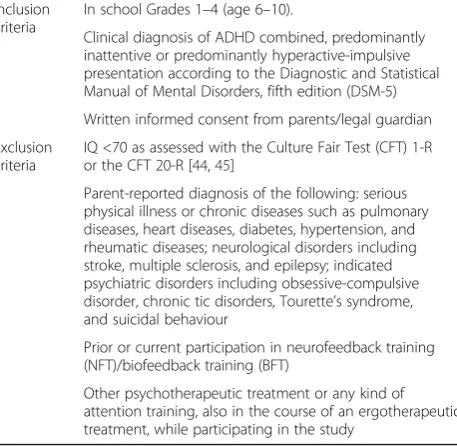
confirm diagnoses of ADHD. The training sessions will take place in the Department of Psychiatry and Psycho-therapy at the University of Tübingen. See Table 1 for an overview of the eligibility criteria.
Randomization
The design involves three conditions (n= 30 per condi-tion;N= 90) to which recruited children will be assigned randomly upon confirmation of all inclusion criteria. One of the principal investigators of this study who is only occasionally involved in training and testing
partici-pants executes the randomization. A block
randomization procedure is applied, and balancing the conditions for age, gender, and ADHD medication strati-fies the randomization.
Interventions
Two conditions involve 15 sessions of a NIRS-based NFT, one in a VR classroom setting and one in a 2D classroom setting to control for specific effects of train-ings in VR and 2D. The third condition involves an EMG-based BFT in VR and constitutes a control condi-tion that allows the evaluacondi-tion of effects that are uniquely attributable to the NFT itself.
[image:4.595.308.537.509.732.2]Every training session lasts approximately 60–70 min including a preparation phase at the beginning (20 min), in which the NIRS cap and optodes are fitted to the head, or the EMG electrodes are placed on both musculi supraspinatus and both mastoids. For the participants in the VR classroom setting, the head-mounted display (HMD) is mounted. The training sessions also include the NFT or BFT (45 min) and a training phase with stimulus cards at the end of the training sessions 6–15
Table 1Eligibility criteria Inclusion
criteria
In school Grades 1–4 (age 6–10).
Clinical diagnosis of ADHD combined, predominantly inattentive or predominantly hyperactive-impulsive presentation according to the Diagnostic and Statistical Manual of Mental Disorders, fifth edition (DSM-5)
Written informed consent from parents/legal guardian
Exclusion criteria
IQ <70 as assessed with the Culture Fair Test (CFT) 1-R or the CFT 20-R [44,45]
Parent-reported diagnosis of the following: serious physical illness or chronic diseases such as pulmonary diseases, heart diseases, diabetes, hypertension, and rheumatic diseases; neurological disorders including stroke, multiple sclerosis, and epilepsy; indicated psychiatric disorders including obsessive-compulsive disorder, chronic tic disorders, Tourette’s syndrome, and suicidal behaviour
Prior or current participation in neurofeedback training (NFT)/biofeedback training (BFT)
(5 min). The stimulus cards present a screenshot of the 2D screen. Within the laboratory setting, these cards are introduced as cue stimuli associated with brain activa-tion or increased muscular activity of the musculi supraspinatus as learned during the NFT or BFT. When employed at home, they are thought to facilitate activa-tion and to establish an associaactiva-tion between, for instance, doing homework and brain or muscle activa-tion [44].
Every training session with NIRS-based NFT or EMG-based BFT consists of three blocks, of which the first and the second are with continuous performance feed-back (feedfeed-back condition). In the third block, no contin-gent performance feedback is provided (transfer condition), which is thought to foster generalization of acquired self-regulation skills to real-life situations [45]. For the NIRS-based NFT, the first and the second blocks consist of 12 trials, the third of 8. Each trial starts with an active phase of 30 s in which the respective endogen-ous parameter, that is oxy-Hb in the bilateral dlPFC for NIRS-based NFT, should be regulated and is followed by a resting phase of 20 s at the end. For the EMG-based BFT, the first and the second block consist of 24 trials; the third block consists of 16 trials. Each trial starts with an active phase of 15 s in which muscular activity of the musculi supraspinatus should be regulated and is followed by a resting phase of 10 s. Durations of active and resting phases in NIRS-based NFT and EMG-based BFT conditions vary due to different response times of the respective endogenous parameters towards the be-ginning of self-regulation processes employed by the participants [46, 47]. Among the conditions, the amounts of trials are varied in order to obtain an equal total training duration for all conditions.
Lighting in the VR and 2D classroom provides the feedback. For the NIRS-based NFT, lighting increases with increasing activity in the bilateral dlPFC, i.e. in-creasing oxy-Hb, and decreases with dein-creasing activity, i.e. decreasing oxy-Hb. Lighting for the EMG-based BFT increases with increasing muscular activity in the right musculus supraspinatus compared to the left and de-creases with increasing activity in the left musculus supraspinatus compared to the right.
During the first eight training sessions, the training follows a protocol with 50% activation and 50% deactiva-tion trials. For the second half of the training sessions, the protocol changes to 80% activation and 20% deacti-vation trials. At the beginning of each trial, an arrow appearing on the blackboard of the VR or 2D classroom pointing upwards indicates an activation trial, while an arrow pointing downwards indicates a deactivation trial.
After eight training sessions, participants have a break of 2 to 3 weeks that should further support transfer to real-life settings by using stimulus cards with screenshots
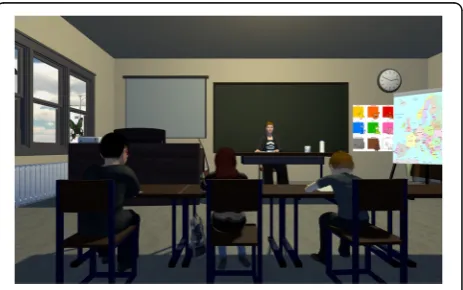
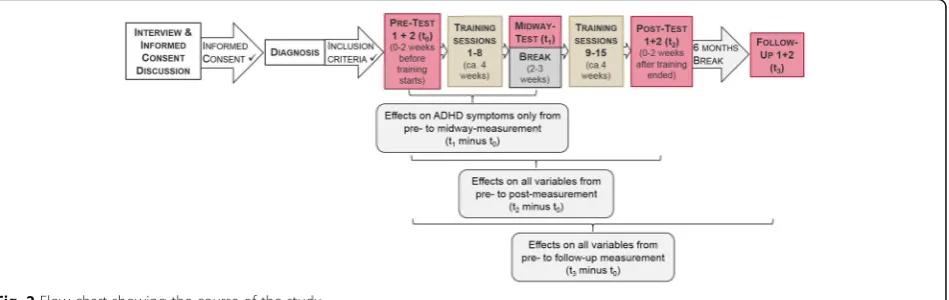
of the training setting. The stimulus cards show the image of the classroom that participants see during the training with the arrow pointing upwards and will be introduced in the laboratory setting at the end of training session numbers 6, 7, and 8. Participants are instructed to look at the cards, employ activation strategies they learned during the training, and imagine increasing the lighting five to six times. After this activation task, they solve a riddle appro-priate for their age and knowledge. For the break, partici-pants are instructed to practice activation at home at least once per day prior to a situation that requires sustained attention, e.g. doing homework. For the rest of the train-ing sessions, participants are asked to continue practictrain-ing activation at home. Furthermore, they still practice with the cards at the end of every training session. The 2D and VR classroom is shown in Fig. 1. An overview of the study course is presented in Fig. 2.
Positive reinforcement
In both NFT and BFT, an animated teacher in the VR or 2D classroom provides reinforcement via positive audi-tory feedback if the participant performed successfully in the past trial. In addition, smileys appear on the black-board of the classroom to provide positive reinforcement at the end of every successful trial. Success is calculated as follows. For the NIRS-based NFT, a baseline is calcu-lated as the average oxy-Hb signal from the eight dlPFC channels (four on the left and four on the right hemi-sphere) in the last 5 s before the start of each trial. For the EMG-based BFT, the baseline is calculated as the average normalized EMG output (right musculus supras-pinatus EMG output minus left musculus suprassupras-pinatus EMG output) in the last second before the start of each trial. Reinforcement is provided with one smiley when the participant has spent 60–69% of the time of the sec-ond half of the trial on the required side of the baseline. For the NIRS-based NFT, below the baseline is a de-crease in the oxy-Hb signal from the eight dlPFC chan-nels, and above is an increase in the oxy-Hb signal from
[image:5.595.307.539.571.716.2]the eight dlPFC channels. For the EMG-based BFT, below the baseline is an increase in the activity in the left musculus supraspinatus compared to the right, and above is an increase in the activity in the right musculus supraspinatus compared to the left. Analogously, the participant receives two smileys with 70–79% and three smileys with at least 80% of the second half of the trial spent in the required direction. Furthermore, reinforcement for the second block changes adaptively with the performance in the first block. If the partici-pant scored between 40 and 60% success rate in the first block, the second block will remain exactly like the first. If the participant achieves lower than a 40% success rate, the threshold will decrease to .8 stand-ard deviations (SD) in either direction relative to the baseline, so that fluctuations in the light are more sensitive to performance. In addition, the threshold for receiving smileys would decrease to 50%, 60%, and 70% of the time that must be spent on the re-quired side of the baseline, for one, two, or three smileys, respectively. If the participant scores higher than a 60% success rate in the first block, the thresh-old increases to 1.2 SD above and below the baseline, hence making changes in the lighting, requiring more relative activation or deactivation. In addition, the baseline is artificially augmented to be .1 SD above or below the calculated baseline. Consequently, in order to receive smileys, the participant has to maintain a stron-ger activation or deactivation than before. The third block will be calculated in the same way as the second.
The VR and 2D classroom
In the VR and 2D classroom, every participant is seated at a virtual table in the second row of a primary school classroom (see Fig. 1.). Other pupils surround him/her, and a teacher sits in the front of the classroom at a desk. Visual, auditory, and mixed distractors such as, for in-stance, paper planes flying through the room, fellow stu-dents whispering, or people knocking on the door will
be randomized to occur in 50% of all trials. Their ap-pearance is balanced between trials and sessions, and the distractors appear with a distance of at least 60 s be-tween two distractors.
Token system
Children are rewarded for their participation. At the be-ginning of the study, they receive a sticker album and one sticker per test or training session in the course of the study. If participants report to have trained regularly with the stimulus cards during the break, they can earn two more stickers.
Adverse events
Reported adverse events and other unintended effects of the interventions employed in this study or the trial con-duct are recorded and discussed with psychologists as well as child and youth psychiatrists.
Assessments
Culture Fair Intelligence Test 1-R and 20-R
The Culture Fair Intelligence Test 1-R (CFT 1-R) [48] is a non-verbal intelligence test that can be used for chil-dren aged 5 years and 3 months to 9 years and 11 months. It consists of five subtests on substitutions, mazes, classifications, similarities, and matrices. The test can be applied in a short and a long form that differ in testing time only, but not in the amount of subtests ap-plied. The short form will be used in this study. Reliabil-ity scores for the subtests vary between r= .75 and r = .90, and reliability for the short form is reported to be r= .94. Retest reliability with a second measurement after 2.5 months isr= .90 [48]. For children aged 8 years and 5 months and older, the Culture Fair Intelligence Test 20-R (CFT 20-R) [49] is used. The CFT 20-R is a non-verbal intelligence test consisting of two parts, each containing four identically constructed subtests on com-pleting series, classifications, matrices, and topological reasoning. In this study, the test is applied in its short
[image:6.595.65.540.89.239.2]version, which consists of only the first of the two parts. The reliability of the CFT 20-R is r= .92 for the short version of the test. The retest reliability is adequate, with r= .85 after 2 months [49]. Hence, both tests show ad-equate psychometric properties to measure intelligence in the study sample.
Conners 3rd Edition (Conners 3) - German translation The German long versions of the Conners 3 for parents (C3-P) and teachers (C3-T) consist of 108 items for parents and 112 items for teachers. The Conners 3 tools assess ADHD symptoms but also learning problems, EF, peer relationships, and aggression/defiance [42]. Further-more, the questionnaires contain screener items for anx-iety and depression. Both versions of the Conners 3 have adequate psychometric properties for teachers and parents with good internal consistency for most of the scales (Cronbach’sα> .85) and acceptable values for the remaining scales (Cronbach’s α> .70). Test-retest reli-abilities are also good, with average values of about r = .85. Consequently, the Conners 3 in its German version seems to be appropriate to assess the effects of the intervention administered in this study.
Strengths and Difficulties Questionnaire
The Strengths and Difficulties Questionnaire (SDQ) con-sists of 25 items and assesses behavioural strengths and difficulties of children on five scales: prosocial behaviour, hyperactivity, emotional problems, peer relationships, and conduct problems [43]. Different versions for teachers and parents are available and are used in this study. The factorial structure of the original English questionnaires was also found for the German transla-tions (SDQ-Deu) [50]. Psychometric properties for the German versions are good, with high internal consistency for the whole questionnaire (Cronbach’s α = .82) and at least acceptable scores for the subscales (Cronbach’sαbetween .58 and .76). The retest reliability is specified with r= .62 [51]. Consequently, the SDQ-Deu is an appropriate measure to assess effects of the therapeutic intervention of this study.
KINDL-R
The KINDL-R questionnaires assess health-related qual-ity of life (HRQoL) via self-report and parent rating on six scales: physical and mental well-being, self-esteem, family, friends, and functional capability in daily life at school. In this study, the Kid-KINDL-R for children aged 7–13, as well as the Kiddo-Kindl-R for parents of chil-dren aged 7–13, are applied. Psychometric quality and overall consistency of the parent questionnaire are good, with Cronbach’s α= .85 for the total scales and values ranging between α= .63 and α= .71 for the subscales [52]. Likewise, psychometric quality of the self-report
questionnaire for children is good, with Cronbach’s α = .82 for the total scales and values betweenα= .54 and
α= .73 for the subscales. Hence, the KINDL-R question-naires constitute a suitable instrument to measure HRQoL in this study.
Brief Self-Control Scale (SCS-K-D)
The German brief version of the Self-Control Scale (K-D) assesses self-control using 13 items [53]. The SCS-K-D in the version presented by Rauch and colleagues [53] assesses self-control via parent report. With a retest reliability ofr= .82, the psychometric quality is good. Add-ing to the parent report, we adapted the questionnaire to a self-report measure that can be used with children. Piloting the adapted version of the self-report question-naire for children, we confirmed its psychometric quality, as internal consistency was high, with Cronbach’sα= .80. Consequently, the SCS-K-D is a suitable instrument to as-sess self-control capacity in the study sample.
Questionnaire on academic self-efficacy
Academic self-efficacy is a concept describing expec-tations about competences that will be exhibited when confronted with academic demands. These ex-pectations are often described from the students’ own perspectives. The self-report used in this study ques-tionnaire consists of seven items, and the internal consistency varies between Cronbach’s α= .70 and .73 due to different measurements [54]. We reworded the items and piloted them in 34 children aged 8–10. In-ternal consistency of the adapted scale was similar to the original scale with Cronbach’s α= .71. Although psychometric quality is only acceptable, this measure is regularly and successfully used to assess self-efficacy in children (see, e.g. [55]).
Parents’expectations about the training’s effects
Parents’ expectations about the training’s effects are assessed using the scale expectations of changes of the Fragebogen zur Erfassung relevanter Therapiebedigun-gen (FERT), a questionnaire that assesses relevant ther-apy conditions [57], in an adapted format. The scale consists of eight items and has been adapted from reporting about a person’s own experiences of his or her therapy to reporting about an intervention that is experi-enced by the child of the reporting person. The factorial reliability of the original scale wasρϲ= .94 [57].
Neuropsychological tests assessing executive functions (EFs), general cognitive abilities, verbal fluency, and sustained attention
Stop-Signal Task We use the Stop-Signal Task by Ver-bruggen, Logan, and Stevens [58] to assess response inhibition. Participants are instructed to react as fast as possible to a primary stimulus in this paradigm. How-ever, a stop signal occurs as a secondary stimulus in 25% of the trials, indicating that the reaction should be inhib-ited. If the reaction is inhibited correctly, the time between the presentation of primary and secondary stimulus is delayed by 50 ms for the next trial. If the re-action is not inhibited, the presentation of the sec-ondary stimulus decreases by 50 ms. The range of delay between presentation of primary and secondary stimulus is 150–550 ms. The Stop-Signal Task has been shown to reliably measure response inhibition in children with ADHD [59].
Corsi Block Tapping Task The Corsi Block Tapping Task [60] is used in a computerized version from PEBL [61, 62] in both its forward and backward versions to as-sess visuo-spatial working memory capacity. Participants are asked to remember a series of locations that are pre-sented on a computer screen. At the beginning of each trial, the participant sees nine blue blocks on the screen. Then one block after another lights up in yellow for 1000 ms until the sequence length is reached. Starting with a sequence length of 2, the task consists of two tri-als with the same sequence length presented to the par-ticipant. If at least one sequence of the two is replicated correctly by clicking on the blocks on the screen with a mouse, the sequence length increases by 1 for the next block. In the backward task, the subject must click the blocks in the reverse order of presentation. If both tasks are not replicated correctly, the test ends. Interstimulus intervals (ISIs) and intertrial intervals are set to 1000 ms. Data on the psychometric quality of the test are available for a version using three items for each sequence length. The reliability of this version is high, with r= .95 [63].
Digit span task (WISC-IV) The digit span task from the Wechsler Intelligence Scale for Children (fourth edi-tion) (WISC-IV) [64], in both its forward and backward versions, is used to assess verbal working memory. Reli-ability of the digit span task is reported to ber= .76 for the backward and r= .84 for the forward version [64]. Hence, the digit span task from the WISC-IV is an ap-propriate instrument to measure verbal working mem-ory in the study sample.
n-back task The n-back task used in this study was developed in the research group Psychophysiology and Optical Imaging at the Department of Psychiatry and Psy-chotherapy of the University of Tübingen. The task as-sesses working memory and consists of three different conditions: a 0-back, a 1-back, and a 2-back task. The tasks are presented to the participants in nine blocks, i.e. three blocks per condition containing 15 trials each, with a 20-s resting phase between active blocks. The stimulus duration is set to 300 ms, and the ISI to 1700 ms. In the 0-back task, participants are instructed to press the space bar as quickly as possible whenever they see a certain stimulus. In the 1-back task, they should respond with the space bar when any stimulus appears twice in a row. In the 2-back task, participants are instructed to press the space bar as quickly as possible whenever the current stimulus and the second last are the same. Target stimuli always constitute 4 out of the 15 presented stimuli in each block, and blocks are pre-sented in a randomized order. In order to construct an age-appropriate version of the n-back task, stimuli are in image form, i.e. a moon, ball, or house. Before the actual test begins, participants practice every condition. The con-ditions used for testing contain different symbols than the ones used in the actual test. Data from a NIRS and an EEG measurement are recorded while the participant accom-plishes this task to assess differences in cortical brain acti-vation resulting from the therapy.
Go/NoGo task The Go/NoGo task used in this study was adapted to pictorial form from a version developed by the research group of Psychophysiology and Optical Imaging at the Department of Psychiatry and Psycho-therapy of the University of Tübingen. The task assesses response inhibition and consists of eight blocks with 16 trials each. The ISI is fixed to 1150 ms, and all stimuli are presented for 350 ms. Four of the eight blocks con-sist of go-trials only; hence, participants are instructed to press the space bar as quickly as possible whenever they see a stimulus, i.e. randomly one of three different pictures, on the computer screen. The other four blocks are designed with 12 go- as well as 4 no-go-trials. Partic-ipants are instructed to press the space bar as quickly as possible whenever they see a go-stimulus, but to inhibit the reaction when a no-go-stimulus, i.e. a fork, appears on the screen. Blocks with only go-trials and blocks con-sisting of mixed trials follow each other in an alternating order, separated by a resting block of 30 s. Data from a NIRS and an EEG measurement are recorded while the participant accomplishes this task to assess differences in cortical brain activation resulting from the therapy.
Matrix span task (WISC-IV) The matrix span task, taken from the WISC-IV [64], assesses general cognitive abilities. The reliability of the matrix span task is
reported to ber= .89 [64]; hence, it is an appropriate in-strument to measure general cognitive abilities in the study sample.
Sustained attentionThe Conner’s Continuous Perform-ance Test (CPT) from PEBL [61, 67] is used to assess sustained attention and response inhibition. This test presents 360 letters with a size of one inch to the partici-pant one at a time on a computer screen. The letters are presented in 18 blocks with 20 letters each, and the blocks follow each other consecutively. The duration of the presentation of a letter is approximately 250 ms, while the ISI varies between 1.0, 2.0, and 4.0 s. Within every triplet of blocks, the length of the ISIs is randomly distributed. Participants are instructed to always press the space bar as quickly as possible as soon as a letter appears. However, when the letter X appears, the space bar must not be pressed. The relative occurrence of an X, which remains constant across all blocks and triplets, is fixed at 10%; hence, in 90% of all letters presented, it is any letter but an X. The test-retest reliability of the Conner’s CPT is good, with values ranging between r = .55 andr= .84 [67]. Consequently, the Conner’s CPT is an appropriate test to measure sustained attention as well as response inhibition in the study sample.
Academic performance
Mathematics The Lernverlaufsdiagnostik Mathematik für zweite bis vierte Klassen (LVD-M 2–4) assesses math performance in German primary schoolchildren from Grades 2–4 [68]. Every participant receives a math test consisting of 24 tasks randomly selected at every meas-urement. Reliability has been estimated and ranges between r= .79 and r= .92 [68]. In correlation analyses with other German math tests such as the DEMAT [69–71], validity has been demonstrated. Hence, this test can reliably assess math performance in the study sample.
Neurophysiological and other physiological measures
Electroencephalogram (EEG) EEG data are collected using 22 EEG channels positioned according to the international 10–20 system. Two channels of the actiCap system (Brain Products GmbH, Germany) are used to detect horizontal eye movements and are attached 1.5 cm lateral to the outer canthus of both eyes. One additional electrode is used to detect vertical eye move-ment and is attached 1.5 cm below the middle of the right lower eyelid.
Near-infrared spectroscopy (NIRS) NIRS is an optical imaging technique examining the blood oxygenation level-dependent (BOLD) response of brain tissue. Light from the near-infrared spectrum (700–1000 nm wave-length) can penetrate the skull and is mainly absorbed by the two chromophores oxygenated haemoglobin (oxy-Hb) and deoxygenated haemoglobin (deoxy-Hb). As the two chromophores differ in their absorption maxima, variations of the concentration of both types in the brain tissue can be derived [72]. Due to neurovascu-lar coupling, changes in concentration of oxy- and deoxy-Hb occur in response to cortical activation [72– 74]. Hence, oxy- and deoxy-Hb provide information about brain activity in respective areas [72–74]. In the present study, data are acquired with the ETG-4000 Op-tical Topography System (Hitachi Medical Co., Japan), which is a continuous wave system working with two different wavelengths (695 ± 20 and 830 ± 20 nm) and a temporal resolution of 10 Hz, using a 44-channel array. Relative changes of absorbed near-infrared light are transformed into concentration changes of oxy-Hb and deoxy-Hb by means of a modified Beer-Lambert law.
The 28 NIRS optodes (14 light sources (emitters), 14 detectors) are arranged in a combined NIRS/EEG cap designed to function with the Oculus Rift HMD Devel-opment Kit 2. The caps are individually localized by the EEG channels FCz and Cz according to the 10–20 sys-tem [75]. In order to assign NIRS channels that are situ-ated in between adjacent pairs of emitters and detectors to their corresponding cortical regions, a spatial registra-tion method of NIRS channels is applied [76]. In order to normalize the combined EEG/NIRS caps for children aged 6–10, we used the neuronavigation data of a 9-year-old girl normalized with the average brain from this age range, taken from the Template-O-Matic project [77]. A cap for a combined EEG/NIRS measurement from a previous study was placed on the girl's head. Using neuronavigation [78], optode and channel posi-tions together with their corresponding cortical projec-tion points on the head were obtained. The resulting coordinates from the neuronavigation were transferred to the standard Montreal Neurological Institute (MNI)
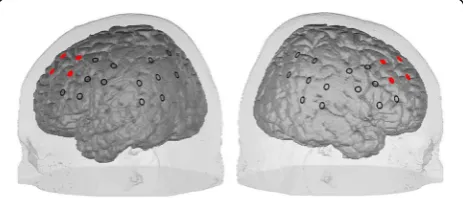
space. Mapped on a virtual brain template, caps for combined EEG/NIRS measurements were customized with maximum coverage of the bilateral dlPFC (Brod-mann areas 9, 46) that are used as feedback channels in the NIRS-based NFT of this study. See Fig. 3 for the alignment of the NIRS channels on the cortex surface. Hence, seven emitter and seven detector optodes are spread over prefrontal, central, temporal, and parietal areas of each hemisphere. The emitter-detector distance is 3 cm; we also employ one temporal channel on each hemisphere with a short-optode distance of 1 cm that can be used in later analysis for artefact removal (muscle artefacts as related to biting, for instance, as well as skin perfusion artefacts or other extra-cerebral signal components).
Electromyogram (EMG) EMG data are collected using the BrainAmp EEG system by Brain Products. Two elec-trodes placed on the surface of the skin, bilaterally on the subjects’supraspinatus muscles, measure the ratio of muscle tension between the right and left supraspinatus muscle. Reference electrodes placed on both mastoids complete the setup for the measurement. The value cal-culated by subtracting the normalized muscle tension of the left supraspinatus muscle from the normalized muscle tension of the right provides the feedback. Higher tension on the right will be equated to ‘ activa-tion’, higher tension on the left to‘deactivation’.
Accelerometer In this study, accelerometers are used to objectively measure motor hyperactivity at the non-dominant wrist, hip, and ankle at pre-, post-, and follow-up measurement as well as during every training session. The accelerometer used in this study is the wGT3X+ by the company ActiGraph. This device measures ac-celeration on the vertical, horizontal, and perpendicular axes with a range of −6 to +6 g (g = gravitational force). This small and very light sensor (5.6 cm × 3.3 cm × 1.5 cm; 19 g) is fixed to the waistband using a light belt or a clip. Furthermore, the ECGMove 3 (see below for a de-scription of the device) measures acceleration of the torso.
[image:10.595.306.538.594.693.2]Heart rate variability Data from the electrocardiogram (ECG) are collected during every training session using the very light sensor ECGMove 3 (from Movisens) with a size of 62.3 mm × 38.6 mm × 11.5 mm. The sensor is fixed with two Ag/AgCl cup electrodes to the skin below the sternum. Heart rate variability can then be calculated from the ECG data.
Motivation
Before the start of every training session, the participants are asked to complete a questionnaire consisting of six items that assess motivation. The questionnaire was de-veloped at the LEAD Graduate School & Research Net-work of the University of Tübingen. Motivation for the training session is operationalized in four dimensions: effort (i.e.“I will make an effort to do well in the training today”), joy (i.e.“I am looking forward to today’s training session”, “I only came to training because I had to”), value attributed to the training session (i.e. “I am con-vinced that this training session is important for me”), and importance of showing a good training performance (i.e.“It is important for me to show a good training per-formance”,“I am disappointed when I do not succeed in switching the lighting in the classroom on and off”).
Time points of assessments
The first assessment (t−1) takes place in order to check
for all relevant inclusion and exclusion criteria. Zero to two weeks before the first training session, two baseline measurements of all relevant variables take place (t0).
Medication washout is required for one of the two test sessions in which neuropsychological and neurophysio-logical measurements are applied. For an overview of the variables assessed under medication washout, see Fig. 4. After eight training sessions, ADHD symptoms are assessed in a midway test (t1). Zero to two weeks
after the last training session, a post-test measurement of all relevant variables, again under medication washout for one of the two sessions, takes place (t2). Six months
after the last training session, all relevant variables are again assessed in a follow-up test (t3).
For an overview of the tests, questionnaires, and methods employed at different time points in the study, see Fig. 4, which was designed in accordance with the standard protocol items for clinical trials [39, 40].
BRIEF Questionnaire assessing executive functions, C3-P Conners 3 parent questionnaire (long form),C3-T Conners 3 teacher questionnaire (long form),CFT Cul-ture Fair Test, CPTConner’s Continuous Performance Test, FERT Questionnaire to assess relevant therapy circumstances, HRV heart rate variability, KINDL-R Questionnaire to assess HRQoL, LVD-M 2–4 Curriculum-based assessment of mathematics skills for Grades 2–4, SCS-K-D Brief Self-Control Scale,
SDQ-Deu Strengths and Difficulties Questionnaire, German version, SLRT-II Comprehensive assessment of reading and writing skills of children,VFT Verbal fluency task
Primary outcome measures
Mean group scores of every condition will be calculated for all primary outcome measures. The C3-P and C3-T [42] assess ADHD symptoms as rated by parents and teachers at pre- (t0), midway (t1), post- (t2), and
follow-up test (t3), hence allowing us to assess changes within
and between conditions from pre- to midway, from pre- to post-, and from pre- to follow-up test. Further-more, at pre- (t0), post- (t2), and follow-up test (t3),
brain activity, i.e. the mean levels of oxy-Hb and deoxy-Hb at various channels across different cortical areas, is assessed using fNIRS data as well as EEG data from the n-back task assessing working memory, the Go/NoGo task assessing response inhibition, and the VFT assessing general brain activity. Consequently, changes within and between conditions in brain activity from pre- to post-, and from pre- to follow-up test can be assessed. In addition, behavioural data (i.e. mean reaction times, mean reaction time variability (SD), and the mean total number of commission and omission errors) are obtained from the n-back task and the Go/NoGo task at pre- (t0), post- (t2),
and follow-up test (t3), hence allowing us to assess
changes from pre- to post-, and from pre- to follow-up test within and between conditions.
Secondary outcome measures
Mean group scores of every condition will be calcu-lated for all secondary measures. Secondary outcome measures assess diverse constructs at pre-test (t0),
post-test (t2), and follow-up test (t3), hence allowing
matrix span task [64]. Moreover, activity data are collected with actigraphs measuring acceleration on the vertical, horizontal, and perpendicular axes with a range of −6 to +6 g (g = gravitational force). Heart rate variability, as calcu-lated from the ECG, as well as the motivation for every training session, as assessed with a self-report questionnaire for the children, serve as secondary outcome measures.
Statistics
Calculation of the sample sizeThe sample sizes for the two analytical approaches were calculated using G Power version 3.1.9.2. Firstly, we calculated the sample size that is required in order to yield a significant effect of treatment within conditions. We expect appropriate
[image:12.595.59.538.87.587.2]effect sizes to range between those known for within and between designs, hence expecting an effect size of ES= .69 [26] with a predefinedα of .05 and a power of at least .80. Using a one-tailedttest due to directed hy-potheses, the study requires at least 15 subjects per group, assuming a post- versus pre-effect, or at least 27 subjects, assuming treatment versus passive waiting con-trol group effect. Secondly, we calculated the sample size that is required for a repeated measures analysis of vari-ance (ANOVA) with three groups and two measurement dates in order to be able to detect effects of at least small to medium effect sizes. Hence, assuming an ESof .35, a predefinedα of .05, a power of at least .80, and a correlation of .5 between repeated measures results in a total sample size of 84, that is, 28 per group. Conse-quently, taking into consideration the results of our first and second analyses, we aim for 30 participants per group.
Statistical evaluation of the results For all outcome variables, we will conduct repeated measures ANOVA as well as post hoc tests. Accelerometer data will be ana-lysed using support vector machines (Kühnhausen J, Brefeld U, Reinelt T, Gawrilow C: Using accelerometers to predict ADHD diagnoses in children, submitted) to monitor the presence of symptoms of hyperactivity. In the case that data will not be normally distributed, ad-equate non-parametric tests will be applied.
All data from questionnaires completed by partici-pants, parents, and teachers who adhered to the study protocol will be included in the analyses; this also in-cludes data from participants or informants who left the study at a certain point of time during the course of the study, i.e. after the midway test (t1) or after the post-test
(t2). If data from (neuro-) psychological tests are missing,
respective data from all following measurements will also be excluded from the analyses, as learning effects are expected due to participation in the respective as-sessments. Furthermore, data from each participant will be analysed in the participant’s respective condition (i.e. as randomized). If data from certain items of the ques-tionnaires are missing, we will apply appropriate proce-dures to deal with missing values as suggested in the manual of the respective questionnaire.
Data security and storage All data are acquired and stored using anonymous codes. Codes and correspond-ing real names are noted on a code list stored in a lockable cupboard that can only be accessed by staff members of the project. The code list will be destroyed after the data collection, including follow-up tests, is finished. All data collected will be deleted after ten years from their first publication. No data monitoring committee is required for this study, as this is not a multicentre study.
Discussion
We presented an innovative study design and protocol of a randomized controlled trial (RCT) with NIRS-based neurofeedback training in children with ADHD. First, this study aims to investigate the specific effects of NIRS-based NFT compared to effects of EMG-based BFT on children with ADHD. Both variants of the train-ing are conducted in a VR classroom environment. Second, we aim to compare differential effects of NIRS-based NFT in a 2D and a VR environment. Third, this study examines effects of NIRS-based NFT and EMG-based BFT on self-control as well as on school perform-ance of children with ADHD.
There are already promising findings providing evi-dence for the efficacy of NIRS-based NFT in children with ADHD in the scope of a pilot study [27]. The study presented here now aims to further examine the findings in a comprehensive design. An active control condition receiving an EMG-based BFT will serve to differentiate specific as well as unspecific effects of the interventions. In addition to strong ethical concerns and poor compli-ance to treatment in NFTs using sham feedback as a control condition [30, 31], a control condition receiving a sham feedback is not adequate to approach this ques-tion. NFT and BFT for ADHD treatment generally train self-regulation in different domains [22, 81] in the fash-ion of an operant conditfash-ioning paradigm. On the one hand, participants acquire self-regulation skills that allow control of a specific endogenous parameter, namely brain activation. On the other hand, they learn to self-regulate behavioural conditions such as being attentive, sitting still, and enduring boredom. Therefore, we expect NFT as well as BFT to yield the same degree of effects in the latter domains, while only the acquisition of self-regulation skills related to the specific endogenous par-ameter will yield unique effects on ADHD symptomatol-ogy. Hence, comparing the effects of a NIRS-based NFT in the VR setting and those of an EMG-based BFT in VR in this study will illustrate the proportion of specific effects as well as effects common to both interventions.
training setting [35]. In addition, training motivation has been identified as an important moderator of the efficacy of cognitive training, as it fosters cognitive control and prefrontal activity [35]. Training motivation may be in-creased by a personalized context that links the goals of the training to everyday life [35]. Hence, as a naturalistic VR environment, such as a VR classroom, links goals of the training to a real-life situation, we should expect NFT and BFT taking place in a naturalistic VR environ-ment to yield larger effects than training in 2D. The present study will investigate whether effects of a NIRS-based NFT are larger when the training is conducted in a naturalistic VR environment compared to a 2D setting. Children with ADHD experience poor school perform-ance [6–8] as well as a core deficit in self-control [3], that is,“the deliberate, conscious, effortful subset of self-regulation” [82]. However, aspects often neglected in prior studies include the effects of NFT and BFT on self-control and school performance. Depicting NFT and BFT as interventions that train the exertion of self-regulation in two domains, namely self-regulating an en-dogenous parameter and self-regulation of behaviour, it seems plausible to expect effects on and to assess self-control while investigating effects on the self-regulation of brain activity and behaviour. Furthermore, as poor school performance is related to difficulties in behaviour, EF, and self-control [8], and both NFT and BFT have been shown to improve behaviour and EF (e.g. [83, 84]), we should expect all three interventions administered in this study to improve school performance. Hence, it is vital to assess the effects of a NIRS-based NFT and an EMG-based BFT on school performance.
The present study is limited in that participants, parents, and the trainers administering the intervention are not blinded — even though an official debriefing of parents and children as well as communication of indi-vidual results will only take place after finishing the study, hence, after the follow-up test is completed. First, participants, parents, and trainers are not blinded due to time constraints that make it impossible to use both the NIRS machine and the EMG equipment simultaneously. Second, participants either wear or do not wear the HMD, and hence they will know whether it is the 2D or VR condition they belong to. Third, as measurements during training sessions require constant observation of the data being recorded, it is impossible to blind trainers for the kind of intervention administered. However, par-ticipants, parents, and trainers are informed that every participant receives a potent intervention. Hence, we hope that bias is reduced to a minimum.
We have presented the design and protocol for a ran-domized controlled trial on a NIRS-based NFT in a VR classroom for children with ADHD. In addition to asses-sing the effects of an NFT uasses-sing this relatively new
technology, and besides the fact that this is, to our knowledge, the first study examining differential effects of an NFT in children with ADHD in a 2D and a VR set-ting, we add the assessment of concepts that have rarely been considered in prior NFT studies to established measures.
Trial status
The trial is ongoing.
Additional file
Additional file 1:SPIRIT checklist. (PDF 480 kb)
Abbreviations
ADHD:Attention-deficit/hyperactivity disorder; BFT: Biofeedback training; BRIEF: Behaviour Rating Inventory of Executive Function; C3-P: Conners 3 parent questionnaire (long form); C3-T: Conners 3 teacher questionnaire (long form); CFT: Culture Fair Test; CPT: Conner’s Continuous Performance Test; deoxy-Hb: Deoxygenated haemoglobin; dlPFC: Dorsolateral prefrontal cortex; DSM-5: Diagnostic and Statistical Manual of Mental Disorders, fifth edition; EEG: Electroencephalogram; EF: Executive function;
EMG: Electromyogram; FERT: Questionnaire to assess relevant therapy circumstances; fMRI: Functional magnet resonance imaging; fNIRS: Functional near-infrared spectroscopy; HMD: Head-mounted display; HRQoL: Health-related quality of life; HRV: Heart rate variability; ISI: Interstimulus interval; KINDL-R: Questionnaire to assess HRQoL; LVD-M 2–4: Curriculum-based assessment of mathematics skills for Grades 2–4; MNI: Montreal Neurological Institute; NFT: Neurofeedback training; NIRS: Near-infrared spectroscopy; oxy-Hb: Oxygenated haemoglobin; RTC: Randomized controlled trial; SCP: Slow cortical potential; SCS-K-D: Brief Self-Control Scale; SD: Standard deviation; SDQ-Deu: Strengths and Difficulties Questionnaire, German version; SLRT-II: und Rechtschreibtest, an advanced version of the Salzburger Lese-und Rechtschreibtest (SLRT); VFT: Verbal fluency task; VR: Virtual reality
Acknowledgements
We acknowledge support by Deutsche Forschungsgemeinschaft and Open Access Publishing Fund of University of Tübingen.
Funding
This research was funded by the LEAD Graduate School & Research Network [GSC1028], a project of the Excellence Initiative of the German federal and state governments.
Availability of data and materials Data will be made available upon request.
Authors’contributions
Competing interests
The authors declare that they have no competing interests.
Consent for publication Not applicable.
Ethics approval and consent to participate
The study was approved by the local ethics committee of the faculty of medicine at the University of Tübingen (093/2015BO1) and was written in accordance with the latest version of the Declaration of Helsinki. Before starting with the diagnostic procedure to check inclusion and exclusion criteria, primary caretakers are invited for an informed consent discussion in which the goals of the study, the study design, possible negative side effects, and expected benefits are explained. The study is also explained to the participants. Participants and parents are informed that they are free to withdraw consent to participation and use of their data at any time, and that a withdrawal will not imply any negative consequences. Participants are only invited to the diagnostic procedure and included in the study if written informed consent of both participants and primary caretakers is given.
Author details
1
LEAD Graduate School & Research Network, University of Tübingen, Gartenstrasse 29, 72074 Tübingen, Germany.2Department of Psychiatry and Psychotherapy, University of Tübingen, Calwerstrasse 14, 72076 Tübingen, Germany.3Department of Psychology, University of Tübingen, Schleichstrasse 4, 72076 Tübingen, Germany.4Department of Child and Adolescence Psychiatry and Psychotherapy, University of Tübingen, Osianderstrasse 14-16, 72076 Tübingen, Germany.5Deutsches Institut für Internationale
Pädagogische Forschung (DIPF), Schlossstrasse 29, 60486 Frankfurt/Main, Germany.
Received: 30 June 2016 Accepted: 21 December 2016
References
1. American Psychiatric Association. DSM-5 Attention Deficit/Hyperactivity Disorder Fact Sheet. Arlington: American Psychiatric Association; 2013. 2. Barkley RA. Behavioral inhibition, sustained attention, and executive
functions: Constructing a unifying theory of ADHD. Psychol Bull. 1997;121:65–94.
3. Barkley RA. ADHD and the nature of self-control. New York: Guildford Press; 1997.
4. Sonuga-Barke EJS. Psychological heterogeneity in AD/HD—a dual pathway model of behaviour and cognition. Behav Brain Res. 2002;130:29–36. 5. Faraone SV, Asherson P, Banaschewski T, Biederman J, Buitelaar JK,
Ramos-Quiroga JA, Rohde LA, Sonuga-Barke EJS, Tannock R, Franke B. Attention-deficit/hyperactivity disorder. Nat Rev. 2015;1:1–23.
6. Daley D, Birchwood J. ADHD and academic performance: why does ADHD impact on academic performance and what can be done to support ADHD children in the classroom? Child Care Health Dev. 2010;36:455–64. 7. Loe IM, Feldman HM. Academic and educational outcomes of children with
ADHD. J Pediatr Psychol. 2007;32:643–54.
8. Frazier TW, Youngstrom EA, Glutting JJ, Watkins MW. ADHD and achievement: meta-analysis of the child, adolescent, and adult literatures and a concomitant study with college students. J Learn Disabil. 2007;40:49–65.
9. Rodriguez A, Jarvelin M-R, Obel C, Taanila A, Miettunen J, Moilanen I, Henriksen T, Pietilainen K, Ebeling H, Kotimaa A, Linnet K, Olsen J. Do inattention and hyperactivity symptoms equal scholastic impairment? Evidence from three European cohorts. BMC Public Health. 2007;7:327. 10. Miller AC, Keenan JM, Betjemann RS, Willcutt EG, Pennington BF, Olson RK.
Reading comprehension in children with ADHD: cognitive underpinnings of the centrality deficit. J Abnorm Child Psychol. 2013;41:473–83.
11. Sciberras E, Mueller KL, Efron D, Bisset M, Anderson V, Schilpzand EJ, Jongeling B, Nicholson JM. Language problems in children with ADHD: a community-based study. Pediatrics. 2014;133:793–800.
12. Sowerby P, Seal S, Tripp G. Working memory deficits in ADHD: the contribution of age, learning/language difficulties, and task parameters. J Atten Disord. 2011;15:461–72.
13. Willcutt EG, Doyle AE, Nigg JT, Faraone SV, Pennington BF. Validity of the executive function theory of attention-deficit/hyperactivity disorder: a meta-analytic review. Biol Psychiatry. 2005;57:1336–46.
14. Barry RJ, Johnstone SJ, Clarke AR. A review of electrophysiology in attention-deficit/hyperactivity disorder: II. Event-related potentials. Clin Neurophysiol. 2003;114:184–98.
15. Negoro H, Sawada M, Iida J, Ota T, Tanaka S, Kishimoto T. Prefrontal dysfunction in attention-deficit/hyperactivity disorder as measured by near-infrared spectroscopy. Child Psychiatry Hum Dev. 2010;41:193–203. 16. Ehlis A-C, Bähne CG, Jacob CP, Herrmann MJ, Fallgatter AJ. Reduced lateral
prefrontal activation in adult patients with attention-deficit/hyperactivity disorder (ADHD) during a working memory task: a functional near-infrared spectroscopy (fNIRS) study. J Psychiatr Res. 2008;42:1060–7.
17. Barry RJ, Clarke AR, Johnstone SJ. A review of electrophysiology in attention-deficit/hyperactivity disorder: I. Qualitative and quantitative electroencephalography. Clin Neurophysiol. 2003;114:171–83.
18. Hinterberger T, Veit R, Strehl U, Trevorrow T, Erb M, Kotchoubey B, Flor H, Birbaumer N. Brain areas activated in fMRI during self-regulation of slow cortical potentials (SCPs). Exp Brain Res. 2003;152:113–22.
19. Hennighausen K, Schulte-Körne G, Warnke A, Remschmidt H. Contingent negative variation (CNV) in children with hyperkinetic syndrome—an experimental study using the Continuous Performance Test (CPT). Z Kinder Jugendpsychiatr Psychother. 2000;28:239–46.
20. Chabot RJ, Serfontein G. Quantitative electroencephalographic profiles of children with attention deficit disorder. Biol Psychiatry. 1996;40:951–63. 21. Loo SK, Barkley RA. Clinical utility of EEG in attention deficit hyperactivity
disorder. Appl Neuropsychol. 2005;12:64–76.
22. Gevensleben H, Moll GH, Rothenberger A, Heinrich H. Neurofeedback in attention-deficit/hyperactivity disorder—Different models, different ways of application. Front Hum Neurosci. 2014;8:1–10.
23. Drechsler R, Straub M, Doehnert M, Heinrich H, Steinhausen H-C, Brandeis D. Controlled evaluation of a neurofeedback training of slow cortical potentials in children with Attention deficit/hyperactivity disorder (ADHD). Behav Brain Funct. 2007;3:35.
24. Holtmann M, Sonuga-Barke E, Cortese S, Brandeis D. Neurofeedback for attention-deficit/hyperactivity disorder. Child Adolesc Psychiatr Clin N Am. 2014;23:789–806.
25. Cortese S, Ferrin M, Brandeis D, Holtmann M, Aggensteiner P, Daley D, Santosh P, Simonoff E, Stevenson J, Stringaris A, Sonuga-Barke EJS. Neurofeedback for attention-deficit/hyperactivity disorder: meta-analysis of clinical and neuropsychological outcomes from randomized controlled trials. J Am Acad Child Adolesc Psychiatry. 2016;55:444–55.
26. Arns M, de Ridder S, Strehl U, Breteler M, Coenen A. Efficacy of neurofeedback treatment in ADHD: the effects on inattention, impulsivity and hyperactivity: a meta-analysis. Clin EEG Neurosci. 2009; 40:180–9.
27. Marx A-M, Ehlis A-C, Furdea A, Holtmann M, Banaschewski T, Brandeis D, Rothenberger A, Gevensleben H, Freitag CM, Fuchsenberger Y, Fallgatter AJ, Strehl U. Near-infrared spectroscopy (NIRS) neurofeedback as a treatment for children with attention deficit hyperactivity disorder (ADHD)—a pilot study. Front Hum Neurosci. 2015. https://doi.org/10.3389/fnhum.2014.01038. 28. Meisel V, Servera M, Garcia-Banda G, Cardo E, Moreno I. Neurofeedback and standard pharmacological intervention in ADHD: a randomized controlled trial with six-month follow-up. Biol Psychol. 2013;94:12–21.
29. Raggi V, Chronis A. Interventions to address the academic impairment of children and adolescents with ADHD. Clin Child Fam Psychol Rev. 2006;9: 85–111.
30. Holtmann M, Pniewski B, Wachtlin D, Wörz S, Strehl U. Neurofeedback in children with attention-deficit/hyperactivity disorder (ADHD)—a controlled multicenter study of a non-pharmacological treatment approach. BMC Pediatr. 2014;14:202.
31. Birbaumer N, Elbert T, Brigitte R, Daum I, Wolf P, Canavan A. Clinical-psychological treatment of epileptic seizures: a controlled study, Perspectives and promises in clinical psychology. New York: Plenum Press; 1991. p. 81–96.
32. Albrecht B, Uebel-von Sandersleben H, Gevensleben H, Rothenberger A. Pathophysiology of ADHD and associated problems—starting points for neurofeedback interventions? Front Hum Neurosci. 2015;9:359. 33. Gevensleben H, Rothenberger A, Moll GH, Heinrich H. Neurofeedback in
34. Bohil CJ, Alicea B, Biocca FA. Virtual reality in neuroscience research and therapy. Nat Rev Neurosci. 2011;12:752–62.
35. Keshavan MS, Vinogradov S, Rumsey J, Sherrill J, Wagner A. Cognitive training in mental disorders: update and future directions. Am J Psychiatry. 2014;171:510–22.
36. Käthner I, Ruf CA, Pasqualotto E, Braun C, Birbaumer N, Halder S. A portable auditory P300 brain-computer interface with directional cues. Clin Neurophysiol. 2013;124:327–38.
37. Kouneiher F, Charron S, Koechlin E. Motivation and cognitive control in the human prefrontal cortex. Nat Neurosci. 2009;12:939–45.
38. Subramaniam K, Kounios J, Parrish TB, Jung-Beeman M. Brain mechanism for facilitation of insight by positive affect. J Cogn Neurosci. 2009;21:415–32. 39. Chan A-W, Tetzlaff JM, Altman DG, Laupacis A, Gøtzsche PC, Krleža-JerićK,
Hróbjartsson A, Mann H, Dickersin K, Berlin JA, Doré CJ, Parulekar WR, Summerskill WSM, Groves T, Schulz KF, Sox HC, Rockhold FW, Rennie D, Moher D. SPIRIT 2013 Statement: defining standard protocol items for clinical trials. Ann Intern Med. 2013;2013(158):200–7.
40. Chan A-W, Tetzlaff JM, Gøtzsche PC, Altman DG, Mann H, Berlin JA, Dickersin K, Hróbjartsson A, Schulz KF, Parulekar WR, Krleža-JerićK, Laupacis A, Moher D. SPIRIT 2013 explanation and elaboration: guidance for protocols of clinical trials. BMJ. 2013;346.
41. Falkai P, Wittchen H-U. Diagnostisches und Statistisches Manual Psychischer Störungen DSM-5. 1st ed. Göttingen: Hogrefe; 2014.
42. Lidzba K, Christiansen H, Drechsler R. Conners Skalen zu Aufmerksamkeit und Verhalten-3. Deutschsprachige Adaption der Conners 3rd Edition von Keith Conners. Bern: Huber; 2013.
43. Goodman R. The Strengths and Difficulties Questionnaire. A research note. J Child Psychol Psychiatry. 1997;38:581–6.
44. Strehl U. Lerntheoretische Grundlagen und Überlegungen zum Neurofeedback. In: Strehl U, editor. Neurofeedback. 1st ed. Stuttgart: Verlag W. Kohlhammer; 2013. p. 13–30.
45. Strehl U, Leins U, Goth G, Klinger C, Hinterberger T, Birbaumer N. Self-regulation of slow cortical potentials: a new treatment for children with attention-deficit/hyperactivity disorder. Pediatrics. 2006;118:e1530–40. 46. Villringer A, Planck J, Hock C, Schleinkofer L, Dirnagl U. Near infrared
spectroscopy (NIRS): a new tool to study hemodynamic changes during activation of brain function in human adults. Neurosci Lett. 1993;154:101–4. 47. Inman VT, Ralston HJ, De CM Saunders JB, Bertram Feinstein MB, Wright EW.
Relation of human electromyogram to muscular tension. Electroencephalogr Clin Neurophysiol. 1952;4:187–94.
48. Weiß RH, Osterland J. CFT 1-R. Grundintelligenztest Skala 1 - Revision. Göttingen: Hogrefe Verlag; 2013.
49. Weiß RH, Weiß B. CFT 20-R. Grundintelligenztest Skala 2 - Revision. Göttingen: Hogrefe Verlag; 2006.
50. Woerner W, Becker A, Friedrich C, Rothenberger A, Klasen H, Goodman R. Normierung und Evaluation der deutschen Elternversion des Strengths and Difficulties Questionnaire (SDQ): Ergebnisse einer repräsentativen Felderhebung. Z Kinder Jugendpsychiatr Psychother. 2002;30:105–12. 51. Goodman R. Psychometric properties of the Strengths and Difficulties
Questionnaire. J Am Acad Child Adolesc Psychiatry. 2001;40:1337–45. 52. Ravens-Sieberer U, Ellert U, Erhart M. Health-related quality of life of children
and adolescents in Germany. Norm Data from the German Health Interview and Examination Survey (KiGGS). Bundesgesundheitsblatt
-Gesundheitsforsch - Gesundheitsschutz. 2007;50:810–8.
53. Rauch WA, Gawrilow C, Schermelleh-Engel K, Schmitt K. Dispositionelle Selbstkontrollkapazität bei Kindern. Diagnostica. 2014;60:61–72. 54. Schwarzer R, Jerusalem M. Skalen zur Erfassung von Lehrer- und
Schülermerkmalen. Berlin: Dokumentation der psychometrischen Verfahren im Rahmen der wissenschaftlichen Begleitung des Modellversuchs selbstwirksame Schulen. Berlin: Freie Universität Berlin; 1999.
55. Juang LP, Silbereisen RK. The relationship between adolescent academic capability beliefs, parenting and school grades. J Adolesc. 2002;25:3–18. 56. Drechsler R, Steinhausen H-C. BRIEF. Verhaltensinventar zur Beurteilung
exekutiver Funktionen. Göttingen: Hogrefe Verlag; 2013.
57. Vollmann K, Hautzinger M, Strehl U. Entwicklung und Überprüfung eines Fragebogens zur Erfassung relevanter Therapiebedingungen (FERT) [dissertation]. 2009.
58. Verbruggen F, Logan GD, Stevens MA. STOP-IT. 2013. http://www.psy. vanderbilt.edu/faculty/logan/#stopit.
59. Soreni N, Crosbie J, Ickowicz A, Schachar R. Stop Signal and Conners’ Continuous Performance Tasks Test—Retest reliability of two inhibition measures in ADHD children. J Atten Disord. 2009;13:137–43.
60. Corsi PM. Human memory and the medial temporal region of the brain. Diss Abstr Int. 1972;34:891.
61. Mueller ST, Piper BJ. The Psychology Experiment Building Language (PEBL) and PEBL test battery. J Neurosci Methods. 2014;222:250–9.
62. Mueller ST. The PEBL The PEBL. 2011.
63. Schellig D. Block-Tapping-Test (BTT). Manual. Frankfurt: Pearson Assessment; 1997.
64. Petermann F, Petermann U. Wechsler Intelligence Scale for Children -Fourth EditionDeutsche Bearbeitung. Frankfurt: Pearson; 2011.
65. Aschenbrenner S, Tucha O, Lange KW. Regensburger Wortflüssigkeits-Test (RWT). Göttingen: Hogrefe; 2001.
66. Schecklmann M, Ehlis A-C, Plichta MM, Fallgatter AJ. Functional near-infrared spectroscopy: a long-term reliable tool for measuring brain activity during verbal fluency. Neuroimage. 2008;43:147–55.
67. Conners KC, Epstein JN, Angold A, Klaric J. Continuous performance test performance in a normative epidemiological sample. J Abnorm Child Psychol. 2003;31:555–62.
68. Strathmann AM, Klauer KJ. LVD-M 2–4 Lernverlaufsdiagnostik für zweite bis vierte Klassen. Göttingen: Hogrefe; 2012.
69. Krajewski K, Küspert P, Schneider W, Visé M. DEMAT 1+. Deutscher Mathematiktest für erste Klassen. Göttingen: Beltz; 2004.
70. Krajewski K, Liehm S, Schneider W. DEMAT 2+. Deutscher Mathematiktest für zweite Klassen. Göttingen: Beltz; 2004.
71. Gölitz D, Marx H, Schneider W. DEMAT 4. Deutscher Mathematiktest für vierte Klassen. Göttingen: Beltz; 2004.
72. Obrig H, Wenzel R, Kohl M, Horst S, Wobst P, Steinbrink J, Thomas F, Villringer A. Near-infrared spectroscopy: does it function in functional activation studies of the adult brain? Int J Psychophysiol. 2000;35:125–42. 73. Alderliesten T, De Vis JB, Lemmers PMA, van Bel F, Benders MJNL, Hendrikse
J, Petersen ET. Simultaneous quantitative assessment of cerebral physiology using respiratory-calibrated MRI and near-infrared spectroscopy in healthy adults. Neuroimage. 2014;85:255–63.
74. Steinbrink J, Villringer A, Kempf F, Haux D, Boden S, Obrig H. Illuminating the BOLD signal: combined fMRI–fNIRS studies. Magn Reson Imaging. 2006;24:495–505.
75. Jasper H. Report of the committee on methods of clinical examination in electroencephalography. Electroencephalogr Clin Neurophysiol. 1958;10:370–5. 76. Cutini S, Scatturin P, Zorzi M. A new method based on ICBM152 head surface
for probe placement in multichannel fNIRS. Neuroimage. 2011;54:919–27. 77. Wilke M, Holland SK, Altaye M, Gaser C. Template-O-Matic: a toolbox for
creating customized pediatric templates. Neuroimage. 2008;41:903–13. 78. NeuroConn. BrainsightTM. 2012.
79. Moll K, Landerl K. Lese- und Rechtschreibtest (SLRT-II). Weiterentwicklung des Salzburger Lese- und Rechtschreibtests (SLRT). 2, korrig. Bern: Verlag Hans Huber; 2014.
80. Verbruggen F, Logan GD, Stevens MA. STOP-IT: Windows executable software for the stop-signal paradigm. Behav Res Methods. 2008;40:479–83. 81. Gevensleben H, Holl B, Albrecht B, Schlamp D, Kratz O, Studer P, Wangler S,
Rothernberger A, Moll GH, Heinrich H. Distinct EEG effects related to neurofeedback training in children with ADHD: a randomized controlled trial. Int J Psychophysiol. 2009;74:149–57.
82. Baumeister RF, Vohs KD, Tice DM. The strength model of self-control. Curr Dir Psychol Sci. 2007;16:351–5.
83. Bakhshayesh AR, Hänsch S, Wyschkon A, Rezai MJ, Esser G. Neurofeedback in ADHD: a single-blind randomized controlled trial. Eur Child Adolesc Psychiatry. 2011;20:481–91.