Analysis and design for a Real Estate Inc. Agent
System by using security control
Yi Mar Myint*, Khet Khet khaing Oo **
*
Faculty of Information Science, University of Computer Studies, Monywa
**
Faculty of Computer Systems and Technologies , University of Computer Studies, Myitkyina
DOI: 10.29322/IJSRP.9.08.2019.p92140
http://dx.doi.org/10.29322/IJSRP.9.08.2019.p92140
Abstract- This paper intends the effectiveness of all living things and also to develop the businesses of cities. Today, the nature of environment and businesses has changed worldwide. And so all businesses became necessary for marketing, agency are always giving services for the properties to the customers by helping to coordinate between the buyer and owner signing the transaction treats are also served by agency for the customers. For faster property transactions, contact to agency. Customer’s satisfaction is agency’s first priority. The required data for analysis and design specifications for structured elements are kept in UML to develop A Real Estate Inc. Agent system. The paper focuses on creating a unified modeling language (UML) structure by specifying the use case, classes, and activities in the client-server application. This paper also implements the key to the protection of data and information in organization familiarity for data security. Due to improving technologies, data security is popular in many areas. This paper intends the authorization access control for information security by combining security and integrity issues and then the data security consisting of an authorized and unauthorized access. The security control uses of GRANT and REVOKE to control which users have privileges over the objects.
Index Terms- Unified Modeling Language, Object-Oriented-Systems Development, Customer Relationship Management, Integrity, Security
I. INTRODUCTION
In our country, A Real Estate Agent is also a competitive business. And so it becomes necessary for agents to adopt a business model. A business model is a plan for the successful operation of businesses, identifying sources of revenue. Most real estate agents work under a broker. Real estate agents are licensed professionals who negotiate and arrange the buying and selling in real estate. In order to have a life-long living, humans are trying to live conveniently with population growth and an increase in housing for living. This system is based on the achievement of activities of AREA. The requirement specification produced at the start of a development can take many forms. A written specification may be either a very informal outline of the required system or a highly detailed and structured functional description.
The Unified Modeling Language (UML) is a visual modeling language dominant in object-oriented software development. UML defines nine diagram, Object diagram, Class diagram, Component diagram, Development diagram, Use Case diagram, State Chart diagram, Activity diagram, Sequence diagram and
Collaboration diagram. There is need to re-think and re-design a few of the UML graphical constructs. In addition to the use of lines and overheads to represent various* relations, we propose other visual cues, such as color, be employed in UML to better represent relationships [1].
The Unified Modeling Language (UML) comprises a set of tools for documenting the analysts of a system. UML is generally used to describe and evaluate the functioning of a complex systems and its application to the A Real Estate Agent. The purpose of this research is to serve the literature on the application of UML tools to the analysis and modeling of A Real Estate Agent [2].
There are many different topics in object-oriented system development. Any three main aspects are (1) A general introduction to object-orientation, so that the reader will have an idea of what it is all about, where it came from and how it differs from traditional software development. (2)An illustration, by means of a case study, of how initial requirements for a software system are eventually in code. (3) Instructions on how to construct the models that is central to the object-oriented development process. It is important to remember that all models incorporate some element of natural language and that no software development can take place without a basic reliance on spoken language and extensive use of its written form [3].
The initial interest in object-orientation focused on programming language issues OO ideas have been applied to the whole software development process analysis, design and implementation. Object-orientation has its own specialized vocabulary. One of the main claims of O-O approach to developing systems is a seamless transition from real-world to software objects [4].
II. BACKGROUND AND RELATED WORK
The purpose of this paper is to serve the literature on the application of UML tools to the analysis and modeling of A Real Estate Agent system.
The Unified Modeling Language (UML) is a graphical language. The UML gives a standard way to write a system’s blue-prints, covering conceptual things, such as business processed system functions as well as concrete things, such as classes written in a specific programming language, database schemes, and reusable software components. The Unified Modeling Language is a general purpose visual modeling language that is used to specify, visualize, construct and document the architecture of a software system. It is used to understand design, browses, configure, maintain and control information about such systems. It is intends for use with all development methods, life cycle stages, application domains, and media. The UML captures information about the state structure and dynamic behavior of a system [6].
Changing economic conditions and promotional
dependence through the use case of intimate customer knowledge
are become competitions. Knowledge gained through
relationship development and past marketing programs. Customer relationship management is an approach to manage a company interaction with current and potential customers. It uses data analysis about customer history with a company to improve business relationship with customers, specifically focusing on customer retention and ultimately driving sales growth [7].
The main purpose of UML is object-oriented software design. Nowadays, UML is widely used and is one of the most powerful and feasible notations available for software modeling and design. It helps to manage complexity, reduce manufacturing time and improve system quality [8].
The mission of the Estate Agency Affairs Board of South Africa is to ensure that the integrity of the transaction between the estate agent and consumer is of a high standard by regulation, protection, guiding and enhancing the conduct of the estate agent’s profession in South Africa through registration and issue of fidelity fund certificates and practical experience required by estate agents and instituting disciplinary proceeding against offending estate agents; conducting regular inspections of estate agencies; management preservation and control of the Estate Agents Fidelity Fund; and action as the supervisory body for the estate agency sector [9].
III. APPLICATION DESIGN
A. Unified Modeling Language
The UML is a graphical notation of a software system that helps in describing the designing software systems, particularly software systems built using the object-oriented (OO) style. UML defines a number of primitive data types and also provides a mechanism whereby new types can be defined. Data types represent simple, unstructured kinds of data such as numeric, character and Boolean values. Data types are commonly used to specify the type of an attribute or an operation parameter in a class.
B. Use Case
A use case is a description of a set of sequences of actions, including variants that a system performs to yield an observable result of value to an actor. Use cases are the different tasks that a system is users can perform using the system. Every use case must have a name that distinguishes it from other use case. A name is a textual string. Actor may be connected to use case only by association. An association between an actor and a use case indicates that the actor and the use case communicate with one another, each are possibly sending and receiving messages. The included stereotype is used in the case where one use case ‘calls’ another at some point in its execution. The direction of a <<include>> relationship is to the use case. A use case is more than simply a description of part of the systems functionally. The extra is sometimes described by saying that a use case describes what the system can do for a particular user. Use cases are the different tasks that a system’s users can perform using the system.
C. Use-Case-Driven
Use Cases are used as a primary artifact for establishing the desired behavior of the system, for verifying and validating the system’s architecture, for testing and for communication among the stakeholders of the project. This use case driven, architecture-centric, and iterative/incremental process can be broken into phases. A phase is the span of time between two major milestones of the process, when a well-defined set of objectives are met, artifacts are completed, and decisions are made whether to move into the next phase. To identify objects of a system and their behaviors, the lowest level of executable use cases is further analyzed with a sequence and collaboration diagram pair. By walking through the steps, you can determine what objects are necessary for the steps to take place.
D. Customer Relationship Management
Figure 1. Use Case Diagram for a Real Estate Inc. Agent System
[image:3.612.39.268.61.240.2]In the use case diagram, there are three actors: AREI agent, seller and customer. When the seller wants to sale the house, he can sign a contact and provide house information to AREI agent. This formation is kept in a database by AREI, and subset of this information is sent to citywide multiple listing services used by all real estate agents. AREI works with two types of potential buyers. Some buyers have an interest in one specific house. In this case, AREI prints information from its database, which the real estate agent uses to help show the house to the buyer. Other buyers seek AREI’s advice in finding a house that meets their needs. In this case, the buyer completes a buyer information form that is entered into a buyer database and AREI use its information to search AREI’s database and the multiple listing services for house that meet their needs.
Figure 2. Class Diagram for a Real Estate Agent System
In the class diagram, there are six classes: Customer, AREI system, Agent, House, Building and Land. House, Building and Land are included in AREI system. One or more customers contact to AREI system when they want to buy house. AREI system organized many agents.
[image:3.612.311.552.428.636.2]Table1. Multiplicities and Association for the Class Diagram
Figure 3. AREI Class Diagram
In the class diagram, one or more customer contact to Agent. One or more agent has many types of estate. One owner owns many types of estate. The agent also joins the customer and owner. When the customer and owner are convenient, they make registration for the estate.
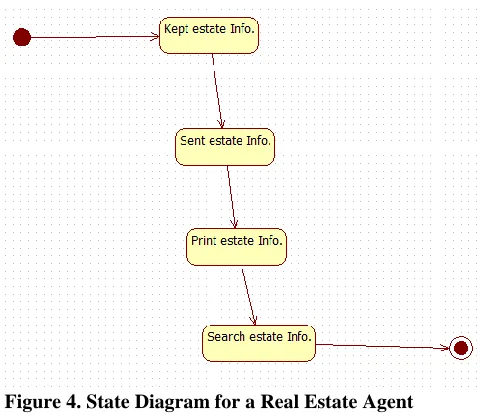
Figure 4. State Diagram for a Real Estate Agent System
AREI system kept, sent and print house information and
then search and show house information. The customer contact to AREI easily.
System
Sign a contact Provide estate information
Kept estate information
Sent estate information
Print and show estate information
Search and show estate information AREA System
Seller(Owner)
Buyer(Customer)
Specific customer Other customer Fill buyer form
Land
House Building
<<include>>
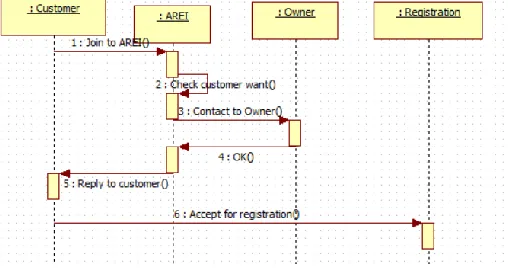
[image:3.612.36.292.443.585.2]Figure 5. Sequence Diagram for a Real Estate Agent System
When the customer contacts the AREI, AREI checks to itself for the type of estate and then inquires the owner. If OK, reply to customer. And then customer prepares data for registration.
Figure 6. A dependency between two classes
Figure 7. The transitivity of usage dependencies
Dependencies are really defined in UML by what
they are not: a dependency depicts a relationship between
model elements that is not an association or a
generalization or realization relationship.
.
The Unified Process defines a similar categorization of objects, by distinguishing boundary, control and entity objects. Entity objects, like model objects in MVC, are responsible for maintaining data, but boundary and control objects are characterized slightly differently from views and controllers. [image:4.612.313.541.194.360.2]Figure 8. Owner don’t permit for service to AREI
W
hen owner don’t want to service, the agency cannot service for owner’s estates.IV. RELATIONALDATABASE
A. System Description
MySQL: MySQL is an open source relational databases management system (RDBMS). SQL language is a domain specific language used in programming and designed for ranging data held in a relational database management system (RDBMS), or for stream processing in a relational data stream management system (RDSMS). It is particularly useful in handling structured data where there are relations between different editions variables of the data. SQL offers two main advantages over older read/write APLs like ISAM or VSAM. First, it introduced the concept of accessing many records with are single command; and second, it eliminates the need to specify how to reach a record, eg. with or without an index.
Database: Database systems focus on basic such as data models,
especially the relational data model, query languages, query optimization and processing, indicates and other specialized data structures, as well as transactions and concurrency control.
B. Integrity and Security
In the system, using permission control with “GRANT” and “WITH GRANT OPTION” controls commands keys which
privileges over which objects. ”REVOKE” option is to control which users have which privileges over which objects base tables and views. There are two classes asset sensitivity such as restricted and unrestricted. So, asset characterization helps data appropriately to ward protection assets. If specified, refers to that INSERTS and UPDTE on the view will be rejected if any integrity constraint implies by the view-defining expression. The view is also the chosen method to grant privileges on selected
row and column subsets, or to grant access, the user may define a view of the table and grant that view.
Grant Command
GRANT privileges ON object TO users [WITH GRANT OPTION].
The following privileges can be specified.
INSERT: (col-name): can insert tuples with null or non-default value in this column.
DELETE: can delete tuples
REFERENCES (col-name): can define foreign key (in other tables) that refers to this column.
If a user has a privilege with the GRANT OPTION, he can pass privilege on to other users.
(With or without passing on the GRANT OPTION) Only owner can execute
CREATE, ALTER and DROP
Revoke Command
If users A grants some privilege to some privilege to some other user B, user A can subsequently revoke that privilege from user B. Revoking privileges is done by means of the REVOKE statement- syntax.
REVOKE GRANT OPTION FOR]<privilege commalist>
ON <object>
FROM <user ID commalist><option>
Security refers to the protection of data against unauthorized disclosure, alteration, or destruction. Integrity refers to the accuracy or validity of that data. Security is enforced by the DBMS’s security subsystem, which checks all access requests against the security constraints stored in the system catalog.
In particular, the use of views to hide information, and the use of GRANT and REVOKE to control which users have which privileges over which objects base tables and views.
V. IMPLEMENTATIONOFSECURITYCONTROL
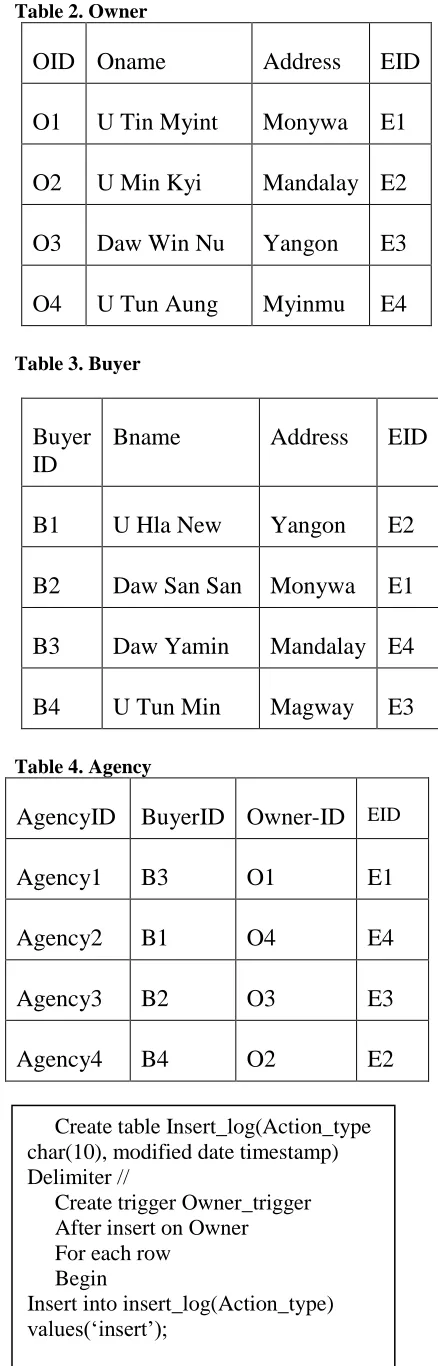
Table 1. Estate
EID
Street
Address
Price
E1
Main Street
Monywa
$10000000
E2
San Pya Street
Monywa
$0000000
E3
Yinmar Street
Monywa
$30000000
[image:5.612.333.552.58.741.2]E4
Thazin Street
Monywa
$25000000
Table 2. Owner
OID
Oname
Address
EID
O1
U Tin Myint
Monywa
E1
O2
U Min Kyi
Mandalay
E2
O3
Daw Win Nu
Yangon
E3
O4
U Tun Aung
Myinmu
E4
Table 3. Buyer
Buyer
ID
Bname
Address
EID
B1
U Hla New
Yangon
E2
B2
Daw San San
Monywa
E1
B3
Daw Yamin
Mandalay
E4
B4
U Tun Min
Magway
E3
Table 4. Agency
AgencyID
BuyerID
Owner-ID
EIDAgency1
B3
O1
E1
Agency2
B1
O4
E4
Agency3
B2
O3
E3
Agency4
B4
O2
E2
Create table Insert_log(Action_type
char(10), modified date timestamp)
Delimiter //
Create trigger Owner_trigger
After insert on Owner
For each row
Begin
Create the user with given passwords: user name ‘Agency’ and password access.
CREATE USER Agency identified by ‘Agency’;
In the system, using permission control with “GRANT” and “WITH GRANT OPTION” controls commands keys which privileges over which objects. If authority grants to permit, agency can service.
”REVOKE” option is to control which users have which privileges over which objects base tables and views If authority revoke to permit, agency cannot service.
VI.CONCLUSION
One of the aims of this paper is to provide information about A Real Estate Agent and activities for businesses in citywide. The system implementation is performed by the
GRANT permission for data security for the owner in this paper. This system is suitable for checking of integrity and security for the owner. Agency also can service between the seller (owner) and the customer (buyer).
REFERENCES
[1]http://www.researchgate.net/publication/242486128.”An Analysis of Unified Modeling Language9UML) Graphical constructs based on BWW Ontology”
[2]”Application of Unified Modeling Language (UML) to the modeling of health care systems: an introduction and literature survey,”Christers Vasilakis”,University College London, “Dorota Lecnzarowicz”,University of West minster, “Chooilee”,Kingston Hospital NHS Trust
[3] C.BRITTON & J.DOAKE,”Object-Oriented Systems Development”: a gentle introduction,” University of Hertfordshire and Anglia Polytechnic University, International Edition 2001, ISBN 0-07-7095448, p.1 to 4
[4] J.Rumbaugh, I. Jacobson and G-Boach,”The Unified Modeling Language User Guide, ”Second Edition, ISBN 0201571684, Addison-Wesley object technology series MAY 2003:p-33
[5]CJ.DATE,” An Introduction to DATABASE SYSTEMS, “7th
edition, canada, 2000
[6] Mark Priestley, ”Practical Object-Oriented Design With UML, ”Second Edition, International Edition, ISBN 0077103939,2004 using Chapter 1.”Introductio to UML,” Chapter 4”,Business Modeling,” Chapter 8,”Class and Object diagram,” Chapter 10,”Statecharts diagrams.”
[7] R. Baran, Depaul University, Chicago, C. Zerres, Universitat Kassel ,Michael Zerres, Universitat Hamburg, ”Customer Relationship Management”,”bookboon.com”Applications are now open for entry in September 2011.
[8]“Towards UML represtntation for BPMN and DMN models”,”Anna Sucheria”, Cracow University of Technology, ul. Warszawska 24,31-155 krakow, Poland, “Pawel Lopata”,”Piotra Wisniewski”, and “Bernadetta Stachura-Terlecka”, AGH University of Science and Technology, al. A. Mickie wicza 30,90-059 Krakow, Poland
[9] https://nationalgovernment. Co-za/-/estate agency-affairs-board -of-so
[10]http://www.hindawi.com/journals/sp/2019/2542686/ [11]https://www.Mother’s House-wn Estate Agent