September 2008
2005-2010 Centres
of Excellence in
Teaching and
Learning programme
Formative evaluation report to HEFCE by the
Centre for Study in Education and
Training/Institution of Educational Technology
Professor Murray Saunders, Dr Joan Machell, Dr Sadie Williams, Dave Allaway, Abby Spencer, Dr Paul Ashwin, Professor Paul Trowler, Dr Joelle Fanghanel, Dr LesleyAnn Morgan and Dr Anne McKee.
Contents
Executive summary ... 4
Introductory remarks ... 4
Effects of reward and recognition ... 4
Deepening effects ... 6
Stakeholder perspectives... 8
Formative issues for the management of the project ... 9
1.0 Introduction ... 11
2.0 Our formative evaluation enquiries... 15
3.0 Summary of themes arising from evaluation activities... 16
3.1 Key informant interviews ... 16
3.1.1 Introduction ... 16
3.1.2 What is working well ... 17
3.1.3 What is problematic ... 18
3.1.4 What are the priorities for the next three years? ... 20
3.1.5 Making a difference to learning quality ... 21
3.1.6 Theme 1: Fostering systemic change in learning quality... 22
3.1.7 Theme 2: Dissemination ... 23
3.1.8 Theme 3: A managed programme... 23
3.2 Overview from HEI senior managers ... 25
3.2.1 Introduction ... 25
3.2.2. Findings: VCs at institutions with one or more CETLs ... 25
3.2.2.1 Principal reasons for submitting a proposal for a CETL ... 25
3.2.2.2 Strategic role of the CETL within the institution ... 25
3.2.2.3 The rationale for the CETL programme as a national strategy... 26
3.2.2.4 Strengths and weaknesses of the national CETL programme ... 27
3.2.2.5 Benefits and disadvantages to the institution of having a CETL... 28
3.2.2.6. Future of the CETL after the funding stream ends... 29
3.2.2.7. Other comments... 30
3.2.3 Findings: Senior managers at institutions which had made unsuccessful bids... 30
3.2.3.1. Principal reasons for submitting a proposal for a CETL ... 30
3.2.3.2 Intended strategic role of the CETL within the institution... 30
3.2.3.3 The rationale for the CETL programme as a national strategy... 31
3.2.3.4. Strengths and weaknesses of the national CETL programme ... 32
3.2.3.5. Disadvantages to the institution of not having a CETL ... 33
3.2.3.6. Intention to bid again if the opportunity is offered ... 34
3.2.3.7. Other comments... 34
3.3 The partners’ perspective ... 35
3.3.2 Background Information... 35
3.3.3 Reward and recognition ... 36
3.3.4 Funding ... 37
3.3.5 Learning and teaching benefits derived from the recurrent spend ... 38
3.3.6 Perceptions of the community ... 38
3.3.7 Effects of CETL on partner institutions ... 39
3.3.8 Overall benefits of participation in the CETL ... 40
3.3.9 Other comments ... 41
3.4 CETL case study visits ... 42
3.4.1 Introduction ... 42
3.4.2 The findings: the meta themes from the visits ... 44
3.4.2.1 Recognition and rewards ... 45
3.4.2.2 Influence and effects of the CETLs ... 51
3.4.2.3 The challenge of sustainability ... 63
3.4.2.4 Other issues ... 69
3.5 Surveys and interviews with CETL Directors ... 76
3.5.1. The scope ... 76
3.5.2 Methodology ... 76
3.5.3 Characteristics of CETLs ... 77
3.5.4 Survey analysis... 79
3.5.4.1 Capital spend ... 79
3.5.4.2 Relationship of CETL to institutional strategies ... 84
3.5.4.3 Support from senior management... 88
3.5.4.4 Main activities of the CETL ... 91
3.5.4.5 Current development of the CETL ... 93
3.5.4.6 Current achievements ... 94
3.5.4.7 The CETL programme as a strategy for change... 97
3.5.4.8 Other issues ... 100
3.5.4.9 Summary of the survey of CETL Directors ... 101
4.0 The review of the self evaluation reports... 105
4.1 Introduction ... 105
4.2 The approach... 105
4.3 A word about the evidence provided ... 107
4.4 Leading and embedding change ... 107
4.5 Addressing diverse needs in diverse contexts ... 107
4.6 Institutions developing understanding of ways of supporting students’ learning... 108
4.7 Raising the profile of teaching excellence – institutionally... 109
4.8 Raising the profile of teaching excellence – across the sector... 110
4.9 Encouraging debate, sharing ideas and practices about teaching, learning and assessment across the sector... 110
4.11 Reward and recognition of excellent practice... 112
4.12 Additional aims... 112
4.13 Any significant changes to approach ... 112
4.14 Reflections on overall CETL strategy ... 113
4.15 Summary comment... 115
5.0 Formative overview ... 117
5.1 Overall ... 117
5.2 Relationship with host institution ... 120
5.3 Issues in the management of the programme... 120
Appendix 1: The national evaluation of CETLs formative approach ... 123
Appendix 2 : Proforma for analysis of X CETL (Institution(s)) ... 126
Acknowledgements
We are grateful to colleagues from England, Northern Ireland and elsewhere who acted as key informants and helped identify issues to look at closely.
We also thank CETL staff who completed our questionnaire and those who gave up even more time to participate in our case study visits.
Thanks, too, to those who took pictures of their Centres and posted them on the CETL national evaluation website, as well as to others who supplied us with podcasts.
Following our principle that no person would be identified without first consenting, these colleagues who have helped us so much remain anonymous.
The evaluation team would like to dedicate this report of its work to Peter Knight who died suddenly in April 2007. Peter was co-director of the evaluation. His contributions were immense and he will be hugely missed.
Executive summary
Introductory remarks
1. This is the Summary Report of the independent evaluation of the national CETL programme synthesising all evidence gathered during the period between March 2007 and January 2008. The Summary Report can be read in conjunction with the Extended Report which contains a detailed analysis of the complete data set. It provides a formative account of the CETL programme experience and effects at a three year point in its duration.
2. The CETL (Centres for Excellence in Teaching and Learning) programme is an investment of some £315 million pounds over five years from 2005-2010 by HEFCE in the enhancement of learning, teaching and other aspects of curriculum. It established 74 Centres in England to reward and
recognise excellent teaching in a variety of disciplines and cross-disciplinary practices. In England this investment is an intensification of the work undertaken under the teaching quality enhancement fund. According to HEFCE,
The purpose of CETLs is to reward excellent teaching practice and to invest in that practice further in order to increase and deepen its impact across a wider teaching
and learning community1.
The key phrase in this extract is emboldened to emphasise that the CETL programme was designed as a strategy to maximise the impact of excellent practice across the whole sector. The key
metaphoric phrase ‘deepen its impact’ signals this intention clearly. There are other ways of
accomplishing these effects so we can suggest that this particular intervention (the use of Centres for Excellence) had within it the embedded assumption, or theory, that creating and reinforcing existing good practice through CETLs would deepen impact. Guidance2 on evaluation circulated by HEFCE on the evaluation approach adopted by HEFCE made similar claims.
3. This report provides analysis of evidence from the following sources:
Key informant interviews (22)
• Interviews with senior managers of higher education institutions (22)
• Interviews with partners of lead CETL institutions (10)
• Visits to CETLs undertaken since the beginning of the evaluation (36 CETL visits, 698 respondents)
• Survey of CETL Directors (86% response rate)
• The overview of the CETL self evaluation reports submitted at the end of July 2007 (74 reports).
Effects of reward and recognition
4. The various dimensions of this evaluation reveal an overall positive narrative for the development of the CETLs as ‘nodes’ of teaching- and learning-focused activities. Notwithstanding the tendency for newly formed entities like CETLs to have a strong sense of emerging identity, internal culture and excitement, the data points to a range of positive effects the existence of the CETL programme has enabled. As this report suggests, these effects tend to be circulating around the direct beneficiaries of CETL resources but there is growing evidence that effects are beginning to move out from the enclaves of practice within CETLs and, in some cases, are being used to strategic effect within institutions.
4
1
http://www.hefce.ac.uk/pubs/hefce/2004/04_05/#exec
2
Overall, we can identify some supportable but provisional propositions concerning the effects of reward and recognition through the CETL programme:
a) All CETLs have enriched and extended the expertise of teaching practitioners and fellows through reward and have experimented in an innovative way with aspects of teaching and learning such as course content, learning process and assessment. The longer-term influence and potential of this enrichment is difficult to estimate but may be important in developing a cadre of ‘extended’ professionals through which increased priority is given to teaching and learning
b) A large proportion of CETLs have had effects in pockets where optimum ‘deepening factors’ (see below in point 7) are present
c) There is a strong message from the senior managers and key informants that the relative autonomy and ‘loosely coupled’ nature of the programme, has some downsides. They talk of missed opportunities to coordinate, rather low visibility in terms of ‘impression management’ and a difficulty in capitalising on the collective outputs and learning of the programme as a whole
d) The existence of a CETL in an institution and its associated injection of resources have enabled good practice to develop further. For example, pedagogic research opportunities, small-scale development projects, new curriculum designs, experiments with new
methodologies, professional development and support for dissemination
e) Capital spend has been a visible and iconic symbol of a shift in attention toward teaching and learning. Some senior managers were able to use the attraction of serious resources into the institution from a teaching rather than research imperative as a way of improving the status of teaching and learning within institutions. In this sense the ‘recognition’ dimension of the strategy is working subtly to reposition the status of teaching practitioners
f) There are signs that the time-limited rewards associated with the programme may have prompted or supported some systemic changes in the way academic career paths and routes within higher education (HE) teaching are understood and designed
g) The focus on pedagogic research within CETLs has highlighted the uneasy relationship between three dimensions of University practice:
i. active research within a discipline or cluster of disciplines (traditional research-based practice)
ii. how that research-based knowledge is reproduced through teaching and learning programmes (teaching and learning practices embedded in courses)
iii. the pedagogic knowledge (produced through research or experientially) which may or may not have a disciplinary boundary.
h) Pedagogic research has an uncertain status in some quarters with its legitimacy and the legitimate position of its proponents, being questioned. The main critique is that separating out pedagogic research within a discipline from its disciplinary research base is unsound, i.e. the emergence of academic teachers who teach within a discipline and have pedagogic expertise, but are not active researchers within the discipline, is antithetical to the core purpose of HE
i) These polar positions are probably not helpful, however. The dominant position held by most interviewees was more integrative with a view that any University academic should be supported in the development of their own pedagogic expertise which could involve pedagogic research (see point 25 below)
j) As an embedded theory of change, the idea of a CETL programme does have its critics. The focus for the critique does not lie in whether or not CETLs have worked to produce further positive developments by those in receipt of new resources and attention (reward and
recognition). The critique points to the sub-aim of the programme to ‘deepen its impact across a wider teaching and learning community’. Senior managers (Chancellors, Pro Vice-Chancellors and key informants) pointed to the difficulties of using the CETL experience to deepen its effects within institutions and across the sector. They argue that there is no necessary connection between wonderful practice within a CETL and the chances it might
have for wider engagement unless there is an explicit ‘engagement strategy’. The message is to concentrate on ‘engagement’ as well as increased activity
k) CETLs are part of a general shift in the backdrop of priorities, emphases, seriousness and awareness within HE over the last 10 years or so associated with teaching and learning. The ‘gamble’ that reward and recognition would give teaching and learning a serious boost within the sector may have yielded a strategic dividend. This has also coincided with other important changes where the quality of teaching and learning have been foregrounded (for example, changes in fee structure sensitising students to good and bad quality of teaching and the National Student Survey being, as it is, a public estimation of teaching quality that can be broken down to individual courses and thus members of staff).
l) However, a minority of CETLs have had profound effects on institutional policy and practice, particularly in cross-disciplinary areas e.g. work based learning, assessment, student learning processes and student support, and have begun to influence the wider teaching and learning community
m) Where good links with the appropriate Higher Education Academy Subject Centres and other strong networks exist along with a strategic approach to engagement, CETLs have begun to enrich teaching in their discipline or their area of focus across the sector
n) At this stage, many CETLs have had little or no effect on institutional practice outside the immediate CETL beneficiaries.
Deepening effects
5. The trajectory of the programme overall is complex. However, interviews with senior managers of institutions that host CETLs suggest a mixed, although overall optimistic, picture of CETLS’ propensity to ‘deepen’ the effects of excellent practice. It is justifiable to say, on the basis of the evidence
collected during this evaluation, that only a relatively small proportion of senior managers were able to point to their CETLs as embedded in or providing leadership to the strategic direction of the
institution’s teaching and learning strategy. Most commented on its relatively ‘enclaved’ (self-contained clusters of practices) state at present and saw a need for a more integrative approach going forward.
At institutional level, factors that enable the deepening effects of excellence enshrined in CETLs include:
a. Active rather than rhetorical connections to, and support from, institutional policy makers and the strategic planning process
b. Representation of CETL staff on institutional decision-making bodies
c. CETL activities that have a cross-disciplinary rather than uni-disciplinary focus (although we heard a convincing argument that there was nothing intrinsically uni-disciplinary about creative and excellent teaching simply because it takes place in a single discipline. It is often a matter of creatively reconstructing some core dimensions such that they can ‘travel’ across the disciplinary landscape)
d. CETLs that have a robust framework of systemic or networked connections to other institutions or partners
e. The pre-existing framework for reward and status within the institution that acted favourably toward teaching excellence
f. The strength and dominance of traditional incentives for reward within the institution (promotion based mainly on research output)
g. The status, success, recognition and priority of existing practices and frameworks constructed to support, enhance and reward teaching (e.g. Centres for Teaching and Learning within institutions)
h. A relatively sophisticated approach to strategies of external engagement with the work and outputs of the CETL on a continuum from information-giving to active engagement strategies
i. The scope of pedagogic research as an authentic support for claims of ‘better learning’. We offer the broad range of approaches to pedagogic research on a continuum of from relative informality to traditional ‘scientistic’ designs
6. There is evidence from visits, interviews, survey and the self evaluation reports that the relationship between individual CETLs and their host institutions is a critical factor in moving from relative self-containment to wider effects. In some cases, CETLs could show that their connection to a wider disciplinary constituency was stronger than with their own institution. The survey data shows that 42% of CETL Directors considered they had only some or no support from senior managers and 39% discussed progress solely through steering groups or stated that senior managers had little
knowledge of the activities of CETLs. Over three quarters (79%) of CETL Directors did not know or had nothing agreed or had been told there would be no resource support for the CETL after the funding period. Clearly this may change as the funding period enters this next phase. While not overwhelming, the evidence shows a mixed picture concerning support and strategic thinking with respect to CETLs’ role and function (both potential and current) within institutions. Inevitably some institutions and their CETLs have an uneasy relationship when capital spending is considered in a longer term timeframe. The relative autonomy of CETL decision making (often based on teaching, learning and reward criteria) does not always sit easily with institutional or corporate approaches to course design and validation, budgeting, estate management and use of space.
7. Uncertainty about futures, lack of integration and a degree of hesitation about longer-term strategic value characterises a significant minority of CETLs. Clearly there is a challenge in seeking cross-institutional relevance from a CETL with a strong disciplinary focus. However, many of the experiences of CETLs do have more generic teaching and learning relevance (e.g. assessment processes, student support practice, reflective learning, employability themes and engagement with the wider community). The strategic implication of these findings is that if CETLs are to have lasting effects, a concerted effort may be required to discuss with host institutions the way in which the work of the CETL might be institutionalised so that they may play a more robust role within institutions. In terms of the model of an innovation trajectory we are using to depict CETLs as a change strategy, we can depict the current state of affairs in the following way.
Figure 1: CETLs in relation to a national change strategy
Awareness
Initial stages of development involve wider emerging institutional awareness and interest in knowing more, thinking of implications for the institution or for other networks, such as
subject or regional ones, and initial awareness of innovative practice embodied in the CETL and engagement strategies that begin to establish new bridgeheads
Exploring wider effects
Some CETLs are beginning to move forward by involving wider emerging awareness and interest in knowing more. They are thinking of implications for the institution or for other networks, such as subject or regional ones, more attention on the impact on students,
staff, departments and whole institution of new practices and processes, relevance, evaluation and implied changes. At this stage, attention is on difficulties in the processes
and tasks involved in developing new practices, processes and systems Adaptation and extension
We might expect, toward the final period of funding for the CETLs, that they begin to experience activity at what we understand as adaptive extension where attention is now on
adaptation, major changes, alternatives to original ideas and creativity. This opens up the possibility of increased coordinating and cooperating with other stakeholders in using new
practices, systems and processes
8. Issues associated with the capital spend and the appointments of appropriate staff have been the most frequently cited problems as CETLs have started up. Delays with both have resulted in some false dawns, or as one respondent put it, “a phoney war creating a bit of a hiatus”. As we note above, the evidence from the CETLs suggests the next period might focus more explicitly on wider
dissemination and engagement (nationally and internationally, within and without the CETL network) of its successes and contributions to thinking on teaching and learning.
Stakeholder perspectives
9. Practitioners tend to see the reward dimension of the CETLs in comparatively modest terms of providing opportunities not normally available to them in the context of their routine practice. For example: being able to carry out research in a more systematic and less ad hoc way; having the funds to allow them to go to conferences; being able to network and build up contacts. Interestingly, in an initiative designed to enhance the status of teaching, practitioners involved in CETL activity refer to the reward of being able to undertake research (albeit pedagogic research) as a way to possibly advance their careers – research still being regarded by them as the main route to career advancement and promotion.
10. Another group of ‘practitioners’ whose roles have become increasingly important for many of the CETLs are support staff and, in particular, learning technologists. The latter are taking on key roles in those CETLs where new forms of technologies are being exploited for teaching and learning. It may be that CETLs, or their institutions, might wish to consider how their contribution to the CETLs can be appropriately rewarded.
11. It may be the case that the focus on the enhancement of teaching and learning, and the reward component of involvement with a CETL, is different in the more research-intensive universities, moving more toward a focus on teaching whilst post-’92 institutions are more likely to be rewarded by being given opportunities to carry out research. For practitioners, the CETLs may be more about reward (opportunities to take part in new activities or to develop areas of interest) rather than recognition (in the form of promotion for teaching excellence). It should also be noted that for a number of practitioners, the reward aspect of CETL involvement is slightly diminished by the fact that it entails extra work for them because not all teaching staff are being given adequate time by their departments from their ‘core’ practice to enable them to meet the extra commitments of CETL activities.
12. CETL team members are more likely to see CETLs in terms of both reward (for example, funding to develop innovative approaches to teaching and learning) and recognition. The rewards include being able to develop existing activities or to try out innovative pedagogical approaches. Also, being awarded a CETL has tangible status and carries the sense that it is a reward for being ‘special’ in terms of teaching excellence (this notion, as one of the Vice-Chancellors pointed out, is diminished in those institutions where wholesale appointments from outside the institution were prompted on receipt of CETL funding). This stakeholder group are more aware of the potential of the CETLs to raise the status of teaching as a career path in its own right. As we note above, CETLs are seen as key strategic players in the development of policies, in many universities, for more structured career pathways for those who excel at teaching
13. Middle and senior managers tend to see the CETLs as providing reward both in terms of wider opportunities to those involved (research, conferences etc) and, possibly, the reward of boosting career prospects. The latter depended very much on institutions' own human resources policies (there were dislocations in some universities) but there seems to be a where the development of clearer promotion and career pathways for teaching within many institutions is taking place. CETLs are seen by senior managers as contributing effectively to this agenda.
14. The accumulative effect of the strategies of government (since 1997) is creating a sea-change as a greater focus on teaching and learning has been prompted by the Dearing Committee Report3. The cultural positioning of teaching and learning within Universities has shifted and the landscape is very different to that of the early 1990s. As part of this shifting backdrop, CETLs are playing a role. This strategy, for even those Vice-Chancellors who failed to procure funds, is understood in terms of its capacity to encourage enrichment, experimentation and to act as a way of foregrounding the focus on teaching and learning.
15. There was a theme developed by all stakeholders that suggested the danger of ‘project’ approaches to funding (i.e. what will the legacy be once funding stops?). This might be a particular problem for smaller institutions. Issues of sustainability we discuss in detail below, but the same argument might hold for any injection of cash if the recipient is unable to think creatively about how it might be used. At the moment, the evidence suggests that institutions really need to think more
8
3
strategically about the future. Interestingly, all those senior managers who had not been successful did not sustain an in-principle objection to the strategy if a new opportunity to bid were to arise. 16. A summary of the review of 74 self evaluation reports reveals a rich array of analytical descriptions of individual CETLs’ work. They have formative potential in identifying potential adjustments, successes, challenges and orientation for the next period, and function as a public account of the achievements of CETLs, adopting, as they do, an affirmative stance. As outputs from evaluations, the reports may be characterised in the following way:
• They contain wide variations in data and empirical bases for estimations of value and worth
• They tend to focus on activities rather than more systematic data or evidence-led conclusions
• There is wide variation in report structure.
17. When considering the strengths of the strategy overall, CETL reports identified that the programme had provided a momentum for change in the recognition and status of teaching and learning within institutions, providing the following opportunities:
• The opportunity to network and develop collaborations
• The opportunity to experiment, research, risk-take and trial teaching and learning innovation
• Develop cross-institutional profile
• Raising engagement
• Undertaking professional development.
18. When considering the weaknesses of the strategy overall, CETL reports identified that in
reporting the work of CETLs, there was a problem of attribution, i.e. changes are difficult to attribute to CETL activity because of the variety of intervening variables that might be relevant. Other issues were:
• Resourcing
• Institutional context and joined up thinking
• Longer-term futures and sustainability.
19. The evaluation reports were focused mainly on reporting the level of activity in which each CETL had been involved since they were established. In the majority of cases, the fact that activities had occurred was the main evidence of effect within the report. Of the 1181 instances of activities reported by the 74 CETLs, 845 (72%) did not provide evidence of effect as such. This leaves 336 (28%) activities which included some form of evidence of effect. Of that group, 149 (44%) based their evidence on feedback from staff, students or employers, and in three cases the evidence of
effectiveness was based on an external examiner report, documented changes to the curriculum, and an improvement in student performance in tests.
Formative issues for the management of the project
20. The evidence suggests that the management of the programme has attracted some observations, particularly from the most senior of our group of key informants (through the early interviews with strategically placed individuals and the most recent interviews with Chancellors and Pro Vice-Chancellors). As in other interventions in the higher education sector in the UK, the relative autonomy of a higher education institution is a factor that shapes the ‘consensual’ approach to change. The tradition of deliberate strategies to change and enhance learning and teaching in higher education in the UK has a relatively short history. Traditionally, its legitimacy among numbers of academics has been uncertain. Central or cross-disciplinary standards, approaches, suggestions and development have run up against the canon of concerns traditionally held by academics. So, academics do not appreciate a heavy central steer on practices that have been very much the local preserve. Managing national interventions in HE within the UK context then has involved a delicate balance between standard programme management and the light touch approaches developed over the past 8 years that acknowledge the relative autonomy of institutions.
21. In the case of the national management of CETLs, the evidence does suggest that the
institutions have taken a while to relinquish expectations that HEFCE will be adopting a more vigorous
form of management or coordination and that they have encouraged a relatively open brief to achieve their own aims. This said, there was evidence that senior managers and the CETL teams themselves might appreciate a more central strategy associated with cross-CETL themes, external visibility and wider dissemination. Any increase in central role will have resource implications.
22. Is there a general case for cross-CETL coordination? We find in the evidence that
stakeholders placed hope in the self-organising networks, nationally or within a region; some looked to links with Subject Centres or professional bodies and a minority saw a role for the HEA more generally. Yet the networks are not organised to represent the programme as a whole, Subject Centres are not generously funded or staffed and respondents pointed to some unevenness about the HEA Subject Centres in relation to the CETL programme. There may be a need for a more cohesive framework for the CETLs – but without falling into central management. Cross-CETL connections, focusing on generic areas of interest (reflective learning, students as researchers, active learning, pedagogic research planning, engagement with employers, learning support mechanisms) might be enabled through central coordination. Among the ‘common denominators’ were, for example:
• How to develop new partnerships to promote creative learning and teaching practices
• The development of digital and web-based resources
• Involving students in working with external agencies/employers/partners.
23. Is there a specific case for cross-CETL discussion on pedagogic research? Where pedagogic research projects are under way (83% of CETLs are engaged in this activity), the evaluation team did not note many examples of pedagogic research activities feeding directly into teaching practices at this stage. The team is not yet in a position, therefore, to comment on the extent to which pedagogic research is filtering through to practice. One emerging theme, however, is the extent of variation in understanding of the practice of pedagogic research. The pedagogic research (PR) practices that are emerging are diverse and will form the basis of evocative typologies based on method, formality, situatedness and generalisability. The dominant mode is one of individual
investigations into student learning or support for learning with the contradictory characteristics of high situated relevance and relatively low generalisability. This point however is hotly debated relying as it does on a traditional ‘science’ model of generalisability. The alternative view sees such situated embodiments or experiments of a less formal kind as useful and evocative examples of what can be done based on a more action-oriented, more collaborative view of research.
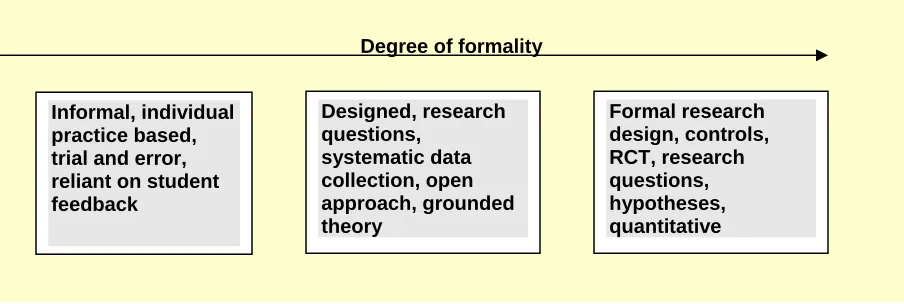
[image:11.595.72.524.560.712.2]What is important, however, is not to encourage a kind of spurious research ‘gold standard’ based on random controlled trials (RCTs) or something akin, but to make sure the status, value and use of PR is clearly understood and articulated, whatever its methodological inclinations. Evidence from all our enquiries (key informants, visits, surveys and self evaluation reports) suggest the possibility of a more engaged and cross-fertilised approach to the pedagogic research practices that are emerging. Figure 2 identifies the main types of pedagogic research, grounded in practice, with the most dominant mode on the left. In the broadest sense, the continuum is based on relative formality with the situated informal ‘trying and testing’ research on the left (almost indistinguishable from ‘development’) and the more traditionally positivistic model (very few examples of this) on the right.
Figure 2 Types of pedagogic research in practice
Degree of formality
10 Informal, individual
practice based, trial and error, reliant on student feedback
Designed, research questions,
systematic data collection, open approach, grounded theory
Formal research design, controls, RCT, research questions, hypotheses, quantitative
took seriously the idea of formative evaluation, allowing individual CETLs to own and control their own formative reports alongside the formative evaluation at a national level. While the reports were replete with evocative and fascinating accounts of activities, what is important to note is that many of the CETLs did not refer to evidence collected systematically which could act as an independent resource for judgement. In these circumstances, the self evaluation reports overall tended to merge an
estimation of worth with the successful completion of an activity to which there was a positive reaction.
25. In other words, evaluations tended to emphasise evaluations of the experience of an activity. This might be understood as a first step in evaluation i.e. without an activity taking place or numbers of individuals taking part no effects could be expected. However, a reader is still not able to discern on what basis the activity is considered to have produced or not produced desired outcomes or positive effects of a wider nature. In this second period of development, a refocus of evaluative practice to include a focus on new learning or new practices at individual or systemic levels might be useful, including a more transparent evidential base for a wider audience.
1.0 Introduction
1.1 The Centre for the Study for Education and Training (CSET) and the Institute of Educational Technology was commissioned by HEFCE in January 2007 to conduct the interim, formative evaluation of the Centres of Excellence in Teaching and Learning (CETLs) programme. 1.2 This report presents a synthesis of the evidence obtained through the period of evaluation between March 2007 and January 2008.
1.3 The CETL programme is an investment of some £315 million by HEFCE in the enhancement of learning, teaching and other aspects of curriculum. This investment is an intensification of the work done under the teaching quality enhancement fund. According to HEFCE,
The purpose of CETLs is to reward excellent teaching practice and to invest in that practice further in order to increase and deepen its impact across a wider teaching and learning
community.4
The key phrase in this extract is in bold text to emphasise that the CETL programme was designed as a strategy to maximise the impact of excellent practice across the whole sector. The key metaphoric phrase ‘deepen its impact’ signals this intention clearly. There are other ways of accomplishing these effects so we can suggest that this particular intervention (the use of Centres for Excellence) had within it the embedded assumption, or theory, that creating or reinforcing existing good practice through CETLs would deepen impact. Guidance5 on evaluation circulated by HEFCE on the evaluation approach adopted by HEFCE made similar claims.
One of our key objectives in designing the programme-wide evaluation is to ensure that it takes account of the complexity of the learning and teaching process and of how excellence is viewed and disseminated. The CETLs do not stand alone. They are potential catalysts for
change and innovation within institutions and throughout higher education; they bring both opportunities and risks in their recognition and reward for excellence. We believe
it is important that evaluation of the CETL programme should examine intended and unintended consequences, and seek to uncover processes that will support better
understanding of the relationship between excellent teaching and student learning, and the interplay between pedagogic research and scholarship and learning and teaching ‘on the ground’.
1.4 The evaluation, therefore, focused on the purpose of the reward strategy which was that CETLs should enrich and reward existing good practice in the belief that it would create wider impact across the higher education (HE) learning community. We suggest that investment in CETLs has an
embedded theory of change that was developed by HEFCE during preparatory meetings held by the
11
4
http://www.hefce.ac.uk/pubs/hefce/2004/04_05/#exec
5
CETL evaluation network chaired and supported by HEFCE and the Higher Education Academy (HEA). The presentation by HEFCE contained the following ‘theory’ of CETL development
• Excellent teaching contributes to excellent learning
• Reward and recognition encourage the enhancement of teaching quality, over and above the impetus provided by staff’s general commitment to doing good work
• Recognising individual and institutional excellence in teaching and learning promotes excellence across the sector
• The sector is proud of its semi-autonomy, has complex cultures and affiliations and is
accustomed to generating its own momentum. Therefore, a relatively light touch is most likely to yield improvement
• Change is brought about by complex causal mechanisms (what Evert Vedung6 has called using ‘carrots, sticks, sermons and partnerships’) but also by the convergence of many long-term and short-long-term factors (opportunity, funding, policy change, new appointments)
1.5 The strategy for the evaluation of CETLs reflected their broad purpose as outlined above and was shaped by this embedded ‘theory of change’. Therefore, the formative evaluation work described in our original proposal had the main focus of providing formative feedback on the extent to which the CETL strategy of rewarding and enhancing excellence is achieving its intended effects of encouraging and inspiring positive changes in teaching and learning in the HE sector as a whole. In particular, we aimed to describe:
• Unanticipated or unintended effects that can be construed both positively and negatively
• The ‘light touch’ HEFCE has adopted towards the management of the CETLs and the relationships that have developed with agencies, such as the HEA, which have sought to broker CETL networking
• Lessons that might inform the second phase of the CETL evaluation and any developments in the CETL programme
• To create a strategic commentary on the extent to which the programme has developed a significant presence within the institutions in which they are placed and to become influential beyond their institutions and pedagogic areas
• To comment on the effectiveness of the programme in supporting and furthering the aim of HEFCE in its strategic thinking about learning and teaching support and improvement. 1.6 In order to capture the way the CETL programme might ‘deepen’ the effects of excellent practice, we identify what we call a series of ‘mechanisms’ adopted by CETLs to both extend and reward their own excellent practice, for example:
• Providing opportunities for visiting practitioners or fellows working with teachers and students
• Awarding bursaries and grants for staff and students to undertake pedagogic research. This appears to be a common mechanism, so we are especially interested in means by which its effects filter through to practice
• Offering bursaries and grants for staff and students to experiment with new learning opportunities and curricula
• Organising and supporting events (workshops, seminars, professional development activity) undertaken to disseminate innovation
• Developing digital and web-based events, affordances and other resources
• Establishing partnership arrangements designed to widen opportunities and promote creative teaching and learning practice
• Making creative and efficient use of buildings, plant and equipment.
1.7 There is however, a sense in which the CETLs may be operating at a level which is greater than the sum of their parts (mechanisms). By this we refer to the way in which the programme might be repositioning teaching and learning (T&L) practices at institutional and sector levels in ways that were
12
6
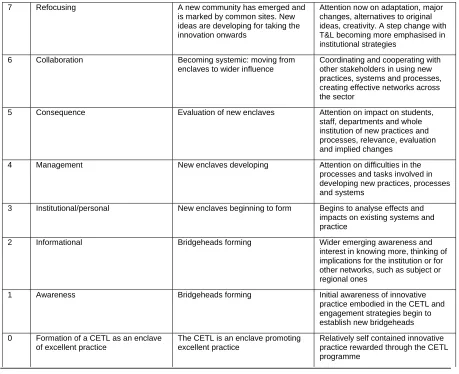
difficult to precisely determine or predict. It may, for example create ‘ripple’ effects through recognition that are creating a shift in the way T&L practitioners are being rewarded and resources and attention might be flowing toward T&L. We offer the framework below for understanding the way in which reward and recognition through CETL mechanisms might create ‘deeper’ effects across institutions and the sector. The model suggests that at the outset of the CETL programme, excellent practice was essentially taking place in pockets within institutions and it is these pockets of practice that have been rewarded. We use the metaphor of an ‘enclave’ to depict these pockets of excellent practice. The process of deepening, we argue, involves the principles, ways, means and approaches that constitute excellent practice moving out from these pockets or enclaves of practice and influencing the wider case. To have deeper effects therefore would involve the programme as a whole shaping practices at the consequential (5), collaborative (6) and refocusing (7) levels in the table below.
Table 1: Innovation trajectories, below summarises our framework
7 Refocusing A new community has emerged and
is marked by common sites. New ideas are developing for taking the innovation onwards
Attention now on adaptation, major changes, alternatives to original ideas, creativity. A step change with T&L becoming more emphasised in institutional strategies
6 Collaboration Becoming systemic: moving from enclaves to wider influence
Coordinating and cooperating with other stakeholders in using new practices, systems and processes, creating effective networks across the sector
5 Consequence Evaluation of new enclaves Attention on impact on students, staff, departments and whole institution of new practices and processes, relevance, evaluation and implied changes
4 Management New enclaves developing Attention on difficulties in the processes and tasks involved in developing new practices, processes and systems
3 Institutional/personal New enclaves beginning to form Begins to analyse effects and impacts on existing systems and practice
2 Informational Bridgeheads forming Wider emerging awareness and
interest in knowing more, thinking of implications for the institution or for other networks, such as subject or regional ones
1 Awareness Bridgeheads forming Initial awareness of innovative
practice embodied in the CETL and engagement strategies begin to establish new bridgeheads 0 Formation of a CETL as an enclave
of excellent practice
The CETL is an enclave promoting excellent practice
Relatively self contained innovative practice rewarded through the CETL programme
1.8 CETLs are a novel strategy for learning quality enhancement7, complementing other work that has been supported by HEFCE’s teaching quality enhancement fund (TQEF), including the development of institutional learning and teaching strategies, the national teaching fellowships (NTFs), the learning and teaching support network (LTSN) and the HEA. The evolution of these strategies is depicted in Figure 1.
They give credit to a commitment to teaching enhancement at a time when the research assessment exercise might have distracted attention from teaching. Not only are they intended to recognise and reward teaching excellence, they are also intended to stimulate its spread and, in the process,
7
The ultimate aim, represented in HEFCE’s teaching quality enhancement fund, for instance, is to affect student learning outcomes. Teaching quality enhancement is a means to that end. In this report we intend learning enhancement to subsume curriculum and teaching enhancement.
encourage innovation. Consequently, in the words of one of our key informants, there is ‘quite a lot of freedom on the focus used by institutions and on what they do over the five years’. Indeed, HEFCE and the department for employment and learning in Northern Ireland (DELNI) have insisted that this is not a ‘managed programme’, as the LTSN, for example, was. For a full exposition of our approach to this formative evaluation see Appendix 1.
Figure 1: HE change strategies since mid 20th Century
Each of these strategies had embedded theories of change
Change through categorical funding (e.g. Enterprise in Education)
Change through focused funding (e.g. FDTL projects)
Change through non-specific discipline-based
development (Subject Centres)
Change by rewarding ‘excellence’ by providing beacons of excellent practice as embodiments
Non-intervention
2.0 Our formative evaluation enquiries
The following evidence base has been created in the course of the evaluation work:
• Twenty two semi-structured interviews, including video interviews using Skype. Key informant interviews were completed by April 2007. Interviews were undertaken with
- CETL managers (not included in the Case Study Sweep) - Pro Vice-Chancellors (teaching and learning)
- Non-English informants, to alert us to things we may be taking for granted or overlooking
- HEFCE, Universities UK, Guild HE, the Higher Education Academy, the Leadership Foundation and Action on Access
- CETL Directors
• Case studies in a sample of 36 sites. This work began in March and was completed in early December. The institutional visits have provided opportunities to gain evidence from 693 individual stakeholders within institutions
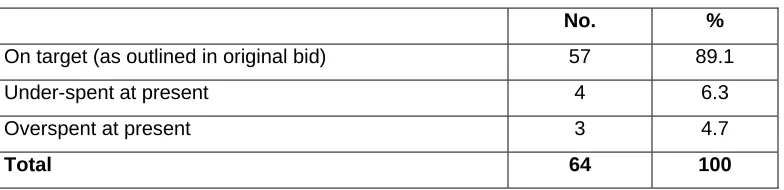
• Questionnaire survey of CETL Directors. The survey was sent out during May 2007 to all the CETL Directors and a final response rate of 86% was achieved (64 responses out of 74 sent out). The aim of the survey was to obtain information about a range of issues connected with the CETLs, the effects of the CETLs so far, and how they are currently developing.
• An overview analysis of all 74 self evaluation reports completed by CETLs for July 2007
• Examination of documents and the ‘grey’ literature. We have already studied documents about setting up the CETLs
• Participation in CETL activities. Apart from the work we were doing with CETLs before taking on this national evaluation work, we have participated in two national events and have invitations to work with individual CETLs and CETL networks.
• Strategic interviews with senior managers of higher education institutions (HEIs), ten Vice-Chancellors of institutions hosting CETLS and ten senior managers who made bids but were not funded.
• Strategic interviews with 10 HEI partners who were not the lead CETL.
3.0 Summary of themes arising from evaluation activities
3.1 Key informant interviews
3.1.1 Introduction
Key informants are people strategically placed to comment with knowledge on the idea of CETLs and learning quality enhancement, who could provide a commentary on the range of issues associated with CETL programme operations. Not all worked in England or Northern Ireland – their views helped us to understand the CETL programme as one of many international approaches to learning quality enhancement.
We spoke with 22 informants from a list of 30+ compiled in consultation with sponsoring agencies8. They are not a representative sample of people involved in the CETL programme but an opportunity sample of people with diverse perspectives on the CETL programme from an ‘informed’ position in the HE environment. What we hoped to gain from them was a sense of how the CETL programme was presenting itself as a major contribution to learning quality enhancement.
The nature of the sample is such that it would be misleading to report the number of informants cleaving to particular views and the conversational, open approach to interviewing, with an emphasis on appreciation, means that there are also robust technical reasons for not giving numbers. However, where we heard similar points from several informants we say so, always with the caution that this could be an artefact of sampling or of interviewing.
They have proved fertile stimuli to our thinking about themes, methods and possibilities and, as such, they fit with an approach to evaluation that seeks illumination and understanding forming what might be termed ‘strategic intelligence’. It is akin to a Delphi study.
Data are reported in two ways. First we provide a summary of responses to our four prompts, followed by a summary of three themes that emerged in discussions. The interviews were structured by using four general prompts designed to evoke broad strategic commentary. These prompts will form the basis of the analysis below.
The prompts are:
• What appears to be working well?
• What appears to be problematic?
• What should be the priorities for the next three years?
• Making a difference to learning quality.
The themes are:
• Fostering systemic change in learning quality
• Dissemination
• A managed programme.
16
8
Our intention was to draw informants from:
CETL managers (not included in the Case Study Sweep) PVCs (teaching and learning)
Non-English informants, to alert us to things we may be taking for granted or overlooking
HEFCE, Universities UK, Guild HE, the Higher Education Academy, The Leadership Foundation and Action on Access
3.1.2 What is working well
To create such a complex structure is an achievement in its own right’ said one informant, reflecting the amount of work that has been done to make the CETL vision an operating reality.
Overwhelmingly, informants said that CETLs were able to be innovative, allowing teachers to do things that previously would have been impossible, as these quotations indicate:
They’re an opportunity to develop and try out new things in UK (sic) higher education. We’ve got opportunities to find some creative space for development.
It’s bringing some of the most inspirational people in teaching and learning together. [Risk-taking and creativity] I see that everywhere.
Phrases such as ‘risk-taking’ and ‘blue-skies thinking’ were used, often with an appreciation of the ways in which the capital funding was making it possible to turn ideas into actualities. One informant said that her CETL benefited enormously from:
The construction and development of different sorts of learning spaces and spaces to support learning … I can’t quite see they’d have happened in any other way [than by CETL capital funding] and been as innovative and experimental as happened … the capital may end up making the greatest impact [of all CETL funding] in the host institution.
Frequently mentioned was the development of self-organising networks of CETLs. Three sorts of networks were mentioned:
• Networks centred on a subject area and typically involving the relevant Higher Education Academy Subject Centres
• Generic networks, such as those centring on enquiry-based learning and work-integrated learning; and regional networks, such as the East Midlands grouping. There were also some comments that CETLs seemed to work easily with each other and not to be in competition, although there were not enough of them for this to be taken to be true of the CETLs as a set;
• It was also said that a group of CETLs favoured ‘interdisciplinarity’ but, again, some care is needed here: remarks came from CETLs with an interdisciplinary remit and it is also clear from a Newcastle event on ‘interdisciplinary’ on 17 January that the term is often understood in the rather narrow sense in which it is typically used in the health and social care sectors. However, as will be seen in the next section, some CETLs appear to be unconnected – in the words of one informant, ‘in pockets, effective networks of CETLs are being created’. The Academy’s work in trying to bring CETLs together was recognised and the April conference at Warwick was commended by several informants. There were, though, some reservations about the Academy’s co-ordination work, especially as regards the ‘generic’ CETLs9, as the next section shows.
Self-organisation was associated with HEFCE’s decision not to micro-manage the programme. That is not to say, of course, that commentators considered that HEFCE had no meta-management
responsibility for the CETL programme but, rather, that it has deliberately created space for innovation and creativity. So too with the formative evaluation, which seems to be being understood as a
collaborative and appreciative process. One informant said that HEFCE’s approach is ‘flexible and professional – we’re trusted’.
Plenty of CETL achievements were mentioned. One ran 20 projects in years one and two, while waiting for new buildings to be completed and many other CETL staff referred to their successful ‘small grants’ schemes to support projects:
As one might expect, the things that are working best are the fairly local things.
Each of them [CETLs] has a lot of funding to concentrate on an area and really make inroads, which I think is great.
There were also reports that CETLs are ‘student-facing’: when asked, one informant said, ‘Yes, definitely, without a shadow of doubt … at all levels’ and there were some comments that it is more common to see joint staff-student projects now. Interviewees provided a glimpse of a higher education
17
9
future in which the distance between students and teachers gets reduced but a leavening of
scepticism is in order as well. Many CETLs are involved in recruiting teaching staff and signing them up to the five-year vision. The impression was that a bare majority of CETLs are concentrating on marketing a vision to staff and that it will be some years before effects on students can be seen. Yet, scepticism notwithstanding, there was a view that CETLs are already making a difference to student learning and to the teacher-student relationship.
One of HEFCE’s intentions with the CETL programme was to increase the status of teaching, which in effect counterbalances the research assessment exercise (RAE) emphasis on certain forms of
research activity. There were comments that the CETLs are raising the status of teaching and learning in universities. They have:
Added a step up in terms of recognition of learning, teaching and assessment – a step change by virtue of the funds available.
Made talk about learning and teaching more positive, better informed and strategic … [CETLs] raise the level of discourse in universities.
There was reference to ‘the privilege of hosting CETLs – institutions are proud of them’ and one informant said that ‘it’s good that it [the CETL programme] deals with the issue that people get rewards for research but not for teaching and learning’.
This enthusiasm also needs to be qualified. On the one hand, there were comments that Russell Group universities were under-represented in the CETL programme, leading to the observation that the status of teaching was indeed being raised but not so much amongst universities that believed themselves to be research stars10. On the other hand some CETLs feel less than appreciated by their universities and most of them are already wondering whether their institutions will continue a
commitment to this area of teaching support once DELNI and HEFCE funds cease. In addition, many are occupied with the perennial quality enhancement question – how do innovators make systemic changes, reaching those outside the innovation fan club?
3.1.3 What is problematic
The CETL programme is no exception to the tendency for fulsome answers to questions on problems, although one colleague insisted that they are ‘challenges, not problems’ and another said ‘risk-taking means people have to be open to problems’.
Most often cited was the issue, also covered in the next section, of sustainability – one CETL said, ‘we’ve little chance of being incorporated into mainstream funding’ and others were not convinced that host universities would do anything more than take HEFCE’s money and ‘shut up shop’ when it finished. There were others who were fairly confident that their universities would keep at least the best of their CETLs’ achievements. This was complemented by a prominent figure in the UK staff development community who thought that there was no real tension between CETLs and staff developers and that they two groups might eventually merge in some universities. Yet a Vice-Chancellor reckoned that ‘the educational developers will survive – they’ve done it so many times before’.
There were other organisational and political concerns:
There are tensions between freedom to innovate and institutional politics.
I think institutions want a quick fix really and I’ve been pressurised in terms of internal dissemination.
There’s the problem of getting ideas embedded in institutions, of translating ideas into institutions, even at a strategic level, never mind getting them on the ground.
Making the CETL operational had been a challenge for some universities and, while they appreciated the freedom to make ‘a slow start’, there was some criticism from CETLs that had been operational in April 2005 – ‘progress is variable, quite slow in some areas’. However, all informants agreed that all CETLs seemed to be working now – albeit two years into a five-year programme. One reason for the time it had taken some Centres to get to this point was that many of them were ‘build dependent’, meaning that they could not function fully until capital works were completed. Problems with building
18
10
were the second commonest set, enlivened with some sardonic remarks about Estates departments and building contractors. There is no doubt that some CETLs had to spend so much time on capital projects that their capacity to carry out their operational plans was compromised and there are hints that the requirement to plan, build and spend in two years hindered some more strategic thinking about use of capital funds.
Some Centres had found their initial plans to be unrealistic and had appreciated HEFCE’s willingness to listen to proposals to change them. Several interviewees had realised that they had been too frugal in staffing, especially where they were led by (very) part-time Directors and doubly so when the Centre was hosted by two or more institutions11; some realised that what they had hoped to do in two years might take three or four12, although such tales were counterbalanced by other CETLs that had launched a raft of projects, fellowships and other initiatives and seemed to be hitting targets, even if their approaches seemed to one informant to be ‘a bit scattergun’. This line of thinking merged with a realisation that CETLs often lacked the Human Resource expertise – or access to it – to make a difference to university reward and recognition processes. Prizes and project funding helped but there was little belief that they were sufficient and it was here that the realisation that CETLs are temporary projects was sobering – what prospect was there that projects and prizes would be sufficient to redress the teaching-research imbalance? One Vice-Chancellor said that unless universities got to thinking hard about pedagogic research and ‘mainstreaming’ research-informed curricula, then the CETLs might not have the long-term impact that was hoped for.
There was ambivalence about the nature of the programme itself. There was undoubted appreciation of HEFCE’s flexibility and commitment to letting CETLs shape their own futures, and of its approach to evaluation (we, as evaluators, have a sense that our CETL colleagues see themselves as partners in formative, collective self-study13). But, some were worried that there might be too much diversity, too much waste – ‘There’s a lot of wallowing around in re-inventing the wheel and feeling isolated and uncertain but rich.’ In a similar vein, there were references to ‘a lack of a sense of a strategy that might have inhibited the programme at an early stage’. Another informant said that ‘it’s difficult to grasp this as a programme’, with a third adding that ‘it’s hard to get a sense of the programme as a whole … there’s no overarching mechanisms to give the programme coherence’ and a fourth adding ‘I’m not entirely sure what they’re [CETLS] supposed to do – I might have expected them to be more at the forefront of my consciousness than they are’14. The concern was that any lack of coherence could result in CETLs ‘punching below their weight’.
It was recognised that the Academy had been active in trying to bring the CETLs together and enhance programme coherence. Useful though its work had been, there was a view that it had not remedied the disadvantages of letting ‘a thousand flowers bloom’15. Uncharitably and inaccurately, one CETL manager said, ‘I don’t think the Higher Education Academy know who we are and what we do’. More generously, another said that relationships with Academy (York) and Subject Centres ‘have not worked well in all aspects’. Positive observations were made of the various self-organising networks that are developing. While self-organising structures are reckoned to be stronger that imposed structures, the problem is that these networks do not cover all the CETLs and the CETLs themselves do not cover all subject areas or generic themes and issues. And, although dissemination was most mentioned under the heading of priorities for the next three years, there was also a
generally-held view that the un-managed CETL programme faced dissemination problems precisely because it would be hard to represent programme achievements in the face of loose and diverse bonds amongst 74 ‘centres of difference in teaching and learning’.
19
11
The most complicated CETL is LearnHigher, which is ‘the country’s biggest collaborative HEFCE funded Centre for Excellence in Teaching and Learning (CETL); we are a partnership of 16 Universities and the Higher Education Academy.’ (http://www.learnhigher.ac.uk/, visited 9 April 2007.)
12
‘I find CETLs to be very greedy’ said one informant who was trying to do what the CETL had promised while maintaining commitment to teaching.
13
On the other hand, we did hear worries about the evaluation, ranging from the lack of evidence (‘It’s too early to line up 100 students and ask “what difference has the CETL made for you?”’) to the amount of time that preparing the self evaluation document could take.
14
This informant works outside England and Northern Ireland but given the nature of the work, a much sharper understanding of the CETLs could have been expected.
15
3.1.4 What are the priorities for the next three years?
To an extent, priorities are attempts to address problems. A clear priority was the need to address sustainability – ‘we don’t want this to be a five-year shot in the arm for learning and teaching and then to slowly lose the immunisation (sic) thereafter’. There was a shortage of convincing ideas about how the CETLs’ work could be sustained once funding finishes in 2010. It was recognised that ‘not everything can be sustained’, which led to the advice ‘don’t just extend funding but look instead to build on achievements, get more coherence and make links’. This may present difficulties, especially in universities that, notwithstanding their enthusiasm for hosting a CETL, might lack funds, innovative capacity and willingness to invest further in curriculum, teaching and learning. Success would, of course, help but two difficulties in particular were identified.
• One is the difficulty of demonstrating success on such a scale that the university would be convinced of the need to sustain investment in it. This is likely to be more difficult for subject-based CETLs, since it could be hard to convince a university that commensurate benefits would accrue to other departments and the institution as a whole
• The other issue concerns raising awareness of success or, more generally, of dissemination. There was a great deal of agreement that the achievements of the CETL programme as a whole are insufficiently well known – one observer remarked that ‘they’re a lot better than their advertising’. Another reckoned that ‘there’s a mixed picture on the marketing and publicity side’, while a third said ‘get CETLs better coordinated so that they have impact across the sector as a set of 74 (not as 74 x 1)’.
Some informants placed hope in the self-organising networks; some looked to links with Subject Centres or professional bodies, and a minority saw a role for the Academy’s York operation. Yet the networks are not organised to represent the programme as a whole, Subject Centres are not
generously funded or staffed and there was thought to be some ambiguity about the Academy’s York operations in relation to the CETL programme. One colleague considered that ‘there is the real beginning of collaboration and sharing – the conferences for instance – but they tend to have a CETL-to-CETL focus and there’s a need for CETL-to-non-CETL discussions’. Calls for a cohesive
framework for the CETLs – but without falling into central management – and a stronger sense of purpose are apparently persuasive but may have rhetorical rather than practical value.
Even in individual universities it is not always the case that CETLs’ work is well known. In this light how might they be in a position to evoke the fundamental changes to curriculum and quality that may be necessary to sustain cross institutional innovative learning and teaching practices? Insofar as talking to a colleague is an effective means of dissemination, one piece of advice was ‘stop talking to the converted and talk to the convertibles’. This, though, is time-consuming and time spent on dissemination is not spent on innovation and may also be at the expense of generating the (pedagogic-) research publications that secure careers16 and make a CETL’s name17.
After sustainability and dissemination, there was little agreement on priorities. There was some recognition that it would be important to create robust evidence of impact and quite a degree of uncertainty about ways of demonstrating impact on students – no great problems were envisaged in demonstrating staff engagement and documenting changes to courses. One thing that struck the interviewer was that no informant referred to any curriculum or pedagogic innovation as a priority. It was as if the Centre’s course was charted and just needed to be followed or as if innovation was to trail behind work on sustainability and dissemination. Nor was there talk, with one exception, of strategies for participating in university policy-setting and systems reform processes. One informant argued that there is, therefore, an urgent need for a CETL ‘change academy’, a much modified version of the Academy’s existing change academy venture18. That may be necessary but it may not be sufficient unless there is parallel action to help universities appreciate the value of bringing CETLs
20
16
There could be an awful lot of unemployed CETL staff looking for jobs in 2010 and some of the more
foresighted are already planning their next career move. The most marketable could well be haemorrhaging from CETLs from 2009 onwards.
17
Whether this gets the CETL’s name made in the right place is another question. One informant was concerned that CETLs could drift into research and publication at the expense of being forces for practical change in their universities and HE generally.
18