Munich Personal RePEc Archive
The Effects of 1993 EITC Expansion on
Marginal Tax Rates
Adireksombat, Kampon
Nanyang Technological University
December 2007
Online at
https://mpra.ub.uni-muenchen.de/18986/
The Effects of 1993 EITC Expansion on Marginal Tax Rates
Kampon Adireksombat±
S3-B1b-74, Division of Economics
Nanyang Technological University, Singapore 639798 E-mail address: [email protected]
Tel. +65-6790-4778 Fax. +65-6794-6303
December 2007
Abstract
The Earned Income Tax Credit (EITC) expansion affects labor supply and hence
wages through changes in marginal tax rates (MTRs). This paper describes the effects of the
1993 EITC expansion on MTRs experienced by unmarried women. To demonstrate changes
in MTRs, I use variation in the federal and state EITCs under the 1993 EITC expansion.
Results suggest that the 1993 EITC expansion results in differential decreases in MTRs faced
by unmarried women. Women with lower education experienced a larger decrease in their
MTRs. Moreover, among women with the same education level, those with two or more
children faced a larger decrease relative to those with one child and those with no children.
I. Introduction
The literature suggests that the Earned Income Tax Credit (EITC) expansions
substantially increased the labor force participation of unmarried women.1 In theory, with an
increase in labor supply, all else equal, the equilibrium wage will fall unless labor demand is
perfectly elastic. With a lower wage cost, theory predicts that employers capture a share of
the EITC benefits. Because the effectiveness of EITC of benefiting low-income families
depends on its economic incidence, understanding the effect of the EITC on gross wages
helps policymakers to have a more complete analysis to evaluate the EITC program.
Interest in whether the EITC incidence is captured by the worker or the employer
follows from the EITC’s larger role in increasing low-income workers’ labor supply. The
EITC expansion affects labor supply and hence wages through changes in marginal tax rates.
For example, a lower marginal tax rate results in an increase in incentive to work, assuming
the substitution effect dominates the income effect. This paper describes the effects of the
1993 EITC expansion on marginal tax rates (MTRs) experienced by unmarried women.2 To
demonstrate changes in MTRs, I use variation in the federal and state EITCs of the 1993
EITC expansion. The 1993 EITC expansion substantially increased the maximum credit
available to a family with two or more children as compared to a family with no children and
another family with one child. Differential increases in the credits imply that women with
different numbers of children also experience differential changes in their MTRs. Using the
same identification strategy, recent studies of the labor supply response to the EITC find that
the 1993 EITC expansion increased the labor force participation of unmarried women with
two or more children as compared to those with no children and those with one child (Hotz,
To identify the population likely to be affected by the EITC, I follow findings from
EITC eligibility literature indicating that women with lower education are more likely to be
eligible for the EITC (Dahl and Lochner, 2005; Baughman and Dickert-Conlin,
forthcoming). Therefore, I stratify my sample by levels of education: Less than High School,
High School, Some College, and College. I use data from the 1992 to 2001 March Current
Population Survey (CPS). The sample includes unmarried women aged 25-55 years.
Using TAXSIM, a tax simulation model prepared by the National Bureau of
Economic Research (NBER)3, I calculate MTRs under federal and state income tax laws
experienced by women in my sample.4 Results suggest that after 1994, unmarried women
with Less than High School, High School, Some College education experienced a significant
decrease in their median MTR (approximately 11, 14, and 4 percentage points, respectively).
On the other hand, those with a College degree faced a very small change in MTRs (one
percentage point). Relative to women with a college degree, women in Less than High
School, High School, and Some College groups experienced a larger MTR decrease by 10,
13, and 3 percentage points, respectively. In addition, among women with the same
education level, those with two or more children (the treatment group) experienced
significantly larger decreases in their MTRs relative to those with no children (the
comparison group (A)) and those with one child (the comparison group (B)). For example,
among high school dropouts, the treatment group experienced a larger MTR decrease by 14
and 4 percentage points relative to the comparison groups (A) and (B), respectively. The
treatment groups with High School, and Some College education also experienced a larger
decrease in their median MTR, compared to their comparison groups. However, among
decrease in the median MTRs as compared to the comparison groups (less than a one
percentage point).
These differential changes in the MTRs (before and after 1994) provide useful
variation for identifying the effects of the EITC expansion on labor supply and wages. Using
variation in tax rates, three recent studies consider the incidence of the EITC. They find
mixed results. Leigh (2005) and Rothstein (2007) find that the EITC expansions resulted in a
wage decrease. Accounting for the sample selection problem and the endogeneity of the
EITC, Adireksombat (2007b) finds that the 1993 EITC expansion has no statistically
significant effects on the wages of unmarried women.
The paper proceeds as follows: Section II discusses the structure of the EITC and its
effects on labor supply. Section III reviews literature on the labor supply response of the
EITC. Section IV describes data. Results are presented in Section V and section VI
concludes.
II. The EITC and Its effects
A. The EITC Structure and Its History
Figure 1 presents the EITC structures during the 1990s. The credit equals a specified
percentage of earned income up to a maximum dollar amount over the “phase-in range.”
Over a range of income termed the “flat range,” taxpayers receive the maximum credit. The
credit then diminishes to zero over the “phase-out range.” The EITC is refundable. Claimants
are paid regardless of whether the credit-qualified taxpayer has any federal income tax
liability. The EITC payment is typically made once a year as an adjustment to tax liabilities
or refunds.5 For those who have children and want to claim the EITC, their children need to
pass an age, relationship, and residence tests to qualify. For example, the age test in 2000
full-time student, or any age if she/he is completely disabled. The relationship test requires the
claimant to be the parent or the grandparent of the qualifying child.
The EITC has provided tax reductions and earning subsidies for low-income working
families since 1975. The EITC payments were eroded by inflation until the Tax Reform Act
of 1986 (TRA-86) increased the maximum credit in 1987 to have a real value equal to that of
the credit in 1975, and indexed the EITC value for inflation. The Omnibus Budget
Reconciliation Act of 1990 (OBRA-90) introduced differential credit rates and maximum
credits available to a family with one child and a family with two or more children.
The Omnibus Budget Reconciliation Act of 1993 (OBRA-93) substantially increased
the maximum credit available for a family with two or more children, relative to that with no
children and that with one child. OBRA-93 also expanded the beginning and ending incomes
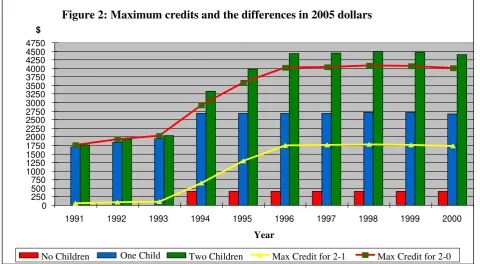
of the “phase-out range.” Figure 2 presents the maximum credits and the differences between
those available to a family with two or more children, a family with no children, and a family
with one child in 2005 dollars for the period from 1991 to 2000. The maximum credit
available to a family with two or more children increased substantially between 1994 and
$4,400). For a family with one child and a family with no children, the maximum credits
increased after OBRA-93 was implemented, and became constant after 1994. The difference
between maximum credits available to a family with two or more children and a family with
no children rose from $2,042 in 1993 to $3,233 in 1996. Relative to the one child group, the
difference rose from $104 to $1,404. In addition, OBRA-93 introduced the EITC to childless
taxpayers aged between 25 and 65 years.
The success of the federal EITC led a number of states to enact their own EITCs
during the 1990s.6 In 1989, only four states had EITCs and by 2000, the last year of my data,
fourteen states and the District of Columbia had EITCs: Colorado, Illinois, Iowa, Kansas,
Maine, Maryland, Massachusetts, Minnesota, New Jersey, New York, Oregon, Rhode Island,
Vermont, and Wisconsin. The state EITCs are very similar to the federal EITC. These states
use federal eligibility rules and calculate the state credit as a specified percentage of the
[image:7.595.72.553.271.535.2]federal credit.7 Therefore, the state EITCs also provide the same incentives to work and
Figure 2: Maximum credits and the differences in 2005 dollars
0 250 500 750 1000 1250 1500 1750 2000 2250 2500 2750 3000 3250 3500 3750 4000 4250 4500 4750
1991 1992 1993 1994 1995 1996 1997 1998 1999 2000
Year
$
No Children One Child Two Children Max Credit for 2-1 Max Credit for 2-0
hence the same effects on wages as the federal EITC. The main difference between the
federal and state EITCs is the refundable feature. In 2000, five of these states had
non-refundable state EITCs.8 The credit rates also vary across states. For example, in 2000,
Kansas’s EITC was 10 percent of the federal EITC and Wisconsin’s EITC varied with the
number of children and was 43 percent of the federal EITC for families with three children.
B. The Effects on the Labor Supply of Unmarried Women
From the static labor-leisure model, the EITC expansion, resulting in changes in the
MTR, affects both intensive and extensive margins of the labor supply of unmarried women.
Therefore, in theory, the expansion leads to changes in the labor supply of those who were
out of and those who were already in the labor force.
For a non-worker who was out of the labor force before the expansion, the EITC
expansion results in only a positive substitution effect but no income effect and hence
increases the incentive to work.
For a worker who was already in the labor force, the effect of changes in the MTR on
her labor supply depends on the EITC range in which her income falls before and after the
EITC expansion. If her income falls in the “phase-in range,” with a negative MTR, there will
be a positive substitution effect and a negative income effect. Thus, when leisure is assumed
to be a “normal good,” the net effect on labor supply is ambiguous. If her income falls in the
“flat range,” the MTR is zero. Thus, there will be only a negative income effect. As a result,
the effect of the EITC will lead to a decrease in hours of work. If her income falls in the
“phase-out range,” a positive MTR implies a diminishing available credit and hence a lower
effective wage relative to the absence of the EITC. This negative substitution effect results in
further reduction in hours of work. Finally, if her income is beyond the credit region, she
may decide to reduce her hours of work to be eligible for the credit.
III. Literature Review
A. Labor Supply Response of the EITC
Due to the substantial increase in labor force participation and a desire to avoid the
complexity of analyzing the joint labor supply decisions of husband and wife, most studies
focus on the labor supply decisions of unmarried women. Using different amounts of credits
available to families with children and those with no children as the identification strategy,
the early studies of the labor supply response of the EITC find that the EITC expansions
increased the labor force participation of single mothers. However, they do not find
statistically significant effects on hours worked (Dickert, et al. 1995; Keane 1995; Eissa and
Liebman 1996; Keane and Moffitt 1998; Ellwood 2000; Meyer and Rosenbaum 2001;
Darragh 2002).
With a substantial increase in the maximum credits available to a family with two or
more children under the 1993 expansion, more recent studies compare the labor force
participation of unmarried women with two or more children with those with no children and
those with one child.
For example, Hotz, et al. (2006) use longitudinal data between 1991 and 2000 from
California to examine the effect of the EITC on labor market participation of single-parent
families on welfare. Taking advantage of the longitudinal data, their empirical approach
controls for covariates and household-specific fixed effects. Their preferred result shows that
the 1993 EITC expansion increased employment by as much as 3.4 percentage points for
families with two or more children relative to those with one child. In addition, the EITC
Using the same identification strategy, Adireksombat (2007a) uses national survey
data, the March CPS, from 1991 to 2000 to examine the effect of the 1993 EITC expansion
on the labor supply of unmarried women. He finds that the expansion resulted in an increase
in the probability of the labor force participation of unmarried women with two or more
children by 3.6 percentage points relative to those with no children and 3.0 percentage points
relative to those with one child. In addition, Adireksombat examines the effect of the 1993
EITC expansion on hours of work. Like in the participation margin, he finds that unmarried
women with two or more children increased their total annual hours worked, compared to
those with no children and those with one child. However, when only those who were
already in the labor force were included in the sample, he does not find a statistically
significant change in their annual hours worked.
IV. Data
I use pooled cross section CPS data from 1992-2001 (describing data in 1991-2000
tax years). CPS is the United States government’s monthly household survey of employment
and labor markets. The sample in this study includes unmarried women aged 25-55 who were
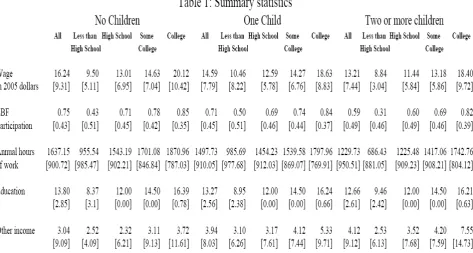
Table 1 presents descriptive statistics for my sample of unmarried women. Compared
to the comparison groups (recall those with no children and those with one child), the
treatment group (those with two or more children), on average, tends to receive lower hourly
wages (13.21 versus 16.24 and 14.59 in 2005 dollars), be less likely to participate in the labor
force (0.59 versus 0.75 and 0.71 for the probability of participating in the labor force), work
fewer annual hours, attain lower education (12.66 versus 13.80 and 13.27 years of
education), and have higher incomes from other sources.
V. Results
To take advantage of variation in incomes and state tax laws, I use TAXSIM, a tax
simulation model prepared by the NBER, with income data from the March CPS to calculate
Tax rates depend not only on tax laws but also on various characteristics over time.
To isolate the effects of the tax reform from the effect of changes in the characteristics and
composition of the sample, I use the same sample to calculate tax rates for all years.9 I use
the sample from the 1995 March CPS (describing data on 1994 tax year) and adjust their
incomes with the Consumer Price Index to convert them into 1991-2000 dollars. Then, I use
the TAXSIM to calculate the MTRs and their changes (before and after 1994) experienced by
[image:12.595.88.489.323.450.2]unmarried women by year, state, education, and number of children.10
Table 2 presents the median MTRs and their changes experienced by unmarried
women before and after 1994 by education level.11 Under OBRA-93, the EITC expansion is
the tax policy change that is most likely to affect low-income families.12 Column 3 shows
changes in the median MTRs after 1994. Negative values mean that they experienced a
decrease in their median MTRs. After 1994, women with Less than High School, High
School, and Some college education experienced a significant decrease in their MTR
(approximately 11, 14, and 4 percentage points, respectively). However, those with a College
degree experienced a very small change in MTRs (one percentage point).
to the College group, women in Less than High School, High School, and Some College
groups experienced a larger MTR decrease by 10, 13, and 3 percentage points.
Table 2 shows that women with only a high school education experienced the largest
decreases in their MTR, primarily due to expansion in the EITC. Because the 1993 EITC
expansion favors families with two or more children, in Table 3, I also stratify my sample by
[image:13.595.69.497.311.587.2]number of children.
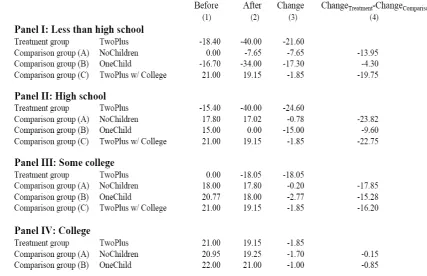
Table 3 presents the median MTRs and their changes experienced by unmarried
women before and after 1994, categorized by levels of education and numbers of children.13
In each panel, there are three comparison groups (except in Panel IV). Column 3 shows
decrease in their median MTRs. After 1994, the treatment groups in all panels experienced
smaller MTRs, approximately 22, 25, 18, and 2 percentage points for the Less than High
School, High School,Some College, and College groups, respectively.
The comparison group (A) that was introduced to a small amount of the credit after
1994 experienced a slight decrease in their median MTRs (less than 2 percentage points with
the exception of the Less than High School group that faced a 7.65 percentage-point
decrease14). With an increase in the maximum credit due to the 1993 expansion, the
comparison group (B) also experienced a decrease in their median MTRs. These decreases
range from 1.0 percentage point for the College group to 17.3 percentage points for the Less
than High School group. The comparison group (C) faced a 1.9 percentage point decline in
their MTRs.
In Column (4), the estimates present the difference in changes of the median MTRs
before and after 1994 between the treatment and the comparison group. In Panel I (Less than
High School), the estimates suggest that among high school dropouts, the treatment group
experienced a larger MTR decrease: 14, 4, and 20 percentage points relative to the
comparison groups (A), (B), and (C), respectively. The estimates in Panel II (High School)
and III (Some College) also suggest a trend of a larger decrease in the median MTR faced by
the treatment group. However, the estimates in Panel IV (College) suggest that the treatment
group did not face a larger decrease in the median MTRs as compared to the comparison
groups (less than a one percentage point).
With the EITC expansion that favors families with two or more children, it is not
surprising that the treatment groups in Panels I, II, and III faced a substantial decrease in their
VI. Conclusion
Using the 1992-2001 March CPS data, this paper describes changes in MTRs
experienced by unmarried women before and after 1994. Results suggest that differential
increases in the maximum credits due to the 1993 EITC expansion results in differential
decreases in MTRs. Women with lower education experienced a larger decrease in their
MTRs. Moreover, among women with the same education level, those with two or more
children faced a larger decrease relative to those with one child and those with no children.
In theory, these differential decreases in MTRs will result in differential changes in
labor supply and wages. Recent studies of the incidence of the EITC use variation in tax rates
due to the EITC expansion to identify the effects. Because the EITC expansion resulted in
changes in labor supply, it is especially important to correct for the decision to work in a
wage regression, when we examine the effect on wages. In addition, major policy changes,
such as welfare reform in 1996, may have had significant effects on the labor force
Notes
1 For example, Dickert, Houser, and Scholz (1995); Eissa and Liebman (1996); Meyer and
Rosenbaum (2000); Darragh (2002); Hotz, Mullin, and Scholz (2006); and Adireksombat (2007a). See Hotz and Scholz (2003) for a summary of labor supply response to the EITC.
2
Meyer (2002) examines the effects of the EITC on the labor supply of a variety of demographic groups and concludes that the EITC primarily affected unmarried women.
3
See Feenberg and Coutts (1993) for a description of the TAXSIM calculator.
4
Marginal tax rates are the effective marginal tax rates, which are calculated by adding a dollar to income.
5 An “advance payment” option was added in 1978 so that workers would be able, if they so
chose, to receive the credit incrementally throughout the year. However, in 1998, only 1.1 percent of EITC recipients with children used the advance payment option (Hotz and Scholz 2003).
6
See Johnson (2000) for a summary of the state EITCs during the 1990s. In 2006 tax year, eighteen states and the District of Columbia had state EITCs (Nagel and Johnson 2006).
7
Using federal eligibility rules, Minnesota has its own credit structure that has major elements parallel to the federal structure.
8 Those five states were Illinois, Iowa, Maine, Oregon, and Rhode Island.
9 This approach is used in several tax studies, for example, Dickert-Conlin and Houser
(2002) and Kubik (2004).
10
Marginal tax rates are the effective marginal tax rates, which are calculated by adding a dollar to income.
11
To avoid the effect of outlier observations, I use median. Using the mean MTR also presents consistent results.
12
Other policy changes are more likely to affect high-income taxpayers. For example, OBRA-93 imposed a 36% tax bracket for taxable incomes over $140,000 for joint filers and $115,000 for individuals and a 39.6% tax bracket for both joint and individual filers for taxable incomes over $250,000. See Steuerle (2002) for a summary of tax policy changes under OBRA-93.
13
As discussed earlier, the literature suggests that women with a low education are more likely to eligible for the EITC (Dahl and Lochner 2005; Baughman and Dickert-Conlin forthcoming). Therefore, in addition to comparison groups (A) and (B), I include the comparison group (C), those with two or more children who hold a college degree, to compare the treatment group with more educated women who have the same number of children.
14
References
Adireksombat, Kampon.
The Effect of the 1993 Earned Income Tax Credit Expansion on the Labor Supply of Unmarried Women. Unpublished Ph.D. Dissertation: Michigan State University, 2007.
The Incidence of the Earned Income Tax Credit. Unpublished Ph.D. Dissertation: Michigan State University, 2007.
Baughman, Reagan and Stacy Dickert-Conlin. The Earned Income Tax Credit and Fertility.
Journal of Population Economics (Forthcoming).
Dahl, Gordon and Lance Lochner. The Impact of Family Income on Child Achievement. National Bureau of Economic Research, Working Paper 11279 (2005).
Darragh, Scott B. The Impact of the Earned Income Tax Credit on Poverty, Labor Supply, and Human-Capital Accumulation. Unpublished Ph.D. Dissertation, Michigan State University, 2002.
Dickert, Stacy, Scott Houser, and John Karl Scholz. The Earned Income Tax Credit and Transfer Programs: A Study of Labor Market and Program Participation. In James M. Poterba, eds. Tax Policy andthe Economy. Cambridge: MIT Press, 1995, pp. 1-50
Dickert-Conlin, Staccy and Scott Houser. The EITC and Marriage. National Tax Journal 55 (2002): 25–40
Eissa, Nada and Jeffrey B. Liebman. Labor Supply Response to the Earned Income Tax Credit. Quarterly Journal of Economics 111(1996): 605-637.
Ellwood, David T. The Impact of the Earned Income Tax Credit and Social Policy Reforms on Work, Marriage, and Living Arrangements. National Tax Journal 53 (2000): 1063-1105.
Feenberg, D. R., and E. Coutts. An Introduction to the TAXSIM Model.
Journal of Policy Analysis and Management 12 (1993): 189-194.
Hotz, Joseph V. and John Karl Scholz. The Earned Income Tax Credit. In Robert Moffitt, eds. Means-Tested Transfer Programs in the United States. Chicago: University of Chicago Press, 2003.
Hotz, Joseph V., Mullin, Charles H., and John Karl Scholz. Examining The Effect of The Earned Income Tax Credit on The Labor Market Participation of Families on Welfare. National Bureau of Economic Research, Working Paper 11968 (2006). Johnson, Nicholas. A Hand Up: How State Earned Income Tax Credits Help Working
Families Escape Poverty in 2000. Center on Budget and Poverty Priorities, Washington, D.C., 2000.
Keane, Michael. A New Idea for Welfare Reform. Federal Reserve Bank of Minneapolis Quarterly Review 19 (1995): 2-28.
Keane, Michael and Robert Moffitt. A Structural Model of Multiple Welfare Program Participation and Labor Supply. International Economic Review 39 (1998): 553-589. Kubik, Jeffrey D. The Incidence of Personal Income Taxation: Evidence from the Tax
Reform Act of 1986. Journal of Public Economics 88 (2004): 1567-1588. Leigh, Andrew. Who Benefits from the Earned Income Tax Credit? Incidence Among
Meyer, Bruce D. and Dan T. Rosenbaum. Welfare, the Earned Income Tax Credit, and the
Labor Supply of Single Mothers. Quarterly Journal of Economics 116 (2001): 1063-1114.
Meyer, Bruce D. Labor Supply at the Extensive and Intensive Margins: the EITC, Welfare and Hours Worked. American Economic Review, Papers and Proceedings (May 2002): 373–379.
Nagel, Ami and Nicholas Johnson. A Hand Up: How State Earned Income Tax Credits Help Working Families Escape Poverty in 2006. Center on Budget and Poverty Priorities, Washington, D.C., 2006.
Rothstein, Jesse. The Unintended Consequences of Encouraging Work: Is the EITC As Good As an NIT? Unpublished manuscript, Princeton University, 2007.
Steuerle, Eugene. Tax Policy from 1990 to 2001. In Jeffrey Frankel and Peter Orszag, eds.