Link to Leeds Beckett Repository record:
http://eprints.leedsbeckett.ac.uk/1180/
Document Version:
Article
The aim of the Leeds Beckett Repository is to provide open access to our research, as required by
funder policies and permitted by publishers and copyright law.
The Leeds Beckett repository holds a wide range of publications, each of which has been
checked for copyright and the relevant embargo period has been applied by the Research Services
team.
We operate on a standard take-down policy.
If you are the author or publisher of an output
and you would like it removed from the repository, please
contact us
and we will investigate on a
case-by-case basis.
ALT JOURNAL NUMBER 10: WINTER 2010
21
Catherine Coates
Director, Faculty of Health Placement Unit, ALPS Teaching Fellow, Leeds Metropolitan UniversitySue Smith
Director, Institute for Enterprise, Leeds Metropolitan University
Background
Assessment and Learning in Practice Settings (ALPS) and the Institute for Enterprise at Leeds Metropolitan University are working collaboratively to develop the use of the ALPS competency maps. The process, initially established within ALPS, to expose the key skills and attributes inherent in communication, teamwork and ethical practice, has now been extrapolated to develop a new enterprise skills map to be used by students and staff to enhance learning.
ALPS is a collaborative Centre for Excellence in Teaching and Learning (CETL) comprising five local Yorkshire higher education institutions (HEIs), including Leeds Metropolitan University, with proven reputations for excellence in learning and teaching in Health and Social Care. Sixteen professions are represented across the
partnership, as well as a wide range of partners including NHS Yorkshire and the Humber and commercial partners who are working towards a framework of interprofessional assessment of common
competencies in the Health and Social Care (H&SC) professions. Fundamental to the care of service users within modern Health and Social Care are key skills commonly utilised by the range of professionals involved in ALPS. Key skills and learning outcomes vary across the 16 pre-registration H&SC courses but central to the practice of all of the professional groups represented by ALPS is a high level of professional competence in communication, teamwork and ethical practice. ALPS decided that mapping these common skills would enable students to navigate their way through the professional competencies, allowing them to
gain confidence and competence in practice and work-based settings. A similar process was equally relevant to make enterprise skills explicit in the curriculum at Leeds Metropolitan University. The Institute for Enterprise CETL supports and promotes enterprise education within the University and with key external national partners. Its small team has strengthened and developed enterprise education in the last five years through the development of new courses and modules, collaborative projects and student-led events.
Traditionally, enterprise is often thought of as starting and developing a business but at the Institute a broader view has been adopted to give students curricular opportunities in enterprise to equip them for their future lives. The European Union describes enterprise skills as a “key competence for all, helping young people to be creative and confident in whatever they undertake” (European Commission, 2006). These skills include being able to spot new opportunities, having a ‘can do’ attitude and the determination to take ideas forward to successful implementation (NESTA, 2008). These not only apply to budding entrepreneurs but are a vital part of each student’s personal development and consequent ability to progress in any career (NCGE, 2007).
We anticipate that representing these dimensions of enterprise in a competency map will allow students to grasp the diversity of the competency and help them to identify their strengths and areas for improvement.
ALT JOURNAL NUMBER 10: WINTER 2010
22
to enable students and staff to navigate their way through competencies in a user-friendly format. Both ALPS and the Enterprise CETL have worked with MyKnowledgeMap, a local software company, to facilitate this process and create interactive and creative user-friendly tools. The collaborative process involved in developing these maps can be lengthy and challenging, involving the generation of clusters and dimension statements, but the information gained in both processes gave us a breadth of knowledge about common language and variations in terminology to build a mutually acceptable map which all
professional groups will understand and endorse. The overarching context of this mapping process was that the resultant performance criteria could ultimately form the content of common assessment tools for interprofessional learning, from which students and staff can gain an understanding of the different skills required for them to be enterprising or effective communicators (see Figure 1). At Leeds Metropolitan University these common competency maps have been embedded into the interprofessional learning strategy for students to use as an aid
qualitative feedback in 2009-10 module evaluations. The enterprise competencies will be embedded in future programme review documents to ensure optimal access to the maps and enhance curriculum development.
The mapping process
[image:3.637.66.286.539.765.2]Establishing an acceptable and effective process and structure during the mapping process was crucial to the success of this collaborative process (Coates et al, 2008; Holt et al, 2010). Initial discussions of the ALPS communication skills working group were lengthy and on topics such as common and differing language and terminology across professions, and whether the maps should reflect academic levels or a hierarchy of skills and protocols. Gradually such debate resulted in a comfortable trust across and within professions.This then facilitated an acceptable and effective process and structure, from which the same principles could be used to develop similar competency maps for other professional competencies, effectively embedding the ALPS approach across other Faculties and professions.
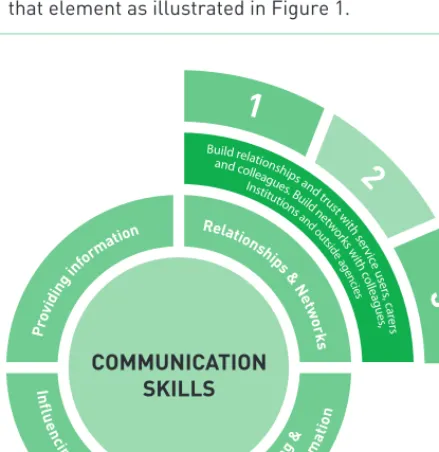
Figure 1: The ALPS CETL Communication Skills Map
This online tool is difficult to illustrate in print but essentially the user clicks on the inner ring to open the
dimension statement and then onto the outer elements which open up to reveal the performance criteria for that element as illustrated in Figure 1.
COMMUNICATION SKILLS ENTERPRISE Leading Change Lead ing Chan ge
1
2
3
Build relationship
s an d tru
st w
ith se
rvic e u
se
rs, ca
re rs
and collea
gues. Build
netwo
rks w
ith co lleag ues, no ve l id ea s, d ev elo p a nd eff ect ive ly Institutions
and ou
tsid
e age
nc ies Gathe ring & Process
ing in
form atio n In flu en cin g & Ne gotiating Prov idin
g inf orma
tion Relationsh
ips &
N etw orks Leading Change Lead ing Chan ge
1
2
1
2
3
G en er ate a nd cr itic all y a na lys e ar tic ula te th e p ro po siti on Investigation and securing ofresources A ch ie vem ent
of R es
ults
Relations
hips
& Netwo
rks C re ati vit y a nd In no va tio n Optim isation of Oppo rtuniti es The student is able to adapt his/her
communication style to suit different situations • The student is able to deal constructively with
conflict
• The student uses verbal and non-verbal skills to guide communication
• The student negotiates, clarifies and sets boundaries
• The student recognises situations where style needs to be adapted to reduce barriers to communication e.g. the use of sign language / an interpreter may be appropriate
ALT JOURNAL NUMBER 10: WINTER 2010
23
[image:4.637.70.542.254.491.2]The Institute for Enterprise wanted to facilitate the development of an enterprise skills map to enable staff in the Faculty of Business and Law at Leeds Metropolitan University to develop modular content and assessment tools which could be linked to existing enterprise frameworks and also allow for consistency in assessing enterprise attributes across the wider University. This development had a narrower remit
Figure 2: ALPS and the Institute for Enterprise worked collaboratively to produce the Enterprise Skills map
and was therefore a more manageable process compared with the ALPS mapping process. Initially a wide invitation was issued to academic staff from all Faculties and Enterprise Pioneers (Faculty staff with allocated deployment to catalyse curriculum-based enterprise activity), encouraging involvement in the process.
The competency mapping process has generated considerable interest for both CETLs and has been dependent on effective consultation and dissemination across and within the professions during development and on completion. During the development of each map, consultation workshops for academic staff, students and service users were facilitated to encourage feedback on the language, structure and usability of the maps. ALPS also consulted the Professional, Regulatory and Statutory Bodies regarding the concept and content of the maps to gain their approval. As a result a number of changes were made and the graphical representation of the maps was changed to the current wheel format, making the maps easier to navigate and so more user-friendly, eliminating any hierarchy of skills within clusters.
ALPS and the Institute for Enterprise worked with a commercial partner, MyKnowledgeMap, to facilitate this process, which resulted in interactive online competency maps from which multiprofessional assessment tools could be derived for students to validate their skills in practice placements and work-based learning.
COMMUNICATION SKILLS ENTERPRISE Leading Change Lead ing Chan ge
1
2
3
Build relationship
s an
d trust w
ith se
rvice u se
rs, ca
re rs
and collea
gues. Build
netwo
rks w
ith colle ag ues, no ve l id ea s, d ev elo p a nd eff ect ive ly Institutions
and ou
tsid
e age
nc ies Gathe ring & Process
ing in
form atio n In flu en cin g & Ne gotiating Prov idin
g inf orma
tion Relationsh
ips &
N etw orks Leading Change Lead ing Chan ge
1
2
1
2
3
G en er ate a nd cr itic all y a na lys e ar tic ula te th e p ro po siti on Investigation and securing ofresources A ch ie vem ent
of R es
ults
Relations
hips
& Netwo
rks C re ati vit y a nd In no va tio n Optim isation of Oppo rtuniti es
The student generates and captures novel ideas • The student is able to identify gaps in the
market
• The student is able to identify opportunities for improvement in existing situations
• The student is able to locate himself or herself in an environment that is conducive to idea generation
ALT JOURNAL NUMBER 10: WINTER 2010
24
skills gaps, thus enabling them to formulate action points to improve their practice skills. Hence the maps aid self-evaluation and can help to identify why situations are not going well and which actions might help to improve their performance and professional competence. Such analysis helps the enhancement of graduate employability skills and informs future Continuing Professional Development needs. Academic staff can click on these online maps to develop assessment criteria and can use them as teaching tools. The maps will also allow employers and placement providers to have clearer expectations of students. They have also enhanced curriculum development and may act as a baseline for research. The ALPS maps have been used to generate an assessment toolkit (ALPS Assessment Tools 2009) to increase the range of formative and summative assessments that can be used by the 16 professions. Traditionally, H&SC professions have required a member of their own profession to assess a student’s competency. ALPS challenged this principle by suggesting that the common competencies can be assessed by someone from another profession, as long as the workplace assessor has been appropriately briefed. Subsequently assessors have successfully used these tools to evaluate competency in other professional groups (Dearnley et al, 2009). A key innovation of the project has been to develop a shared services platform that enables these common assessment tools to be delivered onto mobile devices used by the students on their practice placements. The decision to ‘go mobile’ was made to allow the provision of ‘any time, any place’ access to the common assessment tools, learning materials and tutor support to enable students to gain maximum benefit from the learning opportunities on offer to them while on placement.
Central to the ALPS process was the development of an e-portfolio tool to which students could publish their completed assessment tools and any relevant supporting documents and gain feedback from their tutor back at their university, further perpetuating the learning process and enabling the tutor to evaluate the students’ progress.
professions and complex concepts, there are a few ‘top tips for success’ that may enable subsequent projects to benefit from our experiences. These include:
• Clear project plan, terms of reference and timeline which establish the ground rules of the development process
• Broad reference group to begin the process with equity of professional representation across groups • Scoping available information and research before
commencing group work
• Let everyone ‘have their say’ until a common language, understanding and trust develop
• Encourage participants to depersonalise discussion or disagreements
• Importance of reasoned and informed feedback from subject representatives, who seek contributions and disseminate within their teams
• Set time limits for discussion while gaining agreement on broad principles
• Time as a resource … to reflect and absorb information and understand others’ perspective, allowing the concept to develop freely and slowly • Clear notes taken by independent facilitator and
circulated to reference and email group • Email consultation throughout with the wider
reference group
• Consultation of the finished product using a variety of methods
• Pilot product across subject groups and courses in a guided and structured manner
• Understanding that students and academic staff will want to use the product in different ways depending on their development needs
ALT JOURNAL NUMBER 10: WINTER 2010
25
References
Coates, C. A., Laxton, J. & Frith, G. (2008) Collaborative
working, production of inter-professional common competency maps. Paper delivered at SOLSTICE Conference, Edge Hill University, 5 June 2008. Dearnley, C.A., Taylor, J. D., Hennessay, S., Park, S. M., Coates, C. A., Haigh, J., Fairhall, J. R., Riley, K. & Dransfield, M. (2009) Using mobile technologies for assessment and learning in practice settings: outcomes of five case studies. International Journal of
E-Learning 8(2), 193-208.
European Commission (2006) Commission
Communication of 13 February 2006: Implementing the Community Lisbon Programme: Fostering entrepreneurial mindsets through education and learning (COM/2006/0033). Available at: http:// ec.europa.eu/enterprise/entrepreneurship/support_ measures/training_education/index.htm.
Holt, J., Coates, C. A., Eastburn, S., Laxton, J., Mistry, H. & Young, C. (2010) Identifying common competencies in health and social care: an example of a multi-institutional and interprofessional working.
Nursing Education Today 30(3), April 2010. National Council for Graduate Entrepreneurship (NCGE) (2007) Survey of enterprise and
entrepreneurship in higher education in England. National Endowment for Science, Technology and the Arts (NESTA) (2008) Developing entrepreneurial
graduates – putting entrepreneurship at the centre of higher education. London: NESTA.
Website
ALPS competency maps and assessment tools can be found at www.alpsweb.net/
Conclusion
The enterprise map was shared with colleagues at the Leeds University ALPS Conference in March 2010 and the Leeds Metropolitan University CETL conference in April 2010, where the embedding of the ALPS Common Competency Maps and Enterprise Map across the Faculty of Health and the wider University were well received. We shared the maps with colleagues at Leeds Met during the Assessment, Learning and Teaching Conference in September 2010.