Project Report. Institute for Health and Wellbeing, Leeds.
Link to Leeds Beckett Repository record: http://eprints.leedsbeckett.ac.uk/1359/
Document Version: Monograph
The aim of the Leeds Beckett Repository is to provide open access to our research, as required by funder policies and permitted by publishers and copyright law.
The Leeds Beckett repository holds a wide range of publications, each of which has been checked for copyright and the relevant embargo period has been applied by the Research Services team.
We operate on a standard take-down policy. If you are the author or publisher of an output and you would like it removed from the repository, please contact us and we will investigate on a case-by-case basis.
LEEDS BECKETT UNIVERSITY
JIGSAW VISITORS’ CENTRE
EVALUATION
Dr James Woodall, Professor Rachael Dixey, Karina Kinsella &
Debbie Braybrook
March, 2015
Key findings summary
In October 2014 the Centre for Health Promotion Research at Leeds Beckett University was commissioned by the Jigsaw Visitors Centre at HMP Leeds to undertake an independent evaluation.
Jigsaw currently has three primary dimensions to its work: the central function of managing visitors to the prison, the delivery of family support, courses and projects to prisoners, and the provision of café facilities (including new acquisitions like ‘The Gatehouse’ and ‘Lock-Inn’).
The evaluation sought to gain a ‘360 degree’ view of Jigsaw and the services it provides. Data collection was therefore undertaken with a range of stakeholders.
Evidence strongly suggests that Jigsaw enhances the visiting experience. The ‘humanity’ and time that Jigsaw staff have for visitors was consistently noted. Jigsaw was described as ‘the shop window’ for HMP Leeds and often provided the first impression of the institution. This first
impression was frequently very positive and first-time visitors’ expectations were usually surpassed.
One of the thematic areas that reoccurred throughout the data were comparisons between Jigsaw and other prison visitor centre provision. Strategic stakeholders working closely within the Prison Service consistently claimed that the services offered at HMP Leeds were way-ahead of other prisons.
Those prisoners interviewed suggested how pivotal Jigsaw services had been in allowing them to continue or, in some cases, establish their role as a father and partner. The benefits of the extended visits were unanimously praised as being a key way of staying in touch with family life.
Through the family-support work and the myriad of activities and programmes delivered by
Jigsaw, it was suggested that Jigsaw were making a clear contribution to reducing the reoffending rates of prisoners at HMP Leeds. While desistance from criminal activity is multifactorial, there was a consensus that connectivity to family was important.
Jigsaw’s expanding funding streams have created a situation whereby the organisation is more self-sustaining and less-reliant on grant income. Our assessment supports the claims by senior figures in HMP Leeds that Jigsaw does provide cost-benefit.
Overall, our evaluation has shown that Jigsaw remains a healthy, well-functioning organisation that carries out its central remit extremely well. It is an outward-looking organisation committed to seeking new opportunities to expand its income-generation, and to increase its repertoire of activities within the prison that support family and community ties.
1. Background and context
The prison population in England and Wales stands at around 88,000, which is 13,000 more than in 2004 (The Howard League for Penal Reform, 2015). Given the population increase, it is clear that the number of prisoners’ families impacted by imprisonment has also risen. Williams (2006) estimates that there are one million relatives affected by imprisonment on an annual basis. Indeed, the impact that incarceration can have on families can be severe, with potential financial, emotional and health consequences (Loucks, 2002). Moreover, the wider impact on children is also clear in the literature, with recent figures suggesting that
approximately 200,000 children in England and Wales are potentially affected by parental imprisonment (Henshaw, 2014).
Despite calls for a change in practice, prison visits facilities remain hugely inconsistent both in the public and private prison estate. Having a purpose built prison visitors’ centre is not mandatory for prison establishments; however, there is evidence to suggest that a discrete building can be of value when delivering a service to visitors (Woodall et al., 2009). The age of the prison does not seem to correlate with the standard of facility; even newly built prisons have been suggested to support prison visitors inadequately (Codd, 2008). A visitors’ centre is one of Her Majesty’s Chief Inspector of Prisons (HMCIP) ‘expectations’, but there is little centrally mandated policy on visitors’ centres (NOMS, 2014). Establishing the current number of prison visitors’ centres is difficult to determine due to contradictory reports in the literature (Loucks, 2002, Light and Campbell, 2006).
The importance of prison visits from a prisoners’ perspective is noted in a number of studies; visits often lift prisoners’ mood and enhance “emotional survival” (Dodge and Pogrebin, 2001, p.51). Prisoners have a statutory entitlement to visits which is clearly emphasised in the prison rules which state:
“Special attention shall be paid to the maintenance of such relationships between a prisoner and his family as are desirable in the best interests of both.” (Rule 4 of the Prison Rules, 1999)
However, prison visits have generally declined over the past number of years (Broadhead, 2002, Salmon, 2005) and this has been attributed to several factors. Logistical difficulties faced by visitors accessing the prison are often cited, as is the economic outlay needed to pay for transportation (Woodall et al., 2009). Reports that prison visitors can be treated as a nuisance, a disruption to the routine and perceived as a security threat by prison staff
(Broadhead, 2002) does also seem to be a barrier. Furthermore, reductions in prison visiting numbers may be due to prisoners themselves requesting not to receive visits (Woodall et al., 2012). Indeed, it can be fairly common for prisoners not to allow their children to visit them in prison. This is often a conscious decision made between the prisoner and his partner in order to protect the feelings and welfare of the child (Dixey and Woodall, 2012).
The role of prisoners’ families in current policy discourse remains strong. Government reform designed to ‘transform rehabilitation’ (Ministry of Justice, 2013), places emphasis on the role of family support in custody. In addition, the role of improving family links is seen as a critical pathway to ensuring that prisoners reintegrate more successfully in the community after their period of imprisonment (Ministry of Justice, 2013). The importance placed on visits by policymakers and the Prison Service is supported by the wider research literature which shows a number of positive effects as a result of regular prison visitation. In
In 2014 the Centre for Health
Promotion Research at Leeds Beckett University was commissioned by the Jigsaw Visitors Centre at HMP Leeds to undertake an independent evaluation of the Jigsaw Visitors’ Centre. The
evaluation team previously undertook evaluations of Jigsaw in 2012, 2009 and 2006 and were therefore well-placed to reflect on organisational changes at Jigsaw.
Jigsaw Visitors’ Centre at HMP Leeds has for many years been ‘ahead of its time’ providing dedicated, high-quality
services for visitors and prisoners. There are 23 visits sessions per week at HMP Leeds; each visits session can hold a maximum of 28 prisoners and three adult visitors per prisoner. All social visitors arrive at Jigsaw to be registered and have the opportunity to relax and unwind before entering the main prison gate to visit their relative. Jigsaw is a separate building to HMP Leeds, with the distance between the two a very short walk. Approximately thirty minutes before a visit session, visitors within Jigsaw are invited to walk over to the main prison gate where they are processed before being escorted to the visits hall.
The evaluation of Jigsaw has the following broad aims:
To explore negative and positive changes at Jigsaw which have evolved since the last evaluation in 2012.
To assess the impact of any new activity, service or partnership work introduced since the last evaluation.
To evaluate the impact that the Jigsaw Visitors’ Centre has had on the contribution to reducing re-offending rates for prisoners at HMP Leeds.
To explore areas of good practice and to highlight how the model at HMP Leeds could be replicated at other prisons.
To indicate the cost-benefit of Jigsaw services. Organisation of the evaluation report
A brief overview of the methodological approach to the evaluation follows to outline the process by which evidence was gathered and how the data was analysed. The findings from the evaluation are then presented in separate sections. Section three reports findings from the monitoring data routinely collected by Jigsaw. Section four, presents the
organisational profile of Jigsaw and highlights the new initiatives and programmes being conducted in the centre since 2012. Then a thematic synthesis of issues emerging across the data collection process is presented in section five. Next, the key findings are discussed in section six and finally the conclusions and recommendations for Jigsaw are outlined in section seven.
Jigsaw’s Mission Statement
“The Visitors Centre is here to provide friendly, independent, support, information and advice and healthy living activities for all communities associated with the Visitors Centre – families of prisoners, prisoners and ex-prisoners, prison staff and
2. Methodology
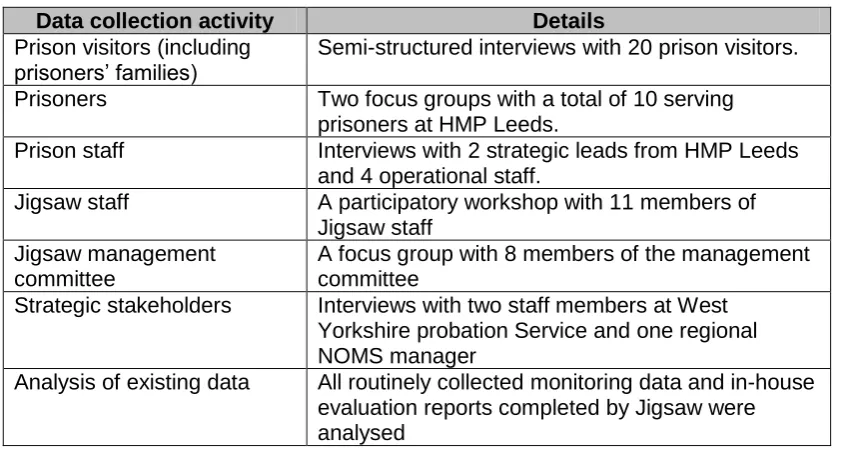
[image:6.595.89.510.252.477.2]The evaluation sought to gain a ‘360 degree’ view of Jigsaw and the services it provides. To do so, it was necessary to ascertain the views of the various stakeholders in contact with Jigsaw. ‘Triangulation’ of data has been proposed as a means of achieving validity in evaluation (Green and Tones, 1999, Torrance, 2012) and is particularly relevant to this evaluation. This approach relies on collecting evidence of impact from a variety of different sources (see Table 1) and making conclusions based on the overall data collected. By triangulating various data sources it allows robust conclusions and recommendations to be made. All aspects of the study were scrutinised by a Leeds Beckett University ethics committee and permission to conduct data collection in HMP Leeds was provided by the Governor.
Table 1. An overview of data collection activities
Data collection activity Details
Prison visitors (including prisoners’ families)
Semi-structured interviews with 20 prison visitors. Prisoners Two focus groups with a total of 10 serving
prisoners at HMP Leeds.
Prison staff Interviews with 2 strategic leads from HMP Leeds and 4 operational staff.
Jigsaw staff A participatory workshop with 11 members of Jigsaw staff
Jigsaw management committee
A focus group with 8 members of the management committee
Strategic stakeholders Interviews with two staff members at West Yorkshire probation Service and one regional NOMS manager
Analysis of existing data All routinely collected monitoring data and in-house evaluation reports completed by Jigsaw were analysed
Prison visitors (including prisoners’ families)
Prison visitors were invited to take part in a short semi-structured interview with a member of the evaluation team. The value of qualitative work and ‘listening’ to the experiences of prison visitors and prisoners’ families has been well-recognised and can offer detailed information on the realities of lived experience (Codd, 2008). The interviews with prison visitors focussed broadly on the following areas:
Their experience of using Jigsaw;
Benefits of Jigsaw, both for them personally and their children (where appropriate);
Their access to information and services;
Views about what is working well/not well in the Centre;
Their recommendations for the future.
In total 20 prison visitors were interviewed. In the majority of cases, those interviewed were female and a relative of a prisoner at HMP Leeds. In some instances, it was necessary to do paired interviews (for example when a mother and father were visiting someone), but in most cases visitors were interviewed individually.
Prisoners
Focus groups are often regarded as a useful way to gather information from those in prison given the low literacy rates often reported in this group (Dixey and Woodall, 2012). In
discussions were selected from two prison wings – the intention was not to gain a
representative sample of those individuals at HMP Leeds, rather the intention was to provide insight into the visits experience. Those involved in the focus group discussions (10 serving prisoners) had received visits from family and/or friends. The frequency of their visits varied dependent on their entitlement and the distance that their family and/or friends had to travel to see them.
The focus group discussion was designed to be flexible in nature and the following issues were covered:
Prisoners’ perspectives on visits and visiting time;
Whether family relationships have been maintained during their time in prison and, if so, how this has been done;
Prisoners’ understanding of Jigsaw and the services it provides both for themselves and their families;
Their views on resettlement and reintegration and the role that their family may play in this;
Recommendations for Jigsaw or the visits process more generally.
Jigsaw centre staff
A workshop was carried out with operational staff from the Jigsaw Visitors’ Centre. Due to staff working rotas, not all members of the Jigsaw team were present. The basis of this exercise was to explore the ways of working within the Centre and to discuss organisational changes and developments that had taken place since the previous evaluations. The workshop was conducted by two researchers and sections of the workshop were audio recorded after receiving permission from all participants.
Jigsaw management committee
A focus group was carried out with members of the management committee of Jigsaw. Whilst not all members were present for this discussion, committee members took part in a one-hour discussion. This was facilitated by one of the researchers with the conversations audio recorded.
HMP Leeds staff
The evaluation team faced more difficulties in making contact with prison staff compared with previous evaluations. This affected the gathering of their perspectives on Jigsaw and its services. Nevertheless, opportunity was taken to conduct interviews with strategic leads and operational staff that had close experience of working on prison visits.
Strategic stakeholders
In order to understand the wider policy and strategic context in which Jigsaw was placed, the opportunity to interview strategic individuals from West Yorkshire Probation Service and NOMS was taken.
Analysis of existing data
As part of the data gathering process, Jigsaw made available their monthly monitoring data. This data included the number of individuals using Jigsaw services as well as monitoring telephone calls and enquiries picked up by Jigsaw staff. In addition, Jigsaw made available all ‘in-house’ evaluation data collected on their services and provision. Where applicable, this data has been integrated with information gathered through the above methods. Data analysis
authors and any discrepancies were considered and resolved. Themes were then organised into larger categories based on the evaluation’s primary objectives. Quantitative data
3. Jigsaw’s organisational landscape and areas of work
This section reports on the organisational changes and developments at Jigsaw since the previous evaluation in 2012 and documents the new emerging areas of Jigsaw’s portfolio of work. Jigsaw has three dimensions to its work: the central function of managing visitors to the prison, the delivery of family support, courses and projects to prisoners, and the
provision of café facilities. The income generated by the latter subsidises and makes possible the range of courses and projects, many of them focussing on fostering better family relationships.
Personnel
Jigsaw has continued to grow its staff profile, to keep pace with the development of courses and programmes and the support being offered to prison visitors.
The introduction of the Gatehouse (discussed later) to Jigsaw’s portfolio of work has meant that new staff have joined the team. Moreover, staff numbers have remained consistent in the area of family support and play work. There are now two Development Workers at Jigsaw, one of whom is a prison officer seconded to Jigsaw to support the delivery of interventions conducted inside HMP Leeds. This is a significant acquisition, which reaffirms HMP Leeds’ commitment to Jigsaw. The secondment of a member of prison staff to Jigsaw offers a number of benefits; as an example, strategic stakeholders argued that the
Box 1. The changing organisational profile of Jigsaw 2006-2009
2006
2009
Regardless of increases in personnel, staff capacity is still regarded as an issue and indeed the ability for some individuals to extend and develop their professional skills through training was also highlighted as being problematic:
“One of our weaknesses is sometimes is capacity, capacity as an organisation. We are quite a small organisation, there is a lot of staff but it is like…there is not always a lot of promotion opportunities shall we say for some staff – I think it’s a weakness.”
(Jigsaw staff member)
Despite the limited opportunities for promotion, the staff turnover at Jigsaw is low which means that the organisation remains stable. Individual staff members suggested that their motivation to continue in the role was to support and help others in difficult situations:
“When you know that you’ve really done something that probably has changed somebody’s life; ‘cause some of the days, some of the things we deal with, it is that big, you know, it’s made such a big difference to some person’s life and when you can do that, wow, you know you want to do more.” (Jigsaw staff member)
Visitors consistently praised the quality of the interaction they had with Jigsaw staff. Staff were suggested to be friendly and helpful and knowledgeable about the visiting process. Some participants explained that speaking with staff often made them feel less stressed about the visits process. The interpersonal skills of Jigsaw staff were commended – their humour, kindness and compassion were all discussed by visitors (see Box 2). Jigsaw staff’s commitment to the work was also recognised by those outside of the organisation, with their investment and energy well-recognised:
“The staff and manager really ‘own’ the centre and invest their emotional time and energy into it.” (Strategic stakeholder)
Box 2. Prison visitors’ views of Jigsaw staff
“Well yeah they make you feel relaxed because it’s nerve racking going through. They are great here I can’t fault them one bit.”
“Yes like I said for the first two weeks I had no contact with my son and [Jigsaw staff] checked that he was okay and they helped me out a hell of a lot, I can’t complain.”
“They’re good you can have a laugh and a joke with them you know.”
“They’re really friendly.”
“Oh they are lovely. Very helpful. When I first come I were a bit apprehensive, I will go anywhere on my own and talk to anyone but I still valued this, you know if I was worried or panicky, you know I’ve seen them with other people. With this gentleman who was here to see his grandson, and they made sure he could get home and that he’d got his taxi booked. They didn’t have to do that and I just thought they are so nice. I just thought how nice, they are caring.”
The Project Director continues to play a prominent role at Jigsaw and continues to provide strategic leadership for the organisation. His longevity in the role brings substantial benefits to Jigsaw, namely credibility within HMP Leeds from operational staff and governor grades; a breadth of external contacts; and experience to identify and implement new initiatives for Jigsaw. Indeed, it is this latter characteristic that the Project Director has become most commonly associated with:
“He’s very good at bringing a new idea and another new idea…absolutely incredible.”
“[The Manager] is very good. It’s having the courage to explore some of those ideas and the tenacity to just do it… [he’s] not afraid to try new ideas in a very simple way to do some kind of proof of concept.” (Strategic stakeholder)
“[The Manager] very innovative and if he can see a little area where he can help where the prison service is struggling a little bit, which will benefit families and prisoners, he does.” (Prison Staff)
Governance and management
Jigsaw continues to be strategically guided and supported by a multi-disciplinary management committee that oversees the work and direction of the organisation. The diversity of the management committee and the assets of members is a huge strength, with broad ranging expertise covering: finance, business and management, community work experience, prisoners’ families and family-support and health. The purpose of the group is multifactorial, but perhaps encapsulated succinctly as a “critical friend” to operational staff. More specifically, the committee ensure the effective governance of Jigsaw, make decisions on strategic direction and opportunities and are there to support operational staff when necessary. The management committee employs business-like approaches and professionalism in order to ensure that processes and practices are auditable and
transparent. Nevertheless, it is clear that the committee also understands the ‘charitable’ nature of Jigsaw and its main purpose as a place to support prisoners and their families:
“It’s all about having that professional approach and having that business head on you but at the end of the day our ultimate thing is we are a charitable organisation and that we have a particular set of aims and objectives that we’re seeking to fulfil.”
(Management committee member)
Although many members of the group are long-standing which provides stability and ensures continuity of core values and principles, the group is complemented by newer members providing different perspectives and professional insight.
Jigsaw’s growing ‘estate’
One of Jigsaw’s recent developments has been the development and launch of ‘The
Gatehouse Restaurant & Coffee Shop’. This building was formerly the prison officers’ mess situated outside the gates of HMP Leeds. The Gatehouse is a partnership between Jigsaw, HMP Leeds and West Yorkshire Probation ‘Step Change’ and is widely regarded as being a successful venture for all parties concerned:
“You looked at the building and it was put into waste and now you see it as a thriving sort of industry. It really is good.” (Management committee member)
“[The Gatehouse] is another way for the probation service to work with HMP Leeds through Jigsaw and get positive outcomes for offenders.” (Probation Service
interviewee)
The Gatehouse is an example of Jigsaw’s willingness to grow and expand and, to some extent, take calculated risks. The Gatehouse is open for prison visitors, staff, local
their skills and enhancing their future employment opportunities through accredited training courses:
“The idea of it is to have a lot of prisoners working there and probationers…and give them the opportunity to get something out of being there…[giving] people a bit of job experience who are struggling.” (Jigsaw staff member)
While the facilities are widely used, some prison staff regretted having to share a facility with prisoners’ families, preferring instead to have an area designated for prison staff only. That said, strategic figures within the prison suggested that by having a shared facility, like The Gatehouse, there was a greater likelihood of perceived barriers between staff and prisoners’ families being broken down.
A further venture has seen Jigsaw manage the ‘Lock-Inn’ within HMP Leeds. The ‘Lock-Inn’ is a dedicated café for prison staff and supplies drinks and hot food. In many ways, a similar delivery model to the Gatehouse is in operation. The ‘Lock-Inn’ is run by selected prisoners who meet strict security criteria. These individuals are then afforded the opportunity to develop skills through working in the ‘Lock-Inn’ and potentially enhancing their employment opportunities after their release.
Both ‘The Gatehouse’ and ‘Lock-Inn’ are demonstrative of Jigsaw’s capacity to diversify and provide further evidence of Jigsaw’s commitment to supporting HMP Leeds’ organisational remit to reduce re-offending through supporting serving prisoners to gain skills for future employment. In addition, both ventures provide income sources which enable Jigsaw to continue its financial sustainability and to offer a range of projects concerned with family support.
Family Support
While Jigsaw’s core work remains in delivering high-quality family support, they have continued to innovate and develop:
“They’re constantly looking at new ways they can work with prisoners, work with families, encourage good parenting, encourage good relationships and develop those relationships. It’s that kind of innovative element of Jigsaw that I love.” (Strategic stakeholder)
This innovation often means that Jigsaw is described (both internally and externally) as a ‘flagship’ or ‘vanguard’ in prison visitor centre provision. This is often reflected in other visitor centres replicating Jigsaw’s approach:
“You realise the quality of the stuff that Jigsaw deliver and they are absolutely head and shoulders above others in terms of what they do and the way they do it.”
(Strategic stakeholder)
Jigsaw’s recent innovative practice has included growing the Jigsaw ‘estate’ (discussed previously), but also expanding the portfolio of provision they offer for families and prisoners. Since the previous evaluation, several new initiatives are worthy of note:
Positive relationships course – a course for prisoners and their partners to develop communication skills.
Relationships without violence course (Level 1 & 2 through the Open College Network) – this course focuses on underlying beliefs, power, control and personal motivation for change.
Fathers inside – a 4-week parenting course for prisoners to enable parenting skills to be developed.
Parent and pre-school group – this programme provides opportunities for prisoners to interact and play with their children.
Baby steps – a highly innovative antenatal programme developed in partnership with the NSPCC and HMP Leeds. Sessions focus on the transition to parenthood and developing parental skills.
Storybook dads – a programme which allows prisoners to record a story onto a Cd or DVD for their child.
Skrapbook kidz – a distinct and unique programme where fathers and children collaboratively complete a scrapbook with drawings, colouring and creative writing. The activities are posted out to children and returned to the prisoner.
The opportunities presented by the ‘The Gatehouse Restaurant & Coffee Shop’ allows individuals to complete two courses (i) Preparation to work in the customer service in the hospitality industry (Level 1) and (ii) Preparation to work in the catering industry (Level 1 & 2).
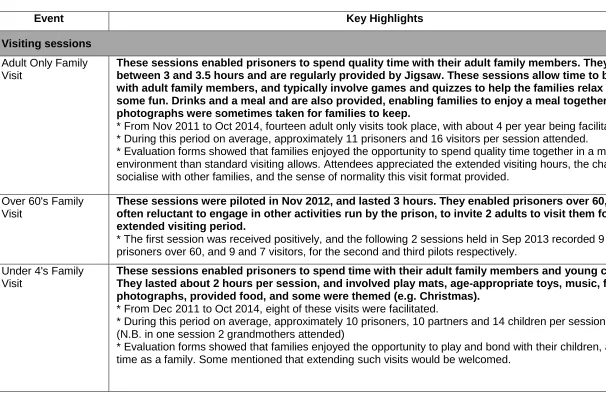
Table 2. Summary of Key Events listed in Manager’s Reports from 2012 to 2014
Event Key Highlights
Visiting sessions
Adult Only Family Visit
These sessions enabled prisoners to spend quality time with their adult family members. They lasted between 3 and 3.5 hours and are regularly provided by Jigsaw. These sessions allow time to be spent with adult family members, and typically involve games and quizzes to help the families relax and have some fun. Drinks and a meal and are also provided, enabling families to enjoy a meal together, and photographs were sometimes taken for families to keep.
* From Nov 2011 to Oct 2014, fourteen adult only visits took place, with about 4 per year being facilitated. * During this period on average, approximately 11 prisoners and 16 visitors per session attended.
* Evaluation forms showed that families enjoyed the opportunity to spend quality time together in a more relaxed environment than standard visiting allows. Attendees appreciated the extended visiting hours, the chance to socialise with other families, and the sense of normality this visit format provided.
Over 60's Family Visit
These sessions were piloted in Nov 2012, and lasted 3 hours. They enabled prisoners over 60, who are often reluctant to engage in other activities run by the prison, to invite 2 adults to visit them for an extended visiting period.
* The first session was received positively, and the following 2 sessions held in Sep 2013 recorded 9 and 10 prisoners over 60, and 9 and 7 visitors, for the second and third pilots respectively.
Under 4's Family Visit
These sessions enabled prisoners to spend time with their adult family members and young children. They lasted about 2 hours per session, and involved play mats, age-appropriate toys, music, family photographs, provided food, and some were themed (e.g. Christmas).
* From Dec 2011 to Oct 2014, eight of these visits were facilitated.
* During this period on average, approximately 10 prisoners, 10 partners and 14 children per session attended (N.B. in one session 2 grandmothers attended)
Activity-based Family Visits
A number of activity-based visits were arranged, spanning activities such as sports, den making days, cooking, gardening, and music. Such visits help to facilitate teamwork within families.
* From Apr 2012 to Oct 2014, 9 activity-based family visits have been facilitated.
* Overall, when considering all activity-based visits, an average of 10 prisoners, 10 family members and 20 children took part per visit.
* Evaluation forms showed that families enjoyed the way that some of these visits facilitated relaxation and thus enabled families to have fun together. Fathers were able to have extended time with their children, and forget, even for a short time, that they were in prison.
Faith-based Family Visits
In conjunction with the Chaplaincy team in the Multi-Faith Centre, a number of faith-based days have been facilitated, enabling parents and their families to share important faith-based ceremonies and time together.
* From Nov 2011, 3 Eid family visits, 3 Muslim family services, 1 Christian family service, and 1 Easter family service have been facilitated.
* Overall, when considering all faith-based visits, an average of 9 prisoners, 12 family members and 16 children took part per organised visit.
Seasonal/Themed Family Visits
The staff at Jigsaw make an effort to keep family visits exciting and enjoyable, and one of the ways they do this is by drawing on seasonal themes and holidays such as Valentine's Day, Easter, Halloween, Bonfire night and Christmas (N.B. though Easter and Christmas are traditionally religious events, as the Chaplaincy was not involved in facilitating these family visits they have been included in this section), as well as one-off events such as the Queen's Jubilee.
* From Dec 2011, 15 seasonal/themed family visits have been facilitated.
* Overall, when considering all seasonal/themed visits, an average of 11 prisoners, 11 family members and 23 children took part per visit which demonstrates their popularity with families.
* Evaluation forms showed that families enjoyed the time that such extended visits gave, enabling prisoners to relax and play with their children, whilst children enjoyed time with their parents.
Skrapbook Kids This family intervention is designed to help fathers and children build and maintain a relationship and stronger bond during time in prison, as often family visits can be dominated by more mundane
discussion between family members with child's relationships being unwittingly overlooked. Through the use of scrapbooks this project helps to make up for some of that lost time.
* The first of these began in Jul 2014.
Drama Project This unique course enabled parents and their children to spend a week together rehearsing a play. At the end they performed for their families, and others (e.g. prison staff, governors). DVDs of the play are also produced at the end for children and prisoners to keep. The programme has been externally evaluated by Leeds Beckett University.
* 3 of these projects have taken place: the first in Apr 2012, the second during Oct 2012, and the third during Feb 2013.
* On average, 5 prisoners and 10 children took part each time this project has run. Creative Arts and
Storytelling (in partnership with PACT)
These interventions provided bonding time during which prisoners were able to engage and produce something creative for their children. In the morning prisoners created stories and pictures for their children, and in the afternoon the adult visitors and children arrived and prisoners showcased what they had achieved.
* Two of these sessions have taken place to date, with the first in Feb 2014 and the second in Apr 2014.
* Approximately 11 prisoners took part each time, with 18 children and approximately 12 adult visitors attending in the afternoons. The second session was better attended than the first, with double the number of children coming to than their parents.
Storybook Dads These sessions enable dads to record themselves reading stories for their children, which are then put onto DVD and then sent to their children to watch. This is likely to help build a bond between fathers and children.
Family-orientated courses
Father's Inside Parenting Course
This parenting course was first delivered in Apr 2012, and three more were delivered by February 2014. * An average of 13 prisoners completed this course each time it was delivered.
* Fewer drop-outs were recorded each time the course was delivered, with 46% completion during the first delivery, rising to over 86% in the last.
DWP/NSPCC Pregnancy Project
This is a 10-week course for expectant fathers and their pregnant partners, involving 6 weeks on anti-natal classes in the prison, 1 month off for the birth, and 4 weeks of post-anti-natal classes with the couples and their babies.
* The first of these courses began in Apr 2012, and a few have run since then. Whilst attendance may seem low at between 3 - 5 prisoners (and their partners), this is a vital time for partners to strengthen their relationships. Positive
Relationships Course
*This is a course for prisoners and their partners to develop communication skills together and to develop healthy and positive relationships..
*3 couples completed this course (1 couple had to drop out as the prisoner was transferred) Relationships
Without Violence Course
*The relationships without violence course (Level 1 & 2 through the Open College Network) focuses on underlying beliefs, power, control and personal motivation for change.
4. Jigsaw monitoring data
This section reports the analysis conducted on Jigsaw’s routinely collected monitoring data. This data demonstrates the number of visitors to Jigsaw, the number of adult and child visitors, the number of first-time visitors supported, and the volume of calls that are dealt with by staff.
Visitors to Jigsaw
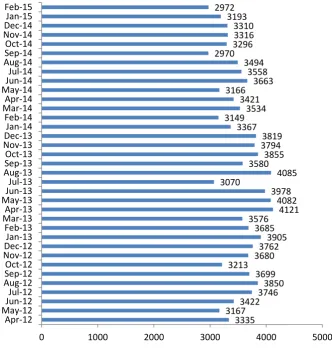
[image:19.595.147.480.279.631.2]As mentioned in our previous report, the scale of Jigsaw’s work should not be understated: figures from April 2012 to February 2015 (inclusive) show that, on average, Jigsaw managed and supported 3538 visitors to HMP Leeds each month. Figure 1 below shows the latest data on the total number of visitors processed between April 2012 and February 2015. Figure 1. Number of visitors accessing Jigsaw between April 2012 to February 2015
As shown in Figure 2, the majority of visitors to Jigsaw are adults, with an average of 2967 adults visiting per month between April 2012 to February 2015. The highest number of adults visited Jigsaw throughout April 2013, whilst the least visited during July 2013. In addition an average of 571 children visited Jigsaw each month during the same period, with the most visiting throughout June 2013.
3335 3167 3422
3746 3850 3699 3213 3680
3762 3905 3685 3576 4121
4082 3978 3070 4085
3580 3855 3794 3819 3367 3149 3534
3421 3166 3663
3558 3494 2970 3296
3316 3310 3193 2972
0 1000 2000 3000 4000 5000
Figure 2. Number of adults and children accessing Jigsaw between April 2012 and February 2015
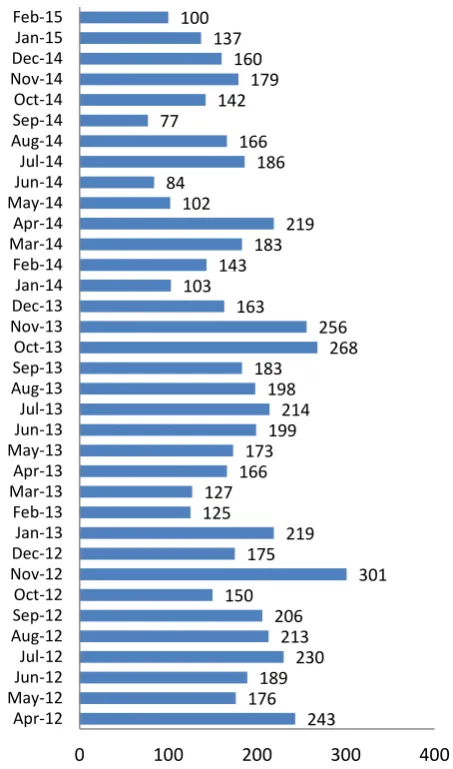
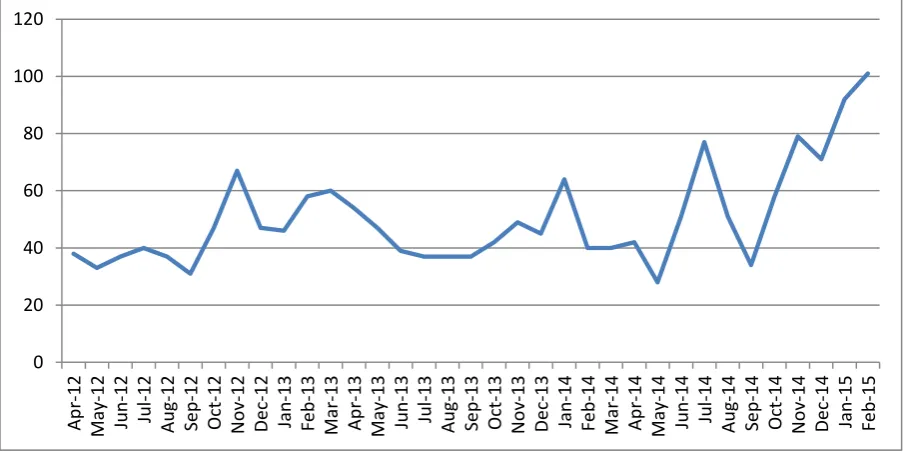
A considerable number of the monthly visitors to Jigsaw are actually visiting for the first time. On average, 176 individuals were first-time visitors each month, with a high of 301 first-time visitors attending during November 2012. Figure 3 outlines these figures.
2790 2751 2881
3145 3154 3170 2761 3177 3100 3268
3133 3007 3358
3325 3157 2401 3283
2967 3246 3257 3252 2855 2713 3034 2900 2881 3121
2970 2863 2503
2751 2784 2727 2677 2490
545 416 541
601 696 529 452 503
662 637 552 569 763
757 821
669 802
613 609 537 567 512 436 500 521 285 542
588 631 467
545 532 583 516 482
0 500 1000 1500 2000 2500 3000 3500 4000 4500
Apr-12 May-12Jun-12 Jul-12 Aug-12Sep-12 Oct-12 Nov-12Dec-12 Jan-13 Feb-13 Mar-13 Apr-13 May-13 Jun-13Jul-13 Aug-13 Sep-13Oct-13 Nov-13Dec-13 Jan-14 Feb-14 Mar-14 Apr-14 May-14Jun-14 Jul-14 Aug-14 Sep-14Oct-14 Nov-14 Dec-14Jan-15 Feb-15
Figure 3. Number of first-time Visitors accessing Jigsaw between April 2012 and February 2015
As shown in Figure 5, year on year, August is without doubt the period during which the highest numbers of children attend the Jigsaw play areas. August 2013 had the highest during this period with 448 children, whilst only 111 children attended during May 2012. This demonstrates seasonal fluctuations, and the repeatedly high August attendance is most likely due to school summer holidays.
243 176 189 230 213 206 150 301 175 219 125 127 166 173 199 214 198 183 268 256 163 103 143 183 219 102 84 186 166 77 142 179 160 137 100
0 100 200 300 400
Figure 5. Children in Jigsaw play areas between Apr 2012 and February 2015
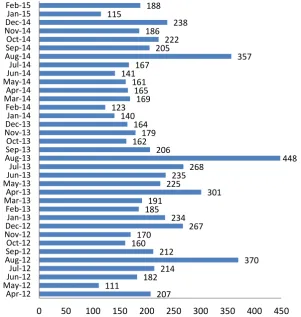
As well as attending to visitors at the centre, Jigsaw staff also respond to a large volume of telephone enquiries, as shown in Figure 6, and addressing a range of queries face-to-face with visitors (Figure 7). The nature of the enquiries vary from month-to-month, but often includes: issues regarding prisoners’ property, complaints about the booking line and visiting orders and issues regarding postal orders. From April 2012 to February 2015, Jigsaw responded to 8941 calls and addressed queries for 1756 individuals face-to-face.
207 111 182
214 370
212 160 170
267 234 185 191
301 225 235
268 448
206 162 179 164 140 123 169
165 161 141 167
357 205 222
186 238 115 188
0 50 100 150 200 250 300 350 400 450
Figure 6. Number of telephone calls responded to by Jigsaw staff between April 2012 and February 2015
Figure 7. Number of face-to-face support sessions with visitors by Jigsaw staff between April 2012 and February 2015
0 50 100 150 200 250 300 350 400 450 500 A p r-12 May-12 Ju n -12 Ju l-12 A u g-12 Se p -12 O ct -12 N o v-12 De c-12
Jan-13 Feb
-13 Mar -13 A p r-13 May-13 Ju n -13 Ju l-13 A u g-13 Se p -13 O ct -13 N o v-13 De c-13
Jan-14 Feb
-14 Mar -14 A p r-14 May-14 Ju n -14 Ju l-14 A u g-14 Se p -14 O ct -14 N o v-14 De c-14
Jan-15 Feb
[image:23.595.72.524.395.621.2]5. Thematic synthesis of key findings
This section brings together key themes that were discussed across the data gathered from prisoners, prison visitors, staff (Jigsaw and HMP Leeds) as well as other strategic individuals working within Jigsaw, such as the management Committee, and the wider prison service. Enhancing the prison visiting experience
One salient issue that emerged from both prisoners’ families and from prisoners was that prison visiting can be a traumatic and anxiety-provoking experience for families and children. Although some visitors became acclimatised to prison procedure and process, many still found travelling to and entering the prison difficult and daunting. One prison officer
commented on the entrance to HMP Leeds:
“It’s horrific. I mean when you look at [HMP Leeds], even when I first started….I thought my god it looks quite frightening.”
The prisoners interviewed as part of this evaluation were largely cognisant of the emotional and logistical challenges their families faced:
“To come into prison…it’s still a massive thing for your partner isn’t it, you know it’s a massive thing.” (Prisoner)
Almost unanimously, prison visitors suggested that Jigsaw offered a comfortable and friendly space that allowed time to relax before the visit. Visitors with young children commented that there were toys for children and one woman stated that her nephew used the computers provided. It was the ‘humanity’ and time that Jigsaw staff have for visitors that was
consistently noted; their welcoming demeanour was particularly commented upon. One member of prison staff succinctly described this and argued that it would be difficult for prison staff to offer the same level of consideration:
“Jigsaw provides a nice welcoming atmosphere for the families to come in. You know most of the people that are coming here are innocent people …and the Jigsaw staff treat them as such. I think prison staff tend to treat [visitors] a bit like prisoners if I’m honest, you know and they’ll look sort of look down on them which is ridiculous and I know that but it does happen These staff who’re working here, you know treat them like proper human beings and really welcoming. So it’s really nice, for the visitors its really nice place to come, especially if someone’s never been to visit before.” (Prison Staff)
Although respondents suggested that Jigsaw provides functional services for visitors – access to toilets, lockers and refreshments – it was clear that Jigsaw staff provided more than this for most people, offering bespoke support and guidance for those who required it:
“The Leeds service provides a very personal service for visitors…it goes way beyond just providing a cup of tea…and that’s rare.”(Strategic stakeholder)
Nearly all of the visitors interviewed reported that they have, or would use, Jigsaw to access information. Requests for information in Jigsaw (written or verbal) usually concerned
understanding processes and what to expect during a first visit to the prison; what items can be taken into the prison; how much money visitors can take into the prison; and further information about prison life and booking prison visits:
“I mean for the first time going over there it’s a daunting experience. With the
searches and everything it’s frightening, even now it still is a bit. They talk to you here quite a lot.” (Prison Visitor)
One of the thematic areas that reoccurred throughout the data were comparisons between Jigsaw and other prison visitor centre provision both across the region and beyond.
Strategic stakeholders working closely within the Prison Service consistently claimed that the services offered at HMP Leeds were way-ahead of other prisons:
“It’s essential to have a well-run visitors’ centre and the one at HMP Leeds is exceptional…the environment in there cannot be underestimated. A number of centres I have seen are somewhat ramshackled or a bit dirty, not welcoming.”
(Strategic stakeholder)
Prisoners also agreed that the service provided by Jigsaw surpassed what they had previously been familiar with at other institutions. This was important, as it gave prisoners confidence that their families were being treated with dignity and respect. Moreover, the atmosphere and the way visits were conducted were seen as being more ‘humane’ and family-centred than other prisons:
“She didn’t feel bad coming here, she felt relaxed; but in the other jails she felt like she’s been put under a bit of scrutiny” (Prisoner)
The problems of booking visits
Prison visit bookings continue to be a major source of anxiety and stress for families and prisoners. The process for booking visits was often described as cumbersome, time-consuming and rigid. Several prison visitors complained about the current method of booking a visit through a telephone booking line. It was reported that the phone line is often engaged and diverts to an answering machine that charges the caller to listen to the
message. Most participants acknowledged that Jigsaw does not run the booking line and that there is an alternative method to book via email; however this requires internet access and confidence using computers:
“At first I found it quite frustrating trying to get through on a phone to make a visit. That’s very frustrating but you get to learn that you can book in advance and email as well. I found that very frustrating at first because it’s out of your hands, you’ve got no control.” (Prison Visitor)
Prisoners themselves also described frustration at the visit booking process from their perspective. Managing visiting orders, ensuring the list of people registered to visit and the difficulties of not being able to ‘carry-over’ visits on a monthly basis were sources of anxiety. Indeed, modifications to the process by which individual’s book prison visits have created increased workload pressures for Jigsaw staff. This has manifested itself in increased complaints and telephone enquiries from the difficulties faced by visitors using the booking system. As an example, in August 2009 Jigsaw staff spent a total of 5.49 hours addressing telephone queries and complaints; however, this escalated to 48.5 hours in August 2014. One member of Jigsaw staff suggested that this situation had caused pressure on front-line staff, but had not compromised the quality of provision to visitors:
“I think the quality is still there but the workload has definitely increased.” (Jigsaw staff member)
The sustainability of increasing demands on staff time through managing complaints and offering a high-quality service is to be seen.
Peer support for visitors
The facilities at Jigsaw make it an ideal location for visitors to meet, chat and foster
they spoke to other visitors, some offered help and advice to people who were visiting for their first time. For some this was a small source of support whilst others stated that they did not tend to talk to other visitors and that they just ‘kept themselves to themselves’ until they entered the prison:
“Me and my daughter come here and we can spot the first timers and they are a bit nervous. We ask can we give them a bit of advice and support as well.” (Prison Visitor)
“I think it’s good because you can see other people who are visitors and if you don’t know anything you can ask them and people know.” (Prison Visitor)
Maintaining positive family ties
Those prisoners interviewed suggested how pivotal Jigsaw services had been in allowing them to continue or, in some cases, establish their role as a father and partner. The benefits of the extended visits were unanimously praised as being a key way of staying in touch with family life. Some prisoners’ children had been born while they were serving their sentence and so the opportunity to get ‘hands-on’ experience of fatherhood was appreciated:
“Having the experience of the ‘baby-bit’ as well to get to change nappies that’s important, it’s part of the process.” (Prisoner)
One prisoner argued that his relationship with his children had improved through the extended visits facilitated by Jigsaw. Without these visits, he was adamant that his relationship with his children would be different:
“Like play visits, running around the gym and playing sports and whatever and like doing things with the kids, the relationship has been impacted. I think my relationship with them would be different if I didn’t go on the Jigsaw visits…for me it has helped
maintain and improve relationships with them even.” (Prisoner)
There were several prisoners who were disappointed that they had not yet experienced an extended prison visit. This was attributed to two main reasons: first, prisoners claimed that demand for these visits outstripped supply and this would always create a situation whereby some families would miss-out. Second, prisoners questioned the eligibility criteria for those wishing to apply for a visit. Some prisoners suggested that they had been ineligible because of security concerns – some prisoners did not fully understand the reasons for this rejection and would have appreciated some supplementary explanation.
A number of prisoners had also been involved with other Jigsaw initiatives, like the scrapbook dadz scheme and storybook dads. These initiatives were wholly praised for enabling families to keep in touch, even ‘at distance’, with their children:
“It’s like a communicating with your kids basically so in a way even though their dad isn’t around, you don’t forget about him you know what I mean.” (Prisoner)
Jigsaw in making the prison a friendlier environment, they would not encourage their children to visit them:
“Prison’s harsh, prison is you know what you see there, it’s all bars, it’s all doors, it’s all you know…and barbed wire and it’s kind of…I think the Jigsaw kind of like softens it off and it kind of makes it not necessarily a fun place to come to but there is
that…like play area and the family type stuff. It’s all like kid orientated and it makes it easier, a lot easier.” (Prisoner)
The role of play and child-parent interaction
Jigsaw employs a qualified play worker in a designated area facilitating supervised play during prison visits. The play visits service is a popular facet of Jigsaw’s work and attracts substantial interest from prisoners and their families. The opportunity for prisoners to bond with their children through play visits was
seen as being more effective than
‘standard’ visits whereby fixed tables and chairs made communication between father and child difficult. In this regard, the
facilities and atmosphere which enable family ties to be maintained, particularly with children, were seen as being better at HMP Leeds than other prisons that
respondents had experienced:
“I was in [name of prison], when the visitors came in, they knew they were coming into a prison. They had the searches, the way they were treated, before that I was in another jai and it’s the same thing
there. But here it’s not as bad for the people coming to visit you...In other prisons, you can’t have your kids on your lap as well…you’re not allowed.” (Prisoner) Internal evaluation by Jigsaw corroborates these findings. Indeed, their data showed that children felt happier visiting their father in the play visits area rather than on standard visits. Data suggests that there has been a cultural shift in prisoners’ and families perceptions of the play visits service. While at first prisoners were reported to be insecure and unsure of what the service could offer, it is clear that over time this has eroded and is seen as an ideal vehicle for improving father-child bonds. In some cases, prison visitors suggested that their children had, for the first time, felt comfortable playing with their father and enjoying his company.
One potential drawback reported by prisoners during focus group discussions and by
children through Jigsaw’s internal monitoring, is the difficulties in saying goodbye after a play visit. It is assumed that the quality of bonding is potentially higher in the play visit which can make separation more traumatic. In addition, prisoners and visitors recommended that more provision of this nature should be provided as these visits were reported to get booked up extremely quickly.
Contribution to the perception of, and atmosphere in, HMP Leeds
Jigsaw was described as ‘the shop window’ for HMP Leeds and often provided the first impression of the institution. This first impression was frequently very positive and first-time visitors’ expectations were usually surpassed.
commented on the current atmosphere in the prison and the potential for violence to easily escalate:
“In the 27 years I’ve done this job, I’ve never known us be so tight for staff. In fact so much so it’s getting to be quite dangerous to be honest.”
Visits from family and friends were important occasions that provided prisoners with something to look forward to during their sentence. The threat (perceived or actual) that visits could be taken away from prisoners, or curtailed for poor behaviour meant that individuals were determined to comply with establishment rules and not forgo any of their visits entitlement:
“It’s the biggest item that they can remove from you, isn’t it, that’s the one that you dread. How do I tell my wife on the phone ‘look some fellow had a go at me
yesterday and I couldn’t keep my hands in my pocket so I punched him on the nose, oh and by the way love you can’t come and visit me five or six times this month, it’s only two.’” (Prisoner)
Contribution to reducing re-offending
There was agreement from all respondents that families were an important component in reducing prisoners’ likelihood of reoffending:
“If you tackle the family pathway you have the potential to reduce reoffending”
(Strategic stakeholder)
Through the family-support work and the myriad of activities and programmes delivered by Jigsaw, it was suggested by several strategic stakeholders that Jigsaw were making a clear contribution to reducing the reoffending rates of prisoners at HMP Leeds. While desistance from criminal activity is multifactorial, there was a consensus that connectivity to family was important. In that respect, the work that Jigsaw does to ensure that visitors feel comfortable in visiting HMP Leeds and feel happy returning, is critical. In addition their work in
addressing prisoners’ attitudes, behaviours and offending propensity, through interventions like ‘storybook dads’ and ‘relationships without violence’ course, means that the likelihood of prisoners reintegrating back into family life and the community is enhanced:
“It’s not just the bringing families in and making them feel more at ease about being in the prison environment and running the crèche etc., but it is the parenting classes, it’s the programmes they put on.” (Strategic stakeholder)
“They have a direct impact on reducing offending behaviour.” (Strategic stakeholder) Prisoners did suggest that having family in the community was critically important when released from prison and they noted how this would be a salient factor in reducing their chances of offending again. It was suggested that the activities and support for families that Jigsaw provides was important for ensuring that families would ‘stick by them’ when they were in HMP Leeds.
In addition, and as mentioned previously, ‘The Gatehouse’ and ‘Lock Inn’ also provide opportunities for selected prisoners to develop skills, experiences and qualifications in catering and hospitality. This not only enables prisoners to gain transferable skills that can be used in the community, but increases the likelihood of employment – a key determinant in desistance – after release.
Jigsaw’s organisational relationships and partnership working
Jigsaw’s relationship with HMP Leeds is clearly one of the key factors in the success of the organisation. Senior staff at HMP Leeds clearly recognise Jigsaw’s contribution to their core organisational objectives:
reducing reoffending in the future; that’s the crucial role for Jigsaw for Leeds prison.”
(Strategic stakeholder)
At a senior level, the Management Committee and Project Director of Jigsaw have open communication channels with both the Governor and her senior teams. As noted, HMP Leeds’ commitment to Jigsaw is apparent on many levels, perhaps most notably the secondment of a member of prison staff to Jigsaw. The Governor of HMP Leeds regularly attends family forums whereby visitors can meet and share their experiences of HMP Leeds – this again, reaffirms the commitment of senior staff in HMP Leeds to Jigsaw and the work it undertakes.
Relationships with prison staff within HMP Leeds remain critical to the overall visits
experience. Jigsaw staff suggested that relationships with the majority of operational staff are strong and that most staff appreciate the work undertaken by Jigsaw. Nonetheless, a small proportion of prison staff were reported to not always manage prisoners’ families appropriately – Jigsaw staff argued that more training around prisoners’ families was necessary to ensure greater awareness of the issues. Beyond HMP Leeds, Jigsaw’s
partnerships extend to others agencies including West Yorkshire Probation, Social Services, NSPCC and Children in Need. These relationships ensure that Jigsaw draw on appropriate expertise and funding to support the work they do.
Financial costs and benefits
Jigsaw’s expanding funding streams have created a situation whereby the organisation is more self-sustaining and less-reliant on grant income. In 2014, approximately 60% of Jigsaw’s income was from the tea bar, The Gatehouse and Lock Inn. Other income is gathered through grant funding and HMP Leeds.
One potential criticism of Jigsaw (in relation to financial costs and benefits), was the scale and scope of the work they did specifically with prisoners in HMP Leeds. Clearly, there are security restrictions and other criteria that can restrict an individual’s ability to access Jigsaw services. Nevertheless, prisoners that had participated in Jigsaw’s courses suggested that as a proportion of the total prisoner population in HMP Leeds, relatively few individuals attended:
“…out of the twelve hundred people [in HMP Leeds] how many different people apply for Jigsaw courses.” (Prisoner)
Box 3. Estimated cost benefit of Jigsaw
Our data suggest that Jigsaw makes an extensive contribution to prison life at HMP Leeds. Some of these outcomes are difficult to quantify and assign financial value to. For example, improvements in atmosphere, visitors feeling more welcome and able to access bespoke advice and services etc.
One frequent outcome measure is the cost saved from reductions in re-offending – clearly a fundamental remit for prison establishments. Our evaluation would argue that Jigsaw offers excellent value for money and our conclusions are based on the assumptions below. Further in-depth economic analysis would be beneficial in the future.
Jigsaw facilitates and assists in the management of 23 visits session per week. Each visits session has a capacity for 25-28 prisoners and their families. Therefore
approximately 29,900-33,488 prison visits take place at HMP Leeds each year. Evidence from this evaluation supports wider reports which show that maintaining family ties through visits does contribute to reductions in re-offending (NOMS, 2011).
The operating costs of Jigsaw per year are approximately £350,000.
Estimates of the costs saved by reducing re-offending vary. The often cited Social Exclusion Unit in 2002 suggested that the cost to imprison an individual was £37,500 per year (Social Exclusion Unit, 2002), but more recent figures suggest somewhere in the region of £49,220 - £80,185 (Smith et al., 2007, de Las Casas et al., 2011).
Based on national reoffending data which suggests that 45.1% of adult offenders will re-offend within one year (Ministry of Justice, 2015), 541 prisoners from HMP Leeds return within 12 months of their release.
Even if Jigsaw, through their family centred work and the courses they provide to prisoners in HMP Leeds, contributed to preventing at least 4-7 prisoners1 from re-offending then this offers a cost neutral approach to reducing re-re-offending. Obviously, Jigsaw helps considerably more prisoners than this.
Innovation and potential expansion
The Management Committee stressed that innovation and reflection on practice was essential so that the organisation constantly develops. They noted that innovation and new ideas mitigate against organisational stagnation or ‘standing still’. Jigsaw’s innovative practice and their ability to ‘try new things’ were seen as an important component of organisational success and was reiterated by a number of strategic stakeholders:
“They’re constantly looking at new ways they can work with prisoners, work with families, encourage good parenting, encourage good relationships and develop those relationships. It’s that kind of innovative element of Jigsaw that I love.” (Strategic stakeholder)
Replication of Jigsaw’s practice is perhaps one indicator that Jigsaw remain at the ‘cutting-edge’ of pioneering practice in the sector and moreover, Jigsaw are keen to share their good practice in order to improve visiting provision as a whole across the UK.
1Based on costs for re-offending from Smith et al. (2007) and de Las Casas et al. (2011).
Given Jigsaw’s pioneering work at HMP Leeds, there have been on-going discussions about the possibility for expanding their work to other prisons in the region. While this growth may be seen as a logical progression for the organisation, there were some concerns that this could dilute the quality of work Jigsaw does at HMP Leeds. Several strategic figures suggested that they would be supportive of Jigsaw’s plans for expansion, but did warn against becoming too ambitious in size and scope:
“What can happen with charities like Jigsaw is they become ambitious, want to bid for work in other prisons or other environments doing the same kind of work and they lose sight a little bit of what their core reason for being was, which is very much around Leeds prison.” (Strategic stakeholder)
“There’s a real danger with getting too big in that you lose the personal touch…and that’s their massive strength.” (Strategic stakeholder)
The current climate was described as potentially ‘high-risk’ for Jigsaw given that visitor centre provision may be contracted out to organisations who may be able to offer value for money through providing favourable ‘scales of economy’ across geographical regions. This possibly means that Jigsaw may have to expand their provision to other prisons in order to survive being taken-over by a larger organisation.
6. Discussion
Since the previous evaluation in 2012 (Woodall et al., 2012), Jigsaw have grown their portfolio of work for visitors, prisoners, staff and the local community. This relates both to the acquisition of new premises (i.e. ‘The Gatehouse’ and taking over the management of the ‘Lock-Inn’) and the delivery of new interventions and programmes for prisoners and visitors. As an example, the play visits service has gone from strength-to-strength, as data derived from this evaluation suggest that play visits may be more effective in maintaining and strengthening family ties than standard visit sessions. Expansion has meant an
increase in staffing, with the Jigsaw team now significantly larger than it was a decade ago. The team is obviously a happy one, with a great deal of confidence in the Project Director, a clear delineation of roles, excellent working relationships, and who work in a pleasant building suited for purpose.
Despite growth, one constant throughout has been the high-quality service delivery for those visiting HMP Leeds. While the value of a facility to wait prior to visiting offering refreshments and toilets can be underestimated, it is clear that this remains an important aspect of the visits experience for those travelling to HMP Leeds from outside of the region. However, the ability of staff to diffuse visitors’ anxieties and worries continues to be a reoccurring theme not only in this evaluation but in those done previously (Woodall et al., 2006, Dixey and Woodall, 2009, Woodall et al., 2012). The combination of staff knowledge and interpersonal skills is clearly appreciated by visitors, especially those visiting for the first time.
Jigsaw’s contribution to the reducing re-offending agenda has been endorsed by the
comments of respondents taking part in this evaluation. Experienced practitioners in prison governance and management saw clear relationships between the activities being delivered at Jigsaw and their impact on offending, and this related both to the ‘family centred’ work that Jigsaw delivered (i.e. extended and themed family visits, play visits etc.) and the prisoner focussed interventions addressing relationships and parenting issues. These views were also endorsed by prisoners themselves who noted the importance of keeping families together for successful rehabilitation. They noted how connections to family reduces institutionalisation; ensures connectivity to the outside world; and meant that practical and emotional support was there after release. Overall, positive family relationships were important for developing prisoners’ ‘resilience’ (Markson et al., 2015) both for coping inside prison and for the challenges in reintegrating back into society.
As evaluators, it is difficult to be certain that the work of Jigsaw is directly attributable to reductions in re-offending of those released from HMP Leeds. Indeed, it is well-recognised that the reasons for re-offending are complex and multifactorial and encompass a myriad of other determinants like accommodation, employment etc. Nonetheless, Jigsaw can be confident that they are improving family ties and keeping families together. Keeping families together is acknowledged by the MoJ Reducing Reoffending Third Sector Advisory Group as an important ingredient in reducing re-offending (Reducing Reoffending Third Sector
Advisory Group, 2011). Furthermore, NOMS also states that strengthening family ties, improving family and intimate relationships, improving parenting behaviours, and increasing acceptance into communities and social networks are intermediate outcomes that are likely to be important in reducing re-offending outcomes (NOMS, 2011).
Recent research has also highlighted how prison visits from close family, particularly children, often amplifies the costs of reoffending to prisoners (Liu et al., 2014). Our
observations were that prisoners particularly valued extended visits and play visits with their children and often the pleasure these visits provided acted as a motivator not to offend in future. Whether visits from children do make prisoners more aware of their offending behaviour and future intentions to offend will need further exploration. Contemporary