R E S E A R C H A R T I C L E
Open Access
Implementation of internet-delivered
cognitive behavior therapy within
community mental health clinics: a process
evaluation using the consolidated
framework for implementation research
H.D. Hadjistavropoulos
*, M.M. Nugent, D. Dirkse and N. Pugh
Abstract
Background:Depression and anxiety are prevalent and under treated conditions that create enormous burden for
the patient and the health system. Internet-delivered cognitive behavior therapy (ICBT) improves patient access to treatment by providing therapeutic information via the Internet, presented in sequential lessons, accompanied by brief weekly therapist support. While there is growing research supporting ICBT, use of ICBT within community mental health clinics is limited. In a recent trial, an external unit specializing in ICBT facilitated use of ICBT in community mental health clinics in one Canadian province (ISRCTN42729166; registered November 5, 2013). Patient outcomes were very promising and uptake was encouraging. This paper reports on a parallel process evaluation designed to understand facilitators and barriers impacting the uptake and implementation of ICBT.
Methods:Therapists (n= 22) and managers (n= 11) from seven community mental health clinics dispersed across one Canadian province who were involved in implementing ICBT over ~2 years completed an online survey (including open and closed-ended questions) about ICBT experiences. The questions were based on the Consolidated Framework for Implementation Research (CFIR), which outlines diverse constructs that have the potential to impact program implementation.
Results:Analyses suggested ICBT implementation was perceived to be most prominently facilitated by intervention characteristics (namely the relative advantages of ICBT compared to face-to-face therapy, the quality of the ICBT program that was delivered, and evidence supporting ICBT) and implementation processes (namely the use of an external facilitation unit that aided with engaging patients, therapists, and managers and ICBT implementation). The inner setting was identified as the most significant barrier to implementation as a result of limited resources for ICBT combined with greater priority given to face-to-face care.
Conclusions:The results contribute to understanding facilitators and barriers to using ICBT within community mental health clinics and serve to identify recommendations for improving uptake and implementation of ICBT in clinic settings.
Keywords:Process evaluation, Implementation research, Consolidated framework for implementation research, Internet-delivered cognitive behavior therapy, Depression, Anxiety
* Correspondence:[email protected]
Department of Psychology, University of Regina, 3737 Wascana Parkway, Regina, SK S4S 0A2, Canada
Background
Despite being highly prevalent and disabling conditions [1], depression and anxiety often remain untreated [2]. Barriers to treatment are diverse and include limited perceived need for treatment, preference to independently manage prob-lems, inadequate finances, time constraints, transportation or mobility challenges, poor access to providers, or con-cerns about privacy and stigma [2]. Internet-delivered cog-nitive behavior therapy (ICBT) for depression and anxiety has the potential to address many of these barriers and im-prove patient access to evidence-based treatment [3]. ICBT involves patients reviewing structured weekly lessons deliv-ered via the Internet over the course of several months. Homework is assigned to facilitate learning and brief ther-apist support is typically provided using emails or telephone calls. Randomized controlled trials provide strong support for ICBT with large treatment effects identified for those receiving ICBT [4]; these promising findings extend to when ICBT is delivered in routine practice settings [5]. Nevertheless, this latter research primarily has been con-ducted in specialized ICBT clinics, where there are limited competing demands on therapists’time [5].
At present, ICBT is largely unavailable on a routine basis to most Canadian patients who have depression and anxiety [3]. In 2014, the Mental Health Commission of Canada released a briefing document encouraging broader use of technology in mental health care [6]. Consistent with this call, a recent trial by our group compared ICBT for depression and anxiety when deliv-ered by therapists working in a specialized clinic to when ICBT was delivered by therapists working in com-munity mental health clinics distributed across one Can-adian province (i.e., clinics where therapists primarily deliver face-to-face care but secondarily use ICBT) [7]. Supporting the public health potential of ICBT, regard-less of setting, completion rates, satisfaction, and out-comes were very strong. In both the specialized clinic and community mental health clinics, 78% of patients completed all core ICBT lessons, over 94% reported that the course was worth their time, and large effects were found from pre- to post-treatment on symptoms of de-pression and generalized anxiety. Uptake of ICBT by the clinic therapists was encouraging, with continued use of ICBT within the clinics post-trial and growth in use of ICBT over time (i.e., 110 patients were treated by com-munity therapists in first 12 months the ICBT program was implemented; 205 patients were treated by commu-nity therapists over the last 12 months).
While there is growing literature on attitudes towards ICBT [8, 9] and the effectiveness of ICBT in clinical prac-tice settings [5], as well as on factors that impact the imple-mentation of e-health generally [10], there is limited literature concerning models of disseminating ICBT and ex-periences with implementing ICBT. Lack of information on
implementation could represent a barrier to wider scale im-plementation. In the present research, we first describe the facilitation model and strategies that were used [11] to support ICBT implementation in community mental health clinics in Saskatchewan. Second, we use the Consolidated Framework for Implementation Research CFIR; [12] to examine the perceived barriers and facilitators to ICBT implementation among therapists and managers within the community mental health clinics. The CFIR is a compre-hensive meta-theoretical framework (based on a review of 19 other theories) that outlines diverse constructs that have the potential to impact program implementation. More specifically, this study explores the extent to which ICBT implementation was impacted by intervention characteris-tics (e.g., evidence, advantages, complexity, quality, cost), the outer setting (e.g., patient needs, networks, policies), the inner setting (e.g., structure, communication, culture), indi-vidual characteristics (e.g., therapist/manager knowledge, self-efficacy, interest), and implementation processes (e.g., planning, engaging, conducting, reflecting, and evaluating). The findings may assist others who are interested in incorp-orating ICBT into service delivery within community mental health clinics in that we highlight a process for ICBT implementation. We also identify facilitators that are associated with the uptake of ICBT as well as barriers that need to be overcome to improve implementation efforts. The results also contribute to growing literature on CFIR and how it can be used to understand and evaluate pro-gram implementation efforts [13].
Methods
Design/aim
This process evaluation aimed to identify barriers and facilita-tors that influenced ICBT implementation in seven commu-nity mental health clinics distributed across one province. A bespoke survey, designed around CFIR constructs, consisting of open- and closed-ended questions, was administered to therapists and managers approximately 2 years after ICBT for depression and anxiety was implemented in the clinics.
Context and setting
Geographical context
Healthcare system
Throughout Canada, medically necessary medical office and hospital care is publicly funded and financed by the government through taxation [15]. In addition, mental health care that is delivered within publicly funded health-care institutions (e.g., hospitals, community mental health clinics) is also covered. Nevertheless, resources allocated to mental health care is lower than the demand for these ser-vices with many patients reporting their needs are unmet or only partially met [16]. Many individuals in Canada turn to private health insurance or personally pay for mental health services [15].
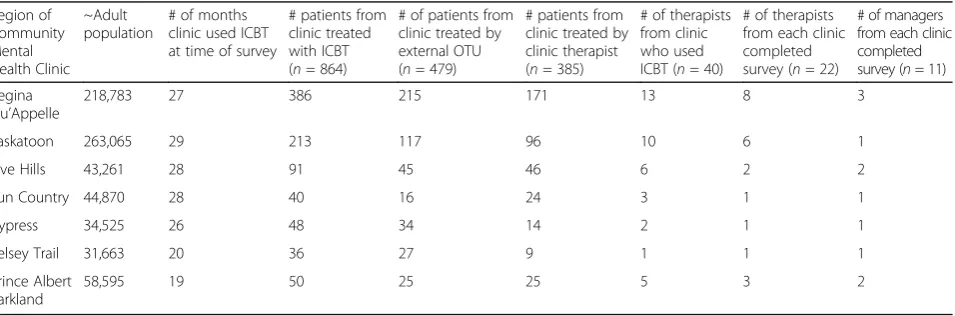
The community mental health clinics involved in the current research were funded by the provincial govern-ment to provide outpatient govern-mental health services to patients within specific regions of the province. Table 1 describes the population served by the clinics (ranging from 31, 663 to 26, 3065 residents), the length of time clinics had delivered the ICBT at the time of the survey (19–29 months), the number of patients from each health region who received ICBT (36–386), the number of thera-pists from each clinic who delivered ICBT (1–13), and the number of therapists and managers from each clinic who participated in the study. Table 2 describes the external fa-cilitation model that was used to actively aid ICBT imple-mentation within the community clinics. Specifically, we elaborate on how a specialized ICBT unit (Online Therapy Unit; OTU) at the University of Regina facilitated ICBT implementation within the clinics, such as by developing a website and policies and procedures for delivering ICBT, training therapists in ICBT, and auditing and providing clinical feedback to therapists. Of note, OTU therapists also treated patients with ICBT, taking on patients when community clinic therapists were unavailable. At the time of the study, 385 patients had been treated by community therapists and 479 had been treated by OTU therapists.
Online therapy process
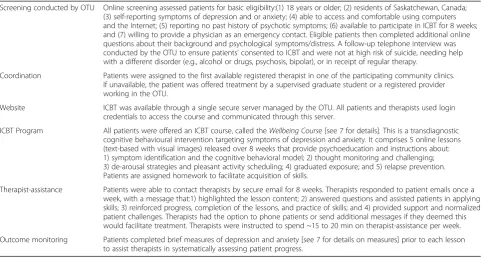
Table 3 describes how patients were deemed eligible for ICBT, how patients were assigned to community thera-pists or OTU therathera-pists, and the specifics of the ICBT program utilized. In brief, after screening, patients were assigned to the first available therapist. The ICBT pro-gram was then accessed by patients and therapists by logging onto a secure server. On this server, ICBT mate-rials were viewed, psychological measures were adminis-tered to track patient progress through treatment, and patients and therapists communicated via secure email. The ICBT program materials were developed by the eCen-treClinic (https://www.ecentreclinic.org/) at Macquarie Uni-versity, Sydney, Australia and are available through a license to the Unit. The ICBT course contains five core lessons, which patients review over 8 weeks. Using text and images presented in a slideshow format, the lessons describe: 1) the cognitive behavioral model and symptoms of depression and anxiety; 2) thought monitoring and challenging; 3) de-arousal strategies and pleasant activity scheduling; 4) gradu-ated exposure; and, 5) relapse prevention. At the end of the lesson, patients are able to download a summary of the ma-terials. Therapists also encourage patient completion of homework assignments to facilitate skill acquisition. Further-more, patients read case studies that serve to demonstrate the application of skills. On a weekly basis, therapists are re-quired to check in on patients and assist them in learning and applying the skills taught in the course. Most contact is via secure email, but phone calls can also be made if this is preferred by patients or clinically indicated.
Participants
[image:3.595.62.540.566.724.2]Participants included managers and therapists who worked in seven community mental health clinics across Saskatch-ewan who were involved in ICBT implementation at the time this survey was conducted. Completion of the survey was high, with 11 out of 12 managers (n= 3 psychologists;
Table 1Population served, months offering ICBT, ICBT utilization and participation rate by community mental health clinic
Region of Community Mental Health Clinic
~Adult population
# of months clinic used ICBT at time of survey
# patients from clinic treated with ICBT (n= 864)
# of patients from clinic treated by external OTU (n= 479)
# patients from clinic treated by clinic therapist (n= 385)
# of therapists from clinic who used ICBT (n= 40)
# of therapists from each clinic completed survey (n= 22)
# of managers from each clinic completed survey (n= 11) Regina
Qu’Appelle
218,783 27 386 215 171 13 8 3
Saskatoon 263,065 29 213 117 96 10 6 1
Five Hills 43,261 28 91 45 46 6 2 2
Sun Country 44,870 28 40 16 24 3 1 1
Cypress 34,525 26 48 34 14 2 1 1
Kelsey Trail 31,663 20 36 27 9 1 1 1
Prince Albert Parkland
58,595 19 50 25 25 5 3 2
Table 2External facilitation model used to facilitate ICBT implementation within community mental health clinics
Online Therapy Unit (OUT) at the University of Regina facilitated ICBT in the community clinics
The OTU was founded to provide centralized assistance with implementation of ICBT in the community clinics. The OTU created a platform and website that allowed therapists to deliver ICBT; established policies and procedures for therapists to deliver ICBT; trained therapists in the provision of ICBT; provided ongoing supervision and consultation with cases; provided technical assistance; screened patients; matched patients to therapists; monitored the service and treatment outcomes; and identified and resolved barriers to implementation. Key actions of the OTU as an external facilitator of change are outlined below.
Accessed new funding Research funding was obtained to support the operation of the OTU.
Developed resource sharing agreement The OTU developed a partnership with Macquarie University in order to trial a previously developed ICBT Course in Saskatchewan.
Built a coalition between OTU and community mental health clinics
Partnerships were formed between OTU and seven community mental health clinics.
Educational meetings The OTU educated and trained therapists in the provision of ICBT.
Developed tools for promoting ICBT The OTU developed posters, letters for physicians, and an online video to inform the community about ICBT.
Consensus discussions Tri-quarterly meetings were held between the OTU and the Directors of the community clinics. During these meetings, positive experiences with ICBT delivery were shared. Barriers to implementation were discussed, such as: 1) how to best educate patients about ICBT; 2) which patients should be included/excluded from ICBT; 3) how to assign therapists to work with ICBT patients; 4) how to provide supervision to therapists; and 5) how to manage health records related to ICBT.
Individuated pilot by community mental health clinics
Each clinic determined the number of therapists they would train in ICBT, and the number of patients who would receive ICBT.
Monthly updates The OTU provided monthly updates to clinics on the number of patients screened, treated, and completing ICBT.
Audit and provide feedback The OTU audited the provision of ICBT within each of the community clinics. Feedback was provided to the therapists on methods that could be employed to improve delivery of ICBT.
Email reminders Therapists received email reminders periodically regarding important aspects of providing ICBT (e.g., reminding therapists to complete weekly check-ins with patients, to build supportive relationships with patients, to remind patients to complete the course, to assist patients in applying ICBT content to life circumstances).
ICBTInternet-delivered cognitive behaviour therapy
Table 3Overview of ICBT Delivery Process
Screening conducted by OTU Online screening assessed patients for basic eligibility:(1) 18 years or older; (2) residents of Saskatchewan, Canada; (3) self-reporting symptoms of depression and or anxiety; (4) able to access and comfortable using computers and the Internet; (5) reporting no past history of psychotic symptoms; (6) available to participate in ICBT for 8 weeks; and (7) willing to provide a physician as an emergency contact. Eligible patients then completed additional online questions about their background and psychological symptoms/distress. A follow-up telephone interview was conducted by the OTU to ensure patients’consented to ICBT and were not at high risk of suicide, needing help with a different disorder (e.g., alcohol or drugs, psychosis, bipolar), or in receipt of regular therapy.
Coordination Patients were assigned to the first available registered therapist in one of the participating community clinics. If unavailable, the patient was offered treatment by a supervised graduate student or a registered provider working in the OTU.
Website ICBT was available through a single secure server managed by the OTU. All patients and therapists used login credentials to access the course and communicated through this server.
ICBT Program All patients were offered an ICBT course, called theWellbeing Course [see 7 for details]. This is a transdiagnostic cognitive behavioural intervention targeting symptoms of depression and anxiety. It comprises 5 online lessons (text-based with visual images) released over 8 weeks that provide psychoeducation and instructions about: 1) symptom identification and the cognitive behavioral model; 2) thought monitoring and challenging; 3) de-arousal strategies and pleasant activity scheduling; 4) graduated exposure; and 5) relapse prevention. Patients are assigned homework to facilitate acquisition of skills.
Therapist-assistance Patients were able to contact therapists by secure email for 8 weeks. Therapists responded to patient emails once a week, with a message that:1) highlighted the lesson content; 2) answered questions and assisted patients in applying skills; 3) reinforced progress, completion of the lessons, and practice of skills; and 4) provided support and normalized patient challenges. Therapists had the option to phone patients or send additional messages if they deemed this would facilitate treatment. Therapists were instructed to spend ~15 to 20 min on therapist-assistance per week.
Outcome monitoring Patients completed brief measures of depression and anxiety [see 7 for details on measures] prior to each lesson to assist therapists in systematically assessing patient progress.
[image:4.595.57.540.467.725.2]n = 5 social workers; n= 2 nurses; n = 1 administrators;
n= 2 male;n= 9 female) and 22 out of 23 therapists (n= 7 psychologists;n = 11 social workers;n = 3 nurses; n= 1 counselor;n= 2 male;n= 20 female) who were contacted agreeing to participate. On average, therapists who partici-pated had provided ICBT to 11.41 (SD= 7.12) patients at the time they completed the survey. Of note, we did not contact 17 therapists who provided ICBT in the past, but had retired or resigned from their position at the time of the survey.
Procedure
Research ethics board approval for the study was obtained from the University of Regina. All participants provided electronic informed consent and were offered a $10 coffee card as a token of appreciation. The secure online survey (available in Additional file 1) was administered using the Qualtrics software program. After completing background questions, participants rated their perceptions of the importance of ICBT (e.g., whether residents should have access to ICBT, whether involvement with ICBT imple-mentation was worth their time) on a scale from 1
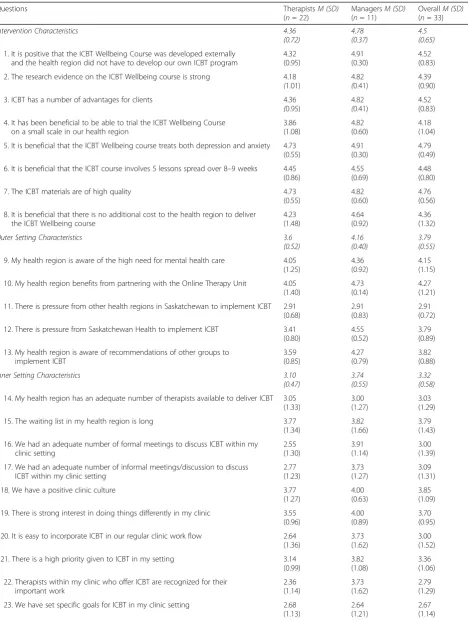
“strongly disagree”to 5“strongly agree”.Participants were then asked their opinions regarding the number of pa-tients who should receive ICBT(i.e.,“many more”,“ some-what more”, “the same number”, “somewhat fewer”, or “none”). Participants were then provided with a descrip-tion of each CFIR domain (intervendescrip-tion characteristics, outer setting, inner setting, individual characteristics, and implementation process) and were asked to comment on both positive and negative aspects of the domain on ICBT implementation. For example, the following question was posed:“The inner clinic setting (e.g., structure, communi-cation, culture) can influence program implementation efforts. Please comment on any positive or negative factors within your clinic setting that you feel may have influ-enced the implementation of ICBT within your health re-gion.” After providing open-ended feedback, participants rated agreement with a series of 47 statements (see Table 5 for items) related to ICBT implementation on a scale from 1 (“strongly disagree”) to 5 (“strongly agree”). The state-ments referenced facets of each CFIR domain. Example questions included:“It is positive that the ICBT Wellbeing
Course was developed externally and the health region did not have to develop our own ICBT program”(Intervention Characteristics); “My health care region is aware of the
high need for mental health care” (Outer Setting); “My health region has an adequate number of therapists avail-able to deliver ICBT” (Inner Setting); “Therapists in my health region have adequate knowledge of ICBT” (Individ-ual Characteristics); and, “We spent adequate time plan-ning how to deliver ICBT in advance in my health region”
(Implementation Processes).
Analyses
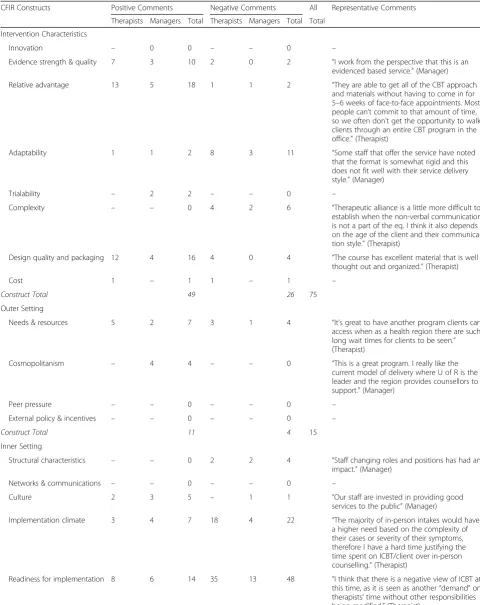
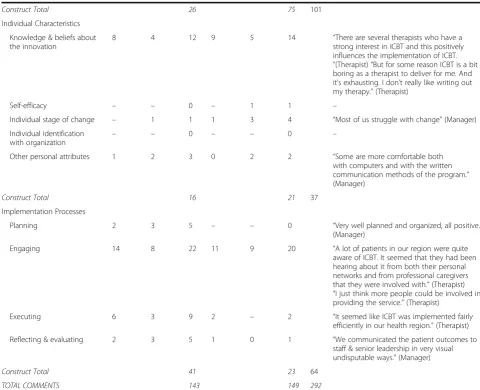
Responses to open-ended questions were exported from Qualtrics into NVivo Version 10, a qualitative data software tool. The CFIR constructs served as a coding framework with text classified into pre-existing categories (see http:// cfirguide.org/constructs.html for definitions) using deduct-ive principles [17] to identify the presence of such categor-ies in the dataset. Two coders read and coded data together reaching consensus on the CFIR domain and construct. Each sentence could contain multiple codes. Alternatively, concurrent sentences of the same thematic code could be conjoined into one unit. Once initial coding was complete, the coders examined quotes assigned to each construct as a whole and any quotes that were identified as inconsistent with the designated construct were re-examined to deter-mine the most appropriate construct. A third researcher then reviewed quotes representing each construct and iden-tified any points of disagreement that were then resolved through consensus. In addition to coding CFIR constructs, the coders classified comments as either positive (facilita-tor) or negative (barrier) in tone. Following all coding, NVi-vo’s query function was used to calculate the total frequency of each construct. The frequency score repre-sents the total number of times the construct was present in the survey (see Table 4 for frequencies and representative quotes). At times, participants made recommendations to improve ICBT implementation. These comments were also classified according to domain to identify CFIR domains requiring improvement. Descriptive statistics were calcu-lated to examine responses to rating scale survey questions (see Table 5). Ratings above 4 were interpreted as positive perceptions of implementation, while ratings below 3 were interpreted as areas of potential improvement.
Results
Perceptions of ICBT
There was strong indication that both therapists and man-agers had positive perceptions of ICBT. Specifically, both agreed strongly that Saskatchewan residents should have
access to ICBT(M= 4.61/5,SD= .50), thathealth regions should be committed to ensuring access to ICBT
(M= 4.12/5;SD= 1.05), thathealth regions should identify barriers and facilitators associated with ICBT(M = 4.12/ 5; SD = 1.05), that health regions should continuously monitor and evaluate ICBT (M = 4.06; SD = 1.25) and, that it was worth their time to be involved in ICBT
(M= 4.39;SD= .79). Also reflecting positive perceptions of ICBT, ~45% of participants indicated that asomewhat greater number of patients should receive ICBT in the future, ~21% supported treating about the samenumber of patients, and promisingly ~15% reported that many morepatients should receive ICBT. Very few participants indicated that the health regions were treating too many
Table 4Frequency of positive and negative comments about implementation of internet-delivered cognitive behaviour therapy
CFIR Constructs Positive Comments Negative Comments All Representative Comments
Therapists Managers Total Therapists Managers Total Total
Intervention Characteristics
Innovation – 0 0 – – 0 –
Evidence strength & quality 7 3 10 2 0 2 “I work from the perspective that this is an
evidenced based service.”(Manager)
Relative advantage 13 5 18 1 1 2 “They are able to get all of the CBT approach
and materials without having to come in for 5–6 weeks of face-to-face appointments. Most people can’t commit to that amount of time, so we often don’t get the opportunity to walk clients through an entire CBT program in the office.”(Therapist)
Adaptability 1 1 2 8 3 11 “Some staff that offer the service have noted
that the format is somewhat rigid and this does not fit well with their service delivery style.”(Manager)
Trialability – 2 2 – – 0 –
Complexity – – 0 4 2 6 “Therapeutic alliance is a little more difficult to
establish when the non-verbal communication is not a part of the eq. I think it also depends on the age of the client and their communica-tion style.”(Therapist)
Design quality and packaging 12 4 16 4 0 4 “The course has excellent material that is well
thought out and organized.”(Therapist)
Cost 1 – 1 1 – 1 –
Construct Total 49 26 75
Outer Setting
Needs & resources 5 2 7 3 1 4 “It’s great to have another program clients can
access when as a health region there are such long wait times for clients to be seen.” (Therapist)
Cosmopolitanism – 4 4 – – 0 “This is a great program. I really like the
current model of delivery where U of R is the leader and the region provides counsellors to support.”(Manager)
Peer pressure – – 0 – – 0 –
External policy & incentives – – 0 – – 0 –
Construct Total 11 4 15
Inner Setting
Structural characteristics – – 0 2 2 4 “Staff changing roles and positions has had an
impact.”(Manager)
Networks & communications – – 0 – – 0 –
Culture 2 3 5 – 1 1 “Our staff are invested in providing good
services to the public”(Manager)
Implementation climate 3 4 7 18 4 22 “The majority of in-person intakes would have
a higher need based on the complexity of their cases or severity of their symptoms, therefore I have a hard time justifying the time spent on ICBT/client over in-person counselling.”(Therapist)
Readiness for implementation 8 6 14 35 13 48 “I think that there is a negative view of ICBT at
Perceptions of implementation
Table 4 lists the frequency of positive and negative com-ments along with representative quotes made by partici-pants related to each CFIR construct. Table 5 displays mean ratings on statements related to the CFIR constructs. The findings are summarized below by CFIR domain with attention given to recommendations for improving imple-mentation as well as differences between therapists and managers.
Intervention characteristics
Qualitative findings Overall, 26% (75/292) of participant responses concerned the impact of the intervention on im-plementation; the majority of these comments were positive (65%; 49/75). Both therapists and managers emphasizedthe relative advantages of ICBTover face-to-face care, noting it overcomes multiple barriers to face-to-face therapy related
to time and location, and is a more convenient method of receiving care. Many participants also highlighted that the
design and packaging of the ICBT program was excellent (e.g., brief, organized, clear, practical, user-friendly) and rec-ognized the program asevidence-based.
[image:7.595.55.536.110.500.2]The most common barrier related to the intervention concerned the lack ofadaptability of the ICBT program for certain patients. Therapists reported that the ICBT program is highly standardized and not designed for blending with face-to-face care or adapted for patients who need more or less support or time to complete the program. Many participants shared it would be helpful to offer ICBT for other conditions, such as addiction and trauma. As stated by one participant: “This [ICBT] needs to continue, we need to explore other areas where we could expand this type of service broader” (Manager).
Table 4Frequency of positive and negative comments about implementation of internet-delivered cognitive behaviour therapy
(Continued)
Construct Total 26 75 101
Individual Characteristics
Knowledge & beliefs about the innovation
8 4 12 9 5 14 “There are several therapists who have a
strong interest in ICBT and this positively influences the implementation of ICBT.
”(Therapist)“But for some reason ICBT is a bit boring as a therapist to deliver for me. And it’s exhausting. I don’t really like writing out my therapy.”(Therapist)
Self-efficacy – – 0 – 1 1 –
Individual stage of change – 1 1 1 3 4 “Most of us struggle with change”(Manager)
Individual identification
with organization – –
0 – – 0 –
Other personal attributes 1 2 3 0 2 2 “Some are more comfortable both
with computers and with the written communication methods of the program.” (Manager)
Construct Total 16 21 37
Implementation Processes
Planning 2 3 5 – – 0 “Very well planned and organized, all positive.”
(Manager)
Engaging 14 8 22 11 9 20 “A lot of patients in our region were quite
aware of ICBT. It seemed that they had been hearing about it from both their personal networks and from professional caregivers that they were involved with.”(Therapist)
“I just think more people could be involved in providing the service.”(Therapist)
Executing 6 3 9 2 – 2 “It seemed like ICBT was implemented fairly
efficiently in our health region.”(Therapist)
Reflecting & evaluating 2 3 5 1 0 1 “We communicated the patient outcomes to
staff & senior leadership in very visual undisputable ways.”(Manager)
Construct Total 41 23 64
TOTAL COMMENTS 143 149 292
Table 5Therapist and manager agreement that ICBT implementation was facilitated by CFIR constructs
Questions TherapistsM (SD)
(n= 22)
ManagersM (SD)
(n= 11)
OverallM (SD)
(n= 33)
Intervention Characteristics 4.36
(0.72)
4.78 (0.37)
4.5 (0.65)
1. It is positive that the ICBT Wellbeing Course was developed externally and the health region did not have to develop our own ICBT program
4.32 (0.95) 4.91 (0.30) 4.52 (0.83)
2. The research evidence on the ICBT Wellbeing course is strong 4.18
(1.01)
4.82
(0.41)
4.39 (0.90)
3. ICBT has a number of advantages for clients 4.36
(0.95)
4.82
(0.41)
4.52 (0.83)
4. It has been beneficial to be able to trial the ICBT Wellbeing Course on a small scale in our health region
3.86 (1.08) 4.82 (0.60) 4.18 (1.04)
5. It is beneficial that the ICBT Wellbeing course treats both depression and anxiety 4.73 (0.55)
4.91 (0.30)
4.79 (0.49)
6. It is beneficial that the ICBT course involves 5 lessons spread over 8–9 weeks 4.45 (0.86)
4.55 (0.69)
4.48 (0.80)
7. The ICBT materials are of high quality 4.73
(0.55)
4.82 (0.60)
4.76 (0.56)
8. It is beneficial that there is no additional cost to the health region to deliver the ICBT Wellbeing course
4.23 (1.48) 4.64 (0.92) 4.36 (1.32)
Outer Setting Characteristics 3.6
(0.52)
4.16 (0.40)
3.79 (0.55)
9. My health region is aware of the high need for mental health care 4.05 (1.25)
4.36 (0.92)
4.15 (1.15)
10. My health region benefits from partnering with the Online Therapy Unit 4.05 (1.40)
4.73 (0.14)
4.27 (1.21)
11. There is pressure from other health regions in Saskatchewan to implement ICBT 2.91 (0.68)
2.91 (0.83)
2.91 (0.72)
12. There is pressure from Saskatchewan Health to implement ICBT 3.41 (0.80)
4.55 (0.52)
3.79 (0.89)
13. My health region is aware of recommendations of other groups to implement ICBT 3.59 (0.85) 4.27 (0.79) 3.82 (0.88)
Inner Setting Characteristics 3.10
(0.47)
3.74 (0.55)
3.32 (0.58)
14. My health region has an adequate number of therapists available to deliver ICBT 3.05 (1.33)
3.00 (1.27)
3.03 (1.29)
15. The waiting list in my health region is long 3.77
(1.34)
3.82 (1.66)
3.79 (1.43)
16. We had an adequate number of formal meetings to discuss ICBT within my clinic setting 2.55 (1.30) 3.91 (1.14) 3.00 (1.39)
17. We had an adequate number of informal meetings/discussion to discuss ICBT within my clinic setting
2.77 (1.23) 3.73 (1.27) 3.09 (1.31)
18. We have a positive clinic culture 3.77
(1.27)
4.00 (0.63)
3.85 (1.09)
19. There is strong interest in doing things differently in my clinic 3.55 (0.96)
4.00 (0.89)
3.70 (0.95)
20. It is easy to incorporate ICBT in our regular clinic work flow 2.64 (1.36)
3.73 (1.62)
3.00 (1.52)
21. There is a high priority given to ICBT in my setting 3.14
(0.99)
3.82 (1.08)
3.36 (1.06)
22. Therapists within my clinic who offer ICBT are recognized for their important work 2.36 (1.14) 3.73 (1.62) 2.79 (1.29)
23. We have set specific goals for ICBT in my clinic setting 2.68 (1.13)
2.64 (1.21)
Table 5Therapist and manager agreement that ICBT implementation was facilitated by CFIR constructs(Continued)
24. We have adequate time to reflect on how ICBT is working and address challenges in my clinic setting
2.14 (1.08) 2.82 (1.25) 2.36 (1.17)
25. Health region managers are committed to ICBT 3.50
(1.06)
4.45 (0.69)
3.82 (1.04)
26. Therapists have been given adequate time to learn and offer ICBT 3.18 (1.37)
4.00 (1.00)
3.45 (1.30)
27. We had adequate access to information on ICBT from the Online Therapy Unit 4.36 (0.79) 4.82 (0.41) 4.52 (0.71)
Individual Characteristics 3.75
(0.64)
4.42 (0.50)
3.97 (0.67)
28. Therapists trained in my health region have adequate knowledge about ICBT 3.86 (0.94
4.27 (1.20)
4.00 (1.03)
29. Therapists in my health region are committed to offering ICBT 2.91 (1.11)
3.82 (1.08)
3.21 (1.17)
30. Therapists in my health region are competent to deliver ICBT 3.95 (0.95)
4.64 (0.67)
4.18 (0.92)
31. Therapists in my health region are committed to improving the clinic 3.86 (0.89)
4.73 (0.47)
4.15 (0.87)
32. Therapists in my health region have strong computer skills 4.00 (0.69)
4.36 (0.51)
4.12 (0.65)
33. Therapists in my health region have a strong interest in learning 3.91 (0.97)
4.73 (0.47)
4.18 (0.92)
Implementation Process 3.92
(0.58)
4.37 (0.37)
4.07 (0.55)
34. We spent adequate time planning how to deliver ICBT in advance in my health region
2.59 (1.10) 3.64 (1.21) 2.94 (1.22)
35. Therapists in my health region received adequate training in ICBT 3.86 (1.17)
4.27 (0.91)
4.00 (1.09)
36. My health region made sure that all staff were informed about ICBT, including those who did not actually provide ICBT
3.27 (1.16) 4.00 (0.41) 3.52 (1.06)
37. It was helpful that the Online Therapy Unit obtained research funding to support ICBT in the province
4.05 (1.05) 4.82 (0.41) 4.30 (0.95)
38. The Online Therapy Unit developed adequate policies and procedures for delivering ICBT
4.18 (1.00) 4.82 (0.41) 4.39 (0.90)
39. The Online Therapy Unit website is adequate for delivery of ICBT 4.45 (0.80)
4.36 (1.03)
4.42 (0.87)
40. The advertising materials developed by the Online Therapy Unit were adequate 4.09 (0.87)
4.09 (1.04)
4.09 (0.91)
41. The Online Therapy Unit did an adequate job screening clients for ICBT 3.95 (1.00)
4.00 (0.89)
3.97 (0.95)
42. The Online Therapy Unit did an adequate job matching therapists and clients 3.77 (0.92)
4.18 (0.75)
3.91 (0.88)
43. The Online Therapy Unit did an adequate job providing technical assistance 4.45 (0.74)
4.36 (0.81)
4.42 (0.75)
44. The Online Therapy Unit did an adequate job providing clinical assistance to therapists when needed
4.36 (0.85) 4.27 (0.91) 4.33 (0.85)
45. The Online Therapy Unit did an adequate job of treating additional clients from our health region
3.68 (0.95) 4.82 (0.41) 4.06 (0.97)
46. The Online Therapy Unit did an adequate job of keeping our health region informed of client utilization of ICBT
4.05 (1.13) 4.82 (0.41) 4.30 (1.02)
47. The Online Therapy Unit did an adequate job of keeping our health region informed of ICBT client outcomes
4.09 (1.02) 4.73 (0.47) 4.30 (0.92)
Quantitative findings The mean rating for questions assessing intervention characteristics was above 4.5, also suggesting that participants viewed intervention character-istics as facilitating implementation. As with qualitative feedback, participants rated the ICBT program as having strong research evidence, multiple advantages, and being well designed and packaged. Ratings also revealed that par-ticipants felt it was beneficial that the ICBT program was externally developed, could be used to treat both depression and anxiety in a short period of time, did not result in additional costs to the health region, and could be imple-mented on a small scale.
Outer setting
Qualitative findings Relative to other CFIR constructs, participants made fewer comments about how the outer setting impacted ICBT implementation (~5%; 15/292); 73% (11/15) of the comments made were positive, with many participants reporting that ICBTaligned with patient needs for resources, and thus facilitated implementation. Partici-pants highlighted that is helpful to have another treatment option for patients, especially when patients are waiting for face-to-face services, or when patients are reluctant to seek in-person services related to stigma or inconvenience. There was recognition among some participants that ICBT would not meet the needs of all patients who have a strong preference for face-to-face care.
Quantitative findings Ratings were consistent with qualitative comments and suggested that the outer set-ting had somewhat aided implementation. Raset-tings indi-cated that participants were aware of the high need for mental health care, and health regions benefit from part-nering with the OTU. Other health regions were not regarded as exerting pressure to implement ICBT.
Inner setting
Qualitative findings When queried about experiences implementing ICBT, participants most frequently described the impact of theinner settingon implementation (35% of all comments; 101/292). The majority of these comments (~74%; 75/101) were negative in tone suggesting the inner setting likely hindered ICBT implementation. Participants described low readiness for implementation due tolack of available resources. Some therapists discussed feeling pres-sured to deliver ICBT and that ICBT added to their current high caseloads resulting in an unmanageable workload. Sev-eral indicated that they would often deliver ICBT during lunch hours or after work. Managers echoed therapists’ sen-timents, citing staff shortages and therapists’high existing workloads as barriers to implementing ICBT. Implementa-tion climatealso was raised as a barrier to implementation with therapists often discussing the lowerrelative priority
of ICBT compared to face-to-face therapy. As described by
one manager, there is a culture that perceives face-to-face counseling as the optimal service.
While the inner setting was described primarily as a bar-rier to ICBT implementation, some participants reported that leadership engagement with ICBT facilitated imple-mentation (e.g.,“A positive factor is that there is support from management to implement ICBT”Therapist). It was also noted that having access to knowledge about ICBT through the OTU positively impacted implementation, such as attending a one-day workshop on ICBT prior to delivering ICBT and also being able to consult with the Unit on an ongoing basis to address any challenges in de-livering ICBT. Additionally, some participants reported implementation was facilitated by the compatibility of ICBT with the clinic need to manage waiting lists and pro-vide stepped care.
Some participants offered recommendations for improv-ing the inner settimprov-ing to facilitate ICBT. Numerous partici-pants indicated that resources for ICBT need to be addressed, such as ensuring adequate time for ICBT (e.g., re-ducing face-to-face therapy patients), creating positions that predominantly deliver ICBT or, conversely, training more therapists in ICBT to reduce the ICBT workload. Several participants indicated increasing the ICBT patient load (while reducing face-to-face care) would improve therapist self-efficacy and thus ICBT effectiveness and efficiency. As another method of improving the inner setting, some partic-ipants recommended therapists be rewarded for providing ICBT (e.g., educational opportunities, monetary reward).
Quantitative findings On rating scales, the average rat-ing on inner settrat-ing items was 3.32, indicatrat-ing primarily neutral impressions of the impact of the inner setting on ICBT implementation. Participants gave lower ratings to items regarding: having adequate time to reflect on ICBT and address challenges, setting specific goals and priority for ICBT, therapists being recognized for their work, ease of incorporating ICBT into the clinic workflow, adequacy of number of therapists to deliver ICBT, and adequacy of number of meetings and time to learn and discuss ICBT. Reflecting a positive tone, similar to qualitative comments, participants agreed that having adequate access to infor-mation on ICBT benefitted implementation.
Individual characteristics
Qualitative findings Participants made relatively few comments about the impact of individual characteristics on implementation (13% of comments; 37/292); the comments were both negative (56%; 21/37) and positive (44%; 16/37). Comments reflected the perception that therapists, who had
reported uncertainty regarding ICBT could have inadvert-ently transferred their uncertainty to their patients.
Quantitative findings In terms of ratings, participants generally agreed that therapists had adequate knowledge about ICBT, were competent in ICBT, were committed to improving their clinics, have strong computer skills, and have a strong interest in learning. Less certainty was expressed re-garding therapists’commitment to offering ICBT.
Implementation processes
Qualitative findings Approximately, 22% (64/292) of comments made by participants concerned implementation processes; the majority of these comments (64%; 41/64) were positive, especially in terms ofplanning,executing,and
reflecting and evaluating. However, engagement was per-ceived as both facilitating and hindering implementation. For example, participants reported that ICBT was facilitated by training therapists to deliver ICBT and by educating pa-tients and referring-providers about ICBT. Furthermore, a number of participants mentioned that “champions” who were keen to deliver ICBT facilitated implementation. Other participants noted that the promotion of ICBT to patients took considerable time. Managers’responses reflected hav-ing difficulty engaghav-ing some therapists, referrhav-ing-providers (e.g., family physicians, psychiatrists), and the general public with ICBT.
In terms of recommendations, the majority of partici-pants indicated that ICBT requires additional promotion to the public (i.e., potential patients) and to referring-providers. Several participants also noted the need to correct misperceptions that face-to-face services are al-ways superior to ICBT. One participant expressed, “We need to continue to have conversations with staff about its effectiveness, ensuring staff have a good understand-ing of the program” (Manager). In terms of ICBT train-ing, participants recommended creating an online training program for therapists to increase the ease of access to training, and ultimately the uptake of ICBT.
Other recommendations participants shared included adjusting the model of service delivery. Some voiced that ICBT should be offered routinely to patients who are wait-ing or as a first step in care before face-to-face care. Others suggested alternative models of delivery to facili-tate implementation, such as ICBT being provided by one stand-alone organization: “Instead of spreading this ser-vice across all of the different health regions, I think it would be more efficient to fund/resource one centralized service line to provide ICBT province-wide” (Manager). Lastly, participants expressed an interest in receiving more comprehensive updates on patient utilization of ICBT in an aesthetically pleasing manner (i.e. graphs, text boxes, photos). They specifically expressed interest in knowing if
ICBT reduced the need for future face-to-face care and re-sulted in cost-savings.
Quantitative findings Of the 14 items assessing imple-mentation processes, the vast majority suggested that participants agreed that the OTU had a positive impact on ICBT implementation in most regards (e.g., develop-ing a usable website for ICBT delivery, providdevelop-ing tech-nical and clitech-nical assistance, developing polices, securing funding, reporting on patient utilization and outcomes, training therapists, screening patients for ICBT, match-ing patients to therapists, treatmatch-ing additional patients when health region therapists were not available). Lower ratings, however, were obtained on the extent to which ICBT was planned in advance and on informing all staff in the health region about ICBT.
Discussion
There is growing research demonstrating ICBT is effect-ive for treating depression and anxiety and overcomes numerous barriers to accessing treatment [18]. Never-theless, use of ICBT in clinical practice settings remains limited. This study fills a considerable gap in the litera-ture by describing an external facilitation model that was used to implement ICBT within dispersed commu-nity mental health clinics in one Canadian province. We also report on contextual facilitators and barriers to ICBT implementation in order to understand factors that contributed to ICBT implementation and those that could impact future adoption and use of ICBT. Detailing our implementation strategies, as well as barriers and fa-cilitators, may assist managers and therapists in other clinical settings who aspire to implement ICBT using a similar model.
Facilitators and barriers
Intervention characteristics and implementation pro-cesses appeared to have the greatest positive impact on ICBT implementation. In terms of the intervention, the
relative advantages, design quality, and strength of
evi-dence of the ICBT program appeared to be important
factors facilitating ICBT implementation. Examination of participants’responses to rating scales revealed other as-pects of the intervention that also likely facilitated ICBT implementation including the transdiagnostic nature of the program, the brevity and effectiveness of the gram, and low cost and external development of the pro-gram. Processes used to implement ICBT also served to facilitate ICBT implementation, especially in terms of
and technical and clinical assistance, securing external funding). In comparison, the outer setting, inner setting, and individual characteristics were less consistently regarded as having facilitated ICBT implementation.
Theinner settingemerged as representing the greatest barrier to ICBT implementation especially in terms of lack ofreadiness for implementationandimplementation climate. Specifically, ICBT implementation was consid-ered to be negatively impacted bylimited resourcesbeing allocated to ICBT and perceptions that ICBT was of
lower relative prioritycompared to face-to-face therapy. Of note, while therapists, on average, treated only 11 pa-tients, this was still deemed to be taxing and difficult to integrate with existing patient workloads. Participants also felt inadequate attention was given to setting goals, reflecting and addressing challenges, and providing in-centives and rewards to therapists; these factors were considered to hinder implementation.
While the inner setting clearly emerged as the greatest barrier to ICBT implementation, analyses suggested that there were some additional barriers to implementation.
Low adaptability of ICBT in terms of support and
length of treatment was perceived as a barrier to mentation. Participants also indicated that ICBT imple-mentation would have been greater if additional clinical concerns were addressed with ICBT (e.g., alcohol or drug problems). Other barriers to implementation in-cluded negative beliefs about ICBT among some thera-pists and the need for even greater engagement of stakeholdersin ICBT.
The results of the current study show consistency with a recent systematic review on factors that influence im-plementation of e-health interventions [10]. Consistent with this recent review, we found that ICBT implemen-tation amongst mental health clinics was impacted by di-verse constructs and no single construct explained implementation. Furthermore, similar to this review, we identified that the inner setting implementation climate
negatively impacted ICBT implementation and imple-mentation processes, such as planning, engaging, reflect-ing and evaluatreflect-ing, positively impacted implementation. Unique from this review, in the current study, we found that ICBT implementation was significantly facilitated by the relative advantages of ICBT, the quality of the
ICBT program, and evidence supporting ICBT. These
variables did not emerge as prominently in the review of e-health implementation; this could reflect that Ross et al. examined many forms of e-health (e.g., electronic medical records, decision support) and that intervention characteristics play a more prominent role when it comes to implementation of therapeutic programs.
Evi-dence supporting ICBT may have been a particularly
strong facilitator in our study as the implementation ap-proach involved an initial workshop that incorporated
evidence supporting ICBT. Furthermore, on a regular basis, we provided clinics with information on outcomes of ICBT and also regularly posted results of studies on ICBT on the Unit website. A further discrepancy is that in the past review, external policies and incentives were identified as highly beneficial for e-health implementa-tion. This variable did not emerge in the current study, but could reflect that participants in our study were therapists and managers as compared to those involved in overseeing health policy. Of interest, in the current studyrelative priorityof e-health within the inner setting emerged as a prominent barrier to implementation; Ross et al., [10] identified no past research on this construct suggesting the present study makes a unique contribu-tion to the e-health implementacontribu-tion research.
Overall, we found CFIR to be a useful framework for guiding and examining multiple contextual factors impacting ICBT implementation. Similar to others, the CFIR terminology and language were coherent [12]. We did not find any need to add categories to the CFIR framework. In the future, it would be valuable to explore whether the variables that were identified as impacting ICBT implementation in the current context also explain implementation in other clinical settings. In this study, we used a bespoke survey that may prove helpful to others who are interested in evaluating implementation with respect to CFIR. This format had the advantage of being cost-effective for capturing information across multiple sites.
Study strengths and limitations
It is critical to study ICBT from an implementation per-spective given that barriers and facilitators to implementa-tion can impact the utility and sustainability of ICBT. Most past research on ICBT has focussed on ICBT within specialized clinics; however, it is important to consider im-plementation within settings where it may be more chal-lenging to offer ICBT given multiple demands on therapist time. This is the first multi-site evaluation of the factors impacting uptake of ICBT in community mental health clinics. Lessons learned from implementation studies as-sist with local implementation, but also support wide-spread adoption of an intervention, allowing others to consider the strengths and challenges of using the facilita-tion model to implement ICBT, and to anticipate specific barriers and facilitators to ICBT implementation [12].
ratings scales appeared most useful for identifying facilita-tors of ICBT implementation, while the open-ended re-sponses were helpful for understanding barriers and potential areas of improvement. A final strength is the high participation rate.
In terms of limitations, it should be noted that qualita-tive analyses have the potential to be subjecqualita-tive and influ-enced by coder bias. In order to offset this bias, however, multiple coders were used and quantitative ratings supple-mented the qualitative findings. A further limitation of this study is the sample size which could limit generalizability of the findings. The sample size also lim-ited our ability to examine differences in implementation experiences between managers and therapists and uncover differences between clinics with higher and lower ICBT implementation. Also of note, there was a high degree of staff turnover and 17 therapists who provided ICBT had either resigned or retired prior to conducting the survey and therefore did not participate. It should be noted that facilitators and barriers to ICBT implementation are likely linked to the model of implementation, the local popula-tion, and the health care system. For example, with differ-ent implemdiffer-entation models, there may be less emphasis placed on sharing evidence regarding the intervention and this factor may impact implementation in a different fash-ion than what was found in our study. As another ex-ample, in a different region, funded by private insurance or with better access to mental health care, different facili-tators and barriers to ICBT implementation may emerge. Future research is needed to examine ICBT implementa-tion in different settings, with different populaimplementa-tions, using different models. The open-ended questions and rating scales were developed specifically for this study. It is pos-sible that findings may have varied if we used a different framework [19], formulated different questions, or utilized a different method of study (e.g., focus groups). Given our interest in examining facilitators and barriers to ICBT im-plementation, all participants in this study were directly involved in ICBT implementation. Perceptions of ICBT were highly favorable among this group and could be quite different among providers without experience with ICBT. It should also be noted that we assessed barriers and facilitators retrospectively after participants had ex-perience with ICBT. Given the retrospective observational methodology, it is difficult to fully disentangle which facili-tators and barriers were most important.
Future directions
There are a number of strategies that could potentially im-prove ICBT implementation in the future that are import-ant for other groups to consider who have an interest in using a similar facilitation model to implement ICBT. In terms of the intervention, it would be beneficial to explore if implementation could be improved if the ICBT program
was adapted to meet the needs of the patients, especially in terms of program length and amount of therapist sup-port. Rather than offering standardized ICBT it may be valuable to explore if reach, outcomes, and implementa-tion of ICBT could be improved if ICBT were personalized to the patient. This would be consistent with the notion of
“patient-centered care”, which refers to “providing care that is respectful of and responsive to individual patient preferences, needs, and values”, p. 6 [20]. There is consid-erable research demonstrating that patient-centered care is associated with greater patient satisfaction and self-management [21]. Although it seems intuitive that per-sonalized ICBT would improve adherence and outcomes, it is important to examine this systematically. Another possibility is that personalization may contribute to non-therapeutic discussion and drift away from the key tasks of ICBT, ultimately resulting in a reduction in patient adherence and outcomes.
In terms of the inner setting, it would be valuable to systematically examine if uptake could be improved if ad-justments were made to resources dedicated to ICBT. Some participants suggested that ICBT should only be of-fered by a centralized unit while others suggested that set-tings other than mental health clinics should deliver ICBT (e.g., primary health care clinics). Others felt that within the clinics it would be desirable to have either fewer therapists or alternatively more therapists deliver ICBT. Still others felt that therapists should be given more time to offer ICBT. Of interest, within the OTU, consistent with how ICBT is described in the literature [18], most therapists need 15 to 20 min, per patient, per week to provide sup-port. This reflects that ICBT materials reduce the need for therapists to provide information to patients. A number of therapists in the clinics, however, reported taking 45 min or more to provide support. This could reflect lack of experi-ence or that therapists are having difficulties with the model of care and attempting to provide the same level of support that they provide in face-to-face care. It is possible that spending additional time on addressing inner setting bar-riers to ICBT implementation, such as workflow, could have resulted in greater use of ICBT beyond current levels. Past research has shown, for example, that compatibility of health programs with workflow positively facilitates e-health implementation [10]. In general, in the current trial, no specific goals were set for implementation, internal champions were not systematically identified, and incen-tives for delivering ICBT were not used; these approaches could represent additional strategies that could be exam-ined to increase uptake in the future. It is also quite pos-sible that addressing beliefs about ICBT, such as beliefs that face-to-face care is of greater priority than ICBT, could also serve to improve ICBT uptake in the future.
for engagement would improve uptake and use of ICBT. Among participants, there was a call to systematically examine ICBT as a first step in care prior to being offered face-to-face services. Currently, ~15% of the patients who receive ICBT report they are on waiting list for face-to-face services. It would be valuable to systematically exam-ine whether need for face-to-face care is reduced if pa-tients receive ICBT while waiting for face-to-face care. A previous study did not find offering ICBT to patients who were waiting for face-to-face treatment reduced the need for subsequent face-to-face care [22]. This finding requires replication, however, as the research was observational in nature. In terms of other directions, many participants, in the current study, requested more information about ICBT utilization and outcomes presented in a more en-gaging format. It would be valuable to examine whether providing this information would improve uptake and use of ICBT beyond current levels. Lastly, it would be valuable to examine the generalizability of the current findings to other regions in Canada or across the globe.
Conclusions
The study contributes to understanding factors that influ-enced ICBT implementation within community mental health clinics and serves to identify potential strategies for improving ICBT implementation in the future. The paper also presents a survey approach, including open-ended questions and rating scales, for capturing contextual factors that underlie implementation of programs. The paper adds to growing information available on CFIR.
Additional file
Additional file 1:Open-ended and closed-ended survey assessing CFIR constructs. (PDF 114 kb)
Abbreviations
CFIR:Consolidated Framework for Implementation Research; ICBT: Internet-delivered cognitive behavior therapy; OTU: Online Therapy Unit
Acknowledgements
The authors would like to acknowledge research staff, therapists and patients associated with the Online Therapy Unit, University of Regina, as well as staff, therapists and patients from the community mental health clinics located within the Regina Qu’Appelle, Saskatoon, Five Hills, Sun Country, Prince Albert Parkland, Kelsey Trail and Cypress Health Regions The support of Saskatchewan Health in facilitating the project is gratefully acknowledged. We would also like to acknowledge Luke Schneider for his review of the survey used in this study. We are also grateful to Professor Nikolai Titov and Dr. Blake Dear from Macquarie University for providing access to the ICBT Wellbeing Course.
Funding
This work was supported by funding provided by the Canadian Institutes of Health Research (reference number 293379) with matching funding provided by the Saskatchewan Health Research Foundation and the Rx & D Health Research Foundation. Funders had no involvement in the study design, collection, analysis, or interpretation of the data.
Availability of data and materials
The materials and datasets used in the current study are available from the corresponding author on reasonable request.
Authors’contributions
HH conceived the project, designed the study and survey, analyzed the data, and led the writing of the manuscript. MN co-designed the survey, co-analyzed the data, and read and commented on the manuscript. DD was involved in analysis of the data and writing of the manuscript. NP was involved in writing the manuscript. All authors read and approved the final manuscript.
Ethics approval and consent to participate
All participants consented to participate. The study was approved by the University of Regina Research Ethics Board (#31R1314).
Consent for publication Not applicable.
Competing interests
The authors declare that they have no competing interests.
Publisher’s Note
Springer Nature remains neutral with regard to jurisdictional claims in published maps and institutional affiliations.
Received: 23 November 2016 Accepted: 8 September 2017
References
1. Kessler RC, Berglund P, Demler O, Jin R, Walters EE. Lifetime prevalence and age-of-onset distributions' of DSM-IV disorders in the national comorbidity survey replication. Arch Gen Psychiat. 2005;62(6):593–602.
2. Andrade LH, Alonso J, Mneimneh Z, Wells JE, Al-Hamzawi A, Borges G, Bromet E, Bruffaerts R, de Girolamo G, de Graaf R, et al. Barriers to mental health treatment: results from the WHO world mental health surveys. Psychol Med. 2014;44(6):1303–17.
3. Hadjistavropoulos HD, Alberts NM, Nugent M, Marchildon G. Improving access to psychological services through therapist-assisted, internet-delivered cognitive behaviour therapy. Can Psychol. 2014;55(4):303–11. 4. Andersson G, Cuijpers P, Carlbring P, Riper H, Hedman E. Guided
internet-based vs. face-to-face cognitive behavior therapy for psychiatric and somatic disorders: a systematic review and meta-analysis. World Psychiatry. 2014;13(3):288–95.
5. Andersson G, Hedman E. Effectiveness of guided internet-based cognitive behavior therapy in regular clinical settings. Verhaltenstherapie. 2013;23(3):140–8. 6. Mental Health Commission of Canada: E-mental health in Canada:
Transforming the mental health system using technology. In.Ottawa, ON: Mental Health Commission of Canada; 2014.
7. Hadjistavropoulos HD, Nugent MN, Alberts NM, Staples LG, Dear BF, Titov N. Transdiagnostic internet-delivered cognitive behaviour therapy in Canada: an open trial comparing results of a specialized online clinic and nonspecialized community clinics. J Anxiety Dis. 2016;42:19–29.
8. Soucy JN, Owens VAM, Hadjistavropoulos HD, Dirkse DA, Dear BF. Educating patients about internet-delivered cognitive behavior therapy: perceptions among treatment seekers and non-treatment seekers before and after viewing an educational video. Internet Interv. 2016;6:57–63. 9. Musiat P, Goldstone P, Tarrier N. Understanding the acceptability of
e-mental health–attitudes and expectations towards computerised self-help treatments for mental health problems. BMC Psychiatry. 2014;14:109. 10. Ross J, Stevenson F, Lau R, Murray E. Factors that influence the
implementation of e-health: a systematic review of systematic reviews (an update). Implement Sci. 2016;11(1):146.
11. Harvey G, Loftus-Hills A, Rycroft-Malone J, Titchen A, Kitson A, McCormack B, Seers K. Getting evidence into practice: the role and function of facilitation. J Adv Nurs. 2002;37(6):577–88.
12. Damschroder LJ, Aron DC, Keith RE, Kirsh SR, Alexander JA, Lowery JC. Fostering implementation of health services research findings into practice: a consolidated framework for advancing implementation science. Implement Sci. 2009;4:50.
13. Brehaut JC, Eva KW. Building theories of knowledge translation
14. Saskatchewan Bureau of Statistics: Saskatchewan Population Report: 2016 Census of Canada. In.Regina, Saskatchewan: Government of Saskachewan; 2016. 15. Marchildon GP, Hadjistavropoulos HD, Koocher GP. Health psychology
wtihin the health-care system. In: Hadjistavropoulos T, Hadjistavropoulos HD, editors. Fundamentals of health psychology. Don Mills, Ontario: Oxford University Press Canada; 2014.
16. Sunderland A, Findlay LC. Perceived need for mental health care in Canada: results from the 2012 Canadian community health survey-mental health. Health Rep. 2013;24(9):3–9.
17. Hsieh HF, Shannon SE. Three approaches to qualitative content analysis. Qual Health Res. 2005;15(9):1277–88.
18. Andersson G. Internet-delivered psychological treatments. Annu Rev Clin Psychol. 2016;12:157–79.
19. May C. Towards a general theory of implementation. Implement Sci. 2013;8:18. 20. Institute of Medicine. Crossing the quality chasm: a new health system for
21st century. Washington, DC: National Academies Press; 2001. 21. Rathert C, Wyrwich MD, Boren SA. Patient-centered care and outcomes: a
systematic review of the literature. Med Care Res Rev. 2013;70(4):351–79. 22. Kenter R, Warmerdam L, Brouwer-Dudokdewit C, Cuijpers P, van Straten A.
Guided online treatment in routine mental health care: an observational study on uptake, drop-out and effects. BMC Psychiatry. 2013;13:43.
• We accept pre-submission inquiries
• Our selector tool helps you to find the most relevant journal
• We provide round the clock customer support
• Convenient online submission
• Thorough peer review
• Inclusion in PubMed and all major indexing services
• Maximum visibility for your research
Submit your manuscript at www.biomedcentral.com/submit