R E S E A R C H A R T I C L E
Open Access
A qualitative analysis of relatives
’
, health
professionals
’
and service users
’
views on
the involvement in care of relatives in
Bipolar Disorder
Gerasimos Chatzidamianos
1*, Fiona Lobban
2and Steven Jones
2Abstract
Background:Relatives of people with bipolar disorder report that services do not meet their own needs, despite clinical recommendations for the development of care plans for relatives, provision of information regarding their statutory entitlements, and formal involvement in decision making meetings. Further, there is now conclusive evidence highlighting the benefits of relatives’involvement in improving outcomes for service users, relatives, and the health system as a whole. This qualitative study explored the views of relatives of people with bipolar disorder, service users and healthcare professionals regarding the barriers and the facilitators to relatives’involvement in care. Methods:Thirty five people were interviewed (12 relatives, 11 service users and 12 healthcare professionals). Audio recordings were transcribed verbatim and common themes in participants’narratives emerged using framework analysis.
Results:Participants’accounts confirmed the existence of opportunities for relatives to be involved. These, however, were limited and not always accessible. There were three factors identified that influenced accessibility namely: pre-existing worldviews, the quality of relationships and of communication between those involved, and specific structural impediments.
Discussion:These themes are understood as intertwined and dependent on one another. People’s thoughts, beliefs, attitudes, cultural identifications and worldviews often underlie the ways by which they communicate and the quality of their relationship. These, however, need to be conceptualised within operational frameworks and policy agendas in health settings that often limit bipolar relatives’accessibility to opportunities for being more formally involved.
Conclusions:Involving relatives leads to clear benefits for relatives, service users, healthcare professionals, and the health system as a whole. Successful involvement of relatives, however, depends on a complex network of processes and interactions among all those involved and requires strategic planning from policy makers, operational plans and allocation of resources.
Keywords:Bipolar disorder, Carers, Mental health, Relatives, Relative involvement, Barrier, Qualitative, Framework analysis, Policy making
* Correspondence:[email protected]
1Doctorate in Clinical Psychology, Division of Health Research, Faculty of
Health and Medicine, Lancaster University, C38, Furness Building, Lancaster LA1 4YG, UK
Full list of author information is available at the end of the article
Background
Characterised by recurring mood swings between de-pression and mania or hypomania [1], Bipolar disorder (BD) is the fourth-leading cause of disability in the world [2]. More than 20 years ago, in his description of an in-tegrated treatment framework, Moltz [3] described the effects of BD on relatives and the wider family. Later studies confirmed some of Moltz’s observations by provid-ing evidence that BD relatives experienced burden at simi-lar levels to those of relatives of people with schizophrenia [4–7] and that this burden correlated with increased phys-ical and psychiatric symptoms in relatives [8].
With the change to care in the community, healthcare provision became more reliant on relatives [9] and put rel-atives centre stage in government policies internationally (World Psychiatric Association: [10], Canada: [11], U.K.: [12–19], USA: [20], Australia and New Zealand: [21, 22]). BD relatives’ input, in particular, was acknowledged in both the UK National Institute for Health and Clinical Ex-cellence (NICE) guideline [23] and the American Psychological Association (APA) [24] guidelines for BD. There is now evidence for positive outcomes of family-focused approaches and multifamily groups in BD (cf. [25]) that indicated improvements in: recovery from depression and depression symptom severity [26]; recov-ery from depression, duration of BD episodes, and severity of manic symptoms [27]; relatives’depression and health risk behaviours and service users’(SUs) depression symp-toms [28]; SUs’manic or hypomanic relapses [29]; recog-nition of early warning signs [30], relapse rates [31] and stability in daily routines and emotional self-regulation strategies [30]. Further, narratives from qualitative inter-views suggested that involving relatives is perceived as valuable in relapse prevention [32].
In the UK, the ways that relatives can be involved has been described in the Triangle of Care report [33, 34]. Specifically, the report emphasised a strategic involve-ment of relatives that spans across planning and provision of healthcare, which is not restricted only in settings that offer structured family interventions (e.g. Family Focused Treatment [35]). Further, clinical guidelines for BD suggest that relatives’ own needs should be identified via individualised assessments that form the basis for the most suitable form of involvement [23]. These assessments should involve care plans for relatives and provision of information and advice regard-ing relatives’ statutory rights. The assessments should also provide the space and time for advanced statements to be developed and for planning decision making meet-ings attended by all relevant parties including relatives. Despite this evidence, the latest systematic review on the burden experienced by BD relatives highlighted the “need to better understand caregivers’ views and per-sonal perceptions of the stresses and demands arising
from caring for someone with BD in order to develop practical appropriate interventions and to improve the training of caregivers”[36].
Understanding the barriers and facilitators (B&Fs) to relatives’ involvement is, therefore, very important as it can potentially help address the challenges being identi-fied and inform strategic planning that would support relatives in being effectively involved. This is particularly important for relatives of people with BD for various reasons. The literature in relatives’ involvement has focused primarily to people with psychosis [37, 38]. This might not be sufficient to account for BD relatives’ in-creased use of mental health services for their own chal-lenges with depression and anxiety due to the increased burdens experienced [4]. Importantly, there is evidence suggesting that the exact fluctuating nature of mood swings, which is associated with BD, often leads to in-creased levels of anxiety for relatives, who worry about a potential forthcoming mood episode even when SUs’ mood appears relatively stable [8]. Further, the structure of services is such that SUs engagement is restricted only when their mood is elated or depressed. Rapid changes that could escalate to suicidal or self-harming behaviour might occur before services can be involved, which leaves relatives as the only available source of sup-port. It is also established that services are designed to respond better to chronic rather than episodic presenta-tions of problems, with healthcare professionals feeling more equipped to manage schizophrenia as opposed to BD [39]. Also, with people with BD being more likely of having children or being involved in a married/cohabit-ing relationships compared with psychosis [40], intrafa-milial relationships are more at risk of being strained.
Consequently, the generalisation of findings form the literature on psychosis might be misleading due to BD specific characteristics that present unique challenges in the effective and meaningful involvement of relatives. Hence, complementing the work previously done, this paper reports B&Fs in relatives’ involvement from the perspectives of relatives, healthcare professionals (HPs) and SUs. The research question was: What are the bar-riers and the facilitators to relatives’involvement in BD?
Methods Ethics statement
Design
All interviews were conducted individually and in private having obtained written consent individually, and direct quotations from the interview’s transcripts are reported anonymously. Participants’ responses were triangulated and analysed using framework analysis [41], which has been described as “an excellent tool to assess policies and procedures from the very people that they affect” [42]. The focus was on individual perspectives rather than shared experiences of a particular service, so there was no requirement that SU, relative and HP partici-pants were specifically linked. In keeping with the public involvement in research agenda, the design and conduct of the study was developed in consultation with a SU re-searcher with a diagnosis of BD, a relative of a person with BD and a relative of a person with psychosis. It is believed that this enhanced both the quality and the relevance of the research, and enabled us to conduct the project‘with’the members of the public rather than‘to’, ‘about’or‘for’them. Their involvement ensured that the project is in accordance with broader democratic princi-ples such as citizenship, accountability and transparency [43]. Finally, the reporting of this manuscript adheres to the Relevance Appropriateness Transparency Soundness guidelines (RATS) [44].
Participants
Thirty five self-referred volunteers took part in the study (11 SUs; 12 relatives; 12 HPs). Relatives had to be in regular contact with a BD service user (minimum 3 con-tacts/week) and have an emotional and/or practical sup-porting role in the service user's life (i.e. be in a (i) family, (ii) friend, or (iii) partnership relationship with a service user); aged over 18 years.; and able to understand spoken and written English in order to provide informed written consent and participate in interviews. In contrast to the term ‘carer’, ‘relative’ acknowledges the multiple facets of the relationship between the one who provides and the one who receives care. This was the preferred term of the relatives and SUs who were involved in the design of this study. We therefore use ‘relative’ to refer to a parent, partner, child, sibling, friend, neighbour or an extended family member who offers unpaid support to a person with BD. SUs had to be aged between 18 and 65 years., meeting a research BD diagnosis (I, II or NOS) established by the SCID DSM-IV interview [45, 46]. SUs also had to be able to understand spoken and written English in order to provide informed written consent and participate in interviews (in line with the procedures out-lined by Nicholson, Cutter and Hotopf [47]). HPs had to be employed by the NHS in the UK or other non-statutory services which serve people with BD and rela-tives, and to have had experience working with this popu-lation. HPs from any professional background could
participate. Participants self-referred into the study having responded to recruitment campaigns in electronic and print media and advertising. Only those who did not meet inclusion criteria were excluded from the study. This was decided by the first author, who was responsible for responding to potential participants’enquiries and recruit-ment. At the time of participation in this study, neither SUs nor relatives received formal family therapy. Key characteristics of the sample appear in Tables 1 and 2.
Procedure
The first author conducted depth semi-structured in-terviews of 45–60 min that took place at Lancaster Uni-versity or other sites chosen by participants (e.g. homes, NHS sites, community places). On the day of the inter-view, the interviewer reiterated the Participant Informa-tion Sheet to the participants, explained the limits to confidentiality, and obtained written consent. Participants then completed a demographics questionnaire. The topic guide used (available on request) helped with focussing the interview around (i) participants’ definitions of rela-tive’s involvement in the mental healthcare team, (ii) par-ticipant perspectives on the value of involving relatives, (iii) examples of barriers and facilitators to involving rela-tives in mental healthcare of people with BD, and (iv) the required support if relatives were to be involved. Open ended questions were used to help the researcher better understand participants’experiences of relatives’ involve-ment as opposed to seeking answers to direct questions. Interviews were audiotaped and were later transcribed verbatim by a professional transcriber, who had previously signed a confidentiality agremeent.
Analysis
commonly used in qualitative research (e.g. text) [49]. The research team had varied experience in clinical and research areas including family interventions; the first author is a clinically trained experimental psychologist specialised in family interventions and also a university lecturer, and both co-authors are senior clinical aca-demics (Professors of Clinical Psychology). None of the authors occupied dual roles (clinical and researcher) with any of the participants. This diversity has enriched the conceptualisation of the framework product.
Results
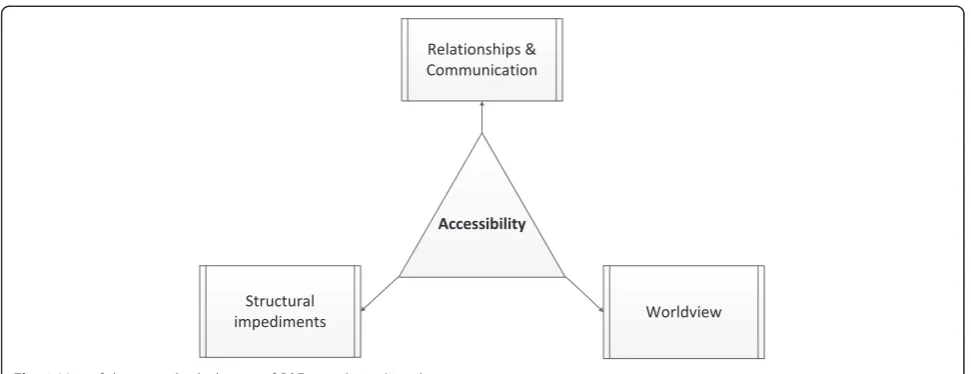
[image:4.595.303.539.112.296.2] [image:4.595.58.290.113.728.2]This study set out to identify the B&Fs to relatives’ in-volvement in the treatment of BD as experienced by rel-atives, HPs and SUs. Overall, narratives in this study confirmed difficulties in involving relatives described in the literature for both BD [50] and psychosis [51]. Par-ticipants recognised that there are opportunities for sup-port for relatives to be involved, which are in keeping with existing clinical guidelines [23] and some evidence [32]. The opportunities to be involved, however, ap-peared limited and not easily accessible. As such‘ Acces-sibility’ was identified as the main theme that captures the B&Fs to relatives’ involvement. Accessing the avail-able sources of support, we found, was influenced by three main factors. These were i. pre-existing world-views, ii. the quality of relationships and communication, and iii. other structural impediments. These are perceived as intertwined and dependent on one another (Fig. 1). Table 1Summary of clinical and demographic characteristics of
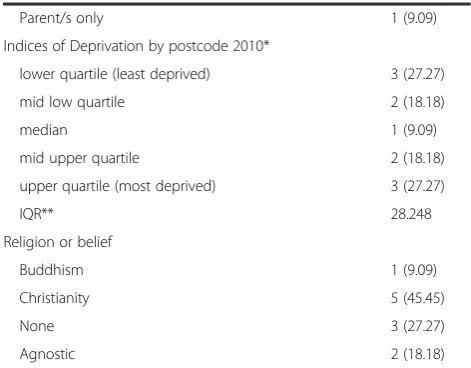
service users’interviews
n%
Age - mean(σX) 47.36 (13.40)
Diagnosis
BD I 9 (82)
BD II 1 (9.09)
Schizoaffective Disorder (Bipolar) 1 (9.09)
Age at first mood disorder diagnosis - mean(σX) 27.18 (8.68)
Age at diagnosis of bipolar disorder - mean(σX) 34.91 (12.05)
Number of previous episodes of depression
1-6 5 (45.45)
7-11 1 (9.09)
12-29 1 (9.09)
≥30 4 (36.36)
Number of previous episodes of hypo/mania
1-6 7 (63.64)
7-11 2 (18.18)
12-29 1 (9.09)
≥30 1 (9.09)
Number of previous hospitalisation
0 2 (18.18)
1-6 8 (72.73)
7-11 1 (9.09)
Highest level of education
Secondary 1 (9.09)
Further 5 (45.45)
Higher 5 (45.45)
Employment status
P/T 2 (18.18)
Retired 2 (18.18)
Voluntary 2 (18.18)
Unemployed 5 (45.45)
Gender
Female 6 (54.55)
Male 5 (45.45)
Ethnic origin
White British 11 (100)
Marital Status
Single 6 (54.55)
Married 3 (27.27)
Divorced 2 (18.18)
Living arrangements
Partner only 2 (18.18)
Alone 7 (63.64)
Children only 1 (9.09)
Table 1Summary of clinical and demographic characteristics of service users’interviews(Continued)
Parent/s only 1 (9.09)
Indices of Deprivation by postcode 2010*
lower quartile (least deprived) 3 (27.27)
mid low quartile 2 (18.18)
median 1 (9.09)
mid upper quartile 2 (18.18)
upper quartile (most deprived) 3 (27.27)
IQR** 28.248
Religion or belief
Buddhism 1 (9.09)
Christianity 5 (45.45)
None 3 (27.27)
Agnostic 2 (18.18)
*Postcodes were converted to Lower Layer Super Output Areas and categorised into quartiles in keeping with the English Indices of Deprivation 2010 [71]
Pre-existing worldviews
This theme emerged from narratives attributing rela-tives’ exclusion to pre-existing worldviews of health-care provision and specific negative attitudes towards involvement.
I think a lot of it [relatives’ exclusion] is from the attitudes by social services and by medical people about following agendas and not wanting someone tricking them up and change the direction of things (Relative).
[image:5.595.50.282.112.682.2]I think this is a cultural thing, it is very difficult to accept, but some doctors don’t like to be told [what to do] (SU).
Relatives’ involvement is often perceived as not carrying any relevance to practice, as in the case of HPs who construct causal relationships between rela-tives’ actions and SUs’challenges.
[HPs] often have a formulation of the person’s difficulties that involves the families and how they treated the person badly (HP).
Similarly, the westernized medically driven em-phasis on individual SUs, rather than their social context, leads to the needs of support networks be-ing perceived as secondary, despite the fact that some SUs would welcome support to be provided directly to their relatives even in their absence.
There is a cultural positioning of problems within a person, as a psychiatric medical tradition positioning problems in a person (HP).
I’d rather not be there, I think they [relatives] should have time for themselves because… it’s not about me, is it? [It] is about other people as well (SU).
A participant perceived relatives’ involvement as a fundamental aspect of the relatives’ role with respect to the individual SU.
Relatives’ involvement is natural. It just happens, most of people they just do it naturally, they care for the person who are related to. So when the person’s health state changes, they do something to try to help, to try to rectify the condition. (…) Families generally have a natural response to that; they try to help, (…) so there is nothing you can do really to stop that (HP).
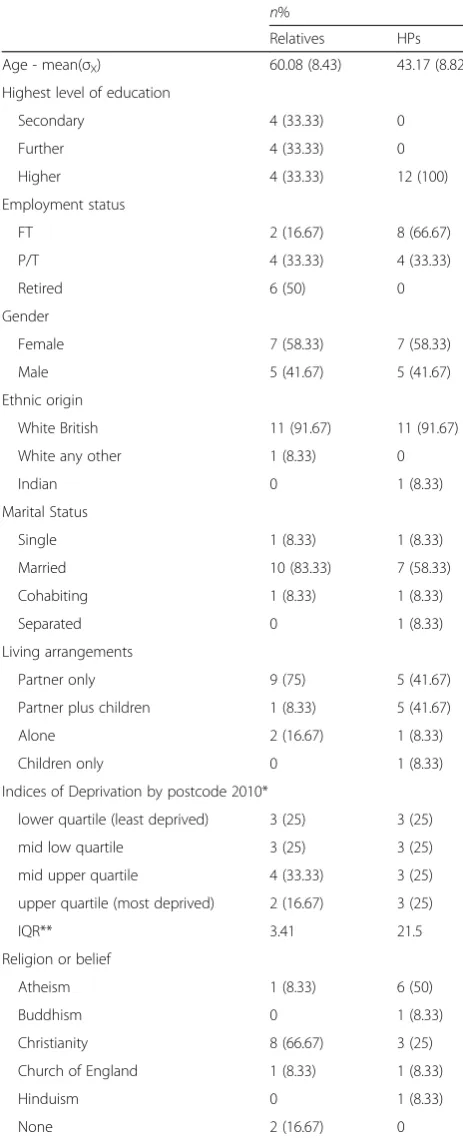
Table 2Summary of clinical and demographic characteristics of relatives and HPs
n%
Relatives HPs
Age - mean(σX) 60.08 (8.43) 43.17 (8.82)
Highest level of education
Secondary 4 (33.33) 0
Further 4 (33.33) 0
Higher 4 (33.33) 12 (100)
Employment status
FT 2 (16.67) 8 (66.67)
P/T 4 (33.33) 4 (33.33)
Retired 6 (50) 0
Gender
Female 7 (58.33) 7 (58.33)
Male 5 (41.67) 5 (41.67)
Ethnic origin
White British 11 (91.67) 11 (91.67)
White any other 1 (8.33) 0
Indian 0 1 (8.33)
Marital Status
Single 1 (8.33) 1 (8.33)
Married 10 (83.33) 7 (58.33)
Cohabiting 1 (8.33) 1 (8.33)
Separated 0 1 (8.33)
Living arrangements
Partner only 9 (75) 5 (41.67)
Partner plus children 1 (8.33) 5 (41.67)
Alone 2 (16.67) 1 (8.33)
Children only 0 1 (8.33)
Indices of Deprivation by postcode 2010*
lower quartile (least deprived) 3 (25) 3 (25)
mid low quartile 3 (25) 3 (25)
mid upper quartile 4 (33.33) 3 (25)
upper quartile (most deprived) 2 (16.67) 3 (25)
IQR** 3.41 21.5
Religion or belief
Atheism 1 (8.33) 6 (50)
Buddhism 0 1 (8.33)
Christianity 8 (66.67) 3 (25)
Church of England 1 (8.33) 1 (8.33)
Hinduism 0 1 (8.33)
None 2 (16.67) 0
*Postcodes were converted to Lower Layer Super Output Areas and categorised into quartiles in keeping with the English Indices of Deprivation 2010 [71]
Finally, a SU thought that relatives’involvement can be facilitated if all parties (relatives, SUs and HPs) are actively engaged in efforts to learn together how best to implement care.
It is some learning exercise between all of us. But I think, it’s when this triangle is made firmly at the beginning, at the very beginning and works on and, and everybody listens and learns. (…) As service users are crucial in this, we’ve got to want to learn, we’ve got to want to get better, we’ve got to learn to manage, if we are unwilling to learn that’s a sadder place to live (SU).
Quality of relationships and communication
A key component for effective involvement is the pres-ence of trusting collaborative relationships between part-ners. Negative dynamics appear to constantly impede such relationships; in particular through power struggles between relatives and HPs. There seemed to be a sense of ownership of the SU and an underlying need to con-vince one another that each party knows the SU the best, which increased the risk of the SU being distanced from any decision process. In effect, even positive inten-tions from either relatives or HPs might result in SUs losing their autonomy.
There can be a competitive dynamic about who can look after the patient best. Is it the family or is it us? (HP).
[image:6.595.56.542.87.274.2][HPs] are the knowledge of mental illness but we [relatives] are the practical side…you know, we are the inside knowledge (Relative).
SUs, however, often objected to the involvement of their relatives in order to protect them from becoming stressed by the whole experience.
When I was in hospital, I requested the care coordinator didn’t contact my mother, because I thought she would stress out (SU).
Poor communication among relatives, SUs and HPs was a common theme in reducing accessibility to available ser-vices. The use of technical language by HPs, for instance, coupled with patronising or disempowering language were all described as hindering effective involvement.
There needs to be a clear understanding on the part of HPs, a sensitivity to the kind of the words used. They could be disempowering kind of words, or expert kind of words (…) anything that can be patronizing, especially when the carers are coming from a position of, you know, actually I’ve got the richness of experience of that, because I live with the person (HP).
However, there were also narratives from relatives ex-pressing empathy towards HPs for the difficulties they face in delivering the service they might want to.
We’re talking, talking, talking but we can’t do anything about it and I think they [HPs] find that difficult too because they feel impotent but they can’t do what they want to do, they can’t give a service that they want to give (Relative).
The quality of communication between relatives and SUs also was often found to be influenced by the epi-sodic nature of BD.
At the moment my daughter would be very very happy because we’re involved and when she is
in a high state, [she] doesn’t want to know (Relative).
The question mark for me [SU] is whether SUs should have that right to state that they wanted to have their brothers excluded from communications especially when we are non-compos mentis (SU).
Different needs at different phases in peoples’journeys of caring or experiencing BD warrants different types of support. But narratives here suggest relatives described being listened to and good communication with HPs as the two key areas of support needed.
I only think they [relatives] need the communication with the HPs, I don’t think they need any more support than that (Relative).
Lack of communication with the professionals and the carers is a big, big issue and not being listened to as a carer (Relative).
The structure of services is such that relatives seldom have access to the same HPs. This reduces the likelihood of developing collaborative and trusting relationships, hindering the quality of communication.
The relationship with HPs is beyond fluid. It’s sort of ridiculous sometimes, (…) because they [relatives] want the consistency, they want to be dealing with somebody that they know, that they trust, that get consistent information from (HP).
Collaborative partnerships with relatives are facili-tated, however, when HPs are not defensive, are open to criticism, acknowledge service limitations, provide re-assurance and recognize the challenges that rela-tives experience, and do not communicate in pater-nalistic ways toward relatives.
You have to be willing not to being defensive and really open to hearing criticism and acknowledging that something is around you, you can’t control in other ways (HP).
We should stop being paternalistic towards relatives by assuming that this information would be too painful (HP).
Effective involvement also occurs when HPs address openly that no-one is to be blamed, accommodate rela-tives’ anger and disappointment toward services, and give time to grieve.
[HPs can say] It is ok for you to be angry. I understand you have had bad experiences. And then just giving them [relatives] time to ventilate really (HP).
Finally, HPs perceived the limited understanding of confidentiality, and how it is used or abused, to predis-pose people’s behaviours and attitudes, and that it has direct implications on their communication.
Staff potentially use [confidentiality] as an excuse (HP).
We hide behind the confidentiality thing sometimes because it’s complicated, yeah? If someone wants to talk to you, you’re worried about confidentiality, you then have to end the conversation, you have to go and find the SU, you have to get the SU’s consent (HP).
[HPs] are frightened of confidentiality; they are frightened that the clients will not like it if you try to share information about them with other people, including the carers (HP).
Relatives’involvement, however, should not be applied uniformly as it might not always be appropriate due to risks of over monitoring or pathologizing.
Carers can excessively monitor, so I have people say, so we’re not allowed to enjoy ourselves, we can’t be happy, we can’t sit home and watch TV and burst on laughing because the family will go, oh what’s wrong? (SU).
Structural impediments
Real progress requires organizational changes at all levels. Currently, several structural impediments leave HPs with limited opportunities to involve relatives; because of institutionalised resistances to relatives’ in-volvement and because HPs operate in a work envir-onment in which managers do not always set realistic expectations.
I think there is an institutionalised sort of resistance over other people’s involvement (Relative).
We’ve got too many demands upon people (…). So if I am saying to you, right, you’ve got to do some family therapy. The manager says to you, you’ve got to do your fire lecture. And I need the fire lecture by the weekend. You’ve got to do the family therapy later because you think I’ve got 2 and half years to do this. But of course by next week (…) it would be something else, (…) and it would be a new file that we need you to take. And then send it to me into 2 h. So I think a lot of these pressures of overwhelming numbers of
requirements impair people’s willingness and ability to do stuff (HP).
This is further exacerbated by the fact that some practices designed to include relatives do not in practice do so. For in-stance, although Carer’s Assessments could lead to some positive outcomes (such as carers’breaks), many participants described them as procedurally irrelevant to relatives’needs.
I take it [Carer’s Assessment] along and say would [you] like to do the form? And they [relatives] look at it and say that’s got nothing to do with my needs (HP).
Besides, in most services, sessions with a relative are not part of the workload allocation; only time with service users counts. In effect, relatives might not being seen at all, or ra-ther paradoxically, some contacts with relatives might be un-accounted for just because they cannot be recorded.
We get criticized that our contacts are not as high as they should be. But their choice of how they’ve chosen to measure contacts is not in 20 min segments. It’s just a pure contact. So if I phone you up and said I will be coming late for our appointment today, that could count as a contact. Equally, I could spend 3 h with you and all of your family…that’s one contact (HP).
Further, offering services to relatives only during work hours limits relatives’accessibility to support mechanisms.
Beyond 5 o’clock the whole medical team shuts down (Relative)
It’s not very easy to get an appointment after 5 o’clock either with care coordinator, or to meet a psychiatrist, or to meet a psychologist or during weekend (HP).
In contrast, central recognition that involving relatives is not an optional add-on would allow HPs to prioritize allocating time to relatives.
Some top down recognition that [involving relatives] is part of your job and not an add-on, is very helpful in enabling you to prioritize it (…) whether that is in your supervision or operational approach protocols (HP).
Furthermore, policy makers need to ensure that health agendas and policies are supported by financial drivers to support their implementation.
But if it [Act] is not backed up with cash then it crawls (…). So it’s all inspirational rather than implementational. If all the relatives and carers were thrown out of town, the whole country would be absolutely [profanity] and we would have banking crisis every year (HP).
The system can show commitment to relatives’ in-volvement by offering HPs better training and clinical supervision, so that they can be re-assured about the service they offer, or be guided when feeling concerned or defensive over their training and skills.
When you’ve been defensive or concerned, or complaints have been expressed, you do need to talk it through with one you feel like they’ve got your back a bit really, as a practitioner. You might not have done anything wrong, but sometimes you have done stuff wrong. You have made a bit of a cock-up and you need to be able to access someone to talk that through (HP).
To conclude with, a participant summarized the B&Fs to relatives’involvement in the following quotation.
There are 3 things that obstacle (sic) people doing stuff: hill, will and skill.‘Skill’is gonna be a part, people’s gonna have basic communication skills, some basic group management skills and basic educational skills and the ability to explain themselves to families (…).‘Will’is about, do they believe that it’s of some importance? (…) they would be some in the health service who don’t believe that it’s the parents’business (…). The other thing is the‘hill’, which is just the‘but’. In an organization like the NHS there are far too many barriers that impose in somebody’s abilities, the requirements of the organization as opposed to the requirements of the task (HP).
Discussion
support. Relatives accessing the available opportunities for collaborative care appears to be influenced by peo-ple’s pre-existing worldviews, the quality of relationships and of communication among stakeholders and specific structural impediments. An attempt was made to also explore whether the experiences of relatives vary based on how much contact there is between HPs and rela-tives. This, however, was not possible for four main rea-sons. Firstly, there is no measure available that would enable the quantification of the contact between relatives and HPs in a meaningful way. Secondly, the number or mode of contacts between the two parties is so diverse that does not enable group comparisons. Finally, the number of contacts would not necessarily provide an insight as to whether these have resulted in a positive or a negative experience. Finally, the quantification of con-tacts and its implications to relatives’ experiences of in-volvement would be more suitable to a quantitative study that was designed to explore that, which was not the focus of this qualitative investigation of people’s experiences.
Participants (HPS, relatives and SUs) reflected on whether the provision of mental healthcare is relevant to relatives, and if so to what degree. Thoughts, beliefs, attitudes, cultural identifications and worldviews, are fused together and either foster or block involvement. Similarly to Kaas et al. [52] and Winefield and Burnett [53], our participants viewed issues such as perceived lack of skills or confidence and negative attitudes as major barriers to developing partnerships with relatives. Such beliefs are often culturally bound. Relatedly, Wong [54] reported on how traditional Chinese values and be-liefs informed relatives’ expectations of themselves and of the person with mental health problems and per-ceived their obligations. Similar barriers were related to people’s beliefs around a culturally influenced debate such as whether the HPs should serve the individual or their relatives. Participants referred to South Asian cul-tures where relatives’ involvement is often the default position. This is not always a positive involvement, how-ever. Researchers studying South Asian populations suggest that relatives’ involvement could lead to SUs’ isolation or even delayed access to treatment [55]. Nevertheless, the debate is yet again centralized around two notions, which seem to be perceived as competing (i.e. service user vs. relative – individual vs. collective). Successful partnerships require these two to be seen as complementary.
Herrman, et al. [56] described good mental health as the ability to sustain mutually satisfying and endur-ing relationships. Also reflected in our data, we found that the quality of the relationship and communica-tion between parties often underlies the process by which collaborative partnerships between HPs, SUs and relatives are built. Rowe [57] concluded that
professional negative attitudes to communication and disengagement with carers posed detrimental barriers that upheld relatives’ rights to fulfil their caring role, arguing in favour of a more empathic communication by professionals. Similarly, Stiberg et al. [58] found that using a video learning tool increased HPs’ em-pathy and the clinical competence to initiate and sus-tain good quality relationship and communication with relatives.
A common stumbling-block in the communication be-tween HPs and relatives was the use/abuse of ‘ confiden-tiality’. This is not the first time that the notion of confidentiality was found to hinder involvement [59]. Specific guidelines, however, have been developed that describe how HPs can share information with relatives without breaking confidentiality or even when service users do not consent for information to be shared [60–63]. Sharing with relatives of people with BD is also supported by the latest NICE guidelines [23]. HPs who are aware of the different categories of in-formation, identified by Pinfold et al. ([64]; i.e. general, personal, personal sensitive), would be in a better position to share appropriate information with relatives without compromising confidentiality. Future research should as-sess how effective and feasible to implement these guide-lines is, and any possible impact on changing the culture of involving relatives.
Lack of formal support from policy makers and poor leadership management seems to block involvement, despite the fact that it is encouraged by NICE [23]. Because of the fact that the issues appear to remain un-resolved, exploring the barriers to implementing existing guidelines should be prioritized over developing new ones, especially because the percentage of HPs adhering to mental health guideline could be as low as 27 % [65]. In addition to the challenges to implement guidelines described in Francke et al. [66], a major barrier we iden-tified is the lack of financial drivers and concrete oper-ational plans to support any proposed changes.
of relatives’dissatisfaction stems from the fact that how-ever well the healthcare system might try to respond, it cannot meet the relatives’ expectation of gaining their lives back. The skills needed to perform these tasks could be enhanced through clinical supervision, the lim-ited availability of which appears to be a major barrier to involving relatives. This is consistent with previous ac-counts that described the barriers to establishing clinical supervision in acute mental health inpatient units [69]. Relatives’ involvement, however, is not a panacea and hence not all relatives should always be involved; instead, HPs need to make a judgment call as to when and how certain relatives can be involved in each individual case.
Finally, as reflected by the quotations reported in this paper, our participants seem to focus on the barriers to relatives’ involvement more than the facilitators, despite the fact that the interviews were designed to elicit both B&Fs in equal parts. Research on ‘negative bias’ could potentially explain our participants’ preference to focus on the negatives (barriers) rather than the positives (facilitators) to the involvement of relatives [70]. How-ever, as negative bias was not the focus of this study, no conclusive arguments can be drawn regarding our par-ticipants’ possible tendency towards barriers as opposed to facilitators to relatives’involvement.
Limitations
Participants identified several facilitators to involving relatives. We have not tested these as to whether they would improve outcome for all partners in care. We an-ticipate, however, that this discussion will trigger further research and provide ideas for ways forward to mental health policy makers. Our data derived from 35 inter-views with relatives, SUs and HPs. Although this is a large sample size in comparison with other qualitative research in this area, these results should be treated with caution when attempting to generalise across all relatives of people with BD. This is because the data come exclu-sively from interviews with people who live or work in the North West of England, and therefore the results reflect primarily the British working culture, healthcare organizations, forms of education that are typical of the UK and the socioeconomic makeup of the region. Spe-cifically, only one participant was not White (1 HP). Whilst this reflects the make-up of the population of the North West of England, the findings might not apply to families in the UK from a non-White ethnic background or those which carry a cultural heritage from diverse his-torical circumstances, or immigration histories. As dis-cussed earlier, however, the consistent international evidence regarding relatives’ experiences suggests that the findings could potentially apply to other countries, which have similar healthcare systems to that of the UK particularly around service access and delivery. Further,
as indicated in Tables 1 and 2, participants held diverse religious beliefs and therefore it can be argued that the present findings reflect views that are informed by a variety of religious practices.
Despite the diverse background and experience of the authors, not all sources of bias can be ruled out, as the authors pre-existing understanding of relatives’ involve-ment in BD would have a priori influenced the develop-ment of the topic guide and the results identified. The use of SUs and relatives in the development of the topic guide and the iterative analysis process that allowed the different perspectives of each author to be incorporated in the final framework product, however, should have in-creased the objectivity of data reporting. One potential limitation of the study, however, is the requirement that relatives had to have a minimum of 3 contacts/week with the SU. This results in relatives with less contact/ week to be excluded from the study, and hence the find-ings of the current study may not generalize to all SUs. This criterion, however, was set mainly to ensure that the relatives included in this study played an instrumen-tal role in supporting the SUs and frequency of contacts might be one of the parameters that could define the volume of support.
Conclusion
By triangulating the views of relatives of people with BD, SUs, and HPs it appears that opportunities for relatives to be involved are indeed available and these are sup-ported by clinical guidelines. Despite their availability, however, these opportunities are often limited or in-accessible due to pre-existing worldviews of the parties involved, the quality of their relationships and communi-cation and other structural impediments. Our results suggest that involving relatives leads to clear benefits for relatives, SUs, HPs, and the health system as a whole. Successful collaborative partnerships between all parties, however, depends on a complex network of processes and interactions among all those involved and requires strategic planning from policy makers, operational plans and allocation of resources. Clinical research has trad-itionally focused on the effects of interventions on those carrying a diagnosis. Informed by qualitative accounts such as those reported here and in addition to outcomes for SUs, it would be worth for future research to explore primary outcomes from relatives that derive from rela-tive inclusive service provision. Such data would enable clinicians and policy makers to develop interventions that meets the needs of all those involved in a holistic/ systemic manner.
Abbreviations
and Development; NICE: National Institute for Health and Clinical Excellence; APA: American Psychological Association.
Competing interests
The authors declare that they have no competing interests.
Authors’contributions
GC developed the study protocol, applied for ethical approval, carried out the interviews and analysis and drafted the manuscript. FL provided general supervision, contributed to the development of the design of the study and the analysis and interpretation of the themes, and helped to draft the manuscript. SJ acquired the funding, participated in the design and coordination of the study, was involved in the development of the themes, and helped to draft the manuscript. All authors read and approved the final manuscript.
Authors’information Not applicable.
Availability of data and materials Not applicable.
Acknowledgements
We would like to acknowledge Debbie Mayes (BD SU researcher), Malcolm Nicholas (relative of a person with BD), Valerie Minns (relative of a person with psychosis and mental health campaigner) and Dr Sara Mallinson for their contribution in the design of the study. We would also like to thank the 12thMarquise of Queensberry and Lady Alexa Queensberry for their instrumental support throughout the duration of the 1stMilo Douglas Memorial Fellowship.
Funding
The work described in this paper was funded by the Violet and Milo Douglas Cripps Charitable Trust and was conducted in the context of the 1st Milo Douglas Memorial Fellowship (grant number: Lancaster University HRM7773). The funder had no role in design, in the collection, analysis, and interpretation of data; in the writing of the manuscript; and in the decision to submit the manuscript for publication.
Author details
1Doctorate in Clinical Psychology, Division of Health Research, Faculty of
Health and Medicine, Lancaster University, C38, Furness Building, Lancaster LA1 4YG, UK.2Spectrum Centre for Mental Health Research, Division of
Health Research, Faculty of Health and Medicine, Lancaster University, Lancaster LA1 4YG, UK.
Received: 3 March 2015 Accepted: 17 September 2015
References
1. Goodwin FK, Jamison KR. Manic-Depressive Illness. Bipolar Disorders and Recurrent Depression. 2nd ed. USA: Oxford University Press; 2007. 2. World Health Organisation. The World health report: 2001; Mental health:
new understanding, new hope. Geneva, Switzerland: World Health Organisation; 2001.
3. Moltz DA. Bipolar Disorder and the Family: An Integrative Model. Fam Process. 1993;32(4):409–23.
4. Perlick DA, Hohenstein JM, Clarkin JF, Kaczynski R, Rosenheck RA. Use of mental health and primary care services by caregivers of patients with bipolar disorder: a preliminary study. Bipolar Disord. 2005;7(2):126–35. 5. Girón M, Fernández-Yañez A, Mañá-Alvarenga S, Molina-Habas A, Nolasco A,
Gómez-Beneyto M. Efficacy and effectiveness of individual family intervention on social and clinical functioning and family burden in severe schizophrenia: a 2-year randomized controlled study. Psychol Med. 2010;40(01):73–84.
6. Maji KR, Sood M, Sagar R, Khandelwal SK. A follow-up study of family burden in patients with bipolar affective disorder. Int J Soc Psychiatry. 2012;58(2):217–23.
7. Ogilvie AD, Morant N, Goodwin GM. The burden on informal caregivers of people with bipolar disorder. Bipolar Disord. 2005;7:25–32.
8. Steele A, Maruyama N, Galynker I. Psychiatric symptoms in caregivers of patients with bipolar disorder: A review. J Affect Disord. 2010;121(1–2):10–21. 9. Stalker K. Carers: An overview of concepts, developments and debates. In: Stalker K, editor. Reconceptualising Work with‘Carers’: New Directions for Policy and Practice. London: Jessica Kingsley; 2003. p. 15–36.
10. Wallcraft J, Amering M, Freidin J, Davar B, Froggatt D, Jafri H, et al. Partnerships for better mental health worldwide: WPA recommendations on best practices in working with service users and family carers. World Psychiatry. 2011;10(3):229–36.
11. Ward-Griffin C, Schofield R, Vos S, Coatsworth-Puspoky R. Canadian Families Caring for Members With Mental Illness: A Vicious Cycle. J Fam Nurs. 2005;11(2):140–61.
12. Department of Health. Caring about Carers: A National Strategy for Carers. London: Her Majesty’s Stationery Office; 1999.
13. Department of Health. The NHS Improvement Plan. Putting People at the Heart of Public Services. London: Her Majesty’s Stationery Office; 2004.
14. Department of Health. Carers at the heart of 21st century families and communities: a caring system on your side, a life of your own. London: Her Majesty’s Stationery Office; 2008.
15. Department of Health. Report of the Standing Commission on Carers 2007 to 2009: Carers at the heart of 21st century families and communities. London: Her Majesty’s Stationery Office; 2009.
16. Department of Health. Recognised, valued and supported: next steps for the Carers Strategy. London: Her Majesty’s Stationery Office; 2010. 17. Government HM. Carers (Recognition and Services) Act 1995. London:
Her Majesty’s Stationery Office; 1995.
18. Government HM. Carers and Disability Children Act 2000. London: Her Majesty’s Stationery Office; 2000.
19. Government HM. Carers (Equal Opportunities) Act 2004. London: Her Majesty’s Stationery Office; 2004.
20. SAMHSA. Transforming mental health care in America - The federal action agenda: First steps. In: Edited by United States Department of Health and Human Services: Substance Abuse & Mental Health Services Administration (SAMHSA). Rockville, USA: Department of Health and Human Services; 2009.
21. Australian Government. Carer Recognition Act. Australia: Australian Govenrment; 2010.
22. Mitchell PB. Australian and New Zealand clinical practice guidelines for the treatment of bipolar disorder. Aust N Z J Psychiatry. 2004;38(5):280–305. 23. NICE. Bipolar disorder: the assessment and management of bipolar
disorder in adults, children and young people in primary and secondary care. In: Edited by National Institute for Health and Clinical Excellence, vol. 185. London, U.K.: National Clinical Practice Guideline; 2014.
24. American Psychiatric Association. Practice guideline for the treatment of patients with major depressive disorder, vol. 159. 3rd ed. Arlington (VA): American Psychiatric Association; 2010.
25. Geddes JR, Miklowitz DJ. Treatment of bipolar disorder. Lancet. 2013;381(9878):1672–82.
26. Miklowitz DJ, Axelsen DA, Birmaher B, George EL, Taylor DO, Schneck CD, et al. Family-focused treatment for adolescents with bipolar disorder: results of a 2-year randomized trial. Arch Gen Psychiatry. 2008;65:1053–61.
27. Miklowitz DJ, Schneck CD, Singh MK, Taylor DO, George EL, Cosgrove VE, et al. Early intervention for symptomatic youth at risk for bipolar disorder:
a randomized trial of family-focused therapy. J Am Acad Child Adolesc Psychiatry. 2013;52(2):121–31.
28. Perlick DA, Miklowitz DJ, Lopez N, Chou J, Kalvin C, Adzhiashvili V, et al. Family-focused treatment for caregivers of patients with bipolar disorder. Bipolar Disord. 2010;12(6):627–37.
29. Reinares M, Colom F, Sanchez-Moreno J, Torrent C, Martinez-Aran A, Comes M, et al. Impact of caregiver group psychoeducation on the course and outcome of bipolar patients in remission: a randomized controlled trial. Bipolar Disord. 2008;10(4):511–9.
30. Morriss RK, Faizal MA, Jones AP, Williamson PR, Bolton C, McCarthy JP. Interventions for helping people recognise early signs of recurrence in bipolar disorder. Cochrane Database Syst Rev. 2007;24(1):CD004854. 31. D’Souza R, Piskulic D, Sundram S. A brief dyadic group based
bipolar disorder: a pilot randomised controlled trial. J Affect Disord. 2010;120(1):272–6.
32. Peters S, Pontin E, Lobban F, Morriss R. Involving relatives in relapse prevention for bipolar disorder: a multi-perspective qualitative study of value and barriers. BMC Psychiatry. 2011;11(1):172.
33. Worthington A, Rooney P. The Triangle of Care; Carers included: A guide to best practice in acute mental health care. London: The Princess Royal Trust for Carers and the National Mental Health Development Unit; 2010.
34. Worthington A, Rooney P, Hannan R. The Triangle of Care. Carers Included: A Guide to Best Practice in Mental Health Care in England. 2nd ed. London: Carers Trust; 2013.
35. Miklowitz DJ. Bipolar disorder : a family-focused treatment approach. 2nd ed. New York; London: Guilford; 2008.
36. Pompili M, Harnic D, Gonda X, Forte A, Dominici G, Innamorati M, et al. Impact of living with bipolar patients: Making sense of caregivers’burden. World J Psychiatry. 2014;4(1):1–12.
37. Fadden G. Training and disseminating family interventions for schizophrenia: developing family intervention skills with multi-disciplinary groups. J Fam Ther. 2006;28(1):23–38.
38. Burbach FR. Developing systemically-oriented secondary care mental health services. Plymouth: Plymouth University; 2013.
39. Pontin E, Peters S, Lobban F, Rogers A, Morriss R. Enhanced relapse prevention for bipolar disorder: a qualitative investigation of value perceived for service users and care coordinators. Implement Sci. 2009;4(1):4.
40. Office for National Statistics. Socio-demographic differences in general practice consultation rates for psychiatric disorders among patients aged 16–64. London: UK Statistics Authority; 2001.
41. Ritchie J, Spencer L. Qualitative data analysis for applied policy research. In: Bryman A, Burgess RG, editors. Analyzing qualitative data. London: Routledge; 1994. p. 173–94.
42. Srivastava A, Thomson SB. Framework Analysis: A Qualitative Methodology for Applied Policy Research. JOAAG. 2009, 4(2)
43. INVOLVE. Briefing notes for researchers: involving the public in NHS, public health and social care research. Eastleigh INVOLVE; 2012
44. Clark JP. How to peer review a qualitative manuscript. In: Godlee F, Jefferson T, editors. Peer Review in Health Sciences. 2nd ed. London: BMJ Books; 2003. p. 219–35.
45. First MB, Gibbon M, Spitzer RL, Williams JBW, Benjamin LS. Structured Clinical Interview for DSM-IV Axis II Personality Disorders, (SCID-II). Washington, DC: American Psychiatric Press, Inc; 1997.
46. First MB, Spitzer RL, Gibbon M, Williams JBW. Structured Clinical Interview for DSM-IV Axis I Disorders, Clinician Version (SCID-CV). Washington, DC: American Psychiatric Press, Inc; 1996.
47. Nicholson TRJ, Cutter W, Hotopf M. Assessing mental capacity: the Mental Capacity Act. BMJ. 2008;336(7639):322–5.
48. Gale NK, Heath G, Cameron E, Rashid S, Redwood S. Using the framework method for the analysis of qualitative data in multi-disciplinary health research. BMC Med Res Methodol. 2013;13:117.
49. Lewins A, Silver C. Using software in qualitative research: A step-by-step guide. London: Sage; 2007.
50. van der Voort TY, Goossens PJ, van der Bijl JJ. Alone together: A grounded theory study of experienced burden, coping, and support needs of spouses of persons with a bipolar disorder. Int J Ment Health Nurs. 2009;18(6):434–43.
51. Eisner E, Barrowclough C, Lobban F, Drake R. Qualitative investigation of targets for and barriers to interventions to prevent psychosis relapse. BMC Psychiatry. 2014;14(1):201.
52. Kaas MJ, Suzanne L, Peitzinan C. Barriers to Collaboration Between Mental Health Professionals and Families in the Care of Persons with Serious Mental Illness. Issues Ment Health Nurs. 2003;24(8):741. 53. Winefield HR, Burnett PL. Barriers to an alliance between family and
professional caregivers in chronic schizophrenia. J Ment Health. 1996;5(3):223–32.
54. Wong DFK. Stress factors and mental health of carers with relatives suffering from schizophrenia in Hong Kong: implications for culturally sensitive practices. Br J Soc Work. 2000;30(3):365–82.
55. Time-to-Change. Family matters: A report into attitudes towards mental health problems in the South Asian community in Harrow, North West London. London: Time-to-Change; 2011.
56. Herrman H, Saxena S, Moodie R. Promoting Mental Health: Concepts, Emerging Evidence, Practice. Report of the WHO, Department of Mental Health and Substance Abuse in collaboration with the Victorian Health Promotion Foundation and the University of Melbourne. Geneva, Switzerland: Organisation WH; 2005.
57. Rowe J. Great expectations: a systematic review of the literature on the role of family carers in severe mental illness, and their relationships and engagement with professionals. J Psychiatr Ment Health Nurs. 2012;19(1):70–82.
58. Stiberg E, Holand U, Olstad R, Lorem G. Teaching Care and Cooperation with Relatives: Video as a Learning Tool in Mental Health Work. Issues Ment Health Nurs. 2012;33(8):528–35.
59. Dixon LB, McFarlane WR, Lefley H, Lucksted A, Cohen M, Falloon I, et al. Evidence-based practices for services to families of people with psychiatric disabilities. Psychiatr Serv. 2001;52(7):903–10.
60. Allison S, Fadden G, Hart D, Launer M, Siddle J. Carers and confidentiality in mental health. Issues involved in information sharing. In: Partners in Care Campaign. London: Royal College of Psychiatrists; 2004.
61. Cordess C. Confidentiality and Mental Health. London: Jessica Kingsley Publishers; 2001.
62. Pinfold V, Corry P. Who cares? The experiences of mental health carers accessing services and information. London: Rethink Publication; 2003.
63. Slade M, Pinfold V, Rapaport J, Bellringer S, Banerjee S, Kuipers E, et al. Best practice when service users do not consent to sharing information with carers. Brit J Psychiatry. 2007;190(2):148–55.
64. Pinfold V, Farmer P, Rapaport J, Bellringer S, Huxley P, Murray J, et al. Positive and Inclusive? Effective ways for professionals to involve carers in information sharing. Kingston-Upon-Thames: Rethink severe mental illness; 2004.
65. Bauer MS. A review of quantitative studies of adherence to mental health clinical practice guidelines. Harv Rev Psychiatry. 2002;10(3):138–53. 66. Francke A, Smit M, de Veer A, Mistiaen P. Factors influencing the
implementation of clinical guidelines for health care professionals: A systematic meta-review. BMC Med Inform Decis Mak. 2008;8(1):38.
67. Kim HW, Salyers MP. Attitudes and Perceived Barriers to Working with Families of Persons with Severe Mental Illness: Mental Health Professionals’Perspectives. Community Ment Hlt J. 2008;44(5):337–45. 68. Heru AM. Basic Family Skills for an Inpatient Psychiatrist: Meeting
Accreditation Council for Graduate Medical Education Core Competency Requirements. Fam Syst Health. 2004;22(2):216–27.
69. Cleary M, Horsfall J, Happell B. Establishing clinical supervision in acute mental health inpatient units: acknowledging the challenges. Issues Ment Health Nurs. 2010;31(8):525–31.
70. Fazio RH, Pietri ES, Rocklage MD, Shook NJ. Chapter Three - Positive Versus Negative Valence: Asymmetries in Attitude Formation and Generalization as Fundamental Individual Differences. In: James MO, editor. Advances in Experimental Social Psychology. Volume 51. Mark PZ: Academic; 2015. p. 97–146.
71. McLennan D, Barnes H, Noble M, Davies J, Garratt E, Dibben C. The English Indices of Deprivation 2010. Department for Communities and Local Government. London: Her Majesty’s Stationery Office; 2011. p. 145.
Submit your next manuscript to BioMed Central and take full advantage of:
• Convenient online submission
• Thorough peer review
• No space constraints or color figure charges
• Immediate publication on acceptance
• Inclusion in PubMed, CAS, Scopus and Google Scholar
• Research which is freely available for redistribution