2017 3rd International Conference on Electronic Information Technology and Intellectualization (ICEITI 2017) ISBN: 978-1-60595-512-4
The Approach to the Construction of WeChat
Recommendation System in
University Libraries
Jingjing Liu and Jiaxin Tian
ABSTRACT
In times when smart phone has become the necessary communication tool for college students, WeChat is the most appropriate platform to set up resources recommendation system in university libraries since it’s instant, convenient and interactive. This paper is applicable to functional modules of WeChat recommendation system featuring mobile terminals, and the key technology to make it come true as well, especially the problem of interface configuration, which will make reader recommendation more instant and convenient.
INTRODUCTION
In recent years, user-based acquisition pattern has been taken more and more seriously by libraries and put into practice in various forms, for example, Patron-Driven Acquisition which started in some American university libraries. A large amount of bibliography is available in libraries, but it is the books which are really needed by readers that will be bought and are sure to be read by readers the first time. Some domestic university libraries have also started reader recommendation service and the development and application of library recommendation system. Readers and users are the subject of resources acquisition within the above systems and resources are purchased according to readers’ use of it and their recommendation.
Although plenty of studies have been made on Patron-Driven and reader recommendation at home and abroad, the study on reader recommendation based on WeChat platform is rare. WeChat, an emerging and innovative interactive tool, launched by TENCENT, has become the preferred tool for users to communicate with each other due to its novel user experience and easy access. The number of its users has been increasing steadily since WeChat was launched in 2011. In March, 2012, the number of users exceeded 100 million, 200 million in September of the year, and 300 million in January, 2013. The total number of WeChat public account has exceeded 8 million by November, 2014, among which there are more than 10 thousand authenticated government public accounts of WeChat in our country. In times when smart phone becomes the necessary communication tool for college students, how to communicate and interact with students by using WeChat and WeChat public account and how to maximize the communication and service are new subjects to be studied and practiced in libraries.
SYSTEM CONSTRUCTION
WeChat is the most appropriate platform to set up resources recommendation system in university libraries since it’s instant, convenient and interactive. The development and utilization of WeChat library has become one of hot topics attracting much attention in the field of library mobile service. The existing WeChat libraries have the function of book retrieval, library announcements, information push and other frequently asked questions. For example, at the WeChat platform of the library of Beijing Institute of Fashion Technology, books can be searched and renewed; library announcements can be checked; some recommendations as good book recommendation, popular newspaper, magazine selection are available; there are also download of the client and frequently answered questions. At the WeChat platform of university libraries like this one, the book retrieval, announcements and push have been made transplant directly, lacking the development of professional function for the features of WeChat, which has a certain limitation.
In order to better satisfy the students’ habits of communication and reading with smart phones, the resources recommendation system of WeChat will be developed, which will achieve instant and interactive recommendation and push. First of all, the problems of functional modules and design of WeChat recommendation system of library resources should be studied; then the problem of API interface at WeChat public platform is supposed to be solved, which will achieve the interactive design of reader auto-recommendation and instant response.
Study functional modules appropriate for WeChat recommendation system featuring mobile terminal and the key technology to make them come true, making reader recommendation more instant and convenient. Readers, with phones, search for needed books or database in WeChat recommendation system. WeChat public platform will show readers the result of the searching with the data from the three party server. The interface configuration is the first problem to be solved. The WeChat library in the library of Beijing Institute of Fashion Technology was constructed based on the technology of WeChat library of Superstar corporation. So, the interface configuration between recommendation system and WeChat library of Superstar should be solved, so does the configuration between recommendation system and library book retrieval system. Meanwhile, the problem of instant response and statistical analysis of reader recommendation information should also be solved, which enables readers’ recommendation to be responded and satisfied quickly.
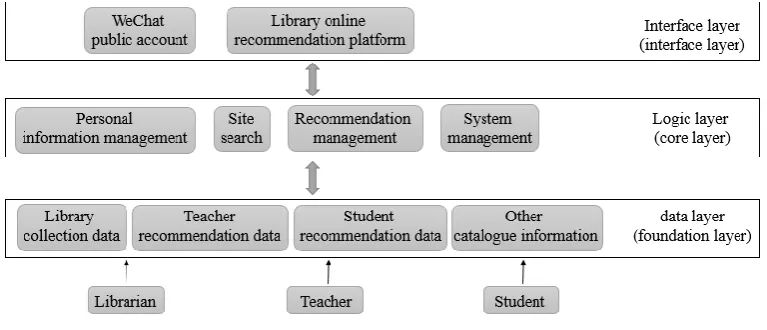
[image:3.612.120.504.424.589.2]The Figure 1 of the research program intends to be applied:
Figure 1. Overall block diagram of research scheme.
technology, recommendation management system and system management technology, which are at the business logic layer, and the study on the implement method of WeChat library and online recommendation platform.
IMPLEMENT METHOD
Surf is also improved according the features of book information and mobile terminal, which will make it more suitable for the feature of the limitation of mobile device resources, and more efficient with the premise of ensuring correctness. The following three aspects are included:
A. The Dynamic Building of Image Pyramid
In order to speed up the detection of feature points, the number of building image pyramid layers in Surf is related to the length and width of the image, which realizes the building of pyramid layers in a dynamic and self-adaptive way, and improves response time as well. The minimum of the length and width of the image will be used to get the number of pyramid layers, as in formula (1):
lnS
O a
C
(1)
In formula (1), S is the minimum of the length and width of the image; C is the constant;
a
is the threshold value, which ensures the scope of the number of pyramid layers. C, in this project, is 1.5 anda
is 2.B. Feature Points Filtering
There are many feature points in Surf, unevenly distributed, which will lead to the local optimum. During the distance constraint, the most optimal feature point might not be in the most optimal set, which will fall in the local optimum. So, with Surf improved, the feature points will be filtered first. The Harr corresponding value within a certain radius of feature points will be calculated. The feature points whose threshold value is less than some threshold value will be filtered. Some identical ones will also be taken out with niche from genetic algorithm.
2
1
1, 2,..., 1 ( )
1,...,
S
i j
i j k k
k
i M N
x x x x
j i M N
(2) i j x x Dij S (3)If 0Dij ( indicates the scope to decide whether they are identical, whose specific value will be set according to the situation), the two are identical. The Harr corresponding values of two feature points are to be compared, the smaller one of which will be put in a penalty function in order to decrease the characteristic response content. The penalty function in this project is: f min( , )x xi j Penalty
.
C. Improving Fast Matching
In order to speed up the feature matching, improved BBF is applied, which will reduce the amount of calculation. While the Hessian determinant of a matrix is being calculated, the Hessian trace of matrix t is also calculated. If t’s value is more than 0, the attribute of the descriptor is “plus”; if it is less than 0, the attribute of the descriptor is “minus”. The feature points of each image will be divided into two groups according to the value of the descriptor and the data of the same type will be compared. If the attributes of the two descriptors are not the same, the feature points are not matched and won’t be compared any more.
As for the mal-matching problem among the matched feature points, the wrong ones will be taken out with RANSAC. Then the first n matched featuring points with the highest similarity will be selected according to the program. The precision of matching will be achieved by assigning n.
CONCLUSIONS
Library resources recommendation system based on WeChat platform starts a new age for the service of library reader recommendation. WeChat has already become a popular information communication tool, especially for college students, each of whom holds a smart phone. With the application and study on WeChat library of Beijing Institute of Fashion Technology, a convenient and fast, highly efficient library resources recommendation system, conforming to the times, has been found, which will quickly popularize library recommendation service and improve the utilization of library literature resources as well. There is a great breakthrough and innovation for either library recommendation service or WeChat library.
ACKNOWLEDGEMENT
In this paper, the fund project of Beijing Municipal Education Commission (KYJH02160201/002/022) "based on the research of university library resources recommended user driven purchase platform" and the Beijing University Library Research Fund Project (BGT2016026), the key project of Beijing Institute of Fashion Technology (ZDJG-1611) is one of the research results.
REFERENCES
1. Sherrie. Problems and solutions in the implementation of PDA in American University Libraries [J]. Library and information work, 2013 (9): 65-69.
2. Yan, Huang. Study on the recommendation service of readers in University Library [J]. library research, 2013 (1): 59-62. In Chinese
3. Jun, Fu. Design D library recommendation system. Master Thesis of University of Electronic Science and technology, 2012. In Chinese
4. A survey of domestic library. [14] Speaker recommendation service and analysis the present situation of J. The library forum, 2012 (2):81-87. In Chinese
5. Wenjuan, Zhang. Diversity of reader decision making procurement (PDA) organization model [J]. Journal of Henan Normal University (Philosophy And Social Sciences Edition), 2012 (5): 267. In Chinese
6. Wang Xiaoqiong, Sun Meili. Research on user centered electronic resources procurement model of University Libraries [J]. Information Exploration, 2011 (12): 69-71. In Chinese 7. Liu Hua. The wind vane of Library Collection: reader decision making, [J]., Library
Magazine, 2011 (1): 38-41.