2017 International Conference on Computer Science and Application Engineering (CSAE 2017) ISBN: 978-1-60595-505-6
Smart Wearable Body Equilibrium Correction System
with Mobile Device
Boon Giin Lee*, Teak Wei Chong, Viet Cuong Tran and Su Min Lee
Keimyung University, 42601 Daegu, Republic of Korea
ABSTRACT
In recent decades, employees who worked in office suffered from bone diseases and muscle stress, mainly due to improper sitting posture. This paper is proposed to develop a novel body equilibrium correction to meet solve such issue. The system consists of four modules. A motion sensor module is placed on the center of the user’s chest to measure the sitting orientation. Moreover, an electromyography (EMG) module is located at the both side of the shoulders to measure the user’s muscle tension as incorrect sitting position over a long period of time tends to increase the pain and tense at the shoulders. Thus, it is reliable to serve as references in accordance to the sitting orientation. Both sensor modules transmit the raw data to a processing module. This module integrates the raw data under a packet and further transmits the data packet to a mobile device. A mobile application is implemented to classify the correctness of sitting position. In case the incorrect position is detected, alert is triggered to user by the vibrator motor and light emitting diodes (LEDs) installed along with the system. The proposed system is able to measure and detect any abnormal sitting positon with average true accuracy of 98% with low-cost implementation.
INTRODUCTION
Human backbone is the major supportive part of the body, which is responsible for distinct body movements and postures. The incorrect body posture can cause various sicknesses such as muscle strains, depression, nerve pain, stress, neck pain, headache, shoulder pain, and others [1-2]. People lack knowledge about the importance of correct posture to avoid such sicknesses. Thus, our aim in this study is to develop a smart body equilibrium or posture correction system to alert the user upon any incorrect posture in real-time.
using a mobile device is much simpler to use and easier to carry. A similar approach is adopted by Sardini et al. [7] that proposed a system to measure the posture of the subject through a T-shirt instrumented using an inductive sensor.
On the other hand, the advancement of technology has led to the design and implementation of mobile healthcare (m-Health). Lots of studies had deployed the mobile healthcare system to monitor subjects’ health condition. For instance, Moreira et al. [8] proposed to monitor blood pressure disorders in pregnancy to detect any hypertensive disorders using mobile healthcare technology. Other significant research work and analysis of the top and novel m-Health services and applications proposed by the industry can be referred at [9]. The proposed system tends to utilize the m-Health technology to evaluate the correctness of the subject’s sitting posture based on the analysis of the muscle tension and body orientation. Features are extracted from the EMGs and motion sensors which are served as inputs to a support vector machine (SVM) classifier. Information of current sitting posture is displayed on the mobile device concurrently and warning is triggered if incorrect posture is detected.
The paper is organized as follow: the first section describes overview design and implementation method of the proposed system. The next section illustrates the analysis of the experiments and discusses the experiment’s performances. The paper ends with the summary and conclusion of the proposed system.
[image:2.612.110.481.383.557.2]SYSTEM DESIGN System Overview
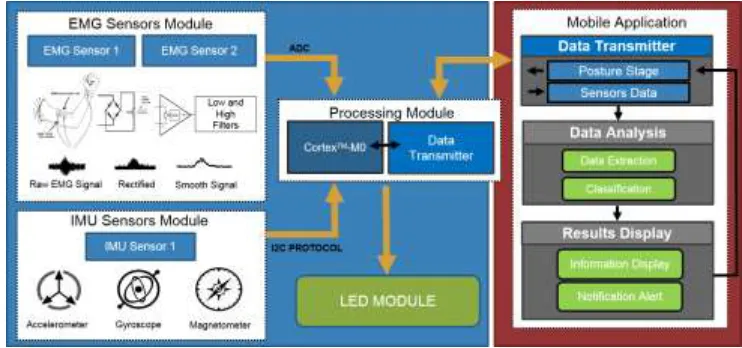
Figure 1. The proposed wearable system design that consists of sensors module, processing module and mobile application module.
gyroscope and magnetometer under a single die, processed using a high-speed ARM Cortex-M0 processor. The installation and placement of the sensors modules are depicted in Figure 2. Sensors data from both sensors modules are gathered and processed by a CortexTM-M0 embedded processor to integrate data under a single packet. A mobile application is developed to receive the data packet through Bluetooth low energy (BLE) wireless communication. Features are extracted from the received data and served as input to a SVM classifier to determine the correctness of the user’s sitting posture.
Figure 2. The installation of the proposed system on the body for detecting the normality and correctness of the user body posture.
[image:3.612.101.493.374.597.2]Methods
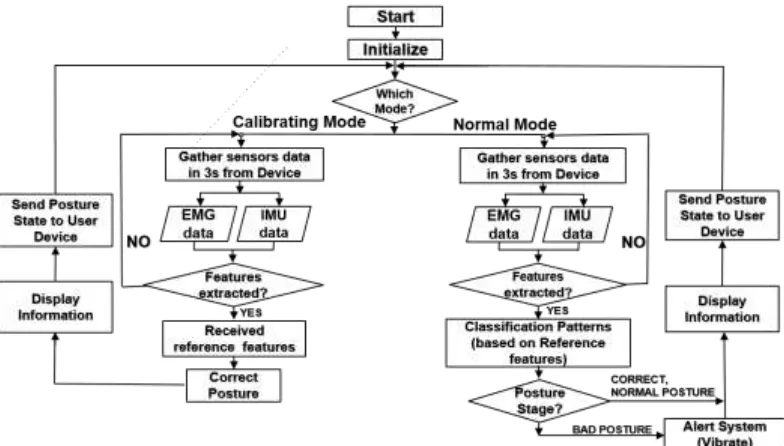
Figure 3. The flow diagram of the body equilibrium correction system that consists of two modes: calibration mode and normal analysis mode.
physiotherapists in four countries on sitting posture. The qualitative comments indicated that sitting posture which best matched the natural shape of the spine, and appeared comfortable and/or relaxed without excessive muscle tone and is adopted as the standard or correct posture in this study. As the neutral sitting position varied between subjects during calibration mode, a ±10 degrees of sitting posture is taken into consideration to cope in this study. The linear orientation of the body posture is computed with complimentary filter method accordingly in three axes where the orientation doesn’t take the gravity into computation. In fact, the details computation of the orientation can be referred to our previous study at [11]. Alert is triggered in two ways: via a vibration motor and LEDs indicator on the chest. LEDs in green lights indicated normal or neutral mode whereas red lights depicted incorrect or abnormal modes of sitting posture.
PERFORMANCE EVALUATION AND RESULT ANALYSIS
Ten subjects participated in the experiments to measure the correctness of their body posture in sitting position. The subjects are requested to type in a 30-pages full length of articles with approximately of total 20 minutes. This is to generate the stress on the shoulder’s muscle of the subjects as well as creating body fatigue to cause the subjects to lean into incorrect body postures. During the experiments, an observer is sitting next to the subjects to record their condition timeline, e.g., when subjects felt pain or fatigue on the shoulder, getting uncomfortable sitting on the chair with the same position for too long, subjects tended to lean their body in different directions rather than sitting straight up, and other abnormal conditions. After the experiments, subjects are requested to fill in the surveys to indicate their feeling, emotion, and body condition physically as well as the shoulder’s muscle conditions. The whole experiments are conducted in a room with average room temperature of 22 degrees. Thus, other environment factors that could affect the analysis outcomes are not considered in this study. For instance, humid and muggy environment would cause the user to sweat and this phenomenon will influence the EMGs’ sensor reading in long run and this is out of the scope in this study.
The classification is performed by the support vector machine (SVM) pattern classifier [12]. The SVM is trained and tested with a leave-one-subject-out method [11]. The accuracy rate of the SVM classifier is defined by the determination of the correct (neutral) sitting posture and incorrect (improper) sitting posture, which is computed as,
AC = (TP + TN) / (TP + FP + TN + FN) (1)
where TP, FP, TN and FN are denoted as true positive (correctly identified), false positive (incorrectly identified), true negative (correctly rejected) and false negative (incorrectly rejected) respectively.
stress level and discomfort increases in slower trend causes the nerves to respond slower to the incorrect body posture. The assumption is that the IMU-based analysis responded much faster than the EMG but induced false detection as well due to movement sensitivity detection of the sensor. The reading will be further proven as future work.
TABLE I. EXPERIMENTAL RESULTS INDICATE THE TRUE ACCURACY RATE OF THE BODY POSTURE.
Subject Accuracy Rate (%)
EMG IMU EMG + IMU
A 84.5 91.5 98.5
B 76.9 92.5 97.3
C 82.4 90.8 99.4
D 77.9 91.2 96.5
E 83.6 90.7 98.4
F 82.2 89.8 98.6
G 79.9 88.2 98.5
H 78.9 91.2 97.6
I 80.5 90.4 96.8
J 80.7 90.2 97.6
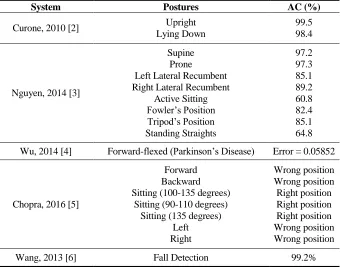
TABLE II. COMPARISON OF RELATED SYSTEMS.
System Postures AC (%)
Curone, 2010 [2] Upright
Lying Down
99.5 98.4
Nguyen, 2014 [3]
Supine Prone
Left Lateral Recumbent Right Lateral Recumbent
Active Sitting Fowler’s Position Tripod’s Position Standing Straights 97.2 97.3 85.1 89.2 60.8 82.4 85.1 64.8
Wu, 2014 [4] Forward-flexed (Parkinson’s Disease) Error = 0.05852
Chopra, 2016 [5]
Forward Backward Sitting (100-135 degrees)
Sitting (90-110 degrees) Sitting (135 degrees)
Left Right Wrong position Wrong position Right position Right position Right position Wrong position Wrong position
Wang, 2013 [6] Fall Detection 99.2%
[image:5.612.128.468.356.623.2]walking and sitting postures rather than on the sitting posture itself. Wang et al. [6] correctly identified fall detection by comparison with video surveillance, audio-vibration-based identification and their proposed wearable device at 97.3%, 100% and 99.2% respectively. Nevertheless, Wu et al. [4] are able to identified the movement of Parkinson’s disease with error rate of 0.05852 (5.852%). Lastly, Figure 4 illustrates the sample design and prototype of the proposed mobile application to detect body posture in real-time.
Figure 4. The prototype of the developed mobile application for the proposed body equilibrium correction system.
CONCLUSIONS
This paper has presented a novel approach to identify the correctness of sitting postures with wearable sensor system by integrating of EMGs and IMU sensors. In fact, this study is primary focusing on identify the correctness of the sitting posture instead of distinguishing different postures. Moreover, this study is not performed specifically by other researches in similar field of study. Participating subjects had revealed their quantitative comments to the proposed system with satisfactory in comfort, flexibility and non-disturbance. In summary, the proposed system performed well with low energy consumption of 16 hours with 3.7v battery and low weight of around 50g. Future work will consider the other correctness of the postures recognition such as walking, standing and etc. Other future works also will consider the impact of environment factors to the sensors reading and accuracy rate such as sweat and outdoor (rather in indoor) and designing of embedded portable removable wearable system.
REFERENCES
2. Curone, D., Bertolotti, G. M., Cristiani, A., Secco, E. I. and G. Magenes. 2010. “A Real-time and Self-Calibrating Algorithm based on Triaxial Accelerometer Signals for the Detection of Human Posture and Activity,” IEEE Trans. Info. Techno. Biomedic, 14(4): 1098-1105.
3. Nguyen, V. N. and H. Yu. 2013. “Novel Automatic Posture Detection for In-patient Care using IMU Sensors,” presented at 6th
IEEE Conference on Robotics, Automation and Mechatronics (RAM), November 12-15, 2013.
4. Wu, W. S., Lin, W. Y. and M. Y. Lee. 2014. “Forward-flexed Posture Detection for the Early Parkinson’s Disease Symptom,” presented at International Conference on Systems, Man, and Cybernatics (SMC), October 5-8, 2014.
5. Chopra, S., Kumar, M. and S. Sood. 2016. “Wearable Posture Detection and Alert System,” presented at International Conference on System Modeling & Advancement in Research Trends (SMART), November 25-27, 2016.
6. Wang, Y. and X. Y. Bai. 2013. “Research of Fall Detection and Alarm Applications for the Elderly,” presented at International Conference on Mechatronic Sciences, Electric Engineering and Computer (MEC), December 20-22, 2013.
7. Sardini, E. and M. Serpelloni. 2013. “Wearable Posture Monitoring System,” Sensors, 162(1): 255-259. 8. Moreira, M. W. L., Rodrigues, J. J. P. C., Oliveira, A. M. B. and K. Saleem. 2016. “Smart Mobile System for
Pregnancy Care Using Body Sensors,” presented at the International Conference on Selected Topics in Mobile & Wireless Networking, April 11-13, 2016.
9. Silva, B. M., Rodrigues, J. J., De La Torre Diez, I., Lopez-Coronado, M. and K. Saleem. 2015. “Mobile-health: A Review of Current State in 2015,” J. Biomed. Inform., 56(1): 265-272.
10. O’Sullivan, K.., O’Sullivan, P., O’Sullivan, L. and W. Dankaerts. 2012. “What Do Physiotherapists Consider to be the Best Sitting Spinal Posture?” Man. Ther., 17(5): 432-437.
11. Lee, B. G. and W. Y. Chung. 2017. “Wearable Glove-Type Driver Stress Detection Using a Motion Sensor,”
IEEE Trans. Intell. Transp. Syst., 18(7): 1835-1844.