AN EXPLORATORY ANALYSIS OF CHILDREN’S CONSUMPTION AND IDENTITY PROJECTS
Diliara Mingazova
A thesis submitted in partial fulfilment of the requirements of the University of East London
for the degree of Doctor of Philosophy
ii Abstract
The thesis aims to extend the child brand relationship theory, a significant part of consumer culture theory (CCT), and consequently, provide a deeper understanding of the roles that brands play in the lives of children. It draws upon the literature of CCT, brand relationship theory and children as consumers. The objectives of this research are to explore children’s understanding of the symbolic meanings of their brands, gain an understanding of how children use these meanings in their lived experiences and, in order to gain an understanding of the child brand relationships in context, explore different aspects of children’s social and personal lives. The methodological approach of this research is qualitative because this research is primarily explorative in its nature. Thirty-one in-depth interviews were conducted with children of both genders, aged between 5 and 9 years old. The data was analysed using a coding process together with thematic analysis. In keeping with marketing scholarship, children in this research are viewed as active consumers who construct their individual and social identities and contribute to the social world. Consequently, children’s own experiences and opinions were captured and ten themes emerged which reveal that children have purposive and meaningful relationships with brands at earlier ages than existing research suggests and these relationships are important for their social and personal lives. These themes provide the key findings of this research. The first theme explains that children’s self-esteem is enhanced in the context of the digital age. Themes two and three demonstrate that brands help children develop their desired selves, gain social acceptance and position themselves and others in a social world. The fourth theme reveals that children, through the gendered symbolic meanings they attach to brands, are seeking to express their individuality amongst their peers. Next, this research establishes that children use brands to support their transition into adulthood and complete their social identities. The concepts of fantasy and brand relationships are explored in theme six which clarifies that superhero brands help children to create their “fantasy” worlds. Theme seven demonstrates that children have meaningful connections with brands which are embedded into their social relationships with parents/ caregivers. The final three themes show that certain brands which children use help them to obtain social affiliation in school, support their life-projects and entertain them. This research contributes to scholarship in the fields of CCT, brand relationship theory and studies of children as consumers. It provides new insights into children as active consumers which extends the brand relationship theory and is also valuable to marketing practitioners. Research limitations and future research are presented in the final chapter.
Table of Contents
CHAPTER 1 – INTRODUCTION ... 7
OVERVIEW ... 7
1.1THE RATIONAL AND JUSTIFICATION FOR THIS RESEARCH ... 7
1.2MOTIVATION FOR THIS STUDY AND RESEARCH QUESTIONS ... 10
1.3OBJECTIVES AND RESEARCH METHODOLOGY ... 13
1.4RESEARCH CONTRIBUTION ... 14
1.5THESIS ORGANISATION ... 15
SUMMARY ... 16
CHAPTER 2 LITERATURE REVIEW ... 17
INTRODUCTION ... 17
PART 1 CONSUMER CULTURE THEORY AND BRAND RELATIONSHIP THEORY ... 18
2.1CONSUMER CULTURE THEORY: CONSUMPTION, CULTURE AND CONSUMER CULTURE ... 18
2.2IDENTITY PROJECTS AND ACTIVE CONSUMERS ... 21
2.3THE BRAND CONCEPT AND CCT ... 22
2.4BRAND RELATIONSHIPS THEORY AND CCT ... 24
2.5BRAND AS A COMPLEX PHENOMENON ... 25
2.6THE BRAND RELATIONSHIP CONCEPT AND ITS ORIGIN ... 29
2.6.1ANIMISM AS A BASIS FOR THE BRAND RELATIONSHIPS CONCEPT ... 30
2.6.2INTERPERSONAL RELATIONSHIPS ... 33
2.6.3INDIVIDUALS’ MOTIVATIONS TO FORM SOCIAL RELATIONSHIPS ... 37
2.7THE BRAND RELATIONSHIP CONCEPT ... 41
2.8IDENTITY PROJECTS IN CONSUMER CULTURE RESEARCH AND BRAND RELATIONSHIPS .... 49
2.9POSSESSIONS, SENSE OF SELF AND BRAND RELATIONSHIPS ... 53
PART 2 CHILDREN AS CONSUMERS ... 58
2.10CHILDREN’S POSITION IN SOCIAL SCIENCE RESEARCH... 59
2.10.1THE DETERMINISTIC MODELS ... 61
2.10.2THE CONSTRUCTIVIST MODEL ... 62
2.10.2A FUNDAMENTAL CONTRIBUTIONS TO THE THEORY OF CHILD DEVELOPMENT ... 63
2.10.3INTERPRETATIVE REPRODUCTIONISM ... 69
2.10.3A -NEW SOCIOLOGY –THE POSITION OF THE CHILD IN THIS RESEARCH ... 70
2.11THE CHILD’S POSITION IN CONSUMER CULTURE RESEARCH – IDENTIFICATION OF THE GAP IN EXISTING RESEARCH ... 71
2.12CHILDREN’S IDENTITY PROJECTS IN CONTEXT OF CCT... 75
2.13CHILDREN AND BRANDS – EXISTING RESEARCH ... 78
2.14CHILDREN’S BRAND RELATIONSHIPS – EXISTING RESEARCH ... 81
2.15THE ROLE OF PLAY IN CHILDREN’S LIVES ... 88
2.16SURPRISE, DELIGHT,CHRISTMAS AND BIRTHDAY PARTIES – MEANINGFUL LIVED EXPERIENCES IN CHILDREN’S LIVES AS CONSUMERS ... 91
SUMMARY ... 96
CHAPTER 3 – RESEARCH METHODOLOGY ... 98
INTRODUCTION ... 98
3.1RESEARCH RATIONALE AND RESEARCH QUESTIONS ... 98
3.2COMPLEXITY OF SOCIAL RESEARCH ... 100
3.3RESEARCH PHILOSOPHIES:INTERPRETIVE PHILOSOPHY AND POSITIVIST PHILOSOPHY .. 102
3.4ADOPTED RESEARCH PHILOSOPHY, RESEARCH ONTOLOGY AND EPISTEMOLOGY ... 104
3.5JUSTIFICATION OF THE ADOPTED RESEARCH METHODOLOGY: QUALITATIVE VS. QUANTITATIVE ... 106
3.6THE RESEARCH PROCESS INVOLVING CHILDREN ... 108
3.7SAMPLING STRATEGY ... 112
3.8THE SIZE OF THE SAMPLE ... 117
3.10PILOT PHASE OF THE RESEARCH AND ADJUSTMENT TO THE DATA COLLECTION PROCESS
... 119
3.11RESEARCH METHOD: IN-DEPTH SEMI-STRUCTURED INTERVIEWS ... 121
3.12CONDUCTING THE SEMI-STRUCTURED INTERVIEWS ... 124
3.13DATA ANALYSIS AND DATA INTERPRETATION ... 125
3.14RELIABILITY AND VALIDITY ... 135
3.14.A CRITICAL REFLECTIVITY ... 139
SUMMARY ... 140
CHAPTER 4 - RESEARCH FINDINGS ... 141
INTRODUCTION ... 141
4.1BRAND RELATIONSHIPS IN SUPPORTING CHILDREN’S SELF-ESTEEM ... 142
4.2BRANDS FOR CHILDREN’S SELF-IMAGE AND SELF-PRESENTATION CONSTRUCTION ... 144
4.2.1POPULAR BRANDS AND CHILDREN’S SELF-PRESENTATION... 146
4.3SYMBOLIC BRANDS AS TOOLS FOR SOCIAL CATEGORISATION ... 148
4.4BRANDS AS SUPPORTERS OF SOCIALLY CONSTRUCTED GENDER IDENTITY ... 149
4.5BRANDS AS A SUPPORTERS OF CHILDREN SOCIAL STATUS – LIMINAL STAGE... 152
4.6CHILDREN’S FANTASY WORLDS AND THEIR BRANDS... 154
4.7BRANDS AND SOCIAL EMBEDDEDNESS ... 157
4.8BRANDS AND SOCIAL AFFILIATION ... 160
4.9BRANDS AS BUTTRESSING CHILDREN’S LIFE-PROJECTS ... 162
4.10BRANDS AS LEISURE RESOURCES ... 166
SUMMARY ... 170
CHAPTER 5 – DISCUSSION AND ANALYSIS ... 171
INTRODUCTION ... 171
5.1BRAND RELATIONSHIPS IN SUPPORTING CHILDREN’S SELF-ESTEEM ... 171
5.2BRANDS FOR CHILDREN’S SELF-CONSTRUCTION: SELF-IMAGE AND SELF-PRESENTATION ... 176
5.3SYMBOLIC BRANDS AS TOOLS FOR SOCIAL CATEGORISATION ... 185
5.4BRANDS AS SUPPORTERS OF SOCIALLY CONSTRUCTED GENDER-IDENTITY ... 189
5.5BRANDS AS SUPPORTERS OF CHILDREN’S SOCIAL STATUS – THE LIMINAL STAGE ... 194
5.6CHILDREN’S FANTASY WORLDS AND THEIR BRANDS... 197
5.7BRANDS AND SOCIAL EMBEDDEDNESS ... 201
5.8BRANDS AND SOCIAL AFFILIATION ... 203
5.9BRANDS BUTTRESSING CHILDREN’S LIFE-PROJECTS ... 206
5.10BRANDS AS LEISURE RESOURCES ... 209
SUMMARY ... 210
CHAPTER 6 – CONCLUSION... 212
OVERVIEW ... 212
6.1RESEARCH OVERVIEW ... 212
6.2THE ORIGIN OF THE RESEARCH IDEA ... 215
6.3JUSTIFICATION FOR THE RESEARCH ... 216
6.4RESEARCH QUESTIONS AND OBJECTIVES ... 217
6.5KEY RESEARCH FINDINGS ... 222
6.6CONTRIBUTION TO KNOWLEDGE ... 224
6.7RESEARCH LIMITATIONS ... 226
6.8IMPLICATIONS FOR MANAGERS/ MARKETING PRACTITIONERS ... 227
6.9FUTURE RESEARCH ... 230
SUMMARY ... 231
BIBLIOGRAPHY... 233
APPENDICES ... 262
APPENDIX 1,UELETHICAL COMMITTEE AND APPROVAL ... 262
APPENDIX 2,CONSENT FORM FOR A CHILD AND PARENT(S)/GUARDIAN(S) ... 264
APPENDIX 3,CHILDREN’S INFORMATION SHEET ... 265
APPENDIX 3A,CHILDREN’S INFORMATION SHEET (5 YEARS OLD) ... 267
APPENDIX 4,ADVERTISEMENT BROCHURE ... 268
APPENDIX 5,FOCUS GROUP DISCUSSION QUESTIONS ... 269
APPENDIX 6,INTERVIEW QUESTIONNAIRE AND TOPIC GUIDE... 270
APPENDIX 7,LIST OF INTERVIEWEES AND INTERVIEWS -DEMOGRAPHIC INFORMATION AND BRAND RE-CALLED BY EACH CHILD ... 271
APPENDIX 8,CODING PROCESS AND THEME FORMATION ... 273
APPENDIX 9,NUMBER OF CHILDREN MENTIONED EACH BRAND ... 274
LIST OF TABLES
TABLE 2.1BRAND PERSONALITY DIMENSIONS
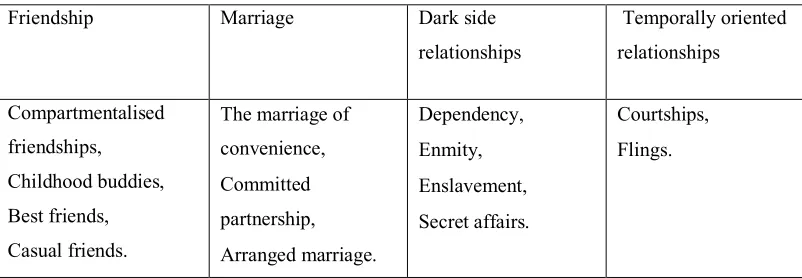
TABLE 2.2FOURNIER’S (1998) BRAND RELATIONSHIP TYPES
TABLE 2.3.FREUDIAN COMPONENTS/FORCES OF PERSONALITY
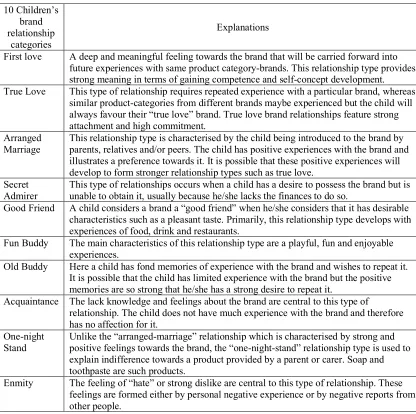
TABLE 2.4JI’S (2002)10 DIFFERENT CHILD’S BRAND RELATIONSHIPS (WITH EXPLANATIONS) TABLE 2.5 DEFINITIONS OF FAD
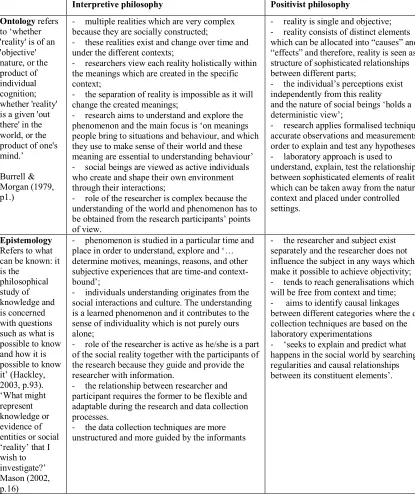
TABLE 3.1COMPARISON OF INTERPRETIVE AND POSITIVIST PHILOSOPHIES
TABLE 3.2THE ONTOLOGICAL, EPISTEMOLOGICAL AND METHODOLOGICAL POSITIONING OF THIS RESEARCH
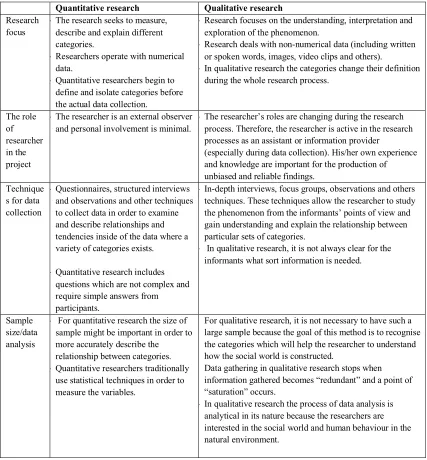
TABLE 3.3THE DIFFERENCES BETWEEN QUALITATIVE AND QUANTITATIVE METHODOLOGIES
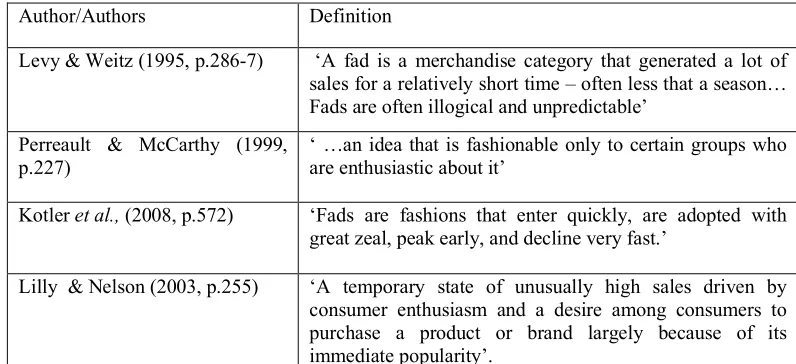
TABLE 3.4ARGUMENTS MADE IN RELATION TO CHILDREN’S AGE AND UNDERSTANDING OF THE SYMBOLIC MEANINGS OF BRAND/ POSSESSIONS
TABLE 3.5EXAMPLES OF RESEARCH METHODS INVOLVING CHILDREN
TABLE 3.6EXAMPLE OF SOME OF THE DESCRIPTIVE CODES AND THEIR MEANINGS
TABLE.3.7HIGH-ORDER CATEGORIES (EXAMPLES)
TABLE 3.8THEMES, KEY WORDS, EXAMPLES OF HIGH ORDER CATEGORIES AND SUPPORTING CHILDREN’S STATEMENTS
TABLE 6.1ACHIEVED RESEARCH OBJECTIVES
LIST OF FIGURES
FIGURE 2.1STRUCTURE OF THE LITERATURE REVIEW CHAPTER
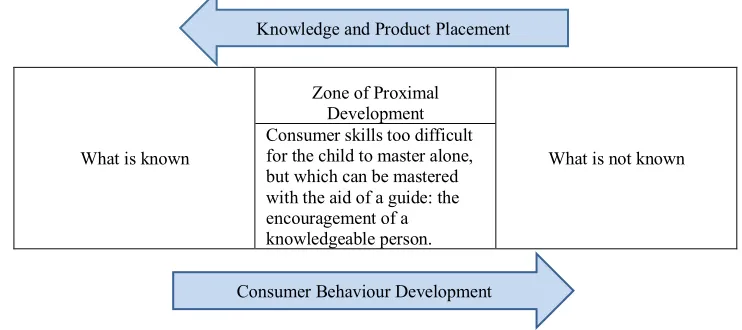
FIGURE 2.2BAMBER’S MODEL OF PLACEMENT AND CONSUMER BEHAVIOUR DEVELOPMENT
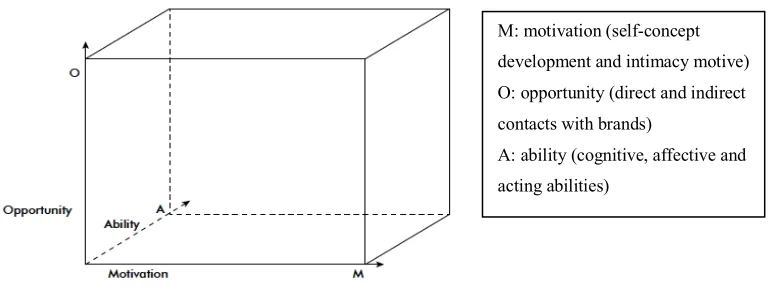
FIGURE 2.3CHILDREN AS POTENTIAL RELATIONSHIP PARTNERS (CPRP):MOA SPACE
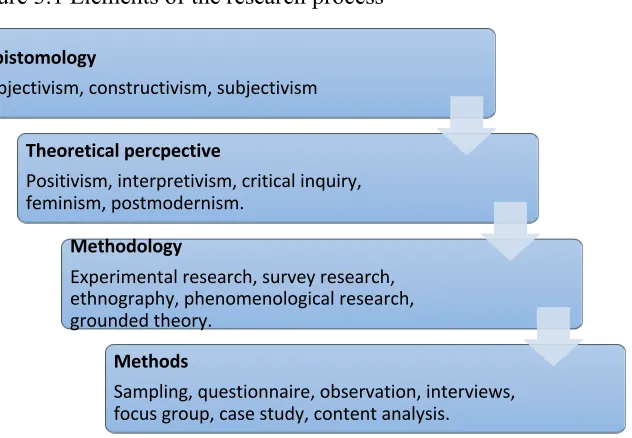
FIGURE 3.1ELEMENTS OF THE RESEARCH PROCESS
FIGURE 3.2THE SAMPLING METHOD USED IN THIS RESEARCH
Acknowledgments
First and foremost I would like to sincerely thank my Supervisory team of Dr ‘Tunji Gbadamosi and Dr Aidan Kelly who have always been supportive and patient during my doctoral journey. Without their guidance, motivation and high level of expertise it would have been all the more challenging to come to the end of this project. I feel privileged to have had such an amazing team.
Many thanks to all my colleagues, both past and present, from Royal Docks School of Business and Law. They have provided me not just with encouragement and advice, but also with the time to complete my studies. My Athena Swann mentors, Professor Jeremie Gilbert and Dr John Morrison have been so helpful, and deserve a special mention, as does Ann Olagundoye who, as my academic mentor, colleague and friend, has raised my spirits when they have been low.
Last but not least, I would like to thank my parents who sacrificed so much to give me the opportunity to come to the UK and change my life. I would like to say a very special thank you to my Mum for her unconditional love, care and enormous support. Thank you Mum and Dad for being there for me. I would like to dedicate my work to you.
Chapter 1 – Introduction Overview
This chapter outlines the structure of the thesis which addresses and explores the sophisticated nature of children’s relationships with brands and the role that they play in their lives. Furthermore, this thesis provides interesting insights into children as consumers from the consumer culture theory (CCT) perspectives and uncovers the purposive nature of their relationships with brands. The introduction chapter includes: 1.1 The rational and justification for this research; 1.2 Motivation for this study and research questions; 1.3 Objectives and research methodology; 1.4 Research contributions and 1.5 Thesis organisation.
1.1 The rational and justification for this research
From the outset, it is important to explain and clarify the rational and justification for studying children as active consumers (hereafter referred to as children as consumers) with their own voices. This section of the introduction chapter begins with clarification of the children’s position as consumers and active individuals. It is followed by section 1.2 which provides the main aspects of motivation for this study and identifies the neglected position of children in the CCT stream of literature and proposes that little is known about the role of brands in their lives. Section 1.2 ends with the clearly articulated research questions. The following section 1.3 explains the research objectives which need to be achieved in order to satisfactorily complete this study.
Diamantopouls, 2017), however the literature on children as active consumers remains very limited. Recently, Lopez & Rodrriguez (2018, p.130) repeat that ‘research on the brand relationships phenomenon in children is scarce’.
Despite the fact that little is known about children’s relationships with brands, children as consumers are well recognised by business practitioners and marketers as an attractive current and future target audience because it is accepted that they have their own purchasing power together with the influence they have on the purchasing power of their parents/caregivers. This recognition occurred a considerable time before scholars paid much attention to children as consumers and this is recognised by Cook (2000, p.488) who clarifies that in the 1930s ‘…merchants, manufacturers, and advertisers began to target children directly as individual consumers’.
attitudes relevant to their functioning as consumers in the marketplace’. Later, John (1999) provided a fundamental paper which brings together the twenty-five years of research on children’s roles as consumers. In this paper, she conceptualises the socialisation process using the cognitive development model of Piaget (1953). It is worthy of note that from the early 1970s until recently, marketing scholars continued to actively use the Piagetian developmental-cognitive approach to study children as consumers (Gbadamosi, 2018, 2012, 2010; McAlister & Cornwell, 2010; Ross & Harradine, 2004; Achenreiner & John, 2003; Ji, 2002). Despite the growing interest amongst marketing scholars to study children as consumers, it is very important to clarify the way children have been viewed by scholars from various disciplines whose views and ideas have been adopted by marketers. In relation to this matter, Cook’s (2000) contribution is particularly valuable to this research project because he has clarified and explained that, from 1960, scholars began developing an interest in obtaining an understanding of children as consumers directly from children themselves, meaning viewing them less as passive beings than before. The late 1960s was the time when children began to be recognised as different consumers (or little consumers) who possess developmental limitations but whose voices began to be heard (Cook, 2000; McNeal, 1967; Wells, 1965). The further development of the concept of consumer socialisation in the 1970s encouraged the interest of scholars to study how children were developing as consumers and from the 1990s it has been established that ‘children are agents who are active in their construction of the world and that consumer goods are part of that world’ (Cook, 2000, p.503). Having explained that the consumer socialisation concept has been dominant in the field of marketing for just over a 25-year period, it remains an important concept which clarifies the age-related stages which children pass through in order to become adult consumers. Recent studies in consumer research show an interesting shift from the Piagetian cognitive-development model of viewing children towards a New Sociology of Childhood.
Buckingham (2011) goes further and states that children are consumers from the moment they are born. Moreover, Cook (2008) argues that children are involved into the consumption process before their actual birth because frequently, the child’s parents and immediate family make pre-birth purchases for the future baby. Hence, children ‘enter the world already pre-figured as consumers’ and consumer goods are part of ‘a person’s existence’ even before they have abilities and any knowledge about purchasing processes and values (Cook, 2008, p.232).
This research focuses upon the position of the child as a consumer and is specifically driven by CCT, which views consumers as active meaning-makers and formers of their dynamic individual and social identities. Brand relationship theory, which is an integral part of CCT, explores the sophisticated role and importance of brands in the lives of consumers and reveals how brands contribute to the identity projects of consumers. Brands are clearly an integral part of the lives of individuals and CCT provides a socio-cultural discourse of the brand/brand relationships. The functional and emotional importance of brands is clear to see in the daily lives of many individuals. The mobile phones which are used, the car which is driven, the confectionary which is consumed and the clothes which are worn, each item holding a different meaning and serving a different purpose to each individual consumer, are all examples of the functional and emotional importance of brands in the lives of individuals. Notably, it is identified earlier in this section that children, whilst largely neglected, are active participants of the consumer world and actively engage with a wide variety of different brands from an early age. The following section clearly articulates the main motivation for this study and ends by providing clear research questions.
1.2 Motivation for this study and research questions
In relation to adult consumers, CCT advances our understanding of consumption and consumer behaviour and represents, according to Arnould & Thompson (2005, p.868): ‘a family of theoretical perspectives that address the dynamic relationships between consumer actions, the marketplace, and cultural meanings’. This theory is based on the well-studied assumptions that products/ brands are being purchased, not only for utility reasons, but also for their symbolic meanings (Elliot & Wattanasuwan, 1988; Levy, 1959). Furthermore, consumers are viewed as active individuals who, through consumption and the symbolic meanings of brands, define themselves and locate themselves in a social world (Patterson & O’Malley, 2006; Elliot & Wattanasuwan, 1988; Fournier, 1998; Levy, 1959). The active position of consumers in relation to the purposive use of the symbolic meanings of brands is well clarified in consumer brand relationship theory and was initially developed by Fournier (1998). She emphasises the importance of the brand relationships for consumers’ lives, explores how consumers relate to brands and stresses that these relationships are playing significant roles in consumer identity projects. The brand relationship theory is one of the central theories underpinning this research because the existing literature reveals that our understanding of children’s brand relationships is limited and only very few papers address this concept in a direct manner (Lopez & Rodriguez, 2018; Rodhain & Aurier, 2016; Ji, 2002)
of the empirical research on the subject, is stressed by Cody (2012) and Martens et al. (2004). Consequently, Martens et al. (2004) opine that:
‘Relatively little is known about how children engage in practices of consumption, or what the significance of this is to their everyday lives and broader issues of social organisation’ (p.161).
At the same time, in the mainstream marketing literature, children and brand symbolism are studied through the Piagetian model of child cognitive development (Chaplin & John, 2005; Elliott & Leonard, 2004; Achenreiner & John, 2003; Ji, 2002). Significantly, despite much successful research using the Piagetian model in the marketing field, it still faces criticism from researchers who recognise the importance of CCT as an approach to improve our understanding of how the child relates to brands and this is central to this research. The CCT approach enables the researcher to gain deeper insights into children’s lived experiences with brands and recognises the importance of brands for their social and personal lives, rather than solely focusing on the developmental aspects of children as consumers.
Nairn et al. (2008) provide reasons for studying children and their brands using the CCT approach. The value of this approach is fully explained in section 2.11 of the Literature Review chapter which identifies the gap that this research seeks to fill.
It is very evident that there is a gap in the marketing literature in that very little is known about children’s relationships with their brands from the CCT perspective and this is the main motivation for this study. The adoption of such perspectives requires this research to not rely solely on the Piagetian method to study children and more to study them as consumers in their own right. More specifically, the following epistemological and ontological views have been adopted in this research:
– children are active, creative social agents who produce their own unique children's cultures, while at the same time, contribute to the production of adult society;
– children are able to express their own thoughts, feelings, opinions and own perspectives.
do, reveal how these relationships with brands support them in their daily lives. This research is interested in revealing children’s own opinions, views and lived experiences with brands. Moreover, this research aims to explore the aspects of their personal and social lives in order to identify the importance of brands within them.
The researcher aims to gain very specific details of children’s brands, their relationships with them and explore the significance of them in their lives. Therefore, the following research questions are formulated for this research:
Main research question: What role do brands play in children’s lived experiences and identity projects?
In answering the main research question, other questions will be raised. These are: 1. How do children’s brands relationships support them in their everyday lives? 2. What is the nature of children’s consumer brand relationships?
3. How do brands support children’s consumer identity projects?
1.3 Objectives and research methodology
In order to answer the proposed research questions, the following objectives have been identified:
- to explore children’s understanding of the symbolic meanings of their brands; - to gain an understanding of how children use the symbolic meanings of brands in their personal and social lives;
- to gain an understanding of different aspects of children’s social and personal lives from their own perspectives (in the context of the school environment, their homes and with their parents and friends).
These objectives have been identified by a careful review of the relevant literature on brand relationship theory, more specifically careful attention has been paid to the origin of the theory and its roots.
similar research on brand relationship theory (Rodhain & Aurier, 2016; Kates, 2002) and CCT represents the family of the research which is interpretative in its nature (Belk, 2006).
Thirty-one children of both genders participated in the in-depth semi-structured interviews and their ages ranged from 5-9 years. Furthermore, in the context of children, brands and their relationships with these brands, the following characteristics were used for the age selection of the informants: of sufficient age to 1) understand the symbolic meanings of brands, 2) possess a well-established brand awareness and 3), to have the ability to participate in the research. The first and second developed characteristics are part of the preunderstandings of the brand relationship theory which is central to the research here. These characteristics are well explored in the literature review and were considered to be significant in the context of consumer brand relationships theory. The third characteristic is logical for the research which aimed to study children and gain their own opinions and thoughts.
The acquired data was analysed using the open-coding process together with thematic analysis. Furthermore, elements of phenomenological analysis were used to interpret the data because this research was particularly interested in children’s own views on their brands and the roles of these brands in their lives.
1.4 Research contribution
Chapters 4 and 5 are dedicated to the research Findings and Discussion and Analysis respectively and articulate the contribution of this research to scholarship. This research contributes to our understanding of how children as consumers use brands in their daily lives. Therefore, the brand relationship theory is extended beyond well-established research on adults and teenagers. The research identifies ten themes which provide interesting insights of the children’s relationships with their brands and explores children’s lived experiences with brands, and reveals their importance for their identity projects.
The following ten themes are developed:
1. Brand relationships in supporting children’s self-esteem;
4. Brands as supporters of socially constructed gender-identity; 5. Brands as supporters of children’s social status – the liminal stage; 6. Children’s fantasy worlds and their brands;
7. Brands and social embeddedness; 8. Brands and social affiliation;
9. Brands buttressing children’s life-projects; 10. Brands as leisure resources.
These ten themes highlight the active position of children as consumers and uncovers the sophisticated nature of their relationships with brands which are meaningful and purposive. This is consistent with Fournier’s (2009; 1998) contribution which is applied in the context of adult consumers and not children as consumers. Children, the research here reveals, do have relationships with their brands and these relationships contribute to the personal and social aspects of their lives in much the same way that occurs with adults. One of the unique factors of this thesis is that children’s own voices have been heard in order to position them the field of CCT and explore, from their own words, their relationships with brands. These ten themes are explained in detail in the Discussion and Analysis chapters and include such theoretical concepts as self-concept: self-esteem, self-efficacy; self-image, self-presentation; self-expansion theory; model of meaning-transfer; the “cool” concept and the concept of gender and others.
1.5 Thesis organisation
This thesis contains six chapters. They are arranged in the following order: Chapter 1 is an introduction. It provides a general overview of the thesis, clarifies the rationale, justification and motivation of this research; research questions, objectives and methodological orientations; and its research contribution. The following chapter (2) is the Literature Review. This chapter covers the theoretical underpinnings of the research and provides the conceptualisation of the theories which are key to this research. The main theoretical areas which are discussed in this chapter are: (1) consumer culture theory (CCT) which includes brand relationships theory and (2) the child’s position in social science research and marketing scholarship.
the details of the pilot study and the main study. Furthermore, this chapter explains the procedures of data analysis and interpretation together with presenting procedures for ensuring reliability and validity of the research.
Chapter 4 is the Findings chapter. It presents ten dominant themes which have been identified and developed from the interviews with the children. These themes explore the symbolic meanings, both individual and shared, which children attach to brands and explores how/why children use them in order to achieve their self-goals and gain support for their identity projects.
Chapter 5 is devoted to the Discussion and Analysis of the Findings. The relevant theoretical underpinnings are discussed in relation to children and their relationships with brands. This chapter reveals the valuable and meaningful roles that brands play in children’s daily lives.
The final chapter (6) is the conclusion of the study. This chapter provides an overview of the whole thesis, provides answers to the research questions/objectives which are detailed through the key research findings. Furthermore, this chapter clarifies how this thesis contributes to knowledge, discusses the research limitations, and provides implications for managers and recommendations for future research.
Summary
Chapter 2 Literature Review Introduction
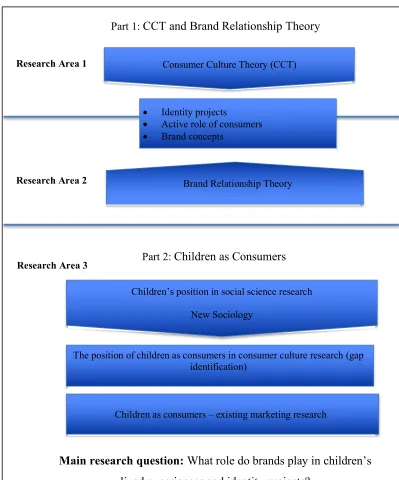
[image:17.595.119.518.275.755.2]This chapter is dedicated to reviewing the existing literature of the three relevant theoretical bodies of knowledge. These are presented in Figure 2.1. and this figure reflects the structure of the Literature Review. The various theoretical concepts which uncover the sophisticated nature of CCT, brand relationship theory (Part 1) and children as consumers (Part 2) are reviewed.
Figure 2.1 Structure of the Literature Review chapter
Part 2: Children as Consumers
Part 1: CCT and Brand Relationship Theory
Brand Relationship Theory Consumer Culture Theory (CCT)
Children’s position in social science research
New Sociology • Identity projects
• Active role of consumers • Brand concepts
The position of children as consumers in consumer culture research (gap identification)
Children as consumers – existing marketing research
Main research question: What role do brands play in children’s lived experiences and identity projects?
Research Area 1
Research Area 2
This framework is based on three main research areas: CCT, brand relationship theory and children as consumers. The chapter begins with Part 1 in which the complex nature of CCT and the nature of brand relationships are explained and reviewed.
Part 2 begins with exploration of children’s position in social science research and New Sociology. This is followed by a review of the literature relating to the concept of children as consumers and their position in marketing research. In this section, the children’s neglected position in CCT is identified and existing literature on children as active consumers and their brands is reviewed.
Part 1 Consumer culture theory and brand relationship theory
This part describes the complex concept of CCT of which a consumer’s identity project is a part. The concept of consumer’s identity project is also central to brand relationship theory and consequently, brand relationship theory is an integral part of CCT. Furthermore, within CCT and brand relationship theory, consumers are seen as active individuals in the creation and re-creation of symbolic meanings of brands which they use in the construction of their individual and social identities. This part reviews the relevant literature and explores the nature of CCT and brand relationship theory.
2.1 Consumer culture theory: consumption, culture and consumer culture
From the outset, it is important to clarify the main principles and ideas of CCT in which consumption, culture and consumer culture are studied by scholars from a variety of different perspectives in order to explain consumer behaviour, structure and the nature of the reality and the consumer’s world.
the term consumption is perceived as highly complex and multidimensional. Askegaard & Linnet (2011, p.381) explain:
‘consumption as a term seems to permeate the relations between society and individual, be it in the form of social classification and communications systems, identity formation processes, ritualistic and community building processes…’
The culture phenomenon, on the other hand, has been conceptualised within the CCT arena as a very structured and complex system of the actions, meanings and experiences. Furthermore, CCT research defines consumer culture as ‘a social arrangement and as an interconnected system which consumers use in order to create collective meanings and a sense of life and their environments’ (Arnould & Thompson, 2005, p.269). Firat & Venkatesh (1995) opine that consumption strongly characterises the Western World and the Western culture claiming that, in order to understand modern society, a consideration of consumer culture is needed where consumer culture constitutes a complex phenomenon which provides symbolic meanings for individuals. Earlier, in 1997 Don Slater brought to our attention that consumption is a cultural process and he provides a valuable definition:
‘…consumer culture denotes a special arrangement in which the relation between lived culture and social resources, between meaningful ways of life and the symbolic and material resources on which they depend, is mediated through markets’ (Slater, 1997, p.9).
The author here helpfully provides and summarises several features that are related to the consumer culture and which highlight the very social nature of it. According to Slater (1997, p.31), consumer culture is a culture of consumption; the culture of a market society; in principle, universal and impersonal; an identification of freedom with private choice and private life; an incorporation of needs which ‘are, in principle, unlimited and insatiable; is the privileged medium for negotiating identity and status within post-traditional society and represents the increasing importance of culture in the modern exercises of power.’
which primarily focus on the dynamic relationships that exist between ‘consumer actions, the marketplace and cultural meanings’ (Arnould & Thompson, 2005, p.868). CCT, therefore, uncovers and explores the very complex nature of consumption, consumers’ experiences, identities and views consumers as highly active and interpretive agents. Interestingly, Arnould & Thompson (2007) clarify that, in labelling CCT, the term theory is used as a conversational term to explore a conceptual range of theoretical perspectives, rather than unify them. Furthermore, the authors claim that the CCT framework aims to facilitate interdisciplinary research and ‘systematically link together studies’ which are diverse in their methodological stances, theoretical propositions and research contexts (Arnould & Thompson, 2007, p.8). The authors propose four main research domains of CCT: (1) consumer identity projects, (2) marketplace cultures, (3) the socio-historic patterning of consumption, and (4) mass-mediated marketplace ideologies and consumers’ interpretive strategies. They clarify that these domains are interrelated and implicative and therefore, the holistic view is needed on all four dimensions. Interestingly, the first conceptual paper on CCT was published in 2005 by Arnould & Thompson and 10 year later, the authors stress that CCT became a research tradition which explores the complex phenomenon of consumer culture and contributes to ‘a large theoretical conversation, rather than constituting a series of one-off case studies’ (Arnould & Thompson, 2015, p.3).
Over time, CCT became a very dynamic field of research which communicates and benefits a variety of stakeholders. Moreover, Arnould & Thompson (2015) strongly believe:
‘that the theoretical pairing of commerce and cultural remains a key component to the consumer culture theoretic and distinctive contributions to the broader interdisciplinary conversation concerning consumption and society’ (p.15).
Interestingly, CCT scholars predominantly focus on consumer identity projects and they are traditionally driven by the phenomenology, emic description of consumers’ everyday lived experiences and this has always proved to be the strength of CCT. However, Askegaard & Linnet (2011, p.397) view the limitation of CCT and that is, they opine, the ‘negligence of those (predominantly social) elements of forces shaping consumer lives that are not necessarily part of ordinary consumer experiences’.
Having, provided this broad idea, there are scholars such as Epp & Price (2008), Cova et al. (2007), Muniz & O’Guinn (2001) who study consumers not only as identity seekers, as they refer to them, but also as members of a social unions, hence such vibrant research areas as brand community, tribalism, connected consumers has continued to grow in popularity. These research areas reflect the importance of the socially established factors (different forms of lived ideologies), social nature of consumption which exceeds the consumers’ lived experiences. In this respect, Askegaard & Linnet (2011, p.36) strongly argue that:
‘the task of the consumption researcher is to balance the understanding of this face-to-face immediacy and the subjective concerns of the consumer with the way that cultural, societal and historical structures and processes embed these intersubjective dynamics.’
As Arnould & Thompson (2005; 2007) make clear, consumer identity projects is one of the four research domains of CCT. The following section discusses this in detail.
2.2 Identity projects and active consumers
& Dalli (2009, p. 88) argue that ‘post-modern individuals are on a never-ending identity quest, a quest to define the meaning of their lives’. Perez et al. (2010, p.220) concur that, from the postmodern perspective, ‘consumers are viewed as complex, diverse, and capable of producing cultural meanings through their experiences’.
CCT, therefore, views consumers as interpretative agents who do not necessarily receive the market’s messages at face value. From the CCT perspective, consumers are seekers and creators of their own individual identity where the marketplace is a provider of myths and symbols which consumers use to create the narratives of their identity. Moreover, scholars recognise that consumer products are more than simple objects, rather they are, according to Allen et al. (2008, p.784) ‘meaning-rich tools for personal and social identity construction’ and consumers themselves are ‘active meaning makers rather than passive recipients of marketing products and communications’. The foundational papers of these ideas, it should be noted, are provided by Belk (1988) and Hirschman & Holbrook (1982). The authors here emphasise the role of possessions for the extended self and highlight the significance of the symbolic/hedonic aspects of consumption experiences for consumers. Therefore, the view of the role of consumers over the last 30 years has changed and now they are seen as playing the role of culture creators and meaning-makers whose interpretations are important for both the marketing practitioner and scholarly theorist. A further significant contribution to the consumer culture theory is made by McCracken (1986, p.71) who developed an informative model which seeks to explain the movements of meanings into consumer goods and argues that ‘cultural meaning moves first from the culturally constituted world to consumer goods and then from these goods to the individual consumer.’ Further discussion of identity projects and its definition are provided in the context of brand relationships in section 2.8. The following section explores the concept of brands within the field of CCT.
2.3 The brand concept and CCT
social positions (Belk, 1988, 2009; Holt, 2002; Muniz & O’Guinn, 2001; Elliot & Wattanasuwan, 1988; Fournier, 1998; Elliot, 1994). Symbolism is one of the concepts which is widely studied by consumption marketing scholars. For example, Dittmar et al. (2007) emphasise the significant role that symbolic, experiential and socio-cultural dimensions of consumption play for our better and further understanding of consumer behaviourism. They argue that these dimensions have been recognised in diverse social science disciplines where the prime interests are to analyse links between consumer culture and the broader social cultural, cultural and ideological structures. The interest of Dittmar et al. (2007), it is noted, is to gain better understanding of the psychological impact of consumer culture. Furthermore, they argue that consumers do buy goods in order to gain social status, express or acquire identity, regulate emotions and to get closer to an ideal self. Dittmar et al. (2007) claim that goods are presented to the consumers as “bridges” towards ideal self through the different symbols of that ideal self (for example: perfect body, good life and others). Additionally, individuals, they argue, locate themselves in a social world through the consumption process. Here, it is significant that products, activities and consumers’ beliefs are constructing the narrative of the individual consumer and representing his/her identity. Therefore, consumption can be viewed as a source of the symbolic meanings which consumers need in order to create and develop their self-concept (Wattanasuwan, 2005). At the same time, it is acknowledged that consumers are active participants in the world of consumption. The consumer’s world, through the socialisation processes, is creating cultural symbolic meanings which are invested in the product and represented mostly through advertising (Elliott & Wattanasuwan, 1998). The importance of the symbolic meaning of brands for consumers has been widely investigated (for example by Levy, 1959; Elliot & Wattanasuwan, 1988; Patterson & O’Malley, 2006; Fournier, 1998). It is accepted, therefore, in the current marketing literature, that products are being purchased, not only for utility reasons, but also for their symbolic meanings. Wattanasuwan (2005) re-enforces the claim that through consumption and the symbolic meanings of brands, consumers locate themselves in a social world.
originate in a culturally constituted world and then are transferred to brands. These meanings, he argues:
‘flow continually between its several locations in the social world, aided by the collective and individual efforts of designers, producers, advertisers, and consumers’ (McCracken, 1986, p. 71).
McCracken (1989) proposes an interesting idea in relation to the source of the symbolic meanings of brands in that he argues that it can be the reference group usage and the celebrity endorsement that are the sources of symbolic meanings. Consumers therefore, construct their selves through the ownership of brands where the congruity between brand image and self-image is significant and consumers express their selves and create their self-identities through the symbolic meaning of brands. Elliott & Wattanasuwan (1998) opine that a consumer uses brands as symbolic resources to construct the self. CCT, therefore, advances our understanding of consumption and consumer behaviour. Furthermore, Holt (2002, p.83) claims, that ‘postmodern consumer culture’s central tendency [is]: the use of consumer goods to pursue individuated identity projects’. However, the author formulates different definitions of consumer culture and argues that ‘the concept of consumer culture refers to the dominant mode of consumption that is structured by collective actions of firms in their marketing activities’ (Holt, 2002, p.71). Furthermore, he argues that marketers can be viewed as “engineers” who are controlling and organising individuals’ feelings and thoughts through the meaningful brands and complex marketing techniques. Therefore, the modern time of consumerism holds the ideological view that consumer culture, and its main domains (goods, clothes, brands, and others), generates a limited set of identities and, consequently, marketing successfully channels consumer desire. On the other hand, Holt (2002) claims that some individuals are able to take control over provided meanings and particularise them and use them in idiosyncratic ways. According to Holt (2002, p. 88), consumers ‘fight the symbolic meanings of marketers by re-inscribing commodities with oppositional meanings through their consumption practices.’
2.4 Brand relationships theory and CCT
of consumers and the brand phenomenon, are concepts which are shared by these two research streams.
The consumer brand relationship theory was initially developed by Fournier (1998) and is discussed in detail later in this chapter however, it is a meaningful step in this research project to recognise the position of it within CCT and acknowledge its contribution to the CCT research stream as a whole. Fournier (1998) emphasises the importance of the brand relationships for consumers’ lives, explores how consumers relate to brands and stresses that these relationships are playing significant roles in individuals’ consumer identity projects. One of the strongest and most significant points formulated by Fournier (1998) is based on the notion that the development of the consumer’s personality largely depends on relationships in which he/she is involved with and brands can be seen here as an active relationship partner. This idea of Fournier’s is also supported with Belk’s (1988) notion that an individual’s self is the sum of his/her possessions. Furthermore, Escalas & Bettman (2005, p. 387) opine that ‘consumers appropriate brand meanings emerging from associations of brands with reference groups to construct their self-concept’. Here we see the consumption of brands (brand personalities) which are in alignment with consumers’ own personalities (Mühlbacher & Hemetsberger, 2008; Aaker, 1997). Moreover, Mühlbacher et al. (2006, p.3) argue ‘by engaging in relationships with brands, consumers are considered to take a more active role in the creation of brand meaning’ and here we see why brand relationship theory belongs to the CCT concept in that studying it uncovers a complex, purposive and valuable relationship between consumers and their brands. Both consumers’ identity projects and the brand phenomena are however, highly complex concepts, and need to be explored in greater detail but before the Literature Review starts to explore the nature of brand relationship theory, it is important to define the term brand and reveal its complex nature.
2.5 Brand as a complex phenomenon
brand phenomenon, it should be noted, primarily focus on the aspect of self-concept/identity formation acquired through the social meanings and the social symbolism of brands which is traditionally shared and used for communication purposes (Ahuvia, 2005; Elliott & Wattanasuwan, 1998; Belk 1988; Solomon, 1983). For example, Diamond et al. (2009), in their socio-cultural research, introduce the term brand gestalt. This term characterises the complex structure of the brand phenomenon and includes identity myths, signs, symbols and experiences. The authors emphasise the importance of synergy between these components for an emotionally powerful brand. The postmodern view on a brand recognises consumers as brand co-creators. For example, Brown, Kozinets & Sherry (2003, p.30) argue that, in relation to the retro-brands, consumers can ‘be partners in the creation of brand essence and importers of meaning from beyond the market place’ and retro brand communities ‘play an important role in co-creating brand stories’. Mühlbacher et al. (2006), it is noted, also provide a valuable insight into the complexities of the brand phenomena, including its social nature and its consequences for theoretical scholarly research and management practice. They conceptualise a brand in terms of it ‘encompassing brand manifestations, brand meaning, and a brand interest group that constructs brand meaning as well as brand manifestations in an ongoing public discourse’ (Mühlbacher et al., 2006, p.1).
By way of example, research by Schembri (2009) on the Harley Davison brand reveals that consumers develop relationships with other individuals through their shared values, associations, and interactions. Harley Davison’s consumers share associations with this brand (leather and denim jeans which they associate with freedom) and form relationships amongst each other as well as with the brand itself. Additionally, Schembri (2009, p. 1299) emphasises the general role of a brand in the process of socialisation and interaction, which means that the ‘brand holds more than the functional value of the product’. Bernritter et al. (2017), researching brands online, supports Escalas & Bettman (2005) and further argues that online brand endorsements reflect consumers’ activities of identity construction and expression and conclude by saying that ‘brands unify their consumers since they all have at least one thing in common, the brand’ (Bernritter et al., 2017, p.115).
The important categories such as brand association, brand symbolism, brand value and brand meaning, it should be recognised, all contribute to the consumer self-concept. In other words, consumers satisfy their psychological needs by re-enforcing, expressing, defining their self through these main brand categories (Belk, 1988; Fournier, 1998; Richins, 1994; Ball & Tasaki, 1992). In the context of this research, Achenreiner & John (2003) argue highly relevant points in that, in the context of child consumption, brands can convey meanings which are symbolic or conceptual. They argue that brands are used by children in order to obtain status, prestige or trendiness.
However, it is argued by many, including Avis (2011) for example, that definitions of a brand are inconsistent and can be conceptualised in a variety of different ways. For example, Brodie & de Chernatony (2009, p.97) observed that ‘there never will be a unifying definition of brand but a constantly evolving series of contexts of lenses through which the phenomenon is viewed’. For this research, the Mühlbacher & Hemetsberger (2008) idea of brand phenomenon is viewed as valuable and is adopted in this research. They propose that, from the combination of psychological and sociological research streams, the brand development is ‘a complex, contextual, and interactive process within a social system of interrelated, yet diverse actors who, themselves, may become part of the brand’ and creation of brands occurs ‘through social interaction among all those who are interested in their meaning, their manifestations and others participating in the brand related interaction’ (Mühlbacher & Hemetsberger, 2008, p.15).
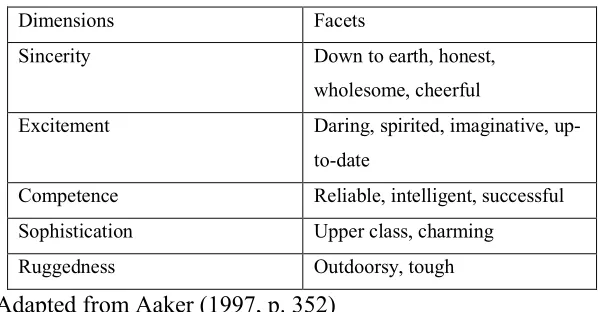
Table 2.1 Brand personality dimensions
Dimensions Facets
Sincerity Down to earth, honest,
wholesome, cheerful
Excitement Daring, spirited, imaginative, up- to-date
Competence Reliable, intelligent, successful Sophistication Upper class, charming
Ruggedness Outdoorsy, tough
Adapted from Aaker (1997, p. 352)
A supporting definition of brand personality is offered by Zoulay & Kapferer (2003, p.151) who opine that ‘brand personality is the set of human personality traits that are both applicable to and relevant for brands’. The concept of brand personality helps us to understand how consumers use brands symbolically and also to express their selves, mainly because consumers are able to attach human personality traits to brands (Keller, 1993; Aaker, 1997). There are two ways in which brand personality is formed: (1) through the marketers’ efforts (brand name, packaging, product and how it is sold) and (2), consumers’ own interpretations which are based on their experiences, perceptions and views (Plummer, 2000). Therefore, there are two aspects to the brand personality formation: ‘input, that is, what we want consumers to think and feel, and out-take, what consumers actually do think and feel’ (Plummer, 2000, p.80).
While discussing the concept of the brand personality, there are two additional concepts which need to be acknowledged and explained. These are: brand image and brand awareness. These concepts define the notion of brand knowledge, which is conceptualised by Keller (1993, p.3) as ‘consisting of a brand node in memory to which a variety of associations are linked’. Furthermore, Keller (1993, p.2) provides the following definitions: ‘brand awareness relates to brand recall and recognition performance by consumers’ and ‘brand image refers to the set of associations linked to the brand that consumers hold in memory.’
and non-product-related attributes (usage/user imagery, information about price and others). The concept of brand personality is central in the brand relationship theory as Fournier (1998), in her seminal work, advocates that consumers form relationship with brands in a similar manner to how they form relationships with other individuals. This idea is developed further by other scholars and this is discussed fully in section 2.6, 2.7 and 2.8.
As a consequence of the above discussion, the sophisticated nature of the brand phenomenon is acknowledged and it is central for the understanding of brand relationship theory which is discussed comprehensively in the following section.
2.6 The brand relationship concept and its origin
2.6.1 Animism as a basis for the brand relationships concept
viewed as humans attributing life to non-living objects, and anthropomorphism as humans attributing human characteristics to the non-human.
The theory of animism, therefore, refers to the idea that individuals tend to humanise inanimate objects in order to simplify relations with the nonmaterial world (Fournier, 1998; Fournier et al., 2012). The theory of animism is used by Fournier (1998) in order to give inanimate objects, more specifically brands, human characteristics, consequently she argues that brands can be seen as a vital participant in the consumer brand relationships. Fournier (1998, p.344) claims that ‘one way to legitimize the brand-as-partner is to highlight ways in which brands are animated, humanized, or somehow personalized’.
Through the main points of the animistic idea, Fournier (1998) generates the notion that consumers are attaching personality characteristics to the brands and very often associating them with the particular person who has been responsible for advertising the particular brand. Furthermore, she argues, consumers might associate a particular brand with the past where the product has been continuously used by those known, such a relative, or the brand-object has been received as a gift and consequently holds the special character of the giver. Here, it is important to recognise that the personal characteristics of the giver might perfectly fit with the brand personality. Consequently, the brand possesses the spirit of the giver and it is delivered to the receiver through the gift (Fournier, 1998). Additionally, the brand spirit and consumer associations associated with it are supporting the idea of the brand animation and, consequently, the notion of the brand as a vital member of the relationship. Fournier (1998, p.345) argues that a brand itself is a set of the different perceptions which consumers have in their minds and a brand does not have ‘objective existence at all: it is simply a collection of perceptions held in the mind of the consumer’.
idea that people have relationships with brands. Moreover, the authors here argue that the:
‘ability of consumers to anthropomorphize a product and their consequent evaluation of that product depends on the extent to which that product is endowed with characteristics congruent to the proposed human schema’ (p.468).
Fitzsimons et al. (2008), based on research within the social psychology discipline, where individual behaviour can be affected by the associations they have with other people, argue that individuals’ automatic behaviour can be evoked by brands and their characteristics. More specifically, they claim that individuals who are exposed to the Apple brand behave more creatively, and those exposed to the Disney brand behave more honestly. However, the extent of brand perception as a human can be vary. For example, Aggarwall & McGill (2012) make the assumption that iconic brands, which have been the main focus of Fitzsimons et al. (2008), are normally perceived more as “people”, consequently, they argue, that such brands are more likely to affect an individual’s behaviour.
Puzakova et al. (2009) argue firmly that people form stronger relationships with brands they perceive to be as human, a view further developed by Aggarwall & McGill (2012) who extend the notion by demonstrating that anthropomorised brands extend into the social sphere and individuals’ responses to such brands tend to be similar to the responses which people have to other people who hold similar human characteristics. Importantly, these responses tend to be goal-directed and driven by desire for successful social interaction. Brand associations, therefore, dictate and provide certain personality characteristics which individuals hope to achieve (Aggarwall & McGill, 2012).
Despite the fact the phenomenon of animism, and consequently the concept of a brand as a relationship partner are significant for our understanding of the brand relationship concept, Fournier (2009) makes a significant clarification. She argues that the identification of brand relationships’ potential existence is not based on the brands’ human characteristics because all brands interact and communicate with consumers through the marketing mix which forms the basis for such relationships. She further clarifies, that potential for the formation of brand relationships is based on how ‘sensitive [the brand is] to the person’s life context’ Fournier (2009, p.7).
Additionally, to understand the nature of the brand relationship concept, and the significance of these relationships for the individuals’ lives, a deeper understanding of social relationships is needed. Many of the theories adopted by the brand relationship field have, it is noted, been taken from the sociology and psychology disciplines.
2.6.2 Interpersonal relationships
relationship phenomenon. Reis & Rusbult (2004) opine that interdependency defines the degree of dependency of individuals in the relationship, constitute the power influence and reflects interactions both congenial and less congenial. Denzin (1970, p.67) puts forward a definition that ‘a relationship exists between two or more people when those people engage in recurrent forms of either symbolic or co-present interaction’.
Furthermore, Denzin (1970) argues that parties which are involved in relationships must have the same or a similar set of definitions of each other which they are sharing. Additionally, Acitelli, Duck & West (2000) argue that all relationships are unique to the parties involved. Therefore, because of these different aspects and characteristics of the relationship concept, it is difficult to define them. It is important to bring to attention that the interpersonal relationship literature focuses more on the nature of the relationship as opposed to providing a technical definition of the relationship itself.
Hinde (1995), whilst seeking to define relationships as a connection, suggests that they should have several significant characteristics. The first characteristic refers to the notion that there are active and interdependent partners in the relationships and exchange amongst them must have a reciprocal nature. The second characteristic highlights the purposive behaviour of the participants which creates meanings for them. Furthermore, Hinde (1995) argues that relationships have a diversity of forms and each of these forms provides a variety of benefits for participants. The final characteristic emphasises that relationships are changing and evolving in the process of interaction and also under changes in the environment where they are taking place. It is important to note here that Fournier’s (1998) research design, analysis, findings and arguments are based on these characteristics. Consequently, Fournier (1998) formulates her definition of the relationships which she then uses in order to explain the consumer brand relationships. The Fournier (1998) definition is:
‘Relationships are constituted of a series of repeated exchanges between two parties known to each other; they evolve in response to these interactions and to fluctuations in the contextual environment’ (p.346).
‘voluntary or imposed bond between a child and a brand characterized by a unique history of interactions and is intended to serve developmental and social-emotional goals in the child’s life’ (p.605).
Interestingly, this definition is taken and extended by the Rodhain & Aurier (2016), who recognise the importance of social interactions for the formation of children’s brand relationships (interactions with peers, teachers and parents). The interpersonal relationship theories categorise (1) the types of the relationship through the different types of bond which joins the participants of the relationship, and (2) through the nature of the benefits which the participants receive from these relationships.
close relationships individuals treat one another as if they are parts of themselves (Aron et al., 1995).
here that these four dimensions can be used to characterise dyadic relationships and that they can be described as high or low in the context of each dimension (Iacobucci & Ostrom, 1996). The nature of these characteristics is very different, therefore, there are many different types of dyadic relationships with different roles of participants. Significantly, Iacobucci & Ostrom (1996) examine these four dimensions and conclude that they are acceptable in the business context. More specifically, the authors here argue that such characteristics as closeness, valence, asymmetry and formality are beneficial for our understanding of dyadic relationships in the business context. However, Iacobucci & Ostrom (1996) argue further that the combination of these characteristics/properties for different sets of dyads is also different. Significantly, these dimensions are actively used and applied by Fournier (1998) in her development of brand relationship theory.
De Chernatony (2010) and Gummesson (1999) review different characteristics of relationships which can be seen as a basis for relationships differentiation: (1) extent to which parties collaborate; (2) degree of commitment between parties; (3) extent to which trust is engendered and risk reduced; (4) whether one party has greater power; (5) longevity of relationship; (6) degree to which there are frequent interactions; (7) whether intensive or superficial; (8) extent to which there is physical, mental or emotional closeness; (9) whether formal or informal; (10) degree of openness and (11) whether or not it is routinised.
This section has explored social-relationship characteristics and types however, it is important to gain an understanding of why individuals form relationships. The understanding of these theoretical aspects is important for our understanding of brand relationship theory. The following section explores and clarifies individual’s motivations to from social relationships.
2.6.3 Individuals’ motivations to form social relationships
them’ (Hewstone et al., 2008, p.198). Furthermore, Hewstone et al. (2008) provide three motives for people’s affiliation: social comparison, anxiety reduction and social support. Social comparison theory refers to the idea that people are affiliating with others in order to compare themselves to others and consequently, learn more about their feelings and appropriate social behaviour. Anxiety reduction refers to the emotional support and comfort which might be offered and gained by one individual to another. Social support is another motivation for affiliation. This motivation is divided into four elements: emotional support, appraisal support, informational support and instrumental support (Hewstone et al., 2008).
the same motivational system (Hazan & Shaver,1987). Additionally, other researchers identify that other types of relationships and emotional bonds can be ruled by the basic principles of the attachment theory (Trinke & Bartholomew, 1997).
Bowlby’s (1969, 1973) important contribution to developmental psychology and consequently, to brand relationship theory, by developing attachment theory, was extended by this author and his colleagues and associates to further our understanding of the process of loss. Bowlby, it should be noted here, was influenced by Freud’s 1917 work entitled “Mourning and Melancholia” in which the author investigated how individuals respond to the death/ loss of a ‘loved person’ (Freud, 1917, p.243). Bowlby’s research was also particularly interested in adaptive responses to loss in terms of how individuals cope with losing an individual with whom the person in question had a very close relationship such as a parent/ caregiver or sibling. Such an adaptive emotional response, or set of adaptive responses, is referred to by Bowlby & Parks (1970) as grief, or the grieving process. In the context of grief, Bowlby & Parkes (1970) opine that a four-stage process ensues: Shock and Numbness; Yearning and Searching; Despair and Disorganisation; and Reorganisation and Recovery.
and remaining preoccupied with the lost person. Having passed through the Yearning and Searching stage, the griever enters the Despair and Disorganisation stage in which the loss has finally come to be accepted and that the fact that the change has occurred will be permanent. During this period the griever will experience emotions of despair and hopelessness and seek answers to questions such as why has this happened to me? Bouts of anger, inform Bowlby & Parks (1970), are not uncommon during this stage. It appears to the griever that life may never get better and the griever may withdraw from others. Bowlby & Parkes (1970) opine that failing to pass through this stage can have serious consequences in terms of the griever suffering bouts of depression and anger as they view the future negatively and with a sense of hopelessness. The final stage of the grieving process is the Re-organisation and Recovery stage and in this period, the griever finally begins to start feeling more positive about the future. The griever may cease to withdraw from others and re-establish trust. That is not to say the griever no longer suffers the emotional consequences of the loss, but according to Bowlby & Parkes (1970), the loss gradually recedes as the griever “let’s go” of the deceased and the bereaved no longer remains central in their thoughts as they investigate the future without them.
Whilst Bowlby dedicated a significant part of his extensive research life to the notion of loss/bereavement and associated adaptive responses, he was confronted by criticism because his research, for example, failed to reflect loss/ grieving in the wider cultural context. Valentine (2009) for example, points out that in Japan grievers are not encouraged to break the emotional bonds with the deceased and that in other cultures “letting go” of the deceased is considered disrespectful and is discouraged. Parkes, Laugani & Young (1997), however, investigate responses to loss and grieving processes in the wider cultural context and go some way towards filling this gap. That said, Bowlby’s contribution to adaptive responses to loss and grieving remains of great importance to the medical world, particularly in terms of counselling those affected by the loss.
the loser has had a close, emotional relationship as opposed to the emotional response to the loss of a brand or other non-living entity. The primary contribution of Bowlby, it should be noted, is to counselling individuals who have suffered loss as a result of death of a ‘loved person’, to used Freud’s (1917, p.243) specific term.
Thus far, the Literature Review here has explored the sophisticated nature of CCT and clarified that brand relationship theory belongs to CCT. Also, the identity project, active role of consumers and concept of branding are identified as central for these theoretical underpinnings. Furthermore, the Literature Review uncovered the insights of the interpersonal relationships concept which is important in order to gain an understanding of the brand relationship concept. The brand relationship theory is central for this research, therefore the following section illuminates and explores this concept.
2.7 The brand relationship concept
This chapter has reviewed the literature exploring and discussing the various elements upon which the concept of brand relationships is based. It now focuses on relationships between individuals and brands and explores the concept of brand relationships as developed by Fournier (1998).
purposive, long-lasti