Development of thermally efficient fibre-based eco-friendly brick
reusing locally available waste materials
Ashwin Narendra Raut
a,⇑, Christy Pathrose Gomez
b aDepartment of Construction Management, Universiti Tun Hussein Onn Malaysia, 86400 Batu Pahat, Johor, Malaysia b
Department of Construction Management, Universiti Tun Hussein Onn, Malaysia, 86400 Batu Pahat, Johor, Malaysia
h i g h l i g h t s
Focus is on development of thermally efficient wall material for hot and humid climate.
The bricks were developed utilizing locally available sustainable waste material.
Physical, mechanical and thermal performance of newly developed bricks is assessed.
Effect of oil palm fibres on physical and thermal properties is assessed.
Microstructural examination is performed to understand interaction between the raw materials.
a r t i c l e
i n f o
Article history:
Received 11 August 2016
Received in revised form 12 December 2016 Accepted 15 December 2016
Available online 24 December 2016
Keywords: Sustainable Thermally efficient Glass powder Palm oil fly ash Oil palm fibres Bricks
a b s t r a c t
Currently there are several kinds of building wall thermal insulation materials commercially available in Malaysia, however the issue with all these materials is that they are not eco-friendly. This paper attempts to reduce the dependence on non-friendly insulation material by developing thermally efficient eco-friendly bricks. The prototype brick developed by incorporating locally available sustainable waste mate-rial was subjected to initial investigation on physical, mechanical, thermal and microscopic studies. The investigations revealed that the thermally efficient prototype mix design using glass powder and palm oil fly ash along with lime as binder is able to provide strength to the bricks. Also, usage of oil palm fibres were beneficial in lowering the thermal conductivity of bricks. At incorporation of 1% wt of OPF, compres-sive strength was found out to be 7.21 MPa and thermal conductivity was 0.39 W/mK, which indicates the proposed bricks can be an alternative to non-eco-friendly commercial common bricks. The advantage of the proposed bricks is two-fold: having low thermal conductivity will make it an energy efficient option, second is the usage of sustainable resources makes it an eco-friendly product.
Ó2016 Elsevier Ltd. All rights reserved.
1. Introduction
The building sector consumes a significant amount of energy during its operational stage contributing to an ever increasing amount of greenhouse gas emissions. A key consideration in order to improve the energy efficiency of the building sector is to provide thermal insulation to the building envelope for the purpose of low-ering its heating/cooling load. There are several kinds of insulating materials commercially available in Malaysia such as Fibreglass– urethane, Fibreglass (rigid), Urethane (rigid), Perlite, Extruded Polystyrene and Urethane[1]. But the problem with all these mate-rials is that they are not eco-friendly matemate-rials. Due to the
environ-mental concerns, there is an urgent need to develop and utilize materials that have eco-friendly features. A material having sus-tainable features along with optimum insulating properties can eventually contribute to addressing key environmental concerns, such as leading to reduction in greenhouse gas emissions. In addi-tion, better insulation of the building envelope reduces mechanical energy dependency for cooling and heating purposes, eventually contributing to the betterment of the environment.
The amount of raw materials consumed by the construction industry is approximately 24% of the global raw material resource [2]. Thus, for achieving the goal of sustainable development in the construction industry, the selection of building material plays a pivotal role. There have been continuous efforts to research on the viability of reusable waste materials as alternative building materials. Efforts have been ongoing to utilize demolition waste, municipal solid waste, agricultural waste and industrial waste in
http://dx.doi.org/10.1016/j.conbuildmat.2016.12.055 0950-0618/Ó2016 Elsevier Ltd. All rights reserved.
⇑ Corresponding author.
E-mail addresses:[email protected](A.N. Raut),[email protected] (C.P. Gomez).
Contents lists available atScienceDirect
Construction and Building Materials
building materials [3–6]. However, most of the studies while studying the incorporation of waste material have failed to address the thermal insulation characteristics of such material for improv-ing energy efficiency needs and mechanical performance.
To a great extent the solid waste industrial by-products have been researched for more than a few decades as a form of zolanic material. Glass powder is one of such materials having poz-zolanic behaviour because of its high silica content. In Malaysia, waste glass amounts for 3% of total municipal solid waste gener-ated every year causing serious environmental concerns [7]. In 2008, for supporting recovering activity in Malaysia, 119 solid waste recyclers were licensed. These companies provides alterna-tive resources by recovering solid waste and reduce dependency on natural resources. There is scope of utilizing recycled glass from recovered solid waste and incorporate it as a supplementary cementiotious material[8]. There are various types of glass based on its chemical composition: soda-lime glass, vitreous glass, borosilicate glass, lead glass, barium glass, etc. Most commonly used glass is soda-lime glass consisting of approximately 73% SiO2, 13–18% Na2O and 10% CaO[9]. Thus, based on chemical com-position powdered glass can qualify as pozzolanic material as per ASTM C618[10]. There has been much research undertaken with encouraging results regarding mechanical performance and dura-bility criteria for construction materials while incorporating glass powder[11–13]. However, high amount of alkali makes it vulner-able to alkali silica reaction if it is used as a supplementary cemen-tiotious material [13,14]. Several studies suggest that grounded fine glass powder which has a particle size below 300
l
m shows very good pozzolonic reactivity without ASR expansion [15,16]. Also, to reduce the chances of disruption due to alkali silica reactiv-ity, Byars et. al.[17]in his research has suggested the combined use of supplementary cementitios material such as fly ash, silica fume, etc.Palm oil fly ash (POFA) is available in abundance in Malaysia and possesses pozzolanic behaviour[18]. Each oil palm fruit bunch produces 21% palm oil, 6–7% palm kernel, 14–15% fibres, 6–7% shell and 23% empty fruit bunch on an average[19]. It is estimated that, a single kilogramme of palm oil results in 4 kg of dry biomass [20]. The Malaysian oil palm industry generates 3 million tons of POFA in the year 2007 and it is estimated that production rate will increase due the expansion of oil palm sector [21]. Several researchers[22–24]have studied the usefulness of POFA as a sup-plementary cementitious material for enhancing mechanical per-formance as well as durability of concrete products. Thus, the combined use of glass powder along with POFA as pozzolonic materials can be treated as a sustainable step within the local con-struction industry.
Enhancement of thermal performance can be done by introduc-ing pores in the matrix of the material. Studies have found that fibrous material possesses cellular pores structure which can reduce the heat transfer rate significantly[25–27]. Coconut coir fibre, durian fibre, straw bale, cotton stalk fibre, and bamboo fibre has been tried and tested before for developing thermally insulated composites. Also, studies there have been conducted on oil palm fibre for insulating applications[28]. On the backdrop of waste dis-posal issue of Malaysian oil palm industry as discussed earlier, oil palm fibres can be utilized as a pore forming agent in proposed material.
The objective of this research is to understand the physical, mechanical and thermal performance of bricks developed from the locally available waste material which can be procured easily. The research in more inclined towards the thermal performance of bricks as the proposed material is supposed to be thermally effi-cient. As all the raw materials are mostly by-product of industrial & municipal activity, the proposed product provides a sustainable alternative to existing energy consumptive fired clay bricks.
2. Prototype development
The constituent material for developing thermally efficient bricks are glass powder, palm oil fly ash, oil palm fibres, crusher dust, lime, and water.
2.1. Raw materials
[image:2.595.303.554.570.675.2] [image:2.595.33.547.709.754.2](i)Glass powder:Scrap of broken glass were procured from local dump yard. This broken glass was brought for precondition-ing where it was crushed for in a ball mill for 2 hours at 60 rpm speed to form a finely grounded glass powder. Fur-thermore, it was sieved using 90
l
m sieve to keep its parti-cle sizes in check. Chemical composition by using X-ray Florescence (XRF) technique is shown in theTable 1. Physi-cal properties such as specific gravity, fineness, soundness, initial and final setting time, drying shrinkage, and determi-nation of flow were determined and it is shown in the Table 2. The scanning electron microscopy (SEM) image of powdered glass is shown inFig. 1(a). Also, X-ray diffraction (XRD) was carried out which points out to the fact that no substantial crystalline phase was detected as shown inFig. 3. (ii)Palm Oil Fly ash:The palm oil fly ash was collected from oil palm industry located at Kluang, Johor, Malaysia. The ash collected was having a certain percentage of moisture con-tent, to remove moisture it was subjected to oven drying at 110°C. The dried ash was further sieved using 90l
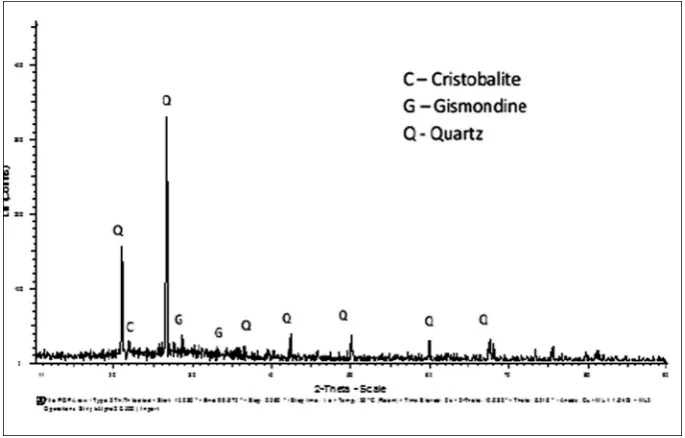
m sieve size. Furthermore, physical, mechanical and chemical characterization of palm oil fly ash were conducted similarly to that of glass powder (GP). The XRD pattern shown inFig. 2 suggests the presence of quartz mineral which is rich in sil-ica, also proven by chemical composition represented in Table 1.(iii)Oil palm fibres:The oil palm fibres were also collected from same company from where palm oil fly ash was procured. As the fibres were in hydraulic compressed form,
Table 1
Chemical composition of glass powder and palm oil fly ash.
Chemical composition SiO2(%) Al2O3(%) MgO (%) Na2O (%) CaO (%) Fe2O3(%) Cl (%) P2O5(%) K2O (%) LOI (%)
Glass powder (GP) 68.89 4.147 2.717 16.938 5.904 0.52 0 0 0.568 0.316
Palm oil fly ash (POFA) 61.663 5.13 4.17 0.49 9.869 5.299 0.162 3.716 8.427 1.074
Lime 3.94 1.37 0.32 0.01 88.7 0.09 – – 0.02 3.53
Table 2
Physical properties of POFA and glass powder.
Sr. No. Physical properties POFA GP
1. Fineness (cm2/g) 1348 1862
2. Specific gravity 2.21 2.67
3. Soundness
Le Chatellier expansion (mm) 1.2 0.8
Autoclave expansion (%) 0.06 0.05
4. Setting time
Initial setting time (min) 166 144
Final setting time (min) 274 268
5. Drying shrinkage (%) 1.805 1.801
Fig. 1.Scanning electron microscopy (SEM) images of (a) glass powder (50lm); (b) palm oil fly ash (50lm); (c) c/s of oil palm fibres (100lm).
Fig. 2.XRD pattern of palm oil fly ash (POFA).
[image:3.595.131.470.484.737.2]preparation of fibres was initially done using Natural Fibre Processing Machine. Then it was washed by using tap water to remove any kind of impurities present on the surface. Fur-thermore, to enhance fibre-matrix adhesion in bricks, mercerization or alkaline treatment of fibres was done using Sodium Hydroxide (NaOH) solution. This treatment removes the hydrogen bonding in the network structure as shown in Eq.(i).
Fibre-OHþNaOH!Fibre-ONaþþH2O ðiÞ
Fibres were immersed in 2% dilute NaOH solution for an hour, afterwards, it was sun dried. The Physical properties if oil palm fibres are shown in theTable 3. The cross-section of fibres was observed by using scanning electron microscopy (SEM) images shown inFig. 1(c), in which it is evident that oil palm fibres have cellular porous structure.
(iv) Crusher dust:In the experiment, the filler material obtained from quarry industry provides a sustainable alternative to river sand. It was procured from nearby locally available quarry industry located at Minyak Beku Batu Pahat, Johor. It was further sieved by using sieve size of 2.38 mm. (v)Lime:In preparation of bricks, lime as a sustainable
alterna-tive to cement as a binder was selected. Chemical composi-tion of lime is shown inTable 1.
(vi) Water: The water used for experiments were taken from UTHM, Johor. The pH of the water was 6.9.
2.2. Material preparation
The mix design for the preparation of thermally efficient bricks is done by utilization of the locally available waste material i.e. glass powder, palm oil fly ash, and oil palm fibres. Also, crusher dust and lime were used as filler and binding materials respec-tively. Mix design was adopted from L16 orthogonal array
technique used in Taguchi’s method[29]shown inTable 4, where glass powder (GP), palm oil fly ash (POFA) and oil palm fibres (OPF) is varied as per the L16orthogonal array technique. Oil palm fibres were introduced as a percentage of the binder as it was having very low density. Lime as a binder material was kept constant.
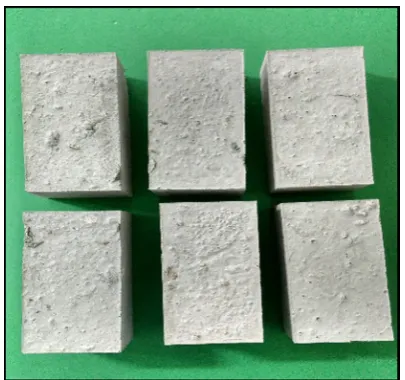
Initially, all the raw materials were batched and dry mixing was done to distribute fibres evenly. All the mixing procedure was con-ducted in a mechanically operated concrete mixer. Dry mixing was followed by wet mixing which was done over a time span of for 2– 3 min. The whole wet mix was poured to segregate and distribute fibres evenly. The material was filled up in a mould and the mate-rial was compacted using vibration technique. The removal of the sample was done from the mould after 24 h. Further, it was dried for a couple of days which was followed by continuous curing for 28 days. The whole brick manufacturing process is similar to that of conventional brick making process used for preparation of unfired bricks, except the inclusion of pre-processing of raw mate-rials. The prototype samples of developed thermally efficient brick is shown inFig. 4.
2.3. Testing procedure
[image:4.595.326.529.344.534.2]To analyse the developed thermally efficient brick sample, the testing procedure as per standard requirements is very crucial.
Table 3
Physical properties of oil palm fibres.
Fibre properties Values
Avg. fibre length (mm) 25 Avg. Diameter (lm) 19.4 Tensile strength (MPa) 35.33
Elongation (%) 0.05
Specific gravity 2.13
[image:4.595.93.225.476.548.2]Water absorption 24 h (%) 0.79
Table 4
Mix designs for thermally efficient brick.
Sample code Glass powder (% wt) Palm oil fly ash (% wt) Crusher dust (% wt) Lime (% wt) Oil palm fibres (% wt of binder)
M1 20 20 45 15 0.25
M2 25 25 35 15 0.25
M3 30 30 25 15 0.25
M4 35 25 25 15 0.25
M5 20 25 40 15 0.5
M6 25 20 40 15 0.5
M7 30 35 20 15 0.5
M8 35 30 20 15 0.5
M9 20 30 35 15 0.75
M10 25 35 25 15 0.75
M11 30 20 35 15 0.75
M12 35 35 15 15 0.75
M13 20 35 30 15 1
M14 25 30 30 15 1
M15 30 25 30 15 1
M16 35 20 30 15 1
[image:4.595.33.554.595.752.2]Essential parameters such as compressive strength, bulk density, water absorption, porosity, thermal conductivity and initial rate of suction were determined. Water absorption, bulk density, and porosity were conducted on samples having size 210100100 mm3 as per the ASTM C20[30] standard. Also, compression test was conducted as per standard ASTM C67[30] by using compressive testing machine having a capacity of 3000 KN. The flexural strength of bricks were determined using universal testing machine of 10,000 KN capacity as per IS 4860 [31]. Determination of initial rate of suction was done as per BS 3921 [32]. Also, Microscopic examination including Energy-dispersive X-ray spectroscopy (EDS) was conducted by using ana-lytical scanning electron microscope, for determination of the phases developed during the reactions X-ray diffraction (XRD) analysis was performed.
To determine the thermal performance of bricks, thermal con-ductivity readings were calculated using the relation between dry density (Dd) and thermal conductivity (T. C.) of material[33] by using formula given below in Eq.(ii):
T:C:¼0:0559eð0:0014DdÞ ðiiÞ
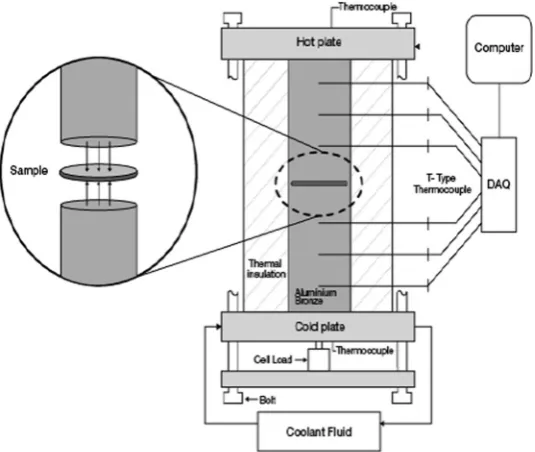
Also, to validate the theoretical results, experimentation to determine thermal conductivity was performed by using hot guarded plate method[34]. For conducting experimentation, a test rig was used, a schematic diagram of which is shown in fig. In this, test rig heat was induced from the top portion which flows down-ward, as the sample is placed between two plates, unidirectional heat flow occurs. The heat flow at various points is being observed by using thermocouples as shown in Fig. 5. The readings are recorded in a data logger system. The formula used for calculating thermal conductivity of material is given below:
q¼ k:A:dtdx ðiiiÞ
where, q is the steady-state flow, k is thermal conductivity, A is the cross-sectional area of the sample and dt/dx is the temperature gradient.
3. Results and discussion
3.1. Physical properties of developed bricks
3.1.1. Effects of fibres on porosity, bulk density, and water absorption
[image:5.595.318.558.309.452.2]The effect of porosity and density for developed thermally effi-cient bricks is shown in Fig. 6, it is evident from the graph that porosity and bulk density for the developed thermally efficient bricks are in an inverse correlation. The porosity values for devel-oped bricks was in the range of 19%–27% as compared to the bulk density of (1628.02–1338.7) kg/m3. A low density brick is the result of pores, voids spaces occurred due to fibre inclusion. Both porosity and density are affected largely because of the ratio of oil palm fibres. The structure of oil palm fibres observed during microscopic study reveals its cellular porous structure. Thus increase in fibre content increases void in the material. Lowest value of density was observed for a mix M15 with a value of 1338.7 kg/m3. As the low density bricks benefit the structural sys-tem as it lowers the self-weight of the structure. But due to porous nature and the void spaces within the material, water absorption capacity of bricks is hugely compromised. FromFig. 7it is clear that rate of increase in water absorption capacity shows a similar
[image:5.595.168.436.497.723.2]Fig. 5.Schematic diagram of hot guarded plate apparatus[34,35].
trend as that of porosity. This it can be interpreted that the amount of water absorbed is directly proportional to pores occurred due to the inclusion of fibre content. The water absorption reported was well within the range of618% as per ASTM C67[30].
3.1.2. Effect of fibres on initial rate of suction
The capillary suction effect that draws the water from the mor-tar during the interaction of freshly laid mormor-tar and brick units can be analysed using initial rate of water absorption (IRA). The initial rate of water absorption plays a significant role in bonding between mortar and brick units. From Fig. 8, the initial rate of water absorption is below 1 kg/m2/min. for mix M1-M4, which has lowest fibre content among all mixes. As the fibre content is increasing the IRA also increases. If initial rate of absorption is too low brick may tend to flow on mortar mix, which eventually affects masonry flexural strength, water tightness, and durability. On the contrary, if the absorption is too high it may damage the mortar-brick bonding by absorbing water from freshly laid mortar causing a reduction in water cement ratio (w/c) for mortar for its gain of strength. Drysdale et al.[36]suggested that initial rate of absorption (IRA) should neither too high nor too low, it should be in the range of (0.256IRA61.5) kg/m2/min. The values of IRA for developed thermally efficient bricks are well within the range 0.2–5 kg/m2/min. given by AS/NZS 4456.17 [37]. Mix M9, M13, M14, M15, and M16 shows values higher than 1.5 kg/m2/ min. whilst, M13 is recorded IRA value is 2.47 kg/m2/min., highest among all mixes.
3.2. Mechanical performance of developed bricks
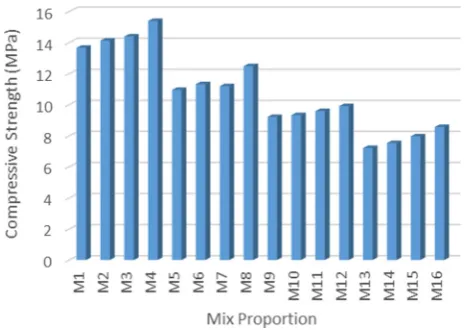
Fig. 9 shows average compressive strength of each mix proportion for developed thermally efficient bricks. The values of
compressive strength range between (15.39–7.21) MPa for all mixes. The gain of strength in the material is attributed to the chain of reactions occurring between the pozzolans i.e. glass pow-der (GP), palm oil fly ash (POFA), lime and water. The amorphous structure of glass powder stimulates the pozzolanic reactivity, as the alkaline activators such as Lime, cement, and alkalis (Sodium and Potassium) acts as a catalyst. The amorphous SiO2present in glass powder forms low basicity calcium silicate hydrate gel (C-S-H). The presence of CaO in both glass powder and POFA react with water to form a hydrated gel. Palm oil fly ash (POFA) also acts as a source of siliceous and aluminous material forms silicate and aluminate hydrates when reacted with calcium hydroxide in the presence of moisture, which develops strength in the matrix according to ASTM 618[10]. Also, restricting the particle size of glass powder and palm oil fly ash helped the reactivity to attain higher strength. The reaction occurred during the hydration pro-cess is as follows;
CaOþH2O!CaðOHÞ2 ðivÞ
CaðOHÞ2þSiO2þH2O!CSH ðvÞ
CaðOHÞ2þAl2O3þH2O!CAH ðviÞ
The influence of fibre content was very significant affecting the strength of the developed thermally efficient bricks. From theFig. 9 it is evident that with the increase in fibre content reduces the strength of material. The reduction in strength may be explained due to the fact that the fibre inclusion introduces pores which eventually reduces the density of material as the packing of fibres becomes difficult. Also, the poor adhesive bond between fibre-matrix which can be affected by dimension, surface condition and amount of fibres in given volume, lowers the strength.
The highest value of compressive strength was observed at 15.39 MPa for mix M4. It can also be observed that when the pro-portion of glass powder (GP) increases compressive strength also increases within mixes having same fibre content. Thus, it can be interpreted that glass powder comparatively is more significant than palm oil fly ash (POFA) for strength development. The com-pressive strength of bricks complies with MS 76:1972[38] and BS 3921:1985[32]for a load bearing bricks, however, bricks are proposed for non-load bearing applications only.
Fig. 10 shows the flexural strength of newly developed ther-mally efficient bricks. Graph shows that there has been gradual increase in flexural strength as the fibre content is increasing, how-ever for Mix M13-M16, it shows slightly downward trend. The highest value of flexural strength was for M12 mix with an average value of 1.625 MPa, whereas, M1 mix has 1.12 MPa lowest among all. The reason behind the increase of flexural strength is reinforce-Fig. 7.Average sample porosity vs water absorption for different mix proportions.
[image:6.595.311.544.65.230.2] [image:6.595.37.279.68.203.2]Fig. 8.Initial rate of absorption for different mix proportions.
[image:6.595.45.273.583.740.2]ment of the matrix with the OPF fibres which distributes its tensile strength to the composite thereby resisting more tensile stresses. Fibres acts as energy absorbing mechanism (bridging action) and delays micro-crack formation[39]. TheFig. 11(a) shows the failure pattern of the brick whereas, Fig. 11(b) shows us the bridging mechanism of fibres in the composite which probably responsible for increase in flexural strength with the increase in fibre content.
3.3. Thermal performance of developed bricks
[image:7.595.51.285.66.213.2] [image:7.595.323.550.73.209.2]The addition of oil palm fibres in the mix proportion introduced the complexity in heat transfer process. As it is well known that porous microstructure of fibres lowers the heat transfer rate through a material. Heat transfer through fibrous material is attrib-uted to its pore geometry. In case of newly developed thermally efficient bricks porosity, pore sizes and its distribution plays a vital role which has solid matrix and pores consisting of fluid (water or air) which ultimately influences the heat transfer through conduc-tion, convection and radiation. In the matrix of newly developed bricks due to inclusion of fibres, the heat transfer process com-prises of: Heat conduction in solid matrix/particles; Heat conduc-tion through pore fluid (air); Heat conducconduc-tion in micro-gaps that exist between particles; Particle contact heat conduction; Heat transfer through pore fluid; Radiation from solid surfaces of pores (particle to particle radiation in pores).[40]
Fig. 12illustrates the thermal conductivity calculated theoreti-cally by using Eq.(ii)as well as determined experimentally by hot guarded plate apparatus for developed thermally efficient bricks. The values for theoretical thermal conductivity which is function
of dry density complies with the experimental values. The highest thermal conductivity was observed for a mix M2 having 0.543 W/ m K value. Whereas, the most thermally efficient mix proportion was mix M13 with thermal conductivity of 0.389 W/m K. It is evi-dent fromFigs. 12and6that thermal performance of brick follows similar pattern as that of density which points out to the fact that the proportion fibre content is significant in lowering heat transfer rate through material. As the fibre have cellular porous structure, the heat transfer through porous fibre may reduce to 0.025 W/ m K (conductivity of still air: k= 0.024 W/m K). The relationship Fig. 10.Avg. flexural strength of bricks for different mix proportions.
(a)
(b)
Fibre
bridging
[image:7.595.324.554.248.400.2] [image:7.595.129.473.555.737.2]Fig. 11.Flexural testing of developed brick showing (a) the failure pattern, (b) the bridging effect of oil palm fibre (OPF).
Fig. 12.Experimental and theoretical thermal conductivity of bricks for different mix proportions.
Fig. 13.Relationship between porosity and thermal conductivity of developed
between thermal conductivity and porosity shown in figure proves that more the porosity lower the heat transfer rate. As the pore enhancement in this experiment can be attributed to inclusion of fibre, thus affecting overall thermal conductivity of material.
Thermal Conductivity as a function of porosity for all mix pro-portions of proposed material examined in the study is plotted in Fig 13. The data depicted inFig. 13suggests a correlation between thermal conductivity and porosity influenced by fibre addition. The percentage change in porosity for developed brick is around 27.6% as compared to thermal conductivity 29.4% which suggests that the influence of pores in thermal performance is most significant for developed bricks.
Compressive strength is most vital parameter for analysing the mechanical performance of building materials.Fig. 14 gives the relationship between the thermal conductivity and compressive strength. The mechanical and thermal performance of proposed material should obliged to standards is crucial. The low thermal conductivity and high compressive strength is generally targeted.
The benefits of thermally efficient fibre based eco-friendly bricks enables lowered heat transfer rate which enhances the ther-mal comfort of occupants within the building envelope. In addition to this, due to the lowered heat transfer rate, the energy require-ment for heating and cooling load reduces, thus increasing the savings on energy costing. Indirect reduction in overall all energy consumption has a significant impact on the carbon emission of the building during its utilization phase of building. As the energy
Fig. 14.Relationship between compressive strength and thermal conductivity of
[image:8.595.42.276.66.218.2]developed bricks for different mix proportions.
[image:8.595.78.505.312.462.2]Fig. 15.SEM-EDX image (20lm) of the binder phase from developed bricks.
[image:8.595.122.458.504.735.2]utilization is closely related to carbon emission. The reduction in carbon emission or energy usage in modern era contributes towards environmental sustainability. Thus, the thermally efficient fibre based eco-friendly bricks contributes to the sustainability aspect of building material indirectly by enhancing the thermal performance of wall system.
3.4. Microstructural examination
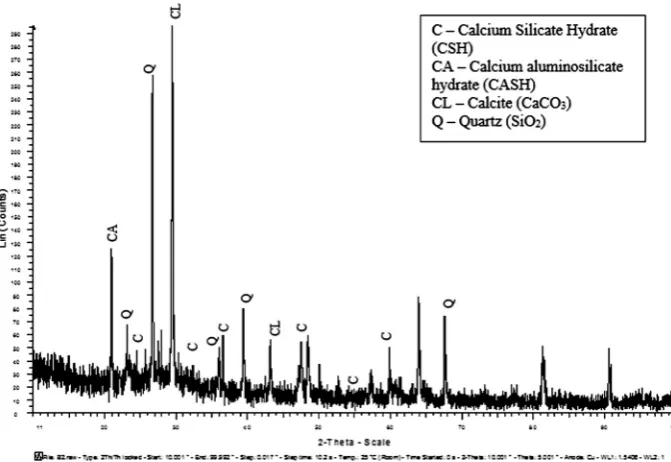
Fig. 15shows scanning electron microscopy and Energy disper-sive X-ray (EDX) analysis for the newly developed thermally effi-cient brick. To understand the interaction between pozzolanic material and lime as a binder SEM-EDX were conducted. In EDX spectra hydrated matrix shown in graph the peak height is propor-tional to the amount of element present. The portion analysed is rich in silica, calcium, alumina and traces of magnesia. The hard-ened gel consists of calcium silicate hydrate (C-S-H) and calcium alumino hydrate (C-A-S-H) which have formed during the reaction with calcium hydroxide Ca(OH)2 as predicted earlier. The main crystalline phases which were identified for the developed hybrid brick sample are quartz, calcite, calcium silicate hydrate and cal-cium aluminosilicate hydrate as shown inFig. 16. The presence of calcium silicate hydrate (C-S-H) and calcium aluminosilicate hydrate (C-A-S-H) is confirmed by XRD analysis of the hybrid brick material which is responsible for gain of strength. The formation of calcium aluminosilicate hydrate (C-A-S-H) is caused by reaction between the silica and alumina with calcium hydroxide. Similarly, the formation of calcium silicate hydrate gel is produce due to the presence of silica in glass powder and POFA (refer Eq. (iv)-(vi)). The presence of high quartz content in XRD patterns is due to the high silica content in glass powder and POFA which must be left unre-acted. The amount of high calcite content can be explained by the reaction between the Ca(OH)2 and CO2 present in the atmosphere.
4. Conclusion
The prototype brick developed by incorporation of additives (glass powder, palm oil fly ash, oil palm fibres) proves to be sus-tainable alternative for conventional clay bricks. The developed proportions for the hybrid brick shows promising signs for the development of thermally insulated building material. The follow-ing conclusions can be drawn from this research:
1. The investigation reveals that the addition of fibres had signifi-cant effect on the enhancement of thermal performance of brick lowering it to a level of 0.38 W/m K for mix M4 having oil palm fibre content of 1% wt Lowered heat transfer rate would defi-nitely be helpful in reducing the indoor temperature, whilst reducing the cooling load of building envelope.
2. However, addition of fibres has detrimental effect on the com-pressive strength of bricks although at maximum incorporation level of fibres (i.e. 1% wt), it satisfy the criteria for load bearing brick as per standard. The lowest and highest of compressive strength were recorded for Mix M13 and M4 having values 15.39 MPa and 7.21 MPa respectively.
3. The glass powder and palm oil fly ash used as additives were responsible for gain of strength for the thermally efficient bricks. The combination of lime, glass powder and palm oil fly ash was proved to form C-S-H and C-A-S-H gel which gave strength to developed material.
4. The developed bricks also satisfies the water absorption criteria as per standard. The minimum water absorption was recorded for mix M4 having a value of 11.48%. Also, from the recorded density of bricks which were in the range of 1355.2 kg/m3–
1764.1 kg/m3, it is evident that bricks have lower density as compared to some of the commercially available bricks which eventually reduce the dead weight of structure as well as it will ease the handling procedure.
5. However, the higher values of initial rate of absorption proves to be area of concern. The initial water absorption for developed proportions of hybrid wall material ranges from 0.72 to 2.47 kg/ mm2/min.
6. The developed bricks focuses on the eco-friendly aspect in masonry material. The sustainability (indirectly and directly) is achieved in the newly developed bricks by incorporation of waste materials and indirectly reducing carbon footprints in the utilization phase of building.
The developed thermally efficient bricks shows encouraging signs for commercial manufacturing. Lower density, good thermal performance, satisfactory Mechanical performance by the brick provides an alternative for energy consuming, unsustainable fired clay bricks. The waste material incorporated as basic raw material for the brick provides a sustainable, energy efficient alternative.
Appendix A. Supplementary data
Supplementary data associated with this article can be found, in the online version, at http://dx.doi.org/10.1016/j.conbuildmat. 2016.12.055.
References
[1]T.M.I. Mahlia, B.N. Taufiq Ismail, H.H Masjuki, Correlation between thermal conductivity and the thickness of selected insulation materials for building wall, Energy Build. 39 (2) (2007) 182–187.
[2]Zabalza Bribian Ignacio, Antonio Valero Capilla, Alfonso Aranda, Life cycle assessment of building materials: CoMParative analysis of energy and environmental IMPacts and evaluation of the eco-efficiency improvement potential, Build. Environ. 46 (5) (2011) 1133–1140.
[3]A. Rao, K.N. Jha, S. Misra, Use of aggregates from recycled construction and demolition waste in concrete, Resour. Conserv. Recycl. 50 (1) (2007) 71–81. [4]K.L. Lin, Feasibility study of using brick made from municipal solid waste
incinerator fly ash slag, J. Hazard. Mater. 137 (3) (2006) 1810–1816. [5] A.N. Raut, M. Madurwar, R. Ralegaonkar, Physico-mechanical properties
investigation of innovative sustainable construction materia‘‘l, in: COBRA 2013 Conference, 2013. http://www.rics.org/us/knowledge/ research/conference-papers/cobra-2013.
[6]P.H. Shih, Z.Z. Wu, H.L. Chiang, Characteristics of bricks made from waste steel slag, Waste Manage. 24 (10) (2004) 1043–1047.
[7] Government of Malaysia. Ninth Malaysia Plan (2006–2010). Putrajaya, Malaysia: Economic Planning Unit, 2006.
[8]_Ilker Bekir Topçu et al., 11 – recycled glass concrete, Cem. Concr. Res. 34 (1) (2013) 81–89,http://dx.doi.org/10.1016/j.enbuild.2013.07.056.
[9]C. Shi, K. Zheng, A review on the use of waste glasses in the production of cement and concrete, Resour. Conserv. Recycl. 52 (2) (2007) 234–247. [10] ASTM C618-15, Standard Specification for Coal Fly Ash and Raw or Calcined
Natural Pozzolan for Use in Concrete, ASTM International, West Conshohocken, PA, 2015,www.astm.org.
[11] Nunes, Sandra, Mafalda Matos, Telma Ramos, Joana Sousa-Coutinho, Mixture design of scc incorporating fine glass powder, in: HAC2012 3°Congresso Ibéroamericano sobre BAC (November 2015), 2012.
[12]Yixin Shao, Thibaut Lefort, Shylesh Moras, Damian Rodriguez, Studies on concrete containing ground waste glass, Cem. Concr. Res. 30 (1) (2000) 91– 100.
[13]Ahmad Shayan, Xu Aimin, Performance of glass powder as a pozzolanic material in concrete: a field trial on concrete slabs, Cem. Concr. Res. 36 (3) (2006) 457–468.
[14]R.G. Pike, D. Hubbard, E.S. Newman, Binary Silicate Glasses in the Study of Alkali-Aggregate Reaction, Highway Research Board Bulletin, 1960, p. 275. [15] C. Shi, Y. Wu, Y. Shao, C. Riefler, Alkali-aggregate reaction of concrete
containing ground glass powder, in: Proceedings of the 12th International Conference on AAR in Concrete, 2004, pp. 789–795.
[16]N. Schwarz, H. Cam, N. Neithalath, Influence of a fine glass powder on the durability characteristics of concrete and its coMParison to fly ash, Cem. Concr. Compos. 30 (6) (2008) 486–496.
[17]E.A. Byars, B. Morales-Hernandezz, Z. HuiYing, Waste glass as concrete aggregate and pozzolan: laboratory and industrial projects, Concrete 38 (1) (2004) 41–44.
[19]M.N. Dalimin, Renewable energy update: Malaysia, Renewable Energy 6 (4) (1995) 435–439.
[20]F. Sulaiman, N. Abdullah, H. Gerhauser, A. Shariff, An outlook of Malaysian energy, oil palm industry and its utilization of wastes as useful resources, Biomass Bioenergy 35 (9) (2011) 3775–3786.
[21] Navid Ranjbar et al., Durability and mechanical properties of self-CoMPacting concrete incorporating palm oil fuel ash, J. Cleaner Prod. 112 (2016) 723–730. http://www.sciencedirect.com/science/article/pii/S0959652615009221. [22]A.A. Awal, M.W. Hussin, Effect of palm oil fuel ash in controlling heat of
hydration of concrete, Proc. Eng. 14 (2011) 2650–2657.
[23]J.H. Tay, Ash from oil-palm waste as a concrete material, J. Mater. Civ. Eng. 2 (2) (1990) 94–105.
[24]C. Jaturapitakkul, J. Tangpagasit, S. Songmue, K. Kiattikomol, Filler effect and pozzolanic reaction of ground palm oil fuel ash, Constr. Build. Mater. 25 (11) (2011) 4287–4293.
[25]M. Idicula, A. Boudenne, L. Umadevi, L. Ibos, Y. Candau, S. Thomas, Thermophysical properties of natural fibre reinforced polyester composites, Compos. Sci. Technol. 66 (15) (2006) 2719–2725.
[26]S.C. Lee, G.R. Cunnington, Conduction and radiation heat transfer in high-porosity fibre thermal insulation, J. Thermophys. Heat Transfer 14 (2) (2000) 121–136.
[27]M. Kaviany, Principles of Heat Transfer in Porous Media, Springer Science & Business Media, 2012.
[28]D.N. Saheb, J.P. Jog, Natural fibre polymer composites: a review, Adv. Polym. Technol. 18 (4) (1999) 351–363.
[29] G. Taguchi, V. Cariapa, Taguchi on robust technology development, 1993.
[30] ASTM C20-00, Standard Test Methods for Apparent Porosity, Water Absorption, Apparent Specific Gravity, and Bulk Density of Burned Refractory
Brick and Shapes by Boiling Water, ASTM International, West Conshohocken, PA, 2015,www.astm.org.
[31] Indian Standard: IS 4860:1968, Specification for acid resistant bricks, BIS, New Delhi, 1996 (sixth reprint).
[32] BS 3921 (British Standard), Specification for clay bricks, United Kingdom, 1985.
[33]A. Abdul Kadir, A. Mohajerani, F. Roddick, J. Buckeridge, Density, strength, thermal conductivity and leachate characteristics of light-weight fired clay bricks incorporating cigarette butts, Proc. World Acad. Sci. Eng. Technol. 2009 (53) (2009) 1035–1040.
[34] ASTM C1044-16, Standard Practice for Using a Guarded-Hot-Plate Apparatus or Thin-Heater Apparatus in the Single-Sided Mode, ASTM International, West Conshohocken, PA, 2016,www.astm.org.
[35]A.N. Raut, C.P. Gomez, Thermal and mechanical performance of oil palm fiber reinforced mortar utilizing palm oil fly ash as a complementary binder, Constr. Build. Mater. 126 (2016) 476–483.
[36]R.G. Drysdale, A.A. Hamid, L.R. Baker, Masonry Structures: Behaviour and Design, Prentice-Hall, Englewood Cliffs, N.J., 1994.
[37] AS/NZS 4456.17, Masonry units and Segmental Pavers-Methods of test Method 17: Determining Initial Rate of Absorption (suction), Standards Australia/ Standards New Zealand, Australian/ New Zealand Standard, 1997.
[38] MS 76 (Malaysian Standard), Specifications for bricks and blocks of fired brick-earth clay or shale: Part 2: Metric units, Kuala Lumpur, 1972.
[39]A. Sivakumar, M. Santhanam, Mechanical properties of high strength concrete reinforced with metallic and non-metallic fibres, Cem. Concr. Compos. 29 (8) (2007) 603–608.