Journal of Chemical and Pharmaceutical Research, 2014, 6(4):1072-1076
Research Article
CODEN(USA) : JCPRC5
ISSN : 0975-7384
Effect of electromagnetic exposure at difference frequencies on euproctis
pseudoconspersa's growth and development at different stages
Chun-jiang Shuai*
1, Hong-en Jia
2, Xiu-chao Xie
1, Jin-bin Yao
1and Feng LV
31
Shaanxi University of Technology, Shaanxi, Han Zhong, China
2Institute of Technology of Taiyuan, Shanxi, Taiyuan, China
3Shaanxi Hanzhong Tea Industry Office, Shaanxi, Han Zhong, China
_____________________________________________________________________________________________
ABSTRACT
The biological and physical effects on organisms from exposure to electromagnetic waves (EMW) at different frequencies are investigated to shed light on the irradiation-based insect-killing mechanism. The development and growth of Larvi-euproctis pseudoconspersas (LEP) which have received irradiation with a full-band electromagnetic radiation analyzer for a period of time are assessed statistically, in terms of larva inbubation percentage, pupa length, pupation percentage and adult eclosion percentage after they are cultivated in the laboratory. There exhibits significant difference between the test group and the control group: no matter what frequency is used in irradiation, LEP growth and development at each stage shows a tendency to decline in significantly linear way with increasing dose irradiated. The analysis on effect of electrommagnetic irradiation at difference frequency intensity on growth and development of euproctis pseudoconspersa larva, pupa and adult has provided parameters to explore relevant insect electromagnetic biologic effect and the physical method to control euproctis pseudoconspersa-related infestation.
Keywords: Euproctis pseudoconspersa larva, pupa and adult; frequency intensity; electromagnetic field; Growth
and development
_____________________________________________________________________________________________
INTRODUCTION
Life is always living in a certain physical environment where geomagnetic field, cosmic magnetic field and artificial magnetic fields play an important part, among others. Particularly with industrial development and improvement in biologic medicine the world over in recent years, more and more people are concerned about the harmful effect of these environmental magnetic fields on humans. On the other hand, people see the other side of the magnetic field as it can be applied to perform physical therapy against some diseases. How to use the good side of the magnetic field while obviating its harm has become a hot topic among researchers.
Euproctis pseudoconspersa (EP), which falls within lymantridae, lepidoptera, is one of the major pests of plants in the family Theaeeae, including the commercially important tea plant, Thea sinensis, and several species in the genus Camellia. The moth is distributed throughout China, Japan, and Korea. It is particularly a pest of tea in China, where larval feeding on the leaves results in heavy losses of both quantity and quality of tea produced. Furthermore, the venomous hairs on larvae, pupae and adults are a great nuisance to workers in tea plantations, causing irritation and skin inflammation. In the main tea-producing regions of China, there are 2-4 generations per year.
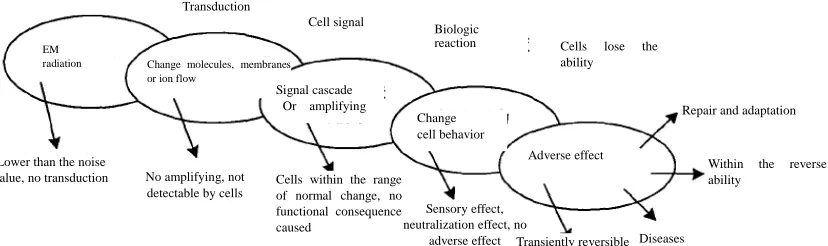
red spot and being swollen with unbearable itching [2-3], which has posed substantial threat to tea leaf gathering and tea farm management. Currently, the prevailing method against EP is chemical control and prevention. This has led to some significant problems such as pesticide residual on tea leaves, resistance to pesticide and even rampant “3R”-related problems [4]. The physical pest-killing method, referred to as Pest Irradiation Exposure in the field of quarantine, in short, is to use various EMWs such as UV, IR, supersonics, Y-ray, X-ray and microwaves to irradiate insect's eggs, larvas, pupas and adults to cause a series of physiological change in the irradiated insect bodies so as to disturb its metabolism, deprive of its reproducibility and eventually die (as shown in Figure 1), thus attaining the ultimate goal of pest killing [5]. One of critical approaches to deal with the problem is to develop new control and prevention methods and technologies and build organic tea farms capable of efficient ecologic regulation. EP at a tea farm, in the south of Shanxi province, is used as subject in this research to investigate the biologic characteristics and growth &development of EPs after exposure to electromagnetic wave (EMW) at different frequency intensities in the hope to provide theoretical basis for physical control and prevention of EP.
EXPERIMENTAL SECTION
Source of pest: overwintering egg blocks of EP
Cultivation Condition: temperature 30℃ ±2℃; RD: 76%-82%; Photoperiod L: D = 12: 12.
Process: first place the culture dish containing eggs in a temperature-constant illumination incubator (SPX一2501.
G )and then expose it to EMWs at NBM-550 different frequency intensities for 48 hours using a full-band EM radiation analyzer. After exposure, the culture dish containing eggs is placed in a pest cage for cultivation and observation. The egg cage is placed in an incubator set at the cultivating conditions so as to incubate eggs in the environment as much as close to the nature. The duration is about 70 days from the day when the first egg is incubated to larva to the day when no more eggs is incubated to larva. Observe the incubation progress every day. When no more egg is incubated to larva, take the culture dish out of the pest cage and pick parvas with a Chinese brush into the cage. Count and record number of remaining eggs in each culture dish for later analysis of the result. After larvas incubated, place larvas at the age of 1 ~ 3 in a glass bottle and feed them with tender tea twigs and place those at the age of 4 and above in the pest cage which is covered with 60-mesh nylon yarn with both openings tied tightly and is then placed in a temperature-constant illumination incubator, fed with tender teat twigs. Put larvas developed to the next age together (in one or more glass bottles or cages) and count every day. Mark the date on the glass bottles and the cages. On daily basis, observe development, pupation, deaths and other biologic characteristics of larvas at different ages. During pupation, record the number of eclosion and the date for each group, and observe the eclosion progress and pupa's other biologic properties. Place adults immediately after emerged from pupa in a bigger cage and observe and record their biologic characteristics on daily basis. Simultaneously, set blank as control.
RESULTS
Growth and Development of EP after Exposure to EM Radiation at Different Frequencies
(1) Convert the EP mean development period (N ) into the development rate(V = 1 / N ) as shown in Table 1.
(2) EP egg incubation rate
Randomly pick and place 100 eggs in the temperature-constant incubation condition, and when all eggs are incubated, observe and record the number of eggs not incubated U to calculate the egg incubation rate H as shown in Table 2. H%= (100一U) /100×100%.
EM measurement
Transduction
Cell signal
Biologic reaction
Repair and adaptation
EM
radiation Change molecules, membranes or ion flow
Lower than the noise
value, no transduction No amplifying, not detectable by cells
Signal cascade Or amplifying
Change cell behavior
Adverse effect
Within the reverse ability
Cells within the range of normal change, no functional consequence caused
Sensory effect, neutralization effect, no
[image:2.595.105.519.235.358.2]adverse effect Transiently reversible Diseases Cells lose the ability
_____________________________________________________________________________
Table 1 General development of EPs after exposure to EM radiation at difference frequencies
Frequency
(Hz)
Larva Pupa Adult
Mean development period (day)
Daily development rate
(%)
Mean development period (day)
Daily development rate
(%)
Mean development period (day)
Daily development rate
(%) 10 k 64.40 0.0155278 26.04 0.0383836 120.44 0.00830214 100k 52.00 0.0192309 21.18 0.0471823 96.93 0.0103015
1 M 41.60 0.0240383 18.13 0.0551872 74.73 0.0133834 10 M 38.80 0.0257734 15.89 0.0630567 68.73 0.0145487 Control
group 63.50 0.0157480 25.16 0.0397456 120.52 0.0082974
Table 2 EP egg incubation rate
Frequency(Hz) 10 k 100 k 1 M 10 M Control group
Incubation rate H% 42.80±1.94 37.79±2.47 35.36±1.39 31.13±1.62 46.67±2.26
(3) Female pupa length
In terms of body size, there are significant differences between EP female and male (as shown in Table 3). Female pupa is obviously bigger than the male. Typically the female is over 1 cm with mean length of 1.161 cm while the male is shorter than 1 cm and has mean length of 0.902 cm. The different in length is sharp. Therefore it is easy to raise the male and female pupas in different places.
Table 3 Mean length of female/male pupas
Frequency(Hz) 10 k 100 k 1 M 10 M Control group
Female 1.159±0.046 1.142±0.045 1.136±0.044 1.106±0.037 1.161±0.054 Male 0.900±0.034 0.890±0.042 0.085±0.038 0.074±0.039 0.902±0.036
(4) EP larva pupation rate
Randomly pick up 100 larvas at an elder age and when all larvas are pupated, count the pupa numbers A and calculate the pupation rate P .P%=A/100×100%.
Table 4 EP larva pupation rate
Frequency(Hz) 10 k 100 k 1 M 10 M Control group
Female pupation rate P% 96.50±2.50 94.33±0.88 92.50±2.50 90.33±0.33 97.23±0.72
Male pupation rate P% 97.50±0.50 95.00±2.00 94.00±0.58 92.30±2.40 98.33±0.58
(5) EP eclosion rate
Randomly take and place l00 pupas in a capped culture dish and when all pupas are emerged into adult, count the dead pupas A and half-emerged pupas N and calculate the eclosion rate E. E%=(100-A-B)/l00×100%.
Table 5 EP eclosion rate
Frequency(Hz) 10 k 100 k 1 M 10 M Control group
Female eclosion rate E% 96.00±0.00 95.23±0.67 94.51±0.42 92.53±0.23 96.23±0.32
Male eclosion rate E% 97.32±0.50 95.68±0.36 94.92±0.34 92.64±0.56 98.00±0.38
Impact of EM Radiation at different frequencies on Resistance of EP after Exposure
Impact of EM radiation at different frequencies on resistance of EP after exposureis shown in Figure 2. Here mainly analyze the resistance to hungry and heat shock, respectively.
(1) Resistance to hungry
EP adults in exposed test groups and in the control group are randomized into groups, one empty cage housing 10 adults as a group to be placed and cultivated in the normal cultivating conditions, and then calculate[6-7] the mean survival number after 24 hours.
(2) Resistance to heat shock
EP adults in exposed test groups and in the control group are randomized into groups, one cage housing 10 adults as a group to be placed and cultivated in a 38℃ temperature-constant incubator. After 90 minutes, transfer it to the
DISCUSSION
Bio-electromagnetics is to study the mutual impact of EM fields generated by living organism's activities and external EM fields on living organisms to reveal the rules that lie behind the vital activities and the inherent mechanism of EM fields[8-10] on living organisms and to fundamentally understand the relations between living organism's vital activities and EM phenomena and rules that govern them, which in turn will play a milestone role in diagnosis and therapy of various diseases and environmental protection [11]. In a nutshell, bio-electromagnetics is an emerging science to investigate the mechanism that governs interaction between EM fields and living organisms, its characteristics and results. Bio-electromagnetic research helps understand deeply biologic effects of various EM fields and thus find out appropriate methods to circumvent hazards of EM fields to ultimately improve human living environment and serve for the purpose of human health [12].
How EM field's biologic effect is generated and acted is closely related to the properties of an EM field and how a living organism's EM properties change after it is exposed to an EM field. When a biologic tissue is exposed to external electric fields at various frequencies, its EM characteristics will surely change, and it is especially true that the properties such as dielectric property and electric conductivity will change drastically [14]. Working out how various EM-related parameters change under the action of EM fields at various frequencies is key to reveal the mechanism concerning EM field's biologic effect and control and prevent it. Furthermore, biologic tissue's electric property can be used in theoretical calculation regarding electric field's biologic effect. As living organisms, in its own right, possess specific EM properties, a certain specific interaction surely exists between a living organism and the static magnetic fields surrounding it. In the above-mentioned research, some specific influences that may possibly take place on a living organism under the action of magnetic fields at different frequencies are investigated to explore the impact of magnetic fields on living organisms by studying change in electric properties of EP larvas that are exposed to static magnetic fields at different frequencies [15]. As cells are the basic structural unit constituting living organisms, its structural features decide a living organism's electric property. Because the ion type and concentration are different at both sides of cell membranes, membrane resistance will decline with increasing frequency. Where an external magnetic field is at a high frequency, cell membrane has the electric property similar to that of cell sap, and therefore the cell membrane's charging effect will drop sharply with increasing frequency and the dielectric property represents that of intercellular and intracellular electrolyte. The fundamental mechanism in interaction between living organism and a static magnetic field is that the static magnetic field can change the motion direction of the charged bodies that move inside a living organism thus influencing micro vital motion of the living organism. If a charged body moves at the higher speed inside a living organism, it will produce relatively higher induced electromotive force and therefore researches have suggested that the static magnetic field with relatively higher intensity can suppress effectively cell division. Especially the charged ions in need of transferring through membranes are affected the most when they transfer through membranes in the static magnetic field because of higher charge-to-mass ratio. This may explain partly why the static magnetic field causes biologic effect at the cellular level [16].
At present, some researchers have shed light on possible bio-physical mechanism on biologic effect from interaction of the static magnetic field and the living organisms. Ueno et al., has investigated biologic effect of the static magnetic field in different aspects including static magnetic field's impact on nervous systems [13]. Some researchers hold that the magnetic fields, whether too strong or too weak, are adverse to insects. In addition, other scholars have explored the adverse effect of the magnetic fields from high-voltage transmission lines on insects with respect to chromosome variation and changed behavior, for instance, American cockroach will obviate stay in the electromagnetic field[17] and change its behavior once the magnetic field reaches certain intensity [11]. As for the mechanism on biologic effect of the EM fields at very low frequency, researchers have brought forth the EM energy resonance effect theory and given further biophysical explanation. In views of biology, EM energy is considered as Class I trigger signal to any biologic effect [18]. WTO has been operating with China to explore the biologic effect of
0 0. 2 0. 4 0. 6 0. 8 1
10 k 1 00k 1M 10 M 对 照组
饥
饿
后
存
活
率
% 0 0.2 0.4 0.6 0.8 1
1 0k 100 k 1M 10M 对 照 组
热
激
后
存
活
率
%
Fig.2 Resistance to hungry and heat shock of EP after exposure to EM radiation at different frequencies
Control group Control group
_____________________________________________________________________________
EMWs at very low frequency and find out medical protection strategy. Though no significant electric field is present under the action of a magnetic field at a very low frequency, some electric fields at a certain intensity may exist somewhere in the living organisms, e.g. the cellular transmembrane electric field.
A magnetic field can not only have effect on insect's physiologic activities but also impact their behavior and ecology more or less. As EMW has a wide range of spectrum, it is worth studying that which bands will actually influence insect's life. Insects are used as subject as it is ideal for such experiment thanks to its short growth and quick reproduction. For an emerging field to be explored, such researches on magnetic field's impact on insects shall be made from micro to macro at multiple levels. The destructive effect of exposure to EMWs on insects includes death, knock-down, shortened life expectancy, delayed eclosion, infecundity, reduced incubation and delayed development etc. all of which come from exposure of insects to a certain dose. After summarizing and comparing growth &development and changes in behaviors of EPs at different stages it is observed that, whatever kind of the EMW is, EP growth and development shows a clear linear tendency to decline with increasing exposed dose, finally resulting in quantitative reduction of EPs. Exposure of EPs to EMWs at whatever frequency will deliver significant effect on EP growth and development. So it follows that physical-radiation-based insect killing may provide impressive outcome, an effective means to control and prevent pest infestation and furthermore an effective approach for processing food with radiation and inspection of imported/exported agricultural products. As for ionization radiation at various frequencies, the physical, chemical and biologic effects from interaction between rays and substances make is possible to kill pest and bacteria, prevent moulding, improve food hygienic quality, maintain nutrition and flavor as well as extend shelf life [19].
Acknowledgements
Project: The National Natural Science Foundation of Tian yuan Youth Foundation of Mathematics (number: 11226316); the Science and Technology Program of the Education Department of Shaanxi Province Government (number: 2013JK1112).
REFERENCES
[1] SONG T, HUO XL, WU SZ. Bio electromagnetic properties and its application. Beijing University of Technology Press, Beijing,2008.
[2] XU ZH P. Study on in vitro system Chinese electromagnetic biological effects. Proceedings of the Third International Symposium on electromagnetic radiation and health of the science conference proceedings.
2003.30-35.
[3] ZHOU X,XIAO BG,ZHENG GC. Hubei plant protection. 2008(01).10-11. [4] WANG Y G. Yunnan agricultural science and technology. 2002(S1).218-219.
[5] WANG L,CHEN L,MA Q. Journal of Zhejiang University(Medical sciences), 2009, 38(4) .57-60. [6] Li RM, Zhang JS. Coal Technology, 2011(7).249-251.
[7] Li RM. China High Technology Enterprises, 2010(27).128-129.
[8] SHUAI CJ. Journal of Shaanxi University of Technology (Natural Science Edition).2012, (1).59-62. [9] SHUAI CJ. Journal of Computers,2013,8(8).1979-1986.
[10] SHUAI CJ. Journal of Henan Normal University(Natural Science Edition).2012,40(1).63-65. [11] I. A. Solov'yov, D. E. Chandler, K. Schulten. Biophysical Journal, 2007, 92(8) , pp. 2711-2726. [12] D. S. Rosa, M. Blanca. Natural Hazards, 2004, 31(1). 143-156.
[13]XI G,SONG Q,YANG CH P. Chinese Journal of applied and Environmental Biology,2003, 9(2).203-206. [14]WU H,WANG DW,WANG SM, et al. Journal of Biological Chemistry, 2011, 27(1).38-46.
[15]LIU YN. Electromagnetic biological effects.Beijing University of Posts and Telecommunications press, Beijing,
2001.
[16]WANG BZH. Computational electromagnetics. Science Press, Beijing ,2002.
[17] Bo Ye, Ming Li, Fei Chen,etal. Journal of Chemical and Pharmaceutical Research, 2014, 6(2).178-186. [18]LI MZH,LIU YJ,WANG CQ. Chinese Journal of Electronics,1999(3).131-133.