
http://dx.doi.org/10.4236/wjv.2015.52009
How to cite this paper:Sood, R.K., et al. (2015) High Immunization Coverage but Delayed Immunization Reflects Gaps in Health Management Information System (HMIS) in District Kangra, Himachal Pradesh, India—An Immunization Evaluation. World Journal of Vaccines, 5, 69-78. http://dx.doi.org/10.4236/wjv.2015.52009
High Immunization Coverage but Delayed
Immunization Reflects Gaps in Health
Management Information System (HMIS) in
District Kangra, Himachal Pradesh,
India—An Immunization Evaluation
Rajesh Kumar Sood1*, Anjali Sood2, Omesh Kumar Bharti3, Vidya Ramachandran4,
Archana Phull5
1District Epidemiologist, Kangra, Himachal Pradesh, India 2College of Home Science, CSKHPKV, Palampur, India 3State Institute of Health & Family Welfare, Parimahal, India 4National Institute of Epidemiology, Chennai, India
5Daily Post, Shimla, India Email: *[email protected]
Received 2 February 2015; accepted 10 April 2015; published 16 April 2015
Copyright © 2015 by authors and Scientific Research Publishing Inc.
This work is licensed under the Creative Commons Attribution International License (CC BY).
http://creativecommons.org/licenses/by/4.0/
Abstract
Background: Complete and timely childhood immunization is one of the most cost-effective inter-ventions in improving child survival in developing countries. Computerized HMIS has been recently introduced to collect aggregated data on service beneficiaries in Himachal Pradesh. HMIS provides coverage estimates for immunization while information on timeliness is currently not available. Hence we conducted a study to validate coverage and assess the timeliness of immunization in Kan-gra District of Himachal Pradesh. We surveyed mothers (224) of children aged 12 - 23 months (as on
January 2008) and selected 32 clusters in the district between January and March 2008.
De-sign/Methods: We conducted a cross sectional survey and selected 32 clusters by probability pro-portional to size method whereas seven eligible children per cluster were randomly selected. We interviewed mothers using a structured interview schedule, examined immunization card & looked for Bacillus Calmette Guierre (BCG) Scar. Vaccination after 30 days from national schedule was con-sidered “delayed”. We computed proportions of children completely immunized, immunization de-layed, frequency of reasons for delay and 95% Confidence Interval (CI) for significance of associated factors. We conducted a case control analysis of factors associated with timely immunization by tak-ing timely immunized children as cases and delayed immunized ones as controls. Results/Outcome:
*
Reported coverage was universal (100%). Validated full immunization coverage was 94.2% by card/record & 99% by history. Only 29.5% (CI = 20.6% - 37.4%) of children were fully immunized as per schedule (delay less than 30 days). Median delay was 21 days for BCG, 28 days for Diptheria Pertussis Tetanus (DPT 3) and 25 days for measles. Among those with delayed vaccinations, reasons were forgetfulness (36%), lack of correct knowledge (27%) & mother gone to parents’ home (27%) & insufficient children in a camp to open full dose BCG vial (22%). Our case control analysis of timely vaccinated versus delayed vaccination revealed that “precall” (reminder) was significantly [OR = 0.1, CI = 0.2 - 0.5] protective against delayed vaccination. Logistic Regression of delay > 30 days revealed that having returned unimmunized from immunization camp earlier due to insufficient children to open vaccine vial (because of high wastage factor) was significantly associated with delayed immu-nization (p = 0.0000), while knowledge of date of immuimmu-nization camp was significantly protective from delayed immunization (p = 0.0026). 68% of the children were having at least one immuniza-tion delayed over 30 days from recommended schedule, while the proporimmuniza-tion of children whose
immunization was delayed by over 90 days was 9.4%. Conclusions: Validated field coverage
esti-mates are lower than reported which can be due to inclusion of children of migrants in numerator & not in the denominator. High proportion of children (>70%) were delayed, suggesting implications for WHO’s strategy of measles control & national Tuberculosis (TB) control programmes, as 4.5% of them had suffered from measles. To avoid delays we recommend (i) use of mono dose vials for BCG; (ii) precall notice to mothers; (iii) modification of HMIS software to track immunization status and timeliness of individual beneficiaries rather than aggregate numbers.
Keywords
Immunization Coverage, Delay, Gaps, Information Technology, Health Information Systems
1. Introduction
Childhood immunization is one of the most cost-effective activities in health care. Immunization against com-mon childhood diseases has been an integral component of mother and child health services in India since adop-tion of the primary health care approach in 1978. The programme was given the status of a Naadop-tional Technology Mission in 1986 (Government of India [GoI]) to provide a feeling of urgency and commitment to achieve the goals within the specified period. Universal Immunization Programme (UIP) became a part of the Child Surviv-al and State Motherhood Programme in 1992 and Reproductive and Child HeSurviv-alth (RCH) Programme in 1997. The GoI also launched Immunization Strengthening Project to achieve the goal of 100% routine immunization by 2010 (10th five-year plan) [1].
The Reported coverage has remained high since 1990, but national coverage reports of over 100% coverage suggest problems with the accuracy of those reports. With coverage evaluated through coverage surveys there has been a recent disturbing decline in immunization even in well performing states. The District Level House-hold Survey (RCH) 2004 reported immunization coverage in District Kangra to be 95% [2]. The National Fam-ily Health Survey conducted in 2005-06 reported a decline in complete immunization coverage from 83% to 74 % in the state of Himachal Pradesh from 1998-1999 [3].
Achieving good disease control requires not just high coverage, but immunization events to be delivered on time. Assessment of delay in age-appropriate vaccination provides more information about timeliness of vacci-nation than up-to-date vaccivacci-nation coverage as they reflect adequacy of protection. Age-appropriate indicators should also be incorporated as vaccination coverage estimators in population-based surveys [4]. Dombkowski et al. found that large family size, parental education, absence of a usual health provider etc. were factors for expe-riencing vaccination delays [5]. Bolton et al. found that only 54% of 24-month-old children were up-to-date for the primary series [4].
Study Setting
per square kilometer against 109 persons of the state. Only five percent of the population of the district lives in urban area as against 10 percent of the state. 64% of the villages are connected by road. The literacy scenario shows that 80 percent of the district population as against 76 percent of the state population (aged 7+) was rate. 73 percent of the females in the district as against 67 percent of the females in the state (aged 7+) were lite-rate. The gender gap in literacy (14.5) is the lowest in the state. One health sub-center covers population of 3071 compared to 2838 for the state and 5401 for the country.
Computerized Health Management Information System (HMIS) has been recently introduced to collect ag-gregated data on health service beneficiaries in Himachal. HMIS provides coverage estimates for immunization but information on timeliness is currently not available. Hence we conducted a study to validate immunization coverage as reported by HMIS and assess the timeliness of immunization in Kangra District of Himachal through cross sectional survey. The actual immunization coverage for the district and age appropriate vaccina-tion was studied in relavaccina-tion to knowledge of the beneficiaries and other determinants.
2. Methods
We conducted a cross sectional retrospective survey among mothers of children aged 12 - 23 months old as on 1/1/08 (as the survey stretched over three months, we defined the eligible children in absolute terms as all child-ren born in the calendar year 2006).
2.1. Sample Size
Using 95% estimated coverage, desired precision +/− 5%; and number of clusters as 32, only 7 children per cluster are required (Table C2, Immunization coverage cluster survey Reference Manual) [6]. Total sample size works out to (32 × 7) 224 children.
2.2. Sampling Procedure
We used cluster technique for immunization coverage assessment with probability proportional to size for selec-tion of primary sampling units (sampling frame of primary units was taken from the District computer (health management information system software). Within the cluster 7 eligible children were taken. Within the cluster the first house is selected randomly, (a spot map was prepared by discussion with local people, and then a dice was tossed on the map, the point where the dice rested was taken as starting point), and then we moved in one random direction till the required number of eligible children were covered. Efforts were made to contact moth-ers if they have gone to work in farms and then locate the immunization cards. Children and mothmoth-ers who were not available in the village on the day of survey, having gone to relative’s place were excluded and next house with eligible child was sampled.
2.3. Data Collection
We administered a structured interview schedule (in local Kangri dialect/ Punjabi language as appropriate) that included demographic variables, knowledge about immunization, misconceptions regarding immunization, in-jection safety, client convenience, and vaccine preventable diseases. We also examined the immunization card, looked for BCG Scar, and recorded the immunization status and interpreted the timeliness of the vaccination. We also enquired about the occurrence of vaccine preventable diseases in the children. Ample time (30 minutes) was given to the parents to look for the card in case if it was not readily available.
2.4. Ethical Considerations
A local female accompanied us (Health worker/Anganwari worker) so that the mothers felt comfortable in par-ticipating in the survey. Confidentiality of information was maintained through coding in accordance with the principles embodied in the declaration of Helsinki. Mothers were educated about the correct responses to the questions, the immunization schedule and correct site of injection administration, their queries were addressed after completing the questionnaire.
Weeks and measles at 36 weeks (9 months) [7]. Complete immunization was defined as all the above vaccines and first dose of vitamin-A. A delay of over 30 days from the recommended schedule was considered significant.
2.5. Statistical Analysis
We computed proportions completely immunized, delayed, frequency of reasons for delay & 95% Confidence Interval (CI). We conducted a case control analysis of factors associated with timely complete immunization with timely immunized as cases and delayed as controls. The analysis was done using Epi Info software, an open-source software for public health professionals developed by Centre for Disease Control Atlanta.
3. Results
The spatial location of 32 clusters selected is depicted inFigure 1.There are 12 medical administrative units (blocks) in Kangra. The names of villages and blocks are listed along with.
3.1. Population Characteristics
The mean age of respondents (mother) was 26.3 years. 31% lived in permanent houses. The median education level of respondents (mother) was 10 years of education. Most were Hindu (99%). 33% of the respondents be-longed to general caste, 26% bebe-longed to scheduled tribes or scheduled castes and the rest bebe-longed to other backward classes. The median distance to be travelled to reach health sub center was 15 minutes and to PHC was 40 minutes. 53% reported a monthly income of below Rs.3000 ($50) per month. Health workers had visited 62% of the respondents in the last one month.
3.2. Immunization Coverage
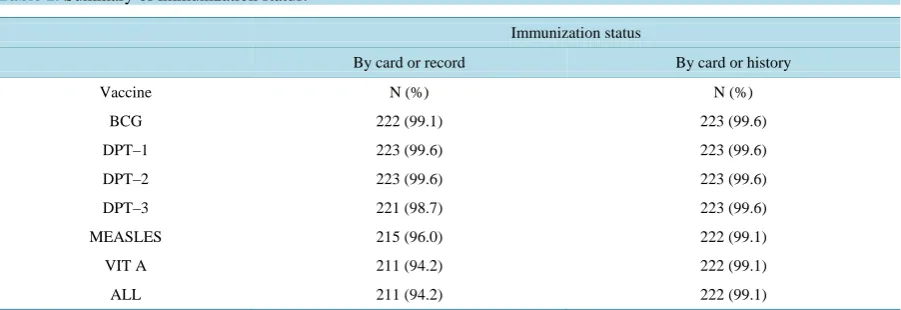
Reported coverage was universal (100%). The immunization coverage as per history was 99.1 % and 94.2% by cards or record. All children except one were given immunization cards. Card availability with family was 96 %. The BCG-measles dropout rate was 0.5% as per history and 3.2% as per record (Table 1).
One totally unimmunized child (not received any vaccination at all) was found in the survey. This unimmu-nized child was son of a contractor from Jharkhand, but residing in the area near brick kiln since last five years.
3.3. Knowledge of Immunization
[image:4.595.92.535.495.707.2]29% respondents were able to recall the correct immunization schedule and rest could not. Another 36% were able to recall partially. 28 % responses were incorrect about the immunization schedule for infants and a further
8% were unable to recall at all. 54% had a misconception that immunization is not given during fever. 56% res-pondents reported that source of knowledge of immunization was the health worker.
Only 44% mothers reported having ever read the immunization card. 74% respondents reported being sent a reminder on or before the due date (Precall) by health workers or Anganwari workers.
3.4. Timeliness of Vaccination
Analysis of the timeliness revealed that only 29% of the children were fully immunized as per schedule (delay not more than 30 days). Median delay was 21 days for BCG and 16, 21.5 and 28 days for the three doses of DPT vaccine respectively. The median delay for measles was 25 days. Analysis of the immunization records revealed that 68% of the children were having at least one immunization delayed over 30 days from recommended sche-dule. The delay by number of doses is shown in Figure 2.
3.5. Delay by Type of Vaccine
19% children did not receive BCG by 2.5 months. Those having at least one dose of DPT delayed by over 30 days constituted 38% of children and in case of measles, those having delayed immunization by over 30 days were 36% of children.
36% respondents reported a waiting time of more than 15 minutes at the immunization camp. 85% respon-dents found the location of the immunization camp convenient.
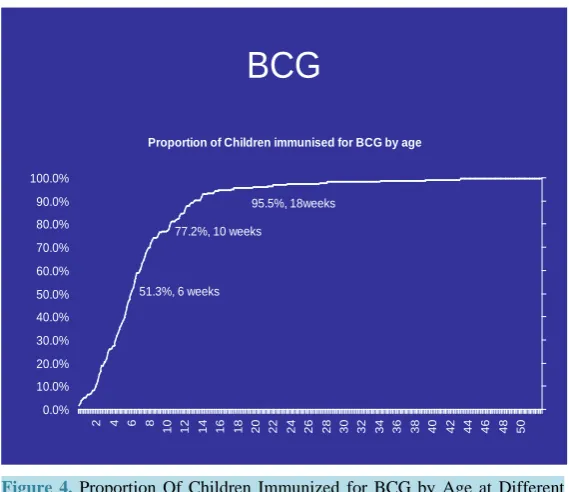
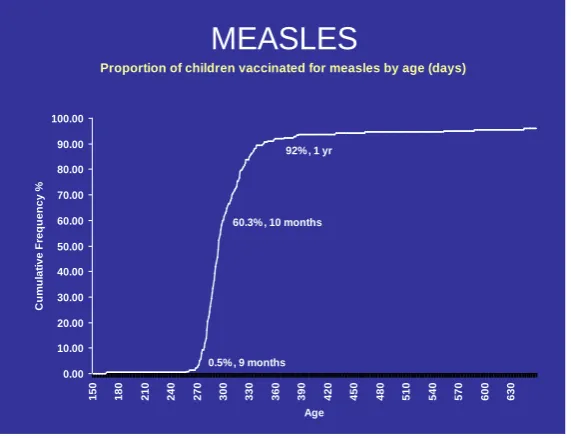
[image:5.595.172.423.406.533.2]Age related delays are shown atFigures 4-6. Among those with delayed vaccinations the major reasons for delay was forgot in 36% followed by lack of correct knowledge regarding when the injection was due (27%) and mother having gone to parents’ home (27%). 24% delays were due to insufficient children in a camp to open the vial. The delay due to insufficient children was responsible for 75% of delayed BCG injections (Table 2). A case control analysis (Table 3) of timely vaccinated versus Delayed/ partial immunized children revealed
Figure 2. Proportion of cases by number of doses delayed.
Table 1.Summary of immunization status.
Immunization status
By card or record By card or history
Vaccine N (%) N (%)
BCG 222 (99.1) 223 (99.6)
DPT–1 223 (99.6) 223 (99.6)
DPT–2 223 (99.6) 223 (99.6)
DPT–3 221 (98.7) 223 (99.6)
MEASLES 215 (96.0) 222 (99.1)
VIT A 211 (94.2) 222 (99.1)
ALL 211 (94.2) 222 (99.1)
2.2 2.7 7.1 11.6 17.4 29.5 29.5
0 10 20 30 40
OTHERS 5 DOSES DELAYED 4 DOSES DELAYED 3 DOSES DELAYED 2 DOSES DELAYED 1 DOSE DELAYED TIMELY
PROPORTION OF INFANTS IMMUNISED
IM M UNI S A T IO N DE L A Y E D BY O V E R 3 0 D AY S
[image:5.595.88.539.567.722.2]Figure 3.Frequency of Reasons for delay in Immunization among infants.
Figure 4. Proportion Of Children Immunized for BCG by Age at Different time intervals.
that Precall (sending message on or before the due date of immunization) was significantly associated with timely vaccination [Odds Ratio (OR) = 0.1, 95% CI = −0.2 - 0.5].
Using criteria of delayed immunization as delay of over 90 days, the proportion of children whose immuniza-tion was delayed was 9.4%.
11.8 11.8
24.3 27.6 27.6
36.2
0 10 20 30 40
CHILD ILL/ VACCINATION DELAYED ON MEDICAL ADVICE NO CAMP SCHEDULED WITHIN THE
NEXT 29 DAYS INSUFFICIENT CHILDREN AT CAMP
MOTHER GONE OUT TO PARENTS HOME
LACK OF KNOWLEDGE OF IMMUNISATION SCHEDULE/ CAMP
FORGOT/ CARELESSNESS
PROPORTION OF CHILDREN WITH DELAYED IMMUNISATION*
R
EASO
N
F
O
R
D
EL
AY
Frecuency Of Reasons for delay in Immunisation Among Infants, District Kangra, HP, India 2008
BCG
Proportion of Children immunised for BCG by age
95.5%, 18weeks
77.2%, 10 weeks
51.3%, 6 weeks
0.0% 10.0% 20.0% 30.0% 40.0% 50.0% 60.0% 70.0% 80.0% 90.0% 100.0%
2 4 6 8
[image:6.595.171.456.404.650.2]Figure 5. Proportion of children immunized for DPT 3 by age at different time intervals.
Figure 6. Proportion of children immunized for measles by age at different time intervals.
Logistic Regression of delay> 30 days revealed that having returned unimmunized from Immunization camp earlier due to insufficient children to open vaccine vial (Because of high wastage factor) was significantly asso-ciated with delayed immunization (p = 0.0000), while knowledge of date of immunsation camp was significantly protective from delayed immunization (p = 0.0026) (Table 4).
3.6. Injection Safety
Validation of injection site from mothers revealed that 46% had received at least one injection in the buttocks. 59% of respondents reported fever after injection. The health workers had informed them about fever but not about other adverse events.
DPT 3
Proportion of children immunised for DPT3 by age
0.5%, 14 weeks
52.7%, 18 weeks
92.4 %, 26 weeks
0.00 10.00 20.00 30.00 40.00 50.00 60.00 70.00 80.00 90.00 100.00
11 12 13 14 15 16 17 18 19 20 21 22 23 24 25 26 27 28 29 30 31 32 37 38
Age (Weeks)
C
u
m
u
lat
ive F
req
u
en
cy (
%
)
MEASLES
Proportion of children vaccinated for measles by age (days)
60.3% , 10 months
0.5% , 9 months 92% , 1 yr
0.00 10.00 20.00 30.00 40.00 50.00 60.00 70.00 80.00 90.00 100.00
150 180 210 240 270 300 330 360 390 420 450 480 510 540 570 600 630
Age
C
u
m
u
lat
ive F
req
u
en
[image:7.595.173.455.85.313.2] [image:7.595.172.458.352.571.2]76
Table 2. Reasons for delayed vaccination (more than 30 days) by type of vaccine, district Kangra, HP, India 2008.
Reason for Delay BCG Measles DPT Total
Number of children 46 (%) 93 (%) 86 (%) 152 (%)
Forgot/carelessness 2 (4.3) 28 30.1 25 29.1 55 36.2
Lack of knowledge 1 (2.2) 39 41.9 2 2.3 42 27.6
Mother gone to parents home 6 (13.0) 9 9.7 27 31.4 42 27.6
Insufficient children to open multi dose vaccine vial 34 (73.9) 3 3.2 0 0.0 37 24.3
No reason 1 (2.2) 0 0.0 17 19.8 18 11.8
Child ill 2 4.3 4 4.3 12 14.0 18 11.8
Reached late 0 0.0 2 2.2 1 1.2 3 2.0
Mother ill 0 0.0 0 0.0 1 1.2 1 0.7
Fear of side effects 0 0.0 0 0.0 1 1.2 1 0.7
Date of immunization not ascertained 2 4.3 8 8.6 1 1.2 11 7.2
Table 3.Case control analysis of timely immunization versus others (delayed/partial immunized) children, District Kangra, Himachal Pradesh, India 2008.
Factor Timely immunized completely
Delayed/ partial
immunized children OR CI (95%) Total
N = 65 (%) N = 159 (%) N = 224 (%)
Caste general 20 56 1.2 0.6 2.3 76
Caste OBC1 21 37 58 25.9
Caste SC/ST2 24 66 90 40.2
Mother literacy > 10 (median) 24 59 1.0 0.5 1.8 91 40.6
Father literacy > 10 (median) 32 63 0.7 0.4 1.2 87 38.8
Type of house permanent = 2 20 49 1.0 0.5 1.9 69 30.8
Monthly family income < ($50) 36 82 0.9 0.5 1.5 118 52.7
Number of children <2 27 57 0.8 0.4 1.4 84 37.5
Distance health sub centre > 15 min 27 71 1.1 0.6 2.1 98 43.8
Distance primary health centre > 40 min (median) 31 80 1.1 0.6 2.0 111 49.6
Decision maker self/husband 19 54 1.2 0.7 2.4 73 32.6
Knowledge of immunization schedule 23 41 1.7 0.7 2.4 64 28.6
Misconception fever 33 71 0.8 0.5 1.5 104 46.4
Source of knowledge immunization health worker 32 94 1.2 0.7 2.2 126 56.3
Knowledge of day & place where immunization
service is available 49 139 2.3 1.1 4.7 188 83.9
Read immunization card 43 88 0.6 0.4 1.2 131 58.5
Fever following immunization 34 101 1.6 0.9 2.9 135 60.3
Health worker visited in last month 38 101 1.2 0.7 2.2 139 62.1
Precall-reminded by MPW/AWW3 58 107 0.1 0.2 0.5 165 73.7
Camp convenient 57 133 1.4 0.6 3.3 190 84.8
Waiting time > 15 min (median) 19 62 1.5 0.8 2.9 81 36.2
[image:8.595.95.535.309.685.2]Table 4.Factors responsible for delayed immunization [logistic regression] unconditional logistic regression.
Term Odds Ratio 95% C.I. Coefficient S. E. Z-Statistic P-Value
Knowledge of date of
immunization camp 0.2598 0.1082 0.6237 −1.3480 0.4469 −3.0164 0.0026 Knowledge of immunization
schedule 1.1114 0.8041 1.5361 0.1056 0.1651 0.6394 0.5226
Mother’s literacy 1.0075 0.9139 1.1106 0.0074 0.0497 0.1498 0.8809
Having returned unimmunized from im-munization camp earlier due to insufficient children to open vaccine vial
(because of high wastage factor)
5.5722 2.5536 12.1593 1.7178 0.3981 4.3148 0.0000
Constant * * * −0.0697 0.8909 −0.0782 0.9376
Convergence Converged
Iterations 7
Final -2*Log-Likelihood 218.8093
Cases included: 223
Test Statistic D.F. P-Value
Score 40.7748 4 0.0000
Likelihood ratio 52.1042 4 0.0000
3.7. Vaccine Preventable Disease (VPD) Surveillance
4.5% of the children had suffered from measles. All these were in non outbreak situations.
4. Discussion
Validated field coverage estimates are lower than reported which can be due to inclusion of children of migrants in numerator & not in the denominator. High immunization rates observed could be explained by high literacy and educational level. The high coverage correlates with the earlier District Level Household Survey (DLHS). However, the discrepancy in history and record calls for improvement of records. The difference in immuniza-tion by history and record (Table 1) points to gaps in record keeping by health workers and retention of health cards by the clients. The parents told that measles injection was given but not entered in the record and they forgot to carry it to the camp; however it should have been updated later by the health worker.
The proportion of mothers who read the card is low, despite the fact that most of them were literate. Moreover they seemed to be dependent on the precall, which explains the high coverage despite low awareness.
Though there is no mention of delay in immunization under the national immunization programme, it will be prudent to ensure that children are not unnecessarily exposed to risk of infections. In states with high vaccina-tion coverage, we need to focus on timeliness and surveillance for timely age-appropriate vaccinavaccina-tion. This will further improve immunization delivery effectiveness and ensure low dropouts, as delayed first dose is associated with higher chances of dropout.
Carelessness (forgetting) by parents for timely immunization has been the major factor for missing the immu-nizations. Lack of correct knowledge contributed to delay mainly in measles vaccination. This is similar to as described by M. Mujibur Rahman, M. Aminul Islam et al. delayed or non-immunization was associated with low socio-economic status, maternal illiteracy, and lack of mothers’ knowledge on vaccine preventable diseases
[8]. Non-availability of sufficient children (Figure 3/Table 4) was a major factor for delay in BCG as the multi dose vial is being used and getting 8 eligible children in a small hamlet is difficult. This delay exposes the child to risk of Tuberculosis (TB) therefore the multi dose vials should be replaced by single dose or 2-3 dose vials to ensure success of outreach camps. Fever was responsible for delays especially for DPT.
timeli-ness. The incorrect injection site is a cause for concern and this study attempted to validate the injection site from the beneficiary.
The low recall of immunization schedule could be due to the fact that they forgot after completing the primary immunization and also low knowledge itself among the community is the cause of forgetfulness.
None of the children had suffered from diphtheria, pertussis, tetanus or tuberculosis. However, sporadic measles cases were reported which indicated low vaccine efficacy, and remind us of the need for second dose of measles.
5. Recommendations
To avoid delays we recommend (i) use of mono dose vials for BCG; (ii) precall notice to mothers; (iii) modifi-cation of HMIS software to track immunization status and timeliness of individual beneficiaries rather than ag-gregate numbers. We also recommend educating health workers regarding injection sites and safety and impor-tance of precall for timely vaccination.
Acknowledgements
We gratefully acknowledge the Government of Himachal Pradesh Department of Health and Family Welfare for sparing us to do this study.
References
[1] Ministry of Health & Family Welfare, Government of India (2002) National Health Policy.
http://www.mohfw.nic.inhttp://www.mohfw.nic.in/
[2] IIPS (2002) District Level Household Survey on Reproductive and Child Health DLHS-RCH, India, 2002-04. Interna-tional Institute for Population Sciences, Mumbai. http://www.rchiips.org/pdf/state/Himachal_Pradesh.pdf
[3] International Institute for Population Sciences (IIPS) and Macro International (2007) India: National Family Health Survey (NFHS-3), 2005-06, Volume I. http://dhsprogram.com/pubs/pdf/SR128/SR128.pdf
[4] Bolton, P., Hussain, A., Hadpawat, A., Holt, E., Hughart, N. and Guyer, B. (1998) Deficiencies in Current Childhood Immunization Indicators. Public Health Reports, 113, 527-532.
http://www.ncbi.nlm.nih.gov/pmc/articles/PMC1308436/
[5] Dombkowski, K.J., Lantz, P.M. and Freed, G.L. (2004) Risk Factors for Delay in Age-Appropriate Vaccination. Public Health Reports, 119, 144-155.
http://www.ncbi.nlm.nih.gov/pmc/articles/PMC1497606/pdf/15192901.pdf
[6] WHO (2005) Immunization Coverage Cluster Survey Reference Manual. WHO/IVB/04.23.
http://whqlibdoc.who.int/hq/2005/who_ivb_04.23.pdf
[7] Ministry of Health & Family Welfare, Government of India (1992) National Immunization Schedule in National Child Survival and Safe Motherhood Training Module on Immunization: MCH division.
[8] Rahman, M.M., Islam, M.A. and Mahalanabis, D. (1995) Mothers’ Knowledge about Vaccine Preventable Diseases and Immunization Coverage of a Population with High Rate of Illiteracy. Journal of Tropical Pediatrics, 41, 376-378.
http://tropej.oxfordjournals.org/content/41/6/376.abstract
[9] Ughade, S.N., Zodpey, S.P., Deshpande, S.G. and Jain, D. (2000) Factors Responsible for Delayed Immunization among Children under 5 Years of Age. Journal of the Indian Medical Association, 98, 14.
http://www.popline.org/node/170134
[10] Lieu, T.A., Black, S.B., Ray, P., Chellino, M., Shinefield, H.R. and Adler, N.E. (1994) Risk Factors for Delayed Im-munization among Children in an HMO. American Journal of Public Health, 84, 1621-1625.


![Table 4. Factors responsible for delayed immunization [logistic regression] unconditional logistic regression](https://thumb-us.123doks.com/thumbv2/123dok_us/8141859.799732/9.595.97.538.101.362/factors-responsible-immunization-logistic-regression-unconditional-logistic-regression.webp)
