Public
Perceptions
Participating University of Michigan Units
Graham Sustainability Institute
Erb Institute for Global Sustainable Enterprise Risk Science Center
University of Michigan Energy Institute
ABOUT THIS REPORT
This document is one of the seven technical reports com-pleted for the Hydraulic Fracturing in Michigan Integrated Assessment conducted by the University of Michigan. During the initial phase of the project, seven faculty-led and student-staffed teams focused on the following topics: Technology, Geology/ Hydrogeology, Environment/Ecology, Human Health, Policy/ Law, Economics, and Public Perceptions. These reports were prepared to provide a solid foundation of information on the topic for decision makers and stakeholders and to help inform the Integrated Assessment, which will focus on the analysis of policy options. The reports were informed by comments from (but do not necessarily reflect the views of) the Integrated Assessment Steering Committee, expert peer reviewers, and numerous public comments. Upon completion of the peer review process, final decisions regarding the content of the reports were deter-mined by the faculty authors in consultation with the peer review editor. These reports should not be characterized or cited as final products of the Integrated Assessment.
The reports cover a broad range of topics related to hydraulic fracturing in Michigan. In some cases, the authors determined that a general discussion of oil and gas development is important to provide a framing for a more specific discussion of hydraulic fracturing. The reports address common hydraulic fracturing (HF) as meaning use of hydraulic fracturing methods regardless of well depth, fluid volume, or orientation of the well (whether vertical, directional, or horizontal). HF has been used in thousands of wells throughout Michigan over the past several decades. Most of those wells have been shallower, vertical wells using approximately 50,000 gallons of water; however, some have been deeper and some have been directional or horizontal wells. The reports also address the relatively newer high volume hydraulic fracturing (HVHF) methods typically used in conjunction with directional or horizontal drilling. An HVHF well is defined by the State of Michigan as one that is intended to use a total of more than 100,000 gallons of hydraulic fracturing fluid. The reports indicate if the text is addressing oil and gas development in general, HF, or HVHF.
GRAHAM SUSTAINABILITY INSTITUTE INTEGRATED ASSESSMENT REPORT SERIES
VOLUME II, REPORT 8
HYDRAULIC FRACTURING IN THE STATE OF MICHIGAN
Public Perceptions of High-Volume
Hydraulic Fracturing & Deep Shale
Gas Development
SEPTEMBER 3, 2013
Faculty Leads
KIM WOLSKE
RESEARCH MANAGEMENT FELLOW, ERB INSTITUTE
ANDREW HOFFMAN
DIRECTOR, ERB INSTITUTE
Research Assistant
LUKAS STRICKLAND
SCHOOL OF NATURAL RESOURCES & ENVIRONMENT
TABLE OF CONTENTS
2
Executive Summary
3
1.0 Introduction
4
2.0 Status and Trends
12
3.0 Challenges and Opportunities
16
4.0 Prioritized Pathways
19
Literature Cited
EXECUTIVE SUMMARY
T
his report reviews the current state of knowledge on public perceptions of high-volume hydraulic fractur-ing (HVHF) and more broadly, deep shale natural gas development. The objective is to highlight issues that may be relevant to HVHF-related policy in Michigan. As there are few Michigan-specific data available, the report reviews opinion poll data and academic literature from across the U.S. to sum-marize how the public perceives HVHF and to identify the factors that make it a controversial issue. Our intent is neither to judge the public as being right or wrong in their perceptions, nor to suggest that we should necessarily try to change their opinions. Rather, the report draws on risk perception research to illuminate the challenges and opportunities for creating a constructive public dialogue on HVHF in Michigan.Approach
The report is divided into three sections. The Status and Trends
section summarizes public perceptions of HVHF and deep shale gas development using national and state-level opinion poll data, academic studies of communities directly impacted by HVHF (in NY, PA and TX), and an analysis of Michigan stakeholder perspectives. The next section examines the Challenges and Opportunities for encouraging stakeholder dialogue. Drawing on several decades of risk perception research, this section identifies factors that can heighten perceived risks and increase discord among stakehold-ers. It then examines current HVHF practices in Michigan in light of these factors and highlights opportunities for improvement. The final section of the report, Prioritized Pathways, builds off of this discussion and offers suggestions for the future.
Summary of findings
Status and Trends
Across national and state-level polls, common trends emerge con-cerning the public’s awareness of “fracking,” their beliefs about its risks and benefits, and their desire for regulation. In Michigan, a majority (82%) of residents have heard at least “a little” about frack-ing and nearly half report that they follow debates about frackfrack-ing in the state “somewhat” to “very closely”1. Consistent with other
national and state-level polls, a slight majority of Michiganians (52%) believes that the benefits of fracking outweigh the risks, but concerns remain about the impacts on water quality. In Michigan and elsewhere, most people support tighter regulation of the oil and gas industry, including requiring disclosure of the chemicals used in HF fluids.
Similar perceptions occur in communities directly impacted by HVHF. While many residents believe shale gas development will create jobs and stimulate the local economy, concerns remain
about the amount of water used in HVHF as well as the potential for groundwater contamination. In addition, residents express con-cerns about changes to their communities as a result of industry equipment and the influx of natural gas workers moving into the area. Many residents note increases in truck traffic and degraded roads. Other concerns include noise and light pollution, negative aesthetic impacts, inflated housing prices, conflicts between resi-dents and industry workers, and an unequal distribution of wealth as a result of mineral rights leases.
While no community-level studies have been conducted in Michigan on public perceptions of HVHF, disagreements about its impacts are apparent in the dialogue that is emerging among stakeholder groups. Nonprofit and grassroots organizations express concerns about the risks of HVHF to water resources and human health while industry groups downplay these risks and emphasize its potential economic benefits. Industry and government agencies alike note Michigan’s long history with low-volume HF as evidence that HVHF is safe.
Challenges and Opportunities
There are several potential challenges to encouraging a construc-tive dialogue on HVHF in Michigan. The first is that experts and the lay public use fracking terminology differently. The public tends to view “fracking” as the entirety of the natural gas development pro-cess from leasing and permitting, to drilling and well completion, to transporting and storing wastewater and chemicals. Industry and regulatory agencies hold a much narrower definition that is limited to the process of injecting hydraulic fracturing fluids into a well. These differences in meaning can lead to miscommunications that ultimately increase mistrust among stakeholders.
Second, experts and the lay public have different conceptions of risk. While experts assess risk in terms of technical safety, the public takes into account additional psychological and social consider-ations. Past research shows that a number of factors can heighten perceived risk, such as when a potential hazard is involuntarily imposed, its consequences are unknown, and those in charge appear to be untrustworthy or unresponsive to public concerns. Several aspects of HVHF in Michigan may fit this description, including the limited opportunities for public input and the uncer-tain risks posed by the chemicals in HF fluids.
that leads to socially agreed upon decisions. Research suggests this can best be done by meaningfully involving the public early on in the policy-making and regulatory process.
Prioritized Pathways
The final section of the report lays a foundation for Phase 2 of the integrated assessment, highlighting the areas of greatest concern in Michigan and outlining potential directions for future research. Specifically, the report suggests examining commu-nity preparedness in communities most likely to be impacted by HVHF, investigating public concerns in those same communities, exploring opportunities for improving transparency about HVHF in Michigan, and examining options to increase public consultation and participation.
Limitations and gaps in the literature
Although a wealth of data were reviewed for this report, research on how the public perceives HVHF and deep shale gas development is in its infancy. Compared to other controversial issues, relatively few studies have been conducted to date on this topic. However, the consistency of results across data sources and geographic regions suggests that the findings of this report are likely appli-cable to Michigan and other regions where HVHF is an emergent issue. The reader should keep in mind, though, that as the issue of HVHF evolves, public perceptions may change.
1.0 INTRODUCTION
O
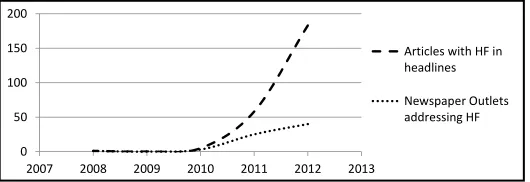
ver the past decade, advancements in horizontal drill-ing technology and high-volume hydraulic fracturdrill-ing (HVHF) have created opportunities for extracting nat-ural gas from plays that were previously inaccessible. Two of these—the Collingwood and Utica formations—underlie the state of Michigan, and as a result of a successful test well drilled by the Encana Corporation in Missaukee County in 2010, interest in natural gas development in Michigan has experienced a tremendous upswing. The significance of this renewed interest in Michigan was exemplified by the May 2010 minerals lease sale, which netted over $178 million for the state, almost equaling the cumulative $190 million the state had previously earned since it began issuing mineral leases in 19292.Although only a handful of wells in Michigan have been completed with HVHF, the potential for large-scale natural gas development in deeper shale formations has garnered considerable attention in the state and a concomitant rise in public concern. As shown in Figure 1, newspaper coverage of hydraulic fracturing (HF) or “fracking” in Michigan has dramatically increased since the initial May 2010 mineral lease auction. In most states where HVHF is
proposed or underway, the politics surrounding the technology can be divisive and pose major challenges for local and state decision makers. Numerous citizen groups in Michigan and elsewhere have pushed for increased regulation of the industry, if not an outright ban, while in other states, townships have found themselves in con-flict with state governments over whether they have the right to ban the practice locally3. The widespread controversy surrounding
[image:5.612.323.588.251.342.2]HVHF suggests that if it is managed poorly, it can have significant social costs, regardless of whether it poses environmental or health consequences. As decision makers consider how to manage the changing nature of gas development in their states, incorporating public concerns into the decision-making process can allow them to reach outcomes that have long-term benefits for public trust and the social well-being of their states.
Figure 1. Michigan newspaper coverage of frackinga
This report aims to provide the reader with a better understand-ing of the current state of public perceptions of HVHF and to highlight issues that may be relevant to shale gas development policy in Michigan. As there are few Michigan-specific data avail-able, the report reviews opinion poll data and academic literature from across the U.S. to summarize how the public perceives HVHF and to identify the factors that make it a controversial issue. Our objective is neither to judge the public as being right or wrong in their perceptions, nor to suggest that we should necessarily try to change their opinions. Rather, the report draws on risk perception research to examine how public opinion is formed and to illumi-nate the challenges and opportunities for creating a constructive public dialogue on HVHF in Michigan.
The remainder of this report is divided into three parts. The Status and Trends section strives to provide an objective summary of pub-lic perceptions based on national and state-level pubpub-lic opinion poll data and the limited number of peer-reviewed studies con-ducted to date. This section also includes a description of Michigan stakeholder groups (environmental, grassroots, industry, and gov-ernment), and where their positions on HVHF align and conflict.
0 50 100 150 200
2007 2008 2009 2010 2011 2012 2013
Articles with HF in headlines
Newspaper Outlets addressing HF
aWe compiled all articles focusing on hydraulic fracturing from the year 2000 to
The next section examines the Challenges and Opportunities for encouraging stakeholder dialogue. Drawing on several decades of risk perception literature, this section identifies factors that can heighten perceived risks and increase discord among stake-holders. It then examines current HVHF management practices in Michigan in light of these factors and highlights opportunities for improvement. The final section of the report, Prioritized Pathways, builds off of this discussion and offers suggestions for additional research in Phase 2 of the integrated assessment.
A note about terminology
The EPA defines hydraulic fracturing as “a well stimulation pro-cess used to maximize the extraction of underground resources; including oil, natural gas, geothermal energy, and even water”4. In
Michigan, the Department of Environmental Quality specifies that “‘high volume hydraulic fracturing well completion’ means a well completion operation that is intended to use a total of more than 100,000 gallons of hydraulic fracturing fluid”5. In the public’s mind,
however, the definition of “fracking” is often broader, encom-passing the entire lifecycle of deep shale gas development—from leasing and permitting of lands to well drilling, completion, and disposal of HF fluids. As we will discuss in the Challenges and Opportunities section, these semantic differences can have unin-tended consequences when communicating about this issue. For the purposes of this report, we have used “deep shale gas devel-opment” when we are referring to the suite of practices involved in developing a deep shale gas well with horizontal drilling and high-volume hydraulic fracturing (from leasing the land to contin-ued operation of the well). We use the abbreviation HVHF when we are referring specifically to the process of high-volume hydrau-lic fracturing, and HF when differentiating between high-volume and low-volume fracking is either not necessary or not possible. When referring to an instance of public perception where the line is blurred between HF, HVHF, and gas development in general, we also use the more popular term “fracking.” For example, many opinion polls ask questions related to “fracking” without identify-ing the specific process respondents should consider.
2.0 STATUS AND TRENDS
T
o evaluate public perceptions of HVHF—and more broadly, of deep shale gas development—we con-sidered three sources of data: public opinion polls, empirical academic studies, and primary documents from stakeholder groups in Michigan. Each of these is explored in the following subsections. Section 2.1 examines national and state-level opinion polls to identify general trends in public per-ceptions of “fracking.” These include awareness of fracking, perceived risks and benefits, degree of support for deep shalegas development, and opinions regarding HF regulations. This discussion includes results from the only poll to date that specif-ically samples Michigan residents1. Section 2.2 explores public
perceptions in greater depth, using academic studies of communi-ties where HVHF has occurred. This body of research, conducted in Texas, Pennsylvania, and New York, reveals additional public concerns about deep shale gas extraction and sheds light on how perceptions may change as development in an area matures or intensifies. Section 2.3 looks more closely at Michigan, identifying key stakeholder groups, their positions on HVHF, and issues that may be relevant to understanding public perceptions within the state. The final section, 2.4, summarizes the findings of the Status and Trends section and discusses possible implications for future development in Michigan.
2.1 National and state-level public opinion polls
This subsection reviews data from public opinion polls conducted in the United States between November 2010 and February 2013. Polls were identified by searching for the terms “fracking” or “hydraulic fracturing” in two poll databases: Polling the Nations and the iPoll Databank maintained by the Roper Center for Public Opinion Research at the University of Connecticut. In addition, we searched the University of Michigan’s ArticlePlus database for news stories that reported poll results. The resulting data are drawn from numerous sources, including academic, commercial, and nonprofit organizations. Rather than summarizing all poll questions, our review focuses on those that are explicitly about HF and/or deep shale gas development.
Of the 38 polls considered in this report, 13 report on public opin-ion at the natopin-ional level and 24 report on attitudes at the state level. This data set includes the first (and only) public opinion poll on HF conducted in Michigan1. The remaining poll in the set compares
public opinions from a nationally representative sample to a sam-ple drawn from states with mature gas plays (Arkansas, Louisiana, Texas) and another sample drawn from states with new gas plays (New York and Pennsylvania)6. Polls conducted at the state-level
occurred in states where HVHF is already underway (Californiab,
Louisiana, Michigan, Ohio, Pennsylvania, and Texas)1,7-12, in one
state where fracking occurred but is currently under a moratorium pending further study of its environmental and health effects (New York)13-24, and one state where HVHF for natural gas has not yet
begun (North Carolina)25,26. Together, these poll data shed light not
only on perceptions of fracking, but also on how perceptions differ regionally and over time. Appendix A provides more details about the results from individual polls.
2.1.1 Awareness
Across polls, roughly 50-60% of Americans are at least “somewhat aware” of hydraulic fracturing, and among nationally-representative samples awareness appears to be increasing7,13,27-30. A poll by the
Civil Society Institute27 found, for example, that 44% of Americans
had some awareness of fracking in November 2010. By July 2012 that number increased to 58%28. When asked how much they have
heard or read about fracking, around 30% of Americans nationwide report that they have heard “some” to “a lot” about the issue31-33.
Not surprisingly, people tend to pay more attention to the issue in states where HF is actively debated. In Pennsylvania, where HF has garnered considerable media attention34, 46% of respondents
report that they have heard or read “a lot” about the issue and 59% report following debates on shale gas drilling “somewhat” to “very closely”1. In Michigan, where HVHF is in an early stage
of development, the issue is still fairly salient to residents. Forty percent (40%) of Michiganians have heard “a lot” about “hydraulic fracturing” and 48% say they follow the issue “somewhat” to “very closely”1 (see Appendix A, Tables 2 and 4).
Awareness of HF tends to vary with political orientation, gender, and socio-economic status. Democrats are consistently less aware of fracking than Republicans, with Independent voters usually fall-ing in between7,8,13,27,31. Several polls also find significant
discrepan-cies between male and female respondents13-18,27,31. For example,
the Pew Research Center reported that 55% of women nationally have heard of fracking compared to 71% of men. Greater aware-ness is also associated with higher levels of education7,9,14-18,27,31 and
household income7,13-18.
2.1.2 Perceived benefits and risks
When asked to weigh the benefits of HF against its risks, people tend to view it positively. Deloitte found that a majority (53-62%) of people in all three of its samples (national, mature gas plays, and newer gas plays) believed that the benefits of HF “somewhat” to “far” outweigh its risks6 (see Appendix A, Table 7). Across these
three samples, a significantly greater portion of respondents in newer gas plays (25%) indicated that they were “not sure” how the benefits and risks of HF compared6. The poll conducted in Michigan
had similar results, with 52% of people believing that “drilling for natural gas” in the state had resulted in more benefits so far, 24% who thought it had led to more problems, and 8% who thought the benefits and problems were about equal1. Comparable results
were observed in Pennsylvania1.
Benefits
Economic growth and energy independence are the most commonly perceived benefits of fracking. Deloitte6 found that
approximately 45% of respondents familiar with HF believed that developing U.S. shale gas would be “very” or “extremely
impactful” in boosting local economies, creating jobs, promoting energy independence, and boosting the national economy. A sim-ilar percentage also believed that natural gas development would lead to cleaner air. Polls conducted in Michigan and Pennsylvania asked respondents to rank potential benefits of fracking1. In both
states, economic benefits and energy independence were seen as the most likely, followed by reduced carbon emissions and reduced energy costs for consumers and industries. Ten percent (10%) of Michiganians were not sure what the primary benefit of fracking would be while another 13% thought fracking would have no benefits. In a separate question, respondents were asked to rate how important natural gas drilling is to the overall condition of the state’s economy. Among Michiganians, 46% thought natural gas drilling was “somewhat important,” and 36% thought it was “very important” 1. Similar results were observed among Pennsylvanians1.
Risks
Multiple polls suggest that Americans are concerned about the potential for water contamination from shale gas development. In four national polls conducted by the Civil Society Institute, nearly 80% of respondents indicate that they are “somewhat” to “very con-cerned” about the impacts of fracking on water quality27-30,35. Similar
percentages were reported for New York and Pennsylvania7,13.
Polls conducted simultaneously in Michigan and Pennsylvania asked respondents to list what they perceived to be the most important risk from fracking1. In both states, water contamination
was mentioned most often (18% of respondents in Michigan, 34% in Pennsylvania), with an additional 8-9% of respondents specifically mentioning groundwater or well water contamination. Respondents in Michigan were also concerned about health issues (14%), pollution and chemicals (8%), and general environmental damage (6%), among other concerns. A quarter (25%) of Michigan respondents were “not sure” what the most important risk related to fracking would be. In both Michigan and Pennsylvania, a major-ity of respondents “somewhat” or “strongly” agreed that natural gas drilling would pose a major risk to the state’s water resources1.
Another series of polls in New York and Ohio asked respondents whether they thought HF would cause environmental damage (see Appendix A, Table 13). A plurality (45-50%) in each state believed fracking would cause environmental damage, while another third of respondents were “not sure”10,11,14-18.
2.1.3 General support/opposition
where HVHF is in an early stage of development, a majority of respondents either somewhat supports (22%) or strongly supports (32%) “extraction of natural gas from shale deposits in Michigan” compared to 35% who somewhat to strongly oppose it1. A
nation-ally-representative poll by the Pew Research Center similarly found a majority of respondents (52%) were in favor of HF development compared to 35% opposed31. In Pennsylvania, where there is
extensive HVHF activity, support for shale gas development is not quite as strong1. Forty-nine percent (49%) of respondents
some-what or strongly support shale gas extraction compared to 40% who somewhat to strongly oppose it. Despite general support for natural gas extraction, a majority of respondents in both Michigan and Pennsylvania agree that their respective states should impose a moratorium on HF until more is known about its potential risks (MI: 16% somewhat agree, 36% strongly agree; PA: 17% somewhat agree, 41% strongly agree)1.
As was the case for awareness, support for HF diverges depend-ing on political party, gender, and education level. Support appears to be higher among Republicans and Independents than Democrats8. In Michigan 70% of Republicans support shale
gas development compared to 53% of Independents and 46% of Democrats1. Among Americans who have heard of fracking, men
are generally more supportive than women. Pew31 reported, for
example, that nearly two-thirds of men are in favor of fracking (61% vs. 29%), while women are more evenly divided (41% favor vs. 40% oppose). Respondents with a college education also tend to be less supportive of fracking. According to the Pew31 poll, college
graduates are evenly divided on the issue (45% in favor vs. 43% opposed), while individuals with a high school education or less support fracking nearly two-to-one (56% in favor vs. 29%).
2.1.4 Support for policy measures
Public opinion polls often explore support for three types of pol-icies: (1) disclosure of chemicals in HF fluids, (2) increased regula-tion of the natural gas industry, and (3) severance taxes. Generally speaking, Americans are strongly in favor of all three. Across polls, a vast majority of respondents believe state and national officials are not doing enough to require disclosure of chemicals and that disclosure requirements should be tightened7,13,27. Likewise, a
plurality of respondents (40-66%) believe that industry, in general, needs more regulation (compared to 15-25% of respondents who believe there should be less)32,38-41. Polls conducted in Michigan
and Pennsylvania addressed whether the states should, respec-tively, retain or adopt a severance tax on natural gas1. Responses
were overwhelmingly supportive of levying a severance tax on natural gas producers, with 77% in favor in Michigan and 65% in favor in Pennsylvania. The poll further questioned how tax revenue should be used. In both states, the top three preferences were the same: (1) reduce local property taxes, (2) support state research on
alternative energy, and (3) reduce government debt. Finally, these polls asked respondents whether they agreed that tighter regula-tions and higher taxes on natural gas drillers should be avoided because these policies would lead drilling firms to leave the state. In both Michigan and Pennsylvania, a plurality of respondents disagreed.
2.2 Academic studies of localized HVHF
development
While opinion polls conducted at a state or national level are use-ful for assessing broad-scale trends, they may not accurately reflect attitudes in communities directly affected by deep shale gas activ-ities42. To date, a small number of empirical studies, primarily in
Texas and Pennsylvania, have examined perceptions of deep shale gas development at the local level in greater depth.
Most of this research builds off of the “boomtown model,” a framework that emerged in the 1970s in response to rapid energy development in the Western United States. During this period, many small, rural communities experienced exponential popu-lation growth as companies arrived from around the country to capitalize on favorable energy markets. Although towns benefitted from increased tax revenue, lower levels of unemployment, indirect stimulus to local businesses, and wealth creation from land leases, negative social impacts on communities were significant43 and
often resulted in changing attitudes toward energy development. In past boomtowns, community reactions have been observed to evolve through four stages:
enthusiasm in initial stages when residents express positive expectations; uncertainty as residents notice that expec-tations are not being met and unexpected changes occur (…); panic as residents realize the magnitude of unexpected impacts on their community; and finally, adaptation as the changes become viewed as permanent44.
There is some evidence in other states to suggest that deep shale gas development through HVHF could follow boomtown growth patterns45. In Sublette County, Wyoming, for example, the drilling
rig count rose from two in the year 2000 to 56 in 2006, an increase that was paralleled by population rises between 16% and 44% in local communities over the same time45. In Pennsylvania, 195 deep
shale wells were drilled statewide in 2008 and numbered 2,484 by the end of 201244,46.
examine perceptions in the Marcellus Shale region of New York and Pennsylvania44,50-54. Appendix B provides a brief summary of
each study’s purpose, methodology, and main findings.
All four studies in Texas were based on data collected in Wise and Johnson Counties during 2006. Researchers selected these counties to compare perceptions in a community with mature energy development (Wise County) to one at the beginning stages (Johnson County). The dataset included interviews with 24 munici-pal and county leaders48 and a survey of 600 households42,47,49.
Studies in the Marcellus Shale region have used similar methods. The first study conducted interviews with 61 key informants to compare perceptions across four counties in Pennsylvania and New York44. Counties were selected to represent communities
with different degrees of HVHF activity (high/low) and experience with fossil fuel development (high/low). Two other studies have surveyed residents in communities with different levels of drilling activity. One compared perceptions in Pennsylvania (n=1,455) to New York (n=461)51, while a later study compared perceptions in
adjacent counties in Pennsylvania (n=1301)54. The fourth study we
reviewed asked individuals in northern Pennsylvania (n=1,028) a series of questions about their perceptions of shale gas and wind energy development, both of which were occurring in the area52.
The fifth study used survey data from 891 school administrators in 309 districts in Pennsylvania to compare perceptions of the economic benefits and socioeconomic challenges associated with HF in communities with different levels of drilling activity50. Finally,
the last study reviewed explores some of the perceived health impacts that residents in Pennsylvania (n=33) attributed to shale gas extraction at an early stage of development and again nearly two years later53. While participants in this study were self-selected
and not necessarily representative of the entire community, the results are informative for understanding how individuals believe HVHF can impact their personal health.
Together, these ten studies shed light not only on the perceptions of individuals directly impacted by HVHF, but also on how percep-tions can vary across communities and over time. The following sections look across studies to identify common perceptions that emerge in communities impacted by HVHF and the contextual factors that may influence those perceptions.
2.2.1 Perceptions of HVHF and deep shale gas
development
Across all studies, common trends emerge concerning the positive and negative aspects of deep shale gas development. In general, respondents tend to perceive development as economically ben-eficial but also perceive negative impacts related to public health and safety, the environment, local infrastructure, and quality of life.
Perceived benefits
Most study participants acknowledged that natural gas develop-ment had economic benefits for their region. Specific benefits included individual wealth creation from leases and royalties; job creation from employment in the natural gas industry; increased business revenue in the retail, service, and construction sectors; reduced unemployment; and increased tax revenues44,47-50. In Texas,
survey respondents also indicated that they thought healthcare services, school quality, and fire protection services were improving as a result of natural gas development in their area47.
When development occurs in economically depressed regions, studies show that the public may perceive natural gas development as a panacea to local economic issues44,47-50. One response from a
school administrator in Pennsylvania captures this sentiment:
We’re seeing a lot of individual benefit beginning to develop locally, through leasing, but no benefits to the communities and schools as yet. […] However our communities have been depressed for so long since the mining industry left, that we are also desperate for the return of industry to the region50.
Perceived risks and negative consequences
Public health and safety were seen to be at risk from a variety of factors. In Texas, the most prevalent concern was the risk of auto-mobile accidents and fatalities from the dramatic increase in truck traffic associated with HVHF48,49. Compared to low-volume HF,
HVHF has greater water transportation needs, both to deliver fresh-water to the well site and, in some cases, to transport wastefresh-water that emerges from the fractured well. Key informants and survey respondents in Texas viewed truckers as aggressive, dangerous, and lacking respect for locals48,49. Surveyed community members
also feared the possibility of well explosions and negative health impacts from HVHF chemicals and disposal wells48,49. As one
researcher noted49, while the actual incidence rate of well
explo-sions is actually quite low, past research suggests that fears and concerns about a perceived threat can have real, negative conse-quences on health55. In Pennsylvania, for example, concerns about
potential health impacts of HVHF remained a constant source of psychological stress during the nearly two-year timespan of the study53. See Basu et al. (this series)56 for more on the relationship of
perceived risks and health impacts.
Across studies, participants also expressed concern about the effects of HVHF on the natural environment. While many worried that HVHF would threaten wildlife and livestock, increase air pol-lution, and lead to deforestation44,48,49, by far the greatest concern
attributes (out of 30 measured) that resi-dents felt were “getting worse” as a result of natural gas development in the area47.
These concerns were echoed by key infor-mants in both Texas communities. County-level officials in Wise County, where HVHF had been established for some time, were particularly concerned about the
avail-ability of freshwater and cited multiple examples of private wells running dry48. In the Marcellus Shale region, interviewees in four
counties expressed concerns about declining freshwater supplies and the potential for private water wells to be affected44.
With regard to local infrastructure, the most important concern in areas with active HF was the extensive road damage caused by increased truck activity44,49. Respondents in Texas complained that
although tax revenue helped support road repair, most municipal-ities had to wait for allocations from state governments, meaning delays and inconsistency in repairs. Infrastructure was also seen to be strained due to rapid population increases, particularly in the housing sector. One respondent in Pennsylvania reported that low-income housing was in such shortage that a homeless pro-gram had to begin putting people in hotels44.
Many respondents also felt their community’s character was neg-atively impacted by HF operations. These perceptions were due to changes to the local landscape as well as the influx of industry workers moving into the area. In addition to the nuisance of round-the-clock light and noise during drilling periods49, study
partici-pants often lamented aesthetic changes to their communities. In particular, many worried that the natural beauty and rural quality of the area would be forever changed44. Other impacts included the
loss of the “‘small town’ feel”49, conflicts between seasonal and
permanent residents, and the perception that new inhabitants had little understanding or respect for local ways of life44. Gas workers
moving into the area were often blamed for increases in crime, drug use, and alcoholism44,49. In some communities, residents
wor-ried that the uneven distribution of mineral rights had accentuated the division between rich and poor and that local politics would eventually be coopted by wealthy mineral rights owners48.
2.2.2 Contextual factors that influence perceptions
In accordance with boomtown theory, several studies examined how perceptions varied based on mineral rights ownership, the ability of communities to absorb increased population growth, and their current level of gas development. These findings are discussed below.Mineral rights ownership
Numerous studies have demonstrated what common sense might suggest: landowners who stand to benefit from natural gas devel-opment are significantly more likely to perceive it in a positive light42,49,52,54. In Pennsylvania, mineral rights ownership was found
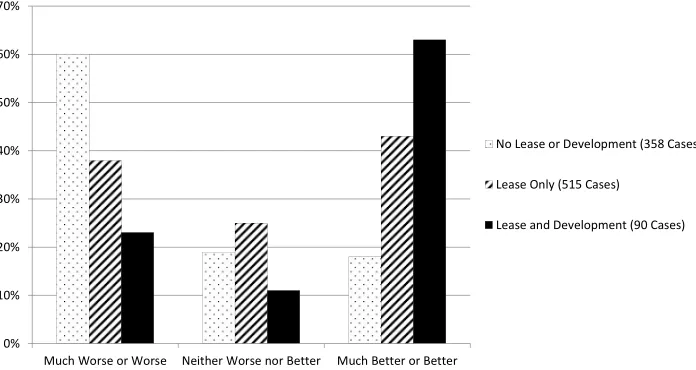
to be the most significant contributing factor to positive opinions about natural gas development52. Represented visually, the
cor-relation is striking (see Figure 2). Another study in the Marcellus Shale region similarly found that respondents were significantly more likely to “strongly support” shale gas development if they had a family member who had signed a natural gas lease54. In
Texas, individuals without any personal or familial connections to the natural gas industry were significantly more likely than their counterparts to disagree with statements that suggested natural gas development in their area would benefit their community42.
Population density (rural vs. urban character)
Evidence that smaller communities experience greater impacts was apparent in one of the studies conducted in the Marcellus Shale region of Pennsylvania44. Residents of Bradford and Washington
[image:10.612.215.563.44.229.2]counties were concerned about similar environmental and social impacts from deep shale gas development, but reported impacts were much greater in rural Bradford County than in the more populous Washington County, despite similar levels of drilling activity in both counties. The primary difference between the two counties is their population: Washington’s population was more than three times that of Bradford’s and had an established infrastructure that could more easily accommodate the influx of workers and industrial equipment. Figure 2. Relationship between mineral
rights ownership and beliefs about whether “natural gas development has made the area better off or worse off than it was 5 years ago.” Adapted from Jacquet52.
0% 10% 20% 30% 40% 50% 60% 70%
Much Worse or Worse Neither Worse nor Better Much Better or Better
No Lease or Development (358 Cases)
Lease Only (515 Cases)
Level of current natural gas development
Two studies in Pennsylvania found that perceptions of shale gas development varied depending on the level of drilling activity in the community50,54. In the first study, which surveyed high school
administrators, higher levels of local development were correlated with higher expectations of both positive economic outcomes as well as greater concerns over environmental and social impacts. These results suggest that concerns about natural gas develop-ment do not necessarily dissipate with increased experience. Rather, residents become more acutely aware of the range of potential impacts—both positive and negative. The second study, which randomly sampled residents in two adjacent counties, found that respondents in the county with higher drilling activity were more likely to view shale gas development as an economic oppor-tunity54. This belief, in turn, significantly predicted stronger support
for shale gas development. No differences were found between counties in terms of residents’ beliefs that drilling activities would threaten environmental and public health. In both counties, indi-viduals who believed drilling posed risks to the environment and health were less likely to support shale gas development.
A comparison between Wise and Johnson counties in Texas revealed how perceptions can evolve as natural gas development in an area matures. While households in both counties shared concerns about increased truck traffic and depleted water sup-plies, residents in Johnson County, where the industry was less developed, were more likely to note the negative changes to their day-to-day lives such as degraded local roads and undesirable population growth47. Residents in both counties believed shale
gas development brought more jobs, but this belief was more widely held in Wise County, where the industry was more mature. Residents there were also more likely to note improvements in fire protection services, local school quality, and medical services47.
Despite these observations, Wise County residents had more negative views of the natural gas industry in general. Specifically, residents felt natural gas operators were too politically powerful, drilled too close to homes and businesses, and had little compas-sion for the natural environment42. They were also more likely to
believe that gas development had resulted in water pollution. In contrast to their Johnson County counterparts, Wise County resi-dents were more likely to disagree with the statement “In the long run, I’m sure that people in this area will be better off if our natural gas resources are developed”42. Respondents in Johnson County
were generally more optimistic about the long-term benefits from shale gas development.
2.3 Michigan stakeholder perspectives
While no community-level studies have been conducted in Michigan on public perceptions of HVHF, concerns about environmental
and health impacts are apparent in the dialogue that is emerging among stakeholder groups. Three types of stakeholder groups are prominent in Michigan: industry organizations, nonprofit and grassroots organizations, and state agencies. The following discus-sion examines the claims each of these groups makes with regard to the risks and benefits of HVHF in Michigan.
2.3.1 Industry organizations
Encana Corporation and Devon Energy are the two primary developers of deep shale gas plays in Michigan. Their influence on public perceptions occurs more through their leasing and drilling activities and their appearance in the press than through active public outreach. While it is not prominently displayed on the company’s website, Devon Energy does provide information about HF and its stance on prominent issues. The company’s statements on the history of HF, the economic benefits of natural gas, and its importance to America’s energy future57 largely mirror the more
widely-publicized message of state industry organizations that HVHF is fundamentally safe. The company also expresses support for the national FracFocus.org chemical disclosure project:
We at Devon have long believed there was a need for a central repository through which companies could voluntarily report data about hydraulic fracturing fluids. FracFocus. org fulfills that need. Created by regulators, this site helps remove the mystery about a process that is vital to America’s energy independence58.
Examination of a FracFocus data sheet for a Devon well treated with HVHF in Roscommon County reveals, however, that informa-tion for over 6,000 gallons of chemicals is withheld as “CBI” or “confidential business information”59.
The Michigan Oil and Gas Association (MOGA), together with its public outreach branch, the Michigan Oil and Gas Producers Education Foundation (MOGPEF), represent the collective voice of oil and gas development in Michigan. They are much more active than energy companies in disseminating information to the general public, as evidenced by references to them in state newspapers and the prominence of educational materials on their websites. MOGPEF was founded in 2003 with the mission to “provide facts about the Michigan oil & gas industry to the public and to provide financial support for programs that will inform the people of Michigan about the importance of our local oil and nat-ural gas industry and about the environmental safeguards that we employ”60. Materials published by MOGPEF provide insights into
the natural gas industry’s perception of HVHF and how it responds to public concerns over health and environmental issues.
extraction, namely increases in jobs, tax revenue, and energy security61,62. The organization’s materials also underscore the
importance of natural gas as a plentiful source of clean energy and describe HF as an essential tool to produce it61. Published materials
address risks associated with shale gas extraction by focusing on the strength of state regulations and the negligibility of risks. They advertise the most recent regulatory developments, such as the publication of Material Safety Data Sheets (MSDSs) and water with-drawal assessments on the Michigan Department of Environmental Quality’s (MDEQ) website, while stressing the state’s long history of using (low-volume) HF to extract natural gas61,63. In fact, a
two-page document states four times that Michigan has safely used HF for “nearly 60 years and 12,000 wells”61. MOGPEF diminishes the
role of chemicals in the HF process by emphasizing the ratio of 2% chemicals to 98% water and sand61, without mentioning the
over-all volume of liquids used in each well. Concerns about drinking water are dispelled with a description of how far below aquifers HF takes place and the lack of studies linking HF to contamination of drinking water61,62. Overall, the words “safe,” “proven,” and
“nec-essary,” appear throughout MOGPEF materials, portraying the use of HF in natural gas extraction as a risk-free process that is essential and desirable for Michigan’s future.
2.3.2 Nonprofit and grassroots organizations
Dozens of national and Michigan-based nonprofit organizations are currently involved in educating the public on HF and lobbying state legislature for regulatory changes. The goal of this section is not to enumerate all of these organizations, but to identify the most active groups and their respective positions on HF. At a most basic level, a division can be made between organizations that seek greater regulation of HF and those that seek a permanent ban on HF in Michigan.
The former category includes local chapters of major national environmental organizations, such as the Sierra Club, the National Wildlife Federation, Clean Water Action, and the Michigan League of Conservation Voters, all of which have formed partnerships with established Michigan-based nonprofits. Prominent state-level nonprofits that support more regulation include Great Michigan, Michigan Environmental Council, and Tip of the Mitt Watershed Council, among others. All of these organizations have a high level of engagement with HF in Michigan, as expressed in letters to government agencies and politicians, educational materials for the public, petitions, board resolutions and policy statements64-68.
The Tip of the Mitt Watershed Council has played a leadership role in networking with other nonprofits, engaging with state reg-ulators, and publishing educational materials. In fall 2011, Tip of the Mitt and other partners published a series of informational documents describing the HF process and associated risks and
current regulations65. The documents present a clear picture of
the Michigan nonprofit perspective on HF and underscore what they perceive to be the strengths and weaknesses of current regu-lations. In particular, they argue that relatively little is known about the overall environmental impacts of large-scale application of HVHF and draw attention to legal exemptions for HF, including the Safe Drinking Water Act, the Resource Conservation and Recovery Act, and the Emergency Planning and Community Right to Know Act. While they suggest improvements to current legislation, the documents are careful to recognize the importance of existing regulations and recent efforts to make them stronger, such as the publication of MSDSs on the MDEQ website and the enforced use of the state’s water withdrawal assessment tool65.
The information sheets raise concerns about the risks of HF to water resources69, the use of chemicals70, the regulation of
flow-back71, and the lack of opportunities for public involvement72.
Water concerns include impacts to drinking water from cumula-tive high-volume withdrawals and the contamination of ground and surface waters from spills during well construction, treatment, and operation69. With regard to chemicals, the documents
recog-nize that chemicals represent less than two percent of the total volume of HF fluids70. They draw attention, however, to the fact
that because millions of gallons of water are used in a multi-stage treatment, the volume of chemicals used in HVHF dwarfs amounts previously used in low-volume HF treatments. Concern is also expressed for the fact that MSDSs are required only 60 days after well treatment and that chemicals protected as “trade secrets” are not disclosed. The information sheets describe the toxic nature of some of the chemicals found in flowback fluids and note the possibility of naturally-occurring radioactive elements leaching into the fluid71. The materials also express concern that flowback
fluids are not analyzed prior to their disposal in injection wells and that drilling operators do not have to identify hazardous waste components. Another information sheet focuses on the lack of opportunity for public participation in the permitting process: “In Michigan, permits for oil and gas drilling operations are granted by the [MDEQ], with limited public participation. There is no general public review and comment on permit applications”72. Attention
is drawn to the fact that only cities of over 70,000 inhabitants are notified of drilling permit applications if drilling will occur within 450 feet of a residential building.
Contamination. In many respects, the concerns of these groups are similar to those of more moderate organizations. They differ primarily in their prognosis: groups seeking to ban HF believe that further regulations will be unable to eliminate the risks associated with it. According to a co-founder of Ban Michigan Fracking, “Once you put this amount of poison into the earth there is no way to make it safe… That’s why we are working to ban it in the first place”73. Educational materials produced by these organizations
focus heavily on risks to public health and the natural environment with virtually no mention of the potential economic benefits of development. Reports of accidents and other issues are taken from around the United States, and even other countries. For example, Ban Michigan Fracking’s website highlights a high-profile lawsuit between a Canadian homeowner and Encana Corporation; the MDEQ’s alleged approval of dispersing flowback on roads through a campground and state parks in Northern Michigan in May 2012; and ongoing fracking protest efforts around Michigan74. Mistrust
of oil and gas companies and state regulatory agencies is also a recurrent theme. Don’t Frack Michigan’s website, for example, directs readers to newspaper articles about the antitrust probe of Chesapeake Energy and the numerous land deals that its shell company later reneged on75. Although their objective is different
and the tone of their communications more emotive, groups in favor of banning fracking cite similar events and studies to those featured in moderate organizations’ publications.
Communication efforts of Michigan nonprofits differ from those of industry groups in several important ways: (1) economic aspects of natural gas development are not emphasized, while risks and uncertainties are highlighted, (2) HVHF is emphatically presented as a fundamentally new process due to the unprecedented amount of water and chemicals used relative to low-volume HF, and (3) studies of environmental and health impacts from other states are presented as evidence of the potential risks of HVHF.
2.3.3 State organizations
Through their direct involvement in HF development, state agen-cies have a prominent role in the public HF debate. Three agenagen-cies are closely involved in the development of deep shale plays: the Michigan Department of Natural Resources (MDNR), which han-dles minerals leasing for the state; the Michigan Department of Environmental Quality, Office of Geological Survey (MDEQ), which issues permits for well drilling and regulates gas production; and the Michigan Public Service Commission (MPSC), which regulates gas transmission and prices. Of these, MDNR and MDEQ have the most public exposure, the former through auctions of minerals leases, and the latter through ongoing interaction with groups that seek increased regulation of HF activity or an outright ban. MDEQ, in particular, has found itself at the heart of the debate over HF in Michigan. With the rise of public awareness and concern, the
agency has increasingly had to explain and defend its permitting procedures.
MDEQ provides information to the public about HF through pub-lished materials76, participation in public meetings77-79, and
inter-views with the press80. A review of these resources reveals common
themes in MDEQ’s presentation of information on the risks and benefits of HF and deep shale gas development.
The primary divergence between common public concerns and MDEQ’s message lies in whether or not modern high-volume HF should be treated as a variation on a proven industrial practice or a new process. The agency maintains that the latest developments in high-volume HF are the continuation of a long history of successful regulation and that new developments should not require signifi-cant changes to the current system. A Q&A document on HF from MDEQ’S website underlines this message:
Is hydraulic fracturing new? No. Gas and oil operators have been using hydraulic fracturing around the country since the late 1940s. […]
Is hydraulic fracturing used in Michigan now? Yes. Companies in Michigan have been using it to facilitate oil and gas production for about 50 years. Approximately 12,000 wells have been fractured in that time […]81
Hal Fitch, director of MDEQ’s Office of Oil, Gas, and Minerals, communicated a similar message during a congressional hearing in May, 2011:
Hydraulic fracturing has been utilized throughout the United States for more than 60 years, and the states have a long his-tory of successful regulation of the practice. [...] In Michigan we have more than 12,000 wells that have been hydraulically fractured82.
The assertion that HVHF represents a continuum with past low-vol-ume HF is the foundation of MDEQ’s communications regarding the risks of HVHF. Discussions of associated risks consistently point to successful past management of oil and gas development to jus-tify the sufficiency of current regulation. The agency tries to allay public concerns about the risks of HF by arguing that that no con-clusive evidence links HF to environmental or public health issues. For example, in his testimony to Congress, Hal Fitch stated, “We don’t have one instance of groundwater contamination resulting from the practice”82. The Q&A document emphasizes the same
concept: “[Q:] Has hydraulic fracturing been responsible for envi-ronmental damage in Michigan? [A:] No”81. In general, the MDEQ
public or the environment, the DEQ would further regulate it or outlaw it. To the contrary, Michigan’s regulatory structure has been held up as a national model for effective, protective regulation”81.
This represents an important departure in the framing of risk from environmental organizations, which draw on examples of accidents related to deep shale gas extraction in Michigan, as well as other states.
While maintaining that current regulations are sufficient, MDEQ acknowledges five concerns with gas drilling that are commonly raised by the public: (1) migration of gas or fracking fluids into aquifers, (2) the amount of fresh water resources used during the HF process, (3) management of flowback fluids, (4) surface spills, and (5) the identification of chemical additives79,82. To the public,
however, MDEQ portrays these concerns more as misconceptions about current regulations than actual risks:
Michigan has strict rules about how much water can be used for fracturing, how wells are constructed, how they are tested before they are employed, and how the used ‘flowback’ water is contained and disposed of. These are the four top risks from gas and oil development. The DEQ has devel-oped a regulatory structure that has effectively protected Michigan’s environment and public health for decades81.
Despite MDEQ’s public discourse that emphasizes the adequacy of current regulations, the Supervisor of Wells Instruction 1-2011 issued in June 20115 represented an unprecedented initiative to
differentiate between the management practices necessary for low-volume and high-volume HF. Indeed, it responded directly to many of the concerns expressed in a November 2010 letter to MDEQ signed by a coalition of 33 Michigan nonprofits83, including
the publication of MSDSs, and the application of the web-based water withdrawal assessment tool. It further provided a basis for distinguishing HVHF from low-volume HF. Since the Supervisor of Wells Instruction 1-2011 was issued, it has been widely touted as a means of ensuring safe development by both the MDEQ and industry groups61,81
Overall, although MDEQ’s messages focus more heavily on risk prevention than natural gas development as an economic imper-ative, the agency’s portrayal of the risks involved with natural gas extraction and manner of communicating them to the public is almost identical to communication efforts of industry organizations. That is, risks are downplayed, emphasis is placed upon Michigan’s long experience with low-volume HF, and the sufficiency of current regulations is emphasized.
2.4 Summary of Status and Trends
This section reviewed the current state of knowledge on public perceptions of HVHF and deep shale gas development. National and state-level opinion polls were examined to determine broad trends, such as level of support for HVHF and commonly perceived risks and benefits; academic studies were reviewed to understand perceptions in local communities and to identify factors that influ-ence them; and Michigan stakeholder perspectives were explored to understand the current dialogue on HVHF in the state. Across these different sources of data, common trends emerge.
Awareness of HF and its potential impacts is moderate, but appears to be growing. While most people acknowledge that natural gas development through HVHF could create new jobs and boost local economies, concerns remain about the potential of deep shale gas development to affect freshwater supplies, health, and community well-being. How individuals weigh these risks and ben-efits appears to vary according to a number of socio-demographic and contextual factors. Opinion poll data suggest that support for fracking varies with political affiliation, gender, education, and income—with Republicans, males, and individuals with lower levels of education and income generally being more supportive of HF than their respective counterparts.
In communities directly impacted by deep shale gas development, studies reveal additional factors that can influence perceptions. Evidence suggests a strong linkage between the population den-sity of a developed area and perceptions of increased economic, social, and environmental impacts. The smaller a community is relative to the level of development, the greater the perceived impacts are likely to be. In Michigan, researchers may be wise to carefully evaluate where development is most likely to occur and how local infrastructure will be affected.
Studies also suggest that it is important to consider how develop-ment will affect a community with diverse levels of land ownership and intentions to lease mineral rights. Some of the negative per-ceptions articulated previously (see section 2.2) often arise from conflicts between those who have leased their land and those who have not. Disparate wealth creation, shifting local political power centers, and uneven risk sharing can all have lasting impacts on the social fabric of a community.
3.0 CHALLENGES AND OPPORTUNITIES
of the key challenges that may arise from such different viewpoints and highlights opportunities for fostering a constructive dialogue on HVHF in Michigan.
3.1 Semantic differences complicate
communication efforts
Seemingly innocuous aspects of the way deep shale gas devel-opment is communicated can have significant impacts on how the public interprets its associated risks and benefits. Two issues are apparent in the current dialogue between technical experts (industry and state agencies) and public stakeholder groups. The first relates to how the terms “hydraulic fracturing” and “fracking” are defined84. The second concerns whether high-volume hydraulic
fracturing is framed as a “new” technology or a continuation of previous industrial practices. This subsection discusses the nature and potential impacts of these issues.
3.1.1 The meaning of “fracking”
To industry and state agency experts, hydraulic fracturing refers to the process of injecting a high-pressure mixture of water, sand, and chemicals into a well to fracture the underlying shale forma-tion and release trapped natural gas. The public’s definiforma-tion, by contrast, is often much broader and includes every aspect of well development, completion, and continued operation. This all-en-compassing definition of HF or “fracking” is clearly illustrated in a recent online posting by Ban Michigan Fracking:
To accept regulated fracking is to accept the entire frack industry–all of it. All the thousands of frack wells, all the pipelines, all the compressor stations, all the thousands of injection wells, all of the new natural gas plants. And with it, you accept all the contaminations, the people and businesses who will lose their precious water supplies, their health, their land, their land values, their crops and livestock74.
These different meanings of “fracking” can be problematic, espe-cially when communicating about potential risks. Many of the concerns the public raises about HVHF are, by industry standards, risks associated with other oil and gas processes—and not actual fracking84. For example, natural gas migration into water wells is a
prominent concern that many have about HVHF. MDEQ addresses this issue in its “Questions and Answers” document:
I saw a video where someone lit their tapwater on fire. Is that from hydraulic fracturing? No. There have been a few rare cases where gas from drilling operations has escaped into fresh water aquifers; however, that was caused by improper well construction, not hydraulic fracturing81.
While the above answer may be technically accurate, it does not
address the public’s concern that deep shale gas development could contaminate freshwater aquifers if other aspects of well drilling and completion are not properly managed. As will be dis-cussed shortly, failing to acknowledge and discuss these concerns can increase public distrust and heighten perceived risks.
3.1.2 New technology or old?
A second point of contention is whether HVHF should be consid-ered an extension of an established technique or a fundamentally new technology. MDEQ has largely portrayed HVHF as an estab-lished practice (see section 2.3 in Status and Trends) though it acknowledges in its online materials that certain aspects of HVHF are different, including the amount of water consumed, the smaller physical footprint on the landscape, and the use of horizontal drilling81. Industry communications echo this strategy and cite
Michigan’s long safety record with low-volume HF as evidence that HVHF poses no new risks to public health or the environment63.
While this communication strategy is ostensibly used to allay public fears about HVHF, it may in fact have the opposite effect. Many of the risks that individuals and stakeholder groups asso-ciate with HVHF relate specifically to aspects of the process that distinguish it from low-volume HF. These include the amount of water consumed, the volume of chemicals added, the amount of flowback that must be processed, and the increased rate at which natural gas is extracted from highly productive regions. The follow-ing comparison between low-volume natural gas extraction and HVHF-extraction highlights these differences:
• Water volume. Low-volume hydraulic fracturing uses between 40,000 and 100,000 gallons of water per HF treatment over a total of 3-4 stages. By contrast, typical horizontal wells use between 3 and 5 million gallons of water per HVHF treatment over 15 or more stages85. Certain HVHF treatments may require
much higher volumes of fluid, such as the State Excelsior 3-25 HD-1 well in Kalkaska County, Michigan, where 21,112,194 gallons of water were employed in a single treatment86. • Chemical volume. Although modern HVHF and low-volume
HF use a comparably small percentage of chemicals relative to the total volume of fracking fluid, the increased scale of HVHF results in an overall larger volume of chemicals used. For exam-ple, although the HVHF treatment of the State Excelsior 3-25 HD-1 well in Kalkaska only contained 0.5% of hydrochloric acid, the total volume used in the treatment was 116,377 gallons86—
the volume of nearly ten standard 12’ x 24’ swimming pools.
• Flowback volume. Modern wells typically produce between 300,000 to 1.2 million gallons of flowback, which in Michigan must be captured, transported, and then injected into EPA Class II wells2. For heavily exploited areas, the high-volume of
• Truck traffic. A vertical well may employ between 817 to 905 truck journeys over the course of well drilling and HF treatment; a typical horizontal well may require between 1,420 and 1,979 truck journeys2.
• Drilling activity intensity. Technical experts often emphasize that a single horizontal well can replace many vertical wells, thereby reducing the footprint of the well pad. This portrayal detracts from the reality that deep shale plays can contain unprecedented amounts of natural gas, which leads to higher levels of drilling activity despite the increased productivity of each well pad. For example, the number of active wells in Pennsylvania rose from 36,000 to 71,000 in between 2000 and 201188. Likewise, since drilling in the Marcellus Shale began to
gain momentum in Pennsylvania in 2008, natural gas production has risen from just over 500 million cubic feet per day to almost 3,500 million cubic feet per day in 201189.
When state agencies and industry groups minimize the differences between HVHF and low-volume HF—even though information to the contrary is widely available to the public—they may send a signal that public concerns do not matter, or that they are inten-tionally obscuring the associated risks. As a result, individuals concerned about the potential risks of HVHF may find salience in claims that industry groups and government agencies do not fully acknowledge the challenges that large-scale horizontal drilling may present.
In both the case of HVHF’s definition and its framing as an estab-lished activity, discrepancies in public and government portrayals can lead to mistrust on the part of the public. MDEQ and other agencies involved in public discussions of HVHF must be mindful of how their communication efforts resonate with their target audi-ence. It is also important for policy makers and regulatory agencies to recognize that the public’s broad definition of “fracking” may be resistant to change, regardless of how much effort is expended to clarify the boundaries of the HF process. This by no means signifies that the public lacks intelligence. Rather, in the popular discourse, “fracking” has come to represent the new phase of natural gas development in the United States. Disassociating “fracking” with the broader issue of deep shale gas extraction is unlikely to be within the scope of any one organization’s abilities. Understanding and accepting the public’s notion of “fracking” may be the first step toward bridging communication gaps and building trust among stakeholders.
3.2 Technical experts and the lay public often
have conflicting perceptions of risk
Beyond assigning a different meaning to the term “fracking,” the lay public is likely to view the risks of deep shale gas development differently from industry and state agency groups. These conflicting
perceptions can complicate efforts to arrive at socially-acceptable policies, as stakeholders are likely to reach different conclusions about which issues are most important or merit greater regulatory attention.
Such discrepancies in risk perception have long been observed in other contexts such as the siting of noxious facilities and the adoption of other emergent technologies (e.g., nuclear power, wind power, or genetically modified food). A key lesson learned from research in this area is that neither technical experts nor the lay public are necessarily “right” in their assessments of risk; rather they evaluate risks using different criteria90,91. Understanding these
differences can illuminate some of the issues that make a topic like HVHF controversial as well as help identify opportunities for improving communication and resolving conflicts. While a thor-ough review of the risk perception literature is beyond the scope of this report, the following discussion looks at some of the issues most pertinent to shale gas development.
Technical experts and the lay public consider different factors when evaluating how risky a potential hazard is. In the minds of technical experts, risk involves calculating the probability and severity of negative events that might occur. By contrast, the public takes into account other psychological and social considerations. Often, the public’s perception of risk is influenced as much by the potential for direct harm as it is by the circumstances under which a potential hazard is imposed. Early studies on risk perception revealed that people find potential hazards less acceptable when they are perceived as involuntary, uncontrollable, and potentially catastrophic90,92,93. Perceived risk also increases when the
con-sequences are unobservable, difficult to detect, or delayed in time90,92,93. As Table 1 illustrates, several of these characteristics are
likely to influence public perceptions of HVHF and deep shale gas development in Michigan.
The public’s perceptions of risk are also sensitive to other social and cultural factors94,95. These could include a community’s history
with other hazards, past dealings with the regulatory agency in charge, how the media portrays an issue, or memorable events related to the hazard. For example, news reports of fracking-re-lated earthquakes in Ohio or the Gasland footage of a man light-ing his tap water on fire can amplify perceived risk by maklight-ing the potential dangers of HVHF more concrete and real. Sandman96,97