R E S E A R C H A R T I C L E
Open Access
Self-administered physical exercise training
as treatment of neck and shoulder pain
among military helicopter pilots and crew:
a randomized controlled trial
Mike Murray
1*, Britt Lange
2, Bo Riebeling Nørnberg
3, Karen Søgaard
1and Gisela Sjøgaard
1Abstract
Background:Neck pain is frequent among military helicopter pilots and crew-members, and pain may influence individual health and work performance. The aim of this study was to examine if an exercise intervention could reduce neck pain among helicopter pilots and crew-members.
Methods:Thirty-one pilots and thirty-eight crew-members were randomized to either an exercise-training-group (n= 35) or a reference-group (n= 34). The exercise-training-group received 20-weeks of specific neck/shoulder training. The reference-group received no training. Primary outcome: Intensity of neck pain previous 3-months (scale 0-10). Secondary outcomes: additional neck/shoulder pain intensity variables and pressure-pain-threshold in the trapezius muscle (TRA) and upper-neck-extensor muscles (UNE). Regular training adherence was defined as≥1 training session a week. Statistical analyses performed were intention-to-treat and per-protocol. Studentst-test was performed (p< 0.05).
Results:Intensity of neck pain previous 3-months at baseline was: 2.2 ± 1.8 and previous 7-days: 1.0 ± 1.5, and pressure-pain-threshold in TRA and UNE (right/left) was in kPa: 424 ± 187 / 434 ± 188 and 345 ± 157 / 371 ± 170 in the exercise-training-group, and 416 ± 177 / 405 ± 163 and 334 ± 147 / 335 ± 163 in the reference-group, with no differences between groups. Intention-to-treat-analysis revealed no significant between-group-differences in neck pain intensity and pressure-pain-threshold. Between-group-differences, including participants who trained regularly (n= 10) were also non-significant. Within-group-changes were significant among participants with regular training adherence in the exercise-training-group regarding intensity of neck pain previous 3-months (from 2.2 ± 0.6 to 1.3 ± 1.3,p= 0.019). Likewise, within the whole exercise-training-group, neck pain previous 7-days decreased (from 1.0 ± 1.4 to 0.6 ± 1.1, p= 0.024). Additional within-group-changes regarding pressure-pain-threshold in kPa were for the reference-group a reduction in TRA and UNE (right/left) to: 342 ± 143 / 332 ± 154 and 295 ± 116 / 292 ± 121 implying increased pain sensitivity, while for the exercise-training-group only a reduction in left TRA was seen: 311 ± 113. Conclusions:The exercise intervention did not reduce neck pain among helicopter pilots and crew-members as no significant between-group-differences were found. However, some trends were demonstrated as some neck pain intensity and sensitivity improved more within the exercise-training-group but not within the reference-group. The lack of effect may be due to low adherence since only ~ 1/3 of subjects in the exercise-training-group engaged in regular training which may be due to the self-administration of the training.
(Continued on next page)
* Correspondence:[email protected]
1Department of Sports Science and Clinical Biomechanics, University of Southern Denmark, Odense, Denmark
Full list of author information is available at the end of the article
(Continued from previous page)
Trial registrations:Ethical committee of Southern Denmark (S-20120121) 29 August, 2012. Clinical Trail Registration (NCT01926262) 16 August, 2013.
Keywords:Musculoskeletal disorders, Neck, Pain, Exercise, Pilot, Crew-member, Clinical trial, Intervention, Pressure-pain-threshold
Background
Neck pain among helicopter pilots and crew-members is a challenging problem within modern air forces [1]. The 3-months prevalence of neck pain among helicopter pilots has previously been estimated to 57% with 32% of pilots reporting recurrent pain episodes [2]. These prevalence rates are high compared to a 6-months prevalence of ~ 30% and a 1-year prevalence of ~ 40% within the general working population [3]. Neck pain represents an individ-ual health concern at leisure and may as well influence pi-lots and crew-members level of concentration [4], thereby potentially affecting operational safety. Neck pain may also impact operational capacity within air forces through in-creased sickness leave [1]. Limited research has been con-ducted on neck pain among helicopter pilots and especially crew-members. With some exceptions, due to work tasks [5], helicopter pilots and crew-members undergo similar in-flight exposures such as the use of a flight helmet and helmet mounted devices like night vision goggles (NVG). Especially loading of the cervical spine has been reported as a risk factor for neck pain and discom-fort in pilots and crew-members [6]. Loading of the cer-vical spine has also been measured in laboratory settings combining different head positions [7, 8], and during real flight [9]. Based on current results loading of the cervical spine poses a heavy burden on the cervical spine muscula-ture of pilots as well as crew-members which may poten-tially result in neck pain episodes. It is therefore imperative that both groups are addressed regarding flight related neck pain. Physical exercise training has been found effective as a deterrent against neck pain in a num-ber of large intervention studies conducted within other working populations [10–12]. Specifically tailored exercise interventions have proven particularly effective [13, 14]. Few exercise interventions have been conducted among helicopter pilots and crew-members with successful out-come regarding reduction of neck pain. Theoretically, ex-ercise training may increase individual capacity and reduce the relative workload on the cervical musculature, thereby reducing the risk of developing neck pain [15]. However, no currently evidence-based guidelines, contrib-uting to the prevention and clinical management of neck pain among helicopter pilots and crew, exist within the Royal Danish Air Force (RDAF). It is therefore important that further exercise studies are conducted in order to increase available knowledge.
The aims of this study were to 1) determine the preva-lence of neck and shoulder pain among military helicopter pilots and crew-members within the RDAF, and to 2) evaluate the effectiveness of a 20-week exercise interven-tion on intensity of neck pain among helicopter pilots and crew-members. The hypothesis tested was that the exer-cise intervention resulted in a reduction in self-reported intensity of neck pain previous 3-months. Secondarily, it was tested if objectively measured pain sensitivity in the neck and shoulder muscles as well as other neck/shoulder pain intensity variables were reduced.
Methods
Design of the study
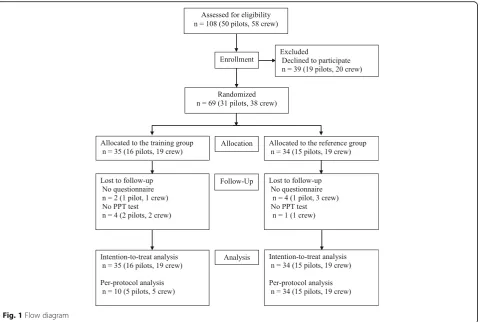
The study design was a parallel group, single blinded, ran-domized, controlled trial. The intervention period was 20-weeks with pre-intervention baseline measurements and post-intervention follow-up measurements. A detailed protocol paper has been published previously [13]. The trial was conducted within the RDAF from November 2013 to April 2014. All participants volunteered and gave their writ-ten informed consent before participation. The trial was ap-proved by the local Ethics Committee of Southern Denmark (S-20120121) and qualified for registration in ClinicalTrials.gov (NCT01926262).
Participants and randomization
comparability between the ETG and REF: 1) squadron (722 squadron or 724 squadron), 2) profession (pilot or crew-member), 3) age (< or≥40 years of age), and 4) flying ex-perience (< or≥2500 h). The random identification num-bers within each stratum were drawn from an opaque, tossed bag. Alternately, the first number in the first strata was allocated to either the ETG or REF depending on the flip of a coin. The first number in the second strata was al-located to the opposite group, compared to the last num-ber in the previous strata, and so forth. The randomization procedure was carried out by a blinded custodian (last author) using the random identification numbers assigned to the participants. Data analysts and statistician were blinded to the random group allocation of the participants.
Measurements
All methods have been previously described [13], and will therefore only be explained briefly. Anthropometric measurements included: height, seated height, weight and body mass index (BMI) (Composition Analyzer Tanita Corporation of America, USA).
Participants’ pressure-pain-threshold (PPT) was sured in the neck and shoulder muscles. PPT was mea-sured bilaterally for the trapezius muscle (TRA) (20% medially to half the distance between the lateral edge of
the acromion and seventh cervical vertebra) [16], the upper neck muscles (UNE) (2 cm laterally to the vertical line of the axis in level with the 4’th cervical vertebra) [17, 18], and the anterior tibialis muscle (TIA) (as the point of reference) [19]. A handheld electronic pressure algometer was used (Type II Algometer, Somedic Production AB, Sweden). The algometer was pistol-shaped with a pressure-sensitive strain gauge at the tip. The contact area had a diameter of 1 cm2. Compression pressure was ap-plied perpendicularly to the skin with a rate of 20 kPa/s. A digital display on the pressure algometer was used to keep the rate of pressure stable. Measurements were performed three times in a fixed order: 1) right TRA, 2) left TRA, 3) right UNE, 4) left UNE, and 5) right TIA. A rest period of approximately 1 min was given between measurements conducted on the same PPT point. Participants were given a hand held control switch and were instructed to imme-diately press the switch when the sensation of“pressure” changed to“pain”. When the switch was pushed the com-pression was stopped and the pressure was released [20]. A low level of pain sensitivity therefore equals a high PPT value, and a high level of pain sensitivity equals a low PPT value. The maximum applied pressure registered was re-corded before resetting the algometer. A maximal pressure of 1000 kPa was allowed for TRA and TIA and 700 kPa for the UNE. The algometer was calibrated before each test.
[image:3.595.60.541.87.409.2]Measurements were conducted by an experienced sports scientist.
Questionnaire
An online based questionnaire was applied to partici-pants pre- and post-intervention. The questionnaire was confidential using the assigned identification numbers. A modified version of the validated Nordic Musculoskel-etal Questionnaire [21] was used to assess the prevalence and intensity of musculoskeletal symptoms in the fol-lowing body regions: neck and shoulders, upper back, elbows, low back, wrists/hands, hips/thighs, knees, and ankles/feet according to: 1) the number of days with pain or complaints in (body region) the previous 12-months (possible answers: 0 days, 1 – 7 days, 8 – 30 days, 31 -90 days, > -90 days, or every day), 2) inability to perform daily working tasks due to complaints in (body region) the previous 3-months (possible answers: yes or no), 3) inten-sity of (body region) pain previous 3-months was assessed on a scale from 1-10 (10 = worst possible pain imaginable) and to this was added 0 = no pain, resulting overall in an 11 point numeric box scale, and 4) intensity of (body re-gion) pain previous 7-days depicted on the same box scale. All questions were accompanied by chart illustrations of the body region in focus. Furthermore, participants were inquired about the amount of total flying hours in fixed-wing aircraft, rotary-fixed-wing aircraft, and flying hours with NVG. Lastly, the questionnaire included a number of health and work related questions [13].
Participants randomized to the ETG received an add-itional questionnaire regarding: 1) their motivation to train, 2) expectations, 3) training adherence, and 4) ad-verse training effects. Training adherence was measured by inquiring: “You were instructed to train 3x20 min a week. How did you succeed?” Possible answers: “I trained regularly 2-3 times a week, I trained regularly 1-2 times a week, I trained irregularly, but at least 4 times a month (approximately once a week), I trained irregu-larly but at least 2-3 times a month, I trained some, but stopped training after a while, and I did not use the training offer”.
Exercise intervention
Participants in the ETG received 20-weeks of strength, endurance, and coordination training targeting the neck and shoulder muscles. Training was divided into training sessions of 3x20 min per week. The training programme was evidence based and designed by an interdisciplinary team of sports exercise training specialists, physiothera-pists, doctors and chiropractors. The training programme was composed of ten training exercises di-vided into three categories: 1) two warming up exercises, 2) six neck exercises, and 3) two shoulder exercises. All
exercises have been described previously [13] and training videos are available online [22].
Every training session was initiated with one or two warming up exercises recruiting the deep cervical muscle groups. Exercises included: cervical flexion from a supine position and cervical rotation from an erect position. The warming up exercises were performed using 3 sets of 15 repetitions. Intensity was increased as participants pro-gressed. These two exercises also aimed to warm up the neck before engaging in more strenuous training exer-cises. The warming up exercises were followed by training exercises for the larger neck muscles including: cervical extension, cervical flexion (straight forward and oblique angels), and lateral flexion. Finally, participants performed two exercises for the shoulder girdle including: shrugs and reverse flies. Neck and shoulder exercises were performed using elastic training bands for resistance (Thera-Band®, The Hygenic Corporation, USA). The training program was designed to be progressive using an undulating design with sets ranging between 2-4 and training intensity ran-ging between 12 –20 repetitions depending on week of training. The training equipment used was light weight to allow for easy transportation when participants traveled between Air Force Bases. Participants received a training bag including: a head harness (Neck Flex, Gonzo Com-panies, USA), six color-coded levels of resistance bands (red, green, blue, black, silver and gold), exercise handles, and a door anchor (Thera-Band®, The Hygenic Corpor-ation, USA), and a training manual that described all training exercises in detail. In addition, participants were given online access to a training homepage with supple-mentary training information and training videos for each exercise. All participants received a personal training diary that described when to perform the various training exer-cises. Training was to be performed within working hours or if preferred at leisure.
Training adherence
the training homepage. Thus, the training was not regularly supervised but was self-administered with the above support actions.
Statistical analysis
A pre-intervention power analysis was performed on the single primary outcome variable of self-reported intensity of neck pain previous 3-months [13]. Pain intensity was rated on an 11 point numeric box scale. The analysis showed that we would need to include 54 participants (27 experimental subjects and 27 control subjects) in this study. The analysis was based on the finding that a change of 1 measured on a 11 point numeric box scale is considered the minimum clinically significant difference regarding change in pain [23]. We also used results on pain intensity from a previous study among military pilots that found the response within this subject group to be normally distrib-uted with a standard deviation in neck pain intensity of 1.5 the previous 3-months [24]. With a power set at 0.8 and a probability of a type I error ofp< 0.05, we would be able to detect a true difference in mean response of neck pain between experimental and control subjects equal to ± 1.2 measured on an 11 point numeric box scale. Allowing for a 10% loss to follow-up, the total number of participants required was 64. The null-hypothesis (no difference between experimental and control subjects) was to be rejected if a between-group-difference for intensity of neck pain previous 3-months was significant (p< 0.05). The rela-tionship between intensity of neck and shoulder pain previ-ous 3-months, and pilots’and crew-members: age, height, sitting height, weight, BMI, flying hours in fixed-wing air-craft, flying hours in rotary-wing airair-craft, and flying hours with NVG, was analysed by multiple regression. Two statis-tical analyses were performed: 1) an intention-to-treat ana-lysis comparing participants in ETG and REF as originally allocated after randomization [25], and 2) a per-protocol analysis only including participants in ETG that adhered regularly to the exercise intervention. Regular training ad-herence was defined as training between 1–3 times a week during the 20-week intervention period (≥ 33.3% of the total amount of training sessions). For missing values last observation carried forward or backwards were imputed. If observations were missing at both baseline and follow-up, the population mean was imputed at baseline, and group mean (ETG or REF) at follow-up. Between-group-differences at baseline were analyzed using the Student’st -test. The same analysis was performed at follow-up, includ-ing an analysis on delta-values (calculated by subtractinclud-ing the pre- from post-intervention values). Within-group-changes were analyzed by a pairedt-test. The level of statis-tical significance wasp< 0.05. Results are presented as sam-ple means and standard deviations (mean ± SD) if not otherwise specified. Statistical analyses were performed in
Stata Statistics/Data Analysis version 13.0 (StataCorp LP, USA).
Results
Pre-intervention
Participant characteristics
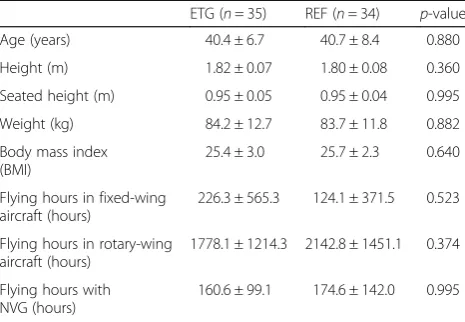
Overall mean (±SD) for all participants was for age: 40 years (40.6 ± 7.6 years), height: 1.81 m (1.81 ± 0.1 m), and weight: 84 kg (83.9 ± 12.2 kg). No significant pre-intervention differences pertaining to anthropometric values or flight experience were identified between the ETG and REF (Table 1).
Pain prevalence
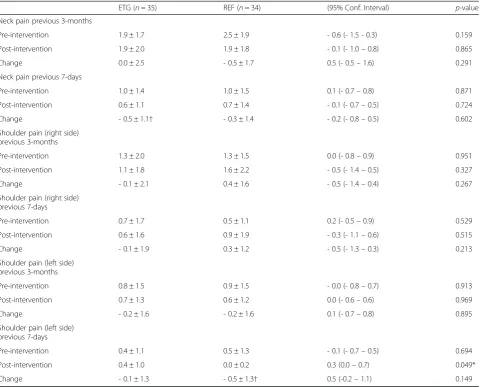
The 12-month prevalence of neck pain was 90.3% for helicopter pilots. Of these 54.8% had experienced 1-7 days with neck pain, 32.3% had experienced 8-30 pain days, and 3.2% had experienced > 90 days with neck pain. For crew-members the 12-month prevalence of neck pain was 81.6%. Of these, 44.7% had experienced 1-7 pain days, 29.0% had experienced 8-30 pain days, 2.6% had experienced > 90 pain days, and 5.3% had ex-perienced neck pain daily. The 12-month prevalence of shoulder pain (right/left side) was 54.8% / 32.3% for pilots, and 42.1% / 39.5% for crew. No significant pre-intervention differences were found between the ETG and REF group regarding pain intensity, neither in the neck nor the shoulder within the previous 3-months or 7-days (Table 2).
Pain intensity and sensitivity
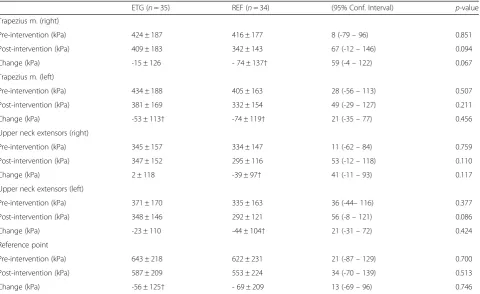
[image:5.595.305.538.553.714.2]Self-reported pre-intervention intensity of neck pain previ-ous 3-months for the whole group was: 2.2 ± 1.8. Pre-intervention pain sensitivity as assessed by PPT in TRA and UNE (mean of right and left) was: 429 ± 182 kPa and 358 ± 160 kPa in ETG, and 411 ± 166 kPa and 334 ± 151 kPa in REF. No significant between-group-differences were
Table 1Participants’characteristics
ETG (n= 35) REF (n= 34) p-value
Age (years) 40.4 ± 6.7 40.7 ± 8.4 0.880
Height (m) 1.82 ± 0.07 1.80 ± 0.08 0.360
Seated height (m) 0.95 ± 0.05 0.95 ± 0.04 0.995
Weight (kg) 84.2 ± 12.7 83.7 ± 11.8 0.882
Body mass index (BMI)
25.4 ± 3.0 25.7 ± 2.3 0.640
Flying hours in fixed-wing aircraft (hours)
226.3 ± 565.3 124.1 ± 371.5 0.523
Flying hours in rotary-wing aircraft (hours)
1778.1 ± 1214.3 2142.8 ± 1451.1 0.374
Flying hours with NVG (hours)
160.6 ± 99.1 174.6 ± 142.0 0.995
found regarding pain intensity or PPT measurements pre-intervention (Tables 2 and 3).
Associated pain factors
Among pilots, the intensity of left shoulder pain previous 3-months was significantly related to age (p= 0.040) and flying hours in a fixed wing aircraft (p= 0.005). Intensity of neck pain previous 3-months among crew-members was found significantly related to seated height (p= 0.007). No significant relation was found between pain intensity, height, weight, BMI, flying hours in a helicopter, or flying hours with NVG for neither pilots nor crew-members.
Post-intervention
Pain intensity
Regarding the primary outcome of intensity of neck pain previous 3-months, no significant between-group-difference or between-group-change, was found
[image:6.595.59.545.98.485.2]post-intervention (Table 2). Only, with regards to the secondary outcome, intensity of left shoulder pain previous 7-days, a between-group-difference was significant. Additionally, a significant within-group-change was found in ETG re-garding intensity of neck pain previous 7-days (from: 1.0 ± 1.4, to: 0.6 ± 1.1, change: - 0.5 ± 1.1 (p= 0.024)) (Table 2).
Pain sensitivity, PPT
Regarding the secondary outcome of PPT no signifi-cant between-group-differences or between group change were found post-intervention (Table 3). How-ever, significant within-group-changes were observed for the ETG regarding PPT in the left TRA (change: -53 ± 113 kPa, p= 0.009) and for the reference point (change: -56 ± 125 kPa, p= 0.012). For participants in REF a significant-within-group change was found for PPT in the TRA right (change: - 74 ± 137 kPa, p= Table 2Intention-to-treat analysis of neck and shoulder pain intensity the previous 3-months and 7-days
ETG (n= 35) REF (n= 34) (95% Conf. Interval) p-value
Neck pain previous 3-months
Pre-intervention 1.9 ± 1.7 2.5 ± 1.9 - 0.6 (- 1.5 - 0.3) 0.159
Post-intervention 1.9 ± 2.0 1.9 ± 1.8 - 0.1 (- 1.0–0.8) 0.865
Change 0.0 ± 2.5 - 0.5 ± 1.7 0.5 (- 0.5–1.6) 0.291
Neck pain previous 7-days
Pre-intervention 1.0 ± 1.4 1.0 ± 1.5 0.1 (- 0.7–0.8) 0.871
Post-intervention 0.6 ± 1.1 0.7 ± 1.4 - 0.1 (- 0.7–0.5) 0.724
Change - 0.5 ± 1.1† - 0.3 ± 1.4 - 0.2 (- 0.8–0.5) 0.602
Shoulder pain (right side) previous 3-months
Pre-intervention 1.3 ± 2.0 1.3 ± 1.5 0.0 (- 0.8–0.9) 0.951
Post-intervention 1.1 ± 1.8 1.6 ± 2.2 - 0.5 (- 1.4–0.5) 0.327
Change - 0.1 ± 2.1 0.4 ± 1.6 - 0.5 (- 1.4–0.4) 0.267
Shoulder pain (right side) previous 7-days
Pre-intervention 0.7 ± 1.7 0.5 ± 1.1 0.2 (- 0.5–0.9) 0.529
Post-intervention 0.6 ± 1.6 0.9 ± 1.9 - 0.3 (- 1.1–0.6) 0.515
Change - 0.1 ± 1.9 0.3 ± 1.2 - 0.5 (- 1.3–0.3) 0.213
Shoulder pain (left side) previous 3-months
Pre-intervention 0.8 ± 1.5 0.9 ± 1.5 - 0.0 (- 0.8–0.7) 0.913
Post-intervention 0.7 ± 1.3 0.6 ± 1.2 0.0 (- 0.6–0.6) 0.969
Change - 0.2 ± 1.6 - 0.2 ± 1.6 0.1 (- 0.7–0.8) 0.895
Shoulder pain (left side) previous 7-days
Pre-intervention 0.4 ± 1.1 0.5 ± 1.3 - 0.1 (- 0.7–0.5) 0.694
Post-intervention 0.4 ± 1.0 0.0 ± 0.2 0.3 (0.0–0.7) 0.049*
Change - 0.1 ± 1.3 - 0.5 ± 1.3† 0.5 (-0.2–1.1) 0.149
0.003), and left (change: -74 ± 119 kPa, p= 0.001), and for the UNE right (change: -39 ± 97 kPa, p= 0.024) and left (change: -44 ± 104 kPa, p= 0.045). Overall, REF increased pain sensitivity in more sites in the neck and shoulder than the ETG.
Training adherence
Twenty-five participants out of 35 (71.4%) within the ETG returned the post-intervention questionnaire re-garding training adherence. Of these, 10 participants (~30%) reported adhering to training regularly between 1-3 times a week throughout the intervention period (Fig. 2). The per-protocol-analysis including participants that adhered regularly to training (n= 10) demonstrated no additional significant between-group-differences re-garding the primary outcome of intensity of neck pain previous 3-months. Similarly, regarding the secondary outcome values of PPT and additional neck/shoulder pain intensity variables no significant differences were found. However, an additional within-group-change was significant in ETG regarding intensity of neck pain pre-vious 3-months (from: 2.2 ± 0.6, to: 1.3 ± 1.3, change: -0.9 ± 1.0 (p= 0.019)) (Fig. 3). Further, intensity of neck pain previous 7-days decreased significantly (from: 1.4 ± 0.8, to: 0.5 ± 0.8, change: - 0.9 ± 1.1 (p= 0.029)), in line with results from the intention-to-treat analysis (Table 2).
Discussion
[image:7.595.59.540.98.392.2]The main finding of this randomized controlled trial was that 20-weeks of strength, endurance, and coordination training, targeting the neck and shoulder muscles, pro-vided no significant effect on intensity of neck pain pre-vious 3-months, i.e. our primary hypothesis was rejected. However, of major interest was the finding of a high prevalence of neck pain among helicopter pilots and Table 3Intention-to-treat analysis for pressure-pain-threshold in neck and shoulder muscles
ETG (n= 35) REF (n= 34) (95% Conf. Interval) p-value
Trapezius m. (right)
Pre-intervention (kPa) 424 ± 187 416 ± 177 8 (-79–96) 0.851
Post-intervention (kPa) 409 ± 183 342 ± 143 67 (-12–146) 0.094
Change (kPa) -15 ± 126 - 74 ± 137† 59 (-4–122) 0.067
Trapezius m. (left)
Pre-intervention (kPa) 434 ± 188 405 ± 163 28 (-56–113) 0.507
Post-intervention (kPa) 381 ± 169 332 ± 154 49 (-29–127) 0.211
Change (kPa) -53 ± 113† -74 ± 119† 21 (-35–77) 0.456
Upper neck extensors (right)
Pre-intervention (kPa) 345 ± 157 334 ± 147 11 (-62–84) 0.759
Post-intervention (kPa) 347 ± 152 295 ± 116 53 (-12–118) 0.110
Change (kPa) 2 ± 118 -39 ± 97† 41 (-11–93) 0.117
Upper neck extensors (left)
Pre-intervention (kPa) 371 ± 170 335 ± 163 36 (-44–116) 0.377
Post-intervention (kPa) 348 ± 146 292 ± 121 56 (-8–121) 0.086
Change (kPa) -23 ± 110 -44 ± 104† 21 (-31–72) 0.424
Reference point
Pre-intervention (kPa) 643 ± 218 622 ± 231 21 (-87–129) 0.700
Post-intervention (kPa) 587 ± 209 553 ± 224 34 (-70–139) 0.513
Change (kPa) -56 ± 125† - 69 ± 209 13 (-69–96) 0.746
Values are presented as mean ± SD. Significant within-group-change is denoted by†. Exercise-training-group (ETG), Reference-group (REF)
0 2 4 6 8 10
1 2 3 4 5 6
st
na
pi
cit
ra
p
f
o
re
b
m
u
N
Training category Adherence to training
[image:7.595.305.538.519.673.2]crew-members. Furthermore, a significant secondary outcome regarding a within-group-effect of reduced pain intensity and sensitivity, particularly in ETG, was found.
Pain intensity
The primary outcome of intensity of neck pain previous 3-months was lower than expected compared with previous studies. Ang et al. previously reported the 3-months inten-sity of neck pain among helicopter pilots equal to 4.4 using the Borg Category-Ratio scale (CR 0-10 scale) [2]. The scale used by Ang et al. is equal to the one used in our study and results are therefore comparable. Intensity of pain was higher in the study by Ang et al. as compared to our results. Participants within our study constituted the majority of helicopter pilots and crew-members within the RDAF and are therefore considered representative in relation to other helicopter pilots and crew-members. In the study by Ang et al. only pilots who reported pain as“once or a few times over the previous 3-months” were included in the analysis [2]. In comparison, no pain threshold was used to identify pilots or crew-members in our study. This was a deliberate decision to assess if the exercise intervention would be use-ful in relation to pain prevention. Undoubtedly, this deci-sion has influence on the average intensity of pain among participants. Notably, a decrease in pain is less likely when a low baseline pain level is present due to the “diluting” effect of participants with no pain.
Pain sensitivity, PPT
Regarding the secondary outcome of PPT the exercise intervention provided no significant between-group-differences. However, a significant reduction in PPT was observed in REF in both TRA and UNE from baseline to follow-up. In comparison, PPT was only significantly re-duced in left TRA in ETG. It should be emphasized, that a
reduction in PPT is equal to an increase in pain sensitivity. Based on our results, the exercise intervention may there-fore have had some impact on pain sensitivity in the neck and shoulder muscles. The exercise intervention was planned during the winter period that includes many flight hours with NVG due to low light conditions. Based on previous studies, demonstrating the impact of head-worn mass by NVG, the winter months must be regarded as the most stressful to pilots and crew-members with respect to cervical load. The exercise intervention may therefore have provided some form of pain relief as pain sensitivity in the neck and shoulder muscles among participants in ETG did not undergo the same significant increase as ob-served in REF. This needs further investigation as no sig-nificant between-group-differences were present. To our knowledge, no previous studies have measured PPT in neck and shoulder muscles among helicopter pilots and crew. However, exercise has been shown to increase pressure-pain-threshold in neck muscles in response to short [26, 27] and longer training interventions [28]. Pres-sure pain threshold may be considered a“semi-objective” measurement of pain sensitivity because participants mark, in a blinded setting, the incidence of pain occur-rence, while increasing pressure is being applied, resulting in the reading of the actual numerical outcome of pressure when the threshold is met [29]. The participants may have underreported the sensation of pain because pain com-plaints may be regarded as a sign of weakness among mili-tary pilots [24]. This would certainly impact the study’s potential regarding additional increases in PPT.
Pain prevalence and duration
Neck pain was highly prevalent among participants with a 1-year prevalence amounting to 90.3% for pilots and 81.6% for crew-members, respectively. Our results correspond
0 0.5 1 1.5 2 2.5 3 3.5 4 4.5
Pain intensity
(0
-10)
Intensity of pain
Baseline Follow-up
*
*
Exercise-training-group Reference-group
[image:8.595.59.540.88.272.2]with those of other studies surveying the 1-year prevalence of neck pain among helicopter pilots and crew-members. Van den Oord et al. previously reported a 1-year prevalence equal to 43% for Dutch military helicopter pilots [30] and 62% for crew-members [5]. In comparison, Birger et al. re-ported a 1-year prevalence of 48% among British helicopter pilots [31]. Our prevalence rates are higher compared to these previous studies. However, discrepancies may be ex-plained by use of different pain definitions and pain cut points. Van den Oord et al. defined pain as“any pain, ache or discomfort”using four pain categories (never, occasional, regular, or continuous) [5, 30]. In the study by Birger et al, no distinctions were made between occasional, regular, or continuous neck pain [31]. In comparison, we also defined pain as“any pain” within our study but used six pain cat-egories (0 days, 1-7 days, 8-30 days, 31-90 days, >90 days, every day). The use of additional pain categories may attri-bute to the higher 1-year prevalence for any pain among pilots and crew within our study. Based on fairly homoge-neous neck pain definitions, the 1-year prevalence within the general adult population (17 - 70 years of age) has been reported to range between 17% - 75% with a mean of 37% [3]. The prevalence of neck pain among helicopter pilots and crew-members must therefore be regarded as high with potential impact on individual health and overall well-being [3] and interference with flying [2]. Neck-pain among heli-copter pilots and crew has previously been described as chronic [1]. Our data, however, do not support this defin-ition as the majority of pilots (87.1%) and crew-members (73.7%) in our study reported pain durations of between one and thirty days within the last year. In comparison, only 3.2% of pilots and 2.6% of crew-members reported more than 90 pain days. Adhering to the definition of “chronic pain”, the sensation of pain must be persistent with a dur-ation of three months or more a year [32]. Based on our findings, neck pain among this occupational group may be more appropriately described as“episodic neck pain”. Inter-estingly, pilots and crew-members have been found reluc-tant to report pain due to fear of flying restrictions [33] and jeopardize future employment opportunities or pension en-titlements [2]. Lastly, pilots and crew fulfilling the highest demands of health in the RDAF will report a lower intensity of pain, as opposed to studies conducted on patient groups seeking medical treatment for pain symptoms [34]. Future studies may obtain valuable knowledge by considering measuring the influence of neck pain, in comparison to pain intensity itself, within this specific occupational group.
Training adherence
Adherence to training is a challenge and affects the results of an intervention. The lack of a clear intervention effect on pain intensity and PPT may therefore have been influ-enced by adherence, as only ~ 1/3 of participants in ETG trained regularly. Previously, self-reported adherence to
training and actual training participation has been found reliable [35, 36]. However, adherence was analyzed accord-ing to 71.4% of questionnaire respondents, leavaccord-ing some uncertainty regarding transferability to the remaining 28.6% in ETG. In a previously conducted randomized con-trolled trial aiming to reduce neck pain among Swedish helicopter pilots, 77% of participants adhered to the pre-scribed daily regime during a 6-week intervention period [37]. In addition, in a former 12-week exercise study on helicopter aircrew within the Canadian forces, aiming to improve neck muscle function, regular training adherence was achieved in 52.8% of participants randomized to neck endurance training, and in 76.1% of participants random-ized to neck coordination training [38]. Finally, a recently conducted exercise intervention, aiming to reduce neck and shoulder pain among Danish fighter pilots, 58% of participants adhered to training 1-3 times a week through-out a 24-week intervention period [24]. When compared to our results (28.6%), adherence within our study must be regarded as low. Exercise training must be performed regularly to prove beneficial and the low level of adher-ence within our study may not be sufficient to conclude on the full effectiveness of the exercise intervention itself. Previously, the importance of supervised training to en-hance compliance among aircrew has been underlined [39]. However, uncertainty still exists regarding the benefit of supervised training in general. As demonstrated by Gram et al., 20-weeks of physical exercise training at the workplace (one hour per week) may be highly effective in reducing neck pain, independent of the level of supervi-sion [40]. Due to logistical reasons, supervisupervi-sion was not optional within our study. Pilots and crew have very dy-namic work schedules and work on different air bases placed throughout the country, and we therefore designed the intervention to be self-administered. Future studies may have to put effort on how pilots and crew may be followed up frequently, if adherence to training is to be in-creased, e.g. by the use of information and communication technologies.
Limitations
neck pain. However, including subjects without pain at baseline will impact on the possible overall level of pain within groups, and also the potential to reduce pain. It may be argued that a measurement of flight-related pain would have proven better than a questionnaire assessing intensity of pain previous 3-months and 7-days. Flight related neck pain has been found to develop during and after sorties, and typically last for a day or two. There-fore, it would have been interesting to measure intensity of pain the day after each sortie within the intervention period in order to provide a better understanding of the pain patterns in relation to type of sortie. However, this was not performed in the present study.
Conclusions
The exercise intervention demonstrated some preventive properties as some neck pain intensity and sensitivity improved within ETG but not within REF. However, no significant between-group-differences were present. The lack of a clear intervention effect on pain intensity may be due to low adherence as only ~ 1/3 of subjects in the ETG engaged in regular training, which may be due to the self-administration of the training regime.
Abbreviations
BMI:Body mass index; ETG: Exercise-training-group; NVG: Night vision goggles; PPT: Pressure-pain-threshold; RDAF: Royal Danish Air Force; REF: Reference-group; SD: Standard deviation; TIA: Anterior tibialis muscle; TRA: Trapezius muscle; UNE: Upper neck muscles
Acknowledgements
The authors would like to thank the Royal Danish Air Force for financial funding. We would also like to express our gratitude to Phil Page, Global Director of Clinical Education and Research at the Hygenic Corporation, for the donation of free Thera-Band products for the present study.
Funding
This study was financially funded by the Royal Danish Air Force and the University of Southern Denmark.
Availability of data and materials
The datasets generated and analysed during the current study are not publicly available but may be accessible from the authors upon reasonable request and permission from The Royal Danish Airforce.
Authors’contributions
The authors MM, GS, KS, BL, and BRN have made substantial contribution to the conception and design. MM performed the experimental testing and implementation of the intervention as well as data acquisition. The authors MM, GS, and KS were involved in data analysis and additionally BL and BRN were involved in interpretation, writing, and critically revising the paper for important intellectual content. All authors have given final approval of the version to be published and agreed to be accountable for all aspects of the work.
Competing interests
The authors declare that they have no competing interests.
Consent for publication Not applicable.
Ethics approval and consent to participate
The trial was approved by the local Ethics Committee of Southern Denmark (S-20120121) and qualified for registration in ClinicalTrials.gov (NCT01926262).
Publisher’s Note
Springer Nature remains neutral with regard to jurisdictional claims in published maps and institutional affiliations.
Author details
1Department of Sports Science and Clinical Biomechanics, University of Southern Denmark, Odense, Denmark.2Department of Anesthesia and Intensive Care Medicine, Odense University Hospital, Odense, Denmark. 3Royal Danish Air Force, Air Force Staff, Defence Command Denmark, Karup, Denmark.
Received: 28 December 2016 Accepted: 29 March 2017
References
1. Salmon DM, Harrison MF, Neary JP. Neck pain in military helicopter aircrew and the role of exercise therapy. Aviat Space Environ Med. 2011;82(10):978–87. 2. Ang B, Harms-Ringdahl K. Neck pain and related disability in helicopter pilots: a
survey of prevalence and risk factors. Aviat Space Environ Med. 2006;77(7):713–9. 3. Fejer R, Kyvik KO, Hartvigsen J. The prevalence of neck pain in the world
population: a systematic critical review of the literature. Eur Spine J. 2006; 15(6):834–48.
4. Adam J. Results of NVG-induced neck strain questionnaire study in CH-146 Griffon aircrew. In: Defence R&D Canada. Toronto: DRDC Toronto Technical Report No. 2004-153; 2004.
5. Van den Oord MHA, Sluiter JK, Frings-Dresen MHW. Differences in physical workload between military helicopter pilots and cabin crew. Int Arch Occup Environ Health. 2014;87(4):381–6.
6. Harrison MF, Coffey B, Albert WJ, Fischer SL. Night vision goggle-induced neck pain in military helicopter aircrew: a literature review. Aviat Space Environ Med. 2015;86(1):46–55.
7. Thuresson M, Ang B, Linder J, Harms-Ringdahl K. Neck muscle activity in helicopter pilots: effect of position and helmet-mounted equipment. Aviat Space Environ Med. 2003;74(5):527–32.
8. Thuresson M, Ang B, Linder J, Harms-Ringdahl K. Mechanical load and EMG activity in the neck induced by different head-worn equipment and neck postures. Int J Ind Ergon. 2005;35(1):13–8.
9. Murray M, Lange B, Chreiteh SS, Olsen HB, Nørnberg BR, Boyle E, Sogaard K, Sjogaard G. Neck and shoulder muscle activity and posture among helicopter pilots and crew-members during military helicopter flight. J Electromyogr Kinesiol. 2016;27(2):10–7.
10. Zebis MK, Andersen LL, Pedersen MT, Mortensen P, Andersen CH, Pedersen MM, Boysen M, Roessler KK, Hannerz H, Mortensen OS, et al. Implementation of neck/shoulder exercises for pain relief among industrial workers: a randomized controlled trial. BMC Musculoskelet Disord. 2011;12:205. 11. Andersen LL, Andersen CH, Zebis MK, Nielsen PK, Sogaard K, Sjogaard G.
Effect of physical training on function of chronically painful muscles: a randomized controlled trial. J Appl Physiol. 2008;105(6):1796–801. 12. Blangsted AK, Sogaard K, Hansen EA, Hannerz H, Sjogaard G. One-year
randomized controlled trial with different physical-activity programs to reduce musculoskeletal symptoms in the neck and shoulders among office workers. Scand J Work Environ Health. 2008;34(1):55–65.
13. Murray M, Lange B, Nornberg BR, Sogaard K, Sjogaard G. Specific exercise training for reducing neck and shoulder pain among military helicopter pilots and crew members: a randomized controlled trial protocol. BMC Musculoskelet Disord. 2015;16:198.
14. Rasotto C, Bergamin M, Simonetti A, Maso S, Bartolucci GB, Ermolao A, Zaccaria M. Tailored exercise program reduces symptoms of upper limb work-related musculoskeletal disorders in a group of metalworkers: a randomized controlled trial. Man Ther. 2015;20(1):56–62.
15. Sjogaard G, Justesen JB, Murray M, Dalager T, Sogaard K. A conceptual model for worksite intelligent physical exercise training - IPET - intervention for decreasing life style health risk indicators among employees: a randomized controlled trial. BMC Public Health. 2014;14:652.
16. Holtermann A, Roeleveld K, Mork PJ, Gronlund C, Karlsson JS, Andersen LL, Olsen HB, Zebis MK, Sjogaard G, Sogaard K. Selective activation of neuromuscular compartments within the human trapezius muscle. J Electromyogr Kinesiol. 2009;19(5):896–902.
18. Gosselin G, Rassoulian H, Brown I. Effects of neck extensor muscles fatigue on balance. Clin Biomech. 2004;19(5):473–9.
19. Rosendal L, Larsson B, Kristiansen J, Peolsson M, Sogaard K, Kjaer M, Sorensen J, Gerdle B. Increase in muscle nociceptive substances and anaerobic metabolism in patients with trapezius myalgia: microdialysis in rest and during exercise. Pain. 2004;112(3):324–34.
20. Persson AL, Hansson GA, Kalliomaki J, Moritz U, Sjolund BH. Pressure pain thresholds and electromyographically defined muscular fatigue induced by a muscular endurance test in normal women. Clin J Pain. 2000;16(2):155–63. 21. Kuorinka I, Jonsson B, Kilbom A, Vinterberg H, Bieringsorensen F, Andersson
G, Jorgensen K. Standardized nordic questionnaires for the analysis of musculoskeletal symptoms. Appl Ergon. 1987;18(3):233–7.
22. Specific exercise training for helicopter pilots and crew-members [www.sdu. dk/helicopter]. Accessed 16 Aug 2016.
23. Kelly AM. Does the clinically significant difference in visual analog scale pain scores vary with gender, age, or cause of pain? Acad Emerg Med. 1998;5(11): 1086–90.
24. Lange B, Toft P, Myburgh C, Sjogaard G. Effect of targeted strength, endurance, and coordination exercise on neck and shoulder pain among fighter pilots a randomized-controlled trial. Clin J Pain. 2013;29(1):50–9.
25. Hollis S, Campbell F. What is meant by intention to treat analysis? Survey of published randomised controlled trials. Br Med J. 1999;319(7211):670. 26. Nielsen PK, Andersen LL, Olsen HB, Rosendal L, Sjogaard G, Sogaard K. Effect
of physical training on pain sensitivity and trapezius muscle morphology. Muscle Nerve. 2010;41(6):836–44.
27. Andersen LL, Andersen CH, Sundstrup E, Jakobsen MD, Mortensen OS, Zebis MK. Central adaptation of pain perception in response to rehabilitation of musculoskeletal pain: randomized controlled trial. Pain Physician. 2012;15(5):385–94.
28. Ylinen J, Takala EP, Kautiainen H, Nykanen M, Hakkinen A, Pohjolainen T, Karppi SL, Airaksinen O. Effect of long-term neck muscle training on pressure pain threshold: a randomized controlled trial. Eur J Pain. 2005; 9(6):673–81.
29. Andersen CH, Andersen LL, Zebis MK, Sjogaard G. Effect of scapular function training on chronic pain in the neck/shoulder region: a randomized controlled trial. J Occup Rehabil. 2014;24(2):316–24.
30. Van den Oord MHA, De Loose V, Meeuwsen T, Sluiter JK, Frings-Dresen MHW. Neck pain in military helicopter pilots: prevalence and associated factors. Milit Med. 2010;175(1):55–60.
31. Bridger RS, Groom MR, Jones H, Pethybridge RJ, Pullinger N. Task and postural factors are related to back pain in helicopter pilots. Aviat Space Environ Med. 2002;73(8):805–11.
32. Misailidou V, Malliou P, Beneka A, Karagiannidis A, Godolias G. Assessment of patients with neck pain: a review of definitions, selection criteria, and measurement tools. J Chiropr Med. 2010;9(2):49–59.
33. Harrison MF, Neary JP, Albert WJ, Veillette DW, McKenzie NP, Croll JC. Physiological effects of night vision goggle counterweights on neck musculature of military helicopter pilots. Milit Med. 2007;172(8):864–70. 34. Ylinen J. Physical exercises and functional rehabilitation for the
management of chronic neck pain. Eura Medicophys. 2007;43(1):119–32. 35. Andersen CH, Andersen LL, Pedersen MT, Mortensen P, Karstad K,
Mortensen OS, Zebis MK, Sjogaard G. Dose-response of strengthening exercise for treatment of severe neck pain in women. J Strength Cond Res. 2013;27(12):3322–8.
36. Andersen LL, Jorgensen MB, Blangsted AK, Pedersen MT, Hansen EA, Sjogaard G. A randomized controlled intervention trial to relieve and prevent neck/ shoulder pain. Med Sci Sports Exerc. 2008;40(6):983–90.
37. Ang BO, Monnier A, Harms-Ringdahl K. Neck/shoulder exercise for neck pain in air force helicopter pilots: a randomized controlled trial. Spine. 2009; 34(16):544–51.
38. Salmon DM, Harrison MF, Sharpe D, Candow D, Albert WJ, Neary JP. Exercise therapy for improved neck muscle function in helicopter aircrew. Aviat Space Environ Med. 2013;84(10):1046–54.
39. Alricsson M, Harms-Ringdahl K, Larsson B, Linder J, Werner S. Neck muscle strength and endurance in fighter pilots: effects of a supervised training program. Aviat Space Environ Med. 2004;75(1):23–8.
40. Gram B, Andersen C, Zebis MK, Bredahl T, Pedersen MT, Mortensen OS, Jensen RH, Andersen LL, Sjogaard G. Effect of training supervision on effectiveness of strength training for reducing neck/shoulder pain and headache in office workers: cluster randomized controlled trial. Biomed Res Int. 2014;2014:9.
• We accept pre-submission inquiries
• Our selector tool helps you to find the most relevant journal
• We provide round the clock customer support
• Convenient online submission
• Thorough peer review
• Inclusion in PubMed and all major indexing services
• Maximum visibility for your research
Submit your manuscript at www.biomedcentral.com/submit