RESEARCH ARTICLE
Effects of learning to play stringed instruments in adulthood on
frequency discrimination by pitch pattern sequence test
Leyla Jalilvand Karimi1, Mahboubeh Rahimi1*, Alireza Akbarzadeh Baghban2
1- Department of Audiology, School of Rehabilitation, Shahid Beheshti University of Medical Sciences, Tehran, Iran 2
- Department of Basic Sciences, School of Rehabilitation, Shahid Beheshti University of Medical Sciences, Tehran, Iran
Received: 5 Feb 2018, Revised: 14 Mar 2018, Accepted: 20 Mar 2018, Published: 15 Jul 2018
Abstract
Background and Aim: Frequency discrimina-tion is an important skill in central auditory processing which plays a critical role in proper reading, writing, and speech perception. Music training is among the ways that improve this skill. Most of the reviewed literature is based on the impact of learning music on the early stages of childhood. Therefore, if the tests used in the assessment of central auditory system are pro-ved to be effective in music training in adult-hood, they could be recommended as an approp-riate option for adult central auditory processing disorder rehabilitation. This study aimed to inv-estigate the effects of learning to play stringed instruments in adulthood on frequency discrimi-nation by pitch pattern sequence test.
Methods: This cross-sectional and non-inter-ventional study was performed on 46 normal hearing subjects aged 20-45 years, 28 non-musicians and 18 non-musicians who were trained to play music as an adult. They were compared by PPST. The results were analyzed by 2-way ana-lysis of variance.
Results: There was a significant difference bet-ween the average scores of the two groups, the non-musicians and the musicians, for both ears
(p<0.001). On the other hand, there was no sig-nificant difference between the two test results in both groups gender wise (p>0.05).
Conclusion: More correct answers of musicians indicated their better frequency discrimination compared to non-musicians, which could be a reason for improvement in the performance of the central auditory system caused by music training even in the verge of adulthood.
Keywords: Central auditory processing; music training; frequency discrimination; pitch pattern sequence test; frequency pattern test
Citation: Jalilvand Karimi L, Rahimi M, Akbarzade Baghban A. Effects of learning to play stringed instruments in adulthood on frequency discrimination by pitch pattern sequence test. Aud Vestib Res. 2018;27(3):157-63.
Introduction
The ability of the central auditory system to use auditory information is called central auditory processing [1]. Central auditory processing dis-order (CAPD) is a deficit in auditory informa-tion processing which is not secondary to lingu-istic, cognitive or other higher-order involve-ments [2]. This disorder can lead to difficulties in different auditory behaviors such as temporal perception, speech pitch processing, lateraliza-tion and localizalateraliza-tion problems, as well as spee-ch perception difficulty in noise [3]. Based on extensive studies, CAPD is a quite prevalent disorder among all ages and can lead to gradual * Corresponding author: Department of Audiology,
depression, stress, and isolation in children and adults [1]. Recent studies show that adults may suffer from CAPD in spite of normal or near normal peripheral hearing sensitivity [4,5]. Currently, there are several rehabilitation met-hods that each targets a specific central deficit in CAPD [6]. One of the approaches for improving auditory skills and decreasing CAPD adverse effects is music training [7]. Recent studies sug-gest that continuous music training can improve brain capability for acoustic judgment and its ability for auditory information perception [6]. For example, Slater et al. study on elementary school children showed that their speech in noi-se perception improved significantly after music training [8].
Music training effects on neural processing are related to two factors: the starting age of music training and the duration of music training [7]. In some studies, the different critical periods have been suggested for music training to be effective on the central auditory system [9-11]. Watanabe et al. studied two similar groups of musicians. They only were different in starting age of musical training (before or after 7 years old). They showed that earlier age of training has more effects on neural integrity and timing [10]. Tierney et al. studied 14 years old children in Chicago and showed that music-related chan-ges start two years after start of the music trai-ning. Therefore starting music training even at the final years of high school can result in neu-ral changes [12]. Kraus and Strait suggested that one to three years of music training (two years on average) is effective for improving speech perception in noise in both children and adults [13]. In most research studies, subjects who have three conditions are called musicians: rec-eiving music training sessions for at least twice a week, each session lasts for at least 20 min-utes, and their trainings start since childhood. However, subjects with even less music training might probably show auditory processing imp-rovements [14].
As it was mentioned, central auditory proce-ssing includes different skills that help recogni-tion and perceprecogni-tion of vowels, consonants, syll-ables, phrases, supra-segmental characteristics
of speech and melodies [6,15-17]. One of these skills is pitch perception that is essential for identification and perception of speakers’ mess-age and emotional content of speech [18]. Pati-ents with the pitch perception problem have difficulty in speech prosody perception and often have trouble in discriminating questions (rising pitch) from declarative sentences (falling pitch) and this can lead to reading, spelling and speech understanding difficulties [19]. It seems that music training can improve pitch perception [7,20]. Wong et al. studied musicians and sho-wed that musicians with at least 6 years of constant music training before 12 years old had better pitch perception function in auditory brainstem response [21]. In a study conducted by Meyer et al. on 7.5-12 years old children (one group with violin training and the other without any musical experience), children with music training had shorter MMN (mismatch negativity) latency than children without any musical experience [22]. For evaluating pitch processing, several tests are available which one of them is pitch pattern sequence test (PPST) [23].
As most of the studies are focused on music training in childhood and evaluating its effects in adulthood, there is little information on the of music training in adults for improving central auditory processing skills. If central auditory processing tests show positive effects, then mus-ic training can be an option for CAPD rehabili-tation in adults. The present study aimed at det-ermining the effects of learning to play stringed instruments on frequency discrimination in adu-lts by PPST.
Methods
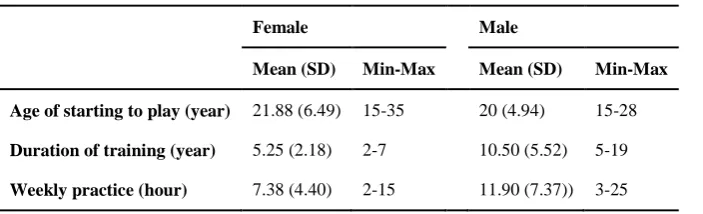
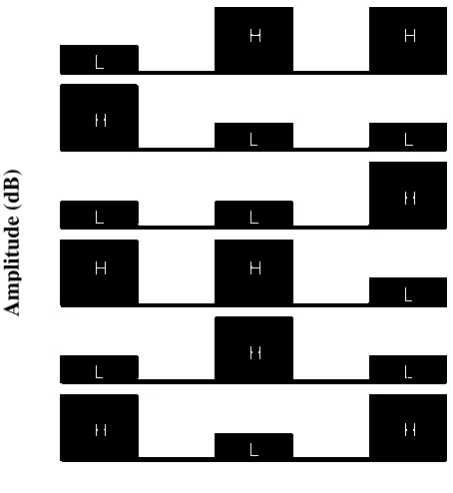
music training institutes. Non-musicians consis-ted of 28 participants (14 females, 14 males), aged 22-36 years, without music training. Musi-cian group comprised 18 subjects (8 females, 10 males), aged 21-44 years, with at least 2 years (5.03±8.15 years) of music training with strin-ged instruments. They had music training for at least twice a week and each session lasted 30 minutes (2-25 hours per week). Their starting age of training was 15 years or higher (20.53± 5.58 years old) and they were under music training at the time of the study (Table 1). Based on Tierney et al. who considered subjects with the mean age of 14.7 years old as adults [12], in the present study, music training in subjects aged ≥15 years was considered as adulthood training. After obtaining informed consent and collecting preliminary information by a ques-tionnaire, otoscopy, tympanometry, and audio-metry exams were performed for all cases. Inc-lusion criteria were as follows: normal otos-copy, type An tympanogram (SC=0.28-1.8; middle ear pressure= ±50 daPa) [24] with the presence of ipsilateral and contralateral auditory reflex within frequencies of 500-2000 Hz at 80-100 dBHL [25], auditory thresholds ≤15 dBHL at octave frequencies of 250-8000 Hz [26] and speech recognition score of ≥92% [27]. PPST (Auditec Inc. version) was performed in the sound treating room by using Astera two-channel audiometer (GN Otometrics, Denmark) with TDH-39 headphone. This test was per-formed monaural at 50 dBSL (re: 1000 Hz threshold). This test is applicable for the sub-jects older than 8 years [23] and has six patt-erns, each consisted of three-tone combination including low tones (L) of 880 Hz and high
tones (H) of 1122 Hz [28]. In Auditec version, the high tone is 1430 Hz, so it differs from original Musiek version [29]. Combination of these two tones makes up six different patterns, including LLH, LHL, LHH, HLH, HLL, and HHL (Fig. 1) [23]. The duration of tones is 150 ms with rise/fall time of 10 ms. the time interval between tones and patterns are 200 ms and 7 second, respectively [23]. Responding task was taught to the subjects by visual and verbal instructions and they were asked to repeat back each item in the correct order. If they repeat an item in the pattern incorrectly or repeat it in the reverse manner, it is considered wrong recog-nition [28]. If the examinee could recognize the first 30 items correctly, the test would be stopped. However, if the subject had even one incorrect or reverse response in the first 30 items, the remaining 30 items were presented as well. Test score was calculated from correct recognition responses for each ear (number of correct responses×1.66). During the test, adequ-ate resting times were provided to avoid subje-cts’ fatigue. Tests lasted for about one hour for each subject. All subjects were volunteers and an informed consent was obtained from them. To evaluate the main effect and interaction amo-ng variables, 2-way ANOVA was used. Type I error was set at α=0.05. The obtained data were analyzed by SPSS 24.
Results
This study was conducted on 28 non-musicians and 18 musicians with normal hearing. The sample size was calculated based on a pilot study on 5 subjects. The sample size for non-musicians was higher than non-musicians, as the Table 1. The musical background of the musician group
Female Male
Mean (SD) Min-Max Mean (SD) Min-Max
Age of starting to play (year) 21.88 (6.49) 15-35 20 (4.94) 15-28
Duration of training (year) 5.25 (2.18) 2-7 10.50 (5.52) 5-19
standard deviation was higher in them in the pilot study. Table 2 shows the results of PPST in musicians (case) and non-musicians (control) and for both sexes and ears. There was a sig-nificant PPST score difference between two groups in both ears (p<0.001). Although the mean score of males was higher than females, there was not any statistically significant diff-erence between the percentages of correct res-ponses between two sexes (p>0.05).
Discussion
This study aimed at evaluating music training effects with stringed instruments in adulthood on frequency discrimination by PPST. As it was mentioned earlier, pitch perception is one of the central auditory abilities that help rec-ognition and perception of music melody, supra-segmental characteristics of speech and speech perception [6]. Therefore it is a vital skill for language processing and perception in sub-cortical level, and the pitch is one the most important linguistic components that carries information [30].
In the present study, non-musicians were com-pared with musicians (starting age of training at 15 years old and higher with a mean age of 20 years old) to study the effects of late music training on frequency discrimination in adult-hood. The results showed that PPST score in both ears had a significant difference between two groups (p<0.001). The performance of musicians was significantly better that non-musicians. This is indicative of positive effects of music training on frequency discrimination. Musicians had an average of 8 years music training. Other studies have shown that this training has positive effects on children and adults [12,13]. They have shown that regardless of onset of music training, 8 sessions of 30-minute music training can improve pitch per-ception [31]. On the other hand, during develop-ment, synaptic density increases at early child-hood and starts to decrease at adolescence. Diff-erent mechanisms can affect this developmental
Am
pl
it
ude
(
dB)
Time (ms)
Fig.1. The six frequency (pitch) patterns with low tone (L) of 880 Hz and high tone (H) of
1122 Hz[29].
Table 2. Mean standard deviation correct response of pitch pattern test in musician and non-musician groups
Mean (SD) correct response
Group Ear Mean (SD) correct response Female Male
Musician Right 97.72 (3.57) 96.38 (4.65) 98.80 (2.09)
Left 97.33 (3.91) 95.75 (5.03) 98.60 (2.27)
Non-Musician Right 77.43 (14.17) 76.57 (12.16) 77.07 (12.76)
trend [12]. Music training can increase grey matter volume in the brain and synaptic density in the auditory system and leads to better lear-ning and auditory performance, especially pitch [12,32]. Therefore the relation between two gro-ups seems logical. Based on the present study there is a possibility that music training can cha-nge synaptic density [33].
Music training and its effects on auditory proce-ssing have been the focus of many studies in recent years. The present study results are in agreement with other studies in different age groups. Chen et al. showed that auditory per-formance of children with the cochlear implant after music training got significantly higher than cochlear implanted children without music training [34]. In studies of Onada et al. and Nascimento et al., the subjects with music trai-ning had better results in PPST than subjects without music training [35,36]. PPST norm in the study conducted by Musiek was 75% [37] and 76% [38]. Although Musiek method was different from the present study, the mean sco-res were similar to non-musicians (77.43% in the right ear and 78.5% in the left ear) in the present study and were significantly different from musicians (97.72% in the right ear and 97.33% in the left ear).
In similar studies, other methods were used for evaluating pitch perception in musicians and these studies have shown that music training can make a significant difference between two gro-ups [39-41]. It is worth mentioning that in pre-vious studies the starting age of music training was before 15 years.
In the present study, females score was lower than males but in neither of the groups, there was a significant PPST score difference bet-ween two sexes which is in agreement with Musiek, Onada et al. and Majak et al. studies [23,35,42]. The reason for the difference in musicians can be attributed to the different start-ing age of music trainstart-ing. There are some stu-dies that support this result [38,43]. Chen et al. suggested that there is no significant sex diff-erence in PPST between two sexes but males have a higher score [34]. In their study, it was assumed that the reason for this difference
might be females’ need for longer inter-stimulus interval for pattern recognition [43]. In another study, it was suggested that males have more dominant right hemisphere than females so they have better pattern recognition. High level of testosterone in males can stimulate right hemi-sphere development and lag left hemihemi-sphere development [44]. The results of the present study are in agreement with Brazilian studies in regards to non-musicians’ score, music training effects, and sex [38].
In the present study, there was a limited access to musicians. Professional musicians and music teachers, most of the time had started their trai-ning from childhood and many others who started training at adulthood, had left the trai-ning because of their busy lives. In addition, some participants left the study because of time-consuming tests and fatigue.
Conclusion
The results of the present study showed that pitch perception is better in musicians than non-musicians even in subjects who started their training in adulthood. This indicates that music training for improving the auditory processing, even in adulthood, can improve frequency dis-crimination. Therefore it seems plausible that we use music training in rehabilitation of adults with central auditory processing disorder (CAPD) and dyslexia. In addition, music trai-ning is linked to expression of feeling and can be a motivation for patients to attend the rehabi-litation program.
Acknowledgements
The present paper is extracted from M. Rahimi’s MSc. dissertation and submitted in Shahid Beheshti University of Medical Scien-ces.
Conflict of interest
The authors declare that they have no conflict of interest.
REFERENCES
assessment, management, and treatment. 2nd ed. San Diego: Plural Publishing; 2013. p. 59-90.
2. American Speech-Language-Hearing Association. Cent-ral auditory processing: current status of research and implications for clinical practice [Technical Report]. 1996. Available from www.asha.org/policy.
3. Lucker JR. The history of auditory processing disorders in children. In: Geffner D, Ross-Swain D, editors. Audi-tory processing disorders: assessment, management, and treatment. 2nd ed. San Diego: Plural Publishing; 2013. p. 33-58.
4. Grose JH, Mamo SK. Processing of temporal fine struc-ture as a function of age. Ear Hear. 2010;31(6):755-60. doi: 10.1097/AUD.0b013e3181e627e7
5. Helfer KS, Vargo M. Speech recognition and temporal processing in middle-aged women. J Am Acad Audiol. 2009;20(4):264-71. doi: 10.3766/jaaa.20.4.6
6. Berlin CI. Foreword. In: Geffner D, Ross-Swain D, editors. Auditory processing disorders: assessment, man-agement, and treatment. 2nd ed. San Diego: Plural Pub-lishing; 2013. p. xi-ix.
7. Kraus N, Chandrasekaran B. Music training for the development of auditory skills. Nat Rev Neurosci. 2010;11(8):599-605. doi: 10.1038/nrn2882
8. Slater J, Skoe E, Strait DL, O'Connell S, Thompson E, Kraus N. Music training improves speech-in-noise per-ception: Longitudinal evidence from a community-based music program. Behav Brain Res. 2015;291:244-52. doi: 10.1016/j.bbr.2015.05.026
9. Levitin DJ, Zatorre RJ. On the Nature of early music training and absolute pitch: a reply to brown, sachs, cammuso, and folstein. Music Percept. 2003;21(1):105-10. doi: 10.1525/mp.2003.21.1.105
10. Watanabe D, Savion-Lemieux T, Penhune VB. The effect of early musical training on adult motor per-formance: evidence for a sensitive period in motor learning. Exp Brain Res. 2007;176(2):332-40. doi: 10.1007/s00221-006-0619-z
11. Trainor LJ, Shahin A, Roberts LE. Effects of musical training on the auditory cortex in children. Ann N Y Acad Sci. 2003;999:506-13.
12. Tierney AT, Krizman J, Kraus N. Music training alters the course of adolescent auditory development. Proc Natl Acad Sci U S A. 2015;112(32):10062-7. doi: 10.1073/pnas.1505114112
13. Kraus N, Strait DL. Emergence of biological markers of musicianship with school-based music instruction. Ann N Y Acad Sci. 2015;1337:163-9. doi: 10.1111/nyas.12631
14. Kraus N, White-Schwoch T. Music training: lifelong investment to protect the brain from aging and hearing loss. Acoust Aust. 2014;42(2):117-23.
15. Banai K, Kraus N. Neurobiology of (central) auditory processing disorder and language-based learning dis-ability. In: Musiek FE, Chermak GD, editors. Handbook of (central) auditory processing disorders: volume 1: auditory neuroscience and diagnosis. 1st ed. San Diego: Plural Publishing Inc; 2006. p. 89-116.
16. Stuart A. Development of auditory temporal resolution in school-age children revealed by word recognition in continuous and interrupted noise. Ear Hear. 2005;26(1): 78-88.
17. Rawool VW. Temporal processing in the auditory system. In: Geffner D, Ross-Swain D, editors. Auditory
processing disorders: assessment, management, and treatment. 2nd ed. San Diego: Plural Publishing; 2013. p. 227-50.
18. Musacchia G, Sams M, Skoe E, Kraus N. Musicians have enhanced subcortical auditory and audiovisual pro-cessing of speech and music. Proc Natl Acad Sci U S A. 2007;104(40):15894-8. doi: 10.1073/pnas.0701498104 19. Tillery KL. Central auditory processing evaluation: a
test battery approach. In: Katz J, Chasin M, English K, Hood LJ, Tillery KL, editors. Handbook of clinical audiology. 7th ed. New York: Wolters Kluwer Health. 2014. p. 545-60.
20. Patel AD. Why would musical training benefit the neu-ral encoding of speech? The OPERA hypothesis. Front Psychol. 2011;2:142. doi: 10.3389/fpsyg.2011.00142 21. Wong PC, Skoe E, Russo NM, Dees T, Kraus N.
Musical experience shapes human brainstem encoding of linguistic pitch patterns. Nat Neurosci. 2007;10(4): 420-2. doi: 10.1038/nn1872
22. Meyer M, Elmer S, Ringli M, Oechslin MS, Baumann S, Jancke L. Long-term exposure to music enhances the sensitivity of the auditory system in children. Eur J Neurosci. 2011;34(5):755-65. doi: 10.1111/j.1460-9568.2011.07795.x
23. Musiek FE. Frequency (pitch) and duration pattern tests. J Am Acad Audiol. 1994;5(4):265-8.
24. Hunter LL, Sanford CA. Tympanometry and wideband acoustic immittance. In: Katz J, Chasin M, English K, Hood LJ, Tillery KL, editors. Handbook of clinical audiology. 7th ed. New York: Wolters Kluwer Health. 2014. p. 137-62.
25. Feeney MP, Schairer KS. Acoustic stapedius reflex measurments. In: Katz J, Chasin M, English K, Hood LJ, Tillery KL, editors. Handbook of clinical audiology. 7th ed. New York: Wolters Kluwer Health. 2014. p. 165-86. 26. Schlauch RS, Nelson P. Puretone evaluation. In: Katz J,
Chasin M, English K, Hood LJ, Tillery KL, editors. Handbook of clinical audiology. 7th ed. New York: Wolters Kluwer Health. 2014. p. 29-47.
27. McArdle R, Hnath-Chisolm T. Speech audiometry. In: Katz J, Chasin M, English K, Hood LJ, Tillery KL, editors. Handbook of clinical audiology. 7th ed. New York: Wolters Kluwer Health. 2014. p. 61-76.
28. Auditec. Evaluation manual of pitch pattern sequence and duration pattern sequence. St. Louis, Missouri; 1997.
29. Sbinn JB. Temporal processing tests. In: Musiek FE, Chermak GD, editors. Handbook of central auditory processing disorder, Volume I: auditory neuroscience and diagnosis. 2nd ed. San Diego: Plural Publishing Inc;
2014. p. 405-34.
30. Krishnan A, Gandour JT, Bidelman GM. The effects of tone language experience on pitch processing in the brainstem. J Neurolinguistics. 2010;23(1):81-95. doi: 10.1016/j.jneuroling.2009.09.001
31. Kraus N, Skoe E, Parbery-Clark A, Ashley R. Experience-induced malleability in neural encoding of pitch, timbre, and timing. Ann N Y Acad Sci. 2009; 1169:543-57. doi: 10.1111/j.1749-6632.2009.04549.x 32. Gaser C, Schlaug G. Brain structures differ between
musicians and non-musicians.J Neurosci. 2003;23(27): 9240-5.
D, editors. Auditory processing disorders: assessment, management, and treatment. 2nd ed. San Diego: Plural Publishing; 2013. p. 447-68.
34. Chen JK, Chuang AY, McMahon C, Hsieh JC, Tung TH, Li LP. Music training improves pitch perception in prelingually deafened children with coch-lear implants. Pediatrics. 2010;125(4):e793-800. doi: 10.1542/peds.2008-3620
35. Onoda RM, Pereira LD, Guilherme A. Temporal processing and dichotic listening in bilingual and non-bilingual descendants. Braz J Otorhinolaryngol. 2006;72(6):737-46.
36. Nascimento FM, Monteiro RAM, Soares CD, da Costa Ferreira MID. Temporal sequencing abilities in musici-ans violinists and non-musicimusici-ans. Arquivos Int. Oto-rrinolaringol. 2010;14(2):217-24. doi: 10.7162/S1809-48722010000200012
37. Musiek FE. The frequency pattern test: A guide. Hear J. 2002;55(6):58. doi: 10.1097/01.HJ.0000293280.99394.dd
38. Delecrode CR, Cardoso ACV, Frizzo ACF, Guida HL. Pitch pattern sequence and duration pattern tests in Brazil: literature review. Rev. CEFAC. 2014;16(1):283-93. doi:10.1590/1982-021620143912
39. Shahin A, Bosnyak DJ, Trainor LJ, Roberts LE. Enhan-cement of neuroplastic P2 and N1c auditory evoked potentials in musicians. J Neurosci. 2003;23(13):5545-52.
40. Tervaniemi M, Just V, Koelsch S, Widmann A, Schröger E. Pitch discrimination accuracy in musicians vs nonmusicians: an event-related potential and beha-vioral study. Exp Brain Res. 2005;161(1):1-10. doi: 10.1007/s00221-004-2044-5
41. Besson M, Schön D, Moreno S, Santos A, Magne C. Influence of musical expertise and musical training on pitch processing in music and language. Restor Neurol Neurosci. 2007;25(3-4):399-410.
42. Majak J, Zamysłowska-Szmytke E, Rajkowska E, Śliwińska-Kowalska M. Auditory temporal processing tests - normative data for polish-speaking adults. Med Pr. 2015;66(2):145-52. doi: 10.13075/mp.5893.00041 43. Wittmann M, Szelag E. Sex differences in perception of
temporal order. Percept Mot Skills. 2003;96(1):105-12. doi: 10.2466/pms.2003.96.1.105