Paper received: 28.2.2008 Paper accepted: 15.5.2008 Strojniški vestnik - Journal o f Mechanical Engineering 54(2008)6, 413-425
UDC 658.51
Coupling Functions Treatment in a Bi-Level Optimization
Process
B en o it G u éd as* - P h ilip p e D épincé
E c o le C e n tra le de N a n te s, In stitu t de R e ch e rc h e en C o m m u n icatio n et C y b em étiq u e d e N an tes, F ran ce
T h e o p t i m i z a t i o n o f c o m p l e x e n g i n e e r i n g s y s t e m s i s o f t e n a m ix o f m u l t i - o b j e c t i v e o p t i m i z a t i o n p r o c e s s - e a c h s e r v i c e , d i s c i p l i n e h a s t o f u l f i l l s e v e r a l o b j e c t i v e s - a n d m u l t i d i s c i p l i n a r y o p t i m i z a t i o n p r o c e s s - s e v e r a l
d i s c i p l i n e s a r e r e q u i r e d . T h e d i s c i p l i n e s a r e b o u n d t o e a c h o t h e r : o u t p u t s o f o n e d i s c i p l i n e a r e u s e d a s i n p u t o f o t h e r d i s c i p l i n e s ( t h e c o u p l e d v a r i a b l e s ) a n d a d i s c i p l i n e c a n n o t h a v e a d i r e c t a c c e s s a n d k n o w l e d g e t o t h e
w h o l e s e t o f v a r i a b l e s . A n a p p r o x i m a t i o n o f t h e c o u p l e d v a r i a b l e s i s t h u s n e e d e d . T h e C o l l a b o r a t i v e O p t i m i z a t i o n S t r a t e g y f o r M u l t i - O b j e c t i v e S y s t e m s ( C O S M O S ) h a s b e e n d e v e l o p e d a t I R C C y N t o p e r f o r m
s i m u l t a n e o u s l y m u l t i - o b j e c t i v e a n d m u l t i d i s c i p l i n a r y o p t i m i z a t i o n w h i l e d i s c i p l i n e a u t o n o m y i s g u a r a n t e e d .
I t u s e s a s i m p l e m e t h o d f o r t h e a p p r o x i m a t i o n o f c o u p l e d v a r i a b l e s a n d a s s u m e s t h a t t h e q u a l i t y o f t h e
a p p r o x i m a t i o n w i l l i n c r e a s e a s t h e a l g o r i t h m c o n v e r g e s t o o p t i m u m s o l u t i o n s . I n t h i s p a p e r , e x p e r i m e n t s a r e m a d e t o v e r i f y w e t h e r t h i s a s s u m p t i o n i s t r u e . W e s h o w t h a t s a t i s f y i n g r e s u l t s a r e f o u n d o n s o m e t e s t p r o b l e m s b u t l i m i t s o f t h e m e t h o d s a r e p o i n t e d o u t.
© 2 0 0 8 Jo u rn a l o f M e c h a n ic a l E n g in e erin g . A ll rig h ts reserved.
Keywords: multidisciplinary optimization, multi-objective optimization, genetic algorithms, coupled
problems
1 IN T R O D U C T IO N
N o w a d a y s , th e d e s ig n e r h a s to fa c e th e c o n tin u o u s g ro w in g c o m p le x ity o f e n g in e e rin g p r o b l e m s , b u t a l s o , th e i n c r e a s i n g e c o n o m ic c o m p e titio n th a t h a v e led to a sp e cia liz atio n an d d is tr ib u tio n o f k n o w le d g e , e x p e rtis e , to o ls a n d w o r k s i t e s . C o n s e q u e n t l y , m u l t i - o b j e c t i v e o p tim iz a tio n (M O O ) a n d m u ltid isc ip lin a ry d esig n o p tim iz a tio n (M D O ) are m o re an d m o re u se d to p ro v id e o n e so lu tio n o r an o p tim al set o f so lutions.
W h ile s i n g l e - d i s c i p l i n e o p tim iz a tio n is m a tu re , th e d e s ig n a n d o p tim iz a tio n o f co m p le x s y s te m s (m o re th a n o n e d is c ip lin e ) is still q u ite y o u n g . S in ce th e w h ite p a p e rs p ro v id e d in 1991 a n d 1998 b y th e A IA A [ 18] an d [ 12], lot o f research h a s b e e n d o n e in th e m u ltid isc ip lin a ry o p tim iza tio n d o m a in : at th e b e g in n in g c e n te re d o n th e ae ro sp ac e in d u strie s, th e y are n o w u se d in d iffe ren t k in d o f e n te rp rise s (a u to m o tiv e , sh ip b u ild in g , etc.) w h ich e x p e c t fro m su c h a to o l a w a y to im p ro v e th e ir p r o d u c ts , th e ir o r g a n iz a tio n s , A le x a n d r o v a n d L ew is [1] d efin e d M D O as a “s y s t e m a t i c a p p ro a ch to o p tim iz a tio n o f c o m p le x c o u p le d e n g in e e rin g s y s te m s w h e re “ m u ltid is c ip lin a r y ” re fe rs to th e d iffe re n t a sp ec ts th a t m u st b e in c lu d ed in th e d e sig n p r o b le m “ .
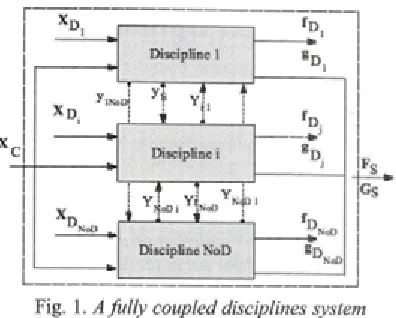
A c l a s s i c a l w a y to d e s c r i b e a m u ltid isc ip lin a ry p ro b le m is p re se n te d in F ig u re 1. In a m u ltid isc ip lin a ry p ro b lem , each su b -sy stem (d iscip lin e) h as its ow n d esig n v ariab les, o b je ctiv e a n d co n stra in t fu n ctio n s. S o m e d e sig n v aria b le s, co m m o n to a t le a st tw o su b -sy ste m s, are c a lle d co m m o n v ariables. D isc ip lin a ry o u tp u ts fro m one d isc ip lin e ca n b e n e e d e d to ev alu ate an o th er su b system . In th is ca se th e re is a co u p lin g b etw e en tw o d is c ip lin e s a n d th e s e v a r ia b le s a re c a lle d co u p lin g v aria b les [8] a n d [5]. T h e th ird v ariab le type, state v ariables, are internal variables p articu lar to o n e d isc ip lin e: th e y re p re s e n t c o n d itio n s th a t h a v e to b e sa tisfie d w ith in the discip lin e. In each d isc ip lin e an e v a lu a tio n /a n aly sis is c o n d u c te d th a t a l l o w s to c o m p u t e t h e o u t p u t s : f u n c t i o n s , c o n stra in ts a n d co u p lin g v aria b les i f needed.
F r e q u e n tl y , c o m p le x s y s t e m s a re n o n - h ie ra rc h ic a l im p ly in g th a t th e re is n o re a s o n to p ro ce ss the o p tim iza tio n o f o n e su b -sy ste m b efo re a n o th e r [5]. In th e o p tim iz a tio n p ro c e ss o f such sy stem s, th e p re se n c e o f c o u p lin g fu n ctio n s an d th e ir rec o g n itio n co n s titu te s a real c h a lle n g e for re se a rc h e rs.
F ig . 1. A f u l l y c o u p l e d d i s c i p l i n e s s y s t e m
s u ite d fo r th e e x te n d e d e n te rp ris e c o n te x t w h e re d isciplines an d to o ls are distrib u ted o n m u ltip le sites. T h e m a in d raw b ac k s o f th eses ap p ro ach es are i) the u n iq u e so lu tio n g iv e n to th e d e s ig n e r a n d i i) th e ir m a th em atical fo rm u latio n th a t is n o t alw ay s ad ap ted to th e in d u s tria l c o n te x t: m o s t o f th e s e m e th o d s cen tralize th e o p tim izatio n at th e sy stem lev el w hile i t s h o u l d b e h a n d l e d b y s u b - s y s t e m l e v e ls . C o l la b o r a t iv e O p tim i z a tio n S tr a te g y f o r M u lti- O b je c tiv e S y s te m s (C O S M O S ) [19] is a m e th o d aim in g to fill th e g ap b etw e en classical M D O m ethods a n d in d u strial n ee d s by: i) ta k in g ad v an tag es o f the m u lti-o b jectiv e gen etic algorithm s a n d p ro v id es the d e s ig n e r w ith a s e t o f o p tim u m so lu tio n s a n d i i ) ,
g iv in g m o re au to n o m y to th e disciplines.
T h e n e x t p a rt o f th is p a p e r w ill p re s e n t th e M D O m e th o d s: th e c la ssic a l o n e s b a s e d o n e x a c t m a th e m a ti c a l a p p r o a c h e s a n d s o m e t h a t tr y to s im u la te a n e n g in e e rin g p ro c e s s a n d are b a s e d on m u lti- o b je c tiv e g e n e tic a lg o rith m . T h e th ird p a rt in tro d u c e s th e p ro b le m s c a u s e d b y th e a u to n o m y o f d is c ip lin e s in th e re s o lu tio n p ro c e s s . P a rts 4 a n d 5 d e s c rib e th e te s t e x a m p le s a n d th e re s u lt o b ta in e d b y C O S M O S m e th o d o n co u p le d p ro b le m s. F inally, so m e c o n c lu s io n s a n d p e rs p e c tiv e a re g iv e n .
2 C O U P L IN G F U N C T IO N S IN
M U L T ID IS C IP L IN A R Y O P T IM IZ A T IO N M E T H O D S
T h e id e a l o p tim iz a tio n p r o c e s s to s o lv e a m u ltid is c ip lin a ry o p tim iz a tio n p r o b le m c o n s is ts in s e p a ra tin g th e a n a ly s is p h a s e fro m th e o p tim iz a tio n p h a s e : t h e m u l t i d i s c i p l i n a r y a n a l y s i s ( M D A ) c o m p u te s th e s e t o f f e a s ib le s o lu t io n s th e n th e o p tim iz a tio n se le c ts th e o p tim u m fro m th e p re v io u s s e t. T h is a p p r o a c h is n o t p o s s i b l e in p r a c tic e
b e c a u s e o f th e h ig h c o m p u ta tio n a l c o s t re q u ire d to d e t e r m i n e th e w h o le s e t o f f e a s i b l e s o lu tio n . M o re o v e r in m o s t p ro b le m s th e d isc ip lin e s c a n n o t e a s ily e x c h a n g e d a ta b e tw e e n e a c h o thers.
2.1
AMulti-Objective Coupled Problem
L e t ’s c o n s id e r a s im p lifie d m o d e l o f tw o d is c ip lin e s D x a n d D 2 (it c a n b e g e n e ra liz e d to n
d isc ip lin e s). E a c h d isc ip lin e D . h a s a sta te eq u a tio n
E .( x c, X ., y . , u .) = 0. W e w ill c o n s id e r th a t th e re is a n im p lic it fu n c tio n e : . X x X . x Y . —> U ., w h e re x e
. 1 . c 1 J 1 c
X c is th e d e s ig n v a ria b le s th a t are s h a re d am o n g d isc ip lin e s (c o m m o n v a ria b le s ), x . e X . is th e v e c to r o f d isc ip lin a ry v aria b le s, y e Y . is a p a ra m e te r g iv en b y th e d is c ip lin e D y , a n d u . e U . th e v e c to r o f state v a ria b le s g iv e n b y th e sta te e q u a tio n e .. T h is resu lts in th e fo llo w in g c o u p le d p ro b le m :
D i JUl = e i (Xc' Xl’y2) d 2 [ U2 = e 2 ( X c ' X 2 ' y i \ i \ \ y i = h ( l c , X i , U l ) [ 1/2 = /2(10, X2,ui) ^ '
F i n d i n g t h e f e a s i b l e s o l u t i o n s to t h i s p r o b l e m is c a l l e d m u l t i d i s c i p l i n a r y a n a l y s i s (M D A ). W e c a ll A th e s e t o f fe a sib le so lu tio n s o f t h e p r o b l e m ( t h e m u l t i d i s c i p l i n a r y f e a s i b l e s o lu tio n s):
A = {(xc,xi,X3,ui,ui) e Xc X X\ X X2 X U\ X U2\
M l = e i(x 0,X l,l2(Xc, X2, U 2 ) ) A M2 = e2( x c, X 2 , h {xc,a : i , M l ) ) }
(
2
).M u ltid is c ip lin a ry o p tim iz a tio n c o n s is ts in a d d in g a n o p tim iz a tio n p ro b le m to th e sa tisfac tio n o f th e c o u p le d p ro b le m . W e w ill fo cu s o n th e case w h e r e e a c h d is c ip lin e h a s its o w n o p tim iz a tio n p ro b le m w h ic h is to m in im iz e an o b je c tiv e fu n ctio n
f i : X c x X i x U i -a R A w i t h p . t h e n u m b e r o f o b j e c t i v e s . A s t a n d a r d f o r m u l a t i o n o f a tw o d is c ip lin e s m u ltid is c ip lin a ry o p tim iz a tio n p ro b le m is th en :
min f i ( x c, x i , m )
D
X c , X l
u i = e
1
(x c, x1
, y 2 ) D 2 *Vi = ! l ( z c, * l , u i )
min f 2(xc , x 2, u2 )
Xc,X2
«2
= e2( x c, x 2 , y i )y 2 = l2( xc, x 2 , u 1)
T h e s e t S o f so lu tio n s to th e p ro b le m is then: (3).
■Sr= { ( * : . * I » * a ) | 3 ( « i , « a ) e W 1 x U2
s.t. (xc, x i , x 2, u i , u 2) 6 A A $(xc, x i , x i , u i , u 2) £ A
S.t. f ( x c, Xl , X2,UU U2) -< f{x*c , x \ , uj)}
(4). W i th -< t h e o r d e r r e l a t i o n o f P a r e t o d o m in an c e: g iv e n a = ( a i , . . . , a >) a n d b = ( b x, . . . , b ) ) ,
U n f o r t u n a t e l y , s u c h a s e t o f o p tim u m s o lu tio n s is in tra c ta b le u n d e r th e h y p o th e s is o f p a rtitio n s o f th e varia b les in ea ch discipline. Indeed, a d is c ip lin e i c a n n o t a c c e ss a n o th e r d isc ip lin e j
v a ria b le s a n d d o es n o t k n o w its co u p lin g function. M o st o f th e M D O m e th o d s rep o rted in the lite r a tu r e a re d e v e lo p e d s p e c if ic a lly fo r s in g le o b je c tiv e p ro b lem s w ith co n tin u o u s v aria b les and d iffe re n tia b le objectiv e. T h ese M D O m eth o d s are c la s s ifie d in tw o g ro u p s: m o n o -le v e l an d b i-level. T h e s i n g l e - l e v e l ( m o n o - l e v e l ) g r o u p im p lie s o p tim iz a tio n a t th e su p e rv is o r level only. T he b i le v e l g ro u p a llo w s ea ch d isc ip lin e to m a n a g e its o w n o p tim iza tio n re g a rd in g its d e sig n v ariables. M u ltid isc ip lin a ry p ro b le m s are o fte n w ritte n in a sim p le r fo rm , w h e re th e sta te v a ria b le s are d irec tly g iv e n to th e o th e r d is c ip lin e , so th e y a re a lso c o u p lin g variab les:
f
min f i { x c, x u y i ) ( min / 2( r c, ,r2, t/2)D i i D 2 l (5)
{ Vi = e i ( x c, x u y 2) [ y 2 = e2( xc, x 2, y 1)
T h is n o ta tio n w ill b e u se d in th e n ex t section to p r e s e n t so m e m u ltid is c ip lin a r y o p tim iz a tio n m e th o d s.
2.2 Mono-Level Approaches
T h e m o n o - l e v e l f a m i l y c o n t a i n s t h r e e m u l t i d i s c i p l i n a r y m e th o d s : M u l t i d i s c i p l i n a r y F e a s i b l e ( M D F ) , A l l - A t - O n c e ( A A O ) a n d In d iv id u a l D isc ip lin e F e a s ib le (ID F ) [16], [1], [14] a n d [6], A ll th e g iv e n fo rm u latio n s h a v e d ifferen t w a y s to h a n d l e th e d e p e n d e n c y o f c o u p l in g fu n ctio n s. D en n is e t a l . [9] p ro p o sed an ex ten sio n o f all th e ab o v e m e th o d o lo g ie s to th e o p tim iza tio n o f sy stem o f system s.
2 . 2 . 1 M u l t i d i s c i p l i n a r y F e a s i b l e ( M D F )
M D F is th e m o st u se d a p p ro a ch to so lve a M D O p r o b le m . A c o m p le t e m u lt id is c ip lin a r y an a ly sis is p e rfo rm e d fo r ea c h ch o ice o f the d esig n v aria b les b y the optim izer. T h is is con cep tu ally very sim p le, an d on ce all d isc ip lin e s are c o u p led to fo rm o n e sin g le m u ltid isc ip lin a ry an aly sis m o d u le, one c a n u s e t h e s a m e t e c h n i q u e s u s e d in s i n g l e d isc ip lin e o p tim iza tio n .
In t h i s f o r m u l a t i o n t h e o p t i m i z a t i o n v a ria b le s are th e d e sig n v aria b les, th e o p tim iz a tio n is g lo b a l a n d e a c h i t e r a t i o n g iv e s a f e a s i b l e s o lu t io n . M o r e o v e r th e e v a lu a tio n w i th in th e
d isc ip lin e s are in d e p en d e n t. D ra w b a c k s are th e co m p u tatio n al effort an d the lack o f g u a ra n ty for th e co u p lin g v aria b les to co n v e rg e to a fea sib le so lu tio n .
,m in f i ( x c , x i , y i ) ( x c , n )
min f 2(xc, x 2, y2) < (zc,xa)
s.t. ja = e i ( i c, i i , ! f t )
, V2 = e2(xc, *
2
,1/1
)T he o p tim izatio n variab les are x c, x t and x r
A t e a c h o p t i m i z a t i o n s te p , th e s e t o f f e a s ib le s o lu tio n s - d e s c r ib e d as A in (2 ) - is co m p u ted . T h e sy stem o f c o u p lin g eq u a tio n s m u st b e solved. A fix ed p o in t ite ratio n (F P I) alg o rith m , o ften u se d in th is ca se , m a y n o t co n v e rg e i f th e fu n ctio n s are n o t c o n v e x a n d m a y a v o id h id d en so lu tio n s [3].
2 . 2 . 2 A l l a t O n c e ( A A O )
A ll th e v aria b les (d esig n , co u p lin g , state) are co n sid ered as design v ariab les an d th e an aly sis sy stem equations b eco m es constraint. H ence, C P U c o n s u m in g ite ra tiv e a n a ly s is o f s u b -s y s te m are sk ip p ed but it in creases th e d im ension o f the desig n space. T he p ro b lem fo rm u latio n can b e ex p re ssed by:
min f i ( x e, x i , y { ) (xc,*i,wa)
min f 2{ xc, x 2, y 2)
• (x c , x ? , V i)
w.r.t. in - e1(xc, x 1, y 2) = 0
2/2
- e2(xc, x 2 l yi ) = 0T h e o p tim izatio n v aria b les are x c, x v x y y x
and y r
2 . 2 . 3 I n d i v i d u a l F e a s i b l e ( I D F )
m in f i i x c x ^ y x )
m in J2( x c , x2, y2)
(xc,xi,xi)
• a.t. r/i = e 1( i c , x i , 2 2)
t/2 = e2 ( i c , 1 2 , 2 1 )
w .r.t. j/i — 2 1 = 0
J/2 - 22 = 0
T h e o p tim iz a tio n v a ria b le s a re x c, x , x y z
a n d z r
In m o n o -le v e l a p p ro a c h e s , th e o p tim iz a tio n p ro b le m is se e n a s a sin g le g lo b a l p r o b le m a n d all th e v a ria b le s are a c c e ssib le . M u lti-le v e l ap p ro a c h e s g iv e m o re a u to n o m y to th e d is c ip lin e s b y a llo w in g th e m to s o lv e th e ir o w n o p ti m i z a t i o n p r o b le m lo c ally .
2.3 Multi-Level Approaches
In th e c a s e o f b i-le v e l o p tim iz a tio n m e th o d , th e o rig in a l o p tim iz a tio n p r o b le m is d iv id e d in to o p tim iz a tio n at b o th sy ste m a n d s u b -s y s te m lev els. C o o rd in a tio n b e tw e e n su b -s y s te m s is m a n a g e d b y a n o p tim iz e r in c h a rg e o f s o lv in g in c o n s is te n c ie s b e tw e e n th e d is c ip lin e s . S e v e ra l s tr a te g ie s h a v e b e e n d e v e l o p e d a n d t h e m o s t d i s c u s s e d a r e C o l l a b o r a t i v e O p t i m i z a t i o n ( C O ) [ 7 ] , a n d C o n c u rre n t S u b S p a c e O p tim iz a tio n (C S S O ) [20]. O th e r m e th o d s lik e B i-L e v e l I n te g r a t e d S y s te m S y n t h e s i s ( B L I S S ) [ 1 5 ] , A n a l y t i c a l T a r g e t C a s c a d in g (A T C ) [2] o r P h y s ic a l P ro g r a m m in g (P P ) [1 7 ] h a v e b e e n d e v e lo p e d b u t w ill n o t b e d e ta ile d in th is p a p e r. T h e tw o firs ts a re p a r t o f th e D is c ip lin e F e a s ib le C o n s tra in t (D F C ) g ro u p . T h e p r im a r y f e a tu r e s o f e a c h o f th e s e a r c h ite c tu r e s in c lu d e : i ) th e u s e o f h e te ro g e n e o u s h a rd w a re o r s o f t w a r e , s p e c if ic to th e d o m a in , to s o lv e th e s u b s p a c e o p t i m i z a t i o n p r o b l e m s , i i ) t h e d e c o m p o s itio n k e e p s d o m a in - s p e c ific c o n s tra in t in f o r m a ti o n in th e s u b - p r o b le m , H i) th e s y s te m le a v e s m o s t o f th e d e s ig n d e c is io n s (s e le c tio n o f lo c a l v a r ia b le s ) to th e d is c ip li n a r y g r o u p s th a t u n d e rs ta n d th e lo c a l fo rm u la tio n .
2 . 3 . 1 C o l l a b o r a t i v e O p t i m i z a t i o n ( C O )
In C O s u b s p a c e o p tim iz e rs are in te g ra te d w i t h e a c h s u b s y s t e m . T h r o u g h s u b - s y s t e m o p tim iz a tio n e a c h d isc ip lin e c a n co n tro l its o w n set o f lo cal d e s ig n v aria b les a n d is in ch arg e o f satisfying its o w n d o m a i n s p e c i f i c c o n s t r a i n t s . E x p l i c i t
k n o w le d g e o f th e o th e r g ro u p s co n strain ts o r desig n v a r ia b le s is n o t re q u ire d . T h e o b je c tiv e o f e a c h su b sy stem o p tim iz e r is to ag re e u p o n th e v alu es o f th e in te rd isc ip lin a ry v aria b les w ith th e o th e r groups. A sy stem lev el o p tim ize r is e m p lo y e d to co o rd in ate th is p ro c e ss w h ile m in im iz in g th e ov erall objective. It p ro m o te s d isc ip lin ary a u to n o m y w h ile ach iev in g in te rd isc ip lin a ry co m p atibility.
T h e s u b s y s te m o p tim iz e r d o e s n o t a llo w d i s c ip li n e o p tim iz a tio n b u t o n ly tr ie s to r e a c h c o n s i s t e n c y u p o n t h e c o m m o n a n d c o u p l e d v a ria b le s . T h e o p tim iz a tio n p ro c e s s re m a in s g lo b a l at th e sy s te m level.
A ll th e m e th o d s d e s c r ib e d a b o v e a re n o t d e s ig n e d f o r m u lti-o b je c tiv e s p ro b le m s a n d g iv e o n ly a sin g le s o lu tio n to th e desig n er.
2.4 Multi-Objective Multi-Level Approaches
A s fa r as w e are co n c ern ed , m a in ad v an tag e o f M D O m e th o d s sh o u ld fo cu s o n th e ir ab ility to d e c o m p o se a m u ltid isc ip lin a ry p ro b le m into several su b -p ro b lem s o f m a n a g e a b le size th a t ca n b e so lv e d sim u ltan eo u sly . A cc o rd in g to th e cu rren t co m p lex ity a n d an tag o n ist o b je ctiv es to ach iev e, it sh o u ld also b e ab le to p ro v id e a set o f so lu tio n s (n o t o n ly a single o n e th a t re lie s o n an a p r i o r i ch o ice o f th e desig n ers) a n d fin a lly M D O sh o u ld b e a d a p te d to th e stru ctu re o f th e e n te rp ris e a n d th e w a y d e s ig n o f sy ste m s in c lu d in g se v eral d isc ip lin es is cond u cted .
T h e th re e m e th o d s p re s e n te d th e re a fte r are a firs t a n s w e r to su c h sp e cific atio n s. T h e y can so lv e M D O p r o b l e m s t h a t a r e d e c o m p o s e d i n t o a h ie ra rc h y o f se v eral s u b sy ste m -le v e l p ro b le m s ea c h o f w h ic h h a s m u ltip le o b je c tiv e s a n d c o n stra in ts. A m o n g d iffe re n t o p tim iz a tio n alg o rith m s th a t can b e u s e d fo r so lv in g th e su b sy ste m p ro b le m s, g en e tic a l g o r i t h m s ( G A s ) a r e u s e d in t h e t h r e e m e t h o d o l o g i e s . U s i n g a p o p u l a t i o n b a s e d o p tim iz a tio n a p p ro a c h a t b o th le v e ls (i.e ., sy stem a n d su b s y s te m le v e ls) im p lie s th a t a co m p ro m ise a s to b e fo u n d at th e sy ste m le v e l to m a p fitn e ss o f s o lu t io n s f ro m m u lt ip le P a r e to se ts to a s in g le s y s te m le v e l c a n d id a te so lu tio n .
2 . 4 . 1 M u l t i d i s c i p l i n a r y O p t i m i z a t i o n a n d R o b u s t
D e s i g n A p p r o a c h e s A p p l i e d t o C o n c u r r e n t
E n g i n e e r i n g ( M O R D A C E )
ro b u s t w ith re sp e c t to ch a n g e s in v a ria b le v alu es d u e to d is c ip lin e in te ra c tio n s . T h e M O R D A C E a p p r o a c h a llo w s to in d e p e n d e n tly p e r f o r m th e d iffe re n t d isc ip lin e o p tim iza tio n s.
E a c h d is c ip lin e a im s a t fin d in g o p tim u m s o lu tio n w ith re sp e c t to its o w n d e s ig n v aria b les th a n k to a M u lti- O b je c tiv e G e n e tic A lg o r ith m (M O G A ) in o rd e r to o b ta in fo r ea ch d isc ip lin e th e P a re to fro n tie r as th e set o f b e s t so lu tio n design. W h e n th e in d e p en d e n t o p tim iz a tio n p ro ce sses are fin ish e d , th e d e sig n e r h a s to fin d a c o m p ro m ise on c o m m o n v a r ia b le v a lu e s . C h a n g e s in c o m m o n v a ria b le v a lu e s in o rd er to fin d th e b est tra d e -o ff m a y w o rsen p e rfo rm a n c e levels. T h is d ifficu lty is s o lv e d b y ad d in g to th e se t o f d e s ig n o b je ctiv es f . ,
a f u n c tio n th a t m in im iz e s th e e f f e c t o f v a lu e s v a r ia tio n o f c o m m o n v a r ia b le s . A s d is c ip lin e s sim u lta n e o u sly m in im iz e o b je ctiv e functions./] and se n sitiv e fu nction, th e y are alw ay s m u lti-o b jectiv es. A m o n g a v a ila b le d esig n s, th e p ro ce d u re ch o o ses P a re to d esig n s p lu s all in d iv id u a ls th a t d o m in a te th e o rig in a l o n e w ith re g a rd to d iffe ren t discip lin es. T h e n , it d e fin e s all p o ssib le co u p les m a d e up o f s o l u t i o n s p r o p o s e d b y d i s c i p l i n e 1 a n d 2 , r e s p e c tiv e ly . A t th is s ta g e , th e c a lc u la tio n o f a d is ta n c e p a ra m e te r a llo w s e ffic ie n t so lu tio n s to b e s o rte d o u t fro m the v e ry larg e se t o f all p o ssib le c o u p le s . T h u s, a lim ite d n u m b e r o f c o u p le s are a u to m a tic a lly ch o sen . T h o se so lu tio n s sh o w sm all d if fe r e n c e b e tw e e n d is c ip lin e 1 a n d 2 c o m m o n v a ria b le v alu es, an d th e y are ro b u st w ith reg a rd to c h a n g e s in th o se v alu es. T h en , p e rfo rm a n c e s and c o u p lin g f u n c tio n s o f th e c o m p ro m is e d e s ig n s d e fin e d b y th e n ew v e c to rs o f v aria b les h av e to be v e rifie d .
W ithin th e M O R D A C E m e th o d th e d esig n er n e e d s to u se a c o m p ro m ise m e th o d lim ited b y the n u m b e r o f e v a lu a tio n o f p o te n tia l so lu tio n s th e d e s ig n e r allow s.
M O R D A C E u se s ap p ro x im a tio n s (re sp o n se s u r f a c e s ) o f t h e c o u p l i n g f u n c t i o n s in e a c h d isc ip lin e.
2 . 4 . 2 E n t r o p y - B a s e d M u l t i - L e v e l M u l t i - O b j e c t i v e
G e n e t i c A l g o r i t h m ( E - M M G A )
T h is m e th o d relies o n a d ec o m p o sitio n o f th e o p tim iz a tio n at th e d isc ip lin a ry level. A first p ro p o sa l w a s g iv e n in [13], b u t do n o t ta k e into a c c o u n t th e co u p lin g fu n ctio n s an d w as lim ite d to h ie ra rc h ic a l system .
E a c h m u l t i - o b j e c t i v e G A a t th e s u b p ro b lem s operates on its ow n p o p u la tio n o f (xc, x ) . T h e p o pulation size, n , for each sub -p ro b lem is kept th e sam e. In ad d itio n , E -M M G A m a in ta in s tw o p o p u latio n s external to the sub-problem s: th e gran d p o p u latio n an d the grand pool. B o th are po p u latio n s o f com plete design v ariab le vector: (x ,, x , ,... , x d) .
T h e gran d p o p u latio n is an estim a te o f th e so lu tio n set to th e overall optim izatio n p roblem . T he grand p o o l is an a r c h iv e o f th e u n io n o f s o lu t io n s g e n e ra te d b y th e su b -p ro b le m s. T h e siz e o f th e g ran d p o p u latio n is the sam e as the su b -p ro b lem p o p u latio n size, n . T he size o f the g ran d po o l is d
tim es the size o f the su b sy ste m ’s p o p u la tio n ( d is the n u m b e r o f su b -p ro b lem s o r d isciplines).
T he p o p u la tio n o f the gran d p o p u la tio n set is u s e d as th e in itia l p o p u la tio n f o r e a c h s u b p ro b lem . S in ce th e su b -p ro b le m m u lti-o b je c tiv e G A s o p erates on its o w n v aria b les ( x , x ) , o n ly the ch ro m o so m es co rresp o n d in g to xc an d x. are u sed in th e ith s u b -p ro b le m . A f te r e a c h ru n o f s u b p r o b l e m m u l t i - o b j e c t i v e G A th e r e w ill b e d
p o p u la tio n s h av in g n in d iv id u als each. A s each o f the d p o p u latio n s co n tain s o n ly the ch ro m o so m es o f o n ly (x c, X.), i - 1 , . . . , d , th e y are co m p leted u sin g th e rest o f the c h ro m o so m e seq u en ce (x p ... , x .,, X ,, ... , x j f r o m th e g r a n d p o o l. A f t e r th e ch ro m o so m es in all d p o p u la tio n s are rec o n stitu ted to form the co m p lete d e sig n v aria b le v ector, th ey are a d d e d to th e g ra n d p o o l. T h e n b a s e d o n an en tro p y in d ex th a t p rese rv e s the d iv e rsificatio n o f th e so lu tio n s set, n in d iv id u als are ch o sen w ith in th e gran d p o o l an d rep la ce th e n ind iv id u als from th e gran d p o p u latio n .
2 . 4 . 3 C o l l a b o r a t i v e O p t i m i z a t i o n S t r a t e g y f o r
M u l t i - O b j e c t i v e S y s t e m s ( C O S M O S )
T w o v a ria n ts (C O S M O S - G a n d C O S M O S -L [1 9 ]) h a v e b e e n p ro p o s e d a n d th e fu n d a m e n ta l d if f e r e n c e b e t w e e n th e m r e s id e s in a d if f e r e n t tr e a t m e n t o f c o m m o n d e s ig n v a r ia b le s . In th e fo llo w in g , C O S M O S re fe rs to C O S M O S -G .
L e ts n th e s iz e o f th e p o p u la tio n a n d d the n u m b e r o f d isc ip lin e s . D u rin g th e in itia liz a tio n th e su p e rv is o r c re a te s a p o p u la tio n o f c o m m o n d e s ig n v a ria b le s X c, w ith x ck th e k"' e le m e n t o f th e « -tu p le
X c = (x( ],...,x j . E a c h d is c ip lin e i a lso c re a te s a p o p u la tio n o f d is c ip lin a ry v a ria b le s X . = ( x . l , . . . j c jn) .
In o rd e r to g e t a fu lly d e te rm in e d p o p u la tio n , th e s u p e rv is o r s e n d s th e « - tu p le o f c o u p lin g d e s ig n v a ria b le s X c to e a c h d is c ip lin e . E a c h d is c ip lin e i
b u i l d s a d i s c i p l i n a r y p o p u l a t i o n
P o P i = { ( x c ,k ’ x i , k )| l ^ £ < « } f o r w h i c h i t c a n e v a lu a te o b je c tiv e a n d c o n s tr a in t f u n c tio n s . A n in itia l p o p u la tio n c a n b e c re a te d b y th e a g g re g a tio n o f c o m m o n a n d d is c ip lin a ry d e s ig n v a ria b le s a n d s a v e d in P o p . ..
r m e m o r i z e d
Optimization at sub-system level:
T h e s u p e r v i s o r p r o v i d e s a s e t o f c o m m o n d e s i g n v a r ia b le s X c to th e d is c ip lin e s . E a c h d is c ip lin e io p tim iz e s th e d e s ig n v a ria b le s o f a p o p u la tio n o f in d iv id u a ls ( x ck, x jk) w h e re 1 < k < n . T h e « -tu p le
X c is f i x e d in o r d e r to k e e p t h e d i s c i p l i n a r y p o p u la tio n c o h e r e n t w ith th e o th e r d is c ip lin a r y p o p u l a t i o n s . A t t h e e n d o f t h e d i s c i p l i n a r y o p tim iz a tio n s , e a c h d is c ip lin e s e n d s a v e c to r o f d is c ip lin a ry d e s ig n v a ria b le s o p tim iz e d X * to th e s u p e rv is o r. S in c e th e v e c to r o f c o m m o n d e s ig n v a ria b le s h a s n o t b e e n m o d ifie d in th e d is c ip lin e , a g lo b a l p o p u la tio n c a n b e b u i l t a n d is n a t u r a lly c o h e re n t: P o PaaKBt = { ( x c k . x \ k ,...,x' d J t ) \ \ < * < « } .
Optimization at system level:
T h e g o a l is to p ro p o s e n e w a n d b e tte r c o m m o n d e s ig n v a ria b le s (in o rd e r to im p ro v e th e p o p u la tio n ). S o, th e c u rre n t p o p u l a t i o n , P o p , is a s s e m b l e d w i t h th e m e m o r iz e d p o p u la tio n , P o p in o r d e r to p ro v id e a d o u b le -s iz e d p o p u la tio n : P o p doMe. T h is p o p u la tio n is r a n k e d b y th e F o n s e c a a n d F le m in g ’s c rite rio n (n o tio n o f P a re to d o m in a tio n ) a c c o rd in g to all th e o b je c tiv e fu n c tio n s o f th e p ro b le m . T h e b e s t in d iv id u a ls are s e le c te d to b u ild a n o rm a l-siz e d p o p u la tio n , P o p cumM. T h is p o p u la tio n w ill b e se n t to t h e d i s c i p l i n e s . I n p a r a l l e l , c r o s s - o v e r a n d m u t a t i o n s a r e m a d e o n t h e c o m m o n d e s i g n v a ria b le s o f th e p o p u la tio n . T h is n e w p o p u la tio nis sa v e d : P o p m____ It w ill b e e v a lu a te d o n c e b y th e d isc ip lin e s in o rd e r to d e te rm in e its o b je ctiv e a n d c o n s tra in t fu n ctio n s.
Coupling function treatment:
A ll th e v a lu e s o f th e c o u p lin g v a ria b le s y c o m p u te d in the d is c ip lin e i a t th e e n d o f its su b -sy ste m o p tim iza tio n a re s to re d in a n array. T h is a rra y c o n ta in s all the c o u p le s ( y jk, x ck) w h e re x ck is th e v e c to r o f co u p le d v a ria b le s o f th e k * in d iv id u a l o f th e p o p u la tio n , a n dy jk is th e c o u p l e d v a r i a b l e s c o m p u t e d b y th e c o u p lin g f u n c tio n l. in th e d is c ip lin e i w ith th e c o m m o n x kc a n d d i s c i p l i n a r y v a r i a b l e s X * k
o b ta in e d a t th e e n d o f th e su b -s y s te m o p tim iza tio n . W h e n a n o th e r d isc ip lin e j n e e d s th e v a lu e o f y . , fo r all its x c k it w ill se arch th e c o rre s p o n d in g y - w h e n it e x is ts - in th e array. I f th e a rra y d o es n o t co n ta in th e d e s ire d x ck, th e c lo se st is p ic k e d . In o th e r w o rd s, f o r e a c h d is c ip lin e i , th e re is a ta b le T . o f co u p les
( x c, y . ) su c h as 7] c X c x Y/ . T h u s, T . is th e g rap h o f th e re la tio n T = ( X c, Y ., 71) w h ic h is g iv e n to th e d is c ip lin e j .
O u r m a in o b je c tiv e , in th is pap e r, is to stu d y th e b e h a v io r o f C O S M O S o n c o u p le d p ro b le m s a n d m o r e p r e c i s e l y t h e e v o l u t i o n o f t h e e r r o r o f a p p ro x im a tio n o f th e c o u p le d v a ria b le s in tro d u c e d b y u s in g th e re la tio n T. in s te a d o f th e fu n c tio n /.. W e w ill firs t in tro d u c e th e p ro b le m s c a u s e d b y th e s e p a r a t i o n o f t h e d e s i g n p r o b l e m i n t o m o r e a u to n o m o u s s u b -p ro b le m s.
3 P R O B L E M S C A U S E D B Y D IS C IP L IN E A U T O N O M Y
I n o r d e r to s t u d y t h e t r e a t m e n t o f c o u p l e d f u n c t i o n s , w e n e e d to p o i n t o u t t h e ty p e s o f d iffic u ltie s th a t c o u p le d fu n c tio n s a n d d iv is io n o f w o r k in s u b s y s t e m s m a y i n t r o d u c e in m u ltid is c ip lin a ry p ro b le m s.
D l D2
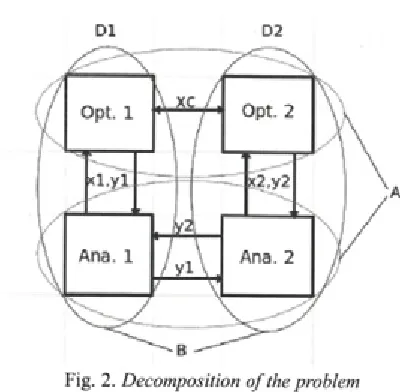
F ig . 2. D e c o m p o s i t i o n o f t h e p r o b l e m
3.1 Dependency Between Optimization and
Analysis
T he m ix o f o p tim iza tio n a n d an aly sis in each d isc ip lin e can lead to tw o p ro b lem s:
1. optim ization disturbs analysis : optim ization could te n d tow ards solutions th at m ay n o t b e feasible 2. a n a ly sis d istu rb s o p tim iz a tio n : a n a ly sis te n d
to w ard s n o n -o p tim u m so lu tio n s
1) O p tim iz a tio n leads an aly sis
O p tim iz a tio n is tre a te d first, an d the resu lts a re g iv e n to th e c o u p lin g fu n c tio n s. T h e v a lu e s c o m p u te d b y th e a n a ly s is d o n o t in flu e n c e th e o b je c tiv e v a lu e s, b u t ju s t e n s u re th a t th e d e s ig n v a ria b le s allo w to fin d a fea sib le so lu tio n o r not. T h e d e s ig n v a r ia b le s a re s e e n b y th e c o u p lin g f u n c t i o n s a s s i m p l e p a r a m e t e r s so it c a n n o t in flu e n c e on th e ir c h o ic e . T h e m u ltid is c ip lin a ry fe a sib ility b ec o m e s m o re d ifficu lt to reach. 2
2 ) A n aly sis le ad s o p tim iza tio n
T h e a n a l y z e r s g i v e s o l u t i o n s to th e o p tim ize rs w h ic h se lec t the op tim u m . T h e a n a ly z er m a y g iv e so lu tio n s w h ic h are n o t optim um .
C O S M O S u se s th e first so lu tio n : th e first g o a l is to rea ch th e d isc ip lin e s o b jectiv es, a n d the c o u p le d v a ria b le s are ju s t resu lts c o m p u ted at the e n d o f th e d isc ip lin a ry o p tim iz a tio n p ro c e ss th a t a r e n e e d e d in o t h e r d i s c i p l i n e s . T h is c a n b e illu stra te d b y u sin g a n o th e r n o ta tio n d e riv e d from t h e s ta n d a r d tw o d i s c i p l i n e m u l t i d i s c i p l i n a r y o p tim iz a tio n p ro b lem (1) w h e re th e o b je ctiv e is to m in im iz e th e state variab les:
n f I P S “ 1 el(x cix l,ya) f min u2 := e2(xc, x 2, y 1) U l= h ( l c ,X l ,« l) 1 y-2 = t2(xc,X2,Ul)
In th e no tatio n d escrib ed in (5), co u p lin g functions an d state equ atio n s are co n fused, an d the e v a lu a tio n o f th e o b je ctiv e fu n ctio n co m es a fte r th e analysis. H ow ever, in the latter n o ta tio n (9), o b je c tiv e a n d sta te f u n c tio n a re c o n fu s e d , a n d ev alu atio n o f the co u p lin g fu n ctio n s o n ly co m es after optim ization.
F ro m th is p o i n t o f v ie w , d i s c i p l i n a r y o p t i m i z a t i o n is m o r e i m p o r t a n t t h a n m u ltid is c ip lin a r y c o n s is te n c y . T h is m e a n s th a t C O S M O S is m o re s u it e d to p r o b le m s w h e r e discip lin ary optim izatio n is d ifficu lt b u t co u p lin g b etw een disciplines is w eak.
M oreover, i f w e rem o v e u . in the rig h t side o f th e c o u p lin g f u n c tio n s , th e r e s o lu tio n w ith classical m o n o -lev el m eth o d s is o bvious becau se th e m u ltid iscip lin ary an aly sis co n sists in function ev aluations. T h is sort o f co u p lin g is on ly d ifficu lt w h en optim izers an d an a ly z ers can n o t ac ce ss all th e discip lin ary variab les a t th e sam e tim e. T h ese o rg a n iz a tio n a l co n s tra in ts c a n n o t b e h a n d le d b y m o n o-level m ethods, on ly by m ulti-lev el ones as p r e s e n te d p re v io u s ly . A n a p p ro x im a tio n o f th e co u p lin g fu n ctio n h as to b e found.
3.2 Approximation of Coupling Variables
A discip lin e D . need s a co u p lin g v ariab le y
fro m discip lin e D . to so lv e its problem . G iv in g the v alu e o f th e co u p lin g v aria b le y . at a tim e t is n o t u sefu l w ith o u t k n o w in g the param eters x c, x . , y . u sed to find it. O n e w ay to d o it, is to let th e sy stem lev el in ch arg e o f p ro p o sin g a set o f v aria b les to th e discip lin es an d en su re th a t it is co n sisten t w ith the values co m p u ted in th e d iscip lin es (as in C O ). A n o th e r on e, is to u se an a p p ro x im a tio n o f th e c o u p l i n g f u n c t i o n / in th e d i s c i p l i n e D .
(C S S O ,M O R D A C E ). C O S M O S h as a d iffe re n t ap p ro a ch u sin g an a rra y at ea ch sy stem iteration, th e X are co n sisten t, th e x are the o n es o b ta in ed at the end o f o p tim izatio n o f each d isc ip lin e an d the
y . are ap p ro x im ated u sin g th e tab le T..
I f w e call y th e ap p ro x im a tio n o f y . fo u n d in T , it se em s th a t as th e p o p u la tio n co n v e rg e to th e o p tim u m so lu tio n s, the d ista n c e b e tw e e n y
4 T E S T P R O B L E M S
4.3 Problem #3
To te s t th e b e h a v io u r o f C O S M O S , w e h a v e im p le m e n te d s e v e ra l e x a m p le s. P ro b le m s # 1 , #2 a n d #3 a re b u ilt to sh o w n o rm a l c o n d itio n s . # 4 a n d # 5 w e r e e s p e c ia ll y d e s ig n e d to e x h i b it s p e c if ic b e h a v io u rs in lim it c o n d itio n s.
A ll th e p ro b le m s g iv e n are m u lti-o b je c tiv e s p e r su b -sy ste m s. T h e y re m a in s im p le b e c a u s e o u r g o a l is t o u n d e r s t a n d t h e b e h a v i o u r o f t h e a p p ro x im a tio n m e th o d o n c o u p le d p ro b le m s. T h u s th e re s u lts s h o u ld n o t b e h id d e n b y th e c o m p le x ity o f th e o th e r p a rts o f th e p ro b le m .
4.1 Problem #1
x c 6 [0; 1 0] , x i , x2, x 3, i4 e [0; 2 0] S u b -s y s te m 1
P Ì P f i ( x c j x i ) = ( x i - l) 2 + (x e - 3) 2
2
m in /2( x c ,x 2) = (x-2 - 3)2 + - 9) 2
Xc,X-2
X i
(
10
)/ 2(x c, x 2) + 0.1 S u b -s y s te m 2
m in /3(x c, x 3) = ( x3 - 4)2 + (x e - 5) 2
Xc,Xs
m in M x c , x 4) - ( y - 5)2 + (x4 - 5)2 ( J j )
+ ( x c - 9) 2
4.2 Problem #2
xc,x i ,x 2,x 3,x 4 ,x 5 ,x 6 G [-20; 20] S u b -s y s te m 1
m in / i ( x c, x i , x 2) = ( x i — l)2 + x2 2 xc,a;i,a;2
m in /2(x c, x i , x 2) = x c x (x a - 3) 2 x (x2 - 7)
Xc ,Xi,X2
m in /3(x c, x i , x 2) = x i + x 2 + 1
2/12 = 2/13 = 10 X X! + x c
S u b -s y s te m 2
2
(
12
)m in /4(x c, x 3l x 4) = x32 + (x4 — 3) 2
x c ,353,2:4
a\ 2
m in /5(x c, x 3, X4) = t/12 + (x3 + X4 ) 2 + (xc - 4) Xc ,X$,X<i
m in /6(x c, x 3, x 4) = 1/32 X x3 X x4 X x c (1 3 ) XC,X$,X4
S u b -s y s te m 3
m in /7(x c ,X5,X6) = 7 x y ( 3 / x c + 0 .1
XcXSiXG
m in /8(x c , x5, x 6) = (x5 - l) 2 + (x6 - 9)2
Xc,Xb,X6
1/32 = 10 X Xc + X5
(1 4 )
X c ,x i,x 2, X3, X4 G [0; 20] S u b -sy ste m 1
m in / i ( x c, x i ) = (x i - l)2 + (x c - 3) 2 + ( y 3 - 5)2 *c »*1
m in f 2 ( x c , x 2) = (x2 - 3)2 + (x c - 7) 2 + (j/4 - 7)2 X C,X2
(1 5 ) 2/1 =
2 /2 :
x2
y/ x c + x i + 0 .1
x 1
y f Xc “I“ X2 + 0.1
S u b -sy ste m 2
m in / 3(x c, x 3) = (x 3 - 3)2 + (x c - 5)2 + ( y i - 3)2
2 , n \2
®e»*3
2/3
2/4 =
m in / 4 (x c, X4) = (x4 - 5)2 + (x c - 9)2 + (jo - 9)2 iZ/c
^3 \ / x c -f- a?4 -|- 0.1
X4 \ / x c + x3 + 0 . 1
(1 6 )
4.4 Problem #4
Xc G [ - 5 0 :5 0 ] ,x i,x2,X3,X4 G [—10; 10] S u b -s y s te m 1
( X i - X c + O . l ) 2 m m / i ( x c, x i ) = x i X
( x i - t/2 + 0.1)2
, , , . (x 2 — x c + 0.1 ) 2 (1 7 )
mm / 2(x c,x 2) = X2 X -,---T7Tn2
*«.*1 ( x2 1/2 + 0.1)2
l/l = Xc S u b -sy ste m 2
■ c / % (x3 - x c + 0.1)2
m m / 3(x c,x 3) = x 3 X ----T rvnž"
*<=■** ( x 3 i/i + 0.1)*
t , X „ (x 4 - x c + 0 .1 ) 2 (1 8 ) m m / 4(x c,X4) = -X 4 X
2/2 = Xc
4.5 Problem #5
X c,x1, x2, x3) X4 G [—50; 50] S u b -sy ste m 1
m in / i ( x c, x i) = (x i - l)2 + (x c - 3) 2 4- (1/3 - 5)2 X c , X t
m in /2(xc, x2) = (x2 - 3)2 + (x c - 7)2 + (j/4 - 7)2 X C , X 2
y i = (vs + 2)2 - 22 (1 9 )
2/2 = (2/4 + 2)2 — 22
S u b -sy ste m 2
m in /3(x c, x3) - (x3 - 3)2 + (x c - 5)2 + (yi - 3)2 *c>®3
m in /» (x c, X4) = (x4 - 5) 2 + (x c - 9) 2 -f (1/2 - 9)2
, , , v 2 00 (2 ° )
2/3 = (2/1 + 8) — 33
5 R E S U L T S
C O S M O S h as been ru n on ea ch te st p ro b lem w i t h tw o s e ts o f p a r a m e te r s : th e f ir s t w ith a p o p u la tio n o f 2 0 in d iv id u als, 20 sy stem iteratio n s a n d 20 su b sy stem ite ratio n s (lig h t); th e se co n d one w ith 100 in d iv id u a ls , 50 sy s te m a n d s u b sy ste m ite ra tio n s (h eavy).
Tw o c riteria are v e rifie d fo r the v alid atio n o f resu lts. F irst, the co n v e rg en ce o f the ap p ro x im ate c o u p le d v a r ia b le to its r e a l v a lu e , a n d th e n th e q u a lity o f th e so lu tio n s o b tain ed .
5.1 Convergence of Coupled Variables
D u r i n g s u b s y s t e m o p t i m i z a t i o n , e a c h d i s c i p l i n e o n l y k n o w s t h e c o u p l e d v a r i a b l e c o m p u te d in th e o th e r su b sy stem at the p rev io u s s y s t e m i t e r a t i o n a n d u s e s it to f i n d a n a p p ro x im a tio n o f its real v alue.
W e o n ly e v a lu a te th e e v o lu tio n o f th e e rro r o f th e a p p ro x im a tio n o f th e c o u p lin g f u n c tio n s a l o n g tim e ( i.e ., a t e a c h ite r a tio n ) a n d n o t th e e v o lu tio n o f co u p lin g v a ria b le s to th e ir o p tim u m v a lu e at th e e n d o f th e o p tim iz a tio n p rocess. W e
also v erify i f the y . w h ich is p u t in the array T. is th e on e th a t w o u ld g iv e th e b e s t ap p ro x im a tio n am ong all the y . w hich h ave b ee n co m p u ted du rin g th e sub-system optim ization.
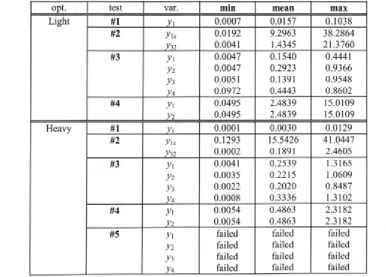
Table 1 presents the resu lts c o m p u ted on the p roblem s #1, #2, #3 #4 an d #5 w ith th e l i g h t and
h e a v y sets o f p aram eters. T he resu lts are g iv e n in % o f the erro r relativ e to th e size o f th e d o m a in o f th e cou p led variables.
W e o b s e rv e th a t th e e r r o r b e t w e e n th e ap p ro x im a tio n a n d the re a l v a lu e is q u ite sm all ex c ep t for y n an d y l} in ex am p le #2 as sh o w n in F ig u res 4 an d 5. T he fac t th a t a co u p lin g fu n ctio n is u se d in tw o differen t d iscip lin es at th e sam e tim e seem s to d isturb its app ro x im atio n . W e also notice th a t the m e a n v alu e o f th e e rro r is clo se to th e m in im u m v alue ex cep t for th is co u p lin g variable th a t seem s to indicate th a t th e re are as m a n y g o o d v alu es as bad ones. Tw o p h en o m en a co u ld explain th ese errors:
• T he valu es o f x c do n o t co v e r its dom ain: the o p tim u m x c fo r d is c ip li n e s 1, 2 a n d 3 a re r e s p e c tiv e ly in { -2 0 } , [-2 0 ,4 ] a n d {20} so
X* g [-2 0 ,4 ] e {20}. F o r valu es o f xc e ]4;20[ the ap p ro x im atio n w ill not be good.
T ab le 1. M i n i m u m , m e a n a n d m a x i m u m v a l u e o f t h e e r r o r o f a p p r o x i m a t i o n ( % ) ; 1 m in im u m , m e an and m a x im u m v alu e o f th e e rro r o f ap p ro x im atio n (% )
opt. test var.
min
mean
max
L ig h t
#1
u 0.0007 0.0157 0.1038#2
y u 0.0192 9.2963 38.2 8 6 4T32 0.0041 1.4345 2 1 .3 7 6 0
#3
y \ 0 .0047 0.1540 0.4441T2 0 .0047 0.2923 0.9366
T3 0.0051 0.1391 0.9548
T4 0.0972 0.4443 0.8602
#4
y \ 0.0495 2.4839 15.0109y i 0.0495 2.4839 15.0109
H ea v y
#1
y \ 0.0001 0.0030 0.0129#2
y u 0.1293 15.5426 4 1 .0447T32 0.0002 0.1891 2.4605
#3
Tl 0.0041 0 .2 5 3 9 1.3165T2 0.0035 0.2215 1.0609
T3 0.0022 0 .2 0 2 0 0.8487
T4 0.0008 0 .3 3 3 6 1.3102
#4
y \ 0.0054 0 .4863 2.3182y i 0.0054 0 .4863 2.3182
#5
y i failed failed failedy i failed failed failed
T3 failed failed failed
System iterations
F ig . 3. R e l a t i v e e r r o r o f y o n # 1 ( l i g h t )
• T h e o p tim u m v a lu e o f x is n o t u n iq u e b u t in [-2 0 ;3 ] W h e n th is v a lu e is u n iq u e , th e o th e r d i s c i p l i n e o n l y h a s o n e c h o i c e f o r t h e c o rre s p o n d in g x c. H e re th e d is c ip lin e in c re a se s its p r o b a b ility to p ic k a n x c c o rre s p o n d in g to th e x, th a t d o e s n o t g iv e th e o p tim u m v a lu e o f
y ^ x fo r its o w n d isc ip lin e.
T h ere is n o strict decrease o f th e error along tim e. B u t w e n o tice a global decrease around the five firsts iterations w h ich is stabilized th e n (Figs. 3 an d 6).
T h e e rro r o f th e app ro x im atio n , in th e general case, d o es n o t decrease b u t stay s q u ite sm all along tim e. M o reover, th e tests p erfo rm ed w ith th e h eavy set o f p ara m ete rs are less ch ao tic (e.g., th e differences b e tw e e n F ig u re s 4 a n d 5). W e e x p la in th is b y the sp read o f th e v alu es o f v in th e co u p lin g table. Indeed, the larg er th e p o p u latio n is, th e m o re ch an ce w e h ave to fin d a x in the table w h ich is clo se to th e v alu e w ec need. T h is erro r sh o u ld also te n d to w a rd zero i f the p o p u la tio n ten d s to a u n ique x c.
Sy3tem iterations
F ig . 5. R e l a t i v e e r r o r o f y I2 = y l3 o n # 2 ( h e a v y )
System iterations
F ig . 4. R e l a t i v e e r r o r o f y n = y l} o n # 2 ( l i g h t )
To su m m arize , o n m o s t c a se s w e d istin g u ish tw o p h a s e s in t h e e v o l u t i o n o f t h e e r r o r o f a p p ro x im a tio n o f th e c o u p le d v a ria b le s illu stra te d b y F ig u re 7. T h e firs t p h a s e is a g lo b a l d e c re a s e o f th e e rro r d u e to th e c o n v e rg e n c e o f th e in d iv id u als (d is c ip lin a ry v a ria b le s ). T h e se c o n d p h a s e is a sta te w h e r e th e e rro r is s ta b iliz e d a n d d o e s n o t sh o w n o tic e a b le ch a n g es. T h e e v o lu tio n is c h a o tic an d i t s a m p l i t u d e d e c r e a s e s w h e n w e a d d m o r e i n d i v i d u a l s in th e p o p u l a t i o n . T h e d is t a n c e d
d e c re a s e s b y in c re a s in g th e p o p u la tio n size. T h is d e s c r ip tio n s e e m s to b e r e le v a n t o n e x a m p le s w h e re th e o b je c tiv e fu n ctio n s are con v ex . U n d e r th is a s su m p tio n , to ea c h x c, th e re is a sin g le a n d u n iq u e x ] th a t m in im iz e f . T h u s, th e re is a fu n c tio n s . : Xl C - » X .l * U .I th a t a llo w to re p la c e th er
system derations
F ig . 7. S c h e m e o f t h e e v o l u t i o n o f t h e e r r o r a l o n g t i m e
fu n c tio n /. = ( X c x X . x U ., Y , t f f ) b y a sim p lified o n e t . = ( X , Y ., £ ) w ith Cju = {( x c,y ) ( ( x c, s ( x ) ) , y ) e £ . } , w h ere (ff is th e g ra p h o f th e fu n ctio n f i <fif =
{(x, y ) \ y = /fx)}. W e h av e 2" th u s i f th e o b jectiv e fu n c tio n s are co n v e x , 2"is a g o o d can d id a te fo r the a p p ro x im a tio n o f / .
M o re o v e r, - as s h o w n o n F ig u re 6 - th e ap p ro x im a tio n a t th e sy stem level is n o t alw ay s the b e s t co m p u ted at su b sy ste m level. T h is is tru e in tw o con d itio n s:
• th e o p tim u m o f th e x are u n iq u e an d th e sy stem d id n o t y e t c o n v e rg e to th e se solutions. • th e o p tim u m o f th e x. are n o t u n iq u e a n d as
ex p la in e d ab o v e, th e x. v a lu e p ic k e d b y the first d is c ip lin e d o e s n o t c o rre s p o n d to th e x . th a t g iv e s th e b e s t (x c, x .) t h a t c a n le a d to th e o p tim u m so lu tio n o f th e c o u p le d v aria b le for th e o th e r d isc ip lin e.
E x am p le #5 d o es n o t fit to the sam e categ o ry o f p ro b le m s tested . T h e c o u p lin g fu n ctio n s h av e b e e n c h o sen as a sy stem o f eq u a tio n th a t do n o t
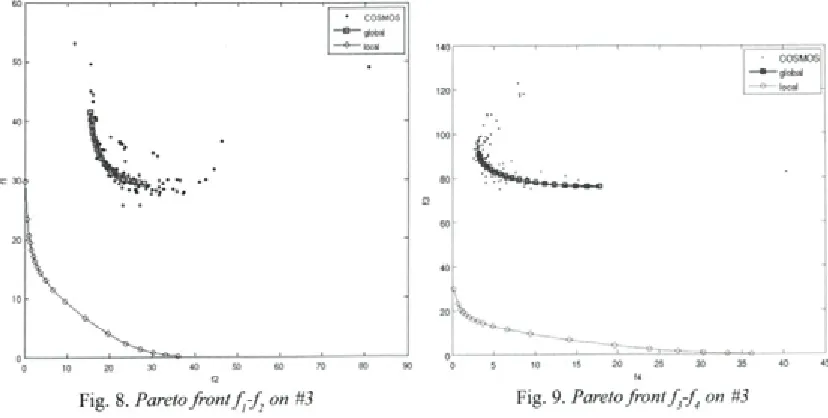
Fig. 8. P a r e t o f r o n t f - f 2 o n # 3
co nverge w ith a F ixed P o in t Iteratio n algorithm . O n th is p ro b le m , C O S M O S d o e s n o t co n v e rg e either. The error o f ap p ro x im atio n in creases du rin g tim e.
5.2 Quality of Solutions
T he so lutions fo u n d for p ro b lem s #1 and #3 are optim um . T hey co rresp o n d to the so lutions th a t are P areto -o p tim u m in th e b o th discip lin es at th e sam e tim e. T hus, w e are sure th a t th e y are on th e g lo b al P areto front. In d eed , fo r th e first test p ro b le m , C O S M O S g lo b a lly c o n v e r g e d to th e so lutions X* = ( a , 1, 3, 3, 5) w ith a e [3;7] w h ich are o ptim um solutions o f th e problem . R esults o f th e th ird test p ro b lem are satisfy in g too (Figs. 8 an d 9). T he th in lines at th e b o tto m o f th e figures are th e P areto fro n tiers o f th e tw o su b -p ro b lem s so lv e d independently. T he larg er line corresp o n d s to th e P areto fro n t for fix ed valu es o f the o th e r su b p ro b lem s at th e ir op tim u m (i.e. x 3 = 3 and x4 = 5 in th e first d iscipline, an d x 1 = 1 an d x 2 = 3 fo r th e seco n d one). T he so lu tio n s fo und by C O S M O S are clo se to this seco n d P areto front.
O n e x a m p le # 4 th e c o u p l e d v a r i a b l e c o n v e rg e d b u t C O S M O S d id n o t fin d th e rig h t solution. In d eed , the o p tim u m so lu tio n is u n iq u e a n d ( y i* ,/2* , / ; , / 4* ) = ( - 1 0 , -1 0 , - 1 0 , -1 0 ) b u t C O S M O S co n v e rg ed to a u n ique p o in t ( f x, f r f v f i )
= (0, 0, 0, 0). W e e x p lain th is b eh a v io r b y the fac t th a t the p o p u la tio n is u se d at th e sam e tim e to fit the objectiv es an d to fit the ap p ro x im atio n o f the c o u p lin g f u n c tio n s . F lere, th is in te r f e r e n c e is
explicit because the common variables are also the coupling variables.
If we call
P,
the set o f solutions found by COSMOS, and S the set o f theoretical solutions found for the global optimization problem, theP
solution are all in the Pareto set o f the global problem
St
(i.e.,P c S t )
but they are not spread on the whole Pareto front (i.e.,P r iS ,
0 ). This comes from the decom position o f a m ulti-objective problem in multiple multi-objective sub-problems. One way to obtain lost solutions is described in [10
],6
CONCLUSIONM any methods have been proposed to solve m u ltid isc ip lin a ry p ro b lem s. M o n o -lev el ones (MDF, IDF, AAO), are global m ethods and thus are not adapted to the context o f extended enterprise w h e re e a c h d is c ip lin e has to so lv e its ow n optimization problem without direct access to the others variables. M ulti-level m ethods give more autonomy to the disciplines but m ost o f them are n o t sp e c ific a lly d esig n ed fo r m u lti-o b je c tiv e problem s and need adaptations to propose more than one solution to the designer. COSMOS has been developed to fulfil these problems.
In this paper, we pointed out problems that can arise in the treatment o f coupling variables in m ulti-objective m ultidisciplinary optim ization. COSM OS, as a first step, has only be tested on sim p le e x a m p le p ro b le m s a n d it w o u ld be interesting to perform more tests and particularly real industrial problems.
Nevertheless, it appears that in this case and u nder the assum ption o f “to a given com m on variable
x ,
it exists one and only one valuex*
o f the d iscip lin ary variablex
that m inim izes the objective function^”, the array that uses COSMOS to approxim ate the coupling functions is a good approxim ation o f the coupling functions. This assumption comes true if the objective function is convex. However, in general case our tests indicate that if this condition is not verified, the method is not capable o f determining the correct value for approxim ation. M oreover, w e show ed that the values that are kept for approximation - the ones found at the end o f subsystem optimization - are not always the values which give the best results. The system tends to solutions that are optimum for the objective functions but not enough to solutions that respect the coupling functions.Taking into account these results, future research will focus on improving the method o f approximation o f coupling functions.
All the above methods have been intensively studied in the literature, m any classification o f methods exists but nothing about the problems. The difficulties pointed out in this paper could be use as a basis o f a classification o f m ulti-objective m ultidisciplinary design problem s. This would perm it to run tests on specific class in order to test the methods.
7 REFERENCES
[1] Alexandrov, N.M., Lewis, R.M.
Comparative
properties o f collaborative optimization and
other approaches to mdo.
Technical report, ICASE-99-24; NAS 1.26209354; NASA CR-1999-209354, 1999.
[2] Allison, J.T., Kokkalaras, M., Papalambros, RY. On the use o f analytical target cascading and collaborative optimization for complex system design.
6th World Conference on
S tru ctu ra l
and
M ultid iscip lin a ry
Optimization,
2005.[3] Allison, T.J., Kokkolaras, M., Papalambros, Y.P. On selecting single-level formulations for complex systrem design optimization.
Journal
o f M echanical D esign,
12 9 (9 ):8 9 8 —906, September 2007.[4] Aute, V., Azarm, S. A genetic algorithms based approach for multidisciplinary multiobjective collaborative optimization.
11 th AIAA/ISSMO
Multidisciplinary Analysis and Optimization
Conference,
2006.[5] B alling, R .J., S obieszczanski-S obieski, J. Optimization o f coupled systems: A critical overview o f approaches.
AIAA Journal,
voi. 34(1):6—17, 1996.[
6
] B eh d in an , K ., P e re z , R .E ., L iu, H.T. M u ltid iscip lin ary design o p tim izatio n o f aerospace systems.Proceedings o f the 2nd
International Design Conference CDEN,
2005. [7] B raun, R., Cage, P., Kroo, L, Sobieski, I.Im plem entation and perform ance issues in collaborative optimization.
6th AIAA/NASA/
ISSM O Sym posium on M ultidisciplinary
Analysis and Optimization,
vol. 1, p. 295-305,1996.
multidisciplinary optimization.
SIAM Journal
o f Optimization,
4:754-776, 1994.[9] Dennis, J.E., Arroyo, S.F., Cramer, E.J., Frank P.D. Problem form ulations for systems o f systems.
IEEE International Conference on
Systems, Man and Cybernetics,
2005. [10] Engau, A., Wiecek, M.M. 2D decision-makingfo r m u ltic rite ria d e sig n o p tim iz a tio n .
Structural
and
M ultidisciplinary
Optimization,
34(4):301—315, October 2006. [11] Giassi, A., Bennis, F., Maisonneuve, J.-J. Multi disciplinary design optimization and robust design approaches applied to concurrent design.Structural and Multidisciplinary Optimization,
27:1-16, 2004.
[12] Giesing, P.J., Barthelemy, M.J.-F. A summary o f industry mdo applications and needs.
7-th
AIAA/USAF/NASA/ISSMO,
1998.[13] Gunawan, S., Farhang-Mehr, A., Azarm, S. Multi-level multi-objective genetic algorithm u sin g e n tro p y to p re se rv e d iv ersity .
Proceedings o f the Second International
Conference on Evolutionary Multi-Criterion
Optimization,
voi. 2632, p. 148-161, Faro, Portugal, April 8-11 2003.[14] Hulme, K.F., Bloebaum, C.L. A simulation- based comparison o f multidisciplinary design optimization solution strategies using cascade.
Structural
and
M ultidisciplinary
Optimization,
19(1): 17-35, 2000.[15] S o b ieszczan sk i-S o b iesk i, J., A gte, J., Sandusky Jr., R.
Bi-level integrated system
synthesis (bliss).
Technical report, NASA/TM-1998-208715, 1998.
[16] Kodiyalam, S.
Evaluation o f methods fo r
multidisciplinary design optimization (m.d.o.),
phase 1.
Technical report, CR-1998-20871- NASA, 1998.[17] McAllister, C.D., Simpson, T.W., Lewis, K., M essac, A. R obust m u ltio b jectiv e op tim izatio n th ro u g h c o lla b o rativ e optimization and linear programming.
10th
AIAA/ISSMO Multidisciplinary Analysis and
Optimization Conference,
2004.[18] MDO-Technical-Committee.
Current state o f
the art in m ultidisciplinary design
optim ization.
T echnical rep o rt, A IA A Techreport, 1991.[19] Rabeau, S., Dépincé, Ph., Bennis, F., Janiaut, R. Comparison o f global and local treatment for coupling variables into multidisciplinary
problem s.