DEMOGRAPHIC RESEARCH
VOLUME 31, ARTICLE 1, PAGES 1–26
PUBLISHED 1 JULY 2014
http://www.demographic-research.org/Volumes/Vol31/1/ DOI: 10.4054/DemRes.2014.31.1
Research Article
The impact of grandparental investment on
mothers’ fertility intentions in four European
countries
Antti O. Tanskanen
Anna Rotkirch
© 2014 Antti O. Tanskanen and Anna Rotkirch.
This open-access work is published under the terms of the Creative Commons Attribution NonCommercial License 2.0 Germany, which permits use, reproduction & distribution in any medium for non-commercial purposes, provided the original author(s) and source are given credit.
1 Introduction 2
2 Theoretical framework 3
2.1 Inclusive fitness and grandparental investment 3 2.2 Grandparental child care help and emotional support 4 2.3 Factors influencing fertility intentions 5
3 Objective 6
4 Materials and methods 7
5 Results 10
6 Discussion 14
7 Acknowledgements 16
References 17
The impact of grandparental investment on mothers’ fertility
intentions in four European countries
Antti O. Tanskanen1
Anna Rotkirch2
Abstract
BACKGROUND
Evolutionary theory predicts that grandparental investment should support the childbearing of adult children, but evidence from contemporary developed countries is mixed or relatively weak. One possible reason for this lack of clarity is that grandparental support for fertility may vary by country, the economic situation of the adult child’s household, and the lineage and the sex of the grandparent.
OBJECTIVE
We investigate the associations between grandparental investments and the intentions of mothers to have a second or third child in four European countries – Bulgaria, France, Lithuania, and Norway – while paying special attention to effect of the country, the financial security of the household, and the different grandparent types.
METHODS
Using the first wave data (2004–08) of the Generations and Gender Surveys, we measured grandparental investment by the amount of child care help and emotional support mothers reported receiving from their parents. We studied these factors with binary logistic regression analysis.
RESULTS
Both emotional support and child care help from grandparents were associated with increased fertility intentions in France and Norway. Emotional support was also associated with increased fertility intentions in Bulgaria, while grandparental child care help was associated with decreased intentions in Lithuania. Emotional support was more strongly associated with fertility intentions in financially secure households. Emotional support received from a maternal grandmother, a maternal grandfather, and a
1 Department of Social Research, University of Helsinki, Helsinki, Finland.
E-Mail: [email protected].
paternal grandmother; and child care help received from a maternal grandfather; were associated with an increased probability that a mother would report the intention to have another child.
CONCLUSIONS
Grandparental investment, especially emotional support, appears to be most influential in wealthier European countries and among more financially secure families. When a family’s socioeconomic situation and the broader environment are generally favourable for having several children, grandparents may provide the “extra push” that supports the intention to have another child.
1. Introduction
Research has shown that, due to demographic changes, especially increased life expectancy and the challenges of combining wage work and parenting, grandparental investment in children and grandchildren has become increasingly important in modern, western societies (Coall and Hertwig 2010; 2011). However, the question of whether grandparents also contribute to higher fertility has been harder to answer, as the existing empirical evidence has been mixed. Grandparental child care help has been found to be correlated with an increased probability that parents will have another child in the Netherlands (Kaptijn et al. 2010; Thomese and Liefbroer 2013), and one study has detected a positive association between grandparental child care help and childbearing in several European countries if the grandchildren were not very young (Aassve, Meroni, and Pronzato 2012). By contrast, Waynforth (2011) found no association between grandparental child care and parents’ fertility in the UK, although the closeness of the parents to their own parents was shown to be associated with an increased likelihood of having another child.
The possible positive effect of grandparental help is thus relatively weak, and can be expected to vary by country and parity, as well as by the type and the availability of grandparental investment. In addition, grandparental effect may vary by grandparental lineage. In a recent study, Tanskanen, Jokela, Danielsbacka, and Rotkirch (2014) found that parents who had contact with the paternal grandparents of their first child were more likely to have a second child, while parents who had contact with the maternal grandmother of their first two children were less likely to have a third or subsequent child.
intentions of mothers in four European countries: France, Norway, Bulgaria, and Lithuania. We study these countries because we are interested in exploring the question of how different fertility and family policy regimes are associated with the effects of grandparental investment on fertility. We have chosen to study possible grandparental effects because kin tend to have a greater impact than non-kin on fertility decisions (see Newson et al. 2005 for discussion), and grandparents may be the kin who have the greatest impact on fertility decisions (Sear and Coall 2011).
Fertility intentions are a good indicator of actual childbearing behaviour, but they are not equivalent to it (Philipov 2009). There is a decreased likelihood that couples will realise their fertility intentions with, for example, advancing female age (Berrington 2004), higher parity (Regnier-Loilier and Vignoli 2011), and an increase in financial insecurity (Testa and Toulemon 2006). In addition, many couples today would like to have another child at some point in their lives, but do not intend to have a child in the foreseeable future (Buchanan and Rotkirch 2013; Testa 2012). In order to explore the impact of grandparenting on fertility, it is therefore of interest to take into account not only actual childbearing behaviour, but also childbearing plans and intentions. To our knowledge, this has not been done previously.
2. Theoretical framework
2.1 Inclusive fitness and grandparental investment
Evolutionary inclusive fitness theory (Hamilton 1964) predicts that in species with cooperative breeding such as humans, grandparental investment may influence the fertility decisions of mothers. This possible grandparental effect can be expected to vary with the ecological and the socioeconomic circumstances of the family, and also with the sex and the lineage of the grandparents. Based on Hamilton’s rule, inclusive fitness can be increased through the individual’s own reproduction or by supporting reproduction among genetically closely related kin (Coall et al. 2009).
In line with inclusive fitness theory, grandparental presence has been found to increase the likelihood of parents having another child in many traditional and high-fertility populations (e.g., Lahdenperä et al. 2004; Sear, Mace, and McGregor 2003; see Mace and Sear 2005; Sear and Coall 2011 for reviews). As we discussed above, studies from modern, low-fertility societies have also found some associations between grandparental investment and childbearing, but they have generally been weak.
grandparents tend to invest more in their grandchildren than paternal grandparents. If we assume that maternal grandparents tend to be more effective helpers, we can also assume that having support from her parents would boost a mother’s intention to have another child more than having the same amount of support from the parents of the father of her first child.
Investment also seems to vary by the sex of the grandparent, as grandmothers have been found to invest more than grandfathers once the effect of lineage is taken into account (e.g., Danielsbacka et al. 2011; Pashos and McBurney 2008; Pollet, Nettle, and Nelissen 2006; 2007; Tanskanen, Rotkirch, and Danielsbacka 2011). Grandmothers appear to have played a crucial role in childrearing in our evolutionary past (Lahdenperä et al. 2004; Mace and Sear 2005), and also in modern societies (Coall and Hertwig 2010). The role of grandfathers in fertility behaviour and child survival in pre-modern populations is much more debatable (Lahdenperä, Russell, and Lummaa 2007). But with increasing gender equality and male participation in child care, both grandmothers and grandfathers can be expected to contribute to the well-being of the families of their grandchildren. This has been confirmed in studies which have shown that in some situations grandfathers may have the same or an even greater degree of influence as grandmothers on the well-being of their grandchildren (e.g., Oyserman, Radin, and Benn 1993). Based on their review of 15 studies, Sear and Coall (2011) found that in modern, low-fertility societies, the presence of the maternal grandfather was more often associated with increased fertility among adult daughters than the presence of the maternal grandmother.
2.2 Grandparental child care help and emotional support
child (Kaptijn et al. 2010). Grandparental support may also influence grandchild outcomes (Tanskanen and Danielsbacka 2012; Tanskanen 2013).
In addition, grandparental child care help can reduce the cost of reproduction for mothers, which could be especially important in countries where publicly provided childcare arrangements are inadequate (Aassve et al. 2012; Hank and Buber 2009). Child care policies vary substantially across Europe. In France, Norway, Bulgaria, and Lithuania, the countries studied here, public child care provision and private child care arrangements are organised differently (Saraceno and Keck 2011). Public spending on family benefits as a percentage of GDP is well above the OECD average in France and Norway, and is clearly below the OECD average in Bulgaria and Lithuania (OECD 2010). The coverage of publicly provided child care services is also broader in France and Norway than in Bulgaria and Lithuania (Saraceno 2011). Moreover, France and Norway are much wealthier than Bulgaria and Lithuania (Eurostat, 2013).
In addition to providing child care, grandparents frequently offer their adult children emotional support (Coall and Hertwig 2010). This support may signal to a woman that it is both feasible and desirable to have an additional family member (Sear and Dickins 2010). In modern, resource-rich countries, emotional support received from grandparents could have a greater influence on fertility decisions than practical assistance with child care (Waynforth 2011).
While child care help and emotional support are different types of investments, they are not separate. The provision of child care often overlaps with emotional support, as grandparents often take care of their grandchildren while interacting with their adult children. In addition, grandparents who offer emotional support may signal to the parents that they are willing to provide child care or other forms of help as needed, such as financial assistance. In this case, the involvement of grandparents may represent a kind of “insurance” for parents concerned about whether they have sufficient resources to support their children. Thus, we expect to find that mothers who receive emotional or child care support from their parents will be more likely to plan to have another child.
2.3 Factors influencing fertility intentions
they intend to have another child than women with lower levels of education, partly due to the effect of postponement among the highly educated. Studies have also shown that, on average, religious women plan to have more children than non-religious women (Miettinen, Basten, and Rotkirch 2011; Billari, Philipov, and Testa 2009). In addition, financial security appears to influence the intention to have a child: mothers in higher income households intend to have more likely another child than mothers from lower income households (see Philipov et al. 2006).
Obviously, the presence of a partner influences childbearing intentions (e.g., Miettinen 2010), as do partner characteristics. For example, a mother with a highly educated partner is more likely to say she intends to have another child than a mother with a less educated partner (Balbo and Mills 2011; Buhler and Fratczak 2007). The age and employment status of the partner may also affect maternal fertility intentions (Buhler and Fratczak 2007; but see Balbo and Mills 2011).
Country-specific fertility rates may be associated with the intentions of mothers to have another child (Balbo and Mills 2011). European fertility rates range from very low to close to replacement level. During the GGS data collection in the four countries analysed in this study, the highest fertility rates were found in France and Norway (over 1.9 children per woman), while the fertility rates in Bulgaria and Lithuania were very low (about 1.3 children per woman) (PRB 2012). France and Norway are also wealthier countries than Bulgaria and Lithuania, and spend proportionally more on family services and benefits (OECD 2010). We are here interested in possible country differences between wealthier, higher fertility countries with more generous family policy expenditures (France and Norway) compared to the less wealthy, lower fertility countries with smaller family policy expenditures (Bulgaria and Lithuania). Finally, we assume that as wealth at the family level shapes fertility intentions, support provided by grandparents may have different effects in different socioeconomic groups.
3. Objective
4. Materials and methods
Our data are from the first wave of the Generation and Gender Surveys (GGS) from France (collected in 2005), Norway (2007–2008), Bulgaria (2004), and Lithuania (2006). The GGS is a large-scale, cross-national, and nationally representative survey of individuals aged 18‒79. The aim of the project is to gather longitudinal data on intergenerational and gender relations from both European and non-European countries (see Vikat et al. 2007 for the study design). The survey items include measures of social support, childbearing intentions, financial circumstances, education, and the socioeconomic characteristics of the partner. For this study we selected women respondents who were living with a partner and at least one biological child under age 14 at the time of the survey. Mothers over age 45 were excluded. These selections left us with data on 3,560 women.
The dependent variable represents the childbearing intentions of the mothers studied. In the GGS, all of the respondents who were of childbearing age were asked: “Do you intend to have a(nother) child during the next three years?” In our study sample, 25.2% of the respondents said they intended to have another child during the next three years. Of this group, 49.4% were planning to have a second child and 8.4% were planning to have a third child.
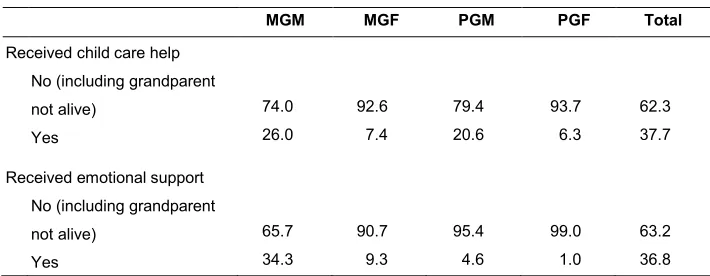
Table 1: Cross-tabulation of the frequency of mothers who received
grandparental child care help and emotional support by grandparent type (%)
MGM MGF PGM PGF Total
Received child care help No (including grandparent
not alive) 74.0 92.6 79.4 93.7 62.3
Yes 26.0 7.4 20.6 6.3 37.7
Received emotional support No (including grandparent
not alive) 65.7 90.7 95.4 99.0 63.2
Yes 34.3 9.3 4.6 1.0 36.8
Notes: MGM = Maternal grandmother, MGF = Maternal grandfather, PGM = Paternal grandmother, PGF = Paternal grandfather, Total = At least from one grandparent type
Child care help n = 3,472; Emotional support n = 3,560.
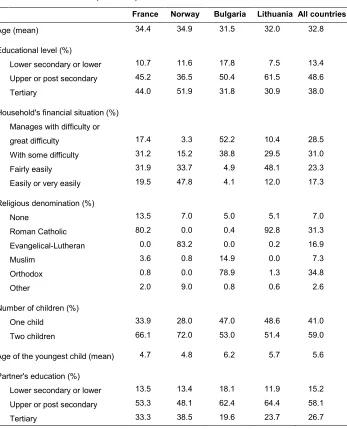
Table 2: Descriptive statistics of key variables related to mother’s fertility intentions (%/mean)
France Norway Bulgaria Lithuania All countries
Age (mean) 34.4 34.9 31.5 32.0 32.8
Educational level (%)
Lower secondary or lower 10.7 11.6 17.8 7.5 13.4
Upper or post secondary 45.2 36.5 50.4 61.5 48.6
Tertiary 44.0 51.9 31.8 30.9 38.0
Household's financial situation (%) Manages with difficulty or
great difficulty 17.4 3.3 52.2 10.4 28.5
With some difficulty 31.2 15.2 38.8 29.5 31.0
Fairly easily 31.9 33.7 4.9 48.1 23.3
Easily or very easily 19.5 47.8 4.1 12.0 17.3
Religious denomination (%)
None 13.5 7.0 5.0 5.1 7.0
Roman Catholic 80.2 0.0 0.4 92.8 31.3
Evangelical-Lutheran 0.0 83.2 0.0 0.2 16.9
Muslim 3.6 0.8 14.9 0.0 7.3
Orthodox 0.8 0.0 78.9 1.3 34.8
Other 2.0 9.0 0.8 0.6 2.6
Number of children (%)
One child 33.9 28.0 47.0 48.6 41.0
Two children 66.1 72.0 53.0 51.4 59.0
Age of the youngest child (mean) 4.7 4.8 6.2 5.7 5.6
Partner's education (%)
Lower secondary or lower 13.5 13.4 18.1 11.9 15.2
Upper or post secondary 53.3 48.1 62.4 64.4 58.1
Tertiary 33.3 38.5 19.6 23.7 26.7
Below, we first investigated whether grandparental investment correlated with mothers’ childbearing intentions (Q1). Next, we included interaction terms in the models and analysed the interactions between grandparental investment and country (Q2), and between grandparental investment and maternal socioeconomic position (measured by the mother’s education and the financial situation of the household) (Q3). We presented only interaction terms that are statistically significant at least in the case of one grandparental investment variable (i.e., child care help or emotional support). Since there were no significant interactions between grandparental investment and mother’s education in any of the models, these results are not shown in the tables. For Q1 to Q3, we examined whether the investment received from at least one grandparent type was associated with mothers’ fertility intentions. Finally, we analysed whether the investments made by different grandparent types had different associations with mothers’ childbearing intentions (Q4).
5. Results
The binary regressions for the main variables indicated that, after other factors are controlled for, mothers who were older and whose youngest child was older were less likely to report the intention to have another child. Mothers with only one child were also more likely than mothers with two children to say they intend to have another child. The level of education of the mother and her partner were both significantly and positively related to her childbearing intentions. Mothers from financially secure households were more likely report that they intend to have another child than mothers from financially insecure households. Roman Catholic, Muslim, and Orthodox Christian mothers were more likely to say they intend to have another child than the reference group “no religious denomination”. Finally, mothers from France and Norway were more likely to say they plan to have another child than mothers from Bulgaria and Lithuania (Appendix Table 1).
Table 3: Association between grandparental investment and the mother’s intention to have a second or third child in France, Norway, Bulgaria, and Lithuania (odds ratios of logistic regression models)
Child care help Emotional support
Model 1 Model 2 Model 3 Model 4 Model 5 Model 6
Received grandparental help/support
No (ref.) 1.00 1.00 1.00 1.00 1.00 1.00
Yes 1.04 1.17* 0.95 1.25* 1.33* 1.00
Country
France 1.00 1.00 1.00 1.00 1.00 1.00
Norway 1.18* 1.07 1.20* 1.09 0.99 1.09
Bulgaria 0.16* 0.16* 0.16* 0.16* 0.17* 0.16*
Lithuania 0.33* 0.39* 0.32* 0.33* 0.37* 0.33*
Household's financial situation
Manages with difficulty or 1.00 1.00 1.00 1.00 1.00 1.00
great difficulty (ref.)
With some difficulty 1.26 1.26 1.05 1.26 1.26 1.25
Fairly easily 1.31 1.31 1.42* 1.29 1.29 1.11
Easily or very easily 1.42* 1.42* 1.41* 1.42* 1.42* 1.13
Received grandparental help/support × country
Help/support × France (ref.) 1.00 1.00
Help/support × Norway 1.14* 1.19*
Help/support × Bulgaria 0.86* 0.90*
Help/support × Lithuania 0.58* 0.72*
Received grandparental help/support × household's financial situation
Help/support × manages with
difficulty or great difficulty (ref.) 1.00 1.00
Help/support × with some difficulty 1.48 1.06
Help/support × fairly easily 0.82 1.51*
Help/support × easily or very easily 1.02 1.71*
Notes: Every model controls for the following variables: Mother’s age, educational level, religious denomination, number of children, age of the youngest child, and partner’s education.
Overall, no statistically significant association was found between grandparental child care help and mothers’ intentions to have another child (Table 3 Model 1). However, compared to France, mothers receiving grandparental care were more likely to intend to have another child in Norway but less likely in Bulgaria and Lithuania (Model 2). The household’s economic situation did not interact with grandparental help (Model 3).
Mothers who were receiving grandparental emotional support were significantly more likely to indicate that they intend to have another child than those who were not receiving emotional support (predicted probabilities: 24.1% vs. 26.8%) (Table 3 Model 4). Compared to France, emotional support was more likely associated with mothers’ fertility intentions in Norway and less likely associated in Bulgaria and Lithuania. Finally, emotional support was more strongly related to fertility intentions in households with a good financial situation (Model 6).
Table 4 shows the implicated results from Table 3 for the interactions between grandparental investment and mothers’ fertility intentions in different countries and with different financial situations. Compared to mothers who did not receive help with child care, mothers who received grandparental child care help had stronger fertility intentions in France and Norway, but weaker intentions in Lithuania. Compared to mothers who did not receive emotional support from grandparents, mothers who received emotional support had stronger fertility intentions in France, Norway, and Bulgaria. Finally, in financially secure households mothers who received emotional support from grandparents had stronger fertility intentions than mothers who did not receive grandparental emotional support.
Next, we studied the association between investments made by different grandparent types and fertility intentions. Table 5 shows the results of eight separate models: two models (child care and emotional support) for each grandparent type. Since grandparents within the same lineage may affect each other, we control for the impact of spousal investment, in addition to other potential confounding factors.
Table 4: The association between grandparental investment and the mother’s intention to have a second or a third child by country and financial situation: Calculations based on interactions presented in Table 3 (odds ratios)
Child care help Emotional support
Country
France 1.17* 1.33*
Norway 1.34* 1.59*
Bulgaria 1.01 1.20*
Lithuania 0.68* 0.96
Household's financial situation
Manages with difficulty or
great difficulty
1.00
With some difficulty
1.06
Fairly easily
1.50*
Easily or very easily 1.70*
Notes: Reference category = no help/support * p < .05
Table 5: Association between grandparental investment and the mother’s intention to have a second or third child in France, Norway,
Bulgaria, and Lithuania by grandparent type (odds ratios of logistic regression models)
Child care help Emotional support MGM MGF PGM PGF MGM MGF PGM PGF
Received grandparental help/support
No (ref.) 1.00 1.00 1.00 1.00 1.00 1.00 1.00 1.00
Yes 0.93 1.43* 1.05 1.13 1.15* 1.27* 1.81* 1.08
Notes: MGM = Maternal grandmother, MGF = Maternal grandfather, PGM = Paternal grandmother, PGF = Paternal grandfather Every model controls for the following variables: mothers’ age, educational level, religious denomination, number of children, age of the youngest child, household’s financial situation, and partner’s education. In addition, in the MGM’s models the investment of the MGF is controlled for, and in the MGF’s models the investment of the MGM is controlled for. In the PGM’s models the investment of the PGF is controlled for, and in in the PGF’s models the investment of the PGM is controlled for. Child care help n = 3,472; Emotional support n = 3,560.
Finally, we analyse how the effects of help provided by different grandparents varied by parity. Child care help from a maternal grandfather (predicted probabilities: 49.3% vs. 58.3%), a paternal grandmother (49.2% vs. 52.7%), and a paternal grandfather (49.6% vs. 55.6%) was associated with the intention to have a second child (Appendix Table 3). Emotional support from a maternal grandfather (48.8% vs. 55.2%) was also significantly associated with the intention to have a second child (Appendix Table 4). Regarding the intention to have a third child, child care help from a maternal grandfather (8.4% vs. 10.5%) and emotional support from both a maternal (7.6% vs. 9.5%) and a paternal grandmother (7.9% vs. 15.1%) were associated with higher fertility intentions among mothers (Appendix Table 4).
6. Discussion
This study analysed the associations between grandparental investment and the reproductive intentions of mothers in four European countries with different levels of wealth, public provision of child care services, and fertility. Four questions were considered: Does grandparental investment correlate with mothers’ childbearing intentions? Do these potential correlations vary by country? Do these potential correlations vary by the socioeconomic situation of a mother’s family? How is the lineage and the sex of grandparents related to these associations?
The results showed that, in line with predictions derived from inclusive fitness theory (Hamilton 1964), grandparental investment was often correlated with increased childbearing intentions among mothers. However, this was not always the case, and the effect varied by country, socioeconomic situation, and kin lineage.
First, mothers who received grandparental child care help were more likely to say they intended have another child in France and Norway, but less likely to do so in Lithuania, while no significant associations were found for Bulgaria. Second, mothers who received emotional support from grandparents were more likely to say they intended to have another child in France, Norway, and Bulgaria, while there were shown no significant associations for Lithuania.
To our knowledge this is the first study that has investigated the association between grandparental investment and the fertility intentions of parents. Some previous studies concerning grandparents’ influence on fertility behaviour in high-fertility populations have found that the presence of paternal grandparents in particular increases a mother’s probability of having another child (e.g., Leonetti, Nath, and Hemam 2007; Sear et al. 2003). In addition, previous studies from modern, low-fertility countries have shown that grandparental investment may increase the parents’ probability of having a second child (e.g., Kaptjin et al. 2010; Tanskanen et al. 2014; Thomese and Liefbroer 2013).
Our results only partly confirm those of previous studies of grandparental investment and actual fertility behaviour in contemporary Europe. The country effects we found are generally in line with those reported by Aassve and colleagues (2012), although these effects did not include Bulgaria and Lithuania. Dutch studies have found that having child care help from both maternal and paternal grandparents increases parental fertility (Kaptjin et al. 2010; Thomese and Liefbroer 2013). In our data, however, only child care help from a maternal grandfather was correlated with increased fertility intentions. The possible effect of a maternal grandfather may reflect both the general importance of maternal grandparents and the growing importance of grandfathers in contemporary societies (see Sear and Coall 2011 for discussion).
Waynforth (2011) showed with UK data that perceived closeness to the maternal grandparents, but not to the paternal grandparents, increased the likelihood that mothers would have another child, while having received child care help did not increase fertility. In line with the results of that study, our findings for the four countries studied here indicated that mothers who reported receiving emotional support from a maternal grandmother and a maternal grandfather had increased fertility intentions. However, we also found that receiving emotional support from a paternal grandmother was correlated with higher fertility intentions as well. It is possible that grandparental investment influences fertility intentions differently than actual childbearing. Alternatively, for higher parities, grandparents may affect intentions more than realised behaviour.
reported all of the grandparental child care help she received, especially if the grandparental child care help was irregular or informal. In particular, the respondent may have understated the help with care she received from a grandmother, as she may consider it self-evident that a grandmother (and a maternal grandmother in particular) will provide child care (Hank and Buber 2009). This would also partly explain why we did not find significant associations between child care help from maternal grandmothers and the fertility intentions of mothers.
In conclusion, the present study shows that grandparents may influence mothers’ reproductive intentions, and that this effect is especially strong in wealthier countries and among more financially secure households. Since it is not clear whether investments made by grandparents will lead to increased fertility, it is important to study the question of whether mothers who receive grandparental support really go on to have another child. In addition, help provided by kin other than grandparents (e.g., siblings, Aassve et al. 2012) may affect the fertility decisions of mothers. Studies that investigate the impact of various kin on women’s reproductive intentions and behaviour are needed. This research should measure kin investment with several variables, since the impact may vary by the form of assistance. Finally, it would be interesting to identify which country-level characteristics (wealth, level of family benefits, or fertility rates) are most clearly associated with increased childbearing intentions.
7. Acknowledgements
References
Aassve, A., Meroni, E., and Pronzato, C. (2012). Grandparenting and Childbearing in the Extended Family. European Journal of Population 28(4): 499–518. doi:10.1007/s10680-012-9273-2.
Balbo, N. and Mills, M. (2011). The effects of social capital and social pressure on the intention to have a second or third child in France, Germany, and Bulgaria, 2004–05. Population Studies 65(3): 335–351. doi:10.1080/00324728.2011. 579148.
Berrington A. (2004). Perpetual postponers? Women’s, men’s and couples’ fertility intentions and subsequent fertility behavior. Population Trends 117: 9–19. Billari, F.C.D., Philipov, D., and Testa, M. (2009). Attitudes, norms and perceived
behavioural control: explaining fertility intentions in Bulgaria. European Journal of Population 25(4): 439–465. doi:10.1007/s10680-009-9187-9.
Buchanan, A. and Rotkirch, A. (eds.) (2013). Fertility rates and population decline: No Time for children? New York: Palgrave Macmillan. doi:10.1057/9781137 030399.
Buhler, C. and Fratczak, E. (2007). Learning from others and receiving support: The impact of personal network on fertility intentions in Poland. European Societies 9(3): 359–382. doi:10.1080/14616690701314101.
Coall, D.A. and Hertwig, R. (2010). Grandparental investment: Past, present, and future. Behavioral and Brain Sciences 33(1): 1–59. doi:10.1017/S0140525X 09991105.
Coall, D.A. and Hertwig, R. (2011). Grandparental investment: A relic of the past or a resource for the future? Current Directions in Psychological Science 20(2): 93–98. doi:10.1177/0963721411403269.
Coall, D.A., Meier, M., Hertwig, R., Wänke, M., and Höpflinger, F. (2009). Grandparental Investment: The Influence of Reproductive Timing and Family Size. American Journal of Human Biology 21(4): 455–463. doi:10.1002/ajhb. 20894.
Euler, H.A. (2011). Grandparents and extended kin. In: Salmon, C.A. and Shackelford, T.K. (eds.). The oxford handbook on evolutionary family psychology. Oxford: University Press: 181–210.
Euler, H.A. and Michalski, R.L. (2008). Grandparental and extended kin relationshps. In: Salmon, C.A. and Shackelford, T.K. (eds.). Family relationships: An evolutionary perspective. New York: Oxford University Press: 230–256.
Euler, H.A. and Weitzel, B. (1996). Discriminative grandparental solicitude as reproductive strategy. Human Nature 7(1): 39–59.
Eurostat (2013). GDP per capita, consumption per capita and price level indices. Brussels: European Commission. http://epp.eurostat.ec.europa.eu/.
Geurts, T., Poortman, A.-R., and van Tilburg, T.G. (2012). Older Parents Providing Child Care for Adult Children: Does It Pay Off? Journal of Marriage and Family 74(2): 239–250. doi:10.1111/j.1741-3737.2011.00952.x.
Hamilton, W.D. (1964). The genetical evolution of social behaviour I and II. Journal of Theoretical Biology 7(1): 1–52. doi:10.1016/0022-5193(64)90038-4.
Hank, K. and Buber, I. (2009). Grandparents caring for their grandchildren: Findings from the 2004 Survey of Health, Ageing, and Retirement in Europe. Journal of Family Issues 30(1): 53–73. doi:10.1177/0192513X08322627.
Hoppmann, C.A. and Klumb, P.L. (2010). Grandparental investment facilitates harmonization of work and family in employed parents: a lifespan psychological perspective. Behavioral and Brain Sciences 33(1): 27–28. doi:10.1017/S014052 5X09991658.
Hughes, M.E., Waite, L.J., LaPierre, T.A., and Luo, Y. (2007). All in the family: The impact of caring for grandchildren on grandparents’ health. The Journals of Gerontology: Series B: Psychological Sciences and Social Sciences 62(2): S108–S119. doi:10.1093/geronb/62.2.S108.
Kaptijn, R., Thomese, F., van Tilburg, T. G., and Liefbroer, A.C. (2010). How grandparents matter. Support for the cooperative breeding hypothesis in a contemporary Dutch population. Human Nature 21(4): 393–405. doi:10.1007/ s12110-010-9098-9.
Lahdenperä, M., Russell, A.F., and Lummaa, V. (2007). Selection for long lifespan in men: Benefits of grandfathering? Proceedings of the Royal Society of London B: Biological Sciences 274: 2437–2444. doi:10.1098/rspb.2007.0688.
Leonetti, D.L., Nath, D.C., and Hemam, N.S. (2007). In-law conflict. Women’s repr2oductive lives and the roles of their mothers and husbands among the matrilineal Khasi. Current Anthropology 48(6): 861–890. doi:10.1086/520976. Mace, R. and Sear, R. (2005). Are humans cooperative breeders? In: Voland, E.,
Chasiotis, A., and Schiefenhövel, W. (eds.). Grandmotherhood: The evolutionary significance of the second half of female life. Rutgers: University Press: 143–159.
Mathews, P. and Sear, R. (2013). Does the kin orientation of a British woman’s social network influence her entry into motherhood? Demographic Research 28(11): 313–340. doi:10.4054/DemRes.2013.28.11.
Miettinen, A. (2010). Voluntary or Involuntary Childlessness? Socio-Demographic Factors and Childlessness Intentions among Childless Finnish Men and Women aged 25–44. Finnish Yearbook of Population Research: 5–24.
Miettinen, A., Basten, S., and Rotkirch, A. (2011). Gender equality and fertility intentions revisited: Evidence from Finland. Demographic Research 24(20): 469–496. doi:10.4054/DemRes.2011.24.20.
Newson, L., Postmes, T., Lea, S.E.G., and Webley, P. (2005). Why are modern families small? Toward an evolutionary and cultural explanation for the demographic transition. Personality and Social Psychology Review 9(4): 360–375. doi:10.1207/s15327957pspr0904_5.
OECD (2010). OECD Family Database. Paris: Organisation for Economic Co-operation and Development. www.oecd.org/social/family/database.
Oyserman, D., Radin, N., and Benn, R. (1993). Dynamics in a three-generational family: Teens, grandparents, and babies. Developmental Psychology 29(3): 564–572. doi:10.1037/0012-1649.29.3.564.
Pashos, A. and McBurney, D.H. (2008). Kin relationships and the caregiving biases of grandparents, aunts, and uncles. Human Nature 19(3): 311–330. doi:10.1007/ s12110-008-9046-0.
Philipov, D. (2009). Fertility intentions and outcomes: the role of policies to close the gap. European Journal of Population 25(4): 355–361. doi:10.1007/s10680-009-9202-1.
Pollet, T.V., Nettle, D., and Nelissen, M. (2006). Contact frequencies between grandparent and grandchildren in a modern society: estimates of the impact of paternity uncertainty. Journal of Cultural and Evolutionary Psychology 4(3–4): 203–213. doi:10.1556/JCEP.4.2006.3-4.1.
Pollet T.V., Nettle, D., and Nelissen, M. (2007). Maternal grandmothers do go the extra mile: factoring distance and lineage into differential contact with grandchildren. Evolutionary Psychology 5(4): 832–843.
PRB (2012). Fertility Rates for Low Birth Rate Countries, 1995 to Most Recent Year Available. Washington: Population Reference Bureau. http://www.prb.org. Regnier-Loilier, A. and Vignoli, D. (2011). Fertility intentions and obstacles to their
realization in France and Italy. Population 66(2): 361–390. doi:10.3917/pope.1102.0361.
Saraceno, C. (2011). Childcare needs and childcare policies: A multidimensional issue. Current Sociology 59(1): 78–96. doi:10.1177/0011392110385971.
Saraceno, C. and Keck, W. (2011). Towards an integrated approach for the analysis of gender equity in policies supporting paid work and care responsibilities. Demographic Research 25(11): 371–406. doi:10.4054/DemRes.2011.25.11. Sear, R. and Coall D.A. (2011). How Much Does Family Matter? Cooperative Breeding
and the Demographic Transition. Population and Development Review 37(S1): 81–112. doi:10.1111/j.1728-4457.2011.00379.x.
Sear, R. and Dickins, T.E. (2010). The generation game is the cooperation game: The role of grandparents in the timing of reproduction. Behavioral and Brain Sciences 33(1): 34–35. doi:10.1017/S0140525X09991725.
Sear, R., Mace, R., and McGregor, I.A. (2003). The effects of kin on female fertility in rural Gambia. Evolution and Human Behavior 24(1): 25–42. doi:10.1016/S1090-5138(02)00105-8.
Tanskanen, A.O. (2013). The association between grandmaternal investment and early years overweight in the UK. Evolutionary Psychology 11(2): 417–425.
Tanskanen, A.O. and Danielsbacka, M. (2012). Beneficial Effects of Grandparental Involvement Vary by Lineage in the UK. Personality and Individual Differences 53(8): 985–988. doi:10.1016/j.paid.2012.07.019.
Tanskanen, A.O., Danielsbacka, M., and Rotkirch, A. (2014). Multi-partner fertility is associated with lower grandparental investment from in-laws in Finland. Advances in Life Course Research 20: in press.
Tanskanen, A.O., Jokela, M., Danielsbacka, M., and Rotkirch, A. (2014). Grandparental Effects on Fertility Vary by Lineage in the United Kingdom. Human Nature 24: in press.
Tanskanen, A.O., Rotkirch, A., and Danielsbacka, M. (2011). Do grandparents favor granddaughters? Biased grandparental investment in the UK. Evolution and Human Behavior 32(6): 407–415. doi:10.1016/j.evolhumbehav.2011.02.001. Testa, M.R. (2012). Family sizes in Europe: evidence from the 2011 Eurobarometer
survey. Vienna: Vienna Institute of Demography of the Austrian Academy of Sciences (European Demographic Research Paper 2).
Testa, M.R. and Toulemon, L. (2006). Family formation in France: Individual preferences and subsequent outcomes. Vienna Yearbook of Population Research: 41–76.
Thomese, F. and Liefbroer, A.C. (2013). Child Care and Child Births: The Role of Grandparents in the Netherlands. Journal of Marriage and Family 75(2): 403–421.
Waynforth, D. (2011). Grandparental investment and reproductive decisions in the longitudinal 1970 British cohort study. Proceedings of the Royal Society of London Series B: Biological Sciences 279: 1155–1160. doi:10.1098/rspb.2011. 1424.
Appendix
Table A1: Association between grandparental investment (and other variables) and the mother’s intention to have a second or third child in France, Norway, Bulgaria, and Lithuania (odds ratios of logistic regression models)
Child care help Emotional support
Minimally
adjusted Maximally adjusted Minimally adjusted Maximally adjusted
Age 0.85* 0.88* 0.85* 0.88*
Educational level
Lower secondary or lower
(ref.) 1.00 1.00 1.00 1.00
Upper or post secondary 1.79* 1.02 1.85* 1.05
Tertiary 3.55* 1.32* 3.67* 1.34*
Household's financial situation
Manages with difficulty or
great difficulty (ref.) 1.00 1.00 1.00 1.00
With some difficulty 1.82* 1.26 1.83* 1.26
Fairly easily 2.40* 1.31 2.39* 1.29
Easily or very easily 3.34* 1.42* 3.31* 1.42*
Religious denomination (%)
None 1.00 1.00 1.00 1.00
Roman Catholic 1.80 2.19* 1.81 2.19*
Evangelical-Lutheran 1.96 1.18 1.86 1.18
Muslim 0.71 3.90* 0.70 3.86*
Orthodox 1.09 4.06* 1.10 4.05*
Other 2.32* 1.94 2.31* 2.01
Number of children
One child (ref.) 1.00 1.00 1.00 1.00
Two children 0.13* 0.09* 0.13* 0.09*
Table A1: (Continued)
Child care help Emotional support
Minimally
adjusted Maximally adjusted Minimally adjusted Maximally adjusted
Partner's education
Lower secondary or lower
(ref.) 1.00 1.00 1.00 1.00
Upper or post secondary 1.54 1.02 1.57 1.01
Tertiary 3.37* 1.54* 3.42* 1.52*
Received grandparental help/support
No (ref.) 1.00 1.00 1.00 1.00
Yes 1.22* 1.04 1.55* 1.25*
Country
France 1.00 1.00 1.00 1.00
Norway 0.80* 1.18* 0.75* 1.09
Bulgaria 0.32* 0.16* 0.32* 0.16*
Lithuania 0.45* 0.33* 0.44* 0.33*
Notes: The minimally adjusted models adjust only for maternal age. In the maximally adjusted models all of the covariates are adjusted. Child care help n = 3,472; Emotional support n = 3,560.
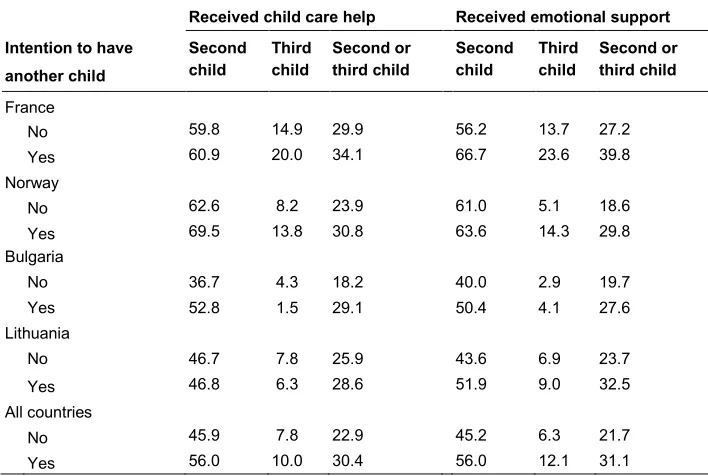
Table A2: Cross-tabulation of the frequency of mothers who intend to have a second or third child in France, Norway, Bulgaria, and Lithuania by grandparental child care help and emotional support (%)
Received child care help Received emotional support Intention to have
another child
Second
child Third child Second or third child Second child Third child Second or third child
France
No 59.8 14.9 29.9 56.2 13.7 27.2
Yes 60.9 20.0 34.1 66.7 23.6 39.8
Norway
No 62.6 8.2 23.9 61.0 5.1 18.6
Yes 69.5 13.8 30.8 63.6 14.3 29.8
Bulgaria
No 36.7 4.3 18.2 40.0 2.9 19.7
Yes 52.8 1.5 29.1 50.4 4.1 27.6
Lithuania
No 46.7 7.8 25.9 43.6 6.9 23.7
Yes 46.8 6.3 28.6 51.9 9.0 32.5
All countries
No 45.9 7.8 22.9 45.2 6.3 21.7
Yes 56.0 10.0 30.4 56.0 12.1 31.1
Table A3: Association between grandparental investment and the mother’s intention to have a second child in France, Norway, Bulgaria, and Lithuania by grandparent type (odds ratios of logistic regression models)
Child care help Emotional support
MGM MGF PGM PGF MGM MGF PGM PGF
Received grandparental
help/support
No (ref.) 1.00 1.00 1.00 1.00 1.00 1.00 1.00 1.00
Yes 0.93 1.57* 1.19* 1.35* 1.04 1.38* 1.27 1.05
Notes: MGM = Maternal grandmother, MGF = Maternal grandfather, PGM = Paternal grandmother, PGF = Paternal grandfather. Every model controls for the following variables: mothers’ age, educational level, religious denomination, number of children, age of the youngest child, household’s financial situation, and partner’s education. In addition, in the MGM’s models the investment of the MGF is controlled for, and in the MGF’s models the investment of the MGM is controlled for. In the PGM’s models the investment of the PGF is controlled for, and in the PGF’s models the investment of the PGM is controlled for. Child care help n = 1,441; Emotional support n = 1,459.
* p < .05
Table A4: Association between grandparental investment and the mother’s intention to have a third child in France, Norway, Bulgaria, and Lithuania by grandparent type (odds ratios of logistic regression models)
Child care help Emotional support
MGM MGF PGM PGF MGM MGF PGM PGF
Received grandparental help/support
No (ref.) 1.00 1.00 1.00 1.00 1.00 1.00 1.00 1.00
Yes 0.92 1.34* 0.76 0.97 1.33* 1.14 2.41* 1.02
Notes: MGM = Maternal grandmother, MGF = Maternal grandfather, PGM = Paternal grandmother, PGF = Paternal grandfather. Every model controls for the following variables: mothers’ age, educational level, religious denomination, number of children, age of the youngest child, household’s financial situation, and partner’s education. In addition, in the MGM’s models the investment of MGF is controlled for, and in the MGF’s models the investment of the MGM is controlled for. In the PGM’s models the investment of the PGF is controlled for, and in the PGF’s models the investment of the PGM is controlled for.