journal homepage: http://jac.ut.ac.ir
Eye Tracking for Autism Disorder Analysis using
Image Processing
Zohreh Kiapasha
∗1, Iraj Mahdavi
†2, Hamed Fazlollahtabar
‡3and Zahra
Kiapasha
§41,2
Department of Information Technology Engineering, Mazandaran University of Science and Technology, Babol, Iran.
3Department of Industrial Engineering, School of Engineering, Damghan University, Damghan,
Iran.
4Department of Mathematical Sciences, University of Mazandaran, Babolsar, Iran.
ABSTRACT ARTICLE INFO
Analyzing eyes performance is essential for effective functioning of human. Therefore, following their mo-tion could help doctors to make quick and accurate di-agnoses for disorders like Autism, schizophrenia, or at-tention deficit hyperactivity disorder. Recently, several studies investigated autism disorder diagnosis and treat-ment. Meanwhile, various algorithms have been pro-vided for eye tracking. In this paper, it is intended to identify diagnosis parameters of autism disorder using eye tracking concept. The eye tracking algorithm that has been used in this research is simple and sufficient accurate to appropriate function on videos with varying quality. The direct analysis of gaze and study of
Article history:
Received 19, March 2019 Received in revised form 11, October 2019
Accepted 14 November 2019 Available online 31, December 2019
Keyword: Autism disorder; Eye tracking; Image processing; Clustering.
AMS subject Classification: 05C68.
∗Corresponding author: Zohreh Kiapasha. Email: [email protected] †[email protected]
1
Abstract continued
the interactions of its features are employed a useful method for diagnosis of autism. For this purpose, two separate groups of ordinary children and children with autism are considered. By tracking their eyes while watching television and performing the necessary analyses then their eye movements are compared and discussed. To identify pupils is face detection Viola Jones algorithm is implemented.
2
Introduction
Nowadays, the health of the soul and the body is one of the important issues requir-ing more attentions. Autism is one of the most mysterious and complex disorders that make social communications difficult. Autism for the first time detected in 1943 by an American psychiatrist, Leo Kanner [21]. All children of any race or nationality may be at risk for autism. The autistic person has a unique personality and combination of char-acteristics. Sometimes these children may have difficulty beginning a conversation and verbal exchange. Children with autism often have poor eye contact, and don’t like to be hugged. They do not follow the gestures and refer to anything or themselves. By the age of one, autistic children often respond less than other children to their own name or someone who speaks [17]. In fact, toddlers are inherently ready for social communication, whereas, children with autism spectrum disorder (ASD) do not react to the smile of others and do not look at other’s eyes, and often exhibit strange and repetitive behaviors [13]. Most children with autism learn the speaking too late and significantly experience their growth rate slower than normal children [16]. Due to personality weaknesses in people with autism, depression showed itself in the term of secluded and obsessive behaviors [9]. Studies show that autism spectrum disorders are 4 times more frequent in boys than girls, and this disorder occurs throughout the intelligence quotient (IQ) ranges [3]. So far no specific cause has been discovered for the disorder.
attached to the forehead. In addition, the first non-invasive tracker was also created by George Boswell in Chicago [5].
So far, eye tracking has been used in various fields [4] such as drowsiness detection [19], diagnosis of various clinical conditions or even iris recognition [11], physically disabled [14], Cognitive and behavioral therapy [28], marketing or advertising [37], psychology and human Computer Interaction (HCI) [24]. Eye tracking technology provides instantaneous views of where people look and help us to understand their focus. In general, tracking eye movements is referred to a process measuring the eye movement of a person towards his head. With the advancement of science and technology, scientists have found that eye tracking is effective in detecting some diseases. In general, there are four methods for eye tracking: Electro-Oculography, Sceleral Search Coils, Infrared Oculography and Video Oculography [4]. In this study, we make use of video-based eye tracking and image processing.
Eye tracking studies about identifying faces and objects in patients with autism give us important information about how they relate to their surroundings. Frederick Shic, provided a report to develop a new measurement using eye tracking for the risk of autism [30]. Children with ASD tend to be less likely to look at the individual [33]. These toddlers are unable to concentrate and have weak ability to use motor skills. Many autistic children seem healthy in appearance. Symptom onset of ASD is quite variable and some toddlers may show biomarkers even before the first birthday [20], and some of them may not show until school time.
Autism in most cases is diagnosed by the age of three and as early as 14 months [15]. No specific cause and a way to prevent this disorder have been identified until now, but early diagnosis of this disorder help timely treatment by valid early biomarker.
Detecting eye movement and time daze eyes of someone is important for determining his/her attention and community relations. We are able to detect autism early by ana-lyzing eye movements, then start suitable treatment earlier. Eye tracking is one of the most challenging problems of the machine learning. Numerous researchers have been in-vestigated gaze direction through eye tracking. Lack of eye contact is one of the earliest signs of children with ASD. Also, there are numerous researches looking for signs of such disorders. These children pay less attention to social stimuli, such as human sounds, movement or face, while they pay more attention to non-social objects [26]. Vidal et al.
[35] have proposed a new eyewitness tracker to monitor mental health and have provided clinical research in the relationship between eye movement and perception [35]. That’s why Chennamma and Yuan [4] have presented a review of the latest remote eye tracking. According to the recent advances in eye tracking application in various fields, variety of al-gorithms, hardware and software were provided. Lupu and Ungureanu [18] have explained the history of eye tracking and its different approaches. In other research, Pellicanoet al.,
high or low familial risk of ASD with no ASD diagnosis or with a diagnosis of ASD using gaze-contingent eye-tracking to measure the reward value of social signals [34]. In many families, there are signs of autism or similar signs of it in other family members.
Some studies found out that children with ASD were not different in terms of neurotypicals in generating saccadic eye movements when watching a movie of objects [7]. Autistic children show abnormal saccadic eye movement [27], where Pierce et al [23] tried to identify the early signs of the disorder. Therefore, they displayed a movie with geometric and social imagery for children, and calculated the duration of fixation and a number of saccades. Recent research conducted a systematic review of studies showing the altered function of the social brain in children with autism impacts the processing of facial emotion [2].
In recent years, several studies investigated autism disorder diagnosis and treatment. In this paper, it is intended to identify diagnosis parameters of autism disorder using eye tracking concept. The eye tracking algorithm that has been used in this research should be simple as possible and have understandable mathematical calculations, while at the same time has sufficient accuracy to appropriate function on videos with varying quality. The direct analysis of gaze and study of the interactions of its features can be a useful method for diagnosis of autism. For this purpose, two separate groups of ordinary children and children with autism are considered. By tracking their eyes while watching television and performing the necessary analyses then their eye movements are compared and discussed. The remainder of this work is organized as follows. Next methods and materials, algorithm structure and formulations are given. In Section 3, implementation is illustrated. Section 4 reports the results. Discussions and conclusions are presented.
2. Methods and materials 2.1. Participants
Participants in this study includes volunteer children from all over Iran, aged 3.0 to 14, half of them diagnosed with an autism spectrum disorder and the rest are ordinary children. All children with autism had identified by independent clinical diagnosis and are being treated by specialists.
2.2. Procedure
To perform this task, participants were shown their favorite show on TV. The children were seated alone and had no awareness of camera presence. Camera position was quit from the front; also, its placement has been fixed. Room lightening was standard.
2.3. Eye tracking algorithm
In recent years, various algorithms have been provided for eye tracking. In this study, the first step to identify pupils is face detection, thus we have used Viola Jones algorithm for this purpose. Implementation of this method has been done in practice [31]. Also The Gaussian filter is used to eliminate image noise. The Viola Jones [36] algorithm combines three parts: Integral Image, AdaBoost, Cascading classifiers.
interval (x, y) is equal to the sum of the values of the upper and the left (x ,y) in the original image. Then, Adaboost algorithm for feature selection was used. In the Viola Jones method, in order to detect faces, the algorithm uses sub-window to obtain features, and is applied several times to windows with different dimensions on the input image (See Figure 1).
Viola Jones includes two phases of training and testing. In the training phase, at each stage, a number of rectangular features are selected and applied to the image. In the test phase, if at each stage of the process, it is determined that sub-window is not related to the face, it will exist the test process, and otherwise, it will be sent to the next step to examine more features. The second step is the pupil and iris localization. For this purpose, after specifying the eye regions relative to the size of the detected face, we identify the pupil using Fabian Timm and Erhardt Barth [32].
Figure 1. Viola Jones algorithm for face detection
To determine the area of the eye regions, we consider (x,y) as the upper left-hand side of the eye and (W, H), as the width and height of the face detected. Then, the average of the center of the right eye and the average of the center of the left eye is placed in order in (x+0.3,y+0) and (x+0.7, y+0.4).
2.3.1. Pupil and iris localization
always point outward. This means that in the center, all vectors are in the direction of vectord, and each vector in the opposite direction is trivial. Therefore, all negative values have become zero. In this algorithm, Timm mathematically described the relationship between the center of the pupil and orientations of all image gradients.
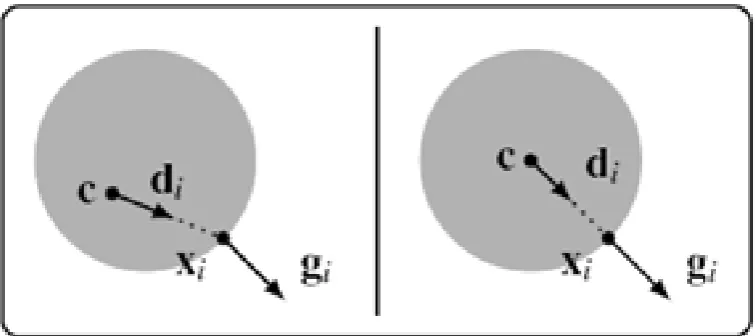
If c is a center and gi is the vector of gradients at xi, then the normalized displacement
vector di must also be in the same direction with the gradient vector gi (See Figure 2).
Also, computational complexity can be reduced only by taking the absolute magnitude of the gradient vector. If we use the gradient vector deviation, we can extract the deviation by calculating the dot product between the normalized displacement vectors (relative to a constant center) and the gradient vector gi. On the left the displacement vector di
and the gradient vector gi do not have the same orientation, whereas on the right both
orientations are equal [32].
Figure 2. Graphical representation of pupil and iris localization algorithm
Several factors, such as eyelids, or facial wrinkles affect the pupil detection. Since the pupil is darker than the skin, so we can apply a weight wc for each of the possible center
c, so that the dark centers are likely to be more than bright centers according to the following relation:
argmax
c
1
N
N
X
i=1
wc dTi gi
2
. (1)
2.4. Square error k-means clustering criterion
This criterion is used in most clustering strategies. The overall objective is to obtain the partition that minimizes the difference in clusters of a constant number of clusters. As a descriptive method, clustering groups the data in such a way that the data within each cluster are more similar to each other and have the greatest difference with other clusters. It is assumed to divide n d-dimensional samples into k clusters such that ck have nk
samples and each sample belongs to only one cluster. So that,Pk
k=1nk =nand the mean
ck =
1
nk nk
X
i=1
xi(k) = (c(1k), c2(k), . . . , c(dk)) , (2)
Where xi(k) is the sampleith belonging to the cluster ck.
e2k =
nk
X
i=1
x
(k)
i −ck
2
, (3)
The squared error of kth cluster is equal to the sum of squares of Euclidean distances between each sample in Ck and its cluster center ck. These squared errors are also called
intra-cluster variations and
Ek2 =
k
X
k=1
e2k, (4)
Ek2 is the total difference between clusters that should be minimized.
3. Implementation
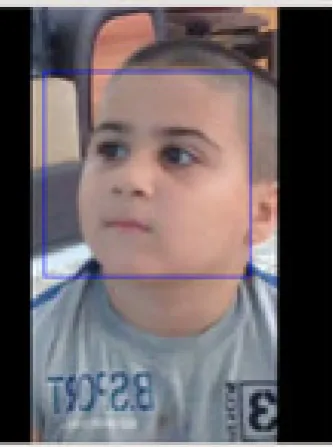
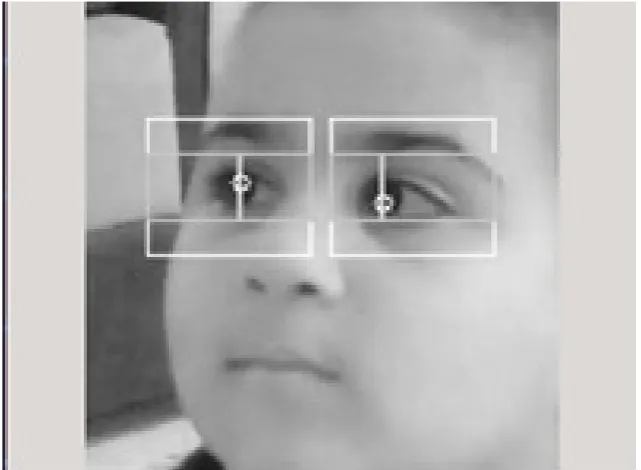
The number of collecting films is about 14 and is grouped according to the activity performed in each film. The Linux operating system is used to run the proposed algorithm. In the first stage, we uploaded the videos in the program. As mentioned above, the program, firstly, receives images in a frame-by-frame format and uses the Viola Jones algorithm to find a face. After finding the location of the face, the area of the eyes was determined, and at the end, the pupils identified in each frame and tracked the eyes (See Figure 3).
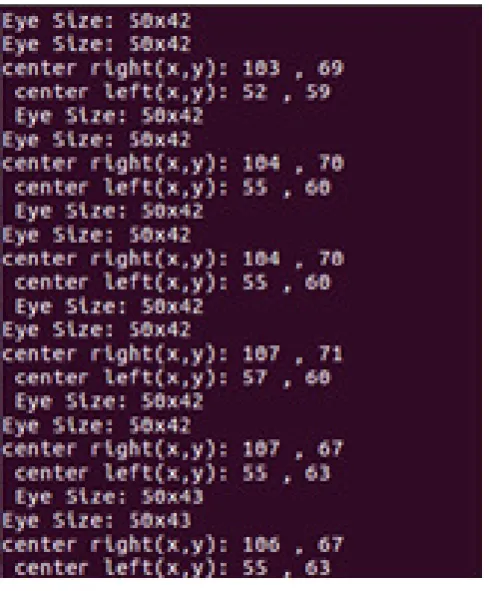
The output of this program includes the size of the eyes and the coordinates of the left and right eyes separately (Figure 4). But in this study, only the data required is the pupil coordinates.
Figure 4. Output pupil coordination
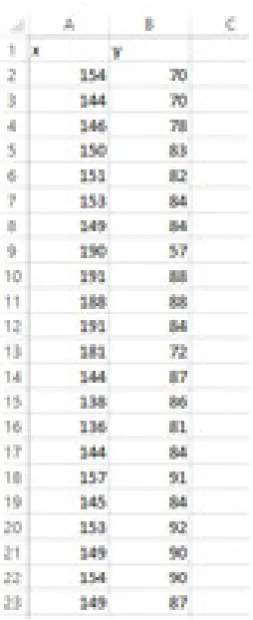
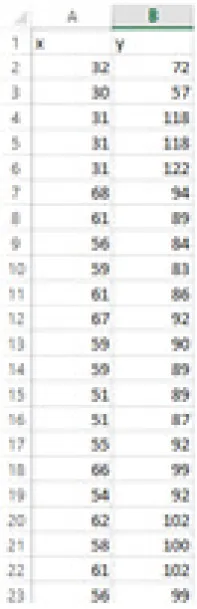
We put out the obtained outputs for autistic children (Figure 5.1) and normal children (Figure 5.2) in separate folders according to the groupings we have already done.
Figure 5.2. Normal child
We save data of watching television with autistic children and ordinary children in the Excel. In order to properly perform the analysis, in addition to having the right eye coordinates, the coordinates of the left eye should also be evaluated (Figures 6.1 and 6.2).
Figure 6.2. Left eye coordinates of autistic children while watching TV
4. Results
These data are stored in csv format. We used Weka software for data mining and K -means algorithm. According the number of available data, we set the number of clusters 4, and the results are as follows.
Clusters
Number of data
All the data
(1786)
Cluster0
(287)
Cluster1
(401)
Cluster2
(614)
Cluster3
(484)
x 163.2324 140.9129 200.7556 115.8208 205.5248
y 83.6685 78.9303 84.207 66.0309 108.407
Table 1. Output results of the K-means algorithm for Autistic Children’s
Right Eye
Clusters
Number of data
All the data
(1786)
Cluster0
(469)
Cluster1
(806)
Cluster2
(355)
Cluster3
(156)
x 61.4205 45.6823 68.3809 54.0986 89.4359
y 94.7828 74.4328 104.5571 89.7803 116.8462
Clusters
Number of data
All the data
(1094) Cluster0 (29) Cluster1 (401) Cluster2 (568) Cluster3 (96)
x 116.4671 73.8621 124.5287 108.8169 140.9271
y 74.8528 41.2069 79.3392 70.4859 92.1164
Table 3. Output results of the K-means algorithm for Normal Children’s Right Eye
Clusters
Number of data
All the data
(1094) Cluster0 (106) Cluster1 (30) Cluster2 (503) Cluster3 (455)
x 56.1545 66.0189 35.6667 57.7932 53.3956
y 65.3291 80.3868 40.8667 67.1213 61.4527
Table 4. Output results of the K-means algorithm for Normal Children’s Left Eye
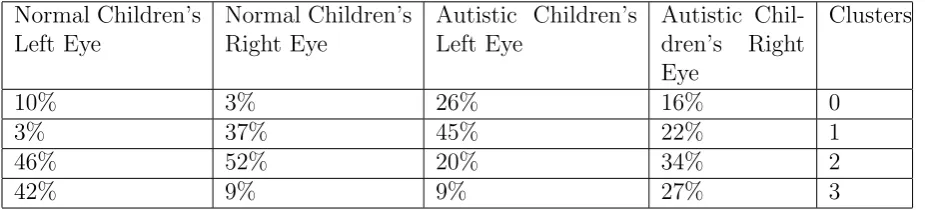
The number of data in each cluster is different. These data represent the position of the pupils of the eyes. According to the tables 1 to 4, the numbers in each column represent the center (mean) of the cluster. In fact, these numbers indicate that the pupil of the eyes has moved more in what areas in each cluster. In the following, the percentage of data in each cluster for each eye of autistic children and normal children are shown in the Table 5. Normal Children’s Left Eye Normal Children’s Right Eye Autistic Children’s Left Eye Autistic Chil-dren’s Right Eye Clusters
10% 3% 26% 16% 0
3% 37% 45% 22% 1
46% 52% 20% 34% 2
42% 9% 9% 27% 3
Table 5. Percentage of data in each cluster
5. Discussions and conclusions
Considering the wide spread of technology in various fields of information, the use of methods such as image processing can be one of the effective methods in the field of treatment, especially neurological and psychiatric disorders. But the new methods which use in different parts of the world creates different constraints such as the resistance of some people in the community. Of course, such cases require time, awareness and mass culture.
diseases like autism is faster, then better treatments can be considered and provided better living conditions for these individuals. Also, Children with autism suffer from severe mental retardation in the absence of treatment. For this reason, the procedure of the disease should be investigated by applying the different treatments. Children with autism can recovery step by step using timely treatment, and gain the chance of being in the community as a normal person. At the moment, there is no specific treatment for autism, but there are good therapies that can help these children to benefit more from their abilities. Since the behaviors and disturbances in the autistic children are very variable, several therapeutic programs are considered for it. So far, several treatments for autism have been proposed such as behavioral and educational treatments, drug treatment, diet, music therapy, massage therapy and etc. and some researchers believe that the use of complementary therapies is helpful in improving autism. For an accurate diagnosis and treatment, an expert team is required that includes a pediatrician, a child psychiatrist, treatment behavior, treatment work, speech therapy, family counselling. In this study, we used the database that was collected and also included its waste data, such as the size of the eye which was removed to detect autism. The collected data included the coordinates of the left and right eyes individually, which we can obtain the exact position of the pupil and the amount of movement of the eyes through these coordinates. In the image processing algorithm, the pupil detection stages are such that the input image must include the entire face, and the area of the eyes and pupil must be fully characterized so that we can accurately trace the pupils. Error and Perth data were deleted by the data mining algorithm.
Nowadays, we live in a world that, despite the advances have occurred in various sciences, but there is ambiguity in response to some of the disadvantages, one of these is autistic disorder. The problems of children with autism include a wide range, therefore, require extensive interventions. A lot of research has been done on the causes of autism disorders in children, but no definitive reasons have yet been identified. These factors are genetic factors, drug side effects, tobacco use, and so on.
Autistic children don’t usually participate in imaginative games and are unable to concen-trate. According to Table 4-5, two clusters with the highest number of data for autistic children and normal children show that the two clusters with the highest number of data are more common for ordinary children. These numbers indicate that these children are more focused on certain activities. The data in the two top clusters of children with autism are lower. In fact, the data are scattered in clusters, which indicates that the concentration of these children is lower than ordinary children.
According to Tables 1 to 4, the changes in the middle value of the two top clusters in each group of data showed the eyes position in children with autism is more significant than normal children. This criterion can be a suitable method for early diagnosis of autism disorder.
patient improvement, and, given the various environmental and social factors, provided better conditions for these patients.
6. Acknowledgements
We wish to thank the children and their families for participating. Writing and data analyzing is done by Zohre Kiapasha. Dr Iraj Mahdavi and Dr Hamed Fazlollahtabar help with reviewing this article and peresent their helpful comments during the writing of the article. Zahra Kiapasha help during data collection.
Funding: This research did not receive any specific grant from funding agencies in the public, commercial, or not-for-profit sectors.
References
[1] Asperger H., ”Das psychisch abnormale Kind” (in German). Wien Klin Wochenschr, 1938, 51: 1314–7
[2] Black, M. H., Chen, N. T., Iyer, K. K., Lipp, O. V., B¨olte, S., Falkmer, M. & Girdler, S. Mechanisms of facial emotion recognition in autism spectrum disorders: Insights from eye tracking and electroencephalography. Neurosci. Biobehav. , 2017, Rev., 80, 488-515.
[3] Blumberg S.J., Bramlett M.D., Kogan M.D., Schieve L.A., Jones J.R., Lu M.C. ”Changes in prevalence of parent-reported autism spectrum disorder in school-aged U.S. 2013.
[4] Chennamma, H. R., & Yuan, X., A survey on eye-gaze tracking techniques. arXiv preprint arXiv,2013 :1312.6410.
[5] Daunys, G.”Report on New Approaches to Eye Tracking Communication by Gaze Interaction (COGAIN)”, 2006. IST-2003- 511598: Deliverable 5.2,
[6] Dodge, R., & Cline, T. S., The angle velocity of eye movements. Psychol Rev, 1901, (2), 145.
[7] Falck-Ytter T., Young children with autism spectrum disorder use predictive eye movements in action observation. Biol Lett, 2010. 6: 375–378.
[8] Falck-Ytter, T., Gaze performance during face-to-face communication: a live eye tracking study of typical children and children with autism. RES AUTISM SPECT DIS, 2015. 17, 78-85.
[10] Hartridge H., Thomson L.C., Methods of Investigatig Eye Movements. Vision Re-search Unit, Medical ReRe-search Council, Institute of Ophthalmology, London, 1948.
[11] Hohla, K., Neuhann, T., Youssefi, G., & Toennies, R., U.S. Patent No. 7,146,983. Washington, DC: U.S. Patent and Trademark Office, 2006.
[12] Huey E.B., The Psychology and Pedagogy of Reading, 2004, ISBN-10: 0872076962, ISBN-13: 978-0872076969, first published in 1908.
[13] Kanner L., ”Autistic disturbances of affective contact”. Nerv Child, 1987. 2: 217–50.
[14] Kocejko, T., Bujnowski, A., & Wtorek, J., Eye-mouse for disabled. In Human-computer systems interaction (pp. 109-122). Springer, Berlin, Heidelberg, 2009.
[15] Landa R. J., Diagnosis of autism spectrum disorders in the first 3 years of life. Nat. Clin. Pract. Neurol. 2008. 4, 138–14710.1038/ncpneph0722 [PubMed] [Cross Ref]
[16] Le Couteur, A., Bailey, A. J., Rutter, M., & Gottesman, I., August. Epidemiologi-cally based twin study of autism. In First World Congress on Psychiatric Genetics, Churchill College, Cambridge (pp. 3-5), 1989.
[17] Lord, C., Follow-up of Two Year-olds Referred for Possible Autism. J CHILD PSY-CHOL PSYC, 1995. 36, (8), 1365-1382.
[18] Lupu, R. G., & Ungureanu, F., A survey of eye tracking methods and applications. Bul Inst Polit Iasi, 2013. 71-86.
[19] Nguyen, T. P., Chew, M. T., & Demidenko, S., February. Eye tracking system to detect driver drowsiness. In Automation, Robotics and Applications (ICARA), 2015 6th International Conference on (pp. 472-477). IEEE, 2015.
[20] Ozonoff S, Iosif AM, Young GS, Hepburn S, Thompson M, Colombi C,et al., Onset patterns in autism: Correspondence between home video and parent report. J Am Acad Child Adolesc Psychiatry, 2011. 50:796–806; e791.
[21] Passer, Michael W.Smith, Ronald E., Psychology the science of mind and behavior. Puplished by mcgraw-hill-americans, 2009.
[22] Pellicano, E., Rhodes, G., & Calder, A. J., Reduced gaze aftereffects are related to difficulties categorising gaze direction in children with autism. Neuropsychologia, 2013. 51, (8), 1504-1509.
[24] Poole, A., & Ball, L. J., Eye tracking in HCI and usability research. Encyclopedia of human computer interaction, 2006. 1, 211-219.
[25] Russell M.C, Hotspots and Hyperlinks: Using Eye-tracking to Supplement Usabil-ity Testing. Web Newsletter of Software UsabilUsabil-ity Research Laboratory (SURL) at Wichita State University USA, 2005, 7, 2.
[26] Sasson, N.J., Elison, J.T., Turner-Brown, L.M., Dichter, G.S., and Bodfish, J.W., Brief report: Circumscribed attention in young children with autism. J. Autism Dev. Disord. 2011. 41, 242–247.
[27] Schmitt, L. M., Cook, E. H., Sweeny, J. A., & Mosconi, M. W., Saccadic eye move-ment abnormalities in autism spectrum disorder indicate dysfunctions in cerebellum and brainstem. Molecular autism, 2014.5(1), 47.
[28] Schofield, C. A., Johnson, A. L., Inhoff, A. W., & Coles, M. E., Social anxiety and difficulty disengaging threat: Evidence from eye-tracking. Cogn Emot, 2012. 26, (2), 300-311.
[29] Shahzad, M. I., & Mehmood, S., Control of articulated robot arm by eye tracking. School of Computing Blekinge Institute of Technology, Sweden. 2010. Master Thesis no: MCS-2010-33.
[30] Shic, F., Eye Tracking as a Behavioral Biomarker for Psychiatric Conditions: The Road Ahead. J Am Acad Child Adolesc Psychiatry. 2016. 55(4), 267-268.
[31] Theocharides, T., Vijaykrishnan, N., & Irwin, M. J., March. A parallel architecture for hardware face detection. In Emerging VLSI Technologies and Architectures, 2006. IEEE Computer Society Annual Symposium on (pp. 2-pp). IEEE, 2006.
[32] Timm, F., & Barth, E., Accurate Eye Centre Localisation by Means of Gradi-ents. Visapp, 2011. 11, 125-130.
[33] Vadillo, M. A., Street, C. N., Beesley, T., & Shanks, D. R., A simple algorithm for the offline recalibration of eye-tracking data through best-fitting linear transformation. BEHAV RES METHODS, 2015. 47(4), 1365-1376.
[34] Vernetti, A., Senju, A., Charman, T., Johnson, M. H., Gliga, T., & BASIS Team., Simulating interaction: Using gaze-contingent eye-tracking to measure the reward value of social signals in toddlers with and without autism. DEV COGN NEUROS-NETH, 2017.
[35] [35] Vidal, M., Turner, J., Bulling, A., & Gellersen, H., Wearable eye tracking for mental health monitoring. COMPUT COMMUN, 2012. 35, (11), 1306-1311.