Effects of subsoiling on working quality and total power consumption of
high stubble straw returning machine
Hua Zhou
1,2,
Jumin Zhang
1,2,
Junfang Xia
1,2*,
H. M. Tahir
1,2,
Yinghao Zhu
1,2,
Chunling Zhang
1,2(1. College of Engineering, Huazhong Agricultural University, Wuhan 430070, China;
2. Key Laboratory of Agricultural Equipment in Mid-lower Yangtze River, Ministry of Agriculture and Rural Affairs, Wuhan 430070, China)
Abstract: Straw returning into field is a direct and effective measure to reduce the straw burning and improve the soil organic matter content. Straw returning directly to field needs higher performance machines, especially under the condition of large amount of straw in the field is more difficult. Therefore, the model of conservation tillage by combination of subsoiling and straw returning was studied. Experiments on combined tillage machine for effect of subsoiling on working quality and total power consumption for high stubble straw returning were carried out. The high stubble rape field was used as the test field; forward speed and PTO speed of tractor were taken as the test factors. Straw coverage rate and straw proportion of the lower half burying layer were taken as the test indexes of the working quality. Subsoiling and rotary burying (SRB) returning operation was used as experimental group and direct rotary burying (DRB) returning operation was the control group. The results showed that under different working conditions, the mean value of straw coverage rate of SRB was 93.0%, straw proportion of the lower half burying layer was 52.8%, these values were better than DRB. The straw proportion of the lower half burying layer of SRB compared with DRB increased by 10.5%. Two factors all had a significant effect on it under the SRB and DRB conditions. Subsoiling could significantly reduce the PTO torque. Under low speed, the total power consumption of SRB was slightly smaller, while under high speed, the total power consumption of DRB was slightly smaller. Under the SRB and DRB conditions, two factors both had a significant effect on total power consumption. The optimal working combination (working quality as the primary index) was 1.5 km/h of forward speed and 720 r/min of PTO speed. Under this condition, the straw coverage rate was 94.1%, the straw proportion of the lower half burying layer was 59.0%, and the total power consumption was 35.62 kW. The research confirmed that subsoiling is beneficial to the working quality and total power consumption of high stubble straw returning machine. It could meet the working requirements, and provide a reference for optimizing straw returning machine and improving working quality.
Keywords: agricultural machinery, cultivation, subsoiling, straw returning, working quality, total power consumption
DOI: 10.25165/j.ijabe.20191204.4608
Citation: Zhou H, Zhang J M, Xia J F, Tahir H M, Zhu Y H, Zhang C L. Effects of subsoiling on working quality and total power consumption for high stubble straw returning machine. Int J Agric & Biol Eng, 2019; 12(4): 56–62.
1 Introduction
The annual production of straw are huge in China. In the past years, farmers directly burned straw in the open field. It, as we all know, was not only waste straw resources, but also caused serious environmental pollution, soil deterioration and so on. In recent years, the effective utilization of straw resources has received unprecedented attention[1-5]. Straw returning is a direct and effective way to solve the problem of straw burning. Straw returning can change soil physical properties, improve soil organic matter content, fertilize soil, reduce the amount of fertilizer
Received date: 2018-08-26 Accepted date: 2019-06-25
Biographies: Hua Zhou,PhD candidate, research interests: modern agricultural equipment and information technology; Email: [email protected]; Jumin Zhang, PhD, Associate Professor, research interests: modern agricultural equipment and information technology; Email: [email protected]; H. M. Tahir, PhD candidate, research interests: modern agricultural equipment and information technology; Email: [email protected]; Yinghao Zhu, PhD candidate, research interests: modern agricultural equipment and information technology; Email: [email protected]; Chunling Zhang, PhD candidate, research interests: modern agricultural equipment and information technology; Email: [email protected].
*Corresponding author: Junfang Xia, PhD, Professor, research interests: modern agricultural equipment and information technology. College of Engineering, Huazhong Agricultural University, Wuhan 430070, China. Tel: +86-18694048763; Email: [email protected].
application, reduce the cost of agricultural production, increase crop yield and improve economic benefits[6-10]. Many developed countries have formulated corresponding policies and regulations for straw returning to field, and achieved good results[11]. Although China’s relevant policies are not sound enough, straw returning has been become one of the key conservation tillage measures. To promote the mechanization of straw returning to field, governments at all levels also have adopted corresponding subsidy policies of mechanized returning to encourage the straw returning to field[12].
Straw returning mainly includes straw mulching and straw incorporation. Straw mulching is to cover straw on the soil surface, which can effectively to reduce the evaporation of water on the soil surface, and has a certain effect on soil water storage and moisture conservation. However, straw remains are still on the surface, which not only slows the decomposition of straw, but also adversely affects the subsequent crop sowing operations. Straw incorporating into the soil is a certain amount of disturbance to the straw and soil and achieves the purpose of mixing straw and soil. The more uniform the mixture of straw and soil, the larger the contact area between straw and soil is. It is not only beneficial to improve the metabolic activities of soil microorganisms but also helps to accelerate straw decomposition[13,14]. Therefore, straw incorporation is used in this paper.
tillage measure to improve soil conditions and increase crop yields[15-18]. Subsoiling and straw returning are generally carried out by different machines. Many researchers have studied different types of subsoiling machines and straw returning machines[19-23] by various methods, but few researchers have studied the combination of subsoiling and straw returning.
Aiming at the problem of higher stubble and large amount of straw in some areas, it is difficult to return straw to soil directly, therefore, the combined tillage machine for subsoiling and rotary burying was studied based on the high stubble straw returning machine developed by the research group[24-27]. The machine can complete subsoiling, break stubble and soil, return straw by rotary burying and level the land. The soil became loosened after subsoiling, which provided favorable conditions for straw returning by rotary burying. The machine can save working time and reduce the repeated rolling of tractor on the cultivable soil. It can effectively solve the problem of racing against time in the two crop rotation area and provide good soil conditions for the planting operation of the next crop.
The working quality and total power consumption are important indexes for evaluating the performance of the straw returning machine. However, the study on the working quality of the high stubble straw returning machine was mainly focused on the straw coverage rate. The research on the distribution of straw in the soil layers and quality of straw shattering were not enough. Its main working part is spiral horizontal blade of the burying roller which has great resistance when cutting the soil. As a result, the total power consumption of straw returning is higher. This also caused the spiral horizontal blade to be easily damaged and became a major problem that hindered its continue development.
In this paper, the model of conservation tillage by combination of subsoiling and straw returning was proposed. To explore the effect of subsoiling on working quality and total power consumption of high stubble straw returning machine under various working conditions, field comparative experiments were carried out using subsoiling and rotary burying (SRB) as the experimental group and direct rotary burying (DRB) as the control group. The main objectives of this research work are highlighted as follows:
1)The effect of subsoiling on working quality of high stubble straw returning machine under various tractor forward speed and PTO speed is studied, especially the distribution of straw in the lower layer of soil is emphatically analyzed.
2)To research the power distribution of tractor in SRB and DRB operation to explore the effect of subsoiling on total power consumption.
2 Materials and methods
2.1 Structure and working principle
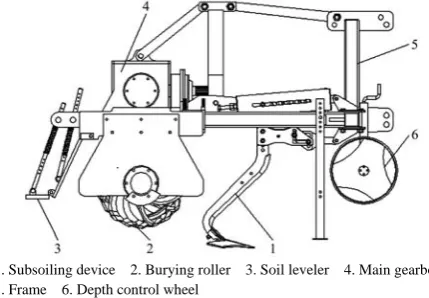
The combined tillage machine for subsoiling and rotary burying of straw returning is subsoiling first and then rotary burying during working. The overall structure of the machine is shown in Figure 1. Subsoiling devices and depth control wheels are connected to front beam of the frame, burying roller of straw returning is behind, the power of burying roller is transmitted from the tractor through the main gearbox and soil leveler is located after burying roller, and carries out the final leveling work.
Effective operating width of combined tillage machine for subsoiling and rotary burying is 2 m, 4 subsoilers are evenly distributed horizontally. Tillage depths of subsoiling and rotary burying were controlled at 25 cm and 15 cm, respectively, by adjusting the depth control wheel, the power of the tractor was not
less than 60 kW. The machine is mounted behind the tractor through three-link hitch, and the main gearbox is connected with the PTO shaft of the tractor during working. As the tillage operation starts, the subsoiling device first enters the soil for subsoiling operation, loosens the soil, and then burying roller enters into the soil, continues to break the soil, the straw and weeds are chopped and buried, finally, the soil is leveled by soil leveler.
1. Subsoiling device 2. Burying roller 3. Soil leveler 4. Main gearbox 5. Frame 6. Depth control wheel
Figure 1 Structure diagram of the machine 2.1.1 Subsoiling device
Straw and weeds are accumulated in the subsoiler shank, which seriously affects the working quality when traditional subsoiler shank is used in the field with large amount of straw[28,29]. The sliding cutting shank was designed for this problem. It had slide cutting effect on straw and weeds, thus reduced the occurrence of this phenomenon. The structure of sliding cutting subsoiler is shown in Figure 2.
Note: α is the soil-ascending angle, (°); τ is the sliding cutting angle, (°); h is the length of subsoiler, mm.
Figure 2 Structure diagram of sliding cutting subsoiler The key structural parameters of subsoiler mainly include sliding cutting angle (τ), the length of subsoiler (h), the soil-ascending angle (ɑ) and edge angle (60°). The size of sliding cutting angle determined whether the sliding cutting effect was significant. To make the shank sliding to cut the straw, the sliding cutting angle must be larger than the friction angle between the shank and the straw. However, too large sliding cutting angle will also lead to larger overall size. Therefore, the value of sliding cutting angle was determined to be 45° through previous study[30]. The part of stubble root can be cut off and straw can be overturned during working of subsoilers. The lodged straw is cut off by the shank through the sliding cutting effect. This structure can avoid accumulation of straw and completes the partial cutting of straw. 2.1.2 Burying roller
rotary blade holders and cutter shaft. The operation process is rotary blades (rotary radius is 245 mm) enters into the soil, most of the straw and soil are broken and thrown, the ditch wall is cut out by the machete, and then the straw burying operation is carried out by the spiral horizontal blades (rotary radius is 210 mm) welded on the machetes, so as to achieve the purpose of mixing straw with soil.
1. Machete 2. Spiral horizontal blade 3. Rotary blade (right) 4. Rotary blade (left) 5. Cutter head 6. Rotary blade holder 7. Cutter shaft
Figure 3 Structure diagram of burying roller
2.2 Test equipment and measurements
2.2.1 Test equipment
The testing machines include the combined tillage machine for subsoiling and rotary burying of straw returning and the high stubble straw returning machine, they all are towed by the Dongfanghong LX954 tractor (YTO Group Corporation, Luoyang, China). Other devices include the CKY-810 torque and rotary speed sensor (Avic Tech Control Technology Co., Ltd., Beijing, China), the BK-5 drawbar load sensor (China Academy of Aerospace Aerodynamics, Beijing, China), wireless dynamic data collector (Heilongjiang Academy of Agricultural Machinery Science, Heilongjiang, China), computer with the dynamic parameter telemetry acquisition program, TJSD-750 soil hardness instrument (Top Yunnong Technology Co., Ltd., Zhejiang, China) cutting ring, oven and so on.
2.2.2 Measurements
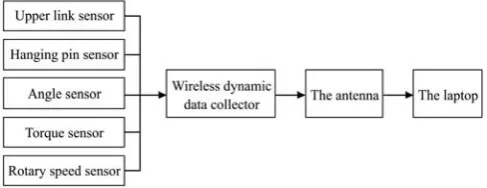
The total power consumption of the machine includes two parts: drawbar power and PTO power. The drawbar power was obtained from the product of draught and forward speed, the draught was measured by the BK-5 drawbar load sensor and the PTO power was measured by the CKY-810 torque and rotary speed sensor. The BK-5 drawbar load sensor included one upper link sensor (include an angle sensor) and two hanging pin sensors. Three sensors were connected to the tractor and the machine through three-link hitch. The CKY-810 torque and rotary speed sensor was connected between the PTO of tractor and the main gearbox of machine through the universal joint. Measurement principle of wireless dynamic data collection system is shown in Figure 4. The wireless dynamic data collector was opened when the test was started, the sensors transmitted the sampling data to the wireless dynamic data collector and data was then transmitted from its built-in wireless transmitter. The data was collected by the receiving antenna and telemetry acquisition program installed on the laptop computer, which was not far away from the field, and converted the data to the draught and PTO power.
Figure 4 Measurement principle of wireless dynamic data collection system
2.3 Test setting
In June 2017, the field test was conducted at the modern agricultural science and technology experimental base of Huazhong Agricultural University, Wuhan, Hubei Province, China. The test field was typical rape field of rice-rape rotation of the middle and lower reaches of the Yangtze River, the rape field was harvested in mid-May, and the stubble of field was high. The soil was clay loam, soil condition was suitable for tillage, and test conditions were basically the same everywhere in test field, with no larger slope. The soil and straw parameters were measured before the experiment. All of the initial parameters of soil and straw were sampled by a five-point sampling method in the whole field. The soil hardness was measured by a TJSD-750 soil hardness instrument. The measurement method was to insert the probe into the soil at a uniform speed, measure the soil hardness at different depths, at the same time, the soil hardness was recorded by reading the numerical values on the display. Soil samples were collected by a cylindrical ring knife at different depths. The soil samples were weighed and dried for 24 h in an oven at 105°C and weighed again to determine their soil water content and bulk density. The stubble height was measured directly in the field by a steel ruler. A 1 m×1 m quadrate was placed in the field. The entire straw residue in the quadrate were sampled by the use of scissors and weighed. The straw samples were dried in an oven for 72 h at 55°C and weighed to determine the wet densities and water content of the straw residue. The soil and straw parameters before tillage are shown in Table 1.
Table 1 Parameters soil and straw before test
Name Parameters Depth/cm Value
Soil
Bulk density/g·cm-3
0-10 1.37 10-20 1.43 20-30 1.61
Water content/%
0-10 17.1 10-20 18.4 20-30 18.2
Soil hardness/kPa
0-10 949.5 10-20 1760.6 20-30 2301.6
Straw
Stubble height/cm 62.7
Wet density/g·m-2 1636
Water content/% 66.74
The main purpose of the field tests were to study the effect of work quality and total power consumption by subsoiling on high stubble straw returning machine, the tillage depth of subsoiling was controlled at 25 cm and the tillage depth of rotary burying was controlled at 15 cm. The forward speed and PTO speed of tractor were the test factors, as shown in Table 2. In the case of combined operation, the forward speed should not be too fast, therefore, two low gear speeds of tractor were taken as two levels of forward speed. The effective controllable range of PTO speed was 600-720 r/min. Therefore, three levels of PTO speed were set, and all-factor tests were carried out under six working conditions.
Table 2 Experimental factors and levels
Level
Factor
Forward speed A/km·h–1 PTO speed B/r·min–1
1 1.5 600
2 2.5 660
3 720
2.4 Methods of data calculation
The results of these tests were analyzed according to the conventional evaluation method of the performance of subsoiling and straw returning machine[31-32]. The working quality includes straw burying quality, pass rate of straw chopping, rate of soil pulverization, tillage depth and its stability, surface evenness after tillage. Total power consumption includes drawbar power and PTO power. The calculating method was as follows.
2.4.1 Straw burying quality
Structure diagram of tillage layer of SRB after working was shown in Figure 5. The quality indexes of straw covering included two aspects: one was straw coverage rate below the field surface; the other was straw proportion of the lower half burying layer.
Figure 5 Structure diagram of tillage layer
The sowing depth of the general crops was 0-6 cm, therefore, straw proportion of the lower half burying layer (more than 6 cm) was bigger, which indicated the next crop planting was less likely to fall on the straw and influence the germination and the straw burying quality was better. The calculation method of each index was as follows:
(1)
where, η is straw coverage rate, %; W is average straw weight of per unit area before tillage, g; WA is residue straw weight in per unit
area of field surface after tillage, g; ηB is straw proportion of the
upper half burying layer, %; WB is straw weight in per unit area of
upper half burying layer, g; ηC is straw proportion of the lower half
burying layer, %.
2.4.2 Pass rate of straw chopping
The pass rate of straw chopping was the proportion of straw weight of the length less than 10 cm in per unit area after working accounted for average straw weight in per unit area before tillage, as is shown in Equation (2).
100%
L
W W
ψ
W
−
= × (2)
where, ψ is pass rate of straw chopping, %; WL is straw weight of
the length more than 10 cm in per unit area, g.
2.4.3 Rate of soil pulverization
Rate of soil pulverization was the proportion of soil block weight of the longest side less than 4 cm in unit area accounted for total weight of soil block after working, it can be calculated as:
100%
S
S L
G C
G G
= ×
+ (3)
where, C is rate of soil pulverization, %; GS is soil block weight of
the longest side less than 4 cm in unit area, g; GL is soil block
weight of the longest side more than 4 cm in unit area, g. 2.4.4 Tillage depth and its stability
Tillage depth and its stability included subsoiling tillage depth and rotary burying tillage depth and their stability, it can be calculated as:
0 2
1 0
0
0
( )
1
100%, 1
n
i i
a a
S
n S
V U V
a
=
⎧
− ⎪
⎪ = ⎪
⎨ −
⎪
⎪ = × = −
⎪⎩
∑
(4)
where, S0 is standard deviation of tillage depth in various working conditions; ai is the tillage depth of point i, cm; a is average tillage
depth, cm; n0 is number of measured points; V is variation coefficient of tillage depth in various working conditions; U is stability coefficient of tillage depth in various working conditions. 2.4.5 Total power consumption
Total power is the sum of the drawbar power and the PTO power, it can be calculated as:
9550
D
P
T D P
P F v
T n P
P P P
= ⋅ ⎧
⎪ ⋅
⎪ =
⎨ ⎪
⎪ = +
⎩
(5)
where, PD is drawbar power, kW; F is draught, N; v is forward
speed, m·s-1; PP is PTO power, kW; T is PTO torque, N·m; n is
PTO speed, r·min-1; PT is total power consumption, kW.
3 Results and discussion
The result analysis included two aspects, one was the working quality, and the other was the total power consumption.
3.1 Working quality
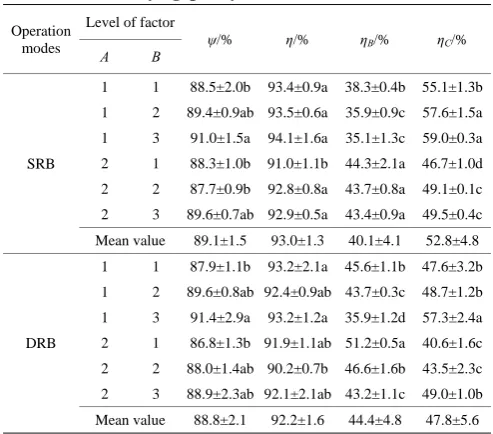
Table 3 showed the effects of various working conditions on the straw burying quality of SRB and DRB. The various working conditions had significant effects on pass rate of straw chopping (ψ), straw coverage rate (η), straw proportion of the upper half burying layer (ηB) and straw proportion of the lower half burying
layer (ηC) (p<0.05). In all working conditions, the working
quality under the A1B3 condition was best, while that was opposite in the A2B1 condition. The average pass rate of straw chopping of SRB and DRB under various working conditions was 89.1% and 88.8% respectively, straw coverage rate was 93.0% and 92.2%, respectively, SRB was a little better than DRB, and all of them had achieved good results. With the increase of forward speed, the pass rate of straw chopping gradually dropped, with the increased of PTO speed, the pass rate of straw chopping gradually increased. With the increase of forward speed, the straw coverage rate gradually dropped, with the increase of PTO speed, the straw coverage rate of SRB gradually increased, the straw coverage rate of DRB first dropped and then increased.
proportion of the lower half burying layer were illustrated in Figure 6 under different PTO speed.
Table 3 Effects of various working conditions on the straw burying quality of SRB and DRB
Operation modes
Level of factor
ψ/% η/% ηB/% ηC/%
A B
SRB
1 1 88.5±2.0b 93.4±0.9a 38.3±0.4b 55.1±1.3b 1 2 89.4±0.9ab 93.5±0.6a 35.9±0.9c 57.6±1.5a 1 3 91.0±1.5a 94.1±1.6a 35.1±1.3c 59.0±0.3a 2 1 88.3±1.0b 91.0±1.1b 44.3±2.1a 46.7±1.0d 2 2 87.7±0.9b 92.8±0.8a 43.7±0.8a 49.1±0.1c 2 3 89.6±0.7ab 92.9±0.5a 43.4±0.9a 49.5±0.4c Mean value 89.1±1.5 93.0±1.3 40.1±4.1 52.8±4.8
DRB
1 1 87.9±1.1b 93.2±2.1a 45.6±1.1b 47.6±3.2b 1 2 89.6±0.8ab 92.4±0.9ab 43.7±0.3c 48.7±1.2b 1 3 91.4±2.9a 93.2±1.2a 35.9±1.2d 57.3±2.4a 2 1 86.8±1.3b 91.9±1.1ab 51.2±0.5a 40.6±1.6c 2 2 88.0±1.4ab 90.2±0.7b 46.6±1.6b 43.5±2.3c 2 3 88.9±2.3ab 92.1±2.1ab 43.2±1.1c 49.0±1.0b Mean value 88.8±2.1 92.2±1.6 44.4±4.8 47.8±5.6 Note: Means within the same column followed by the same letter are not significantly different (p<0.05).
Note: Different lowercase letters from a and b indicate significant difference among SRB; c and d indicate significant difference among DRB.
Figure 6 Effects of operation modes on straw proportion of the lower half burying layer under different PTO speeds From Table 3 and Figure 6, it was known that the PTO speed has a significant effect on straw proportion of the lower half burying layer of SRB and DRB. With the increased of PTO speed, the straw proportion of the lower half burying layer of SRB and DRB gradually increased. The forward speed of tractor had a significant effect on straw proportion of the lower half burying layer of SRB and DRB. With the increase of forward speed, the straw proportion of the lower half burying layer of SRB and DRB gradually dropped. The straw proportion of the lower half burying layer of SRB and DRB reached the maximum when the PTO speed was 720 r/min and the forward speed was 1.5 km/h. At this time, the straw proportion of the lower half burying layer of SRB was 59.0%, and DRB was 57.3%.
The average straw proportion of the lower half burying layer of SRB under various working conditions was 52.8%, and the value of DRB was 47.8%, SRB had increased by 10.5% compared with DRB. The subsoiling operation under SRB condition played a key role in this case. The main reason was that the sliding cutting angle of spiral horizontal blade of the burying roller is not large. On the one hand, the spiral horizontal blade had the effect of breaking on straw; on the other hand, it had the effect of burying on
straw. Under the mode of DRB, the spiral horizontal blade directly acted on the unloosened soil, the soil hardness was large. Soil played a certain supporting force to straw in the working process of spiral horizontal blade, the straw was inclined to break and the effect of downward burying was slightly lower. Under the mode of SRB, subsoiling was carried out first, the soil in a certain range was loosened by the subsoiling and the soil hardness was greatly reduced. The supporting force was provided by the loosened soil to straw was less than DRB, soil resistance was smaller when the spiral horizontal blade buries the straw, the straw can be pressed into the deeper soil layer and then cut off after reaching certain supporting force, thus the burying depth of straw was increased and the straw proportion of the lower half burying layer was increased.
According to the soil quality after tillage of SRB and DRB under various working conditions, the average rate of soil pulverization of SRB was 92.2%, which was better than 91.1% of DRB. Under the mode of SRB, the measured mean value of tillage depth of rotary burying was 15.6 cm, the mean value of variation coefficient of tillage depth was 7.4%, and the mean value of stability coefficient of tillage depth was 92.6%; the measured mean value of tillage depth of subsoiling was 25.1 cm, the mean value of variation coefficient of tillage depth was 6.8%, and the mean value of stability coefficient of tillage depth was 93.2%. Under the mode of DRB, the measured mean value of tillage depth of rotary burying was 15.6 cm, the mean value of variation coefficient of tillage depth was 9.2%, and the mean value of stability coefficient of tillage depth was 90.8%. The mean surface evenness after tillage of SRB and DRB was 8.9 mm and 8.5 mm respectively. On the whole, the soil quality after tillage of SRB was better than that of DRB, the soil was loose, which could meet the technical requirements of tillage and soil preparation.
3.2 Total power consumption
Table 4 showed the effects of various working conditions on the power distribution of SRB and DRB. The various working conditions had significant effects on PTO torque (T), draught (F), drawbar power (PD), PTO power (PP) and total power consumption
(PT) (p<0.05). Under various working conditions, the PTO torque
of SRB range was maintained at 381-412 N·m, while the PTO torque of DRB range was maintained at 510-611 N·m. The PTO torque of SRB decreased by 22.39%-34.04% compared with DRB under corresponding working conditions. It showed that subsoiling under the mode of SRB can effectively reduce the PTO torque and then reduce the torque of burying roller. Therefore, subsoiling had a significant effect on increasing the service life of cutter shaft of the burying roller and reducing the wear and tear of the transmission system and blades, SRB was superior to DRB in the protection of machine.
various working conditions, the total power consumption of SRB was 30.26-38.76 kW and the total power consumption of DRB was 30.16-36.51 kW. The total power consumption of SRB decreased by (–6.16%-6.10%) compared with DRB under corresponding working conditions. There was a little difference in total power consumption between them. The main reason is that the PTO
power under SRB is small, but its drawbar power is much larger than that of DRB, so the total power consumption of SRB (the sum of drawbar power and PTO power) was similar to that of DRB. Under low speed, the total power consumption of SRB was slightly smaller; under high speed, the total power consumption of DRB was slightly smaller.
Table 4 Effects of various working conditions on the power distribution of SRB and DRB
Level of factor SRB DRB
A B T/N·m F/kN PD/kW PP/kW PT/kW T/N·m PP (PT)/kW
1 1 381±46b 16.12±1.60bc 7.09±0.70d 23.17±2.79c 30.26±2.79f 512±79c 30.16±4.28d
1 2 390±40b 14.99±1.00d 6.45±0.43e 26.17±2.67b 32.62±2.79e 514±62c 34.74±3.99bc
1 3 388±60b 17.04±1.27a 7.33±0.55c 28.29±4.29a 35.62±4.41c 510±99c 35.89±6.46ab
2 1 403±56a 16.41±1.53b 9.67±0.90b 23.76±3.21c 33.43±3.28d 611±93a 34.53±4.84c
2 2 412±61a 17.15±1.87a 10.12±1.10a 26.93±3.89b 37.05±4.49b 547±111b 35.72±6.44abc
2 3 402±61a 15.81±1.38c 9.96±0.87a 28.80±4.28a 38.76±4.34a 518±68c 36.51±4.68a
Note: Means within the same column followed by the same letter are not significantly different (p<0.05). The results of total power consumption under modes of SRB
and DRB were summarized. The effects of operation modes on total power consumption were illustrated in Figure 7 under different PTO speed.
Note: Different lowercase letters from a to c indicate significant difference among SRB; d to f indicate not significant difference among DRB.
Figure 7 Effects of operation modes on total power consumption under different rotary speeds of PTO
As was shown in Table 4 and Figure 7, the PTO speed and the forward speed all had a significant effect on total power consumption of SRB and DRB. With the increase of PTO speed and forward speed, the total power consumption of SRB and DRB gradually increased. The total power consumption of SRB and DRB reached the minimum when the PTO speed was 600 r/min and the forward speed was 1.5 km/h. At this time, the total power consumption of SRB was 30.26 kW, and DRB was 30.16 kW.
3.3 Discussion
At present, with the rapid development of combined tillage machine, researchers have developed combined tillage machines [33-34]
, which combines plowing or subsoiling with traditional rotary tillage machine. However, due to the straw returning effect of traditional rotary tillage machine is difficult to meet the needs of land preparation, the working quality of the combined tillage machine needs to be improved. The working quality of straw returning is greatly affected by the structure of the machine. The straw returning machine developed by our research group could meet certain requirements when straw was returned directly, but the burying roller needed to overcome greater soil resistance, which had a greater impact on the PTO torque and PTO power of tractor (Table 4). The combined tillage machine for subsoiling and rotary burying studied in this paper not only improved the working
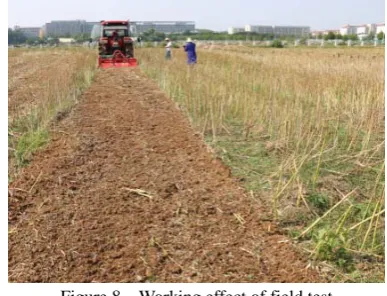
quality further, but also distributed the tractor power more reasonably, which significantly reduced the PTO torque. There was not much difference between the total power consumption of SRB and DRB, this was in good agreement with the result of the study by Zhao et al.[35] and Usaborisut et al.[36]. The working effect of field test was shown in Figure 8.
Figure 8 Working effect of field test
4 Conclusions
Based on the purpose of conservation tillage, a combined tillage machine for subsoiling and straw returning was developed and the field test was carried out, effect of subsoiling on working quality and total power consumption of high stubble straw returning machine was analyzed.
consumption of SRB and DRB. The optimal working combination (working quality as the primary index) was 1.5 km/h of forward speed and 720 r/min of PTO speed. At this time, the straw coverage rate was 94.1%, the straw proportion of the lower half burying layer was 59.0%, and the total power consumption was 35.62 kW. The PTO speed can be reduced appropriately to decrease the total power consumption under the premise of guaranteeing the working quality when the machine is working in the field with small amount of straw.
In this study, the high stubble rape field was used as the test field. It was proved that subsoiling had significantly improved the working quality of high stubble straw returning machine through the test and the total power consumption don’t increase obviously. The structure of subsoiling reduced the burden of the straw returning machine. In future work, the effects of different field conditions and configuration of machine on the working quality and total power consumption would be studied.
Acknowledgements
The authors acknowledge that this work was supported by the Special Fund for Agro-scientific Research in the Public Interest (No. 201503136), the National Key Technology R&D Program (No. 2017YFD0301300).
[References]
[1] Chen J, Zheng W, Gao H, Shao J L, Liu C. Estimation method of straw burned area based on multi-source satellite remote sensing. Transactions of the CSAE, 2015; 31(3): 207–214. (in Chinese)
[2] Fang F, Wang F, Shi Z L, Zheng X Q, Shao Y H, Li X, et al. Quantitative estimation on straw nutrient resources and emission of pollutants from straw burning in Beijing-Tianjin-Hebei region. Transactions of the CSAE, 2017; 33(3): 1–6. (in Chinese)
[3] Tian G C, Wang Y, Sun L, Shi M X, Wu F Q. Effects of wheat straw burning on content of soil organic matter, nitrogen, phosphorus, and potassium. Acta Ecologica Sinica, 2016; 36(2): 387–393. (in Chinese) [4] Langmann B, Duncan B, Textor C, Trentmann J, Werf G R V D.
Vegetation fire emissions and their impact on air pollution and climate. Atmospheric Environment, 2009; 43(1): 107–116.
[5] Lal R. World crop residues production and implications of its use as a biofuel. Environment International, 2005; 31(4): 575–584.
[6] Malhi S S, Nyborg M, Solberg E D, Dyck M F, Puurveen D. Improving crop yield and N uptake with long-term straw retention in two contrasting soil types. Field Crop Research, 2011; 124(3): 378–391.
[7] Kasteel R, Garnier P, Vachier P, Coquet Y. Dye tracer infiltration in the plough layer after straw incorporation. Geoderma, 2007; 137(3-4): 360–369.
[8] Jacinthe P A, Lal R, Kimble J M. Carbon budget and seasonal carbon dioxide emission from a central Ohio Luvisolas influenced by wheat residue amendment. Soil & Tillage Research, 2002; 67: 147–157. [9] Hamido S A, Kpomblekou A K. Cover crop and tillage effects on soil
enzyme activities following tomato. Soil & Tillage Research, 2009; 105(2): 269–274.
[10] Singh S, Batra R, Mishra M M, Kapoor K K, Goyal S. Decomposition of paddy straw in soil and the effect of straw incorporation in the field on the yield of wheat. Journal of Plant Nutrition and Soil Science, 2010; 155(4): 307–311.
[11] Wang H Y, Wang F, Sun R H, Gao C Y, Wang Y J, Sun N, et al. Policies and regulations of crop straw utilization of foreign countries and its experience and inspiration for China. Transactions of the CSAE, 2016; 32(16): 216–222. (in Chinese)
[12] Sui M M, Shen F, Xu A G, Ding S W. Precise management system for mechanized straw returning based on BDS. Transactions of the CSAM, 2016; 47(1): 23–28. (in Chinese)
[13] Bastian F, Bouziri L, Nicolardot B, Ranjard L. Impact of wheat straw decomposition on successional patterns of soil microbial community structure. Soil Biology and Biochemistry, 2009; 41(2): 262–275.
[14] Govaerts B, Mezzalama M, Unno Y, Sayre K D, Luna-Guido M,
Vanherck K, Dendooven L, Deckers J. Influence of tillage, residue management, and crop rotation on soil microbial biomass and catabolic diversity. Applied Soil Ecology, 2007; 37: 18–30.
[15] Li B, Xia R, Liu F Y, Chen J, Han W T, Han B. Determination of the draft force for different subsoiler points using discrete element method. Int J Agric & Biol Eng, 2016; 9(3): 81–87.
[16] Abo-Elnor M, Hamilton R, Boyle J T. Simulation of soil-blade interaction for sandy soil using advanced 3D finite element analysis. Soil & Tillage Research, 2004; 75(1): 61–73.
[17] Zhang X R, Wang C, Chen Z H, Zeng Z W. Design and experiment of a bionic vibratory subsoiler for banana fields in southern China. Int J Agric & Biol Eng, 2016; 9(6): 75–83.
[18] Li B, Liu F Y, Mu J Y, Chen J, Han W T. Distinct element method analysis and field experiment of soil resistance applied on the subsoiler. Int J Agric & Biol Eng, 2014; 7(1): 54–59.
[19] He J, Li H W, Gao H W. Subsoiling effect and economic benefit under conservation tillage mode in Northern China. Transactions of the CSAE, 2006; 22(10): 62–67. (in Chinese)
[20] Shahgoli G, Fielke J, Desbiolles J, Saunders C. Optimising oscillation frequency in oscillatory tillage. Soil & Tillage Research, 2010; 106(2): 202–210.
[21] Kasisira L L, Du Plessis H L M. Energy optimization for subsoilers in tandem in a sandy clay loam soil. Soil & Tillage Research, 2006; 86(2): 185–198.
[22] Temesgen M, Hoogmoed W B, Rockstrom J, Savenije H H G. Conservation tillage implements and systems for smallholder farmers in semi-arid Ethiopia. Soil & Tillage Research, 2009; 104: 185–191. [23] Ge Y Y, Wang J W, Wang J F. Optimization and reliability sensitivity
analysis for curer shaft of whole rice straw returning machine. Transactions of the CSAE, 2009; 25(10): 131–134.(in Chinese) [24] Zhou Y, Yu S S, Xia J F. Design and experiment of cultivator for high straw returning in paddy field. Transactions of the CSAM, 2012; 43(8): 46–49, 77. (in Chinese)
[25] He X W. Design and Experimental Study of Power Consumption Measurement System for High Stubble Returning and Tillage Machine. M. S. dissertation. Wuhan: Huazhong Agricultural University, 2014. (in Chinese)
[26] Zhang X M, Zhang J M, Xia J F, Zhang S, Zhai J B, Wu H. Design and experiment on critical component of cultivator for straw returning in paddy field and dry land. Transactions of the CSAE, 2015; 31(11): 10–16. (in Chinese)
[27] Zhang T, Xia J F, Wu G, Zhai J B. Automatic navigation path detection method for tillage machines working on high crop stubble fields based on machine vision. Int J Agric & Biol Eng, 2014; 7(4): 29–37.
[28] Chai M J, Li H W, He J, Di Y L, Wang L J. Design and experimental study on subsoiler for corn-cover field. Journal of Agricultural Mechanization Research, 2006; 28(7): 136–138, 142. (in Chinese) [29] Gao H W,Li W Y,Li H W. Conservation tillage technology with
Chinese characteristics. Transactions of the CSAE, 2003; 19(3): 1–4. (in Chinese)
[30] Zhou H, Zhang J M, Zhu Y H, Zhang C L, Tahir H M, Xia J F. Design and experiment of combined tillage machine for sub-soiling and rotary burying of straw incorporated into soil. Transactions of the CSAE, 2017; 33(22): 17–26. (in Chinese)
[31] JB/T 6678-2001. Smashed straw machine. Machinery industry standard of the People's Republic of China. (in Chinese)
[32] JB/T 10295-2001. Combined implement for subsoiler and cultivating. Machinery industry standard of the People's Republic of China. (in Chinese)
[33] Qin K, Ding W M, Fang Z C, Du T T, Zhao S Q, Wang Z. Design and experiment of plowing and rotary tillage combined machine. Transactions of the CSAE, 2016; 32(16): 7–16. (in Chinese)
[34] Zheng K, He J, Li H W, Chen L Q, Hu H N, Liu W Z. Influence of working order on working quality and power consumption of subsoiling and rotary tillage combined machine. Transactions of the CSAE, 2017; 33(21): 52–60. (in Chinese)
[35] Zhao W, Zhang W C, Zhou Z L, Niu Y, Zhao D Z. Development and experimental research of combined subsoiling and rotary tilling set. Transactions of the CSAE, 2007; 23(1): 125–128. (in Chinese)