Comparative safety of the sodium
glucose co-transporter 2 (SGLT2)
inhibitors: a systematic review
and meta-analysis
Jennifer R Donnan,
1Catherine A Grandy,
1Eugene Chibrikov,
1Carlo A Marra,
1,2Kris Aubrey-Bassler,
3Karissa Johnston,
1Michelle Swab,
3Jenna Hache,
1Daniel Curnew,
1Hai Nguyen,
1John-Michael Gamble
1,4To cite: Donnan JR, Grandy CA,
Chibrikov E, et al. Comparative safety of the sodium glucose co-transporter 2 (SGLT2) inhibitors: a systematic review and meta-analysis. BMJ Open
2019;9:e022577. doi:10.1136/ bmjopen-2018-022577
►Prepublication history and additional material for this paper are available online. To view these files, please visit the journal online (http:// dx. doi. org/ 10. 1136/ bmjopen- 2018- 022577).
Received 2 March 2018 Revised 14 June 2018 Accepted 2 November 2018
1School of Pharmacy, Memorial University of Newfoundland, St. John’s, Newfoundland and Labrador, Canada
2School of Pharmacy, University of Otago, Dunedin, New Zealand 3Faculty of Medicine, Memorial University, St. John’s, Newfoundland and Labrador, Canada
4School of Pharmacy, Faculty of Science, University of Waterloo, Waterloo, Ontario, Canada
Correspondence to Dr John-Michael Gamble; jm. gamble@ uwaterloo. ca © Author(s) (or their employer(s)) 2019. Re-use permitted under CC BY-NC. No commercial re-use. See rights and permissions. Published by BMJ.
AbstrACt
Objective
To estimate the association between the use
of sodium glucose co-transporter-2 (SGLT2) inhibitors
and postmarket harms as identified by drug regulatory
agencies.
Design
We conducted a systematic review and
meta-analysis of randomised controlled trials (RCT). Six large
databases were searched from inception to May 2018.
Random effects models were used to estimate pooled
relative risks (RRs).
Intervention
SGLT2 inhibitors, compared with placebo or
active comparators.
Primary outcomes
Acute kidney injury (AKI), diabetic
ketoacidosis (DKA), urinary tract infections (UTI), bone
fractures and lower limb amputations.
results
We screened 2418 citations of which 109 were
included. Most studies included one of four SGLT2 inhibitors,
dapagliflozin, canagliflozin, empagliflozin and ipragliflozin.
When compared with placebo, SGLT2 inhibitors were found to
be significantly protective against AKI (RR=0.59; 95% CI 0.39
to 0.89; I
2=0.0%), while no difference was found for DKA (RR
0.66; 95% CI 0.30 to 1.45, I
2=0.0%), UTI (RR 1.02; 95% CI
0.95 to 1.09, I
2=0.0%) or bone fracture (RR 0.87; 95% CI
0.69 to 1.09, I
2=1.3%). Three studies reported on amputation,
with one finding a significant increase risk. No increased risk
for either outcome was found when compared with active
controls. Subgroup analysis did show an increased risk of
UTI with dapagliflozin only (RR 1.21; 95% CI 1.02 to 1.43,
I
2=0.0%), but no other analysis supported an increased risk of
AKI, DKA, UTI or fracture.
Conclusions
Current evidence from RCTs does not suggest
an increased risk of harm with SGLT2 inhibitors as a class
over placebo or active comparators with respect to AKI, DKA,
UTI or fracture. However, wide CIs for many comparisons
suggest limited precision, and therefore clinically important
adverse events cannot be ruled out. Dapagliflozin, appears
to independently increase the risk of UTI, although the
mechanism for this intraclass variation in risk is unclear.
PrOsPErO registration number
CRD42016038715.
IntrODuCtIOn
The sodium glucose co-transporter 2 (SGLT2)
inhibitors are novel glucose-lowering therapies
available for the management of type 2
diabetes. Clinical guidelines recommend the
SGLT2 inhibitors as one of numerous
poten-tial pharmacological approaches for
second-line therapy following metformin failure
or intolerance.
1 2Some clinical guidelines
recommend the SGLT2 inhibitors,
empagli-flozin or canagliempagli-flozin, or the glucagon-like
peptide-1 (GLP-1) receptor agonist,
liraglu-tide, as preferred second-line therapies in
patients with cardiovascular disease who have
failed to achieve glycaemic control while on
monotherapy.
1This paradigm shift in the
management of type 2 diabetes is largely
supported by evidence from recent landmark
strengths and limitations of this study
►
This study provides a comprehensive systematic
review of potential serious adverse events related
to use of sodium glucose co-transporter-2 (SGLT2)
inhibitors identified by drug regulatory agencies.
►This study considered select outcomes to provide
focused attention on the issues concerning
regula-tors; however, this means that additional knowledge
of the clinical benefits and harms needs to be
con-sidered before applying the results of this study.
►Several of the outcomes (eg, acute kidney injury,
di-abetic ketoacidosis, limb amputations) we evaluated
occur infrequently and, in some cases, were not
re-ported by individual studies.
►
Certain outcomes may have been inadequately
characterised within study reports. For example,
while urinary tract infections were commonly
re-ported among randomised controlled trials included
in this meta-analysis, data on complicated versus
uncomplicated infections were not.
►
Our objective is to summarise the current state of
knowledge surrounding key postmarket safety
con-cerns of the SGLT2 inhibitors compared with active
and non-active comparators in patients with type 2
diabetes.
on September 22, 2020 by guest. Protected by copyright.
clinical trials.
3–6In 2015, the Empagliflozin Outcome
Event Trial in Type 2 Diabetes Mellitus Patients–Removing
Excess Glucose (EMPA-REG OUTCOME) trial showed
that the SGLT2 inhibitor, empagliflozin, significantly
reduced the risk for composite end point of
cardiovas-cular death, myocardial infarction or stroke by 14% and
all-cause mortality by 32%, in a population with existing
cardiovascular disease.
5The Canagliflozin
Cardiovas-cular Assessment Study (CANVAS), Liraglutide Effect and
Action in Diabetes: Evaluation of Cardiovascular Outcome
Results (LEADER) trial and the Trial to Evaluate
Cardio-vascular and Other Long-term Outcomes with
Semaglu-tide in Subjects with Type 2 Diabetes (SUSTAIN-6) have
also demonstrated similar benefits with canagliflozin,
lira-glutide and semalira-glutide respectively.
3 4Considering the relative potential harms and benefits,
clinicians and policy makers must continue to integrate
new pharmacotherapeutic evidence to optimise health
outcomes. Although the EMPA-REG trial showed that the
SGLT2 inhibitor, empagliflozin, significantly reduces the
risk of cardiovascular morbidity and mortality, regulatory
agencies including the Food and Drug Administration
(FDA), the European Medicines Associations and Health
Canada have issued safety warnings for several adverse
events. These include acute kidney injury (AKI), diabetic
ketoacidosis (DKA), urinary tract infections (UTI), bone
fractures and lower limb amputations, based primarily on
case report data.
7–14With respect to AKI, there is conflicting information
coming forward from clinical trials and case reports.
Despite early indication of a protective effect from SGLT2
inhibitors,
15the FDA published in a safety
communica-tion in June 2016 that 101 cases of AKI were reported
among users of canagliflozin and dapagliflozin.
12In May
2015, the FDA published a safety update indicating an
increased risk of UTI and DKA. Among patients taking
SGLT2 inhibitors, they identified 19 cases of
life-threat-ening infections that originated as a UTI, and 73 cases
of DKA. However, to date clinical trial evidence does
not support these potential risks. Previously published
meta-analyses of randomised controlled trials (RCT)
found no increased risk of UTIs, except within a subgroup
of dapagliflozin,
15–18and one study found an increased risk
with empagliflozin 25 mg users.
18A previous meta-analysis
on the risk of DKA currently showed no increased risk.
19In January 2016, the FDA issued an expanded warning
regarding a potential increased risk for fracture with
canagliflozin.
9Two published meta-analyses
20 21of SGLT2
inhibitors did not find an increased risk, nor did a pooled
analysis of eight canagliflozin trials.
22Finally, in May 2017,
the FDA supported earlier speculation of increased risk
of low limb amputation
11with evidence gathered from
re-analysis of the CANVAS and CANVAS renal end points
(CANVAS-R) trials, demonstrating a twofold increased
risk.
23No meta-analysis of RCTs currently exists with
respect to amputation.
In light of recent guideline changes that promote
pref-erential use of the SGLT2 inhibitors, clinicians and policy
makers need to continue examining the potential risks
to their patients. Our objective is to address the current
knowledge gap surrounding the postmarket safety of the
SGLT2 inhibitors compared with active and non-active
comparators in patients with type 2 diabetes. We have
conducted a systematic review and meta-analysis of RCTs
to estimate the risk of AKI, DKA, UTI, bone fracture and
lower limb amputation.
MEthODs AnD AnAlysIs
study design
This study has been designed in accordance with the
Preferred Reporting Items for Systematic Reviews and
Meta-Analyses statement on systematic reviews and
meta-analysis.
24This protocol has been registered
(CRD42016038715) with PROSPERO (International
Prospective Register of Systematic Reviews).
25 26Patient involvement
Patients were not engaged in the development of this
protocol.
search strategy
A comprehensive search strategy was developed with
an experienced health science librarian (MS). The
search strategy for published studies was developed in
the PubMed database, and comprised keywords and
MEDLINE controlled vocabulary or medical subject
head-ings. A methodological search filter was applied to
iden-tify RCTs
26and the search was limited to English language
publications. This search strategy served as a template for
additional search strategies tailored to other databases,
including the Cochrane Library, EMBASE and
Interna-tional Pharmaceutical Abstracts. In addition, the
refer-ence lists of topical review articles, editorials and included
studies were hand-searched to identify other potentially
relevant studies. A list of search terms is provided in
section 1 of the online supplementary appendix.
The search for unpublished studies and materials
included ProQuest Dissertations and Theses Global
(ProQuest), and clinical trial registries ( ClinicalTrials.
gov). Inclusion of unpublished data from the FDA has
been shown to substantially impact the effect estimates of
meta-analyses of drug trials.
27Eligibility criteria
We included RCTs with a study population consisting
of patients 18 years of age and older with a diagnosis of
type 2 diabetes. Studies were required to have a formal
definition of type 2 diabetes based on established
diag-nostic criteria during the time of the study. No restriction
was applied with respect to history of diabetes
medica-tion use. One of the RCT study groups was required to
be one of the following SGLT2 inhibitors: canagliflozin,
dapagliflozin, empagliflozin, ipragliflozin or any other
investigational or approved SGLT2 inhibitor during study
period. Eligible comparators included second-generation
on September 22, 2020 by guest. Protected by copyright.
sulfonylureas (glyburide, gliclazide, glimepiride,
glip-izide—first-generation sulfonylureas excluded as they
have a limited role in clinical practice), basal insulins
(Neutral Protamine Hagedorn (NPH), lente, glargine,
detemir, degludec), dipeptidyl peptidase-4 (DPP-4)
inhibitors (alogliptin, linagliptin, saxagliptin, sitagliptin),
GLP-1 receptor agonists (dulaglutide, exenatide,
liraglu-tide), thiazolidinediones (pioglitazone, rosiglitazone),
α-glucosidase inhibitors (acarbose) or placebo/no
treat-ment. All premixed or acute care insulin protocols were
excluded. Any investigational agents other than SGLT2
inhibitors were excluded.
The outcomes of this study include the serious safety
events as highlighted through the federal regulatory drug
safety communications.
7–11These include AKI, DKA, UTI,
bone fractures and lower limb amputations.
Studies were eligible regardless of duration of follow-up,
or publication date; however, non-English citations were
excluded. Language restriction does not appear to bias
estimates of therapeutic interventions.
28 29study selection and data extraction
We used DistillerSR, a systematic review software,
30for
screening and data extraction. Studies went through
a two-level screening process. First, titles and abstracts
were reviewed using the inclusion and exclusion criteria.
Studies that met those criteria, or where a clear decision
could not be made, were moved to second-level screening.
At level two screening, full-text articles were retrieved and
the same criteria applied. Duplicate screening was carried
out using the ‘liberal accelerated’ method at both level one
and level two, which was first applied by Khangura
et al
.
31This method involves having a second reviewer only
eval-uate studies that were deemed not relevant by the lead
reviewer. This reduces the overall number of papers that
require duplicate screening without increasing the risk of
having appropriate studies inadvertently excluded.
Information extracted included study
characteris-tics (country, definitions of exposure(s) and controls),
patient characteristics (sex, age, duration of diabetes)
and outcome data (a complete list of extracted
vari-ables is available in section 2 of the online
supplemen-tary appendix). Where the data conflicted between the
published paper and other sources (eg, ClinicalTrials.
gov), the data from the published paper were used.
Data were only supplemented from other sources when
gaps in information existed. In cases where more than
one publication reported data on the same study,
pref-erence was taken to studies that reported numbers of
events (vs only relative risk (RR) or HR) and the most
recent were used for data extraction. The exception to
this rule was when there was a change to the
interven-tion or comparator groups (eg, drug, dose, etc) for study
extensions, then data from the original publication were
used. Any disagreements were resolved through
discus-sion and consensus. Where necessary, a third reviewer was
consulted. All DistillerSR screening and extraction forms
were created a priori and piloted using a small sample of
eligible studies.
risk of bias assessment
Each included study was critically appraised using the
Cochrane Collaboration domain-based tool for assessing
the risk of bias for RCTs.
32This tool captures six main
sources of bias, including: randomisation sequence,
allocation concealment, blinding of participant and
researcher, blinded outcome assessment, incomplete
outcome data and selective reporting. A seventh
cate-gory captures any other potential sources of bias. Bias was
assessed at the study level. Low risk of bias was defined as
an assessment on the risk of bias tool that included no
more than two categories with ‘unclear risk’. Studies were
defined as high risk if they had: three or more categories
of ‘unclear risk’; one or more categories of ‘medium risk’
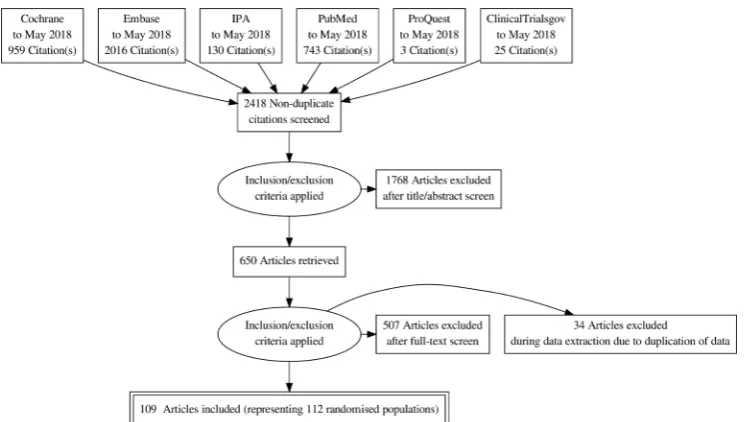
Figure 1
Flow diagram for included studies.
on September 22, 2020 by guest. Protected by copyright.
or one or more categories of ‘high risk’. Publication bias
was examined using funnel plots.
Data synthesis
We conducted a series of pair-wise random effects
meta-analyses to estimate the pooled treatment effect using
RRs, using the restricted maximum likelihood method.
33The primary analysis was split into two comparisons, with
the first between SGLT2 inhibitors and placebo, and the
second between SGLT2 inhibitors and any active
compar-ator. If there were zero events reported, a default value
of 0.5 was added to all groups within that study.
Statis-tical heterogeneity was evaluated using the I
2statistic,
with significant heterogeneity defined as an I
2>50%.
34To explore treatment effect heterogeneity, we conducted
numerous subgroup analyses according to individual
SGLT2 inhibitors, risk of bias and concurrent use of other
diabetes medications. Concurrent/prior use was defined
as any previous use of antidiabetic agents that were used
prior to enrolment or added as background therapy after
enrolment. If patients could be therapy-naïve or have
used other medications to meet enrolment criteria, then
they were categorised as concurrent/prior use.
Treat-ment-naïve was defined as patients who have never had
an antidiabetic medication in the past, have not been on
any other antidiabetic medication in weeks leading up to
enrolment or were able to go through a washout prior
to enrolment. We also conduced sensitivity analyses to
explore the impact of methodological decisions within
Figure 2
Risk of acute kidney injury (AKI) with sodium glucose co-transporter-2 (SGLT2) inhibitors compared with placebo.
Figure 3
Risk of diabetic ketoacidosis (DKA) from sodium glucose co-transporter-2 (SGLT2) inhibitors compared with placebo.
on September 22, 2020 by guest. Protected by copyright.
our analysis. First, we pooled studies that had at least one
reported event. Second, we repeated our analyses using
fixed-effects models. All analyses were conducted using R
statistical software (V.3.4.1). Technical online
supplemen-tary appendix, statistical code and dataset can be granted
by contacting the corresponding author.
rEsults
Included studies
A total of 2418 unique titles and abstracts were screened.
Of these, 650 proceeded to full-text screening. A total
of 143 citations met our inclusion criteria; however, 34
were excluded at the data extraction phase due to
dupli-cation of data, from the publidupli-cation of extension studies
or post hoc analyses. A final total of 109 publications
were included,
5 23 35–141representing 112 randomised
populations (
figure 1
). Three publications reported on
multiple unique populations. Most studies included one
of the four marketed SGLT2 inhibitors, dapagliflozin (34
studies), canagliflozin (20 studies), empagliflozin (25
studies) and ipragliflozin (11 studies); while 21 studies
included one of five non-marketed agents. With respect
to comparators, 4 conducted within-class comparisons,
92 compared with placebo, 8 compared with metformin,
10 compared with an incretin agent, 5 compared with a
sulfonylurea and 3 compared with pioglitizone. A total
of nine studies included more than one unique
compar-ator. One publication, reporting on the combined results
of the CANVAS program
23studies only, provided events
as rates per 1000 person-years. Data from this
publica-tion were only used for the amputapublica-tion outcome
assess-ment, data from an earlier publication on a subset of this
population was used for other outcomes as actual event
numbers were reported.
82Section 3 of the online
supple-mentary appendix outlines the characteristics of each of
the included studies.
Figure 4
Risk of urinary tract infection (UTI) with sodium glucose co-transporter-2 (SGLT2) inhibitor compared with placebo.
on September 22, 2020 by guest. Protected by copyright.
Primary analysis
Acute kidney injury
AKI was reported in 11 RCTs (8 placebo comparison
and 3 active comparison trials): meta-analysis was only
possible with placebo-controlled trials. Overall, SGLT2
inhibitors were found to have a protective effect (RR
0.59; 95% CI 0.39 to 0.89, I
2=0.0%); however, this estimate
is heavily weighted by one study using empagliflozin,
the EMPA-REG trial (
figure 2
).
5Pooled estimate after
removing the EMPA-REG trial was non-significant (RR
0.48; 95% CI 0.14 to 1.64; I
2=0.0%).
Diabetic ketoacidosis
DKA was reported in 26 RCTs (18 placebo comparison, 8
active comparisons and 1 within class comparison trial).
Neither placebo (RR 0.66; 95% CI 0.30 to 1.45, I
2=0.0%)
(
figure 3
) nor incretin (RR 0.43; 95% CI 0.069 to 2.75;
I
2=0.0%; three studies) (forest plot, online
supplemen-tary appendix section 4) comparisons showed a significant
difference in risk of DKA. Additional analysis using only
placebo-controlled trials that had at least one event also
yielded no significant difference (RR 0.73; 95% CI 0.25 to
2.16; I
2=0.0%; seven studies) (forest plot, online
supple-mentary appendix section 4).
Urinary tract infections
UTI was the most frequently reported outcome
exam-ined (110 of 112 studies reported). When compared
with placebo, SGLT2 inhibitors as a class did not
demonstrate a significant increased risk (RR 1.02;
95% CI 0.95 to 1.09) (
figure 4)
; however, subgroup
analysis of the individual agents did show a
signifi-cantly increased risk of UTIs in users of dapagliflozin
(RR 1.21; 95% CI 1.02 to 1.43), but not empagliflozin,
canagliflozin, ipragliflozin or non-marketed SGLT2
inhibitors (grouped) (supplementary appendix).
When compared with active treatments, SGLT2
inhibitors grouped together did not demonstrate an
Figure 5
Risk of urinary tract infection (UTI) with sodium glucose co-transporter-2 (SGLT2) inhibitors compared with other
active treatments.
on September 22, 2020 by guest. Protected by copyright.
increased risk of UTIs over metformin, sulfonylureas,
incretins or glitizones (
figure 5
); however, when
broken down by individual SGLT2 inhibitor,
dapagli-flozin showed an increased risk of UTI over active
comparators grouped together (RR 1.42; 95% CI 1.07
to 1.87) (forest plot, online supplementary appendix
section 4).
Bone fracture
Bone fracture was reported in 63 RCTs (47 placebo
comparisons, 14 active comparison and 2 within
class comparisons). SGLT2 inhibitors were not found
to have an increased risk of fractures over placebo
(RR 0.87; 95% CI 0.69 to 1.09) (
figure 6
), metformin
(RR 0.69; 95% CI 0.19 to 2.51; I
2=0.0%; six studies),
sulfonylureas (RR 1.15; 95% CI 0.66 to 2.00; I
2=0.0%;
three studies) or incretins (RR 1.38; 95% CI 0.31 to
6.17; I
2=0.0%; three studies). A subgroup analysis of
canagliflozin compared with placebo alone, the agent
identified by the FDA as having an increased risk, was
also non-significant (RR 1.02; 95% CI 0.63 to 1.65;
I
2=0.0%; 12 studies) (additional forest plots, online
supplementary appendix section 4).
Lower limb amputation
Data were identified on amputation for three
studies.
23 46 107One case of amputation was found in the
ClinicalTrials. gov data for trial number NCT01422876
Figure 6
Risk of fracture with sodium glucose co-transporter-2 inhibitors compared with placebo.
on September 22, 2020 by guest. Protected by copyright.
in a user of empagliflozin 25 mg, no cases were reported
for other treatment groups. The second study reported
data from the CANVAS program, showed a rate of
ampu-tation among users of canagliflozin (100–300 mg) was
6.3 per 1000 patient-years, compared with 3.4 per 1000
patient-years for placebo, this difference was statistically
significant (p<0.001). Actual number of events were not
reported. The third study reported one case in each of
the treatment groups, ertugliflozin (1/888) and
glime-piride (1/437).
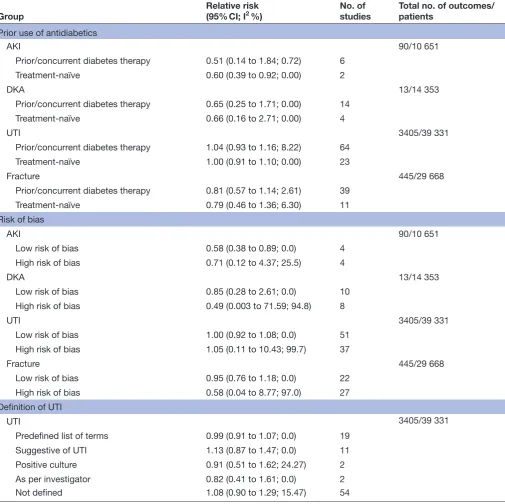
subgroup and sensitivity analyses
Several subgroup analyses were conducted to examine
the impact of prior and concurrent use of other
anti-diabetic agents; the influence of risk of bias as per the
quality appraisal and the impact of the definition of UTI
used as outlined in
table 1
. Overall, these additional
anal-yses did not change the findings of the primary analysis.
There was a decreased risk of AKI in the treatment-naïve
group, and the low risk of bias group, but this was
consis-tent with the main analysis and driven by the same one
Table 1
Subgroup analysis among placebo-controlled trials
Group
Relative risk
(95% CI; I
2%)
No. of
studies
Total no. of outcomes/
patients
Prior use of antidiabetics
AKI
90/10 651
Prior/concurrent diabetes therapy
0.51 (0.14 to 1.84; 0.72)
6
Treatment-naïve
0.60 (0.39 to 0.92; 0.00)
2
DKA
13/14 353
Prior/concurrent diabetes therapy
0.65 (0.25 to 1.71; 0.00)
14
Treatment-naïve
0.66 (0.16 to 2.71; 0.00)
4
UTI
3405/39 331
Prior/concurrent diabetes therapy
1.04 (0.93 to 1.16; 8.22)
64
Treatment-naïve
1.00 (0.91 to 1.10; 0.00)
23
Fracture
445/29 668
Prior/concurrent diabetes therapy
0.81 (0.57 to 1.14; 2.61)
39
Treatment-naïve
0.79 (0.46 to 1.36; 6.30)
11
Risk of bias
AKI
90/10 651
Low risk of bias
0.58 (0.38 to 0.89; 0.0)
4
High risk of bias
0.71 (0.12 to 4.37; 25.5)
4
DKA
13/14 353
Low risk of bias
0.85 (0.28 to 2.61; 0.0)
10
High risk of bias
0.49 (0.003 to 71.59; 94.8)
8
UTI
3405/39 331
Low risk of bias
1.00 (0.92 to 1.08; 0.0)
51
High risk of bias
1.05 (0.11 to 10.43; 99.7)
37
Fracture
445/29 668
Low risk of bias
0.95 (0.76 to 1.18; 0.0)
22
High risk of bias
0.58 (0.04 to 8.77; 97.0)
27
Definition of UTI
UTI
3405/39 331
Predefined list of terms
0.99 (0.91 to 1.07; 0.0)
19
Suggestive of UTI
1.13 (0.87 to 1.47; 0.0)
11
Positive culture
0.91 (0.51 to 1.62; 24.27)
2
As per investigator
0.82 (0.41 to 1.61; 0.0)
2
Not defined
1.08 (0.90 to 1.29; 15.47)
54
AKI, acute kidney injury; DKA, diabetic ketoacidosis; UTI, urinary tract infection.
on September 22, 2020 by guest. Protected by copyright.
large study.
142When the analyses were re-run using a
fixed-effects model, the risk estimates remained the same
or had slightly smaller CIs. Forest plots for the
fixed-ef-fects analysis are mentioned in section 5 of the online
supplementary appendix.
risk of bias
Generally, studies were of good methodological quality;
however, numerous studies were deemed high risk of
selective reporting after outcome data were retrieved
from ClinicalTrials. gov that were not reported in the
peer-reviewed publication (28%). Other potential sources
of bias came from unclear reporting of methodological
processes like randomisation sequence (32%) or blinded
outcome assessment (17%), while most sources of bias
came from lack of blinding of the researchers and
partic-ipants (13%) and of the outcome assessors (9%). Risk
of bias assessment for individual studies are available in
section 6 of the online supplementary appendix. Funnel
plots do not suggest the presence of publication bias (see
section 7 of the online supplementary appendix).
DIsCussIOn
This study provides a comprehensive review of the RCT
literature with respect to key safety outcomes identified
through postmarketing surveillance systems and
commu-nicated to health professionals and the public by drug
regulators. We pooled outcome data from over 100 RCTs
(including unpublished data only available through
ClinicalTrials. gov) to quantify the association between
SGLT2 inhibitors and AKI, DKA, UTI and bone fracture.
We found that SGLT2 inhibitors as a class do not appear
to increase the risk of DKA, UTI and bone fracture, and
may have a protective effect with respect to AKI, although
this effect was heavily weighted by one large RCT. With
respect to UTI, overall findings do not hold in subgroup
analysis by individual drug, suggesting that increased risk
of UTI is associated only with dapagliflozin.
Despite early indication of a protective effect from
SGLT2 inhibitors on kidney function,
15the FDA published
in a safety communication in June 2016 that 101 cases
of AKI were reported among users of canagliflozin and
dapagliflozin.
12SGLT2 inhibitors may provide a
long-term protective effect on the kidneys via reduced
trans-glomerular pressure, similar to the effects of agents that
target the renin-angiotensin-aldosterone (RAAS) axis.
143Szalat
et al
proposed three possible mechanisms that may
explain the potential for an increased risk of AKI with
SGLT2 inhibitors: (1) excessive diuresis leading to volume
depletion, a particular concern for those who are
haemo-dynamically unstable and volume-depleted; (2) a greater
drop in transglomerular pressure due to the
concomi-tant action of SGLT2 inhibition and RAAS blockade and
(3) renal medullary hypoxic injury, likely occurring in
patients taking concomitant agents that impair medullary
oxygenation (eg, non-steroidal anti-inflammatory drugs,
radio-contrast dyes).
143Additional potential mechanisms
of renal injury include an increase in the urinary uric acid
level leading to both crystal-dependent and
crystal-inde-pendent tubular injury, and activation of aldose
reduc-tase resulting in fructose generation ultimately leading to
increased oxidative stress, uric acid, cytokine release and
inflammation.
144This systematic review highlights a lack of
reporting of AKI with only 11 of 111 randomised
compar-isons having published data on this outcome. Although
an overall protective effect was found, this finding was
driven by one large RCT that compared empagliflozin
with placebo. Evidence to support or refute the potential
risk of AKI with use of canagliflozin or dapagliflozin was
insufficient. Case reports filed with the FDA suggest that
this adverse outcome frequently occurs early in therapy
(within 1 month of initiation) and therefore this lack or
reporting should not be due to the duration of clinical
trials. Recent observational data also support clinical trial
data on AKI. Nadkarni
et al
reported on the incidence of
AKI among two cohorts comparing patients with type 2
diabetes using SGLT2 inhibitors to non-users.
145After an
average follow-up time of 14 months, adjusted HR (aHR)
showed SGLT2 inhibitors to be protective in one cohort
(aHR 0.4 (95% CI 0.2 to 0.7); p=0.004) and favouring
SGLT2 inhibitors, although not statistically significant, in
the second cohort (aHR 0.6 (95% CI 0.4 to 1.1); p=0.09).
These findings were not driven by users of empagliflozin,
rather 91.2% and 71.4% of SGLT2 inhibitor users in these
cohorts were taking either canagliflozin or dapagliflozin,
respectively.
Reports of euglycaemic DKA among patients with type 2
diabetes is concerning, as a diagnosis can easily be missed.
Although rare, the SGLT2 inhibitors are thought to increase
the risk by two potential mechanisms: (1) they increase urinary
glucose excretion which leads to a reduction in insulin
secre-tion and stimulates free fatty acid producsecre-tion which are later
converted to ketone bodies and (2) they stimulate glucagon
secretion which may lead to an overproduction of ketone
bodies.
146An accurate assessment of the potential increased
risk of DKA among users of SGLT2 inhibitors was difficult
with the data reported within RCTs. Baseline incidence rates
of DKA in patients with type 2 diabetes was found to be 1.34
per 1000 person-years in a 20-year retrospective Danish cohort
study, with declining incidence each year.
147Therefore, most
RCTs had insufficient sample size to detect any cases. Of the
16 RCTs that reported DKA, only 7 (representing 11 004
patients) had one or more cases. Our findings are
consis-tent with published observational literature, which indicates
no increased risk, however CIs were wide. A case-control
study using Truven MarketScan data (a large US claims
data-base),
148and a cross-sectional using the FDA Adverse Event
Reporting System database
149examining this issue have
recently been published. Both studies used DPP-4 inhibitors
as the active comparator given they have no known risk for
DKA and are used in a similar fashion as second-line therapy
in type 2 diabetes, and both showed significant increased risk
with SGLT2 inhibitors (case-control: sevenfold increased risk
among 140 352 patients; cross-sectional: HR 2.2; 95% CI 1.4 to
3.6, among 416 670). In contrast, the Danish cohort study did
on September 22, 2020 by guest. Protected by copyright.
not find an increased risk of DKA in individuals taking SGLT2
inhibitors compared with other diabetes therapies (HR 1.6;
95% CI 0.6 to 3.5), although the upper bound of the 95%
CI does not rule out significant harm.
147No meta-analyses
assessing this outcome were found.
Given the mechanism of action of the SGLT2
inhibi-tors, which work by inhibiting glucose reabsorption in the
kidney leading to increase glucose excretion in the urine,
an increased risk of UTI is plausible. In May 2015, the
FDA reported in a safety update that 19 cases of
life-threat-ening kidney or blood infections that originated as a UTI
had been identified in patients taking a SGLT2 inhibitor.
However, a meta-analysis published in 2017 included
77 RCTs representing 50 820 patients and found no
increased risk of UTIs in SGLT2 inhibitor users (RR 1.05;
95% CI 0.98 to 1.12).
17The previous meta-analysis limited
inclusion to studies of at least 24 weeks and having a
full-text publication. Our study findings are consistent and
add to the literature via the inclusion of 35 more studies,
resulting in a more precise effect estimate. Importantly,
subgroup analysis of individual SGLT2 inhibitors suggest
variation of UTI risk within class, whereby dapagliflozin
may increase UTI risk when compared with both placebo
and active controls. A reasonable biologic mechanism for
an increased risk of UTIs among dapagliflozin users is
unclear; however, some early pathophysiological studies
suggest that the dose-response relationship with urinary
glucose excretion seems to plateau at the beginning of
the normal recommended doses for most SGLT2
inhibi-tors,
126 136 150–153although continues through the normal
dosing range for dapagliflozin.
154In January 2016, the FDA issued an expanded warning
regarding a potential increased risk for fracture with
canagliflozin.
9A disruption in calcium-phosphate
homeostasis is one potentially contributing mechanism.
20SGLT2 inhibitors increase serum phosphate levels via
increased tubular reabsorption of phosphate. Increased
phosphate levels then stimulate parathyroid hormone
release which may enhance bone resorption leading to
an increased fracture risk in patients using SGLT2
inhib-itors.
155In an RCT conducted by Bode
et al
, additional
investigation into the change in bone mineral density
in canagliflozin versus placebo users was conducted.
119Their results showed a decreased placebo-corrected bone
mineral density in the canagliflozin users at 2 years of
0.9%–1.2% at the hip, 0.3%–0.7% at the lumbar spine,
0.5% at the femoral neck and 0.4% at the distal forearm.
Two meta-analyses have been published examining the
risk of fracture when comparing SGLT2 inhibitors with
placebo.
20 21Ruanpeng
et al
20included 20 RCTs, and Tang
et al
included 38 RCTs. Neither meta-analysis in pooled
or subgroup analysis of individual SGLT2 inhibitors
demonstrated a significant increased risk of fracture. A
pooled analysis of eight canagliflozin RCTs also found no
increased risk.
22The results of this current study support
the existing literature, demonstrating risk neutrality, with
the addition of new RCT literature (a total of 58 RCTs, 45
of which were placebo controlled).
To date, research evidence on the risk of amputations
among users of SGLT2 inhibitors is limited to results from
the combined CANVAS and CANVAS-R trials. Only two
other studies reported amputations, with a combined
total of three events. Further data are needed to establish
the true risk as well as to identify if this may be a class
effect or agent specific.
limitations
Although we conducted a comprehensive systematic
review of RCTs of SGLT2 inhibitors, there are still
limita-tions to be considered when interpreting our findings.
First, our review focused on select adverse events and
excluded any benefits. Although this narrows the focus
and requires the consideration of additional literature
to make clinical decisions on appropriate use of SGLT2
inhibitors, it also provides a succinct and in-depth
assess-ment of the unexpected adverse effects that have been
reported postmarket. Second, several of the outcomes (eg,
AKI, DKA, limb amputations) we evaluated occur
infre-quently. This also resulted in these individual outcomes
to be at a higher risk of selective reporting bias than the
more common adverse effects. We did our best to account
for this risk by supplementing unreported outcomes with
data from ClinicalTrials. gov; however, it is possible the
cases of these outcomes were not recorded or reported
through either of these sources. Third, certain outcomes
may have been inadequately characterised within study
reports. For example, while UTIs were commonly
reported among RCTs included in this meta-analysis, data
on complicated versus uncomplicated infections were
not. The FDA highlighted 19 cases of life-threatening
infections stemming from UTIs. It is possible that SGLT2
inhibitors play a role in the progression of UTI to more
complicated clinical outcomes. Fourth, the limited
dura-tion of included RCTs (36% of studies were <24 weeks
and 63% <1 year) precludes the estimation of long-term
effects of SGLT2 inhibitors. This may be important in case
of declining bone integrity. Finally, it was difficult to
accu-rately assess the methodological quality of the included
studies given the fact we were examining secondary and
rarely reported outcomes. It has been noted that
tradi-tional quality appraisal forms are not always well suited to
systematic reviews of adverse events. This is due to the fact
that sometimes data on adverse effects may be collected
after allocation is known, or through self-assessment
questionnaires.
156COnClusIOn
Despite the growing body of evidence on the new SGLT2
inhibitors, there remains minimal evidence demonstrating
the comparative safety with respect to the more serious
and unexpected outcomes. Current evidence from RCTs
does not suggest an increased risk of harm with SGLT2
inhibitors, as a class, over placebo or active comparators
with respect to the AKI, DKA, UTI or fracture. There
appears to be treatment effect heterogeneity for the risk
on September 22, 2020 by guest. Protected by copyright.
of UTI among specific SGLT2 inhibitors. Larger sample
sizes and more long-term evidence, including
observa-tional studies, is needed to refine our estimates of the
risk of AKI, DKA, fracture and amputation among SGLT2
inhibitor users.
Acknowledgements JRD holds a Fellowship from the Canadian Institutes of Health Research. JMG was supported by a New Investigator Award from the Canadian Institute of Health Research and a Clinician Scientist Award from the Canadian Diabetes Association.
Contributors JRD led the review and was involved at every stage, including protocol development, search strategy design, screening, data extraction, quality appraisal, analysis and manuscript preparation. CG was involved in screening, data extraction, quality appraisal and manuscript revisions and final approval. EC was involved in data cleaning and analysis, manuscript revisions and final approval. CAM was involved in project conception, protocol development and manuscript revisions and final approval. KAB was involved in project conception, protocol development and manuscript revisions and final approval. KJ was involved in project conception, protocol development and manuscript revisions and final approval. MS was involved in search strategy design, literature search and manuscript revisions and final approval. JH was involved in screening, data extraction, quality appraisal and manuscript revisions and final approval. DC was involved in screening, data extraction, quality appraisal and manuscript revisions and final approval. HN was involved in interpretation of study results, manuscript revisions and final approval. JMG supervised this research and was involved in protocol development, consensus on disagreements in data extraction, data analysis, interpretation of results, manuscript revisions and final approval. Funding This work was partially supported by the Newfoundland and Labrador Centre for Applied Health Research.
Competing interests None declared. Patient consent Not required.
Provenance and peer review Not commissioned; externally peer reviewed. Data sharing statement All data used in this systematic review and meta-analysis are available through previously published articles and/or through clinical trials. gov. Section 2 of the supplementary appendix includes a complete list of data extraction variables that were collected. Access to the data can be granted by contacting the corresponding author.
Open access This is an open access article distributed in accordance with the Creative Commons Attribution Non Commercial (CC BY-NC 4.0) license, which permits others to distribute, remix, adapt, build upon this work non-commercially, and license their derivative works on different terms, provided the original work is properly cited, appropriate credit is given, any changes made indicated, and the use is non-commercial. See: http:// creativecommons. org/ licenses/ by- nc/ 4. 0/.
rEFErEnCEs
1. Canadian Diabetes Association. 2016 Interim update to the guidelines: update to the pharmacologic management of Type 2 diabetes. 2016.
2. American Diabetes Association. Diabetes Guidelines Summary Recommendations from NDEI 1 2016 American Diabetes
Association (ADA) Diabetes Guidelines Summary Recommendations from NDEI. 2016.
3. Marso SP, Daniels GH, Brown-Frandsen K, et al. Liraglutide and Cardiovascular Outcomes in Type 2 Diabetes. N Engl J Med
Overseas Ed 2016;375:311–22.
4. Marso SP, Bain SC, Consoli A, et al. Semaglutide and
Cardiovascular Outcomes in Patients with Type 2 Diabetes. N Engl
J Med 2016;375:1834–44.
5. Zinman B, Wanner C, Lachin JM, et al. Empagliflozin,
cardiovascular outcomes, and mortality in Type 2 diabetes. N Engl J
Med Overseas Ed 2015;373:2117–28.
6. Mahaffey KW, Neal B, Perkovic V, et al. Canagliflozin for Primary and Secondary Prevention of Cardiovascular Events. Circulation
2018;137:323–34.
7. Health Canada. Summary Safety Review - Sodium Glucose Cotransporter 2 (SGLT2) Inhibitors INVOKANA (canagliflozin) and FORXIGA (dapagliflozin) - Evaluation of a Potential Risk of Acute
Kidney Injury. 2015 http://www. hc- sc. gc. ca/ dhp- mps/ medeff/ reviews- examens/ sglt2- eng. php (Accessed 10 Dec 2015). 8. Health Canada Forxiga, Invokana. Health Canada begins safety
review of diabetes drugs known as SGLT2 inhibitors and risk of ketoacidosis. http:// healthycanadians. gc. ca/ recall- alert- rappel- avis/ hc- sc/ 2015/ 53892a- eng. php (Accessed 10 Dec 2015).
9. Center for Drug Evaluation andResearch FDA Drug Safety Communication. FDA revises label of diabetes drug canagliflozin (Invokana, Invokamet) to include updates on bone fracture risk and new information on decreased bone mineral density. http://www. fda. gov/ Drugs/ DrugSafety/ ucm461449. htm (Accessed 10 Dec 2015).
10. Center for Drug Evaluation and Research FDA Drug Safety Communication. FDA revises labels of SGLT2 inhibitors for diabetes to include warnings about too much acid in the blood and serious urinary tract infections. http://www. fda. gov/ Drugs/ DrugSafety/ ucm475463. htm (Accessed 10 Dec 2015).
11. Centre for Drug Evaluation and Research FDA Drug Safety Communication. FDA confirms increased risk of leg and foot amputations with the diabetes medicine canagliflozin (Invokana, Invokamet, Invokamet XR. https://www. fda. gov/ Drugs/ DrugSafety/ ucm557507. htm (Accessed 20 Dec 2017).
12. Centre for Drug Evaluation and Research FDA Drug Safety Communication. FDA strengthens kidney warnings for diabetes medicines canagliflozin (Invokana, Invokamet) and dapagliflozin (Farxiga, Xigduo XR). https://www. fda. gov/ Drugs/ DrugSafety/ ucm505860. htm (Accessed 12 Dec 2017).
13. European Medicines Agency. News and Events - SGLT2 inhibitors: information on potential risk of toe amputation to be included in prescribing information. http://www. ema. europa. eu/ ema/ index. jsp? curl= pages/ news_ and_ events/ news/ 2017/ 02/ news_ detail_ 002699. jsp& mid= WC0b01ac058004d5c1 (Accessed 6 Feb 2018). 14. European Medicines Agency. EMA confirms recommendations to
minimise ketoacidosis risk with SGLT2 inhibitors for diabetes. 2016 (Accessed 6 Feb 2018).
15. Fioretto P, Zambon A, Rossato M, et al. SGLT2 Inhibitors and the diabetic kidney. Diabetes Care 2016;39:S165–71.
16. Li D, Wang T, Shen S, et al. Urinary tract and genital infections in patients with type 2 diabetes treated with sodium-glucose co-transporter 2 inhibitors: a meta-analysis of randomized controlled trials. Diabetes Obes Metab 2017;19:348–55.
17. Liu J, Li L, Li S, et al. Effects of SGLT2 inhibitors on UTIs and genital infections in type 2 diabetes mellitus: a systematic review and meta-analysis. Sci Rep 2017;7:2824.
18. Zaccardi F, Webb DR, Htike ZZ, et al. Efficacy and safety of sodium-glucose co-transporter-2 inhibitors in type 2 diabetes mellitus: systematic review and network meta-analysis. Diabetes Obes
Metab 2016;18:783–94.
19. Saad M, Mahmoud AN, Elgendy IY, et al. Cardiovascular outcomes with sodium-glucose cotransporter-2 inhibitors in patients with type II diabetes mellitus: a meta-analysis of placebo-controlled randomized trials. Int J Cardiol 2017;228:352–8.
20. Ruanpeng D, Ungprasert P, Sangtian J, et al. Sodium-glucose cotransporter 2 (SGLT2) inhibitors and fracture risk in patients with type 2 diabetes mellitus: A meta-analysis. Diabetes Metab Res Rev
2017;33:e2903.
21. Tang HL, Li DD, Zhang JJ, et al. Lack of evidence for a harmful effect of sodium-glucose co-transporter 2 (SGLT2) inhibitors on fracture risk among type 2 diabetes patients: a network and cumulative meta-analysis of randomized controlled trials. Diabetes
Obes Metab 2016;18:1199–206.
22. Watts NB, Bilezikian JP, Usiskin K, et al. Effects of canagliflozin on fracture risk in patients with Type 2 diabetes mellitus. J Clin
Endocrinol Metab 2016;101:157–66.
23. Neal B, Perkovic V, Mahaffey KW, et al. Canagliflozin and Cardiovascular and Renal Events in Type 2 Diabetes. N Engl J Med
Overseas Ed 2017;377:644–57.
24. Moher D, Liberati A, Tetzlaff J, et al. Preferred reporting items for systematic reviews and meta-analyses: the PRISMA statement. Ann
Intern Med 2009;151:264–9.
25. Donnan J, Marra C, Aubrey Bassler K, et al. Comparative safety of the sodium glucose co-transporter 2 (SGLT2) inhibitors: a systematic review and network meta-analysis. 2017 PROSPERO 2016:CRD42016038715 Available from http://www. crd. york. ac. uk/ PROSPERO_ REBRANDING/ display_ record. asp? ID= CRD42016038715
26. Cochrane Handbook for Systematic Reviews of Interventions Version 5.1.0. 2011.
27. Hart B, Lundh A, Bero L. Effect of reporting bias on meta-analyses of drug trials: reanalysis of meta-analyses. BMJ 2012;344:d7202.
on September 22, 2020 by guest. Protected by copyright.
28. Moher D, Pham B, Klassen TP, et al. What contributions do languages other than English make on the results of meta-analyses? J Clin Epidemiol 2000;53:964–72.
29. Morrison A, Polisena J, Husereau D, et al. The effect of English-language restriction on systematic review-based meta-analyses: a systematic review of empirical studies. Int J Technol Assess Health Care 2012;28:138–44.
30. Distiller SR. Evidence partners. Ottawa, Canada.
31. Khangura S, Konnyu K, Cushman R, et al. Evidence summaries: the evolution of a rapid review approach. Syst Rev 2012;1:10.
32. Higgins JP, Altman DG, Gøtzsche PC, et al. The Cochrane Collaboration’s tool for assessing risk of bias in randomised trials.
BMJ 2011;343:d5928.
33. Veroniki AA, Jackson D, Viechtbauer W, et al. Methods to estimate the between-study variance and its uncertainty in meta-analysis.
Res Synth Methods 2016;7:55–79.
34. Higgins JP, Thompson SG, Deeks JJ, et al. Measuring inconsistency in meta-analyses. BMJ 2003;327:557–60.
35. Ikeda S, Takano Y, Cynshi O, et al. A novel and selective sodium-glucose cotransporter-2 inhibitor, tofogliflozin, improves glycaemic control and lowers body weight in patients with type 2 diabetes mellitus. Diabetes Obes Metab 2015;17:984–93.
36. Kashiwagi A, Takahashi H, Ishikawa H, et al. A randomized, double-blind, placebo-controlled study on long-term efficacy and safety of ipragliflozin treatment in patients with type 2 diabetes mellitus and renal impairment: results of the long-term ASP1941 safety evaluation in patients with type 2 diabetes with renal impairment (LANTERN) study. Diabetes Obes Metab
2015;17:152–60.
37. Wilding JP, Norwood P, T'joen C, et al. A study of dapagliflozin in patients with type 2 diabetes receiving high doses of insulin plus insulin sensitizers: applicability of a novel insulin-independent treatment. Diabetes Care 2009;32:1656–62.
38. Fonseca VA, Ferrannini E, Wilding JP, et al. Active- and placebo-controlled dose-finding study to assess the efficacy, safety, and tolerability of multiple doses of ipragliflozin in patients with type 2 diabetes mellitus. J Diabetes Complications 2013;27:268–73. 39. An efficacy, safety, and tolerability study for TA-7284 in patients with
Type 2 diabetes. https:// clinicaltrials. gov/ ct2/ show/ NCT01022112 (Accessed 15 Dec 2017).
40. Weber MA, Mansfield TA, Cain VA, et al. Blood pressure and glycaemic effects of dapagliflozin versus placebo in patients with type 2 diabetes on combination antihypertensive therapy: a randomised, double-blind, placebo-controlled, phase 3 study.
Lancet Diabetes Endocrinol 2016;4:211–20.
41. Amin NB, Wang X, Mitchell JR, et al. Blood pressure-lowering effect of the sodium glucose co-transporter-2 inhibitor ertugliflozin, assessed via ambulatory blood pressure monitoring in patients with type 2 diabetes and hypertension. Diabetes Obes Metab
2015;17:805–8.
42. Schernthaner G, Gross JL, Rosenstock J, et al. Canagliflozin compared with sitagliptin for patients with type 2 diabetes who do not have adequate glycemic control with metformin plus sulfonylurea: a 52-week randomized trial. Diabetes Care
2013;36:2508–15.
43. Ji L, Han P, Liu Y, et al. Canagliflozin in Asian patients with type 2 diabetes on metformin alone or metformin in combination with sulphonylurea. Diabetes, Obesity and Metabolism 2015;17:23–31. 44. Leiter LA, Yoon KH, Arias P, et al. Canagliflozin provides durable
glycemic improvements and body weight reduction over 104 weeks versus glimepiride in patients with type 2 diabetes on metformin: a randomized, double-blind, phase 3 study. Diabetes Care
2015;38:355–64.
45. Mudaliar S, Henry RR, Boden G, et al. Changes in insulin sensitivity and insulin secretion with the sodium glucose cotransporter 2 inhibitor dapagliflozin. Diabetes Technol Ther 2014;16:137–44. 46. DeFronzo RA, Lewin A, Patel S, et al. Combination of empagliflozin
and linagliptin as second-line therapy in subjects with type 2 diabetes inadequately controlled on metformin. Diabetes Care
2015;38:384–93.
47. Ekholm E, Hansen L, Johnsson E, et al. Combined treatment with saxagliptin plus dapagliflozin reduces insulin levels by increased insulin clearance and improves β-Cell function. Endocr Pract
2017;23:258–65.
48. Ridderstråle M, Andersen KR, Zeller C, et al. Comparison of empagliflozin and glimepiride as add-on to metformin in patients with type 2 diabetes: a 104-week randomised, active-controlled, double-blind, phase 3 trial. Lancet Diabetes Endocrinol
2014;2:691–700.
49. Ito D, Shimizu S, Inoue K, et al. Comparison of ipragliflozin and pioglitazone effects on nonalcoholic fatty liver disease in patients
with Type 2 diabetes: a randomized, 24-week, open-label, active-controlled trial. Diabetes Care 2017;40:1364–72.
50. Yang L, Di G, Qi X, et al. Substance P promotes diabetic corneal epithelial wound healing through molecular mechanisms mediated via the neurokinin-1 receptor. Diabetes 2014;63:4262–74. 51. Lambers Heerspink HJ, de Zeeuw D, Wie L, et al. Dapagliflozin a
glucose-regulating drug with diuretic properties in subjects with type 2 diabetes. Diabetes Obes Metab 2013;15:853–62. 52. Bailey CJ, Gross JL, Hennicken D, et al. Dapagliflozin add-on
to metformin in type 2 diabetes inadequately controlled with metformin: a randomized, double-blind, placebo-controlled 102-week trial. BMC Med 2013;11:43.
53. Strojek K, Yoon KH, Hruba V, et al. Dapagliflozin added to glimepiride in patients with type 2 diabetes mellitus sustains glycemic control and weight loss over 48 weeks: a randomized, double-blind, parallel-group, placebo-controlled trial. Diabetes Ther
2014;5:267–83.
54. Leiter LA, Cefalu WT, de Bruin TW, et al. Dapagliflozin added to usual care in individuals with type 2 diabetes mellitus with preexisting cardiovascular disease: a 24-week, multicenter, randomized, double-blind, placebo-controlled study with a 28-week extension. J Am Geriatr Soc 2014;62:1252–62.
55. Yang W, Ma J, Li Y, et al. Dapagliflozin as add-on therapy in Asian patients with type 2 diabetes inadequately controlled on insulin with or without oral antihyperglycemic drugs: a randomized controlled trial. J Diabetes 2018;10:589–99.
56. Ji L, Ma J, Li H, et al. Dapagliflozin as monotherapy in drug-naive Asian patients with type 2 diabetes mellitus: a randomized, blinded, prospective phase III study. Clin Ther 2014;36:84–100.
57. Wilding JP, Woo V, Rohwedder K, et al. Dapagliflozin in patients with type 2 diabetes receiving high doses of insulin: efficacy and safety over 2 years. Diabetes Obes Metab 2014;16:124–36.
58. Bolinder J, Ljunggren Ö, Johansson L, et al. Dapagliflozin maintains glycaemic control while reducing weight and body fat mass over 2 years in patients with type 2 diabetes mellitus inadequately controlled on metformin. Diabetes Obes Metab 2014;16:159–69. 59. Bailey CJ, Iqbal N, T'joen C, et al. Dapagliflozin monotherapy in drug-naïve patients with diabetes: a randomized-controlled trial of low-dose range. Diabetes Obes Metab 2012;14:951–9.
60. Ferrannini E, Ramos SJ, Salsali A, et al. Dapagliflozin monotherapy in type 2 diabetic patients with inadequate glycemic control by diet and exercise: a randomized, double-blind, placebo-controlled, phase 3 trial. Diabetes Care 2010;33:2217–24.
61. Henry RR, Murray AV, Marmolejo MH, et al. Dapagliflozin, metformin XR, or both: initial pharmacotherapy for type 2 diabetes, a randomised controlled trial. Int J Clin Pract 2012;66:446–56. 62. Cefalu WT, Leiter LA, de Bruin TW, et al. Dapagliflozin’s effects on
glycemia and cardiovascular risk factors in high-risk patients with Type 2 diabetes: a 24-week, multicenter, randomized, double-blind, placebo-controlled study with a 28-week extension. Diabetes Care
2015;38:1218–27.
63. Seino Y, Sasaki T, Fukatsu A, et al. Dose-finding study of luseogliflozin in Japanese patients with type 2 diabetes mellitus: a 12-week, randomized, double-blind, placebo-controlled, phase II study. Curr Med Res Opin 2014;30:1231–44.
64. Rosenstock J, Aggarwal N, Polidori D, et al. Dose-ranging effects of canagliflozin, a sodium-glucose cotransporter 2 inhibitor, as add-on to metformin in subjects with type 2 diabetes. Diabetes Care
2012;35:1232–8.
65. Amin NB, Wang X, Jain SM, et al. Dose-ranging efficacy and safety study of ertugliflozin, a sodium-glucose co-transporter 2 inhibitor, in patients with type 2 diabetes on a background of metformin.
Diabetes Obes Metab 2015;17:591–8.
66. Rosenstock J, Hansen L, Zee P, et al. Dual add-on therapy in type 2 diabetes poorly controlled with metformin monotherapy: a randomized double-blind trial of saxagliptin plus dapagliflozin addition versus single addition of saxagliptin or dapagliflozin to metformin. Diabetes Care 2015;38:376–83.
67. Matthaei S, Bowering K, Rohwedder K, et al. Durability and tolerability of dapagliflozin over 52 weeks as add-on to metformin and sulphonylurea in type 2 diabetes. Diabetes Obes Metab
2015;17:1075–84.
68. Nishimura R, Tanaka Y, Koiwai K, et al. Effect of empagliflozin monotherapy on postprandial glucose and 24-hour glucose variability in Japanese patients with type 2 diabetes mellitus: a randomized, double-blind, placebo-controlled, 4-week study.
Cardiovasc Diabetol 2015;14:11.
69. Rosenstock J, Frias J, Páll D, et al. Effect of ertugliflozin on glucose control, body weight, blood pressure and bone density in type 2 diabetes mellitus inadequately controlled on metformin monotherapy (VERTIS MET). Diabetes Obes Metab 2018;20:520–9.
on September 22, 2020 by guest. Protected by copyright.
70. Henry R, Strange P, Zhou P, et al. Effects of dapagliflozin (DAPA), a sodium glucose cotransporter 2 inhibitor, on 24-hour glycemic control in patients with type 2 diabetes (T2D) Henry RR, Strange P, Zhou R, Zhuplatov SB, Mansfield T, Klein D and Katz A. 2016;65:A311.
71. Weber MA, Mansfield TA, Alessi F, et al. Effects of dapagliflozin on blood pressure in hypertensive diabetic patients on renin-angiotensin system blockade. Blood Press 2016;25:93–103. 72. Rosenstock J, Vico M, Wei L, et al. Effects of dapagliflozin, an
SGLT2 inhibitor, on HbA(1c), body weight, and hypoglycemia risk in patients with type 2 diabetes inadequately controlled on pioglitazone monotherapy. Diabetes Care 2012;35:1473–8. 73. Inagaki N, Kondo K, Yoshinari T, Kuki H. Efficacy and safety of
canagliflozin alone or as add-on to other oral antihyperglycemic drugs in Japanese patients with type 2 diabetes: A 52-week open-label study. J Diabetes Investig 2015;6:210–8.
74. Kadowaki T, Inagaki N, Kondo K, et al. Efficacy and safety of canagliflozin as add-on therapy to teneligliptin in Japanese patients with type 2 diabetes mellitus: Results of a 24-week, randomized, double-blind, placebo-controlled trial. Diabetes Obes Metab
2017;19:874–82.
75. Lavalle-González FJ, Januszewicz A, Davidson J, et al. Efficacy and safety of canagliflozin compared with placebo and sitagliptin in patients with type 2 diabetes on background metformin monotherapy: a randomised trial. Diabetologia 2013;56:2582–92. 76. Inagaki N, Harashima S, Maruyama N, et al. Efficacy and safety
of canagliflozin in combination with insulin: a double-blind, randomized, placebo-controlled study in Japanese patients with type 2 diabetes mellitus. Cardiovasc Diabetol 2016;15:89. 77. Inagaki N, Kondo K, Yoshinari T, et al. Efficacy and safety
of canagliflozin in Japanese patients with type 2 diabetes: a randomized, double-blind, placebo-controlled, 12-week study.
Diabetes Obes Metab 2013;15:1136–45.
78. Wilding JP, Charpentier G, Hollander P, et al. Efficacy and safety of canagliflozin in patients with type 2 diabetes mellitus inadequately controlled with metformin and sulphonylurea: a randomised trial. Int
J Clin Pract 2013;67:1267–82.
79. Inagaki N, Kondo K, Yoshinari T, et al. Efficacy and safety of canagliflozin monotherapy in Japanese patients with type 2 diabetes inadequately controlled with diet and exercise: a 24-week, randomized, double-blind, placebo-controlled, Phase III study.
Expert Opin Pharmacother 2014;15:1501–15.
80. Stenlöf K, Cefalu WT, Kim KA, et al. Efficacy and safety of canagliflozin monotherapy in subjects with type 2 diabetes mellitus inadequately controlled with diet and exercise. Diabetes Obes
Metab 2013;15:372–82.
81. Yale JF, Bakris G, Cariou B, et al. Efficacy and safety of canagliflozin over 52 weeks in patients with type 2 diabetes mellitus and chronic kidney disease. Diabetes Obes Metab
2014;16:1016–27.
82. Neal B, Perkovic V, de Zeeuw D, et al. Efficacy and safety of canagliflozin, an inhibitor of sodium-glucose cotransporter 2, when used in conjunction with insulin therapy in patients with type 2 diabetes. Diabetes Care 2015;38:403–11.
83. Kaku K, Inoue S, Matsuoka O, et al. Efficacy and safety of dapagliflozin as a monotherapy for type 2 diabetes mellitus in Japanese patients with inadequate glycaemic control: a phase II multicentre, randomized, double-blind, placebo-controlled trial.
Diabetes Obes Metab 2013;15:432–40.
84. Araki E, Onishi Y, Asano M, et al. Efficacy and safety of dapagliflozin in addition to insulin therapy in Japanese patients with type 2 diabetes: Results of the interim analysis of 16-week double-blind treatment period. J Diabetes Investig 2016;7:555–64.
85. Kaku K, Kiyosue A, Inoue S, et al. Efficacy and safety of dapagliflozin monotherapy in Japanese patients with type 2 diabetes inadequately controlled by diet and exercise. Diabetes
Obes Metab 2014;16:1102–10.
86. Barnett AH, Mithal A, Manassie J, et al. Efficacy and safety of empagliflozin added to existing antidiabetes treatment in patients with type 2 diabetes and chronic kidney disease: a randomised, double-blind, placebo-controlled trial. Lancet Diabetes Endocrinol
2014;2:369–84.
87. Kadowaki T, Haneda M, Inagaki N, et al. Efficacy and safety of empagliflozin monotherapy for 52 weeks in Japanese patients with type 2 diabetes: a randomized, double-blind, parallel-group study.
Adv Ther 2015;32:306–18.
88. Ross S, Thamer C, Cescutti J, et al. Efficacy and safety of empagliflozin twice daily versus once daily in patients with type 2 diabetes inadequately controlled on metformin: a 16-week, randomized, placebo-controlled trial. Diabetes Obes Metab
2015;17:699–702.
89. Ishihara H, Yamaguchi S, Nakao I, et al. Efficacy and safety of ipragliflozin as add-on therapy to insulin in Japanese patients with type 2 diabetes mellitus (IOLITE): a multi-centre, randomized, placebo-controlled, double-blind study. Diabetes Obes Metab
2016;18:1207–16.
90. Kashiwagi A, Akiyama N, Shiga T, et al. Efficacy and safety of ipragliflozin as an add-on to a sulfonylurea in Japanese patients with inadequately controlled type 2 diabetes: results of the randomized, placebo-controlled, double-blind, phase III EMIT study.
Diabetol Int 2015;6:125–38.
91. Wilding JP, Ferrannini E, Fonseca VA, et al. Efficacy and safety of ipragliflozin in patients with type 2 diabetes inadequately controlled on metformin: a dose-finding study. Diabetes Obes Metab
2013;15:403–9.
92. Seino Y, Sasaki T, Fukatsu A, et al. Efficacy and safety of luseogliflozin added to insulin therapy in Japanese patients with type 2 diabetes: a multicenter, 52-week, clinical study with a 16-week, double-blind period and a 36-16-week, open-label period. Curr
Med Res Opin 2018;34:981–94.
93. Seino Y, Sasaki T, Fukatsu A, et al. Efficacy and safety of luseogliflozin as monotherapy in Japanese patients with type 2 diabetes mellitus: a randomized, double-blind, placebo-controlled, phase 3 study. Curr Med Res Opin 2014;30:1245–55.
94. Seino Y, Sasaki T, Fukatsu A, et al. Efficacy and safety of luseogliflozin monotherapy in Japanese patients with type 2 diabetes mellitus: a 12-week, randomized, placebo-controlled, phase II study. Curr Med Res Opin 2014;30:1219–30.
95. Kaku K, Watada H, Iwamoto Y, et al. Efficacy and safety of monotherapy with the novel sodium/glucose cotransporter-2 inhibitor tofogliflozin in Japanese patients with type 2 diabetes mellitus: a combined Phase 2 and 3 randomized, placebo-controlled, double-blind, parallel-group comparative study.
Cardiovasc Diabetol 2014;13:65.
96. Dagogo-Jack S, Liu J, Eldor R, et al. Efficacy and safety of the addition of ertugliflozin in patients with type 2 diabetes mellitus inadequately controlled with metformin and sitagliptin: The VERTIS SITA2 placebo-controlled randomized study. Diabetes Obes Metab
2018;20.
97. Rodbard HW, Seufert J, Aggarwal N, et al. Efficacy and safety of titrated canagliflozin in patients with type 2 diabetes mellitus inadequately controlled on metformin and sitagliptin. Diabetes Obes
Metab 2016;18:812–9.
98. Terauchi Y, Tamura M, Senda M, et al. Efficacy and safety of tofogliflozin in Japanese patients with type 2 diabetes mellitus with inadequate glycaemic control on insulin therapy (J-STEP/INS): Results of a 16-week randomized, double-blind, placebo-controlled multicentre trial. Diabetes Obes Metab
2017;19:1397–407.
99. Qiu R, Capuano G, Meininger G. Efficacy and safety of twice-daily treatment with canagliflozin, a sodium glucose co-transporter 2 inhibitor, added on to metformin monotherapy in patients with type 2 diabetes mellitus. J Clin Transl Endocrinol 2014;1:54–60. 100. Lu CH, Min KW, Chuang LM, et al. Efficacy, safety, and tolerability
of ipragliflozin in Asian patients with type 2 diabetes mellitus and inadequate glycemic control with metformin: Results of a phase 3 randomized, placebo-controlled, double-blind, multicenter trial. J
Diabetes Investig 2016;7:366–73.
101. Maldonado-Lutomirsky M, Søfteland E, Meier J, et al. Empagliflozin (EMPA) as add-on to linagliptin (LINA) and metformin in patients with type 2 diabetes (T2DM): A 24-week randomised, double-blind, parallel-group trial. Diabetologia 2016;59:S93.
102. Søfteland E, Meier JJ, Vangen B, et al. Empagliflozin as add-on therapy in patients with Type 2 diabetes inadequately controlled with linagliptin and metformin: a 24-week randomized, double-blind, parallel-group trial. Diabetes Care 2017;40:201–9. 103. Kovacs CS, Seshiah V, Merker L, et al. Empagliflozin as add-on
therapy to pioglitazone with or without metformin in patients with Type 2 diabetes mellitus. Clin Ther 2015;37:1773–88.
104. Merker L, Häring HU, Christiansen AV, et al. Empagliflozin as add-on to metformin in people with Type 2 diabetes. Diabet Med
2015;32:1555–67.
105. Haering HU, Merker L, Christiansen AV, et al. Empagliflozin as add-on to metformin plus sulphadd-onylurea in patients with type 2 diabetes.
Diabetes Res Clin Pract 2015;110:82–90.
106. Tikkanen I, Narko K, Zeller C, et al. Empagliflozin reduces blood pressure in patients with type 2 diabetes and hypertension.
Diabetes Care 2015;38:420–8.
107. Hollander P, Liu J, Hill J, et al. Ertugliflozin compared with glimepiride in patients with Type 2 diabetes mellitus inadequately controlled on metformin: the VERTIS SU randomized study.
Diabetes Ther 2018;9:193–207.
on September 22, 2020 by guest. Protected by copyright.
108. Grunberger G, Camp S, Johnson J, et al. Ertugliflozin in patients with stage 3 chronic kidney disease and Type 2 diabetes mellitus: the vertis renal randomized study. Diabetes Ther 2018;9:49–66. 109. Pratley RE, Eldor R, Raji A, et al. Ertugliflozin plus sitagliptin
versus either individual agent over 52 weeks in patients with type 2 diabetes mellitus inadequately controlled with metformin: The VERTIS FACTORIAL randomized trial. Diabetes Obes Metab
2018;20:1111–20.
110. Frías JP, Guja C, Hardy E, et al. Exenatide once weekly plus dapagliflozin once daily versus exenatide or dapagliflozin alone in patients with type 2 diabetes inadequately controlled with metformin monotherapy (DURATION-8): a 28 week, multicentre, double-blind, phase 3, randomised controlled trial. Lancet Diabetes
Endocrinol 2016;4:1004–16.
111. Rosenstock J, Cefalu WT, Lapuerta P, et al. Greater dose-ranging effects on A1C levels than on glucosuria with LX4211, a dual inhibitor of SGLT1 and SGLT2, in patients with type 2 diabetes on metformin monotherapy. Diabetes Care 2015;38:431–8.
112. Rosenstock J, Jelaska A, Zeller C, et al. Impact of empagliflozin added on to basal insulin in type 2 diabetes inadequately controlled on basal insulin: a 78-week randomized, double-blind, placebo-controlled trial. Diabetes Obes Metab 2015;17:936–48. 113. Rosenstock J, Jelaska A, Frappin G, et al. Improved glucose
control with weight loss, lower insulin doses, and no increased hypoglycemia with empagliflozin added to titrated multiple daily injections of insulin in obese inadequately controlled type 2 diabetes. Diabetes Care 2014;37:1815–23.
114. Lewin A, DeFronzo RA, Patel S, et al. Initial combination of empagliflozin and linagliptin in subjects with type 2 diabetes.
Diabetes Care 2015;38:394–402.
115. Hadjadj S, Rosenstock J, Meinicke T, et al. Initial combination of empagliflozin and metformin in patients with Type 2 diabetes.
Diabetes Care 2016;39:1718–28.
116. Rosenstock J, Chuck L, Gon