Impact of integrated farming system in ramanagara district:
An analysis
K.H. Nagaraj*, Syed Mazara Ali and S. Kamala Bai
Krishi Vigyan Kendra, Magadi, Ramanagara, India-562120*Corresponding author: [email protected]
Paper No. 458 Received: 16 Dec 2015 Accepted: 22 June 2016
Abstract
An attempt was made to assess the impact of technological interventions initiated by KVK, Ramanagara under Integrated Farming System (IFS) among farmers. A great majority of the stakeholders lacked knowledge about improved varieties of ragi, redgram, horse gram, cowpea & foxtail millet. In order to increase the yield and productivity of these crops, improved varieties were inducted to farmers. Farmers were stimulated to go for cultivation of different vegetables in their backyards primarily for house consumption through introduction of nutrition kit developed by Indian Institute of Horticulture Research, Bangalore. Farmers expressed that this intervention reduced the drudgery of going out and buying the vegetables to the extent of 20 % and on an average each family produced about 80 kg of vegetables generating average revenue of ` 1026 per season. Improved giriraja chicks were introduced to farmers wherein there was 67 % increase in the number of birds after three years while each family could earn on an average of ` 6200/- from chicken. Considering egg production, each family could earn average net income of ` 6800/- at the end of three years. Out of one sheep inducted, it is worthy to note that each family could maintain an average of 5 sheep’s per family after three years. At this rate it could be articulated that ` 13,750/- was the average net income gained by each family from the sheep meat. The wilt incidence in redgram could be controlled to the extent of 75 % through introduction of trichoderma subsequent to which there was additional increase in income of ` 4300/- per ha. Promotion of improved fodder crops namely CO-3 & CO-4 resulted in 6.6 % increase in milk yield.
Highlights
•
Selected farmers were empowered and capacity was built through training & demonstration with respect to new technologies, motivating them to start integrated farming system by utilizing the existing resources effectively.• In order to up-scale the Integrated Farming System and as a testimony, 10 model stake holders have been identified and developed as model stake holders who would be the role models for other stake holders to adopt the technology
• Crop diversification through improved varieties integrated with animal component resulted in obtaining higher productivity and profitability of small and marginal farmers
Keywords: Integrated farming system, yield gap, technological intervention, impact
DOI Number: 10.5958/2230-732X.2016.00055.3
©2016 New Delhi Publishers. All rights reserved
AGRONOMY
It is projected that the India’s population would touch 1370 million by 2030 and to 1600 million by 2050. To meet the demand, it is estimated that 289 and 349 mt of food grains needs to be produced during the respective periods. The current scenario in the country indicates that the area under
cultivation may further dwindle and more than 20% of current cultivable area will be converted for non-agricultural purposes by 2030.
for agriculture. The Integrated farming systems (IFS) therefore assumes greater importance for sound management of farm resources to enhance the farm productivity, reduce environmental degradation, improve the quality of life of resource poor farmers and maintain sustainability. In order to sustain a positive growth rate in agriculture, a holistic approach is the need of the hour. Farming system is a mix of farm enterprises in which farm families allocate resources for efficient utilization of the existing enterprises for enhancing productivity and profitability of the farm.
Assuming greater importance for improving livelihood and nutritional security, there is a need for conserving and recycling of farm resources,
enhancing farm productivity and reducing environmental degradation. In the milieu, University of Agricultural Sciences, Bangalore through Krishi Vigyan Kendra (KVK), Magadi, Ramanagara, has initiated integrated farming system in collaboration with Government of Karnataka, India in 48 villages of Magadi taluk of Ramanagara District covering 2871 stakeholders. In the present study an attempt was made to assess the impact of technological interventions made among farmers to integrate the enterprises keeping in view the whole farm productivity.
Methodology
Krishi Vigyan Kendra, Ramanagara District had
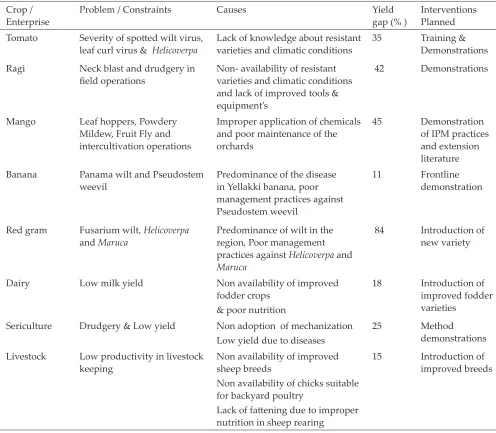
Table 1: Yield Gap, Constraints Identified and Interventions Planned
Crop /
Enterprise Problem / Constraints Causes Yield gap (% ) Interventions Planned Tomato Severity of spotted wilt virus,
leaf curl virus & Helicoverpa Lack of knowledge about resistant varieties and climatic conditions 35 Training & Demonstrations Ragi Neck blast and drudgery in
field operations Non- availability of resistant varieties and climatic conditions and lack of improved tools & equipment’s
42 Demonstrations
Mango Leaf hoppers, Powdery Mildew, Fruit Fly and intercultivation operations
Improper application of chemicals and poor maintenance of the orchards
45 Demonstration of IPM practices and extension literature Banana Panama wilt and Pseudostem
weevil Predominance of the disease in Yellakki banana, poor management practices against Pseudostem weevil
11 Frontline demonstration
Red gram Fusarium wilt, Helicoverpa
and Maruca Predominance of wilt in the region, Poor management practices against Helicoverpa and Maruca
84 Introduction of new variety
Dairy Low milk yield Non availability of improved fodder crops
& poor nutrition
18 Introduction of improved fodder varieties
Sericulture Drudgery & Low yield Non adoption of mechanization Low yield due to diseases
25 Method
demonstrations Livestock Low productivity in livestock
keeping Non availability of improved sheep breeds Non availability of chicks suitable for backyard poultry
Lack of fattening due to improper nutrition in sheep rearing
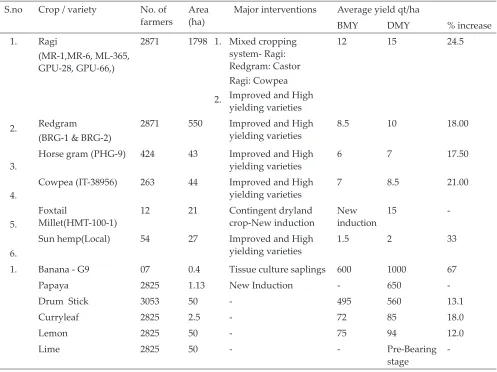
Table 2: Impact of Technological Interventions among Farmers under Crop Component
S.no Crop / variety No. of
farmers Area (ha) Major interventions Average yield qt/haBMY DMY % increase 1.
2.
3.
4.
5.
6.
Ragi
(MR-1,MR-6, ML-365, GPU-28, GPU-66,)
2871 1798 1.
2.
Mixed cropping system- Ragi: Redgram: Castor Ragi: Cowpea Improved and High yielding varieties
12 15 24.5
Redgram (BRG-1 & BRG-2)
2871 550 Improved and High
yielding varieties 8.5 10 18.00
Horse gram (PHG-9) 424 43 Improved and High
yielding varieties 6 7 17.50
Cowpea (IT-38956) 263 44 Improved and High
yielding varieties 7 8.5 21.00
Foxtail
Millet(HMT-100-1) 12 21 Contingent dryland crop-New induction New induction 15 -Sun hemp(Local) 54 27 Improved and High
yielding varieties 1.5 2 33
1. Banana - G9 07 0.4 Tissue culture saplings 600 1000 67
Papaya 2825 1.13 New Induction - 650
-Drum Stick 3053 50 - 495 560 13.1
Curryleaf 2825 2.5 - 72 85 18.0
Lemon 2825 50 - 75 94 12.0
Lime 2825 50 - - Pre-Bearing
stage
-Note: BMY: Bench mark yield, DMY: Demo yield implemented a project on ‘Integrated Farming
System for Sustainable Livelihood’ in 48 villages of Magadi taluk (block) of Ramanagara District covering 2871 stakeholders from 2011-12 to 2014-15. For the purpose of the study, secondary data available at data bank of KVK was used as a starting point. With the aid of resulting secondary data, additional information from the beneficiaries of the project was also collected to analyze the impact of technological interventions of KVK under IFS. Three Grama Panchayat’s viz., Kalya, Kaleri and Hosapalya where IFS was initiated were selected for the study. From each Grama Panchayat, four villages were selected. Again, from each village 25 farmers where IFS was initiated were selected for the study. Thus the total sample size for the study was 300 farmers from 12 villages of Magadi taluk of Ramanagara District of Karnataka.
Results and Discussion
Table 3: Promotion of Backyard Nutritional Kitchen Gardening and its Impact
S. no Vegetable Seeds
Qty of seeds/ kit /
Family (g)
Total No. of families
Total prodn (t)
Vegetable grown / Family (Kg)
Revenue generated / Family / season (Rs)
1 Ridge gourd 10.2 1465 23.4 16 192
2 Bitter gourd 10.2 16.4 11 168
3 Radish 10.2 18.8 13 128
4 Pumpkin 5.1 56.3 38 384
5 Palak 5.1 2.3 2 154
Total 80 1026
Table 4: Animal Component Integration in IFS and its Impact
Animal
Component 2011-12(bench mark) 2012-13 2013-14 % increase(per family) Income obtained per family (2011-12 2012-13 2013-14`) Giriraja Birds
(Nos) / family 7 15 25 67 -
-chicken (Gms) 200 3500 4200 20 455 3675 6200
Eggs (Nos.) 0 520 850 63 2340 4680 6800
Sheep (No) 1 3 5 - -
-Meat from
Sheep (Kg) 8 14 22 57 4900 8750 13750
Total income (`/Family/Year) = 7695 7695 17105 26750
Expected additional income of ` 51550/- per family for Three years can be generated from Animal component 13% of farmers purchased additional sheep and 18% of farmers have multiplied.
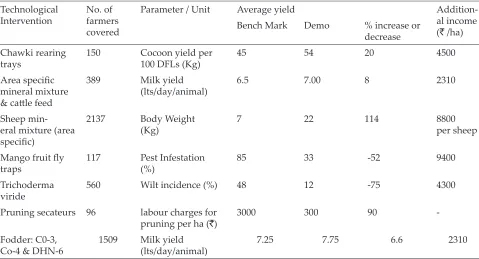
Table 5: Effect of Technology Induction for Strengthening Different Enterprises Technological
Intervention No. of farmers covered
Parameter / Unit Average yield
Addition-al income (` /ha) Bench Mark Demo % increase or
decrease Chawki rearing
trays 150 Cocoon yield per 100 DFLs (Kg) 45 54 20 4500
Area specific mineral mixture & cattle feed
389 Milk yield
(lts/day/animal) 6.5 7.00 8 2310
Sheep min-eral mixture (area specific)
2137 Body Weight
(Kg) 7 22 114 8800per sheep
Mango fruit fly
traps 117 Pest Infestation(%) 85 33 -52 9400
Trichoderma
viride 560 Wilt incidence (%) 48 12 -75 4300
Pruning secateurs 96 labour charges for
pruning per ha (`) 3000 300 90
-Fodder: C0-3,
in the table. Demonstration of IPM practices and educative literature were the interventions planned by KVK. 18 % of yield gap (milk yield) noticed in dairy animals was due to non-availability of fodder throughout the year for which introduction of new improved varieties of fodder namely CO-4, COFS-29 & DHN-6 were planned as intervention of KVK. Similarly, constraints responsible for yield gap in sericulture and livestock enterprises were also identified and suitable interventions were planned and implemented. The intention was to x-ray some of the constraints of resource poor farmers and causes of low crop productivity (yield gap) in the changing environment. The agricultural production and productivity is particularly vulnerable to disruption by weather (Anonymous 2004) as well as those caused by the farmers themselves.
Situation analysis revealed that, a great majority of the stakeholders lacked knowledge about improved varieties and seed treatment in ragi, redgram, horsegram, cowpea & foxtail millet which are the important practices for higher productivity (Amithva et al. 2014). In order to increase the yield and productivity of these crops, improved varieties were inducted to IFSD stakeholders. The impact of induction of these crop varieties is detailed in Table 2. Improved varieties of ragi viz., MR-1,MR-6, ML-365, GPU-28, GPU-66 were inducted to 2871 farmers from 2011-2013 covering 1798 ha. On an average nearly 25 % of increase in income was noticed. There was considerable increase in yield of new varieties (BRG-1 & BRG-2) of redgram (18 %), horsegram var PHG-9 (17 %) and cowpea var IT-38956 (21 %). To incorporate horticulture component in the cropping system, drumstick, papaya, curry leaf & lime were introduced to farmers, wherein they have planted these crops on the bunds of their farm and backyards. Drumstick was inducted to 3053 farmers and there was more than 13 % increase in yield. The primary focus of agricultural research and extension is technology generation and dissemination. The number of technologies developed and introduced into the supply chain is important. At best, impact is assessed by the total numbers of adopters and increase in yield and income (Laura German et al. 2006; Desai et al. 2014), obtained by the farmers. Farmers while purchasing vegetables for household purpose have an apparent habit of purchasing the cheaper vegetables irrespective of their nutritive
value. This practice deprived them of a combination of nutritive vegetables from their menu due to higher prices leading to nutritional imbalance. Farmers were stimulated to go for cultivation of different vegetables in their backyards primarily for house consumption through introduction of nutrition kit developed by Indian Institute of Horticulture Research, Bangalore. Farmers expressed that this intervention reduced the drudgery of going out and buying the vegetables to the extent of 20 % and on an average each family produced about 80 kg of vegetables generating average revenue of ` 1026 per season (Table 3). Sanjeev et al. (2013) opined similarly.
Farmers of Magadi taluk (block) of Ramanagara District are mostly marginal and landless and their by animal husbandry becomes the profitable subsidiary occupation. The impact of the animal component induction is presented in Table 4. Improved giriraja chicks were introduced to farmers wherein there was 67 % increase in the number of birds after three years while each family could earn on an average of ` 6200/- from chicken. Considering egg production, each family could earn average net income of ` 6800/- at the end of three years. Sheep was the important animal component inducted which added much to the income from farming of many farmers. It is worthy to note that each family could maintain an average of 5 sheep’s per family after three years. At this rate it could be articulated that ` 13,750/- was the average net income gained by each family from the sheep meat. It is interesting to see that about 13% of farmers purchased additional sheeps and 18% have multiplied the sheeps. Gangappa Gouda Biradar and Gangasharappa, N.R. (2015) reported similar findings.
feed was inducted to 389 dairy farmers as a result of which the milk production increased by 8% obtaining additional income of ` 2310 per lactation per animal.. As a nutritional supplement, area specific sheep mineral mixture was introduced to 2137 farmers that resulted in 114 % increase in body weight of the sheep by the end of three years generating an average income of ` 8800/- per sheep. Due to induction of fruit fly traps in mango, the fruit fly incidence reduced by 52 % resulting in additional increase in income of ` 9400/- per ha of mango. The wilt incidence in redgram could be controlled to the extent of 75 % through introduction of trichoderma. Srivastava, A.P. (2014) reported similar findings. Improved fodder crops viz., CO-3 & CO-4 were introduced to 1509 farmers resulting in 6.6 % increase in milk yield.
Conclusion
Based on the learning’s, upon implementation of IFSD, it is proposed in general to educate farmers about the importance of IFS through various approaches. The issues of way forward for the KVK and the entire stakeholders involved are to up-scale the interventions in terms of technologies considering vertical and horizontal spread, to strengthen model stake holders, to facilitate drudgery reduction by the stake holders through establishment of agro service centers and also to establish commodity based associations to institute production and market linkages. Similar findings were reported by Dhiraj and Prem latha (2014).
References
Amithva Rakshit, Pal S., Rai S., A. Rai, Bhowmick M. K.,and Singh H. B., 2013.Micronutrient seed priming: a potential tool in integrated nutrient management. SATSA Mukhaptra Annual Technical Issue 17; 77-89.
Anonymous, 2004, Assuring food and nutrition security in Africa by 2020, Prioritizing actions, strengthening actors and facilitating partnerships. Proceedings of an all-Africa Conference. Kampala, Uganda April 1- 3, 2004, International Food Policy Research Institute. Desai B.K.,Rao Satyanarayana,Biradar S.A., Prahlad
U.,Shashikumar M., Santhosh and Jagannath U.N.,2013. Development of Profitable Integrated Farming Systems for Small and Marginal Farmers of Hyderabad Karnataka Region under Irrigated Condition. International Journal of Agriculture, Environment and Biotechnology, 6(4); 617-622.
Dhiraj K.Singh and Premlatha Singh,2014.Study of Effective implementation of Agricultural Technology Management Agency through case studies in Bihar, International Journal of Agriculture, Environment and Biotechnology, 7(1); 173-178.
Ganagappa Gouda Biradar and Gangadharpappa, N.R., 2015, Economic Contribution of Agricultural Extension Services to the Beneficiaries of KAWAD Watershed Development Project. Mysore Journal of Agricultural Sciences 49 (2) :394-398.
Laura German, Jeremias Mowo and Margaret Kingamkono 2006. A methodology for tracking the “fate” of technological interventions in agriculture. Agriculture and Human Values: 23: 353-369.
Sanjeev Kumar, Shivam, Santosh Kumar and Singh, S.S. 2013. Sustainable Food and Nutritional Security through Integrated Farming System. Indian Farming 63 (7):30-36. Srivastava, A.P., Manisha N Ashar and Ashok V Minj, 2014,
Livelihood Improvement through Integrated Farming System Indian Farming 64 (2):32-35.