R E S E A R C H
Open Access
Mid-way and post-intervention effects on
potential determinants of physical activity and
sedentary behavior, results of the HEIA study - a
multi-component school-based randomized trial
Ingunn H Bergh
1*, Mona Bjelland
3, May Grydeland
2,3, Nanna Lien
3, Lene F Andersen
3, Knut-Inge Klepp
3,
Sigmund A Anderssen
2and Yngvar Ommundsen
1Abstract
Background:There is limited knowledge as to whether obesity prevention interventions are able to produce change in the determinants hypothesized to precede change in energy balance-related behaviors in young people. The aim of this study was to evaluate the effect of a multi-component intervention on a wide range of theoretically informed determinants of physical activity (PA) and sedentary behavior (SB). Moderation effects of gender, weight status and parental education level and whether the perceived intervention dose received influenced the effects were also explored.
Methods:The HEIA study was a 20-month school-based, randomized controlled trial to promote healthy weight development. In total, 1418 11-year-olds participated at baseline and post-intervention assessment. Enjoyment, self-efficacy, perceived social support from parents, teachers and friends related to PA, perceived parental regulation of TV-viewing and computer/game-use and perceived social inclusion at schools were examined by covariance analyses to assess overall effects and moderation by gender, weight status and parental education, mid-way and post-intervention. Covariance analyses were also used to examine the role of intervention dose received on change in the determinants.
Results:At mid-way enjoyment (p = .03), perceived social support from teachers (p = .003) and self-efficacy (p = .05) were higher in the intervention group. Weight status moderated the effect on self-efficacy, with a positive effect observed among the normal weight only. At post-intervention results were sustained for social support from teachers (p = .001), while a negative effect was found for self-efficacy (p = .02). Weight status moderated the effect on enjoyment, with reduced enjoyment observed among the overweight. Moderation effects for parental education level were detected for perceived social support from parents and teachers. Finally, positive effects on several determinants were observed among those receiving a high as opposed to a low intervention dose. Conclusion:The intervention affected both psychological and social-environmental determinants. Results indicate that social support from teachers might be a potential mediator of PA change, and that overweight adolescents might be in need of specially targeted interventions to avoid reducing their enjoyment of PA. Further studies should continue to assess how intervention effectiveness is influenced by the participants’self-reported dose of intervention received.
Keywords:Moderation, Adolescents, Obesity prevention, Intervention, Social-ecological model, Effect, Randomized controlled trial
* Correspondence:[email protected]
1
Department of Coaching and Psychology, Norwegian School of Sport Sciences, Oslo, Norway
Full list of author information is available at the end of the article
Background
Engagement in physical activity (PA) and sedentary be-havior (SB) are regarded as two important factors in obesity prevention programs [1]. School-based interven-tions to increase PA and reduce SB may promote a healthy weight development, but the results are incon-sistent [2]. One possible explanation for low efficacy or effectiveness is limited evidence as to how interventions induce behavior change [3] and for whom interventions are effective [4]. More research in order to improve the understanding of PA and SB change is called for [5,6].
According to the mediating framework, change in hypothesized determinants is a prerequisite for change in behavior [7]. Hence, potential determinants could be considered endpoints in themselves and thus would seem important to identify [8-10]. Knowledge about change in determinants will help tease out important influences that may pave the way for behavior change at a later stage, and by identifying changes in potential determinants one may avoid running the risk of under-estimating important intervention effects in cases when behavior change cannot be observed.
Only a limited number of PA interventions targeting adolescents have reported the effects of change in deter-minants, and in about half of the identified studies no effect on these were detected [11]. However, changes in self-efficacy and enjoyment of PA have been identified, and these determinants have also been proven to mediate PA change in children and adolescents [5,6]. Effect on change in inter-personal determinants like social support for PA is less investigated [5,6,11], and no one seems to have examined change in potential inter-personal determi-nants of SB such as perceived parental regulation of TV-viewing or computer/game-use [5] or social inclusion related to the school context [12].
It is argued that testing effect modifiers should become common practice in intervention studies [13,14]. In school based interventions targeting energy balance-related beha-viors, gender seems to be the most convincing moderator while findings for potential effect modifiers such as weight status and socio-economic status (SES) are inconsistent [15]. Examining moderating influences on change in po-tential determinants of behavior change will help identify for whom an intervention is effective or not. Conse-quently, it will provide knowledge about the need to target subgroups differently when designing and implementing intervention [3,16]. Moreover, how much of the interven-tion is received by the participants might also influence the effect of an intervention [17]. Hence, examination of exposure and participation has been called for [18,19].
The HEalth In Adolescents (HEIA) study was a 20-month intervention designed to promote healthy weight development among adolescents (11-13-year-olds) through change in PA, SB and dietary behaviors. Change in the
behaviors was targeted through multilevel intervention strategies hypothesized to influence a wide range of psycho-logical and social-environmental determinants [20]. The se-lection of potential determinants of PA and SB change was based on a social-ecological approach including determi-nants at the personal/psychological, social and environmen-tal level as embedded in the conceptual model of the HEIA study [20,21]. Previously in the HEIA study weight status has been found to moderate the association between corre-lates and PA [22] and to moderate change in SB among boys, while no moderation effect of parental education was detected [23].
Hence, the aims of this paper were threefold; 1) to examine the effect of the HEIA intervention upon theor-etically informed psychological and social-environmental determinants of PA and SB change measured mid-way (after 8 months) and post-intervention (after 20 months), 2) to investigate moderating effect of gender, weight sta-tus and SES on the set of determinants and 3) to explore whether the degree of intervention exposure and partici-pation influenced these outcomes.
Methods
Study design and population
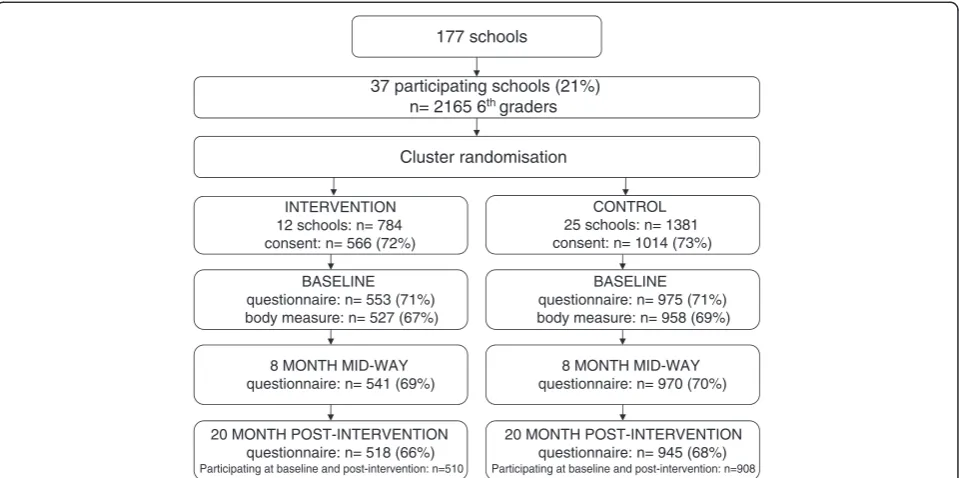
Schools were recruited from towns/municipalities in seven counties in the south-eastern part of Norway. For logistic reasons schools had to have at least 40 pupils enrolled in 6thgrade which qualified 177 schools to receive an invita-tion. Thirty-seven schools accepted the invitation, and all the 6th graders (n = 2165) in the attending schools and their parents/legal guardians were invited to participate (Figure 1) [20]. Of these, 1580 (73%) returned a parental signed informed consent form.
A cluster randomized design was used to evaluate the intervention; 12 schools were randomly assigned by sim-ple drawing to the intervention group and 25 to the con-trol group. The baseline data collection was conducted in September 2007 (in the beginning of 6th grade), the mid-way assessment was conducted in May 2008 (at the end of 6thgrade; 8 months past baseline). All three assess-ments were administered over approximately four weeks, with parallel assessments in the intervention and control group.
(p = .02) and a higher proportion of overweight adoles-cents (p = .007 and p = .01) among those lost to follow-up between baseline and post-intervention (n = 110) and be-tween baseline and both mid-way and post-intervention (n = 144) (data not shown).
Intervention
A detailed description of the study design, the develop-ment and all the parts of the intervention (dietary, PA and SB) have been presented elsewhere [20]. The inter-vention consisted of a mix of individual-, group- and en-vironmental strategies and components. All the PA and SB components and the targeted determinants are listed in additional file 1: Table S1 xand it illustrates how sev-eral of the components were directed towards change in multiple determinants. The first part (in 6thgrade) empha-sized activities that were supposed to make PA enjoyable and create a sense of efficacy for PA. Most of the PA com-ponents included interactions with class-mates to facilitate social cohesion and support. In the second part of the intervention (in 7thgrade) some components targeting SB were included.
In short, the 6thgrade components were: 1) One theor-etical class-room lesson over 90 minutes, concerning PA and dietary behaviors in relation to the energy balance equation (the other four lessons focused primarily on diet-ary behavior). 2) Short PA breaks during lessons (once a week), 3) two active-commuting-to-school campaigns, 4) an“activity box” with sport- and play equipment for use during recess (including e.g. frisbees, jump-ropes, elastic
bands, hockey-sticks, several types of balls). 5) fact sheets for parents (3 specifically on PA, 6 in total), and 6) one in-spirational course for teachers responsible for the physical education (PE) classes in which the teachers practiced new ideas for lessons that they were to try out in the PE-classes. The lessons focused on type of novel, enjoyable games and activities with the intention to keep all the stu-dents in moderate to high intensity most of the class-time, and was based on the SPARK program [24]. The 7thgrade components included: 1) an extensionx of PA breaks and 2) the two active-commuting to school campaigns in which the adolescents were provided with pedometers. The focus in this“pedometer challenges”was to stimulate both active commuting to schools as well as more daily PA. 3) Some of the equipment in the “activity box” was replaced due to loss from wear and tear. 4) A second inspirational course for PE-teachers was organized provid-ing the teachers with additional lessons to try out in PE-classes (some included use of pedometers). 5) A computer tailoring program targeting SB, PA and dietary behaviors was added to the intervention with four sessions in total, including one on SB (both TV-viewing and computer/ electronic game-use) and one on PA. 6) In addition new parental fact sheets targeting both PA and SB (3 on PA, 1 on TV and computer/game-use, 9 in total) were distribu-ted to the parents now including child–parent homework assignments.
Each school year the intervention was initiated by a kick-off meeting with the involved teachers. The purpose of these meetings was to ensure that the whole team of 177 schools
37 participating schools (21%) n= 2165 6thgraders
Cluster randomisation
INTERVENTION 12 schools: n= 784 consent: n= 566 (72%)
CONTROL 25 schools: n= 1381 consent: n= 1014 (73%)
BASELINE questionnaire: n= 553 (71%) body measure: n= 527 (67%)
BASELINE questionnaire: n= 975 (71%) body measure: n= 958 (69%)
8 MONTH MID-WAY questionnaire: n= 541 (69%)
8 MONTH MID-WAY questionnaire: n= 970 (70%)
20 MONTH POST-INTERVENTION questionnaire: n= 518 (66%)
Participating at baseline and post-intervention: n=510
20 MONTH POST-INTERVENTION questionnaire: n= 945 (68%)
Participating at baseline and post-intervention: n=908
teachers knew the rationale, was familiar with the various intervention elements and were motivated to implement the components and support the targeted behaviors. Dur-ing the school year the participatDur-ing teachers received ex-ternal support in form of short monthly e-mail reminders from the HEIA study group. All the adolescents in the intervention schools took part in the intervention, but only those with consent took part in the data collection. The control schools followed the regular Norwegian school curriculum including PE-classes (2 X 45 min/ week), but they were not restricted with respect to devel-oping their own PA, SB or dietary initatives.
Ethical approval and research clearance was obtained from the Regional Committees for Medical Research Ethics and the Norwegian Social Science Data Service.
Measurements Questionnaire data
The adolescents self-reported the potential determinants of PA and SB, and gender in an internet-based question-naire which took about 45 minutes to complete. Process evaluation questions tapping into the adolescents’ percep-tion of exposure and participapercep-tion in the intervenpercep-tion were included in the questionnaire for those in the inter-vention group at both the mid-way and post-interinter-vention assessments. The questionnaires were completed in schools with trained personnel present.
Outcome measures
The outcome measures included nine hypothesized psy-chological and social-environmental determinants of PA and SB change. The psychological variables included an abbreviated and slightly modified version of theEnjoyment of PA scale[25] and theself-efficacy related to barriers for PAscale based on previous studies [26,27]. These changes were induced to keep the questionnaire at a reasonable length and to obtain satisfactory reliability estimates. The social-environmental variables were:Perceived social sup-port for PA from parentsassessed by five items; perceived social support for PA from friendsassessed by three items [28]; Perceived social support for PA from teacher taken from a pilot study within the European Youth Heart Study [29] assessed by three items;Perceived Environmental op-portunities to be physically active from Sallis et al. [28] with one added item and assessed by 4 items; Perceived parental regulation of TV-viewing andperceived parental regulation of computer/game-use, each assessed by four items modified from Hardy et al. 2006 [30] andPerceived social inclusion related to the school and class environ-ment assessed by six items based on a “social capital measure” (related to people in my area/neighborhood) developed by Hume et al. 2009 [12] modified to capture the quality of relationship with peers at school both within and outside the classroom (degree of closeness and
willingness to ask for/provide help when necessary). All the items were rated on a 5-point Likert-type scale coded 1 (lowest) to 5 (highest), and phrased“totally disagree” to
“totally agree”with a neutral midpoint, except for the so-cial support constructs which were phrased“almost never or never”,“1 to 2 times a week”,“3 to 4 times a week”,“ al-most every day”and“every day”.
All the nine outcomes were assessed at baseline and post-intervention, while enjoyment, self-efficacy, perceived social support from parents and teachers were measured also at the mid-way assessment. All variables obtained ac-ceptable internal reliability values (Cronbach’s alpha) at baseline (range 0.62-0.82), mid-way (range 0.68-0.75) and post-intervention (range 0.67-0.85). Examples of the items, the procedure for computing the composite scores, the results from a separate test-retest study showing moderate to high test-retest values (ICC), and the theoretical models from which these variables have been derived, have been reported elsewhere [22].
Weight status and parental education
Height and weight of the adolescents were measured ob-jectively, and the baseline values were used to categorize the adolescents as normal weight and overweight by the age and gender specific body mass index cut-offs values proposed by the International Obesity Task Force [31]. Due to the low proportion of obese in the sample at baseline (1.5% in total sample; 1.6% in Control; 1.3% Intervention), the overweight and obese were treated as one group in the analyses, and are referred to as the
“overweight group” throughout the paper. Details of the procedures and test-retest values of the anthropometric measurements have been reported elsewhere [20,32]. Parental education was used as an indicator of SES, and was reported by the parents on the informed consent form. Parental education level was categorized into three levels: 12 years or less, between 13 and 16 years and 16 years or more, and the parents with the highest edu-cation was used or else the one available.
Perceived intervention dose received
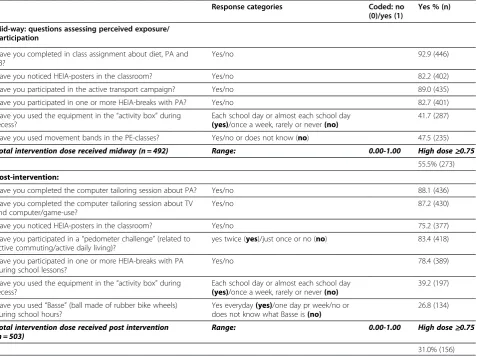
numbers of questions, giving scores ranging from 0.00 to 1.00 (0 = minimum and 1.00 = maximum degree of expos-ure/participation). By inspecting the distribution of the scores, we set a score equal or above 0.75 (75%) to repre-sent a“high”dose received of the intervention and a score lower than 0.75 to represent a “low” dose received. The questions, the coding and the distribution (%) for the spe-cific process questions and the perceived total intervention dose received mid-way and post-intervention are presented in Table 1.
Data analyses
Chi-square and independent t-tests were used to analyze drop-outs and to compare baseline characteristics and outcomes between groups (control vs. intervention, and low vs. high intervention dose received).
Clustering effects due to schools being the unit of re-cruitment was checked by the linear mixed model pro-cedure. Only 0-4% of the unexplained variance in the outcomes was on the group (i.e. school) level, except for
perceived social support from teachers being slightly higher (9%). Hence, for perceived social support from teachers we did check results by the linear mixed model procedure, adjusting for the school effect. Given that the same pattern of results was revealed when taking into account the potential clustering effect of school, it was decided to run and present all further analyses without adjusting for the clustering effect.
In the main analyses, the overall effects from baseline to mid-way and from baseline to post-intervention were investigated in two steps by one-way ANCOVA, with the mid-way and post-interventions values for the out-come measures as dependent variables, baseline values as covariates and group (intervention vs. control) as the independent variable.
Next, in separate analyses moderating influences on the effects were examined by two-way ANCOVA both at mid-way and at post-intervention for the following variables: gender, weight status (normal weight vs. overweight) and parental education level (≤12 years,
Table 1 Exposure to/participation in the PA and SB intervention components and total perceived intervention dose received
Response categories Coded: no
(0)/yes (1)
Yes % (n)
Mid-way: questions assessing perceived exposure/ participation
Have you completed in class assignment about diet, PA and SB?
Yes/no 92.9 (446)
Have you noticed HEIA-posters in the classroom? Yes/no 82.2 (402)
Have you participated in the active transport campaign? Yes/no 89.0 (435)
Have you participated in one or more HEIA-breaks with PA? Yes/no 82.7 (401)
Have you used the equipment in the“activity box”during recess?
Each school day or almost each school day (yes)/once a week, rarely or never(no)
41.7 (287)
Have you used movement bands in the PE-classes? Yes/no or does not know (no) 47.5 (235)
Total intervention dose received midway (n = 492) Range: 0.00-1.00 High dose≥0.75
55.5% (273)
Post-intervention:
Have you completed the computer tailoring session about PA? Yes/no 88.1 (436)
Have you completed the computer tailoring session about TV and computer/game-use?
Yes/no 87.2 (430)
Have you noticed HEIA-posters in the classroom? Yes/no 75.2 (377)
Have you participated in a“pedometer challenge”(related to active commuting/active daily living)?
yes twice (yes)/just once or no (no) 83.4 (418)
Have you participated in one or more HEIA-breaks with PA during school lessons?
Yes/no 78.4 (389)
Have you used the equipment in the“activity box”during recess?
Each school day or almost each school day (yes)/once a week, rarely or never(no)
39.2 (197)
Have you used“Basse”(ball made of rubber bike wheels) during school hours?
Yes everyday(yes)/one day pr week/no or does not know what Basse is(no)
26.8 (134)
Total intervention dose received post intervention (n = 503)
Range: 0.00-1.00 High dose≥0.75
31.0% (156)
PA = Physical activity, SB = Sedentary behavior.
13–16 years, >16 years). For cases in which signifi-cant moderating influences were revealed, subgroup analyses were carried out using one way ANCOVA to test for differences between the control and interven-tion for each subgroup.
Lastly, the effect of the perceived intervention dose received (low vs. high) on the determinants were ana-lyzed first at mid-way and then at post-intervention, with one-way ANCOVA within the intervention schools only. The mid-way and post-interventions values for the outcome measures were entered as dependent variables, baseline values as covariates and intervention dose received (high vs. low) as the independent variable.
Data were checked to ensure there were no violations of the assumptions for the ANCOVA analyses. All statis-tical analyses were performed by IBM SPSS Statistics, version 18.0 (IBM Corp., Somers, New York, USA). The significance level was set at p<.05 for all analyses, ex-cept for the interaction tests where p<.10 was used.
Results
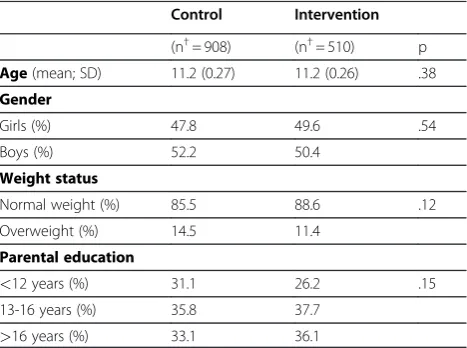
Table 2 shows the baseline characteristic for the study population by condition. No significant differences be-tween the intervention and control group were revealed for the demographic variables.
In Table 3 the means (SD) for all the outcomes are shown at the baseline, mid-way and post-intervention assessments. There were no significant differences be-tween the intervention and control group at baseline.
Main effects
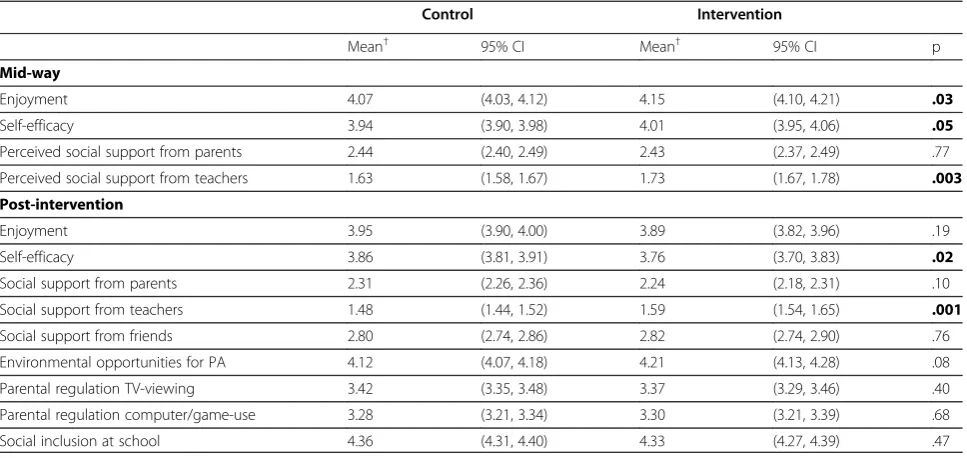
Table 4 shows the effect of the intervention on the four determinants assessed mid-way, and the effect on all the nine determinants measured post-intervention.
At mid-way there were small significant positive effects of the intervention on both enjoyment and per-ceived social support from teachers, and a borderline significant positive effect for self-efficacy. No effect on perceived social support from parents was observed (Table 4). For enjoyment the change was expressed as a small increase in the intervention group, and a small de-crease in the control group (Table 3). The level of social support from teachers stayed about the same in the intervention group, but there was slight decrease in the control group (Table 3). For self-efficacy the borderline significant change reflected a slightly greater increase in the intervention group compared to the control group.
At post intervention a negative intervention effect was detected for self-efficacy (Table 4), reflecting a small re-duction in self-efficacy in the intervention group with no change in the control group (Table 3). A positive inter-vention effect was revealed for perceived social support from teachers (Table 4) seen as a somewhat smaller re-duction in the intervention group compared to the con-trol (Table 3). No effects on any of the other determinants were observed.
Interaction and subgroups effects
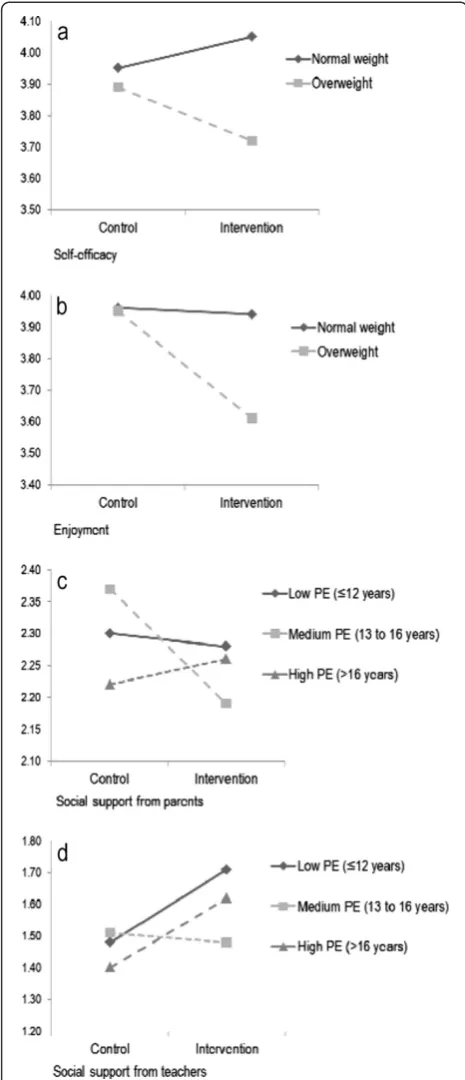
At mid-way no interaction effects of gender or parental education were found on change in the four determi-nants assessed. However, weight status moderated the ef-fect of the intervention on change in self-efficacy (p = 0.01) (Figure 2a). Similarly, no interaction effects of gender was found at post-intervention, but weight status moderated the effect on change in enjoyment (p = .02) (Figure 2b). Also, parental education level moderated the effect on pre to post-intervention change in perceived social support from parents (p = .07) (Figure 2c) and from teachers (p = .003) (Figure 2d).
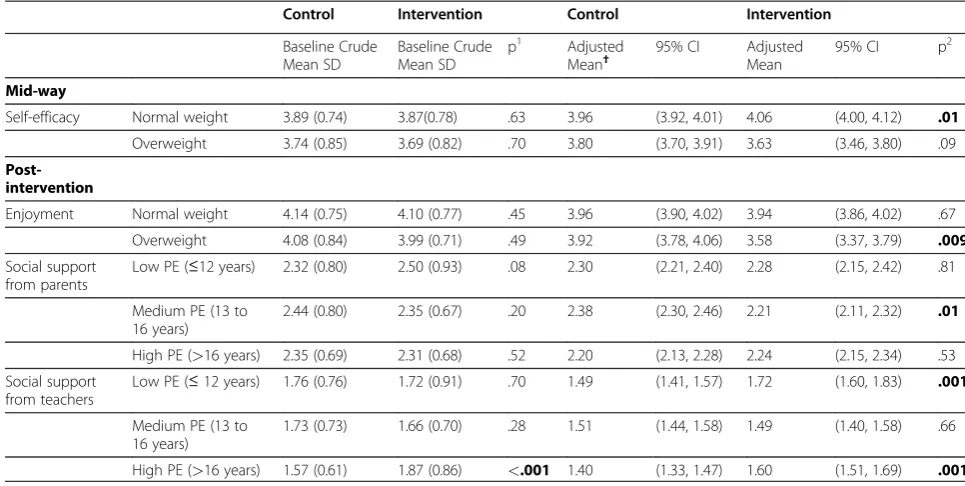
The results of the corresponding subgroup analyses mid-way and post-intervention are shown in Table 5.At mid-way the effect of the intervention on self-efficacy was different for the normal weight and overweight ado-lescents. While the normal weight reported higher self-efficacy, a trend (non-significant) for reporting lower self-efficacy among the overweight was observed. Post-intervention, the effect on enjoyment differed for the normal weight and overweight. While no effect on change in enjoyment among the normal weight was observed, the overweight group reported a reduction in enjoyment.
In addition, at post-intervention the effect on per-ceived social support from parents and from teachers differed by the adolescents’ SES. Adolescents with medium parental education reported lower social sup-port from parents compared to the control group. There was no intervention effect on change in per-ceived social support from parents among those with
Table 2 Baseline demographics and weight status for the control and intervention group
Control Intervention
(n†= 908) (n†= 510) p
Age(mean; SD) 11.2 (0.27) 11.2 (0.26) .38
Gender
Girls (%) 47.8 49.6 .54
Boys (%) 52.2 50.4
Weight status
Normal weight (%) 85.5 88.6 .12
Overweight (%) 14.5 11.4
Parental education
<12 years (%) 31.1 26.2 .15
13-16 years (%) 35.8 37.7
>16 years (%) 33.1 36.1
p = Independentt-test (age) and chi-square.
†n varies slightly for weight status and parental education.
the lowest and highest parental education. In contrast, there was a positive intervention effect on change in perceived social support from teachers among those with lowest and highest parental education. No inter-vention effect on change in perceived social support from teachers was found among those with medium parental education.
Perceived intervention dose received
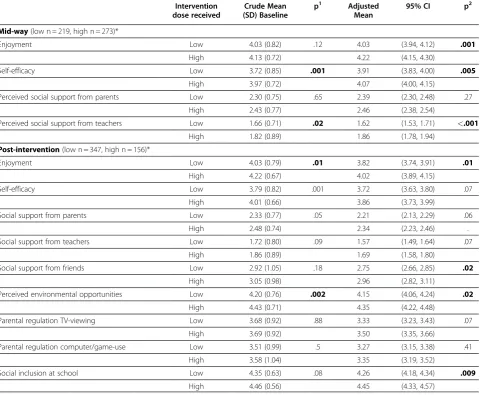
At mid-way 273 (55.5%) of the adolescents in the inter-vention group reported a high interinter-vention dose received, whereas 156 (31.0%) reported this at the time of the post-intervention (Table 1). Table 6 show the influence on change in the examined determinants within the interven-tion group.
Table 3 Baseline, mid-way and post-intervention characteristics for PA and SB determinants in the control and intervention group
Baseline Mid-way Post-intervention
Control (n†= 908)
Intervention (n†= 510)
Control (n†= 885)
Intervention (n†= 499)
Control (n†= 908)
Intervention (n†= 510)
Mean SD Mean SD p Mean SD Mean SD Mean SD Mean SD
Enjoyment 4.13 (0.76) 4.09 (0.77) 0.35 4.08 (0.75) 4.13 (0.78) 3.96 (0.83) 3.88 (0.90)
Self-efficacy 3.86 (0.76) 3.86 (0.79) 0.80 3.93 (0.75) 3.99 (0.78) 3.86 (0.82) 3.77 (0.89)
Social support from parents 2.37 (0.76) 2.38 (0.76) 0.83 2.45 (0.81) 2.42 (0.77) 2.31 (0.81) 2.24 (0.78)
Social support from teachers 1.68 (0.70) 1.76 (0.83) 0.07 1.61 (0.65) 1.75 (0.77) 1.47 (0.62) 1.61 (0.73)
Social support from friends 2.96 (1.00) 2.96 (1.04) 0.95 2.80 (0.99) 2.82 (0.97)
Environmental opportunities for PA
4.26 (0.77) 4.27 (0.76) 0.79 4.11 (0.89) 4.20 (0.90)
Parental regulation TV-viewing 3.64 (0.96) 3.68 (0.93) 0.43 3.41 (1.07) 3.38 (1.05)
Parental regulation computer/ game-use
3.55 (0.99) 3.53 (1.01) 0.78 3.28 (1.11) 3.28 (1.10)
Social inclusion at school 4.43 (0.61) 4.39 (0.62) 0.15 4.36 (0.69) 4.32 0.77
PA = Physical activity, SB = Sedentary behavior, SD = Standard deviation.
†n varies slightly for the different variables.
p-values for independentt-test between control and intervention group at baseline. Range 1–5 (lowest to highest with a neutral midpoint) for all variables.
Sample: Norwegian adolescents 11-13 year-olds from the HEIA study.
Table 4 Effects on determinants for PA and SB mid-way and post intervention
Control Intervention
Mean† 95% CI Mean† 95% CI p
Mid-way
Enjoyment 4.07 (4.03, 4.12) 4.15 (4.10, 4.21) .03
Self-efficacy 3.94 (3.90, 3.98) 4.01 (3.95, 4.06) .05
Perceived social support from parents 2.44 (2.40, 2.49) 2.43 (2.37, 2.49) .77
Perceived social support from teachers 1.63 (1.58, 1.67) 1.73 (1.67, 1.78) .003
Post-intervention
Enjoyment 3.95 (3.90, 4.00) 3.89 (3.82, 3.96) .19
Self-efficacy 3.86 (3.81, 3.91) 3.76 (3.70, 3.83) .02
Social support from parents 2.31 (2.26, 2.36) 2.24 (2.18, 2.31) .10
Social support from teachers 1.48 (1.44, 1.52) 1.59 (1.54, 1.65) .001
Social support from friends 2.80 (2.74, 2.86) 2.82 (2.74, 2.90) .76
Environmental opportunities for PA 4.12 (4.07, 4.18) 4.21 (4.13, 4.28) .08
Parental regulation TV-viewing 3.42 (3.35, 3.48) 3.37 (3.29, 3.46) .40
Parental regulation computer/game-use 3.28 (3.21, 3.34) 3.30 (3.21, 3.39) .68
Social inclusion at school 4.36 (4.31, 4.40) 4.33 (4.27, 4.39) .47
PA = Physical activity, SB = Sedentary behavior, CI = Confidence intervals. One-way Ancova analyses.
†Adjusted for baseline values of determinants.
Compared to adolescents reporting a low intervention dose received those reporting a high dose showed sig-nificantly higher adjusted mean values on enjoyment, self-efficacy and perceived social support from teachers. Parallel dose specific post-intervention findings were observed for enjoyment, perceived social support from friends, perceived environmental opportunities for PA and for perceived social inclusion at school (Table 6).
Discussion
This study examined mid-way and post-intervention effects of a 20 month school-based obesity prevention intervention upon a wide range of determinants of PA and SB. In addition moderating effects of gender, weight status and parental education were assessed and the in-fluence of perceived intervention dose received by the participants on the determinants was explored.
For the whole sample favorable effects on both psy-chological and social-environmental determinants of PA were found mid-way. However, post-intervention the ef-fect was only sustained for social support from teachers, whereas an unexpected negative effect on self-efficacy for PA was revealed. The intervention did not affect any of the SB determinants. Moderation effects of weight status and parental education were observed, and sub-group analyses showed that the intervention did not work equally well in all subgroups. In addition, analyses of intervention dose received indicated that the effect on the determinants was influenced by the adolescents’ reported degree of exposure to and participation in the intervention.
Psychological determinants
Most of the intervention components that targeted the adolescents emphasized promoting enjoyment of PA, pos-sibly explaining the overall positive mid-way effect on en-joyment. Our finding are consistent with the results of a 12 week long intervention among younger girls [33] and would seem encouraging given that enjoyment of PA has been shown to be of great importance for activity initi-ation and continued interest [34]. Moreover, enjoyment has been identified as a mediator of PA change in adoles-cent girls [35]. However, in accordance with results from a longer lasting intervention with a similar age group as the current one [36] no overall favorable effect on enjoyment was seen post-intervention, while a clear, reduction in en-joyment was detected among the overweight. The latter result would seem troublesome, and might reflect that various intervention activities have not met with the needs of those being overweight.
Even though there was an overall marginally positive mid-way effect for self-efficacy, the subgroup analyses revealed a positive effect among the normal weight only, while there was a tendency towards a negative effect on Figure 2(a) Interaction effect of weight status on change in
self-efficacy among the overweight. Despite focusing on low threshold intervention activities, the negative mid-way trend for self-efficacy together with the reduction of enjoyment seen post-intervention among the overweight could well reflect that the overweight group has not felt at ease with these activities provided over time. Indeed, a sense of competence and feeling efficacious has been shown to be a key factor for enjoying PA [37,38]. Alter-natively, social comparison processes with those being normal weight might have led to unfavorable self-perceptions and enjoyment among the overweight [39].
As to self-efficacy post-intervention, the results showed an effect in the undesired direction for the whole sample. However, this type of unexpected result has also been seen in other studies [40,41]. Due to the comprehensive nature of our intervention we cannot draw conclusion to which intervention components the effect can be attributed. However, it could well be that participants were more un-aware of barriers to PA change in the first school-year of the intervention, but as the intervention moved along they might have become more aware of and realistic about bar-riers for PA.
Social-environmental determinants
While no overall effects on social support from friends or parents were seen mid-way or post-intervention, the negative post-intervention change for perceived social
support from parents among the adolescent with medium level of parental education is not readily explainable. While one could assume that this result was due to base-line differences between control and intervention group this was, however, not the case (Table 5).
To our knowledge, this is the first study to report a posi-tive effect on perceived social support from teachers and this was observed both mid-way and post-intervention. These results are encouraging because teachers are in the position to reach most adolescents and hold the role as change facilitators in most school-based interventions. The post-intervention subgroup differences for parental education level revealed that the effect on social support from teachers was predominantly seen among adolescents with lower and higher parental education background. Most importantly, these results indicate that teachers also seem to be able to reach children with lower socio-economic status when it comes to providing support for PA, and that teacher support may be a source of so-cial influence that holds the potential to influence the social gradient that seems to exist concerning PA among adolescents [42]. The yearly kick-off meetings for the teachers targeting the whole teacher team at each school to support the intervention might have contributed to a sense of enhanced support from tea-chers. At the same time low baseline values means that there was greater room for improvement in
Table 5 Effects on determinants for PA and SB, by weight status and parental education level
Control Intervention Control Intervention
Baseline Crude Mean SD
Baseline Crude Mean SD
p1 Adjusted Mean†
95% CI Adjusted Mean
95% CI p2
Mid-way
Self-efficacy Normal weight 3.89 (0.74) 3.87(0.78) .63 3.96 (3.92, 4.01) 4.06 (4.00, 4.12) .01
Overweight 3.74 (0.85) 3.69 (0.82) .70 3.80 (3.70, 3.91) 3.63 (3.46, 3.80) .09
Post-intervention
Enjoyment Normal weight 4.14 (0.75) 4.10 (0.77) .45 3.96 (3.90, 4.02) 3.94 (3.86, 4.02) .67
Overweight 4.08 (0.84) 3.99 (0.71) .49 3.92 (3.78, 4.06) 3.58 (3.37, 3.79) .009
Social support from parents
Low PE (≤12 years) 2.32 (0.80) 2.50 (0.93) .08 2.30 (2.21, 2.40) 2.28 (2.15, 2.42) .81
Medium PE (13 to 16 years)
2.44 (0.80) 2.35 (0.67) .20 2.38 (2.30, 2.46) 2.21 (2.11, 2.32) .01
High PE (>16 years) 2.35 (0.69) 2.31 (0.68) .52 2.20 (2.13, 2.28) 2.24 (2.15, 2.34) .53
Social support from teachers
Low PE (≤12 years) 1.76 (0.76) 1.72 (0.91) .70 1.49 (1.41, 1.57) 1.72 (1.60, 1.83) .001
Medium PE (13 to 16 years)
1.73 (0.73) 1.66 (0.70) .28 1.51 (1.44, 1.58) 1.49 (1.40, 1.58) .66
High PE (>16 years) 1.57 (0.61) 1.87 (0.86) <.001 1.40 (1.33, 1.47) 1.60 (1.51, 1.69) .001
PA = Physical activity, SB = Sedentary behavior, SD = Standard deviation, CI = Confidence interval, PE = parental education level. One-way Ancova analyses,
n for Control vs. Intervention in analyses for subgroups: normal weight (737–752 vs. 404–417), overweight (121–125 vs. 51–53), low PE (261–266 vs 120), medium PE (302–311 vs 178), high PE (285–287 vs.171).
†Adjusted for baseline values.
p1
= Independentt-test, p2
= One way Ancova.
social support from teachers compared to many of the other determinants.
The intervention did not have an impact on determi-nants for SB post-intervention (perceived regulation of parental TV-viewing and computer/game-use), even though mid-way effects on TV-viewing and computer/ game-use among girls have been documented previously in the HEIA study [23]. One explanation could be that the intervention targeting SB (in 7thgrade only) was not extensive enough to influence the determinants of SB, since the components included only one computer tai-loring session and one fact sheet to parents. No effect on perceived social inclusion at school was found either. However, all these determinants showed quite high base-line values (range 3.53-4.34, Table 3). Hence, a possible
ceiling effect might also explain these post-intervention results.
In line with one other study among children [43], no effect modification by gender was found on the potential determinants. Results indicate that possible working mechanisms for PA change do not differ by gender. It also corresponds with findings for change in PA itself in children and adolescents. Van Sluijs et al. 2007 [18] con-cluded that most intervention studies observed no differ-ential response by gender in PA change, and in a recent review by Cragg et al. 2011 [44] there was no consistent evidence of an association between gender and PA change among 10–13 year olds. Moderation effects of weights status on PA have been found in a previous cross-sectional study [22] and on mid-way effect on SB
Table 6 Influence of intervention dose received on the determinant for PA and SB
Intervention dose received
Crude Mean (SD) Baseline
p1 Adjusted
Mean
95% CI p2
Mid-way(low n = 219, high n = 273)*
Enjoyment Low 4.03 (0.82) .12 4.03 (3.94, 4.12) .001
High 4.13 (0.72) 4.22 (4.15, 4.30)
Self-efficacy Low 3.72 (0.85) .001 3.91 (3.83, 4.00) .005
High 3.97 (0.72) 4.07 (4.00, 4.15)
Perceived social support from parents Low 2.30 (0.75) .65 2.39 (2.30, 2.48) .27
High 2.43 (0.77) 2.46 (2.38, 2.54)
Perceived social support from teachers Low 1.66 (0.71) .02 1.62 (1.53, 1.71) <.001
High 1.82 (0.89) 1.86 (1.78, 1.94)
Post-intervention(low n = 347, high n = 156)*
Enjoyment Low 4.03 (0.79) .01 3.82 (3.74, 3.91) .01
High 4.22 (0.67) 4.02 (3.89, 4.15)
Self-efficacy Low 3.79 (0.82) .001 3.72 (3.63, 3.80) .07
High 4.01 (0.66) 3.86 (3.73, 3.99)
Social support from parents Low 2.33 (0.77) .05 2.21 (2.13, 2.29) .06
High 2.48 (0.74) 2.34 (2.23, 2.46) .
Social support from teachers Low 1.72 (0.80) .09 1.57 (1.49, 1.64) .07
High 1.86 (0.89) 1.69 (1.58, 1.80)
Social support from friends Low 2.92 (1.05) .18 2.75 (2.66, 2.85) .02
High 3.05 (0.98) 2.96 (2.82, 3.11)
Perceived environmental opportunities Low 4.20 (0.76) .002 4.15 (4.06, 4.24) .02
High 4.43 (0.71) 4.35 (4.22, 4.48)
Parental regulation TV-viewing Low 3.68 (0.92) .88 3.33 (3.23, 3.43) .07
High 3.69 (0.92) 3.50 (3.35, 3.66)
Parental regulation computer/game-use Low 3.51 (0.99) .5 3.27 (3.15, 3.38) .41
High 3.58 (1.04) 3.35 (3.19, 3.52)
Social inclusion at school Low 4.35 (0.63) .08 4.26 (4.18, 4.34) .009
High 4.46 (0.56) 4.45 (4.33, 4.57)
PA = Physical activity, SB = Sedentary behavior, SD = Standard deviation, CI = Confidence interval. Only participants within the intervention schools included in the analyses.
*n varies slightly for the different outcomes due to the incomplete data.
†Adjusted for baseline values.
p1
= Independentt-test, p2
= One-way Ancova.
in a prospective study from the HEIA study [23]. How-ever, no other studies have, to our knowledge, explored moderating effects of weight status and parental educa-tion on change in determinants for PA and SB among adolescents.
Our conflicting results on some of the determinants, es-pecially among the overweight group, point to the import-ance of studying subgroup differences in the response to the intervention. Change in the expected direction in a de-terminant (the hypothesized mediator) is supposed to precede a desired change in behavior [3]. Hence, the no-effect and negative no-effect detected in determinants in some of the subgroups could work against desirable be-havioral effects (i.e. in PA or SB).
Perceived intervention dose received
The marked decrease in the proportion reporting a high intervention dose received from the mid-way (55.5%) to the post-intervention assessment (31.0%) could be one explanation for why effects were detected on several of the determinants mid-way, but not post-intervention. Furthermore, the adolescent reporting a high interven-tion dose received mid-way had significantly higher values on three out of four determinants than those reporting a low one. Post-intervention there were signifi-cant differences in favor of those with a high interven-tion dose received for enjoyment, social support from friends, perceived environmental opportunities for PA and perceived social inclusion at school (Table 6). This indicates that the intervention had an effect on change in these determinants among those most exposed to the intervention. However, the adolescents reporting a high intervention dose received mid-way showed significantly higher baseline values on self-efficacy and perceived so-cial support from teachers compared to those receiving a low dose. Similar differences were found for enjoyment and perceived environmental opportunities for those adolescents receiving a high dose post-intervention (Table 6). Accordingly, for these determinants it seems as if the intervention increased the differences already present at baseline.
No differences in effects between the high and low intervention dose groups were seen for perceived social support from parents and perceived parental regulation of TV-viewing and computer/game-us (Table 6). Change in these parental related determinants was primarily tar-geted through the fact-sheets to the parents, and paren-tal reported degree of exposure to the fact sheets would possibly be a better indication of the influence of imple-mentation on these determinants.
However, overall the results from examining the inter-vention dose received suggest that the results revealing no effects in some of the outcomes in the main analyses might be due to an insufficient implementation of the
intervention rather than insufficient intervention strat-egies. In support for this supposition, mid-way results from teacher reports of degree of implementation indi-cate that the overall degree of implementation was mod-erate [45]. It could be that the short e-mail reminders to the teachers to prompt the implementation of the various components were not sufficient to ensure a high degree of implementation over the course of the intervention.
found among those who only participated at baseline compared to several time-points. However, no differences between the control and intervention group were found among the non-responders at baseline (data not shown).
Conclusion
The HEIA intervention did positively influence both psy-chological and social-environmental determinants, but also negative effects were observed. Further, effects on more of the determinants were seen mid-way than at the end of the intervention. In general, the effects obtained on the determinants were modest at best, and their practical relevance might be questioned. Still, from a public health perspective detecting even small favorable changes in fac-tors with potential to influence PA may be important in order to inform intervention efforts at the population level.
Moderation effects and corresponding subgroup differ-ences of both weight status and parental educational level were found. Most notably, the intervention did not seem to work equally well on change in enjoyment for the nor-mal and overweight adolescents. More formative evalu-ation to better understand how to reach overweight adolescents seems needed. Finally, future research should continue to examine moderation effect of weight status on determinants of energy- balance related behaviors and examine how exposure to and participation in interven-tions influence intervention effectiveness.
Additional file
Additional file 1:Table S1.PA and SB intervention components and targeted determinants in the HEIA study.
Competing interests
The authors declare that they have no competing interests.
Acknowledgements
The study HEalth In Adolescents (HEIA) was funded by the Norwegian Research Council [grant number 155323/V50] with supplementary funds from the Throne Holst Nutrition Research Foundation, University of Oslo and also from the Norwegian School of Sport Sciences. Many thanks go to the participants and the project staff.
Author details
1Department of Coaching and Psychology, Norwegian School of Sport Sciences, Oslo, Norway.2Department of Sports Medicine, Norwegian School of Sport Sciences, Oslo, Norway.3Department of Nutrition, Faculty of Medicine, University of Oslo, Oslo, Norway.
Authors’contributions
All authors are responsible for the reported research. I.H.B worked on the statistical analyses, wrote the first draft of the manuscript and made the greatest contribution to the paper. N.L. was the project coordinator and participated in all parts of the work. K.I. K., L.F. A., S.A. and Y.O. were mainly involved in designing the study while M. B, M. G. and I.H.B. were mainly responsible for planning and conducting the data collections and the intervention. All authors provided critical revision of the paper, and read and approved the final manuscript.
Received: 7 July 2011 Accepted: 29 May 2012 Published: 29 May 2012
References
1. Flynn MA, McNeil DA, Maloff B, Mutasingwa D, Wu M, Ford C, Though SC:
Reducing obesity and related chronic disease risk in children and youth: a synthesis of evidence with "best practice" recommendations.Obes Rev
2006,7(Suppl 1):7–66.
2. Brown T, Summerbell C:Systematic review of school-based interventions that focus on changing dietary intake and physical activity levels to prevent childhood obesity: an update to the obesity guidance produced by the National Institute for Health and Clinical Excellence.Obes Rev
2009,10:110–141.
3. Baranowski T, Jago R:Understanding the mechanisms of change in children's physical activity programs.Exerc Sport Sci Rev2005,33:163–168. 4. Bryan AD, Magnan RE, Nilsson R, Marcus BH, Tompkins SA, Hutchison KE:
The big picture of individual differences in physical activity behavior change: A transdisciplinary approach.Psychology of Sport and Exercise
2011,12:20–26.
5. Van Stralen MM, Yildirim M, te Velde SJ, Brug J, Van Mechelen W, Chinapaw MJ:What works in school-based energy balance behaviour interventions and what does not?A systematic review of mediating mechanisms. Int J Obes2011,35:10. doi:10.1038/ijo.2011.68.
6. Lubans DR, Foster C, Biddle SJH:A review of mediators of behvaiour in interventions to promote physical activity among children and adolescents.Preventive Medicine2008,47:463–470.
7. Baranowski T, Anderson C, Carmack C:Mediating variable framework in physical activity interventions - How are we doing? How might we do better?American Journal of Preventive Medicine1998,15:266–297. 8. Baranowski T, Lin LS, Wetter DW, Resnicow K, Hearn MD:Theory as
mediating variables: Why aren't community interventions working as desired?Ann Epidemiol1997,7:S89–S95.
9. Lewis BA, Marcus BH, Pate RR, Dunn AL:Psychosocial mediators of physical activity behavior among adults and children.Am J Prev Med
2002,23:26–35.
10. van Sluijs EMF, van Poppel MNM, Twisk JWR, Brug J, Van Mechelen W:The positive effect on determinants of physical activity of a tailored, general practice-based physical activity intervention.Heal Educ Res2005,
20:345–356.
11. Salmon J, Brown H, Hume C:Effects of strategies to promote children's physical activity on potential mediators.Int J Obes (Lond)2009,
33(Suppl 1):S66–S73.
12. Hume C, Jorna M, Arundell L, Saunders J, Crawford D, Salmon J:Are children's perceptions of neighbourhood social environments associated with their walking and physical activity?J Sci Med Sport2009,12:637–641. 13. Kraemer HC, Wilson GT, Fairburn CG, Agras WS:Mediators and moderators of treatment effects in randomized clinical trials.Arch Gen Psychiatry2002,
59:877–883.
14. Kremers SP, De Bruijn GJ, Droomers M, van Lenthe F, Brug J:Moderators of environmental intervention effects on diet and activity in youth.Am J Prev Med2007,32:163–172.
15. Yildirim M, Van Stralen MM, Chinapaw MJBJ, Van Mechelen W, Twisk J, te Velde S:For Whom and Under What Circumstances Do School-based Interventions Aimed at Energy Balance Behaviour Work? Systematic Review on Moderators.Int J Pediatr Obes2011. doi:10.3109/ 17477166.2011.566440.
16. Bauman AE, Sallis JF, Dzewaltowski DA, Owen N:Toward a better understanding of the influences on physical activity - The role of determinants, correlates, causal variables, mediators, moderators, and confounders.American Journal of Preventive Medicine2002,23:5–14. 17. Saunders RP, Evans MH, Joshi P:Developing a process-evaluation plan for
assessing health promotion program implementation: a how-to guide.
Health Promottion Practice2005,6:134–147.
18. van Sluijs EMF, Mcminn AM, Griffin S:Effectiveness of interventions to promote physical activity in children and adolescents: systematic review of controlled trials.Br Med J2007,335:703–707.
19. Summerbell CD, Waters E, Edmunds L, Kelly SAM, Brown T, Campbell KJ:
Interventions for preventing obesity in children (Review).Cochrane Database of Systematic Reviews2009,2:1–86.
comprehensive, multicomponent school-based randomised trial to promote healthy weight development among 11–13 year olds: the health in adolescents study.Scandinavian Journal of Public Health2010,
38:38–51.
21. Sallis JF, Prochaska JJ, Taylor WC:A review of correlates of physical activity of children and adolescents.Medicine and Science in Sports and Exercise
2000,32:963–975.
22. Bergh IH, Grydeland M, Bjelland M, Lien N, Andersen LF, Klepp K-I, Anderssen SA, Ommundsen Y:Personal and social-environmental correlates of objectively measured physical activity in Norwegian pre-adolescent children.Scand J Med Sci Sports2011. doi:10.1111/j.1600-0838.2011.01295.x.
23. Bjelland M, Bergh IH, Grydeland M, Klepp KI, Andersen LF, Anderssen SA, Ommundsen Y, Lien N:Changes in adolescents' intake of sugar-sweetened beverages and sedentary behaviour: Results at 8 month mid-way assessment of the HEIA study - a comprehensive,
multi-component school-based randomized trial.Int J Behav Nutr Phys Act
2011,8:63. doi:10.1186/1479-5868-8-63.
24. Sallis JF, McKenzie TL, Alcaraz JE, Kolody B, Faucette N, Hovell MF:The effects of a 2-year physical education program (SPARK) on physical activity and fitness in elementary school students. Sports, Play and Active Recreation for Kids.Am J Public Health1997,87:1328–1334. 25. Brustad RJ:Who Will Go Out and Play - Parental and Psychological
Influences on Childrens Attraction to Physical-Activity.Pediatr Exerc Sci
1993,5:210–223.
26. Motl RW, Dishman RK, Trost SG, Saunders RP, Dowda M, Felton G, Ward DS, Pate RR:Factorial validity and invariance of questionnaires measuring social-cognitive determinants of physical activity among adolescent girls.Prev Med2000,31:584–594.
27. Lytle LA:Examining the Etiology of Childhood Obesity: The IDEA Study.
Am J Community Psychol2009,44:338–349.
28. Sallis JF, Prochaska JJ, Taylor WC, Hill JO, Geraci JC:Correlates of physical activity in a national sample of girls and boys in Grades 4 through 12.
Heal Psychol1999,18:410–415.
29. Riddoch C, Edwars D, Page A, Froberg K, Andressen SA, Wedderkopp N, Brage S, Cooper AR, Sardinha LB, Harro M, Klasson-Heggbø L, Van Mechelen W, Boreham C, Ekelund U, Andersen LB:Europena Youth Heart Study Team: The European Youth Heart Study - Cardivascular Diseaes Risk Factors in Children: Rationale, Aims, Study Design, and Validation of Methods.J Phys Act Heal2005,2:115–129.
30. Hardy LL, Baur LA, Garnett SP, Crawford D, Campbell KJ, Shrewsbury VA, Cowell CT, Salmon J:Family and home correlates of television viewing in 12–13 year old adolescents: the Nepean Study.Int J Behav Nutr Phys Act
2006,3:24.
31. Cole TJ, Bellizzi MC, Flegal KM, Dietz WH:Establishing a standard definition for child overweight and obesity worldwide: international survey.Br Med J2000,320:1240–1243.
32. Bjelland M, Lien N, Bergh IH, Grydeland M, Anderssen SA, Klepp KI, Ommundsen Y, Andersen LF:Overweight and waist circumference among Norwegian 11-year-olds and associations with reported parental overweight and waist circumference: The HEIA study.Scandinavian Journal of Public Health2010,38:19–27.
33. Ernst MP, Pangrazi RP:Effects of a physical activity program on children's activity levels and attraction to physical activity.Pediatr Exerc Sci1999,
11:393–405.
34. Weiss MR, Kimmel LA, Smith AL:Determinants of Sport Commitment Among Junior Tennis Players: Enjoyment as a Mediating Variable.Pediatr Exerc Sci2001,13:131–144.
35. Dishman RK, Motl RW, Saunders R, Felton G, Ward DS, Dowda M, Pate RR:
Enjoyment mediates effects of a school-based physical-activity intervention.Medicine and Science in Sports and Exercise2005,37:478–487. 36. McKenzie TL, Sallis JF, Prochaska JJ, Conway TL, Marshall SJ, Rosengard P:
Evaluation of a two-year middle-school physical education intervention: M-SPAN.Med Sci Sports Exerc2004,36:1382–1388.
37. Scanlan TK, Lewthwaite R:Social Psychological-Aspects of Competition for Male Youth Sport Participants .4. Predictors of Enjoymen.Journal of Sport Psychology1986,8:25–35.
38. Wiersma LD:Conceptualization and Development of the Sources of Enjoyment in Youth Sport Questionnaire.Meas Phys Educ Exerc Sci2001,
5:153–177.
39. Strauss RS, Pollack HA:Social marginalization of overweight children.
Archives of Pediatrics & Adolescent Medicine2003,157:746–752. 40. Haerens L, Cerin E, Maes L, Cardon G, Deforche B, De Bourdeaudhuij I:
Explaining the effect of a 1-year intervention promoting physical activity in middle schools: a mediation analysis.Public Health Nutrition2008,
11:501–512.
41. Lytle LA, Murray DM, Evenson KR, Moody J, Pratt CA, Metcalfe L, Parre-Medina D:Mediators Affecting Girls' Levels of Physical Activity Outside of School: Findings from the Trial of Activity in Adolescent Girls.Ann Behav Med2009,38:124–136.
42. Stalsberg R, Pedersen AV:Effects of socioeconomic status on the physical activity in adolescents: a systematic review of the evidence.Scand J Med Sci Sports2010,20:368–383.
43. Edmundson E, Parcel GS, Feldman HA, Elder J, Perry CL, Johnson C, Williston BJ, Stone EJ, Yang MS, Lytle L, Webber L:The effects of the child and adolescent trial for cardiovascular health upon psychosocial determinants of diet and physical activity behavior.Preventive Medicine
1996,25:442–454.
44. Craggs C, Corder K, van Sluijs EMF, Griffin SJ:Determinants of Change in Physical Activity in Children and Adolescents A Systematic Review.
American Journal of Preventive Medicine2011,40:645–658.
45. Bjelland M:Obesity prevention targeting Norwegian adolescents: prevalence rates, determinants and intervention effects by gender, parental education and parent–child associations. Oslo: Unipub; 2011.
doi:10.1186/1479-5868-9-63
Cite this article as:Berghet al.:Mid-way and post-intervention effects on potential determinants of physical activity and sedentary behavior, results of the HEIA study - a multi-component school-based randomized trial.International Journal of Behavioral Nutrition and Physical Activity20129:63.
Submit your next manuscript to BioMed Central and take full advantage of:
• Convenient online submission
• Thorough peer review
• No space constraints or color figure charges
• Immediate publication on acceptance
• Inclusion in PubMed, CAS, Scopus and Google Scholar
• Research which is freely available for redistribution