M E E T I N G A B S T R A C T S
Open Access
Sepsis 2018
Bangkok, Thailand. 1-3 October 2018
Published: 1 October 2018
P1
Safety and pharmacodynamic activity of a novel TREM-1 pathway inhibitory peptide in septic shock patients: phase IIa clinical trial results
Bruno François1, Xavier Wittebole2, Ricard Ferrer3, Jean-Paul Mira4, Thierry Dugernier5, Sébastien Gibot6,7, Marc Derive8, Peter Pickkers9,
Jean-Jacques Garaud8, Miguel Sanchez10, Margarita Salcedo-Magguilli8, Pierre-François Laterre2
1
Medical-Surgical ICU department and Inserm CIC1435, CHU Limoges, France;2Department of Critical Care Medicine, St Luc University Hospital,
Université Catholique de Louvain, Brussels, Belgium;3ICU department, Vall d'Hebron University Hospital, Barcelona, Spain;4Medical ICU, Cochin
Hotel-Dieu, AP-HP, Paris, France;5ICU department, Clinique St. Pierre, Ottignies, Belgium;6Medical ICU department, Hospital Central, CHU
Nancy, France;7Inserm U1116, Nancy Medical Faculty, Lorraine University, France;8Inotrem SA, Paris, France;9ICU department,
Radboudumc Hospital, Nijmegen, The Netherlands;10ICU department, Hospital Clínico San Carlos, Madrid, Spain
Correspondence:Bruno Francois ([email protected])
Intensive Care Medicine Experimental2018,6(Suppl 1):P1
Background
Nangibotide (LR12) peptide is a specific TREM-1 inhibitor. In preclin-ical septic shock models, nangibotide was able to restore appropriate inflammatory response, vascular function, and improved survival. In phase I, nangibotide was found to be safe and well tolerated up to the highest dose (6 mg/kg/h).
Materials and methods
International, multi-center phase IIa randomized, double-blind, two-stage, placebo-controlled study (NCT03158948). Main inclusion criteria were septic shock according to Sepsis 3 definition and nangibotide to be initiated within 24 hours of shock onset. Patients were randomized to receive either placebo, 0.3, 1 or 3 mg/kg/h of nangibotide. Stage-1 investigated ascending doses. In stage-2 patients were randomized to complete 12 patients in each group. Study drug was infused until end of vasopressors + 12h or up to 5 days. Safety data were reviewed by an independent Data Safety Monitoring Board (DSMB). Primary endpoint was safety and tolerability. Patient follow-up period was 90 days. Results
50 patients were randomized and 49 treated (1 patient died before dosing). All groups were well balanced in terms of baseline charac-teristics, except for APACHE II score which tend to be non-significantly lower in placebo group. Primary infection source was 40% abdominal, 50% pulmonary and 10% urinary.
Nangibotide was safe and well tolerated in all groups. During the trial, the DSMB did not raise any safety concern. The number of SAEs/AEs and the number of patients with SAEs/AEs was comparable between all groups (Table 1). Most frequent AEs were atrial fibrilla-tion, anemia, pleural effusion and thrombocytopenia.
Ventilator and vasopressors free days alive were similar in all groups (Table 2). All-cause mortality at day-28 was 14% (5/37) in pooled nan-gibotide groups and 25% (3/12) in placebo group. In the subgroup with sTREM-1 levels above median, the day-5 mortality was calcu-lated as 40% (2/5) and 20% (4/20) in placebo and nangibotide groups respectively. A trend toward a decrease in circulating levels
of endothelium injury markers was observed in nangibotide-treated patients.
Conclusion
Nangibotide was shown to be safe and well tolerated in septic shock patients. Although this small exploratory study was not powered to conclude on efficacy, a signal with non significant lower mortality was observed in the nangibotide group. These results support the need of a larger study to demonstrate the role of nangibotide in the treatment of septic shock.
P2
Difference of lactate level for predict mortality between cirrhosis and non-cirrhosis septic shock patient
Surat Tongyoo, Thavinee Trainarongsakul, Tanuwong Viarasilpa, Chairat Permpikul
Department of Medicine, Faculty of Medicine, Siriraj Hospital, Mahidol University, Bangkok, Thailand
Correspondence:Surat Tongyoo ([email protected])
Intensive Care Medicine Experimental2018,6(Suppl 1):P2
Background
Serum lactate is an important marker of tissue perfusion. Impaired hepatic function especially among cirrhosis patients could decrease lactate elimination and result in higher lactate level during septic shock. Whether serum lactate level could be used to predict outcome of cirrhosis patients with septic shock had not been identified. This study was thus aimed to evaluate the utility of serum lactate to pre-dict mortality, comparing between cirrhosis and non-cirrhosis septic shock patients.
Table 1 (abstract P1).Treatment emergent adverse event and serious adverse event
Patients with at least one
PlaceboN=12 0.3N=13 1.0N=12 3.0N=12 TotalN=49
TEAE 10 (83.3%) 12
(92.3%) 12 (100.0%)
11 (91.7%)
45 (91.8%)
Severe TEAE 8 (66.7%) 6
(46.2%) 5 (41.7%)
4 (33.3%)
23 (46.9%)
TEAE related to the study drug
2 (16.7%) - 2
(16.7%)
- 4 (8.2%)
Serious AE incl. death 7 (58.3%) 4
(30.8%) 2 (16.7%)
4 (33.3%)
17 (34.7%)
Table 2 (abstract P1).Vasopressors and ventilator free days
Days alive and free of PlaceboN=12 0.3N=13 1.0N=12 3.0N=12 TotalN=49
Vasopressors median (min/max)
25.5 (0/35) 25.0 (0/ 33)
25.5 (0/ 31)
23.0 (0/ 28)
24.0 (0/ 35)
IMV median (min/max) 24.0 (0/36) 22.0 (0/ 35)
25.5 (0/ 30)
24.0 (0/ 36)
23.0 (0/ 36)
Materials and methods
This is a retrospective study, included adult septic shock who were admitted at Siriraj hospital between April 2011 and December 2017. Patients’baseline information, severity score and lactate level were recorded. The diagnosis of cirrhosis was documented if there was an evidence of small sized liver with diffuse surface nodularity detected by ultrasound, computed tomography or magnetic resonance im-aging. The primary outcome was hospital mortality.
Results
From 777 enrolled septic shock patients, 91 were previously diag-nosed cirrhosis. The patients’age, gender, baseline arterial pressure and severity score were not different between cirrhosis and non-cirrhosis patients. Cirrhosis patients had significant higher body mass index, lower temperature and slower heart rate. Baseline serum lac-tate and at shock reversal were significantly higher in cirrhosis pa-tients (baseline, 7.5+6.1 vs 4.3+3.7 mmol/L; P<0.001 and at shock reversal 4.5+4.1 vs 3.2+3.0 mmol/L; P=0.01). Lactate clearance was not different (27.3+24.7 vs 23.5+21.5 percent; P=0.35) and so was hospital mortality (36.3% in cirrhosis vs 30.1% in non-cirrhosis; P=0.23). The receiver operating characteristic (ROC) curve analysis identifies that baseline lactate is the most reliable prognostic factor for hospital mortality according to the area under the curve (AUC). (Table 1) The cut-off point to predict hospital mortality was 5 mmol/ L for cirrhosis and 4 mmol/L for non-cirrhosis patients.
Conclusions
Baseline serum lactate in cirrhosis septic shock patients was higher than non-cirrhosis patients. The cut-off point of baseline lactate to predict hospital mortality was 5 mmol/l and 4 mmol/l among cirrho-sis and non-cirrhocirrho-sis septic shock patients.
References
1. Rhodes A, Evans LE, Alhazzani W, Levy MM, Antonelli M, Ferrer R, et al. Surviving sepsis campaign: International guidelines for management of sepsis and septic shock: 2016. Intensive Care Med. 2017;43(3):304-377.
P3
Septic shock outcomes among octogenarians Chairat Permpikul, Surat Tongyoo
Division of Critical Care Medicine, Department of Medicine, Faculty of Medicine Siriraj Hospital, Mahidol University, Bangkok, Thailand Correspondence:Surat Tongyoo ([email protected])
Intensive Care Medicine Experimental2018,6(Suppl 1):P3
Background
Thailand is moving toward aged society. It is interesting whether octo-genarian, elderly aged 80 years old or older, with septic shock has dif-ferent clinical characteristics and outcomes as compared with younger patients. We report here the information from our patient cohort. Materials and methods
This is a retrospective study, included adult septic shock patients who were admitted at Siriraj hospital between April 2011 and
December 2017. Patients’baseline information, severity score, treat-ment modality and outcomes were retrieved. Octogenarian was de-fined by the age of 80 years or older at the day of admission. All patients received septic shock resuscitation, following standard guideline.1 The primary outcome was 30 days mortality.
Results
A total of 782 septic shock patients were enrolled. Of these 133 were 80-year-old or older. When compared with younger patients, octo-genarian had lower APACHE II score and higher comorbidities which included: hypertension, coronary artery disease, previously stroke, cir-rhosis, and chronic kidney disease. Pneumonia was the leading site of infection in both groups but occurred in higher proportion in octogenarian (46.6% vs 29.7%, P 80 years old as the independent predictor of death within 30 days, as well as other parameters as shown in Table 1.
Conclusions
Octogenarian with septic shock had lower disease severity but higher comorbidities. This group had higher mortality, both at 30 day and at discharge.
References
1. Rhodes A, Evans LE, Alhazzani W, Levy MM, Antonelli M, Ferrer R, et al. Surviving sepsis campaign: International guidelines for management of sepsis and septic shock: 2016. Intensive Care Med. 2017;43(3):304-377.
P4
Effect of low dose corticosteroid in septic shock resuscitation: sub-group analysis result of a randomized controlled trial
Surat Tongyoo, Chairat Permpikul
Department of Medicine, Faculty of Medicine, Siriraj Hospital, Mahidol University, Bangkok, Thailand
Correspondence:Surat Tongyoo ([email protected])
Intensive Care Medicine Experimental2018,6(Suppl 1):P4
Background
Efficacy of low dose hydrocortisone administrated during septic shock resuscitation had been long debated. Despite recent two large randomized controlled trials, steroids benefit is still inconclusive [1,2]. The aim of this study is to evaluate the effect of hydrocortisone on resuscitation outcomes, comparing between hydrocortisone and placebo.
Materials and methods
This is a retrospective study, included participants who were enrolled in the previously reported randomized controlled trial of hydrocorti-sone treatment in early sepsis-associated acute respiratory distress syndrome [3]. The patients who met criteria of septic shock, accord-ing to Sepsis-3 definition [4] were included in sub-group analysis. The treatment group received hydrocortisone 50 mg intravenously every 6 hours for 7 days, while the control group received normal Table 1 (abstract P2).ROC curve analysis identify cut-off point of
lactate to predict hospital outcome
Parameter AUC(95%CI) Cut-off
point
Sensitivity Specificity Youden’s index
Non-cirrhosis
-Baseline lactate 0.63(0.57-0.66) 4 0.5 0.66 0.16
-Following lactate 0.62(0.56-0.68) 2 0.8 0.44 0.24
-Lactate clearance 0.56(0.50-0.62) 10 0.7 0.43 0.13
Cirrhosis
-Baseline lactate 0.65(0.44-0.85) 5 0.78 0.61 0.39
-Following lactate 0.60(0.35-0.84) 5 0.67 0.68 0.35
-Lactate clearance 0.54(0.29-0.78) 20 0.52 0.56 0.08
Table 1 (abstract P3).Multivariate analysis for predictive factor associated with 30-day mortality
Parameter Relative risk 95% confidence interval P value
Age > 80 years old 2.23 1.01-4.96 0.05
Cirrhosis 5.05 1.91-13.38 0.001
Pneumonia 2.00 1.01-4.05 0.05
Positive hemoculture 3.10 1.46-6.55 0.003
Ventilator support 4.91 2.29-10.55 <0.001
saline in identical volume. The primary outcome was rate of survival without organ support at 28 days after septic shock diagnosis. Results
Of 197 patients enrolled in the previous study, 154 patients met sep-tic shock criteria. Seventy-eight patients were randomized to receive hydrocortisone and 76 patients were in the placebo group. The pa-tients’age, gender, underlying conditions, source of infection, base-line arterial pressure and severity score were not different. Mean APACHE II score was 22.3+5.8, mean SOFA score was 11.6+3.1 and mean initial lactate was 4.0+2.4 mmol/L. The rate of survival with no organ support at 28 days was non-significantly higher in hydrocorti-sone group (61.5% vs 48.7%, relative risk 1.28 [95%CI 0.93-1.76]; P=0.12). The secondary outcomes, as shown in Table 1, were not dif-ferent; except vasopressor dependent day which was shorter in hydrocortisone group (4.8+3.0 vs. 6.8+5.7 days; P=0.008). As for ad-verse events, hyperglycemia occurred more in hydrocortisone group (83.8% vs. 68.9%; P=0.03) while the rate of re-infection, cardiac arrhythmia and gastrointestinal bleeding was the same.
Conclusions
Hydrocortisone administration during septic shock resuscitation asso-ciated with shorter vasopressor dependent day without any benefit in other outcomes.
References
1. Annane D, Renault A, Brun-Buisson C, Megarbane B, Quenot JP, Siami S, Cariou A, Forceville X, Schwebel C, Martin C, et al. Hydrocortisone plus fludrocortisone for adults with septic shock. New Engl J Med 2018, 378: 809–818.
2. Venkatesh B, Finfer S, Cohen J, Rajbhandari D, Arabi Y, Bellomo R, Billot L, Correa M, Glass P, Harward M, et al. Adjunctive glucocorticoid therapy in patients with septic shock. N Engl J Med 2018, 378:797–808.
3. Tongyoo S, Permpikul C, Mongkolpun W, Vattanavanit V, Udompanturak S, Kocak M, Meduri GU. Hydrocortisone treatment in early sepsis associated acute respiratory distress syndrome: results of a randomized controlled trial. Crit Care 2016, 20: 329.
4. Singer M, Deutschman CS, Seymour CW, Shankar-Hari M, Annane D, Bauer M, Bellomo R, Bernard GR, Chiche JD, Coopersmith CM, et al. The Third International Consensus Definitions for Sepsis and Septic Shock (Sepsis-3). JAMA 2016, 315: 801-810.
P5
THAI-ICU score as a simplified severity score for critically ill patients: result from SEA-AKI study group
Theerapon Sukmark1, Kearkiat Praditpornsilpa2, Kriang Tungsanga2, Kamol Khositrangsikun3, Petchdee Oranrigsupak4, Somchai Eiam-ong2, Nattachai Srisawat2,5
1Thungsong Hospital, Nakhon Si Thammarat, Thailand;2Division of
Nephrology, Department of Medicine, Faculty of Medicine, Chulalongkorn University, Bangkok, Thailand;3Maharaj Nakhon Si Thammarat hospital, Nakhon Si Thammarat, Thailand;4Nan hospital, Nan,
Thailand;5Excellence Center for Critical Care Nephrology, Thai Red Cross,
Bangkok, Thailand
Correspondence:Theerapon Sukmark ([email protected])
Intensive Care Medicine Experimental2018,6(Suppl 1):P5
Background
Intensive care unit (ICU) scoring systems is commonly used world-wide to predict ICU outcome. However, most of standard scores usu-ally need many variables, even some sophisticated laboratory parameters or software to calculate. In resource limited setting, this is one of the major barriers to apply in clinical practice. The objective of this study was to create a simplified ICU scoring system to predict mortality in critically ill patients.
Materials and methods
A prospective multicenter website-based-data-collection cohort, in-volving the adult patients who admitted to ICU of 17 centers across Thailand during 2013 to 2015. A development cohort and a valid-ation cohort were randomly selected from available enrollment data. The simplified score was created by multivariable regression-based method. Receiver-Operating Characteristic (ROC) analysis was used for evaluating discrimination performance[1]. Hosmer-Lemeshow (H/ L) - C statistic and calibration curve were performed to calibration evaluation[2].
Results
In development cohort; 3,458 cases were in analysis. Among those, 2,458 (71 %) and 1,000 (29 %) cases were alive and dead in hospital course, respectively (Fig. 1).
Adjusted odds ratios (95% CI) of predictors including low Glasgow coma score (GCS 10-14), very low GCS (<10), low blood pressure (Mean arterial pressure < 70 mm Hg or need vasopressor), over posi-tive net fluid balance (>1,500 cc), tachypnea (respiratory rate > 24 per minute), low platelet count (<150,000 /μL), and high BUN (BUN > 20 mg/dL) were 4.2 (3.1-5.6), 12.9 (9.4-17.8), 2.3 (1.9-2.8), 1.3 (1.1-1.6), 1.6 (1.3-1.9), 1.9 (1.6-2.3), and 1.8 (1.5-2.2), respectively (Fig. 2). In simplified THAI-ICU score (6 variables) model, the scores of those predictors were 4, 13, 2.5, 1.5, 1.5, 2, and 2, respectively (Table 1). In validation cohort of THAI-ICU score model (6 variables); 1,880 cases were in analysis. The AUC (95%CI) of THAI-ICU, APACHE II, and SOFA score were 0.81 (0.78-0.83), 0.76 (0.74-0.79), and 0.77 (0.75-0.80), respectively (Fig. 3).
For discrimination evaluation, at the cutoff value equal to 9 of THAI-ICU score; the sensitivity, specificity, positive likelihood ratio was 72 %, 73 %, and 2.72, respectively (Table 2). For calibration, H/L- C statis-tic was 13.5, p = 0.2. And also, Brier score (95% CI) was 0.16 (0.15, 0.17) (Fig. 4, Table 2).
Conclusions
We developed a simplified THAI-ICU score which outperformed the standard severity score and can be considered as a powerful tool to predict hospital mortality. The simplicity of THAI-ICU score will in-crease the possibility to feasibly apply in resource limited setting.
Acknowledgment
The study was on behalf and supported by SEA-AKI study group; Dr. Nattachai Srisawat as the research group leader.
Table 1 (abstract P4).Primary and secondary outcome comparing between hydrocortisone and placebo groups
Outcome Placebo
(n=76)
Hydrocortisone
(n=78)
Relative Risk
(95%CI)
P
Primary outcome: Survive with no organ support at 28 day (%)
37 (48.7) 48 (61.5) 1.28 (0.93-1.76) 0.12
Secondary outcome 28 day mortality (%)
24 (31.6) 19 (24.4) 0.78 (0.59-1.18) 0.32
Hospital mortality (%) 35 (46.1) 33 (42.3) 0.93 (0.67-1.33) 0.64
Ventilator dependent days 14.6+9.3 12.0+8.0 0.07
Days survive without ventilator in 28 days
9.2+9.7 12.1+9.4 0.07
Vasopressor dependent days
6.8+5.7 4.8+3.0 0.008
Days survive without vasopressor in 28 days
17.1+9.4 19.3+8.5 0.12
Renal replacement therapy (%)
19 (25) 21 (26.9) 1.05 (0.70-1.57) 0.79
References
1. Bewick V, Cheek L, Ball J. Statistics review 13: receiver operating characteristic curves. Crit Care. 2004;8(6):508-512.DOI: 10.1186/
cc3000.PMC1065080.
2. Labarère J, Bertrand R, Fine MJ. How to derive and validate clinical prediction models for use in intensive care medicine. Intensive care medicine. 2014;40(4):513-527.DOI: 10.1007/s00134-014-3227-6
3. Granholm A, Perner A, Krag M, Hjortrup PB, Haase N, Holst LB, Marker S, Collet MO, Jensen AK, Møller MH. Development and internal validation of the Simplified Mortality Score for the Intensive Care Unit (SMS‐ICU). Acta Anaesthesiologica Scandinavica. 2018 Mar;62(3):336-346.
4. Haniffa R, Mukaka M, Munasinghe SB, De Silva AP, Jayasinghe KS, Beane A, de Keizer N, Dondorp AM. Simplified prognostic model for critically ill patients in resource limited settings in South Asia. Critical Care. 2017 Dec;21(1):250.
5. Riviello ED, Kiviri W, Fowler RA, Mueller A, Novack V, Banner-Goodspeed VM, Weinkauf JL, Talmor DS, Twagirumugabe T. Predicting mortality in low-income country ICUs: the Rwanda Mortality Probability Model (R-MPM). PloS one. 2016 May 19;11(5):e0155858.
Fig. 1 (abstract P5).Flow chart of subject disposition for the THAI-ICU Score study, randomly into development cohort and validation cohort
Fig. 2 (abstract P5).Forest plot in log-10 scale of odds ratio (adjusted for age, gender, body mass index and co-morbidities; including hypertension, diabetes, coronary artery disease, cerebrovascular disease, malignancy, chronic kidney disease) in prediction of non-survivor
Fig. 3 (abstract P5).The area under the receiver operating characteristic (ROC) curve for mortality prediction of each model of simplified THAI-ICU scores, comparing with APACHE II and SOFA in validation cohort. AUC; area under ROC curve
Fig. 4 (abstract P5).Calibration curve comparing between observed and predicted mortality at each cut-point of THAI-ICU score 6 variables in validation cohort
Table 1 (abstract P5).Creating the THAI-ICU score of development cohort with multivariable regression-based method (n=3,458)
Predictors 6 variables Model 8 variables Model
B Adjusted odds ratioi(95% CI) Score B Adjusted odds ratioi (95% CI)
Score
a
GCS 10-14 1.43 4.16 (3.10, 5.60) 4.0 1.39 4.03 (2.99, 5.41) 4.0
< 10 2.56 12.94 (9.40, 17.81) 13.0 2.48 11.99 (8.69,
16.54)
12.0
bMAP < 70 0.85 2.33 (1.93, 2.81) 2.5 0.81 2.242 (1.85, 2.71) 2.0
c
Fluid > 1.5 0.26 1.29 (1.06, 1.57) 1.5 0.22 1.25 (1.02, 1.52) 1.0
d
RR > 24 0.46 1.58 (1.31, 1.90) 1.5 0.42 1.53 (1.26, 1.84) 1.5
e
Plt < 150,000 0.65 1.91 (1.58, 2.31) 2.0 0.58 1.79 (1.47, 2.19) 2.0
fBUN > 20 0.59 1.81 (1.49, 2.19) 2.0 0.57 1.76 (1.46, 2.14) 2.0
g
TB > 2 - - - 0.34 1.40 (1.07, 1.84) 1.5
h
pH≤7.24 - - - 0.52 1.68 (1.24, 2.28) 1.5
Maximum score - - 22.5 - - 23.5
a
GCS; Glasgow coma score,b
MAP; mean arterial pressure (mm Hg),c
Fluid; positive net fluid balance (liters),d
RR; respiratory rate (beats per minute),e
Plt; platelet (cell per microliter), fBUN; blood urea nitrogen (mg/dL),gTB; total bilirubin (mg/dL),hpH; arterial blood pH i
P6
The role of novel immunologic biomarkers in prediction of outcomes in severe sepsis/septic shock patients
Chalermchai Komaenthammasophon1,2, Nuttha Lumlertgul1,2, Sasipha Tachaboon1,2, Janejira Dinhuzen1,2, Sadudee Peerapornratana1,2,
Nattachai Srisawat1,2
1Division of Nephrology, Department of Internal Medicine, Faculty of
Medicine, Chulalongkorn University, Bangkok, Thailand;2Excellence Center for Critical Care Nephrology, King Chulalongkorn Memorial Hospital, Bangkok Thailand
Correspondence:Nuttha Lumlertgul ([email protected])
Intensive Care Medicine Experimental2018,6(Suppl 1):P6
Background
Innate immune response is an important host response to infection. However, the role of neutrophil chemotaxis activity, CD11b expres-sion on neutrophils, and monocyte HLA-DR (mHLA-DR) expresexpres-sion as novel prognostic biomarkers in patients with severe sepsis/septic shock is still unknown. The purpose of this study was to evaluate the discriminatory characteristics of these biomarkers on mortality. Materials and methods
This prospective cohort study was conducted at intensive care units, King Chulalongkorn Memorial hospital. Patients with severe sepsis or septic shock were enrolled. We collected blood samples at the time of enrollment to test immunologic biomarkers. Neutrophil function was evaluated by measurement of neutrophils chemotaxis activity and CD11b expression. Monocyte function was assessed by the measurement of mHLA-DR expression, a key marker of immunopara-lysis state, and presepsin level. The primary end point was 28 day-mortality.
Results
A total of 136 participants were enrolled. Patients were classified by mortality at day 28 into 2 groups as survivors group (n=59, 43%) and non-survivors group (n=77, 57%). Neutrophil chemotaxis activity was significantly higher in survivors group than non-survivors group (46.7% vs. 41.4%, p=0.027). There was significantly lower CD11b ex-pression on neutrophils in survivors than non-survivors (10.3% vs.
14.8%, p=0.012). There were no significant differences in mHLA-DR expression and presepsin level between survivors and non-survivors. Neutrophil chemotaxis activity predicted 28-day mortality with an area under the receiver operating characteristic curve (AUC-ROC) of 0.76 (95%CI 0.67-0.85), while the HLA-DR, CD-11b expression, and presepsin showed the AUC-ROC of 0.69 (0.60-0.79), 0.71 (0.61-0.80), and 0.62 (0.51-0.72), respectively. Neutrophil chemotaxis activity at the cutoff of 49% showed the sensitivity of 0.51, and specificity of 0.71. By stepwise analysis, combining neutrophil chemotaxis activity with mHLA-DR, CD11b expression, presepsin, and SOFA score pro-vided the highest AUC-ROC of 0.84 (0.77-0.91) in predicting 28-day mortality.
Conclusions
Neutrophil chemotaxis activity appeared to be a promising novel im-munologic biomarker in predicting 28-day mortality in patients with severe sepsis or septic shock.
Acknowledgements
The investigator-initiated study was funded by an unrestricted research grant from Ratchadapiseksomphot endowment fund, Faculty of Medicine, Chulalongkorn University. Statistical analysis was conducted by Miss Pimnara Peerawaranun.
P7
A case report ofPasteurella multocidasepsis incidentally found with multiple myeloma
Takanori Sekito1, Masami Ishikawa2
1Department of General Medicine, Kure Kyosai Hospital, Hiroshima,
Japan;2Department of Emergency and Critical Care Medicine, Kure Kyosai Hospital, Hiroshima, Japan
Correspondence:Takanori Sekito ([email protected])
Intensive Care Medicine Experimental2018,6(Suppl 1):P7
Background
Pasteurella multocida(PM) is a common cause of zoonotic infection following bites or scratches from dogs or cats. However, PM sepsis rarely occurs in healthy adults. We encountered a case of PM sepsis probably due to multiple myeloma (MM).
Patient
A 69-year-old female was transported to the emergency room with symptoms relating to polymyalgia and polyarthralgia. On first presen-tation, she reported no notable past medical history, including MM. Clinical course: She was alert and oriented, with vital signs as follows: blood pressure, 99/59 mmHg; heart rate, 102 bpm; respiratory rate, 34/min; SpO2 92% (room air); and body temperature, 38.9 °C. Hematological investigations indicated anemia, a low platelet and leukocyte count, an elevated D-dimer value and an elevated C-reactive protein level. Based on these results, she was diagnosed with sepsis and disseminated intravascular coagulation (DIC) and ad-mitted into the intensive care unit for general management. Merope-nem were initially administrated for sepsis and Danaparoid sodium was administered to treat the DIC. A blood cultivation test grew PM and the antibiotic prescription was tailored to Cefazolin. Electrophor-esis was performed and showed IgG κ type M-protein during hospitalization. Because her fever recurred, the antibiotics were tai-lored to Ceftriaxone. Her vital signs gradually normalized and her general condition, including the polymyalgia and polyarthralgia, gradually improved. On hospital day 29, she had resumed activities of daily living and was discharged, with anemia and M-proteinemia remaining. Post-discharge, bone marrow aspiration was performed at follow-up showing more than 35% of plasma cells and symptomatic MM was diagnosed.
Discussion and conclusion
PM is usually carried by cats and dogs. PM infection in humans is often associated with direct animal contact such as an animal bite, scratch, lick, or kiss, and PM is likely to occur in older people and im-munocompromised hosts. Our patient had a cat at home but denied any history of a cat bite. She was a compromised host because of the MM which likely led to the PM infection and sepsis. Possible underlying immunocompromised conditions should be considered Table 2 (abstract P5).Performance comparison of recently available
simplified-ICU severity scores
Model THAI-ICU
2018
SMS-ICU 2018 [3]
Haniffa et al’s model, 2017 [4]
R-MPM 2016 [5]
Geographic regions
Thailand Denmark, European
countries, Brazil, Canada, Australia
Sri Lanka, India, Nepal, Bagladesh
Rwanda
Centers 17 5 international,
multicenter studies and RCTs
21 2
Predicted outcome
Hospital mortality
90-day mortality ICU mortality Hospital
mortality
Total study population, n
5,412 4,086 3,855 427
Variables 6 7 6 5
AUC (95% CI) 0.81 (0.78,
0.83)
0.72 (0.71, 0.74) 0.77 (0.73, 0.80) 0.81
Sensitivity (%) 72 N/A 70 N/A
Specificity (%) 73 N/A 69 N/A
H/L C- statistic (p)
13.5 (p = 0.20)
9.04 (p = 0.34) 11.31(p = 0.19) 11.94
(p = 0.15)
Nagelkerke’s R2 0.323 0.19 N/A N/A
Brier Score (95% CI)
0.16 (0.15, 0.17)
when diagnosing PM sepsis, even where patients have no obvious past medical history on initial presentation.
Consent
Written informed consent was obtained from the patient for publica-tion of this case report and accompanying images. A copy of the written consent is available for review by the Editor-in-Chief on request.
P8
Diagnostic and treatment of bone and joint sepsis in newborns Gennadiy Khanes1, Tetiana Ivanova1, Olga Lyutko2
1
Ukrainian National Specialized Pediatric Hospital OkhMatDyt, Kyiv, Ukraine;2Research Institute of
Orthopedics of Medical Sciences of Ukraine, Kyiv, Ukraine Correspondence:Gennadiy Khanes ([email protected])
Intensive Care Medicine Experimental2018,6(Suppl 1):P8
Background
Bone and joint sepsis (osteomyelitis and arthritis) account for up to 20% of all purulent-septic pathology in newborns. Studies of the last 10 years show that in the development of bone-joint sepsis an im-portant role is played by intranatal and contamination infection, which leads to coagulation disorders. An important role in the devel-opment of bone-joint sepsis in infants is played by (physiological) im-munodeficiency and, as a consequence, immunity disorders. Materials and methods
For 10 years (2007-2017), 300 newborns with bone-joint sepsis were treated. The leading role in the diagnosis of bone-joint neonatal sep-sis is played by the evaluation of the inflammatory process with the help of general tests of CRP, PCT, a general blood test - % monocytes and coagulation disorders.
Locally - an assessment of the inflammatory process with the help of an ultrasound examination and an LE-test. From 12-14 days of the disease, the x-ray examination retains its significance.
Results
In 44.1% of patients we have positive microbiological tests, wherein a variety of isolated Staphylococcus and Streptococcus, which are 100% of the sensitive glycopeptide. MSSA also sensitive to rifampicin, amoksiklav and cefoxitin. Enterococci are sensitive to glycopeptides, linezolid, piperocillin / tazobactam, amoksiklav. The greatest resist-ance to antibiotics showedEnterococcus faeciumand Bacillus spp. Conclusions
In the success of the treatment of bone-joint sepsis is adequately se-lected in the first hours of admission antibiotic therapy (the first three hours - a cure of 98%). Staphylococci are the main etiological factor of bone and joint sepsis in young children. To clarify the eti-ology of the disease sereti-ology are important.
P9
Development and validation of nurse-directed weaning protocol in a mixed ICU setting - Theptarin weaning protocol
Plianpan Panitta1, Trakarnvijitr Sirireudee1, Chongartklang Saifon1,
Wongasa Patsaraporn1, Ketwaengkuang Puntisa1, Chotjirat Anocha1, Thewjitcharoen Yotsapon2, Himathongkam Thep2
1
Intensive Care Unit, Theptarin Hospital, Bangkok, Thailand;2Department of internal medicine, Theptarin Hospital, Bangkok, Thailand
Correspondence:Plianpan Panitta ([email protected])
Intensive Care Medicine Experimental2018,6(Suppl 1):P9
Background
Prolonged mechanical ventilation of critically ill patients is associated with adverse clinical outcomes. Therefore, mechanical ventilation should be discontinued as soon as patients are capable of breathing independently. Studies have shown that weaning protocols lead to a decrease in duration of mechanical ventilation and complications as-sociated with mechanical ventilation. This study aims to develop and validate a weaning protocol to use in a mixed ICU setting based on 4 components to achieve successful weaning process from the first
step of readiness to wean criteria until the final step of structured monitoring after extubation.
Materials and methods
A nurse-directed protocol for weaning from mechanical ventilator (use only in patients not to expect extubation within 48 hours) was developed based on extensive literature review and then three crit-ical care physicians validated the content of each parameter. The Theptarin weaning protocol composed of 4 components (readiness, during weaning, before ex-tubation, and after ex-tubation) divided in 27 items. Finally, the protocol was evaluated in validation analysis with a retrospective cohort of patients who required mechanical ven-tilation more than 48 hours in the ICU of Theptarin hospital (6 beds mixed ICU setting) from 2013-2018.
Results
In our retrospective cohort of 96 patients (females 58%, mean age 78.6±12.3 yrs, median APACHE II scores 18, median length of ICU stay 13 days), the successful in the first attempt extubation was achieved in 76.0%. In patients who violated the pre-determined readiness to wean criteria could successfully weaning only 60% when compared with 100% in patients who fulfilled all criteria for the first component of Theptarin weaning protocol. The sensitivity, specificity, negative predictive value, and positive predictive value of the protocol were 53.4%, 100%, 59.6%, and 100%, respectively. Regarding the readiness to wean criteria, the laboratory item tended to less predict for failure of weaning process when compared with other items.
Conclusions
Our validated Theptarin weaning protocol could identify patients who were ready to wean from mechanical ventilator in a timely man-ner and could be applied in a mixed ICU setting with empowerment of ICU nurses. The implementation of this simple nurse protocol into the routine weaning practice and periodic audits should be done to demonstrate outcome benefits for patients.
P10
The levels of plasma Calprotectin and other biomarkers in early sepsis
Aleksandra Havelka1,2, Anders Larsson3, Joachim Johansson4, Jonas Tydén4, Miklos Lipcsey5
1
Department of Molecular Medicine and Surgery, Karolinska Institute, Stockholm, Sweden;2Gentian Diagnostics AB, Stockholm, Sweden; 3
Department of Medical Sciences, Uppsala University, Uppsala, Sweden;
4Department of Anaesthesia and Intensive Care Östersund, Umeå
University, Umeå, Sweden;5Department of Surgical Sciences, Anaesthesiology and Intensive Care, Uppsala University, Uppsala, Sweden
Correspondence:Aleksandra Havelka ([email protected])
Intensive Care Medicine Experimental2018,6(Suppl 1):P10
Background
Sepsis is a condition with high mortality where early treatment im-proves outcome suggesting that rapid identification of patients with sepsis is important. Calprotectin is a novel biomarker that can be analysed in routine laboratory with short turnaround times. We set out to determine the levels of plasma Calprotectin in patients with and without sepsis on intensive care (ICU) admission and as a marker of mortality day 30 post ICU admission.
Materials and methods
Results
328 patients met the inclusion criteria. 83 patients had sepsis, 33 trauma, 77 OMC as discharge diagnosis and 118 Miscellaneous condi-tions. Mortality at 30 days was 20% for sepsis patients, 9% for trauma patients, 21% for patients with OMC and 23% for patients with Mis-cellaneous conditions. The levels of Calprotectin were higher in sep-sis vs. trauma patients (p<0.001, Fig. 1), sepsep-sis vs. OMC (p<0.01), sepsis vs. Miscellaneous conditions (p<0.01) and was higher in pa-tients who did not survive to 30 days (p<0.01). HPB levels were higher in sepsis vs. trauma patients (p<0.001, Fig. 2), sepsis vs. OMC (p<0.001), but were comparable sepsis vs. Miscellaneous conditions (n.s.). HBP was higher in patients that were dead at 30 days (p<0.001). Plasma Procalcitonin did not differ between the groups or for outcome (Fig. 3).
Conclusions
Calprotectin may be superior to Procalcitonin and HBP in indicating patients with sepsis as Calprotectin, unlike HBP and Procalcitonin, was consistently higher in sepsis patients compared to patients with other diagnoses with and without systemic inflammation. Calprotec-tin and HBP showed predictive ability regarding 30 days mortality. Procalcitonin did not.
P11
Prognostic value of DNA-traps level in blood smears from patients with sepsis
Darya V Mosalskaya1, Alexander S Gur
’ev1,2, Andrey F Lopatin1 1M.F.Vladimirsky Moscow Regional Clinical and Research Institute
(MONIKI), scientific-research laboratory, Moscow, Russian Federation;
2
Medtechnopark LTD, Moscow, Russian Federation Correspondence:Andrey F Lopatin ([email protected])
Intensive Care Medicine Experimental2018,6(Suppl 1):P11
Background
In 2004 a novel suicidal antimicrobial strategy of human neutrophils was described, named NETosis (NET–Neutrophil Extracellular Trap) [1]. NETosis is the particular case of ETosis (ET–Extracellular Trap), which is specific for a variety of human phagocytes. During ETosis phagocytes are transformed, resulting in subcellular structures forma-tion, such as so-called extracellular DNA-traps (DTs), consisted of nu-clear DNA with immobilized antimicrobial proteins and enzymes. DTs efficiently bind and kill microorganisms, however they are toxic to host cells. DTs play important role in thromboses, inflammatory and autoimmune diseases [2]. DTs are known to be important in the pathogenesis of sepsis [3]. At the same time standard methods for determination of ETosis-transformed phagocytes in human blood are not developed yet [4]. New method [5] was proposed for ETosis-transformed phagocytes determination in blood of patients with sep-sis, based on DTs calculation in standardized thin blood smears. How-ever, additional studies are needed to confirm its clinical usefulness. The aim of this study is to evaluate the connection between in-creased DTs level (in blood smears from patients with sepsis) with outcome of the disease.
Materials and methods
DTs levels were determined in blood smears of 51 patients in inten-sive care unit with verified sepsis. 55 healthy donors were in control group. Peripheral venous blood was collected into tubes containing EDTA, standardized thin blood smears were prepared using 2μl of blood, and stained with Giemsa stain. Levels of DTs were calculated using automated microscopy system MECOS-C2 (Moscow, Russia). Blood of the patients was studied several times during staying in in-tensive care unit; the maximal DTs levels during all time of observa-tion were analyzed.
Results
Among 51 patients with sepsis 20 died and 31 recovered. The most informative indicator was the maximal DTs level during all time of observation. In group of all patients this indicator was in average Fig. 1 (abstract P10).See text for description
Fig. 2 (abstract P10).See text for description
15.1% (σ=14.9%, Min-Max: 1–72%). Died patients–25.3% (σ=18.9%, Min-Max: 5.6%–72%). Recovered patients–8.7% (σ=5.3%, Min-Max: 1%–22.5%). Healthy donors– 5.7% (σ=2.5%, Min-Max: 1.8%–11.9%). The differences between the groups were statistically significant ac-cording to Mann-Whitney U-test: donors vs septic patients – p=0.000026*; recovered vs died patients–p=0.01*** (Fig. 1). Conclusions
In average, maximal DTs level was significantly higher in patients with sepsis than in healthy donors. Besides, maximal DTs level was significantly higher in died patients than in recovered patients. These results allow to conclude, that high level of DTs in patients with sep-sis correlates with lethal outcome.
References
1. Brinkmann V, Reichard U, Goosmann C, Fauler B, Uhlemann Y, Weiss DS, Weinrauch Y, Zychlinsky A: Neutrophil extracellular traps kill bacteria. Science 2004, 303(5663):1532-1535.
2. Papayannopoulos V: Neutrophil extracellular traps in immunity and disease. Nat Rev Immunol 2018, 18(2):134-147.
3. O'Brien X, Biron B, Reichner J: Consequences of extracellular trap formation in sepsis. Curr Opin Hematol 2017, 24(1):66-71.
4. Masuda S, Nakazawa D, Shida H, Miyoshi A, Kusunoki Y, Tomaru U, Ishizu A: NETosis markers: Quest for specific, objective, and quantitative markers. Clin Chim Acta 2016, 459:89-93.
5. Gur’ev A, Mosalskaya D, Lopatin A, Rusanova E, Vasilenko I, Volkov A. Determination of phagocytes, transformed during etosis, by
morphological method in patients with sepsis. High medical technologies in XXI century: materials of the round table 2017, 57.
P12
Monitoring the activity of antithrombin in sepsis allows predicting the likelihood of a clinical outcome of the disease
Ivan V Redkin, Andrey F Lopatin, Vera V Samoylenko, Yury V Skripkin, Valery V Likhvantsev
Moscow Regional Scientific Research Clinical Institute, Russia, Moscow Correspondence:Audrey Lopatin ([email protected])
Intensive Care Medicine Experimental2018,6(Suppl 1):P12
Background
Disturbance of hemostasis plays an important and sometimes de-cisive role in the development of multiple organ failure and the clin-ical outcome of sepsis. The question - "What diagnostic criterion of
hemostasis can be most useful for assessing the dynamics and out-come of sepsis?" - to this day remains open.
Materials and methods
A retrospective, observational, cohort study of the dynamics of in-flammatory response and hemostasis in patients with sepsis was per-formed. 83 patients were included in the study. The diagnosis of sepsis is based on the presence of a foci of infection and SOFA more than 4, confirmed by isolates of pathogens from the blood.
On the outcome of the disease, two groups of patients were formed: 1 - survivors (n = 41), 2 -dead (n- = 42). Laboratory data of patients from both groups were retrospectively studied: 1) at the time of diagnosis of sepsis and 2) the 5th day of the disease. The tests in-cluded the determination of blood leukocytes, young forms of neu-trophils, lymphocytes, total plasma protein and albumin, plasma creatinine, C-reactive protein, procalcitonin (PCT), platelets, fibrinogen concentration, activity of antithrombin, D-dimer level. In dead pa-tients, pathohistological studies were performed to identify micro-thrombosis of the vascular bed.
Results
At the stage of sepsis diagnosis in the groups of statistically signifi-cant differences by the studied parameters was not revealed. An ex-ception was albumin and PCT, the values of which could be taken to predict the likelihood of an adverse outcome. Albumin (Odds ratio 2.6 [1.0595 6.5038], P = 0.0371); PCT (Odds ratio 9.2500 [2.7763 -30.8184], P = 0.0003). However, the ROC analysis data do not allow us to substantiate their recommendation for the prognosis of the outcome of the disease. Albumin Cut-off≤26 g/l, sensitivity/ specificity 70%/53%; PCT Cutoff > 16.2 ng/ml: sensitivity/specifispecificity -48%/90.
After 5 days (stage 2 of the study), the level of activity of antithrom-bin was significant for the prognosis of the outcome of sepsis (Odds ratio - 26,4 [8,02 - 8,6,86]); P <0.0001. ROC analysis of the level of ac-tivity of antithrombin as a predictor of lethal outcome revealed a high sensitivity (79%) and specificity (88%) for the value (Cut-off) ≤61%. Data of pathohistological studies of deceased patients re-vealed microcirculatory thrombosis of the vascular bed in 73.6%. Conclusions
The obtained results show that at the stage of development of sepsis there is a high heterogeneity of indices of inflammatory reaction and hemostasis. The revealed regularity of the dynamics activity of anti-thrombin in patients with sepsis indicates one of the leading patho-physiological links in the multiple organ failure and allows us to recommend an antithrombin activity test for predicting the dynamics and probability of the outcome of the disease.
P13
Open label prospective randomised control study of high cut point level of procalcitonin guided antibiotic therapeutic protocol in surgical critically ill patients
Kaweesak Chittawatanarat, Narain Chotirosniramit, Kamtone
Chandacham, Tidarat Jirapongcharoenlap, Rungnapa Peerakam, Mudjalin Areerug
Department of Surgery, Faculty of Medicine, Chiang Mai University, Chiang Mai, Thailand
Correspondence:Kaweesak Chittawatanarat ([email protected])
Intensive Care Medicine Experimental2018,6(Suppl 1):P13
Background
Post-operative fever is a common problem. In some situations, it is to distinguish infection from non-infection. Procalcitonin is claimed to be beneficial for identifying infection. However, the cut point value is still not concluded especially on post-operative critically ill patient. To show the benefit of efficacy of procalcitonin in post-operative fever in surgically critical ill patients. The cut point of less than 1 ng/ Fig. 1 (abstract P11).Maximal DTs levels during all time of
ml is used for guiding physician to discontinue antibiotic. The mortal-ity rate and reinfection rate were analyzed.
Materials and methods
An open label randomized control study was conducted. One hun-dred hospitalized patients in surgical intensive care unit, sub surgical intensive care unit and trauma intensive care unit of Maharaja Nakorn Chiang Mai Hospital from July 2016 to January 2017 were eli-gible in this study. The patients were divided into two groups, usual care group (UC) and procalcitonin-guided treatment group (PC). Results
One hundred patients were included in the study. Baseline character-istics were not statistical significant different between group. Mean antibiotic duration and antibiotic free day were statistical significant different between group [PC vs. UC :8.5 days (IQR 5-17) vs. 14 days (IQR 8-28), (p=0.015); and 18 days (IQR 0-23) vs. 7.5 days (IQR 0-17), (p=0.023) respectively]. 90-day mortality and recurrent infection were not statistical significant different [90 days mortality (12/50) 24% vs. (11/50) 22%, Hazard ratio, HR, (95% confidence interval) 0.91 (0.41-2.03), p=0.818; hospital recurrent infection (14/50) 28% vs. (21/50) 42%, Hazard ratio, HR, (95% confidence interval) 0.62 (0.31-1.21), p=0.161.
Conclusions
The high cut point of procalcitonin level of 1 ng/ml or below 70% of initial level decrease antibiotic usage duration in post-operative sur-gical critically ill patients without differences on 90 days mortality and hospital re-infection.
Acknowledgements
Faculty of Medicine, Chiang Mai University.
P14
Whether bacteremia is important in the treatment of sepsis? Julia Fuss¹, Anna Voloboyeva²
¹Department of physical rehabilitation, D.Halycky Lviv National Medical University, Lviv, Ukraine; ²Department of intensive care Central Region Hospital in Pustomyty, Pustomyty, Ukraine
Correspondence:Julia Fuss ([email protected])
Intensive Care Medicine Experimental2018,6(Suppl 1):P14
Background
Sepsis is a generalized infectious disease, has no propensity to self-destruct [1]. At present, the idea of the importance of bacteremia in sepsis is not systematized. There are data based on the frequency of bacterial isolation from the blood of patients with sepsis, which, de-pending on the severity of the patients, varies from 20 to 80% [2, 3]. Materials and methods
Diagnosis of 96 cases of sepsis with positive hemoculture in patients was carried out. The study included 58 men and 38 women aged 18 to 78 years. All patients were divided into groups depending on the underlying disease. Blood culture from all patients was carried out on nutrient media. The sensitivity of the isolated pathogens to anti-bacterial drugs was determined by diffusion into agar using discs. Results
In just 3 years of observation, 155 cases of positive bacteremia, ac-companied by an inflammatory reaction syndrome, were detected. In total, 89 strains of Gram-positive pathogens were isolated in mono-cultures, 27 Gram-negative pathogens in the culture, 19 mixed cul-tures of Gram-positive and Gram-negative microorganisms, 8 mixed cultures of positive microorganisms, 5 mixed cultures of Gram-negative microorganisms and 7 mixed cultures of bacteria and fungi. Gram-negative bacteria predominantly prevailed, constituted about 70% of all isolated strains, Gram-negative bacteria - about 29%, the frequency of fungal secretion was low. Among the representatives of Gram-positive bacteria, staphylococci were most often isolated, with S.aureus and coagulase-negative staphylococci standing out at ap-proximately the same frequency. Among the representatives of Gram-negative bacteria, enterobacteria were most often isolated (17.7%), non-fermenting bacteria were isolated twice less often (8%). From the point of view the choice of empirical regime of
antibacterial therapy (ABT), fundamental importance was causative agent of sepsis belongs to hospital or non-hospital microflora. Effective ABT allows to reliably decrease the level of mortality in pa-tients with sepsis. The effectiveness of sepsis treatment in different clinical groups of patients varies from 59-82%, according to different authors. On average, the efficiency of adequate ABT, according to our data, was 40%. The lethality of patients receiving adequate ABT, according to our data, is significantly lower than those receiving in-adequate ABT (p <0.01). Timely correction of ABT, based on the sen-sitivity of the isolated pathogen, also significantly reduces lethality (p <0.01).
Conclusions
The initial regimens of ABT patients with sepsis, severe sepsis and septic shock do not correlate with the degree of severity of the sys-temic inflammatory reaction syndrome.
References
1. Bone R.C. Let us agree on terminology: definition of sepsis: Crit Care Med 1991; 19: 973-6.
2. Diab M, El-Damarawy M., Shemis M. Rapid identification of methicillin re-sistant staphylococcal bacteremia among intensive care units parients. Medscape J Med 2008; 10: 126.
3. Loffler C.A., Mac Dougall C. Update on prevalence and treatment of methicillin resistanceStaphylococcus aureusinfections. Expert Rev Anti Infect Ther 2007;5:961-81.
P15
Treatment of purulent wounds with VAC-therapy Anna Voloboyeva¹, Julia Fuss²
¹Department of intensive care Central Region Hospital in Pustomyty, Pustomyty, Ukraine; ²Department of physical rehabilitation, D.Halycky Lviv National Medical University, Lviv, Ukraine.
Correspondence:Julia Fuss ([email protected])
Intensive Care Medicine Experimental2018,6(Suppl 1):P15
Background
In present the problem of treatment purulent-inflammatory diseases and is currently relevant to clinical surgery [1]. Despite significant ad-vances, associated with the expansion deepening of knowledge about etiology, pathogenesis, clinical manifestations of surgical infec-tion based on the modern advances in immunology, microbiology, biochemistry, reduction in number of patients and the severity of purulent surgical diseases is not observed [2]. Proper use of vacuum system can significantly reduce the wound regeneration and the cost of treatment for this category of patients. Vacuum therapy improves the course of all stages of the wound process [3,4].
Materials and methods
The results of treatment of 54 patients with severe surgical soft tissue infection at the age from 18 to 75 years who were treated at the de-partment of purulent surgery were presented. In the treatment of 25 patients, system that created negative pressure was used in the wound in a constant or alternate regimen. The use of vacuum system and therapy with negative pressure was carried out after radical necrectomy. The control group consisted of 29 patients, in which the treatment was not included vacuum therapy. Keeping wounds in the control series was carried out in a semi-open manner using frequent dressings, local application of traditional antiseptics and ointment antibacterial compositions.
Results
cleansing and healing of wounds. In the control group until the 15th day of observation, complete closure of the defect was noted only in 3 patients (16.7%).
Conclusions
The usage of wound healing technology by negative pressure pro-motes mechanical elimination from purulent foci of a large number of microbial bodies and products of tissue decay, which slows heal-ing of the wounds, reduces interstitial edema of tissues, improves their lymph and blood circulation.
References
1. Anagnostakos, K. Bacteria identification on NPWT foams: clinical relevance or contamination / K. Anagnostakos, P. Mosser // Wound Care.
–2014.–Vol. 23.–P. 191–194.
2. Orgill, D. P. Negative pressure wound therapy: past, present and future / D. P. Orgill, L. R. Bayer // Int. Wound J.–2013.–Vol. 10, Suppl 1.–P. 15– 9.
3. Schintler, M. V. Negative pressure therapy: theory and practice / M. V. Schintler // Diabetes Metab. Res. Rev.–2012.–Vol. 28, Suppl. 1.–P. 72– 77.
4. Vacuum-assisted c losure : a new method f or wound control and treatment: animal studies and basic foundation / M. Morykwas [et al.] // Ann. Plastic Surg.–1997.–Vol. 38 (6).–P. 553–562.
P16
Dynamic arterial elastance to predict mean arterial pressure after decreasing norepinephrine dosage in septic shock
Nutchanok Niyatiwatchanchai1, Chalerm Liwsrisakun1, Kaweesak
Chittawatanarat2, Theerakorn Theerakittikul1, Atikun Limsukon1, Pattraporn Tajarernmuang1, Chaicharn Pothirat1
1
Division of Pulmonary, Critical care and Allergy, Department of Internal Medicine, Faculty of Medicine, Chiang Mai University, Chiang Mai, Thailand;2Department of Internal Surgery, Faculty of Medicine, Chiang Mai University, Chiang Mai, Thailand
Correspondence:Nutchanok Niyatiwatchanchai ([email protected])
Intensive Care Medicine Experimental2018,6(Suppl 1):P16
Background
Norepinephrine(NE) is recommended as the first-choice vasopressor for management of septic shock. There is no standard protocol or hemodynamic parameter for guiding NE tapering. Dynamic arterial elastance (Eadyn), defined as the ratio of pulse pressure variation (PPV) to stroke volume variation (SVV), has recently been proposed as a dynamic indicator of arterial tone.
Materials and methods
A prospective study was conducted in medical intensive care unit, Chiang Mai University hospital. Twenty-one mechanical ventilated patients with septic shock who were planned to decrease the NE dosage were enrolled. Hemodynamic parameters were obtained from FloTrac® monitoring system. Responders were defined as a 15% decrease in mean arterial pressure (MAP) during decreasing NE dos-age period.
Results
Nineteen percent of patients (n=4) were responders. All baseline hemodynamic and arterial tone parameters were similar between re-sponders and non-rere-sponders. Decreasing NE dosage induced signifi-cant variations in HR, SBP, DBP and MAP. Baseline Eadyn failed to predict lowering of MAP during decreasing NE dosage period (AUC = 0.69, 95%CI = 0.42–0.96).
Conclusions
Eadyn, obtained from FloTrac® monitoring system, was unable to pre-dict decrement in MAP during decreasing NE dosage period at the time recovery from septic shock.
P17
Prognostic value of Pentraxin-3, procalcitonin and lactate in patients with sepsis and septic shock in emergency departments Ju-Hyun Song1, Hyeri Seok2, Won Suk Choi2, Sungwoo Moon1, Dae Won Park2
1Department of Emergency Medicine, Korea University Ansan Hospital,
Ansan, Republic of Korea;2Division of Infectious Diseases, Korea
University Ansan Hospital, Ansan, Republic of Korea Correspondence:Dae Won Park ([email protected])
Intensive Care Medicine Experimental2018,6(Suppl 1):P17
Background
Pentraxin-3 (PTX3) is an acute phase protein involved in inflamma-tory and infectious processes. The purpose of this study was to con-firm the prognostic value of PTX3 compared to procalcitonin (PCT) and lactate in patient with sepsis and septic shock.
Materials and methods
A prospective, observational study was performed from December 2017 to May 2018 in a tertiary care hospital. Serum levels of PTX-3, PCT, lactate, and interleukin-6 (IL-6) were measured on admission and around outcome developed day.
Results
The study included 91 patients, 47 (51.6%) of whom were male, 45 (49.5%) of whom developed septic shock, and 35 (38.5%) of whom died in the stay of hospital. The level of PTX3, PCT, lactate and IL-6 at admission were significantly increased in septic shock patients com-pared to sepsis patients (45.4 ± 58.1 vs 100.7 ± 75.7 ng/ml, p<0.001; 7.1 ± 21.4 vs 18.7 ± 29.4 ng/ml, p=0.040; 2.5 ± 2.6 vs 6.2 ± 3.5 mmol/ L, p<0.001; 1000.3 ± 2435.1 vs 2079.7 ± 46581.1 pg/ml, p=0.007, re-spectively). The AUROC of PTX3, PCT, lactate and IL-6 to predict in hospital mortality were 0.675 (95% confidential interval [CI] 0.54-0.81, p=0.019), 0.594 (95% CI 0.44-0.75, p=0.216), 0.648 (95% CI 0.51-0.79, p=0.047), and 0.723 (95% CI 0.59-0.86, p=0.003), respectively. Serial changes of PTX3 value in the death was significantly increased (85.7 ± 71.6 vs 229.3 ± 260.7 ng/ml, p=0.003).
Conclusions
PTX-3 reveals prognostic value for in hospital mortality compared to PCT and lactate. Serial increase of PCT3 might be poor prognostic marker.
P18
The hemodynamic effects of oXiris hemofilter in septic shock patients requiring renal support: a case series
Nuttha Lumlertgul1,2, Nattachai Srisawat1,2,3
1Division of Nephrology, Department of Medicine, Faculty of Medicine,
Chulalongkorn University, Bangkok, Thailand;2Excellence Center of Critical Care Nephrology, King Chulalongkorn Memorial Hospital, Thai Red Cross Society, Bangkok, Thailand;3The Center for Critical Care Nephrology, CRISMA, Department of Critical Care Medicine, University of Pittsburgh School of Medicine, Pittsburgh, Pennsylvania, USA
Correspondence:Nuttha Lumlertgul ([email protected])
Intensive Care Medicine Experimental2018,6(Suppl 1):P18
Background
The excessive release of pro-inflammatory and anti-inflammatory cy-tokines enables the latter to act as mediators for hemodynamic alter-ations, metabolic acidosis, and multi-organ failure in severe sepsis. Recently, the oXiris® hemofilter that comprises an AN69 core mem-brane, polyethyleneimine, and which is grafted with heparin, has been introduced as a novel hemofilter membrane to mitigate inflam-matory response during sepsis-associated acute kidney injury (AKI) that requires renal replacement therapy (RRT).
Materials and methods
outcome parameters in critically ill patients with septic shock who
re-quire continuous RRT and those with at least two organ
dysfunctions. Results
Thirty-five patients were enrolled. There was a nonsignificant trend for improvement of hemodynamic status as shown by increased mean arterial pressure (MAP), decreased norepinephrine dose, ino-tropic score, and vasopressor dependency index. Blood lactate and base excess also showed significant improvement. oXiris treatment was safe with no device-related adverse events.
Conclusions
Using oXiris hemofilter was feasible, well-tolerated, and should en-courage the conduction of randomized controlled trials to evaluate the potential benefits of this therapeutic option.
Acknowledgements
The authors would like to thank all fellows and staff at the Division of Nephrology, Chulalongkorn University and all intensivists who support this research. The authors would also like to thank Miss Dollapas Punpanich for statistical analysis.
P19
Very high mortality in septic patients with unidentified pathogens and lower respiratory tract infections
Anders Martinsen1, Dag Kvale2, Aleksander Rygh Holten2,3 1
Department of Acute Medicine, Oslo University Hospital, Oslo, Norway;
2Department of Infectious Diseases, Oslo University Hospital, Oslo,
Norway;3Department of Microbiology, Oslo University Hospital, Oslo,
Norway
Correspondence:Aleksander Rygh Holten ([email protected])
Intensive Care Medicine Experimental2018,6(Suppl 1):P19
Background
Sepsis with unidentified pathogen is common and makes targeted therapy challenging. It is therefore likely that these patients receive less effective therapy than other patients with sepsis.
Materials and methods
All patients with suspected sepsis, taken care of by the medical emergency team in the Emergency department of a Norwegian sec-ondary and tertiary care hospital, were prospectively included in this study. The patients were re-evaluated for sepsis after the hospitalization, sepsis diagnosed if the patient fulfilled both of the following criteria: I) Probable infection II) New or deteriorated organ dysfunction corresponding to a Sequential Organ Failure Assessment (SOFA) Score≥2 in organ systems not primarily infected. Respiratory distress in relation to respiratory tract infection was for instance not included in the SOFA-calculation.
Results
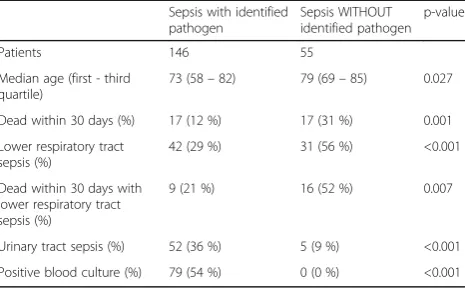
A total of 487 patients were included from May 2017 to May 2018. Three patients were excluded due to incomplete registrations. 201 (42%) were assessed to have had true sepsis. A pathogen probably responsible for the septic episode was identified in 146 (73%). The overall 30 days mortality for sepsis was 17 %; 12% in patients with an identified pathogen opposed to 31 % for patients without an identified pathogen (p=0.001, see Table 1 below). High rates of lower respiratory tract infection were found among sepsis patients without identified pathogen, compared to patients with identified microbe (56% vs 29%, p<0.001). Moreover, septic patients with focus in the lower respiratory tract without identified pathogen had a significantly higher mortality rate (52% vs 21%, respectively; p=0.007).
Conclusion
Unidentified pathogen is a common feature in patients with lower respiratory tract infections and in our cohort also associated with very high mortality. Efforts should be made to improve early identifi-cation of pathogens in such patients.
P20
Clinical characteristics and outcomes of patients with Leptospirosis Infection admitted to the Medical Intensive Care Unit: results from the 10-years retrospectively review from the university hospital from the South of Thailand
Atta Ajjimarungsi, Rungsun Bhurayanontachai
Division of Critical Care Medicine, Department of Internal Medicine, Faculty of Medicine, Prince of Songkla University, Hat Yai, Songkhla, Thailand
Correspondence:Rungsun Bhurayanontachai ([email protected])
Intensive Care Medicine Experimental2018,6(Suppl 1):P20
Background
Leptospirosis is the zoonotic infection, which is commonly found in all parts of Thailand. The severe form of this infection, as known as Weil’s syndrome, causes multiple organs dysfunction, such as liver failure, renal failure and respiratory failure. The severe Leptospirosis may leaded to morbidity and mortality after intensive care unit ad-mission. We, hereby, presented the clinical characteristic and out-comes of severe Leptospirosis patients, who were admitted to the medical intensive care unit (MICU) in the university hospital from the South of Thailand.
Materials and Methods
The retrospectively chart review of the patients who was admitted to MICU with leptospirosis was done. Leptospirosis infection was con-firmed by the positive microcapsule agglutination test for leptospira antibody from either the first or the second titer. Patients were then dichotomized into ICU-survivor and non-ICU-survivor group. All clin-ical characteristics included demographic data, clinclin-ical presentation and laboratory tests were recorded and compared by either Chi square test or independent t-test as appropriated. P-value < 0.05 was defined as statistically significant.
Results
Of 27 confirmation cases of severe leptospirosis, 77.8% was male with the mean age of 44.6+/-17.4 years old. 55.6% had history of water submersion. The median of presenting symptoms was 3(1,8) days. Fever (100%), myalgia (63%), vomiting (33.3%) and dyspnea (33.3%) were among the common clinical presentation. Mean cre-atinine level, mean bilirubin level and mean acute lung injury index (ALI) were 4.31+/-2.94 mg/dl, 5.51+/-4.92 mg/dl and 264.3+/-132.6, respectively. In addition, 81.5%, 77.8% and 25.9% of cases required inotropes, mechanical ventilator and dialysis during ICU admission, respectively. The overall ICU mortality was 14.8% (4/27). Female sex, acidemia, more severe lung injury and coma were significantly found in non-survivor case. Other parameters were comparable between groups. The comparison of survivor and non-survivor was shown in Table 1.
Conclusions
Table 1 (abstract P19).See text for description
Sepsis with identified pathogen
Sepsis WITHOUT identified pathogen
p-value
Patients 146 55
Median age (first - third quartile)
73 (58–82) 79 (69–85) 0.027
Dead within 30 days (%) 17 (12 %) 17 (31 %) 0.001
Lower respiratory tract sepsis (%)
42 (29 %) 31 (56 %) <0.001
Dead within 30 days with lower respiratory tract sepsis (%)
9 (21 %) 16 (52 %) 0.007
Urinary tract sepsis (%) 52 (36 %) 5 (9 %) <0.001
Leptospirosis is the lethal tropical infectious disease, which shown significant mortality in severe cases. Hemodynamic instability, acute kidney injury, acute liver injury and acute respiratory failure were among the common presentation required ICU admission. Female, acidemia, lung injury and coma were related to ICU mortality in this cohort.
P21
Restricted Fluid Resuscitation in Sepsis associated Hypotension (REFRESH); a prospective, multicentre, clinical feasibility trial Stephen PJ Macdonald1,2,3, Gerben Keijzers4,5,6, David M Taylor7, Frances Kinnear8, Glenn Arendts1,2,9, Daniel M Fatovich1,2,3, Rinaldo Bellomo10,
David McCutcheon1,2,3,11, John F Fraser12, Juan-Carlos Ascencio-Lane13,
Sally Burrows2, Amanda Harley4, Matthew Anstey14, Ashes Mukherjee11 1
Centre for Clinical Research in Emergency Medicine, Perkins Institute of Medical Research, Perth, Australia;2Medical School, University of Western
Australia, Perth, Australia;3Emergency Department, Royal Perth Hospital,
Perth, Australia;4Emergency Department, Gold Coast University Hospital,
Gold Coast, Australia;5School of Medicine, Bond University, Gold Coast, Australia;6School of Medical Sciences, Griffith University, Gold Coast,
Australia;7Emergency Department, Austin Hospital. Melbourne, Australia; 8Emergency Department, The Prince Charles Hospital, Brisbane, Australia; 9
Emergency Department, Fiona Stanley Hospital, Perth, Australia;
10Department of Intensive Care, Austin Hospital, Melbourne, Australia; 11Emergency Department, Armadale-Kelmscott Memorial Hospital, Perth,
Australia;12Critical Care Research Group, The Prince Charles Hospital,
Brisbane, Australia;13Emergency Department, Royal Hobart Hospital, Hobart, Australia;14Department of Intensive Care, Sir Charles Gairdner
Hospital, Perth, Australia
Correspondence:Stephen PJ Macdonald ([email protected])
Intensive Care Medicine Experimental2018,6(Suppl 1):P21
Background
Surviving Sepsis Campaign guidelines recommend resuscitation with at least 30ml/kg intravenous (IV) fluid in patients with sepsis and hypoperfusion [1]. Trials in developing countries have found higher mortality with larger resuscitation fluid volumes [2, 3]. A clinical trial of a smaller volume of fluid with earlier commence-ment of vasopressors is warranted, but it is unknown if this inter-vention is feasible and clinically acceptable in industrialised countries.
Materials and methods
The REstricted Fluid REsuscitation in Sepsis-associated
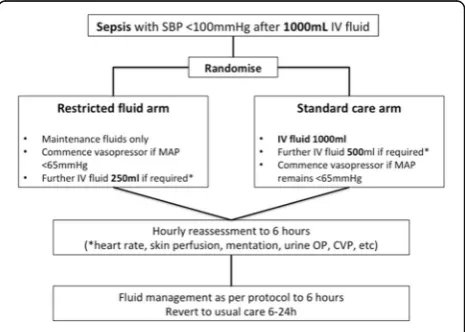
Hypotension (REFRESH) trial (ACTRN126160000006448), a pro-spective, randomised, open-label, clinical feasibility trial was conducted in the emergency department (ED) of eight Austra-lian hospitals between October 2016 and March 2018. The protocol has previously been published [4]. Inclusion criteria were suspected infection and hypotension (systolic blood pres-sure <100mmHg despite at least 1000ml IV fluid). Details of the trial intervention are summarised in Fig. 1. The primary outcome was total fluid administered within the first six hours from pres-entation. A range of process-of-care, feasibility and clinical
out-comes were assessed including vasopressor requirement,
protocol adherence, organ failure, and mortality at 90 days post randomisation.
Results
There were 99 participants (49 standard and 50 restricted vol-ume) in the intention-to-treat analysis (Fig. 2). Baseline partici-pant characteristics are shown in Table 1. Fluid volume (total for 24 hours from randomisation) and vasopressor use are sum-marised in Table 2. A significantly lower volume was adminis-tered over the first six hours in the restricted volume group
(median 30ml/kg vs 43ml/kg, p<0.001) along with earlier com-mencement of vasopressors (median 1h vs 2h post randomisa-tion, p=0.001). There was no significant difference in the rate of ICU admission, ventilation and acute kidney injury (including dialysis) between the groups. At 90 day follow up 3 of 47 (6%) in the standard arm and 4 of 48 (8%) in the restricted arm had died (P=1.0).
Conclusions
A restricted fluid and early vasopressor regimen among ED pa-tients with suspected sepsis and hypotension led to a signifi-cant reduction in fluid volume given over the first 6 hours and at 24 hours. Median dose and duration of vasopressors were lower in the restricted volume group, but this was not statisti-cally significant. There were no differences in clinical outcomes, however the study was not designed to detect these. The re-sults demonstrate the feasibility and clinical acceptability of the trial intervention in the Australian ED setting. A large rando-mised trial to assess the effect on clinical outcomes should be pursued.
Acknowledgements
On behalf of the REFRESH Investigators. The trial was part-funded by the Emergency Medicine Foundation (Queensland).
References
1. Rhodes A, Evans LE, Alhazzani W, Levy MM, Antonelli M, Ferrer R, Kumar A, Sevransky JE, Sprung CL, Nunnally ME, et al. Surviving Sepsis Campaign: International Guidelines for Management of Sepsis and Septic Shock: 2016. Intensive Care Med 2017, 43:304-377
2. Maitland K, Kiguli S, Opoka RO, Engoru C, Olupot-Olupot P, Akech SO, Nyeko R, Mtove G. Reyburn H, Lang T, et al, on behalf of the FEAST trial group. Mortality after fluid olus in Africal children with severe infection. N Engl J Med 2011, 364:2483-2495
3. Andrews B, Semler MW, Muchemwa L, Kelly P, Lakhi S, Heimburger DC, Mabula C, Bwalya M, Bernard GR. Effect of an Early Resuscitation Protocol on In-hospital Mortality Among Adults With Sepsis and Hypotension. JAMA 2017, 318:1233-1240
4. Macdonald SPJ, Taylor DM, Keijzers G, Arendts G, Fatovich DM, Kinnear FB, Brown SGA, Bellomo R, Burrows S, Fraser JF, et al. REstricted Fluid REsuscitation in Sepsis-associated Hypotension (RE-FRESH): study protocol for a pilot randomised controlled trial. Trials 2017,18:399