World Maritime University
The Maritime Commons: Digital Repository of the World
Maritime University
World Maritime University Dissertations Dissertations
2000
An investigation into the current state of Chinese
higher MET [Maritime Education and Training] in
the light of new international legislation [and] with
particular reference to STCW'95
Biwu Chen
World Maritime University
Follow this and additional works at:http://commons.wmu.se/all_dissertations Part of theHigher Education Commons
Recommended Citation
WORLD MARITIME UNIVERSITY
Malmö, Sweden
AN INVESTIGATION INTO THE CURRENT STATE
OF CHINESE HIGHER MET IN THE LIGHT OF
NEW INTERNATIONAL LEGISLATION WITH
PARTICULAR REFERENCE TO STCW95
By
CHEN BIWU
China
A dissertation submitted to the World Maritime University in partial fulfillment of the requirements for the award of the degree of
MASTER OF SCIENCE
In
MET (Nautical)
2000
Declaration
I certify that all the material in this dissertation that is not my own work has been
identified, and that no material is included for which a degree has previously been
conferred on me.
The content of this dissertation reflects my own personal views, and is not necessarily
endorsed by the University.
(Signature)
(Date)
Supervised by:
Name: ……….
Office:……….
World Maritime University
Assessor:
Name: ………...
Office: ………..
Institution/organization: ………..
Co-assessor:
Name: ………
Office: ……….
Acknowledgements
I wish to express my hearty gratitude and sincere appreciation to Captain Jan Horck for
his excellent supervision in the preparation of this dissertation.
I am very indebted to Professor P. Muirhead for his assessing this work and giving me a
great help to my studies at World Maritime University.
I am also indebted to Professor D. L. Fisher for his co-assessing the work and his
valuable contributions.
I am very grateful to Mr. Ren Maodong, who is the director of the Science and
Education Department of the Ministry of Communications of PRC, for his great help in
the field of Chinese MET.
My particular gratitude goes to Professor W. T. McMullen for his sincere contributions
to my work. I am also very grateful to Professor T. Hikima for his great support in the
field of collecting information. I would like to express my hearty thanks to Lecturer Ms.
I. Battista who gave me a great help in English writing.
I also appreciate the help of Ms. S. Anelli, who is the secretary of MET course, Mr. D.
Moulder, Ms. S. Vangeci-Eklöw, Ms. C. Denne, who work in the library of the WMU,
and other staff at World Maritime University for giving me assistance in different
aspects of my studies.
I specially thank those people who work for MET institutions in Sweden, Norway,
Germany, the Netherlands, the United Kingdom and the United States for offering me
valuable information, not only for my dissertation, but also for my studies, during the
Title of Dissertation: An Investigation into the Current State of Chinese Higher
MET in the light of New International Legislation with
Particular reference to STCW95
Degree: MSc
This dissertation is a study of the new developments in Chinese higher MET according
to the requirements of new international legislation in particular STCW95, Chinese
ocean shipping and its own development.
A general study consists of the latest requirements of MET and MET methodology. The
outcome indicates the influence of the international standard and new maritime
technology. The new educational methodology and technology also have a deep impact
on the traditional way of education in Chinese higher MET institutions.
The current state of the Chinese MET has briefly been described in order to delineate or
outline the advantages and disadvantages of the MET. The focus is placed on the
revision of curricula and programs, quality of teachers, replacement of old and out of
date equipment for training by new and up-to-date training equipment, and main
problems in the field of English teaching.
The results were collected and evaluated in the conclusions which highlight the
necessity of adapting various effective steps to upgrade the quality of Chinese higher
MET. A number of recommendations are also made in view of the deep influence on
Chinese higher MET in the 21st century.
TABLE OF CONTENTS
Declaration ii
Acknowledgements iii
Abstract iv
Table of Contents v
List of Tables viii
List of Figures viii
List of Abbreviations ix
1 Introduction 1
1.1 Aims and Objectives 2
1.2 Research Methodology 3
2 Economic and Shipping Environment around Chinese Higher MET 4
2.1 World Economic Trends of the 21st Century 4
2.2 Global Trends Affecting Future Sea Transport 7
2.3 Development of the Chinese Economy 10
2.4 Development of the Chinese Ocean Shipping 13
2.4.1 Fleet of Ocean Shipping 14
2.4.2 Volumes of Ocean Shipping 15
2.4.3 Future Development of Ocean Shipping 15
3 Situation of Chinese Maritime Education and Training 17
3.1 General Introduction 17
3.2 Higher MET in China 18
3.2.1 Dalian Maritime University 18
3.2.2 Shanghai Maritime University 19
3.2.3 Jimei Navigation Institute 20
3.3 Courses and Curricula 21
3.4 Diploma and Certificates 23
3.5 Career Profile in Higher Maritime Education 25
4 The New Requirements for Chinese Higher MET 29
4.1 The Influence of Market Economy 29
4.2 New Technology Used in Ocean Shipping 30
4.2.1 Radar and ARPA 31
4.2.2 Global Positioning System (GPS) and Differential GPS (DGPS)31 4.2.3 Electronic Chart Display Information System (ECDIS) 32
4.2.4 Vessel Traffic Service (VTS) 32
4.2.5 Adaptive Auto Pilot (AAP) 33
4.2.6 Integrated Navigation System (INS) 33 4.2.7 Automatic Identification System (AIS) 34
4.2.8 Track Control Systems 34
4.2.9 Integrated Bridge System (IBS) 34
4.2.10 Computers in Navigation 35
4.2.11 Information Technology (IT) in Shipping 35
4.3 The Revised STCW Convention 36
4.4 The MARPOL73/78 Convention 41
4.5 The ISM Code 43
5 Situation of the Development of MET in Selected Maritime Countries 46
5.1 German MET System 46
5.1.1 General Introduction 46
5.1.2 Admission Requirements 47
5.1.3 Curricula and Programmes 47
5.1.4 Certificate Structure 48
5.1.5 Sequence of German MET 49
5.2 Norwegian MET System 50
5.2.1 General Introduction 50
5.2.2 Admission Requirements 50
5.2.3 Curricula and Programmes 50
5.2.4 Certificate Structure 51
5.2.5 Sequence of Norwegian MET 51
5.3 Australian MET System 53
5.3.1 Courses for deck officers 53
5.3.2 Training System and Certificate 54
5.3.3 Curriculum 55
5.3.4 Sequence of Australian MET 56
5.4 Canadian MET System 58
5.4.1 General Introduction 58
5.4.3 Training Content 59
5.4.4 Certificate Structure 60
5.4.5 Sequence of Canadian MET 61
5.5 Japanese MET System 62
5.5.1 General Introduction 62
5.5.2 Marine Technical School 62
5.5.3 Mercantile Marine College 64
5.5.4 University of Mercantile Marine 65
5.5.5 Institute for Sea Training 67
5.5.6 Marine Technical College 68
5.5.7 Sequence of Japanese MET 70
6 The Main Advantages and Disadvantages of Chinese Higher MET 71
6.1 Main Advantages 72
6.2 Main Disadvantages 73
7 Conclusions and Recommendations 74
7.1 Conclusions 74
7.2 Recommendations 78
7.2.1 For both the Government and the Higher Maritime Institution 78
7.2.2 For the Government 84
7.2.3 For the Maritime Institution 88
LIST OF TABLES
Table 2.1 PRC Merchant Fleet Development, 1960-1998 14
Table 3.1 Titles of National Certificate 24
Table 6.1 Comparison among Selected Countries 71
LIST OF FIGURES
Figure 3.1 China's MET System 18
Figure 3.2 Career Profile in Higher Maritime Education 25
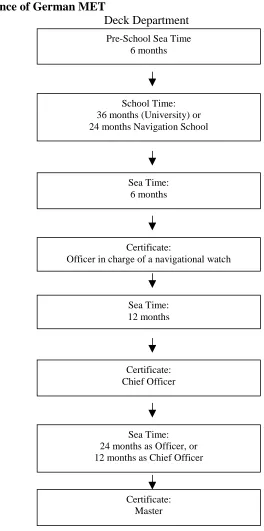
Figure 5.1 Sequence of German MET 49
Figure 5.2 Sequence of Norwegian MET 52
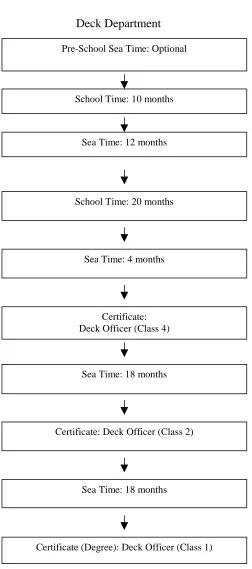
Figure 5.3 Sequence of Australian MET 57
Figure 5.4 Sequence of Canadian MET 61
Figure 5.5 Sequence of Japanese MET 70
Figure 7.1 Importance of MET Organizational Objectives 76
Figure 7.2 Proposed Organizational Chart 86
LIST OF ABBREVIATIONS
AAP Adaptive Auto Pilot
AIS Automatic Identification System ARPA Automatic Radar Plotting Aid MA Maritime Administration CBT Computer-Based Training
CD-ROM Compact Disk - Read Only Memory
DE Distance Education
DGPS Differential Global Positioning System DMU Dalian Maritime University
DNV Det Norske Veritas
ECDIS Electronic Chart Display Information System ECS Electronic Chart System
ENC Electronic Navigation Chart
EU European Union
GDP Gross Domestic Product
GIS Geographic Information System
GMDSS Global Maritime Distress and Safety System GNP Gross National Product
GPS Global Positioning System IBS Integrated Bridge System
IMLA International Maritime Lecturers' Association IMF International Monetary Fund
IMO International Maritime Organisation INS Integrated Navigation Systems ISM International Safety Management ISO International Standard Organisation IT Information Technology
MARPOL International Convention for the Prevention of Pollution from ships MET Maritime Education and Training
OOW Officer of the Watch
PID Proportional, Integral and Derivative PRC People's Republic of China
RCDS Raster Chart Display System
RENC Regional Electronic Navigational chart co-ordination Centre SMS Safety Management System
SMU Shanghai Maritime University
TSS Traffic Separation Schemes
UNDP United Nations Development Programme VHF Very High Frequency
VTS Vessel Traffic Service
WB World Bank
WTO World Trade Organisation
WWRNS World-wide Radio Navigation System
CHAPTER 1
INTRODUCTION
The people's conceptual changes represent the greatest change in the past 20 years. The
speed of such a change has exceeded that in Europe during the same period. The
mushrooming of collective, private and foreign-funded businesses has turned China into
a pluralistic economic society. The introduction of Western economic means and
management expertise has bought tremendous conceptual changes related to investment,
consumption and living style.
Modern technology has been applied so fast in the shipping industry that shipping had to
undergo rapid changes in recent decades. Ships have become bigger, more complex and
more sophisticated.
In recent years there has been a constant rise in maritime accidents which have cost a
great loss of lives and property and also caused extreme damage to the marine
environment.
The International Maritime Organisation (IMO) has rapidly developed technical
standards, rules, regulations and codes of practice. Furthermore, IMO has improved
minimum standards of competency for worldwide seafarers to ensure the safe and
In 1978 the Chinese government decided to carry out the policy of reforming and
opening to outside. According to the policy, the Central Governing Economy System
has been changed into the Market Economy System. Over 20 years of economic reform,
China has reached brilliant achievements in the field of economy.
These factors have resulted in the Chinese economy increasing by an average rate of 8%
per year. The turnover of exports and imports has constantly increased with 90% of the
total annual figure being transported by sea. Obviously, developing the national sea
transport is an essential task at the present time and will be so also in the future.
1.1 Aims and Objectives
China is a very large maritime country. Since the foundation of the People’s Republic of
China in 1949, Chinese MET has experienced quite a rapid development. In particular
since the reform and opening to the outside world in 1978, great achievements have been
made in MET during the best period ever found in history, which has provided great
effectiveness for the development of ocean shipping. Therefore, it should be said that
Chinese MET has been playing a vital role in the development of ocean shipping.
With the promulgation of new international legislation, such as STCW95, Chinese
higher MET is facing large opportunities and fierce competition. What are the strengths
and weaknesses in Chinese higher MET? What are new needs for Chinese higher MET
regarding China’s ocean shipping and international legislation? How does Chinese
higher MET speed up its development on the basis of drawing experience from foreign
counterparts? The dissertation proposes to examine these factors to identify the real
status of Chinese higher MET, and draw conclusions and make necessary
The objectives of this dissertation are:
To identify the strengths and weaknesses of Chinese higher MET contrasting with the
requirements of new legislation with particular reference to STCW95.
To examine current methods of managing higher MET all over the country.
To compare the present situation of Chinese higher MET with that of other main
maritime countries.
To identify new needs of ocean shipping for Chinese higher MET and the tendency or
future development of the world MET.
To make proposals and recommendations to improve the quality of Chinese higher
MET.
1.2 Research Methodology
The author researched the relevant literature in the library of World Maritime University
(WMU), conducted an Internet based literary search on the maritime education and
training (MET), and analyzed all collected information related to the author's
dissertation.
A further study of Chinese, German, Norwegian, Australian, Canadian and Japanese
systems was conducted with regard to the type of MET, courses and curricula, diploma
and certificate, and promotion approach of seafarers.
Some contacts were made through e-mail and ordinary mail so as to collect the
necessary information.
A questionnaire was made in order to get valuable information concerning how to fully
CHAPTER 2
ECONOMIC AND SHIPPING ENVIRONMENT AROUND CHINESE HIGHER
MET
2.1 World Economic Trends of the 21st Century
Entering the 1990s, the world economy is mainly featured by globalization and
information revolution. In the 21st century, at least in the beginning period of the new
century, the world economy will present the following trends focused on globalization. •••• Competition will accelerate the development of science and technology. The promotion and application of high-tech in industrial production has been the major
characteristic of the world economic development since World War II. In the 1980s,
Japan took the lead in seeking the technological hegemony and became a shining star in
the world economy. A decade later, the United States again achieved the dominant
position in the field of science and technology, which laid a solid foundation for its
high-speed economic development and greatly consolidated and strengthened the US
hegemony in the world political, economic and military fields. In the 21st century, the
scientific and technological competition among the big powers will turn white-hot. It is
still difficult to tell who will finally win. However, one thing is certain: Only those
countries possessing high technologies, including information technology, biological
engineering, new energy technology and space technology, can stand erect in the forest
•••• The world economy will maintain at a high growth rate. In the past few decades, the total import and export volume has occupied a larger and larger proportion of the
gross domestic product (GDP) in each country. One of the reasons is the expansion of
the international division of labor, which has led to the situation that different parts of a
product are produced by different countries. Therefore, the world trade growth rate
greatly increased. Meanwhile, the mutual dependence between economies is enhancing
day by day. The economy of one country can hardly exist and develop by breaking away
from the economies of other countries. Because of the deepening of the international
division of labor, international trade will maintain a high growth rate.
•••• Transnational direct investment continues to develop rapidly. Direct investment was first developed to resist trade barriers. To avoid trade barriers, one developed
country invested directly in another developed country or developing country and
dominated the market there. Such an investment method saw an unprecedented
development in the 1990s. Direct investment is closely linked with the global operation
strategy of transnational companies. The Asian financial crisis did not stop the growing
trend of direct investment around the globe, which shows the continuity of the global
strategy of these transnational companies. In a long period to come, the direct
investment promoted by transnational companies will be further developed. The
investment in service and high-tech fields of developing countries will be accelerated. •••• Financial liberalization and globalization continues. With the relaxation of each government in its restrictions on the cross-border flow of capital and the rapid
development of information technology, the banking capital and securities capital,
including shares and stocks, flow in a wider sphere and at a greater speed. A unified
international financial market has been basically formed. At the same time, the flow of
international capital is more and more separated from international trade and investment.
Financial globalization, in fact, refers to the rapid floating of financial capital around the
world in an effort to pursue the highest recovery rate. On the one hand, financial
the other hand, it enhances the instability of the international financial system. As the
international capital flows from one corner of the world to another, relevant countries
will witness great changes in the exchange rate of their currencies and chaos in their
domestic financial systems. This will lead to a severe economic crisis in a series of
countries. In the new century, each country will further promote its financial
liberalization. The cross-border flow of international capital will expand rather than
shrink.
•••• World economic organizations will strengthen their role in world economic affairs. The world economic organizations result from globalization and at the same
time guarantee it. At present, the International Monetary Fund (IMF), the World Bank
(WB) and the World Trade Organization (WTO) exist as three major organizations in
the fields of finance, trade and development to maintain world economic order. At the
same time, the role of various non-governmental organizations representing different
interest groups will also be strengthened.
•••• Economic regionalization will be strengthened. Economic regionalization and the regional economic integration made some progress in the 1990s. Through decades of
efforts, the European Economic Community (later renamed the European Union) finally
realized the union of currencies of all member countries. At the beginning of the 21st
century, the euro will replace the currency of major European countries. In Asia, the
voice for the establishment of regional economic groups is also rising. The Asian
financial crisis has taught people a lesson: Under the situation of globalization, one
country can hardly withstand the attack of powerful international capital. Under such
circumstances, countries geographically close will inevitably put hope on their
neighboring countries or the mutual help between economic communities. Besides, the
success of the European economic integration has encouraged those countries and
economic communities unwilling to accept the economic hegemonism in the world.
Now it has become the common wish of all countries to seek regional economic
can be predicted that the economic integration process will be accelerated all over the
world, especially in Asia.
2.2 Global Trends Affecting Future Sea Transport
The further development of world economic globalization will certainly have a notable
impact on future sea transport. The main aspects are as follows:
• Manufacturing on demand will be the norm, which will result in transport functioning
also as the inventory/warehouse, feeding raw materials into manufacturing and
delivering stock to customers. Price competition among global manufacturers will
continue to pressure transport providers for faster, cheaper, but more reliable,
technology-driven door-to door services.
• The developing regions will need increasing supplies of food and raw materials to support the population and emerging manufacturing industries. Overall, the dry-bulk
maritime trades are expected to grow at about 1% annually through 2010. If this trend
continues, the world bulk carrier fleet in 2020 would be about 24% larger than it is
today. Replacement tonnage, as well as some fleet expansion, will be required.
• Shifts in trade patterns will have a direct impact on shipping demand. For instance, as
labor-intensive manufacturing continues to migrate from North to South and West Asia
in search of lower-cost labor.
• Global seaborne trade, which comprises the largest volume of international trade, will
almost triple from 3.5 billion metric tons in 1996 to 9 billion tons in 2020. This growth
will drive global demand for increased maritime transport services and the related
infrastructure.
• Japan, China, Southeast Asia and Far Eastern newly industrialized economies will
increase their share of international trade 33% in 1996 to about 42% within the next 15
• New vessel designs and propulsion/energy sources will produce larger, faster, more
efficient ships, particularly in the high-volume line-haul trades from the Far East to
Europe and the United States. Nonetheless, draft restrictions in many ports will create
more demand for smaller vessels, including tug-barges, to transship cargo to final
destination ports.
Containerships, which were introduced into service in the 1960s with capacities of less
than 500 twenty-food-equivalent units (TEUs), will dominate all liner services, due to
the advantages of lower loading costs and increased efficiency. Ships that can carry
approximately 6,000 TEUs are in service today. Carriers planning for the expected
increase in cargo volume have ordered vessels that can carry over 8,000 TEUs. By 2010
ships carrying 13,000 TEUs are possible.
The ability to miniaturize components, which has been essential to the computer
industry, has applications in vessel technology. The capability to produce high amounts
of power with small motors can greatly enhance the capabilities of commercial vessels,
while generating significant savings in fuel and a reduction in environmental damage.
Fuel cell development will lead to an environmentally friendly propulsion alternative for
the future.
Around 2020, shipyards will see the beginning of a new building cycle, both to replace
vessels built in the late 1990s as well as to accommodate increased cargo volumes,
depending on trading and development pattern changes.
• Instantaneous exchange of immense stores of information. Virtually unlimited access
to information and communications by manufacturers, consumers, intermediaries, and
governments will increase the demand for goods and promote competition. Advanced
information technology will be applied to all aspects of transport to create a seamless,
vessels and cargo automatically, and today a system is evolving that utilizes
satellite-based communications. An instantaneous worldwide communications network will
allow carriers and shippers to know the status of their cargo at all times. This
information will be critical to shippers involved in global sourcing of raw materials, as
well as of components for just-in-time manufacturing and retailing.
• Integrated navigation and communications systems will enable global positioning,
electronic chart display, and data and voice transmission capabilities. Furthermore,
interconnected fiber-optic local area networks will allow interface between control
centers, offices and staterooms.
• Labor productivity will rise due to advances in onboard automation and the assignment
of more duties to each crewmember on newer vessels. A ship with a crew of 50 seafarers
in 1960 and 8, 16, or 21 today could have as few as 4 by 2020 if harmonized
international regulations permit.
• "Flag of Convenience" (FOC) and second national registries will continue to attract the world's shipowners, due to simple registration procedures, low or nonexistent taxes, and
the ability to crew vessels with citizens from lower cost, lesser developed countries. • Even though ships will become larger and average crew sizes smaller, the current
shortage of adequately trained mariners will occur worldwide as trade quadruples by
2020. As ships and transport systems become more complex, training requirements will
grow.
• Increased public concern for safety and protection of the environment will accelerate
the movement toward harmonized international requirements for vessel safety,
environmental protection and crew qualifications. Advances in human factors
technology and applications of system safety principles will demand better training and
performance testing of personnel. Highly trained personnel will be required for most
positions onboard and ashore.
these directions. Institution graduates with transport-focused degrees will be more in
demand to lead in international businesses.
• Ports will have to improve existing facilities and develop new terminals to
accommodate larger vessels. Necessary port infrastructure improvements will be
completed in a timely and cost-effective manner. Ports are striving to upgrade
cargo-handling equipment and operational practices to increase the speed and volume of cargo
throughout. In general, larger and faster ships and advanced port container-handling
equipment will enable terminal operators to equipment and systems needed by
tomorrow's ports.
• Vigorous global competition will continue to fuel the consolidation of today's transport
providers into fewer, but more cost-effective, carriers. Transport will become integrated
worldwide, linking land, sea and air operations in door-to-door service with optimal
efficiency and safety.
2.3 Development of the Chinese Economy
•••• Obtaining Great Achievements. In 1978, China launched a reform that set the task centering on economic development. China has ushered in a period of rapid economic
development since then. For instance, in 1997, the EU became China’s second largest
trading partner next to Japan, with bilateral trade valued at US$43 billion, or 15 percent
of total foreign trade. EU investment and loans have also risen. Governmental loans
totaled US$12.8 billion, accounting for 40 % of total foreign governmental loans, while
investment has exceeded US$10 billion. Over the past 20 years, China’s GDP (gross
domestic product) registered an average annual growth of 9.7 %.
In 1998, China’s GDP amounted to 7955.3 billion yuan, compared to 362.41 billion
yuan 1978, with an average annual growth rate of 9.8%, the fastest rate in the world.
economic giants, after United State, Japan, Germany, France, Britain and Italy.
However, since the country has about 1.25 billion people, its per capita GDP and income
are still far behind. Therefore, China remains a developing country.
•••• Having Optimistic Prospect for the New Century. China would achieve a moderate level of prosperity by the end of this century, with an annual per capita GNP (gross
national product) of US$800 to US$1000. "Then we will take that figure as a new
starting point and try to quadruple it again, so as to reach a per capita GNP of US$4000
in another 50 years. It means that by the middle of the next century we hope to reach the
level of moderately developed countries." (Deng, 1987)
Most Chinese economists believe that China can maintain its steady growth for at least
20 years. According to a report by the Development Research Center of the State
Council, China is expected to maintain an average annual growth rate of 7 percent in the
first decade of the coming century. It is very possible that the GDP in 2010 will be
double that of 2000.
Chinese Prime Minister Rongji Zhu at Speaking at the 21st Century Forum-Conference
2000 ( Economic Globalization-Asia and China, 2000) said that at this crucial historical
juncture when mankind is entering into the 21st century, the world is undergoing
profound changes. The scientific and technical revolution as represented by information
technology is developing rapidly, international economic restructuring is picking up
speed, and economic globalization is visible accelerating. In the face of the new situation
featuring scientific and technological progress in the world and economic globalization,
China's economic development in the next ten years will have the following
characteristics: there will be strategic restructuring of the economy, economic
restructuring will be deepened, the strategy of rejuvenating the nation by relying on
will be accelerated and expanded. "China can't develop without help from Asia and the
world as a whole, and likewise Asia and the world need China for their own
development." ( Zhu, 2000)
•••• Deciding the Marine Economy as a New Economic Growth Point. China has favorable conditions for the development of a marine economy. It boasts a continental
coastline of more than 18,000km. There are more than 5,000 islands in China’s
territorial waters, each with an area of over 500m², and the islands’ coastline total more
than 14,000km. More than 160 bays spread along the coast, plus the deep-water
stretches of coast with a total length of several hundred km. Many sections are suitable
for constructing harbors to develop marine transportation.
China’s marine economy involves more than 20 sectors, including marine fishery, salt
industry, transportation, offshore oil and gas, and tourism, occupying a certain share in
the world’s marine industries.
Over the past two decades, China’s marine economy has developed at a rapid pace. In
the 1980s, the marine economy grew 17% annually. Since 1990, the average growth rate
has stood at 20%. The total output value of marine industries rose from 6.4 billion yuan
in 1979 to 300 billion yuan in 1997, accounting for 4% of the nation’s GDP.
Significant achievements have been attained in marine transportation. By the end of
1997, merchant ships have numbered about 320,000 with a total deadweight tonnage of
close to 50 million. China’s coastal shipbuilding industry has registered rapid
development, and in 1997, its shipbuilding tonnage ranked third in the world. In the
with an annual handling capacity of more than 10 million tons. In 1997, the volume of
freight handled by the country’s major coastal harbors totaled 905 million tons.
China has a population of about 1.25 billion, and natural land resources per capita are
lower than the world average. As a major developing country with a long coastline,
China must take marine development and protection as its long-term development
strategy.
The China Ocean Agenda 21 formulated in 1996 put forward a sustainable development
strategy for marine programs. The basic ideas are as follows: to effectively safeguard the
national marine rights and interests, rationally develop and utilize marine resources,
earnestly protect the marine eco-environment and realize the sustainable utilization of
marine resources and environment, as well as the coordinated development of the work
in this field.
China’s sustainable economic growth will increasingly rely on the ocean. Therefore,
China has already designated the marine economy as a new economic growth point in
the 21st century. It is estimated that by the end of 2000 the total output value of marine
industries will come to 500 billion yuan, accounting for 5% of the nation’s GDP. The
strategic targets set in the China Ocean Agenda 21 are: After entering the 21st century,
the growth rate of the marine economy will reach some 10%, higher than that of the
GNP; By 2010, the added value created by the marine industries will make up 10% of
the nation’s total GDP.
2.4 Development of the Chinese Ocean Shipping
It is well known that there is a high correlation between economy growth and maritime
Chinese ‘Columbus’, and his fleet of 300 ships and 270,000 seafarers sailed seven
expeditions as far as the East Coast of Africa. However, despite these maritime
successes, Chinese civilization has always been land orientated. China did not become a
modern internationally trading maritime nation until late in the century. As far as China's
ocean shipping is concerned, it has to speed itself up in order to undertake to transport
90% of the export and import volume of goods and to take part in international sea
transportation.
2.4.1 Fleet of Ocean Shipping
Before 1960, there was no national ocean shipping fleet, and China had only 150 ships
of 760,000dwt for coastal transport. China built up its own deep-sea fleet in 1961. From
1966 to 1975, the slow growth of the national fleet was partly due to the politics of the
Cultural Revolution. Since 1980, the national fleet has increased quickly. It increased
from 955 ocean ships of 10 million dwt in 1983 to 2197 ocean ships of 19.8 million dwt
in 1992. There were more than 2200 ocean vessels of 20 million dwt in 1994. In 1998,
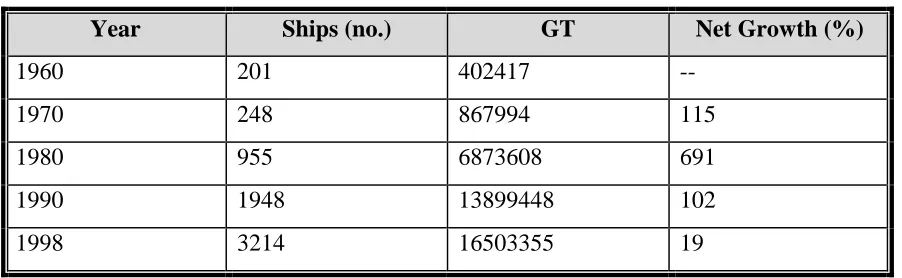
China was ranked fourth in the world league. The following table outlines the growth of
the Chinese fleet in the last 30 years:
Table 2.1. PRC Merchant Fleet Development, 1960-1998
Year Ships (no.) GT Net Growth (%)
1960 201 402417
--1970 248 867994 115
1980 955 6873608 691
1990 1948 13899448 102
1998 3214 16503355 19
In 1961, the China Ocean shipping Company (COSCO) was formed under the control of
the Ministry of Communications. Apart from COSCO, there are over 190 shipping
companies which are run by coastal provinces, or cities, or private enterprises. COSCO
is the largest shipping company in China at 600 vessels and more than 15 million dwt. It
has ten branch companies based at Beijing, Shanghai, Guangzhou, Tianjin, Qingdao,
Dalian, Lianyungang, Shenzhen, Xiamen and Hongkong. The Group has three other
main areas of operation: China Ocean Shipping Agency, China Marine Bunker Supply
Company and China Road Transport Company, and more than 300 subsidiaries
world-wide.
As an open-door policy was adopted by the Chinese government after 1978, the national
shipbuilding industry has developed quickly, and new building tonnage went up to 2.5
million dwt in 1990 and it was over 4 million in 1994.
2.4.2 Volumes of Ocean Shipping
Before the mid-1970s, around 65 per cent of the seaborne trade was with South-East
Asia countries and the Soviet Union with a trade turnover of US$ 4 billion. In the 1980s,
the growth of seaborne exports and imports increased quickly. The volume of turnover
went up to US$ 83 billion. It increased to US$ 220 billion in 1994 and the total
throughput of the ports was more than 1,500 million tons.
2.4.3 Future Development of Ocean Shipping
The 20th century saw China developing from a closed, land-oriented imperial economy
into a global maritime power with a significant merchant fleet and the potential to
calculations there are 330,000 active seafarers in China: 117,800 officers and 212,200
ratings.
Today, China is already the 7th largest economy and the 10th largest trading nation in
the world. Foreign investment and foreign trade combined with the high domestic saving
rate became the basis for China’s economic development. In China, 90% of foreign trade
has been fulfilled through ocean shipping. Therefore, it can be said ocean shipping has
been exerting a vital and irreplaceable role in the development of Chinese foreign-trade
economy.
According to the blueprint for the development of China’s highway and waterway
transport, the construction of trunk highway system, main waterways, main distribution
centers for water and highway transport, and support system will be completed within 30
years or more.
Zhendong Huang, the Minister of the Ministry of Communications of PRC, said in 2020
highway and waterway transportation will basically meet the needs of social-economic
development as a whole and in 2050 highway and waterway transportation will realize
modernization.
In order to fulfill this grand target, transport education, in particular maritime education
CHAPTER 3
SITUATION OF CHINESE MARITIME EDUCATON AND TRAINING
3.1 General Introduction
China’s maritime education and training started in 1909. It has passed 90 years. Since
the liberation in 1949, Chinese MET has made great progress. Particularly, after China
has carried out reforms and opening to outside, Chinese MET has entered into a quite
new stage of development. A comprehensive MET system has been formed in China. It
can be said that Chinese MET has made great contribution to the development of the
shipping industry in China. The Chinese MET complies with the international and
national requirements
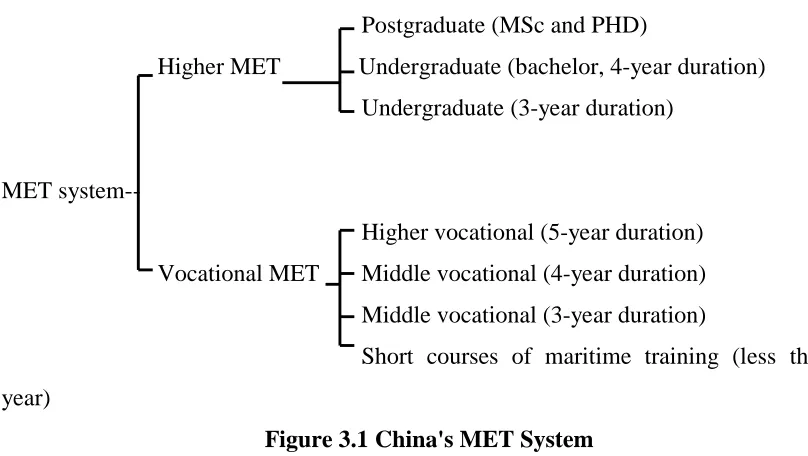
For the time being the maritime education system in China is divided into two kinds of
education in accordance with difference functions in the field of the MET. China has at
least 80 maritime training institutions at various levels, which are financed and
controlled by the Ministry of Communications, or local governments, or shipping
Postgraduate (MSc and PHD)
Higher MET Undergraduate (bachelor, 4-year duration)
Undergraduate (3-year duration)
MET
Higher vocational (5-year duration)
Vocational MET Middle vocational (4-year duration)
Middle vocational (3-year duration)
Short courses of maritime training (less than 1
year)
Figure 3.1 China's MET System
3.2 Higher MET in China
The higher maritime education is open to all people and students who graduate from
senior middle schools. After passing the Annual National University Entrance
Examination they can enter into these maritime universities and institutes. Normally
these students have no sea experience. For the time being, there are six major maritime
universities and colleges, which are Dalian Maritime University (DMU), Shanghai
Maritime University (SMU), Wuhan Navigation College (attached to Wuhan University
of Technology), Jimei Navigation Institute (attached to Jimei University), Guangzhou
Maritime College and Qingdao Ocean Shipping Mariners’ College.
3.2.1 Dalian Maritime University
Dalian Maritime University was formed in 1953. In 1960, it was assigned by the
government as a national key institution of higher education in China. In 1983, UNDP
university and in 1985 WMU set up its regional branch Dalian Branch there. Since the
establishment of the University, it has cultivated more than 30,000 senior maritime
personnel for the shipping industry, and it is called the cradle of maritime experts.
The campus of the university is about 725,000m² and there are various facilities for
academic requirements, which are some 285,000m² buildings including classrooms and
experimental spaces. As far as the academic organization is concerned, the university
has nine colleges and five faculties: College of Navigation, College of Marine
Engineering, College of Shipping Management, College of Law, College of Information
Engineering, College of International Business, College of Marine Environment
Engineering, College of Seafarer's Profession and Technology, College of Adult
Education, Faculty of Social Science, Faculty of Foreign Languages, Faculty of Basic
Science, Faculty of Physical Education, Faculty of Postgraduate. It is provided with 1
post-doctorate mobile station, 28 bachelor of science and engineering degree programs,
2 professional tech training programs, 15 master degree programs, 5 Ph.D. programs
with 1 post-doctorate mobile station and there are more Ph.D. programs under approval.
The university has established relationships with 13 famous maritime institutions in the
world for academic exchanges. DMU, as a representation of maritime university, has
been included into "211 Project" (Facing 21st century concentrate the investment on 100
national key universities' building) by Chinese government to build in next 15 years.
3.2.2 Shanghai Maritime University
Shanghai Maritime University is among the first universities accredited by Det Norske
Veritas (DNV) and the Maritime Administration of China and has obtained certificates
of Conformity on the basis of ISO 9001 and the national quality standards regarding
maritime education. It currently runs 3 associate-degree programs, 23 bachelor's degree
examinations to enroll in-service postgraduate students and is also qualified to award the
master's degree to candidates who have fulfilled the required courses without taking the
entrance exams. Three programs of SMU, namely, transport planning and management,
industrial economics and electrical drive & automation, have been classified as the key
disciplines of the Shanghai Municipality and the Ministry of Communications. The
university has a teaching staff of nearly 700, including 300 professors and associate
professors, and a large student population that includes more than 5,000 bachelor-degree
and associate-degree students. About 600 postgraduate students, about 3,000 adult
students, and some international students. SMU maintains friendly contacts, academic
exchanges and joint academic programs with more than 20 countries, regions and
international organizations, including the United States, the United Kingdom, Japan,
Norway and the Netherlands.
SMU boasts a fairly complete set of teaching and research facilities: more than 40
laboratories such as the advanced experimental center for navigational technology and
marine engineering. SMU has three training ships of the 10,000 DWT class and two
ocean-shipping sailing boats. The university library possesses more than 700,000 books
and over 2,000 Chinese and foreign periodicals. Its collection of books and journals in
maritime law outranks any other library in China.
3.2.3 Jimei Navigation Institute
Jimei Navigation Institute is located in Jimei schools Village, Xiamen City. With a long
history, the Institute is one of the major maritime education and training higher
institutions in China. The Institute was originally founded in 1920 as Jimei Navigation
School by Mr. Chen Jiageng, a patriotic overseas Chinese leader. It was upgraded to
The Institute is currently made up of 7 teaching units and 2 research bodies. They are
Maritime Navigation Department, Marine Engineering Department, Marine Electrical
Engineering Department, International Shipping Management Department, Division of
Basic Courses, Division of Social Science, Training Center for Seafarers, Nautical
Science & Technology Institute and Studies of Higher Education Research Institute. It
has 8 majors altogether, namely, Maritime Navigation, Marine Engineering, Marine
Electrical Engineering, Radio Communications & Piloting, Communication
Engineering, Industrial Automation, International Shipping Management, and Thermal
Engineering. The Institute practices a 4-year senior college program. The number of
students is more than 1,800 per year. It also provides training classes and upgrading
courses for seafarers as well as higher learning programs for adult students, such as
full-time study, correspondence courses and evening classes.
In order to fully implement STCW95 stipulated by IMO and to ensure quality of MET,
the Institute has set up a quality system based on the guideline set up by the
Administration and gained the Certificate of Quality System issued by the Maritime
Administration (MA) of PRC.
3.3 Courses and Curricula
The main courses in Chinese maritime institutions are Maritime Navigation and Marine
Engineering. The present system of MET in China has existed since 1978. During this
period of time, the instructional programs of maritime courses were revised several
times in order to meet the new requirements of the international conventions and
national regulations. At present DMU can offer doctoral, master and bachelor programs
in nautical technology, shipping engineering, marine engineering and marine
communication & radio navigation. SMU can offer master and bachelor programs in
specialties. The following is an example of the course curriculum of maritime navigation
offered by DMU.
This main curriculum of the navigation course may be divided into four parts:
Common Courses, Basic Courses, Supporting Courses and Specialized Courses.
Common Courses:
Social Science
Military Theory
Physical Education
College English
Spoken English
Basic Courses:
Advanced Mathematics
Physics
Physics Experiment
Mechanical Drawing
Fundamentals of Computer & its Application
Marine Mechanics
Marine Chemistry
Supporting Courses
Electric Circuits
Fundamentals of Marine Radio Technology
Principle for Naval Architecture
Fundamentals of Ship Automation
Introduction to Marine Engineering
Standard Marine Vocabulary
Specialized Courses:
Ship's Structure and Deck Equipment
Ship's Maneuvering
Watch Keeping & Preventing Collision of Ship
Maritime Transport of Cargo
Oceanography and Meteorology
Ship's Safety and Management
Marine Navigational Instruments
Marine Radar and ARPA
Flag Signals and VHF Radio Communication
Theories of GMDSS Equipment
Maritime Radio Communication for GMDSS
Shipping Business and Maritime Law
The duration of the MET is either 4 years or 3 years. 4-year graduated students get a
Bachelor of Science degree. The young navigators and engineers are almost all
candidates for deck officers and engineers on board vessels.
Training courses are based on academic programs that comply with international
requirements as well as Chinese regulations.
3.4 Diploma and Certificates
Generally students study in these institutions for four years. During the study period of
four years, students go on board ships for almost one year for practical training at sea. If
they successfully complete the program, they will get a diploma and bachelor degree. In
addition to the academic courses there are different upgrading courses for navigators and
engineers to get the Certificates of competency. At the end of these courses, participants
by MA every year, before they go on board ships to be senior officers. The most
important subjects of the examination are: Terrestrial Navigation, Celestial Navigation,
Maritime Aids to Navigation, Maritime Law for Navigators and Diesel Engine, Ship
Automation, Operation of Ship Propulsion Plant, Maritime English. The Certificate is
issued by MA, based on the results of all examinations and sea experience. The titles of
national certificates are as follows:
Table 3.1 Titles of National Certificates
Navigation Engineering
Third Officer Fourth Engineer
Second Officer Third Engineer
Chief Officer Second Engineer
Captain Chief Engineer
3.5 Career Profile in Higher Maritime Education
Figure 3.2 Career Profile in Higher Maritime Education Certificate for Captain/Chief Engineer
National Examination for Certificate of Competency
Updating Training in University or Seafarers Training Center (6 months)
Sea Service as Chief Officer/Second Engineer (at least 18 months)
Certificate for Chief Officer/Second Engineer
National Examination for Certificate of Competency
Sea Service as Third/Second Officer/Fourth/Third Engineer (at least 18 months)
Certificate for Second Officer/Third Engineer
Shipboard Training conducted by Shipping Companies (12 months)
Academic Study, including on board training of 6 months, within 4 years at a Maritime University
National Examination for Entrance to University
3.6 Implementation of the Revised STCW in China
The amendment to the International Convention on Standards of Training, Certification
and Watchkeeping for Seafarers (STCW) 1978 was adopted in 1995. The impact of the
revised STCW Convention on Member States' MET is stronger than expected.
The Chinese government has taken action for the full implementation of the Convention
and the major national legislation was made in 1997. Many requirements, with respect to
the administration, watchkeeping, maritime education and training, certification, quality
standards and control requirements, standards for personnel on maritime qualification
and competency and internal requirements for the administrative personnel, have been
regulated and entered into force in 1998.
The obvious change in the revised national regulations for seafarers is that the
government shows concern for education administration, revising curriculum and
shipboard manning as well as quality control. Standards on qualification and
competency for senior officers are raised and are beyond the standards in the revised
STCW Convention so as to satisfy the national requirements for improving maritime
safety. Some major changes are given in brief:
• No institutions are allowed to conduct maritime education and training unless a Training Permit has been granted by MA. The requirements for facilities, equipment,
plans, materials, programs and qualifications of the staff according to the national
regulations must be satisfied.
• Any trainee, who wants to apply for examinations for the certificate of competency, must go to a school approved by MA for completing the essential education, basic
safety training, specialised and competent training with the duration of at least two
least 3 years) before he applies for a certificate of competency on the management
level.
• All candidates who apply for the certificates for marine officers, no matte where they graduate, must pass the national examinations organised by MA. Passing national
examination means that trainees must satisfy not only the paper test, but also the
assessment of competency.
• The senior officers who want to obtain the certificates for Master, Chief Mate, Chief Engineer and Second Engineer must complete the mandatory updating training courses
before taking the national examinations.
• The MA has promulgated the Outline of Examination and Assessment for Certification of Seafarers so as to make the seafarers satisfy the minimum standards of
the Convention.
• Institutions engaged in maritime education and training must establish quality
control systems according to the requirements of the national "Regulations on Quality
Control of Education and Training for Seafarers", and obtain the Quality System
Certificate issued by MA upon successful verification. The authorised body is
responsible for verification of the quality control system and organises an expert group
to independently carry out verification for the quality control systems of the institutions.
Facing the STCW 95 Convention and the revised national regulations, Chinese maritime
institutions also need to take action to improve MET. The curricula of all courses for
MET were fully revised in 1996, and the revised programs of the higher maritime
education for new students have been underway since 1997.
An important development has been adopted by maritime institutions for quality
assurance in MET. Institutions are obliged to ensure that the education and training
objectives and related standards of competence are clearly defined. All training,
through a quality standards system to ensure achievement of defined objectives
including the qualification and experience required of instructors and assessors. The
evaluation activities for quality assurance must be conducted by qualified persons who
CHAPTER 4
THE NEW REQUIREMENT FOR CHINESE MET
4.1 The Influence of Market Economy
The market economy has already had a profound effect on China's MET in some
aspects:
First of all, it makes the circles of maritime education realize the importance of
manpower market in regulating maritime technical personnel quantity and
specifications, and the urgency and necessity to reform the current maritime education.
Secondly, it speeds up the process of changing China's MET from traditional
educational mode to modern quality-orientated education. The traditional China's MET
focuses on the science and technology teaching, but the comprehensive qualities such as
psychological quality and cultural quality are ignored to some extent.
Thirdly, it makes the Chinese government and circles of MET adjust training content
from meeting the requirement of national maritime employment market to meeting the
needs of both national and international market. According to statistics, although China
is the biggest country in population, it is not the biggest seafarer exports country. For
example, China has about 330,000 seamen compared with the Philippine's 350,000 with
160,000 deployed on foreign-owned ships. China, however, has only about 10% of its
seafarers employed on foreign flag vessels. In the light of the national strategy of
will increase investment in education step by step. Therefore it can be predicted that
China will emerge in the international maritime employment market as a main supplier
of high standard seafarers in the foreseeable future.
Finally, it impels the government administration to give more power to institution
authorities. Until now, the Ministry of Communications has taken measures to enhance
the macroscopic management and reduce the microscopic management so as to make
sure the maritime institutions to effectively implement the school-running authority.
4.2 New Technology Used in Ocean Shipping
The rapid development in the field of maritime technology has had a strong impact on
the shipping industry. The new maritime technology developments include radar,
automatic radar plotting aids (ARPA), the global positioning system (GPS) and the
differential GPS (DGPS), adaptive auto pilots (AAP), track control systems, the
electronic chart display information systems (ECDIS), the integrated bridge systems
(IBS), the integrated navigation system (INS), the vessel traffic services (VTS), the
automatic identification systems (AIS), the use of computers in navigation, and
information technology (IT) used in shipping. The impact of the new maritime
technology is on the safer operation and the more efficient maintenance of ships. The
new methodology and technology in MET have a significant influence on the Chinese
MET system and institutions. One of the key influencing factors is the wide utilization
of multi-media for MET instruction, including distance education (DE) via internet and
e-mail. Computer based training (CBT) and the use of simulators also play a key role in
MET. The use of a radar and ARPA simulator for training was made mandatory by
4.2.1 Radar and ARPA
Radar technology has been developed and improved over 60 years from a prototype
machine in the 30s to analogue signal processing in the early 60s, and to the digital
signal processing in the late 80s. The latest radar advance with overlaying display of
radar picture and ECDIS has great potential in the integrated bridge system, as the
situation involving encounters with other vessels can at all times be assessed within the
overall context. By integrating the functions of ARPA and ECDIS, a system would be
developed to help officers of the watch to deal with complex traffic situations by giving
them suggestions for avoidance routes. This system can also be used in a VTS center.
4.2.2 Global Positioning System (GPS) and Differential GPS (DGPS)
The Global Positioning System (GPS) was originally developed by the United States
Department of Defense to provide precise navigation for a wide range of military
requirements. In the mid-1980s it was decided to make the technology available to
civilian users. The US Department of Defense decided to deliberately degrade the
signals, through a process called selective availability, to deny unauthorized access to
the system’s full capability. Accuracy achieved under this regime is normally in the
range of 50 meters. What will be the future development of satellite navigation systems?
GPS is a part of the would-wide radio navigation system (WWRNS), which consists of
satellite navigation systems and terrestrial navigation systems. WWRNS is capable of
providing adequate position information within its coverage area. DGPS relies on the
assumption that certain types of error, which can degrade the performance and accuracy
4.2.3 Electronic Chart Display Information Systems (ECDIS)
Electronic chart display and information systems (ECDIS) have emerged as a new aid to
maritime navigation, the use of which results in significant benefits to maritime piloting
and safety. ECDIS is a real-time geographic information system capable of integrating
GPS/DGPS, echo-sounder, gyrocompass, radar, and electronic chart information into
one display. As an automated decision aid, ECDIS is capable of continuously
determining a vessel’s position in relation to land, charted objects, aids to navigation and
unseen hazards. As a navigation system, ECDIS also displays such important
information as cross-track distance, course made good, speed over ground, and
time-to-go. ECDIS and other forms of electronic charts like the raster chart display system
(RCDS) represent an entirely new approach to the safety of maritime navigation and
piloting.
4.2.4 Vessel Traffic Service (VTS)
A vessel traffic service (VTS) is any service implemented by a competent authority
primarily designed to improve the safety and efficiency of traffic and the protection of
the environment. It may range from the provision of simple information messages to
extensive management of traffic within a port or waterway. Given this broad description,
a VTS might embrace some or all of the following functions: • Provision of routine information
• Co-ordination of ship movement reports
• Monitoring of compliance with established traffic rules • Provision of advice or guidance
Fulfilment of all of the above functions requires a communications system, and
surveillance is essential for all but the simplest information service.
Communication: in modern VTS systems a wide variety of communication systems
may be found. These may include landline telephone, radiotelephony, telex, microwave
data link and satellite communication.
Surveillance: radar is invariably the sensor used to carry out surveillance. In general,
the systems are purpose built to achieve a very high degree of range and bearing
discrimination.
4.2.5 Adaptive Auto Pilot (AAP)
The adaptive auto pilot is so designed that the ship can make the course steering more
accurate taking into account the drag of the rudder angle and the ambient conditions, e.g.
weather, currents and tide. The AAP makes use of the proportional, integral and
derivative (PID) controls forming the PID autopilot systems which are widely used on
board merchant ships. The autopilot is primarily used for steering the ship on long ocean
passages, which reduces quartermaster's workload.
4.2.6 Integrated Navigation System (INS)
The purpose of an integrated navigation system is to provide "added value" to the
functions and information needed by the officer in charge of the navigational watch
(OOW) to plan, monitor, or control the progress of the ship. An INS provides benefits
by automating some of the routine cross checking and selection of data sources,
presenting situation awareness and decision support, keeping track of the configuration
4.2.7 Automatic Identification System (AIS)
AIS is based on the installation of an onboard transponder, which uses the GPS signals
emitted by satellites to transmit the ship’s identity, position and other pertinent data to
any ship or shore station with compatible equipment. This information can then be
displayed on the screen of a ship’s ECDIS (basically a computer screen displaying a
digital marine chart and other vital information), immediately providing the master or
pilot with the location of other ships in the vicinity, and enabling such ships to transmit
short electronic messages to one another. The implementation of this technology will
significantly improve the quality of marine traffic information, enhance the level of
safety on board ships, and permit significant rationalization of the Vessel Traffic
Services (VTS) program.
4.2.8 Track Control Systems
The objectives of track control systems with their sources of position, heading and speed
data are intended to keep a ship automatically on a pre-planned track over ground under
various conditions and within the limits related to the ship’s maneuverability. The
systems can be applied on board ships of maximum speed of 30 knots with maximum
rate of turn not in excess of 600 degrees per minute, it is applicable to the straight tracks.
4.2.9 Integrated Bridge System (IBS)
An integrated bridge system (IBS) is defined as a combination of systems which are
interconnected in order to allow centralized access to sensor information or
command/control from work stations with the aim of increasing safe and efficient ship’s
management by suitably qualified personnel. IBS should support systems performing
• Passage execution • Communication • Machinery control
• Loading, discharging and cargo control • Safety and security
4.2.10 Computers in Navigation
The maritime industry is changing in a steady and positive manner. The application of
computer technology has a profound influence on the entire shipping sector. Computers
are present in every field of the shipping industry including vessel operation and
management, voyage planning, maintenance scheduling, communications, and engine
room controls.
4.2.11 Information Technology (IT) in Shipping
Information technology (IT) is a term commonly used to cover the range of technologies
used for the transfer of information, in particular to computers, digital electronics, and
telecommunications (Crystal, 1990). IT provides data to support decision making. But
data is not information, and information is not knowledge. Hence, it is necessary to
translate data into information to provide the knowledge needed for action. The full
advantage of the latest IT developments in the shipping sector lies in the fact that the use
of IT can increase the efficiency of shipping operations and reduce the time spent on
4.3 The Revised STCW Convention
The original 1978 Convention had been criticized on many counts. Critics pointed out
many vague phases, such as “ to the satisfaction of the Administration”, which resulted
in different interpretations being made. Others complained that the Convention was
never uniformly applied and did not impose any strict obligations on Parties regarding
implementation. There was also a general recognition that, after 17 years, the
Convention badly needed to be brought up to date.
Therefore a series of amendments including a restructuring of the existing treaty was
adopted. Until 1 February 2002, however, Parties may continue to issue, recognize and
endorse certificates which applied before that date in respect of seafarers who began
training or seagoing service before 1 August 1998.
One of the major features of the revision is the adoption of a new STCW Code, to which
many technical regulations have been transferred. Part A of the Code is mandatory and
Part B is recommended.
Some of the most important amendments adopted by the conference concern Chapter
I (General Provisions). They include the following:
Parties to the Convention will be required to provide detailed information to IMO
concerning administrative measures taken to ensure compliance with the Convention,
education and training courses, certification procedures and other factors relevant to
implementation (Regulation 7).
technical body, to identify Parties that are able to demonstrate that they can give full and
complete effect to the Convention. Other Parties will then be able to accept that
certificates issued by these Parties are in compliance with the Convention.
This regulation is regarded as particularly important because it means that governments
will have to establish that they have the administrative, training and certification
resources necessary to implement the Convention.
No such proof was required in the original Convention, leading to complains that
standards differed widely from country to country and certificates could therefore not
always be relied on. Further regulations dealing with this aspect are contained in the
mandatory Part A of the STCW Code.
Parties will be obliged to investigate incidents in which incompetence or negligence is
alleged against seafarers to whom they have issued certificates.
Administrations wishing to recognize certificates issued by another State for use in their
ships will be required to ensure that the standards concerned are in accordance with the
Convention.
Enhanced procedures concerning the exercise of port State control under Article X of the
Convention have been developed to allow intervention in the case of deficiencies
deemed to pose a danger to persons, property or the environment.
This can take place if certificates are not in order or if the ship is involved in a collision
or grounding, if there is an illegal discharge of substances (causing pollution), if the ship