Z
BIGNIEWS
ROKA1, R
OMANF
RANICZEK2Antiradical and Antimicrobial Activity of Extracts
Obtained from Plant Raw Materials*
Przeciwwolnorodnikowa i przeciwdrobnoustrojowa aktywność
wyciągów otrzymanych z wybranych surowców roślinnych
1Department of Pharmacognosy, Silesian Piasts University of Medicine in Wrocław, Poland 2Department of Microbiology, Silesian Piasts University of Medicine in Wrocław, Poland
Adv Clin Exp Med 2008, 17, 3, 275–283 ISSN 1230−025X
ORIGINAL PAPERS
© Copyright by Silesian Piasts University of Medicine in Wrocław
Abstract
Background.Thirty−six extracts were obtained from nine plant raw materials and investigated for phenolic com−
pound content, antiradical activity, and antimicrobial activity.
Objectives. The aim of this study was to investigate the antiradical activity of plant raw materials and extracts from
these plants with a new method based on using defined antiradical activity units and to study the antimicrobial activities of these extracts.
Material and Methods.Methanol water (1:1) extract was obtained from the plant raw materials. Part of the extract
was concentrated to dryness under reduced pressure (extract WA). Methanol was evaporated from the remaining extract and the precipitate separated (extract WD). An aqueous solution was extracted with ethyl acetate after pre− cipitate separation. The ethyl acetate extract and aqueous solution remaining after ethyl acetate extraction was con− centrated to dryness under reduced pressure to obtain extracts WB and WC, respectively. The dry extracts (WA, WB, WC, and WD) were investigated for antiradical activity (DPPH radical method) and for antimicrobial activi− ty (disk−diffusion). A method of presenting antiradical activity in defined activity units is proposed. The amounts of phenolic compounds were measured with reagent containing phosphotungustic acid.
Results.The highest antiradical activity was measured for the extracts from oak bark, common bistort rhizome,
and silverweed herb and the lowest for those from black cumin seed, ginseng root, and Siberian ginseng root. The strongest antibacterial activity (MIC) was observed for extracts from oak bark. The extract from black cumin seed also exhibited antifungal activity.
Conclusions. Raw materials such as oak bark, silverweed herb, and common bistort rhizome exhibited the
strongest antiradical features. Among investigated raw materials only oak bark exhibited an interesting antimicro− bial activity against bacterial as well as fungal strains. The use of antiradical activity units is convenient for esti− mating the yield of extraction of substances with antiradical activity (Adv Clin Exp Med 2008, 17, 3, 275–283).
Key words:antiradical activity, antimicrobial activity, plant extracts, plant phenolics.
Streszczenie
Wprowadzenie. Z dziewięciu surowców roślinnych otrzymano 36 wyciągów, które badano pod względem zawar−
tości związków fenolowych, aktywności przeciwwolnorodnikowej i przeciwdrobnoustrojowej.
Cel pracy. Określenie przeciwwolnorodnikowych właściwości surowców roślinnych i wyciągów otrzymanych
z tych roślin za pomocą nowej metody polegającej na użyciu zdefiniowanych jednostek aktywności przeciwwol− norodnikowej oraz badanie przeciwdrobnoustrojowej aktywności tych wyciągów.
Materiał i metody. Z wybranych surowców roślinnych otrzymano wyciąg mentolowo−wodny (1:1). Część wycią−
gu zagęszczono do sucha pod zmniejszonym ciśnieniem (wyciąg WA). Z pozostałego wyciągu odparowano meta− nol, a następnie oddzielono osad (wyciąg WD). Roztwór wodny, po oddzieleniu osadu, poddano ekstrakcji octa− nem etylu. Wyciąg octanowy i roztwór wodny, pozostały po ekstrakcji octanem etylu, zagęszczono do sucha pod zmniejszonym ciśnieniem uzyskując odpowiednio wyciągi WB i WC. Suche wyciągi (WA, WB, WC i WD) bada− no w kierunku aktywności przeciwwolnorodnikowej (w obecności rodnika DPPH•) oraz w kierunku aktywności przeciwdrobnoustrojowej (metodą krążkowo−dyfuzyjną). Zaproponowano nowy sposób prezentacji aktywności
Excessive free−radical processes lead to patho− logical events such as cell membrane and protein destruction, DNA mutation, and many other changes dangerous to human and animal health [1, 2]. Free−radical processes play a key role in the development of atherosclerotic processes [3, 4]. They are also strong mutagenic agents, causing the development of cancer [5]. Some authors reported that free radicals play an important negative role in the development of neurological diseases such as multiple sclerosis [6], Alzheimer’s disease [7], and others. The main problem nowadays is the high mortality caused by cardiovascular diseases and cancer.
The use of antioxidants or antiradical agents may prevent these diseases, especially atheroscle− rosis and heart attack. There is a well−known advantageous effect of the phenolic compounds in red wine which are responsible for decreasing the risk of serious diseases of heart (the “French Paradox”) [8]. Among the most effective antioxi− dant and antiradical agents are the polyphenols from plants. Of these, tannins are the most effec− tive [9]. Other groups of phenols displaying strong antiradical activity are flavonoids [10, 11] and phenolic acids [12]. In addition, plant extracts exhibit highly antioxidative and antiradical fea− tures. Especially effective are extracts containing high amounts of phenols with strong antioxidant or antiradical features.
Another important problem, apart from antioxi− dant and antiradical activity, is the antimicrobial activity of plant extracts [13, 14]. There are many plant extracts [15, 16] as well as plant compounds [17] which exhibit the ability to inhibit the growth of microbial cultures. The widespread use of antibiotics has led to the emergence of antibiotic− and chemo− therapeutic−resistant microorganisms. Therefore, looking for antibiotic activity in plant extracts or plant compounds is now especially important. The main aim of this study was to investigate the antirad− ical and antimicrobial features of extracts obtained from some plant raw materials. The plant raw mate−
rials chosen for this study are commonly used as medicines for reasons other than their antioxidant or antimicrobial properties. Ascertaining the antioxi− dant or antimicrobial activity of these raw materials could improve their therapeutic use.
Material and Methods
Raw materials taken for extraction and their weights:
1. Glycyrrhizae radix (root of common licorice) obtained from Glycyrrhiza glabra L., 50 g, Zakład Zielarski “Kawon – Hurt” Gostyń.
2. Quercus cortex (oak bark) obtained from
Quercus roburL., 50 g, Zakład Zielarski “Kawon – Hurt” Gostyń.
3. Potentillae anserinae herba (herb of silver− weed) from Potentilla anserina L., 50 g, Zakład Konfekcjonowania Ziół “Flos” Mokrsko.
4. Nigellae sativae semen (black cumin seeds) from Nigella sativa L., 50 g, Zakład Zielarski “Kawon – Hurt” Gostyń.
5. Ginseng radix (ginseng root) from Panax ginseng C.A. Mey, 50 g, Alfred Galke GmbH Gittelde.
6. Eleutherococci radix (Siberian ginseng root) from Eleutherococcus senticosus Maxim., 50 g, Alfred Galke GmbH Gittelde.
7. Inulae radix (elecampane root) from Inula helenium L., 50 g, Herbapol Lublin.
8. Juglandis folium (walnut leaves) from
Juglans regia L., 52 g, Zakład Zielarski “Kawon – Hurt” Gostyń.
9. Bistortae rhizoma (common bistort rhi− zome) from Polygonum bistorta L., 49 g, Zakład Zielarski “Kawon – Hurt” Gostyń.
Preparation of the Extracts
Fifty grams of raw material was extracted with 900 ml of 50% methanol in water for 48 hours in a water bath at 50ºC. After removing the raw
przeciwwolnorodnikowej w postaci zdefiniowanych jednostek aktywności. Zawartość związków fenolowych oznaczono, używając odczynnika zawierającego kwas fosforowolframowy.
Wyniki.Najwyższą aktywność przeciwwolnorodnikową oznaczono dla wyciągów z kory dębu, kłącza wężowni−
ka i ziela srebrnika, najniższą natomiast obserwowano dla wyciągów z nasion czarnuszki siewnej, korzenia żeń− szenia i korzenia eleuterokoka. Najsilniejszą aktywność przeciwdrobnoustrojową (MIC) zaobserwowano dla wy− ciągów z kory dębu. Wyciąg otrzymany z nasion czarnuszki siewnej wykazywał ponadto aktywność przeciwgrzy− biczą.
Wnioski. Surowce, takie jak kora dębu, ziele srebrnika, kłącze wężownika, wykazywały najsilniejsze właściwości
przeciwwolnorodnikowe. Wśród badanych surowców tylko kora dębu wykazywała interesujące właściwości prze− ciwdrobnoustrjowe wobec szczepów bakterii i grzybów. Użycie jednostki przeciwwolnorodnikowej jest wygodne w oznaczaniu wydajności ekstrakcji substancji o aktywności przeciwwolnorodnikowej.
Słowa kluczowe:aktywność przeciwwolnorodnikowa, aktywność przeciwdrobnoustrojowa, wyciągi roślinne, fe−
materials, 180 ml of the total volume (900 ml) of the methanol-water solution was concentrated to dryness under reduced pressure to obtain the dry extract WA. Then the methanol was removed from the remaining extract (720 ml) by evaporation under reduced pressure at 50ºC. The aqueous solu-tion (360 ml) remaining after methanol evapora-tion was stored for 48 hours at 4ºC. The precipitate formed was separated and dried to obtain residue WD. The remaining aqueous solution (after pre-cipitate separation) was extracted with ethyl acetate (6 ×100 ml). Then the ethyl acetate extract and the aqueous remains were concentrated to dry− ness to obtain extracts WB and WC, respectively.
Measurement of
Antiradical Activity
Antiradical activity was measured by the method of Brand−Williams et al.[18].DPPH•
(1,1−diphenyl−2−picrylhydrazyl) radical in its rad− ical form has a characteristic absorbance at 515 nm which disappears after its reduction by an anti− radical compound (AH):
DPPH•+ AH →DPPH−H + A•
The reduction of DPPH• can thus be moni−
tored by measuring the decrease in its absorbance at 515 nm.
Solution A was prepared by dissolving DPPH•
radical in methanol at 0.037 mg/ml. Solution B was prepared by dissolving the investigated extract in methanol at concentrations dependent on the activi− ty of the extract. Solution A (1.46 ml) was added to the cuvette. Then 40 µl of solution B was added, the cuvette was immediately covered with a glass lid, shaken, and absorbance was measured at room tem− perature. A control sample was prepared by adding 40 µl of methanol to 1.46 ml of A. Absorbance was measured at 515 nm in a 1−cm glass cuvette at time 0 and after 1 min of reaction against a blank (40 µl of B added to 1.46 ml of methanol).
The antiradical activity was presented as the number of antiradical activity units (TAU515) per
1 mg of extract (TAU515/mg), 1 mg of phenolic com−
pounds (TAU515/ph), and 1 g of raw material
(TAU515/g). The antiradical activity unit (TAU515)
was defined as the amount of substance which decreases the absorbance at 515 nm of a sample of 1 after 1 minute of reaction at 20ºC under the defined test conditions (described in this study). The number of antiradical activity units per mg of extract was calculated according to the equation:
TAU515 mg=
(A0– A1) – (A0K– A1K)
(1) mext
where TAU515/mgis the number of antiradical activ−
ity units calculated per mg of extract, A0 the
absorbance of the sample at the beginning of the reaction (0 min), A1the absorbance of the sample
after 1 min of reaction, A0K the absorbance of the
control sample at the beginning of the reaction,
A1K the absorbance of the control sample after
1 min of reaction, and mextthe weight of the extract
in the sample [mg]. Because A0K–A1K is always
equal to 0, the equation (1) was simplified to:
TAU515/mg=
A0– A1
(2) mext
The number of antiradical units was also cal− culated per mg of phenolic compounds in the extracts according to the equation (3):
TAU515/ph=
TAU515/ph
(3)
Cmg
where TAU515/phis the number of antiradical activ−
ity units calculated per mg of phenolic compounds in the extract and Cphthe concentration of pheno−
lic compounds in the extract expressed in mg per mg of extract [mg/mg].
The number of antiradical activity units (TAU515/g) was also calculated per g of raw materi−
al according to the equation (4):
(TAU515WA/mg⋅mWA) +
+ (TAU515WB/mg⋅ mWB) +
+ (TAU515WC/mg⋅mWC) +
TAU515/g=
+ (TAU515WD/mg⋅mWD)
(4)
WR
where TAU515/gis the number of antiradical activi−
ty units calculated per 1 g of raw material,
TAU515WA/mg,TAU515WB/mg,TAU515WC/mg, and TAU515WD/mg
the number of antiradical activity units calculated per mg of WA, WB, WC, and WD extracts, respec− tively, mWA, mWB, mWC, and mWD the weights
of extracts WA, WB, WC, and WD [mg], and WR
the weight of the raw material taken for extrac− tion [g].
The measurement of absorbance was made in triplicate and the maximal error (±) was calculated (confidence level = 95%, n = 3). Maximal errors ± TAU515/g, ± Cph, ± TAU515/mg, and ± TAU515/ph for
the calculated values TAU515/g,Cph,TAU515/mg, and
TAU515/ph,respectively, were estimated on the basis
of the total differential method.
Colorimetric Measurement
of the Amount
of Phenolic Compounds
Table 1.The weights of the raw materials taken for extraction, weights of the extracts obtained, amounts of phenolic com− pounds in the extracts (Cph), the number of antiradical units calculated per g of raw material (TAU515/g), mg of extract
(TAU515/mg), and mg of phenolic compounds (TAU515/ph). The values of the errors ± TAU515/g, ± Cph, ± TAU515/mg, and ±
TAU515/phcalculated by the total differential method for TAU515/g,Cph,TAU515/mg, andTAU515/ph,respectively are shown with ± Tabela 1.Waga surowców wziętych do ekstrakcji, waga otrzymanych wyciągów, ilość związków fenolowych w wyciągach (Cph), ilość jednostek przeciwwolnorodnikowych przeliczonych na: g surowca (TAU515/g), mg wyciągu (TAU515/mg) i mg
związków fenolowych (TAU515/ph). Wartości błędów ± TAU515/g,± Cph,± TAU515/mg ± TAU515/phobliczone metodą różniczki
zupełnej odpowiednio dlaTAU515/g, Cph, TAU515/mg, TAU515/phprzedstawiono jako ±
Raw Weight TAU515/g Extract Weight of Cph ± Cph TAU515/mg TAU515/ph
material of raw ± TAU515/g (Wyciąg) extract [mg/mg] ± TAU515/mg ± TAU515/ph
(Suro− material (Waga
wiec) (Waga wyciągu)
surowca) [mg]
[g]
1 50.0 ± 0.5 119 ± 41.2 WA 2237.0 ± 0.2 0.01120 ± 0.00069 0.635 ± 0.213 57 ± 27.3 WB 1142.0 ± 0.2 0.0380 ± 0.0018 1.75 ± 0.444 46 ± 16.9 WC 8114.0 ± 0.2 0.00400 ± 0.00069 0.302 ± 0.123 76 ± 61.6 WD 136.0 ± 0.2 0.00280 ± 0.00069 0.696 ± 0.123 248 ± 188.6 2 50 ± 0.5 2383 ± 192 WA 1260.0 ± 0.2 0.0848 ± 0.0028 18.52 ± 1.509 218 ± 34.6
WB 1179.0 ± 0.2 0.0960 ± 0.0021 21.23 ± 0.503 221 ± 16.5 WC 3888.0 ± 0.2 0.0804 ± 0.0012 17.78 ± 1.509 221 ± 26.5 WD 108.0 ± 0.2 0.0728 ± 0.0014 15.31 ± 0.503 210 ± 16.3 3 50 ± 0.5 1586 ± 76.7 WA 2307.0 ± 0.2 0.0870 ± 0.0021 6.78 ± 0.326 113 ± 14.6 WB 702.0 ± 0.2 0.13290 ± 0.00069 25.68 ± 1.331 280 ± 19.5 WC 7941.0 ± 0.2 0.0830 ± 0.0039 5.500 ± 0.123 96 ± 17.4 WD 164.0 ± 0.2 0.0940 ± 0.0083 11.86 ± 0.533 183 ± 63.4 4 50 ± 0.5 117 ± 12.6 WA 1182.0 ± 0.2 0.00880 ± 0.00069 0.36 ± 0.00 41 ± 7.6
WB 147.0 ± 0.2 0.0396 ± 0.0012 1.780 ± 0.123 45 ± 6.3 WC 4334.0 ± 0.2 0.0092 ± 0.0018 1.150 ± 0.123 125 ± 71.9 WD 143.0 ± 0.2 0.0156 ± 0.0012 1.300 ± 0.123 83 ± 23.0 5 50 ± 0.5 105 ± 39.9 WA 3131.0 ± 0.2 0.0052 ± 0.0014 0.333 ± 0.123 64 ± 40.7 WB 197.0 ± 0.2 0.00400 ± 0.00069 0.484 ± 0.246 121 ± 82.6 WC 12247.0 ± 0.2 0.0048 ± 0.0012 0.333 ± 0.123 69 ± 43.0 WD 129.0 ± 0.2 0.00400 ± 0.00069 0.36 ± 0.000 91 ± 15.7 6 50 ± 0.5 134 ± 9.67 WA 412 ± 0.2 0.02960 ± 0.00069 3.51 ± 0.123 118 ± 10.7 WB 313 ± 0.2 0.0392 ± 0.0014 5.38 ± 0.246 137 ± 17.7 WC 1325 ± 0.2 0.0244 ± 0.0025 2.63 ± 0.060 107 ± 34.7 WD 22 ± 0.2 0.0380 ± 0.0018 3.11 ± 0.213 82 ± 12.5 7 50 ± 0.5 958 ± 69.9 WA 2866 ± 0.2 0.0212 ± 0.0014 0.72 ± 0.000 34 ± 5.3
WB 809 ± 0.2 0.02320 ± 0.00069 1.18 ± 0.213 51 ± 12.8 WC 13310 ± 0.2 0.05920 ± 0.00069 3.36 ± 0.213 57 ± 5.2 WD 306 ± 0.2 0.01480 ± 0.00069 0.54 ± 0.000 37 ± 4.0 8 52 ± 0.5 715 ± 92.8 WA 1945 ± 0.2 0.0520 ± 0.0037 3.48 ± 0.246 67 ± 15.8
Preparation of reagents
Reagent (a): 5.77 g of sodium tungstate was dissolved in 75 ml of water. Then 8 ml of phos− phoric acid was added. The solution was heated at 100ºC. After cooling, the solution was adjusted to 100 ml with water.
Reagent (b): an 18% aqueous solution of Na2CO3was prepared.
Measurement
One ml of extract solution in methanol−water (1:1) was added to a test tube. Then 0.5 ml of (a) and 8.5 ml of (b) were added. The components were stirred and the absorbance was measured immediately (within two minutes) at a wavelength of 750 nm. The absorbance was measured three times and the standard deviation and maximal error (confidence level = 95%, n = 3) was calculated.
Antimicrobial Activity
of Plant Extracts
The antimicrobial activities of the plant extracts were determined against the following bacterial and fungal reference strains: Staphylo− coccus aureus ATCC 25923, Enterococcus fae− calis ATCC 29212, Escherichia coliATCC 25922,
Klebsiella pneumoniae ATCC 700603, Pseudo−
monas aeruginosa ATCC 27853, Salmonella enterica (Enteridis), Candida albicans ATCC 90028, and Candida glabrata ATCC 90030. These strains were obtained from the Department of Microbiology, Silesian Piasts University of Medicine in Wrocław, Poland. Additionally, the
Salmonella entericaserovar Enteridis isolate was obtained from the Department of Veterinary Microbiology, Wrocław University of Environ− mental and Life Sciences, Wrocław, Poland.
Description of the Method
The antimicrobial activities of the plant extracts were determined by the disk−diffusion method on Mueller−Hinton agar plates (Oxoid) for the bacterial strains and on Sabouraud agar plates (Biomed) for the fungal strains according to the method described by Ingolfsdottir et al.[20]. The bacterial and fungal suspensions of the strains, at a density of 0.5 on the MacFarland scale, were spread on agar plates using sterile swabs. Then the standard paper disks (6 mm in diameter, Becton Dickinson) were placed asepti− cally on the agar plates. After 15 minutes, a 20− µl aliquot of water−dissolved extract at a concentra− tion of 10 mg/ml was placed on the disks. The plates thus prepared were incubated at 37ºC for 24 or 48 hours for the bacterial and fungal strains, respective-ly. After incubation, the inhibition zones around the
0 5 10 15 20 25 30 35
WB1 WC1 WD1 WA
2
WB2 WC2 WD2 WA
3
WB3 WC3 WD3 WA
4
WB4 WC4 WD4 WA
5
WB5 WC5 WD5 WA
6
WB6 WC6 WD6 WA
7
WB7 WC7 WD7 WA
8
WB8 WC8 WD8 WA
9
WB9 WC9 WD9
TA
U515
/m
g
WA
1
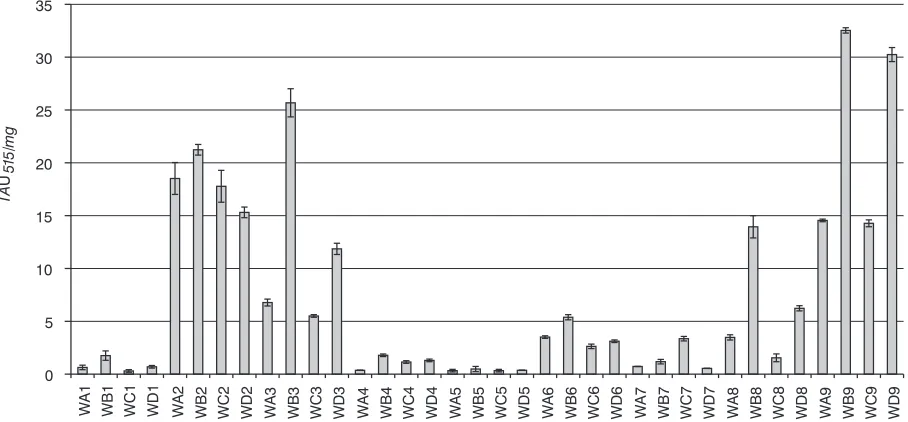
Fig. 1.The number of antiradical activity units (TAU515/mg) calculated per mg of extracts WA, WB, WC, and WD
obtained from: 1, Glycyrrhizae radix; 2,Quercus cortex; 3,Potentillae anserinae herba; 4,Nigellae sativae semen; 5, Ginseng radix; 6,Eleutherococci radix; 7,Inulae radix; 8,Juglandis folium; 9,Bistortae rhizoma. The absorbance was measured in triplicate and the maximal error was calculated (confidence level = 95%, n = 3). Then the error (TAU515/mg), shown with an error dash, was calculated by the total differential method
Ryc. 1.Liczba jednostek przeciwwolnorodnikowych (TAU515/mg) przeliczonych na 1 mg wyciągów WA, WB, WC
0 50 100 150 200 250 300 350 400 450 500
515/ph
WB1 WC1 WD1 WA
2
WB2 WC2 WD2 WA
3
WB3 WC3 WD3 WA
4
WB4 WC4 WD4 WA
5
WB5 WC5 WD5 WA
6
WB6 WC6 WD6 WA
7
WB7 WC7 WD7 WA
8
WB8 WC8 WD8 WA
9
WB9 WC9 WD9
WA
1
TA
U
Fig. 2.The number of antiradical activity units (TAU515/ph) calculated per mg of phenolic compounds measured by
colorimetric methods in extracts WA, WB, WC, and WD obtained from: 1, Glycyrrhizae radix; 2,Quercus cortex; 3,Potentillae anserinae herba; 4,Nigellae sativae semen; 5, Ginseng radix; 6,Eleutherococci radix; 7,Inulae radix; 8,Juglandis folium; 9,Bistortae rhizoma. The amount of phenolic compounds was measured three times and the maximal error was calculated (confidence level 95%, n = 3). The error (TAU515/ph), shown in the figure the an error
dash, was calculated by the total differential method.
Ryc. 2.Liczba jednostek przeciwwolnorodnikowych (TAU515/ph) przeliczonych na 1 mg związków fenolowych zmie−
rzonych metodą kolorymetryczną w wyciągach WA, WB, WC and WD otrzymanych z: 1, Glycyrrhizae radix; 2,Qu− ercus cortex; 3,Potentillae anserinae herba; 4,Nigellae sativae semen; 5, Ginseng radix; 6,Eleutherococci radix; 7,Inulae radix; 8,Juglandis folium; 9,Bistortae rhizoma. Ilość związków fenolowych oznaczono trzykrotnie i obli− czono błąd maksymalny (poziom ufności 95%, n = 3). Błąd (TAU515/ph), przedstawiony na rysunku w postaci słupków
błędów, obliczono metodą różniczki zupełnej.
0 1000 2000 3000 4000 5000 6000
1 2 3 4 5 6 7 8 9
TA
U515/g
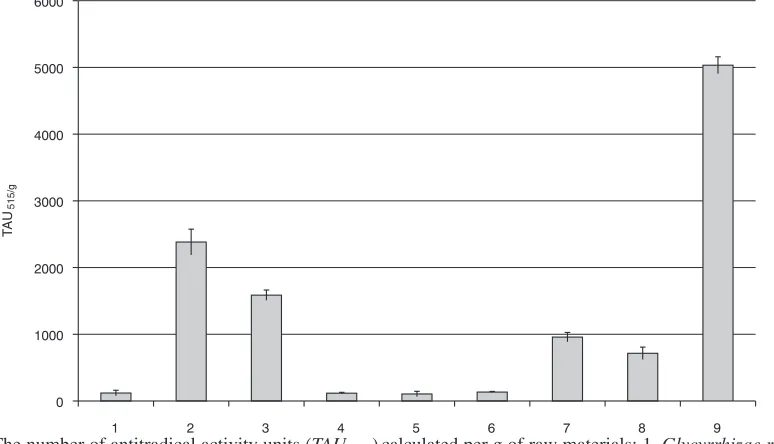
Fig. 3.The number of antitradical activity units (TAU515/g) calculated per g of raw materials: 1, Glycyrrhizae radix;
2,Quercus cortex; 3,Potentillae anserinae herba; 4,Nigellae sativae semen; 5, Ginseng radix; 6,Eleutherococci radix; 7,Inulae radix; 8,Juglandis folium; 9,Bistortae rhizoma. The error (TAU515/g), shown in the figure with error
dashes, was calculated by the total differential method
Ryc. 3.Liczba jednostek przeciwwolnorodnikowych (TAU515/g) przeliczonych na g surowców: 1, Glycyrrhizae radix;
2,Quercus cortex; 3,Potentillae anserinae herba; 4,Nigellae sativae semen; 5, Ginseng radix; 6,Eleutherococci ra− dix; 7,Inulae radix; 8,Juglandis folium; 9,Bistortae rhizoma. Błąd (TAU515/g), pokazany na rysunku jako słupki błę−
ly. After incubation, the inhibition zones around the disks were measured.
Results and Discussion
The number of antiradical units calculated per 1 mg of extract (TAU515/mg) are shown in Tab. 1 and
Fig. 1. Among the investigated extracts, the high− est number of antiradical activity units were calcu− lated for 1 mg of extracts WB9, WD9, WB3, and WB2, these being 32.53 ± 0.251, 30.25 ± 0.666, 25.68 ± 1.331, and 21.23 ± 0.503, respectively. The lowest values of TAU515/mgwere calculated for
WC1, WA5, WC5, WA4, and WD5 (0.30 ± 0.123, 0.33 ± 0.123, 0.33 ± 0.125, 0.36 ± 0.00, and 0.36 ± 0.00, respectively).
The numbers of antiradical activity units cal− culated per mg of phenolic compounds (TAU515/ph)
are shown in Tab. 1 and Fig. 2. The highest
TAU515/ph values were observed for extracts WD9,
WB3, WB9, and WD1 (282 ± 40.5, 280 ± 19.5, 278 ± 41.0, and 248 ± 188.6, respectively). Slightly lower values of TAU515/ph were noted for
extracts WB2, WC2, WA2, WD2, WB8, and WD3 (221 ± 16.5, 221 ± 26.5, 218 ± 34.6, 210 ± 16.3, 196 ± 38.5, and 182 ± 63.4, respectively). The lowest TAU515/phvalues were calculated for WA7,
WD7, WA4, WC8, WB4, and WB1, with 34.2 ± 5.26, 36.8 ± 4.05, 41.2 ± 7.64, 41.4 ± 13.08, 45.0 ± 6.32, and 46.1 ± 16.93, respectively.
TAU515/g(Tab. 1 and Fig. 3) is the total number
of antiradical units per g of raw material. The highest TAU515/gvalues were observed for the rhi−
zome of common bistort, oak bark, and silverweed herb, these being 5033 ± 125, 2383 ± 192, and 1586 ± 77, respectively. The lowest TAU515/gval−
ues were observed for ginseng root, black cumin seed, common licorice root, and Siberian ginseng root (105 ± 40, 117 ± 12, 119 ± 41, and 134 ± 9, respectively).
The correlation coefficient (r) between the amount of phenolic compounds and the number of antiradical activity units per mg of extract was equal to 0.88.
The results of the antimicrobial activity of the plant extracts are shown in Tab. 2. Among the plant extracts tested, only WB2 (ethyl acetate from oak bark), WA2 (50% methanol extract from oak bark), and WA4 (50% methanol extract from black cumin seeds) exhibited antimicrobial activity. WB2 displayed the best antimicrobial activity. It strongly inhibited the growth of Pseudomonas aeruginosa(diameter of inhibition zone: 22 mm), Candida glabrata (22 mm), and Staphylococcus aureus (18 mm). It also inhibited the growth of
Candida albicans (10 mm), Escherichia coli (6
mm), and Salmonella enterica serovar Enteritidis (7 mm). WA2 inhibited the growth of
Staphylococcus aureus (18 mm) and
Pseudomonas aeruginosa(20 mm), whereas WA4 inhibited the growth of Candida glabrata(14 mm) and Candida albicans (10 mm).
Oak bark appears to be a very good source of extracts with antiradical activity (Figs. 1, 2, 3 and Tab. 1). The main fractions responsible for this strong activity are probably those of the condensed tannins and proanthocyanidins present in oak bark. Tannins are known to be strong antiradical and antioxidant agents [9]. Strong antiradical features were also demonstrated by the herb of silverweed (Figs. 1, 2, 3 and Tab. 1). This raw material is rich in tannins [21], just as oak bark. The efficiency
Table 2.Antibacterial and antifungal activities of extracts WA, WB, WC and WD obtained from: 1, Glycyrrhizae radix; 2,Quercus cortex; 3,Potentillae anserinae herba; 4,Nigellae sativae semen; 5, Ginseng radix;
6,Eleutherococci radix; 7,Inulae radix; 8,Juglandis folium; 9,Bistortae rhizoma. In the table only the results for extracts exhibiting antibacterial or antifungal activity are presented. The other extracts did not exhibited any antimicrobial features
Tabela 2.Przeciwbakteryjna i przeciwgrzybicza aktyw− ność wyciągów WA, WB, WC i WD otrzymanych z: 1, Glycyrrhizae radix; 2,Quercus cortex; 3,Potentillae anse− rinae herba; 4,Nigellae sativae semen; 5, Ginseng radix; 6,Eleutherococci radix; 7,Inulae radix; 8,Juglandis fo− lium; 9,Bistortae rhizoma. W tabeli podano wyniki uzy− skane tylko dla wyciągów wykazujących aktywność prze− ciwbakteryjną lub przeciwgrzybiczą. Pozostałe wyciągi nie wykazywały aktywności przeciwdrobnoustrojowej
Bacterial and fungal Inhibition zone
strains tested (Strefa hamowania) [mm] (Badane szczepy bakterii
i grzybów) WB2 WA2 WA4
Staphylococcus aureus 18 18 – ATTC 25923
Enterococcus faecalis – – – ATCC 29212
Escherichia coli 6 – – ATCC 25922
Klebsiella pneumoniae – – – ATCC 700603
Pseudomonas aeruginosa 22 20 – ATCC 27853
Salmonella enterica 7 – – Enteritidis
Candida albicans 10 – 10 ATCC 90028
Candida glabrata
ATCC 90030 22 – 14
(TAU515/ph) of the antiradical features of the
polyphenols from this raw material (Fig. 2) is high. Other raw materials with strong antiradical features is rhizome of the common bistort [22], which exhibited the highest number of antiradical units calculated per g of raw material. High num− bers of antiradical units were also calculated for 1 mg of extract and 1 mg of polyphenols of this raw material.
All the above−mentioned raw materials are rich in tannins and their antiradical activities were high. Tannins are known for their strong antiradi− cal features [9]. Other raw materials exhibited lower antiradical activity.
Authors’ purpose was to demonstrate the anti− radical properties of extracts or raw materials using a defined antiradical unit which can be cal− culated for any part of the raw material or extract. Until now, many authors described antiradical properties of plant compounds in different man− ners [18, 23–27]. It is necessary to develop a uni− form system of estimating the antiradical features of plant raw materials. Use of the antiradical units defined in this paper can be a proposal for a sys− tem of uniform estimation of antiradical activity of plant extracts or raw materials. The unit could be very useful in determining the yield of the extrac− tion process with respect to antiradical activity.
A separate part of this study was to test the antimicrobial activities of the extracts. Among all the investigated materials, only those from oak bark (WB2 and WD2) and from black cumin seeds (WA4) exhibited some antimicrobial features. The antimicrobial activities of oak [28] and black cumin [29] have been described in literature.
The authors concluded that the strongest anti− radical activities were exhibited by extracts WB9 and WD9 (from Bistortae rhizoma) and extract WB3 (from Potentillae anserinae herba).
The strongest antiradical features was demon− strated for phenolic compounds present in extracts WB9, WD9, and WB3. A little lower antiradical features were exhibited by the phenols from WD1 (from Glycyrrhize radix), WA2, WB2, WC2, and WD2 (from Quercus cortex).
Raw materials such as Quercus cortex,
Potentillae anserinae herba, and Bistortae rhi− zomaexhibited the strongest antiradical features.
Among the investigated extracts, only WB2 from Quercus cortexexhibited antimicrobial activi− ty against bacterial as well as fungal strains. Extract WA2 exhibited antibacterial activity and WA4 from
Nigellae sativae semenexhibited antifungal activity.
References
[1] Valko M, Leibfritz D, Moncol J, Cronon MTD, Mazur M, Telser J:Free radicals and antioxidants in normal
physiological functions and human disease. Int J Biochem Cell Biol 2007, 39, 44–84.
[2] Niki E, Yoshida Y, Saito Y, Noguchi N: Lipid peroxidation: Mechanisms, inhibition, and biological effects.
Biochem Biophys Res Commun 2005, 338, 668–676.
[3] Tseng CF, Mao SJT:Analysis of antioxidants as a therapeutic agent for atherosclerosis. Curr Pharm Anal 2006,
2, 369–384.
[4] Rapava EA, Akhylediani MV, Emukhvari MG:Modern view on biochemistry of atherosclerosis. Georgian
Med News 2006, 133, 124–128.
[5] Valavanidis A:Ultraviolet radiation and skin cancer implication of free radical reactions and reactive oxygen
species in skin carcinogenesis. Rev Clin Pharmacol Pharmacokinet 1994, 8, 101–117.
[6] Besler HT, Comoglu S: Lipoprotein oxidation, plasma total antioxidant capacity and homocysteine level in
patients with multiple sclerosis. Nutr Neurosci 2003, 6, 189–196.
[7] Onyango IG, Khand SM:Oxidative stress, mitochondrial dysfunction, and stress signaling in Alzheimer’s dis−
ease. Curr Alzheimer Res 2006, 3, 339–349.
[8] Kar P, Laight D, Shaw KM, Cummings MH:Flavonoid−rich grapeseed extracts: A new approach in high car−
diovascular risk patients? Int J Clin Pract 2006, 60, 1484–1492.
[9] Sroka Z:Antioxidant and antiradical properties of plant phenolics. Z Naturforsch C 2005, 60c, 833–843.
[10] Luis JC, Valdes F, Martin R, Carmona AJ, and Diaz JG:DPPH radical scavenging activity of two flavonol
glycosides from Aconitum napellussp. Lusitanicum. Fitoterapia 2006, 77, 469–471.
[11] Tsimogiannis DI, Oreopoulou V:Free radical scavenging and antioxidant activity of 5,7,3’,4’−hydroxy−substi−
tuted flavonoids. Innov Food Sci Emerg 2004, 5, 523–528.
[12] Sroka Z, Cisowski W:Hydrogen peroxide scavenging, antioxidant and anti−radical activity of some phenolic
acids. Food Chem Toxicol 2003, 41, 753–758.
[13] Al−Fatimi M, Wurster M, Schroeder G, Lindequist U:Antioxidant, antimicrobial and cytotoxic activities of
selected medicinal plants from Yemen. J Ethnopharmacol 2007, 111, 657–666.
[14] Kloucek P, Svobodova B, Polesny Z, Langrova I, Smrcek S, Kokoska L:Antimicrobial activity of some med−
icinal barks used in Peruvian Amazon. J Ethnopharmacol 2007, 111, 427–429.
[15] Latha LY, Sasidharan S, Zuraini Z, Suryani, Shirley L, Sangetha S, Davaselvi M:Antimicrobial activities
[16] Asres K, Mazumder A, Bucar F:Antibacterial and antifungal activities of extracts of Combretum molle. Ethiop Med J 2006, 44, 269–277.
[17] Barile E, Bonanomi G, Antignani V, Zolfaghari B, Sajjadi SE, Scala F, Lanzotti V:Saponins from Allium
minutiflorumwith antifungal activity. Phytochemistry 2007, 68, 596–603.
[18] Brand−Williams W, Cuvelier ME, Berset C: Use of free radical method to evaluate antioxidant activity.
Lebensm−Wiss Technol 1995, 28, 25–30.
[19] Singleton VL, Rossi JA Jr.: Colorimetry of total phenolics with phosphomolybdic−phosphotungustic acid
reagents. Am J Enol Viticult 1965, 16, 144–153.
[20] Ingolfsdottir K, Hjalmardottir MA, Sigurdsson A, Gudjonsdottir GA, Brynjolfsdottir A, Steingrrimsson O:
In vitrosusceptibility of Helicobacter pylorito protolichesterinic acid from lichen Cetraria islandica. Antimicrob Agents Chemother 1997, 41, 215–217.
[21] Schimmer O, Lindenbaum M:Tannins with antimutagenic properties in the herb of Alchemillaspecies and
Potentilla anserina. Planta Med 1995, 61, 141–145.
[22] So Young C, Yong Soo K, Chang Min K:Chemical constituents from Polygonum bistortarhizomes. Korean
J Pharmacognosy 2000, 31, 426–429.
[23] Rice−Evans CA, Miller JM, Paganga G:Structure−antioxidant activity relationship of flavonoids and phenolic
acids. Free Radic Biol Med 1996, 20, 933–956.
[24] Pick E, Keisari Y:A simple colorimetric method for the measurement of hydrogen peroxide produced by cells in
culture. J Immunol Methods 1980, 38, 161–170.
[25] Buege JA, Aust SD:Microsomal lipid peroxidation. Methods Enzymol 1978, 52C, 302–310.
[26] Chaillou LL, Nazareno MA:New method to determine antioxidant activity of polyphenols. J Agric Food Chem
2006, 54, 8397–8402.
[27] Popov I, Lewin G:Photochemiluminescent detection of antiradical activity. VII. Comparison with a modified
method of thermo−initiated free radical generation with chemiluminescent detection. Luminescence 2005, 20, 321–325.
[28] Andrensek S, Simonovska B, Vovk I, Fyhrquist P, Vuorela H, Vuorela P:Antimicrobial and antioxidative
enrichment of oak (Quercus robur) bark by rotation planar extraction using ExtraChrom. Int J Food Microbiol 2004, 92, 181–187.
[29] Morsi NM:Antimicrobial effect of crude extracts of Nigella sativaon multiple antibiotic−resistant bacteria. Acta
Microbiol Pol 2000, 49, 63–74.
Address for correspondence:
Zbigniew Sroka
Department of Pharmacognosy Silesian Piasts University of Medicine pl. Nankiera 1
50−140 Wrocław Poland
E−mail: [email protected]
Conflict of interest: None declared