i
NOVEL APPLICATIONS OF DONORACCEPTOR CYCLOPROPANES AND DEAROMATIZATION TOWARDS THE EXPEDIENT SYNTHESIS OF HIGHLY SUBSTITUTED CARBOCYCLES
William Daniel Mackay
A dissertation submitted to the faculty of the University of North Carolina at Chapel Hill in partial fulfillment of the requirements for the degree of Doctor of Philosophy in the Department
of Chemistry.
Chapel Hill 2017
Approved by:
Jeffrey S. Johnson
Eric M. Brustad
Michel R. Gagné
Alexander J. M. Miller
ii © 2017
iii ABSTRACT
William Daniel Mackay: Novel Applications of DonorAcceptor Cyclopropanes and Dearomatization towards the Expedient Synthesis of Highly Substituted Carbocycles
(Under the direction of Jeffrey S. Johnson)
I. Lewis Acid Catalyzed (3+2)-Annulations of DonorAcceptor Cyclopropanes and Ynamides.
The Sc(OTf)3-catalyzed (3+2)-annulation of donoracceptor cyclopropanes and ynamides is
described, providing the corresponding cyclopentene sulfonamides in good to excellent yield.
Deprotection and hydrolysis of the resulting cyclopentenesulfonamides delivers 2,3-substituted
cyclopentanones with high diastereoselectivity.
II. Kinetic Separation and Asymmetric Reactions of Norcaradiene Cycloadducts: Facilitated Access via H2O-Accelerated Cycloaddition.
We exploit the Buchner reaction to access 1,2-disubstituted cyclohexadiene synthons
(norcaradienes), which participate in H2O-accelerated cycloaddition with dienophiles to provide
cyclopropyl-fused [2.2.2]-bicyclooctene derivatives in good yields. Regioisomeric mixtures can
be kinetically separated exploiting different reaction rates in DielsAlder reactions. meso
-DielsAlder products may be enantioselectively desymmetrized, providing highly substituted
iv
III. The Development of Regioisomerically Enriched Buchner Products for Use as Cyclohexadienyl Synthetic Intermediates.
We have investigated two conceptual methods to generate highly regioisomerically
enriched norcaradienyl intermediates through arene cyclopropanation. Intermolecular Buchner
reaction of aryl diazoacetates under either thermolysis or silver(I) catalysis provide expedient
routes to single regioisomeric norcaradienes, in some cases favoring the least sterically
encumbered site of cyclopropanation. Intramolecular Buchner reaction of benzyl
cyanodiazoacetates allow for the site-selective cyclopropanation of the tethered arene, and the
installation of an activated cyclopropane for downstream functionalization. Both methods generate
norcaradienes that are amenable to further transformations to generate highly stereochemically
v
ACKNOWLEDGEMENTS
First of all, I would like to thank my family who has helped me develop as an individual
over the years. I could not have completed this program without the love and support of all my
family members.
I would especially like to thank my wife, Kelsey, whose sacrifices for me have allowed me
to develop professionally and individually. For all of the days that we only spent just one or two
waking hours together, for all of the vacations that were only taken in our minds, for all of the time
you have spent without a dog: these moments will not be forgotten. My love for you increases each
day, and despite the hardships that you were put through these past four years, know that when I
saw you each night, all of my stress from the day subsided, and your smile made everything better.
I could not have been as successful in my time here without you.
I would also like to thank all of the Johnson group members—past and present—who have
assisted in my training, through assistance with revising manuscripts and presentations, through
helping me prepare for my preliminary candidacy exam, and through sharing knowledge, catalysts,
and reagents. I would like to provide special mention to the following former members for their
contributions to my development: Dung Do: for his patience and mentorship as I began my
graduate studies, and for telling me why all of my ideas during my first year were terrible, and
teaching me better ways to think about solving problems. Robert Sharpe: for healthy discussions
about chemistry, Disney, and college football, and who provided an excellent role model for what
kind of chemist that I should strive to become. Guy Goodman: for always being willing to discuss
vi
experience at Death Valley with you. Lexi Akeyson: for being a hard-working undergraduate
mentee who helped me develop as a teacher and a mentor, and allowing me the proud moment of
listening to you effectively talk about the silver Buchner project for the presentation to your class.
Last, I would like to express my sincere gratitude to my PI, Jeff Johnson. Thank you for
affording me the opportunity to learn and develop under your tutelage. Throughout the synthetic
community, your name garners respect for your work, and through my time in your group I have
found that that respect is well-deserved for your creativity, industriousness, and continuation to
support your students to become the best that they can. Your leadership has allowed me to see the
world in new and unique ways. You have given me the freedom explore non-conventional
reactivity and the opportunity to address challenging and significant problems in organic
chemistry, and for that I am forever grateful. I could not have chosen a better advisor for my time
vii
Dear Kelsey:
For all the sacrifices that have been made. For all the time that has been shared. For all the compassionate love that is had.
For the promising future yet to unfold. For all the good times and bad.
viii
TABLE OF CONTENTS
LIST OF TABLES...xi
LIST OF FIGURES... ...xii
LIST OF SCHEMES... ...xiii
LIST OF ABBREVIATIONS AND SYMBOLS...xvi
CHAPTERONE LEWIS ACID CATALYZED (3+2)-ANNULATIONS OF DONORACCEPTOR CYCLOPROPANES AND YNAMIDES... ...1
1.1 Introduction... ...1
1.2 Background... ...1
1.2.1 Introduction and History of DonorAcceptor Cyclopropanes... ...1
1.2.2 Utility of Ynamides in Cycloaddition Reactions... ...4
1.3 Results and Discussion... ...5
1.3.1 Initial Reaction Design and Optimization... ...5
1.3.2 Substrate Scope of the Reaction... ...6
1.3.3 Generation of Enantioenriched Cyclopentenesulfonamides... ...8
1.3.4 Deprotection and Hydrolysis of Cyclopentenesulfonamide Intermediates.... ...10
1.3.5 Unexpected Byproduct from Ynamide Hydrolysis... ...12
1.3.6 Investigation of the “Interrupted” (3+2)-Annulation... ...14
1.4 Conclusions... ...16
1.5 Experimental Details... ...17
1.6 References... ...39
ix
2.1 Introduction... ...41
2.2 Background... ...42
2.2.1 Importance and Application of Dearomatization in Synthesis... ...42
2.2.2 The Buchner Reaction... ...43
2.2.3 Factors Influencing the Norcaradiene/Cycloheptatriene Equilibrium... ...44
2.2.4 Comparison between the Intra- and Intermolecular Buchner Reaction... ...46
2.3 Results and Discussion... ...48
2.3.1 Initial Reaction Design... ...48
2.3.2 Substrate Scope of the Intermolecular Buchner Reaction... ...49
2.3.3 Substrate Scope of the Rh2(TFA)4 Catalyzed Buchner Reaction... ...50
2.3.4 Rationale for the Observed Regioselectivity in the Intermolecular Buchner Reaction... ...51
2.3.5 Isomerization of Norcaradienes by Ring Walking... ...53
2.3.6 Further Functionalization of Buchner Products in Cycloaddition Reactions. ...57
2.3.7 Investigations into the Kinetic Separation of Regioisomeric Mixtures... ...59
2.3.8 Optimized Multistep Route to Regioisomerically Enriched Buchner Products... ...60
2.3.9 Desymmetrization of meso-[2.2.2]-Bicycles... ...62
2.4 Conclusions... ...64
2.5 Experimental Details... ...65
2.6 References... ...97
CHAPTER THREE THE DEVELOPMENT OF REGIOISOMERICALLY ENRICHED BUCHNER PRODUCTS FOR USE AS CYCLOHEXADIENYL SYNTHETIC INTERMEDIATES... ...100
3.1 Introduction... ...100
x
3.2.1 Poor Regioselectivity of Buchner Reactions Using Diazoacetates... ...101
3.2.2 Controlling Regio- and Enantioselectivity of Intramolecular Buchner Reactions... ...102
3.3 Results and Discussion... ...104
3.3.1 The Reactivity of Various Diazo Substitution Patterns towards the Buchner Reaction... ...104
3.3.2 Iron Porphyrin Catalyzed Buchner Reaction... ...104
3.3.3 Thermolysis of Phenyl Diazoacetates... ...106
3.3.4 Functionalization of Norcaradienes through Cycloaddition Reactions... ...107
3.3.5 Non-Cycloaddition Transformations of Norcaradiene... ...108
3.3.6 Silver(I)-Catalyzed Buchner Reaction... ...109
3.3.7 Ligand Screening for the Silver(I) Buchner Reaction... ...110
3.3.8 AgPF6 Catalyzed Regioselective Intermolecular Buchner Reaction... ...112
3.3.9 Efforts towards an Enantioselective Silver Buchner Reaction... ...114
3.3.10 Functionalization of Regioisomerically Enriched Norcaradienes... ...116
3.3.11 Benefits of an Intramolecular Buchner Reaction... ...116
3.3.12 Initial Investigations into an Intramolecular Buchner Reaction... ...117
3.3.13 Development of an Expedient Route to Cyano Diazoacetates... ...119
3.3.14 Substrate Scope of Intramolecular Buchner Reaction of Cyano Diazoacetates... ...119
3.3.15 Further Functionalization of Fused Norcaradienes... ...121
3.4 Conclusions... ...123
3.5 Experimental Details... ...124
xi
LIST OF TABLES
Table 1-1 Substrate Scope...7
Table 1-2 Tosyl Reduction and Hydrolysis... ...11
Table 1-3 Lewis Acid Screen to Suppress Amide Byproduct... ...14
Table 2-1 Optimization of the Buchner Reaction... ...49
Table 2-2 Substrate Scope of the Rh2(TFA)4 Catalyzed Buchner Reaction... ...50
Table 2-3 Ring Walk Promoter Screen... ...55
Table 2-4 Isomerization of Regioisomeric Buchner Products by I2... ...56
Table 2-5 Rate Enhancement on the DielsAlder Reactions of 2.1 on Water... ...57
Table 2-6 Optimized Kinetic Separation via Buchner/DielsAlder Reaction Sequence... ...61
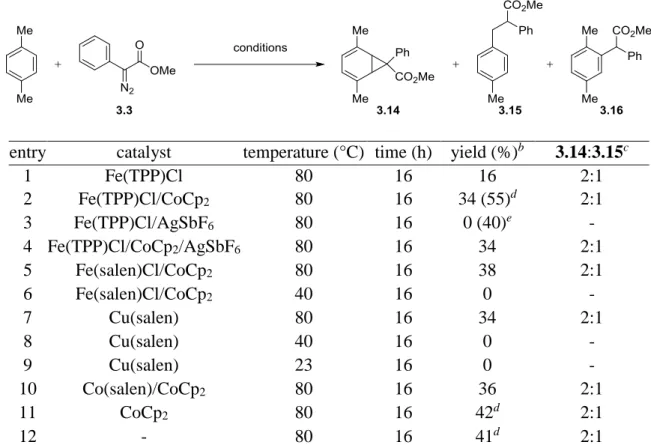
Table 3-1 Catalyst Screen for Intermolecular Buchner Reaction of p-Xylene... ...106
Table 3-2 Ligand Screening in Ag(I)-Catalyzed Buchner Reaction of p-Xylene... ...111
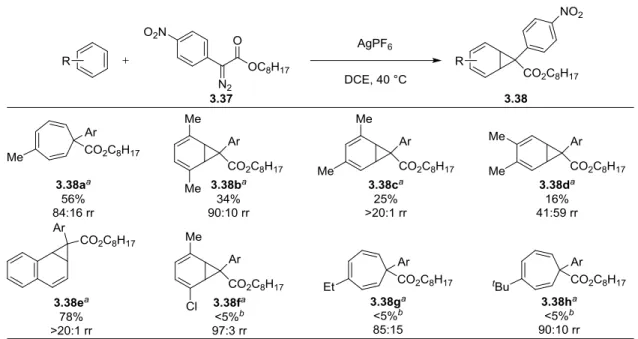
Table 3-3 Substrate Scope of AgPF6-Catalyzed Buchner Reaction of p-Xylene... ...114
xii
LIST OF FIGURES
xiii
LIST OF SCHEMES
Scheme 1-1 DonorAcceptor Cyclopropanes as 1,3-Dipole Synthons... ...2
Scheme 1-2 Base-Promoted (3+2)-Annulations of DonorAcceptor Cyclopropanes... ...2
Scheme 1-3 Lewis-Acid Promoted (3+2)-Annulation with Cyclohexene Alkylidenes... ...3
Scheme 1-4 (3+2)-Annulation Reactions using Enol- and Ynolsilanes... ...4
Scheme 1-5 Resonance Structures of Ynamides... ...4
Scheme 1-6 Selected Examples of Regioselective (n+2)-Annulation Reactions of Ynamides... ...5
Scheme 1-7 Proposed (3+2)-Annulation of DonorAcceptor Cyclopropanes and Ynamides... ...6
Scheme 1-8 DyKAT of DA Cyclopropanes and Aldehydes... ...9
Scheme 1-9 Attempted DyKAT of DA Cyclopropanes and Ynamides... ....10
Scheme 1-10 Chirality Transfer of Enantioenriched DA Cyclopropane... ....10
Scheme 1-11 Lewis Acid Promoted Ynamide Hydrolysis... ....12
Scheme 1-12 Plausible Mechanism for Hydrolysis of Ynamides using Lewis Acidic Conditions... ....12
Scheme 1-13 “Interrupted” (3+2)-Annulation of Phthalimido DA Cyclopropane and Ynamide... ....15
Scheme 1-14 “Interrupted” (3+2)-Annulation of Indolyl DA Cyclopropane and Ynamide. ....15
Scheme 1-15 “Interrupted” (3+2)-Annulation Using Acetate Trap... ....16
Scheme 2-1 Rapid Complexity-Building of Dearomatized 1,2-Disubstituted Cyclohexadienes... ....42
Scheme 2-2 Selected Example of Oxidative Dearomatization of Phenols in Synthesis... ....42
Scheme 2-3 Other Selected Arene Dearomatization Reactions... ....43
Scheme 2-4 Seminal Investigations into Benzene Cyclopropanation... ....44
Scheme 2-5 Influences of Substitution at C1-C6 on the NCD/CHT Equilibrium... ....45
xiv
Scheme 2-7 Inherent Challenges Using Norcaradienes as Synthetic Intermediates... ....46
Scheme 2-8 Selected Examples of Intramolecular Buchner Reactions... ....47
Scheme 2-9 Proposed Functionalization of Buchner Products... ....48
Scheme 2-10 Steric Effects on the Regioselectivity of the Intramolecular Buchner Reaction. ....51
Scheme 2-11 Electronic Effects on the Regioselectivity of the Intramolecular Buchner Reaction... ....53
Scheme 2-12 Isomerization of Regioisomeric Mixture upon Prolonged Storage... ....54
Scheme 2-13 Proposed Biradical Mechanism for Norcaradiene Ring Walk... ....54
Scheme 2-14 Rationale for Regioisomeric Distribution in Ring Walk Isomerizations... ....56
Scheme 2-15 DielsAlder of 2.1 with PTAD... ....58
Scheme 2-16 Photosensitized Singlet Oxygen DielsAlder Reaction of 2.1... ....59
Scheme 2-17 Kinetic Separation of Chromatographically Inseparable Regioisomers... ....60
Scheme 2-18 DielsAlder Reaction of 1-Methoxy-CHT 2.16c... ....62
Scheme 2-19 Anhydride Desymmetrization Using Cinchona Alkaloids... ....63
Scheme 2-20 Cyclopropane Ring-Opening of Desymmetrized Mono-Acid 2.44a... ....63
Scheme 2-21 Desymmetrization of meso-bis-Carbamate 2.48... ....64
Scheme 3-1 Controlling the Intermolecular Buchner Reaction through Steric Effects... ..101
Scheme 3-2 Divergent Carbenoid Reactivity upon Variation of the Catalyst... ..102
Scheme 3-3 Controlling the Intramolecular Buchner Reaction through Appropriately Sized Tethers... ..103
Scheme 3-4 Enantioselective Intramolecular Buchner Reaction/[3,3]-Rearrangement... ..103
Scheme 3-5 The Shortcomings of Different Diazo Classes in Intermolecular Buchner Reactions... ..104
Scheme 3-6 Fe(TPP)Cl-Catalyzed Intermolecular Buchner Reaction of p-Xylene... ..105
Scheme 3-7 Thermolysis of Methyl Phenyl Diazoacetate in p-Xylene... ..107
xv
Scheme 3-9 Access to syn-1,4-Diol 3.19 from meso-Norcaradiene 3.14... ..108
Scheme 3-10 Dihydroxylation of meso-Norcaradiene 3.14... ..108
Scheme 3-11 Allylic Bromination and Kornblum Oxidation of meso-Norcaradiene... ..109
Scheme 3-12 Dihydrobenzofuran Synthesis from meso-Norcaradiene... ..109
Scheme 3-13 AgSbF6 Catalyzed Intermolecular Buchner Reaction of p-Xylene... ..110
Scheme 3-14 Norcaradiene Instability to Methyl Phenyldiazoacetate and AgPF6... ..112
Scheme 3-15 Plausible Radical Cation Mechanism for Rearomatization of 3.14... ..113
Scheme 3-16 AgSTRIP Catalyzed Enantioselective Buchner Reaction... ..115
Scheme 3-17 Dual Catalytic Hydrogen Bond Donor/Silver(I) Catalytic System... ..115
Scheme 3-18 Selective Reduction and Diels–Alder of 3.38b... ..116
Scheme 3-19 Benefits of Using an Intramolecular Buchner Reaction... ..117
Scheme 3-20 Intramolecular Buchner Attempts with Diazoacetates and Malonates... ..117
Scheme 3-21 Non-Isolable Silyl Esters... ..118
Scheme 3-22 Donor-Acceptor Diazo Compounds for Intramolecular Buchner Reactions... ..118
Scheme 3-23 Expedient Route to Benzyl Cyano Diazoacetates... ..119
Scheme 3-24 Erosion of Regioselectivity via Zwitterionic Intermediates... ..121
Scheme 3-25 Diels–Alder Cycloaddition of 3.55b and N-Benzylmaleimide... ..122
Scheme 3-26 Dynamic Kinetic Resolution of Fused Norcaradiene 3.55b... ..122
xvi
LIST OF ABBREVIATIONS AND SYMBOLS
°C degrees Centigrade
(TsNH)2 bis-toluenesulfonylhydrazine
[a]D specific rotation
13C NMR carbon nuclear magnetic resonance
1H NMR proton nuclear magnetic resonance
2,3-(CH2O2)Ph piperonyl
2-OMePh 2-methoxyphenyl
3,5-CF3-C6H3 3,5-bis-(1,1,1-trifluoromethyl)phenyl
4-ClPh 4-chlorophenyl
4-MePh 4-methylphenyl
4-NMe2Ph 4-N,N-dimethylaminophenyl
4-OMePh 4-methoxyphenyl
Å Angstrom
A1,3 strain allylic 1,3-strain
Ac acetyl
Ac2O acetic anhydride
acc acceptor
Ad adamantyl
Ag silver
AgPF6 silver(I) hexafluorophosphate
AgSbF6 silver(I) hexafluoroantimonate
AgSTRIP silver(I)((1r,5aS,10r)-1,10-bis(2,4,6-triisopropylphenyl)-4,5,6,7-tetrahydrodiindeno[7,1-de:1',7'-fg][1,3,2]dioxaphosphocin-12-olate 12-oxide)
xvii
Al aluminum
Al(OiPr)
3 aluminium isopropoxide
AlCl3 aluminum trichloride
Ar aryl
B boron
B(OMe)3 trimethyl borate
BBr3 boron tribromide
BF4- tetrafluoroborate
Bn benzyl
Br bromine
br s broad singlet
Bu butyl
Bu3SnH tributyltin hydride
C carbon
c concentration
C10H8 naphthalene
C5H11 n-pentyl
C6H13 n-hexyl
C6H6 benzene
C8H17 n-octyl
Ca calcium
CaH2 calcium hydride
calcd calculated
CAM ceric ammonium molybdate
xviii
CCl4 carbon tetrachloride
CD3OD methanol-D4
CDCl3 chloroform-D
Celite diatomaceous earth
CF3 1,1,1-trifluoromethyl
CH2(OMe)2 dimethoxymethane
CH2Cl2 methylene chloride
CHCl3 chloroform
CHT cycloheptatriene
Cl chlorine
Cl3CCOCCl3 hexachloroacetone
cm-1 wavenumbers
CN nitrile
Co cobalt
CO2 carbon dioxide
CO2Ad adamantyl ester
CO2Bn benzyl ester
CO2C8H17 n-octyl ester
CO2Et ethyl ester
CO2Me methyl ester
CoCp2 cobaltocene
CONHTs N-(toluenesulfonyl) amide
Cp cyclopentadienyl
Cu copper
xix
CuCl2 cuprous chloride
CuSO4 cuprous sulfate
CuSO4•5H2O cuprous sulfate pentahydrate
δ chemical shift
Δ heat
d days
d doublet
D deuterium
D–A donor-acceptor
dba dibenzylidene acetone
DBU 1,8-diazabicyclo[5.4.0]undec-7-ene
DCE 1,2-dichloroethane
dd doublet of doublets
ddd doublet of doublet of doublets
dddd doublet of doublet of doublet of doublets
decomp decomposition
DKR dynamic kinetic resolution
dm decimeter
DMAD dimethylacetylene dicarboxylate
DMAP 4-dimethylaminopyridine
DMDO dimethyldioxirane
DMSO dimethylsulfoxide
don donor
dq doublet of quartets
xx
dt doublet of triplets
DyKAT dynamic kinetic asymmetric transformation
EDA ethyl diazoacetate
EDG electron donating group
equiv equivalents
er enantiomeric ratio
ESI+ electrospray ionization
Et ethyl
Et2O diethyl ether
Et3N triethylamine
EtAlCl2 ethyl dichloroaluminate
etc. et cetera
EtOAc ethyl acetate
EtOH ethanol
EWG electron withdrawing group
F fluorine
Fe iron
Fe(TPP)Cl 5,10,15,20-tetraphenyl-21H,23H-porphine iron(III) chloride
FeCl2 ferrous chloride
FeCl3 ferric chloride
FeI2 ferrous iodide
FeSO4•7H2O ferrous sulfate heptahydrate
FT Fourier transform
gem geminal
xxi
H hydrogen
H+ proton or generic acid source
H2 dihydrogen
H2O water
H2SO4 sulfuric acid
H3N(l) liquid ammonia
HCl hydrochloric acid
HF hydrogen fluoride
Hf hafnium
Hf(OTf)4 hafnium(IV) trifluoromethanesulfonate
Hg mercury
HOMO highest occupied molecular orbital
HPLC high performance liquid chromatography
HRMS high resolution mass spectrometry
hν electromagnetic irradiation
Hz Hertz
I iodine
I2 diiodide
iPr isopropyl
IR infrared
J coupling constant
K potassium
K2CO3 potassium carbonate
Ka dissociation constant
xxii
KMnO4 potassium permanganate
KOH potassium hydroxide
L ligand
LA Lewis acid
LiAlH4 lithium aluminum hydride
LiBH4 lithium borohydride
LiEt3BH lithium triethylborohydride (Super Hydride)
LiSPh lithium thiophenolate
LRMS low resolution mass spectrometry
LUMO lowest unoccupied molecular orbital
M molar
m multiplet
m meta
M+H protonated molecular ion
mAU milli-absorbance units
Me methyl
Me2AlCl dimethyl chloroaluminate
Me3NO trimethylamine N-oxide
MeCN acetonitrile
MeMgBr methyl magnesium bromide
MeMgI methyl magnesium iodide
MeNH2 methylamine
MeOH methanol
Mg magnesium
xxiii
MgI2 magnesium iodide
μL microliter
μm micrometers
μwave microwave
MgSO4 magnesium sulfate
M–H deprotonated molecular ion
MHz megahertz
min minute
mL milliliters
mm millimeters
mmol millimoles
Mn manganese
mol mole
mp melting point
N nitrogen
N2 diazo
N2 dinitrogen
N3 azide
Na sodium
Na2CO3 sodium carbonate
Na2S2O3 sodium thiosulfate
Na2SO4 sodium sulfate
NaCl sodium chloride
NaHCO3 sodium bicarbonate
xxiv
NBS N-bromosuccinimide
NCD norcaradiene
NH4Cl ammonium chloride
NMO morpholine N-oxide
NMR nuclear magnetic resonance
NO2 nitro
nOe nuclear Overhauser effect
nOesy nuclear Overhauser effect spectroscopy
O oxygen
o ortho
O2 dioxygen
o-C6H4 1,2-disubstituted benzene
OPiv pivalate
Os osmium
OsO4 osmium(VIII) tetraoxide
OTf trifluoromethane sulfonate
Oxone® potassium peroxymonosulfate
P phosphorus
p para
P. putida Pseudomonas putida
Pb lead
Pb(OAc)4 lead tetraacetate
Pd palladium
Pd2(dba)3•CHCl3 bis-palladium-tris-dibenzylideneacetone chloroform adduct
xxv
PF6- hexafluorophosphate
Ph phenyl
PhMe toluene
PIDA diacetoxy iodobenzene
PIFA di(trifluoroacetoxy)iodobenzene
pKa -ln(dissociation constant)
PMP 4-methoxyphenyl
p-NO2-C6H4 4-nitro-phenyl
PPh3 triphenyl phosphine
ppm parts per million
PTAD 4-phenyl-1,2,4-triazoline-3,5-dione
pybox pyridine bis-oxazolidine
qt quintet
quant. quantitative
R radical
Rf retention factor
Rh rhodium
Rh2(esp)2 bis[rhodium(a,a,a',a'-tetramethyl-1,3-benzenedipropionate)]
Rh2(OAc)4 rhodium acetate
Rh2(oct)4 rhodium octanoate
Rh2(Opiv)4 rhodium pivalate
Rh2(S-PTTL)4 rhodium N-phthaloyl-(S)-tert-leucinate
Rh2(TFA)4 rhodium trifluoroacetate
rr regioisomeric ratio
xxvi
RT retention time
Ru(byp)3Cl2 tris(bipyridine)ruthenium(II) chloride
rxn reaction
s seconds
S sulfur
s singlet
salen N,N′-Ethylenebis(salicylimine)
Sb antimony
SbCl6N(4-Br-C6H4)3 tris(4-bromophenyl)ammoniumyl hexachloroantimonate
Sc scandium
Sc(OTf)3 scandium(III) trifluoromethane sulfonate
SFC supercritical fluid chromatography
Si silicon
Sn tin
SnCl4 tin(IV) chloride
SO3•pyridine sulfur trioxide pyridine complex
t triplet
TBDPS tert-butyl diphenylsilyl
TBDPSCl tert-butyl diphenylsilyl chloride
TBS tert-butyl dimethylsilyl
tBu tert-butyl
tBuOH tert-butanol
tBuOK potassium tert-butoxide
td triplet of doublets
xxvii
TEMPO 2,2,6,6-tetramethylpiperidin-1-yl)oxidanyl
TES triethylsilyl
TfOH 1,1,1-trifluoromethanesulfonic acid
THF tetrahydrofuran
Ti titanium
Ti(OiPr)4 titanium(IV) isopropoxide
TiCl4 titanium(IV) chloride
TIPS triisopropylsilyl
TLC thin layer chromatography
TMS trimethylsilyl
TPP 5,10,15,20-tetraphenyl-21H,23H-porphyrin
Ts toluene sulfonyl (tosyl)
TsCl toluene sulfonylchloride
TsNCO toluene sulfonyl isocyanate
tt triplet of triplets
UV ultraviolet
W Watts
w/w weight per weight
Y yttrium
Y(OiPr)3 yttrium(III) isopropoxide
Yb ytterbium
1
CHAPTER ONE:
LEWIS ACID CATALYZED (3+2)-ANNULATIONS OF DONORACCEPTOR CYCLOPROPANES AND YNAMIDES*
1.1 Introduction
The rapid generation of substituted carbocyclic compounds continues to be a useful
endeavor in organic synthesis. In this chapter, we report the use of donoracceptor cyclopropanes
and ynamides to construct highly-substituted cyclopentene sulfonamides in high yields and
excellent regioselectivity. Subsequently, these products were hydrolyzed to reveal
2,3-disubstituted cyclopentenones as single diastereomers. This class of compounds is structurally
related to prostaglandins, which possess numerous roles in biological systems.
1.2 Background
1.2.1 Introduction and History of DonorAcceptor Cyclopropanes
Donoracceptor (DA) cyclopropanes continue to receive significant attention as useful
synthetic building blocks, particularly for their ability to act as synthetic equivalents to 1,3-dipolar
synthons in cycloaddition reactions (Scheme 1-1a).1 The deployment of these carbogenic building
blocks has been widespread in the efficient assembly of heterocycles by (3+n)-annulation (Scheme
1-1b, a or b ≠ carbon),2 but fewer cases have been described for carbocycle assembly (a, b =
carbon).3-5
*Reprinted in part with permission from Mackay, W. D.; Fistikci, M.; Carris, R. M.; Johnson, J. S.
2
Scheme 1-1. DonorAcceptor Cyclopropanes as 1,3-Dipole Synthons
Notable examples of the latter include the annulation between Pd -allyl activated vinyl
DA cyclopropanes 1.2 and electron-deficient alkenes 1.3 (Scheme 1-2a).3a,c,d Marino and Laborde have achieved silyloxycyclopropane ester activation of 1.5 via fluoride-induced silyl ether cleavage, which enabled annulation with activated alkenes to provide cyclopentenes 1.7 (Scheme 1-2b).3b
Scheme 1-2. Base-Promoted (3+2)-Annulations of DonorAcceptor Cyclopropanes
A common embodiment of annulations involving DA cyclopropanes is the use of a
3
shown EtAlCl2 to effectively catalyze the annulation between DA cyclopropanes 1.8 and methylenecyclohexane derivatives 1.9,4b providing spiro-bicyclic products 1.10 with the regioselectivity controlled by the preferential formation of a tertiary carbocation; however, a
mixture of isomers was observed upon annulation with internal alkenes (Scheme 1-3).
Scheme 1-3. Lewis-Acid Promoted (3+2)-Annulation with Cyclohexene Alkylidenes
Several groups have reported annulations between DA cyclopropanes 1.11 and enolsilanes 1.12 providing cyclopentanes 1.13; the products commonly undergo subsequent ring-opening under the reactions conditions to provide linear products 1.14 (Scheme 1-4a).4k,n Tang suppressed the ring-opening pathway in the annulation between DA cyclopropanes and
enolsilanes through the use of bulky silyl groups (TBDPS) on the enol silane 1.16 and ester groups (adamantyl) on the DA cyclopropane 1.15 (Scheme 1-4b).4s The use of allenyl silanes eliminates the potential for subsequent ring opening; however, these trials are complicated by 1,2-silyl
migrations, providing a mixture of cyclopentane alkylidene and cyclohexene annulation
products.4f Ready and Qi have shown ynolsilanes 1.19 to be effective annulation partners for DA cyclopropanes under Lewis acidic conditions, providing access to highly substituted
cyclopentenones 1.20; however, this union was hindered by numerous challenges, including the instability of ynolsilanes, the requisite of cryogenic temperatures, and the use of a harsh Lewis
4
Scheme 1-4. (3+2)-Annulation Reactions using Enol- and Ynolsilanes
1.2.2 Utility of Ynamides in Cycloaddition Reactions
To circumvent the challenges that plague ynolsilanes, ynamides were seen as a viable
alternative, since they are easily prepared,6 stable upon storage, and can react with a variety of
annulation partners at ambient conditions. Ynamides have been shown to be excellent partners for
(n+2)-annulations7 due to the high regioselectivity with which they react. This selectivity is
typically attributed to the major zwitterionic resonance structure (Scheme 1-5).
Scheme 1-5. Resonance Structures of Ynamides
Notable examples of such regiospecific reactivity include the stepwise (2+2)-annulation of
ynamide 1.21 and ketene 1.22 to provide cyclobutenone 1.23 (Scheme 1-6a).8 More represented in this class of ring-forming reactions with ynamides are the formation of five-membered
5
1-6c).10 In all such examples outlined herein, only a single regioisomer was formed, with no
evidence for the production of the other possible regioisomers (1.24, 1.27, 1.31), suggesting that the strong polarization of the alkyne, as shown in Scheme 1-5, greatly influences the reactivity of
ynamides.
Scheme 1-6. Selected Examples of Regioselective (n+2)-Annulation Reactions of Ynamides
1.3 Results and Discussion
1.3.1 Initial Reaction Design and Optimization
Despite the advantageous reactivity of both DA cyclopropanes and ynamides, at the onset
of this project, their union remained unachieved; therefore, the site-selective capture of the intimate
ion pair from Lewis acid activation of the DA cyclopropane by ynamide “dipolarophiles” is the
subject of this chapter (Scheme 1-7). The preparation of useful functionalized
cyclopentenesulfonamides by these (3+2)-annulations is demonstrated. Deprotection of the
ensulfonamide reveals 2,3-substituted cyclopentanones with high levels of diastereoselectivity.
This strategy provides access to an important structural motif resembling products of
6
Scheme 1-7. Proposed (3+2)-Annulation of DonorAcceptor Cyclopropanes and Ynamides
Working first with cyclopropane 1.33 and ynamide 1.45, a brief Lewis acid screen revealed Sc(OTf)3 to be a superior promotor for the reaction, providing complete starting material
conversion with catalyst loadings as low as 10 mol %. The efficacy of this particular Lewis acid
is congruent with our previously demonstrated (3+2)-annulation of DA cyclopropanes with
aldehydes.11 Attempts to lower the catalyst loading further were met with incomplete consumption
of 1.33 after 20 h. Two equivalents of the ynamide were required in the annulation to maximize product yields as ynamide hydrolysis was found to be a competitive decomposition pathway;
investigations into this hydrolysis will be discussed later in this chapter (Section 1.3.5).
1.3.2 Substrate Scope of the Reaction
With the optimized conditions in hand, we began to examine the scope of the annulation
(Table 1-1). The reaction proceeded smoothly for a number of substrates, particularly for
cyclopropanes bearing electron-rich aromatic groups (1.32,1.33,1.35). This observation is in agreement with our previous findings that greater stabilization of the carbenium ion in the
zwitterionic intermediate provides faster reaction rates.11 However, there is an apparent limit to
the electron releasing ability of the donor group towards promotion of the annulation. N,N
-dimethylaniline substituted cyclopropane 1.41 (entry 14), the most electron rich of the substrates tested, failed to react after 100 h, presumably due to a marked decrease in electrophilicity at the
donor site. This trend may also explain the yield discrepancy between the para- and ortho
7 Table 1-1. Substrate Scopea,b
entry R1 R2 R3 pdt yield (%)c
1 4-MePh H (1.32) C5H11 1.47 >99
2 4-MePh H (1.32) Ph 1.48 >99
3 4-OMePh H (1.33) C5H11 1.49 89(86)d
4 4-OMePh H (1.33) Ph 1.50 >99
5 4-OMePh Me (1.34) C5H11 1.51 64
6 4-OMePh Me (1.34) Ph 1.52 53
7 2-OMePh H (1.35) C5H11 1.53 >99
8 2,3-(CH2O2)Ph H (1.36) C5H11 1.54 64
9 2-furyl H (1.37) C5H11 1.55 46
10 2-thienyl H (1.38) C5H11 1.56 84
11 2-thienyl H (1.38) Ph 1.57 93
12 (E)-CH=CHPh H (1.39) C5H11 1.58 69
13 4-ClPh H (1.40) C5H11 1.59 NRe
14 4-NMe2Ph H (1.41) C5H11 1.60 NRe
15 Ph Me (1.42) C5H11 1.61 59(90)f
16 Ph C≡CH (1.43) C5H11 1.62 63
17 Ph H (1.44) C5H11 1.63 82
aReactions performed with 1.0 equiv of DA cyclopropane and 2.0 equiv of ynamide in dry
CH2Cl2 (0.1 M) with 0.10 equiv Sc(OTf)3. bReactions were run for 18 h. cIsolated yield. dRun on 20 mmolscale of 1.33. eNo reaction observed after 100 h. fRun with 3.0 equiv 1.45 and 0.15 equiv Sc(OTf)3.
Decreased yields were also observed for the 2-furyl substituted cyclopropane 1.37 (entry 9). This iteration suffered from significant amounts of unidentified side reactions and starting
material decomposition. A plausible degradation pathway for 1.37 might be the competing Piancatelli rearrangement, which has been previously observed for furyl-substituted DA
cyclopropanes.12 Cyclopropanes bearing a vinyl donor group proceeded in low yields (<30%) upon
8
from the hydrolysis of 1.45 from the desired product. Alkyl-substituted cyclopropanes (R1 = Bu, R2 = H) failed to react with 1.45 under standard reaction conditions, even upon refluxing in DCE for 24 h.
2,2-Disubstituted cyclopropanes (entries 5,6,15,16) all suffered from diminished yields
under the standard reaction conditions, presumably due to a slower rate of annulation. Since in situ
ynamide hydrolysis is competitive with the annulation, at extended reaction times the availability
of the ynamide is compromised. In these cases, the addition of 3 equiv of ynamide (entry 15)
resulted in dramatically increased yields of 1.61. The alkynyl moiety, which has been shown to be an effective donor for (3+2)-annulations between DA cyclopropanes and aldehydes,13 (entry 16)
also functions as an effective donor in the annulation with ynamides, providing 1.63 in 63% yield. 1.3.3 Generation of Enantioenriched Cyclopentenesulfonamides
Having developed robust conditions for the generation of racemic
cyclopentenesulfonamides, we then began to examine the feasibility of performing a dynamic
kinetic asymmetric transformation (DyKAT)14 of racemic DA cyclopropanes and ynamides
based on our previous work in the cases of tetrahydrofurans2h and pyrrolidines,2i in order to access
enantioenriched products (Scheme 1-8).
Upon coordination of the Lewis acid, the diastereomeric intimate ion pairs 1.64/1.65 readily racemize, allowing for all of the racemic starting cyclopropane 1.33 to funnel towards a single tetrahydrofuran product. Applying these conditions to our system should allow for
9
Scheme 1-8. DyKAT of DA Cyclopropanes and Aldehydes
In the event, however, we found this tactic to be ineffective, as the reactivity of 1.33 and 1.45 were significantly hindered by the application of the MgI2(pybox) catalyst system (Scheme 1-9). Varying the electronic profile of the pybox ligand by introducing halogens at the 4-position
(X = Cl, Br) had no effect on the annulation. In addition, variation of the reaction solvent or
temperature showed no promise for increasing starting material conversion. For example,
treatment of 1.33 with 1.45 in refluxing CCl4 for 2 d resulted in only trace degradation (<5%) of
1.33. Notably, no degradation of the ynamide was observed. This lack of reactivity was attributed to unfavorable steric interactions between the chiral ligand (R = tBu) and the approaching ynamide.
In an attempt to minimize this strain, less sterically demanding pybox ligands (R = iPr, Bn) were
10
Scheme 1-9. Attempted DyKAT of DA Cyclopropanes and Ynamides
Despite the complications with accessing enantioenriched products through a DyKAT
mechanism, our group has shown previously2d,11 that enantioenriched DA cyclopropanes transfer
chirality to their annulation products with high fidelity, undergoing complete inversion at the donor
site stereogenic center. As shown in Scheme 1-10, this mechanistic feature was also observed in
the case of annulation with ynamides. Stereospecific back-side capture of the intimate ion pair (eq
3) would account for this finding.11
Scheme 1-10. Chirality Transfer of Enantioenriched DA Cyclopropane
1.3.4 Deprotection and Hydrolysis of the Cyclopentenesulfonamide Intermediates
In an effort to provide synthetically attractive cyclopentanones from the enamide products
1.47-1.63, the sulfonyl group was first cleaved via single electron reduction using sodium naphthalenide. The resultant enamine was then hydrolyzed under acidic conditions to provide
11 Table 1-2. Tosyl Reduction and Hydrolysisa,b
The gem-diester moiety was also removed during the hydrolysis. nOesy analysis of the
cyclopentanone products 1.66, 1.68 confirmed an anti relationship between R1 and R3 substituents. These 3,3-disubstituted cyclopentanones 1.68 are of particular note, as they represent an expedient synthesis of formal conjugate addition products of 2,3-disubsituted cyclopentenones, whose
enantioselective synthesis via conjugate addition to enones is non-trivial.15
Unsubstituted ynamides (R3 = H) were not tested in the annulation with DA
cyclopropanes, since the resultant cyclopentanones that would be accessed from these substrates
are analogous to the products of 1,4-addition to cyclopentenone or the 1,4-reduction of
-substituted cyclopentenones. There are already several excellent reports of enantioselective
12
1.3.5 Unexpected Byproduct from Ynamide Hydrolysis Scheme 1-11. Lewis Acid Promoted Ynamide Hydrolysis
Investigation of this reaction was a result of the first attempt at isolating 1.49, whereupon the amide side product 1.70 was definitively identified. Since it had been reportedthat ynamides are readily hydrolyzed in the presence of water,7 the CH2Cl2 was distilled from CaH2 and stored
over 3 Å molecular sieves under inert atmosphere prior to use, in an attempt to minimize the
hydrolysis from trace water in the solvent. In the subsequent trials with the freshly distilled solvent,
ynamide hydrolysis was still observed in appreciable quantities. The inclusion of 3 Å molecular
sieves in the reaction vessel was also ineffective at suppressing the hydrolysis. It was then proposed
that the Lewis acid was responsible for the observed hydrolysis (Scheme 1-12). The ynamide
would first coordinate to the Lewis acid, displacing triflate, which subsequently adds back to the
ketene iminium intermediate 1.72, forming a hemiaminal 1.73. Replacement of the Lewis acid with a proton, potentially from the solvent or during work up, and decomposition of the triflate
provides the observed amide 1.70.
Scheme 1-12. Plausible Mechanism for Hydrolysis of Ynamides using Lewis Acidic Conditions
In order to elucidate the degradation mechanism, Lewis acids with chloride counterions
13
6-12), confirming our suspicions. A variety of conditions and catalysts were then screened in an
attempt to suppress the decomposition pathway, albeit with limited success (Table 1-3). All Lewis
acids with triflate counterions caused significant accumulation of the amide byproduct 1.71 (entries 1-5). Altering the reaction temperature offered no benefit towards formation of 1.48. The degradation of the ynamide out-competes the annulation at low temperatures (entry 2). Using
toluene as the solvent also resulted in appreciable quantities of the amide 1.71 (entry 3). At lower catalyst loadings (entries 8-12), the annulation attenuates appreciably, leaving a majority of 1.32 unreacted and large amounts of 1.75 relative to 1.48.
An alternative method for the synthesis of ynamides 1.46 involves the isomerization of N -propargylamides with alkoxide bases (i.e., tBuOK).6c As expected, those Lewis acids with alkoxide
ligands (entries 13-16) did not cause ynamide degradation; unfortunately, however, they were also
ineffective at promoting the annulation. Since none of the conditions screened provided complete
suppression of the degradation pathway, we decided to carry forward with two equivalents of the
ynamide in the annulation to maximize product yields. This was deemed an acceptable
compromise, since the ynamide synthesis is trivial—providing good yields and easily purified—
14
Table 1-3. Lewis Acid Screen to Suppress Amide Byproduct
entry Lewis acid (mol %) solvent temp (°C) 1.48 : 1.71 or 1.75a
1 Sc(OTf)3 (10) CH2Cl2 23 1 : 0.65b
2 Sc(OTf)3 (10) CH2Cl2 0 1 : 1.03b
3 Sc(OTf)3 (10) PhMe 23 1 : 4.04b
4 Sc(OTf)3 (10) CH2Cl2 23 1 : 0.32b,c
5 Yb(OTf)3 (20) CH2Cl2 23 0% 1.48, 24% 1.71b
6 TiCl4 (20) CH2Cl2 23 1 : 1.70d
7 SnCl4 (20) CH2Cl2 23 1 : 0.29d
8 AlCl3 (50) CH2Cl2 23 1 : 0.69d
9 AlCl3 (20) CH2Cl2 23 1 : 0.83d
10 AlCl3 (10) CH2Cl2 23 1 : 1.86d
11 AlCl3 (5) CH2Cl2 23 1 : 3.95d
12 AlCl3 (2) CH2Cl2 23 1 : 4.60d
13 Hf(OtBu)
4 (10) CH2Cl2 23 no rxn, minor decompb
14 Al(OiPr)3 (10) CH2Cl2 23 no rxn, no decompb
15 Ti(OiPr)4 (10) CH2Cl2 23 no rxn, minor decompb
16 Y(OiPr)3 (10) CH2Cl2 23 no rxn, minor decompb
aDetermined from crude 1H NMR. bByproduct refers to 1.71. cRun with 1.8 mmol of 1.32 (435 mg) and 1.45 (500 mg). dByproduct refers to 1.75.
1.3.6Investigation of the “Interrupted” (3+2)-Annulation
While screening the phthalimido-substituted DA cyclopropane 1.76, a new side product arose, which was identified as the “interrupted” (3+2)-annulation product 1.79, as confirmed by
15
Scheme 1-13. “Interrupted” (3+2)-Annulation of Phthalimido DA Cyclopropane and Ynamide
Instead of trapping of the ketene iminium intermediate 1.77 with the malonate to yield the “normal” cyclopentenesulfonamide, the “interrupted” pathway proceeds via trapping with the
phthalamide oxygen to provide the oxazine intermediate 1.78. Quenching of the resulting zwitterionic intermediate yields the bridged byproduct 1.79. An analogous reaction pathway was observed in the case of indolyl-substituted DA cyclopropane. Initial indole trapping of
intermediate 1.80 would provide the spirocyclic intermediate 1.81. Ring expansion of 1.81 and subsequent restoration of aromaticity would provide the tricyclic 1.82.
Scheme 1-14. “Interrupted” (3+2)-Annulation of Indolyl DA Cyclopropane and Ynamide
Further attempts at exploiting this alternative reactive pathway proved unfruitful.
Acetate-substituted cyclopropane 1.83, provided high yields of the “normal” (3+2)-annulation product 1.84, with only trace amounts of the “interrupted” product 1.85 (Scheme 1-15). With the limited scope available to this niche observation, further investigations into this transformation were not
16
Scheme 1-15. “Interrupted” (3+2)-Annulation Using Acetate Trap
1.4 Conclusions
In conclusion, we have shown ynamides to be suitable partners in (3+2)-annulation
reactions with DA cyclopropanes, providing cyclopentenesulfonamide products. Though the
steric congestion of the system prevents a DyKAT to access enantioenriched products under the
conditions screened, the reaction was stereospecific and relayed the stereochemistry of the starting
cyclopropane to the product with high fidelity. Subsequent deprotection and hydrolysis provided
2,3-substituted cyclopentanone products with high stereoselectivity. This route represents a
practical alternative to enantioselective conjugate addition reactions to cyclopentenones,
17 1.5 Experimental Details
Methods
Proton and carbon magnetic resonance spectra (1H NMR and 13C NMR) were recorded on
either a Bruker model DRX 400 or 600 Spectrometer (1H NMR at 400 or 600 MHz and 13C NMR
at 100 or 150 MHz) with solvent resonance as the internal standard (1H NMR: CDCl3 at 7.28 ppm
and 13C NMR: CDCl3 at 77.0 ppm). 1H NMR data are reported as follows: chemical shift,
multiplicity (abbreviations: s = singlet, br s = broad singlet, d = doublet, dd = doublet of doublets,
dt = doublet of triplets, t = triplet, td = triplet of doublets, tt = triplet of triplets, qt = quintet, and m
= multiplet), coupling constant (Hz) and integration. Melting points (mp) were determined using
a Thomas Hoover Capillary Melting Point Apparatus and are uncorrected. Infrared (IR) spectra
were obtained using a Jasco 260 Plus Fourier Transform Infrared Spectrometer. Low resolution
mass spectra (LRMS) were obtained using a Micromass Quattro-II triple quadrupole mass
spectrometer in combination with an Advion NanoMate chip-based positive ion electrospray
sample introduction system and nozzle. High resolution mass spectrometry (HRMS) was
performed using a Thermo Scientific LTQ FT Ultra mass spectrometer S2 with direct infusion in
the positive ion mode. Samples were prepared in methanol, plus a few drops of acetone if needed
to dissolve the compound, and trace aqueous formic acid solution. All reported masses correspond
to the protonated molecular ion (M+H) unless otherwise noted. Supercritical fluid chromatography was performed on a Berger SFC system equipped with Chiracel AD, AS, OD, and WO columns
(φ 4.6 mm x 250 mm). Samples were eluted with SFC grade CO2 with 10% methanol with an oven
temperature of 40 °C.All reactions were carried out under an atmosphere of nitrogen in oven-dried
glassware with magnetic stirring unless stated otherwise. Thin layer chromatography (TLC) was
18
accomplished with UV light and an aqueous ceric ammonium molybdate (CAM) solution,
followed by heating. Flash chromatography was performed under positive air pressure using
Siliaflash-P60 silica gel (40-63 μm) purchased from Silicycle. Unless otherwise specified, all crude
materials were introduced to the chromatography column after dissolution in the specified eluent
(plus a few drops dichloromethane, if required). Purification via high performance liquid
chromatography (HPLC) was performed on a Varian Prepstar SD-1 Solvent Delivery System
equipped with a Cyano 60 Å 6u column from Berger Instruments, using 15% ethyl acetate /hexanes
eluent system at a flow rate of 15.00 mL/min. Yields and diastereomeric ratios (dr’s) are reported
herein for a specific experiment and as a result may differ slightly from those found in the tables,
which are averages of at least two experiments.
Materials
Nitrogen was dried by passage through anhydrous calcium sulfate with 3% cobalt chloride
as indicator (commercial Drierite). Dichloromethane (CH2Cl2) and tetrahydrofuran (THF) were
passed through a column of neutral alumina under nitrogen prior to use. All cyclopropanes 1.32 -1.44, 1.76, 1.80 used in this study are known compounds and were prepared according to literature procedures.18 The enantiomers of cyclopropane 1.44 had been resolved previously in our laboratory.11 Ynamide 1.45 was stored in the freezer as a solution in benzene to retain its integrity. The benzene was removed by rotary evaporation prior to addition into the reaction vessel. All other
19
General Procedure A for the Preparation of Ynamides (1.45, 1.46)
Based on the literature procedure,6b CH2Cl2 (40 mL) was added to TsCl (1.0 equiv) in a
125 mL round-bottomed flask and the solution was cooled to 0 °C. MeNH2 (40% in H2O, 2.2
equiv) was added slowly, and the reaction was stirred for 1 h. The mixture was then warmed to
room temperature and washed with brine (40 mL), water (40 mL), and brine (40 mL), and then
dried over Na2SO4. The solvent was removed by rotary evaporation, yielding a white solid, which
was recrystallized in 95% EtOH/H2O if impure by 1H NMR. The product was then transferred to
a 300 mL 3-necked flask and combined with CuCl2 (0.067 equiv) and Na2CO3 (0.67 equiv) and
the flask was purged with O2 for 15 min. A solution of pyridine (0.67 equiv) in toluene (75 mL)
was added to the flask via syringe and the flask was heated to 70 °C. The alkyne (0.33 equiv as a
solution in 18 mL of toluene) was then added to the flask via syringe pump at a rate of 3.5 – 4.0
mL/h. After complete addition of the alkyne, the reaction mixture stirred for 20 h at 70 °C. After
cooling to room temperature, the crude mixture was filtered through a pad of Celite, concentrated
by rotary evaporation, and purified by flash chromatography (20% EtOAc/hexanes) to provide the
desired product, which was stored in the freezer either neat or frozen as a solution in benzene.
N-(hept-1-yn-1-yl)-N,4-dimethylbenzenesulfonamide (1.45): The
title compound was prepared according to General Procedure A using
N,4-dimethylbenzenesulfonamide (2.89 g, 15.6 mmol) and 1-heptyne
(0.68 mL, 5.2 mmol). Flash chromatography provided a yellow oil (1.23 g, 85%) that was stored
in the freezer, frozen as a solution in benzene. Analytical data: 1H NMR (400 MHz, CDCl
20
(d, J = 8.0 Hz, 2H), 7.37 (d, J = 8.0 Hz, 2H), 3.03 (s, 3H), 2.47 (s, 3H), 2.25 (t, J = 7.0 Hz, 2H),
1.49 (tt, J = 7.0, 4.6 Hz, 2H), 1.33 (m, 4H), 0.91 (t, J = 7.2 Hz, 3H); 13C NMR (100 MHz, CDCl 3)
δ 144.4, 133.2, 129.6, 127.8, 74.8, 68.7, 39.4, 30.9, 28.6, 22.2, 21.6, 18.3, 14.0; IR (thin film, cm -1) 3033, 2953, 2932, 2860, 2253, 1597, 1364, 1173, 814, 677; TLC (20% EtOAc/hexanes) R
f =
0.48; LRMS (ESI+) Calcd. for C15H22NO2S: 280.14, Found: 280.07.
N,4-dimethyl-N-(phenylethynyl)benzenesulfonamide (1.46): The title
compound was prepared according to General Procedure A using N
,4-dimethylbenzenesulfonamide (2.79 g, 15.1 mmol) and phenylacetylene
(0.55 mL, 5.1 mmol). Flash chromatography provided a yellow solid (1.12 g, 78%) that was stored
neat in the freezer. Analytical data: 1H NMR (600 MHz, CDCl
3) δ 7.87 (m, 2H), 7.40 (m, 4H),
7.31 (m, 3H), 3.17 (s, 3H), 2.47 (s, 3H); 13C NMR (150 MHz, CDCl
3) δ 144.8, 133.1, 131.3, 129.8,
128.2, 127.8, 122.6, 83.9, 68.9, 39.3, 21.6 (one peak missing due to peak overlap); mp 79-81 °C; IR (thin film, cm-1) 3056, 2983, 2934, 2299, 2234, 1598, 1382, 1168, 964, 815; TLC (20% EtOAc/hexanes) Rf = 0.35; LRMS (ESI+) Calcd. for C16H16NO2S: 286.09, Found: 286.07.
General Procedure B for the Preparation of (3+2)-Annulation Products (1.47-1.63, 1.84), and the “Interrupted” (3+2)-Products (1.79, 1.82, 1.85)
To an oven-dried 1 dram vial in a nitrogen-filled glovebox was added Sc(OTf)3 (9 mg,
0.018 mmol, 0.1 equiv) and a magnetic stir bar. The vial was then fitted with a septum screw cap
and removed from the glovebox, where the cyclopropane (0.18 mmol) and ynamide (0.36 mmol)
were combined and added to the vial via syringe as a solution in anhydrous CH2Cl2 (1.5 mL). The
21
evaporation and purified by flash chromatography to provide the desired product. In the cases
where multiple impurities coeluted with the desired product, analytically pure samples were
obtained using preparatory HPLC after initial subjection of the crude material to flash
chromatography.
Dimethyl 2-((N,4-dimethylphenyl)sulfonamido)-3-pentyl-4-(p-methylphenyl)cyclopent-2-ene-1,1-dicarboxylate (1.47): The title compound was prepared according to General Procedure B using
dimethyl 2-(p-methylphenyl)cyclopropane-1,1-dicarboxylate 1.32 (44 mg, 0.18 mmol) and N-(hept-1-yn-1-yl)-N,4-dimethylbenzenesulfonamide 1.45 (100 mg, 0.36 mmol). Flash chromatography (20% EtOAc/hexanes) provided a white crystalline solid (98 mg,
quant.). Analytical data: 1H NMR (600 MHz, CDCl
3) δ 7.76 (br s, 2H), 7.27 (s, 2H), 7.15 (s, 2H),
7.09 (br s, 2H), 3.82 (br s, 3H), 3.77 (s, 3H), 3.62 (br s, 1H), 3.22 (s, 3H), 2.93 (br s, 1H), 2.58 (br
s, 1H), 2.39 (s, 3H), 2.36 (s, 3H), 1.25-0.93 (m, 8H), 0.75 (t, J = 7.2 Hz, 3H); 13C NMR (150 MHz, CDCl3) δ 172.5, 169.1, 152.6, 143.2, 139.4, 137.1, 136.4, 133.3, 129.4, 129.3, 127.9, 127.4, 66.2,
53.4, 52.7, 47.1, 41.4, 37.7, 31.2, 26.9, 25.6, 22.0, 21.4, 21.0, 13.7; mp 117-119 °C; IR (thin film, cm-1) 2953, 2928, 2861, 1733, 1455, 1348, 1272, 1156; TLC (20% EtOAc/hexanes) Rf = 0.22; LRMS (ESI+) Calcd. for C
29H38NO6S: 528.24, Found: 528.26.
Dimethyl 2-((N,4-dimethylphenyl)sulfonamido)-3-phenyl-4-(p-methylphenyl)cyclopent-2-ene-1,1-dicarboxylate (1.48): The title compound was prepared according to General Procedure B using dimethyl
22
NMR (400 MHz, CDCl3) δ 7.28 (m, 2H), 7.05 (m, 5H), 6.95 (m, 6H), 4.32 (dd, J = 8.8, 6.6 Hz, 1H), 3.88 (s, 3H), 3.78 (s, 3H), 3.31 (dd, J = 13.6, 8.8 Hz, 1H), 3.20 (s, 3H), 2.55 (dd, J = 13.6,
6.6 Hz, 1H), 2.33 (s, 3H), 2.25 (s, 3H); 13C NMR (150 MHz, CDCl
3) δ 171.3, 170.6, 150.4, 142.3,
139.2, 136.9, 136.1, 134.5, 133.9, 129.1, 128.9, 128.1, 128.0, 127.8, 127.6, 127.1, 66.6, 53.1, 52.8,
49.8, 41.2, 38.0, 21.3, 21.0; IR (thin film, cm-1) 3053, 3024, 2952, 2923, 1732, 1599, 1434, 1343, 1252; TLC (5% Et2O/CH2Cl2) Rf = 0.67; LRMS (ESI+) Calcd. for C30H32NO6S: 534.20, Found: 534.26.
Dimethyl 2-((N,4-dimethylphenyl)sulfonamido)-3-pentyl-4-(p-methoxyphenyl)cyclopent-2-ene-1,1-dicarboxylate (1.49): The title compound was prepared according to General Procedure B using
dimethyl 2-(p-methoxyphenyl)cyclopropane-1,1-dicarboxylate 1.33 (47 mg, 0.18 mmol) and N-(hept-1-yn-1-yl)-N,4-dimethylbenzenesulfonamide 1.45 (100 mg, 0.36 mmol). Flash chromatography (20% EtOAc/hexanes) provided a white crystalline solid (87 mg,
89%). Analytical data: 1H NMR (600 MHz, CDCl
3) δ 7.74 (br s, 2H), 7.25 (d, J = 7.4 Hz, 2H),
7.08 (br s, 2H), 6.86 (d, J = 7.4 Hz, 2H), 3.80 (s, 6H), 3.75 (s, 3H), 3.60 (br s, 1H), 3.19 (s, 3H),
2.88 (br s, 1H), 2.55 (br s, 1H), 2.37 (s, 3H), 1.25-0.91 (m, 8H), 0.73 (t, J = 7.2 Hz, 3H); 13C NMR (150 MHz, CDCl3) δ 172.4, 169.0, 158.4, 152.6, 143.2, 137.0, 134.4, 133.1, 129.4, 128.9, 127.3,
113.9, 66.1, 55.1, 52.2, 46.7, 41.4, 37.7, 31.2, 26.8, 25.4, 21.9, 21.3, 13.7 (one peak missing due
23
Dimethyl 2-((N,4-dimethylphenyl)sulfonamido)-4-(p-methoxyphenyl)-3-phenylcyclopent-2-ene-1,1-dicarboxylate (1.50): The title compound was prepared according to General Procedure B using
dimethyl 2-(p-methoxyphenyl)cyclopropane-1,1-dicarboxylate 1.33 (46 mg, 0.18 mmol) and N,4-dimethyl-N-(phenylethynyl)benzenesulfonamide 1.46 (100 mg, 0.35 mmol). Flash chromatography (20% EtOAc/hexanes) provided a yellow solid (97 mg, quant.).
Analytical data: 1H NMR (600 MHz, CDCl
3) δ 7.22 (m, 2H), 7.04 (m, 2H), 7.02 (m, 1H), 6.89
(m, 6H), 6.72 (m, 2H), 4.27 (dd, J = 8.4, 6.4 Hz, 1H), 3.85 (s, 3H), 3.76 (s, 3H), 3.71 (s, 3H), 3.26
(dd, J = 14.0, 8.4, 1H), 3.16 (s, 3H), 2.52 (dd, J = 14.0, 6.4 Hz, 1H), 2.17 (s, 3H); 13C NMR (150 MHz, CDCl3) δ 171.3, 170.7, 158.2, 150.5, 142.4, 136.9, 134.5, 134.4, 133.8, 129.2, 128.9, 128.1,
127.8, 127.6, 127.1, 113.8, 66.6, 55.1, 53.1, 52.8, 49.5, 41.2, 38.0, 21.3; mp 152-154 °C; IR (thin film, cm-1) 3055, 2999, 2952, 2838, 1733, 1611, 1513, 1435, 1342, 1250; TLC (20% EtOAc/hexanes) Rf = 0.08; LRMS (ESI+) Calcd. for C30H32NO7S: 550.19, Found: 550.19.
Dimethyl 2-((N,4-dimethylphenyl)sulfonamido)-4-(p- methoxyphenyl)-4-methyl-3-pentylcyclopent-2-ene-1,1-dicarboxylate (1.51): The title compound was prepared according to General Procedure B using dimethyl 2-(p
-methoxyphenyl)-2-methylcyclopropane-1,1-dicarboxylate 1.34 (50 mg, 0.18 mmol) and N -(hept-1-yn-1-yl)-N,4-dimethylbenzenesulfonamide 1.45 (100 mg, 0.36 mmol). Flash chromatography (20% EtOAc/hexanes) provided a white amorphous solid (64 mg, 64%).
Analytical data: 1H NMR (600 MHz, CDCl
3) δ 7.78 (d, J = 7.8 Hz, 2H), 7.28 (m, 4H), 6.89 (br s,
2H), 3.82 (s, 3H), 3.77 (s, 6H), 3.27 (s, 3H), 2.39 (s, 3H), 2.23 (br s, 1H), 1.47 (br s, 4H),
24
MHz, CDCl3) δ 173.6, 169.3, 157.9, 156.5, 143.2, 139.4, 137.8, 132.4, 129.4, 127.6, 127.3, 113.5,
65.7, 55.2, 52.9, 52.8, 49.8, 49.7, 38.0, 32.2, 27.5, 27.2, 23.4, 21.8, 21.4, 13.8; mp 140-142 °C; IR (thin film, cm-1) 2951, 2930, 2871, 1733, 1609, 1512, 1457, 1345, 1252; TLC (20% EtOAc/hexanes) Rf = 0.15; LRMS (ESI+) Calcd. for C30H40NO7S: 558.26, Found: 558.27.
Dimethyl 2-((N,4-dimethylphenyl)sulfonamido)-4-(p-methoxyphenyl)-4-methyl-3-phenylcyclopent-2-ene-1,1-dicarboxylate (1.52): The title compound was prepared according to General Procedure B using dimethyl 2-(p
-methoxyphenyl)-2-methylcyclopropane-1,1-dicarboxylate 1.34 (48 mg, 0.18 mmol) and N,4-dimethyl-N -(phenylethynyl) benzenesulfonamide 1.46 (100 mg, 0.35 mmol). Flash chromatography (10% → 20% EtOAc/hexanes) provided a white solid (52 mg, 53%). Analytical data: 1H NMR (600 MHz, CDCl3) δ 7.37 (d, J = 8.0 Hz, 2H), 7.15 (d, J = 8.0 Hz, 2H), 7.09 (tt, J = 7.5, 1.3 Hz, 1H), 6.92 (m,
6H), 6.58 (d, J = 7.5 Hz, 2H), 3.90 (s, 3H), 3.85 (s, 3H), 3.83 (s, 3H), 3.43 (d, J = 14.4 Hz, 1H),
3.13 (s, 3H), 2.54 (d, J = 14.4 Hz, 1H), 2.29 (s, 3H), 1.40 (s, 3H); 13C NMR (150 MHz, CDCl 3) δ
173.1, 170.0, 158.2, 155.3, 142.4, 139.0, 137.0, 134.3, 132.3, 129.0, 128.9, 128.4, 127.6, 127.5,
127.1, 113.6, 65.6, 55.3, 53.2, 53.0, 50.6, 49.3, 37.7, 24.1, 21.4; mp 138-140 °C; IR (thin film, cm-1) 3066, 2952, 2839, 1732, 1609, 1514, 1457, 1435, 1339; TLC (20% EtOAc/hexanes) R
f =
0.13; LRMS (ESI+) Calcd. for C31H34NO7S: 564.21, Found: 564.19.
Dimethyl 2-((N,4-dimethylphenyl)sulfonamido)-3-pentyl-4-(o-methoxyphenyl)cyclopent-2-ene-1,1-dicarboxylate (1.53): The title compound was prepared according to General Procedure B using
25
mmol). Flash chromatography (20% EtOAc/hexanes) provided a white crystalline solid (99 mg,
quant.). Analytical data: 1H NMR (600 MHz, CDCl
3) δ 7.79 (br s, 2H), 7.28 (d, J = 8.2 Hz, 2H),
7.22 (t, J = 7.8 Hz, 1H), 7.13 (br s, 1H), 6.97 (br s, 1H), 6.87 (d, J = 8.2 Hz, 1H), 4.24 (br s, 1H),
3.82 (s, 3H), 3.77 (s, 6H), 3.21 (s, 3H), 2.93 (br s, 1H), 2.55 (br s, 1H), 2.39 (s, 3H), 1.14-0.90 (m,
8H), 0.76 (t, J = 7.2 Hz, 3H); 13C NMR (150 MHz, CDCl
3) δ 172.6, 169.2, 157.1, 153.1, 143.1,
137.1, 132.6, 130.3, 129.3, 129.2, 127.8, 127.5, 120.8, 110.5, 66.3, 55.2, 52.7, 40.2, 38.8, 37.8,
31.2, 27.2, 25.6, 22.0, 21.4, 13.7 (one peak missing due to peak overlap); mp 112-113 °C; IR (thin film, cm-1) 2953, 2926, 2861, 1733, 1599, 1457, 1347, 1246; TLC (20% EtOAc/hexanes) Rf = 0.27; LRMS (ESI+) Calcd. for C29H38NO7S: 544.24, Found: 544.26.
Dimethyl 4-(benzo[d][1,3]dioxol-4-yl)-2-((N,4- dimethylphenyl)sulfonamido)-3-pentylcyclopent-2-ene-1,1-dicarboxylate (1.54): The title compound was prepared according to General Procedure B using dimethyl 2-(benzo[d][1,3]dioxol-4-yl)
cyclopropane-1,1-dicarboxylate 1.36 (50 mg, 0.18 mmol) and N-(hept-1-yn-1-yl)-N ,4-dimethylbenzenesulfonamide 1.45 (100 mg, 0.36 mmol). Flash chromatography (20% EtOAc/hexanes) provided a brown crystalline solid (64 mg, 64%). Analytical data: 1H NMR (600 MHz, CDCl3) δ 7.77 (br s, 2H), 7.28 (d, J = 7.8 Hz, 2H), 6.76 (d, J = 8.4 Hz, 1H), 6.66 (br s, 1H),
6.64 (d, J = 7.8 Hz, 1H), 5.95 (d, J = 8.4 Hz, 2H), 3.79 (s, 3H), 3.76 (s, 3H), 3.63 (br s, 1H), 3.19
(s, 3H), 2.83 (br s, 1H), 2.60 (br s, 1H), 2.40 (s, 3H), 1.16-0.94 (m, 8H), 0.76 (t, J = 7.2 Hz, 3H);
13C NMR (150 MHz, CDCl
3) δ 172.4, 169.0, 152.5, 147.9, 146.4, 143.2, 137.0, 136.4, 133.4,
129.4, 127.4, 121.2, 108.2, 108.1, 101.0, 66.1, 52.8, 52.7, 47.3, 41.4, 37.7, 31.3, 26.9, 25.6, 22.0,
26
TLC (20% EtOAc/hexanes) Rf = 0.22; LRMS (ESI+) Calcd. for C29H36NO8S: 558.22, Found: 558.27.
Dimethyl 2-((N,4-dimethylphenyl)sulfonamido)-4-(furan-2-yl)-3-pentylcyclopent-2-ene-1,1-dicarboxylate (1.55): The title compound was prepared according to General Procedure B using dimethyl
2-(furan-2-yl)cyclopropane-1,1-dicarboxylate 1.37 (87 mg, 0.39 mmol) and N -(hept-1-yn-1-yl)-N,4-dimethylbenzenesulfonamide 1.45 (216 mg, 0.78 mmol). Flash chromatography (20% EtOAc/hexanes), followed by purification by HPLC (15% EtOAc/hexanes)
provided a light brown oil (83 mg, 46%). Analytical data: 1H NMR (600 MHz, CDCl
3) δ 7.78 (br
s, 2H), 7.36 (s, 1H), 7.27 (d, J = 7.6 Hz, 2H), 6.32 (s, 1H), 6.12 (br s, 1H), 3.82 (s, 4H), 3.77 (s,
3H), 3.18 (s, 3H), 2.45 (m, 1H), 2.41 (s, 3H), 1.63 (br s, 1H), 1.27 (br s, 2H), 1.09-0.97 (m, 6H),
0.79 (t, J = 7.2 Hz, 3H); 13C NMR (150 MHz, CDCl
3) δ 171.8, 168.9, 154.4, 150.8, 143.2, 141.7,
136.8, 133.3, 129.4, 127.6, 110.2, 106.6, 65.8, 62.4, 58.0, 52.8, 40.9, 37.7, 31.5, 27.4, 26.0, 22.0,
21.4, 13.8; IR (thin film, cm-1) 3117, 2954, 2929, 2871, 1733, 1598, 1456, 1349, 1269; TLC (20% EtOAc/hexanes) Rf = 0.24; LRMS (ESI+) Calcd. for C26H34NO7S: 504.21, Found: 504.27.
Dimethyl 2-((N,4-dimethylphenyl)sulfonamido)-3-pentyl-4-(thiophen-2-yl)cyclopent-2-ene-1,1-dicarboxylate (1.56): The title compound was prepared according to General Procedure B using
dimethyl 2-(thiophen-2-yl)cyclopropane-1,1-dicarboxylate 1.38 (43 mg, 0.18 mmol) and N-(hept-1-yn-1-yl)-N,4-dimethylbenzenesulfonamide 1.45 (100 mg, 0.36 mmol). Flash chromatography (20% EtOAc/hexanes), followed by purification by HPLC (15%
EtOAc/hexanes) provided a clear oil (78 mg, 84%). Analytical data: 1H NMR (600 MHz, CDCl 3)