LOCAL CLIMATE CHANGE ADAPTATION IN THE UNITED STATES
Sierra C. Woodruff
A dissertation submitted to the faculty at the University of North Carolina at Chapel Hill in partial fulfillment of the requirements for the degree of Doctor in Philosophy in the Curriculum
for the Environment and Ecology.
Chapel Hill 2017
ABSTRACT
SIERRA C. WOODRUFF: Local Climate Change Adaptation Plan in the United States (Under the direction of Todd K. BenDor)
Communities across the United States are already experiencing climate change including
heavier downpours, more frequent flooding, higher temperatures, longer droughts, and more
intense wildfires. These impacts illustrate the need for local adaptation, defined as actions to
limit the harm of climate change and its impacts. In the last decade, more than 40 municipalities
and counties in the United States have created stand-alone adaptation plans. Adaptation plans,
which assess local climate change impacts and identify potential strategies to reduce
vulnerability, are expected to limit the cost of climate change and help build more resilient
communities. Yet there is little empirical understanding of the content or quality of these plans.
This dissertation includes three papers that advance the understanding of local adaptation
planning in the United States. To identify the strength of adaptation plans and how they could be
improved in the future, I used content analysis to evaluate the quality of 44 local adaptation plans
in the United States. Plan quality data was combined with secondary data sources to model the
relationship between community context and plan quality. I complemented this quantitative
analysis with interviews and case studies to understand how uncertainty and coordination,
common barriers to adaptation, are managed in local planning processes.
The content analysis results suggest that adaptation plans contain numerous types of
author, and whether the plan was formally adopted are important drivers of adaptation plan
quality. I also demonstrate that while significant attention has been given to uncertainty in the
academic literature, existing tools and approaches are not used in adaptation planning practice.
Interview results suggest that practitioners are using other approaches to manage uncertainty
such as shifting focus from climate projections in the vulnerability assessment to emphasizing
sensitivity and adaptive capacity. Interviewees also stressed the importance of no-regrets
strategies and an iterative adaptation process.
Adaptation plans are only one of many plans that affect community vulnerability,
consequently, it is important for adaptation efforts to be coordination across sectors and scales.
Analyzing multiple types of plans in a single community indicate that existing plans often
include strategies that align with adaptation efforts. In particular, regional plans and studies
support the local plan demonstrating that inter-agency and inter-governmental cooperation is
important in enabling and shaping local adaptation programs. When policies from plans are
mapped, however, a conflict a clear conflict between redevelopment priorities and adaptation
emerges. Land use plans promote redevelopment in hazardous locations, increasing
vulnerability. These results provide important insights for practitioners, policymakers, and
ACKNOWLEDGEMENTS
I wish to acknowledge the many people who have played critical roles in my dissertation
research and growth as a scholar, starting with my dissertation committee. To Todd BenDor, my
advisor and committee chair, thank you for your contagious energy and enthusiasm. I left every
meeting with you more motivated and excited about my work. To Phil Berke, thank you for
welcoming me into your group six years ago and for leading me through my first two years of
graduate studies. Your research constantly inspires me to ask new questions and challenges me
to improve my own research. The encouragement and critiques I received from my dissertation
committee members, Dr. Pam Jagger, Dr. Laura Moore, and Dr. Gavin Smith, substantially
improved this dissertation and my thinking.
To the Curriculum for the Environment and Ecology administration, especially Jaye
Cable and Mike Piehler, thank you for your constant support and guidance. I greatly appreciate
your quick response to questions, review of funding applications, and constant encouragement. I
deeply appreciate the support provided by the UNC Graduate School and Royster Society for
providing funding for this research.
To Missy Stults, my collaborator, this work would not have been possible with out you. I
am tremendously grateful that we met and you so openly shared your ideas, insights, and
enthusiasm. I emulate your ability to cultivate collaborations and dedication to advancing the
Fellow doctoral students in the Curriculum for the Environment, Department of City and
Regional Planning, and Biology have provided invaluable support on many levels. In particular,
thank you to my writing group: Bianca Lopez, Dennis Tarasi, Peter Wilfart, and Alissa Brown.
Thank you for sitting down and writing with me, for providing the right word I could not find
them, for providing advice, for reading drafts and providing comments, and, most importantly,
for making every day we wrote together a little better.
To my family, I could not have accomplished this without your constant support and
love. To my father, who is coming to the end of his academic career as I begin mine, thank you
for providing an example of balancing work, family, and play. Thank you for sharing your
curiosity of the world, love of the outdoors, and humor. To my mother, thank you for teaching
me how to create healthy habits that have allowed me to be successful. To Tyler, thank you for
always dreaming big and constantly striving to accomplish your goals. You inspire me to chase
my own dreams and try to do better every day. Lastly, to Tato, who came into my life when I set
out to complete this dissertation and who has ever since been a loyal companion, thank you for
motivating me to get out of bed every morning and keeping me moving forward. Thank you for
cuddling with me as I read, sitting next to me as I wrote, and convincing me to take breaks to
clear my head and stretch my legs. Your joy at chasing squirrels, digging in the sand, and
napping on the couch reminds me to live in the moment. I will forever be grateful for your
TABLE OF CONTENTS
List of Tables ... xi
List Of Figures ... xii
Chapter 1: Introduction ... 1
Local Adaptation ... 2
History of Climate Planning ... 3
The State of Knowledge ... 5
Research Questions ... 7
References ... 9
Chapter 2: Numerous Strategies but Limited Implementation Guidance in U.S. Local Adaptation Plans ... 13
Adaptation Plan Quality ... 15
Variation in Plan Quality ... 19
Improving Adaptation Plans ... 23
Methods ... 28
Sample Selection ... 28
Coding Protocol and Procedures ... 29
Assessing Plan Quality Variability ... 33
References ... 37
Introduction ... 43
Methods ... 47
Sample Selection and content analysis ... 47
Interviews ... 47
Results ... 49
Uncertainty Approaches Across Adaptation Plans ... 49
Challenges with uncertainty ... 52
Opportunities to manage uncertainty ... 55
Discussion ... 61
Conclusion ... 63
References ... 65
Chapter 4: Coordinating Plans for Climate Adaptation ... 68
Network of Plans ... 70
Coordination in Adaptation Planning ... 72
System of Plan Analysis ... 73
Methods ... 74
Study Area ... 74
Plan Selection ... 75
Mainstreaming ... 77
Synergies and Win-win Strategies ... 77
Strategy Mapping and Comparison ... 78
Results ... 80
Synergies and Win-win Strategies ... 83
Strategy Mapping ... 85
Discussion ... 87
Conclusion ... 90
References ... 92
Chapter 5: Conclusion ... 97
Summary ... 97
Policy Implications ... 98
Future Research ... 100
References ... 104
Appendix A: Supplementary Material ... 106
Plan Quality ... 106
Climate Adaptation Planning ... 110
Explaining Variation in Plan Quality ... 113
Commitment ... 114
Policy Diffusion ... 116
Internal Operations ... 117
Discussion of Results ... 117
Comparison to Other Planning Domains ... 121
Multivariate Regression ... 122
References ... 125
Appendix B: Variables For multivariate analysis ... 129
Appendix D: Methods ... 138
Sample Selection ... 138
Coding Protocol and Procedures ... 139
Interviews ... 140
References ... 142
LIST OF TABLES
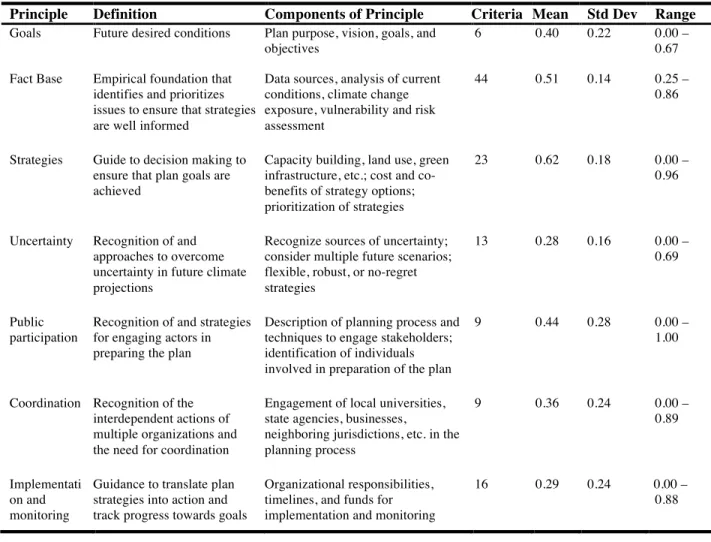
Table 1: Plan quality evaluation principles and summary statistics ... 17
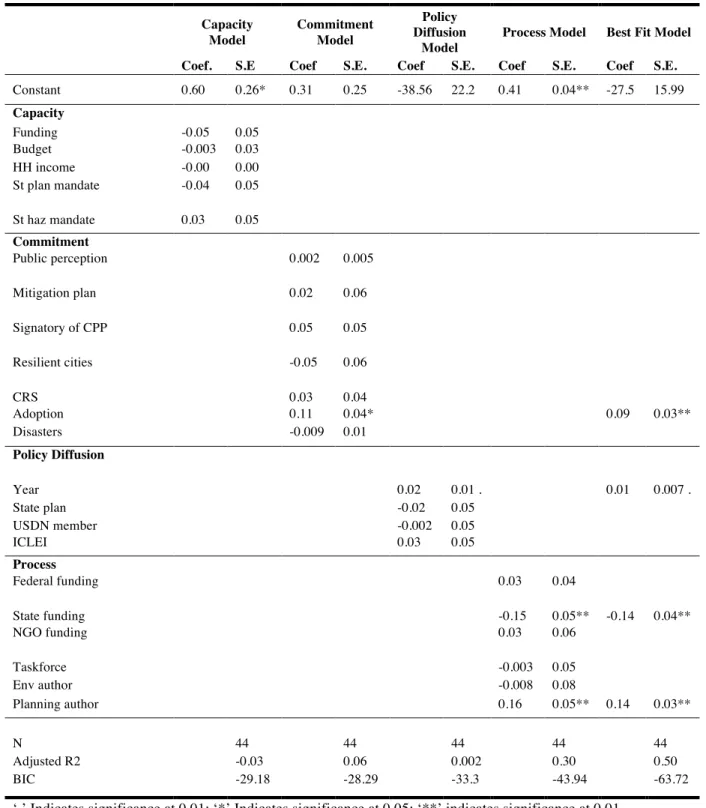
Table 2: Results of multivariate analysis of overall plan quality. ... 21
Table 3: Best-fit model for each plan quality principle ... 24
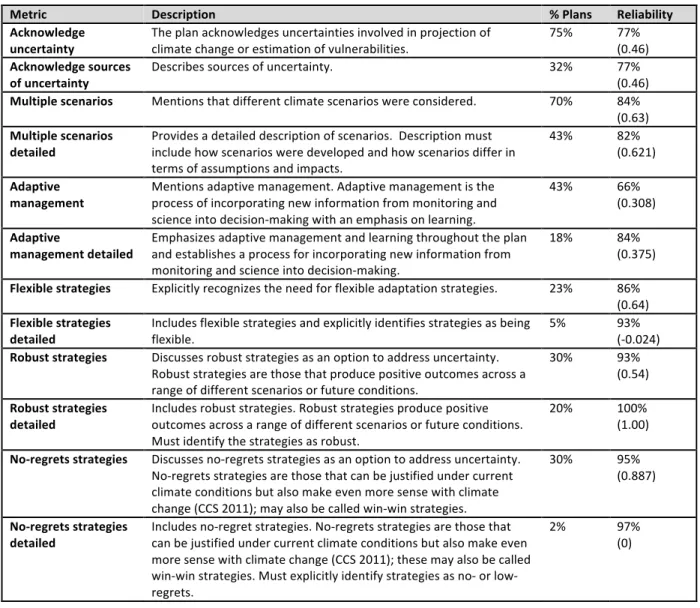
Table 4: Metrics used to code local adaptation plans ... 48
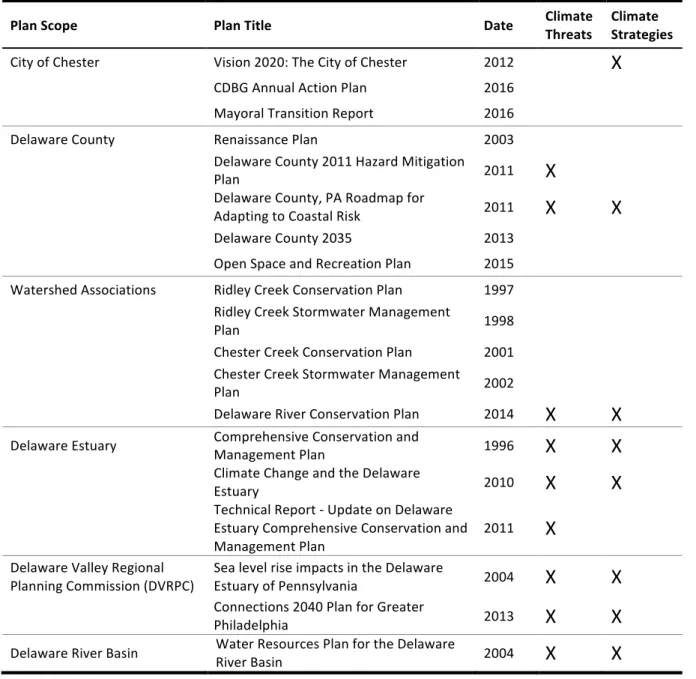
Table 5: Mainstreaming ... 81
Table 6: Support for strategies in Chester’s adaptation plan. ... 84
Table 7: Multivariate analysis variables ... 129
Table 8: Plan coding protocol ... 131
LIST OF FIGURES
Figure 1: Climate change adaptation planning process ... 5
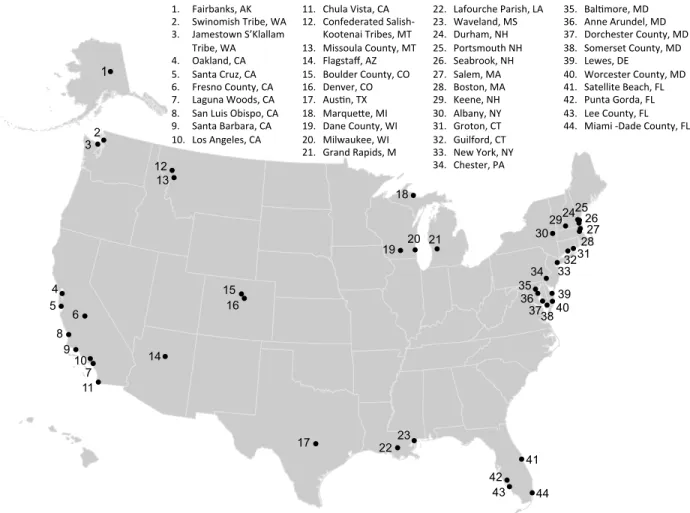
Figure 2: Local climate change adaptation plans included in sample. ... 16
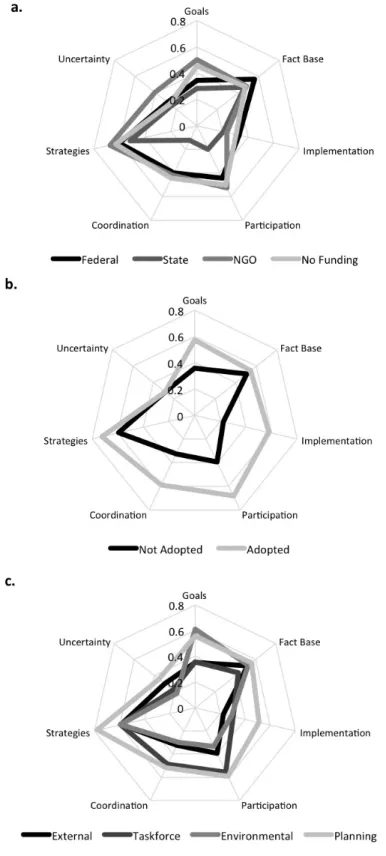
Figure 3: Variation in plan quality principles ... 22
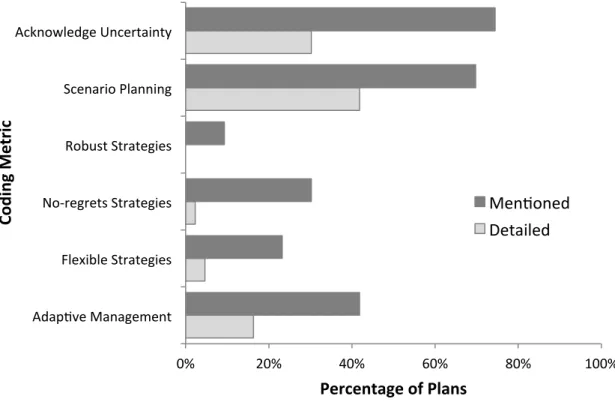
Figure 4: Uncertainty content analysis results ... 50
Figure 5: Overlapping planning jurisdictions.. ... 76
Figure 6: Zoning districts and hazardous area in the City of Chester ... 79
CHAPTER 1: INTRODUCTION
Record-setting droughts, historic rainfall and flooding, heat waves, shifting disease
vectors, and other impacts of climate change have serious ramifications for today’s built, social,
economic, and cultural resources (Melillo, Richmond, and Yohe 2014) . The imminent and
far-reaching consequences of climate change make adaptation imperative. Defined as “the process of
adjustments to actual or expected climatic stimuli and its effects,” (IPCC 2014, 1758), climate
adaptation is intended to reduce the damages and cost of climate change.
Internationally, multiple adaptation funding mechanisms have been established through
the United Nations Framework Convention on Climate Change (UNFCCC). Nationally, climate
adaptation is included as a key tenant of President Obama’s climate change plan. In 2013,
Obama signed an executive order instructing agencies to plan for climate change, modernize
Federal programs to support climate-resilient investments, and provide information, data, and
tools to state, local, and private-sector leaders to help them adapt (Executive Order 13514, 2014).
States have also taken up climate adaptation, 13 states have completed adaptation plans and 7
other states have a plan in progress (Georgetown Climate Center 2017). Since 2005, more than
40 communities in the United States have created stand-alone climate adaptation plans, with
potentially hundreds more embedding climate considerations into sustainability, hazard
mitigation, land use, and other plans (Woodruff and Stults 2016; Shi, Chu, and Debats 2015).
Adaptation planning is an opportunity for local governments to examine how climate
approach for incorporating climate considerations into future decision-making. Ultimately, local
adaptation planning is intended to help reduce community vulnerability and prevent the damages
of climate change. Despite the promise of adaptation planning, there is little empirical
understanding of the content and quality of these plans.
This dissertation includes three papers that advance the understanding of local adaptation
planning in the United States. Specifically, the three papers examine the quality of local
adaptation planning in the U.S., how plans manage uncertainty, and how adaptation planning is
coordinated across sectors and scales. The remainder of this chapter provides additional
background on the importance of adaptation at local levels, the role of planning in adaptation,
and the current state of knowledge on local adaptation planning. This chapter concludes with the
research questions and outline of the three papers included in this dissertation.
Local Adaptation
While the impacts of a changing climate are felt across all scales and sectors, climate
adaptation is often framed as a local issue. The impacts of climate– whether it be streets
flooding, asthma attacks, evacuations from wildfires, or power outages –are felt locally and it is
our local governments that we turn to first for solutions (Bierbaum et al. 2013; Cutter and Finch
2008; Leichenko 2011; Nalau, Preston, and Maloney 2015). As such, there is a growing
recognition that local communities need to undertake strategic planning and action to build
resilience to existing and projected changes in climate (Bassett and Shandas 2010; Berrang-Ford,
Ford, and Paterson 2011; Wheeler 2008).
Local governments have the authority to influence where and how development occurs
(Nordgren, Stults, and Meerow 2016). The use of zoning ordinances, landscape ordinance,
with different approaches to adaptation. Successful adaptation strategies in one community can
serve as guidance for other municipalities. Lastly, local governments are thought to be more
responsive to local needs and input (Corfee-Morlot et al. 2011). Climate impacts will differ
based on geography and existing conditions and adaptation options will be influenced by
community values and characteristics. The local specificity of climate impacts and adaptation
options mean local governments are the best situated to create adaptation strategies well suited to
their community (Nalau, Preston, and Maloney 2015).
In the United States, the importance of local government adaptation to climate change
can be seen in the inclusion of local voices in the President’s State, Local and Tribal Leaders
Task Force on Climate Preparedness and Resilience, the emphasis on local examples in U.S.
National Climate Assessments, and in the investments that philanthropies such as the Kresge
Foundation and Bloomberg Philanthropies are making in local adaptation initiatives.
Municipalities have emerged as leaders in climate adaptation, driving forward practice (Graham
and Mitchell 2016; Shi, Chu, and Carmin 2015).
History of Climate Planning
Local-level planning for climate change emerged during the mid-1990s (Adam
Millard-Ball 2012; Wheeler 2008). Historically, this work focused on reducing local greenhouse gas
emissions, also known as climate mitigation or climate action planning (Bassett and Shandas
2010; Wheeler 2008). In the late 2000, a number of U.S. local governments began to integrate
the concept of climate adaptation or preparedness into their climate action planning
(Berrang-Ford, (Berrang-Ford, and Paterson 2011; National Research Council 2010). In 2007, the City of Keene,
New Hampshire published the first stand-alone climate adaptation plan in the United States (City
Climate adaptation plans detail how climate change is projected to impact a local
community, what sectors or people are at risk, and what actions a local community intends to
take to prepare (Preston, Westaway, and Yuen 2010; Füssel 2007). Adaptation plans represent
systematic attention to the issue and may reduce climate change vulnerability. Although it is too
early to evaluate the effectiveness of adaptation plans in reducing vulnerability, it is expected
that adaptation plans will reduce losses from climate change in the same way comprehensive and
hazard mitigation plans reduce the losses of natural hazards (Burby 2005; Burby, French, and
Nelson 1998).
While planning is neither necessary nor sufficient for climate adaptation action, planning
may be particularly important in addressing climate change (Hagen 2016; Baker et al. 2012).
Planning provides a systematic way to collect facts, increase public awareness, and improve the
likelihood that this information will be considered in future decision-making (Burby 2005). The
consideration of new information, alternative futures, and adequacy of existing measures can
lead to improved outcomes than if no planning occurred (Millard-Ball 2012). Planning also
serves as a means for citizens and local officials to create a vision for the future and build
consensus (Burby 2005; Innes 1996; Deyle and Schively 2009). Through the planning process,
preference of stakeholders and decision-makers may change and result in different decisions
(Millard-Ball 2012). Planning may also increase the likelihood that governments consider
multiple approaches and employ multiple tools (Burby 2005). In addition, planning is intended to
help guide day-to-day decision-making (Burby 2005; Norton 2005). Having a plan can help
coordinate the actions of multiple departments and ensure that decisions are consistent (Burby
2005; Millard-Ball 2012). Lastly, planning provides rational nexus between public interest and
(Burby 2005; Millard-Ball 2012). Planning’s longer time horizon, comprehensive approach,
ability to help decision makers evaluate information and alternative futures, engage the public,
and take proactive action all make planning an important component of climate change
adaptation. Ultimately, planning is intended to help stakeholders make decisions in the public
interest in the face of dynamic conditions, uncertainty and complex relationships (Berke, Smith,
and Lyles 2012).
The State of Knowledge
Over the last several years, scholars have proposed a strategic process to plan for climate
change, which includes five main steps: 1) conducting a vulnerability or risk assessment; 2)
setting goals; 3) creating a plan; 4) implementing the plan; and 5) monitoring, evaluating, and
readjusting as shown in Figure 1 (Mimura et al. 2014; Bierbaum et al. 2014).
Figure 1: Climate change adaptation planning process (Bierbaum et al. 2014)
risk assessment (Carmin, Nadkarni, and Rhie 2012). Of the 156 U.S. respondents, 27% were in
the vulnerability analysis or planning phases and only 9% were in the implementation phase
(Carmin, Nadkarni, and Rhie 2012; Shi, Chu, and Debats 2015). The authors concluded, “most
cities are still at the earliest stages of planning, having just started to discuss or think about the
best way to proceed”(Carmin, Nadkarni, and Rhie 2012, 28).
To a large extent, the academic literature reflects communities’ progress in the adaptation
planning process, with the first phase - conducting a vulnerability or risk assessment - receiving
significantly more attention than the later planning and implementation phases. The current state
of knowledge on climate adaptation planning is uneven and incomplete. Although there is
burgeoning literature providing theory and guidance on how local adaptation should proceed,
little effort has been directed to evaluating if and to what extent this knowledge has incorporated
into existing plans. It is critical to evaluate early adaptation plans to identify opportunities for
improvement and best-practices that can be incorporated into future planning process.
Research and the academic literature on local climate adaptation planning has focused on
describing adaptation processes and barriers (Moser and Ekstrom 2010; Measham et al. 2011;
Amundsen, Berglund, and Westskog 2010; Eisenack et al. 2014). This research has
predominately provided rich qualitative descriptions of adaptation pathways of individual or
small sets of cities (Carmin, Anguelovski, and Roberts 2012; Bulkeley, Casta, and Castán Broto
2013; Boyd and Juhola 2014). Currently lacking is a holistic assessment of U.S. local adaptation
plans. Moreover, there are gaps in our understanding of how local adaptation planning manages
and overcome common barriers to adaptation such as uncertainty in climate projections and the
need for coordination across sectors and scales. To advance our understanding of adaptation
Research Questions
This dissertation includes three papers; the first paper (Chapter 2), which was published
in the journal Nature Climate Change, evaluates the quality of 44 local adaptation plans across
the U.S. and examines the relationship between community context and plan quality (Woodruff
and Stults 2016). The subsequent two papers draw on the results of the plan evaluation to
investigate in depth how local governments have overcome common barriers to climate
adaptation: uncertainty and coordination. The second paper (Chapter 3), which was published in
the journal Climatic Change, pairs a detailed analysis of how uncertainty is incorporated into
adaptation plans with interviews of stakeholders engaged in the planning process (Woodruff
2016). The third paper (Chapter 4), currently in review, analyzes how adaptation planning is
coordinated with planning efforts across multiple sectors and scales. The research questions for
each paper are:
Paper one:
What is the quality of local adaptation plans in the United States?
How does community capacity, government commitment, policy diffusion, and internal
processes influence plan quality?
Paper two:
How have adaptation plans addressed uncertainty in climate projections and impacts?
What are the barriers to using existing planning approaches that account for uncertainty?
Paper three:
To what extent is climate change mainstreamed with other plans?
To what extent are strategies in climate change adaptation plans synergistic or supported by
What is the overall effect of community network of plans on vulnerability to climate change
impacts?
Each paper substantively contributes to the current knowledge of local adaptation planning and
identifies opportunities to improve future adaptation planning.
The appendices include supplementary material that expands on the three papers.
Appendix A, B, and C provide details on the first paper. Appendix A contains additional
background and discussion, including a review of the plan quality and adaptation planning
literatures. Appendix B lists all the variables and data sources for the multivariate analysis.
Appendix C is the plan coding protocol used to analyze the adaptation plans. Appendix D and E
provides supplementary materials for the second paper. Appendix D includes an expanded
discussion on the content analysis and interview methods used in the second paper and Appendix
REFERENCES
Amundsen, H., F. Berglund, and H. Westskog. (2010). “Overcoming Barriers to Climate Change Adaptation—a Question of Multilevel Governance?” Environment and Planning C: Government and Policy 28 (2): 276–89.
Baker, I., A. Peterson, G.Brown, and C. McAlpine. (2012). “Local Government Response to the Impacts of Climate Change: An Evaluation of Local Climate Adaptation Plans.” Landscape and Urban Planning.
Bassett, E., and V. Shandas. (2010). “Innovation and Climate Action Planning.” Journal of the American Planning Association 76 (4): 435–50.
Berke, P., G. Smith, and W. Lyles. (2012). “Planning for Resiliency: Evaluation of State Hazard Mitigation Plans under the Disaster Mitigation Act.” Natural Hazards Review 13 (2): 139–49.
Berrang-Ford, L., J.D. Ford, and J. Paterson. (2011). “Are We Adapting to Climate Change?”
Global Environmental Change 21 (1). Elsevier Ltd: 25–33.
Bierbaum, R., Lee, A., Smith, J., Blair, M., Carter, L. M., Chapin, F. S., III, Fleming, P., et al. (2014). “Ch. 28: Adaptation.” In Climate Change Impacts in the United States: The Third National Climate Assessment, edited by J.M Melillo, T. Richmond, and G.W. Yohe, 1–37. Washington, DC: U.S. Global Change Research Program.
Bierbaum, R., J.B. Smith, A. Lee, M. Blair, L. Carter, F.S. Chapin III, P. Fleming, S. Ruffo, and M. Stults. (2013). “A Comprehensive Review of Climate Adaptation in the United States : More than before , but Less than Needed.” Mitigation and Adaptation Strategies for Global Change 18 (3): 361–406.
Boyd, E., and S. Juhola. (2014). “Adaptive Climate Change Governance for Urban Resilience.”
Urban Studies 52 (7): 1–31.
Bulkeley, H., and V. Castán Broto. (2013). “A Survey of Urban Climate Change Experiments in 100 Cities.” Global Environmental Change 23 (1): 92–102.
Burby, R. J. (2005). “Have State Comprehensive Planning Mandates Reduced Insured Losses from Natural Disasters?” Natural Hazards Review 6 (2): 67–81.
Burby, R.J., R.E. Deyle, D.R. Godschalk, and R.B. Olshansky. (2000). “Creating Hazard Resilient Communities through Land-Use Planning.” Natural Hazards Review 1 (2): 99–106.
Carmin, J., I. Anguelovski, and D. Roberts. (2012). “Urban Climate Adaptation in the Global South: Planning in an Emerging Policy Domain.” Journal of Planning Education and Research
32 (1): 18–32.
Carmin, J., N.Nadkarni, and C. Rhie. (2012). “Progress and Challenges in Urban Climate Adaptation Planning: Results of a Global Survey.” Cambridge, MA: MIT.
http://web.mit.edu/jcarmin/www/carmin/Urban%20Adaptation%20Report%20FINAL.pdf.
City of Keene. (2007). “Adapting to Climate Change: Planning a Climate Resilient Community.” Keene, NH.
Corfee-Morlot, J., I. Cochran, S. Hallegatte, and P.J. Teasdale. (2011). “Multilevel Risk Governance and Urban Adaptation Policy.” Climatic Change 104 (1): 169–97.
Cutter, S.L, and C. Finch. (2008). “Temporal and Spatial Changes in Social Vulnerability to Natural Hazards” 105 (7): 2301–6.
Deyle, R., and C. Schively. (2009). “Group Learning in Participatory Planning Processes: An Exploratory Quasiexperimental Analysis of Local Mitigation Planning in Florida.” Journal of Planning Education and Research, August.
Eisenack, K., S. C. Moser, E. Hoffmann, R. J. T. Klein, C. Oberlack, A. Pechan, M. Rotter, and C.J.A.M. Termeer. (2014). “Explaining and Overcoming Barriers to Climate Change
Adaptation.” Nature Climate Change 4 (10): 867–72.
Executive Order 13514. (2014). "Preparing the United States for the Impacts of Climate Change | The White House.” 2014. Accessible at:
http://www.whitehouse.gov/the-press-office/2013/11/01/executive-order-preparing-united-states-impacts-climate-change.
Ford, J. D., L. Berrang-Ford, and J. Paterson. (2011). “A Systematic Review of Observed Climate Change Adaptation in Developed Nations.” Climatic Change 106 (2): 327–36.
Füssel, H.-M. (2007). “Adaptation Planning for Climate Change: Concepts, Assessment Approaches, and Key Lessons.” Sustainability Science 2 (2): 265–75.
Georgetown Climate Center. (2017). “State and Local Adaptation Plans ”.
Georgetownclimatecenter.org. Accessible at:
http://www.georgetownclimate.org/adaptation/plans.html.
Graham, A., and C. L. Mitchell. (2016). “The Role of Boundary Organizations in Climate Change Adaptation from the Perspective of Municipal Practitioners.” Climatic Change, September.
Innes, J. E. (1996). “Planning through Consensus Building - A New View of the Comprehensive Planning Ideal.” Journal Of The American Planning Association 62 (4): 460–72.
IPCC (Intergovernmental Panel on Climate Change). (2014). "Summary for policymakers." In In
Climate Change 2014: Impacts, Adaptation, and Vulnerability. Contribution of Working Group II to the Fifth Assessment Report of the Intergovernmental Panel on Climate Change, edited by C.B. Field, V.R. Barros, D.J. Dokken, K.J. Mach, M.D. Mastrandrea, T.E. Bilir, M. Chatterjee, et al., 869–98. Cambridge, UK: Cambirdge University Press, Cambridge, United Kingdom, pp. 1-32.
Leichenko, R. (2011). “Climate Change and Urban Resilience.” Current Opinion in Environmental Sustainability 3 (3): 164–68.
Measham, T. G., B. L. Preston, T. F. Smith, C. Brooke, R. Gorddard, G. Withycombe, and C. Morrison. (2011). “Adapting to Climate Change through Local Municipal Planning: Barriers and Challenges.” Mitigation and Adaptation Strategies for Global Change 16 (8): 889–909.
Melillo, J.M., T.C. Richmond, and G.W. Yohe, eds. (2014). Climate Change Impacts in the United States: The Third National Climate Assessment. U.S. Global Change Research Program. http://purl.fdlp.gov/GPO/gpo48682.
Millard-Ball, A. (2012). “The Limits to Planning: Causal Impacts of City Climate Action Plans.”
Journal of Planning Education and Research 33 (1): 5–19.
Mimura, N, R. S. Pulwarty, D.M. Duc, I. Elshinnawy, M.H. Redsteer, H.Q. Huang, J.N. Nkem, and R.a. Sanchez Rodriguez. (2014). “Adaptation Planning and Implementation.” In Climate Change 2014: Impacts, Adaptation, and Vulnerability. Contribution of Working Group II to the Fifth Assessment Report of the Intergovernmental Panel on Climate Change, edited by C.B. Field, V.R. Barros, D.J. Dokken, K.J. Mach, M.D. Mastrandrea, T.E. Bilir, M. Chatterjee, et al., 869–98. Cambridge, UK: Cambirdge University Press.
Moser, S. C., and J. A. Ekstrom. (2010). “A Framework to Diagnose Barriers to Climate Change Adaptation.” Proceedings of the National Academy of Sciences 107 (51): 22026–31.
Nalau, J., B. L. Preston, and M.C. Maloney. (2015). “Is Adaptation a Local Responsibility?”
Environmental Science & Policy 48 (April): 89–98.
National Research Council. (2010). “America’s Climate Choices: Adapting to the Impacts of Climate Change.” Washington, DC.
Nelson, A. C., and S. P. French. (2002). “Plan Quality and Mitigating Damage from Natural Disasters - A Case Study of the Northridge Earthquake with Planning Policy Considerations.”
Journal of the American Planning Association 68 (2): 194–207.
Norton, R. K. (2005). “Local Commitment to State-Mandated Planning in Coastal North Carolina.” Journal of Planning Education and Research 25 (2): 149–71.
Preston, B. L., R. M. Westaway, and E. J. Yuen. (2010). Climate Adaptation Planning in Practice: An Evaluation of Adaptation Plans from Three Developed Nations. Mitigation and Adaptation Strategies for Global Change. Vol. 16.
Quay, R. (2010). “Anticipatory Governance.” Journal of the American Planning Association 76 (4): 496–511.
Shi, L., E. Chu, and J. Carmin. (2015). “Global Patterns of Adaptation Planning: Results from a Global Survey.” In The Routledge Handbook of Urbanization and Global Environmental Change, edited by Karen C. Seto, William D. Solecki, and Corrie A. Griffith, 336–49. Routledge.
Shi, L., E. Chu, and J. Debats. (2015). “Explaining Progress in Climate Adaptation Planning Across 156 U.S. Municipalities.” Journal of the American Planning Association, no. August: 1– 12.
Wheeler, S. M. (2008). “State and Municipal Climate Change Plans.” Journal of the American Planning Association 74 (4): 481–96.
Woodruff, S. C. (2016). “Planning for an Unknowable Future: Uncertainty in Climate Change Adaptation Planning.” Climatic Change, October.
CHAPTER 2: NUMEROUS STRATEGIES BUT LIMITED IMPLEMENTATION
GUIDANCE IN U.S. LOCAL ADAPTATION PLANS1
Climate change already affects local communities, and these impacts are projected to
become more severe and intense in the future (IPCC 2012; World Bank 2012). The growing
reality of climate change is leading many local communities to invest in adaptation – actions to
limit the negative consequences of climate change – and, in many cases, to create climate
adaptation plans (Bierbaum et al. 2013). In the last decade, more than 40 U.S. communities have
created stand-alone climate adaptation plans. These plans detail how climate change is projected
to impact the community and what actions should be taken to prepare (Füssel 2007; Preston,
Westaway, and Yuen 2010).Adaptation planning represents systematic attention to climate
change (Wheeler 2008) and, as a result, is expected to help prepare communities and lower the
cost of climate-related impacts (Preston, Westaway, and Yuen 2010).
Despite the potential value of adaptation planning, few studies have analyzed these plans
and none have used plan evaluation methods. Plan evaluation is a methodology to document plan
content and identify specific strengths and weaknesses by comparing plans to established criteria
(e.g., defining goals, public participation, and implementation guidance; Berke and Godschalk
2009; Lyles and Stevens 2014). Researchers have used plan evaluation to analyze plans from
multiple domains, including hazard mitigation (Lyles, Berke, and Smith 2014), affordable
housing (Hoch 2007), and sustainability planning (Schrock, Bassett, and Green 2015; Berke and
Conroy 2000). Behind the call for plan quality evaluation is the idea that high-quality plans
better advance community goals than lower-quality plans (Stevens, Lyles, and Berke 2014).
Previous adaptation plan studies have analyzed plans using outcome (Baker et al. 2012)
and logic framework (Preston, Westaway, and Yuen 2010) approaches, which provide insights
into how well plan content aligns with processes suggested in adaptation guidance. Plan
evaluation, in contrast, assesses how adaptation plans align with agreed-upon criteria of plan
quality, allowing adaptation plans to be compared to other planning domains. Moreover, plan
evaluation uses more detailed criteria to analyze the content of adaptation plans and identify
specific areas for improvement. A more detailed analysis of local adaptation plans using plan
evaluation methods is needed (Engle 2011; Measham et al. 2011; Millard-Ball 2012).
In addition, it is important to understand how plan quality varies across communities.
Specifically, how are community attributes such as capacity (e.g., access to funding, planning
experience) and commitment (e.g., dedication to the issue) associated with plan quality?
Similarly, work is needed to understand how policy diffusion, which may disperse promising
planning practices and adaptation strategies, is related to plan quality. To help fill these gaps, this
paper addresses two questions: 1) How do existing climate adaptation plans align with emerging
principles of plan quality? 2) What community attributes are associated with high quality plans?
To answer these questions, I used established principles of plan quality to evaluate 44
stand-alone, local adaptation plans in the United States, and multivariate regression to examine
how plan quality varies across communities. I focus on the U.S. because of the recent increase in
local adaptation planning as well as a need to understand and overcome a perceived adaptation
deficit in the country (Moser and Ekstrom 2010; Burton 2005). The results provide scholars and
change and what opportunities exist for replicating promising practices and improving current
weaknesses. I hope that these findings lead to higher-quality plans and the translation of plans
into on-the-ground adaptation.
Adaptation Plan Quality
Using plan evaluation, which allows for the identification of specific strengths and
weaknesses of plans, I scored 44 U.S. local climate change adaptation plans (Figure 1) on 124
criteria associated with six well-established plan quality principles (Appendix C): 1) goals that
describe future desired conditions; 2) a fact base that identifies and prioritizes community issues,
providing the empirical foundation for strategies; 3) strategies that guide decision making to
ensure plan goals are achieved; 4) public participation in plan creation; 5) inter-organizational
coordination; and 6) details regarding implementation and monitoring (Stevens 2013; Berke and
Godschalk 2009; Stevens, Lyles, and Berke 2014). In addition to these standard principles, I
included one additional principle: 7) how plans address uncertainty given the inherent
uncertainty in climate change projections, as well as the timing and magnitude of climate
impacts (Berkhout et al. 2014; Abbott 2005; Walker, Haasnoot, and Kwakkel 2013; Abunnasr,
Hamin, and Brabec 2013; Table 1; Appendix A). Assessing the presence/absence of criteria
associated with these plan principles allows the conversion of text to a quantitative measurement
of plan quality, which eases comparisons between plans, enables identification of trends across
Figure 2: Local climate change adaptation plans included in the sample.
I found that adaptation plans scored an average 40.6% of all possible points. The
highest-scoring plan received 76.6% and the lowest highest-scoring plan received 12% of all possible points.
Only 12 plans scored above 50%, which suggests that the adaptation plans evaluated do not
provide comprehensive coverage of plan quality principles.
Plans scored highest on the strategies principle (average score 62%), indicating that they
include a diversity of actions to prepare for climate change. The strategies most frequently
included in plans were practice and behavior (e.g., changing operations and maintenance
schedules, opening cooling centers) and research and monitoring (e.g., conducting more
1. Fairbanks, AK 2. Swinomish Tribe, WA 3. Jamestown S’Klallam
Tribe, WA 4. Oakland, CA 5. Santa Cruz, CA 6. Fresno County, CA 7. Laguna Woods, CA 8. San Luis Obispo, CA 9. Santa Barbara, CA 10. Los Angeles, CA
11. Chula Vista, CA 12. Confederated
Salish-Kootenai Tribes, MT 13. Missoula County, MT 14. Flagstaff, AZ 15. Boulder County, CO 16. Denver, CO 17. AusVn, TX 18. MarqueYe, MI 19. Dane County, WI 20. Milwaukee, WI 21. Grand Rapids, M
22. Lafourche Parish, LA 23. Waveland, MS 24. Durham, NH 25. Portsmouth NH 26. Seabrook, NH 27. Salem, MA 28. Boston, MA 29. Keene, NH 30. Albany, NY 31. Groton, CT 32. Guilford, CT 33. New York, NY 34. Chester, PA
35. BalVmore, MD 36. Anne Arundel, MD 37. Dorchester County, MD 38. Somerset County, MD 39. Lewes, DE
40. Worcester County, MD 41. Satellite Beach, FL 42. Punta Gorda, FL 43. Lee County, FL 44. Miami -Dade County, FL
than one plan that did not include any strategies, all plans proposed at least five of the fifteen
types of strategies coded in my analysis. Within the strategies principle, plans scored lowest on
cost of implementing each action (7 plans, 16%) and a detailed explanation of how strategies
were prioritized (9 plans, 20%). Generally, adaptation plans include a breadth of actions but
provide little analysis of co-benefits, costs, and priorities.
Table 1: Plan quality evaluation principles and summary statistics. Criteria refers to the number of criteria used to measure the principles’ quality. Mean refers to the average score on the principle across plans in the sample.
Principle Definition Components of Principle Criteria Mean Std Dev Range Goals Future desired conditions Plan purpose, vision, goals, and
objectives
6 0.40 0.22 0.00 – 0.67 Fact Base Empirical foundation that
identifies and prioritizes issues to ensure that strategies are well informed
Data sources, analysis of current conditions, climate change exposure, vulnerability and risk assessment
44 0.51 0.14 0.25 – 0.86
Strategies Guide to decision making to ensure that plan goals are achieved
Capacity building, land use, green infrastructure, etc.; cost and co-benefits of strategy options; prioritization of strategies
23 0.62 0.18 0.00 – 0.96
Uncertainty Recognition of and approaches to overcome uncertainty in future climate projections
Recognize sources of uncertainty; consider multiple future scenarios; flexible, robust, or no-regret strategies
13 0.28 0.16 0.00 – 0.69
Public participation
Recognition of and strategies for engaging actors in preparing the plan
Description of planning process and techniques to engage stakeholders; identification of individuals involved in preparation of the plan
9 0.44 0.28 0.00 – 1.00
Coordination Recognition of the interdependent actions of multiple organizations and the need for coordination
Engagement of local universities, state agencies, businesses,
neighboring jurisdictions, etc. in the planning process
9 0.36 0.24 0.00 – 0.89
Implementati on and monitoring
Guidance to translate plan strategies into action and track progress towards goals
Organizational responsibilities, timelines, and funds for implementation and monitoring
16 0.29 0.24 0.00 – 0.88
greatly in the sophistication with which they project future climatic conditions. For example,
New York City, NY used 24 global climate models and two future emission scenarios to
generate locally downscaled climate projections. In contrast, the City of Marquette, MI used
historic trends to identify climate change signals that may continue into the future as the basis for
its adaptation planning. Regardless of the methodology used to project future climate conditions,
all the plans discuss how climate change could impact built environments. Plans also consistently
explore how climate change could affect the natural environment (42 plans, 95%), economic
systems (40 plans, 90%), public health (38 plans, 86%), water supply (36 plans, 82%) and public
services (34 plans, 77%). Despite guidance recommendations, few plans provide details about
where impacts to these systems will occur.
The lowest-scoring plan quality principle was uncertainty (average score 28%). Failing to
address uncertainty may cause adaptation plans to be ineffective or maladaptive. Consequently,
significant attention has been dedicated to developing new and refining existing planning
approaches to manage uncertainty such as considering multiple future scenarios, selecting robust
and flexible strategies, and using adaptive management (Quay 2010). While most plans (33
plans, 75%) explicitly acknowledge the uncertainty associated with planning for future changes
in climate, few employ approaches that account for uncertainty. Considering multiple scenarios
was the approach most commonly used: 31 plans (70%) mention that multiple greenhouse gas
emission scenarios were considered in the planning process. Most plans used emission scenarios
generated by the Intergovernmental Panel on Climate Change (IPCC), but there was wide
variation in which scenarios were considered. Many plans that considered multiple scenarios (19
of 31) fail to provide details about how scenarios were developed and how they differ in future
demonstrate the range of projections and then plan for some average of the two. No-regrets,
flexible, and robust strategies were not frequently discussed as options to address uncertainty (13
(30%), 10 (23%), and 4 (9%) plans, respectively), and specific strategies are rarely labeled as
no-regrets, flexible, or robust (1 (2%), 2 (5%), and 0 plans, respectively).
The second-lowest scoring principle was implementation and monitoring (average score
29%). Here, the highest-scoring criteria was mainstreaming, the concept of integrating climate
change into other plans or policies, which was discussed in 37 of the 44 plans (84%). The
weakest components of this principle were evaluation methods (3 plans, 7%) and metrics (7
plans, 16%), with few plans describing how the plan would be evaluated or what metrics would
be used to measure progress. No plans included both evaluation metrics and methods. Chula
Vista, CA’s plan provides strong evaluation metrics to measure progress, but fails to describe
how or who will track these metrics. Similarly, in the goals principle, plans scored lowest on the
identification of objectives. Only seven plans include objectives, which are defined as tangible,
measurable outcomes to track progress towards goals (Berke et al. 2006).
Variation in Plan Quality
The quality of adaptation plans in my sample varies greatly; I used multivariate
regression to examine whether capacity, commitment, policy diffusion, and internal operations
are correlated with plan quality. I built four models with variables that operationalize these
concepts (Appendix B). Of the four models, the internal operations model, consisting of plan
author and funding source, accounted for the most variation in plan quality (adjusted R2 = 0.30; Table 2). The capacity, commitment, and policy diffusion models each explained less than 10%
Three variables are significantly correlated with plan quality: formal adoption of the
adaptation plan (b = 0.09, t = 3.04, p < 0.01), whether the plan was written by the planning
department (b = 0.14, t = 3.31, p < 0.01), and whether a plan received state funding (b = -0.14, t
= -4.01, p < 0.001). State funding decreased plan quality, while the other two variables had a
positive relationship with plan quality. The best-fit model, including these three variables and the
year the plan was published, on the assumption that more recent plans build on lessons learned
from earlier planning processes (Lyles, Berke, and Smith 2014; Schrock, Basset, and Green
2015), explains 50% of the variation in plan quality (Table 2).
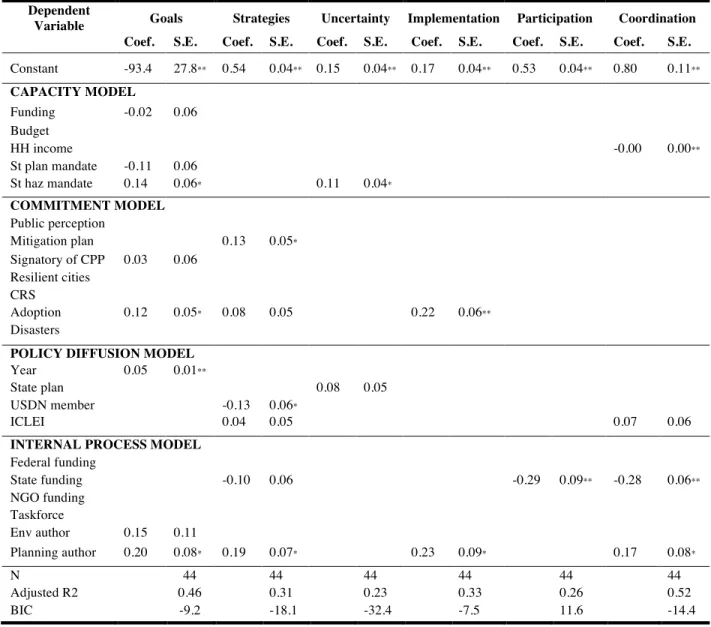
Regression analyses with the seven plan principles as the dependent variable demonstrate
that community variables are not uniformly associated with plan principles (Table 3). Formal
adoption of the adaptation plan, for example, positively correlates with the quality of plans’ goals
(b = 0.12, t = 2.38, p < 0.05) and implementation and monitoring (b = 0.22, t = 3.68, p < 0.001)
but does not have a significant effect on uncertainty, participation, and inter-organizational
coordination. Adaptation plans written by the planning department on average have significantly
stronger goals (b = 0.20, t = 2.59, p < 0.05), strategies (b = 0.19, t = 2.71, p < 0.01),
implementation and monitoring (b = 0.23, t = 2.66, p < 0.05), and inter-organizational
coordination (b = 0.17, t = 2.20, p < 0.05). State funding has a significant negative effect on
participation (b = 0.29, t = 2.03, p < 0.05) and interorganizational coordination (b = 0.28, t =
Table 2: Results of multivariate analysis of overall plan quality. Capacity Model Commitment Model Policy Diffusion Model
Process Model Best Fit Model Coef. S.E Coef S.E. Coef S.E. Coef S.E. Coef S.E. Constant 0.60 0.26* 0.31 0.25 -38.56 22.2 0.41 0.04** -27.5 15.99 Capacity
Funding -0.05 0.05
Budget -0.003 0.03
HH income -0.00 0.00 St plan mandate -0.04 0.05 St haz mandate 0.03 0.05 Commitment
Public perception 0.002 0.005
Mitigation plan 0.02 0.06
Signatory of CPP 0.05 0.05
Resilient cities -0.05 0.06
CRS 0.03 0.04
Adoption 0.11 0.04* 0.09 0.03**
Disasters -0.009 0.01
Policy Diffusion
Year 0.02 0.01 . 0.01 0.007 .
State plan -0.02 0.05
USDN member -0.002 0.05
ICLEI 0.03 0.05
Process
Federal funding 0.03 0.04
State funding -0.15 0.05** -0.14 0.04**
NGO funding 0.03 0.06
Taskforce -0.003 0.05
Env author -0.008 0.08
Planning author 0.16 0.05** 0.14 0.03**
N 44 44 44 44 44
Adjusted R2 -0.03 0.06 0.002 0.30 0.50
BIC -29.18 -28.29 -33.3 -43.94 -63.72
‘.’ Indicates significance at 0.01; ‘*’ Indicates significance at 0.05; ‘**’ indicates significance at 0.01.
The regression analyses of individual plan principles also highlight additional
community variables that may influence the planning process and plan quality. State hazard
mitigation planning mandates are positively correlated with the quality of adaptation plan goals
(b = 0.14, t = 2.38, p < 0.05) and the extent to which they address uncertainty (b = 0.11, t = 2.58,
p < 0.05). I also find that communities with a climate mitigation plan score significantly higher
on strategies (b = 0.14, t = 2.59, p < 0.05). Counter to my hypotheses (Appendix A), median
household income is negatively correlated with inter-organizational coordination (b = -0.000007,
t = -3.81, p < 0.001), and communities that are members of the Urban Sustainability Directors
Network have significantly lower scores on the strategies principle (b = -0.13, t = -2.21, p <
0.05). These may be spurious relationships, but how capacity and networks influence planning
decisions and processes warrant further exploration (Appendix A).
Improving Adaptation Plans
Due to the recent emergence and highly contextualized nature of adaptation planning,
there are no established precedents, guidelines, or frameworks for the content of adaptation plans
(Bierbaum et al. 2013; Measham et al. 2011).Consequently, innovation has occurred at the local
level, leading to a diversity of planning approaches. This is reflected in the large variance in
adaptation plan quality in my sample. Despite this, local adaptation plans share common
Table 3: Best-fit model for each plan quality principle, including all variables with p < 0.1 from conceptual model multivariate regression.
Dependent
Variable Goals Strategies Uncertainty Implementation Participation Coordination Coef. S.E. Coef. S.E. Coef. S.E. Coef. S.E. Coef. S.E. Coef. S.E. Constant -93.4 27.8** 0.54 0.04** 0.15 0.04** 0.17 0.04** 0.53 0.04** 0.80 0.11**
CAPACITY MODEL
Funding -0.02 0.06 Budget
HH income -0.00 0.00**
St plan mandate -0.11 0.06
St haz mandate 0.14 0.06* 0.11 0.04*
COMMITMENT MODEL Public perception
Mitigation plan 0.13 0.05*
Signatory of CPP 0.03 0.06 Resilient cities
CRS
Adoption 0.12 0.05* 0.08 0.05 0.22 0.06**
Disasters
POLICY DIFFUSION MODEL Year 0.05 0.01**
State plan 0.08 0.05
USDN member -0.13 0.06*
ICLEI 0.04 0.05 0.07 0.06
INTERNAL PROCESS MODEL Federal funding
State funding -0.10 0.06 -0.29 0.09** -0.28 0.06**
NGO funding Taskforce
Env author 0.15 0.11
Planning author 0.20 0.08* 0.19 0.07* 0.23 0.09* 0.17 0.08*
N 44 44 44 44 44 44
Adjusted R2 0.46 0.31 0.23 0.33 0.26 0.52
BIC -9.2 -18.1 -32.4 -7.5 11.6 -14.4
I find that adaptation plans scored highest on the strategies and fact base principles but
lacked clear mechanisms and prioritization for translating plans into on-the-ground projects.
Although it is difficult to compare scores across plan evaluation studies because of differing
coding protocols and methodologies (Lyles and Stevens 2014), my results suggest adaptation
(Preston, Westaway, and Yuen 2010), plans in my sample do a poor job of prioritizing impacts
and strategies. The lack of priorities is compounded by the failure to include details found to be
important in motivating plan implementation (Laurian et al. 2004) such as the co-benefits of
adaptation strategies, associated costs, and implementation responsibilities. To improve future
plans, practitioners should include details such as implementation responsibilities, cost (to the
extent that it can be estimated), potential funding sources, and timetable for each action, as well
as how to measure implementation progress. The dearth of tangible objectives and evaluation
metrics by which to measure progress suggests that practitioners still do not have a clear idea of
what adaptation looks like or how it can be measured: an uncertainty that is mirrored in the
academic literature (Adger et al. 2005; Ford et al. 2013).
My results also indicate a gap between theories for planning under uncertainty and the
incorporation of these approaches into plans. While planning approaches that account for high
uncertainty are important in making long-lasting plans that produce desirable outcomes (Berke
and Lyles 2013; Measham et al. 2011), I find them lacking in local adaptation plans. This finding
aligns with previous studies, which indicate that identifying approaches to addressing uncertainty
is a weakness of adaptation planning (Berke and Lyles 2013; Preston, Westaway, and Yuen
2010).This omission may, in part, be due to limited resources for planning and high cost, time,
and technical requirements of many approaches to managing uncertainty. Considering multiple
futures and including no-regret strategies in planning are easy ways to begin managing
climate-related uncertainty. In addition, local practitioners need to establish a process for incorporating
lessons learned into future planning and implementation thereby ensuring that planning is
adjusting to real-time changes in science and policy (Walker, Haasnoot, and Kwakkel 2013;
The alignment of my findings with studies in different nations (Preston, Westaway, and
Yuen 2010; Baker et al. 2012)and at different scales (Preston, Westaway, and Yuen 2010; Moser
and Ekstrom 2010) suggests that the shortcomings identified in the sample of local U.S. plans are
characteristic of adaptation planning more broadly. Detailed approaches to uncertainty and
metrics for monitoring and evaluation appear to be persistent challenges that require additional
attention.
My finding that plans authored by the planning department have stronger goals,
strategies, implementation and monitoring, and inter-organizational coordination is consistent
with recent work on hazard mitigation planning, which found that the involvement of planners
improves the quality of strategies and the implementation components of these plans (Lyles,
Berke, and Smith 2014). My results also support findings from studies demonstrating the
importance of elected officials in the creation of climate adaptation plans and policies (Measham
et al. 2011; Bedsworth and Hanak 2013; Brody 2003; Eisenack et al. 2014; Tang et al. 2010).
Local adaptation plans that are formally adopted consistently have stronger goals and
implementation and monitoring components. To improve future adaptation planning, a wide
array of individuals should be involved in the planning process, especially representatives from
the planning department and elected officials.
Surprisingly, state funding has a strong negative correlation with plan quality. While
correlation does not imply causation, this relationship may be due to states selectively funding
communities that are particularly vulnerable to climate change impacts. Extremely vulnerable
communities may engage in adaptation planning but lack the capacity, even with state funding,
to produce high quality plans. This suggests that additional measures of vulnerability are needed
State-funded plans may also be driven by state interests and, consequently, fail to develop meaningful
local participation or buy-in (Appendix A). Additional research is needed to explore the role of
funders in the planning process. Although I did not measure these factors directly, other forms of
state support, such as providing technical data and planning guidance, likely enhance local
adaptation efforts.
The next step in this work is to assess whether and how adaptation plans translate into the
implementation of adaptation actions. Specifically, what types of actions are included in
adaptation plans? Which of these actions are being implemented? And why? Additionally, more
work is needed to understand how uncertainty shapes the adaptation planning process and
influences the types of strategies being selected and implemented to prepare for climate change.
Finally, more research is critically needed on how adaptation plans inform implementation
decisions and how effective implemented strategies are at building resilience.
While this analysis helps identify strengths and opportunities for improving adaptation
planning, a limitation is that my sample only includes communities with stand-alone adaptation
plans. The growing movement towards mainstreaming climate change into other types of
planning initiatives (Friend et al. 2013) means that there are likely hundreds of other
communities planning for climate change. Exploring the content and quality of these plans would
allow for a richer understanding of different approaches to planning for climate change and
highlight which are most effective for creating more resilient communities. My analysis also
focuses on how plan quality varies across communities, not why some communities engage in
adaptation planning and not others. The distribution of communities in my sample, however, is
clearly geographically uneven begging the question: what motivates climate change adaptation
Adaptation will continue to garner greater attention as the impacts of climate change are
realized. This paper provides a baseline assessment of stand-alone, local climate adaptation
planning in the U.S. Consistent with past research on adaptation planning, I find that plans lack
approaches to address uncertainty, implementation priorities and details, and metrics for
monitoring and evaluation. These persistent shortcomings raise concerns about whether plans
will translate into actions that reduce community vulnerability. My results suggest that the
involvement of planners and elected officials may improve adaptation plan quality. As
adaptation becomes more prevalent I hope practitioners, scientists, and policy makers reflect on
and learn from the strengths and weaknesses of existing plans and use these lessons to craft
future plans that lay the foundation for creating more resilient communities.
Methods
Sample Selection
I focus on local adaptation in the U.S. because local communities in the country have a
higher capacity to adapt than those in many other countries, and yet, in spite of this, little formal
adaptation action has emerged (Burton 2005; Moser and Ekstrom 2010).To understand this
paradox, I focus on what adaptation planning has occurred in order to more fully understand the
scale of local adaptation planning in the country and identify opportunities for improvement.
I selected plans to include in my sample based on three criteria: (1) the central topic of
the plan was adaptation, resilience, or preparedness; (2) the plan was written by or for a U.S. city
or county government; and (3) the plan took a comprehensive approach to adaptation by focusing
on more than just one or two topics (i.e., I exclude sector-based adaptation plans). These criteria
excluded plans that integrate adaptation components but do not focus entirely on adaptation (e.g.,
written by regional entities (e.g., the Southeast Florida Regional Climate Change Compact), and
plans that are written without local government involvement (e.g., plans written by local
environmental non-profits). These criteria ensure that I have a relatively homogeneous and
comparable sample.
I attempted to evaluate all U.S. plans that met these criteria and were released between
2007, when Keene, NH published the first adaptation plan in the U.S., and 2014. I developed the
sample based on a search of three adaptation clearinghouse websites: the Georgetown Climate
Center, the Climate Adaptation Knowledge Exchange (CakeX), and the Center for Climate and
Energy Solutions. In addition, I collected plans through three 100-page Google searches for the
terms “local adaptation plan,” “local resilience plan,” and “local preparedness plan.” While no
entity has a complete list of all adaptation plans in the United States, I am confident that I
captured the vast majority of U.S. local adaptation plans. In total I collected 85 plans, of which
44 met my criteria for evaluation (Figure 1). Of the 41 not included in my final sample, 16 were
other types of plans that included only a chapter on adaptation, 8 were written by regional
agencies, and 17 were sector specific.
Coding Protocol and Procedures
I developed a coding protocol to assess seven principles of plan quality. In addition to 1)
goals, 2) fact base, 3) strategies, 4) public participation in plan creation, 5) inter-organizational
coordination, and 6) details regarding implementation and monitoring, which are all commonly
used in plan evaluation studies, I added a principle for how plans deal with 7) uncertainty, in
To ensure that the protocol captured the most current theory on adaptation, metrics for
each principle were based on an analysis of nine adaptation guidance documents published by
international, federal, state, and non-governmental organizations (IPCC 2012a; ICLEI 2007;
APA 2011; CCS 2011; CEMA 2012; NRC 2010; PROVIA 2013). All of the adaptation guidance
documents focused on adaptation generally, not just sector-specific adaptation. The guidance
documents referenced vary in focus and prescriptiveness. For example, the American Planning
Association’s “Policy Guide on Planning for Climate Change” is tailored to planners and focuses
on describing potential impacts and adaptation strategies. ICLEI’s “Preparing for Climate
Change: A Guidebook for Local, Regional, and State Governments” focuses on process, rather
than strategies or policy options. In contrast, the IPCC’s “Managing the Risks of Extreme Events
and Disasters to Advance Climate Change Adaptation” assesses the current knowledge on risk
management and adaptation to climate extremes in a way that is policy relevant but not policy
prescriptive. I reviewed the guidance documents using an inductive approach to identify key
processes associated with adaptation planning. Despite the diversity in guidance documents
considered, there was a high level of agreement on adaptation processes and factors that should
be considered in climate adaptation planning. From this analysis, I extracted processes and
considerations that are present across multiple adaptation guidance instruments and therefore
could serve as evaluation metrics.
I then organized the metrics I extracted from the adaptation guidance materials based on
the seven plan quality principles. In addition, I used existing coding protocols (Berke et al. 2013;
Berke and Godschalk 2009; Lyles and Stevens 2014) to increase the specificity of metrics from
the adaptation guidance literature. For example, many of the adaptation materials analyzed
provide details about which stakeholders should be involved or how they should be engaged.
Stakeholder engagement corresponds to the public participation plan principle, which in many
plan quality studies is measured with detailed metrics such as a discussion on how the plan was
developed, who was involved, and tools used for public engagement.
Adaptation guidance and established planning practices lead me to expect plans to
provide greater depth and analysis on some topics than others. For example, a large focus of
climate adaptation guidance is identifying climate impacts and vulnerabilities; consequently, I
expected plans not only to discuss impacts but also to provide further analysis about where these
impacts might occur. Similarly, within the planning field there is an extensive literature on
stakeholder engagement, so I expected plans to discuss not only who was involved in the
planning process but also how they contributed. Other concepts, such as discussing adaptation
barriers and recognizing the need for transformational change, are less agreed upon in the
literature and push the boundaries of adaptation planning. I do not include detailed metrics for
these concepts. By drawing on both adaptation guidance materials and existing protocols, I
developed a protocol with 124 metrics. While I applied the metrics to local plans in the U.S.,
they are applicable to other countries and scales.
My metrics are intended for adaptation plans that take a comprehensive approach to
adaptation, not plans that focus on a specific sector. For example, in the fact base principle I
include codes for identifying impacts to natural systems, built environments, and human health,
all of which may not be considered by a plan focused on a single sector, such as transportation.
Similarly, the strategies principle includes 15 categories of strategies, including advocacy, land
use, and financing. While plans that focus heavily on preparing for climate change by
protocol to evaluate comprehensive, stand-alone adaptation plans that are preparing a community
for a range of future climate conditions. In these plans, having different types of adaptation
strategies (e.g., policies, practices, and outreach efforts) is important to ensure that a community
is preparing politically, economically, socially, and physically. Moreover, this coding approach
allows my methodology to be applied across geographic areas and between communities facing
different climate impacts. For example, whether I am analyzing the plan of Anne Arundel
County, MD, which focuses exclusively on sea level rise, or the plan of Boulder County, CO,
which is vulnerable to drought and wildfire, I expect both to explore how these changes will
affect different community sectors and consider a breadth of strategies to address these
wide-ranging vulnerabilites. Thus the coding protocol I designed is intended to establish an ideal
standard of adaptation planning: by comparing a sample of plans to this standard, I hope to
identify common strengths and areas in need of improvement. I hope that the coding protocol can
be edited and adapted over time, particularly as more details emerge regarding which
components of plans are the most instrumental in guiding plan implementation.
The protocol was pre-tested on eight local adaptation plans from Europe and Australia.
The pre-testing allowed me to train the three coders and refine the metrics and coding
instructions so that they captured the concepts intended. Each plan was coded independently by
two of the trained coders in line with recommendations from the communications literature on
content analysis (Krippendorff 2013) and recommendations from the plan evaluation literature
on methodology (Berke and Godschalk 2009; Lyles and Stevens 2014).Before coding plans
within the sample, I calculated inter-coder reliability to ensure that the coders fell within an
Coders used the NVivo version 10 qualitative analysis software package (QSR
International)to link coding items with the content of plans. After the coders completed a plan, I
compared their quantitative data to identify disagreements on a metric-by-metric basis. All
disagreements were discussed and reconciled by referring to the qualitative plan content, and the
final, agreed-upon codes were integrated into a master dataset.
I calculated inter-coder reliability scores for each plan and code using two measures:
percent agreement and Krippendorff’s alpha. Because of their theoretical importance and my
confidence in the reconciliation process, I kept all items in the dataset and included them in plan
quality calculations, regardless of the inter-coder reliability score. To achieve equal weighting of
the codes for each principle, I calculated index scores for each plan principle by summing the
reconciled scores for the principle and dividing by the number of codes in that principle. I
calculated total plan quality by averaging index scores for each plan principle. Additionally, I
calculated descriptive statistics to assess the overall quality of the plans included in the sample,
as well as how well each plan scored on the seven plan quality principles.
Assessing Plan Quality Variability
I was interested in four causal models explaining plan quality: local capacity,
commitment, policy diffusion, and internal processes. Theoretically, communities that have more
capacity, defined as resources available to dedicate to planning, should produce better plans
(Brody et al. 2010; Carmin, Nadkarni and Rhie 2012; Burch 2010; Moser and Ekstrom 2010).
Inadequate financial resources is the barrier to adaptation most commonly cited by practitioners
(Eisnack et al. 2014; Carmin, Nadkarni, and Rhie 2012). Variables to operationalize capacity,
such as the presence of funding to create a plan, access to data, technical assistance, and