HC 51-I Incorporating HC 606, Session 2003–04
Published on 3 February 2005 by authority of the House of Commons London: The Stationery Office Limited
House of Commons
Public Administration
Select Committee
Government by Inquiry
First Report of Session 2004–05
Volume I
Report, together with formal minutes and
annexes
Ordered by The House of Commons to be printed 27 January 2005
The Public Administration Select Committee
The Public Administration Select Committee is appointed by the House of Commons to examine the reports of the Parliamentary Commissioner for Administration, of the Health Service Commissioners for England, Scotland and Wales and of the Parliamentary Ombudsman for Northern Ireland, which are laid before this House, and matters in connection therewith and to consider matters relating to the quality and standards of administration provided by civil service departments, and other matters relating to the civil service; and the committee shall consist of eleven members.
Current membership
Tony Wright MP (Labour, Cannock Chase) (Chairman)
Annette Brooke MP (Liberal Democrat, Mid Dorset and Poole North) Mrs Anne Campbell MP (Labour, Cambridge)
Sir Sydney Chapman MP (Conservative, Chipping Barnet) Mr David Heyes MP (Labour, Ashton under Lyne) Mr Kelvin Hopkins MP (Labour, Luton North)
Mr Ian Liddell-Grainger MP (Conservative, Bridgwater) Mr Gordon Prentice MP (Labour, Pendle)
Hon Michael Trend, CBE MP (Conservative, Windsor) Brian White MP (Labour, Milton Keynes North East) Iain Wright MP (Labour, Hartlepool)
The following member was also a member of the committee during the parliament.
Mr Kevin Brennan MP (Labour, Cardiff West)
Powers
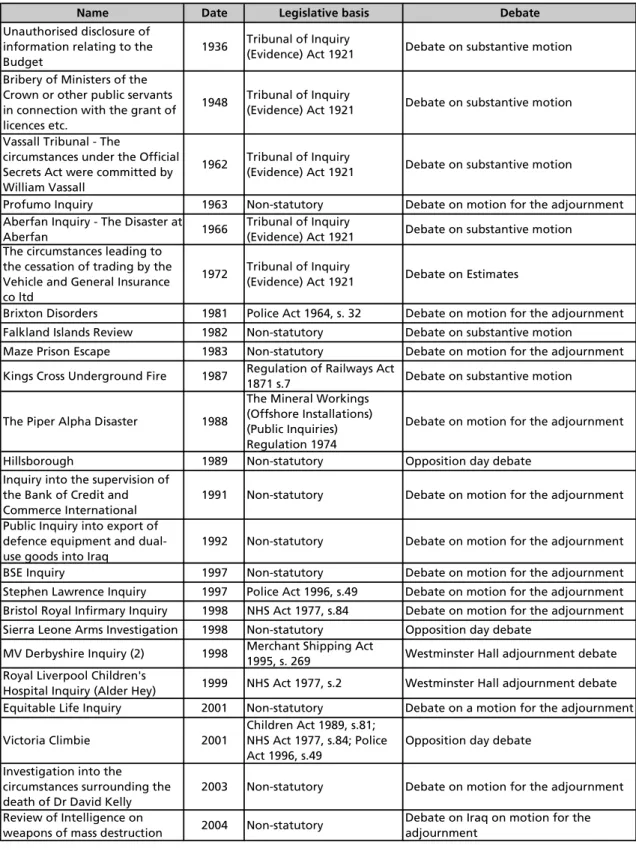
The committee is one of the select committees, the powers of which are set out in House of Commons Standing Orders, principally in SO No 146. These are available on the Internet via www.parliament.uk.
Publications
The Reports and evidence of the Committee are published by The Stationery Office by Order of the House. All publications of the Committee (including press notices) are on the Internet at
www.parliament.uk/parliamentary_committees/public_administration_select_co mmittee.cfm. A list of Reports of the Committee in the present Parliament is at the back of this volume.
Committee staff
The current staff of the Committee are Philip Aylett (Clerk), Clive Porro (Second Clerk), Lucinda Maer (Committee Specialist), Jackie Recardo (Committee Assistant), Jenny Pickard (Committee Secretary) and Phil Jones (Senior Office Clerk).
Contacts
All correspondence should be addressed to the Clerk of the Public
Administration Select Committee, Committee Office, First Floor, 7 Millbank, House of Commons, London SW1P 3JA. The telephone number for general enquiries is 020 7219 3284; the Committee’s email address is
Contents
Report
PageSummary 3
1 Introduction 5
2 Background 7
A tradition of inquiry 7
Definitions 7
Why is a review needed? 7
What are inquiries for? 8
Development of the independent public inquiry 10
The Tribunals of Inquiry (Evidence) Act 1921 12
Developments since the Salmon Commission 16
The Overseas experience 16
3 The Judiciary 19
4 Inquiry Process and Principles 27
Inquiry form 27
Value of a panel 28
Panels and independence 30
Terms of reference 31
Public versus private 34
Fair play 38
Access to papers and persons 39
Length of inquiries 43
Inquiry costs 45
Inquiry value 46
Ownership and publication of the report 48
Learning lessons 49
Guidance and support 54
Towards some key principles 57
Principles of good inquiry practice 59
5 Accountability and reform 60
Inquiries and Ministerial Accountability to Parliament 60
A New Model for Inquiries 61
The Government’s Inquiries Bill: Strengths and weaknesses 62
Abolishing the 1921 Act 63
The need to amend the Inquiries Bill. 64
Criteria and taxonomy 65
Types of inquiries 67
Politically Sensitive Inquiries 67
Where should Parliament have a role? 70
Select Committees: Redressing the balance 70
Limitations on Select Committees 71
i. Government cooperation 71
ii. Perceptions of partisanship 71
iii Structure and role 72
Finding a parliamentary alternative 73
A Parliamentary Commission of Inquiry 74
The precedents 74
Rhodesian Oil Sanctions Special Commission 74
7 Ensuring a role for Parliament 77
The failure to call inquiries 77
Parliament as initiator: using the Liaison Committee? 78
Policing the Ministerial Code 79
Conclusion 81
Annex 1: Inquiries into matters of public concern: 1900–2004 86
Annex 2: Inquiries Bill [HL]—Draft New Clauses & Amendments 96
Annex 3: The Salmon Principles 98
Formal Minutes 99
Witnesses 100
List of written evidence 101
Reports from the Public Administration Select Committee since 2001 102
Summary
This Report considers the effectiveness of inquiries established by Ministers to investigate events that have caused public concern. It examines the reasons for establishing these investigatory inquiries, which in recent years have ranged from the Hutton and Butler inquiries into issues surrounding the decision to go to war in Iraq to the Bloody Sunday inquiry and the Budd inquiry into the events in the Home office surrounding the resignation of David Blunkett as Home Secretary. The Report recommends that Ministers should justify their decisions whether to hold an inquiry or not on the basis of a published set of criteria.
The Committee believes that there is a need for regular review of the operation of such inquiries; they must be seen to be fair and efficient in discovering what may have gone wrong and in recommending what is needed to put things right. Such a review is particularly timely because the Government has recently introduced a Bill to regulate the establishment and conduct of such inquiries.
The Report lists a number of functions of inquiries and examines how effectively they discharge them under present arrangements, in particular with regard to how lessons may be learnt and recurrences avoided. It asks why the costs of such inquiries should vary so much. It also examines the political, constitutional and practical implications of the frequent use of judges to head inquiries, including the impact on judges’ independence and reputation for political neutrality. It recommends that the Lord Chief Justice or the Senior Law Lord should be equally involved with Ministers in all decisions about the use of judges in inquiries.
The Committee welcomes many of the provisions in the new Inquiries Bill, especially its rationalisation of the many statutes which currently regulate such inquiries. However, it expresses its concern that the Bill creates wide powers for ministers to restrict access to inquiries; the Report endorses the presumption of openness contained in the Tribunals of Inquiry (Evidence) Act 1921, which has governed the conduct of many, but not all, major inquiries over the years. The 1921 Act would be repealed if the new Bill becomes law. The Committee expresses its concern at the long-term diminution in Parliament’s role in the process of public inquiries, and makes recommendations for improvements to parliamentary scrutiny. It also proposes a new mechanism which would enable Parliament to initiate inquiries in cases where Ministers may be unwilling to do so, including the establishment of a Parliamentary Commission of inquiry, composed of parliamentarians and others. In addition, the Committee repeats its earlier proposals for using the Parliamentary Ombudsman in the investigation of breaches of the Ministerial Code.
The Report makes a number of recommendations on practical matters, endorsing the Government’s proposal for the establishment of a small support unit for inquiries. The Committee also recommends the setting of a broad budget figure near the start of inquiries. Any increase in costs over that figure would have to be publicly explained. The Committee recommends that the presumption should be that inquiry chairs should handle publication of reports and that publication arrangements should ensure fairness to all concerned, and allow adequate time for parliamentary consideration and debate.
1
Introduction
1. This report examines the tradition of setting up inquiries into matters of public concern;
it considers some principles of good inquiry practice and explores the case for greater parliamentary involvement in the process, including possible changes to the Inquiries Bill
currently before Parliament.1 The Committee heard oral evidence from 19 witnesses and
received 27 written submissions. The table below provides, for easier reference, a list of those chairs of, and secretaries to, inquiries who provided contributions. A number of published papers were also sent to us by their authors for our attention. We also took evidence on our visit to Washington from 18–23 April 2004. We are very grateful to all those who provided evidence. The Department for Constitutional Affairs (DCA) submitted a comprehensive memorandum as part of its own consultation exercise into effective inquiries. The Committee and the Department have worked together to ensure that both exercises, while separate, have complemented one another. The consultation responses were copied to the Committee, and officials have worked with Committee staff to ensure that there was no duplication of effort on factual information. We are particularly grateful to our specialist adviser Professor Diana Woodhouse whose expertise and interest in the related fields of public law, ministerial accountability and inquiries have proved very valuable. We would also like to thank Chris Sear of the House of Commons Library for his help in analysing past practice of public inquiries.
Table 1: Chairs and Secretaries who contributed to the Inquiry Inquiry
(commissioning department in brackets)
Year Set up
Chairman Secretary
An inquiry into the application for indefinite leave to remain (Home Office)
2004 Sir Alan Budd
Review of intelligence on weapons of mass destruction (WMD)
(Foreign and Commonwealth Office)
2004 Lord Butler of
Brockwell
An independent inquiry arising from the Soham murders (Home Office)
2004 Sir Michael Bichard
Investigation into the
circumstances surrounding the death of Dr David Kelly (Department for Constitutional Affairs)
2003 Lord Hutton Lee Hughes
Victoria Climbié Inquiry (Department of Health)
2001 Lord Laming
Foot and Mouth Disease 2001: Lessons to be Learned Inquiry
2001 Alun Evans
Inquiry
(commissioning department in brackets)
Year Set up
Chairman Secretary
(Department of the Environment, Food and Rural Affairs)
Bristol Royal Infirmary Inquiry (Department of Health)
1998 Sir Ian Kennedy
Ashworth Special Hospital Inquiry (Department of Health)
1997 Dr Tim Baxter
The Allitt Inquiry (Department of Health)
1993 Sir Cecil Clothier QC
Inquiries into the circumstances of the death of various children and others and the first
Ashworth Inquiry
(Various Local Authorities and Department of Health)
1985–96 Sir Louis Blom-Cooper QC
The Ely Hospital (Cardiff) Inquiry (Department of Health)
1967 Lord Howe of
2
Background
A tradition of inquiry2. The tradition of the public inquiry has become a pivotal part of public life in Britain, and
a major instrument of accountability. Some of the basic principles on which British inquiries are based are reflected in practice elsewhere, including in the Republic of Ireland, Israel, Australia and New Zealand. In the United States, with its powerful Congressional committees, the British system is viewed as a model of robustness, and admired as a reflection of a political culture where investigations can be undertaken without a need for legislation to bring them about.
Definitions
3. The term ‘independent public inquiry’, as it has come to be used in this country, is a
loose one. It is applied equally to investigations surrounding accidents in transport or other industries and to commissions of independent expert advisers producing proposals for public policy reform. It is also applied to everyday inquiries such as those held under planning legislation or company law. Our investigation is concerned with none of these.
4. We have instead concentrated on those inquiries set up by ministers to investigate
specific, often controversial events that have given rise to public concern. In the aftermath of such events there are invariably demands for a ‘full and public inquiry’, and often for a ‘judicial inquiry’. These are judicial in so far as they are often chaired by a leading judge (notably the Hutton, Phillips, McPherson, Saville, Bingham, and Scarman inquiries). But other major inquiries have not been judicial in this sense (e.g. Sir Ian Kennedy’s chairmanship of the Bristol Royal Infirmary Inquiry, Dr Iain Anderson’s Inquiry into Lessons to be Learned from Foot and Mouth, Sir Michael Bichard’s Inquiry into the Soham murders or Lord Butler’s investigation into intelligence on WMD in Iraq).
5. The term ‘public’ is also used imprecisely. As the Rt Hon Frank Dobson MP explained to
us, “… two of the inquiries that I referred to which had looked into quite important
scandals within the NHS and had far-reaching consequences, were not public inquiries”.2
Moreover the investigatory process may be statutory, on the basis of the Tribunal of Inquiry (Evidence) Act 1921 or other subject specific legislation, such as the NHS Act 1977
or the Police Act 1996, or conducted by means of ad hoc procedures based entirely on the
prerogative power with the active cooperation of government and other public bodies.
Why is a review needed?
6. Given this inquiry tradition, why is there a need to review their operation? Nearly forty
years ago, the Royal Commission on Tribunals of Inquiry chaired by Lord Justice Salmon (henceforth referred to as the ‘Salmon Commission’) examined the process in depth and concluded that, “… it is essential in the national interest to retain the Tribunal of Inquiry (Evidence) Act 1921, albeit with the amendments and safeguards recommended in this
report”.3 Lord Howe told us he was “… astonished that you are still looking at this topic,
because it should have been wrapped up, in my view, had earlier advice been followed”.4
7. However other witnesses believed that all was not well. Sir Liam Donaldson, Chief
Medical Officer, considered that “there is a pool of information about things that go wrong in the public health services from which we need to learn. At the moment inquiries probably cover a relatively small amount of that pool”. He went on “Essentially it is not enough to have inquiries; you have got to have some other system of analysis or
investigation which will lead to learning”.5 Mr John Gieve (now Sir John), Permanent
Secretary at the Home Office, believed that “the pressure for [public inquiries] is increasing all the time, and there is a risk that we overdo it and go over a lot of events which are very similar where there are not a lot of new lessons to be learned, but I accept that as an
inevitable development over several years”.6
8. The Government considers that inquiries have been successful overall but concedes that there have been cases where inquiries have been marred by arguments about procedure, or
have taken much longer or cost more than expected.It therefore “… believes that there is a
strong case for considering what steps could be taken to make inquiry procedures faster
and more effective and to contain cost escalation”.7 It has now introduced legislation to
this end.
9. We welcome the fact that the Government is taking the effectiveness of inquiries seriously. It is right to keep this important instrument of accountability and learning in public administration under review to ensure it is functioning well. Inquiries continue to be as much the subject as the source of criticism in public life, particularly where they have been established to examine the actions of government. It is timely to review matters. Modernisation must address not just procedures but the wider issues as well: why have inquiries; how valuable are they; when should we have them; of what kind; and what should happen to ensure we learn their lessons?
What are inquiries for?
10. There can be little doubt that inquiries matter greatly to the public, especially those directly affected by the events under investigation. The fact that people are prepared to resort to legal action in relation to inquiries, successfully such as over the Shipman Inquiry or the Mubarek Inquiry, or unsuccessfully as over Foot and Mouth Disease (FMD), is testament to this. For the Government “the primary purpose of an inquiry is to prevent
recurrence”.8 It is also their view that, “the main aim is to learn lessons, not apportion
blame”.9 They believe that inquiries have “helped to restore public confidence through a
thorough investigation of the facts and timely and effective recommendations to prevent
3Report of the Royal Commission on Tribunals of Inquiry, Cmnd 3121, November 1966, para 47, p 22. 4 Q 398
5 Q 559 6 Q 560
7 HC 606-ii, GBI 09, Ev 20, para (iii) 8Ibid., para 4.6
recurrence of the matters causing concern. Many inquiries have helped to bring about
valuable and welcomed improvements in public services”.10 Lord Laming, who carried out
the Victoria Climbié Inquiry, told us that inquiries:
“[… ] provide an assurance that the facts surrounding an alleged failure will be subjected to objective scrutiny. They are expected to reach judgements on why terrible events happened. They often make recommendations on how such events might be prevented in future. They may give relief to some and allow the expression of anger and outrage to others. They are often disturbing and painful events. They should improve our understanding of complex issues. At best they change attitudes,
policies and practice. That being so they occupy an important place in our society”.11
11.For ministers it is more cynically alleged that inquiries may involve kicking an issue
into the long grass, blaming predecessors in government, making a gesture, or simply buckling to public pressure to do something. Sir Ian Kennedy QC told the Committee that “it has to be borne in mind that there is a somewhat perverse motive sometimes in setting
up a public inquiry”.12 As Lord Heseltine put it to us “… No Government wants inquiries;
they are usually in circumstances where the government is in trouble […] They are not
popular things for governments”.13
12.Sir Ian Kennedy identified six functions for an inquiry: the recognition and
identification of different, genuine perceptions of the truth; learning; healing; catharsis; prescribing; and accountability. Lord Howe, who gave evidence to us from his experience of different roles in several public inquiries, identified six similar functions which have
been summarised as follows:14
— Establishing the facts—providing a full and fair account of what happened, especially in circumstances where the facts are disputed, or the course and causation of events is not clear;
— Learning from events—and so helping to prevent their recurrence by synthesising or distilling lessons which can be used to change practice;
— Catharsis or therapeutic exposure—providing an opportunity for reconciliation and resolution, by bringing protagonists face to face with each other's perspectives and problems;
— Reassurance—rebuilding public confidence after a major failure by showing that the government is making sure it is fully investigated and dealt with;
10Ibid., para (iii)
11 HC 606-iii, GBI 03, Ev 76 12 Q 667
13 Q 615
14 Geoffrey Howe, “The management of public inquiries”, Political Quarterly 70, (1999); pp 294–304, summarised in
Kieran Walshe and Joan Higgins, “The use and impact of inquiries in the NHS”, British Medical Journal, Vol 325, (19 October 2002), pp 896–7
— Accountability, blame, and retribution—holding people and organisations to account, and sometimes indirectly contributing to the assignation of blame and to mechanisms for retribution;
— Political considerations—serving a wider political agenda for government either in demonstrating that “something is being done” or in providing leverage for change.
Development of the independent public inquiry
13.Parliament’s role in holding ministers to account was well established long before the
development of a more formal doctrine of ministerial accountability in the nineteenth century. Parliament was the “grand inquest of the nation”, whose Members had a duty, as Prime Minister Lord North described it in 1774, to “undertake the very difficult, the very painful, the very meritorious task of watching our Ministers; of reprehending them; of
blaming and calling them daily to account”.15
14.There are some instances in the seventeenth century of committees conducting
inquiries into government failures, often related to possible impeachments, for example those on the mismanagement of the Second Dutch War in 1667–8, and of the war in Ireland in 1689. From at least the premiership of Sir Robert Walpole, inquiries by select committees into the conduct of the government and its officials, as well as of private
corporations and individuals, were a commonplace.16 Famous examples included the
inquiry of 1844 into the conduct of the Post Office and the Home Secretary into the opening of letters addressed to (among others) the Italian nationalist and radical, Joseph
Mazzini.17 The demand for a select committee of inquiry was often a matter of intense
party political controversy. In 1908 the American political scientist, Lawrence Lowell, described the considerations involved in the choice of body to conduct an inquiry:
“the question often arises whether inquiry shall be conducted by a committee of the House, or by a commission appointed by the government. When the matter is distinctly political a committee of the House is the proper organ; but when the judgment of outside experts is needed the other alternative is obviously preferable, several members of Parliament being often included in such cases. Naturally enough, the ministry and the members chiefly interested in pushing an inquiry do not always
agree about the matter”.18
15.As this suggests, parliamentary inquiries were frequently resisted by governments.
Gladstone complained in 1855 that while:
“a Committee is extremely well fitted to investigate truth in its more general forms, by bringing every possible form of thought to bear on the points before it … it is also well fitted for overloading every question with ten or fifteen times the quantity of
15 Peter D G Thomas, The House of Commons in the Eighteenth Century (Oxford, 1971), pp 14–15 16Ibid., p. 265
17 On which, see Alpheus Todd On Parliamentary Government in England, 2nd edn. (2 vols, London, 1887), I, pp 432–3. 18 Abbott Lawrence Lowell, The Government of England (2 vols, New York, 1909), I, 267, n. 3
matter necessary for its consideration; and therefore as ill as possible calculated for those rapid searching and decisive inquiries which have practical remedies rather
than the arriving at general propositions for their main business”.19
16.Some demands for inquiries produced particularly significant confrontations between
government and opposition. The vote of the Commons to appoint a committee to “inquire into the condition of our army before Sebastopol, and into the conduct of those departments of Government whose duty it has been to administer to the wants of the army” resulted in the resignation of the government of Lord Aberdeen in 1855. The Committee was ultimately appointed in the teeth of Gladstone’s resistance, who felt that such an inquiry “is incompatible with real confidence on the part of Parliament in those who hold executive office, and entirely incompatible with the credit and authority which ought, under all circumstances, to belong to the Ministers of the Crown, whatever party or
political creed they possess”.20
17. Even as late as 1924 the Conservative and Liberal parties in the House successfully pressed a demand for a parliamentary select committee to investigate the circumstances leading up to the withdrawal of proceedings recently instituted by the Director of Public Prosecutions against a Mr Campbell of the Workers Weekly on charges of sedition after alleged involvement by the Government. Ramsay MacDonald’s administration promptly resigned rather than accept what it termed an unfair and mean proposal for a committee
where his party would be in a minority.21
18.The decline in the use of select committees to investigate alleged ministerial
misconduct is sometimes associated with the outcome of the investigations of the Committee on the Marconi Wireless and Telegraph Company Agreement of session 1912– 13. The Committee was set up to inquire into the allegations that the Government corruptly favoured the Marconi Company in the construction of a chain of state owned
wireless telegraph stations throughout the British Empireand that certain of its prominent
members had improperly benefited from the transaction. At the end of the investigation the Committee, and then the House, divided on strictly party lines.
19.This has been seen as the defining moment when parliamentary committees gave way
to independent committees or tribunals of investigation. Certainly a near contemporary subsequently portrayed it that way. In his autobiography G K Chesterton was moved to write about these events that “… the affair [Marconi] had concluded as such affairs always
conclude in modern England, with a formal verdict and a whitewashing committee…”.22
However, its impact was, in his view, profound and rather than follow “the fashion to divide recent history into Pre-War and Post-War conditions” it would instead be better “to
divide them into the Pre-Marconi and the Post-Marconi days”.23
19 Quoted in William Anson, The Law and Custom of the Constitution 5th edn. (3 vols, Oxford, 1922), I, 398 20Ibid., I, 399
21 CJ, 8 October 1924, Col 635.
22 Gilbert Keith Chesterton, The Autobiography of G K Chesterton, New York 1936 p 209 23Ibid., p 202
The Tribunals of Inquiry (Evidence) Act 1921
20.The 1921 Act was framed with simple intent. In that year the Leader of the House,
Bonar Law, acceded to an inquiry into the destruction of papers relating to contracts in the
Ministry of Munitions.24 He proposed a committee chaired by a judge, and assisted by a
business man and an accountant. It was only in response to one Member who felt that unless the Committee was empowered to take evidence on oath “its findings […] will not have the weight in the country which they ought to have …” that Bonar Law, despite noting that an earlier inquiry had managed perfectly well without statutory powers, proposed a general rather than a particular statute dealing with this. This was eventually
enacted as the Tribunals of Inquiry (Evidence) Act 1921.25 The Act sought to retain a
connection with its parliamentary roots not only through the requirement for a Resolution of both Houses but also in its terminology where the requirement for an “inquiry into a definite matter […]of urgent public importance” is redolent of the wording for a motion for an adjournment of the House on “a specific and important matter that should have
urgent consideration”.26
21.Nonetheless, over the years, 1921 Act inquiries themselves became increasingly the
subject of concern because of the perception that the reputations of individuals, often ministers and Members of Parliament, were being destroyed in a forum which did not offer the customary legal safeguards. This concern was crystallised in a Private Member’s Bill of March 1965 which sought to repeal the 1921 Act. Its sponsor, Leslie Hale MP, scathingly referred to the 1921 Act as “a bastard Bill, which provides a method of procedure never known in the law in England since we have our present system of justice”
and its result was that “mud attached to colleagues of high repute”.27 In response, the
following July, Harold Wilson announced the Salmon Commission saying “anxiety about the working of the Tribunals of Inquiry (Evidence) Act 1921 has been expressed on every occasion on which a report of a tribunal set up under the Act has been debated in the
House”.28 Significantly, Wilson revealed he had considered a select committee rather than a
royal commission given that “after all, there is Parliamentary responsibility here”.29
22.We have carried out some analysis of inquiries since the beginning of the Twentieth
Century. The full results are tabulated at Annex 1. The analysis suggests a trend, from the primacy of parliamentary committees and royal commissions up to the second decade of the century to the dominance of 1921 Act inquiries until the 1970s, then the predominance of ad hoc or subject specific statutory inquiries subsequently. The trend is depicted in the graph below. More significantly from Parliament’s point of view, the gradual distancing of Parliament from the investigatory mechanisms over this period has also been reflected in less rigorous parliamentary procedures following inquiry reports. The practice of having debates on substantive motions following 1921 Act reports gradually gave way to debates on motions for the adjournment, ministerial statements and, on occasion, opposition
24 Text of the Act reproduced at Cmnd 3121, Appendix A 25 CJ, 22 February 1921, Col
26 Tribunal of Inquiry (Evidence) Act 1921, Section 1 para 1 and see, for example, Standing Order No 24 27 CJ, 30 March 1965, Cols 1402-04
28 CJ, 22 July 1965, col 1842 29Ibid. col 1843
supply days.30 Our research has therefore revealed a long-term diminution in Parliament’s
role in the process of public inquiries. We regard this as a serious development, and one which needs to be addressed urgently.
Table 2: The changing nature of Parliamentary Handling of Inquiry Reports
[Note: Most reports have been the subject of ministerial written or oral statements]
Name Date Legislative basis Debate
Unauthorised disclosure of information relating to the Budget
1936 Tribunal of Inquiry
(Evidence) Act 1921 Debate on substantive motion Bribery of Ministers of the
Crown or other public servants in connection with the grant of licences etc.
1948 Tribunal of Inquiry
(Evidence) Act 1921 Debate on substantive motion
Vassall Tribunal - The
circumstances under the Official Secrets Act were committed by William Vassall
1962 Tribunal of Inquiry
(Evidence) Act 1921 Debate on substantive motion
Profumo Inquiry 1963 Non-statutory Debate on motion for the adjournment Aberfan Inquiry - The Disaster at
Aberfan 1966
Tribunal of Inquiry
(Evidence) Act 1921 Debate on substantive motion The circumstances leading to
the cessation of trading by the Vehicle and General Insurance co ltd
1972 Tribunal of Inquiry
(Evidence) Act 1921 Debate on Estimates
Brixton Disorders 1981 Police Act 1964, s. 32 Debate on motion for the adjournment Falkland Islands Review 1982 Non-statutory Debate on substantive motion Maze Prison Escape 1983 Non-statutory Debate on motion for the adjournment Kings Cross Underground Fire 1987 Regulation of Railways Act
1871 s.7 Debate on substantive motion
The Piper Alpha Disaster 1988
The Mineral Workings (Offshore Installations) (Public Inquiries) Regulation 1974
Debate on motion for the adjournment
Hillsborough 1989 Non-statutory Opposition day debate Inquiry into the supervision of
the Bank of Credit and Commerce International
1991 Non-statutory Debate on motion for the adjournment
Public Inquiry into export of defence equipment and dual-use goods into Iraq
1992 Non-statutory Debate on motion for the adjournment
BSE Inquiry 1997 Non-statutory Debate on motion for the adjournment Stephen Lawrence Inquiry 1997 Police Act 1996, s.49 Debate on motion for the adjournment Bristol Royal Infirmary Inquiry 1998 NHS Act 1977, s.84 Debate on motion for the adjournment Sierra Leone Arms Investigation 1998 Non-statutory Opposition day debate
MV Derbyshire Inquiry (2) 1998 Merchant Shipping Act
1995, s. 269 Westminster Hall adjournment debate Royal Liverpool Children's
Hospital Inquiry (Alder Hey) 1999 NHS Act 1977, s.2 Westminster Hall adjournment debate Equitable Life Inquiry 2001 Non-statutory Debate on a motion for the adjournment
Victoria Climbie 2001
Children Act 1989, s.81; NHS Act 1977, s.84; Police Act 1996, s.49
Opposition day debate
Investigation into the circumstances surrounding the death of Dr David Kelly
2003 Non-statutory Debate on motion for the adjournment
Review of Intelligence on
weapons of mass destruction 2004 Non-statutory
Debate on Iraq on motion for the adjournment
Types of Inquiry
0 2 4 6 8 10 12
1900-1910 1911-1920 1920-1929 1930-1939 1940-1949 1950-1959 1960-1969 1970-1979 1980-1989 1990-1999 2000-2005
Date
Nu
m
b
e
r
1921 Other Statutory Non Statutory Royal Commissions Select Committees
23.The 1921 Act is now portrayed, by some, as providing a heavy handed inquiry
mechanism, best avoided if at all possible, which brings in its train a panoply of procedural requirements and a posse of attendant lawyers. Sir Andrew Turnbull, the current Cabinet Secretary and Head of Home the Civil Service, calls it “… this rather clunking instrument of the 1921 Act, which assumes everything is in public, with full legal representation and so
on…”.31 But the assumption that the 1921 Act leads inevitably to inquiries becoming slow
and costly exercises, in part because of their public nature, is not borne out by the evidence. In 1996 the Council on Tribunals, reviewing public inquiry procedures following the publication of the Scott Report on Arms to Iraq, stated that:
“It may be the experience of previous inquiries under the 1921 Act particularly that of the Crown Agents inquiry itself, had led to the perception that such inquiries would inevitably take much longer and involve greater expense, particularly if the Salmon principles were strictly adhered to. However that does not seem to be
necessarily so, as was shown by the Aberfan inquiry”.32
24.Our analysis supports this view. No 1921 Act inquiry up until the Crown Agents
inquiry of 1978 had lasted more than a year. Of the four inquiries set up under the 1921 Act since 1990, one—the Bloody Sunday Inquiry set up in 1998—is still to report and is estimated to cost some £155m. The Shipman Inquiry was established in 2000 and made its final report last week and is estimated to cost £21m. The North Wales Child Abuse Inquiry also took four years but, on the other hand, the Dunblane Inquiry only took four months. Other statutory inquiries in this period include the Mirror Group Inquiry which lasted ten years at a cost of £8.6m and was held in private; the Ashworth Inquiry, two years and £2.5m; the Bristol Royal Infirmary Inquiry, three years and £14.5m; the Victoria Climbié Inquiry, two years and £3.8m; and the so-called “Three Inquiries” into medical
31 Q 46
32 The Annual Report of the Council of Tribunals for 1995–96, Advice to the Lord Chancellor on the Procedural Issues arising in the Conduct of Public Inquiries set up by Ministers, HC (1995–96) 114, para 6.4
practitioners, already two years in the running and estimated to cost £5m and also held largely in private.
25.Similarly non-statutory inquiries include the Scott Inquiry into export of defence
equipment and dual-use goods into Iraq which lasted four years and cost £7m; the BSE Inquiry which lasted three years and cost £27m; and the Equitable Life Inquiry, held in private, which lasted two and a half years and cost some £2.5m. It would be wrong to
conclude therefore that the use of the 1921 Act per se necessarily leads to costly and time
consuming inquiries.
Developments since the Salmon Commission
26. Since the Salmon Commission reported in 1966 there have been significant developments both in the balance of constitutional arrangements and in the regulation of the public sector. In 1967 the Parliamentary Commissioner Act [CHECK TITLE]created the post of Parliamentary Commissioner (or Ombudsman) which has subsequently developed a wider role, notably with regard to access to government information. Parliamentary standards are now policed on behalf of the Standards and Privileges Committee by a Parliamentary Commissioner for Standards. Rights, obligations and duties concerning ministerial accountability in particular have become enshrined in a whole range of legislation, codes and official guidance including: the Freedom of Information Act 2000; the Data Protection Act 1998; the Ministerial Code; the Civil Service Code; and official guidance on giving evidence to select committees (the Osmotherly rules) and on answering Parliamentary Questions. The period has also seen the growth of judicial review and the Human Rights Act 1998 which have allowed courts to test legislation and ministerial actions.
The Overseas experience
27. As part of our inquiry we visited Washington in April 2004 and met with Senators, Congressmen and staff from Congressional Committees as well as with officials from the 9/11 Commission and the General Accounting (now Accountability) Office (GAO) and political commentators. Unsurprisingly inquiries in the US were also seen to have more than one goal: to find facts, to recommend action, to prevent repetition of mistakes and to bolster the accountability and legitimacy of various parts of government. Although it was thought it would be hard to draft legislation which would cover all types of inquiry, it could be possible to classify inquiries that had already taken place to provide a menu to choose from in the future. However, in the end the political environment was seen as much more important than the precise legal basis for an inquiry.
28.As in the UK, inquiries took on a variety of forms. The Executive Branch often
conducted internal inquiries within its own agencies such as the CIA panel under Admiral Jeremiah on the India/Pakistan nuclear tests which reported to the Director of Central Intelligence. Agencies themselves had Inspectors General who investigated allegations of abuse or misconduct and occasionally conducted investigations reporting to the head of the Agency and Congress as part of its oversight function. An example of this was the investigation into the bombings in East Africa which led to a review of Embassy security.
29. The President can also convene commissions or other informal bodies, such as President Eisenhower’s foreign advisory board whose reports were seldom made public. Although there was a strong history of presidential commissions to look at policy issues they were much rarer with regard to examining events. The Robb/Silberman Commission on intelligence with regard to WMD was a notable exception.
30. The Judicial Branch was not usually involved except in certain cases surrounding criminal investigations. The use of judges to chair inquiries was generally considered
unconstitutional by the US Supreme Court which in Mistretta v United States stated “The
legitimacy of the Judicial Branch ultimately depends upon a reputation for impartiality and non-partisanship. That reputation may not be borrowed by the political Branches to cloak
their work in the neutral colors of judicial action”. 33
31.Congress also has the ability to set up a variety of inquiries but we found that the
popular image of a strong bi-partisan Congress was not entirely accurate. Part of their strength was that, if members investigated a problem, they were in an excellent position to legislate to tackle it. It was also seen as important for accountability and honest government that Congress should be seen to exercise its powers and call the Executive to give evidence in public. Public appearances by senior figures in the Administration, such as Condoleezza Rice, the National Security Adviser in front of the 9/11 Commission (albeit not a Congressional Committee) was seen to be of real impact.
32. Inquiries on specific matters could be set up by Congress often through interested chairs but these often had limited investigative powers, limited resources and, since they were often established by appending to an Appropriation Bill, no power to subpoena.
33.Congressional committees were seen to carry out an excellent task in their traditional
role of oversight but beyond this matters became more partisan and they were thought to function less well. It was possible for these bipartisan committees to look at what were often politically charged events but in so doing the tendency was to turn the investigation over to lawyers who were good at the orderly presentation of facts, and developing the contours of the story but less so at assessing the political nuances. Inevitably constituency interests on domestic issues and the economy tend to dominate members priorities and time.
34. Committee powers were also circumscribed for example by Executive Privilege or the need to secure a majority vote to subpoena recalcitrant witnesses, as well as by their own terms of reference This limited their ability to conduct wide ranging inquiries as, for example on 9/11, where the Joint Congressional Inquiry was remitted to the Intelligence Committees of both Houses to ensure a joint view because the bulk of the subject matter was thought to deal with intelligence. It thereby excluded certain key areas such as transportation issues relevant to the investigation.
35. The calibre and motivation, and number, of staff were key issues. The House Committee on Intelligence for example had 36 staff with a background in intelligence, the law, and the military. The Intelligence Committees of both Houses had hired dedicated staff, experts in various fields in addition to writers and investigators for their joint inquiry
on 9/11. Support was also available to Congress from the GAO who also provided staff on loan to the 9/11 Commission and provided the Commission with reports including one on Homeland Security.
36.We also received evidence from the Law Reform Commission of Ireland. The Tribunals
of Inquiry (Evidence) Act 1921 is also part of the Irish body of law but, given their differing constitutional arrangements has continued to be used to investigate matters of public concern. Nonetheless the Commission explained that legal code presently governing tribunals of inquiry is made up of six separate and inconvenient-to-use statutes. They have made proposals for:
“a comprehensive draft Bill that not only consolidates the existing legislation but also incorporates a number of substantive changes. Among these is a requirement that a tribunal of inquiry should be under a legal obligation to comment on its terms of reference within four weeks of beginning its work. In addition, various methods are proposed for fast-tracking judicial review proceedings taken in respect of decisions of tribunals of inquiry. The Commission also proposed that an express power should be given to the relevant minister or the Government, acting on foot of a resolution of both Houses of the Oireachtas, to terminate a tribunal of inquiry where it has been
sitting for some time and seems unlikely to bear fruit”.34
37. As with the UK a key factor has been the debate about how far it is necessary to erect legal safeguards in an inquisitorial process to ensure due process and fairness which in turn add to cost and delay. The Commission recommended that in order to balance the competing interest between fair procedures and “the entitlement to constitutional justice” was to have “legislation […] providing for private, low-key inquiries which concentrate on
the wrong or malfunction in the system and not on the wrongdoer”.35
38. The Commission was also concerned to minimise legal costs by:
— engaging representation at the right level for particular tasks;
— better timetabling and sequencing;
— re-calculating legal costs and expenses in a way more appropriate to pay for guaranteed
employment for several months or years, rather than at a daily rate;
— remuneration for work done rather than simply on a daily basis;
— and that, where possible, legal representation should be pooled, where parties might
have interests in common.36
34 HC 51-II, GBI 05, Ev 7 35Ibid., Ev 8
3
The Judiciary
39.With notable exceptions, when matters of public concern require investigation,
governments have traditionally tended to establish judicial inquiries. This tendency was described in earlier days as ‘Government by Radcliffery’, Lord Radcliffe being a frequent chairman of inquiries during the middle part of the twentieth century. During the Twentieth century around 30% of departmental and statutory inquiries were chaired by a judge. Since 1990, out of the 31 notable inquiries 58% have been chaired by a serving judge
and 65.5% have been chaired by a serving or retired judge.37 The Salmon Commission
recommended an amendment to the 1921 Act requiring that the chairman of any tribunal should be a person holding high judicial office. This would, he believed, give assurance that the inquiry was being conducted impartially, efficiently and judicially, and ensure that findings continued to achieve the same measure of public confidence and acceptance that
they had in the past.38
40.The use of senior judges was supported by the Council on Tribunals in 1996. It
commented “it is usual to ask a senior judicial figure or other eminent senior lawyer to head an inquiry. In addition to their legal expertise, judges, by their experience, are well equipped to assess evidence, and their independence and impartiality will command public
confidence”.39 A similar view was expressed by Lord Woolf, the Lord Chief Justice, who
considered that “the fact that an inquiry is conducted by a judge or with a judicial chairman enhances the confidence of the public as to the impartiality and thoroughness of
the inquiry”.40 The Government also supports the use of judges to chair inquiries,
considering that “their experience and position makes them particularly well suited to the role. […] The judiciary has a great deal of experience in analysing evidence, determining facts and reaching conclusions, albeit in an adversarial rather than an inquisitorial context. The judiciary also has a long tradition of independence from politics, and judges are widely
accepted to be free from any party political bias”. 41
41.Three main reasons have been identified for the frequency with which judges have been
chosen to chair inquiries. First, they are valued for their skills in what has become a quasi-judicial forum. Lord Hutton told us that “a judge is very well-versed in some aspects of
running an inquiry, which flows from his experience of conducting cases in court”.42 This
was because “they are used to hearing witnesses, they are used to assessing evidence, they are used to defining issues, they are used to analysing facts and relating them to issues […] Judges are also well versed in ruling on procedural matters, whether a question is fair,
whether it is relevant”.43 Dr Tim Baxter, secretary to the Ashworth Hospital Inquiry, also
noted that a judicial chair has “particular experience and a capacity to keep proceedings
37 Jack Beatson, Should Judges conduct public inquiries?, paper based on 51st Lionel Cohen Lecture, Jerusalem, 1 June
2004 (DCA website).
38 Cmnd 3121, p 29, para 72 39 HC (1995–96) 114, para 5.15 40 HC 51-ii, GBI 22, Ev 183 41 HC 606-ii, GBI 09, para 5.2. 42 Q 110
under control in inquiries where the parties are represented”.44 Lord Woolf accepted that
while it used to be the case that judicial skills were acquired mainly within an adversarial system, not always appropriate to inquiries, “most civil litigation has now changed and judges can be expected to conduct inquiries in a more informal and expeditious manner
than is appropriate for some litigation”.45
42. Second, they have been appreciated for their independence and impartiality and thus the authority which they can bring to the proceedings, what Professor Jowell calls
“symbolic reassurance”.46 Senior judges, who have security of tenure, are independent from
government, in the sense of not relying on ministers for position or advancement. As Lord Woolf told us, a judge “does not owe anything to the government of the day and is
therefore fully independent”.47 Judges are thus seen as ideally suited for investigating
matters in which government has a stake. They are also seen as impartial, in the sense of being apolitical, and therefore not likely to favour any political party or interest group. As Lord Hutton said, “They [ …] have the reputation of being politically dispassionate. They
are not concerned by political considerations”.48 They can, in the words of Lord Falconer of
Thoroton, Secretary of State for Constitutional Affairs, look into issues “dispassionately— away from politics, from trying to establish the point of view of a particular political persuasion, from trying to damage the political party in power or to score political points [
…]”.49 He told the Committee that what is required is “authoritative conclusions. […] By
authoritative I do not mean necessarily ones that everyone agrees with but ones that the public knows have been reached by somebody who is utterly independent, objective and
dispassionate in the inquiry that he or she has done”.50 Professor Bogdanor even went so
far as to argue that “it is difficult to see how anyone other than a judge could chair such an
inquiry, which could result in the resignation of a minister [ …]”.51 Judges can also remove,
or at least reduce, the political heat, which is important if the facts are to be uncovered. In short they play “a significant part in [ …] a major function of inquiries: the organising of controversy into a form more catholic than litigation but less anarchic than street
fighting”.52
43.Third is their availability. An advantage for government of using judges to chair
inquiries is that they are available, in the sense that they can be transferred relatively easily from their ordinary judicial duties, and this transfer is without apparent extra cost. There is undoubtedly an issue about finding individuals, outside the judiciary and the legal profession more generally, who are both suitable and available to chair inquiries. The continued use of judges was confirmed by Lord Falconer who explained that the reason for there being at least twelve judges in the proposed Supreme Court was “to allow continued
44 Q 353
45 HC 51-ii, GBI 22, Ev 183 46 HC 51-II, GBI 17, Ev 39 47 Q 732
48 Q 92
49 HL Deb, 4 February 2004, col. 786. 50Q 186
51Ibid.
release of members of the Court to undertake other functions such as chairing of public
inquiries”.53
44.Yet none of these reasons seem to us totally compelling. Professor Jowell argues that
judges operate in the context of “guidance of principle derived from similar previous cases. Political controversies, however narrowly confined, normally involve a wider set of
relevant issues … and a different set of principles to those found in the law reports”.54 Mr
Justice Beatson noted that the ‘skills’ argument is strongest where the task of the inquiry is solely to find facts. It is less compelling where issues of social or economic policy with
political implications are involved”.55 Judges are also unlikely to have the professional
expertise of someone like Lord Laming who told us:
“I would like to suggest that there are few judges who have managed a big workforce, managed a public agency, managed big budgets in competing priorities, dealt with the party political machine, both locally and nationally, dealt with trade unions going
about their perfectly legitimate business and dealt with the media day by day”.56
45.Such skills and experience may be more useful to the chair of an inquiry, established to
investigate an issue close to the centre of government, than those possessed by judges. This is supported by Sir Michael Bichard. He recognised that “a judge is likely to be as good as anyone at getting to the truth … if you are just looking at someone to try and get to the
facts” but had reservations about the use of judges.57 He told us that:
“Very often we are talking about public sector bodies of which a judge has no experience at all. We are talking about accountability. In order to hold public servants to account, I think you need to understand a little of the context within which they are working, though you can get some of that from an assessor and an adviser, but it is second-hand. I do not think a judge is necessarily the best person for that. If you are talking about healing, whether you are talking about healing between some of the parties or actually healing the public confidence, which often this is about, I am not sure a judge has particular qualities to enable him to do that. If you are talking about learning and improving for the future, I am not sure a judge is the
best person to do that”.58
46.Graham Mather commented that “judges visibly run out of steam as they contemplate
the interaction of the facts they have disinterred with the incoherent complexities of
Cabinet government and collective responsibility, British style”.59 Lord Woolf made a
related point when he told the Committee, “today, judges do not often have any insight
into the workings of the public service”.60 Hence Mr Justice Beatson concludes: “Given the
political nature of the British constitution, judicial skills may not necessarily be the most
53 Department for Constitutional Affairs, Constitutional Reform—A new Way of Appointing Judges, July 2003, p 3. 54 “The wrong man for the job”, The Guardian, 3 February 2004
55Should Judges conduct public inquiries?, p 15 56Q 278
57 Q 679 [Sir Michael Bichard] 58Ibid.
59 HC 51-II, GBI 20, Ev 40 60 Q 712
appropriate where an inquiry concerns the relationship between the government and
Parliament”.61 These reservations are reflected in the view of Lord Hutton’s Report
expressed by another of our witnesses, Sir Louis Blom-Cooper QC, who wrote: “Perhaps it might be said that the Report reflected absolutely Lord Hutton’s qualities as a judge, meticulous and superb in the analysis of details and evidence, but more evidently
questionable on matters of wider judgment”.62
47. The notion of judges as above the political process has also begun to be challenged. The growth of public law in recent years has made this more apparent as judges have come to play an increasing role in determining cases which raise political and constitutional issues. By their nature such cases are controversial and therefore are subject to criticism by the media and politicians. Cases such as Pinochet, the conjoined twins and the anti-terrorism legislation have also resulted in the media seeking to position the judges along conservative-liberal and activist-deference spectrums and discussing their religious, educational and ethnic backgrounds. Such information, or speculation, suggests that judges are not neutral or impartial, if by this it is meant that they are without ideological commitment or social outlook, and this is confirmed by the views expressed in publications and public lectures by some senior judges.
48.The authority of the judiciary, itself seen as a valuable import into an inquiry, risks
being damaged by its aftermath. Those who do not agree with an inquiry’s conclusions may not perceive it as independent and objective, regardless of whether the chair is a member of the judiciary. The authority that judges are said to lend to an inquiry may therefore not be sufficient for its conclusions to be accepted. Inquiry reports are, in any case, only advisory or recommendatory and their authority can be undermined by attempts to discredit their findings. This is particularly true in politically sensitive inquiries. If their reports fail to conclude that ministers and senior officials are to blame, they may be heralded as a ‘whitewash’ by political opponents and the media and the judge criticised, as Lord Hutton was, for interpreting his terms of reference too narrowly, for being too establishment-minded, and for showing a lack of understanding of the political context. If they are critical of ministers and senior officials, they may, like Lord Scott, be accused by government supporters of being anti-government and having a lack of understanding of how government and the political process work.
49. Such criticisms have the potential to damage the reputation of the individual judge, and Mr Justice Beatson considers that “perceived deficiencies […] whether procedural or
substantive, will follow a judge back to the bench”.63 This is supported by JUSTICE which,
in response to the Government’s consultation on inquiries, noted that: “There is a danger that a judge who has chaired a politically controversial inquiry will be perceived differently
by sections of the public when he returns to his judicial role”.64 Lord Hutton conceded that
there was a risk, although he did not think it “a very serious risk” that if he continued as a judge after the inquiry, people might have seen him differently, in a way that could
jeopardise the reputation of the judiciary.65 As Professor Jowell suggested, this may have a
61Should Judges conduct public inquiries?, p 17 62 Comment, Public Law [2004] 472–76 at 476 63Should Judges conduct public inquiries?, p 29
64Response to Department for Constitutional Affairs Consultation, CP(R) 12/04. 65 Q 94
“corrosive effect on public trust in the judiciary”.66 Mr Justice Beatson took a similar line
arguing “If the authority of reports and their judicial authors is regularly undermined, the
risk of damage to the authority of the judiciary itself is more than fanciful”.67 Lord Woolf
made a similar point in his Memorandum when he stated:
“I have no doubt that it is preferable that judges should not conduct some inquiries. The subject matter of the inquiry may be so political that it would be damaging to the judiciary for a judge to be involved. In addition, the question of whether there should be an inquiry at all may be highly controversial and if a judge is appointed the judiciary, as a result of the appointment, may be seen as siding inappropriately with
the Government”.68
50.He told the Committee that if an inquiry was:
“[ …] highly political, then it may be that the Chief Justice would say that to get a judge to do something which is obviously of such party-political significance would be undesirable because it would expose the judge to having to adjudicate on issues which would not be appropriate for a judge to adjudicate on, which would not be
issues that a court would adjudicate on”.69
51.The former Attorney General, Lord Morris of Aberavon, talking about the Scarman
and McPherson inquiries months before Hutton, put the warning in more colourful terms: “When a judge enters the marketplace of public affairs outside his court and throws coconuts, he is likely to have the coconuts thrown back at him [ …] If one values the
standing of the judiciary [ … ] the less they are used the better it will be”.70
52.Nor is the use of judges cost free either from the House of Lords, as now, or from the
Supreme Court in future. Extra judicial activities impact upon the workings of the courts. They are only possible because retired law lords are prepared to make up for any shortage of sitting judges. It was because “Placing a serving judge on an inquiry prevents him from being deployed on his normal judicial duties” that Lord Woolf is demanding the right to
say whether a particular judge can be released to conduct an inquiry.71 He illustrated the
consequences by reference to the Bloody Sunday Inquiry: “A judge like Lord Saville could be expected to make a real contribution in the House of Lords to the development of our
law but we have been deprived of that for five or six years”.72
53. The problem of available resources is not new. Bonar Law was asked to reconsider his intention to appoint a judge to the Ministry of Munitions Inquiry of 1921 (which had prompted the 1921 Act itself) “in view of the arrears of work to be dealt with in the Law Courts and the fact that it was not even possible to spare judges to go all the recent circuit…” and to “… leave those overworked and underpaid officials to do their own work,
66 “The wrong man for the job”, The Guardian, 3 February 2004. 67Should Judges conduct public inquiries?, p 34
68Governmentby Inquiry, Minutes of Evidence (14 December 2004) HC 51-ii, Memorandum. 69 Q 712
70 HL Deb, 21 May 2003, Col. 883 71 HC 51-ii, GBI 22, Ev 182 72 Q 774
and choose a chairman for the new Committee from some equally distinguished but less
busy class”.73 The additional factor today is that, while historically many major inquiries
were chaired by High Court judges, the pressure is now greatest on the judicial work of the House of Lords and Court of Appeal because, in the case of inquiries of major national importance involving central government, the trend has been to appoint judges from those
courts. Effectively there has been “grade inflation”.74 Lord Falconer was more relaxed about
this. In his evidence to us he said “If you want a sitting judge, i.e. somebody who is sitting as a current judge, I think the figures are something like 102 High Court judges, 34 Appeal Court judges and 12 judicial Members of the House of Lords. That is 146 senior judiciary and that is not counting those in Northern Ireland and Scotland. There are enough
people”.75
54. There is, additionally, an important argument against judges chairing inquiries, based on the separation of powers and closely allied to judicial independence. While this principle lacks constitutional force in the UK at present, it does have a particular validity in the case of the law lords, given the proposed establishment of a UK Supreme Court through the Constitutional Reform Bill. Such a development is a recognition that the nature of judicial responsibilities and the requirements of judicial office have changed. The expansion of judicial review, the incorporation of the European Convention on Human Rights (ECHR) through the Human Rights Act 1998, and the devolution legislation (i.e. Scotland Act 1998, Government of Wales Act 1998, and Northern Ireland Act 1998) are likely to increase the number of constitutional issues that come before the courts. These could include such matters as alleged infringements of human rights by legislation or executive action and disputes about the division of power between the Scottish and Westminster Parliaments. Such cases give senior judges a larger constitutional, and hence political, role and make it even more important that they are not only independent and impartial but are seen as such. On its visit to the United States the Committee encountered the established view there that it was constitutionally and politically inappropriate for judges to undertake inquiries.
55.Professor Jowell, concerned about the impact on the judiciary, believes that it is “wrong
in principle for serving judges to chair inquiries of a ‘political nature’”.76 This view is
supported by Lord Laming who, in evidence to the Committee, wondered “whether or not it is always helpful for senior members of the judiciary to be involved in some inquiries
which are so closely associated with the party-political machine [ …]”.77 Mr Justice
Beatson, while recognising that there may be situations where it is appropriate for a judge to chair an inquiry, asked “Even if it is constitutionally permissible for [judges] to be used
in highly politicised situations, is it constitutionally appropriate?”.78 The logic of this
constitutional development was reflected in Lord Woolf’s position that “the Chief Justice of the day should have an equal say with the Lord Chancellor as to whether a judge should be
73 CJ Vol 138 25 February 1921 Col 1309 74Should Judges conduct public inquiries? p. 19 75 Q 189
76 HC 51-II, GBI 17, Ev 39 77 Q 330