i
Acknowledgments
ii
Table of Contents
Introduction 1
CHAPTER 1: The context of place marketing in Rutherford County 7
Literature theme: Capitalism and space
Literature theme: Cultural politics, place-making, and meaning-making Literature theme: The practice of local economic development
Intersection of themes: Place marketing in Rutherford County Summary of methods
CHAPTER 2: Agents of local economic development 22
Examining the state’s role in local processes
At the local level: Economic development in Rutherford County Understanding private sector actors
Analyzing the basis for place marketing: A strategic market study
CHAPTER 3: The construction and consumption of a place’s identity 36
Examining Facebook: Rural data centers, urban offices
Examining Horsehead: The environment and economic development How do firms evaluate Rutherford County?
Greenfield’s SWOT analysis
The influence of incentives: An addition to place marketing strategies The making of place and the power of companies
CHAPTER 4: Negotiating what place means 52
A community survey: Method description and analysis Where does the community belong?
Understanding community members’ participation
Why place matters: How the community perceives Facebook and Horsehead From place as a commodity to place as lived experience
CHAPTER 5: Putting Rutherford County on the map 69
Thinking about development in terms of place Place as a commodity
Moving forward: The implications of place marketing
BIBLIOGRAPHY 76
APPENDIX A: Figures and Maps 83
APPENDIX B: Complete Questionnaire 87
1
INTRODUCTION
Places are produced and constructed. They do not simply exist; instead, they are dynamically “made” across time and space. Places are defined by the features of their physical geographies, the characteristics of human activity, and the intersection of these two spheres. As places are constructed within a natural and social sense, they are tangled into a network of meanings and values. In order to better understand the process of “making” a place, this thesis examines how one place in North Carolina – Rutherford County – is being produced and marketed through strategies of local economic development.
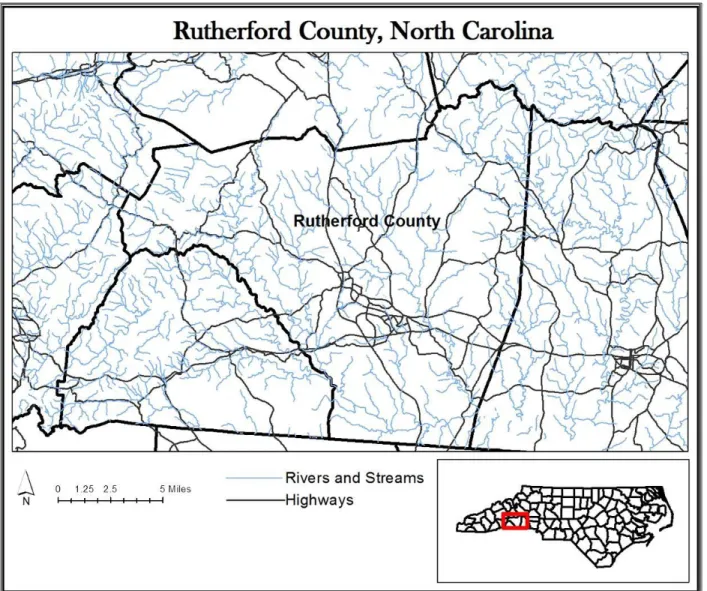
There are many ways to define Rutherford County, North Carolina. First, Rutherford can be understood in terms of its basic physical location and boundaries (See Appendix A, Figure 1). Located in the foothills of North Carolina, the county is home to 67,810 people, occupies 566 square miles of space, and has an average population density of 120 people per square mile (U.S. Census 2010). The place may also be defined within a cultural sense. The county, for instance, embraces the motto of “small town friendly” through its many towns and miles of main streets. The local Tourism Development Agency has also recently coined the phrase “the front porch of the Blue Ridge” to describe the area’s physical landscape (Rutherford Tourism 2014). A
historical lens provides a different understanding of place. Like other places, Rutherford County is rich in history. The county’s history includes historic church buildings, textile mills and their accompanying towns, and contested claims of being the birthplace of Abraham Lincoln
(Rutherford County Heritage Council 2005).
2 experienced small population increases alongside more dramatic declines in employment over the past several years (U.S. Dept. of Commerce 2013, “Interactive Data”). Unemployment statistics have come to define the county, which in 2012 had a 13.3% rate of unemployment (Employment Security Commission 2013). Rutherford County can also be understood through its construction by agents outside of a local scale. The state of North Carolina, for example, has classified the county as one of its eighty-five rural counties and one of the forty most distressed county economies in the state (NC Dept. of Commerce 2013).
Although place-making occurs in various forms and through different mechanisms, there are certain moments in which it is most evident. One of these moments is the case of local economic development and the use of place marketing. Entangled in the idea of place marketing is the notion that a place may be awarded importance and worth through the decision of an external actor. The commonly used phrased “put us on the map” is an indicator of the power relations embedded into the process of place marketing. The phrase reduces the varied
characteristics of a place, which are essential for creating its value, to a single moment or agent. Characteristics of a place develop just as much from everyday processes and daily life as they emerge from key events. Place marketing, though, positions a singular economic activity to grant a place its prominence and its position “on the map.”
In respect to this thesis, the act of putting Rutherford County on the map is closely tied to the recruitment of such investments as Facebook and Horsehead Corporation. Facebook, a social networking giant, and Horsehead, a leader in zinc production, announced their decisions to locate in Rutherford County between November 2010 and September 2011. These decisions reflect the work of longer practices directed by government agencies and private sector groups to
3 are relevant case studies because although the two companies represent different industries, both decided to locate in the same place of Rutherford County. A clearer picture of place marketing emerges when examining how such distinct facilities as a data center and a zinc processing plant were attracted by the same place marketing strategy.
The examination of these two firms’ interests, however, must be preceded by the question of why Rutherford County would seek these investments. A return to the ways in which the county has been defined economically, both in its past and in its present state, provides a basis for understanding Rutherford’s place marketing strategy. The current meaning of place points backwards and forwards to Rutherford County’s economic history and the goals for its future. Much of the county is still recovering from the effects of textile departures during the late 1990s and early 2000s. Over a six year period from 1998 to 2004, nineteen major textile layoffs or closings occurred in Rutherford (Barth and Murrell 2004, 8). More recently, between 2003 and 2012, nearly 4,200 Rutherford County employees experienced layoffs or permanent job losses (Greenfield 2013, 11). Although this number represents various employers, 50% of jobs lost between 2003 and 2005 were from textile operations, including Stonecutter Mills, Cone Mills, and International Textiles (Greenfield 2013, 11-12). Unemployment rates fluctuated throughout this period, but beginning in November 2008 the monthly rate of unemployment became a double digit number ranging from 10.0% to 18.9%. The rate did not drop into a single digit number until five years later when in November 2013 unemployment was recorded at 9.3% (Bureau of Labor Statistics 2014).
4 commercial buildings were redefining economic development for the county as a distressed economy became the new means by which to attract industry. As the meanings of Rutherford County changed so did its place marketing strategies. A place must, then, be understood within a dynamic and fluid sense. It is not a static creation, but a conception dependent upon long-term, historical processes. When examining the current conditions by which Rutherford County was marketed to Facebook and Horsehead Corporation, it is important to consider the history and culture weaved throughout the conception of Rutherford County as a place.
This thesis is centrally composed around three place-based arguments which are derived from the analysis of how government, business, and community stakeholders are involved with place-making and place marketing processes. The first argument is that place is actively being assessed and marketed in Rutherford County by both government and private sector actors. This argument is reviewed in the second chapter and begins to unveil how places and governments, as opposed to firms, are competing for investment in the capitalist economy. Rutherford County government officials and the state of North Carolina pursue the investment of businesses in order to meet public expectations of job creation and economic growth. Throughout the process of recruiting a company, these government officials are likely to have the most information about a company and its plans for investment. However, during early stages in the process of place marketing, government officials typically have access to incomplete and limited information about a firm’s identity. Governments are thus enabled to direct marketing strategies, but not always with complete knowledge of who is consuming their place marketing schemes.
5 interests in place stem from the needs of their facilities, which involve such qualities as low cost utilities, the proximity of a river, or the availability of affordable property. Because of the promise of jobs and million dollar investments, Facebook and Horsehead are positioned to determine what is most valuable about Rutherford County and how the county might reappear “on the map.” Essentially, place becomes a commodity granted greatest worth for its existence within an economic value system. As Facebook and Horsehead consume the place marketing of Rutherford County, the definition of place defined by this economic development strategy is reinforced.
Lastly, I will argue in the fourth chapter that businesses should not simply be understood as existing in space, but also as living in place. This argument emerges from a discussion of community members’ perspectives, an analysis of where different ideas of place intersect, and an examination of how community members may participate in economic development decision-making. The fourth chapter also considers how place is currently being negotiated in order to represent both business and community interests. The community arguably holds the least amount of power during the process of place marketing. While a company is recruited, its
6 Before investigating these three arguments, I review the relevant literature and also provide a more detailed structure of the thesis in the first chapter. The literature demonstrates how the perspectives of these three different stakeholders can be understood together within the framework of place marketing in Rutherford County. The literature review also presents the conceptual foundation for understanding how the space of a capitalist crisis is transformed through the practice of local economic development into a place where values and meanings are negotiated between various actors.
7
CHAPTER 1
The context of place marketing in Rutherford County:
A literature review
Like any place, the meaning for Rutherford County is relational, constantly changing, and developed from personal perspectives. Despite this dynamic sense of meaning, identifiable moments in longer processes of place-making demonstrate how meaning is constructed and value is manufactured. Place identity has been defined as partially inherited and partially shaped by actions (Hague, Hague, and Breitbach 2011, 254). These actions that shape a place’s identity are of primary concern for this thesis and for understanding how processes of local economic development define Rutherford County.
The use of place marketing in Rutherford County is particularly useful for studying the construction of the place’s identity. Place marketing refers to selling certain qualities of a place to a target audience of potential ‘customers’ while also differentiating that place from its
competition (Hague et al. 2011, 267). Facebook and Horsehead Corporation’s decisions to locate in Rutherford County highlight an important instance of place marketing, providing cases from which this process can be examined. The process for attracting these two companies involves a number of stakeholders entangled in a set of power relations. The government, the businesses, and the community are three of the most significant actors.
8 situate the practice of local economic development in Rutherford County into a larger theoretical context. Two arguments should remain at the forefront when reviewing the literature. The first recognizes structural causes for development processes. The second understands human agency as a primary motivator for development. Although the locating of Facebook and Horsehead in Rutherford County reflects the influence of such larger structures as a capitalist society, a place-making argument requires the analysis of active actors. In this thesis, the case of place marketing in Rutherford County is largely understood through the recognition of human agents that define a place through local economic development processes.
Literature theme: Capitalism and space
Peter Vandergeest (2003) asserts that “all development projects involve reorganizing the meaning and control of space” (47). Definitions for development exist on a wide spectrum, from concerns about economic productivity to recognizing development as freedom. The actual projects of development can also vary. Development may, for instance, be represented by dam construction in one place and the emergence of a prominent financial center in another.
9 Neil Smith (1984) offers critical perspective regarding the subject of space and its
intersection with capitalism. He argues that the concept of space is often taken for granted. Its meaning is viewed as being “unproblematic” when, in fact, the concept of space is vague, with multiple, and occasionally contradictory, meanings (66). In order to curb this tendency, Smith proposes the consideration of a relative conception of space. This recognizes that space does not exist separately from matter, but instead spatial relations are dependent upon associations
between “specific pieces of matter” (Smith 1984, 68). This implies that the movement of matter, whether it is humans, commodities, or industrial production, creates the spatial relations that are commonly construed in vague terms.
10 Understanding space as constructed through relations and processes of capitalism serves as a guide from which to analyze business activity. When a business decides to locate in a particular area, certain qualities of a place are reflected through the site selection process. The decision, though, also determines what type of spatial relations will result in the future. When considering Rutherford County and the locating of Facebook and Horsehead to the area, the spatial components of development are essential for a proper evaluation. These specific cases, though, also add to this literature, which is mainly concerned with an overlying process and structure. Facebook and Horsehead represent examples that can be understood beyond this type of structural argument focused on an identifiable pattern of capitalism. The two cases allow for an assessment of the deliberate and strategic decisions made by businesses while also
recognizing the agency of firms to alter spatial relations. Neither space nor capitalism simply exists; rather, they are both constructed from human action (Massey 1995; Dumont 1977). Chapter three provides more insight into how Rutherford County serves as a case by which this structural argument is questioned and business is recognized as an active place-maker.
Literature theme: Cultural politics, place-making, and meaning-making
11 (195). This implies that socio-economic groups relate differently to a place and its associated power, as do businesses and governments. These multiple sets of relations are what form social space, creating contestation through the contrasting ways in which place is given meaning. Doreen Massey (1995), however, is explicit in her belief that such places and geometries of power are products of our own creation. “We have some responsibility for them,” she writes in reference to our actions through voting practices, cultural imaginaries, and patterns of daily life (202). Understanding place in terms of its relation to power and recognizing how places are created by actions, policies, and discourses are two important considerations when analyzing processes that occur within a local dynamic.
Place-making and meaning-making are clearly activated at the local scale. Through zoning and land use policies, local governments are able to directly impact how space is organized and how place is perceived and lived in. Localities are also the spaces upon which daily life plays out and thus are arguably the spaces where meaning is most likely to be attached to place. Eugene J. McCann (2002) uses cultural politics to understand local economic
12 processes, such as place marketing strategies, are actually the sources of these meanings and values. If we are to recognize the active role of place-makers, we must begin with
acknowledging the ability of local economic development to construct what a place means. Essential to McCann’s (2002) argument is the recognition that culture and economy are not naturally separate spheres, but instead are “intertwined, socially constructed processes” (388). Inserting the spatial components of both culture and economy adds to the understanding gleaned from Massey’s argument that places and power are created. It is also critical to identify the different actors involved in the process of local economic development, recognizing that how place is interpreted informs how a development project is perceived by various stakeholders.
McCann (2002) defines local economic development policy as “a struggle to fix meanings, define values, and (re)shape place through discourse” (389). Although McCann focuses his attention on local forces, this definition is also useful when considering top-down, global structures. James Ferguson and Arturo Escobar have both recognized that development, which is often defined by a larger governmental structure, determines how certain places are represented. Ferguson (1994), for instance, aims to differentiate between development discourse and academic discourse in order to discuss how the portrayal of a place, Lesotho, in a
13 argues that the Third World has been produced through “the articulation of knowledge and power” from the development discourse (12). Through Escobar and Ferguson’s global examples, it is illustrated that a number of agents and structures exert influence on the processes of
meaning-making and place-making.
This theme of the literature is important to consider across all three stakeholders, but particularly relates to the community’s perspective. The appreciation of place and its associated meanings are potential spaces of contestation for community members. How a place is defined and how it is presented for development often occurs through government structures. The discourse that emerges from the different scales of government and agencies must be evaluated against the spatial realities experienced by businesses and residents. Objects, whether they are industrial facilities or humans, do not simply exist in space but instead live in place. Place, then, becomes the point of negotiation between different meanings. Chapter four will review how place and its associated meanings have been negotiated in Rutherford County.
Literature theme: The practice of local economic development
14 found an association between the presence of an EDC and lower unemployment (Jarmon et. al 2012). These local economic development agencies tend to be associated with stimulating economic growth, strengthening the environment for small businesses, and reducing
unemployment. Such responsibilities may overshadow the actual processes undertaken by these agencies, disguising place advantages as policy initiatives, or vice versa. In research exploring whether “place luck” or policy could explain an area’s economic prosperity, it was found that features of a place mattered, but policies could still impact an area’s economic health regardless of certain place advantages or disadvantages (Reese and Minting 2011). The conditions by which a place is to be marketed therefore must involve human agents constructing both a place and its most appropriate economic use.
David Harvey (1993) offers four reasons for how place has become a competitive feature in processes of economic development. First, Harvey references the restructuring of capitalism and spatial relations in the 1970s to argue that the meaning of place becomes a concern because of its association with a sense of security. When spatial relations are altered by a shift in
capitalism, the meaning of a place is essentially threatened along with the security that meaning offers. Second, since finance capital has become more “geographically mobile,” the marginal differences between places in regards to resources and costs has been enhanced. Third, places are increasingly engaged with activities to differentiate themselves and remain competitive,
15 Harvey’s four points for why place has become more important direct the discussion towards place marketing and processes of local economic development. Local economic development is often described in terms of marketing a place. Malizia and Feser (1999), for instance, define local economic development as “a technique-dominated field concerned with increasing jobs and the tax base, primarily by marketing the location to prospective and existing employers” (xi). Important to this definition is the prominent positioning of human agency and the belief that people make development happen (Malizia and Feser 1999, 18). Place marketing results from targeted actions by a small team of experts. Towns and places have been promoted throughout U.S. history, but the rate at which place marketing occurs has increased due to the growth of competition between places. Place marketing strategies involve “re-imaging” and seek to halt the departure of people and jobs and encourage the entrance of new business and
employment (Hague et al. 2011, 247).
16 The understanding of the practice of local economic development is especially relevant for engaging with the government’s perspective. Government actions should not only be understood in terms of practice, but also in relation to the theory that motivates such practice. Moving forward, this literature will be critical to understanding how government agencies pursue local economic development and in what ways they influence the understanding of a place. Place marketing may not be formally recognized or named by a local agency, but many local practices and actions are likely to engage with this concept. Because Facebook and Horsehead were “recruited” by state and local government officials, place marketing is especially important when analyzing economic development in Rutherford County. Location’s role in the process is also essential for understanding why an area chooses to pursue certain businesses. Chapter two considers the perspectives of Rutherford County government officials and other related agencies in order to examine how place marketing techniques are used to attract investment.
Intersection of themes: Place marketing in Rutherford County
Where the literatures of these three themes intersect is where the instance of place marketing in Rutherford County must be analyzed. Although it is necessary to understand each specific theme in relation to its relevant literature, the locating of business in Rutherford requires a synthesis of the literature. This type of analysis is essential to fully recognizing the motivations and consequences of local economic development processes and revealing how place is being made through the different stakeholders involved with economic development.
By examining different themes of the literature, this thesis structures conversation between authors of various perspectives. One particularly significant conversation is the
17 moments during the process. Place marketing can be understood through David Harvey’s
conceptualization of capitalist crises and his explanation for how capitalism drives spatial relations. In Rutherford County, for instance, a distressed economy provided the means from which place could be marketed to prospective businesses like Facebook and Horsehead. Place developed into a commodity valued for its worth to local economic development.
Doreen Massey (1994), however, argues that understanding space solely through a capitalist framework is “insufficient” since other forces like race and gender also determine our experience of space and place (147). Massey’s sense of experiencing place becomes most applicable to the idea of place marketing with the introduction of the community perspective. Community members are most involved in place marketing after a company’s location decision has been announced. The place marketing narrative therefore shifts once a business decides to locate in a place. The business transitions from simply a capitalist entity seeking to exist in new space to a “neighbor” living in place and transforming the everyday lived experiences of
residents.
18 First, it directs researchers to focus their attention on urban areas and large labor markets.
Second, it implies the economic contribution of more rural areas is unimportant. This thesis will argue against this assumption by presenting how a rural economy is actively pursuing investment and why this matters in the larger scope of understanding place marketing and the economy.
Economic development is typically viewed as either a consequence of structural change or motivated by human agency. Each perspective is evident in the literature. David Harvey and Neil Smith discuss capitalism as a type of structure that manipulates spatial relations. James Ferguson and Arturo Escobar also recognize a structural source for development with their reliance on a discourse to explain and frame development practices. Doreen Massey, on the other hand, explicitly states that agents construct a place’s meanings. Literature from the planning perspective, which is concerned with the practice of local economic development, asserts that “economic development does not just happen,” but “people make development happen” (Malizia and Feser 1999, 18). This thesis engages the debate over how place and meaning are constructed by arguing that the idea of place marketing relies on a human agent. A place’s meaning should not be accepted as given, but instead as constructed by human agents. Structures, however, are involved. The practice of local economic development follows a framework and a set of rules. A structure, or as Ferguson (1994) calls it a “development apparatus,” is influencing and directing the actions of local officials and business representatives.
19 This will be reviewed in the second chapter and will engage with how local officials define development for the county. The businesses, which in this case are Facebook and Horsehead Corporation, are the ‘consumers’ of the marketing techniques. They may also be defined as the external audience and the means by which the place can reappear “on the map.” The third
chapter will consider why Facebook and Horsehead chose to locate in Rutherford County. It will also discuss what type of role policy played in this decision. Lastly, the community, which is roughly defined as residents of Rutherford County, will be considered in the fourth chapter. The community is difficult to define in the marketing analogy as residents may be viewed as both consumers and marketers of Rutherford County. This complication, however, accurately describes the space for tension produced by place marketing and asserts why place marketing demands more critical attention in the local economic development literature.
Summary of methods
Before transitioning to the analysis of these three perspectives, it is essential to review the methods that directed the course of research for this thesis. Interviews and a structured
questionnaire were the principal means by which primary data was collected. Interviews were conducted over the phone, via email, and in-person. Nine semi-structured interviews were completed with local government officials, community members, and company management. The interviews with local government officials were particularly useful for gauging the
20 the thesis, they are particularly relevant to the data presented in chapter two. Semi-structured interviews were also conducted with Facebook management, the editor of the local newspaper, and neighbors of Horsehead and Facebook. Attempts were made to contact Horsehead
management, but a response was never received.
In addition to these interviews, I analyzed government documents, newspaper articles, and a recently completed strategic market study to collect information and confirm data received during the interviews. I reviewed government documents in order to obtain information
surrounding incentives, unemployment, and environmental permits. Newspaper articles were particularly useful for expanding my understanding of how the community has been allowed to participate in the Facebook and Horsehead projects. I also evaluated the Economic Development Strategic Study completed in May 2013. The study was conducted by Greenfield, a consulting firm, at the request of the Rutherford County government and provides a specific moment by which to analyze how local officials are marketing place to potential investors.
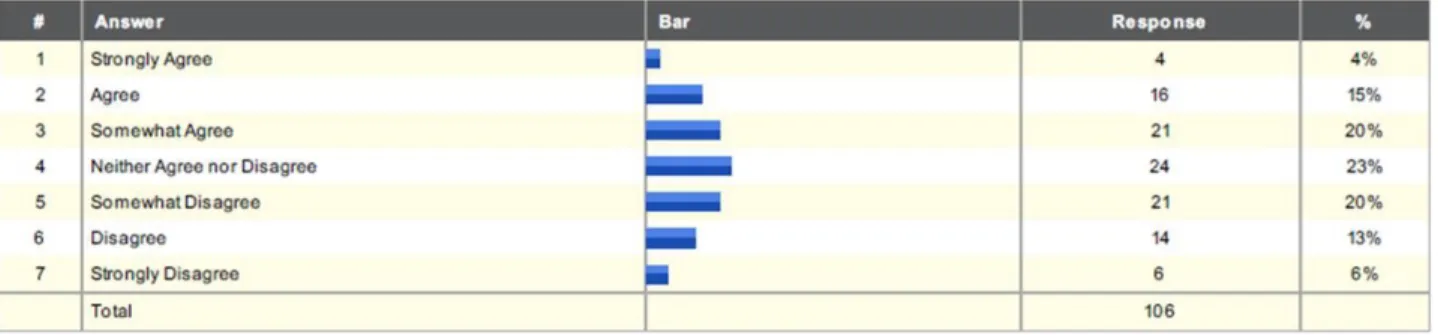
In order to better capture a community perspective, I administered a 25-question questionnaire between December 20, 2013 and January 10, 2014. The questionnaire was available online through UNC Qualtrics and was also available in printed copy. A link to the survey was circulated through email networks, predominantly those of the Town of Forest City and Isothermal Community College (ICC), and was also advertised in the local newspaper, The Daily Courier, through a letter to the editor. Printed questionnaires were administered at Mooneyham Public Library, which is located in Forest City, and also through other in-person interactions. Close to 77% of the surveys were completed online. Since the survey was administered through different means and in different places, I staggered the dates of
22
CHAPTER 2
Agents of local economic development:
Understanding the roles of government and the private sector
The local government is one of the most prominent actors in economic development and also one of the most influential place-makers. In Rutherford County this is evident through the Economic Development Commission (EDC), an agency devoted to recruiting and maintaining industrial activity throughout the county. The EDC was critical during the recruitment of Facebook and Horsehead. Although the local government may be the most visible force, local economic development is in fact entangled within structures established by the state of North Carolina and interests presented by the private sector. In this chapter, I will first examine how the state acts as a place-maker in local places, defining the possibilities for development. Next, I will analyze the perspective of the local governments in Rutherford County. Data for this section were collected through interviews with five local government officials. Lastly, I will study how the lines between public and private interests are blurred by the introduction of such private sector actors as Duke Energy and consulting firms.
Examining the state’s role in local processes
23 Commerce as the leader for the state’s economic development. This department serves the entire state and therefore influences the economic development for all 100 counties and for the state’s more than 9 million residents. The department’s mission reflects the scale of its work as it aims “to improve the economic well-being and quality of life for all North Carolinians” (N.C. Dept. of Commerce 2013b, “About Our Department”).
Although the Department of Commerce’s mission appears concerned with North Carolina’s citizens, who are presented as the beneficiaries of the department’s actions, the
strategic plan presents a different focus – one that largely involves the presentation of the state as a space for investment. The three primary points of the strategic plan are: to keep North Carolina competitive through recruiting and expanding industry; to ensure North Carolina is an attractive location in a global economy; and to target economic improvement towards people and places not currently experiencing prosperity (N.C. Dept. of Commerce 2013b, “About Our
Department”). The strategic plan may be viewed as the means while the department’s mission can be understood as the end-goal. It is important, then to question whether the plan which appears primarily concerned with engaging in place competition and place marketing will actually enhance the “economic well-being and quality of life” of all of the state’s citizens.
24 credits and incentives are dependent upon this tier system. When crediting job creation, for instance, the state offers a $12,500 credit per job for a company creating at least five jobs in a tier one county. If at least ten jobs are created in a tier two county, the state offers a $5,000 credit per job; if at least fifteen jobs are created in a tier three county, a $750 credit per job exists (N.C. Dept. of Commerce 2013, 4). Through this system of ranking, the state of North Carolina has linked an investment incentive with a spatial designation and has begun to construct a hierarchy of meaning and value for place. Such an action helps to construct a county’s meaning as the state declares a county as belonging to a certain tier which influences how companies receive
incentives for locating in an area.
Other state-level actors also influence the construction of place in Rutherford County. Recent changes by the Governor and General Assembly of North Carolina, however, have altered the impact of certain agencies. The North Carolina Rural Economic Development Center, which sought to promote the economies of the state’s rural communities, is no longer funded by the state following an audit in the summer of 2013. Programs for the state’s eighty-five rural counties will now be operated through the Rural Economic Development Division of the Department of Commerce (Curliss 2013). Advantage West, which serves the 23 counties in the western part of the state and seeks “to market the North Carolina mountains,” is a nonprofit, public-private partnership that was chartered by the General Assembly in 1994 but has recently lost state funding (Advantage West Economic Development Group 2011, “About Us”).
25 Senate embraced the Governor’s idea for restructuring and passed a bill to defund Advantage West and similar organizations in other regions of the state (Neal 2013).
The recent actions by the North Carolina state government reveal the ways in which state-level forces influence local processes. By defunding certain agencies, the state is affecting how economic development is achieved at the local scale. The Rural Center has served as an engine for generating grants while Advantage West has acted as another recruiter of business for Rutherford County. By defunding these agencies, the state has altered the ways in which
economic development is pursued. Although each proposed reform is linked to various
evaluations and analyses ranging from improper use of state funds to arguments of whether or not these agencies actually make a difference in rural economies, the restructuring is likely to have larger impacts on rural communities like Rutherford County with smaller budgets to devote to local economic development. Hence, state agencies help to condition the possibilities for economic development in Rutherford County while also acting as a significant place-maker.
At the local level: Economic development in Rutherford County
The most visible scale at work in the process of economic development in Rutherford County is the local government and its related agencies. The Economic Development
26 2013; Johnson 2013). When researching how the local government influences economic
development in Rutherford County, it becomes important then not only to consider how the EDC directs the county’s development but also how relevant government officials influence the
process.
Interviews with five local government officials illustrate how place is being valued, how development is being defined, and how industry is being recruited. John Condrey, Rutherford County’s former manager and Forest City’s current town manager, and Carl Classen, the current county manager for Rutherford, provided perspectives privileged to that of the county manager. Julie Scherer, who served as the Finance Director for the county when Facebook was recruited and currently is employed as the Finance Director for the Town of Forest City, supplied insights on the companies’ relationships with local governments. Finally, Tom Johnson, Rutherford County’s EDC Director during Facebook and Horsehead’s recruitments and the current
Executive Vice President for Advantage West, and Matt Blackwell, the current EDC Director for Rutherford County, contributed unique perspectives about the economic development process. Interviewees were asked similar questions and also asked different questions that reflected their positions in the process of local economic development. Throughout the rest of the chapter, references will be made to these interviews.
27 and Horsehead’s decisions to locate in Rutherford (2013). Facebook in particular was in need of a reliable source of electricity, and the county’s rural qualities assisted in guaranteeing reliability and redundancy due to a lower population density (Blackwell 2013; Johnson 2013). Site location and proximity to transportation networks were also consistently noted as an important factor. The “combination of rail and river” was critical to Horsehead’s decision (Condrey 2013). Rail was essential for the transport of raw materials while a river was desired for both intakes and
discharges of large amounts of water (Condrey 2013). In the case of Facebook’s site, it was “the right size, accessible from a main highway, and ready for construction” while also neighboring North Carolina’s state data center (Scherer 2013; Johnson 2013).
28 industry (Classen 2013). These problems are not hidden when marketing Rutherford County. Instead they are embraced as either an opportunity or understood as a weakness that allows for strategic targeting of certain businesses. Horsehead, for instance, needed an available workforce (Scherer 2013). Higher unemployment combined with the capacity for the local community college to provide training transformed this challenge into an opportunity.
Industry is recruited through a process of marketing locational advantages while also recognizing an area’s particular history and the challenges it may present for businesses.
Although there is not a set way for attracting a business to an area, local officials indicated that a general framework is at work. The state, largely through the Department of Commerce, acts in a primarily supportive role, initiating leads and granting the means to close prospective deals (Blackwell 2013). The state or another recruiter, such as Advantage West or a private consulting firm, receives a lead about an expanding business and sends a request for information (RFI) to the county. The county responds with information that meets the needs of the request (Classen 2013; Johnson 2013). Sites are often narrowed down before the business becomes directly involved. This process may occur through a private consulting firm or within a company. Horsehead, for instance, used Insite Consulting from Greer, South Carolina. Insite Consulting sent out the RFIs and then chose three viable sites before Horsehead entered into any direct deals (Johnson 2013).
29 a business is complex and complicated. The Facebook and Horsehead recruitment projects both lasted for approximately twelve months and involved a number of actors (Johnson 2013). Although local economic development is concentrated within the realm of government, actors from the private sector play prominent roles within the different steps of attracting new business to an area.
Understanding private sector actors
As noted earlier, low cost utilities helped to market Rutherford County as a prospective site for both Facebook and Horsehead. Duke Energy, however, did not serve as simply the supplier of electricity; instead, Duke and its economic development team were critical to the actual process of recruiting Facebook and Horsehead, originally bringing the two companies to Rutherford (Condrey 2013). Duke’s economic development team consists of experts in various industries such as data centers, the automotive sector, and general manufacturing. Team
members visit trade shows and company headquarters to encourage businesses to locate in an area served by the utility company. Duke sends any leads gathered from these trips to the state, which then contacts county officials with RFIs (Johnson 2013).
30 recovery (Carlock 2013). Duke Energy’s stake in North Carolina’s economic development is likely to be strengthened by such a claim.
Duke Energy’s role in local economic development raises concerns about who is actually benefitting from development projects and also who is allowed to participate in economic
development decisions. Facebook and Horsehead are valued by Duke for their potential as customers. Although local governments have interest in collecting taxes and utility
compensation, the public interest remains an important aspect of any economic development project as indicated by the Department of Commerce’s mission to improve the lives of “all North Carolinians.” Involvement by private sector actors, however, opens questions about public participation in economic development decisions. Duke’s economic development program arose, in fact, due to the financial loss that seemed inevitable with the weakening of manufacturing as an economic base in North Carolina (Carlock 2012, 1). In an interview with The Business Journal John Geib, a director of Duke’s economic development program, stated that economic development “more than pays its way” and “the return on investment is very attractive” (Carlock 2012, 1). It is not unusual for a private utility company to seek profit; it is, however, significant when considering the private interest associated with a development project related to
government processes.
31 used by the firm to select three viable sites for Horsehead to consider. Answers to the questions were limited to the given space. If a question required a yes or no answer, Johnson was required to select yes or no despite his desire to provide additional explanation. This example provides insight into how private consulting firms operate within the context of local economic
development and how place is being characterized by both a firm’s questions about place and an official’s responses. Through the use of a private consulting firm, Horsehead has outsourced its need to find a location for new facilities and Rutherford County has recognized its need to bridge contact with groups privy to information about expanding businesses. Insite Consulting is
privileged in its role as a mediator between the EDC and Horsehead, accruing power by its access to confidential information and its ability to produce knowledge.
Analyzing the basis for place marketing: A strategic market study
32 Greenfield considers the study to embrace both a science and an art, as data analysis is required but a “subjective nature” also exists during the decision-making process (Greenfield 2013, 3). This is an important point to consider when analyzing the document in terms of place marketing. As referenced in the first chapter, a place’s identity is partially inherited and partially shaped by actions (Hague et. al 2011, 254). There are inherent qualities of a place, then, that make it viable for certain types of industry. Arguably, a science exists to locating these places and arranging for a company to build in the area. An art, however, also underlies the process. As indicated through the various interviews, local officials, and in particular the EDC Director, must persuasively and competitively argue that Rutherford County is the best place for business. The basic components for such an argument are outlined by Greenfield’s study. Through its
consideration of a place in terms of its strengths and weaknesses, Greenfield has engaged with the making of Rutherford County as a place for particular economic activity, valuing certain qualities over others.
33 many firms while also differentiating itself from its competition (Hague et al. 2011, 267).
Rutherford County’s strengths are methods by which the place can be differentiated, but its weaknesses must be addressed when attempting to sell the place to a company. In the following chapter, the ways in which these strengths and weaknesses were managed in the recruiting of Facebook and Horsehead will be reviewed more closely.
Greenfield’s study demonstrates that evaluating a place in terms of its usefulness for economic development and for business expansion creates the need for a targeting method in which certain markets are prioritized over others. This has several implications for both an area’s development and how meaning is attached to place. Although this is arguably a smart form of economic development, it is also a limiting form. Recognizing the capacity of an area to support businesses that utilize a place’s strengths and are not impaired by a place’s weaknesses appears to be a reasonable strategy. This strategy, however, defines a particular trajectory for
development that may restrict Rutherford County, making it a place only attractive to certain kinds of investment and constructing it as a place externally defined and valued.
34 Greenfield also makes recommendations for how the county can market itself. The study asserts that the county should “piggyback, to the greatest extent possible, on the marketing and branding efforts” of other organizations including North Carolina’s Department of Commerce, Advantage West, Duke Energy, and even Upstate South Carolina Alliance, a regional
development group in the neighboring state (Greenfield 2013, 63). This perspective is interesting to consider. It is important to recognize that the other organizations operate at either the scale of the region or the state and may not provide the targeted method recommended previously. It is also significant that Greenfield believes Rutherford is not large enough “to make its brand well-known in the corporate world” (Greenfield 2013, 63). Such a statement confers with the previous review of the literature that places cities at the forefront of economic development. Although Greenfield recognizes the ability for Rutherford County to market itself, the study also
demonstrates that the space for rural areas in the economic development arena is not only limited in the literature but also in practice.
35 action would ultimately limit the power by which citizens are recognized as members of a place and shapers of a place’s identity.
Greenfield’s study demonstrates how place is being actively assessed and marketed in Rutherford County by both government and private sector actors. Although the local EDC has been specifically charged with the job of industrial recruitment, many other actors at different scales and with varied interests are influencing Rutherford County’s marketing strategy. The state of North Carolina, for instance, initiates recruitment leads and offers support through incentive programs. The Department of Commerce also helps shape how place is presented and how development is pursued by determining such classifications as the “distressed” status of Rutherford County’s economy. Private sector actors are similarly influencing the process of local economic development. Duke Energy, for instance, seeks industries like Facebook and
36
CHAPTER 3
The construction and consumption of a place’s identity:
Why Facebook and Horsehead chose Rutherford County
Place marketing schemes developed by government entities and private sector actors are not validated until they are consumed by external sources. Facebook and Horsehead’s decisions to locate in Rutherford County affirm the place marketing strategies discussed in the previous chapter. The site selection process completed by these two companies reveals how place is being valued in Rutherford County and also how firms are able to become significant place-makers through processes of local economic development. A firm’s evaluation of place occurs within the context of both human construction and natural dimensions.
In this chapter, I will review Facebook and Horsehead’s company structures and then analyze how the same place was important for the investment decisions of two very different companies. Some of the information for these sections was collected through interviews with officials and a tour of Facebook’s Forest City data center. In this chapter, I will also return to the previously discussed Greenfield study in order to better understand why places and governments, as opposed to firms, are actually competing through the capitalist mode of development. This discussion leads into a consideration of incentives and their use in addition to place marketing strategies. Finally, I will examine how Facebook and Horsehead have been awarded significant power as place-makers in Rutherford County.
Examining Facebook: Rural data centers, urban offices
37 decision to operate a data center in Rutherford County in November 2010. Since the
announcement, the company has constructed data centers on 153 acres of property that has since been annexed by the Town of Forest City (See Appendix A, Figure 3; Scherer 2013).
Facebook is described as a “social networking company” that enables its users to “connect, share, discover, and communicate” (Bloomberg Businessweek 2013, “Company Overview”). The company was founded in 2004 and is headquartered in Menlo Park, California. Currently, Facebook employs 5,794 individuals in its offices and data centers (Bloomberg Businessweek 2013, “Company Overview”). Facebook is a global company with offices in Hyderabad, India, Dublin, Ireland, and twenty-five other international cities. The company also has eighteen locations in North America (See Appendix A, Figure 4; Facebook 2013, “Careers at Facebook”). In its offices, Facebook engages with sales, operations, marketing, and advertising. In its data centers, Facebook stores and analyzes data and engineers data systems (Facebook 2013, “Careers at Facebook”).
38 data center maintains data servers and other equipment so as to ensure redundancy and safe storage of users’ data. A tour (McCammon 2013b) of one of Facebook’s buildings revealed how the data center buildings are structured to complete these two tasks. The second floor of the building serves as a type of filter and “pressurized vault” of outside air. Four long hallways of varying degrees of windiness and air pressure complete the process of preparing outside air to cool the data center. The data servers and related equipment are located on the bottom floor of the building in data halls. Each data hall contains between 23,000 and 27,000 servers that engage with the network traffic from the social media site.
The tour also provided a glimpse into how Facebook’s offices in urban environments operate. According to Facebook’s website, its offices are spaces for innovation (2013, “Careers at Facebook”). Facebook adopts an “open office” design concept to encourage this innovation. The open office design uses one large room to house employees’ desks and computers as opposed to each employee having a single office. An open office is located on the first floor of the Forest City data center along with a movie room, which is also used for team meetings, and a cafeteria where meals are catered five days a week for employees (McCammon 2013b). In its urban offices, Facebook’s staff enjoys similar perks as free food and recreational rooms. They are also encouraged by inspirational posters, wall art, and contemporary office designs (Kovach and Goodman 2013). Facebook’s urban offices are thus primarily designed to attract people. A different marketing scheme, one that boasts an educated and youthful labor pool, emerges for an urban place attempting to recruit a Facebook office.
39 its data centers is different from what is needed for its offices. Place marketing reappears in this conversation about rural and urban development patterns. As indicated by Greenfield’s study, a place’s strengths and weaknesses strategically define what type of businesses a place should pursue. How such meaning is attached to place determines the economic trajectory of a community, which is shaped by place marketing strategies and firm location decisions.
Although Facebook is making rational decisions by locating where its company can most effectively profit from locational advantages, these decisions are still moments in which place and meaning are constructed. Facebook not only alters rural landscapes and urban environments, but also confirms how economic development agencies have marketed places, granting value to certain qualities of a place and the subsequent meanings attached to those qualities.
Examining Horsehead: The environment and economic development
Nearly a year after Facebook’s announcement to locate in Rutherford County, Horsehead Corporation, a zinc-recycling company, announced it would begin constructing facilities in the county. Horsehead bought nearly 200 acres of property in an unincorporated area called
Mooresboro (Rutherford County GIS, 2014). More specifically, the company built in the Hicks Grove neighborhood which is located off of Highway 221, a major road that is currently undergoing an expansion project (See Appendix A, Figure 3). Since September 2011, the company has been constructing its facilities and is expected to begin full operation by 2014 (Horsehead Corporation 2013, “North Carolina Updates”).
40 Horsehead”). Horsehead Corporation is headquartered in Pittsburgh, Pennsylvania and operates eight facilities in the United States (See Appendix A, Figure 5; Horsehead Corporation 2013, “Our Facilities”). These facilities are located near smaller and medium sized cities. Horsehead has announced, however, that it will close its facilities in Monaca, Pennsylvania with its new construction in North Carolina. Place thus becomes important to consider as one state gains and another loses from a firm’s expansion decision. Two hundred and fifty jobs are expected to be offered at the facility in Rutherford County. Five hundred and ten jobs will be lost with Horsehead’s closure in Monaca (Boselovic 2013).The movement from Pennsylvania to North Carolina also presents Horsehead with potential savings in regards to labor costs due to the existence of labor unions in Pennsylvania and North Carolina’s distinction of being a “right to work” state.
At its facilities, Horsehead completes a variety of processes related to zinc and metal production. The corporation recycles dust from electric arc furnaces (EAF), which are used to heat metals, at its facilities in South Carolina, Illinois, and Tennessee. At its facilities in
Pennsylvania, Oklahoma, and North Carolina, Horsehead engages with processes more related to the production of zinc metal and zinc oxide (Horsehead Corporation 2013, “Our Facilities”). In order to fully capture how the facility in Rutherford County will benefit the area’s economic development, Horsehead’s facilities should be evaluated in terms of their effect on the environment. If economic development is to benefit the public, recruited industry should be assessed according to its impacts on the public’s health and a community’s environment.
41 waste and its smelting of zinc presents room for environmental concern (Horsehead Corporation 2013, “Environment”).
The company’s history points towards these concerns. Horsehead Corporation was formerly known as the New Jersey Zinc Company (Horsehead Corporation 2013, “This is Horsehead”). The New Jersey Zinc Company engaged more readily with smelting and mining. Ultimately this activity resulted in the declaration of three Superfund sites by the EPA. These sites include De Pue, Illinois, Palmerton, Pennsylvania, and Eagle County, Colorado
(Environmental Protection Agency 2012). All of these sites are in more rural areas. Although there are other reasons for Horsehead’s choice of a rural area, the environmental consequences of industry should be examined critically when considering how firms are recruited in order to pursue economic development for rural places.
Horsehead’s construction of facilities in Rutherford County has been accompanied by steps to ensure protection of both the health of the county’s people and its environment. Horsehead employees are trained about the plant’s processes and about safety procedures in different sections of the facility. Personal Protective Equipment (PPE) training has, for instance, helped guarantee that employees are minimally exposed to any dangers while at the Mooresboro facility (Rhinehart 2014). Horsehead is also building its facility to meet federal and state
42
How do firms evaluate Rutherford County?
After reviewing what these companies “produce,” where else they are located, and how they are related to broader patterns of economic development, a clearer picture emerges for why Facebook and Horsehead Corporation chose to locate in Rutherford County, North Carolina. It is interesting to note how two such divergent industries as technology and heavy manufacturing viewed the same place of Rutherford County as a viable site for business. Greenfield identified both data centers and advanced materials as two target markets for the county in its strategic market study. Greenfield recommended its target markets based on Rutherford’s strengths and weaknesses, which is discussed in more detail in the section that follows. Facebook and
Horsehead’s decisions to locate in the county indicate how the companies arrived at similar and different conclusions about the place’s strengths. Electrical capacity, for instance, was important for both companies while Facebook valued fiber optic connection more heavily than Horsehead, which was concerned about the availability of a river with discharge capability (Greenfield 2013, 48-49).
43 Facebook is not the only company to build a data center in North Carolina. Apple has a data center in Maiden, North Carolina while Google has data centers in Lenoir (Fehrenbacher 2012). Both of these locations are approximately fifty miles from Facebook’s Forest City data center and are similarly described as resting in the Blue Ridge foothills (See Appendix A, Figure 6). There are a number of reasons why this region of North Carolina has attracted data centers. Duke Energy is one critical component since the utility company provides low cost power to these high energy consumers. The rural quality of these places secures that the energy is reliable and available while also guaranteeing large tracts of affordable property (Fehrenbacher 2012). Another important component involves the location and natural environment of North Carolina. The state is a viable location to handle East Coast Internet traffic and the region’s climate and water sources are valued because of a data center’s need for cooling systems (Fehrenbacher 2012). Incentives, clustering, existing infrastructure, and proximity to an airport are also important to data center locations (Fehrenbacher 2012).
44 by the human environment, but highly valued by Facebook. Nearly all of the interviewees, for instance, remarked upon the void of natural disasters in the area, particularly hurricanes,
earthquakes, and tornadoes. All of these natural disasters would significantly damage the energy supply and limit Facebook’s business. The factors influencing Facebook’s decision to locate a data center in Rutherford County demonstrate that a place must be considered both within the context of human construction and natural dimensions.
Horsehead’s attraction to Rutherford County shares similarities with Facebook’s
assessment of the area. Utilities, for instance, played a significant role in Horsehead’s decision. Like Facebook, Horsehead’s operations require large amounts of energy. Duke Energy, once again, provided a reliable and affordable source (Condrey 2013). The site location and property was also weighed heavily by Horsehead. Access to rail was essential as was locating alongside a river (Condrey 2013; Scherer 2013). Rail is a major mode of transportation for the raw and recycled materials Horsehead processes. A river is necessary because of the need to discharge hundreds of thousands of water every day from the industrial processes (Condrey 2013). Both of these features were available through CSX rail and the Broad River. The size and affordability of the property was also a factor in the decision (Classen 2013).
Improvements to the property, however, were still needed to guarantee the site would fit Horsehead’s needs. During his interview, Tom Johnson reflected upon the process for ensuring the site was improved. The improvements required input from many state officials and
45 area of the county was also a feat. Tom Johnson asserted “economic development is a process” after discussing the effort to improve the site.
The availability of a workforce, the proximity to Horsehead’s facilities in South Carolina and Tennessee, and the presence of an active community college also impacted Horsehead’s decision to locate in Rutherford County (Scherer 2013; Blackwell 2013; Classen 2013). When evaluating Facebook’s decision, the collision of the natural and human environment provided an interesting perspective from which to examine a firm’s location decisions. Horsehead should also be examined within this framework. The Broad River provides the most obvious connection. A natural feature of the environment, the Broad River flows from western North Carolina into upstate South Carolina (NC Office of Environmental Education 2007, 1). This river is used recreationally and as a water supply. When selecting a location, Horsehead likely considered not only where rivers flowed but also what laws existed in regards to industrial discharge. The North Carolina Department of Environment and Natural Resources (NCDENR) produced a permit for Horsehead. The permit allows the company to discharge “adequately treated and managed” stormwater into the Broad River (NCDENR 2013, 4). The permit also includes a pollution prevention plan in which monitoring procedures are outlined along with preventive maintenance (NCDENR 2013). This instance demonstrates that although natural features of a place may be valued by a firm, human influence is still at work.
Greenfield’s SWOT analysis
46 threats. The analysis ultimately affects how business searches are completed for Rutherford County. A successful search will utilize the place’s strengths and not be limited by the place’s weaknesses (Greenfield 2013, 5). The SWOT analysis identifies similar strengths for the county that attracted Facebook and Horsehead. Electrical capability and cost, sewer capacity, and fiber availability are all identified as infrastructure assets (Greenfield 2013, 38). The Broad River and its current ability to withstand intake and discharge is considered an environmental advantage. Local government support, proximity to regional airports, existing business, and the
manufacturing heritage of the workforce are also deemed strengths (Greenfield 2013, 38). Once again this assessment recognizes qualities of the natural and human environment that, in turn, construct a place’s identity.
In terms of weaknesses for Rutherford County, the most severe include the lack of functional buildings, the absence of an interstate, and issues of topography imposed upon site development (Greenfield 2013, 39). Opportunities are especially apparent in marketing efforts. Given the county’s proximity to Charlotte and Greenville-Spartanburg, which are all located less than eighty miles from Rutherford, and its inclusion in the western region of North Carolina, Rutherford has the opportunity to gain from multiple place-marketing exercises (Greenfield 2013, 39-40). The document only identifies one significant threat, which is funding issues for road improvements (Greenfield 2013, 40). This could be a serious problem since connectivity and transportation is a likely requirement for most industry.
47 (Harvey 1993). Greenfield’s SWOT analysis for Rutherford County demonstrates how local governments capitalize on a place’s qualities when competing for economic development
investments. Rutherford County, for example, was one location among many vying for Facebook and Horsehead’s investments. The evaluation of Rutherford County as a viable location for Facebook’s data center and Horsehead’s state-of-the-art zinc facility does not exist in isolation. Instead, this type of evaluation occurs with many locations and comparative analyses of places lead the decision-making process. Officials are aware of this geographic competition as indicated by a state’s marketing efforts and its willingness to emphasize minute differences and to offer incentive packages.
The influence of incentives: An addition to place marketing strategies
During his interview Matt Blackwell, Rutherford County’s current EDC Director, recalled a statement commonly heard in the economic development community: “Incentives do not make a bad project good, but a good project better.” The quote indicates that a firm always has specific requirements for any location decision and these requirements cannot be
overshadowed by a massive incentive package. A clear example is the obvious difference between an urban place and a rural place. Facebook, for instance, would not be successful if its data centers were in urban areas and its offices were in rural areas even if the incentives were overwhelming. An urban place offers Facebook assets for its offices that a rural place cannot replace with grants or tax credits. Neither is an urban place likely to sway the company to
48 Nonetheless, incentives must be understood in terms of how they influence a firm’s location decision and how they assist governments with place marketing.
According to a 2012 New York Times piece, states, cities, and small towns are in competition with one another throughout the United States (Story 2012, Part 1). Whether motivated by politics, by the need to spur job growth, or by the desire to strengthen a community’s tax base, political leaders and economic development specialists are utilizing incentives as a way to encourage firms to locate in their respective places. Although it is difficult to record every incentive governments and related agencies give to businesses, North Carolina spends at least $660 million per year on incentives. This equates to $69 per capita and $0.03 per dollar of the state budget (Story 2012, “Explore the Data”). This spending, however, is moderate when compared to other states. Texas, for instance, spends $19.1 billion per year on its incentive program, amounting to $759 per capita and $0.51 per dollar of the state budget. Michigan, Pennsylvania, California, and New York are the next highest spenders with each state devoting more than $4 billion to incentives (Story 2012, “Explore the Data”).
The story of incentives is important to consider as a part of the place marketing strategy. If Facebook and Horsehead located in Rutherford County for the reasons identified in the SWOT analysis, the influence of incentives on such place-based decisions must be carefully examined in order to better understand just how significant a role place plays in economic development. When studying incentives, it is also necessary to return back to the state’s role in local economic development processes since the state government and its related agencies structure the discourse surrounding North Carolina incentives. According to the previously referenced New York Times
49 County. The first grant is the personal property tax grant, which awards Facebook a grant
equivalent to 95% of the assessed value on the company’s personal property. The grant is contingent upon Facebook’s investment of its committed $450 million. The second grant involves Facebook’s real property and equals 85% of taxes on the assessed value of Facebook’s real property (Blackwell 2014).
Horsehead’s incentive package occurred primarily through a tax credit and infrastructural improvements. A number of organizations and government agencies worked together to fund bridge and road construction and improve rail service on Horsehead’s site. Over $4.7 million was offered by the Golden Leaf Foundation, the Department of Transportation, Rutherford County government, the Town of Forest City, and other groups to complete these infrastructure projects (Blackwell 2014). In addition, once Horsehead begins operation in Mooresboro it will pursue a corporate income tax offered by the state of North Carolina for recycling facilities (Office of the Governor 2011). Knowledge of the incentives received by Facebook and Horsehead allow for further examination of the centrality of place in local economic development processes. The study of how incentives are attached to place allows for a better understanding of how places are marketed and how place has become a competitive feature in the economy.