Running Head: NONPHARMACOLOGICAL ADHD INTERVENTIONS
ADHD Interventions that can Serve as Alternatives or Supplemental to Medication
Ashlyn E. Steelman
University of North Carolina at Chapel Hill Senior Honors Thesis
School of Education November 5, 2018
Approved by:
_______________________________________________ Sandra Evarrs, Ph.D. – Thesis Advisor
_______________________________________________ Marisa Marraccini, Ph.D. – Second Thesis Reader _____________________________________________
Sharon Palsha, Ph.D. – Reader
_____________________________________________ Nicole Eilers, M.Ed. – Reader
NONPHARMACOLOGICAL ADHD INTERVENTIONS 2
Table of Contents Introduction 4
ADHD Definition 4
Gender Differences 5
Evaluation 6
Treatment 7
Medication 7
Behavior therapy 10
Dietary supplements 11
Differences among states 12
Current Review 13
Methodology 14
Literature Review 14
Omega-3 Fatty Acids 14
Diet and Nutrition 21
Yoga 30
Results 38
Omega-3 Fatty Acids 38
Diet and Nutrition 41 Yoga 44
Discussion 48
References 55
NONPHARMACOLOGICAL ADHD INTERVENTIONS 3
Abstract
Attention-Deficit/Hyperactivity Disorder (ADHD) is a neurodevelopmental disorder that begins during childhood. Medication is currently the most common form of treatment for
NONPHARMACOLOGICAL ADHD INTERVENTIONS 4
ADHD Interventions as Alternatives or Supplemental to Medication
Attention-Deficit/Hyperactivity Disorder is a neurodevelopmental disorder that starts during childhood (American Psychiatric Association, 2013). ADHD can be characterized by hyperactivity and impulsivity, inattention, or both. Medications is a common way to treat this disorder, but medications can have many side effects (AAP, 2016; DailyMed, 2018; Kelsey et al., 2004; National Institute of Mental Health, 2016; Subcommittee on
Attention-Deficit/Hyperactivity Disorder, Steering Committee on Quality Improvement and Management, 2011; Wernicke et al., 2003). There are interventions proposed that do not involve medication or can be used with medication to achieve maximum treatment results. To examine such treatments, this literature review will examine the effectiveness of omega-3 fatty acids, diets without food additives, and yoga on ADHD symptoms. The review will examine which of these
nonpharmacological treatments are effective and evaluate which could be helpful to families and school personnel.
ADHD Definition
The Diagnostic and Statistical Manual of Mental Disorders, Fifth Edition defines ADHD as “a persistent pattern of inattention and/or hyperactivity-impulsivity that interferes with
functioning or development” (American Psychiatric Association, 2013). The DSM-5 lists criteria for inattention and hyperactivity-impulsivity. Approximately 3-4% of children in the general population have ADHD, and it is a familial disorder (Thapar & Cooper, 2016).
NONPHARMACOLOGICAL ADHD INTERVENTIONS 5
hyperactivity-impulsivity. A predominantly inattentive presentation, the second type of presentation, occurs when sufficient criteria are met for inattention but not
hyperactivity-impulsivity. The third presentation, predominantly hyperactive/impulsive, occurs when sufficient criteria are met for hyperactivity-impulsivity but not inattention. According to the DSM-5, the criteria met are based on behavior demonstrated over the course of the 6 months preceding
the diagnosis. The DSM-5 lists nine criteria for both inattention and hyperactivity and
impulsivity, and six of the nine criteria for at least one of the presentations must be met before the age of 12 for someone to be determined to have at least one of these presentations. Some examples of criteria for inattention are frequently losing supplies, having trouble organizing tasks, and frequently being forgetful in daily tasks. Examples of criteria for hyperactivity and impulsivity include fidgeting or tapping when sitting, excessive talking, and not being able to wait for one’s turn. Meeting criteria for the inattention presentation, hyperactivity and
impulsivity presentation, or the combined presentation is only one component that is considered in ADHD diagnosis. In addition, many symptoms for at least one presentation must have been present before the age of twelve, exist in more than one environment, and must have a negative effect on social, academic, or occupational functioning. The symptoms also must be present outside of psychotic disorders and more direct links to other mental disorders do not exist (American Psychiatric Association, 2013).
Gender Differences. The prevalence of ADHD presentations are not consistent across genders. ADHD is more prevalent in males than females (Thapar & Cooper, 2016). There are approximately two male children with ADHD for every one female child with ADHD
NONPHARMACOLOGICAL ADHD INTERVENTIONS 6
percentage of girls diagnosed with ADHD is 6.7% according to parent reports (Visser et al., 2014). Furthermore, there appear to be differences in symptoms between male and female children with ADHD. Males are more likely to display a hyperactive/impulsive presentation,
while females are more likely to display a predominantly inattentive presentation (Zambo, 2008). It has also been found that females referred for ADHD may demonstrate more internalizing behaviors than females who do not have ADHD (Gaub & Carlson, 1997).
Evaluation. To determine whether a child has ADHD, healthcare professionals should refer to the guidelines in the DSM-5 (Attention-Deficit/Hyperactivity Disorder (ADHD):
Symptoms and diagnosis.). To gain an understanding of the child, they can examine reports from parents or guardians, teachers, and other school and mental health clinicians who play a role in caring for the child (Subcommittee on Attention-Deficit/Hyperactivity Disorder, Steering Committee on Quality Improvement and Management, 2011). Evaluations for ADHD can be conducted by primary care clinicians for children four to eighteen years old who have problems with academics or behaviors and show inattention, hyperactivity, or impulsivity (Subcommittee on Attention-Deficit/Hyperactivity Disorder, Steering Committee on Quality Improvement and Management, 2011). The clinician should also ensure there are no alternative causes, and they should assess the child for emotional, behavioral, developmental, and physical conditions that could exist along with ADHD or be the primary cause of presenting behaviors.
NONPHARMACOLOGICAL ADHD INTERVENTIONS 7
ADHD should include in-depth interviews of both the individual and people who know the individual well, a bio-psycho-social assessment, ADHD behavior and self-report rating scales, scales completed by people who know the individual well, and referrals for assessments for other disorders. In addition, for children, a separate interview or play session should be held in order to discuss their behaviors with them or to observe their behaviors. Children should be observed in a place familiar to them if possible as well. For children, information about their behavior needs to be gathered from multiple people, so that there is information about the child in multiple settings for evaluation (Diagnosis in Children, 2018). The information gathered together should inform clinicians how ADHD can affect the child at home, at school, and in social functioning.
Treatment
As many as 17.5% of children with ADHD in 2011 were not receiving any treatment for ADHD (Visser et al., 2014). This is especially concerning since over one-third of these children had moderate or severe ADHD. Medication and behavior therapy are two common methods of treatment for ADHD in the United States, and the prevalence of each varies from state to state. Treatment for ADHD is important to help children focus in school and maintain greater control over their behavior.
Medication. Medication is the most commonly used treatment for ADHD, specifically stimulants like methylphenidate (MPH) and mixed amphetamine salts (MAS) (De Sousa & Kalra, 2012). As of 2003, 4.3% of children ages 0 to 17 were prescribed ADHD medications, which was approximately 56% of children who had been diagnosed with ADHD at this time (Centers for Disease Control and Prevention, 2005). In the 2011 study by Visser et al., 83% of children and adolescents who had a history of ADHD had current ADHD, and ADHD
NONPHARMACOLOGICAL ADHD INTERVENTIONS 8
parents reporting information in the study reported that of the children taking ADHD medication, 8.4% were males and 3.7% were females. Visser et al. (2014) found a 27% increase from 2007 to 2011 in the amount of children in the United States who were taking medication for ADHD.
Types of medication and effectiveness. Children may be prescribed stimulant or
non-stimulant medications for ADHD. Stimulant medications for ADHD have varying forms of MPH and amphetamine. Dopamine levels in the brain, which are linked to attention, are increased by stimulants (De Sousa & Kalra, 2012). Two common stimulant medications with MPH are Ritalin and Concerta (National Institute on Drug Abuse, 2018). Stimulants are more commonly
NONPHARMACOLOGICAL ADHD INTERVENTIONS 9
irritability, dizziness and nausea (AAP, 2016). This medication typically does not cause
significant suppression of appetite. Side effects of Kapvay when used as a monotherapy include somnolence, fatigue, irritability, nightmares, insomnia, constipation, and dry mouth (DailyMed, 2018). When taken with a stimulant for ADHD, its side effects include somnolence, fatigue, decreased appetite, and dizziness.
Medication protocol. Children’s primary care clinicians are most often responsible for prescribing treatment for ADHD after making a diagnosis (Subcommittee on
NONPHARMACOLOGICAL ADHD INTERVENTIONS 10
Behavior therapy. Behavior therapy is a treatment that aims to help strengthen positive behaviors and extinguish behaviors that are problematic or unwanted (Treatment, 2017). It has been found that treatment that involves both medication and cognitive behavior therapy is more effective than treatment that only involves medication (Sprich, Safren, Finkelstein, Remmert, & Hammerness, 2016). Therapists work directly with children or with parents when using behavior
therapy. Therapists help children replace problematic behaviors and express their feelings in
ways that are not problematic in behavior therapy (Treatment, 2017). Parents can be trained in
providing behavior therapy to their children by a therapist (Behavior therapy for young children
with ADHD, 2017). In training, parents will gain skills in positive communication such as active
listening, reinforcing good behavior, and providing consistent discipline. Behavior therapy can
also take place in classrooms, as teachers and early childhood caregivers can learn how to use it
(Treatment, 2017). The American Academy of Pediatrics (AAP) suggests that evidence-based
behavior therapy provided by a parent or teacher should be the first treatment prescribed for
children ages 4 to 5 for ADHD by their doctors (Subcommittee on
Attention-Deficit/Hyperactivity Disorder, Steering Committee on Quality Improvement and Management, 2011).
There are four models on which behavior therapy is frequently based, which are classical
conditioning, operant conditioning, social learning theory, and cognitive behavior modification
(Black & Bruce, 1989). According to the third volume of the Annual Review of Behavior
Therapy Theory & Practice by Franks & Wilson (1975), the Association for Advancement of Behavior Therapy defines behavior therapy as the following:
Behavior therapy involves primarily the application of principles derived from research
NONPHARMACOLOGICAL ADHD INTERVENTIONS 11
enhancement of human functioning. Behavior therapy emphasizes a systematic
evaluation of the effectiveness of these applications. Behavior therapy involves
environmental change and social interaction rather than the direct alteration of bodily
processes by biological procedures. The aim is primarily educational. The techniques
facilitate improved self-control. In the conduct of behavior therapy, a contractual
agreement is usually negotiated, in which mutually agreeable goals and procedures are
specified. Responsible practitioners using behavioral approaches are guided by generally
accepted ethical principles. (p. 1-2)
Behavior therapy and cognitive behavior therapy help people make changes and reach
goals (Association for Behavioral and Cognitive Therapies). When behavior therapy or cognitive
behavior therapy is implemented in treatment for people with ADHD, the target changes and
goals may include a way of acting, a way of feeling, a way of thinking, a way of dealing with
physical or medical problems, or a way of coping (Association for Behavioral and Cognitive
Therapies).
NONPHARMACOLOGICAL ADHD INTERVENTIONS 12
from a family with an income over 200% of the federal poverty level and have nonpublic insurance.
NONPHARMACOLOGICAL ADHD INTERVENTIONS 13
Figure 1. This map from the CDC shows the percentages of children ages 4 to 17 with special
health care needs who received medication for ADHD in the past week and behavioral therapy in the past year in each state. The map is based on data collected from July 2009 to March 2011 as part of the National Survey of Children with Special Health Care Needs (Visser et al., 2015). When noting the years of the data included in this map, it is important to consider that it takes to gather data such as this to this extent.
Current Review
The purpose of this review is to examine the effectiveness interventions for children with ADHD, whether administered alone or with medication, through a literature review.
NONPHARMACOLOGICAL ADHD INTERVENTIONS 14
does not cite peer-reviewed journal articles, the writer states that the interventions of exercise, going outside, omega supplements, mindfulness and changes in diet have been found to have somewhat of an impact on ADHD symptoms (Kelly). This page also says that vitamin, mineral and herbal supplements, melatonin, “train the brain” games, chiropractic care and lavender and other scents have not been found to be effective. This page offers this list of treatment, and this review will examine what recent research has found about some of these interventions. The current review will examine empirical research studies on various ADHD interventions regarding omega-3 fatty acids, diet and nutrition and yoga that can serve as alternatives to medication or can be used supplemental to medication in depth. These interventions are examined in the review since omega-3 fatty acids could be taken at school, diet and nutrition could be changed through school cafeterias and yoga exercise has the potential to be practiced at school. While the article from Understood claims research has not supported vitamin, mineral and herbal supplements, this study examines vitamin and mineral supplements as part of diet and nutrition due to the close associations vitamins and minerals have with diet.
Methodology
This research is a literature review of peer-reviewed journal articles that study omega-3 fatty acids, diet and nutrition and yoga as interventions that can be used instead of or in
conjunction with medication for ADHD. The literature review aimed to synthesize information about the effectiveness of each intervention. The journal articles were found using the following search engines: the UNC Library Homepage Search engine, Google Scholar, CINAHL,
NONPHARMACOLOGICAL ADHD INTERVENTIONS 15
The following search terms were used in finding relevant articles: “ADHD yoga”, “ADHD predominant treatment”, “ADHD behavior therapy”, “ADHD behavioral therapy”, “ADHD and omega-3”, “ADHD and omega-3 fatty acids”, “preservatives and ADHD”, “ADHD caramel dye”, “ADHD elimination diet”, “ADHD and yoga”, and “ADHD and diet.” Articles were also found by reviewing the references of prior literature reviews.
Literature Review
Prior studies on interventions for children with ADHD involving omega-3 fatty acids, diet and nutrition, and yoga were reviewed for the current study. Five studies were reviewed for each type of intervention.
Omega-3 Fatty Acids
NONPHARMACOLOGICAL ADHD INTERVENTIONS 16
strawberry flavor was included in all capsules. The researchers counted pills to measure compliance. It was unknown to the participants, care providers, researchers assessing results, study coordinators, and monitors whether each participant received the placebo or nonplacebo pills. At the beginning of the study and each month following, the parents of participants responded to the Attention-Deficit Hyperactivity Disorder Rating Scale version IV (ADHD-RS-IV). This scale contains eighteen items regarding ADHD symptoms that are rated on a 4-point scale. The study also utilized the Conners Parent Rating Scale (CPRS-R:L), a standardized test for reading in French, Attentional Performance Tests for Children (Kinder Test of Attentional Performance (KiTAP) for ages 6 to 10 and Test of Attentional Performance (TAP) for ages 11 to 15), and The Children’s Depression Inventory. The changes between the scores of these
secondary scales at the beginning of the study and after 3 months were included in assessment. The results of the study found that there was a greater improvement from the initial ADHD-RS-IV scores related to the placebo pills than the supplement pills. This improvement with the placebo pills was significant (p=.039). The researchers acknowledged that the results may be due to their sample, as the initial scores of the ADHD-RS-IV suggest that the participants had mild to moderate ADHD and therefore may not benefit from the supplement given in the study.
NONPHARMACOLOGICAL ADHD INTERVENTIONS 17
hypersensitivity to elements of omega-3/6, past ADHD treatment involving medication, persisting chronic conditions, medication for chronic conditions or not receiving assistance at school. The researchers conducted clinical assessments at five points during the study. Parents completed the Spanish version of the ADHD Rating Scale by DuPaul, Power, Anastopoulos, and Reid (1998) and both the parents and a researcher completed the Clinical Global Impressions-Severity (CGI-S) scale. Randomization was used to assign participants to one of the three
treatment groups. Results of the study showed that MPH treatment is slightly more effective than treatment with the Omega-3/6 fatty acids used in the study. Participants were able to take less MPH when they received the MPH and Omega 3/6 combined treatment, and participants receiving combined treatment may be more likely to comply with treatment than participants only receiving MPH. The results showed that this treatment was not more effective than treatment with only MPH, but the effectiveness of the combination treatment was shown to be significant (p=.007). Participants receiving combined treatment were able to take lower doses of MPH. Additionally, the results suggest stabilization of the three treatments could stabilize despite the slower increase of control and decrease in symptoms with Omega-3/6 and
MPH+Omega 3/6 groups compared to the MPH group, based on the leveling off of scale scores around Week 8 of treatment.
NONPHARMACOLOGICAL ADHD INTERVENTIONS 18
the difference between the conditions being the order in which the participants received the different oils. The three oils in the study were an EPA-rich oil, a DHA-rich oil, and a control oil. The intervention was provided for 12 months, and each of the oils was consumed for 4 months. Randomization by minimization was used to assign the participants to a condition so that age and gender could be taken into consideration for the assignments. Three participants were excluded based on not reaching the criteria for ADHD to participate in the study, and 33 participants did not complete the study, leaving 54-57 participants to include in the statistical analyses for each oil. According to the researchers, taking blood samples of participants in studies involving interventions such as this one is important so that the participants’ degrees of compliance, especially with taking oil, can be measured. One limitation this particular study faced was sample size, as they did not obtain their target number of participants. The target number of participants was 120 because this sample size was estimated to allow for >80% power to find a medium effect size. The study found a significant positive associations on the ADHD Index (p=.030) and the Conners global scale (p=.028) with n-3 PUFAs. Improved outcomes were steadily predicted by decreasing the ratio of n-6:n-3.
Milte et al. (2012) conducted a randomized controlled trial to examine how literacy and behavior of children with ADHD are impacted by an EPA-rich oil and a DHA-rich oil compared to a ω-6 PUFA—rich safflower oil, a linoleic acid (LA). There were 67 participants ages 6 to 13, all of whom had an ADHD diagnosis or demonstrated parent-rated symptoms greater than the 90th percentile on the CPRS along with learning difficulties reported by the parents. Exclusion criteria included taking ω-3 PUFA supplements in the 3 months prior to the study. The
NONPHARMACOLOGICAL ADHD INTERVENTIONS 19
baseline assessments and were assigned to a condition; EPA-rich oil, DHA-rich oil, or LA-rich oil. Everyone involved in the study was blinded to the treatment being received until data
collection and analysis had been completed. A baseline and after 4 months, participants met with researchers to provide blood samples and complete cognitive assessments. Additionally, capsule containers were collected at the second visit in order to measure compliance through capsule counting. Various tests were used in the assessments involved in this study. To assess literacy, the Wechsler Individual Assessment Test III subtests for word reading and spelling were used. To assess performance, the Wechsler Scale of Children’s Intelligence III vocabulary subtest was used. A shortened test battery from the Test of Everyday Attention for Children including Sky Search, Score!, and Creature Counting was utilized to examine various forms of attention. A go/no-go task on computers was used to measure inhibition. The CPRS was used to collect data on ADHD symptoms, and questionnaires were used to gather demographic information. The blood samples provided were used to examine proportions of singular fatty acids in erythrocyte phospholipids. Of the 90 participants, 70 completed both visits, and three were excluded from analyses due to a lack of an ADHD diagnosis or ADHD severity scores lower than the study required. There was no significant difference between EPA and LA (p=.38) or between DHA and LA (p=.39) for ADHD index. While the researchers did not find any significant treatment effects related to the EPA or DHA-rich supplements in comparison to the control, they did find that a higher erythrocyte DHA over 4 months was associated with improvements in word reading and and oppositional behavior and that EPA and ω-3 PUFA levels were associated with less
anxiety/shyness.
NONPHARMACOLOGICAL ADHD INTERVENTIONS 20
could not have taken ADHD medication or omega-3/omega-6 supplements during the 3 months before recruitment occurred. This study examined the effects of DHA on ADHD in children in Italy through a randomized, placebo-controlled, double-blind intervention trial. Participants were assigned to receive either the supplement or the placebo. The supplement was 500 milligrams of algal DHA given through two soft gelatin pearls each day. The placebo was also given through two soft gelatin pearls, but they contained 500 miligrams of wheat germ oil and a low
NONPHARMACOLOGICAL ADHD INTERVENTIONS 21
no significant difference on the ADHD-RS-IV was found (p>.05). The CPRS also did not show significant improvements on ADHD symptoms.
Diet and Nutrition
A total of five studies were reviewed that examined the effects of diet and nutritional changes on ADHD symptoms in children. The diets examined considered food additives and a preservative, healthy and unhealthy foods, a restricted elimination diet and dietary patterns. Another study examined a vitamin-mineral treatment.
One aspect of diet that has been speculated to be related to ADHD symptoms is food additives. Lok et al. (2013) researched how artificial food colorings and a preservative impact ADHD symptoms in eight- and nine-year-old children in Hong Kong over approximately 7 months. Instead of focusing specifically on ADHD, the researchers chose to examine how food coloring and preservative can affect behavior. The study used methods of measurement used in ADHD research. To be included in the study, participants could not currently be taking
NONPHARMACOLOGICAL ADHD INTERVENTIONS 22
which researchers determined whether the study caused parents to keep their children on diets without additives. The researchers had parents and teachers complete the strengths and
weaknesses of ADHD symptoms and normal behaviors (SWAN), and they had teachers complete the child behavior checklist (CBCL) as well. After running linear mixed-model
methods and an analysis of variance for multiple comparison, results showed that there was not a significant increase of strengths or weaknesses associated with ADHD related to AFCs (effect size .07 for CBCL-TRF, .01 for SWANPT) and a sodium benzoate preservative (effect size .04 for CBCL-TRF, .17 for SWANPT). The researchers acknowledged multiple limitations of the study, including a small effect size, the sample was not representative of the Hong Kong population, and parents could not easily constantly monitor their children’s diets. Furthermore, as the participants of this study did not have ADHD, the researchers suggest that future studies compare the effects of food colorings and preservatives among children with and without ADHD.
Ghanizadeh and Haddad (2015) studied whether dietary intake affects Iranian children with ADHD. The researchers examined whether ADHD symptoms can be influenced by
NONPHARMACOLOGICAL ADHD INTERVENTIONS 23
food frequency questionnaire. Participants completed assessments at baseline and after one month of treatment. The ADHD checklist was used to examine ADHD severity, and the
researchers measured the weight, height, and body mass index of the participants. After losing 21 participants to medication refusal or no responses to phone calls, the researchers examined data from 85 participants. The results show no significant association between the favored diet and hyperactivity/impulsivity in regard to hyperactivity/impulsivity either during or at the end of the trial (p=.2, p=.5, respectively). There was a significant association between the favored diet and inattentiveness (p<.0001).
NONPHARMACOLOGICAL ADHD INTERVENTIONS 24
child’s diet and this time served as a baseline period. The parents recorded their child’s diet, behavior, activities, physical complaints and medications. After the 2 weeks, the parents
NONPHARMACOLOGICAL ADHD INTERVENTIONS 25
food challenge, the SDQ and SPI were completed again during the eleventh or thirteenth week of the study. Participants only immediately completed the second food challenge if there was not a behavior relapse during the first. Both groups had blood taken at the thirteenth week. Participants who had behavior relapses during the first food challenge began the second after a washout period. It was determined that participants experienced a behavior relapse if their ARS score increased at least 40% at the end of the first phase and at least 60% from the baseline. As for the control group, these participants followed the first phase for the 13 weeks. Parents of these participants completed extended diaries, measurements were completed at similar times to the other group, and a second blood sample was taken during the thirteenth week. After this blood sample was taken, parents could begin the diet with their children if they did not demonstrate behavioral improvements during the study. The results supported that this diet can improve behavior in children with ADHD. Both the pediatrician and teacher ratings had mean differences on the ARS significantly lower in the diet group than the control group between baseline and the end of the first phase of the study (p<00.0001; p<00.0001, respectively). Parent and teacher scores on the ACS were also significantly lower in the diet group than the control group between baseline and the first phase (p<00.0001; p<00.0001, respectively). No significant effects of IgG or challenge period were found (p=075; p=026, respectively).
Rucklidge, Darling, Eggleston, Johnstone and Frampton (2018) examined whether vitamin-mineral treatment can improve particular ADHD symptoms in children with ADHD. Ninety-three participants completed the study. The participants were children ages 7 to 12, and they had to meet the researchers criteria for ADHD. The researchers determined that to be included in the study, children had to meet the standards for ADHD based on the Kiddie
NONPHARMACOLOGICAL ADHD INTERVENTIONS 26
et al., 1997) and parent and teacher Conners Rating Scales (CRS-R:L) (Conners, 1997).
Furthermore, a registered clinical psychologist reviewed outcomes for each child and discussed diagnoses with the researchers. The study had a psychiatrist that participants met with as well. The CGI severity scale was used to give children a rating for severity of illness. Further study inclusion criteria was that participants could not have taken psychiatric medication in the past 4 weeks, and participants needed to have the ability to take as many as 15 capsules per day with food. If participants were unable to easily swallow a pill, they completed a pill swallowing program by Kaplan et al. (2010). This program allowed 18 children to participate in the study. The researchers permitted participants to continue psychological therapies and supplements as long as there was consistency in the frequency and dosage for the entire study, and researchers typically permitted medications for physical conditions. Children were excluded from the study if their estimated IQ was under 75 based on vocabulary and block design subtests of the
Wechsler Intelligence Scale for Children-Fourth Edition (WISC-IV) or educational assessments they had taken before, were on the autism spectrum, had epilepsy, could be hospitalized due to a significant psychiatric condition, had a serious medical condition, were allergic to ingredients used as part of the study or had an abnormal mineral metabolism. Two children were allowed to take part in the study with estimated IQ between 70 and 75 since accurate estimates could have been hindered by their ADHD symptoms. Many scales were used in the study. Participants met with a clinical psychologist or a psychology graduate student who was supervised by a
psychologist seven times throughout the study either in person or over the phone. These seven contacts occurred at screening for the study, baseline, 2 weeks, 4 weeks, 6 weeks and 10 weeks, which was the end of the study. Two of the scales used that involved the clinician were
NONPHARMACOLOGICAL ADHD INTERVENTIONS 27
CGI improvement scale considered responses from parents, information from teachers and the participants’ behavior in the clinic, and the C-GAS was completed by the clinician. The clinical version of the ADHD-RS-IV was completed by the clinician at baseline and the end of the study. Parents completed the Child Mania Rating Scale, Parent Version (CMRS-P) during each contact to provide data related to emotional dysregulation. At the beginning and end of the study, parents responded to the CPRS-R:L and the SDQ. Researchers also gathered information from parents at the beginning and end of the study on their child’s diet. Teachers were asked by parents to complete and mail the CTRS-R, the SDQ-teacher, and the Behavior Rating Inventory of
Executive Function (BRIEF-teacher form) before the start of the intervention and 2 weeks before the intervention ended. Children had a scale they responded to after each contact. They
responded to the Measure Yourself Medical Outcome Profile (MYMOP) to rate their own symptoms. Participants were randomized via a computer sequence to either the control group or the experimental group. The control group received a placebo while the experimental group received micronutrients. Forty-six participants received the placebo, and 47 participants received the micronutrients. Two participants in each group did not complete the study. All of the
medications necessary for the duration of the study were put into kits by a pharmacist, and they had extra medication in case of a missed appointment or increased dosage. Additionally, a bottle of pills was provided at each assessment. During the first week of the intervention, the
participants gradually increased from taking three pills per day to 12 pills per day. Participants began taking 15 pills per day after the fourth week of the study if they were not showing
NONPHARMACOLOGICAL ADHD INTERVENTIONS 28
significant differences in ADHD ratings between the placebo and micronutrients groups on either the ADHD-RS-IV completed by the clinician (p=.415) or the CPRS-R:L completed by parents (p=.540). Furthermore, while there was a clinically meaningful change in ADHD scores based on the numbers of participants in the placebo group and the micronutrients group showing a 30% decline on the ADHD-RS-IV, the change in ADHD scores was not significant (p=.08). When a post hoc analysis was performed of the ADHD-RS-IV subscales, there was a significant
difference in improvement of inattentive symptoms in the micronutrients group compared to the placebo group (p=.005), but there was not a difference in the groups for
hyperactivity/impulsivity (p=.951).
Zhou et al. (2016) studied whether dietary and nutrient patterns can impact children with ADHD. The study included 592 participants, all of whom were Chinese children ages 6 to 14. The study utilized a matched-case control design, therefore, not all participants had ADHD. The children in the ADHD group were required to have an ADHD diagnosis from a board-certified child psychiatrist. Factors that could exclude children from the ADHD group are signs of autism, Asperger syndrome, epilepsy or a primary diagnosis of schizophrenia, identifiable prenatal insults, affective disorder, pervasive developmental disorder, or mental retardation. It is not stated whether the children could have been taking or currently take ADHD medication to
participate in the study. A pair-matched design was used to construct the control group. Members of the control group were randomly selected at the clinics where diagnoses of ADHD occurred. Members of the control group aligned with the exclusion criteria for the ADHD group, had the same sex as a member of the ADHD group, and had the same age within 6 months as a member of the ADHD group. Parents of participants in both groups were interviewed by current
NONPHARMACOLOGICAL ADHD INTERVENTIONS 29
information regarding the children such as family structure, home environment, medical and educational histories of the participants and dietary habits one year before diagnosis or interview. The BMI of each participant was found as well following standards of the World Health
Organization (WHO). A food frequency questionnaire (FFQ) was used to examine dietary intake in which 144 foods often consumed by Chinese children were listed and parents chose frequency categories to report how often their child had consumed each item in the past year. The Chinese Standard Food Composition Table was used to calculate participants’ average nutrient daily intake and total energy. The researchers also collected blood samples. A pair-match design was used in the study based on age and sex due to differences in these factors related to ADHD. In order to examine the relationship between dietary and nutrient patterns and ADHD, conditional logistic regressions were utilized. Four dietary patterns were analyzed, and it was found that 32.50% of food intake variance could be attributed to these patterns. The four patterns were “vegetable-fruit”, “fish-white meat”, “grain-bean” and “fast food-sweet” (p. 357). The only dietary patterns found to have significant inverse relationships with risk of ADHD were the fish-white meat dietary pattern (p=.003) and the grain-bean dietary pattern (p=.018). Then, when controlling for possible confounding factors, only the fish-white meat dietary pattern was significantly negatively correlated with risk of ADHD (p=.006). Conditional logistic regression was also used to examine relationships between blood element levels and ADHD. Blood zinc concentration was found to have a significant negative correlation with risk of ADHD both before and after controlling for possible confounding variables (p=.005 and p=.008,
NONPHARMACOLOGICAL ADHD INTERVENTIONS 30
Yoga
Yoga has also been studied in relation to ADHD symptoms. Chou & Huang (2017) conducted one study regarding yoga as an ADHD intervention that took place in Taiwan. The study had 50 participants with ADHD between the ages of 8 and 12. The participants were required to have an ADHD diagnosis. Children were not eligible to participate in the study if they also had conditions such as conduct/oppositional defiant disorder, ASD, or serious affective disorders. Additional exclusion criteria was that children could not have previously had brain injuries or neurological disorders, and they could not currently be taking sedatives or other medications that affect mood other than stimulants for ADHD. Half of the participants were in the experimental group that attended two 40-minute yoga sessions after school twice a week. A nationally certified yoga instructor led each session, and the structure of the sessions was based on the guidelines for working with children from the American Physical Therapy Association. The other half of the participants were in the control group and told to not engage in organized routine physical activity. Before the start and after the completion of the yoga sessions, the researchers administered the Visual Pursuit Test of the Vienna Test system (Schuhfried GmbH, Austria) and the Determination Test as used by Shmygalev et al. (2011). The researchers also approximated each participant’s physical fitness through methods such as a sit and reach test and a timed half-mile run. Independent t-tests and chi-square tests were used to compare the
demographics of the experimental and control groups. Through mixed design ANOVAS, the study found that yoga can benefit children with ADHD. The accuracy of the yoga group on the Visual Pursuit Test was found to be higher at the post-test than that of the control group when the interaction of group by time was examined (p=.010). A group by time interaction was also
NONPHARMACOLOGICAL ADHD INTERVENTIONS 31
yoga group had faster reaction times than the control group (p<.001). Furthermore, there were differences between the groups in their outcomes on the Determination Test. There was
significantly greater accuracy on the post-test in the yoga group than the control group (p<.001). Like on the Visual Pursuit Test, the yoga group showed significantly faster reaction times than the control group (p=.034) on the Determination Test after the intervention. ADHD symptoms that yoga can aid in improvement include attention, discrimination ability, and reaction time and response accuracy on the Visual Pursuit Test and the Determination Test. These results coincide with previous research.
NONPHARMACOLOGICAL ADHD INTERVENTIONS 32
participants, there were 63 whose parents and teachers completed follow-up Vanderbilt questionnaires and for whom yoga posture scores (YPSs) were completed. The results of the study showed that there were academic and behavioral improvements in over half of the participants who participated in yoga. There was a significant decline in average performance impairment on the teacher and parent Vanderbilt assessments on the follow-up compared to baseline (p<.001). The average YPS improvement rate was 73.9% with a standard deviation of 15.5. The YPSs improvement was similar for males and females and across ADHD subtypes. This study is interesting as the program was executed by older students. Since it was led by older students and had positive results, yoga could be a reasonable intervention for ADHD provided by schools.
More recently, Cohen et al. (2018) studied the impact yoga can have on ADHD symptoms in preschool-aged children in California. The 23 children who participated in the study ranged from 3 to 5 years old and exhibited a minimum of 4 ADHD symptoms based on ADHD RS-IV Preschool Version. This criteria was chosen instead of an ADHD diagnosis because ADHD is typically not diagnosed in preschoolers. Two participants did have ADHD diagnoses, and one participant was taking ADHD medication. Parents and teachers of the participants completed the ADHD RS-IV Preschool Version so that the researchers could assess the ADHD symptoms of the participants. All of the participants were students at an urban, community-based preschool. The design of the study was a mixed-methods, randomized waitlist-controlled trial. The intervention involved children’s yoga that was conducted with the
NONPHARMACOLOGICAL ADHD INTERVENTIONS 33
them. The intervention was carried out across 12 weeks, because one group participated in the yoga intervention for the first 6 weeks, and the other group, the waitlist control, participated in the yoga intervention for the second 6 weeks. During the weeks that each group was not participating in the yoga intervention, they experienced no exposure to yoga. The researchers assessed behavioral ADHD symptoms of the participants using ADHD RS-IV Preschool Version and the SDQ and attention of the participants through computer-based tasks of the KiTAP. These tests were completed at the start of the study as a baseline measurement, after the first group finished the yoga intervention, after the second group finished the yoga intervention, and 3 months after the second group finished the yoga intervention. In addition to these measurements, following each yoga intervention, the researchers utilized questionnaires, focus groups, and interviews with parents, teachers, and yoga instructors in order to collect qualitative data. After Group 1 received yoga exposure but Group 2 had not yet received yoga exposure, participants in Group 1 with a baseline score of 8.5 on the SDQ hyperactive-inattentive scale completed by parents had ratings two points lower on average than children in Group 2 who started at similar scores (p=.04). Group 1 participants who started with ADHD inattention ratings of 17 showed ratings four points lower at this same check-in than children in Group 2 who started at similar scores (p=.02). After Group 2 completed the yoga intervention, their total-scores on the SDQ rated their parents significantly decreased (p=.002). Their scores on the ADHD-RS-IV
NONPHARMACOLOGICAL ADHD INTERVENTIONS 34
among the limitations of this study. Furthermore, was found that the participants of this study only practiced yoga about half of the possible days, and no parents reported that participants continued yoga following their intervention period of the study.
Hariprasad, Arasappa, Varambally, Srinath and Gangadhar (2013) also examined the effects of yoga on children with ADHD. More specifically, this study examined whether yoga is a reasonable and effective intervention to use in conjunction with in-patient care for ADHD. This study was conducted in India. There were nine participants ages 6 to 13, and they all had an ADHD diagnosis based on the DSM-IV confirmed by a child psychiatrist. All of the participants were receiving in-patient services in the child and adolescent psychiatry ward of the National Institute of Mental Health and Neurosciences. They could be taking medication while
participating in the study, as all of the participants were receiving medication and/or behavioral interventions in the child and adolescent psychiatry ward. Researchers received written consent from the caregivers of the children, and, if possible, assent from the participants. Children were not eligible for the study if they had comorbid substance abuse or dependence, psychosis, suicidal and self-injurious behavior, moderate mental retardation, severe physical ailments like congenital heart disease, fracture or a seizure in the prior month. Children were also not eligible to participate in the study if their caregiver had any conditions that would inhibit them from practicing yoga. The participants were rated five times by a research associate on the ADHD-RS-IV, Conners’ Abbreviated Rating Scale (CARS) and CGI. These ratings occurred at the start of the study and discharge, and after first, second and third months of follow-up. A yoga
NONPHARMACOLOGICAL ADHD INTERVENTIONS 35
and when the participant was discharged from the ward. A publication entitled “yoga in
education” was used to create the yoga intervention used in the study. Aspects of yoga included by the researchers were loosening exercises, physical postures, breathing exercises and OM chanting meditation. A certified yoga instructor with at least two years of experience trained the participants and their caregivers in the selected yoga practices each day of the period of
admission in the child and adolescent psychiatry ward of the National Institute of Mental Health and Neurosciences. Ideally, the caregivers participated in yoga, but they were at least trained in supervising the child as they practiced yoga. An additional responsibility of the caregivers was to record attendance and the amount of days that participants practiced yoga after being discharged. The yoga instructor provided at least six one-hour training sessions for each participant and caregiver. While the participants were in the child and adolescent psychiatry ward, they practiced yoga a minimum of eight days. Between baseline and discharge, there were significant decreases in scores on the CARS (p=.014), the ADHD-RS-IV (p=.021) and the CGI (p=.004).
A qualitative study on a yoga intervention by Beart & Lessing (2013) was also reviewed for this study. This instrumental case study was conducted in a school for learners who have difficulties with learning in South Africa. The researchers chose to examine the impact of yoga on ADHD symptoms in children through the perceptions of parents, teachers, and children. The symptoms examined were anxiety, concentration, aggression and self-esteem. Ten children ages 9 and 10 took part in the study. All of the participants had an ADHD diagnosis from a
pediatrician. Participants were allowed to take medication during the study. Six of the
participants were taking Ritalin, two were taking Concerta and two were not taking stimulants or stimulants for ADHD. One of the participants who was not taking stimulants or
NONPHARMACOLOGICAL ADHD INTERVENTIONS 36
supplement (Eye q), and Scott’s Emulsion capsules contain cod liver oil, DHA, EPA, vitamin A, vitamin D and calcium (Scott’s). The researchers asked teachers at the school to refer learners known to have an ADHD diagnosis based on information in school files to the study (Beart & Lessing, 2013). The participants selected were included based on the criteria of being primary school learners at this particular school and having an ADHD diagnosis. In addition to the children included in the study, three teachers and 11 parents agreed to take part. The researchers gave assessments before and after the yoga intervention. At both times in the study, children completed the Children’s Apperception Test (CAT) and the Lawrence Self-Esteem
Questionnaire (LAWSEQ). The researchers also conducted parent-rated questionnaires, teacher-rated questionnaires, and semi-structured interviews with parents, teachers and children. After being tape-recorded and transcribed, interviews were used for interpretations of the participants. The yoga program used in the study was created by a yoga instructor, and it was specifically created for children with ADHD. Participants attended 40 minute yoga classes twice a week for 6 weeks. There were yoga postures specifically for each of the ADHD symptoms addressed by the study; anxiety, concentration, aggression and self-esteem. Most of the postures used in the intervention were animal-inspired since animals are typically of interest to children. A chart from Beart & Lessing (2013), these poses included “The Eagle” for concentration, “The Crocodile” for aggression, “The Dragonfly” for anxiety and “The Lion” for self-esteem (p. 41). The
NONPHARMACOLOGICAL ADHD INTERVENTIONS 37
participant F indicated that concentration did not improve, the teachers of participant C reported that the participant lacked concentration and teachers of participant J reported that the participant was still impulsive. While the teachers of participant C reported that the participant lacked concentration, the parents of the same participant reported more focus on homework. At the beginning of the study, it was reported that learner participants did not demonstrate great concentration at either home or school. However, after the yoga intervention, many participants made statements indicating concentration improved. Comments that Beart and Lessing (2013) received included a comment from the parent of participant C that “His homework that he’s been bringing home is much better, so the time we have taken for homework has been quicker and he’s done things properly and there have been fewer corrections” (p. 44). High rates of
frustration were shown in parent and teacher responses before the yoga intervention, and a few positive comments related to aggression were collected after the intervention. Before the yoga intervention, there were varying levels of anxiety in the learner participants, and after the
NONPHARMACOLOGICAL ADHD INTERVENTIONS 38
reasonably suggest that a specialized yoga program can positively impact concentration, aggression, anxiety and self-esteem in children with ADHD.
Results
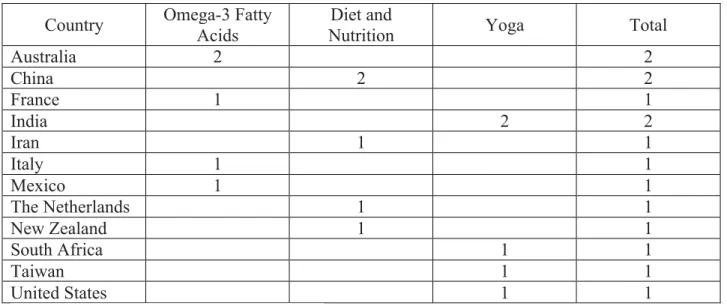
The purpose of this literature review was to examine the effectiveness of a selection of interventions for ADHD other than or in addition to medication. Factors involved in the interventions Omega-3 supplements, specific diets, and yoga were reviewed. Studies were reviewed for each of the three interventions to examine which interventions most consistently contribute to positive outcomes in children with ADHD. The countries represented in the study and how many studies took place in each country represented are shown in Table 2.
Omega-3 Fatty Acids
One of the interventions for ADHD reviewed was omega-3 fatty acids. Factors such as age and whether medication was allowed during the intervention varied.
NONPHARMACOLOGICAL ADHD INTERVENTIONS 39
the five studies allowed participants to take ADHD medication during the intervention, and in that study, medication was part of two of the interventions (Barragán, et al., 2017).
NONPHARMACOLOGICAL ADHD INTERVENTIONS 40
intervention itself was not indicated as parents of the participants took the supplements from the researchers. The countries in which all of the interventions for each type of intervention can be seen in Table 2.
Length of intervention. The lengths of the interventions in the studies reviewed ranged from 3 months to 12 months. Two study interventions lasted 12 months (Barragán, et al., 2017; Milte et al., 2015), one study intervention lasted 6 months (Crippa et al., 2018), one lasted four months (Milte et al., 2012), and one lasted 3 months (Cornu et al., 2018).
Effectiveness. For the purposes of this research study, a particular intervention was determined to be effective if there was significant improvement in ADHD symptoms in the child from baseline at the conclusion of the intervention. A study was considered effective if the differences shown through the measures used in the particular study had a p-value of ≤.05. Two of the five studies reviewed on omega-3 fatty acids showed that this intervention can have significant positive impacts on children with ADHD (Barragán et al., 2017; Milte et al., 2015). The other three studies on this intervention did not show significant influence of omega-3 fatty acids on children with ADHD (Cornu et al., 2018; Crippa et al., 2018; Milte et al., 2012). Effectiveness for these five studies did not consider qualitative data, only statistical significance of the outcomes of the intervention.
NONPHARMACOLOGICAL ADHD INTERVENTIONS 41
conducted in two different countries on two different continents. Barragán et al. (2017) was conducted in Mexico, and Milte et al. (2015) was conducted in Australia. The number of
participants in each study varied as one had 90 participants (Barragán et al., 2017) and the other had 54-57 participants (Milte et al., 2015). One of the studies involved an institute that treats patients in finding participants. Participants in the Barragán et al. (2017) study were referred to the Neurology Department of the Hospital Infantil de México Federico Gómez. The two studies had similar age ranges for participants, as the participants were 6-12 (Barragán et al., 2017) and 6-13 (Milte et al., 2015). Both of the studies lasted 12 months (Barragán et al., 2017; Milte et al., 2015).
Diet and Nutrition
Another intervention reviewed was diet and nutrition. Studies on various aspects of diet and nutrition were included in the current study. One study reviewed examined artificial food colorings and a preservative (Lok et al., 2013). Another study researched whether healthy and unhealthy foods have an impact on children with ADHD (Ghanizadeh & Haddad, 2015). One study examined the effects of a restricted elimination diet (Pelsser et al., 2011), one study focused on vitamin-mineral treatment (Rucklidge et al., 2018), and one study researched how children’s dietary and nutrient patterns can be associated with ADHD (Zhou et al., 2016).
NONPHARMACOLOGICAL ADHD INTERVENTIONS 42
diet and nutrition were 4-8 (Pelsser et al., 2011), 8-9 (Lok et al., 2013), 5-14 (Ghanizadeh & Haddad, 2015), 6-14 (Zhou et al., 2016) and 7-12 (Rucklidge et al., 2018). Two studies did not allow the participants to take ADHD medication (Lok et al., 2013; Pelsser et al., 2011). One study allowed participants to take medication (Rucklidge et al., 2018), as long as the dose remained constant the entire study. Another study had all of the participants take ADHD medication as part of the intervention (Ghanizadeh & Haddad, 2015). One study did not state whether participants could take ADHD medication while participating in the intervention (Zhou et al., 2016). Three of the studies required an ADHD diagnosis to participate (Ghanizadeh & Haddad, 2015; Pelsser et al., 2011; Zhou et al., 2016). Rucklidge et al. (2018) required that participants meet ADHD criteria on the K-SADS-PL and the CRS-R:L. Lok et al. (2013) did not state whether an ADHD diagnosis was required, but the article did state that the study was focused on how food additives and preservatives influence behavior in general rather than how they influence ADHD in children while using measurement methods often used in research on ADHD.
Setting. The study by Lok et al. (2013) took place in China, and participants were recruited from schools in each of the three districts of Hong Kong to allow for socioeconomic diversity. An initial appointment was held with each participant at the Centre for Nutritional Studies. Researchers provided the three types of capsules for the participants, and the participants were to take the capsules before going to school. Ghanizadeh & Haddad (2015) conducted their study in Iran. The researchers involved face-to-face interviews in ADHD
NONPHARMACOLOGICAL ADHD INTERVENTIONS 43
Rucklidge et al. (2018) carried out their study in New Zealand. The parents of participants were given the capsules that the participants was to take, and where the participants took the capsules was not specified. Every 2 weeks, participants had in-person visits to be monitored, and there was a total of six in-person visits. The visits were with a clinical psychologist or a psychology graduate student who was supervised by a psychologist. The study by Zhou et al. (2016), which was conducted in China, did not have an intervention. Children’s diets in their normal settings were considered as parents responded to an FFQ about their child’s diet over the past year, and parents were interviewed in person by researchers. The children were seen in person when they had blood samples taken.
Length of intervention. All of the interventions for studies focusing on diet and nutrition were shorter than all of the interventions used in the studies reviewed on omega-3 fatty acid interventions. The shortest diet intervention reviewed was one month (Ghanizadeh & Haddad, 2015), and the longest was 10 weeks (Rucklidge et al., 2018). The other studies were 5 weeks (Pelsser et al., 2011) and 6 weeks (Lok et al., 2013). One study examined the normal dietary patterns of participants and therefore did not have an intervention (Zhou et al., 2016).
NONPHARMACOLOGICAL ADHD INTERVENTIONS 44
show significant positive impacts (Lok et al., 2013; Ghanizadeh & Haddad, 2015; Rucklidge et al., 2018).
Studies found to be effective. One of the studies found to be effective required participants to have an ADHD diagnosis (Pelsser et al., 2011). The other study found to be effective was a matched case-control study, so only the participants in the ADHD group were required to have an ADHD diagnosis. The number of the participants in the two studies had a large difference, as one study had 83 participants (Pelsser et al., 2011), and the other had 592 participants including those in both the ADHD group and the non-ADHD control group (Zhou et al., 2016). The age ranges of the participants in these two studies had very little overlap. The age ranges were 4-8 (Pelsser et al., 2011) and 6-14 (Zhou et al., 2016). Participants in the study by Pelsser et al. (2011) were not allowed to take ADHD medication during the study, and it is not stated whether participants in the study by Zhou et al. (2016) could. One study took place in the Netherlands (Pelsser et al., 2011), and the other took place in China (Zhou et al., 2016). The intervention of the study by Pelsser et al. (2011) lasted 5 weeks. The study by Zhou et al. (2016) did not have an intervention because the researchers gathered information on participants’ normal diets and examined the blood samples taken from the participants.
Yoga
Five articles were also reviewed on the effectiveness yoga can have on children with ADHD. The interventions in the articles reviewed varied in multiple ways.
NONPHARMACOLOGICAL ADHD INTERVENTIONS 45
the studies had similar age ranges of participants, and one had a younger sample. The younger sample was a preschool-aged group, with participants ages 3 to 5 (Cohen et al., 2018). The other studies had school-aged children with the age ranges of 9 to 10 (Beart & Lessing, 2013), 8 to 12 (Chou & Huang, 2017), 6 to 13 (Hariprasad et al., 2013) and 6 to 11 (Mehta et al., 2011). Four of the studies on yoga required that participants have an ADHD diagnosis (Beart & Lessing, 2013; Chou & Huang, 2017; Hariprasad et al., 2013; Mehta et al., 2011). The other study required that the participants demonstrate at least four symptoms on the ADHD-RS-IV instead of a diagnosis as ADHD is not typically diagnosed in preschoolers, who made up the sample of the study (Cohen et al., 2018). Three studies allowed the participants to take ADHD medication during the intervention (Beart & Lessing, 2013; Cohen et al., 2018; Hariprasad et al., 2013). One study allowed participants to take medication during part of the study, but paticipants were told to not take medications for at least 24 hours before various tests within the study (Chou & Huang, 2017). One study did not state whether participants were allowed to take medication during the intervention.
Setting. One study took place in Taiwan, and the yoga intervention took place in a dance studio (Chou & Huang, 2017). The yoga classes were led by a nationally certified yoga
NONPHARMACOLOGICAL ADHD INTERVENTIONS 46
them. At the urban, community-based preschool, participants completed two 30-minute group yoga sessions led by trained children’s yoga instructors per week. One group had yoga sessions outside of their normal classroom, and the other group had in-classroom yoga sessions that included typically developing peers completing the session and teachers helping to manage the class. Setting of assessments was not specified. India was also the country in which the study by Hariprasad et al. (2013) was conducted. The yoga intervention was first done with participants in the hospital they were in, and when they were discharged, caregivers were to supervise or do yoga with the participants at home. The yoga instructor rated the participants’ yoga abilities at the hospital, and it is not stated whether researchers and caregivers met in person to complete measurements related to ADHD. Beart and Lessings’ 2013 study took place in South Africa. The yoga intervention, in the form of 40-minute classes twice a week for 6 weeks, was conducted in a school for children with learning difficulties. The program for the classes was created by a yoga instructor. As the researchers state that the study, not the intervention, took place in this
particular school, it is possible that the assessments used in the study were also completed at the school.
Length of intervention. All of the yoga interventions were shorter than all of the omega-3 fatty acid interventions. The lengths of the majority of the yoga interventions were similar to the lengths of the diet and nutrition interventions. The shortest yoga intervention had a minimum of eight days of yoga practice (Hariprasad et al., 2013). The longest intervention lasted 12 weeks (Cohen et al., 2018). One intervention lasted 8 weeks (Chou & Huang, 2017), and two
interventions lasted 6 weeks (Beart & Lessing, 2013; Mehta et al., 2011).
Effectiveness. Similar to the omega-3 fatty acid and diet and nutrition studies, a
NONPHARMACOLOGICAL ADHD INTERVENTIONS 47
in ADHD symptoms in the child from baseline at the conclusion of the intervention. Quantitative studies were considered effective if the differences shown had a p-value of ≤.05. One
quantitative study on a yoga intervention was reviewed (Beart & Lessing, 2013). To determine whether this study was effective, trends and global statements about yoga were examined. All five of the yoga interventions reviewed were found to be effective (Beart & Lessing, 2013; Chou & Huang, 2017; Cohen et al., 2018; Hariprasad et al., 2013; Mehta et al., 2011). Cohen et al. (2018) had one scale that did showed a significant effect for the undesired outcome, but another scale showed significant effects for desired outcomes.
NONPHARMACOLOGICAL ADHD INTERVENTIONS 48
(2018), it was found that the group who completed the yoga intervention first showed lower scores than the group who had not completed the intervention yet. Participants in the first group to complete yoga who started at SDQ hyperactive-inattentive scale scores of 8.5 had, on average, scores two points lower than children in the second group to complete yoga who started at this score (p=.04), and participants in the first group who started at a score of 17 on ADHD
inattention ratings had scores, on average, four points lower than participants in the second group to complete the intervention (p=.02). Furthermore, total scores on the SDQ decreased
significantly after the second group to participate in yoga completed the intervention (p=.002). The Cohen et al. (2018) study did include one finding that does not support yoga as an
intervention for ADHD. The study found that scores on the ADHD-RS-IV for the group that completed yoga second increased (p=.03). Hariprasad et al. (2015) found significant decreases in scores on the CARS (p=.014), the ADHD-RS-IV (p=.021), and the CGI (p=.004) from baseline to when the participants were discharged from the adolescent psychiatry ward of the National Institute of Mental Health and Neurosciences after completing a yoga intervention. The study by Beart & Lessing was a qualitative study. The CAT results they found suggested that anxiety-related issues could have lowered after the yoga intervention, and the LAWSEQ showed that four participants had improved self-esteem after the yoga intervention. There were also trends of improved concentration and less aggression.
Discussion
NONPHARMACOLOGICAL ADHD INTERVENTIONS 49
Mental Health, 2016; Subcommittee on Attention-Deficit/Hyperactivity Disorder, Steering Committee on Quality Improvement and Management, 2011). The current study also had a goal to research interventions that could be implemented or done in schools to encourage focus and decrease hyperactivity in children with ADHD during the school day. Of the three types of interventions studied in this literature review, yoga was the most consistently effective intervention, as all five of the yoga interventions reviewed had significant positive effects on ADHD symptoms in children with ADHD. Of the five omega-3 fatty acid interventions reviewed and the five diet and nutrition interventions reviewed, only two out of the five studies for each type of intervention were found to have significant positive effects on ADHD symptoms in children with ADHD. Furthermore, of the five yoga interventions reviewed, three involved yoga sessions at the participants’ schools. No studies reviewed for diet and nutrition reported
interventions that took place at the participants’ schools despite the plausibility of schools incorporating foods that positively impact ADHD symptoms into cafeteria menus.
Limitations
Limitations of the study include the small number of recent studies on the effects of diets excluding food additives such as artificial food coloring in children with ADHD. Multiple search terms were used in searching for such articles. Many more studies on these interventions in addition to those included in the current review exist, but the current review focused on articles written between 2011 and 2018.
Another limitation of the study is that not all studies reviewed carried out their
NONPHARMACOLOGICAL ADHD INTERVENTIONS 50
and schools. Interventions that can reasonably be implemented in multiple settings are important since children diagnosed with ADHD experience ADHD symptoms in multiple settings
(American Psychiatric Association, 2013).
Additionally, the age of the participants in each study reviewed varied. Currently, there is a lack of information about the generalizability of the three types of interventions studied here varies across age groups. This gap in the literature provides direction for future research. For example, future studies could examine the age ranges for which each intervention is the most effective.
The studies were conducted in various countries. More studies for each intervention in each country would provide more information to prove whether or not the interventions are effective and generalizable.
Some studies reviewed excluded children currently taking ADHD medication while others allowed children to take medication during the interventions. For this reason, the present study examined ADHD interventions that can serve as alternatives or as supplements to medical intervention.
Implications
NONPHARMACOLOGICAL ADHD INTERVENTIONS 51
showed them to be effective (Barragán et al., 2017; Milte et al., 2015). Parents could also consider feeding their children based on a restricted elimination diet (Pelsser et al., 2011) or feeding fish and white meat (Zhou et al., 2016).
NONPHARMACOLOGICAL ADHD INTERVENTIONS 52
Lessing (2013), which took place in a school for children with learning disabilities, showed positive impacts of yoga on the participants.
Future Research
In this review, yoga was found to be the most effective intervention for ADHD instead of or in conjunction with medication compared to omega-3 fatty acids and diet and nutrition. There are factors that need to be considered in future studies on yoga as an intervention for ADHD. There are also factors in studies on omega-3 fatty acids and diet and nutrition as ADHD interventions that need to be considered in future studies.
Number of participants. Future studies on yoga as an intervention for ADHD symptoms in children need to include more participants. The highest number of participants in the studies on yoga interventions used was 63 participants (Mehta et al., 2011). The study by Beart & Lessing included 10 participants, and the study by Hariprasad et al. (2013) included nine
participants. Both of the studies acknowledged that their findings could not be generalized due to the small sample sizes. Cohen et al. (2018), which had 23 participants, cited their sample size as a limitation since this number is lower than the sample size they wanted based on power
calculations. Therefore, future studies need to include enough participants to allow for