1
Factors Affecting Healthcare Provider Knowledge and Acceptance of
1
Biosimilar Medicines: A Systematic Review
2
Emily Leonard1, Michael Wascovich2, Sonia Oskouei3, Paula Gurz4, Delesha Carpenter5 3
1Pharm.D. Candidate, UNC Eshelman School of Pharmacy, University of North Carolina at 4
Chapel Hill, Chapel Hill, NC, [email protected], (C) 203.417.3241;
5
2Pharm.D., MBA, Senior Director, Pharmacy Services at Premier Inc., Charlotte, NC, 6
[email protected]; (O) 704.816.5851;
7
3Pharm.D., Director of Pharmacy Program Development (Biosimilars) at Premier Inc., 8
Charlotte, NC, [email protected], (O) 704.816.6067;
9
4MBA, Director of Pharmacy Contracting, Generics, Biosimilars at Premier Inc., Charlotte, 10
NC, [email protected], (O) 704.816.5352;
11
5PhD., M.S.P.H, Assistant Professor, Division of Pharmaceutical Outcomes and Policy, 12
UNC Eshelman School of Pharmacy, University of North Carolina at Chapel Hill,
13
Asheville, NC, [email protected], (O) 828.250.3916
14
Running title: Provider Knowledge and Acceptance of Biosimilar Medicines
15
Manuscript word count: 3578
16
Abstract word count: 311 17
Number of figures/tables: 1/2
18
Number of references: 40
19
Disclosure Statement: The authors have nothing to disclose. This review article did not
20
involve direct interaction with human subjects.
21
Study Sponsor: Not applicable
2
ABSTRACT
Background: Newly developed biosimilar agents confer significant cost saving advantages,
yielding the potential to mitigate rising drug costs and expand patient access to care for important
biologic therapies. Biosimilar market uptake greatly depends upon healthcare provider willingness
to promote, prescribe, and use biosimilars in clinical practice.
Objective: To perform a systematic review evaluating current United States (U.S.) and European
(EU) health care provider knowledge, perceptions, and prescribing behaviors of biosimilar
medicines to assess the need for clinician-directed, biosimilar education.
Methods: An electronic literature search was conducted using journal databases, including
PubMed, Embase, and Cochrane Library. Terms related to biosimilar agents, survey questionnaires,
and education were used. Two independent reviewers evaluated 158 citations published from
January 1, 2014 to March 5, 2018, that were the result of this search. Studies in English were
included if they surveyed U.S. or EU physician and/or pharmacist knowledge, attitudes, and/or
prescribing preferences of biosimilar drugs. Overall trends in prescribing behavior and perceptions
were abstracted.
Results: A total of 20 studies met inclusion criteria. Three studies originated from the U.S. and 17
from Europe. Hospital specialists, gastroenterologists, and rheumatologists were the most
frequently surveyed practitioners. Percent of biosimilar prescribing varied widely between
countries and within similar practice fields. If used, biosimilars were predominantly prescribed in
biologic-treatment naïve patients. An overall lack of biosimilar familiarity in both U.S. and EU
health care settings accompanied concerns about biosimilar safety, efficacy, extrapolation, and
interchangeability. Detailed descriptions of biosimilar education programs were lacking from the
literature.
Conclusions: Findings from this review indicate that U.S. and EU healthcare providers still
approach biosimilar medicines with caution, citing limited biosimilar knowledge, low prescribing
comfort, and safety and efficacy concerns as main deterrents for biosimilar use. To realize the full
cost-saving potential of biosimilar medicines, clinician-directed, biosimilar education will be
imperative to address gaps in biosimilar knowledge, facilitate prescribing changes, and ultimately
3
What is already known about this subject:
• Patents of key biologic therapies have expired or will lose patent protection by 2020, which
is driving pharmaceutical manufacturer interest in biosimilar drug development.
• Cost-effective biosimilar medicines have been shown in Europe to increase patient access to
care earlier in the therapy cycle, decreasing costs and improving he alth outcomes for
patients.
• Biosimilar use and market uptake are contingent, in part, upon physician and pharmacist
confidence and willingness to prescribe, promote, and use biosimilar medicines in their
clinical practice.
What this study adds:
• This review evaluated 20 U.S. and EU healthcare provider surveys published from 2014 to
2017 for data related to providers’ biosimilar prescribing habits, biosimilar knowledge,
biosimilar safety and efficacy concerns, biosimilar extrapolation and interchangeability
viewpoints, and exposure to biosimilar educational activities.
• We found that healthcare providers in the U.S. and EU lack biosimilar familiarity and
understanding, contributing to safety and efficacy concerns and limited biosimilar
prescribing.
• To help promote biosimilar uptake, biosimilar-specific education, directed at healthcare
providers and key physician stakeholders, will likely help to close the knowledge gap,
4
INTRODUCTION
Prescription drug spending in the United States has received a great deal of attention as a
pathway to potentially cut rising healthcare costs. After several years of slowed growth, 2016 saw a
5.8% increase in pharmaceutical expenditure across all healthcare sectors, totaling $448.2 billion.1 Biologic agents account for nearly $2.0 billion in U.S. nonfederal hospital costs, with adalimumab,
etanercept, and infliximab constituting 3 out of the top 5 most expensive drugs overall.1 These agents are tumor necrosis factor alfa (TNF) inhibitors and are important guideline-recommended
therapies for the treatment of patients with inflammatory rheumatic disease or inflammatory bowel
disease (IBD) refractory to conventional immunosuppressive treatment s.2 The high costs of these medications have resulted in the development of biosimilar medications, which may confer
significant cost saving advantages over biologics, yielding the potential to mitigate rising drug costs and
expand patient access to important biologic therapies.
The Food and Drug Administration (FDA) defines a biosimilar product as highly similar but not
identical to an already licensed biologic product (also termed reference product or bio-originator) in
terms of quality, safety, and efficacy.3 As of February 2018, nine biosimilars have received FDA
approval. Yet, only three have made it to U.S. market.4 In comparison, the European Union (EU) has forty-one approved biosimilars and generates the most biosimilar revenue worldwide.5,6 Still, initial biosimilar uptake in both economies has been slow.6–8 Slowed biosimilar growth has been attributed to a time-consuming approval process marked by regulatory challenges, legal issues, payer policy disparities,
and clinician concerns.7,9,10 Limited reports have highlighted physician and pharmacist reluctance to accept biosimilars as equal to the reference product,7,8,11 but fail to describe what specific biosimilar factors contribute to clinician uncertainty.7,8,12 The evolving biosimilar pipeline currently includes over 800 biosimilar drug candidates in development.13 As more biosimilars seek market entry, understanding current clinician attitudes and awareness of biosimilars is important to assess the need for biosimilar
education, promote utilization, and ultimately, help drive down biologic therapy costs.
METHODOLOGY
Search Strategy. The Preferred Reporting Items for Systematic Reviews and Meta-Analysis
(PRISMA) guidelines were followed throughout this review. Relevant English-language articles indexed
in PubMed, Embase, and Cochrane Library databases from January 1, 2014 to March 5, 2018 were
5
and screened for relevance. The search strategy used the following PubMed medical subject headings
(MESH) terms and text words: biosimilar, biosimilar agent, questionnaire, health survey, attitude,
education, learning, and drug formulary. Search terms were modified for Embase and Cochrane Library
according to the capabilities of each database.
Review Process. Search results were imported into Covidence Systemic Review Software
where two independent reviewers (authors Leonard and Wascovich) screened titles and abstracts for
relevance. Initial disagreements on which articles were eligible were resolved so both reviewers reached
consensus on which articles to include for full-text review. Studies were eligible for full-text review if
they were: 1) a journal article, conference proceeding, poster abstract, or editorial letter; and 2) surveyed
U.S. or EU physician and/or pharmacist knowledge, attitudes, and/or prescribing preferences of
biosimilar medicines. The EU is considered the most seasoned users of biosimilars, with use since
2006.14 In 2016, 9 out of 10 global biosimilar product sales were in the EU.14 Therefore, the EU was
selected for analysis based on its extent of biosimilar experience, and the U.S. was selected to better
understand the domestic market U.S. clinicians practice in. Articles were excluded if they focused
exclusively on budget cost analyses, only surveyed patients, prescribing nurses, or other
non-prescribing healthcare providers, were general biosimilar overviews, or were published in a
language other than English. The resulting full-text copies of all studies considered to be of potential
relevance were retrieved and screened by one author (author Leonard).
Data Collection. Data from included studies was extracted into MS Excel 2016 (Microsoft
Corporation, Redmond, WA) by 1 of the 2 initial reviewers (author Leonard) and independently
checked by a second reviewer from among the authors of this study for methodological quality and
completeness. The following characteristics were retrieved: general information (first author, year
of publication, country of publication); method (online survey versus semi-structured interview,
sampling method used, provider type), sample size, response rate, study outcomes, and
conclusions.
In addition, four topics for data extraction were identified, a priori, based on a collaborative
discussion between study authors (Leonard, Wascovich, Oskouei, Gurz). Relevant experiences of
these colleagues to the current study include leading national biosimilar strategy on behalf of
nearly 3800 hospitals and health systems, researching health system stakeholders’ evaluation and
management of biosimilars, and supporting biosimilar contracting, pharmacy purchasing, and
6
biosimilar knowledge; (3) biosimilar clinical concerns; (4) biosimilar education programs for
providers. These topic areas were specifically identified as key areas of unknown knowledge
through health system stakeholder interviews and surveys, professional conferences, and biosimilar
manufacturer engagements as related to the study authors’ professional roles.
Biosimilar prescribing behaviors were categorized as percent of clinicians currently
prescribing biosimilar medicines) or percent of clinicians willing to prescribe biosimilar medicines.
Biosimilar knowledge included knowledge of the FDA or European Medicines Agency (EMA)
definition of a biosimilar medicine or reported familiarity with the concept of biosimilar medicines.
Clinical concerns included problems expressed relating to biosimilar safety, efficacy, extrapolation,
or pharmacy-driven substitution. Biosimilar education was categorized as clinicians’ means of
biosimilar education or clinicians’ biosimilar educational preferences.
RESULTS
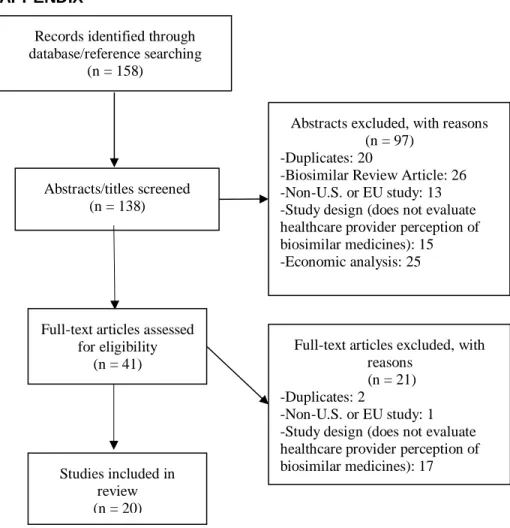
The searches identified 158 records, which resulted in 138 nonduplicate items. Twenty
surveys met the inclusion criteria and were included in this systematic review (Figure 1). The
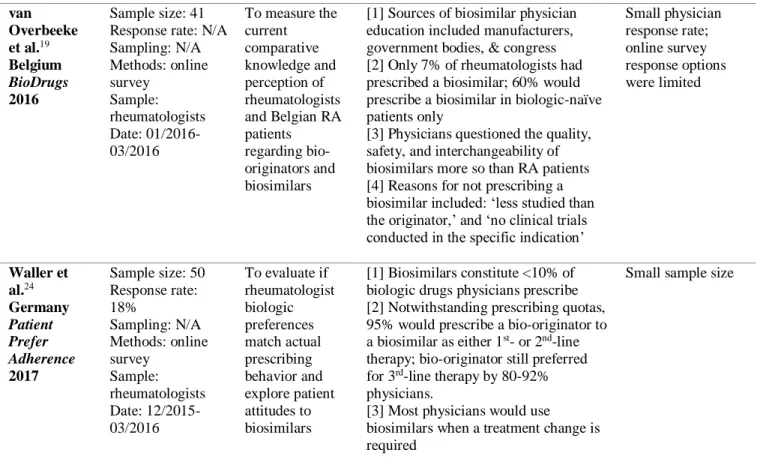
included studies originated from the United States of America15–17, Belgium18,19, France20–22, Germany23,24, Italy25, Ireland26, Malta27, Hungary28, and the United Kingdom (UK)29 (Table 1). Five surveys included multiple EU states30–34 (Table 1).
Biosimilar Prescribing Behaviors. Sixteen studies quantified clinicians’ biosimilar
prescribing habits.15,17,29–34,19,21–26,28 In Danese et al.30 (EU, 2014), 61% of gastroenterologists felt little or no confidence in using biosimilars, 26% felt confident enough, 8% felt very confident, and
5% felt totally confident. When the survey was repeated one year after biosimilars became
available in the EU, confidence had increased, as 19.5% of gastroenterologists felt little or no
confidence in using biosimilars, 33.9% felt confident enough, 17.8% felt very confident, and 28.8%
felt totally confident (EU, 2016).31
In Beck et al.21 (France, 2016) and van Overbeeke et al.19 (Belgium, 2016), approximately 7% of rheumatologists had prescribed at least one biosimilar. In another 2016 French survey, 22%
of physicians reported writing ≥ 1 biosimilar prescription/week, 30.5% between 6-to-12 biosimilar
prescriptions/year, and 47% < 6 biosimilar prescriptions/year.22 In Pasina et al.25 (Italy, 2016), 51%
of clinicians prescribed biosimilars to biologic-naïve patients only, while 25% also prescribed
7
was reported in Hallersten et al.32 (EU, 2016) and Kellner et al.33 (EU, 2016). Kellner et al.33 identified a general correlation between length of biosimilar exposure and willingness to prescribe
biosimilars, although specific details of this correlation were not described in the published
abstract.
In Narayanan et al.34 (EU, 2016), 60% of rheumatologists reported a high likelihood to prescribe biosimilars, but would limit use to a small patient population first. Years of practice
experience did not significantly effect prescribing preferences; however, a higher proportion (57%)
of rheumatologists with >20 years of practice experience identified the lack of biosimilar long -term
data as a key impediment to prescribing.34 Limited biosimilar use in a small, select group of patients was also reported by 38% of respondents in Barsell et al.15 (U.S., 2017).
Biosimilars were still largely considered second-line therapies mainly prescribed for
biologic-naïve patients. Eighty-eight percent of gastroenterologists in Sullivan et al.23 (Germany,
2017) and 95% of rheumatologists in Waller et al.24 (Germany, 2017) preferred to prescribe a
bio-originator to a biosimilar as first-line therapy for IBD or rheumatic diseases, respectively.
Correspondingly, biosimilars only made up 13% and 10% of biologic therapies physicians in
Sullivan et al.23 and Waller et al.24 prescribed. In Gibofsky et al.17 (U.S., 2017), 66% of rheumatologists were only likely to start biosimilar therapy in biologic-treatment naïve
individuals.17 Specialists also primarily prescribed biosimilars in biologic-treatment naïve patients in O’Callaghan et al.26 (Ireland, 2017), Chapman et al.29 (UK, 2017), and Baji et al.28 (Hungary,
2016).
Gaps in Biosimilar Knowledge. There was a lack of biosimilar awareness in the EU and U.S.
In Pasina et al.25 (Italy, 2016), only 22.9% of physicians and 38.8% of pharmacists indicated having complete or good knowledge about biosimilars. Likewise, in Cassar et al.27 (Malta, 2016), only 6% of physicians were familiar with biosimilarity, 35% had a basic understanding, and 59% could not define
biosimilars or had never heard of them. Approximately 55% of rheumatologists in Beck et al.21 (France, 2016) had little knowledge of biosimilars; lack of knowledge was greater amongst office-based
physicians (23.7%) than hospital-based physicians (61.8%).
Higher familiarity with biosimilars was reported by 97% of rheumatologists in Kellner et al.33
(EU, 2016), but only 48% correctly identified the EMA definition of a biosimilar. In Sidikou et al.22
(France 2016), 61% of physicians reported good biosimilar knowledge and 70% reported a high level of
8
the survey.22 In Barsell et al.15 (U.S., 2017), 62% of dermatologists had a basic understanding of biosimilars, 27% reported a complete understanding, and 11% reported that they have never heard of
biosimilars. Of those who reported having a complete understanding of biosimilars, 21% incorrectly
described a biosimilar as a generic copy of a biologic molecule.15 Similarly, 21% of participants in O’Callaghan et al.26 (Ireland, 2017) mistook biosimilars as generic biologic medicines. More
pharmacists reported having a higher biosimilar familiarity than general practitioners (75.2% vs. 40.3%,
p < 0.01).26 Van Overbeeke et al.19 (Belgium, 2017) reported the highest level of biosimilar knowledge amongst respondents, at 90%. Per the study, participating rheumatologists had already received
information on the launch of biosimilars and the patent expirations from “different, well-balanced sources.”19
In Cohen et al.16 (U.S., 2016), 55% of rheumatologists and 32.8% of gastroenterologists were unaware that biosimilar Filgrastim was marketed and available for use. More recently in Gibofsky et
al.17 (U.S., 2017), 84% of rheumatologists knew about biosimilar infliximab’s approval, but only 47%
and 34% knew about the respective biosimilar adalimumab and biosimilar etanercept approvals. In
Chapman et al.29 (UK, 2017), 75% of clinicians were aware that biosimilars were available on their local
formulary.
Clinical Concerns. Clinicians were hesitant about biosimilar safety, efficacy, extrapolation, and
pharmacy-driven substitution. Most safety concerns regarded immunogenicity, or the propensity of the
biosimilar to generate an immune response to itself and other related proteins.35 In Pasina et al.25 (Italy, 2016), 23% of respondents believed biosimilars had a higher immunogenicity risk than bio-originators,
with poor-quality approval trials. Greater than 60% of physicians in Barsell et al.15 (U.S., 2017), Cohen et al.16 (U.S., 2016), Beck et al.21 (France, 2016), O’Callaghan et al.26 (Ireland, 2017), and Danese et al.30 (EU, 2014) were also concerned about biosimilar immunogenicity. Immunogenicity concerns decreased from 67% to 27.1% in Danese et al.31 (EU, 2016), over a two-year period.
Providers doubted biosimilar safety and efficacy in extrapolated indications. Indication
extrapolation refers to the approval of a biosimilar for indications held by the bio-originator, but were
not directly evaluated during the biosimilar’s clinical trials. Approximately 39% of rheumatologists in
van Overbeeke et al.19 (Belgium, 2017) and 64% of pharmacists in Adé et al.20 (France, 2017) opposed
indication extrapolation. In Danese et al.31 (EU, 2016), 32.2% of gastroenterologists opposed
extrapolation across other specialty (e.g., rheumatic) indications and 25% opposed extrapolation across
9
disease (efficacy, n = 2; safety, n = 7; efficacy and safety, n = 21); 12% opposed biosimilar use
altogether due to the lack of evidence from randomized controlled trials in this indication. Physicians in
Beck et al.21 (France, 2016) cited the most common barriers to biosimilar use as extrapolation of
efficacy and safety to all indications of the bio-originator (67.2%), and the lack of long-term tolerability
data (66.1%).
Interchangeability and pharmacy-led switching also incited provider concerns. An
interchangeable biosimilar, by definition, is expected to produce the same clinical result as the reference
product in any given patient; some U.S. state laws allow an interchangeable biosimilar to be substituted
for the reference product at the pharmacy level, without notifying the patient’s physician. In Danese et
al.31 (EU, 2016), only 44% of respondents considered biosimilars interchangeable (improved from 6% noted in Danese et al.30), while 39.9% did not, due to insufficient data supporting interchangeability. Furthermore, 89.8% disagreed with pharmacy-driven automatic substitution of the bio-originator with a
biosimilar.31 Similar beliefs were noted in Barsell et al.15 (U.S., 2017), Cassar et al.27 (Malta, 2016), and
O’Callaghan et al.26 (Ireland, 2017). In O’Callaghan et al.26, 61% of physicians and 58% of pharmacists
believed switching should solely be the prescriber’s decision. In Adé et al.20 (France, 2017), 95% of
pharmacists believed interchanging biosimilars for bio-originators was a joint physician-pharmacist
responsibility.
In Cohen et al.16 (U.S., 2016), 80% of respondents were unaware that interchangeability could enable pharmacist-led switching. A later U.S. survey conducted by Gibofsky et al.17 (U.S., 2017), found that 71% of rheumatologists were knowledgeable about interchangeability, and 74 indicated an
interchangeable designation would be very or moderately important. Positive attitudes about
interchangeability were also noted in Chapman et al.29 (UK, 2017), in which > 90% of physicians had no or minor safety or efficacy concerns when switching patients.
Biosimilar Education Programs for Providers. Self-study and peer-reviewed
journals/professional guidelines were the two primarily trusted sources of biosimilar information in both
the U.S. and EU.16,18,21,26,32 Discussion with physician and pharmacist colleagues was also a reliable mean of biosimilar information.16,21 Additional sources of biosimilar education included manufacturer promotional materials, continuing education programs, and conference/seminar attendance.19,21,26
O’Callaghan et al.26 (Ireland, 2017) uniquely found that pharmacists (44%) were more likely than
medical specialists (13%) and general practitioners (7%) to consult manufacturer promotional materials
10
biosimilar educational activities. Overall, gastroenterologists found biosimilar educational activities
favorable (56%), unnecessary (16%), too confusing (15%), or too optimistic about safety and efficacy
(13%).31 The exact ‘educational activities’ were not defined.31
DISCUSSION
To our knowledge, this is the first systematic review designed to assess health care practitioner
understanding, perceptions, and prescribing culture of biosimilar medicines through 2017. Most
reviewed studies were set outside of the United States (85%) and primarily surveyed gastroenterologists,
rheumatologists, and specialty physicians who routinely prescribed bio-originators in clinical practice.
While this review also included pharmacists, only 4 studies evaluated pharmacists perspectives.18,20,26,29 Overall, biosimilar prescribing rates varied between country and amongst practitioner type. In a
2015 French survey, for example, 7% of rheumatologists prescribed biosimilars.21 In a second French
study (survey year not available), nearly 99% of physicians wrote more than 1 biosimilar
prescription/year.22 In nearby Germany, biosimilars made up approximately 13% of the biologic
therapies gastroenterologists prescribed23 and approximately 10% of biologic therapies rheumatologists
prescribed24, demonstrating limited biosimilar uptake. In comparison, 72% of rheumatologists in Kellner et al.33 (EU, 2016) reported prescribing biosimilar infliximab to at least one patient. A positive trend towards increasing length of biosimilar exposure and willingness to prescribe biosimilars was reported
by two studies, suggesting that time and experience favorably effect biosimilar prescribing behavior.31,33 This review also identified gaps in biosimilar knowledge and understanding amongst clinicians.
The majority of surveyed physicians indicated having an incomplete or basic awareness of biosimilar
medicines, with familiarity higher amongst hospital-based than office-based practitioners.16,21,25–27 Pharmacists, on average, indicated having a higher level of biosimilar familiarity than physicians.18,25,26 Of physicians who reported having a high familiarity with biosimilars in Kellner et al.33 (EU, 2016) and Barsell et al.15 (U.S., 2017), approximately 48% and 21%, respectively, incorrectly defined
biosimilarity, highlighting a discrepancy between claimed biosimilar knowledge and actual awareness.
In Cohen et al.16 (U.S, 2016) and Gibofsky et al.17 (U.S., 2017), greater than 50% of U.S. physicians were unaware of the most recent U.S. biosimilar approvals; this lack of awareness likely contributes to
decreased biosimilar prescribing and uptake in the U.S.
Notably, both U.S. and EU clinicians seemed to be unaware of the existence of biosimilars as
11
medicines as second or third-line treatment options in patients requiring biologic therapy, and restricted
use to biologic-treatment naïve patients only.17,23–26,28,29 Underlying safety (particularly,
immunogenicity) and efficacy concerns deterred most physicians from switching patients already
tolerating sustained bio-originator therapy to the biosimilar agent.14,15,16,20,24–29,30 Furthermore, the lack of long-term tolerability data and lack of biosimilar data altogether in extrapolated indications evoked
considerable concern, curtailing biosimilar prescribing and uptake.19–21,28,31
Means of health care provider biosimilar education were vaguely described. Self-instruction and
independent guideline and/or journal article review were the most common learning methods, followed
by colleague discussion, continuing education, and consulting promotional manufacturer
material.16,18,19,21,26,32 Importantly, physicians who received information on the launch of biosimilars and biologic patent expirations in Van Overbeeke et al.19 (Belgium, 2017) reported the highest level of biosimilar knowledge amongst all survey respondents, at 90%. Although the exact means of biosimilar
education were not reported, Van Overbeeke et al.19 suggests a positive relationship between biosimilar
education and biosimilar knowledge. Irrespective of the method, our review indicates a strong need for
clinician-directed biosimilar education to strengthen biosimilar familiarity, augment understanding, and
promote acceptance of biosimilar medications as safe and effective treatment options for patients.
Biosimilar education should address the key areas of provider concern identified in this review:
immunogenicity, clinical trial evidence, extrapolation, and interchangeability. Since the reviewed
surveys were conducted, newer data has emerged supporting biosimilar switching.36,37 Education detailing the key findings and implications of these recently published studies will likely facilitate
understanding and inform policies that govern biosimilar use. Per an AMCP Partnership Forum,
biosimilar education should also address biosimilar pharmacokinetics and pharmacodynamics and
medical billing/electronic health record documentation processes.38 The AMCP Forum further recommends developing novel educational tools (e.g. online webinars) to supplement traditional
educational methods (e.g., policy statements, white papers, e-Dossiers).38
Only two publications have directly explored the effects of biosimilar education on clinician
attitudes and/or prescribing habits. Per results presented by Murphy et al.39 (UK, 2017) at a conference, Cancer Vanguard implemented twelve biosimilar training sessions to oncology staff from January to
April 2017. Prior to training, 86% of nurses and 43% of doctors had not heard of the term
“biosimilar/biosimilarity” in the preceding month, and 40.1% of participants were unsure if biosimilars
12
in using biosimilars grew from mean (SD) scores of 3.1 (3.2) to 7.1 (2.1) (p < 0.001) and 95% believed
biosimilars had the same efficacy as bio-originators.39 Thus, Murphy et al.39 presented preliminary results demonstrating a structured biosimilar educational program’s ability to improve provider
biosimilar confidence.
Trotta et al.40 (Italy, 2017) compared prescribing patterns of granulocyte colony-stimulating factor (G-CSF) biosimilars pre- and post-implementation of a biosimilar working group formed in May
2015 to promote the rational and appropriate use of biosimilars. The group developed evidence-based
guidelines and recommended cost-effective approaches for biosimilar G-CSF procurement and
prescribing. A pre-post analysis showed that Filgrastim biosimilar use increased from 34.4% to 49.8%
seven months after the intervention’s implementation (p < 0.0001).40 This study was the first to demonstrate that sharing biosimilar information with clinicians yielded significant changes in
prescribing behavior. Biosimilar education, therefore, not only improves provider understanding and
confidence, but also elicits actual prescribing change and increases biosimilar use.
LIMITATIONS
This study has several limitations. First, only one individual screened full-text articles for
inclusion and extracted data. A second individual then reviewed the extracted data for accuracy and
completeness, but did not separately extract data from each study. This process potentially introduced
bias in how results were reported. Second, most of the included articles had design limitations, including
unreported response rates, small and highly varied sample sizes, and non-validated questionnaires.
Sampling methods were rarely reported; thus, samples may not have been representative of the entire
population. Third, the reviewed surveys were conducted at varying time points, in different countries
with differing laws and policies. No statistical methods were used in this review to correlate survey
results. Instead, overall trends in the literature were noted. As biosimilar market uptake is a
time-sensitive matter, healthcare provider perceptions of biosimilars may have since evolved over time, and
likely continue to evolve over time.
CONCLUSIONS
Findings from this study indicate that clinicians in the U.S. and the EU are cautious about
biosimilar use and do not predominantly support the use of biosimilars as safe and effective
13
biosimilar prescribing and use. Biosimilar education can help to increase prescriber comfort and
familiarity with biosimilar medicines, inspire prescribing changes, and ultimately drive biosimilar
utilization. Yet, biosimilar-specific education remains a relatively neglected area of emphasis in the
published literature. This review identifies several topics that clinician-tailored, biosimilar
education should address to alleviate existing misunderstandings and bridge knowledge gaps
altogether. Major areas of focus include thoroughly reviewing the concepts of immunogenicity,
extrapolation, and interchangeability. Future research should explore different healthcare provider types
in greater detail and evaluate practitioners’ engagements with patients, to ensure providers can
effectively communicate with their patients about biosimilars as a treatment option. A mixed-methods
study including exploratory semi-structured qualitative interviews and a quantitative survey assessment
14
REFERENCES
1. Schumock GT, Li EC, Wiest MD, et al. National trends in prescription drug expenditures and
projections for 2017. Am J Heal Pharm. 2017;74(15):1158-1173.
2. Mócsai A, Kovács L, Gergely P. What is the future of targeted therapy in rheumatology: biologics
or small molecules? BMC Med. 2014;12(1):1-9.
3. U.S. Food and Drug Administration. Biosimilar Development, Review, and Approval. 2017.
Available at:
https://www.fda.gov/Drugs/DevelopmentApprovalProcess/HowDrugsareDevelopedandApproved/A
pprovalApplications/TherapeuticBiologicApplications/Biosimilars/ucm580429.htm. Accessed
February 1, 2018.
4. GaBI Online-Generics and Biosimilars Initiative. Biosimilars approved in the US. February 9,
2018. Available at: www.gabionline.net/Biosimilars/General/Biosimilars-approved-in-the-US.
Accessed February 12, 2018.
5. GaBI Online-Generics and Biosimilars Initiative. Biosimilars approved in Europe. February 2,
2018. Available at:
http://www.gabionline.net/Biosimilars/General/Biosimilars-approved-in-Europe. Published 2018. Accessed February 3, 2018.
6. Frost & Sullivan. Biosimilars Market, Europe, Forecast to 2025. March 29, 2017. Available at:
https://cds-frost.com.libproxy.lib.unc.edu/. Accessed February 4, 2018.
7. Moorkens E, Jonker-Exler C, Huys I, Declerck P, Simoens S, Vulto AG. Overcoming barriers to
the market access of biosimilars in the European Union: the case of biosimilar monoclonal
antibodies. Front Pharmacol. 2016;7:1-9.
8. QuintilesIMS. Delivering on the Potential of Biosimilar Medicines: The Role of Functioning
Competitive Markets Introduction. March 2016. Available at:
www.medicinesforeurope.com/wp-content/uploads/2016/03/IMS-Insti. Accessed March 1, 2018.
9. Bocquet F, Degrassat-Theas A, Cordonnier A, Lawruk A PN. Biosimilar infliximab: feedback after
a one-year use in 37 Paris public hospitals. Value Health. 2017;5(A19-).
10.Sarpatwari A, Gagne JJ, Levidow NL, Kesselheim AS. Active surveillance of follow-on biologics:
a prescription for uptake. Drug Saf. 2017;40(2):105-108.
11.Rémuzat C, Dorey J, Cristeau O, Ionescu D, Radière G, Toumi M. Key drivers for market
15
12.Aapro MS. What do prescribers think of biosimilars? Target Oncol. 2012;7:51-55.
13.Biosimilars/Biobetters Pipeline Directory. Biotechnology Information Institute. 2018. Available at:
http://www.biosimilarspipeline.com/. Accessed March 8, 2018.
14.van den Hoven A. Biosimilar medicines: practical EU experience and perspectives. Oral
presentation at: 2017 AAM Biosimilars Council Conference; September, 2017. London, England.
15.Barsell A, Rengifo-Pardo M, Erlich A. A survey assessment of US dermatologists’ perceptions of
biosimilars. J Drugs Dermatol. 2017;16(6):612-615.
16.Cohen H, Beydoun D, Chien D, et al. Awareness, knowledge, and perceptions of biosimilars among
specialty physicians. Adv Ther. 2016;33(12):2160-2172.
17.Gibofsky A, Badawi S. Biosimilar knowledge among US rheumatologists-a survey. Arthritis
Rheumatol. 2017;69(suppl 10).
18.Dylst P, Vulto A, Simoens S. Barriers to the uptake of biosimilars and possible solutions: a Belgian
case study. Pharmacoeconomics. 2014;32(7):681-691.
19.van Overbeeke E, De Beleyr B, de Hoon J, Westhovens R, Huys I. Perception of originator
biologics and biosimilars: a survey among Belgian rheumatoid arthritis patients and
rheumatologists. BioDrugs. 2017;31(5):447-459.
20.Adé A, Bourdon O, Bussières JF. A survey of pharmacists’ knowledge and views of biosimilars in
Quebec and France. Ann Pharm Fr. 2017;75(4):267-275.
21.Beck M, Michel B, Rybarczyk-Vigouret MC, et al. Rheumatologists’ perceptions of biosimilar
medicines prescription: findings from a French web-based survey. BioDrugs. 2016;30(6):585-592.
22.Sidikou O, Mondoloni P, Leroy B, Renzullo C, Coutet J, Penad JF. Biosimilars: what do clinicians
actually think? Eur J Hosp Pharm Sci Pract. 2016;23(supp 1):A47.
23.Sullivan E, Piercy J, Waller J, Black CM, Kachroo S. Assessing gastroenterologist and patient
acceptance of biosimilars in ulcerative colitis and Crohn’s disease across Germany. PLoS One.
2017;12(4):e0175826.
24.Waller J, Sullivan E, Piercy J, Black CM, Kachroo S. Assessing physician and patient acceptance of
infliximab biosimilars in rheumatoid arthritis, ankylosing spondylarthrosis and psoriatic arthri1.
Patient Prefer Adherence. 2017;11:519-530.
25.Pasina L, Casadei G, Nobili A. A survey among hospital specialists and pharmacists about
16
26.O’Callaghan J, Bermingham M, Leonard M, et al. Assessing awareness and attitudes of healthcare
professionals on the use of biosimilar medicines: A survey of physicians and pharmacists in Ireland.
Regul Toxicol Pharmacol. 2017;88:252-261.
27.Cassar K, Zammit Dimech D, Grech L, Balzan D, Cutajar A, Cassar PJ. Biosimilars: the perception
amongst Maltese clinicians. Ann Rheum Dis. 2016;75 (supp 2):1294.1-1294.
28.Baji P, Gulacsi L, Lovasz B, et al. Petra A. Treatment preferences of originator versus biosimilar
drugs in Crohns disease; discrete choice experiment among gastroenterologists. Scand J
Gastroenterol. 2016;51(1):22-27.
29.Chapman SR, Fitzpatrick RW, Aladul MI. Knowledge, attitude and practice of healthcare
professionals towards infliximab and insulin glargine biosimilars: result of a UK web-based survey.
BMJ Open. 2017;7(6):e016730.
30.Danese S, Fiorino G, Michetti P. Knowledge and viewpoints on biosimilar monoclonal antibodies
among members of the European Crohn’s and Colitis Organization. J Crohn’s Colitis.
2014;8(11):1548-1550.
31.Danese S, Fiorino G, Michetti P. Changes in biosimilar knowledge among European Crohn’s
Colitis Organization [ECCO] members: an updated survey. J Crohn’s Colitis.
2016;10(11):1362-1365.
32.Hallersten A, Fürst W, Mezzasalma R. Physicians prefer greater detail in the biosimilar label
(SmPC) - results of a survey across seven European countries. Regul Toxicol Pharmacol.
2016;77:275-281.
33.Kellner H, Domènech E, Lakatos PL, et al. Awareness and acceptance of biosimilars by
rheumatologists in eleven EU countries. Ann Rheum Dis. 2016;75(supp 2):1008.
34.Narayanan S NS. Likelihood of use and perceptions towards biosimilars in rheumatoid arthritis: a
global survey of rheumatologists. Clin Exp Rheumatol. 2016;34(1):9-11.
35.U.S. Food and Drug Administration. Guidance for Industry: Immunogenicity Assessment for
Therapeutic Protein Products. August 2014. Available at:
http://www.gabionline.net/Biosimilars/General/Biosimilars-approved-in-the-US. Accessed March
1, 2018.
36.Jørgensen KK, Olsen IC, Goll GL, et al. Switching from originator infliximab to biosimilar CT-P13
compared with maintained treatment with originator infliximab (NOR-SWITCH): a 52-week,
17
37.Davio K. 4 Studies Highlight Biosimilar Switching’s Effect on Patients With IBD. The Center for
Biosimilars.
http://www.centerforbiosimilars.com/news/4-studies-highlight-biosimilar-switchings-effect-on-patients-with-ibd. Published 2018. Accessed April 7, 2018.
38.AMCP Partnership Forum: Biosimilars—Ready, Set, Launch. J Manag Care Spec Pharm.
2016;22(4):434-440.
39.Murphy P, Amin V, Bill T, et al. Impact of education programme on biosimilar attitudes and
beliefs. J Onc Pharm Pract. 2017;23(8):59-60.
40.Trotta F, Mayer F, Mecozzi A, Amato L, Addis A. Impact of guidance on the prescription patterns
of G-CSFs for the prevention of febrile neutropenia following anticancer chemotherapy: a
18
APPENDIX
Figure 1: Flow Diagram of Article Selection Process.
Records identified through database/reference searching
(n = 158)
Abstracts/titles screened (n = 138)
Abstracts excluded, with reasons (n = 97)
-Duplicates: 20
-Biosimilar Review Article: 26 -Non-U.S. or EU study: 13 -Study design (does not evaluate healthcare provider perception of biosimilar medicines): 15 -Economic analysis: 25
Full-text articles assessed for eligibility
(n = 41)
Full-text articles excluded, with reasons
(n = 21) -Duplicates: 2
-Non-U.S. or EU study: 1 -Study design (does not evaluate healthcare provider perception of biosimilar medicines): 17 -Full text not in English: 1 Studies included in
19
Table 1: Summary of key information from articles that met inclusion criteria
Author, country, journal
Study Description Objective Outcomes Main Limitations
Adé et al.20
France,
Ann Pharm Fra
2017
Sample size: 88 Response rate: 34% Methods: online survey Sampling: convenience Sample: pharmacists Date: 6/23/16-7/7/17 To assess pharmacists’ knowledge and views of biosimilars in France and Quebec
[1] 26% of French respondents did not receive specific biosimilar training [2] Majority lacked knowledge of biosimilar development processes [3] Only 36% of pharmacists were comfortable with biosimilar extrapolation to all indications approved for the originator product
Greater than 50% of respondents were interns in training
Baji et al.28
Hungary
Scand J Gastroentero l.
2016
Sample size: 51 Response rate: N/A Methods: questionnaire Sampling: N/A Sample: gastroenterologists Date: 05/2014 To assess gastroenterologis ts’ preferences for bio-originator vs. biosimilar treatment in Crohn’s Disease (CD)
[1] 65% reported safety and/or efficacy concerns about biosimilar use in CD patients
[2] Physicians preferred to select the reference product over the biosimilar 60% of the time in biological-naïve patients & 74% of the time in patients already treated with the bio-originator
Sample selection bias; Since May 2014 in Hungary, newly started infliximab therapy must be undertaken with a biosimilar antibody Barsell et al.15 USA J Drugs Dermatol 2017
Sample size: 97 Response rate: N/A Methods: online survey Sampling: N/A Sample: dermatologists Date: 01/2015-04/2015
To assess US dermatologists’ knowledge and awareness of biosimilars
[1] 62% described having a basic understanding of biosimilars, but could not define them
[2] 84% prescribed biologics in their practice. 25% will definitely or highly likely prescribe biosimilars; 38% will try using biosimilars in a small group of patients first
[3] Physicians familiarized themselves with biosimilars via three main methods: self-study (35%), scientific publications (25%), and
conferences/seminars (17%) [4] Major hesitancies include safety (66%), efficacy (71%), immunogenicity (63%), & potential for patients to be switched from a biologic to a biosimilar without clinician knowledge (68%)
20
Beck et al.21
France
BioDrugs
2016
Sample size: 116 Response rate: N/A Sampling: N/A Methods: online survey Sample: rheumatologists Date: 6/8/15-8/2/15
To assess French rheumatologist knowledge, experience, and opinions of biosimilar medicines and identify factors to promote biosimilar prescribing
[1] Only 7% of rheumatologists had already prescribed biosimilars [2] 67% of respondents did not feel comfortable with biosimilar
extrapolation to all indications of the reference medicinal product
[3] 89% would initiate biosimilar therapy in biologic treatment-naïve patients
[4] Only 25% would switch from originator to biosimilar in patients responding well to bio-originator therapy
[5] 98.3% of participants had ≥ 1 remaining question about biosimilar medicines
Biosimilar infliximab was the only biosimilar medicine available in rheumatology at the time survey was conducted; study reflects knowledge, experience, & opinions of 4.5% of French
rheumatologists (116 out of 2598 rheumatologists in France in 2014)
Cassar et al.27 Malta Ann Rheum Dis 2016
Sample size: 132 Response Rate: 14% Sampling: N/A Methods: online survey Sample: physicians Date: N/A To assess Maltese clinicians’ perceptions of biosimilars
[1] 59% of respondents could not define biosimilars or had never heard of them [2] Only 36% believed reference products & biosimilars safely yield the same results
[3] Only 27% of physicians agree that patients can be safely switched between products during treatment; 46% believe it is critical physicians have the sole authority over switching
Survey date not reported in abstract
Chapman et al.29 United Kingdom BMJ Open 2017
Sample size: 234 Response Rate: N/A Sampling: N/A Methods: online survey Sample: specialty physicians, pharmacists, nurses Date: 08/01/16-01/08/16 To compare healthcare professionals’ knowledge, attitudes, and utilization of infliximab and insulin glargine biosimilars
[1] 93% of gastroenterologists & 90% of rheumatologists reported no or minor safety/efficacy concerns when initiating biosimilar therapy for biologic-naïve patients
[2] Rheumatologists had major
concerns about safety (53%) & efficacy (55%) when switching patient from bio-originator to biosimilar
[3] Gastroenterologists prescribed biosimilar infliximab (62%) more than rheumatologists (39%) in 2016. [4] Most respondents weighted NICE guidance and pharmacovigilance studies as factors likely to increase their use of biosimilars
21 Cohen et al.16 USA Adv Ther 2016
Sample size: 1201 Response rate: N/A Sampling: N/A Methods: survey Sample: specialty physicians Date: 11/20/15-1/4/16
To assess US specialty physicians’ baseline knowledge, awareness, and perceptions of biosimilar drugs
[1] Physician knowledge about biosimilar development process & totality of evidence was low [2] Only 12% comfortable with biosimilar extrapolation
[3] 55.2% of respondents were unsure or concerned about biosimilar safety, particularly rheumatologists & dermatologists
[4] Most physicians interested in learning more about biosimilar concepts from trusted sources: journals, peer physicians, congress/symposia
Only one biosimilar was approved & marketed in the U.S. at the time of the survey Danese et al.30 Europe J Crohns Colitis 2014
Sample size: 307 Response rate: N/A Sampling: N/A Methods: online survey Sample: gastroenterologists Date: 10/20/13-11/30/13 To evaluate gastroenterologis ts’ awareness of biosimilar monoclonal antibodies (mAb) & their readiness to prescribe these therapies
[1] 25% highly confident about biosimilar safety/efficacy when initiating treatment in biologic-naïve patients
[2] 71% would not switch patients in prolonged remission with an originator mAb to a biosimilar mAb (lack of disease-specific interchangeability evidence, immunogenicity concerns) [3] 24% comfortable with biosimilar extrapolation to all originator approved indications
[4] Most clinicians believed medical societies should provide biosimilar information, develop multi-specialty practice guidelines, & develop rules on biosimilar use Not reported Danese et al.31 Europe J Crohns Colitis 2016
Sample size: 118 Response rate: N/A Sampling: N/A Methods: online survey Sample: gastroenterologists Date: 06/01/15-11/30/15
To assess ECCO members’ evolving views of biosimilar medicines after the introduction of biosimilar infliximab to European markets in 2015
[1] 60% of physicians expressed a high confidence level in biosimilar safety & efficacy when initiating treatment in biologic-naïve patients
[2] 40% of gastroenterologists would not switch a stable patient in prolonged remission with an originator mAb to a biosimilar mAb
[3] 51% were comfortable with
biosimilar extrapolation to all originator approved indications
[4] 56% judged biosimilar educational activities were fair & adequate, while 15% found the education confusing & 13% found it too optimistic about safety and efficacy
22
Dylst et al.18
Belgium
PharmacoEc onomics
2014
Sample size: 19 Response rate: 30% Sampling: selective Methods: semi-structured interviews Sample: Physicians, pharmacists, patients, academic, industry Date: 10/2012-02/2013 To identify biosimilar uptake barriers in Belgium
[1] Lack of confidence in biosimilars attributed to lack of clinical data supporting safe and effective use of biosimilars
[2] Most interviewees believed biosimilar prescribing should be restricted to biologic-naïve patients [3] Originator manufacturing discounts exceed the price difference of
biosimilars, thwarting initiative to prescribe Interviews conducted from October 2012-February 2013. Perception of originators and biosimilars could have since evolved over time Gibofsky et al.17 USA Arthritis Rheumatol 2017
Sample size: 131 Response rate: 13.67% Sampling: N/A Methods: online survey Sample: rheumatologists Date: 12/9/16-12/14/16
To evaluate US rheumatologists’ familiarity with biosimilars and the concept of biosimilarity
[1] 99% had prescribed an anti-tumor necrosis factor monoclonal antibody (TNFα mAB)
[2] 74% either extremely or moderately familiar with FDA’s biosimilar definition
[3] 66% were extremely likely or likely to initiate biosimilar therapy in biologic treatment-naïve Rheumatoid Arthritis patients
[4] Only 34% were extremely likely or likely to initiate biosimilar therapy for biologic treatment-naïve patient in an extrapolated indication
[5] 60% unlikely to switch from originator to biosimilar in TNFα mAB patients doing well, regardless of rheumatologic indication Conference poster (not peer-reviewed publication) Hallersten et al.32
EU5a,
Poland, Sweden Regul Toxicol Pharmacol 2016
Sample size: 210 Response rate: 22.8% Sampling: N/A Methods: online survey Sample: specialty physicians Date: 04/2015 To explore physicians’ preferences for the content of the EU
biosimilar label
[1] 59% had already prescribed a biosimilar
[2] Physicians refer to peer-reviewed journals, professional guidelines, & prescription labels (>90% for all three) for biological product information [3] Majority of respondents expressed need to learn more about the origin of the clinical data & the distinction of adverse events by class and individual product
23 Kellner et al.33 Europe Ann Rheum Dis 2016
Sample size: 222 Response rate: N/A Sampling: N/A Methods: online survey Sample: rheumatologists Date: 06/2016-08/2015 To assess perspectives, knowledge, & prescribing comfort of biosimilar medicines
[1] 97% of rheumatologists indicated being familiar or very familiar with biosimilars, yet only 48% identified the correct EMA biosimilar definition [2] 65% cited limited or no knowledge of biologic development processes [3] Average comfort level in
prescribing biosimilars = 6.5 on scale of 1 to 10 (10 = extremely comfortable) [4] Most rheumatologists preferred to prescribe biosimilar in biologic treatment-naïve patients or those who stopped responding to current biologic therapy
Conference abstract only available
Narayanan et al.34
EU5a
Clin Exp Rheumatol
2016
Sample size: 100 Response rate: 35% Sampling: N/A Methods: online survey Sample: rheumatologists Date: 04/2013-05/2013
To assess the factors underlying rheumatologists’ perceptions of biosimilars for managing Rheumatoid Arthritis
[1] 60% doubted similarity to the reference product, 53% questioned biosimilar safety & efficacy data [2] Despite this, 60% reported they would definitely/be highly likely to prescribe a biosimilar in an eligible Rheumatoid Arthritis patient
[3] 60% would try using biosimilars for 1-2 years among a small group of patients before expanding practice use [4] Years of practice experience had no effect on physician perceptions & willingness to prescribe biosimilars, although more physicians with >20 years of experience identified lack of long-term data as a key issue impeding biosimilar prescribing
Small sample size
O’Callaghan et al.26
Ireland
Regul Toxicol Pharmacol.
2017
Sample size: 143 pharmacists, 377 physicians Response rate: 72% pharmacists, 9% physicians Sampling: N/A Methods: online survey Target group: physicians, community pharmacists Date: 04/2016-05/2016 To evaluate medical specialists’, general practitioners’, and community pharmacists’ awareness and attitudes to biosimilars
[1] Pharmacists (75.2%) & medical specialists (85.3%) were more familiar with biosimilars than general
practitioners (40.3%)
[2] 21% of clinicians mistook a biosimilar as the same as a generic medicine
[3] 67% would prescribe a biosimilar in treatment-naïve patients; only 28% would switch from an originator medicine to a biosimilar when a patient is clinically stable
24
Pasina et al.25
Italy
Eur J Med
2016
Sample size: 579 (214 specialists for survey, 36 hospital pharmacists) Response rate: N/A Sampling: N/A Methods: online survey Sample: specialty physicians, hospital pharmacists Date: 04/01/15-09/30/15 To assess hospital specialists’ attitude to prescribing biosimilars and to collect hospital specialists’ opinions about the quality, safety, and efficacy of biosimilars
[1] Only 23% of survey respondents expressed complete or good knowledge about scientific principles of biosimilars [2] 51% prescribed biosimilars only to biologic-naïve patients. Only 25% would prescribe biosimilars to
treatment naïve patients and/or patients with previous originator exposure [3] More clinicians expressed doubts about the scientific validity & lack of clinical trial data for biosimilar indication extrapolation than pharmacists (41% vs. 8%)
[4] Pediatricians and nephrologists cited more favorable experiences
with/opinions of biosimilars than gastroenterologists and rheumatologists
Not reported
Sidikou et al.22
France
Eur J Hosp Pharm Sci Pract
2016
Sample size: 36 Response rate: N/A Sampling: N/A Methods: online survey
Sample: physicians Date: not reported
To evaluate concerns raised about biosimilars by the medical community in a French hospital
[1] 22% of physicians were regular biosimilar prescribers (≥ 1
prescription/week), 30.5% were occasional prescribers (between 6 to 12 prescriptions/year), and 47% were potential prescribers (<6
prescriptions/year)
[2] 53% emphasized the lack of high level safety evidence for biosimilars [3] Physicians expressed concerns about biosimilar efficacy, especially in extrapolated indications Conference abstract only available Sullivan et al.23 Germany PLoS ONE 2017
Sample size: 25 Response rate: N/A Sampling: N/A Methods: online survey Sample: gastroenterologists Date: 12/2015-03/2016 To evaluate gastroenterologis ts’ willingness to prescribe biosimilars and explore patient attitudes to biosimilars
[1] Biosimilars constitute 12-13% of biologic drugs physicians prescribe [2] Notwithstanding prescribing quotas, 88% of gastroenterologists would prescribe a bio-originator to a biosimilar as 1st-line therapy;
bio-originator still preferred for 3rd-line
therapy in ulcerative colitis (92%) & Crohn’s Disease (76%).
[3] Most physicians would use biosimilars when a treatment change is required
25
van Overbeeke et al.19
Belgium
BioDrugs
2016
Sample size: 41 Response rate: N/A Sampling: N/A Methods: online survey Sample: rheumatologists Date: 01/2016-03/2016
To measure the current comparative knowledge and perception of rheumatologists and Belgian RA patients regarding bio-originators and biosimilars
[1] Sources of biosimilar physician education included manufacturers, government bodies, & congress [2] Only 7% of rheumatologists had prescribed a biosimilar; 60% would prescribe a biosimilar in biologic-naïve patients only
[3] Physicians questioned the quality, safety, and interchangeability of biosimilars more so than RA patients [4] Reasons for not prescribing a biosimilar included: ‘less studied than the originator,’ and ‘no clinical trials conducted in the specific indication’
Small physician response rate; online survey response options were limited Waller et al.24 Germany Patient Prefer Adherence 2017
Sample size: 50 Response rate: 18% Sampling: N/A Methods: online survey Sample: rheumatologists Date: 12/2015-03/2016
To evaluate if rheumatologist biologic preferences match actual prescribing behavior and explore patient attitudes to biosimilars
[1] Biosimilars constitute <10% of biologic drugs physicians prescribe [2] Notwithstanding prescribing quotas, 95% would prescribe a bio-originator to a biosimilar as either 1st- or 2nd-line
therapy; bio-originator still preferred for 3rd-line therapy by 80-92%
physicians.
[3] Most physicians would use biosimilars when a treatment change is required
Small sample size