A systematic review of case-series studies on
the effectiveness of interventions to reduce
polypharmacy and its adverse consequences
in the elderly
ABSTRACT
Background: Aging is frequently accompanied by chronic diseases; consequently, older people are exposed to polypharmacy, often with negative health-consequences. The aim of this study is to conduct a systematic review of the literature reporting on the effectiveness of different approaches to reduce polypharmacy in the elderly.
Methods: We conducted a comprehensive literature search of MEDLINE, Scopus and ISI Web of Knowledge
databases. Eligible studies were case-series reporting outcomes of interventions aimed at reducing polypharmacy and its consequences in the elderly. A quality appraisal of the studies included was performed.
Results: Nineteen studies were included, of which seven conducted in hospital setting, six in community setting, six in nursing homes. Seventeen were judged as moderate quality, and two as poor quality. Majority of the interventions were carried out by pharmacists, alone (35%) or with other professionals (40%). Interventions consisted in pharmacotherapy reviews based on various tools and software; in some cases educational interventions were performed for review-performers and patients. Studies conducted in community-setting provided also a feedback to primary care physician. The outcomes included five categories: therapy’s characteristics, quality of life, health-related outcomes, costs, healthcare services’ utilization. Therapy-related outcomes were positively affected by all types of interventions, while results were contrasting for quality of life and services’ use. Costs and health outcomes were reported by only few studies.
Conclusion:Interventions aimed at reducing polypharmacy are effective in optimizing the use of drugs. More research is needed regarding the effectiveness on quality of life, healthcare costs, services’ utilization, and health-related outcomes.
Key words: polypharmacy; elderly; inappropriate prescribing Maria B Michelazzo (1), Sonja Milovanovic (1), Stefania Boccia (1,2)
(1) Section of Hygiene, Institue of Public Health, Università Cattolica del Sacro Cuore, Rome, Italy (2) Icahn School of Medicine, Mont Sinai, New York, NY, Usa
CORRESPONDING AUTHOR: Maria Benedetta Michelazzo, Section of Hygiene, Institute of Public Health, Università Cattolica del Sacro Cuore, Largo F. Vito 1, 00168 Rome, Italy Phone: 39-06-30154396/35001527; Fax: 39-06-35001522; E-mail: [email protected].
DOI: 10.2427/12148
INTRODUCTION
Since the end of the nineteenth century, life expectancy continues to increase, especially in Western countries, due to medical discoveries and public health actions improving hygienic conditions [1]. The older population is therefore expanding, and is expected to represent almost 25% of the whole Western population by 2030 [2]. Aging is frequently accompanied by chronic-degenerative diseases, and as a consequence the elderly are often exposed to polypharmacy and drug-related problems. A Drug-Related Problem (DRP) is defined by the Pharmaceutical Care Network Europe as “an event or circumstance involving drug therapy that actually or potentially interferes with desired health outcomes” [3]. Polypharmacy is defined by the World Health Organization as “the administration of many drugs at the same time or the administration of an excessive number of drugs” (≥5 is the most diffused definition, although consensus has not been reached yet) [4,5]. In various studies, the prevalence of polypharmacy in the elderly is estimated to be around 40% of outpatient population, and even higher in selected groups, such as hospitalized patients [6-9]. Polypharmacy has been associated with various negative health-consequences in the elderly. There is compelling evidence that the potential for adverse drug-related events increases with the number of medications used [10-12]. Moreover, pharmacokinetic is altered in the elderly, and the assumption of numerous drugs can lead to a decreased effect of some of them [13]. At last, compliance to therapy can be altered due to the difficulty to manage multiple drugs, which may lead to decreased quality of life [14].
Taking into account all the issues previously described, there is an ongoing international effort to find the most effective way to reduce polypharmacy and other drug-related problems in the elderly. One of the strategies that might bring positive results are medication reviews. The Pharmaceutical Care Network Europe defines a “medication review” as: ‘‘an evaluation of patients’ medicines with the aim of managing the risk and optimizing the outcome of medicine therapy by detecting, solving and preventing drug-related problems’’ [15]. Many tools have been created with the aim to improve the decisional process of reducing the risk for drug-related problems. The first and most famous is the Beers list that has been updated several times [16]. A more recent tool is the Screening Tool of Older Persons (STOPP) criteria [17]. Multi-disciplinary approaches, involving pharmacists, doctors and other health professionals who collaborate, are widely studied as a way to reduce the health and economic impact of polypharmacy [18]. This study aimed to systematically review the literature on the effectiveness of different approaches targeting the polypharmacy and drug-related problems in elderly. Since the Cochrane Collaboration recently performed a systematic review
on the same topic including clinical trials and controlled pre-post studies [19], we decided to limit our search to observational studies without control group, in order to compare different study designs on the same topic.
METHODS
Search Strategy
Eligible articles were identified in three databases: MEDLINE, SCOPUS, and ISI Web of Science.
Key words used in the search were based on the implemented PICO model which was first defined for use in MEDLINE and subsequently adapted for the other databases. The example of MEDLINE
research query was: (Polypharmacy OR Polytherapy OR polymedication OR polymedicine OR polymedicinal OR polyprescription OR poly-pharmacy OR poly-therapy OR poly-medication OR poly-medicine OR poly-medicinal OR poly-prescription) AND (Elderly OR Aged OR “Aged, 80 and over” OR Elder OR Elders OR “Older adults”) AND (Organization OR Management OR Administration OR Program OR Pathway OR Model OR Software OR Database OR “Managed care” OR “Care, managed” OR tool OR review OR reconciliation).
The search has been limited to articles written in English and published until August, 30th, 2016. An extensive cross-check of the references from the original studies was performed in order to identify potential additional papers.
Inclusion and exclusion criteria
The eligibility criteria for inclusion required that: the study design was observational and without control group; the study population was composed by individuals older than 64 years old, or with mean age >70 years old, or recruited in a geriatric ward/ institution; the study reported the pre-post measures of the outcomes of any type of intervention targeted at reducing polypharmacy or inappropriate medications or drug-related problems. The exclusion criteria were: case reports; studies regarding intervention directed at single categories of drugs or single diseases.
Characteristics of the studies
Data extraction and analysis
After completion of the searches and excluding the duplicate studies, the initial screening of publications included reviewing titles and abstracts independently by two researchers (MBM and SM). Any discrepancy between researchers was resolved through consensus. For documents fitting the inclusion criteria, we collected the following information: first author, publication year, country, definition of polypharmacy adopted, study setting, study population, DRP evaluation system, performer of the corrective intervention, effectiveness outcomes, and effect measures. Descriptive statistic was used to resume the study results. This systematic review was reported according to the Preferred Reporting Items for Systematic Review and Meta-Analysis (PRISMA) guideline [20].
Quality assessment
Two investigators independently performed a quality assessment of the selected studies. Differences in scoring
were resolved by consensus. The evaluation criteria for the quality assessment were derived from the checklist for quality appraisal of case series studies produced by the Institute of Health Economics [21].
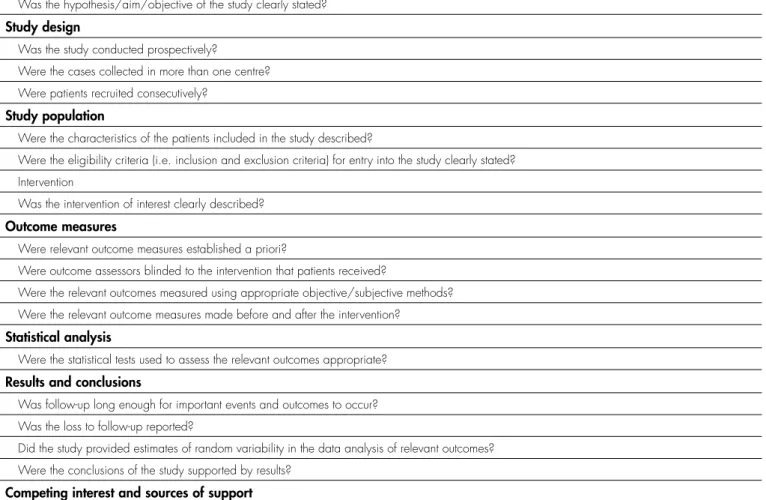
The original quality assessment checklist consisted of 20 items, out of which 17 were considered applicable to the present study. Table 1 reports the modified checklist.
Each item was independently rated as “present”, “partially present,” or “absent”. Consequently, each study was assessed for high, moderate, or low quality. In particular, a study was evaluated as “high quality” if there were at least 15 criteria were rated present. A rating of “moderate quality” was achieved if at least 11 criteria were rated present. A rating of “low quality” was given if less than 11 items were present.
RESULTS
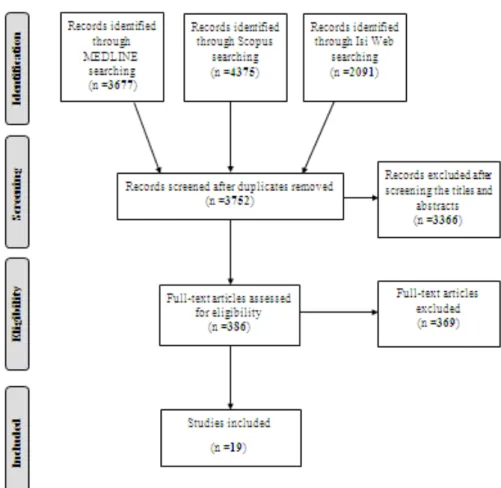
Figure 1 reports the flowchart of the bibliographic search strategy and the results.
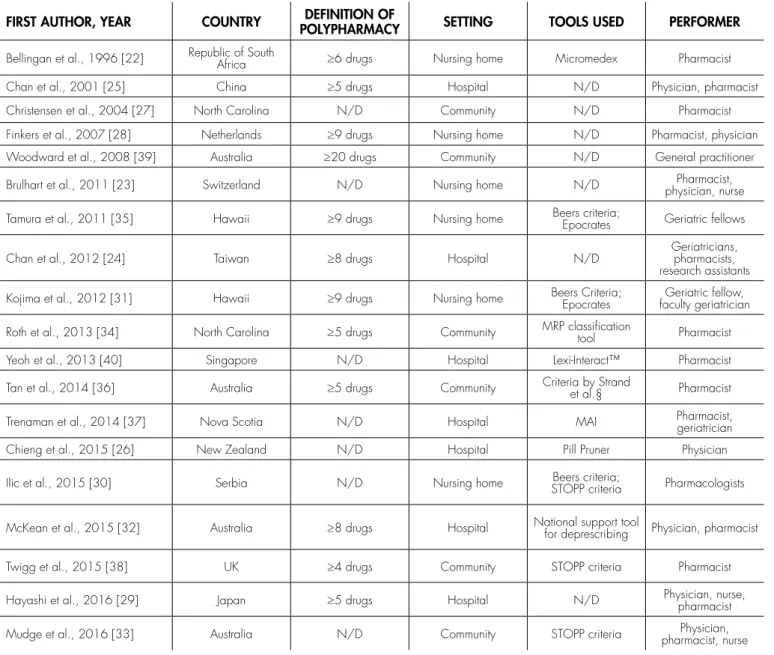
Table 2 reports the main characteristics of the 19
TABLE 1. Elements evaluated in the quality assessment.
Study objective
Was the hypothesis/aim/objective of the study clearly stated? Study design
Was the study conducted prospectively?
Were the cases collected in more than one centre? Were patients recruited consecutively?
Study population
Were the characteristics of the patients included in the study described?
Were the eligibility criteria (i.e. inclusion and exclusion criteria) for entry into the study clearly stated? Intervention
Was the intervention of interest clearly described? Outcome measures
Were relevant outcome measures established a priori?
Were outcome assessors blinded to the intervention that patients received?
Were the relevant outcomes measured using appropriate objective/subjective methods? Were the relevant outcome measures made before and after the intervention?
Statistical analysis
Were the statistical tests used to assess the relevant outcomes appropriate? Results and conclusions
Was follow-up long enough for important events and outcomes to occur? Was the loss to follow-up reported?
Did the study provided estimates of random variability in the data analysis of relevant outcomes? Were the conclusions of the study supported by results?
Competing interest and sources of support
studies included [22-40]. Of these, six were conducted in community setting [27,33,34,36,38,39], seven in hospital setting [24-26,29,32,37,40], and the remaining six in nursing homes [22,23, 28,30,31,35]. The most common definition of polypharmacy was the contemporary assumption of at least five drugs (four studies, 21,1%) [25,29,34,36]. The majority of the interventions (73,7%) to reduce polypharmacy or medication inappropriateness were performed by pharmacists, alone [22,27,34,36,38,40] or in cooperation with other healthcare professionals (nurse, general practitioner, geriatrician, medical student, pharmacologist) [23-25,28,29,32,33,37]. The remaining studies analyzed interventions conducted by pharmacologists alone [30], geriatricians alone [31,35], physicians alone [26], and general practitioners alone [39].
In 12 studies, the performers of the interventions provided a feedback to patients’ general practitioners [22,24,27,35-37, 23,31-34,40]; six interventions provided educational sessions on therapy changes for patients[24,28,32,33,36,37]. Regarding the tools used by the performer of therapy review, the most used were the STOPP/START criteria, the Beers criteria, the Medication Appropriateness Index, and several informatic softwares (Micromedex, Epocrates, Lexi-Interact).
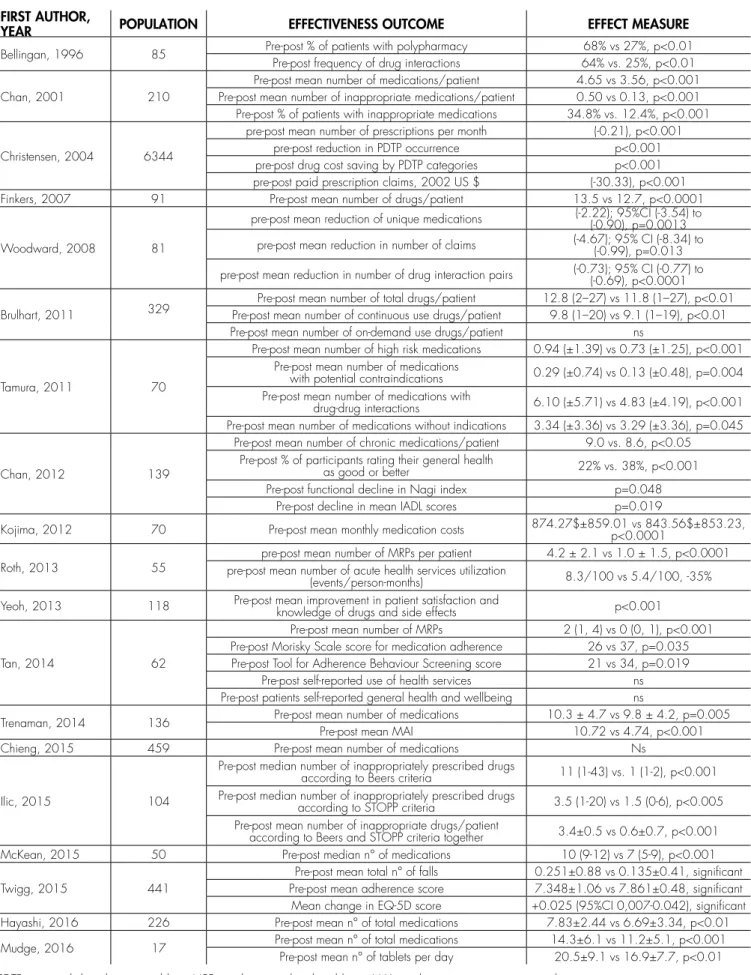
Main results of the included studies are presented
in Table 3. For the purpose of this systematic review, detailed results are presented within the following five sections: drugs (any modification of drug therapy’s characteristics), quality of life, health-related outcomes, costs, and healthcare services’ utilization.
Drug-related outcomes
Eighteen of 19 included studies reported at least one outcome related to therapy’s modifications [22-30,32-40]. Eleven studies [23-29,32,33,37,39] reported results on the reduction of number of drugs per patient, expressed as mean or median number of drugs per patients, mean number of prescriptions per month, mean tablets per day, or mean number of claims; of these, all but one study [26] reported significant reductions.
Regarding the prevalence of potential inappropriate medications (PIMs), four studies [25,30,35,37] reported a significant reduction of the frequency of inappropriate medication or of the mean number of patients taking inappropriate drugs.
Three studies [27,34,36] investigated the prevalence of drug-related problems, and all of them reported significant reductions after the intervention period.
Finally, three studies reported a significant improvement of patients’ adherence to therapy, as well as in their satisfaction and knowledge on drugs [34,38,36].
Quality of life
Three studies considered outcomes related to quality of life.Chan et al. used a rating scale, and observed a significant increment of patients rating their quality of life as “good” or “better” [24]. Another study [36] used a five-points Likert scale, reporting instead non-significant results. Twigg et al. used the EuroQol EQ5D 3L questionnaire,
finding a significant improvement in the score [38].
Health-related outcomes
Only one study investigated the effect of the intervention on a health-related outcome, observing a significant reduction in the mean number of falls [38].
Costs
Two studies referred to cost-outcomes [27,31].
TABLE 2. Main characteristics of the 19 studies included.
FIRST AUTHOR, YEAR COUNTRY POLYPHARMACY DEFINITION OF SETTING TOOLS USED PERFORMER
Bellingan et al., 1996 [22] Republic of South Africa ≥6 drugs Nursing home Micromedex Pharmacist
Chan et al., 2001 [25] China ≥5 drugs Hospital N/D Physician, pharmacist
Christensen et al., 2004 [27] North Carolina N/D Community N/D Pharmacist
Finkers et al., 2007 [28] Netherlands ≥9 drugs Nursing home N/D Pharmacist, physician
Woodward et al., 2008 [39] Australia ≥20 drugs Community N/D General practitioner
Brulhart et al., 2011 [23] Switzerland N/D Nursing home N/D physician, nursePharmacist,
Tamura et al., 2011 [35] Hawaii ≥9 drugs Nursing home Beers criteria; Epocrates Geriatric fellows
Chan et al., 2012 [24] Taiwan ≥8 drugs Hospital N/D Geriatricians, pharmacists,
research assistants
Kojima et al., 2012 [31] Hawaii ≥9 drugs Nursing home Beers Criteria; Epocrates faculty geriatrician Geriatric fellow,
Roth et al., 2013 [34] North Carolina ≥5 drugs Community MRP classification tool Pharmacist
Yeoh et al., 2013 [40] Singapore N/D Hospital Lexi-Interact™ Pharmacist
Tan et al., 2014 [36] Australia ≥5 drugs Community Criteria by Strand et al.§ Pharmacist
Trenaman et al., 2014 [37] Nova Scotia N/D Hospital MAI Pharmacist, geriatrician
Chieng et al., 2015 [26] New Zealand N/D Hospital Pill Pruner Physician
Ilic et al., 2015 [30] Serbia N/D Nursing home STOPP criteriaBeers criteria; Pharmacologists
McKean et al., 2015 [32] Australia ≥8 drugs Hospital National support tool for deprescribing Physician, pharmacist
Twigg et al., 2015 [38] UK ≥4 drugs Community STOPP criteria Pharmacist
Hayashi et al., 2016 [29] Japan ≥5 drugs Hospital N/D Physician, nurse, pharmacist
Mudge et al., 2016 [33] Australia N/D Community STOPP criteria pharmacist, nursePhysician,
§ Strand LM, Morely PC, Cipolle RJ, Ramsey R, Lamsam GD. Drug-related problems: their structure and function. Ann Pharmacother 1990;24:1093– 1097. [41]
TABLE 3. Main results of the 19 studies included.
FIRST AUTHOR,
YEAR POPULATION EFFECTIVENESS OUTCOME EFFECT MEASURE
Bellingan, 1996 85 Pre-post % of patients with polypharmacyPre-post frequency of drug interactions 64% vs. 25%, p<0.0168% vs 27%, p<0.01
Chan, 2001 210
Pre-post mean number of medications/patient 4.65 vs 3.56, p<0.001 Pre-post mean number of inappropriate medications/patient 0.50 vs 0.13, p<0.001 Pre-post % of patients with inappropriate medications 34.8% vs. 12.4%, p<0.001
Christensen, 2004 6344
pre-post mean number of prescriptions per month (-0.21), p<0.001
pre-post reduction in PDTP occurrence p<0.001
pre-post drug cost saving by PDTP categories p<0.001 pre-post paid prescription claims, 2002 US $ (-30.33), p<0.001
Finkers, 2007 91 Pre-post mean number of drugs/patient 13.5 vs 12.7, p<0.0001
Woodward, 2008 81
pre-post mean reduction of unique medications (-2.22); 95%CI (-3.54) to (-0.90), p=0.0013
pre-post mean reduction in number of claims (-4.67); 95% CI (-8.34) to (-0.99), p=0.013
pre-post mean reduction in number of drug interaction pairs (-0.73); 95% CI (-0.77) to (-0.69), p<0.0001
Brulhart, 2011 329
Pre-post mean number of total drugs/patient 12.8 (2–27) vs 11.8 (1–27), p<0.01 Pre-post mean number of continuous use drugs/patient 9.8 (1–20) vs 9.1 (1–19), p<0.01 Pre-post mean number of on-demand use drugs/patient ns
Tamura, 2011 70
Pre-post mean number of high risk medications 0.94 (±1.39) vs 0.73 (±1.25), p<0.001 Pre-post mean number of medications
with potential contraindications 0.29 (±0.74) vs 0.13 (±0.48), p=0.004 Pre-post mean number of medications with
drug-drug interactions 6.10 (±5.71) vs 4.83 (±4.19), p<0.001 Pre-post mean number of medications without indications 3.34 (±3.36) vs 3.29 (±3.36), p=0.045
Chan, 2012 139
Pre-post mean number of chronic medications/patient 9.0 vs. 8.6, p<0.05 Pre-post % of participants rating their general health
as good or better 22% vs. 38%, p<0.001
Pre-post functional decline in Nagi index p=0.048
Pre-post decline in mean IADL scores p=0.019
Kojima, 2012 70 Pre-post mean monthly medication costs 874.27$±859.01 vs 843.56$±853.23, p<0.0001
Roth, 2013 55 pre-post mean number of acute health services utilization pre-post mean number of MRPs per patient 4.2 ± 2.1 vs 1.0 ± 1.5, p<0.0001
(events/person-months) 8.3/100 vs 5.4/100, -35%
Yeoh, 2013 118 Pre-post mean improvement in patient satisfaction and knowledge of drugs and side effects p<0.001
Tan, 2014 62
Pre-post mean number of MRPs 2 (1, 4) vs 0 (0, 1), p<0.001 Pre-post Morisky Scale score for medication adherence 26 vs 37, p=0.035 Pre-post Tool for Adherence Behaviour Screening score 21 vs 34, p=0.019
Pre-post self-reported use of health services ns
Pre-post patients self-reported general health and wellbeing ns
Trenaman, 2014 136 Pre-post mean number of medicationsPre-post mean MAI 10.3 ± 4.7 vs 9.8 ± 4.2, p=0.00510.72 vs 4.74, p<0.001
Chieng, 2015 459 Pre-post mean number of medications Ns
Ilic, 2015 104
Pre-post median number of inappropriately prescribed drugs
according to Beers criteria 11 (1-43) vs. 1 (1-2), p<0.001 Pre-post median number of inappropriately prescribed drugs
according to STOPP criteria 3.5 (1-20) vs 1.5 (0-6), p<0.005 Pre-post mean number of inappropriate drugs/patient
according to Beers and STOPP criteria together 3.4±0.5 vs 0.6±0.7, p<0.001
McKean, 2015 50 Pre-post median n° of medications 10 (9-12) vs 7 (5-9), p<0.001
Twigg, 2015 441
Pre-post mean total n° of falls 0.251±0.88 vs 0.135±0.41, significant Pre-post mean adherence score 7.348±1.06 vs 7.861±0.48, significant Mean change in EQ-5D score +0.025 (95%CI 0,007-0.042), significant
Hayashi, 2016 226 Pre-post mean n° of total medications 7.83±2.44 vs 6.69±3.34, p<0.01
Mudge, 2016 17 Pre-post mean n° of total medications 14.3±6.1 vs 11.2±5.1, p<0.001
Christensen et al. [37] reported a significant reduction in paid prescription claims, while Kojima et al. found a reduction in mean monthly medication costs [31].
Utilization of healthcare services
Two studies reported outcomes related to healthcare services’ utilization [34,36]. Roth et al. reported a reduction in acute health services utilization of 35%, defined as combined hospitalizations and emergency department visits [34]. The other study reported non-significant difference in the self-reported use of healthcare services [36].
Quality assessment
Based on the results obtained from the “Quality Appraisal Checklist for Case Series Studies” (institute of Health Economics, Alberta, Canada), the methodological quality resulted poor for two studies [22,25], and moderate for all the others [23,24,26-40]. The scores ranged from 10 to 14, none of the papers having attained the maximum score.
DISCUSSION
The aim of this study was to review the results of case-series studies in terms of effectiveness in the reduction of polypharmacy and its adverse effects in the elderly. We decided to include only case-series studies since the Cochrane collaboration recently updated a review on the same subject including clinical trials and observational studies with control groups [19].
Our review included 19 studies. Our inclusion criteria were less restrictive than those chosen for the Cochrane review, since we considered that many studies could be lost using a strict definition of polypharmacy and a limitation to older population (i.e. 65 years-old). Several included studies were performed in geriatric wards or institutions, and involved a geriatric population even if an age-threshold was not defined.
We categorized the outcomes in five groups: those related to therapy, quality of life, health-related events, costs, and utilization of healthcare services.
The majority of studies had outcomes related to therapy modifications. Particularly, all the studies but one reported significant reduction in the number of drugs administered to patients. The Cochrane review [19] did not consider this outcome as important since the rough number of drugs per patients is not necessarily a marker of inappropriateness.
We retrieved four studies evaluating the modification of therapy appropriateness. Among them, three studies
used validated instruments of appropriateness, while one simply based on experts opinion. All the studies reported a significant improvement in therapy appropriateness. This result is similar to that of the Cochrane review [19], considering that all but one of their studies investigating this outcome reported significant results, and it was possible to perform meta-analysis for some of them. The Cochrane review [19] did not include those studies focusing only on experts’ opinion, and we can agree that, in order to improve comparability between studies, validated tools are required.
As for the other categories of outcomes, they were investigated by a smaller number of studies both in our review and in the Cochrane review [19], yielding contrasting results.
On the whole, the results observed in the two reviews, although obtained through studies with a completely different design, were comparable.
Our study has some strengths and some limitations, compared to the Cochrane review [19].
As for the strengths, we adopted more inclusive criteria that allowed us to retrieve a certain number of studies that would have been excluded by the Cochrane criteria. Moreover, we collected all the outcomes analysed by the included studies, in order to have more comprehensive perspective of the different types of results obtained by these interventions to reduce polypharmacy and its adverse effects. On the other hand, being more inclusive can certainly represent a limitation, since this may introduce the issue of comparability between different studies.
The most important limitation of our study was the inclusion of case-series studies exclusively. Although the aim of this decision was to compare the results of different study designs, a case-series study design is considered to be of scarce quality compared to the others [42]. In the presence of studies of higher-quality (e.g. clinical trials, controlled pre-post studies), case-series studies should be considered/ interpreted with caution, due to the impossibility to check what would have happened in control groups.
CONCLUSION
We can state that the effectiveness of interventions to reduce polypharmacy and its adverse effects has been currently studied more in terms of therapy modifications than of other outcomes related with quality of patients life, costs, health services utilization and health outcomes.
It is recommended to evaluate these outcomes in studies with intervention and control groups, in order to obtain an higher level of scientific evidence.
Sources of support
project "Polypharmacy: analysis of the phenomenon and evaluation and development of a management model to reduce the impact on the prognosis in elderly patients with cancer chemotherapy candidates”. (Project reference n. CUP: J38C13002080001)
REFERENCES
1. Christensen K, Doblhammer G, Rau R, Vaupel JW. Ageing populations: the challenges ahead. Lancet. 2009 Oct 3;374(9696):1196–208.doi: http://dx.doi.org/10.1016/ S0140-6736(09)61460-4 PMID: 19801098.
2. Tinetti ME, Baker DI, King M et al. Effect of dissemination of evidence in reducing injuries from falls. N Engl J Med 2008; 359: 252–61. 3. Pharmaceutical Care Network Europe. Working group on drug
related problems. Available at: http://www.pcne.org/working-groups/2/drug-related-problems
4. World Health Organization. A glossary of terms for community health care and services for older persons. In Aging and Health Technical Report. 2004
5. Monégat M, Sermet C. In collaboration with Perronnin M. and Rococo E. Polypharmacy: Definitions, Measurement and Stakes Involved Review of the Literature and Measurement Tests. Issues in Health Economics (Questions d’économie de la santé) n° 204. 2014/12. 6. Banerjee A, Mbamalu D, Ebrahimi S, Khan AA, Chan TF. The
prevalence of polypharmacy in elderly attenders to an emergency department - a problem with a need for an effective solution. Int J Emerg Med. 2011; 4: 22. Published online 2011 Jun 2. doi: 10.1186/1865-1380-4-22. PMCID: PMC3121581. 7. Maher RL, Hanlon JT, Hajjar ER. Clinical Consequences of
Polypharmacy in Elderly. Expert Opin Drug Saf. 2014 Jan; 13(1): 10.1517/14740338.2013.827660.
8. Olmos R, Garcia O, Velasco J, de la Rubia A. Prevalence of polypharmacy in older hospitalised patients. Eur J Hosp Pharm 2012;19:242-243 doi:10.1136/ejhpharm-2012-000074.414.
9. Slabaugh SL, Maio V, Templin M, Abouzaid S. Prevalence and risk of polypharmacy among the elderly in an outpatient setting: a retrospective cohort study in the Emilia-Romagna region, Italy. Drugs Aging. 2010 Dec 1;27(12):1019-28. doi: 10.2165/11584990-000000000-00000.
10. Prybys K, Melville K, Hanna J, Gee A, Chyka P. Polypharmacy in the elderly; clinical challenges in emergency practice: Part 1: overview, etiology, and drug interactions. Emergency Medicine Reports. 2002;23(11):145-53.
11. Gandhi TK, Weingart SN, Borus J, et al. Adverse drug events in ambulatory care. N Engl J Med. 2003;348(16):1556-64. 12. Gurwitz JH, Field TS, Harrold LR, et al. Incidence and preventability
of adverse drug events among older persons in the ambulatory setting. JAMA. 2003;289(9):1107-16.
13. Midlöv P. Pharmacokinetics and pharmacodynamics in the elderly. OA Elderly Medicine 2013 Aug 01;1(1):1.
14. Tseng HM, Lee CH, Chen YJ, Hsu HJ, Huang LY, Huang JL. Developing a measure of medication-related quality of life for people with polypharmacy. Qual Life Res DOI 10.1007/s11136-015-1177-2.
15. Pharmaceutical Care Network Europe. PCNE Guidelines for Retrospective Medication Review in Pharmacy V0, The official PCNE definition 2012. Available from: http://www.pcne.org 2012.
16. American Geriatrics Society 2012 Beers Criteria Update Expert Panel. American Geriatrics Society updated Beers Criteria for potentially inappropriate medication use in older adults. J Am Geriatr Soc. 2012. 60:616–31.
17. Gallagher P, O’Mahony D. STOPP (Screening Tool of Older Person’s potentially inappropriate Prescriptions): application to acutely ill elderly patients and comparison with Beer’s criteria. Age Ageing. 2007. 37:673–9.
18. Thomas R, Huntley AL, Mann M, et al. Pharmacist-led interventions to reduce unplanned admissions for older people: a systematic review and meta-analysis of randomised controlled trials. Age Ageing. 2014 Mar;43(2):174-87. doi: 10.1093/ageing/ aft169. Epub 2013 Nov 5.
19. Cooper JA, Cadogan CA, Patterson SM, et al. Interventions to improve the appropriate use of polypharmacy in older people: a Cochrane systematic review. BMJ Open. 2015 Dec 9;5(12):e009235. doi: 10.1136/bmjopen-2015-009235.
20. Liberati A, Altman DG, Tetzlaff J, et al. The PRISMA statement for reporting systematic reviews and meta-analyses of studies that evaluate health care interventions: explanation and elaboration. Italian Journal of Public Health. 2009. Vol 6, No 4.
21. Institute of Health Economics (IHE). Quality Appraisal of Case Series Studies Checklist. Edmonton (AB): Institute of Health Economics; 2014. Available from: http://www.ihe.ca/research-programs/ rmd/cssqac/cssqac-about
22. Bellingan M, Wiseman IC. Pharmacist intervention in an elderly care facility. International Journal of Pharmacy Practice 1996. 4: 25–29. doi:10.1111/j.2042-7174.1996.tb00835.x
23. Brulhart MI, Wermeille JP. Multidisciplinary medication review: evaluation of a pharmaceutical care model for nursing homes. Int J Clin Pharm. 2011 Jun;33(3):549-57. doi: 10.1007/s11096-011-9506-1. Epub 2011 Mar 26.
24. Chan DC, Chen JH, Wen CJ, Chiu LS, Wu SC. Effectiveness of the medication safety review clinics for older adults prescribed multiple medications. J Formos Med Assoc. 2014 Feb;113(2):106-13. doi: 10.1016/j.jfma.2012.04.013. Epub 2012 Oct 5.
25. Chan F, Pei C, Chiu KC, Tsang E. Strategies Against Polypharmacy and Inappropriate Medication - Are they Effective? Australasian Journal on Ageing. 2001. 20: 85–89. doi:10.1111/j.1741-6612.2001. tb00359.x
26. Chieng JH, Hughes L, Stewart A, Frampton CM, Hanger HC, Jardine DL. Introduction of the Pill Pruner to acute medical care: a simple medication guide to control polypharmacy. Australas J Ageing. 2015 Mar;34(1):58-61. doi: 10.1111/ajag.12183. Epub 2015 Jan 12.
27. Christensen D, Trygstad T, Sullivan R, Garmise J, Wegner SE. A pharmacy management intervention for optimizing drug therapy for nursing home patients. Am J Geriatr Pharmacother. 2004 Dec;2(4):248-56.
29. Hayashi Y, Godai A, Yamada M, et al. Reduction in the numbers of drugs administered to elderly in-patients with polypharmacy by a multidisciplinary review of medication using electronic medical records. Geriatr Gerontol Int. 2016 May 2. doi: 10.1111/ ggi.12764. [Epub ahead of print]
30. Ilic D, Bukumiric Z, Jankovic S. Impact of educational intervention on prescribing inappropriate medication to elderly nursing homes residents. Srp Arh Celok Lek. 2015 Mar-Apr;143(3-4):174-9. 31. Kojima G, Bell C, Tamura B, et al. Reducing cost by reducing
polypharmacy: the polypharmacy outcomes project. J Am Med Dir Assoc. 2012 Nov;13(9):818.e11-5. doi: 10.1016/j. jamda.2012.07.019. Epub 2012 Sep 5.
32. McKean M, Pillans P, Scott IA. A medication review and deprescribing method for hospitalised older patients receiving multiple medications. Intern Med J. 2016 Jan;46(1):35-42. doi: 10.1111/imj.12906.
33. Mudge A, Radnedge K, Kasper K, et al. Effects of a pilot multidisciplinary clinic for frequent attending elderly patients on deprescribing. Aust Health Rev. 2016 Feb;40(1):86-91.
34. Roth MT, Ivey JL, Esserman DA, Crisp G, Kurz J, Weinberger M. Individualized medication assessment and planning: optimizing medication use in older adults in the primary care setting. Pharmacotherapy. 2013 Aug;33(8):787-97. doi: 10.1002/ phar.1274. Epub 2013 May 30.
35. Tamura BK , Bell CL, Lubimir K, Iwasaki WN, Ziegler LA, Masaki KH. Physician intervention for medication reduction in a nursing home: the polypharmacy outcomes project. J Am Med Dir Assoc. 2011 Jun;12(5):326-30. doi: 10.1016/j.jamda.2010.08.013.
Epub 2010 Oct 20.
36. Tan EC, Stewart K, Elliott RA, George J. Pharmacist consultations in general practice clinics: the Pharmacists in Practice Study (PIPS). Res Social Adm Pharm. 2014 Jul-Aug;10(4):623-32. doi: 10.1016/j. sapharm.2013.08.005. Epub 2013 Oct 2.
37. Trenaman S, Bowles SK, Mallery L, Koller K, Andrew M. Innovative collaborative practice to optimize pharmacotherapy for frail older patients. Can J Hosp Pharm. 2014 Sep;67(5):373-8.
38. Twigg MJ, Wright D, Barton GR, Thornley T, Kerr C. The four or more medicines (FOMM) support service: results from an evaluation of a new community pharmacy service aimed at over-65s. Int J Pharm Pract. 2015 Dec;23(6):407-14. doi: 10.1111/ ijpp.12196. Epub 2015 Apr 6.
39. Woodward MC, Streeton CL, Guttmann A, Killer GT, Peck RW. Polypharmacy management among Australian veterans: improving prescribing through the Australian Department of Veterans’ Affairs’ prescriber feedback programme. Intern Med J. 2008 Feb;38(2):95-100. Epub 2007 Nov 13.
40. Yeoh TT, Si P, Chew L. The impact of medication therapy management in older oncology patients. Support Care Cancer. 2013 May;21(5):1287-93. doi: 10.1007/s00520-012-1661-y. Epub 2012 Nov 25.
41. Strand LM, Morely PC, Cipolle RJ, Ramsey R, Lamsam GD. Drug-related problems: their structure and function. Ann Pharmacother 1990;24:1093–7.