218
The impact of cooperative learning
to learn some basic skills and the
development of handball state
mental fluency among students in
the second phase of the Faculty of
Physical Education
Hatem Shawkat Ibrahim al-Dulaimi
Faculty of Physical Education, University of Diyala
Article Info
Received: March 10, 2014 Accepted: April 11, 2014
Published online: September 01, 2014
ABSTRACT
The current research aims to detect the impact of collaborative learning in learning some basic skills in the game of handball ( handling and receiving , shooting ) and the development of case fluency psychological among students in the second phase of the Faculty of Physical Education, the researcher used the experimental method in a manner Groups equal , and the sample consisted of ( 80 students) and by (40 ) students in each division of study , and through the voting was named divisions to represent one of the experimental group a division (a) the Division (c ) represents the control group , were to achieve parity between the two groups in the variables ( height, weight , age ) as well as achieving parity between them in basic skills ( under study ) and the level of state fluency psychological have been the use of cooperative learning with the students of the experimental group but with the control group use the method peremptory used for physical education lesson , and took . The impact of cooperative learning to learn some basic skills and the development of handball state mental fluency among students in the second phase of the Faculty of Physical Education.
Keywords: Cooperative learning, basic skills, handball, Physical Education
1. Introduction
219
This was reunited this evolution look for ways and new teaching methods able to disprove the old methods are rigid, and sophistication process of learning to better levels if the best teachers and workers in the field of education to use these methods , and to provide the necessary resources to it. So we must use teaching methods that take into account the individual differences of the learners so that each learner in maximizing what he has and accommodate the requirements of the study, and this is the best way of advanced methods of cooperative learning , or what is known as learning groups. The game handball a game collective competitiveness , which occupied pride of place in terms of the spread in the world and has evolved from the game to spend leisure time to the Olympics needs to the requirements of physical and skill is high, and based this game on basic skills as a base task to progress in the level of performance , and in particular the skill of handling and receiving and correction , so attention must be paid to the stages of learning they need to exert a lot of effort and practice in order to learn and master , so the role of cooperative learning in a large and active learning and mastering these basic skills.
In light of the above has to be the availability of roads and teaching methods by which to achieve the objectives of the foregoing and the development of case fluency psychological students , and these methods are a way of cooperative learning , which have attracted the attention of many researchers , which is one of the contemporary trends in the field of teaching methods , which allow students the opportunity to work and play a positive role active and interact with different positions , to collect facts and information relating to themselves , and the suffering of the students from the positions of collective giving them opportunities to collect data and evidence , as they find the open field to make things and sentencing , and then feel their role in the educational process and that they are able to educate themselves to some degree , which leads to better learning , " where little (Slavin) that " students in cooperative learning roles distinct can’t find in the traditional way , they behave cooperatively help each other and their foundations (equal Group by the performance of each of its members ) and a distinctive combination of missions cooperation ( group must work together to achieve the ultimate goal ).
220
Must use methods and teaching methods by which to achieve these goals are commensurate and consistent with the evolution in teaching methods , so it is of the most important reasons that prompted the researcher to conduct this study is that the predominant activity in physical education lesson surrounded by a casing traditionally based on the role of students in this command method of learning is to receive information , conservation and implementation of what they are asked only with failure to give them another role than that in the educational process , where the principle of this method is the performance of confinement or competitive among students per class as it is devoid of participation and cooperation , which may generates a bit of selfishness among students , so the researcher believes that this method does not lead to bind effectively in the process of continuing education in the implementation, does not open the way for students to express their abilities and motor skills freely, as this method of control is obvious to the teacher in the forty.
Teaching largely reflecting the negative side of the role of the student in the educational process as well as to promote an atmosphere of competition and individual incompatibility between students and this adversely affects the development process of the psychological state of fluency and cooperation between students and then have reflected on their personality in the future. And fluency psychological is a state of positive experience occur when the individual performed keyed entirely performance in what position with equal skills and personal challenges required for the position as it is the case of looking forward to elite athletes, which is also the case can be enjoyed by the player , at any level of participation in sport. Therefore, the research problem lies in the following question: Is the impact of cooperative learning to learn some basic skills and the development of handball state mental fluency among students in the second phase Faculty of Physical Education.
The current research aims to detect the impact of collaborative learning in learning some basic skills among students in handball the second phase of the Faculty of Physical Education, and The impact of cooperative learning in the development of the psychological state of fluency among students in the second phase of the Faculty of Physical Education. In addition, to know the difference between the impact of cooperative learning and prescriptive method to learn some basic skills and the development of handball state mental fluency among students in the second phase of the Faculty of Physical Education.
2. Methodology
221 2.1 Subject
(Abdullah Abdul Rahman) confirmed " of things to be observed in scientific research to choose a representative sample of the community of origin, as the sample is linked closely to the nature of society is taken from , as they represent the part that represents a community asset that is being researcher and the overall focus of his work on it." So researcher selected the research community, which represents the students of the second phase in the Faculty of Physical Education / Diyala University for the academic year (2013/2014) totaling ( 256 ) students , the research sample , which represent the model being a researcher to do it , who are ( 80 ) students randomly selected by voting manner divided into two divisions ( a and C ) and the sample exploratory experiments that are being done by the researcher 's ( 74 ) students were divided into two divisions (b and d) . Bringing the number of members of the final sample application ( 64 students) of the two groups ( experimental - control ) , and ( 60 ) a student of exploratory experiments as estimated percentage of sample ( 23.43 %) of the original.
2.2 homogeneity of the subject in the growth indicators
For the purpose of making sure that growth indicators among members of the experimental sample to look appropriate, and to prevent the influences that affect the results of the experiment in terms of the differences found, ask the homogeneity of the sample (through normal distribution curve) as the researcher used the law coefficient of torsion of the indicators of growth (height, mass, age) and variables, as in table (1).
(Table 1)
Shows the homogeneity of the sample in the research variables
N
indicators The unit of measurement
The arithmetic
Average
mediator Standard Deviation
Coefficient sprains
1 height Cm 176.9 178 5.32 0.26
2 mass Kg 75.36 75 10.56 0.102
3 age Year 20.52 21 0.91 0.581
2.3 Equal subject
222 (Table 2)
Shows the parameters of the statistical variables of the basic skills of the two sets of sample
variables The experimental Group
The control group
The calculated value T
Handling and Receiving
0.724 28.06 4.28 27.38 3.24
Shooting / degree 4.5 1.24 4.13 1.1 1.28
Psychological Fluency
64.78 14.89 62.13 14.43 0.725
Value (c) Tabulated at a level of significance (0.05) and the degree of freedom (62) is (2.000) Through the Table (2) shows the presence of significant differences in the non-statistical variables mentioned above which shows the equality of the two sets of research sample.
2.4 identifying research variables
2.4.1 Identification of the basic skills handball
Skills handball have been identified in question in accordance with the basic vocabulary of material Handball methodology of assessments for the second phase students in the faculties of Physical Education in Iraq , namely, handling, receiving and shooting.
2.4.2 Tests for basic skills handball
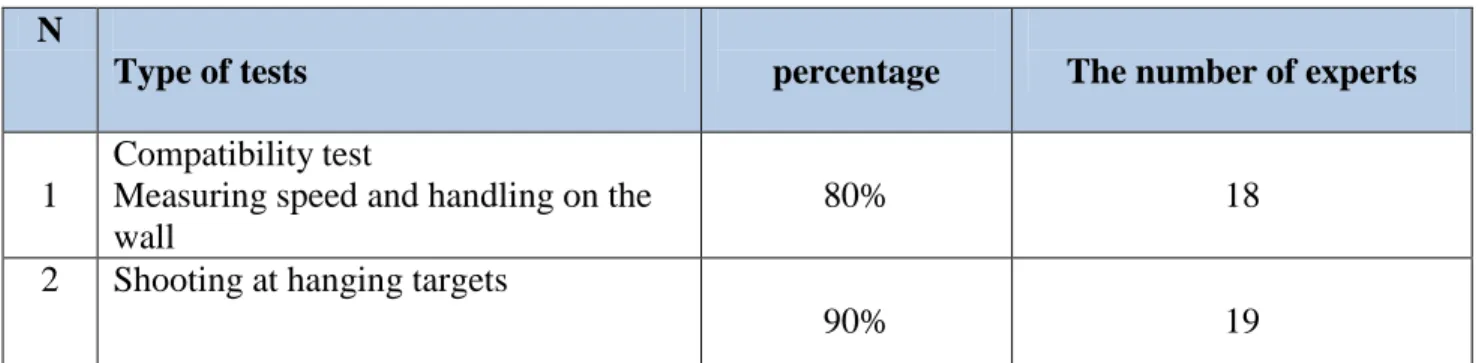
223 (Table 3)
Tests used in the research
N
Type of tests percentage The number of experts
1
Compatibility test
Measuring speed and handling on the wall
80% 18
2 Shooting at hanging targets
90% 19
2.4.3 Testing technique used in the research
First a test is to measure compatibility and speed handling on the wall (Dia Khayat). The goal of the test: measuring the compatibility and speed handling on the wall. Tools: handball, wall level, Stopwatch.
Method of performance: a player stands (3 or 4) meters away from the wall and the player when the signal passes the ball on the wall and continued to scroll more possible number of time specified amount (60)
Date: count the number of passes in the allotted time (calculates the number of times receiving the ball) and as shown in figure 2.
Figure 1. Shows the speed of handling and receiving
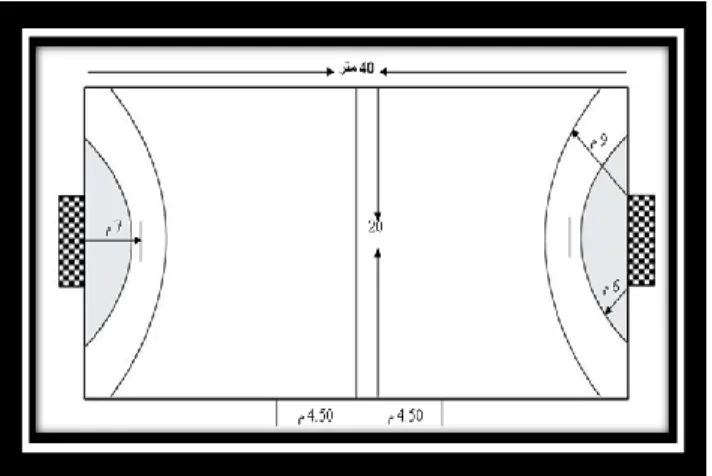
Second: the shooting of stability (10) balls of all line (9 meters) - The purpose of the test : The accuracy of the shooting.
Tools: (10) balls + hand boxes measuring accuracy (40 X 40) cm (2) .
224
ball and aiming for the other box after hearing the signal and thus continue until the end of the ten balls ( five balls on each box ) .
- Rules: the need for the stability of one hand , and pointing the player through (3) seconds after the whistle .
Date: given a grade on each player correctly shoot within the specified box as shown in Figure 3.
Figure 2. Shows the test accuracy correction
2.5 Scale fluency psychological
After reviewing the many letters and university thesis and research related to the subject of the current study, the researcher used measure of fluency psychological design Holiday Ismail (2005). Consists measure of (42) is the students answering phrases scale and scale tri-gradient. I agree a large extent, I agree degree medium, agree to a low degree) in the light of the instructions and measure researcher honesty virtual tool and the stability of the tool.
2.6 Experience exploratory tests
The experiment was conducted exploratory tests on a sample of 10 students were chosen randomly from the research community on Wednesday (25/09/2013) The objective of this experiment to identify the difficulties and problems that may face the researcher during the implementation of the tests for students of the two sets of samples.
2.7 Teaching methods
225 2.8 Exploratory experience of cooperative learning
Exploratory experiment was conducted on a sample of students and the research community's (20) demanded on Thursday ( 01/10/2013 ) , and the goals of this experiment as follows:
1- Make sure of the validity of educational plans using cooperative learning 2- Test the validity and adequacy of the tools used in the search.
3- To identify the errors and obstacles facing the implementation of the experiment when the researcher.
2.9 Implementation of the main experiment:
Been implemented educational plans of cooperative learning command style and adult (24) educational plan for each of them (12) a week , and by two plans elite educational week for each group and the rate of one lesson per educational plan , amounting to (90) minutes per day (Sunday, Tuesday), where the Group exercises experimental education using collaborative learning , while the control group than they shall use education the Command style used to study physical education, has been teaching students two sets of sample in the hall of the Faculty of Physical Education, and the experiment took on Sunday (06/10/2013) until on Sunday (12/29/2013).
2.10 Post-tests
Post-tests were conducted on two groups of students research sample after the completion of the implementation of methods to determine the level of learning basic skills and fluency psychological state reached by the two groups of students a sample search on Sunday and Tuesday approvers (5-7/1/2014).
2.11 Statistical analysis:
226 3. Results and Discussion
(Table 4)
Presents the results of tests between students dimensional experimental and control groups in the basic skills and the development of state mental fluency and analyzed and discussed
The (v) calculated value The experimental group
The control group The (v) calculated
value Handling Receiving 30.88 4.44 27.75 2.97 3.31 Shooting /degree 6.34 0.83 4.53 1.11 7.42 Psychological fluency/degree 85.53 19.54 77.44 12.81 1.96
* Value (v) spreadsheet (2.00) in front of degrees of freedom (62) when the error ratio (0.05).
(Table 5)
Displays the results of pre and post-tests between students of experimental and control groups in the basic skills and the development of state mental fluency and analyzed and
discussed: totals Skills module Pretest posttest Value v Statistical significance Calcu-lated Tabulated Moral experimental Handling receiving number 28.06 4.28 30.87 4.44 2.81 2.070 7.927 2.000 Moral shooting degree 4.5 1.24 6.34 0.83 1.84 0.99 10.56 Moral Psycho Fluency degree 64.78 14.89 85.53 3.45 20.75 18.79 6.19 Moral control Handling receiving number 27.38 3.42 27.75 2.97 0.38 0.87 2.436 Moral shooting degree 4.13 1.09 4.53 1.11 0.41 0.8 2.88 Moral Psycho Fluency degree 62.13 14.43 77.43 12.8 1 15.31 6.92 12.52 Moral
Value (v) spreadsheet ( 2.00 ) in front of degrees of freedom ( 62 ) when the error ratio (0.05) .
227
the implementation of duty motor , which leads to increased actual practice through the participation of all students in a performance which has led to increased traffic and activity and learn these skills , which confirms the ( Imam 0.2001 ) on the exploitation of lesson time in increased motor performance and advanced learners will gain skills in many of the physical abilities and skills and mobility .
The turn away students for the traditional practice used to this point has led to positive student work within the group to which he belongs , in addition to the cooperative learning allows students opportunities for cooperation , enthusiasm and active participation in the implementation of the duties and tasks assigned to them as well as the initiative and take collective responsibility both in their group during implementation skills and increase student interaction with each other and the mutual dependence of positive ( synergies ) leading to learning the skills within the group and that makes them inclined and want to learn the skills given to them the desire and highly effective , as the learner who has a tendency and direction
Positive about the material to be learned will eagerly applied in the lesson , and therefore it affects the level of learning and performance of the skill to be learned and development in the lesson . It reinforces the view is that the signal ( Sheikh , 1993) , "The benefits of cooperative learning is a link collection and student learning favorably with the rest of the group to which it belongs , on the contrary, from the traditional method which is its principle is the performance of confinement or competitive among students per class ."
He also noted (Manning, 1991) to "The use of cooperative learning works on the active participation of students and show cooperation based between members of the same group and between groups as a whole in order to achieve the goal of a collective , Fikbloa to learn effectively and Hamas severe than the traditional method that without cooperation and participation meaningful . " As the Slavin (Slavin, 1993) that students in cooperative learning roles characteristic not found in the traditional way , they behave cooperatively helps each other and their foundations of incentive so rewarding the Group by performance of its members , as a combination of distinct tasks of cooperation and that should be the group's work together to achieve the ultimate goal . This result is also attributed also to " the impact of peer and promotion for each other because of learners in collaborative learning method employed in an integrated team and every individual is responsible for the success or failure of his group ."
228 4. Conclusion
In light of the results that have been reached researcher concluded that the cooperative learning has had a clear role in the education of all basic skills (under study) among students in the experimental group. In addition, the impact of cooperative learning does not differ significantly from the impact of prescriptive method (traditional) in the development of the psychological state of fluency in students.
References
Abdullah, A. Al-Kandari and Mohamed, A. (1999). Introduction to Research Methodology in Education and Human Sciences, Kuwait, Al Falah Printing Publishing and Distribution, p 107.
Dia K and Mohammed Nofal Hayali, (2001). Handball, Mosul , Mosul University, p 12.
Ibrahim, Fadel Khalil and others (2000). The effect of using my way of cooperative learning and individual learning achievement for students of Teachers College in geography classes and thinking critic, Journal of Research College of Basic Education, Volume 1, Issue 2, College of Basic Education, the University of Mosul.
Imad ,D and Medhat, A, (2007). Applications in the attack Handball Education – Training, Alexandria , the origin of knowledge, p 20 .
Imam, S. Zainoun, I (2001). The impact of proposed programs to integrate the educational Balttabiqi using learning styles model to achieve some educational goals for physical education lesson , unpublished Ph.D. thesis , Faculty of Physical Education, University of Mosul .
Manning, L. & Lucking, R. (1991). The what and how cooperative Learning . The Social Studies. Vol. 82, No. 3.
Mohamed, I and Osama, K, (1999). Scientific research in physical education and sports psychology, House of the Arab Thought, Cairo, p 43
Nuri Ibrahim Alshawk Saleh al-Qubaisi , Rafie, (2004). Guide researchers writing in Physical Education Research, Baghdad, Baghdad University, p.51.
Ratib, Osama, (2004). Psychological skills training in the field of sports, the Arab Thought, Egypt, 2:133.
Sheikh, Sami Saleh (1993). A comparison of the impact of strategies of cooperative learning and learning by the traditional method in the collection of the fifth grade students to science, Unpublished MA Thesis, University of Mutah, Jordan.
Slavin, R. (1983). “When does cooperative Learning Increase student Achievement “Psychological Bulletin, Vol. 49, No. 3.
Subhi Mohammed Hassanein, (1995). Measurement and Evaluation in Physical Education, Cairo , Arab Thought House, 13:273.